

34 Cozy Dorm Room Ideas That Make Small Spaces Feel Like Home
A dorm room usually arrives with the same few things: a Twin XL mattress, a desk, a wardrobe or dresser, painted cinderblock walls, and overhead lighting that feels more like a classroom than a bedroom. The good news is that cozy dorm room ideas don’t depend on a big budget or a lot of square footage. They depend on texture, softer light, and a layout that gives every item a job.
This guide covers 34 ideas, from simple bedding layers and lamp placement to storage tricks, shared-room layouts, and full style directions. Most are built around removable, renter-friendly products, but housing rules vary widely between schools. Before you hang, plug in, or paint anything, check your residence hall handbook for limits on adhesives, lighting, appliances, and wall treatments.
1. Layer a Twin XL Bed in Three Tones
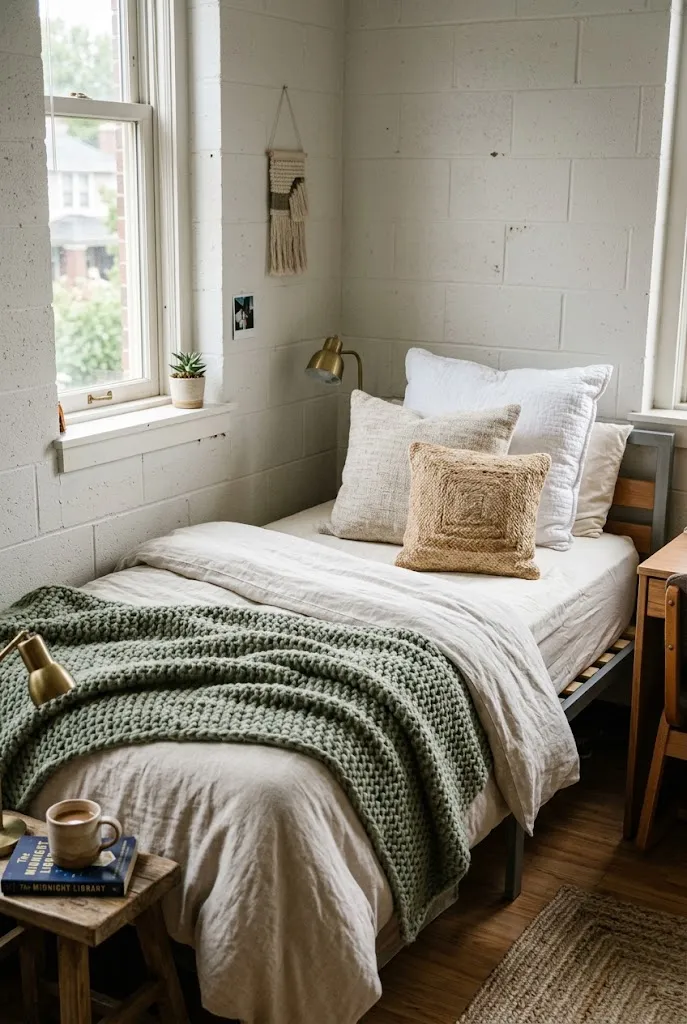
The bed takes up most of the visual space in a dorm, so it’s the best place to start. Instead of one matching set, build the bed in layers: a fitted sheet in a soft neutral, a duvet or comforter in a slightly deeper shade, and a chunky knit or waffle-weave throw folded across the foot.
- Stick to a palette of three related colors, such as cream, oatmeal, and sage.
- Mix at least two textures, like cotton percale and a nubby knit.
- Use two standard pillows plus one lumbar or square accent pillow.
Make sure the sheets are labeled Twin XL, since regular twin sets run short on a dorm mattress. A mattress topper adds comfort and also helps the whole bed look fuller and more finished.
2. Hang a Sheer Canopy Over the Bed
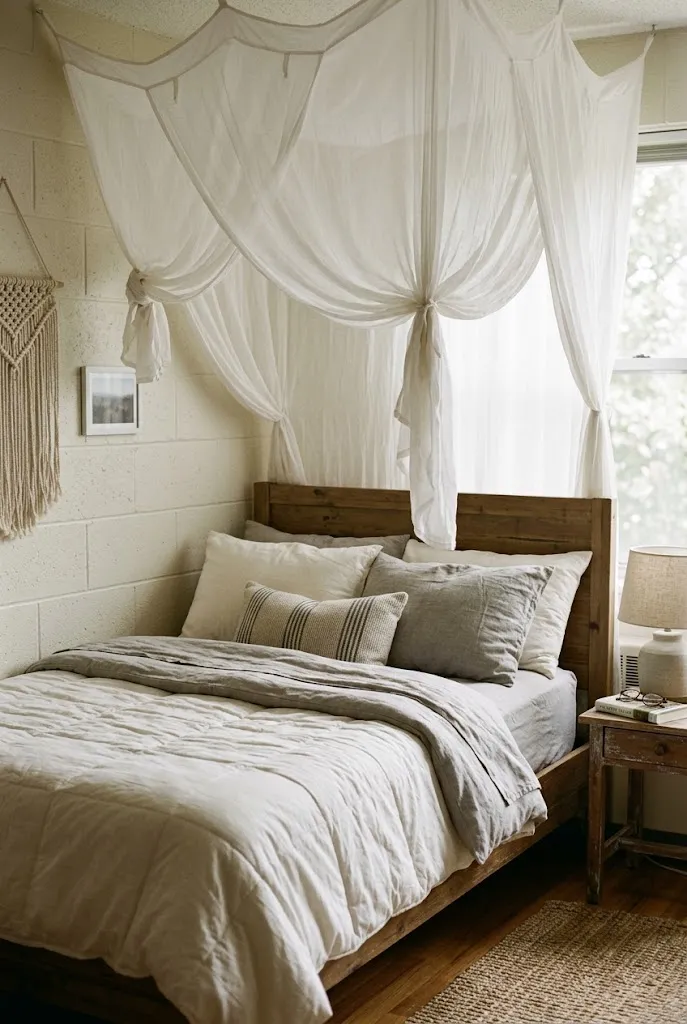
A canopy creates a “room within a room,” which is especially helpful in a space where everything is visible from the doorway. A lightweight sheer panel draped from ceiling-safe or adhesive hooks above the head of the bed softens the hard edges of the room and gives the sleeping area a sense of enclosure.
Quick Tip: Gather the fabric into a loose swag over two hooks rather than hanging a full tent. It looks lighter, uses less fabric, and is easier to take down at move-out.
Choose a breathable fabric such as cotton voile or gauze and keep it well away from any lamp, bulb, or heat source. Some residence halls restrict ceiling attachments, so confirm what’s allowed before you buy.
3. Arc Warm String Lights Above the Headboard
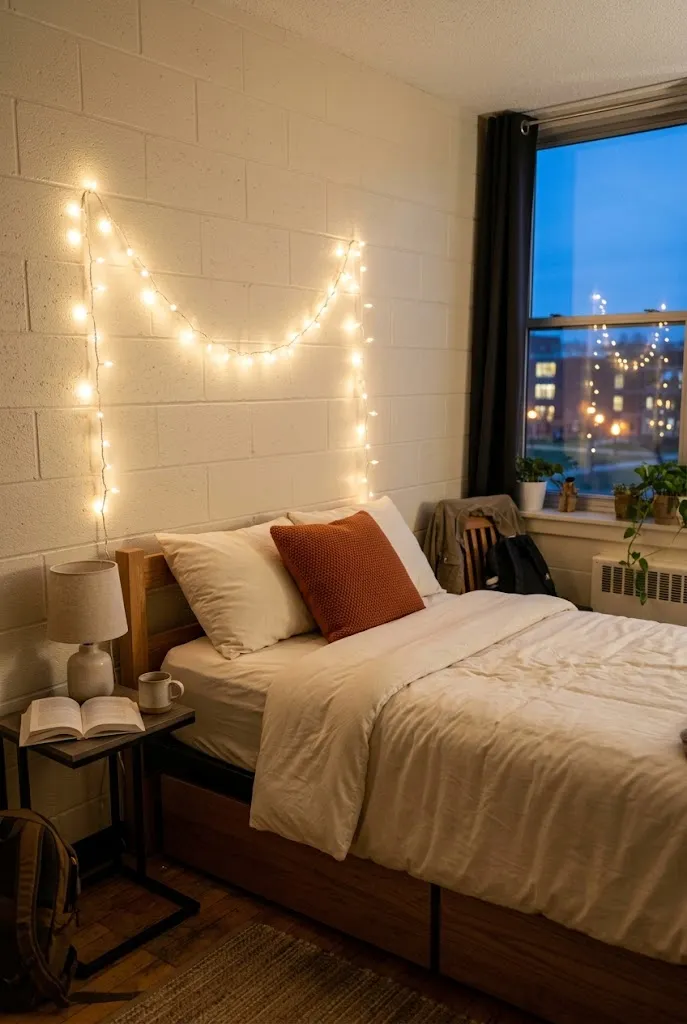
Overhead dorm lighting tends to be flat and bright. A strand of warm-white LED string lights shaped into a gentle arc or zigzag above the bed adds a low, ambient glow that makes evenings feel calmer.
Look for USB-powered or battery-powered strands so you aren’t running another cord across the floor. Warm white (often listed around 2700K) reads cozier than cool white. Many schools allow LED lights but limit how they’re mounted and powered, so read the policy first.
| Option | Advantage | Best Fit |
|---|---|---|
| USB LED strand | Plugs into a laptop or wall adapter | Rooms with an outlet near the bed |
| Battery-powered strand | No cord to manage | Beds far from outlets |
4. Add a Peel-and-Stick Accent Wall Behind the Bed
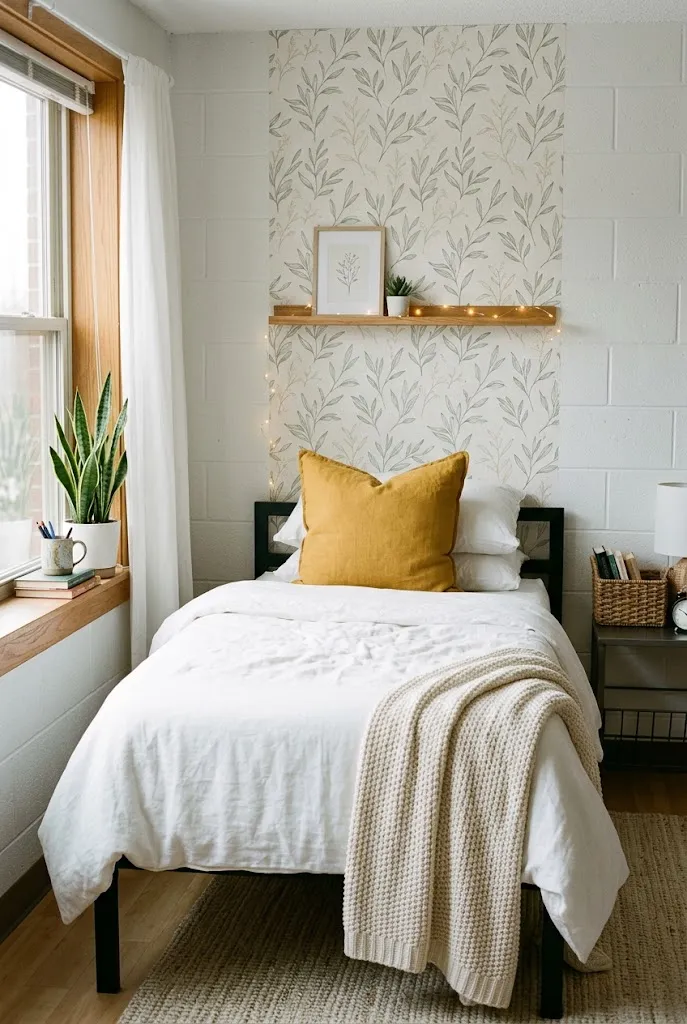
Painted cinderblock is the least cozy feature of most dorms, and it’s the one element you usually can’t change. Removable peel-and-stick wallpaper in a subtle pattern can cover a section behind the headboard and make the whole bed area feel intentional.
A few practical points:
- Smooth, painted surfaces hold removable wallpaper best, and textured block can prevent a good bond.
- Test a small piece first and ask whether your school permits it.
- A narrow panel just behind the bed is usually enough to create the effect.
If wallpaper isn’t allowed, a large woven blanket or a fabric panel hung from removable hooks gives a similar backdrop with less risk.
5. Turn the Space Under a Lofted Bed Into a Nook
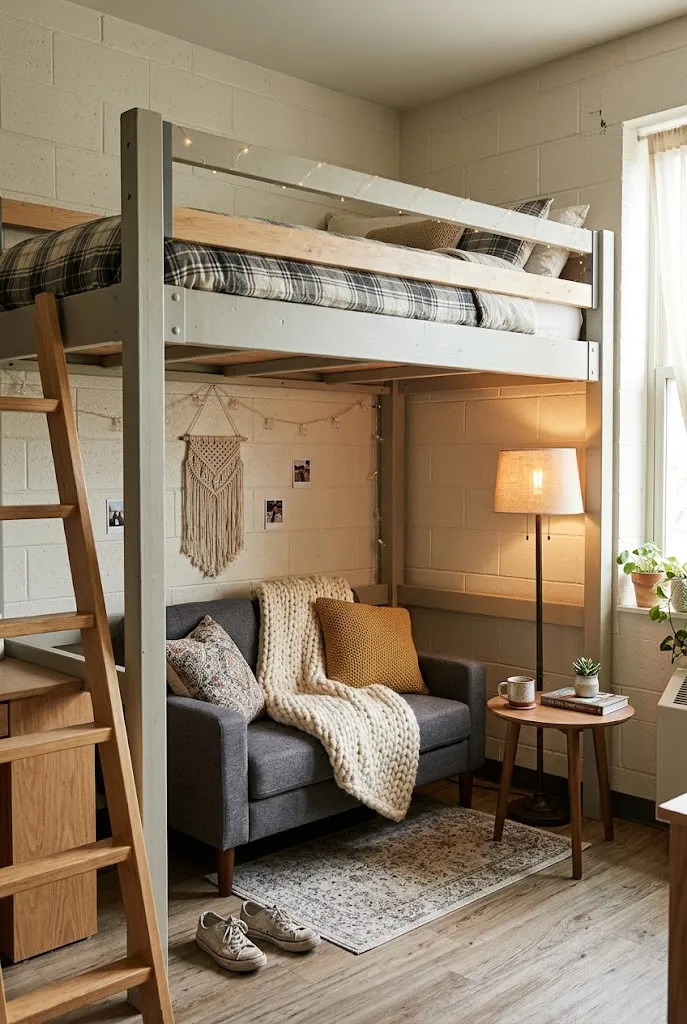
When a bed can be lofted, the floor underneath becomes an entirely separate zone. A small sofa, a pair of floor cushions, or a compact desk can sit there, and a lamp or fabric curtain along the edge makes it feel like a hideaway.
Common Mistake: Putting a bulky futon under the bed and leaving no walking path.
Better Approach: Choose a low loveseat, a daybed-style cushion, or floor seating so there’s still clear movement around the room and enough headroom to sit comfortably.
Always follow your school’s loft guidelines and use only approved lofting hardware, since safety rules about bed height and railings are strict in many halls.
6. Raise the Bed and Roll Storage Underneath
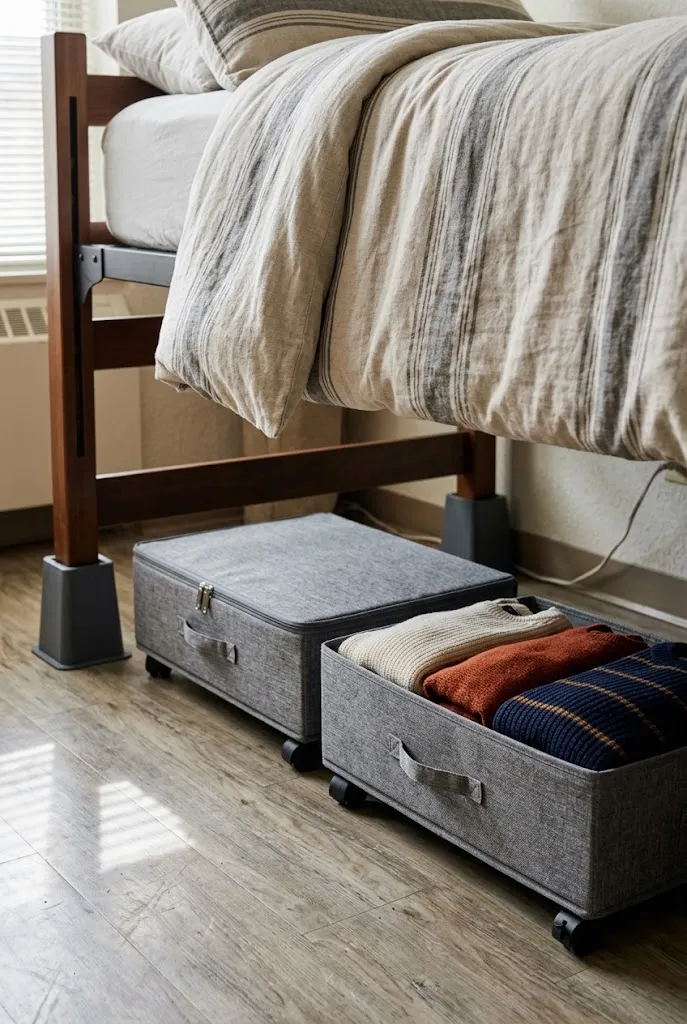
Under-bed space is the largest unused storage area in most dorms. Bed risers lift the frame a few inches, and shallow rolling bins or fabric drawers slide out for off-season clothes, shoes, or snacks.
- Match bin colors so the storage looks designed rather than piled.
- Use a bed skirt or a long duvet to hide the contents.
- Keep heavy items on the bottom and rarely used items at the back.
Check your frame’s weight limits and whether risers are permitted. Soft-sided bins glide better on carpet, while hard plastic works well on tile or vinyl.
7. Lean a Padded Headboard Against the Wall
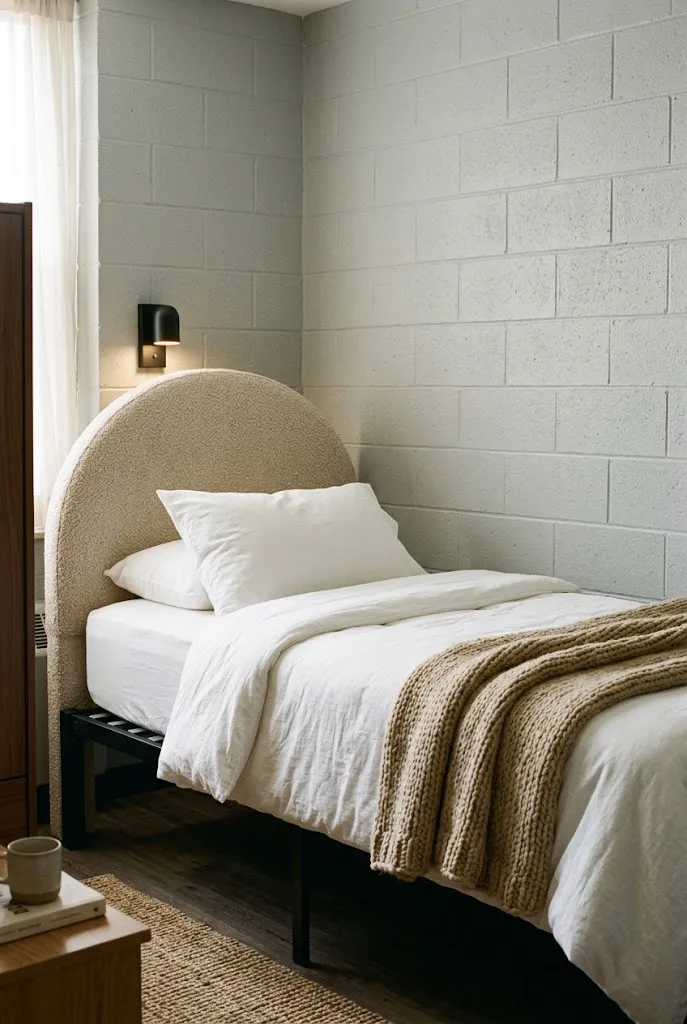
Dorm beds rarely have headboards, and a cushioned panel can change how the whole bed feels. A free-standing padded or upholstered headboard leaned against the wall, or a large fabric-covered board secured with approved methods, adds softness and gives pillows something to lean on.
Linen, bouclé, and velvet each give a different mood: linen feels relaxed, bouclé feels cozy and textural, and velvet looks a bit more formal. A neutral shade works across seasons and is easy to restyle with new bedding.
Editor’s Note: Measure the Twin XL width (about 38 inches) so the headboard doesn’t overhang awkwardly or block outlets and wall fixtures.
8. Build a Frame Gallery Wall With Adhesive Strips
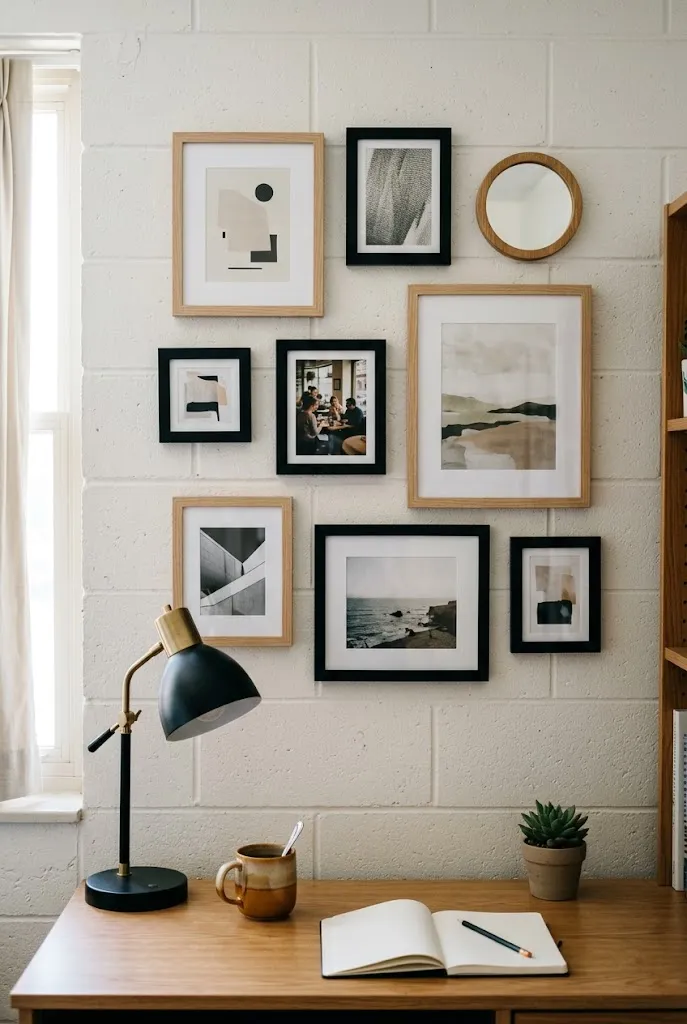
A gallery wall gives a bare wall a personal story. In a dorm, the trick is keeping everything light and removable: small lightweight frames, adhesive picture-hanging strips rated for the weight, and a layout planned on the floor first.
- Lay the frames on the floor and arrange them until the spacing feels even.
- Photograph the arrangement for reference.
- Hang from the center outward, leaving about two inches between frames.
Mix prints, photos, and a small mirror for variety. Use matching frame colors, such as black or natural wood, so the wall feels curated rather than chaotic.
9. String Photos Above the Desk
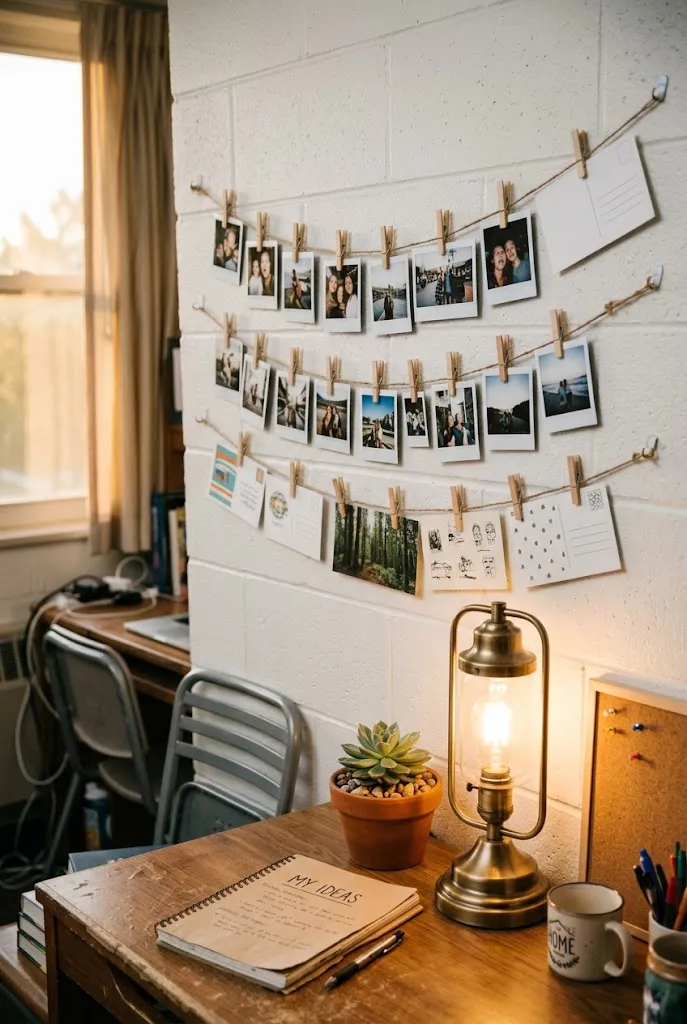
If a full gallery wall feels like too much, a photo string is lighter, cheaper, and easy to change. A length of twine or thin cord held with removable hooks, plus mini wooden clips, can display favorite photos, postcards, or concert tickets without any permanent marks.
The effect is more casual and personal than framed prints, and it’s easy to update each semester.
Quick Tip: Keep the line within a single band across the wall and limit it to eight to ten pieces so it looks styled rather than crowded.
10. Use an Over-the-Door Organizer
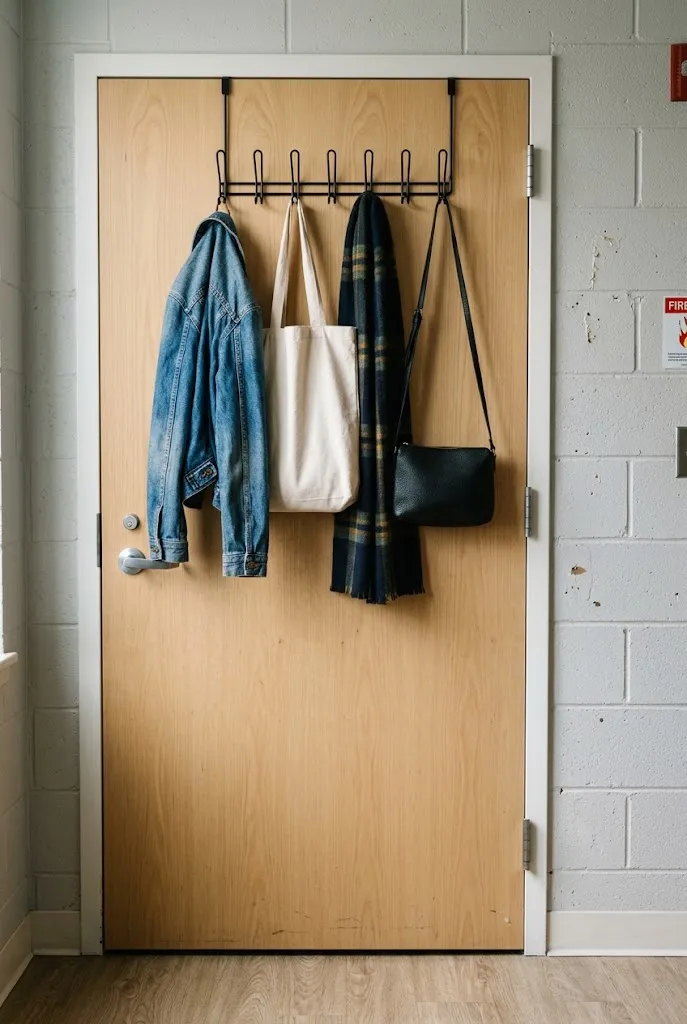
The back of the room door and the wardrobe door are some of the most underused surfaces. An over-the-door organizer, with hooks or pockets, can hold jackets, totes, scarves, and cleaning supplies without a single screw.
- Choose a hooks-only version for bulky items such as coats and bags.
- Choose a pocket version for small items like toiletries and chargers.
- Check that the door still closes properly, since some doors have tight clearance.
A matching color, such as black metal or natural wood, keeps the door from looking cluttered.
11. Add a Round Mirror to Bounce Light
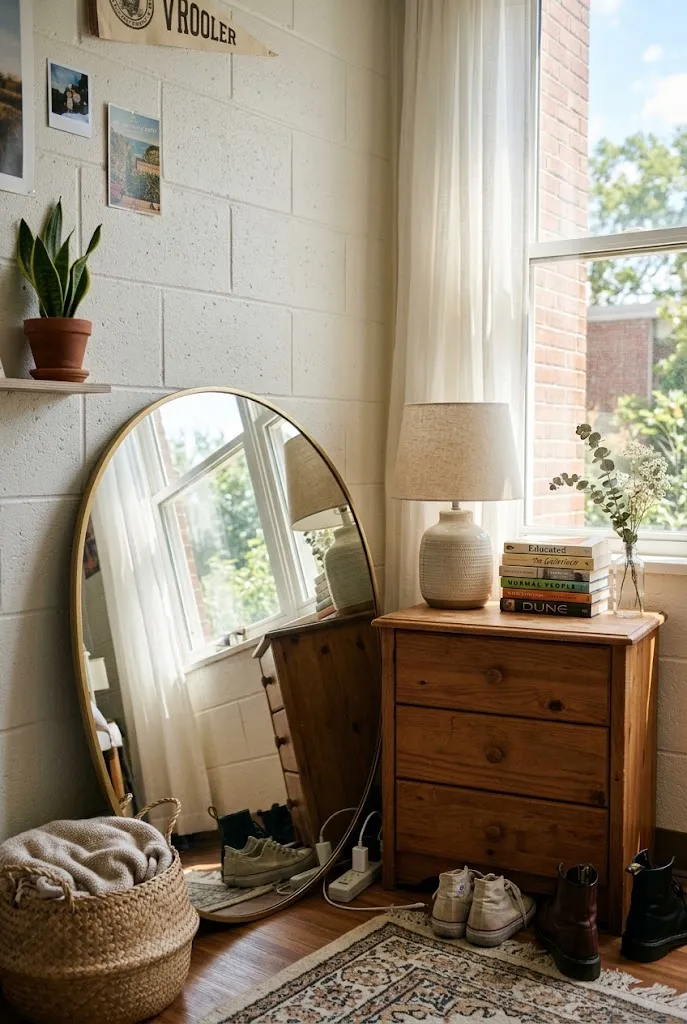
Dorm windows are often small, and a mirror placed opposite or beside them helps spread daylight around the room. A round mirror also softens a space dominated by rectangular furniture and block walls.
Place it where it reflects the window or a lamp rather than a cluttered corner. A medium-sized lightweight mirror with an adhesive-friendly backing, or a leaning floor mirror, is often easier to manage than a heavy framed piece.
Do: Angle the mirror toward natural light. Don’t: Hang a heavy glass mirror with weak adhesive; use a lightweight option or lean it safely.
12. Layer a Washable Rug Over a Cold Floor
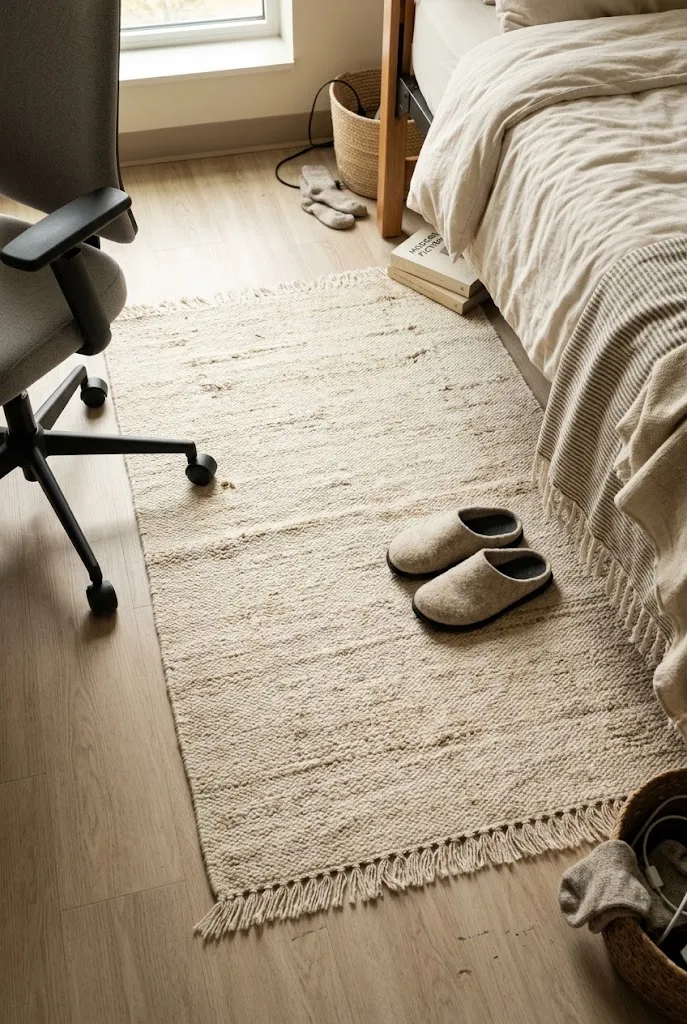
Many dorm floors are vinyl tile or thin carpet, and bare feet in the morning can be uncomfortable. A washable area rug adds warmth underfoot, absorbs sound, and visually zones the room.
A 4×6 or 5×7 rug usually fits most dorm layouts, extending beside the bed and toward the desk. Low-pile and flat-weave rugs are easier to clean and work better under rolling chairs than shaggy ones. A non-slip rug pad helps keep it in place.
| Rug Type | Effect | Best Fit |
|---|---|---|
| Flat-weave washable | Easy to clean, rolls up for storage | Rooms with a desk chair |
| Shag or plush | Very soft underfoot | Areas beside the bed |
13. Create a Floor-Cushion Reading Corner
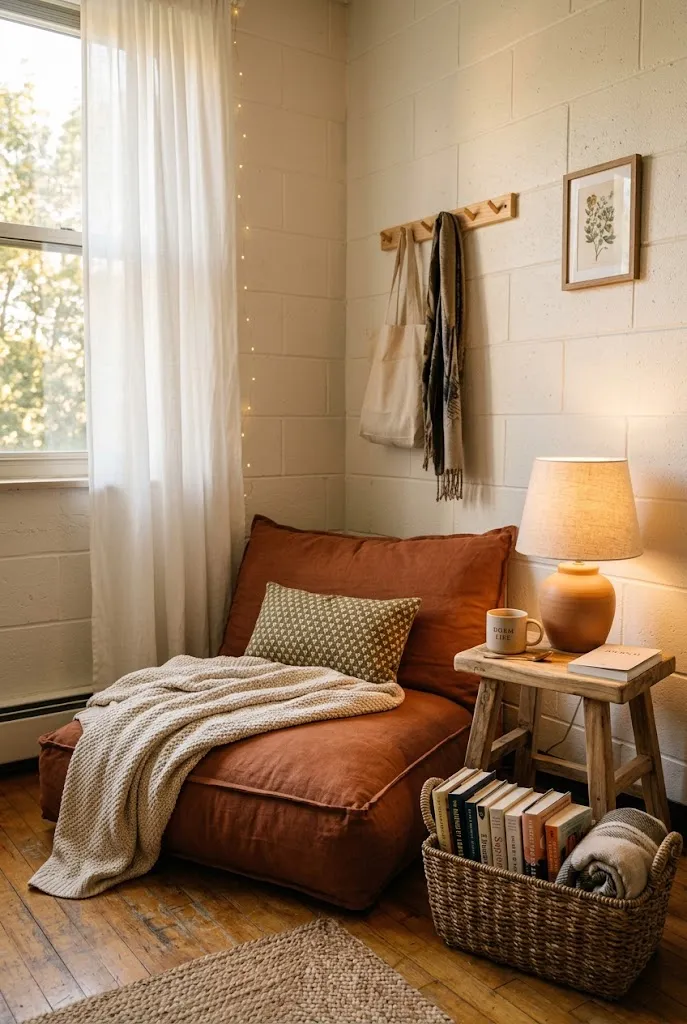
Not every dorm has room for an armchair, but a corner with a large floor cushion, a throw, and a small lamp gives you a spot that isn’t the bed or the desk. That separation matters: it gives your brain a place to relax that isn’t tied to sleep or schoolwork.
Choose a cushion with a washable cover, and add a slim shelf or a basket for a few books. Putting the lamp on a small stool or side table keeps the glow low and warm.
In practice, this works best in the corner farthest from the door, where it won’t block foot traffic.
14. Set Up a Compact Desk With a Warm Lamp
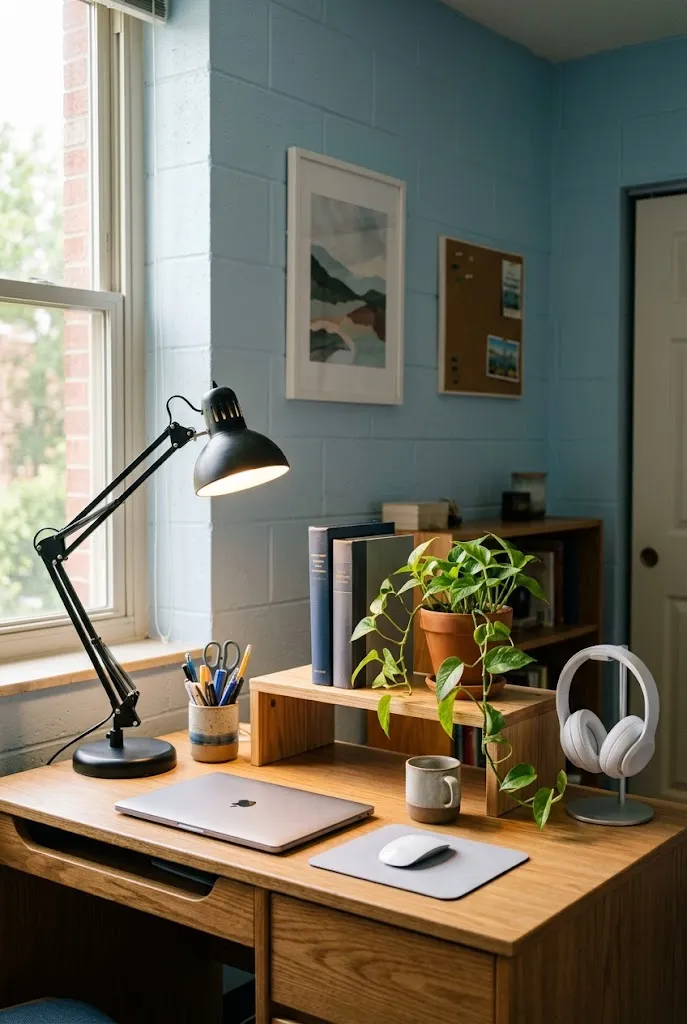
A cozy desk invites studying instead of avoiding it. Swap harsh overhead light for a task lamp with an adjustable arm and a warm bulb, keep only daily essentials on the surface, and use a small organizer for pens, notebooks, and chargers.
- A desktop shelf or riser gives you vertical space for books and a monitor.
- A small tray corrals items you move around.
- A single plant or candle-style LED adds personality without clutter.
Tips & Tricks: Position the lamp on the side opposite your writing hand to reduce shadows, and use a chair cushion if the school-issued chair is hard.
15. Add Low-Light Plants
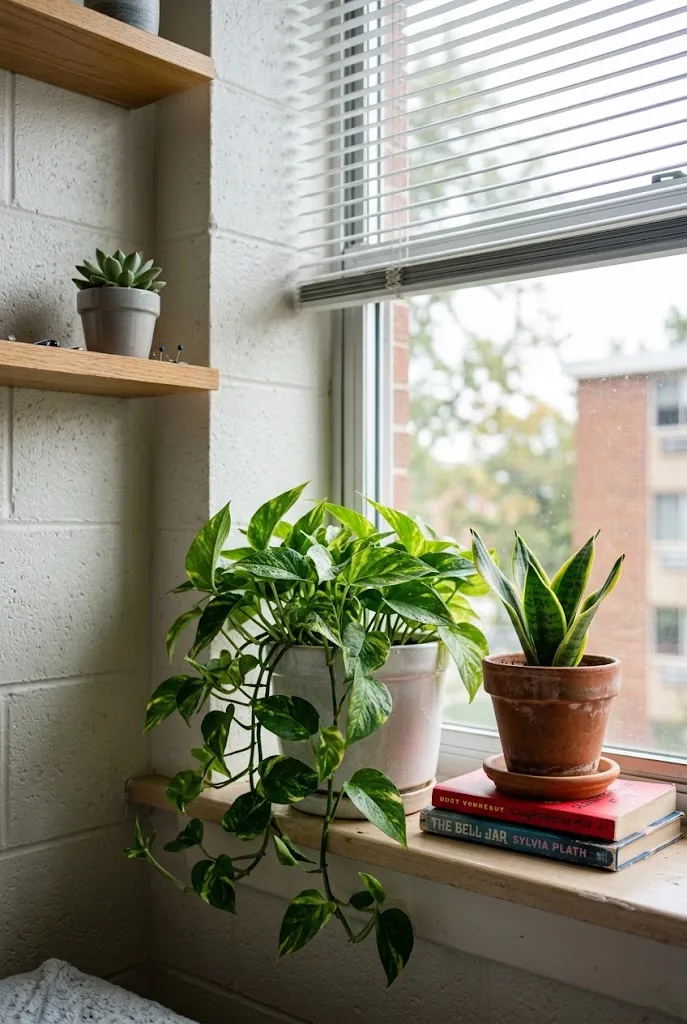
Greenery makes a dorm feel less temporary, but windows can be small and light can be limited. Pothos and snake plants are commonly recommended for lower-light indoor spaces because they tolerate it better than many other houseplants, and faux plants are a perfectly good option if you travel often or have a sparse schedule.
Place plants on a windowsill, desk corner, or shelf, and use small ceramic or woven pots to match your palette. Drainage matters, so use a saucer to protect furniture.
Best For: Rooms with at least some daylight Investment: Accessible
16. Place a Storage Ottoman at the Foot of the Bed
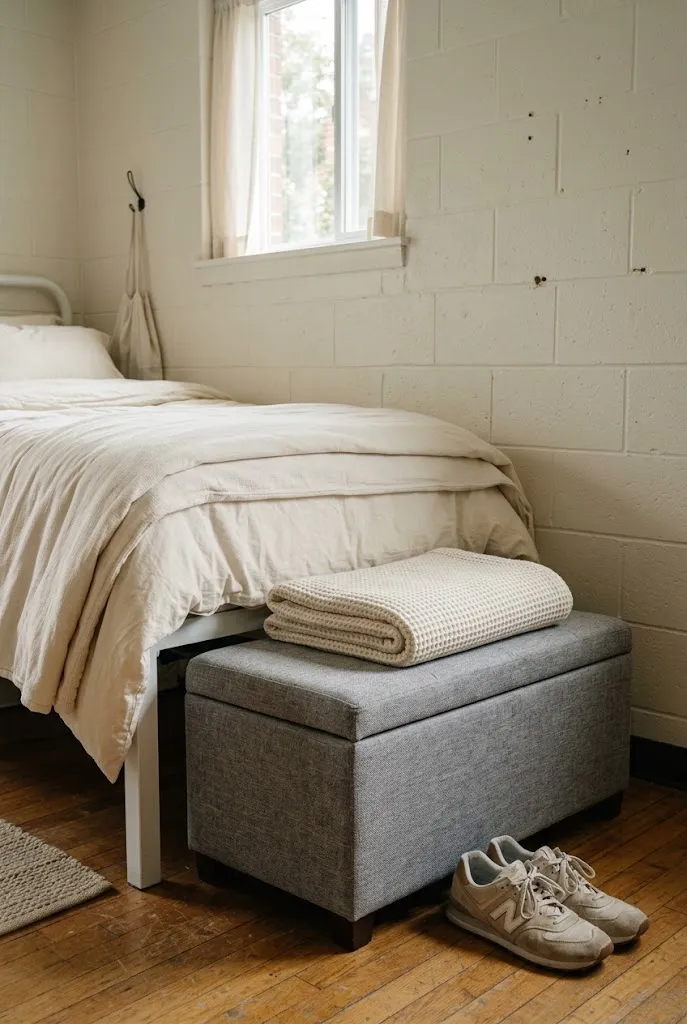
An ottoman or storage bench at the foot of the bed serves three roles: seating, a place to drop a bag, and hidden storage for blankets, shoes, or laundry bags. It also gives the bed end a finished, furniture-like look.
Pick a height lower than the mattress so it doesn’t block the line of the bed, and look for a lid that lifts rather than a flip-top you’ll keep forgetting to open. Fabric and woven styles are lighter to move, while upholstered ones feel more like a piece of furniture.
17. Turn the Mini-Fridge Top Into a Coffee Corner
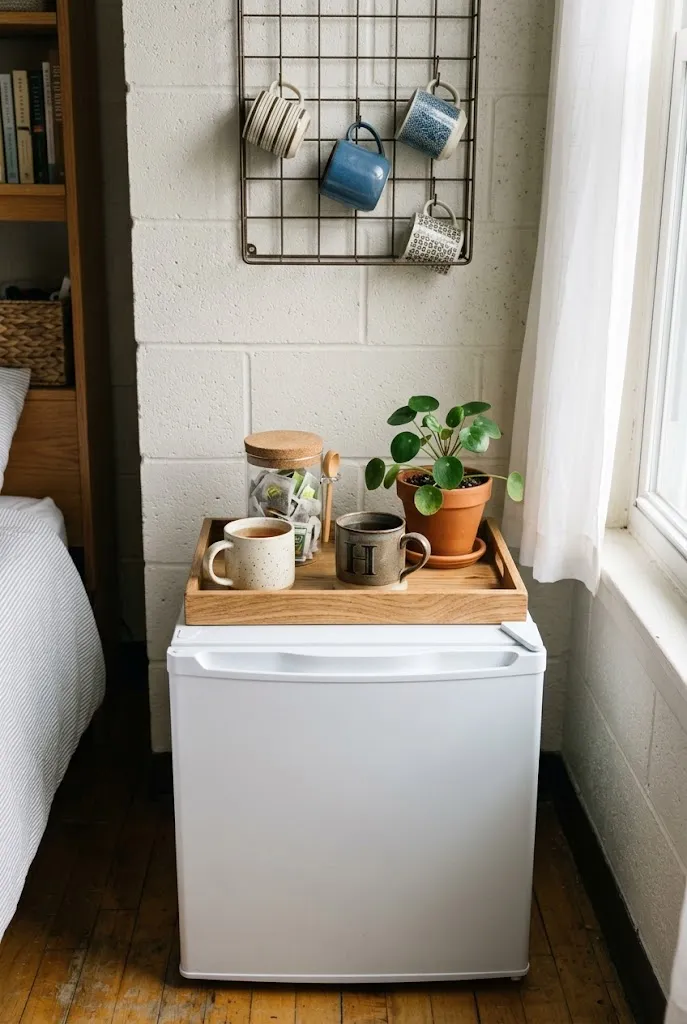
The top of a mini-fridge is surprisingly useful. A small tray, a few mugs on hooks or a rack, and a canister of tea or coffee make a corner that feels like a mini café.
Check what appliances your hall permits, as rules on kettles, coffee makers, and microwaves differ. If heating appliances aren’t allowed, a tray with cold-brew pouches, hot-chocolate packets, and reusable cups still gives the same inviting look.
Do: Keep a small cloth or tray under mugs. Don’t: Store anything on top that blocks ventilation or the fridge’s air vents, and leave clearance as the manufacturer recommends.
18. Clip a Caddy to the Bed Frame
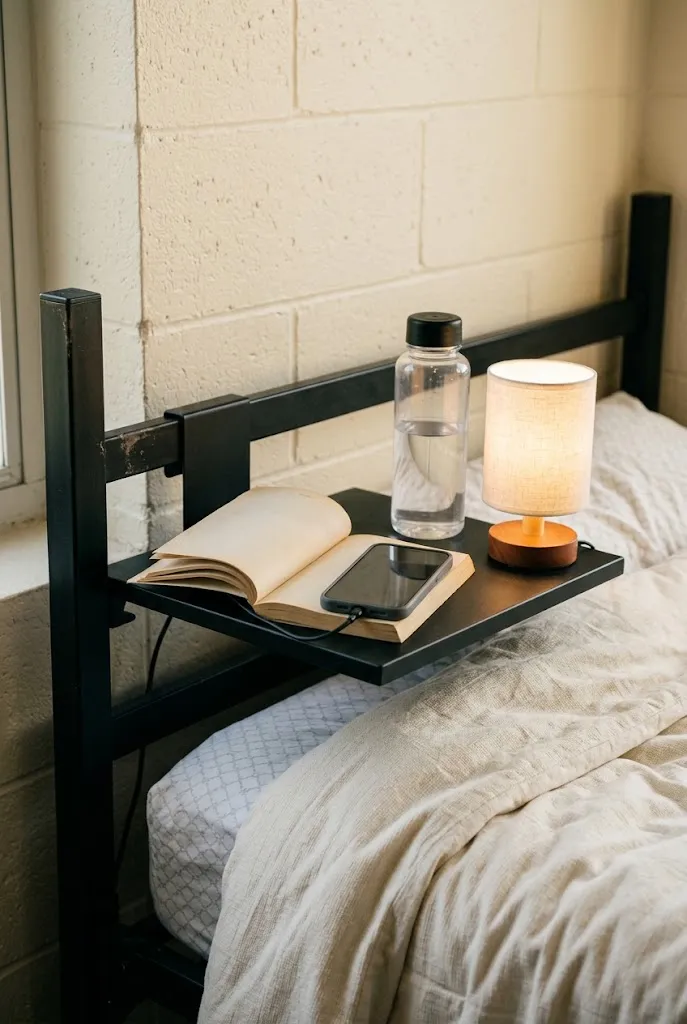
Late-night phone, glasses, water bottle, and book have to live somewhere. A clip-on or tuck-under bedside shelf attaches to the bed frame or slides under the mattress edge and keeps small items within reach without needing a nightstand.
Look for one with a slim profile so it doesn’t intrude on walking space. Fabric caddies work for soft items, while a small wooden or metal shelf can hold a glass of water and a lamp.
19. Mount a Wall Rail for Accessories
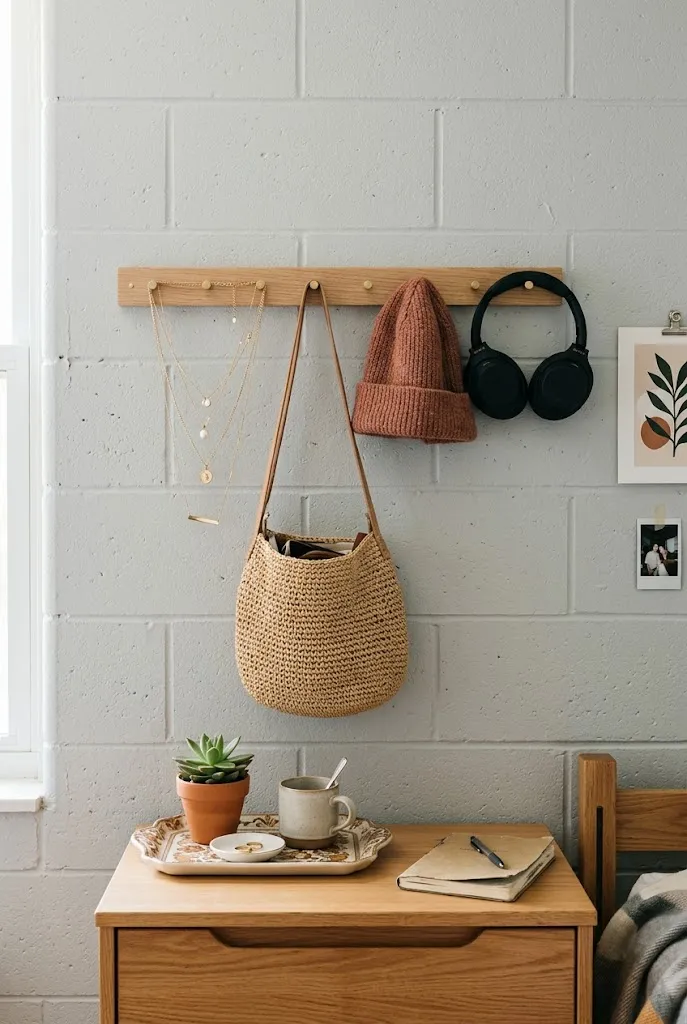
A slim adhesive-mounted rail or a row of removable hooks turns necklaces, bags, hats, and headphones into décor. It keeps small items off the desk and makes getting dressed quicker.
Space hooks evenly and group by type: jewelry on the left, bags on the right. Use lightweight items only, since adhesive hooks have weight limits.
Editor’s Note: Keep hooks at a height that still lets you reach them easily from the bed or door, but keep them away from outlets and light switches.
20. Reset the Wardrobe With Matching Hangers
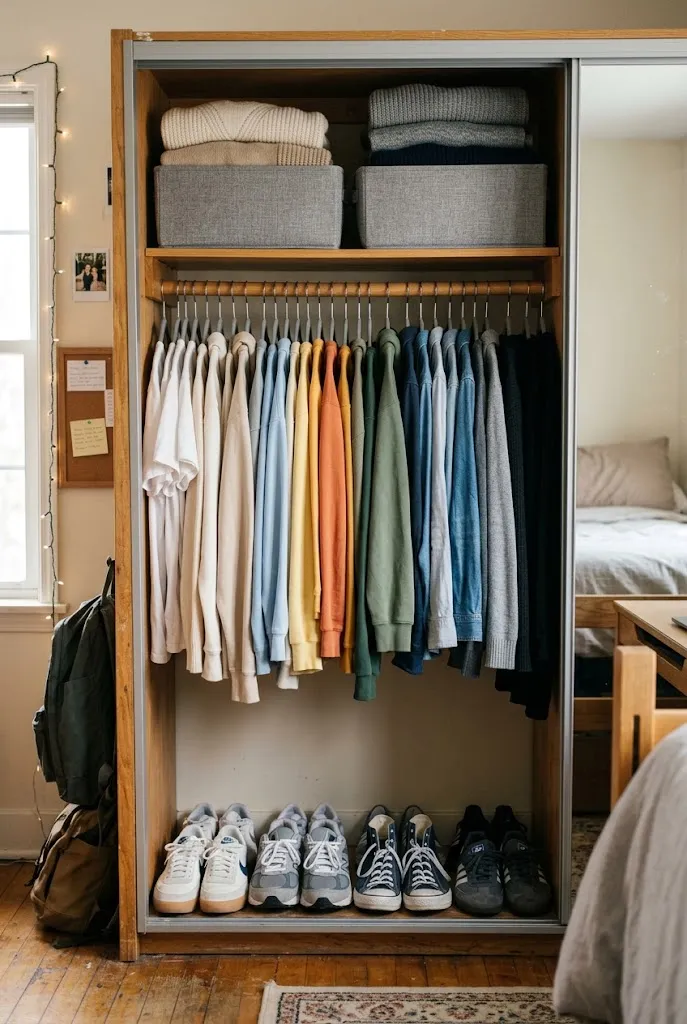
A wardrobe full of mismatched hangers looks cluttered even when the clothes are neat. Slim matching hangers, in velvet or a single color, give you more hanging room and a calmer look every time the door opens.
- Use velvet or flocked hangers to keep slippery tops from sliding.
- Hang by category: tops, bottoms, dresses.
- Use shelf dividers or small bins for folded sweaters.
If the wardrobe has an open front, a curtain panel on a tension rod hides everything in seconds.
21. Double the Hanging Space With a Tension Rod
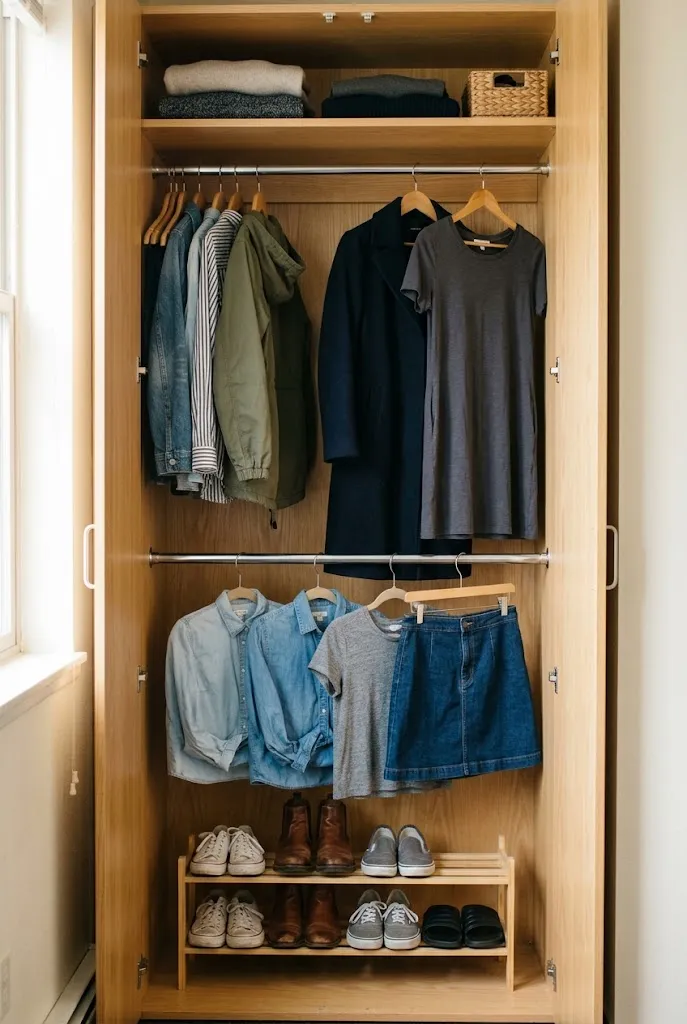
If clothes outgrow the wardrobe, a second tension rod beneath the existing rail doubles the usable hanging space for shorter items like shirts, skirts, and folded-over trousers. It’s a no-damage solution that comes out cleanly at move-out.
Make sure the wardrobe width and weight limits suit the rod, and keep heavier coats on the main rail. This works best when the first row is hung high enough to leave room for the second.
| Item | Best on Upper Rail | Best on Lower Rail |
|---|---|---|
| Coats, dresses | Yes | No |
| Shirts, skirts | Possible | Yes |
22. Coordinate Two Sides With a Shared Palette
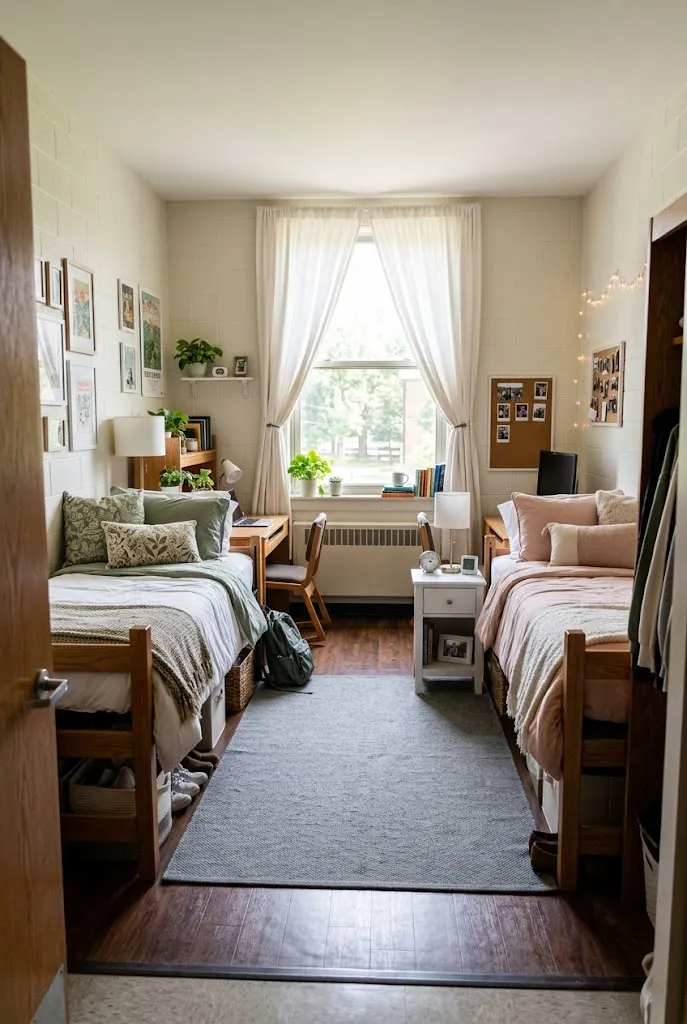
Two roommates don’t have to match everything to make the room feel unified. A shared palette of two main colors and one accent lets each person keep their own style while the room reads as one space.
For example, both sides could use white and gray as a base, with one choosing sage accents and the other choosing blush. Matching one element, such as curtains or a central rug, ties everything together.
Common Mistake: Buying everything in the same pattern, which can feel like a hotel.
Better Approach: Share a color family and vary textures and patterns.
23. Divide a Shared Room With a Folding Screen
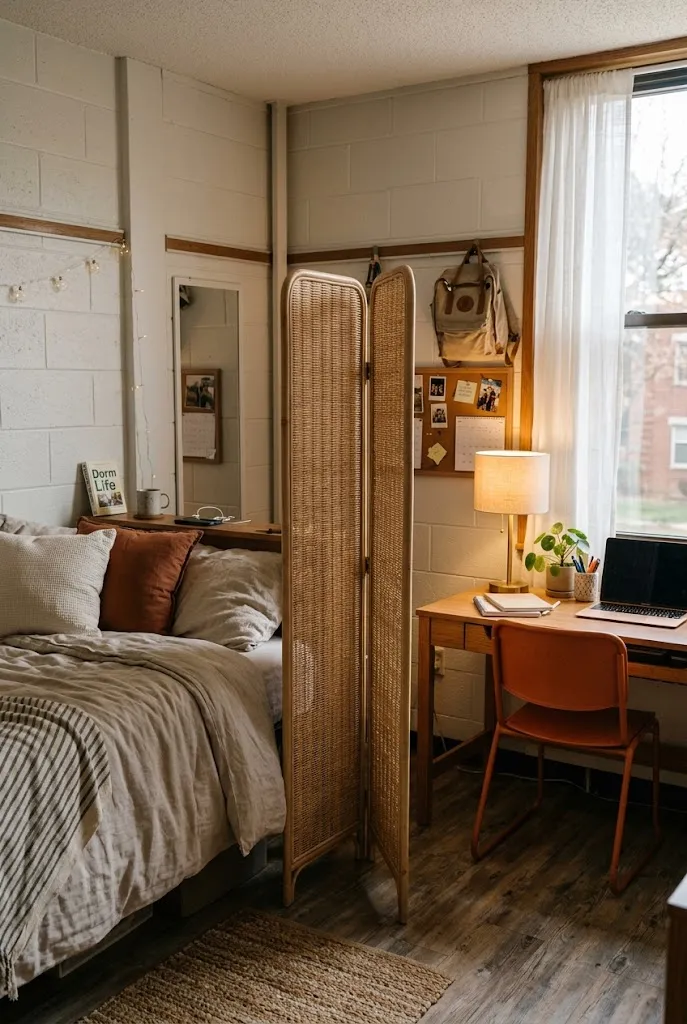
In a shared room, a lightweight folding screen or a curtain on a tension rod creates visual privacy for changing, studying, or sleeping on different schedules. It also makes each side feel like a distinct zone.
Choose a screen low enough to keep daylight moving through the room. A woven or fabric panel looks softer than a hard plastic one, and a hinged design folds flat for storage.
Best For: Roommates with different sleep or study routines Visual Effect: A gentle partition rather than a wall
24. Try a Moody Dark Academia Look
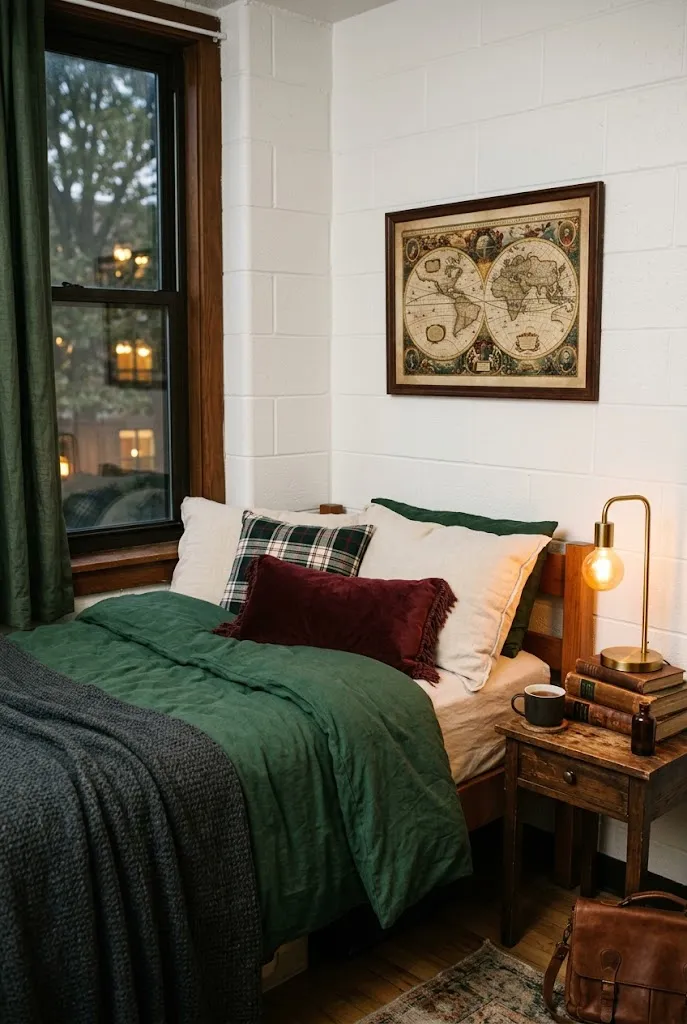
Not every cozy room is light and neutral. Deep forest green, navy, charcoal, and warm wood tones create a library-like mood that suits a lamp-lit evening.
- Use dark bedding with a few lighter pillows so the bed doesn’t disappear.
- Add warm bulbs, brass-toned accents, and stacked books.
- Use framed vintage-style prints or maps on removable strips.
Because dorm rooms are small, keep the walls light and bring the dark colors in through textiles and decor so the room doesn’t feel closed in.
25. Bring in Boho Texture With Woven Pieces
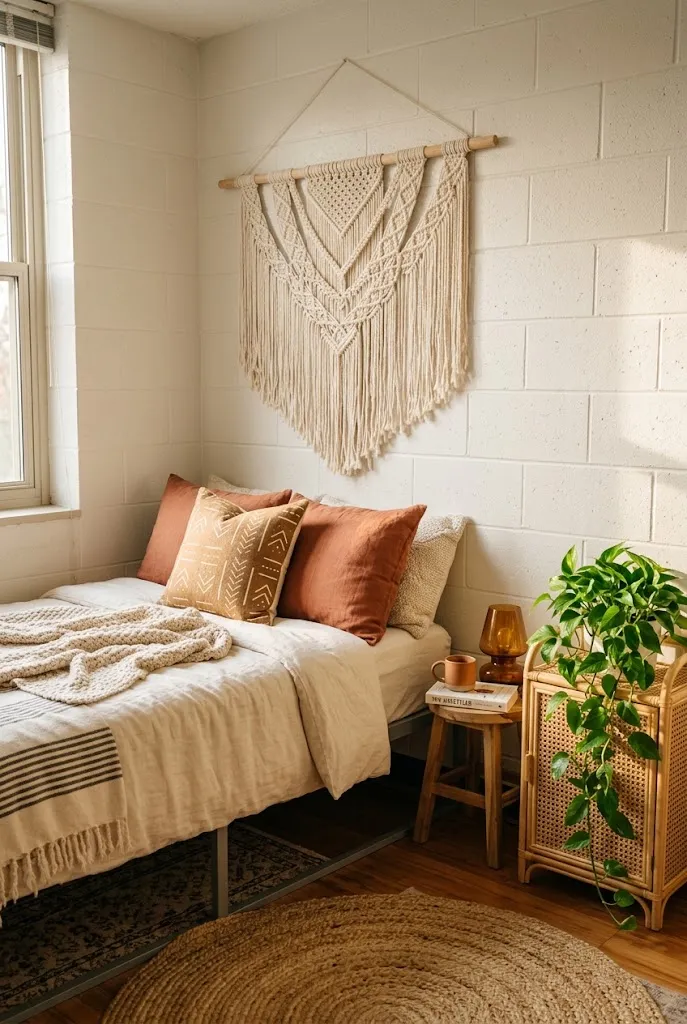
Boho in a dorm works best as a layer of texture, not a full theme. A woven wall hanging, a jute or braided rug, a rattan-look basket, and a macramé-style pillow cover bring warmth without taking floor space.
Stick to a warm neutral base of cream, terracotta, and tan so the mix of textures looks calm. One large woven piece above the bed is more effective than several small ones.
Quick Tip: Use a lightweight wall hanging and removable hooks, and keep it away from lamps and heat.
26. Go Coastal With Blue, White, and Linen
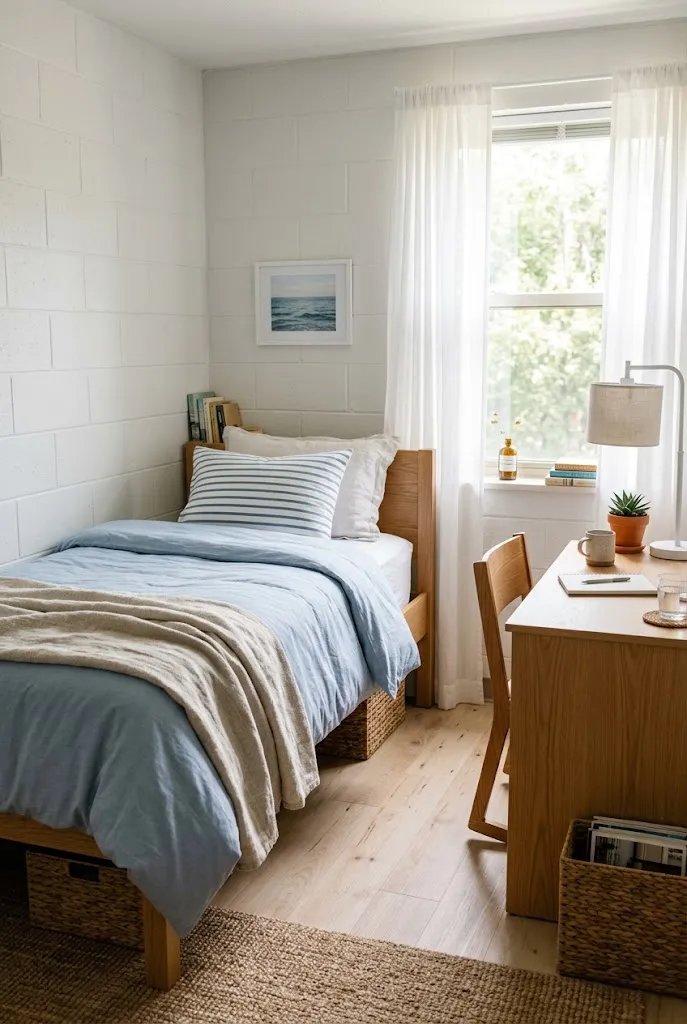
A coastal dorm looks airy and calm. Soft blue and white bedding, a natural linen throw, and a few pale wood or woven accents create a relaxed feeling even in a windowless-looking room.
Skip the shell decor and let color and texture do the work: a striped pillow, a pale blue duvet, and a light rug are enough. Keep surfaces uncluttered so the airy effect comes through.
| Element | Effect | Best Fit |
|---|---|---|
| Pale blue duvet | Calm, fresh base | Beds with white walls |
| Natural linen throw | Relaxed texture | Layering at the foot of the bed |
27. Style a Cottagecore Corner With Soft Florals

A cottagecore dorm leans on small-scale florals, gingham, and vintage-style details. A floral duvet cover or a few patterned pillows, an embroidered throw, and a small bud vase with dried or faux flowers give a gentle, storybook feel.
Keep the walls plain and let the pattern sit on the bed so the room doesn’t feel busy. One or two pattern scales is enough; mixing too many can feel chaotic.
Do: Repeat one color from the florals in a solid pillow. Don’t: Combine more than two bold patterns in a small room.
28. Soften Everything With Blush and Cream
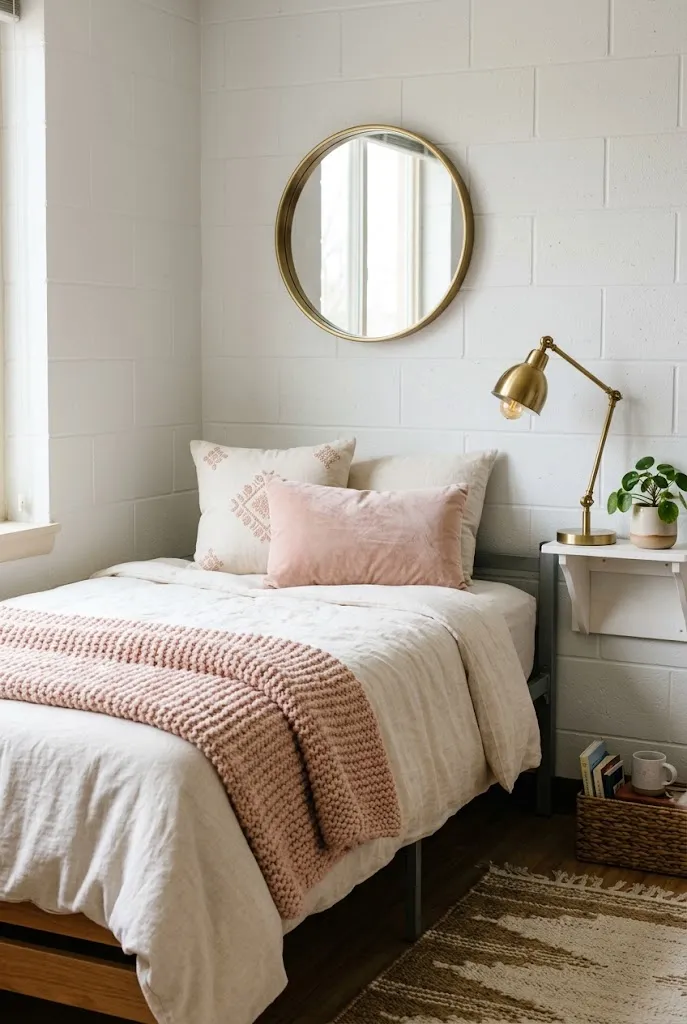
A palette of blush, cream, and warm white feels gentle and calm without turning into a saccharine pink room. Blush works best as an accent against a neutral base: a blush throw, a pillow, or a lampshade.
Add one or two metallic touches, such as a brass-toned lamp base or frame, for contrast. Linen and soft cotton textiles keep the look relaxed.
Editor’s Note: If you share a room, check how the blush works with your roommate’s bedding, since pinks can clash with some grays.
29. Keep It Calm With Scandinavian Minimalism
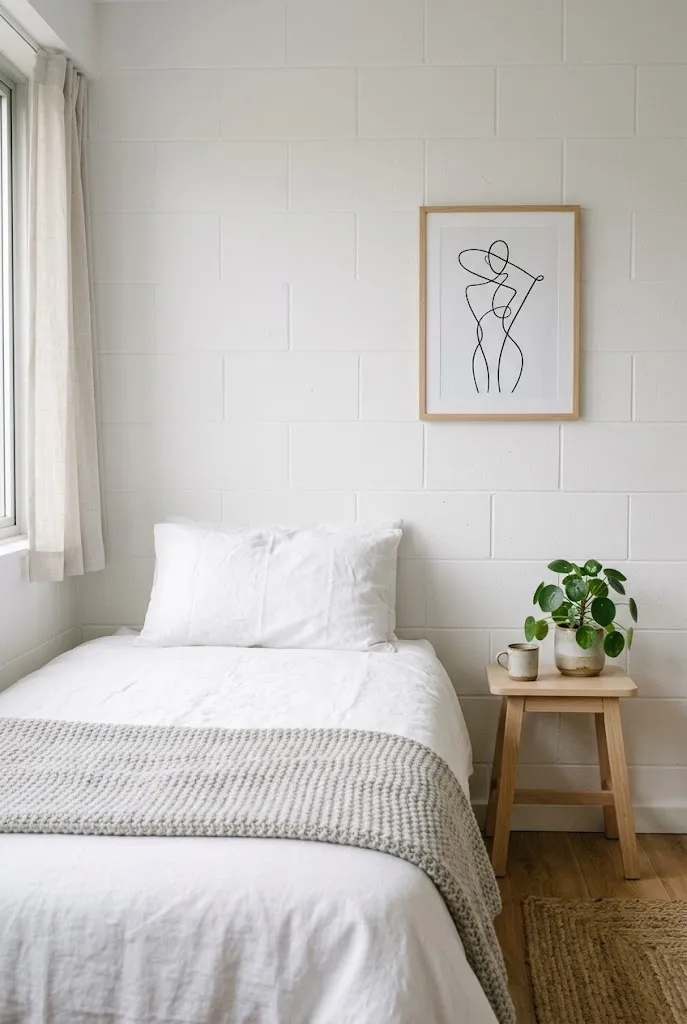
Scandinavian-inspired dorm design relies on restraint: white walls, pale wood, soft gray textiles, and very few objects. It works well in small rooms because it reduces visual clutter.
- Choose a white or light gray duvet and one textured throw.
- Add a simple wooden stool or shelf for function.
- Keep surfaces mostly clear, with one plant or one candle-style LED.
The cozy part comes from the textiles and warm lighting, not from adding more items.
30. Layer Lamps Instead of Using the Overhead Light
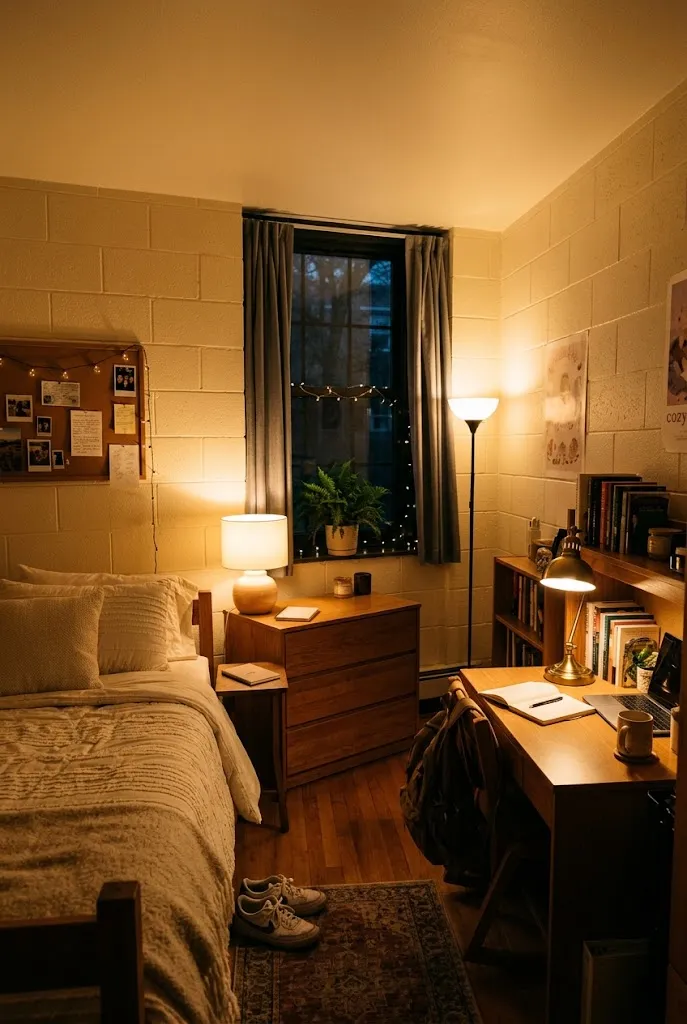
Instead of one harsh overhead light, use two or three smaller light sources at different heights: a desk lamp, a small bedside lamp, and a floor or clip-on light in a corner. The layers create pools of warm light that make the room feel like a home at night.
Use warm-white bulbs, and check your hall’s rules on lamp types and bulb wattage, as some schools restrict halogen or high-heat lamps. LED lamps run cooler and are usually the safer choice.
| Lamp | Role | Best Spot |
|---|---|---|
| Desk lamp | Task light | On the desk |
| Small table lamp | Soft ambient glow | Bedside or dresser |
| Floor or clip-on lamp | Fills dark corners | Reading corner |
31. Build an Autumn Corner With Rust and Amber
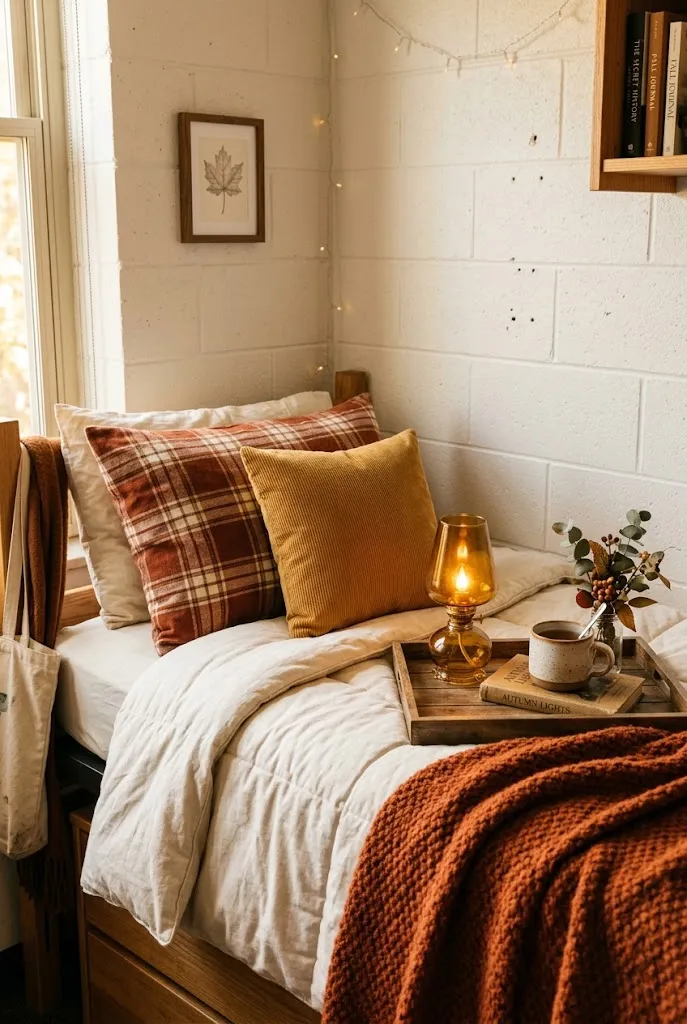
When the weather cools, a few seasonal swaps make the room feel warmer without a full redecoration. A rust or mustard throw, a flannel or corduroy pillow, and a small amber-toned lamp bring in the season.
Keep the base bedding neutral and add the seasonal colors as accents so you can swap them out as the months change. A small tray with a mug and a book on the bed or nightstand adds to the mood.
Quick Tip: Use faux or dried seasonal decor if real candles aren’t allowed, since open flames are restricted in many residence halls.
32. Make a Charging Station With Cable Control
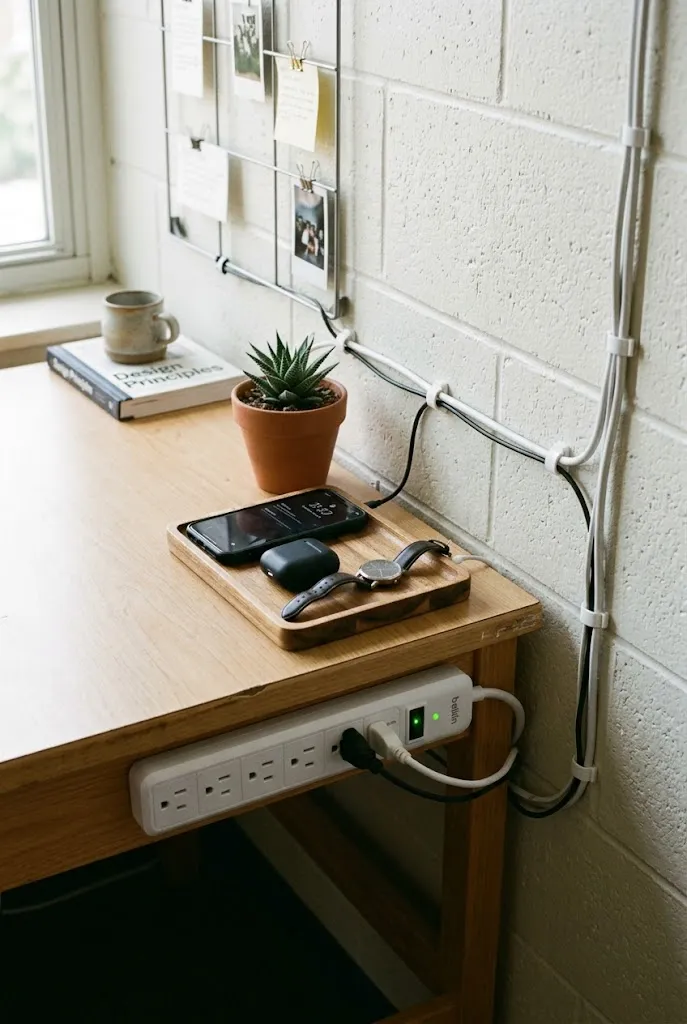
Cords are the fastest way for a tidy room to look messy. A small charging tray or a power strip mounted to the side of the desk keeps phones, laptops, and headphones in one spot, while cable clips guide cords along the edge of the desk.
Use a surge-protected power strip if your hall permits one, and check any limits on extension cords. Adhesive cable clips keep cords from tangling around furniture legs.
Common Mistake: Running cords across walkways.
Better Approach: Route cables along the wall and desk edge and group them into one clean line.
33. Roll a Slim Cart Beside the Desk
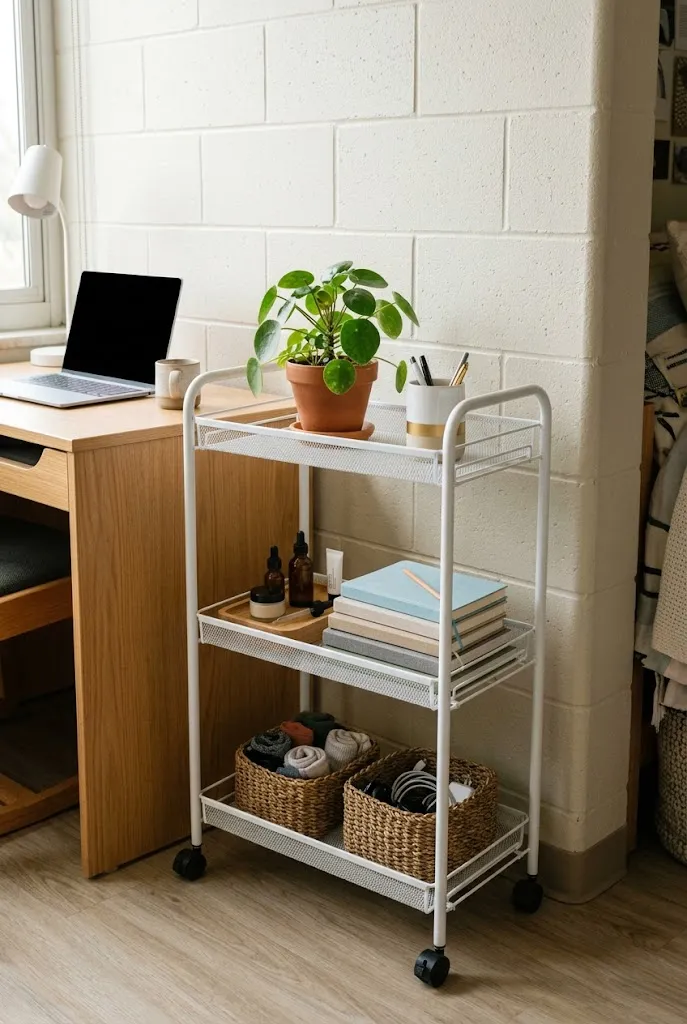
A narrow three-tier rolling cart fits in the gap between a desk and a bed and holds supplies, snacks, skincare, or craft materials. Because it’s on wheels, it can slide out when you need it and tuck away when you don’t.
Choose a slim cart in a color that matches your palette, and use small baskets or bins on each tier so contents look intentional. Lock the wheels if the floor isn’t level.
Best For: Rooms with limited drawer space Investment: Accessible
34. Plan the Week on a Magnetic Board
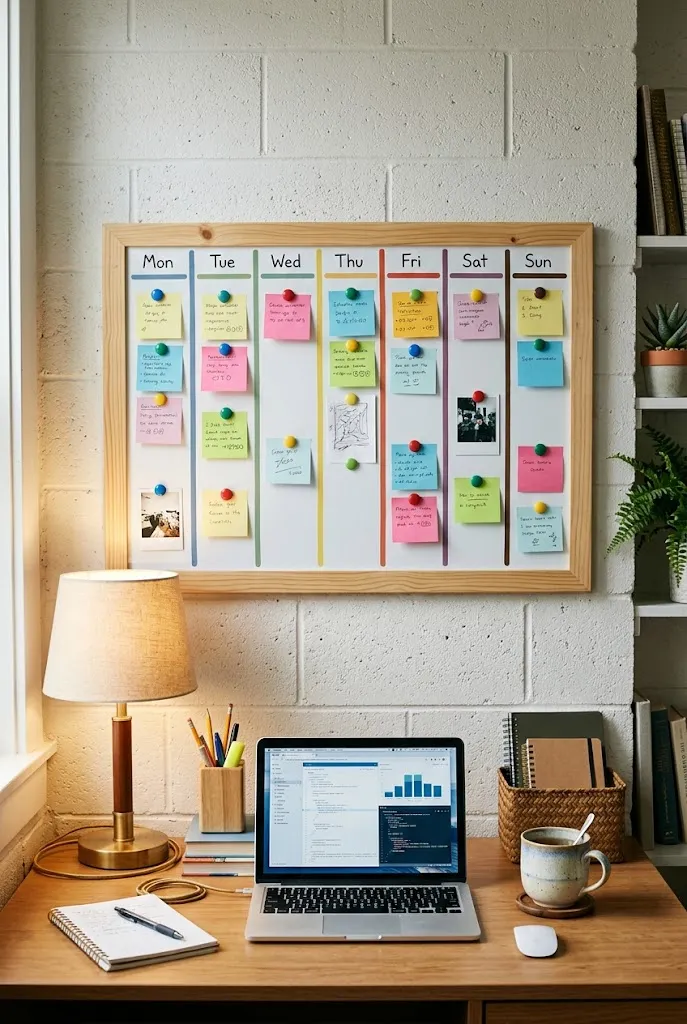
A small magnetic whiteboard or a framed dry-erase board keeps deadlines, class times, and to-do lists visible without cluttering the desk. It also fits the cozy feel when it sits inside a wood frame and is paired with a few colored magnets.
Hang it where you can see it from the desk, and keep it light enough for adhesive strips. Divide it into days or categories, such as classes, work, and personal, so it’s easy to read at a glance.
Tips & Tricks: Use two or three marker colors, one for classes, one for deadlines, one for personal plans, so the board stays scannable.
Where to Start
You don’t need all 34 ideas. Pick one for each of three areas: light (a warm lamp or string lights), softness (layered bedding and a rug), and function (under-bed storage or a charging station). Those three changes make the biggest difference, and everything else can be added gradually as you learn how you actually use the room.
Before move-in day, read your housing handbook and keep receipts for anything you might need to return. Choosing removable products also makes move-out a lot less stressful.