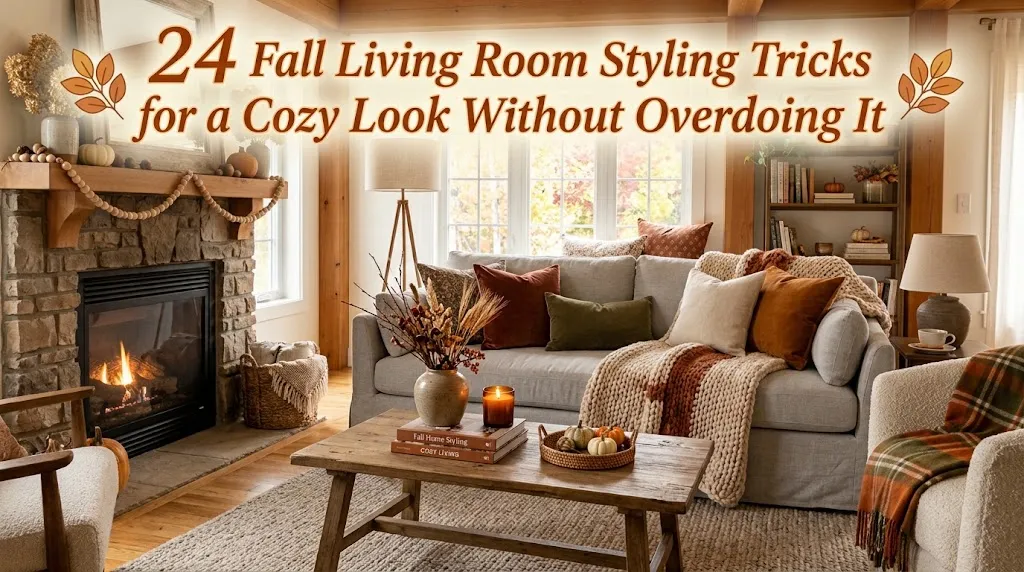
24 Fall Living Room Styling Tricks for a Cozy Look Without Overdoing It
Most fall living rooms go wrong in the same way: too many pumpkins, too many patterns, too many orange things competing for attention. A cozy room usually comes from fewer, better-placed changes. Warmer light, a heavier blanket, one well-chosen color family, and a bit of natural material do most of the work.
The 24 fall living room styling tricks below are built around that idea. Some cost almost nothing and work in a rental. Others involve moderate upgrades like curtains or a new rug, and a few are worth considering if you’re ready to invest. Each one has a clear visual identity and a practical reason it works, so you can pick three or four that suit your space rather than trying to do everything at once.
1. Commit to One Warm Color Family
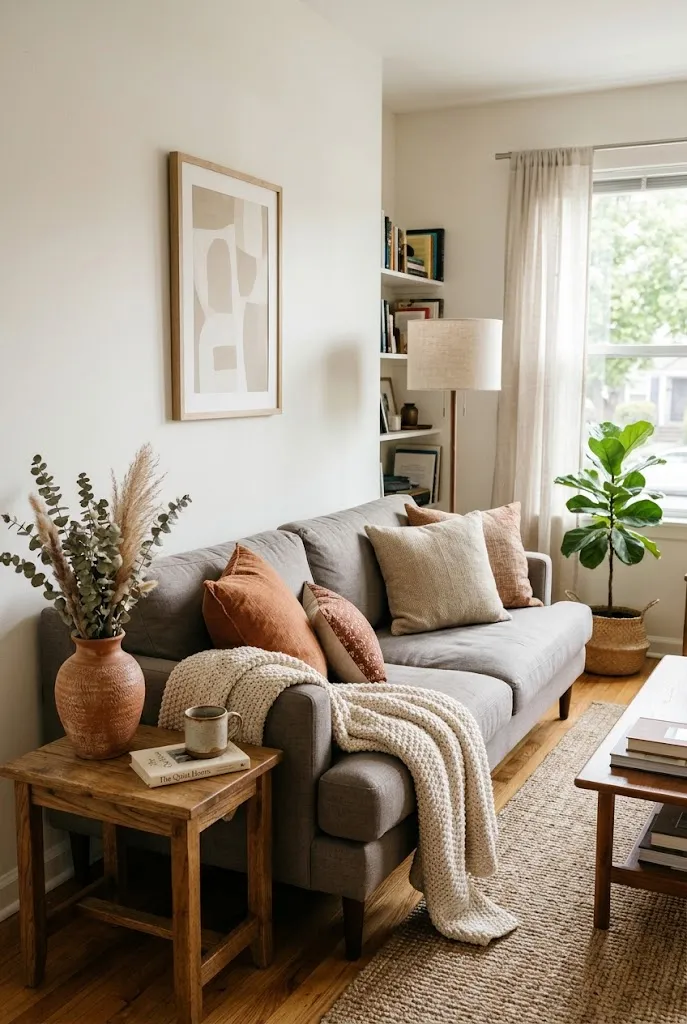
Pick a single family, such as rust and oat, or deep green and caramel, and let it guide every seasonal addition. A living room with a gray sofa and cream walls can take on a fall mood through accents in the same two or three tones, without a full seasonal overhaul.
- Choose one dominant accent (rust, ochre, or forest green)
- Add one supporting neutral (oat, cream, or warm taupe)
- Keep any third color to a single small object
The restraint is what keeps the room calm. When every item shares an undertone, mixed pieces look collected rather than random.
2. Swap Summer Throws for Heavier Textiles
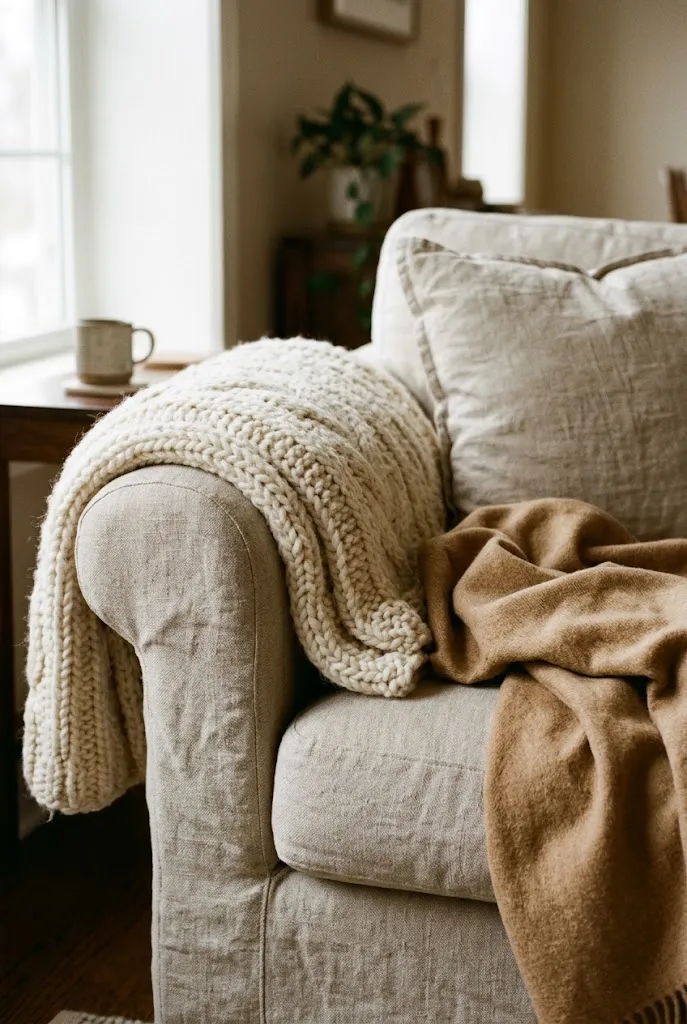
Texture is the fastest way to make a room feel seasonal. Replace light cotton throws with chunky knit, wool-blend, or brushed flannel, and drape them loosely rather than folding them into neat squares.
Quick Facts
Best For: Sofas and accent chairs in any room size
Investment: Accessible
Visual Effect: Softer lines, more visible depth
One large throw on the sofa arm and a smaller one over an accent chair is usually enough. More than that and the seating starts to look like storage.
3. Layer Two Pillow Textures, Not Six Patterns
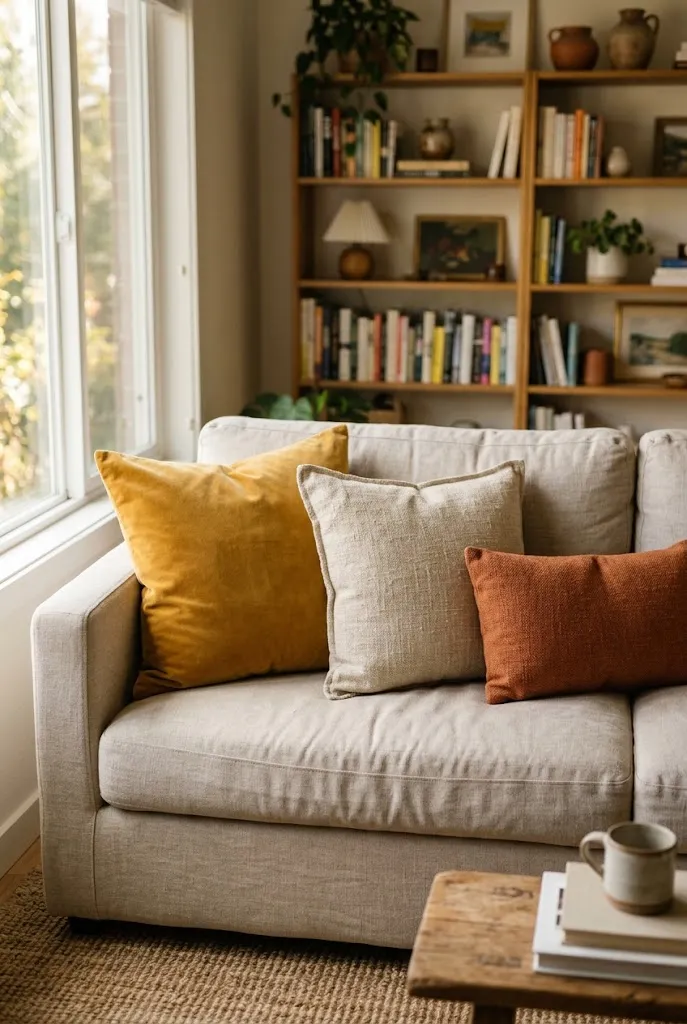
Pillows often tip a room into clutter. A calmer approach is to pair two textures, such as velvet with nubby linen, in related colors, then add one pattern at most.
Do: Mix sizes (two 20-inch squares, one lumbar) and keep colors in the same warm range.
Don’t: Stack four patterned pillows in competing scales. The eye has nowhere to rest.
Odd numbers tend to look more natural than even ones, though a symmetrical pair works well on a formal sofa.
4. Anchor the Seating With a Heavier Rug
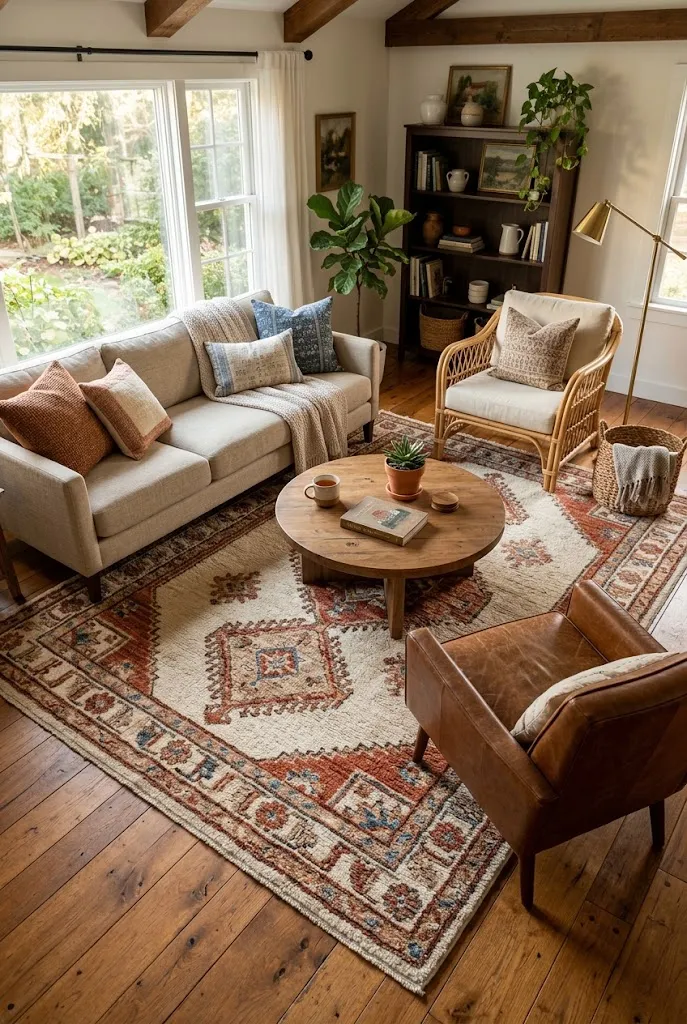
A rug changes how a whole room feels underfoot and underlit. Fall is a good moment to move from a flat-weave summer rug to something denser, or to layer a smaller textured rug over a larger neutral one.
| Option | Effect | Best Fit |
|---|---|---|
| Wool or wool-blend | Dense, soft, holds warmth | Rooms with hard flooring, regular use |
| Jute layered under a smaller rug | Natural texture, budget-friendly depth | Renters and mixed-pattern rooms |
| Low-pile washable | Easy cleaning | Homes with kids or pets |
Make sure at least the front legs of the sofa and chairs sit on the rug so the arrangement feels grouped.
5. Style the Coffee Table With a Low Seasonal Tray
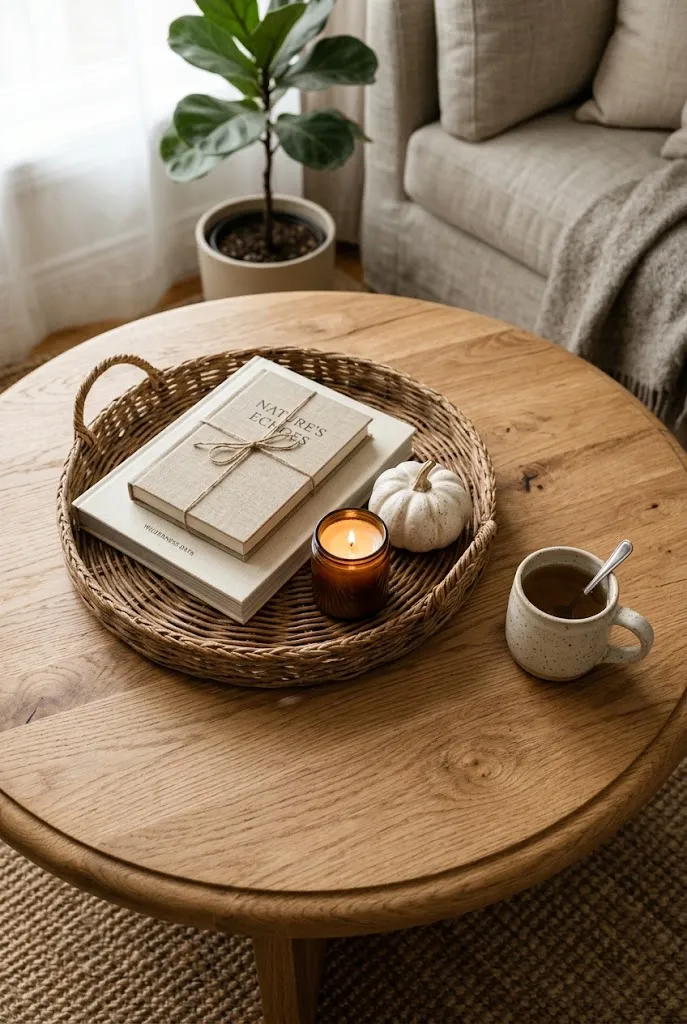
A tray keeps small objects looking intentional. Keep everything below sightline height so people can still talk across the table.
- Set a wood or rattan tray off-center.
- Add a short stack of two books.
- Place one candle or small vessel on top of the books.
- Finish with a single organic piece, such as a small gourd or a bowl of acorns.
Leave open table space beside the tray for mugs and remotes.
6. Let Bare Branches Do the Work in a Tall Vase
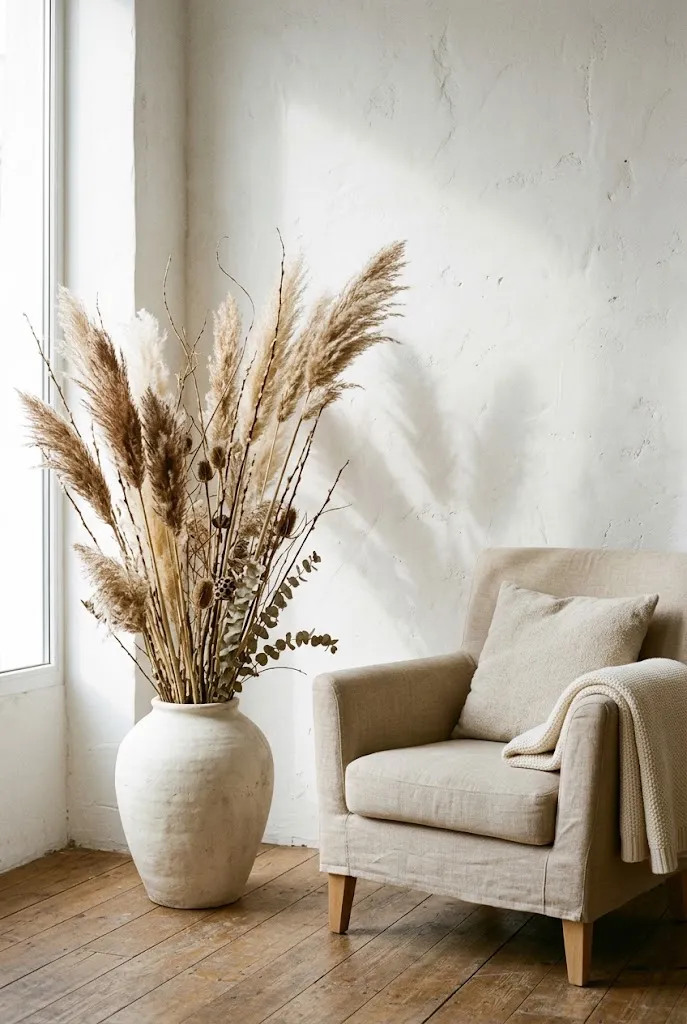
A large vase with a few tall branches fills vertical space and adds an autumn mood without the weight of a full arrangement. Choose a heavy ceramic or glass vase so it doesn’t tip.
Dried oak, birch, eucalyptus, or ornamental grasses all work. Keep the arrangement airy; you should see the gaps between stems. Place it on a console, beside a fireplace, or on the floor next to a sofa where the room feels visually low.
7. Use Real Pumpkins in Three Sizes, Not Thirty
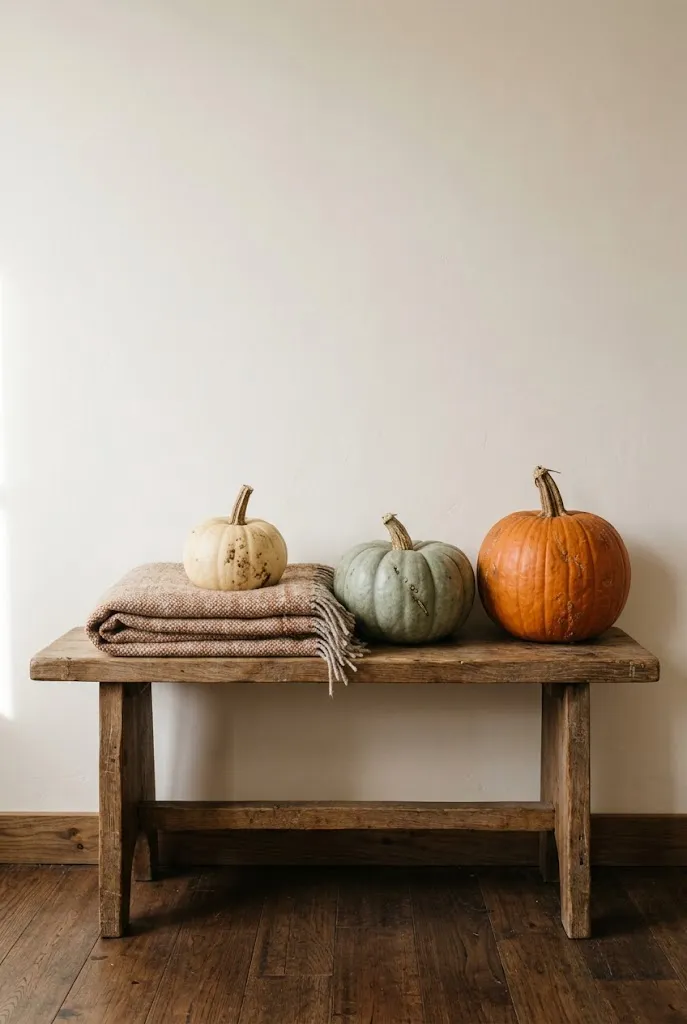
Common Mistake: Scattering pumpkins across every surface so the room reads as a seasonal display.
Better Approach: Group three in varied sizes in one spot, such as the hearth, a bench, or a corner of the floor, and use muted colors like cream, sage, or slate.
Real pumpkins last longer indoors when kept away from direct heat and moisture. They also add organic weight that faux versions often lack.
8. Switch to Warm Light Bulbs
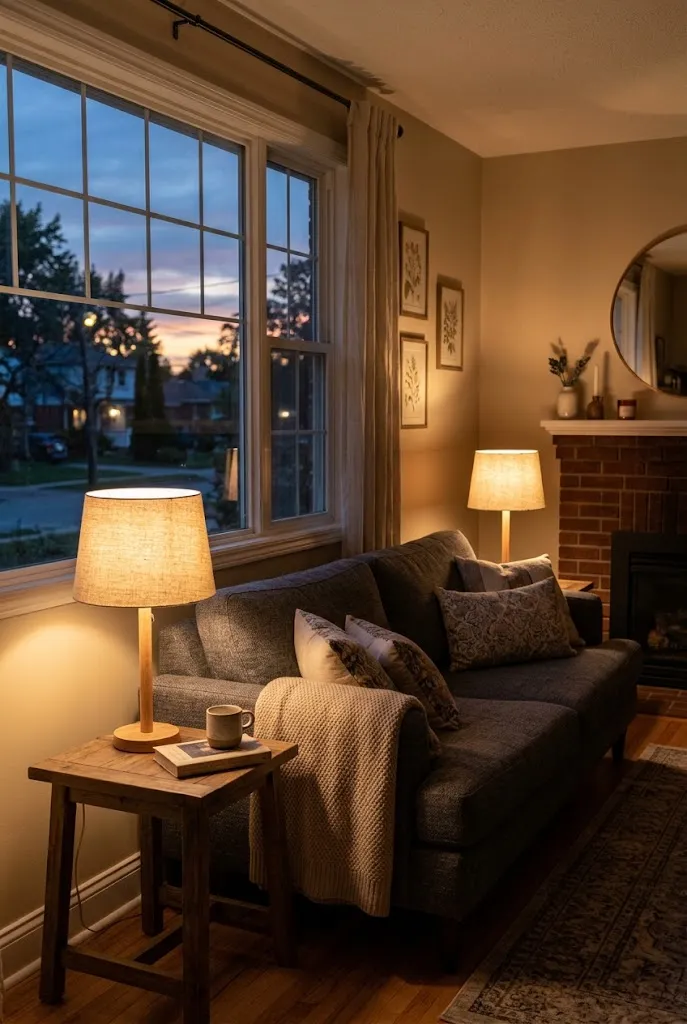
Cool white bulbs make even a well-styled fall room feel flat. Replace them with bulbs labeled around 2700K for a softer, amber-leaning glow, and use several low lamps rather than relying on one overhead fixture.
Tips & Tricks
- Place at least one lamp at sofa height and one at eye level near a corner.
- Add dimmers or smart bulbs where possible.
- Choose fabric or paper shades, which diffuse light better than glass.
- Turn off the overhead light in the evening and see how the room changes.
9. Cluster Candles on One Surface
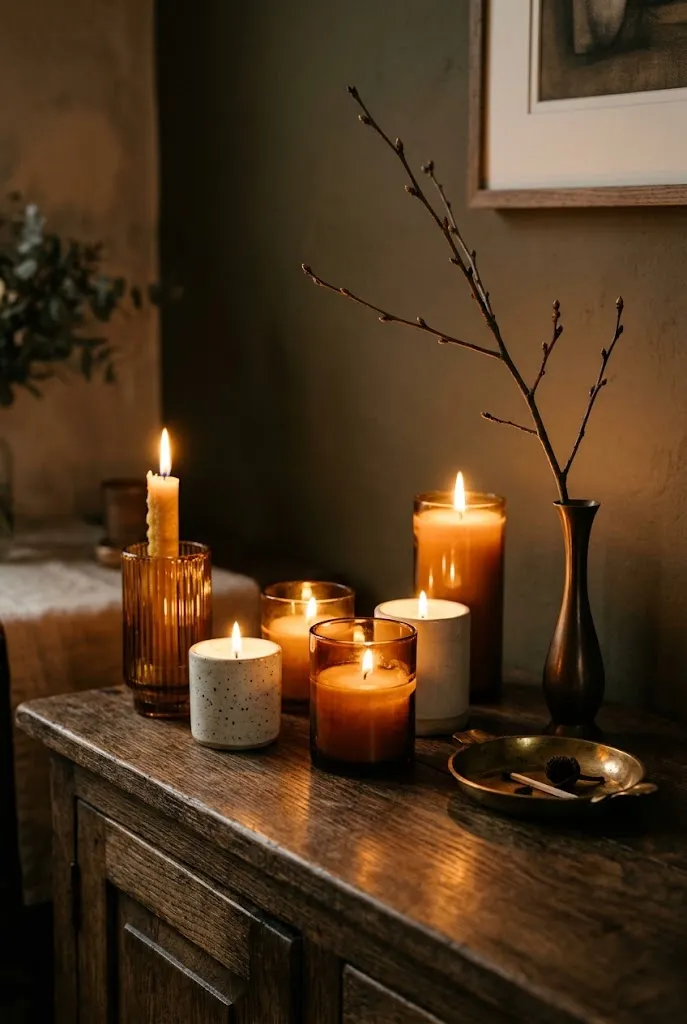
Candles add warmth, but they look best grouped rather than scattered. Use three to five in varied heights on a single mantel, tray, or sideboard, and keep the container material consistent: glass, ceramic, or brass.
Best For: Mantels, consoles, and coffee tables
Investment: Accessible
Safety Note: Keep flames away from branches, dried stems, and fabric, and never leave candles unattended. Battery-operated options work where open flame isn’t practical.
10. Hang Curtains in Oat or Rust Linen
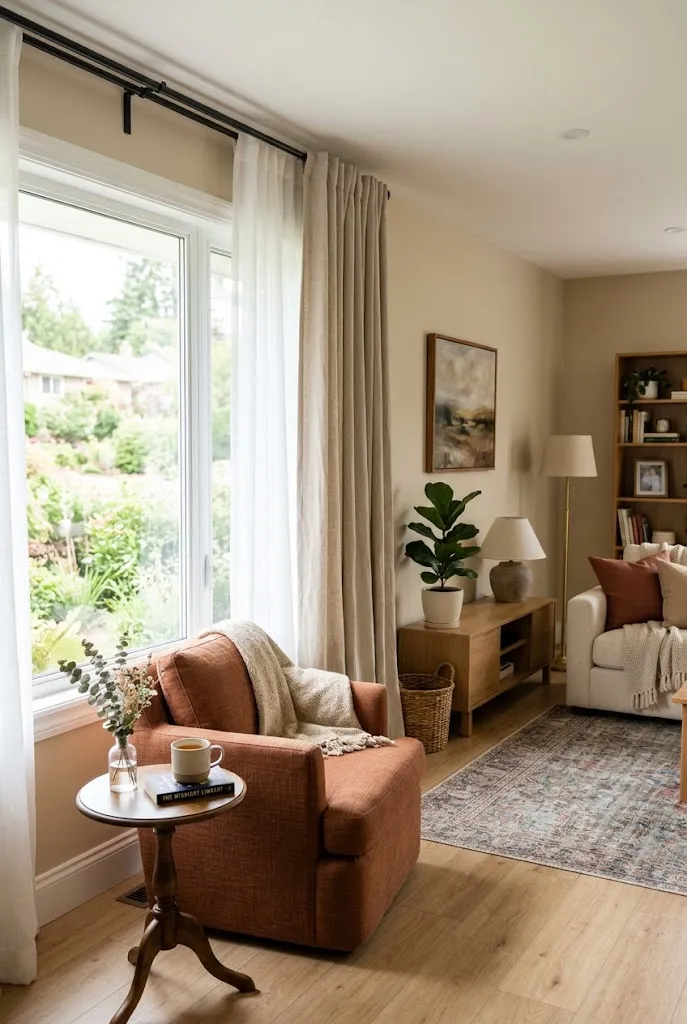
Window treatments change a room’s color more than most small accessories. Linen-look curtains in oat, clay, or deep olive soften hard window lines and filter light into something warmer.
Hang the rod closer to the ceiling and extend it a few inches beyond the frame so the window appears larger. Let panels just touch the floor. Lined curtains add insulation, which is practical once temperatures drop.
11. Build a Mantel Vignette With Mixed Heights
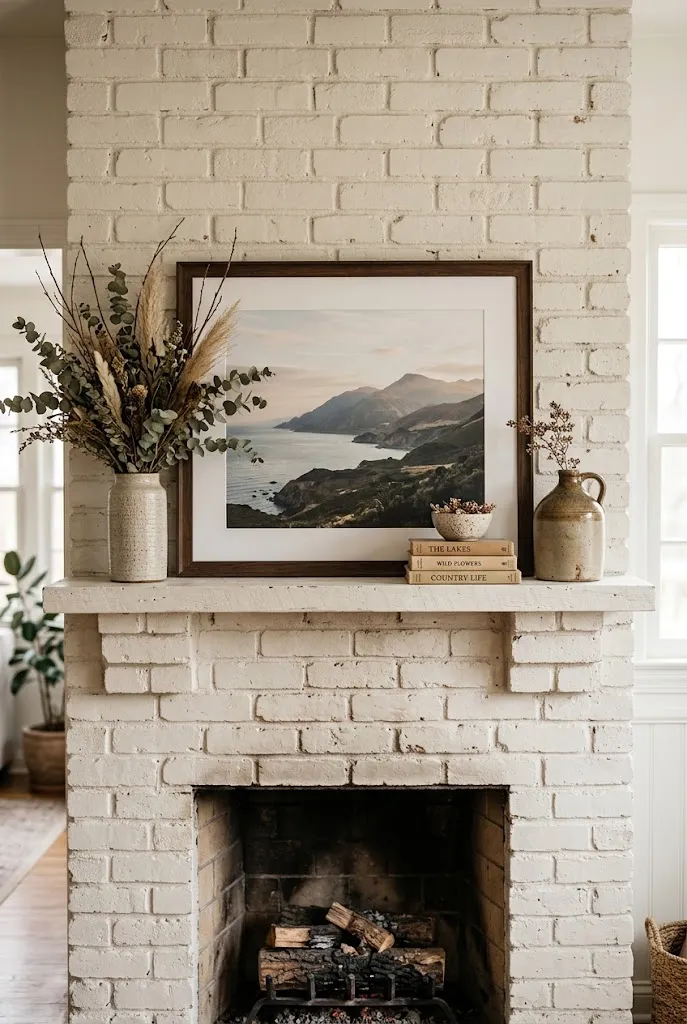
A mantel looks balanced when the arrangement has a high point, a mid point, and low filler. It doesn’t need to be symmetrical.
- Lean one large piece of art or a mirror at the back.
- Add a tall element on one side, such as branches or a tall candlestick.
- Place a medium object on the opposite side, such as a ceramic jug.
- Fill the gap with a low item like a small bowl or a short stack of books.
Step back and remove one item before calling it finished.
12. Add a Leather Chair or Pouf for Warmth
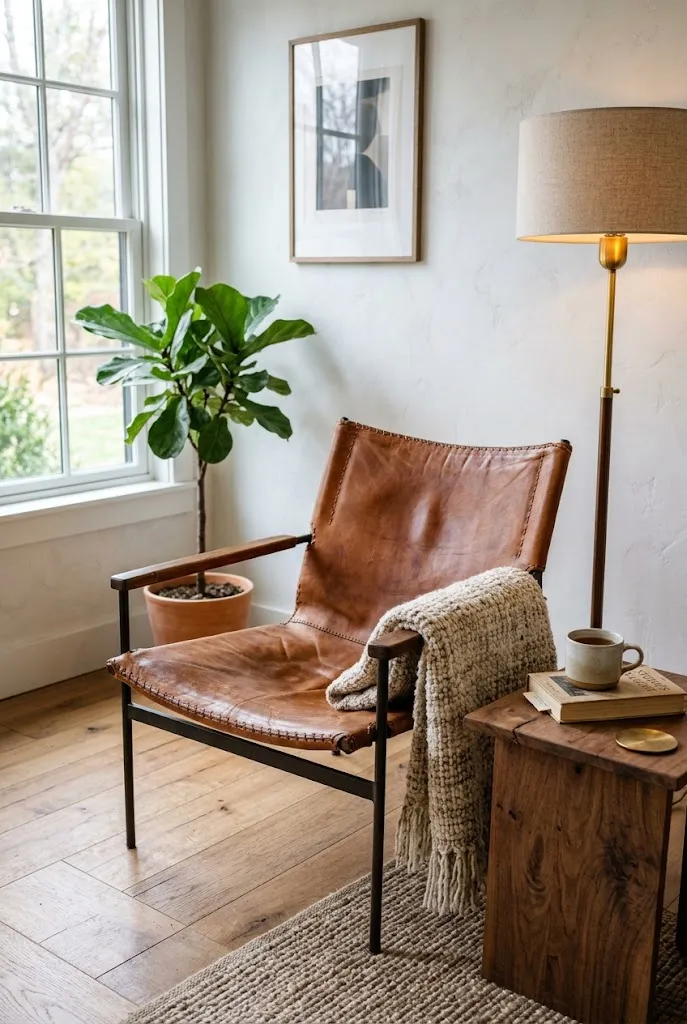
Leather and cognac tones bring depth that fabric alone often lacks. A single cognac leather chair, a sling-style seat, or a structured pouf adds a different material without requiring a new color story.
Editor’s Note: Scale matters. In a small living room, a pouf or compact accent chair is often more usable than a large club chair, and it can double as extra seating or a footrest.
13. Hang Art in Autumn Tones
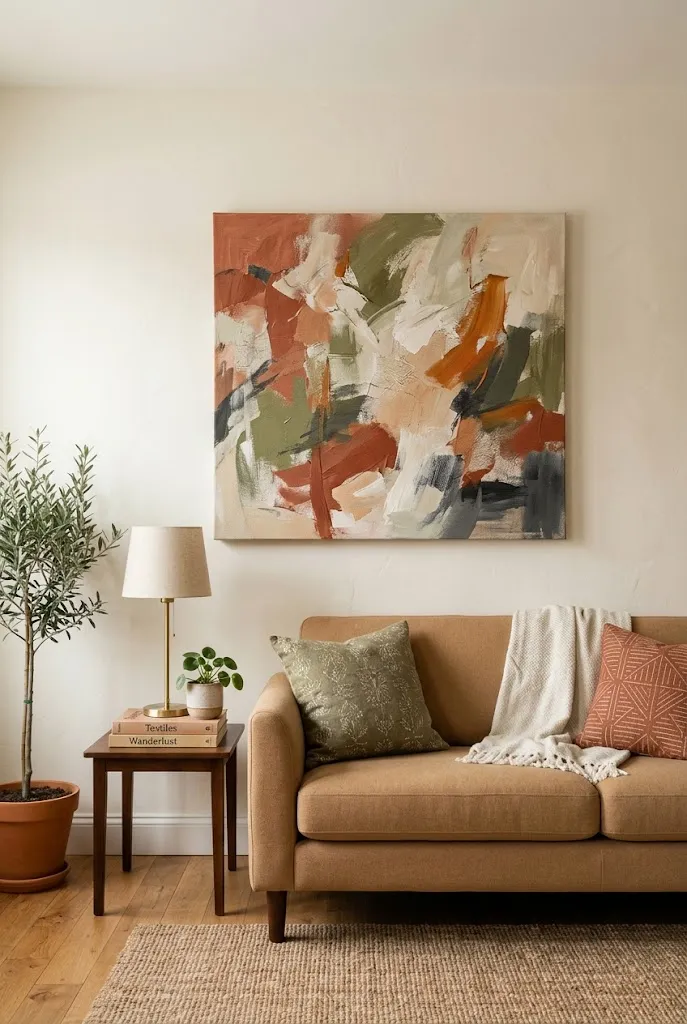
Swapping one or two pieces of art can shift the mood more than changing a dozen small objects. Look for muted landscapes, botanical prints, abstract works in clay and olive, or black-and-white photography with warm matting.
A single large piece over the sofa generally feels calmer than a crowded gallery wall. Aim for artwork roughly two-thirds the width of the sofa below it, and hang it low enough to feel connected to the furniture.
14. Create a Reading Corner
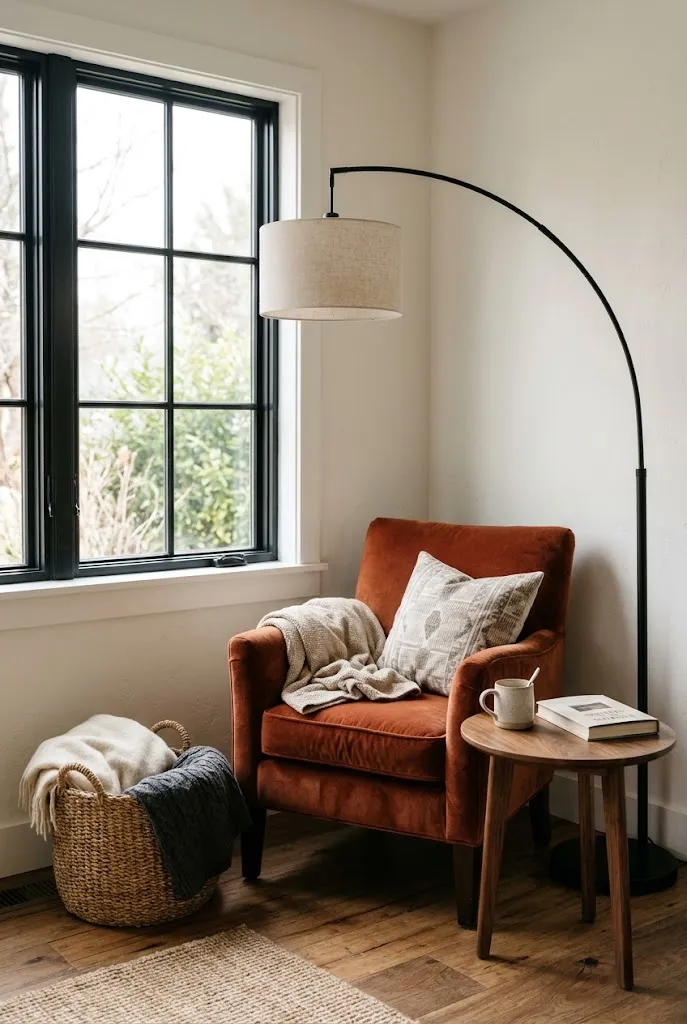
A corner with a chair, a lamp, a throw, and a small table gives the room a destination. It works well in a living room with an empty corner or an unused space beside a window.
- Chair with decent back support
- Floor or arc lamp positioned over one shoulder
- A table or stool for a mug and book
- A basket with an extra blanket
15. Style Open Shelves With Ceramics and Dried Stems
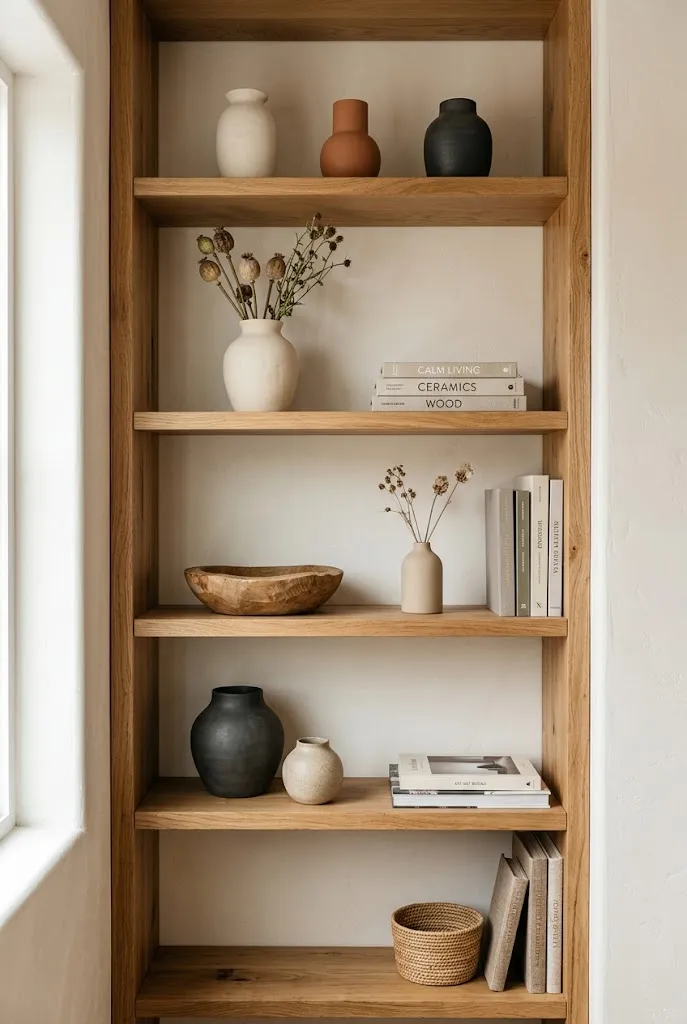
Shelves can carry the season without feeling decorated. Mix matte ceramics, wood bowls, and books with a few dried stems, and leave a third of each shelf empty.
Do: Vary heights and group in odd numbers.
Don’t: Fill every inch or use identical objects in a row.
Turning some book spines inward to show neutral page edges can calm busy colors.
16. Paint One Wall or Built-In a Deep Warm Tone
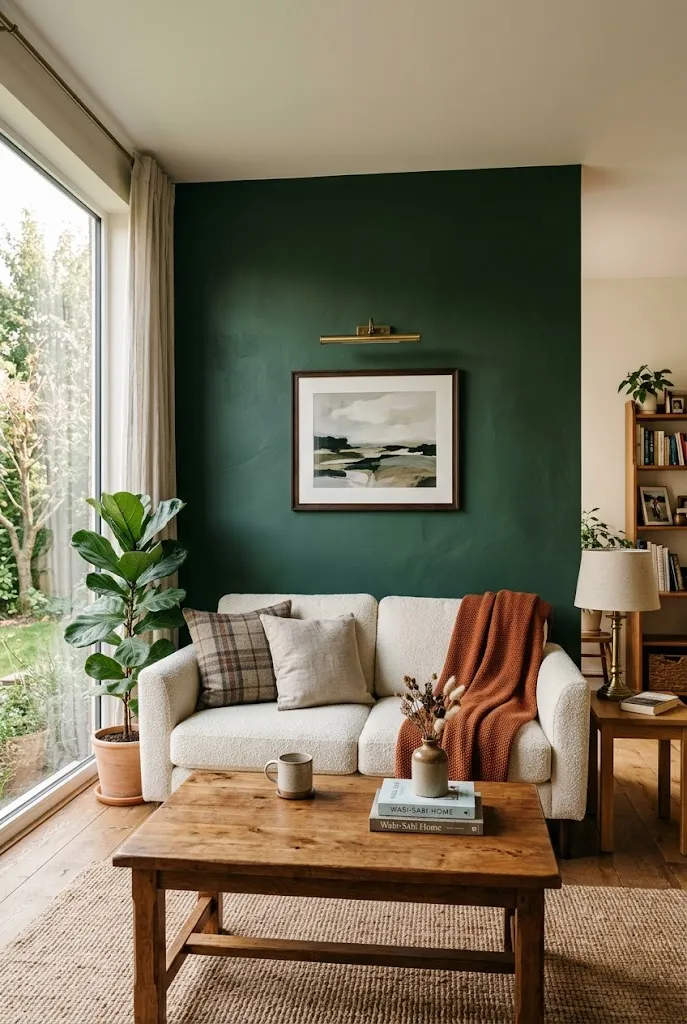
A deeper color is one of the stronger ways to make a room feel enclosed and snug. Consider forest green, deep brown, or muted terracotta on a single wall, fireplace surround, or the back of built-in shelving.
| Option | Effect | Best Fit |
|---|---|---|
| Full room | Immersive, dramatic | Rooms with plenty of light |
| Single accent wall | Focused depth | Rentals with permission |
| Built-in backs only | Subtle contrast | Rooms with existing shelving |
Test large swatches at different times of day, since deep tones shift noticeably with light.
17. Slipcover or Upgrade the Sofa in Oatmeal Bouclé
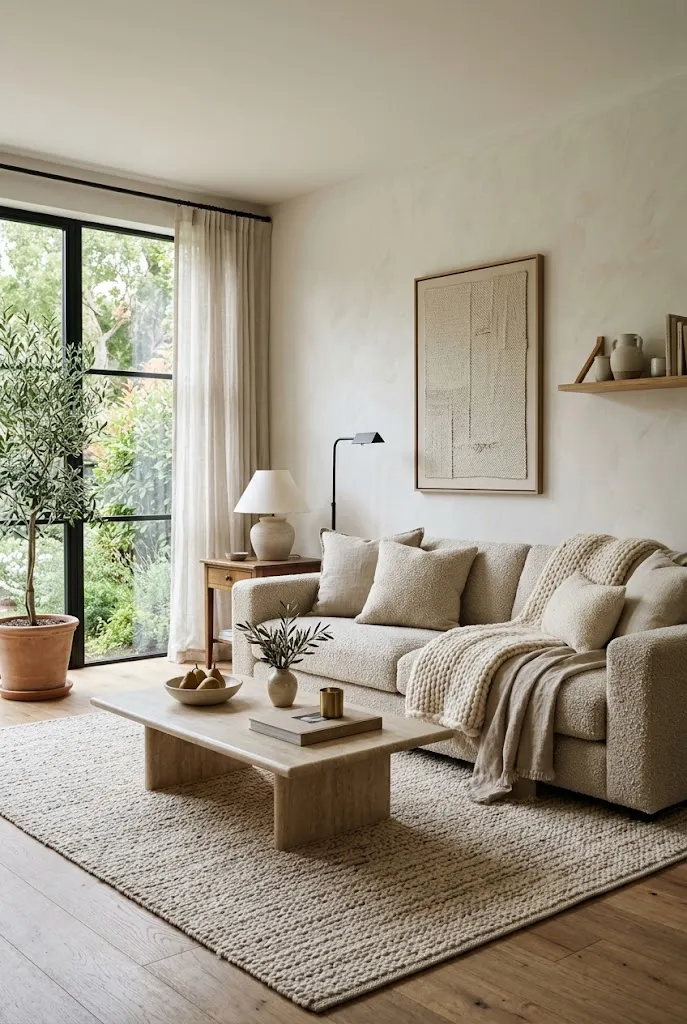
A sofa is the largest visual element in most living rooms, so its color and texture set the tone. A washable slipcover in oatmeal or warm cream is a moderate way to refresh it, while a new bouclé or textured wool sofa is a bigger investment that changes the whole room.
Investment: Moderate to premium
Best For: Rooms where the existing sofa feels cold or worn
Practical Note: Light fabrics show wear differently. Performance fabrics are often a more forgiving choice in homes with pets or children.
18. Store Blankets in a Big Basket
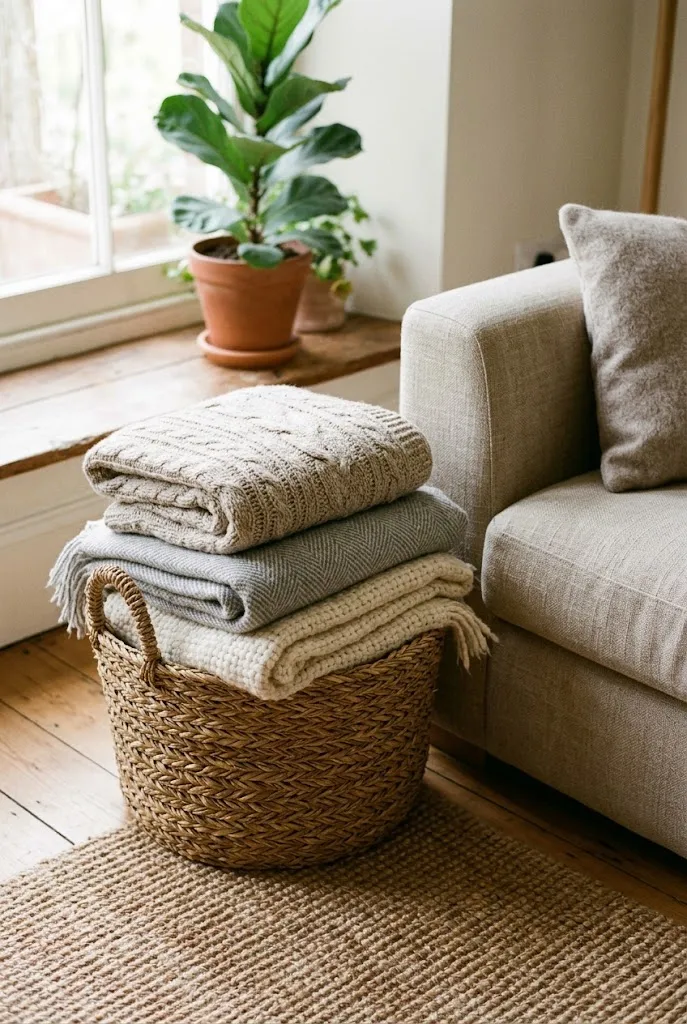
A basket gives you a place for throws and keeps them visible without strewing them across the sofa. Choose a wide woven basket in seagrass, rattan, or wool felt.
Place it beside the sofa or at the foot of an armchair. Fold two or three blankets loosely and leave one corner hanging. It works as a practical storage solution that doubles as a decorative object.
19. Mix Walnut and Oak Instead of Matching Wood
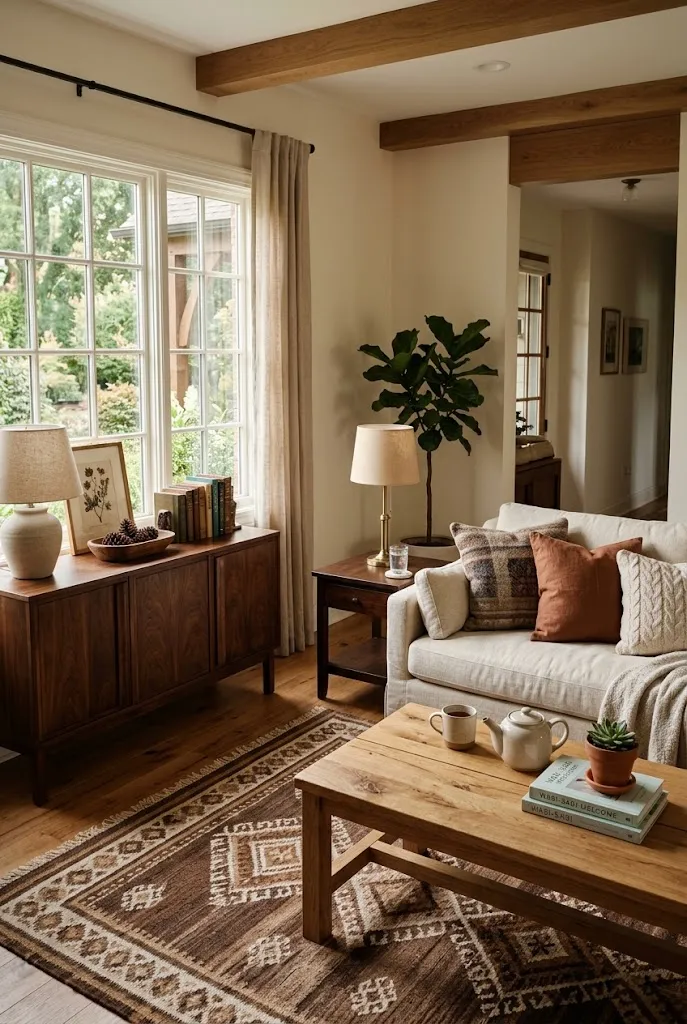
Fall rooms look more collected when the wood tones vary. Pair a darker walnut with a lighter oak or ash, and repeat each tone at least twice so it looks deliberate.
Common Mistake: Using one wood tone on every surface, which can make a room feel heavy.
Better Approach: Repeat each wood in two places, such as a walnut side table and picture frame with an oak coffee table and shelf, then bridge them with a rug or textile that contains both tones.
20. Style the Console Behind the Sofa
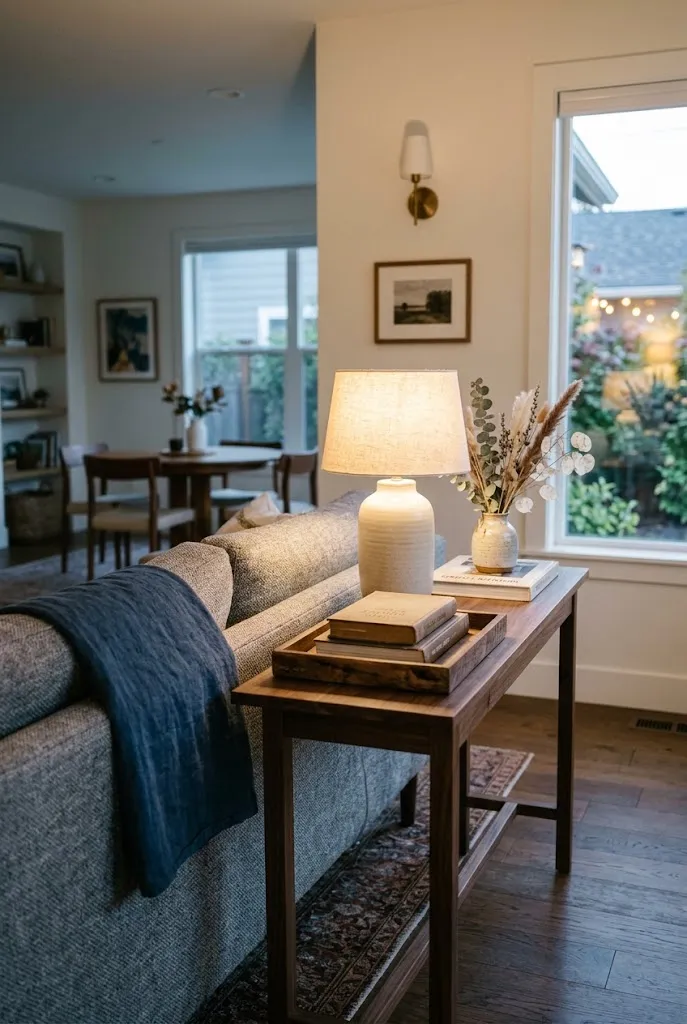
A sofa floating in a room often leaves a blank back. A narrow console there gives you a surface for a lamp, a basket, and a few seasonal touches while helping define the seating area.
- Choose a console 10 to 14 inches deep.
- Add a lamp on one end.
- Place a tray or bowl for keys or remotes.
- Finish with one dried-stem arrangement or a small stack of books.
21. Make the Fireplace the Seasonal Focal Point
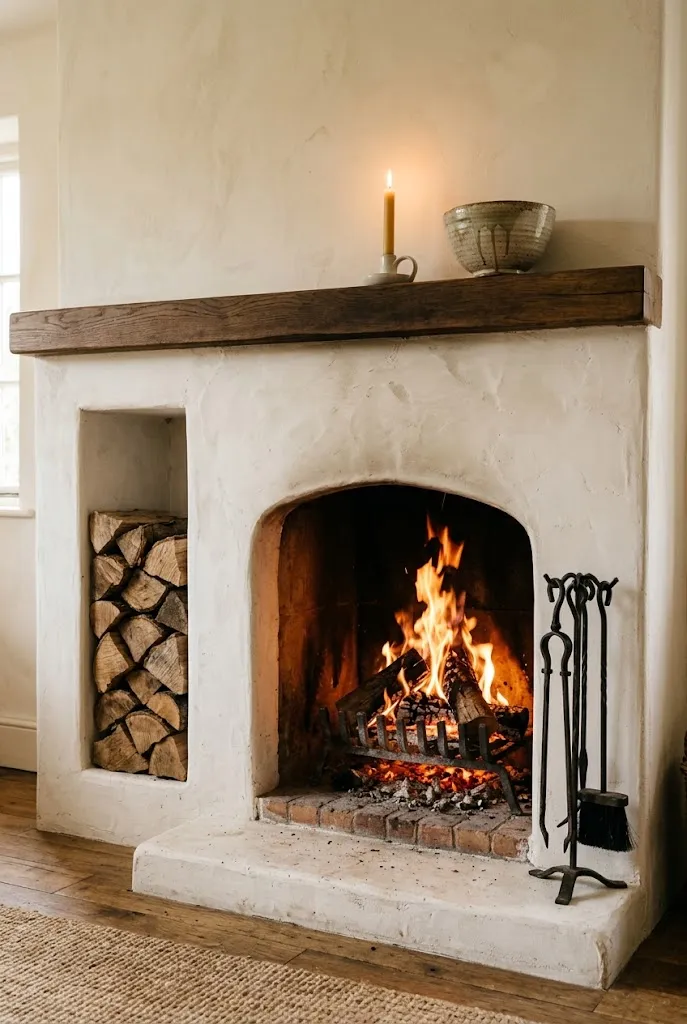
A fireplace already draws the eye, so a few well-chosen additions go a long way. Stack split logs in a basket or niche, add a simple fire screen or tools, and keep the mantel styling light.
For a premium approach, consider a built-in log niche or a limewash finish on the surround. A more accessible approach is a tidy stack of birch or oak logs and an iron tool set. If you use the fireplace, make sure it has been properly inspected and cleaned first.
22. Use Plaid Once, in One Place
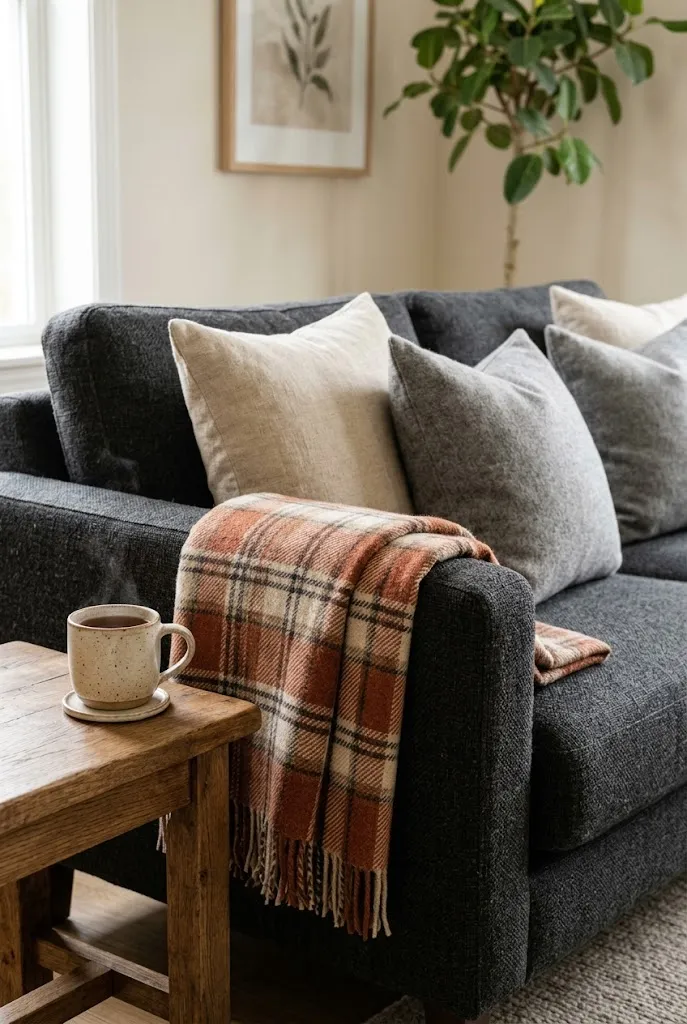
Plaid is among the most recognizable fall patterns, and it works best as a single accent. A plaid throw, one pillow, or a lumbar cover is plenty.
Choose a muted version in colors already present in the room, such as rust, cream, and charcoal, so it blends instead of dominating. If your sofa or rug already has a pattern, skip plaid entirely.
23. Set Up a Small Cider or Coffee Cart
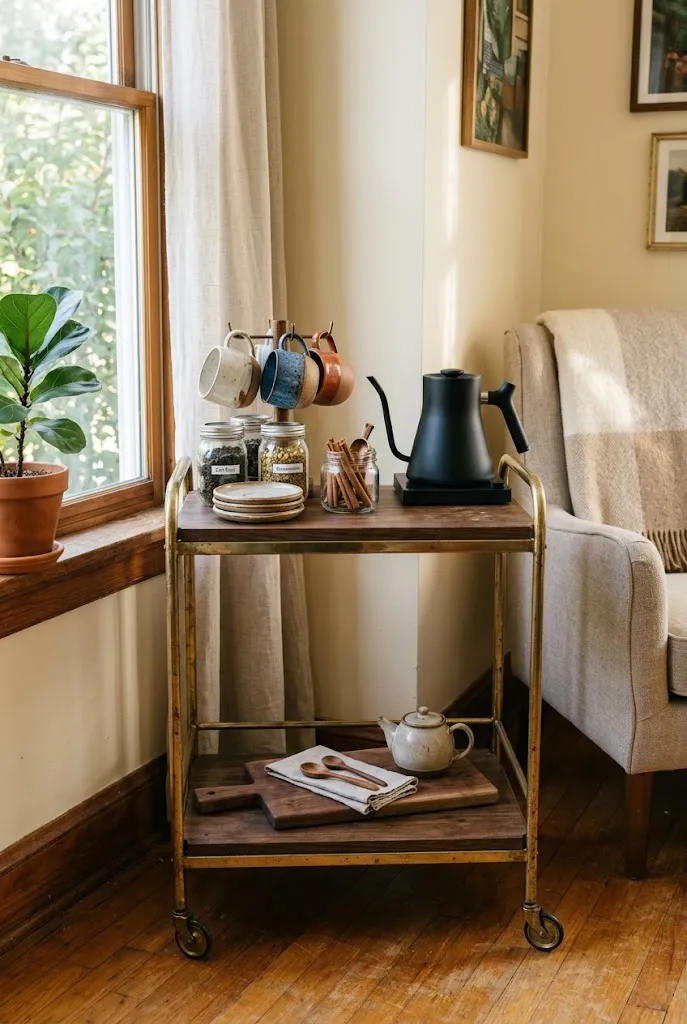
A compact bar cart or a tray on a console gives the room a hospitable focal point for cooler months. It also keeps mugs and supplies off the coffee table.
- Mugs in a consistent color range
- A kettle or carafe
- A small jar of cinnamon sticks or tea
- A wooden board for snacks
Keep it contained to one cart or one tray so it doesn’t take over the room.
24. Edit Before You Finish
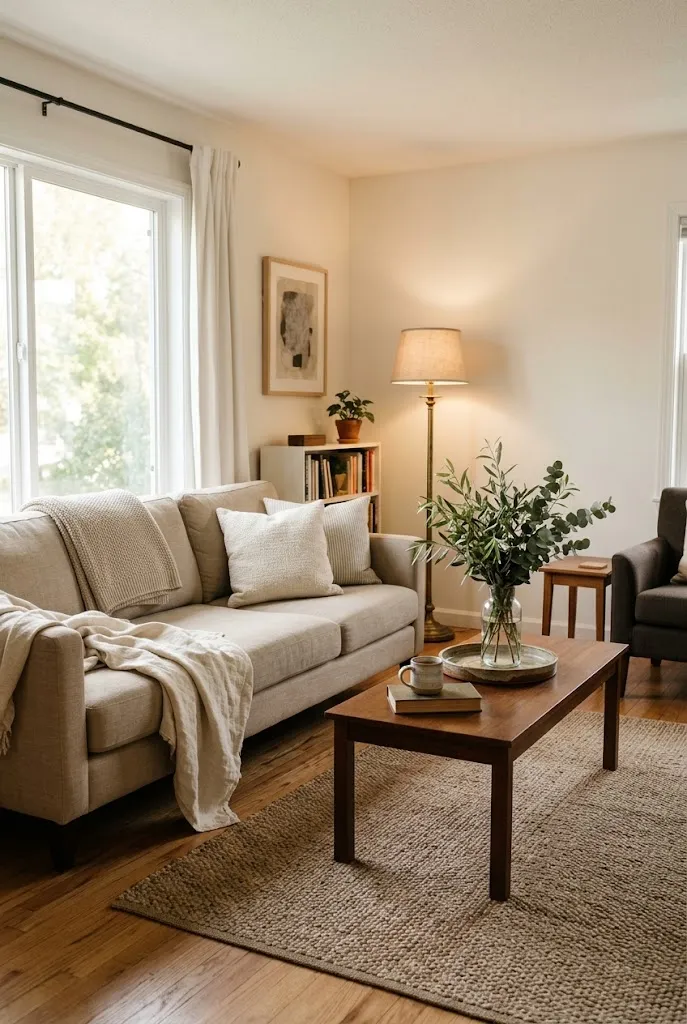
The last styling step is subtraction. Once your fall pieces are in place, walk around the room and remove one object from each surface, then check whether anything is blocking a walking path or surface you use daily.
Before: Every surface has two or three seasonal items, and the coffee table can’t hold a drink.
After: Each surface has one clear focal point with open space around it.
This is usually what separates a cozy room from one that looks overdecorated.
Where to Start
If 24 ideas feels like a lot, try this order: warm bulbs, a heavier throw, one new rug or curtain change, and a single grouped focal point such as the mantel or coffee table. Live with that for a few days, then add only what the room still seems to need. Fall styling tends to look best when it leaves breathing room.