29 Rustic Christmas Tree Ideas With Burlap, Wood and Natural Textures
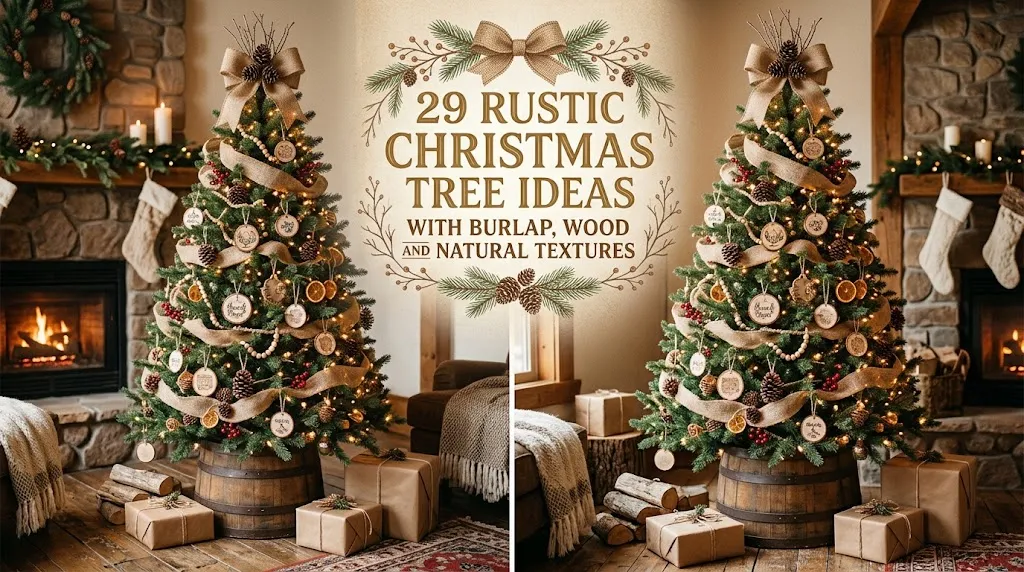
A rustic Christmas tree depends on materials more than on a color scheme. Burlap, raw wood, jute, wool and dried botanicals bring warmth and a slightly handmade look, so the tree reads as collected rather than bought as a set. The style works in a farmhouse with a stone fireplace, a rental with white walls, or a cabin with exposed beams.
The 29 ideas below cover trees of every size and budget, from a slim tree in a studio apartment to a tall fir under a timber ceiling. Some are quick styling changes. Others are weekend projects or worthwhile upgrades. Each one looks different from the rest, so you can combine two or three rather than copying one wholesale.
1. Loose Burlap Ribbon Waves on a Full Fir
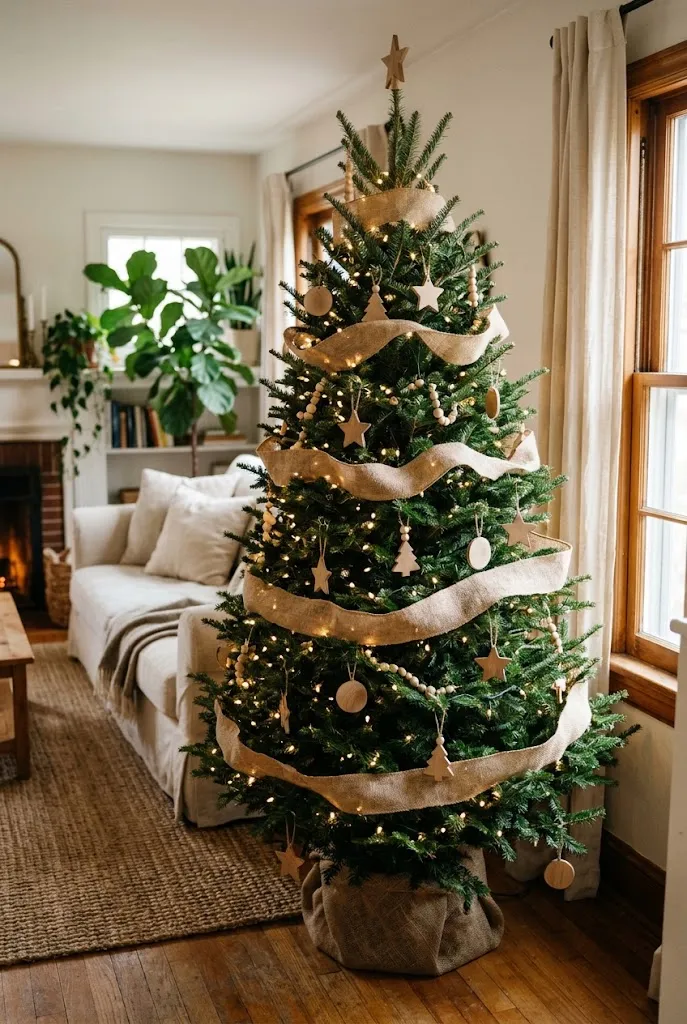
Instead of wrapping ribbon in a tight spiral, push a wide burlap ribbon deep into the branches, let it dip, then bring it back out a few inches lower. Working in loose horizontal waves gives the tree depth and keeps the ribbon from looking like a stripe. Wired-edge burlap holds its shape best. Unwired ribbon tends to flatten against the needles. Cream or natural-tan burlap suits a green tree, and a thin band of dark brown trim adds definition.
Quick Tip: Start at the top and work down, tucking the ribbon end into the trunk side so the finish stays hidden.
2. Chunky Wooden Bead Garland Draped in Swags
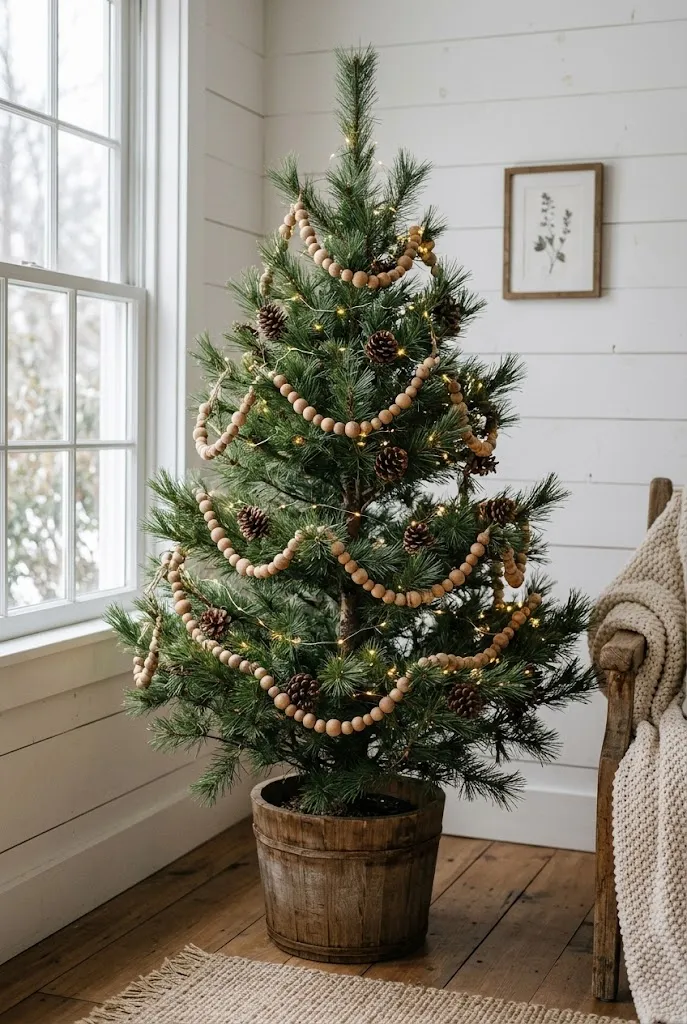
Wooden bead garlands read softer than metal or glass and pair easily with burlap. Rather than spiraling, drape the garland in three or four scalloped swags per tier, anchoring each dip with a small pinecone pick. Natural-finish beads in two or three sizes look more handmade than uniform ones. A garland about nine feet long covers a standard six-foot tree comfortably, though fuller trees may need two strands.
- Best bead sizes: a mix of roughly ¾-inch and 1½-inch beads
- Finish: unpainted or lightly whitewashed
- Pairs well with: plain white or amber warm lights
- Watch for: beads that slide, so clip them to the branches
3. Birch Wood-Slice Ornaments on a Slim Tree
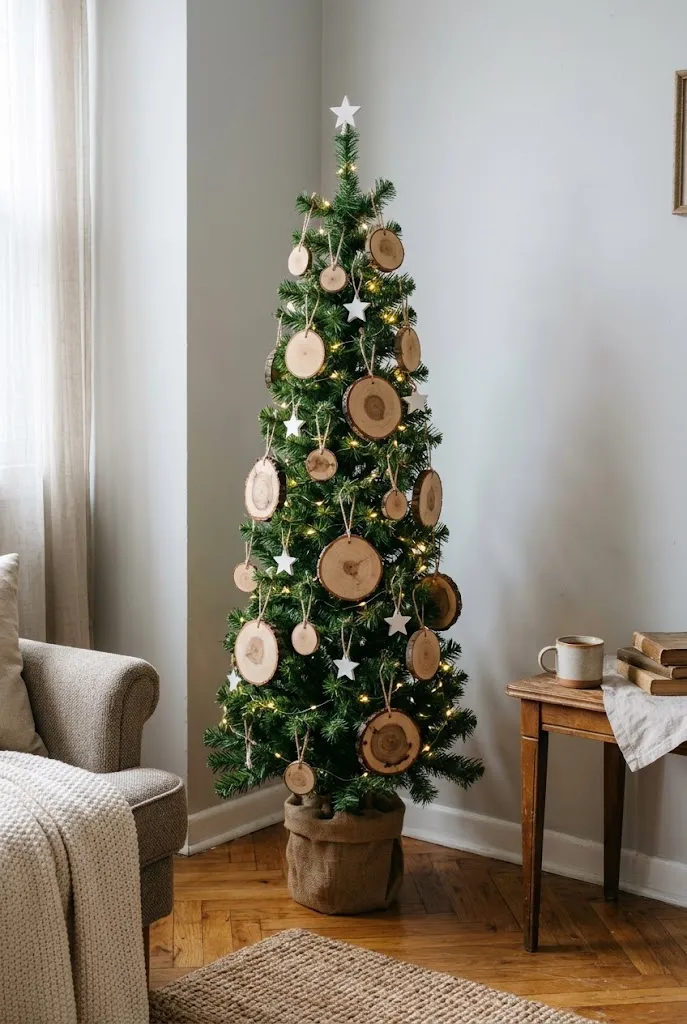
Wood-round ornaments suit a narrower tree, where each slice stays visible instead of disappearing into dense branches. Choose slices in varied diameters, from 2 to 4 inches, and drill a hole near the top edge for jute twine. Leave a few slices plain to show the bark rings and put a simple stamped or painted motif on others. Group larger slices toward the middle of the tree and smaller ones near the tip.
Do: Hang slices on outer branches so they face forward.
Don’t: Layer them behind thick needles where the bark edge is lost.
4. Galvanized Tub Base With Burlap Wrap
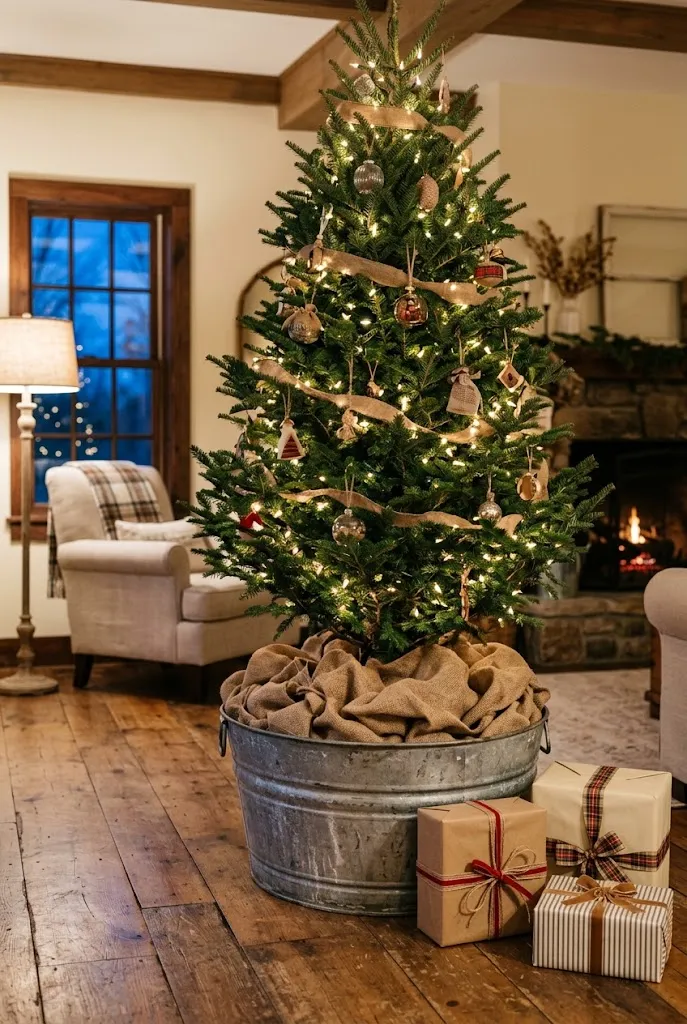
A galvanized washtub hides the tree stand and gives a farmhouse tree a sturdy foundation. Fill the bottom with a few bricks or heavy stones for stability, set the stand inside, then pack crumpled burlap or straw around it to cover the hardware. The metal’s cool gray gives a pleasant contrast against warm wood and cream burlap. A live tree still needs a water reservoir, so keep the stand’s water bowl accessible rather than burying it.
| Base Option | Effect | Best Fit |
|---|---|---|
| Galvanized tub | Industrial-farmhouse contrast | Larger living rooms |
| Woven basket | Soft, casual | Smaller trees, family rooms |
| Wooden crate | Boxy, rustic | Slim or tabletop trees |
5. Burlap Tree Skirt With Rope Trim
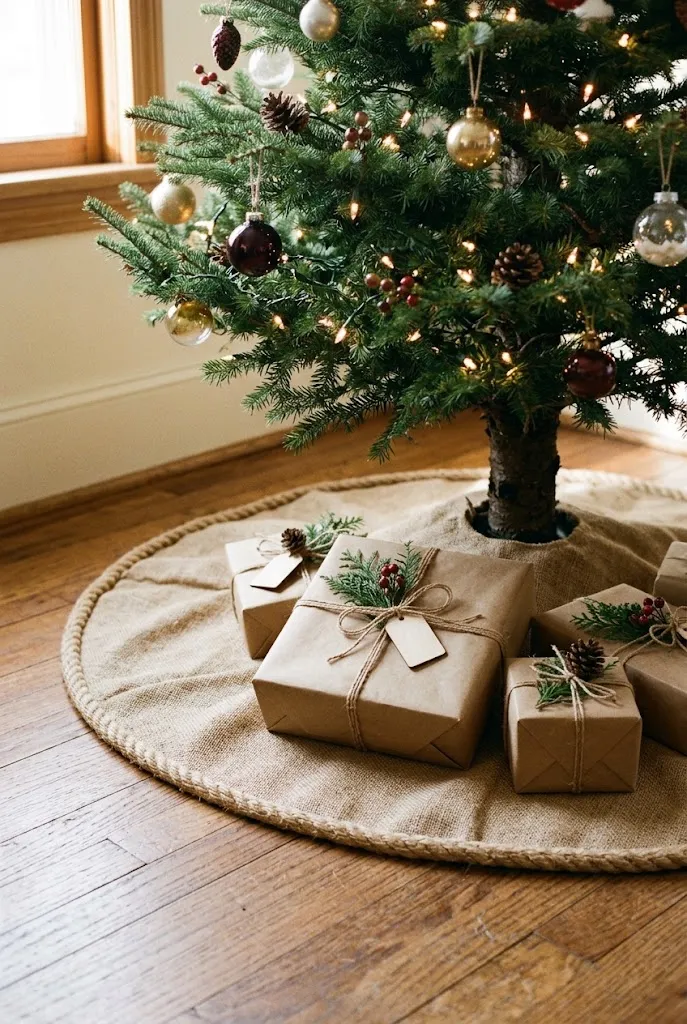
A tree skirt gives the base a finished look and a place for gifts to rest. Burlap works well, but it can look flat on its own, so choose one with a hemmed edge or sew a strip of thick cotton rope along the border. Stitch a loose ruffle in the middle for dimension. If you’re sewing from scratch, wash and press the fabric first, since raw burlap sheds and frays.
- Cut a circle roughly 48 inches across and a slit to the center.
- Fold the edge under about ½ inch and hem it.
- Couch the rope trim along the hem with a few hand stitches.
- Add a closure at the slit, such as wooden buttons or twine ties.
6. Dried Orange Slices and Cinnamon Sticks
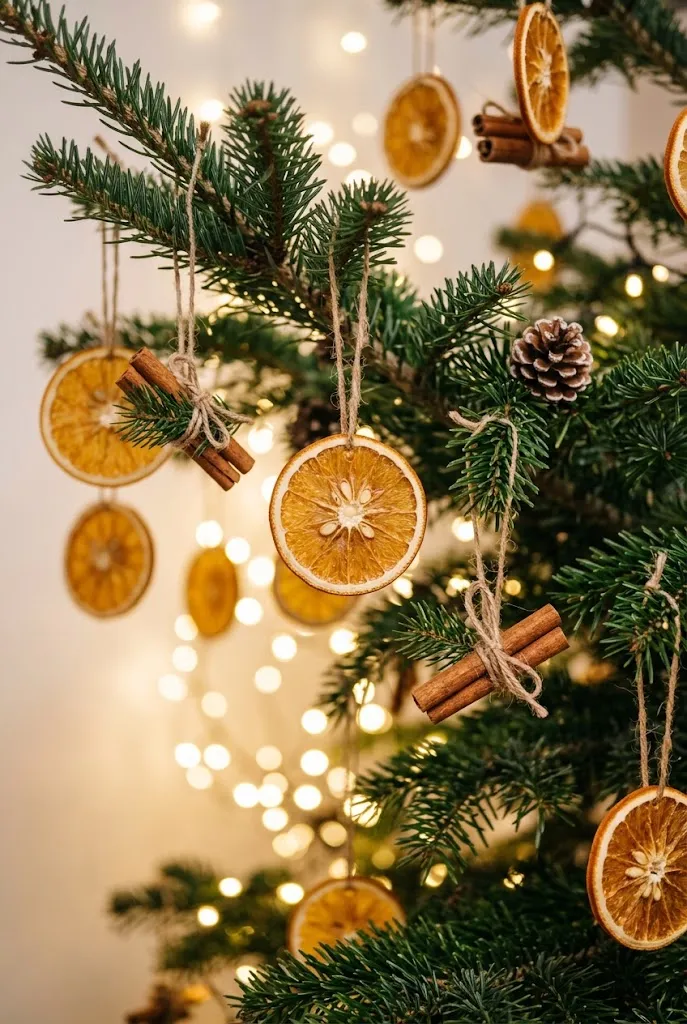
Dried citrus catches warm light and adds a soft orange tone that suits a green tree. Slice oranges thinly, around ¼ inch, and bake them on a low oven setting, roughly 200°F, until fully dry, which typically takes several hours. Thread them with twine and pair with cinnamon sticks bundled by a small loop of jute. The scent is a bonus, though it fades, so a few drops of cinnamon essential oil on the sticks can refresh it.
Tips & Tricks
- Pat slices with a paper towel before baking to shorten drying time.
- Turn slices every hour so they dry evenly.
- Store extras in a sealed jar away from humidity.
7. Pinecone Clusters on Wired Picks
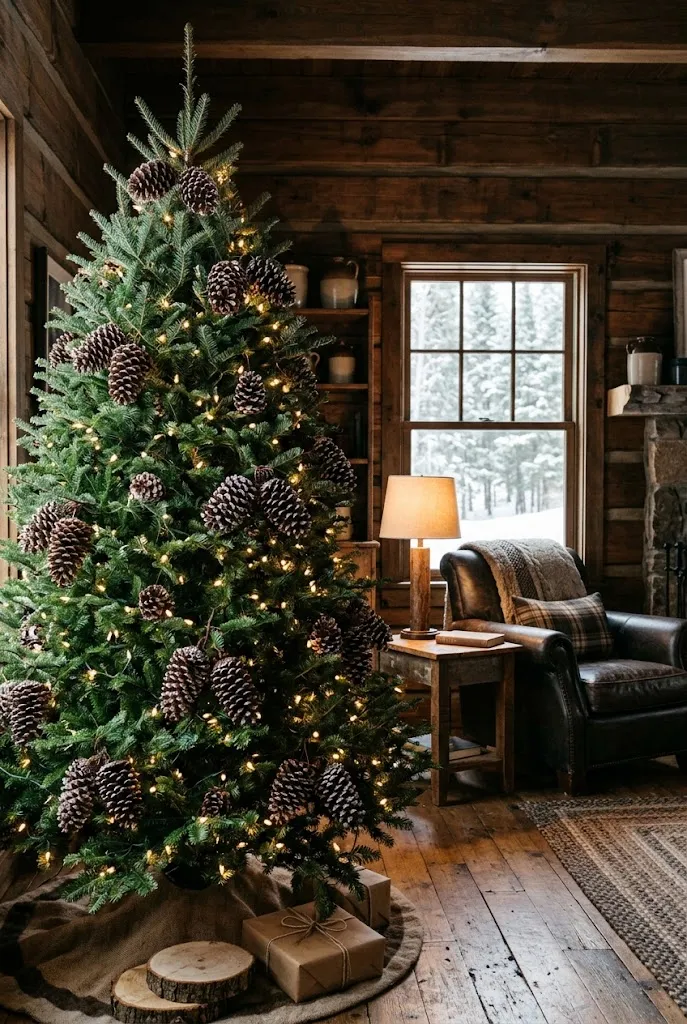
Pinecones feel native to a rustic tree, but singles can look sparse. Wire three or four cones of different sizes together into a cluster and attach them to a floral pick, then tuck the pick into the branches. Mix open cones with a few frosted tips by brushing them lightly with white paint. Real cones should be baked at a low temperature for about 30 minutes first to dry them out and close any hidden sap.
8. A Twig Star Topper Instead of Glass
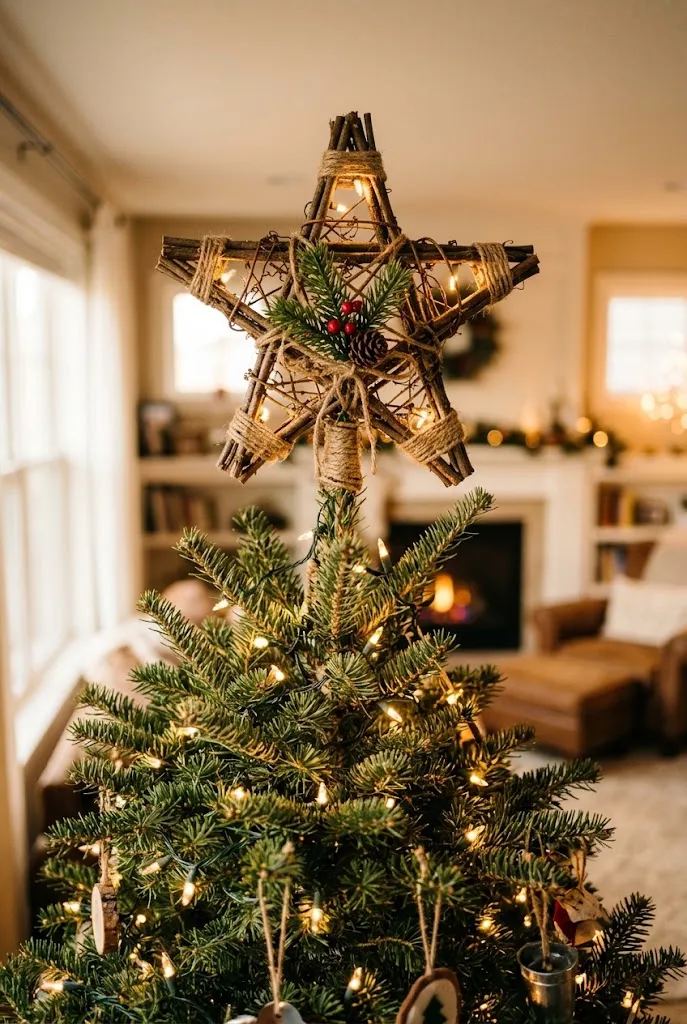
A handmade topper takes the place of a store-bought star and ties the tree to the surrounding natural materials. Cut five straight twigs of similar length, lay them in a star shape, and bind the joints with jute twine or thin wire. Birch twigs give a pale, clean look, while dogwood adds a reddish tone. Keep the topper light, since heavy toppers lean on thin tree tips.
Editor’s Note: Test the topper’s balance before the lights go on. A slight tilt is charming, but a topper that drifts sideways soon looks accidental.
9. Jute Twine Bows Instead of Satin Ribbon
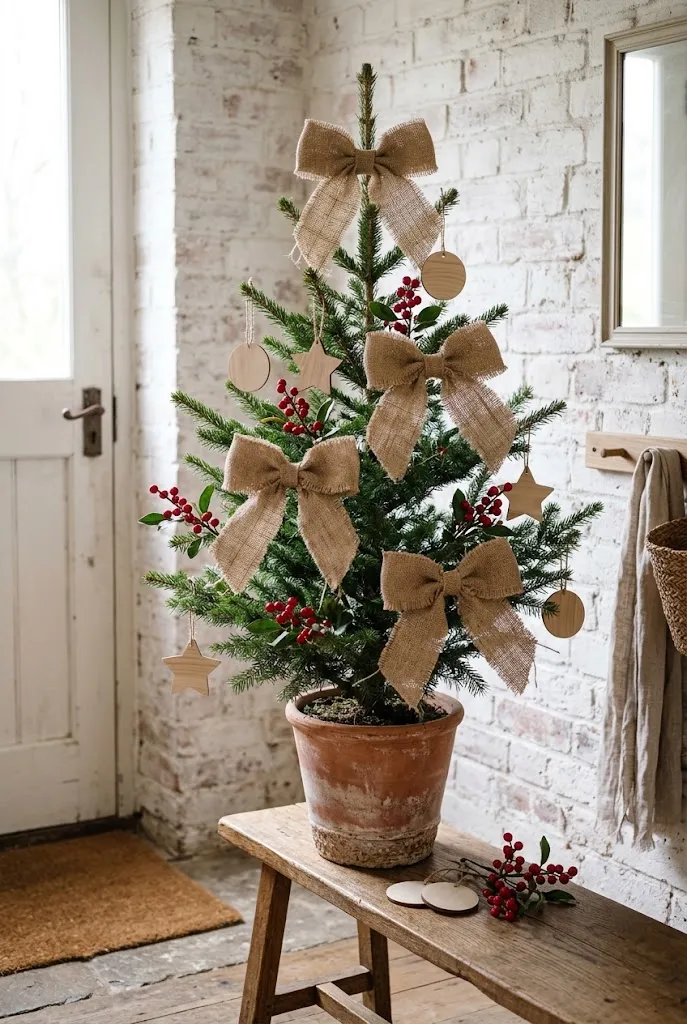
Jute bows have a coarse, matte look that fits rustic trees better than glossy ribbon. Tie them in oversized loops, around 6 inches across, and place them in a loose vertical line from top to bottom. Thin wire threaded through the center lets you shape the loops. For variety, mix natural jute with a few in dyed red or forest green.
- Use 2-inch-wide jute ribbon for fuller bows
- Space bows roughly 10 to 12 inches apart
- Leave tails long and uneven for a casual finish
10. A Wool Blanket Wrapped Around the Base
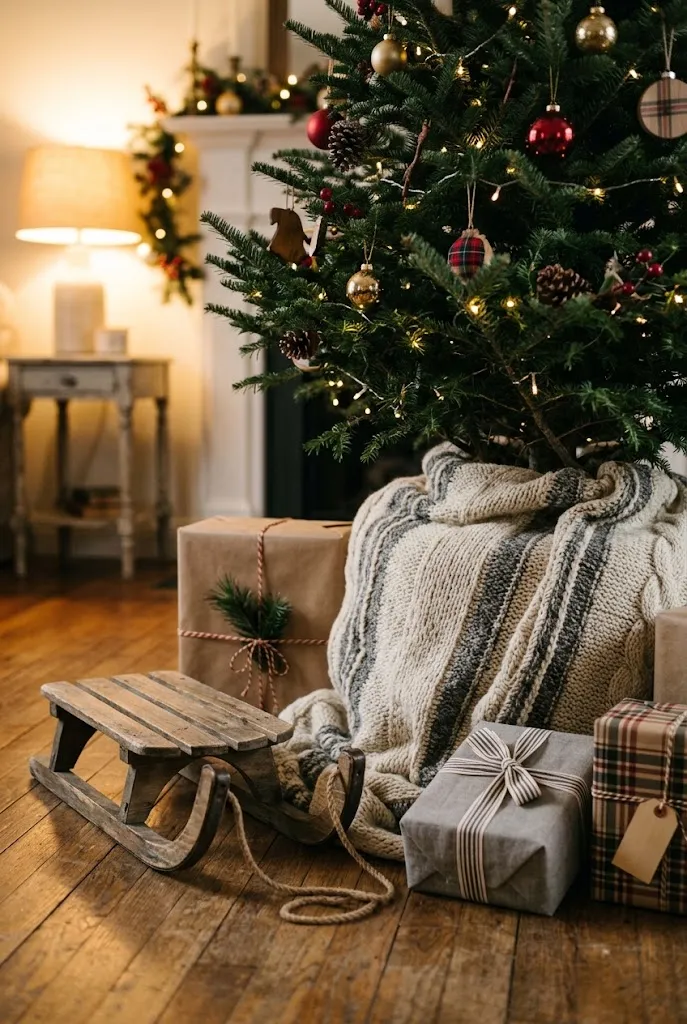
Skip the tree skirt and wrap the stand in a thick wool blanket instead. Buffalo check, cream Fair Isle, or a gray herringbone each give a different mood. Gather the blanket loosely and tuck the edges so it falls in soft folds rather than lying flat. This works well in homes with pets or kids, since a blanket is easy to wash and easier to move than a rigid collar.
Common Mistake: Draping the blanket over the stand’s water bowl.
Better Approach: Leave the bowl accessible through a gap in the folds so a live tree can be watered without lifting the blanket.
11. A Tabletop Tree in a Dough Bowl
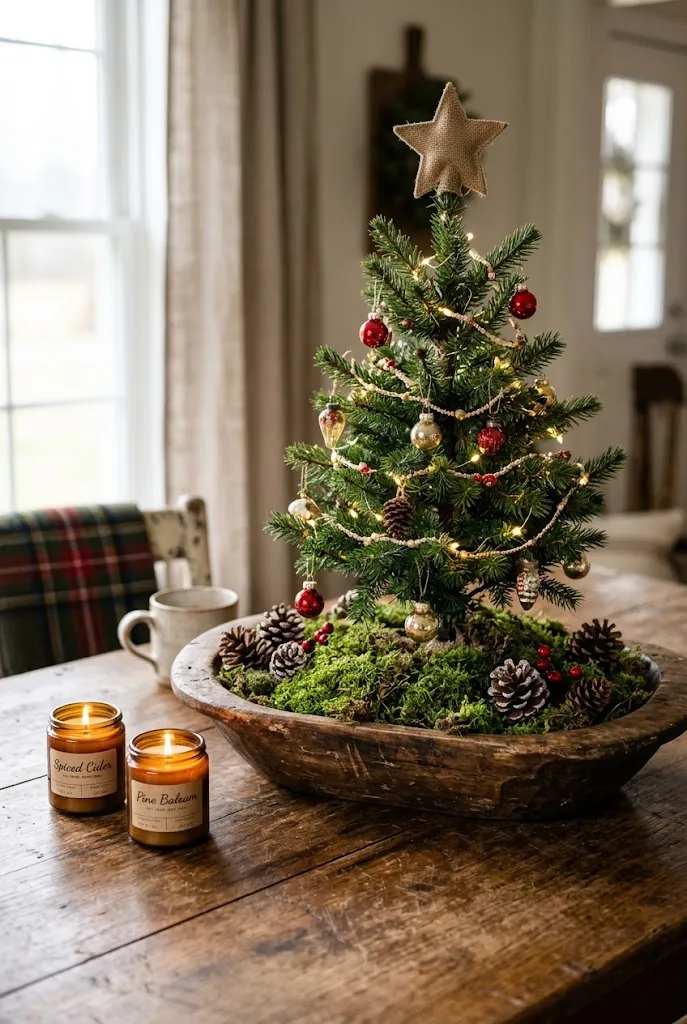
A long wooden dough bowl turns a small tree into a centerpiece. Choose a 2- to 3-foot tabletop tree and set its pot into the bowl, then fill the gaps with moss, pinecones, or a handful of cranberries. This suits an entry console, a dining table, or a kitchen island. The bowl’s elongated shape keeps the arrangement low and stable.
12. A Pencil Tree in an Apartment Corner
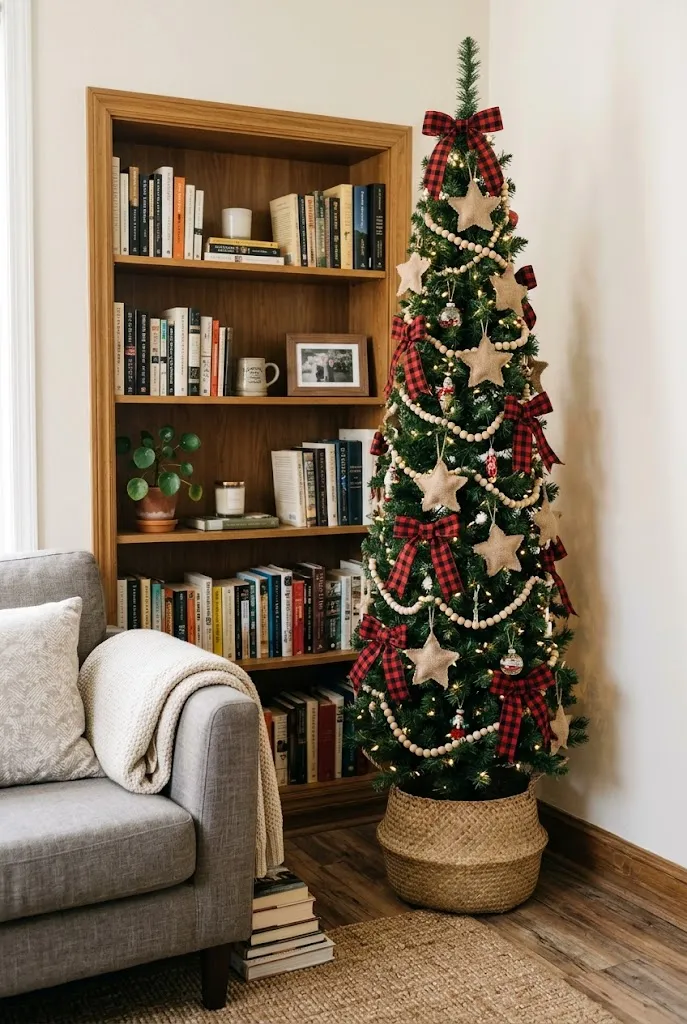
Narrow pencil trees fit apartments where floor space is limited. Place the tree in a corner or beside a bookcase and keep ornaments simple: wooden beads, burlap stars, and a plaid ribbon. Since the silhouette is tall and narrow, choose smaller ornaments, about 2 to 3 inches, so the tree doesn’t look crowded.
| Tree Style | Footprint | Best For |
|---|---|---|
| Pencil | Very narrow | Corners, studios |
| Slim | Moderate | Small living rooms |
13. A Vintage Wooden Ladder as Gift Display
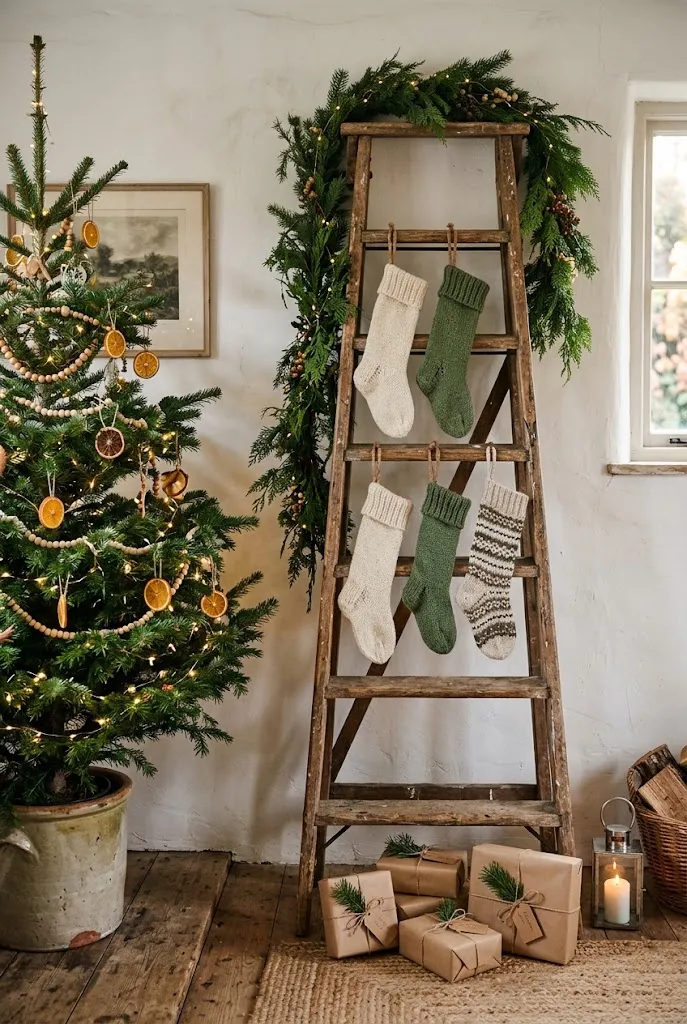
Lean an old wooden ladder beside the tree and use its rungs to hold stockings, small wrapped gifts, or a greenery garland. This adds vertical interest and extra display room when the tree skirt area is crowded. Anchor the ladder securely to the wall and keep heavy items off the top rungs.
Quick Facts
Best For: Rooms with a bare wall next to the tree
Investment: Accessible if you find a secondhand ladder
Visual Effect: Adds height and a layered look
14. Branch-by-Branch Warm White Lighting
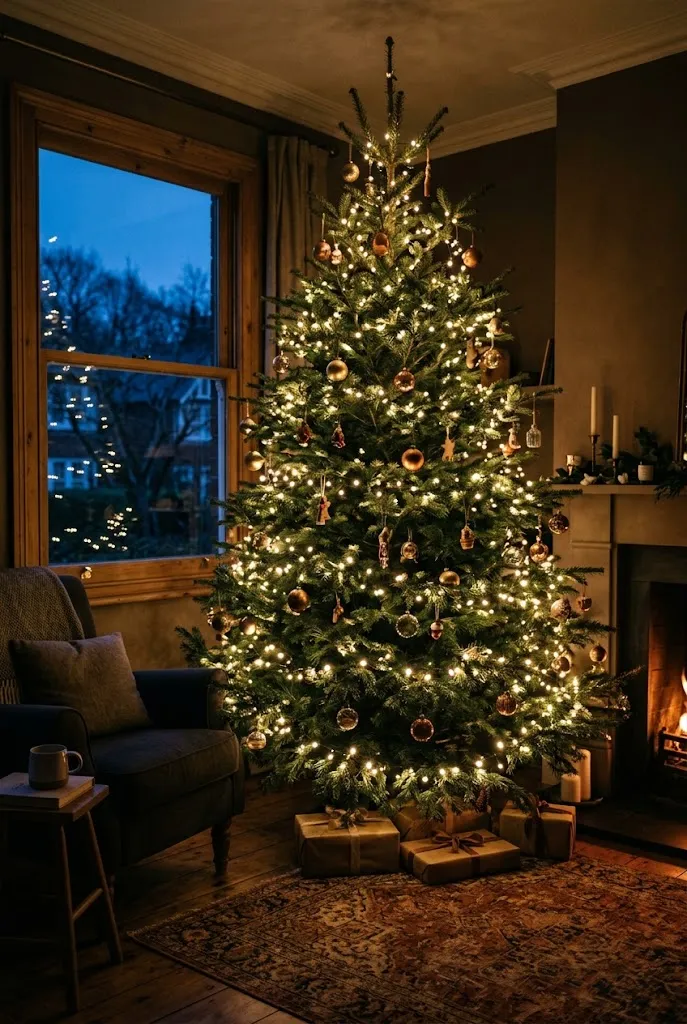
Rather than wrapping lights around the whole tree, light each branch by running the strand from trunk to tip and back. This gives an even glow from inside and hides the wire. Warm white or amber bulbs suit rustic materials better than cool white. Allow roughly 100 bulbs per foot of tree height as a rough starting point for a full look.
- Start at the base near the outlet.
- Work up one section at a time.
- Run each branch trunk to tip, then back.
- Step back often to spot dark patches.
15. A Log-Slice Platform Under the Tree
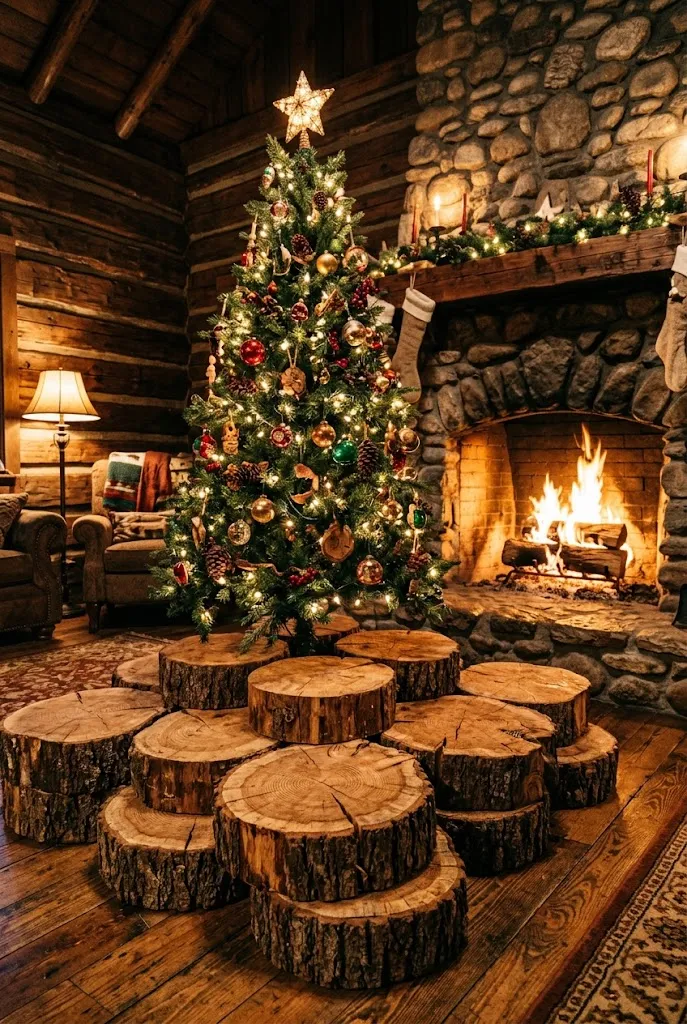
Stack or arrange thick log slices as a low platform under the tree stand. This adds height and a woodsy base without needing a custom stand. Use slices of similar thickness, 2 to 4 inches, so the surface stays level, and place a thin board underneath for stability. Keep it low and wide.
16. Cotton Stems and Dried Hydrangea Tucked In
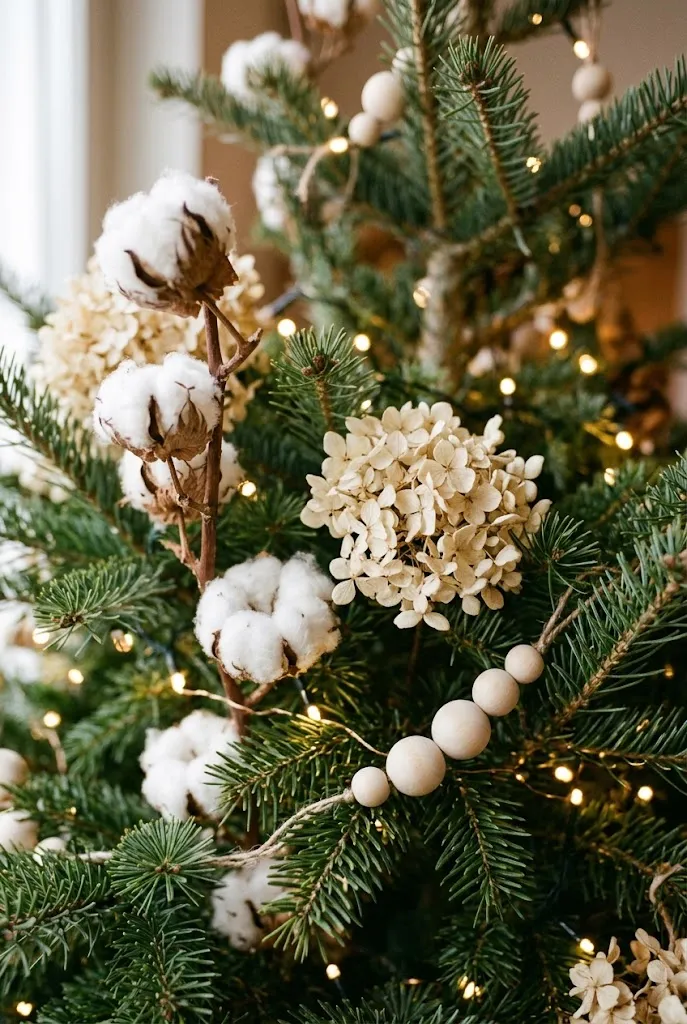
Cotton stems add a soft, white texture against dark green needles. Cut them to 8 to 10 inches and tuck several into each tier. Dried hydrangea heads in cream or sage contribute a slightly romantic tone. This works as a finishing layer after lights and larger ornaments are in place.
Editor’s Note: Cotton bolls can be sharp at the base, so handle gently and keep them away from small children’s reach.
17. Buffalo Check Accents With Burlap
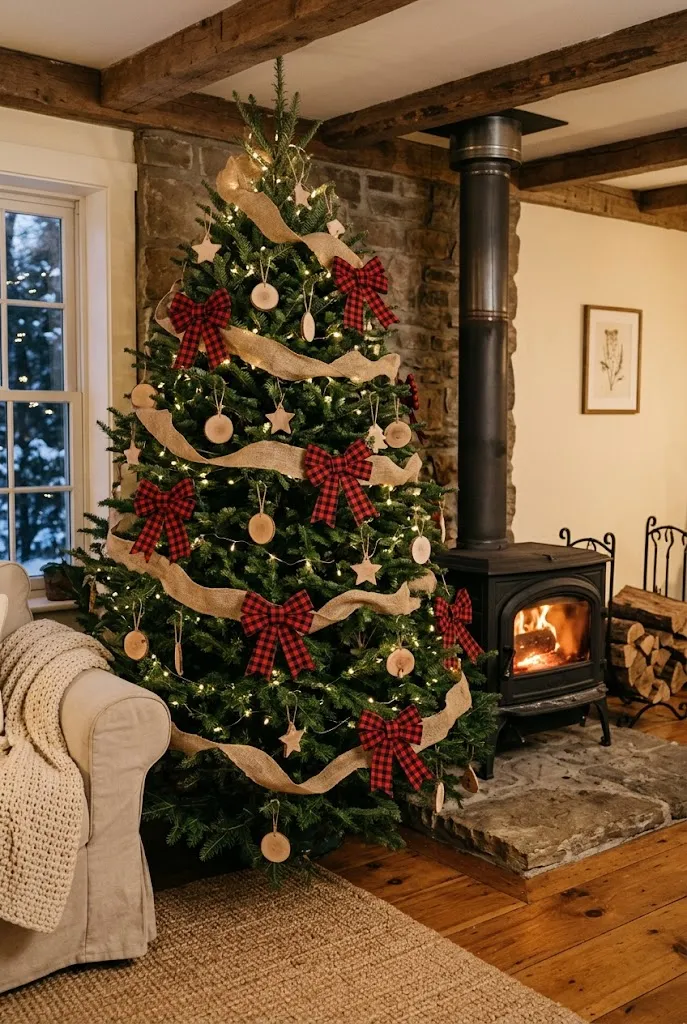
Buffalo check can overwhelm a tree when used everywhere. Limit it to a ribbon or a handful of bows and let burlap carry the rest. Red and black is classic, while green or tan-and-cream versions are quieter. Keep the pattern scale consistent across bows for a cleaner look.
Do: Use check in one place, such as bows or a skirt.
Don’t: Combine check ribbon, a check skirt, and check stockings in the same view.
18. A Birch Log Tree Collar
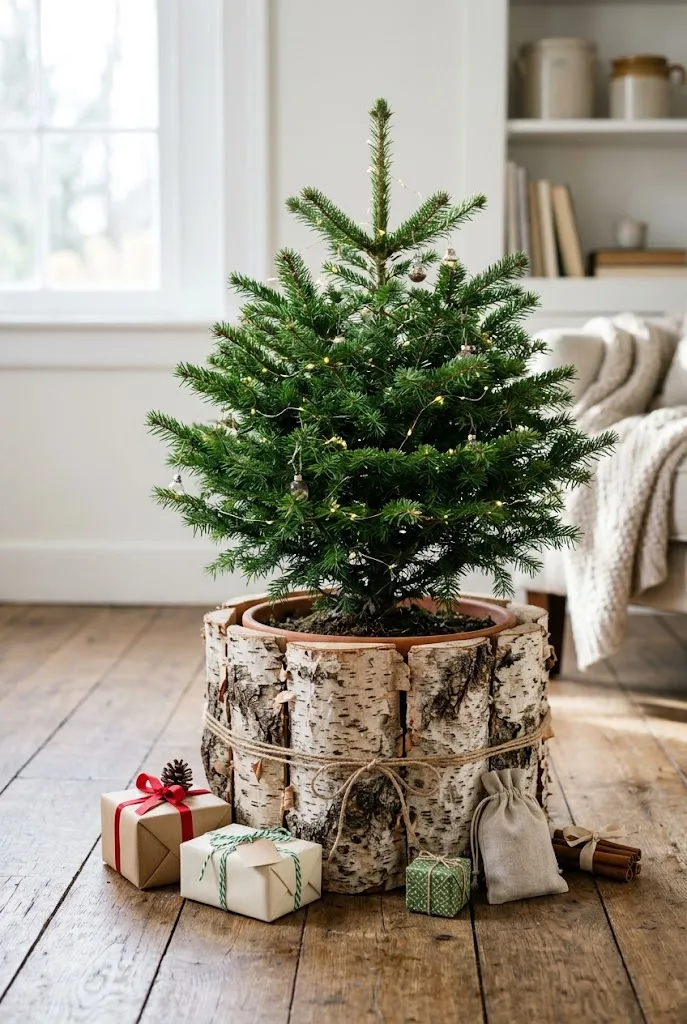
A collar made from split birch logs surrounds the stand like a small fence. Pre-made birch fence panels are available, or you can bind short logs with rope. The pale bark brightens a dark corner and suits a tree with minimal ornaments.
19. Faux Antler Ornaments With Leather Ribbons
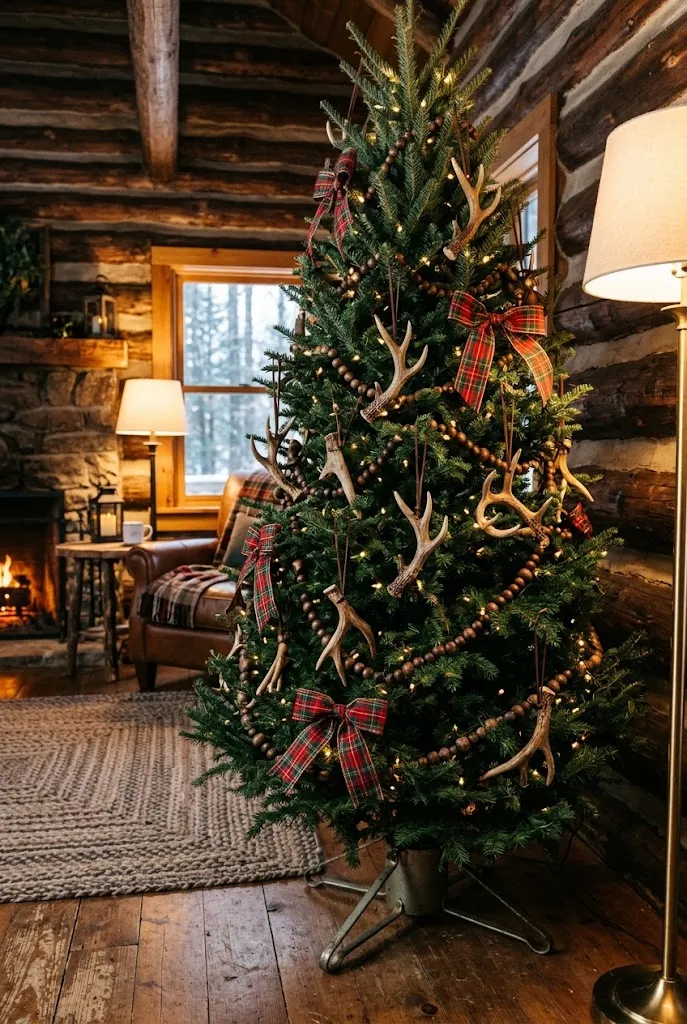
Resin antlers read as lodge-style without using real horns. Hang them from thin leather cord and mix sizes. Pair with plaid ribbon and dark wood ornaments for a stronger cabin feel.
- Vary antler sizes for depth
- Place near the middle for visual weight
- Pair with leather cord instead of satin ribbon
20. A Grain-Sack Ticking Skirt
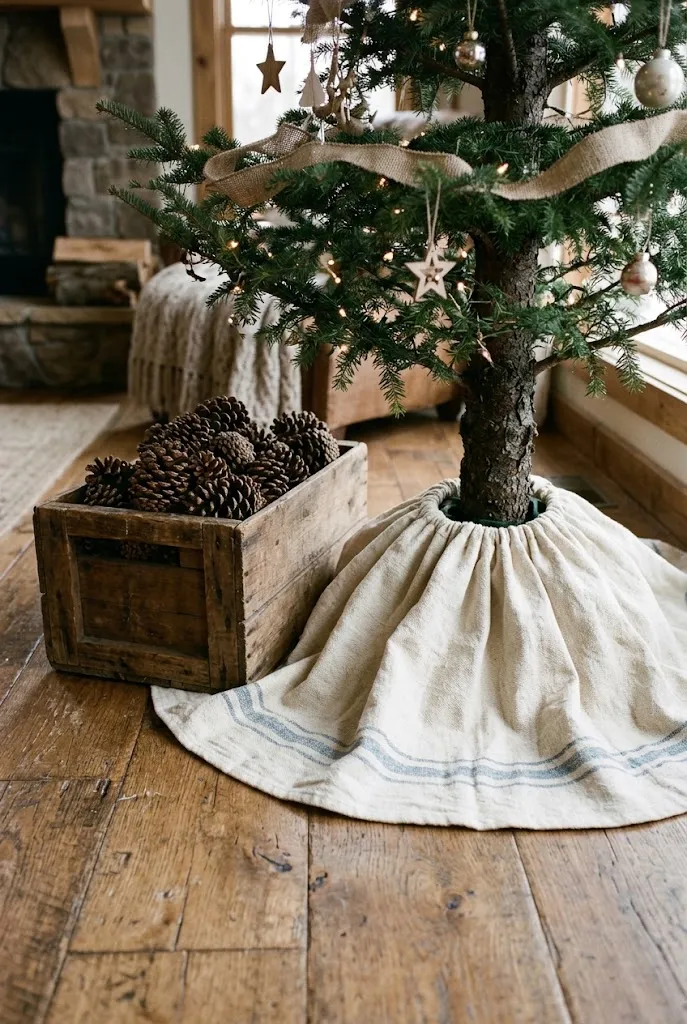
Striped grain-sack fabric, usually cream with blue or red stripes, gives the base a vintage farmhouse look. It’s sturdier than burlap and sheds less. Gather it loosely so the stripes bend.
21. Hand-Cut Wooden Shape Ornaments
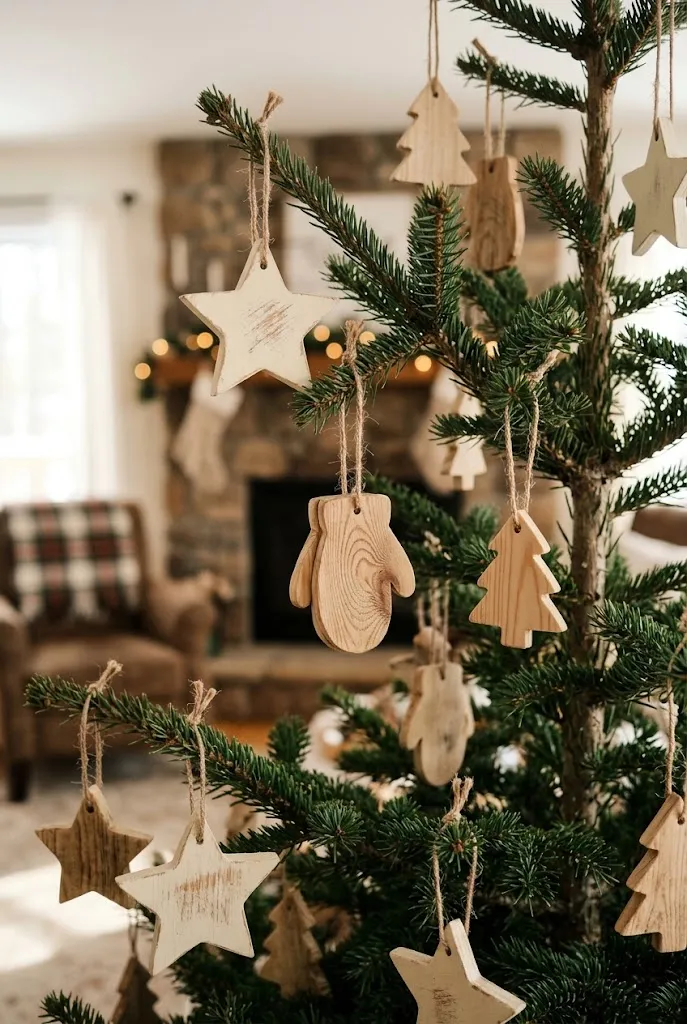
Thin plywood or basswood cut into stars, trees, and mittens can be painted cream or left raw. A jigsaw or scroll saw works, though pre-cut blanks save time. Sand edges smooth before finishing.
Difficulty: Beginner to intermediate, depending on tools.
22. Cranberry and Popcorn Garland
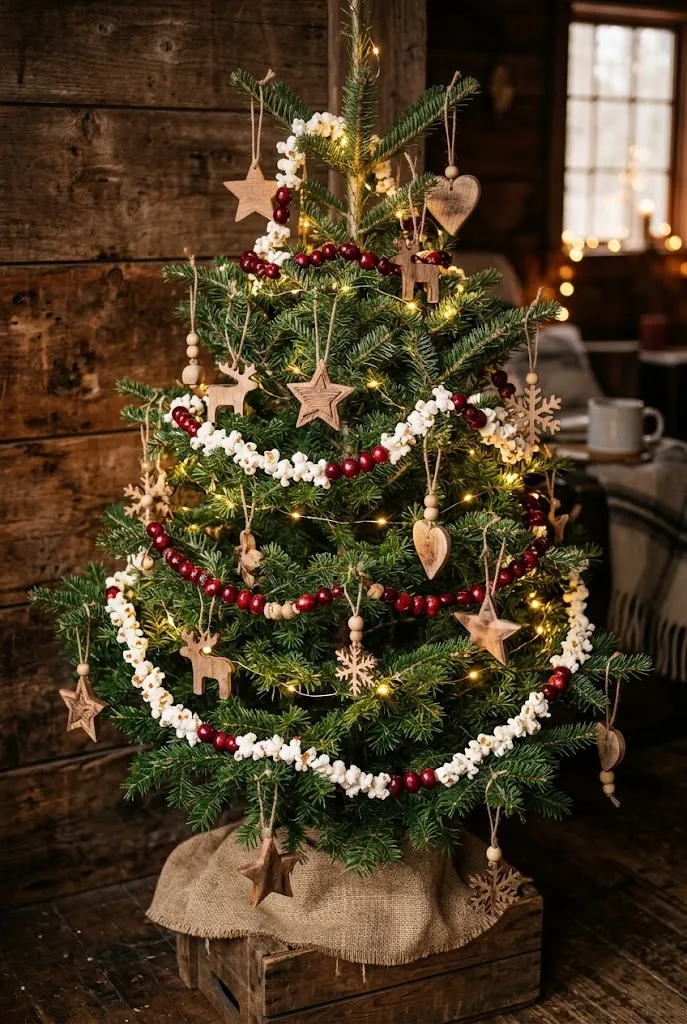
This classic garland suits a rustic tree and is inexpensive. Use day-old popcorn with fresh cranberries, threaded on strong thread. Hang it indoors briefly, since food garlands attract pests and spoil over time.
23. Frosted Tree With Copper and Burlap
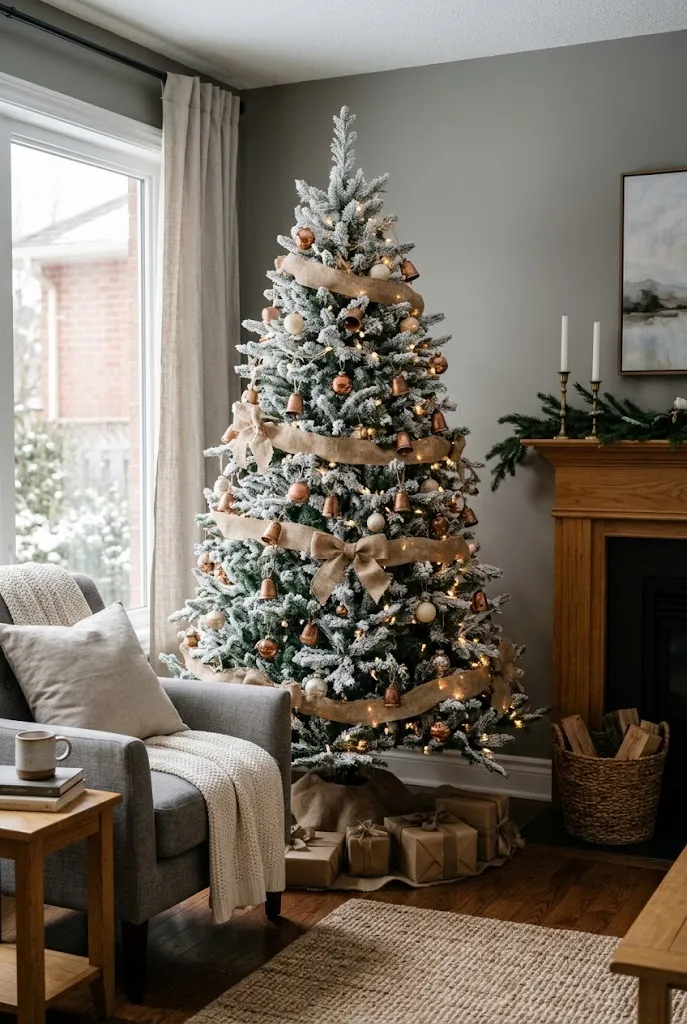
A lightly flocked tree gives a snowy look. Pairing it with burlap and copper-toned ornaments warms the cold white. Use sparingly: a few copper bells and a burlap ribbon are enough.
24. A Tall Fir Beneath Timber Beams
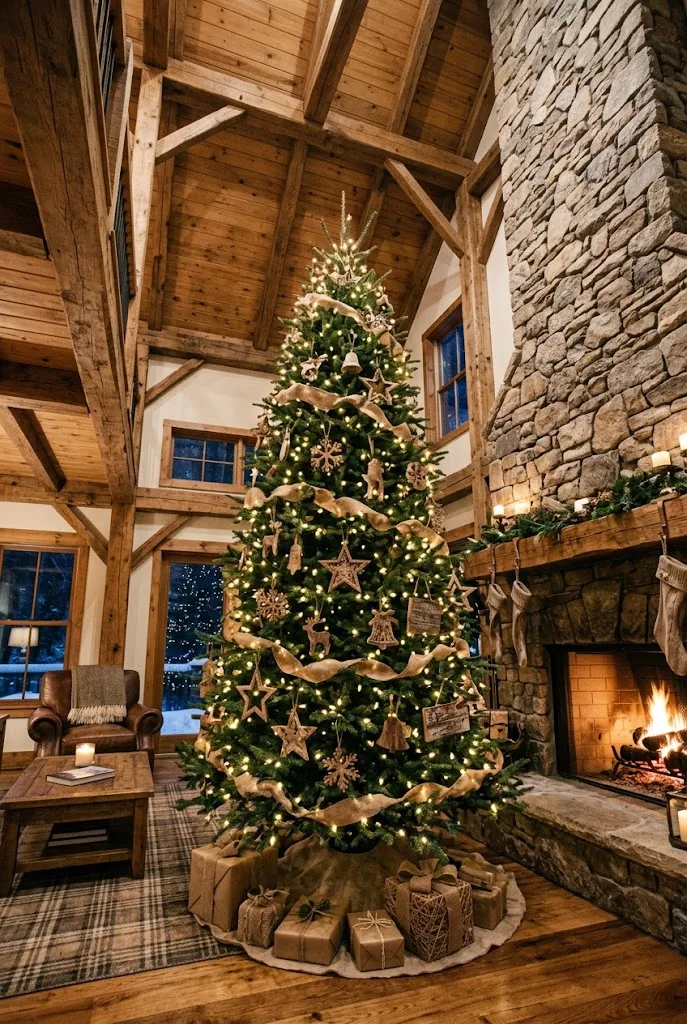
In a room with a vaulted ceiling, scale matters. A tree of 9 feet or more suits exposed beams. Keep ornaments larger, around 4 inches, and use heavier garlands. This is a premium look and needs a stable stand.
25. A Reclaimed-Wood Plank Tree
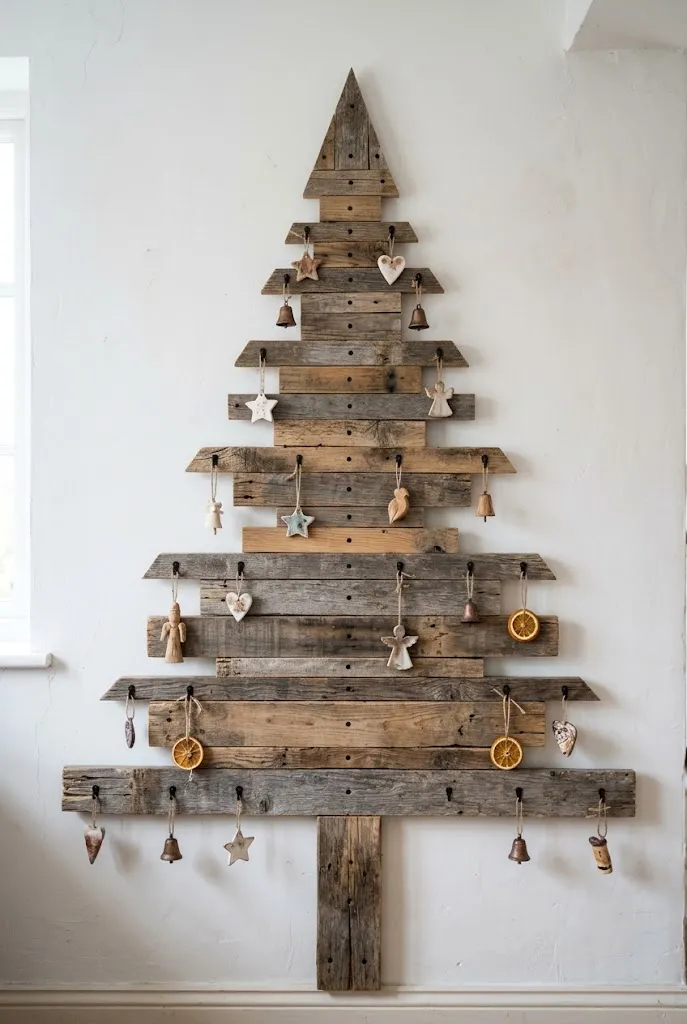
Skip the evergreen entirely. A tree built from graduated reclaimed boards leaned against a wall suits small spaces and can be reused. Decorate with small ornaments hung from nails.
26. Lanterns and Crates at the Base
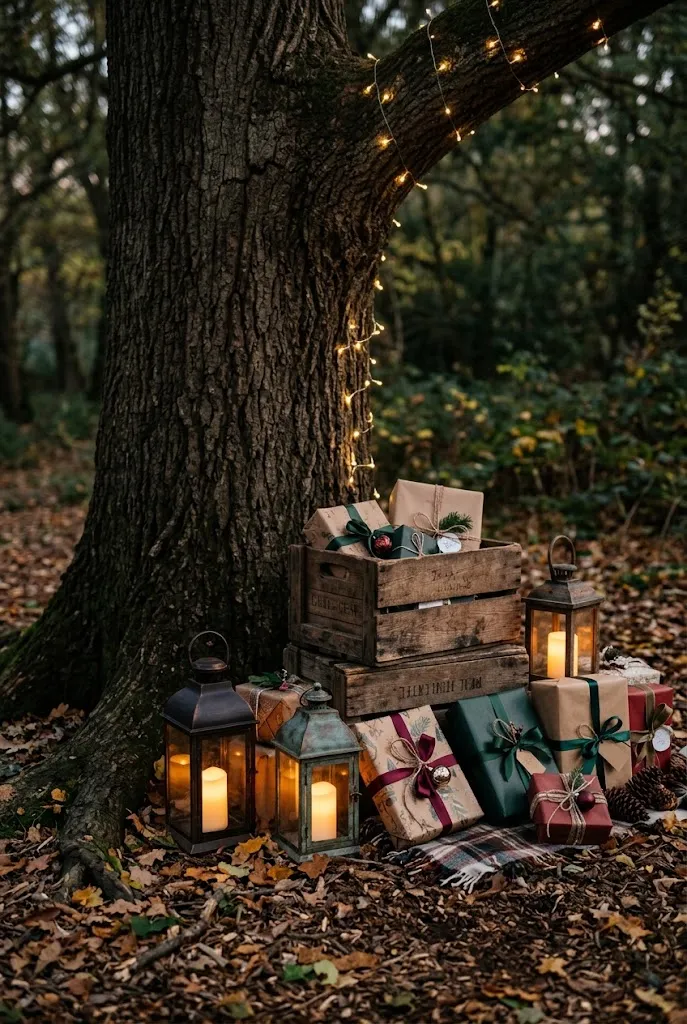
Arrange wooden crates of varied height and place LED lanterns on them. This builds a layered base and adds light at floor level.
Safety Note: Use LED candles instead of open flame near a tree.
27. Jute Rope Garland in Scallops
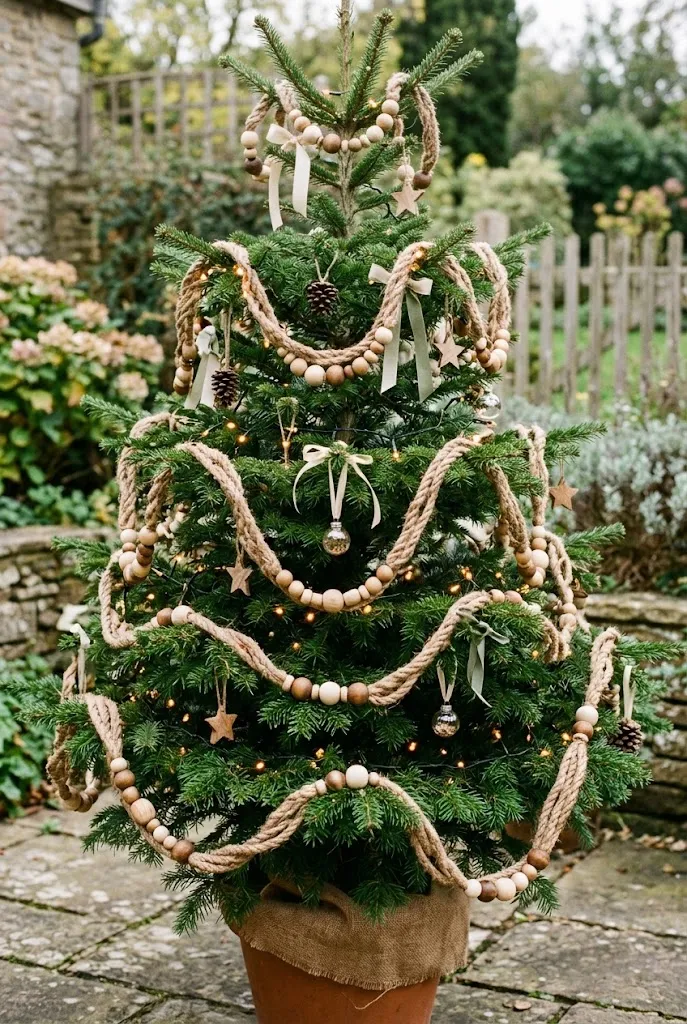
Thick rope swagged in deep scallops looks sturdier than ribbon. Secure each dip with a small wooden bead or pinecone.
28. Felted Wool Balls in Earth Tones
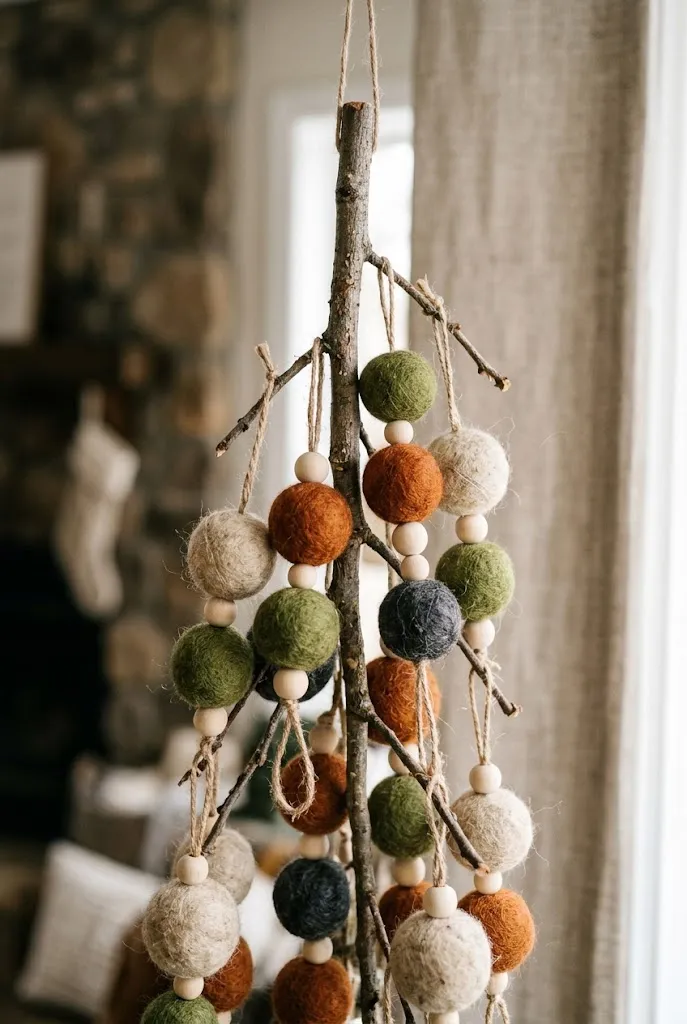
Felted wool balls bring softness and quiet color: oatmeal, moss, rust, and charcoal. Cluster them in groups of three.
29. A Live-Edge Slab Stand
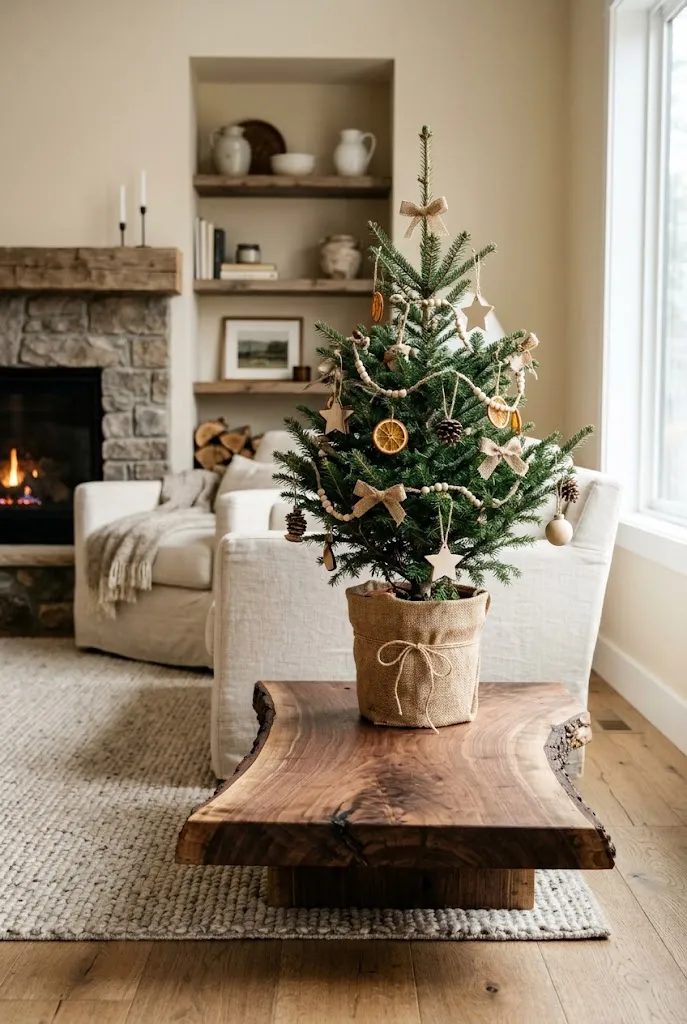
A custom stand made from a live-edge slab, with its natural uneven edge, anchors the tree and doubles as a display surface. This is a premium option and best made by a woodworker or ordered pre-finished.
Where to Start
Pick one foundation, such as burlap ribbon, wood beads, or twine bows, then add one or two supporting textures like wool, pinecones, or dried citrus. Rustic trees look best when materials repeat in moderation rather than competing.