

28 Cozy Bedroom Decor Ideas That Make Your Space Feel Like a Retreat
Introduction
A bedroom feels like a retreat when it handles three things well: soft light, layered texture, and a layout that lets you slow down. None of those depend on square footage. A rented one-bedroom and a custom primary suite can both get there.
The cozy bedroom decor ideas below run from five-minute styling changes to larger projects like built-ins and plaster walls. Some work in apartments where you can’t touch the walls. Others suit homeowners ready to invest in millwork or custom storage. Each idea is visually different, so you can pick the one that fits your room, budget, and the mood you want at the end of the day.
1. Layer Linen Bedding in Oat, Cream, and Stone
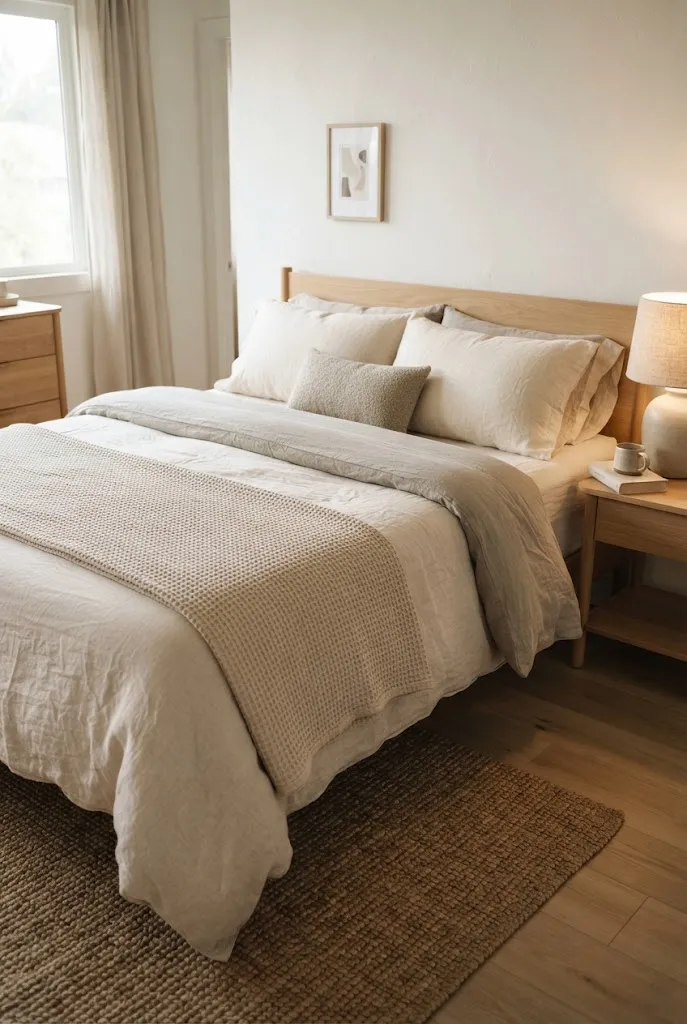
Washed linen is relaxed by nature. Its slight wrinkles read as casual rather than careless, which is half the appeal. Start with a fitted sheet and duvet cover in a warm oat tone, then add a flat sheet folded back in cream and a quilt or coverlet in stone at the foot.
Keeping everything in one color family lets the texture do the work. Add two sleeping pillows, two shams, and one small lumbar pillow, and stop there.
- Stay within two or three neutrals so the bed looks calm
- Mix weaves, such as linen, cotton waffle, and a lightly ribbed coverlet
- Fold the top layer back about a third of the way down for depth
Quick Tip: If linen feels too wrinkled for you, a washed cotton percale in the same colors gives a similar palette with a smoother surface.
2. Choose a Curved Bouclé Headboard
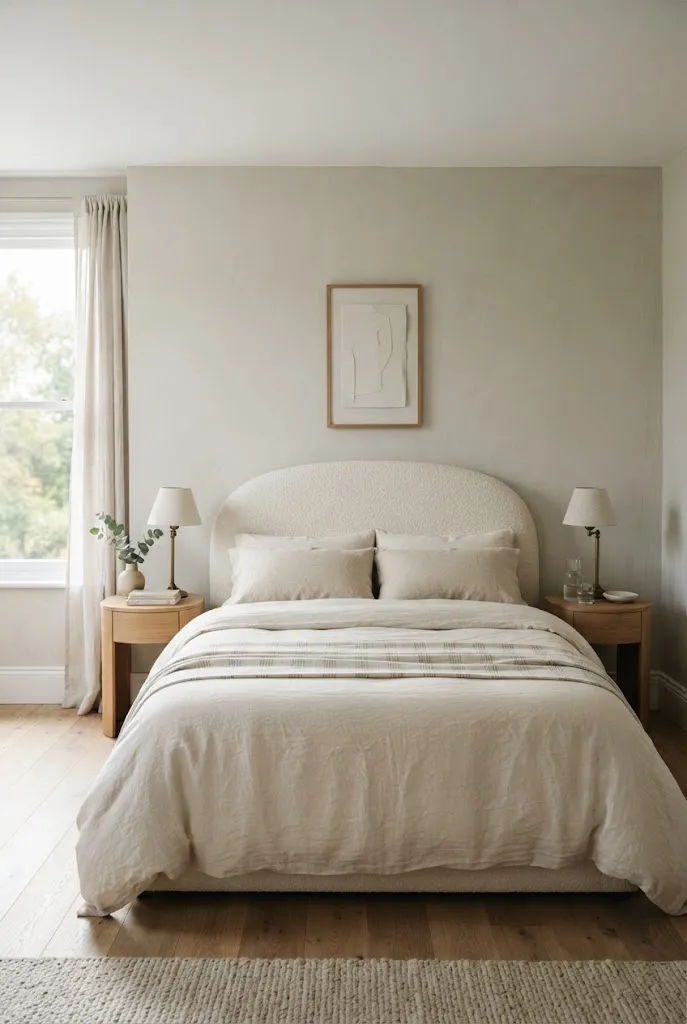
The bed is the largest object in the room, and a curved, upholstered headboard softens it right away. Bouclé is popular because its looped texture catches light and adds warmth without pattern. An arched or scalloped silhouette also breaks up the straight lines of walls and windows.
Ivory, warm white, and light taupe suit most rooms. In a smaller bedroom, pick a headboard that is only slightly wider than the mattress, so it doesn’t crowd the nightstands.
Common Mistake: Choosing a pure bright white fabric against cool white walls, which can look stark.
Better Approach: Pick a creamier ivory or oatmeal tone and let the walls stay a half-step lighter. The headboard then reads as a soft focal point rather than a flat white block.
If you have pets or small children, look for a performance fabric in a similar texture, since bouclé can snag.
3. Mount Plug-In Sconces on Both Sides of the Bed
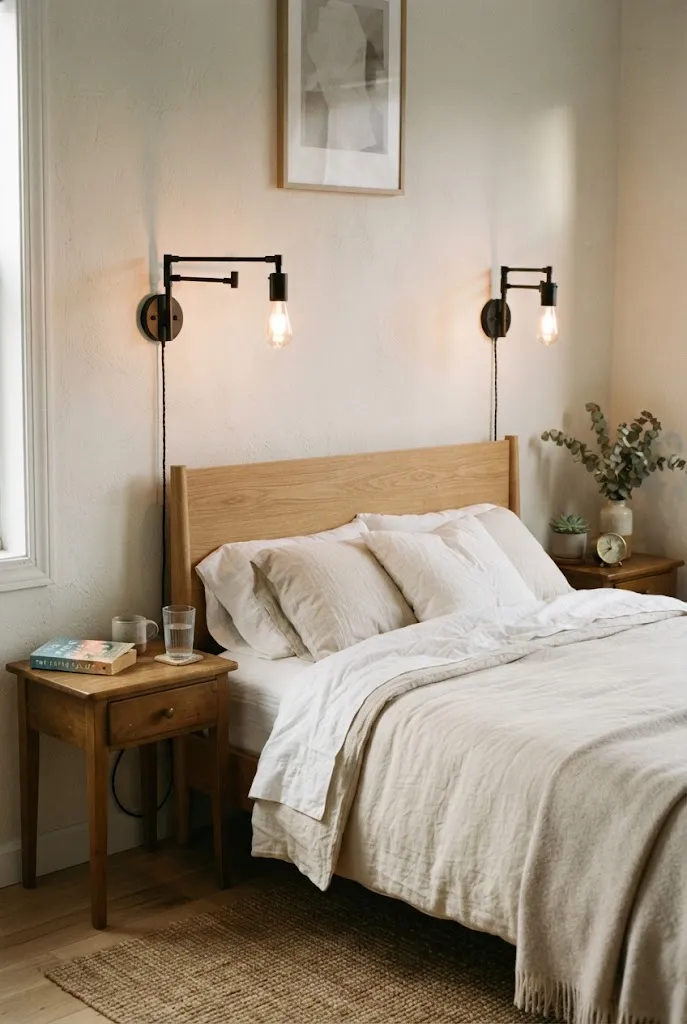
Overhead lighting is rarely cozy. Wall sconces at bed height give you a warm, low pool of light for reading and let you turn the ceiling fixture off completely. Plug-in versions have a cord you can run down the wall, so there’s no electrician and no wall damage beyond a couple of small mounting points.
Choose swing-arm styles if you read in bed, or a simple fixed shade if you mostly want ambiance. A warm-white bulb gives the room an evening feel.
- Sit on the bed with a pillow behind you to find the height where light falls on a book.
- Mark the mounting points and hang each sconce at the same height.
- Run the cord neatly down the wall with a paintable cord cover, or hide it behind the nightstand.
4. Add a Wood-Slat Accent Wall Behind the Bed
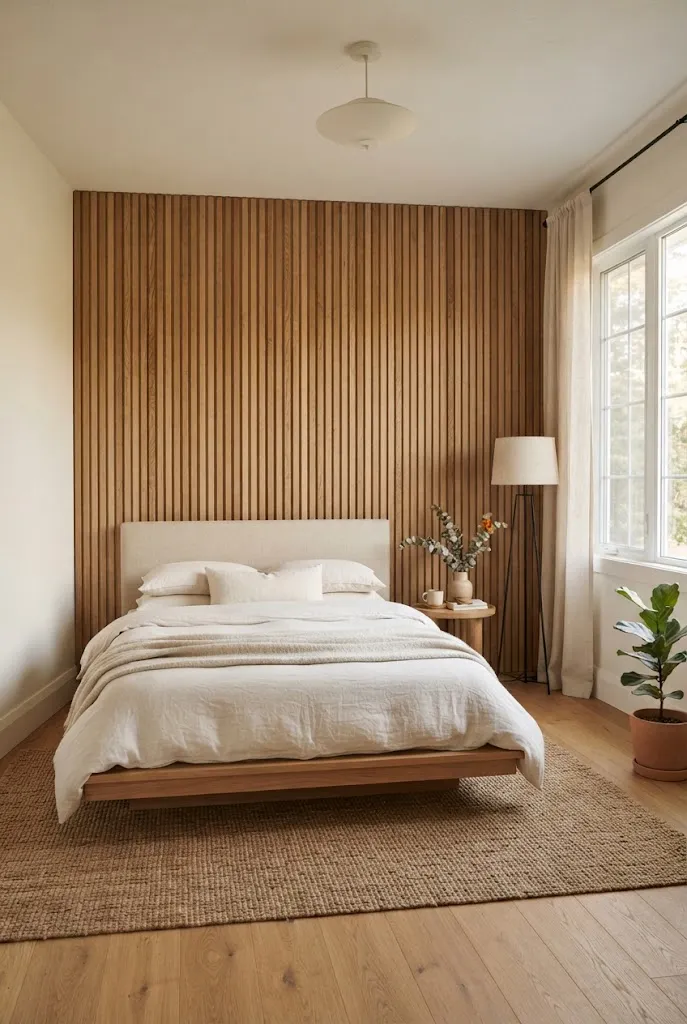
Vertical wood slats add rhythm and warmth to a plain wall, and they also help absorb a little sound. Walnut and white oak are the most common choices, with spacing narrow enough that the wall still reads as one surface. A bed placed against the slats looks built into the room.
This is a mid-range project. Prefabricated slat panels, often mounted on a felt backing, make installation easier than cutting individual strips, but you’ll still want a level and a stud finder.
| Option | Visual Effect | Best Fit |
|---|---|---|
| Natural oak slats | Light, airy, Scandinavian feel | Smaller rooms, bright windows |
| Walnut slats | Deeper, more dramatic | Larger rooms, moody palettes |
| Painted slats | Textured but color-focused | Renters who can paint, homeowners wanting subtlety |
5. Hang Sheer Curtains as a Soft Bed Canopy
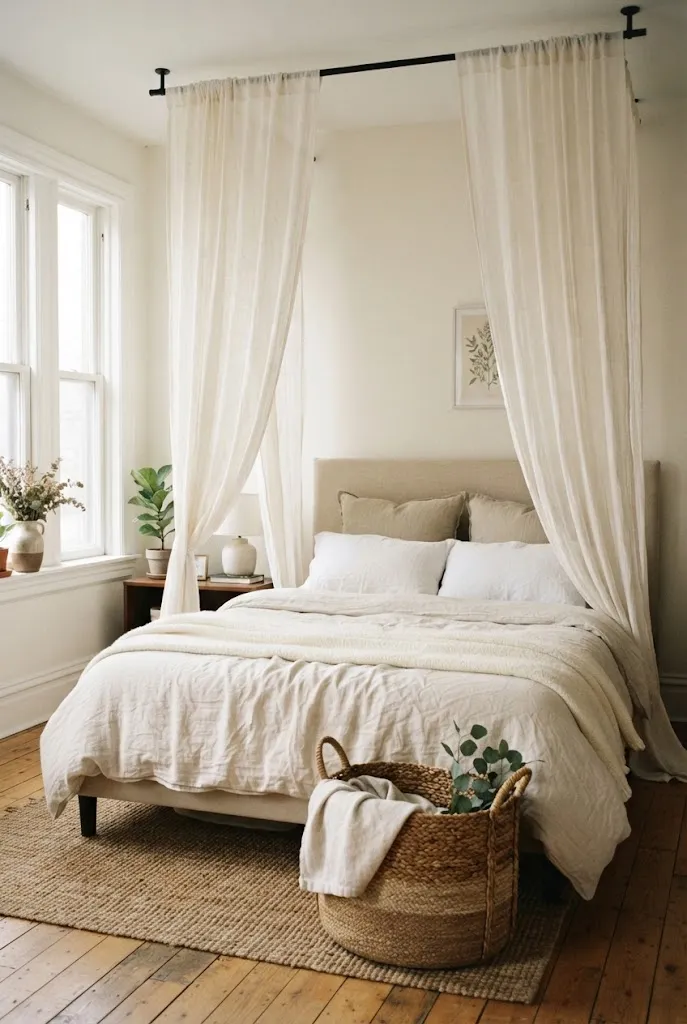
You don’t need a four-poster frame. A ceiling-mounted curtain rod or a simple hoop mounted above the headboard can hold two lengths of sheer fabric that fall on either side of the bed. The effect is a gentle sense of enclosure, a bit like a hotel cabana, without blocking light or airflow.
White, ivory, or warm gauze all read as soft. Use lightweight fabric so the folds drape rather than stiffen.
Editor’s Note: Scale matters here. If the ceiling is low, hang the fabric closer to the headboard wall rather than centered over the bed, so the room doesn’t feel squeezed.
6. Build a Window Seat With Storage and a Bookshelf Edge
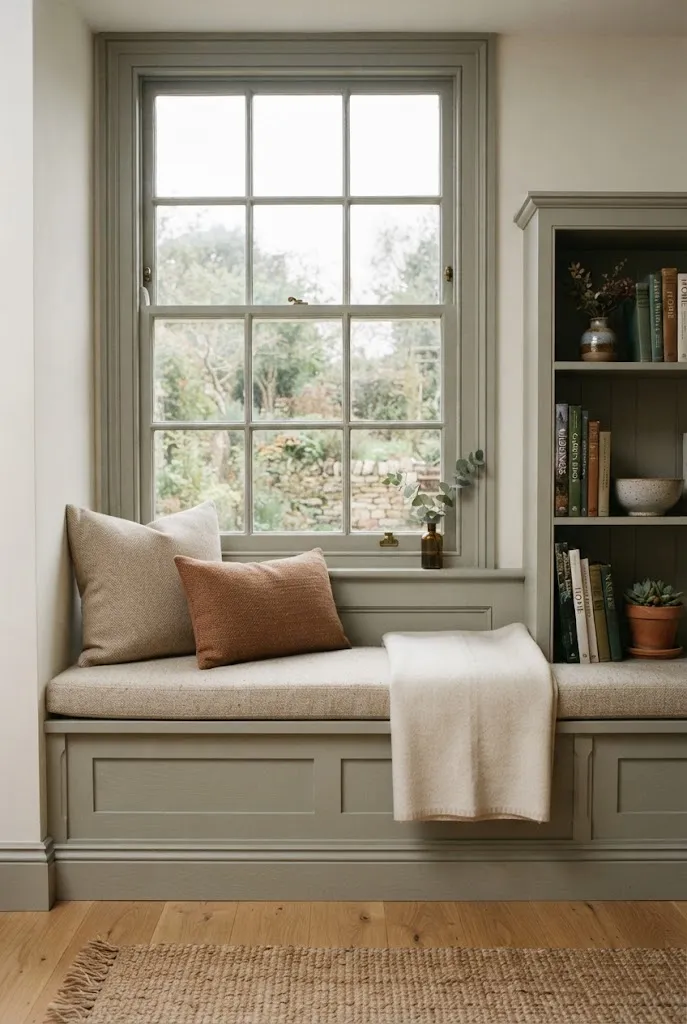
A built-in window seat gives the bedroom a second place to sit, which is something many American bedrooms lack. A cushioned bench with drawers beneath holds off-season bedding or shoes, and a shallow bookshelf on one side adds an easy reading corner.
This is a premium, custom-leaning project, often built by a carpenter or adapted from stock cabinetry. The finish matters: painted millwork in a muted color looks more intentional than raw wood in most rooms.
- Cushion thickness of about 3 to 4 inches stays comfortable without looking bulky
- Drawers or lift-up lids both work; drawers are easier for daily use
- A pair of throw pillows in different textures feels better than a matching set
If a custom build is out of reach, a deep upholstered bench under the window with baskets beneath gets a similar look.
7. Style a Bench With a Chunky Knit Throw
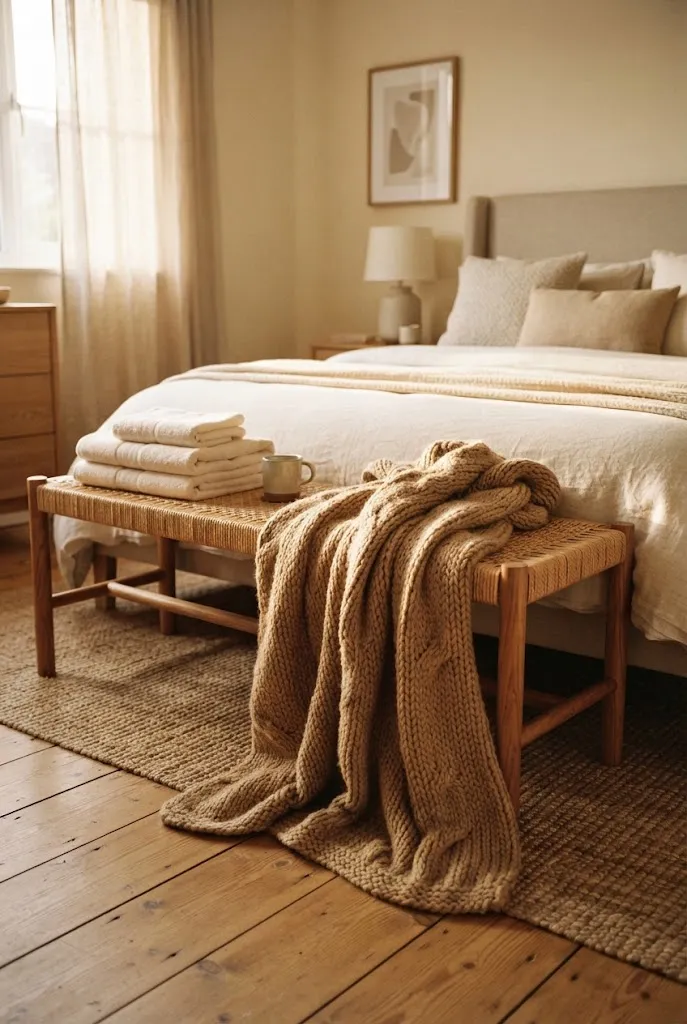
A bench at the foot of the bed gives the room a finished line, and it’s the easiest place to add a heavy knit blanket. Drape it loosely, let it spill unevenly, and the bench becomes a texture moment rather than a piece of furniture.
Wool, chenille, or thick cotton knit all work. If your bed is already layered, choose a throw one or two shades deeper, such as camel, warm gray, or soft rust.
Skip the bench if the room is tight. A simple ladder blanket rack or a hook on the wall can hold the throw with less footprint.
8. Paint the Walls a Muted Sage Green
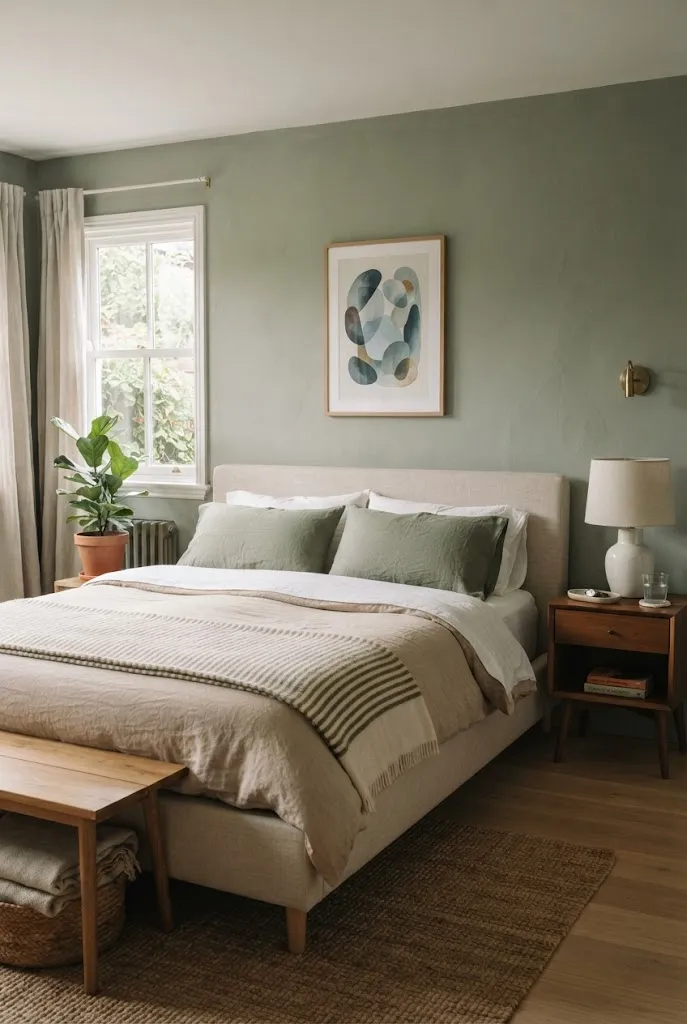
Color can do more for coziness than almost any other single change, and paint is one of the most affordable. Muted sage and gray-green tones feel calm and a little earthy, pairing well with natural wood, cream bedding, and brass or black hardware.
Test samples on more than one wall. Sage can look quite different in morning versus evening light, and a gray-heavy green can read cool in north-facing rooms.
Do:
- Pair with warm whites for trim to keep the color soft
- Add wood or woven pieces so the green doesn’t feel flat
- Use a matte or eggshell finish for a quieter surface
Don’t:
- Mix it with stark cool-white bedding that fights the warmth
- Pick a sample from a single small swatch without checking it at night
9. Hang a Woven Pendant Over a Reading Chair
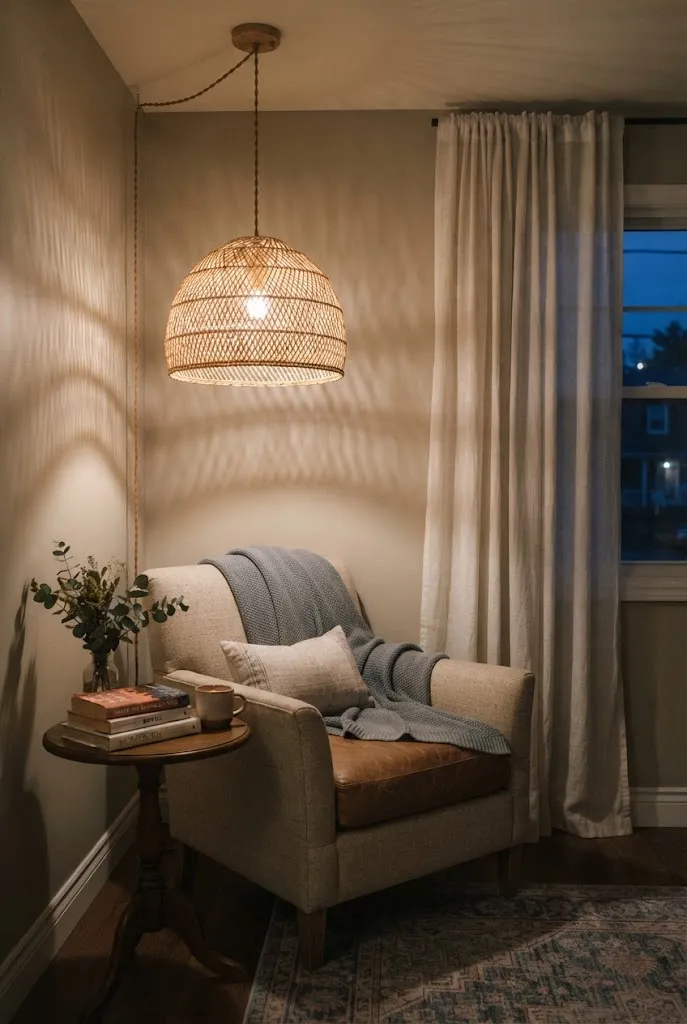
A woven rattan or seagrass pendant casts a patterned, warm glow and adds an organic shape overhead. In a bedroom, it works well over a chair, a dresser, or beside the bed in a plug-in swag style.
Size is the detail to get right. A pendant that’s too large can overwhelm a smaller room, while a very small one disappears. Aim for something that feels related to the furniture beneath it rather than to the room as a whole.
Quick Facts
Best For: Rooms that feel plain overhead or lack a focal light
Investment: Accessible to moderate
Visual Effect: Warm, dappled light and natural texture
10. Carve Out a Reading Nook With a Lounge Chair and Floor Lamp
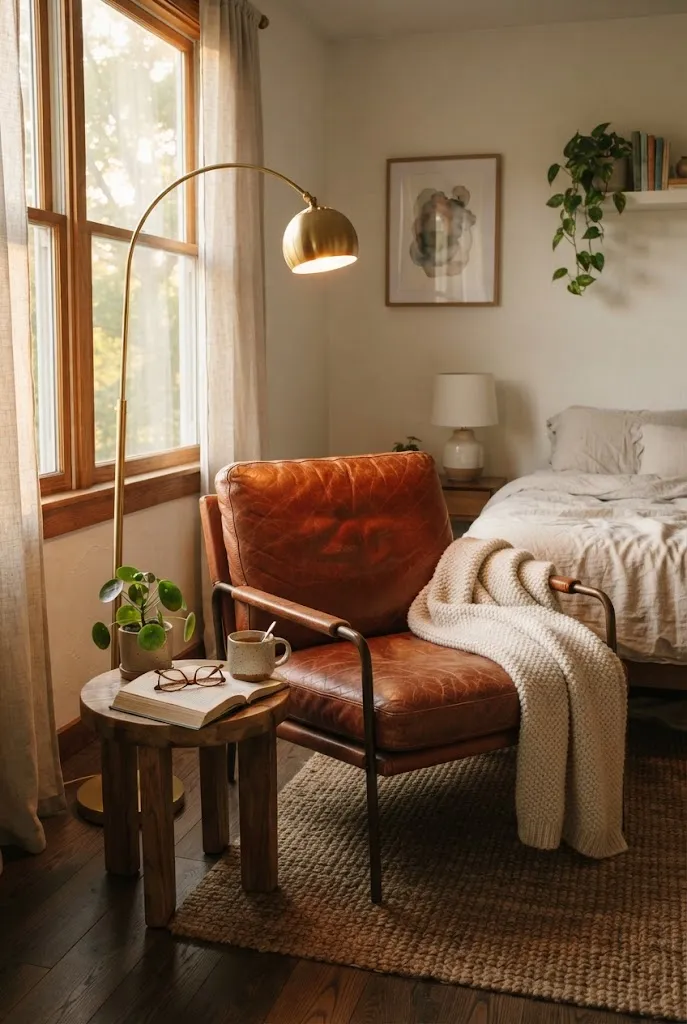
Even a small bedroom can hold a corner chair. A deep lounge chair, a slim floor lamp, and a small side table create a clear second zone for reading, scrolling, or sipping tea, away from the bed.
Choose a chair you can actually curl up in, with a depth and back height that suit you. Place it so it gets daylight during the day and lamplight at night.
- Choose the corner with the best natural light.
- Angle the chair slightly toward the room rather than flat against the wall.
- Add a lamp with a warm bulb and a small table within arm’s reach.
- Finish with one throw and one pillow.
11. Finish the Walls With Limewash or Plaster
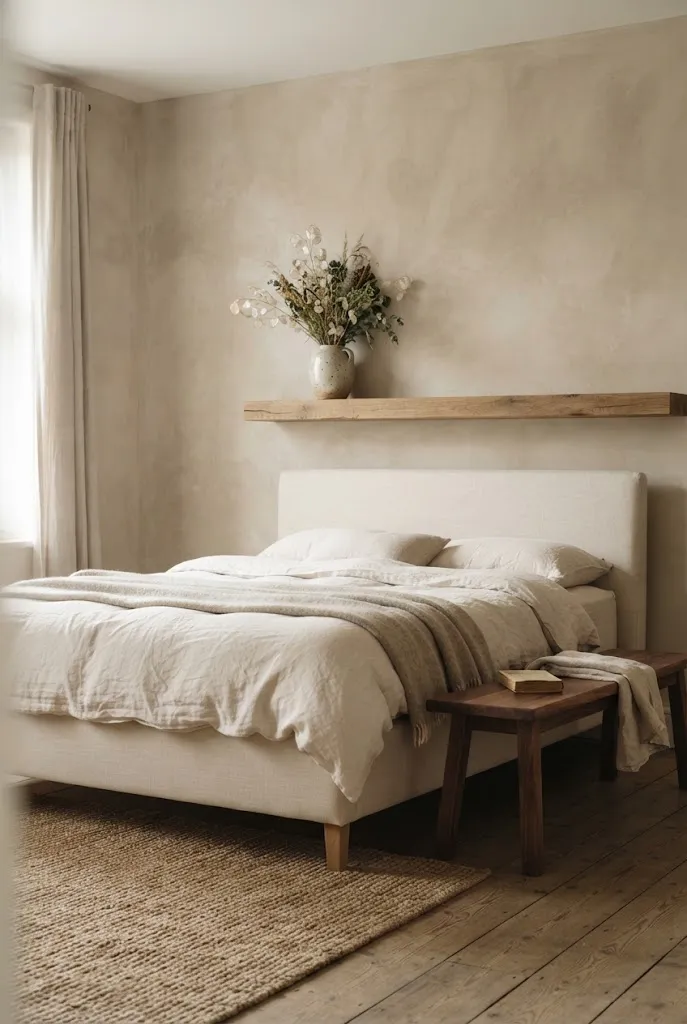
Limewash and textured plaster give walls a soft, cloudy depth that flat paint can’t match. The finish shifts subtly with light, which is why it suits bedrooms so well. Warm whites, clay, and pale putty colors are common.
This is a premium treatment when done by a skilled applicator, since technique affects the result. DIY-friendly limewash-style paints are available, but the finish tends to look more uniform than traditional plaster.
Editor’s Note: Textured finishes can be harder to patch invisibly later. If you plan to move or repaint soon, an accent wall behind the bed is a more flexible commitment.
12. Build a Gallery Wall of Botanical Prints Above the Dresser
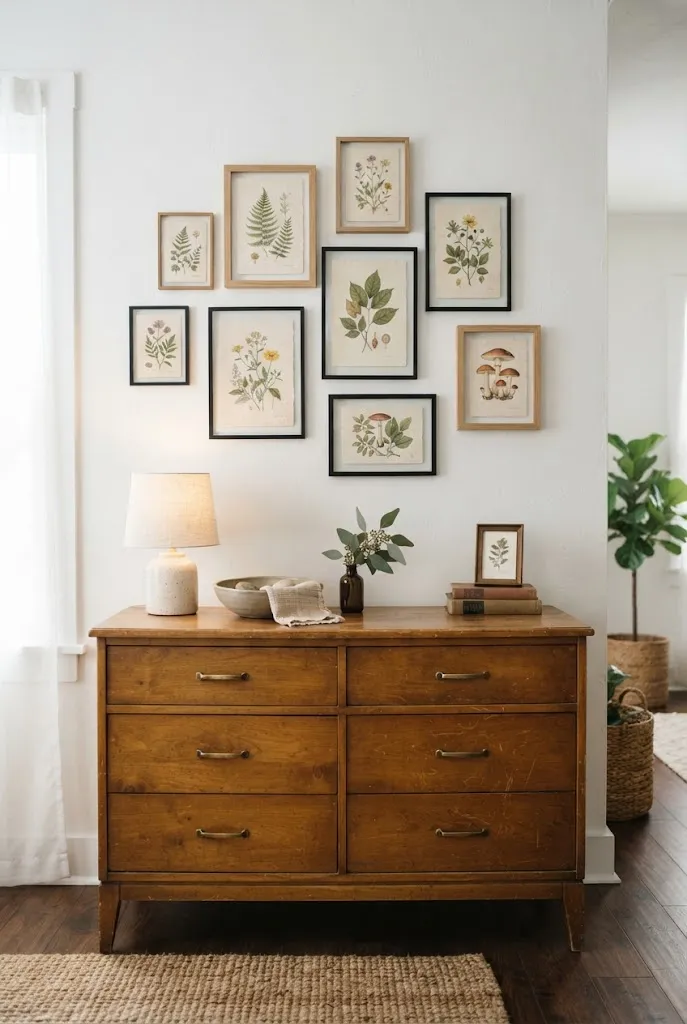
A grouped collection of framed prints is one of the most personal ways to make a room cozy. Botanical drawings, pressed leaves, or soft landscape prints in similar frames give a calm, curated feel.
Lay everything on the floor first and photograph the arrangement. Hang the largest piece slightly off center, then build around it. Keeping frames within one or two finishes holds the group together.
- Mix sizes, but keep mat and frame colors consistent
- Leave about 2 to 3 inches between frames
- Hang the group so its center sits at a comfortable eye level
13. Add Board-and-Batten Paneling in Warm White
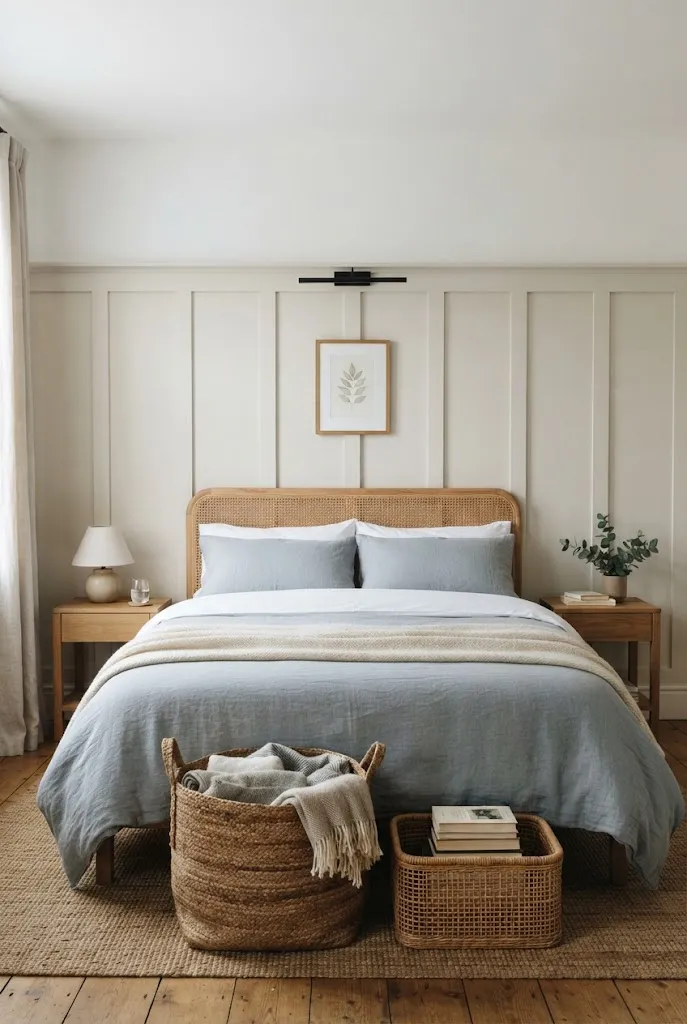
Board-and-batten adds structure and a quiet cottage feel to a plain wall. Painted in a warm white, it holds light without turning stark, and it gives a rental-adjacent room a more architectural look.
Applied molding is generally an affordable to mid-range project, especially when using primed MDF strips and a level. Painting the wall and trim the same color keeps it subtle.
Before / After Logic: A flat wall behind the bed reads as a backdrop. With vertical battens, it reads as part of the architecture, even if the furniture stays exactly the same.
14. Layer Two Rugs Under and Beside the Bed
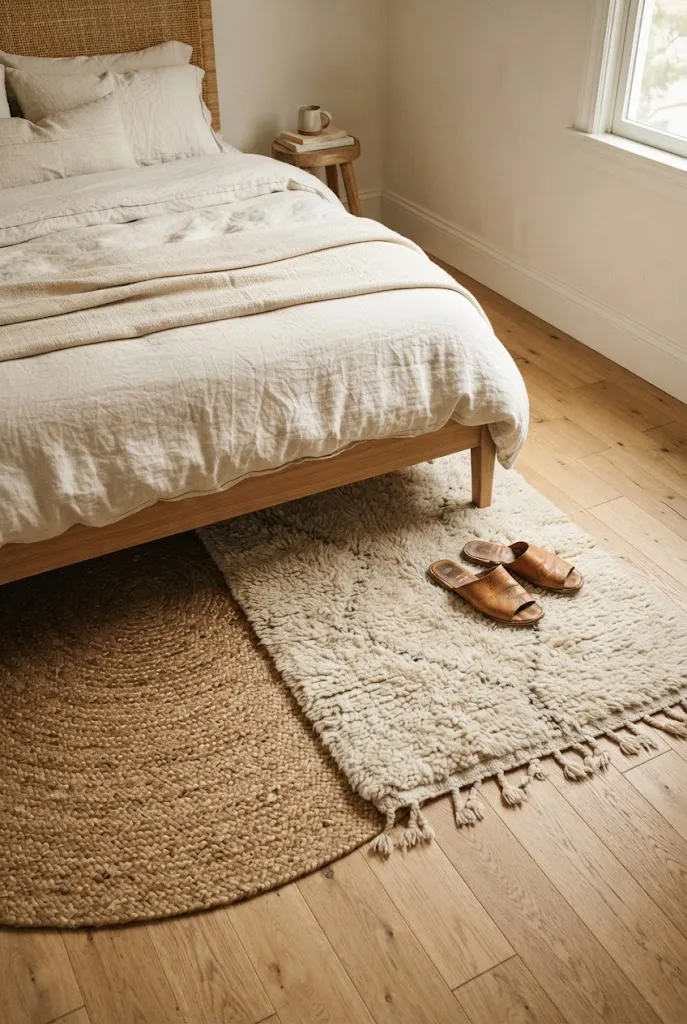
A rug anchors the bed and gives your feet something soft in the morning. Layering a larger flat-weave in a neutral tone with a smaller plush or patterned rug on top adds depth, and it can hide a less attractive floor.
For a queen bed, a common guide is a rug large enough that the front two-thirds of the bed sits on it, often 8 × 10 feet. Smaller rooms may only fit a runner on each side.
| Approach | Effect | Best Fit |
|---|---|---|
| One large rug | Clean, unified | Larger bedrooms |
| Two runners | Soft landing on each side | Narrow or small rooms |
| Layered rugs | Rich texture, pattern play | Rooms with plain flooring |
15. Make the Most of a Sloped-Ceiling Attic Bedroom
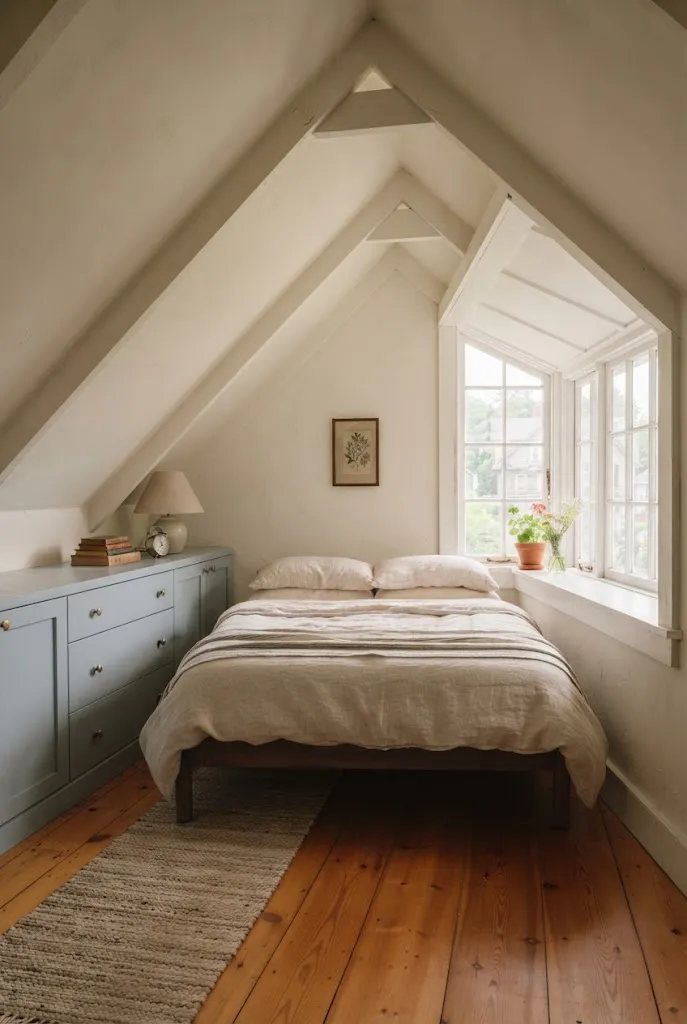
Attic and dormer bedrooms are common in older American homes, and the angled ceilings can feel cozy rather than awkward. Place the bed under the highest point or against the knee wall, and use the low sides for built-in drawers or shallow shelves.
Painting the walls and ceiling the same color, often a soft warm white or a gentle gray-beige, softens the slope so it wraps the room rather than cutting it up.
- Use low furniture where the ceiling dips
- Choose a wall-mounted light on the taller side
- Add built-in drawers into the eaves for custom storage
16. Mix Two Different Bedside Tables
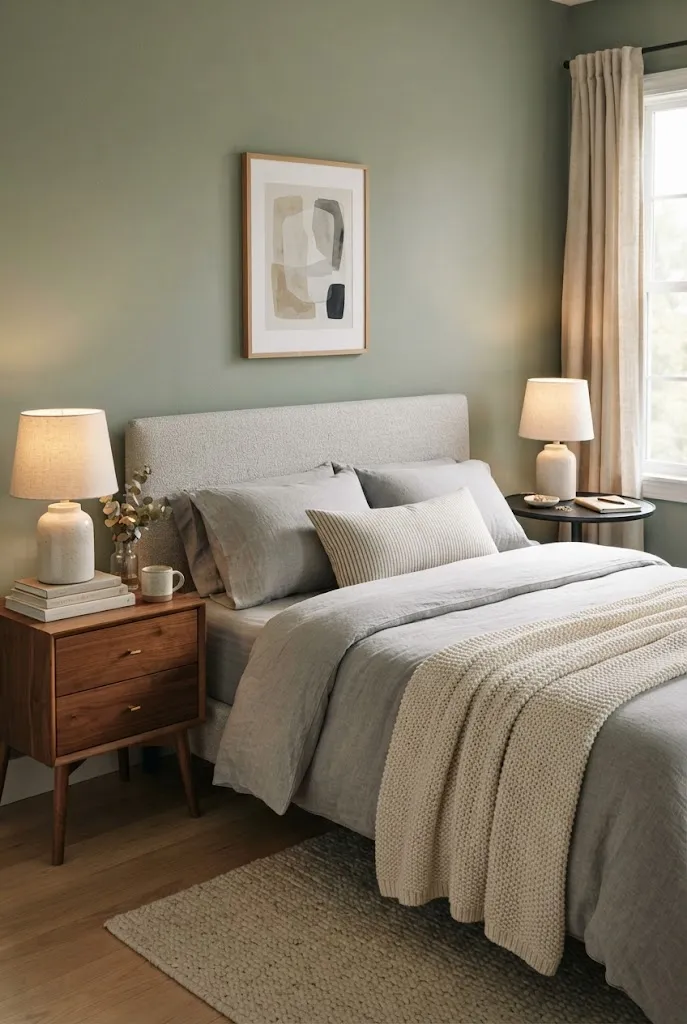
Matching nightstands are neat but can feel hotel-like. Pairing two different pieces, such as a small wood chest on one side and a round metal or stone table on the other, gives the bed some personality and often suits mixed collections.
The trick is to keep a link between them: similar height, a shared material, or a lamp pair that ties them together.
Common Mistake: Choosing two tables at different heights, which makes the lamps and the bedding line look uneven.
Better Approach: Keep tops within a couple of inches of each other and repeat one finish across both.
17. Style a Mantel or Ledge With Candles and Dried Stems
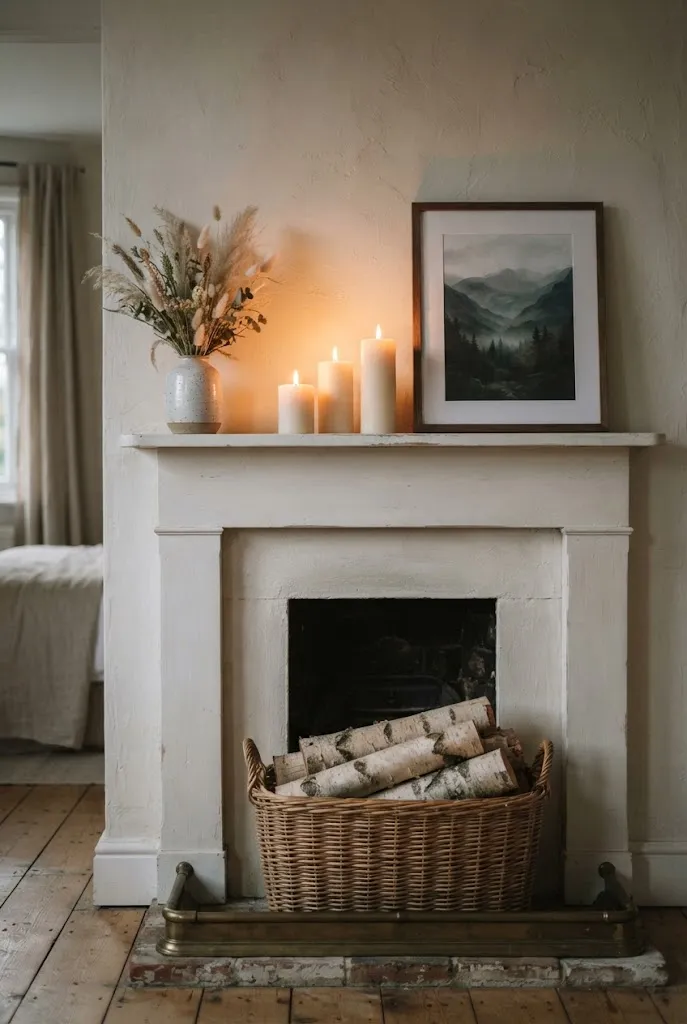
If your bedroom has a fireplace, or even a wide shelf or ledge, treat it like a small vignette. A grouping of candles, a ceramic vase with dried stems, and a framed piece of art gives a quiet focal point.
Odd numbers tend to feel more natural. Vary heights and keep the palette limited. If a fireplace is decorative only, a stack of birch logs or a large basket adds warmth without a flame.
Quick Tip: Use flameless candles in a bedroom if you often fall asleep with lights on.
18. Color-Drench the Room in Deep Navy
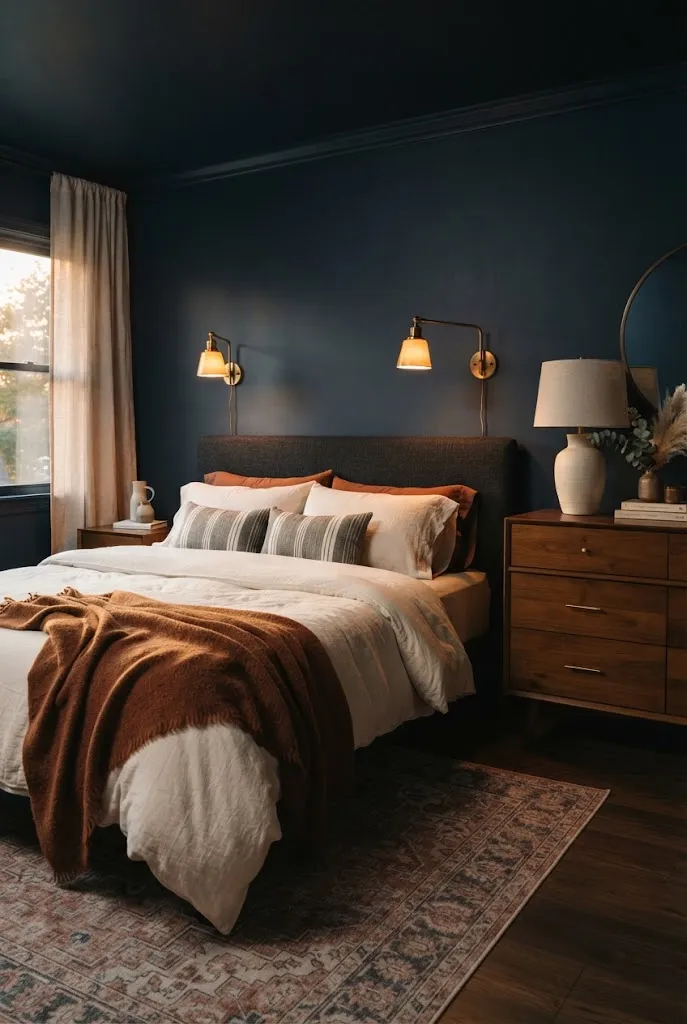
Painting the walls, trim, and sometimes the ceiling in one deep color creates an enveloping feeling that suits sleep. Navy, charcoal blue, and deep ink tones are classic, and they work well with natural wood, brass, and cream bedding.
In a bedroom, this is also a good way to disguise awkward angles or mismatched trim.
- Use a matte finish to avoid glare
- Add warm lamps instead of one bright overhead
- Balance with lighter textiles so the room doesn’t feel heavy
Editor’s Note: North-facing rooms and darker colors can feel cave-like without enough lamp light. Plan lighting before you paint.
19. Hang Curtains High and Wide for Softer Windows
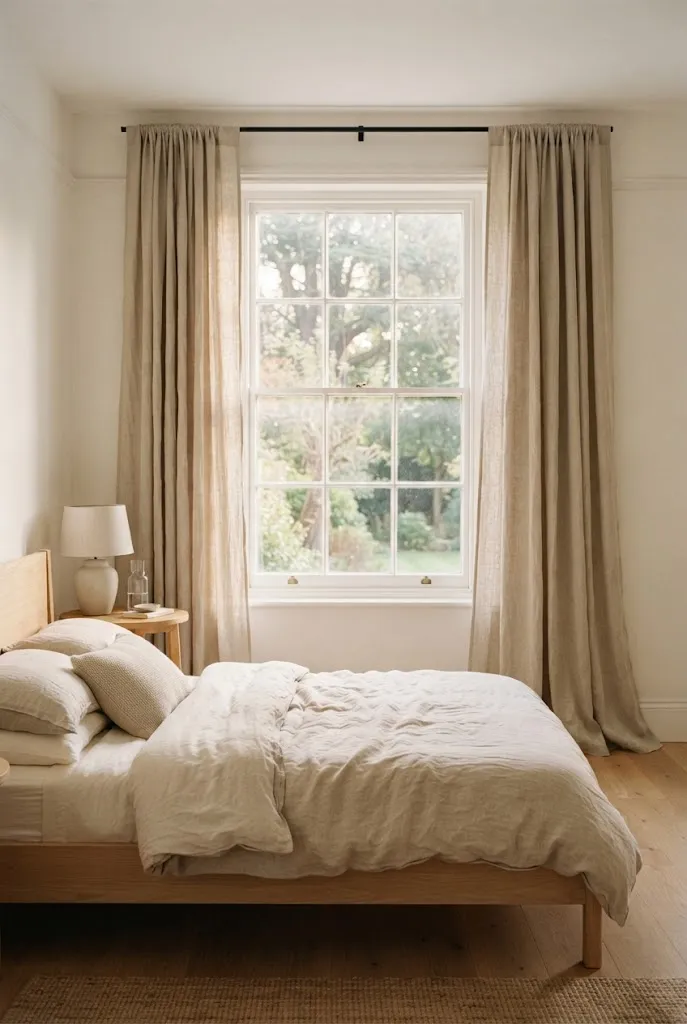
Hanging curtain rods closer to the ceiling and extending them past the window frame makes windows look taller and the room feel calmer. Floor-length, lined curtains also block light and add a quiet, enclosed feeling.
Linen blends, cotton, or soft velvet all work, depending on how formal you want the room to feel.
- Mount the rod several inches above the window frame, nearer the ceiling.
- Extend it wide enough that the curtains clear the glass when open.
- Hem or choose lengths that just brush or kiss the floor.
20. Restyle a Secondhand Dresser With a Tray and Mirror
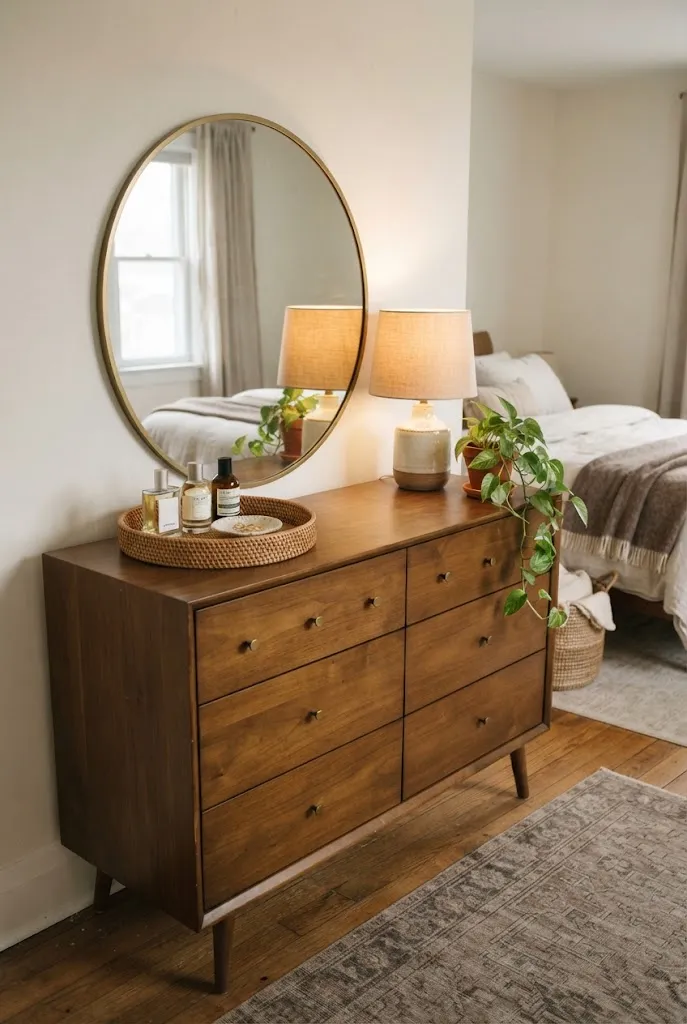
A vintage or thrifted wood dresser brings character and often better construction than flat-pack. Refresh hardware, clean the finish, and style the top with a mirror, a lamp, and a tray for small items.
Keep the surface edited. A tray corrals jewelry and perfume, a small plant softens edges, and one stack of books adds height.
- Swap in new pulls for a quick update
- Lean an oversize mirror rather than hanging it
- Keep three or four objects per grouping
21. Create a Peel-and-Stick Wallpaper Headboard Panel
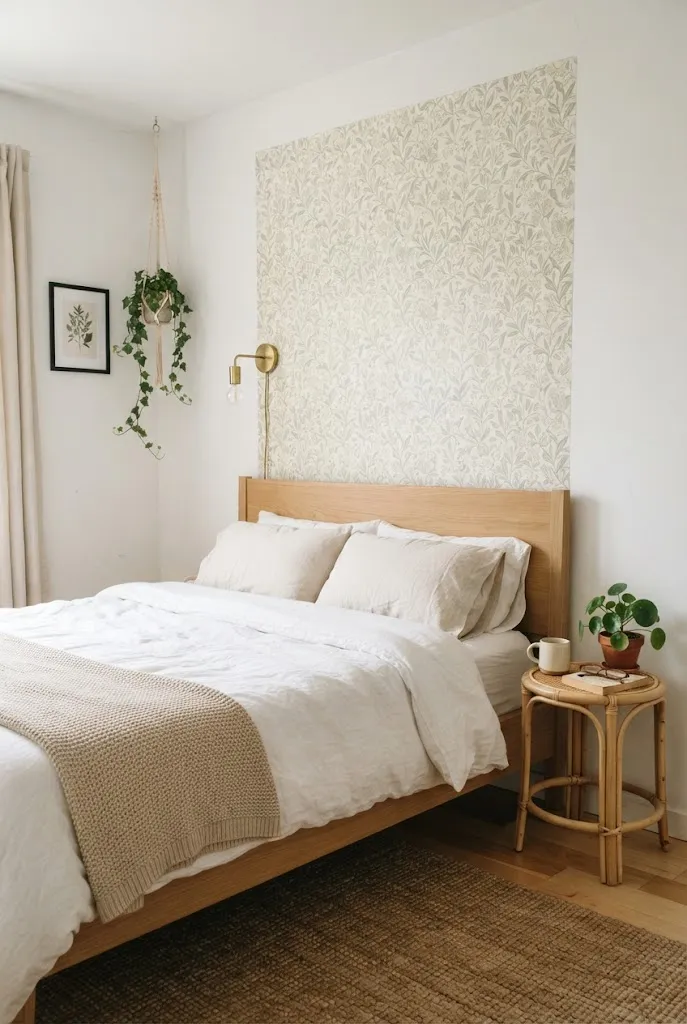
A removable wallpaper panel behind the bed gives a custom look without a lease violation. Choose a subtle pattern, such as botanical line art, faint grasscloth, or a soft geometric, and size it a bit wider than the bed.
Smooth walls give the best results. Test a small piece first, since some products can lift paint.
Do: Measure carefully, use a level, and work from the center out.
Don’t: Apply to freshly painted walls that haven’t fully cured.
22. Add Trailing Plants on a Shelf or Dresser
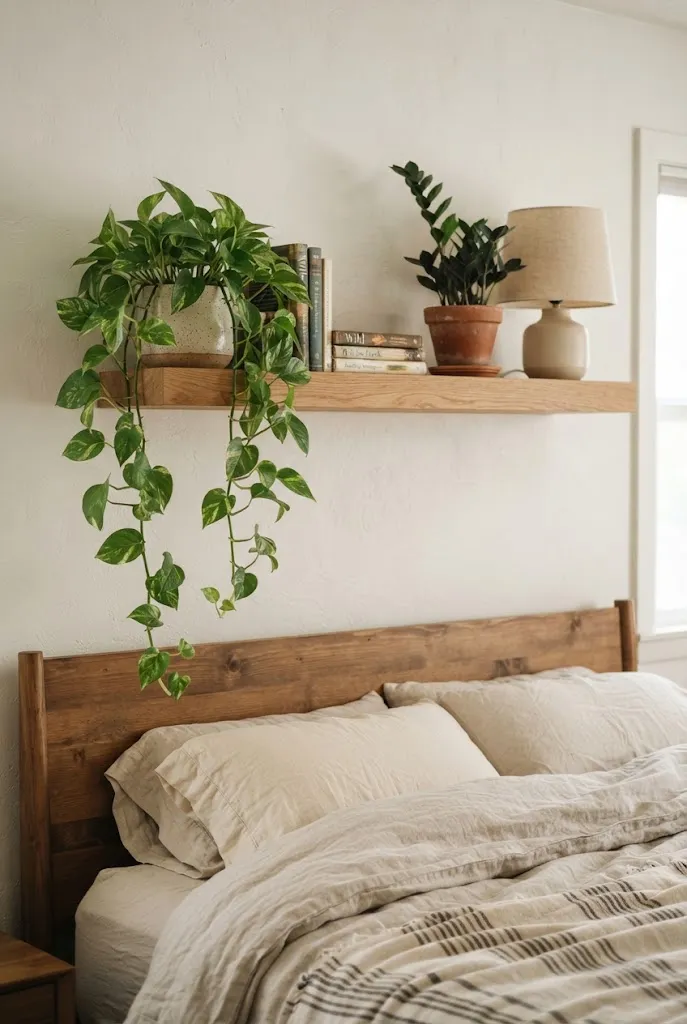
Plants bring a living, soft shape to a bedroom. Trailing varieties like pothos or philodendron can spill gently from a high shelf, and a small snake plant or ZZ plant works in lower light.
Pick plants that match your actual light conditions rather than your wishlist, and choose pots with drainage or use a liner.
Quick Facts
Best For: Rooms with a bright window or a shelf near light
Investment: Accessible
Visual Effect: Organic softness and a fresh, calm feel
23. Flank the Bed With Built-In Wardrobes and Overhead Storage
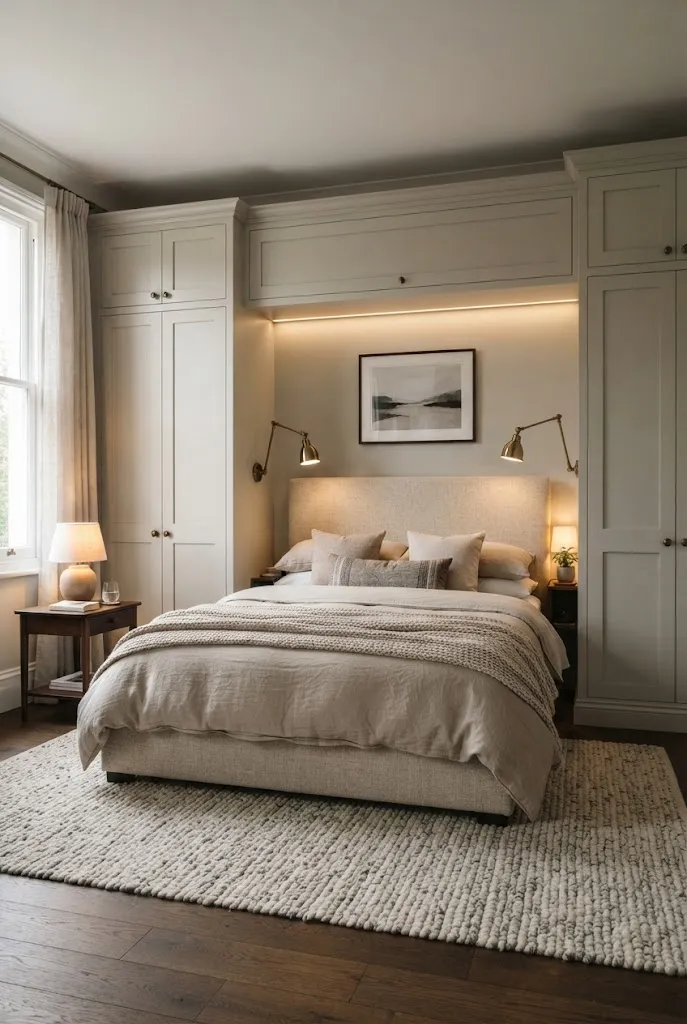
For a primary suite, built-ins on either side of the bed create a niche that feels like a hotel alcove and adds a lot of storage. An overhead cabinet bridging the two gives the bed a cave-like feel without making it dark.
This is a premium, custom-leaning investment. Paint-grade cabinetry, simple shaker fronts, and integrated sconces keep it residential rather than showroom-like.
Editor’s Note: Leave enough clearance on each side of the bed to walk and make it comfortably.
24. Choose a Pale Wood Bed Frame for a Scandinavian Feel
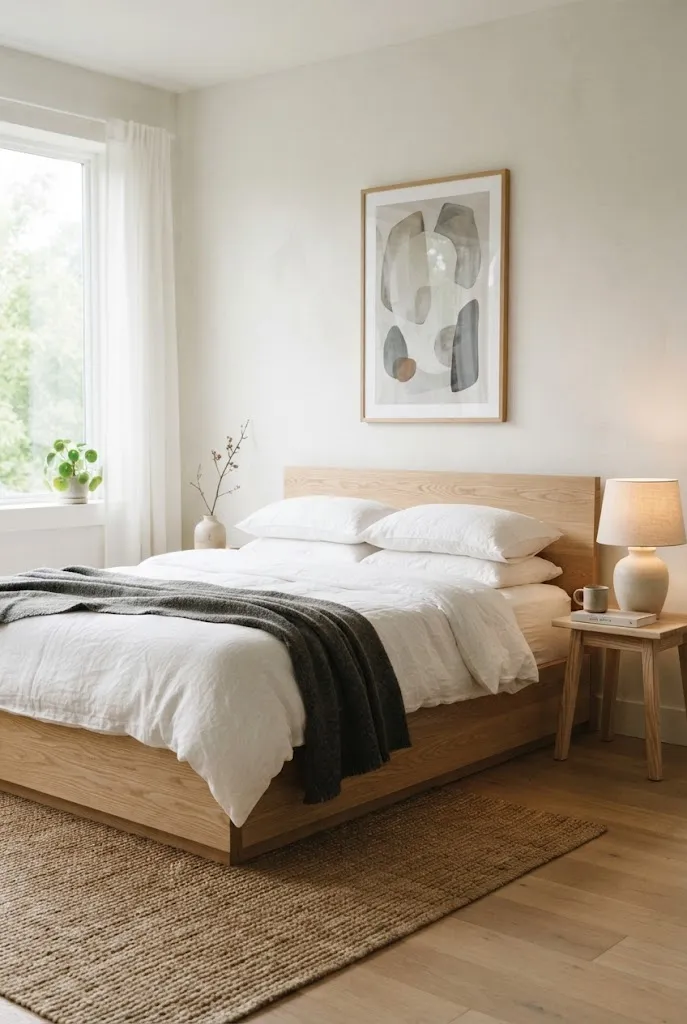
A light oak or ash bed frame keeps a room feeling open and warm. Paired with white or light gray bedding and a simple wool throw, it gives a clean look that’s cozy rather than cold.
Keep the styling restrained: a single table lamp, one piece of art, and natural textiles.
- Choose a low profile for visual lightness
- Mix white, cream, and a touch of charcoal
- Add one organic shape, such as a woven basket or ceramic vase
25. Use Wall-Mounted Shelf Nightstands in a Compact Room
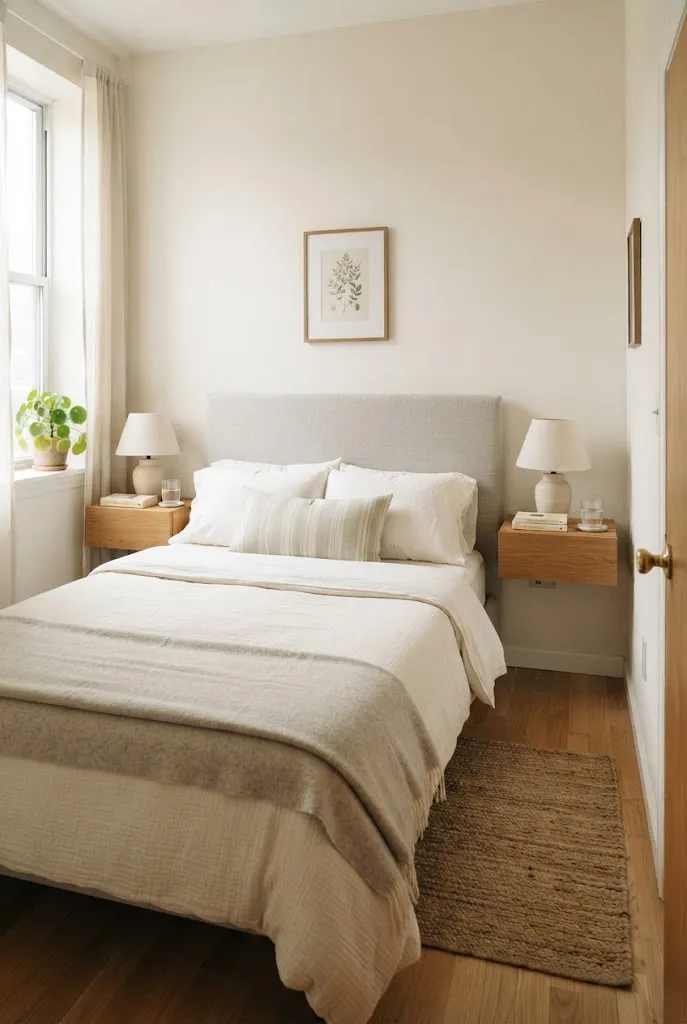
Floating shelves beside the bed free up floor space and make a small room feel less crowded. A narrow ledge holds a phone, glass, and a book, while a wall sconce above provides light.
Mount the shelf at a comfortable height relative to the mattress and use proper anchors if it will hold weight.
Common Mistake: Placing shelves too high or too far from the bed.
Better Approach: Set them near the top of the mattress so they feel like nightstands.
26. Set Up a Vanity Corner With a Lit Mirror
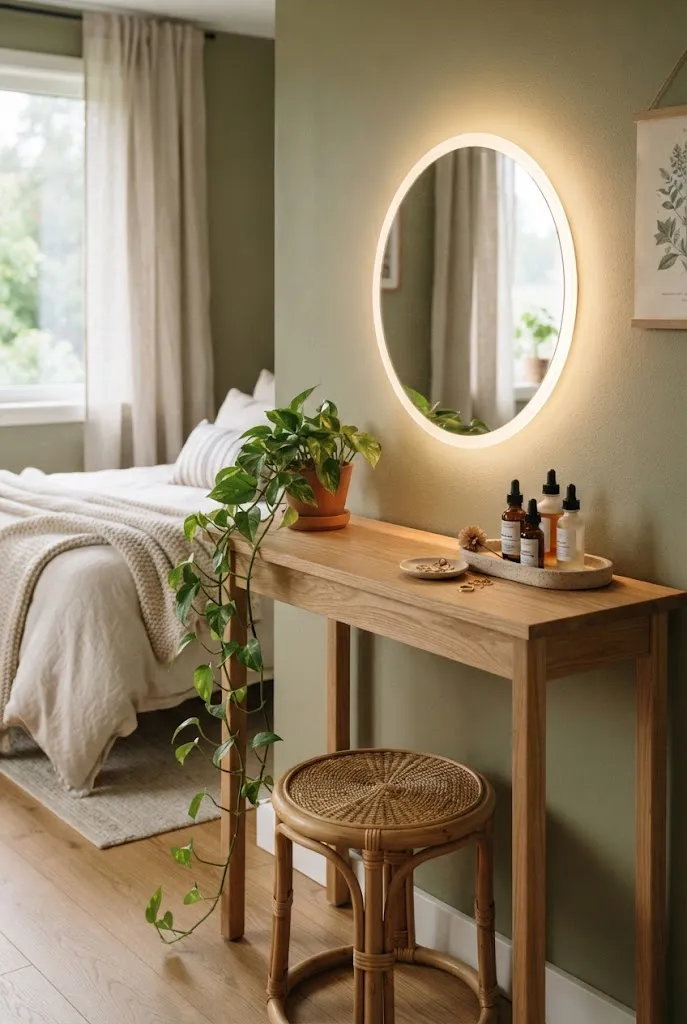
A small vanity or desk tucked into a corner gives you a morning routine spot that doesn’t take over the room. A lit or softly backlit mirror helps with makeup and lifts the whole area.
Use a trolley or small drawer unit for supplies, and keep the surface tidy with trays or small dishes.
- Choose a compact table or console in a wood or painted finish.
- Add a mirror with warm light.
- Place a stool or small chair that tucks away.
27. Build a Layered Lighting Plan With Dimmers
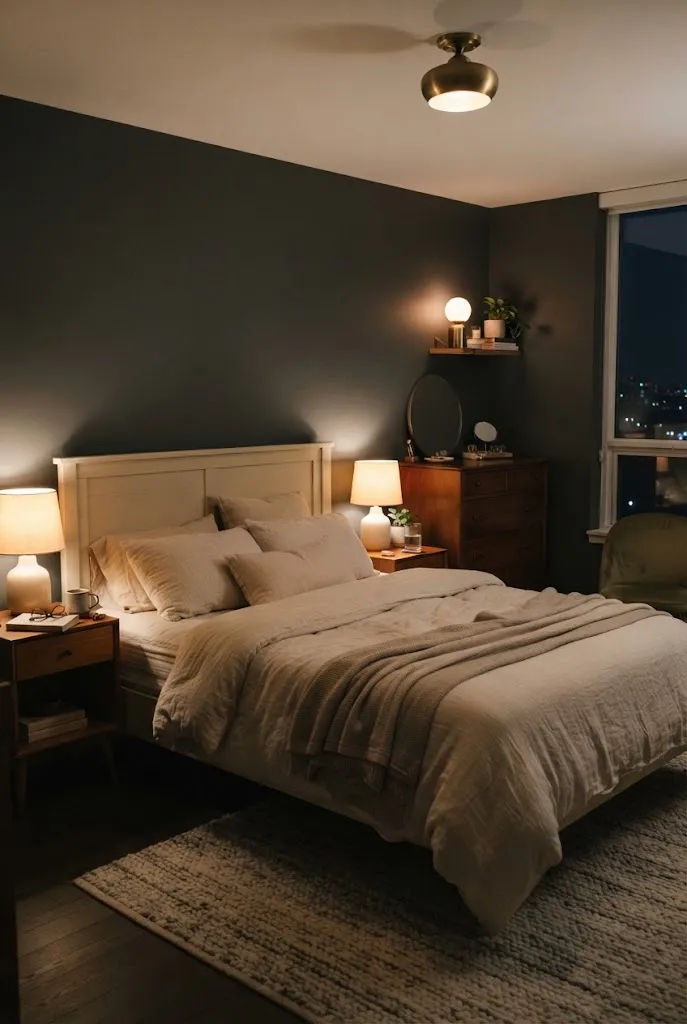
Coziness is mostly about light. Combine at least three sources: an ambient light (ceiling or sconces), task light (reading lamps), and accent light (a small lamp or string light on a shelf).
Dimmer switches or dimmable smart bulbs let you shift the room from morning to evening. Choose warm-white bulbs.
| Light Type | Purpose | Example |
|---|---|---|
| Ambient | General glow | Ceiling fixture on a dimmer |
| Task | Reading | Swing-arm sconce |
| Accent | Mood | Small lamp on a shelf |
28. Build a Terracotta and Rust Textile Palette
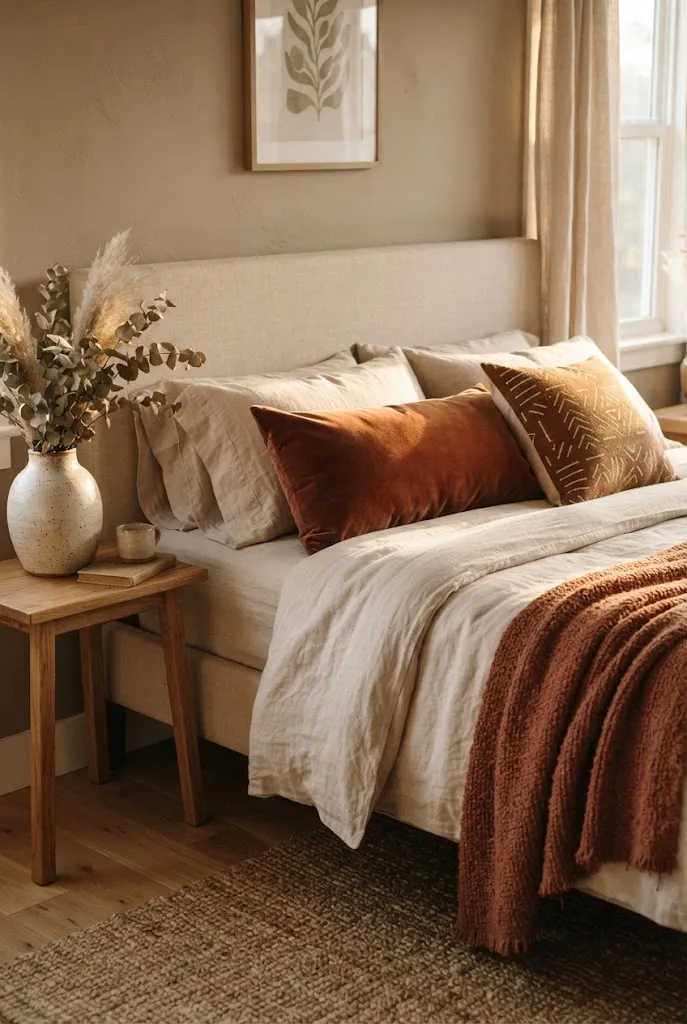
Warm clay, rust, and burnt orange tones feel cozy, especially with natural linen and wood. Add them through pillows, a throw, or a velvet cushion rather than painting everything.
Keep the base neutral and use two or three rust tones at most. A woven or patterned pillow adds depth without overwhelming.
Quick Tip: Repeat the accent color on something small elsewhere in the room, such as a vase or book spine, so it feels intentional.
Where to Start
If you only change one thing, begin with lighting and bedding, since they shift the mood fastest. From there, decide whether you want a calm light palette or a deeper, moodier one, and let paint, textiles, and furniture follow.
Renters can focus on sconces, wallpaper panels, rugs, and curtains. Homeowners can consider paneling, built-ins, or plaster. You don’t need all 28 ideas. A few well-chosen ones usually make the room feel finished.