31 Dining Room Decor Ideas That Make Everyday Meals Feel Special
Introduction
Most dining rooms get their best styling for a holiday and then drift back to being a place for mail and laptops. The ideas below are built for the other 350 days of the year: Tuesday pasta, Sunday pancakes, and the quick dinner before everyone heads back out.
You’ll find changes at every level, from a tray of table essentials you can assemble in five minutes to built-in seating you’d plan with a carpenter. Some work in a rental apartment with a table against the wall. Others suit a dedicated dining room with room for a sideboard. Pick the ones that match your space, mix a few together, and let the room do a little more of the work of making dinner feel like an occasion.
1. Anchor the Table With a Flatweave Rug Cut to the Chairs
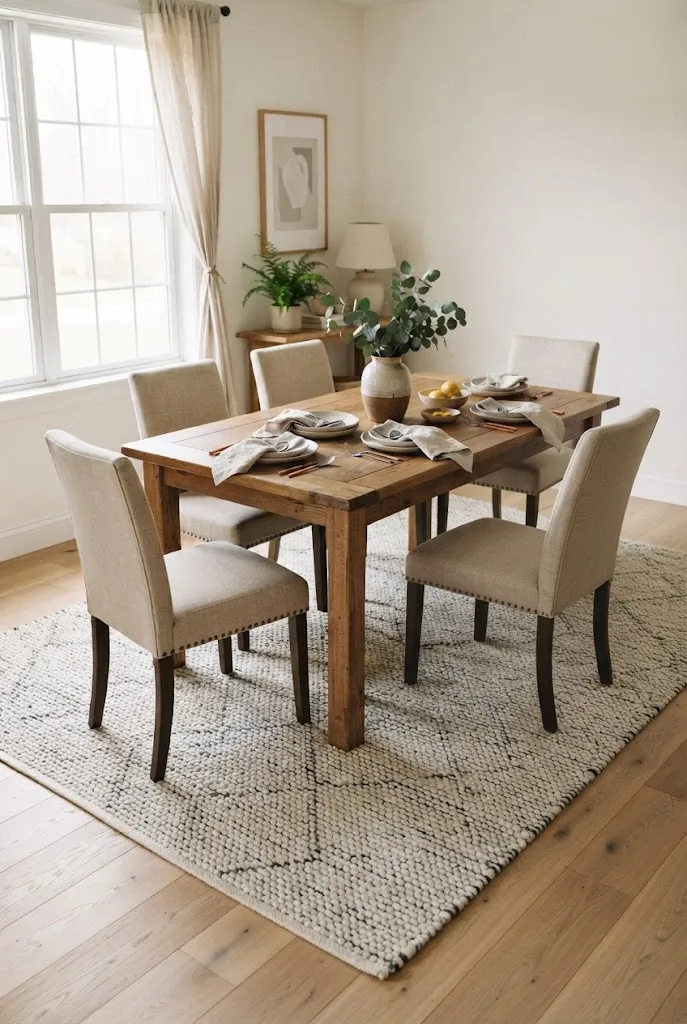
A rug defines the dining area and softens the sound of chairs scraping across hard floors. Size matters more than pattern. The rug should extend well past the table on every side so the chairs stay on it even when pulled out, which in most rooms means roughly two feet of margin or a bit more.
Flatweave wool, low-pile jute blends, and indoor-outdoor weaves handle crumbs and dragged chairs better than shaggy textures. A subtle pattern hides small spills and looks more settled than a solid color.
Quick Tip: Tape the rug’s dimensions on the floor first and slide a chair back from the table. If a chair leg drops off the edge, go larger.
2. Center the Table With a Low Bowl of Fruit and Cut Branches
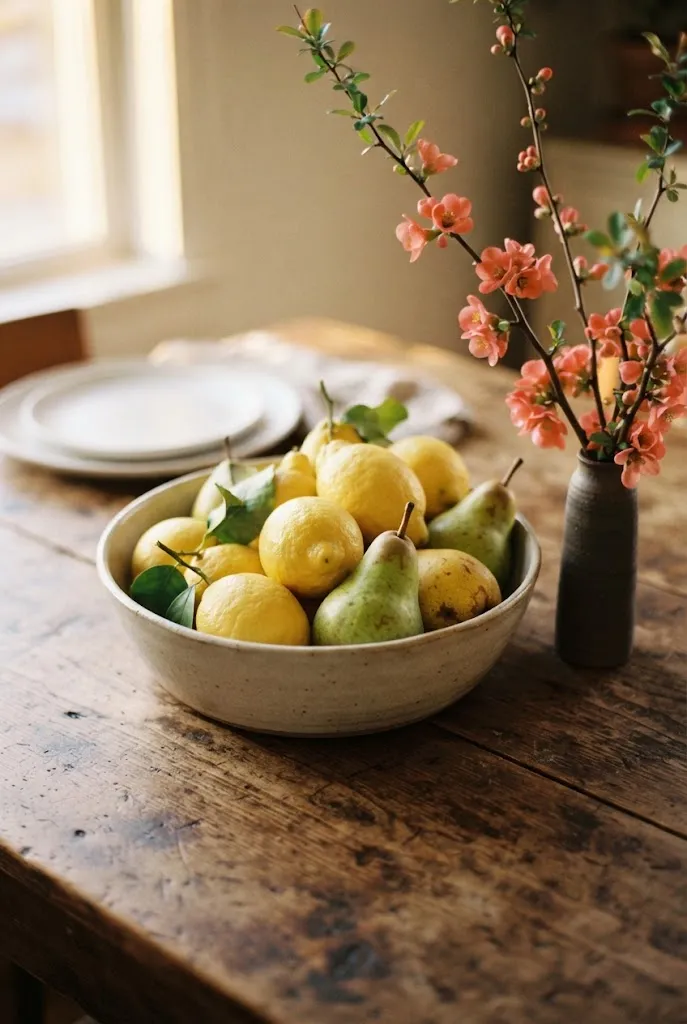
A centerpiece you can eat around, and see over, works better for daily meals than a tall arrangement. A wide ceramic or wooden bowl of lemons, pears, or pomegranates gives the table color without blocking conversation.
Add a few cut branches in a slim vase beside the bowl for height. Flowering quince, eucalyptus, and bare twigs last a long time in water and cost little. Swap the fruit with the seasons and the table looks refreshed without any shopping.
3. Hang One Oversized Piece of Art Above the Sideboard
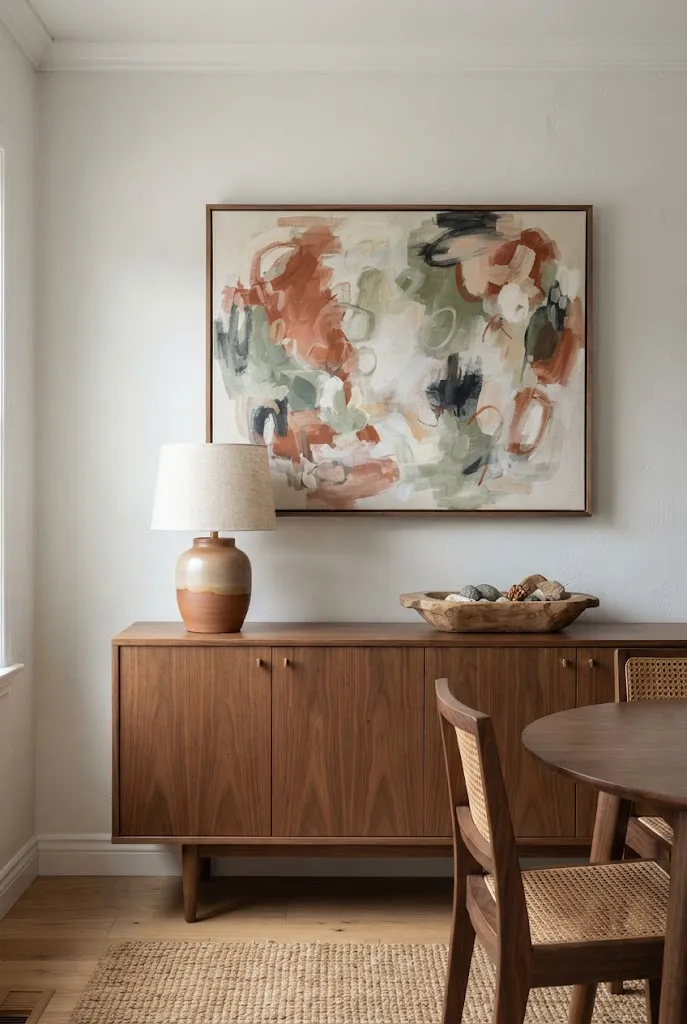
A single large artwork usually looks calmer than a cluster of small frames. Choose a piece that spans about two-thirds of the sideboard’s width and hang it so the center sits near eye level.
Abstract canvases, large botanical prints, and vintage landscapes all work. A thrifted oil painting in a simple frame can carry the wall as well as a new print. Let the colors pick up something already in the room, like the green of a plant or the warm tone of the table.
4. Paint the Lower Wall in Deep Green and Keep the Top Light
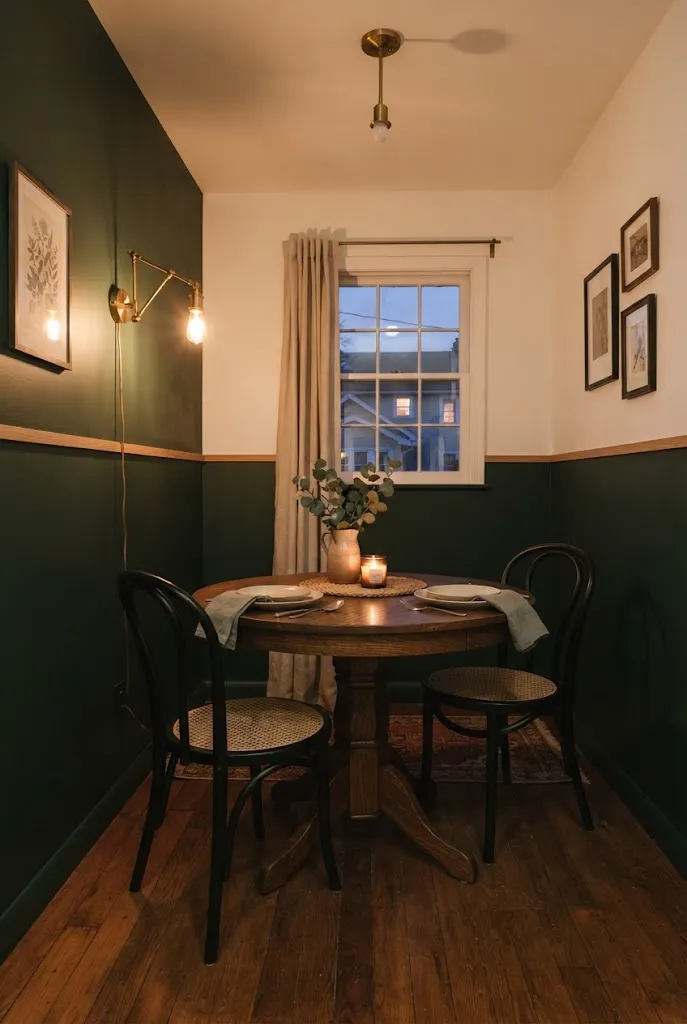
A two-tone wall adds depth without the commitment of paneling. Paint the lower portion of the wall, about a third to a half of its height, in a saturated color such as forest green, then finish the upper wall in a warm white.
- Use a thin strip of painter’s tape or a level line to mark the break
- Pick a satin or eggshell finish for the lower section, since it wipes clean more easily
- Add a narrow wood trim strip along the line if you want a finished edge
Deep colors also look good in the evenings, when most dinners happen, because lamplight makes them glow rather than go flat.
5. Layer Linen Placemats Over a Bare Wood Table
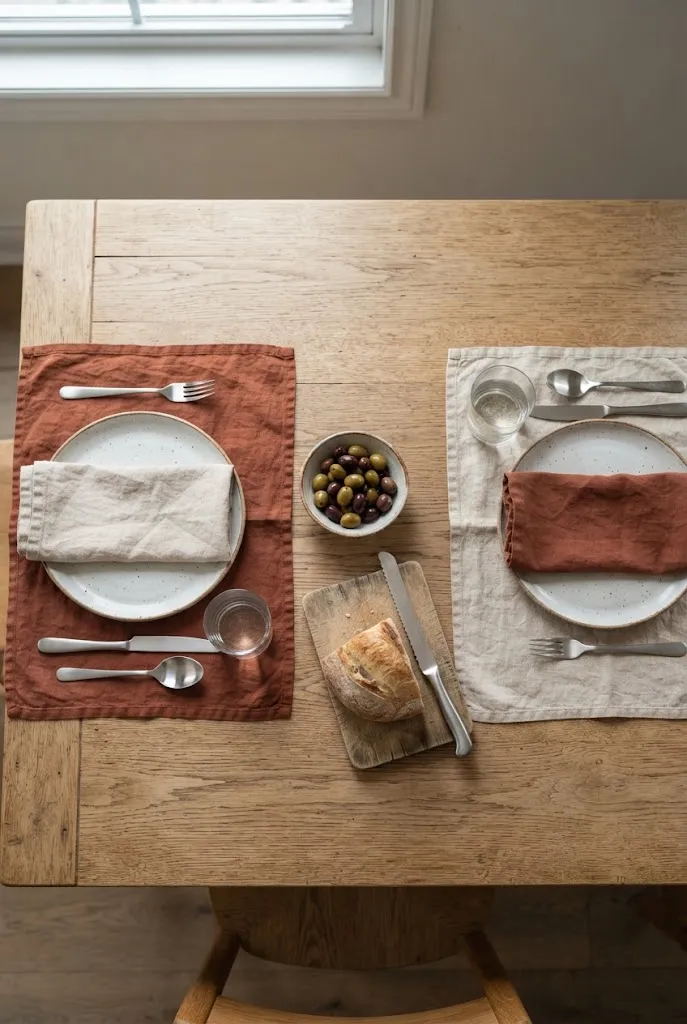
A bare table is practical, but a layer of texture makes a simple setting look planned. Linen or cotton placemats in oatmeal, rust, or soft blue add contrast to the wood grain and protect the surface.
Keep the set to one color family and let the plates provide the variation. Washable fabrics are worth the extra care, since a placemat that can’t handle a spill won’t get used on weeknights.
6. Mix Chair Styles Around One Table
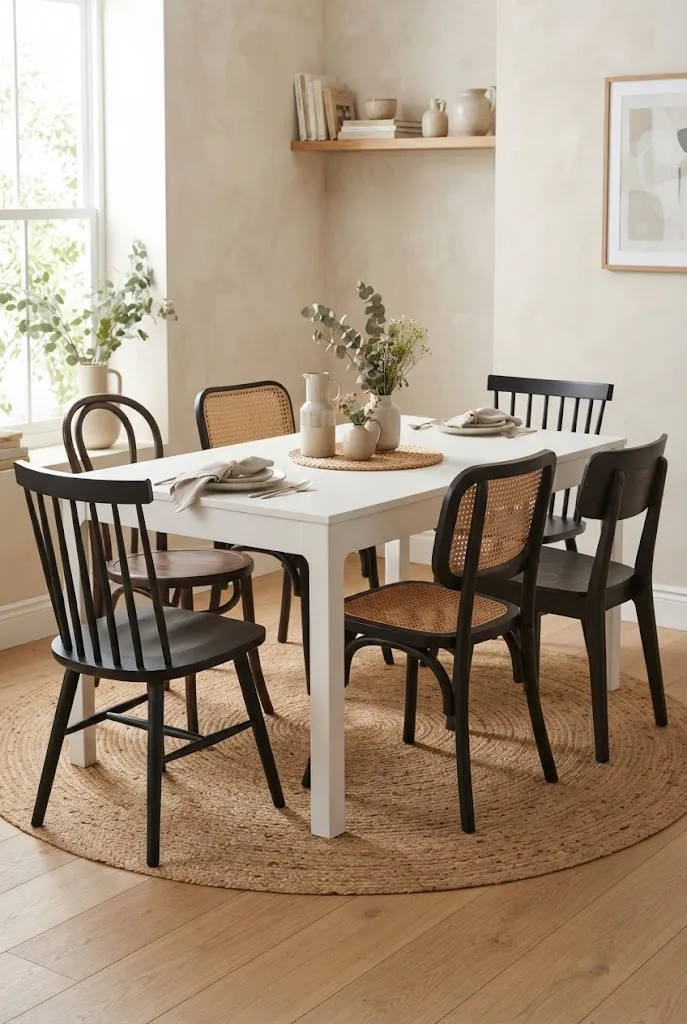
Matching sets are fine, but a mix of chairs gives a room a collected feeling. The trick is to hold one element steady, such as color, material, or seat height, and let everything else vary.
- Pick the shared element first, such as all black, all natural wood, or all with upholstered seats.
- Put two matching chairs at the ends and mix the sides, or alternate styles evenly.
- Check seat heights against the table before buying secondhand.
Common Mistake: Choosing chairs with very different seat heights, which looks awkward and sits unevenly. Better Approach: Measure the seat height of your best chair and shop for others within an inch or so.
7. Add Applied Picture-Frame Molding to One Wall
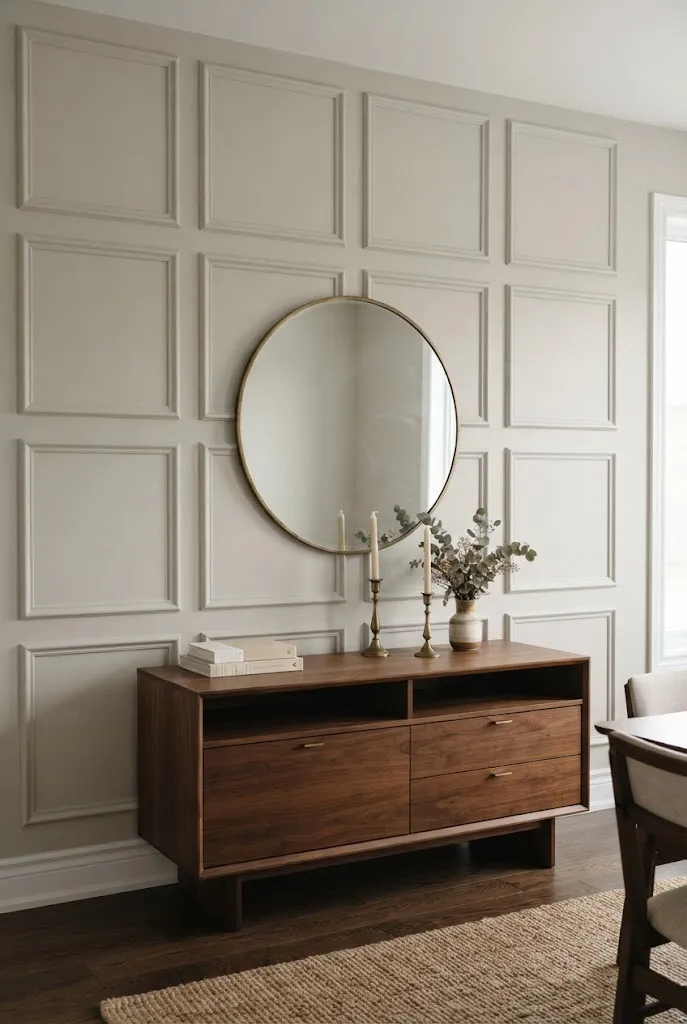
Applied molding, which means thin wood strips attached to the wall in rectangles, gives a plain room architectural detail. It’s one of the more approachable ways to borrow the look of custom paneling.
Painting the molding and wall the same color keeps the effect subtle and lets shadows do the decorating. This is a mid-range project, and the cost is mostly in your time and paint. It’s best on a wall you plan to keep, since it’s difficult to remove cleanly.
Editor’s Note: Spacing is what separates a polished result from an amateur one. Measure the full wall first and divide the rectangles evenly, so no panel ends up squeezed by a corner.
8. Hang a Pendant Light on a Dimmer
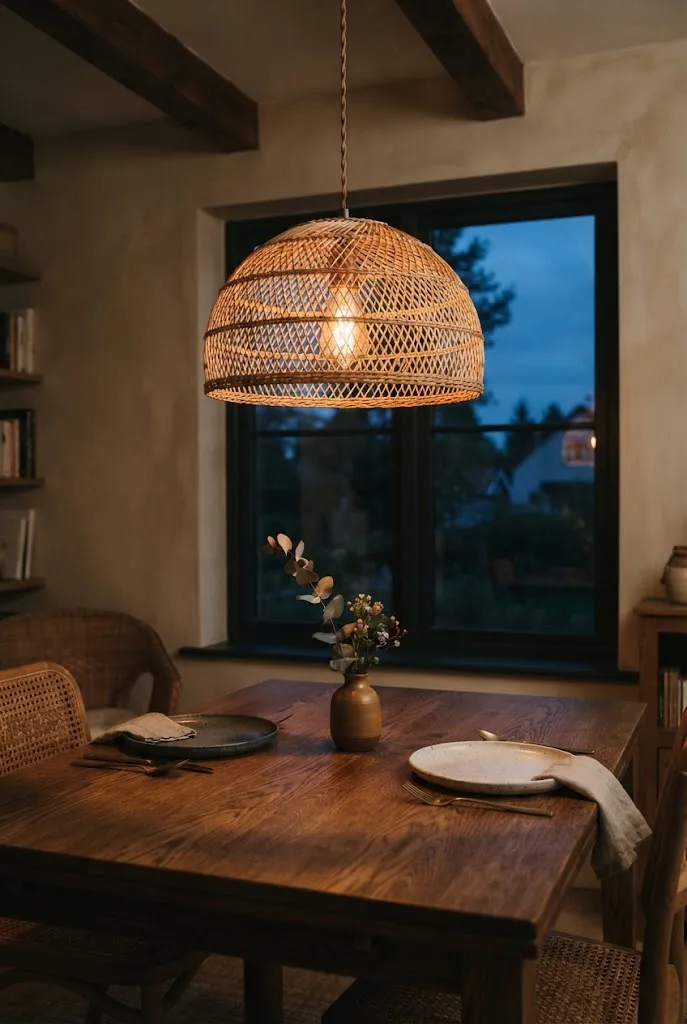
Lighting changes how a dining room feels more than almost any object in it. A pendant centered over the table gives the eye a focus, and a dimmer lets you move from bright homework light to a softer dinner glow.
As a common starting point, hang the fixture about 30 to 36 inches above the tabletop, then adjust for ceiling height and how tall the people at the table are. Choose a diameter noticeably smaller than the table so it doesn’t crowd the surface.
9. Set a Round Mirror Across From the Window
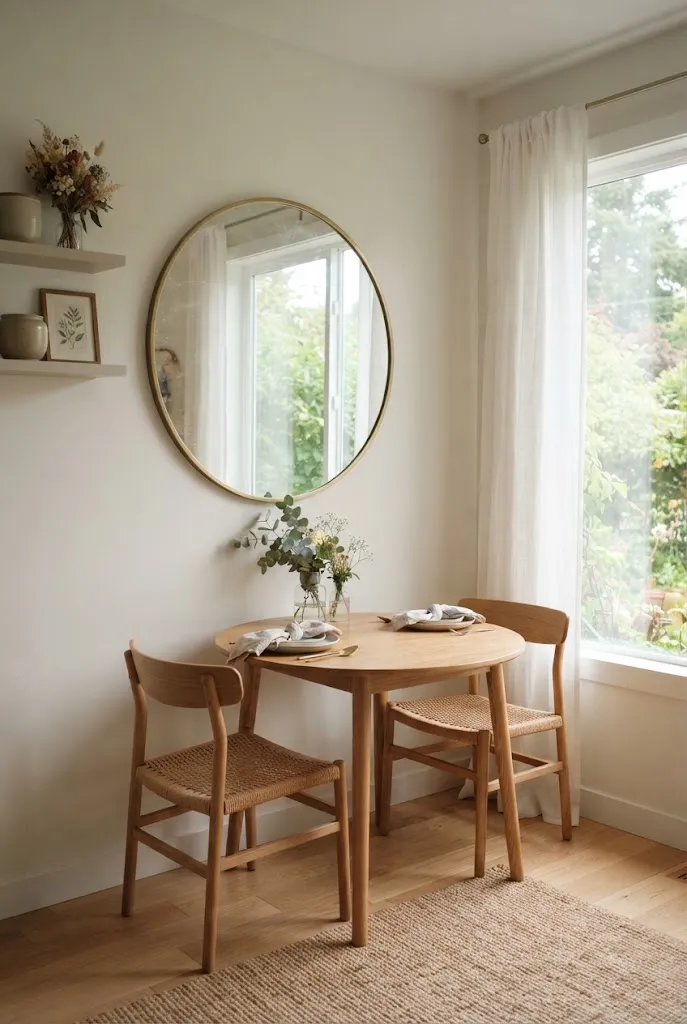
A mirror placed opposite a window bounces daylight deeper into the room, which helps dining rooms that feel dim at breakfast. Round shapes balance the straight lines of a rectangular table and sideboard.
Choose a thin metal or wood frame so the mirror reads as a light source rather than a decoration. If the reflection would show clutter, such as an open kitchen or a pile of coats, move it a little or angle it toward the window instead.
10. Style the Sideboard as a Serving Station
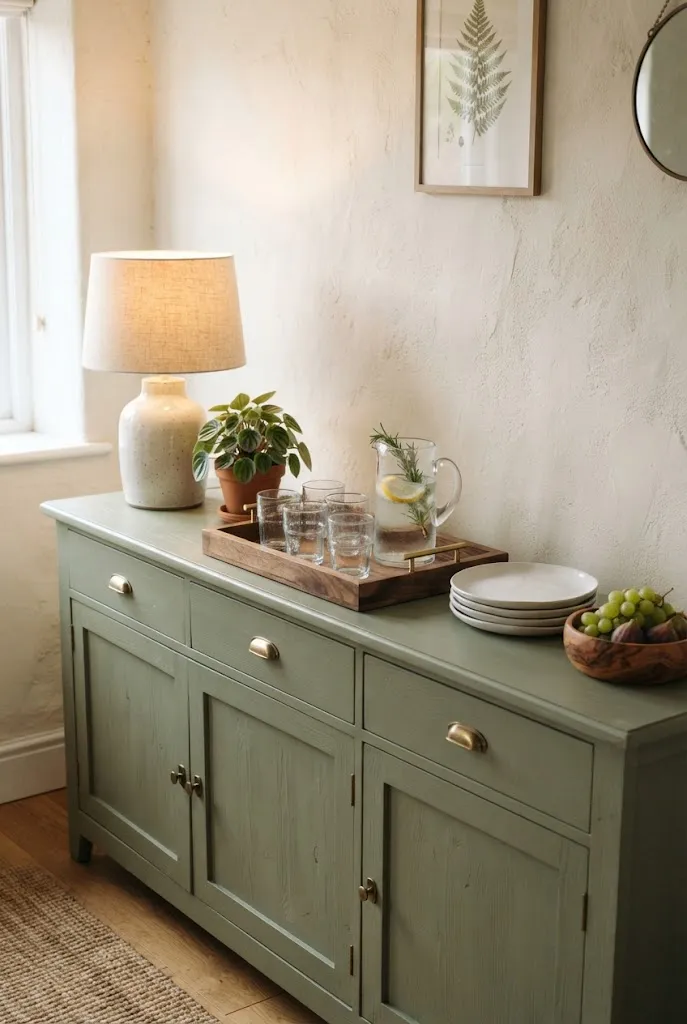
A sideboard works hardest when it’s both attractive and ready for use. Keep a lamp on one end, a tray in the center for a pitcher or decanter, and a small stack of plates or a bowl on the other side.
- A lamp adds warm light at a lower level than overhead fixtures
- A tray corrals loose items so they look intentional
- One sculptural object, like a wooden bowl, keeps the arrangement from looking busy
Leave some of the surface empty. Space around objects makes the ones you chose look more deliberate.
11. Use Cloth Napkins With Simple Rings or a Knot
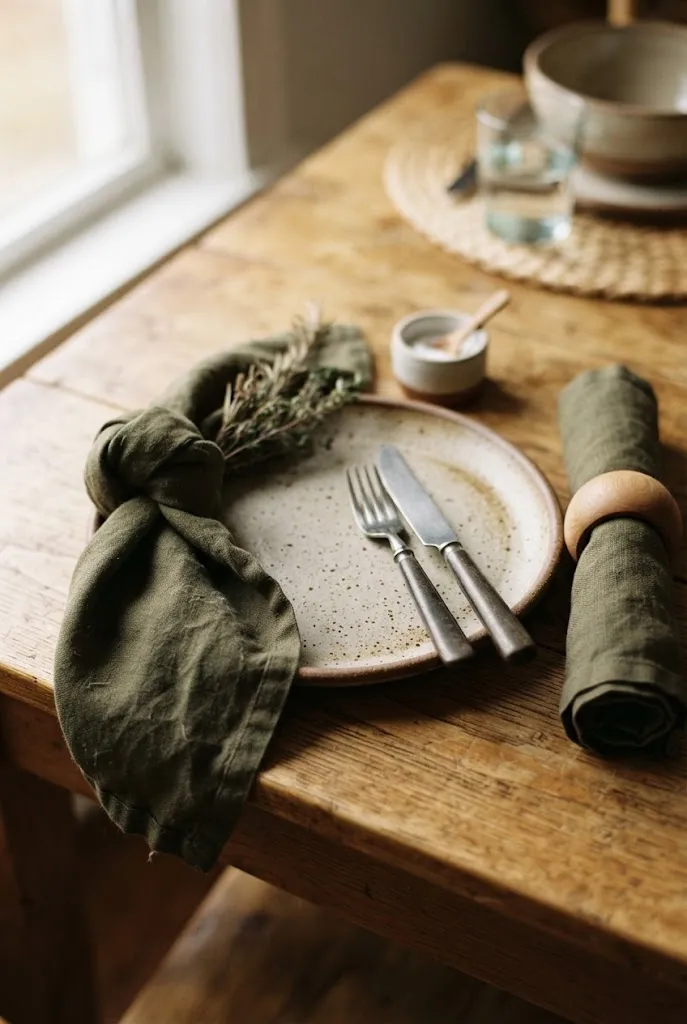
Cloth napkins are one of the lowest-cost upgrades available. A set of four to six in a solid color, kept in a drawer or basket near the table, makes a plain meal feel more considered.
Plain wooden rings, a loose knot, or a folded rectangle under the fork all work. Darker colors hide stains better for everyday use, and mixed colors in the same tone family look relaxed rather than matchy.
12. Add Plug-In Wall Sconces to Free the Table
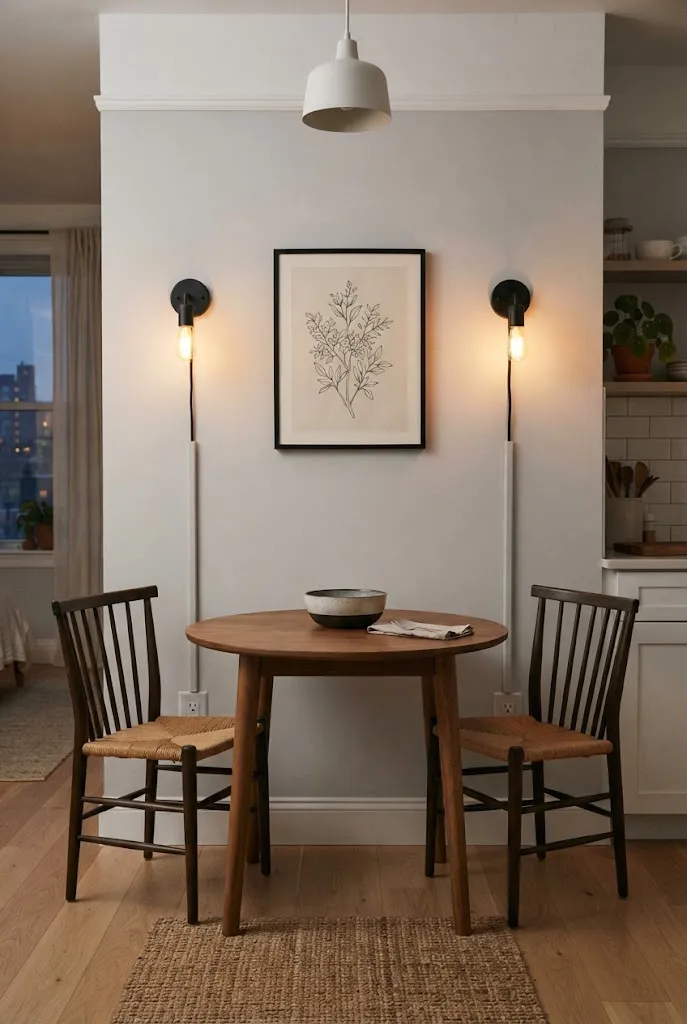
If your ceiling has no wiring for a pendant, plug-in sconces mounted on either side of a mirror or artwork give a dining area light without hardwiring. Choose a style with a cord cover or run the cord down the wall in a painted channel.
Sconces also free up table space, since a lamp isn’t needed on the sideboard. Warm bulbs, around the same color as candlelight, keep the room flattering in the evening.
13. Cover One Wall With Removable Wallpaper
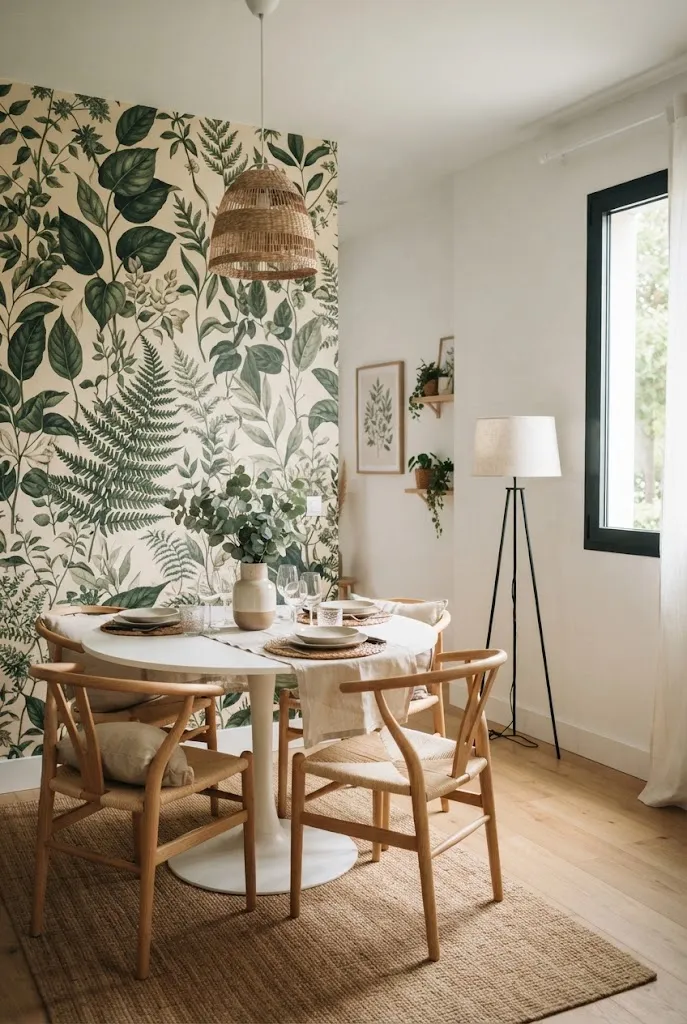
Removable wallpaper is a rental-friendly way to add pattern and color to a dining area. Choose a wall that’s visible from the table but doesn’t have too many interruptions from windows or doors.
| Pattern Style | Effect | Best Fit |
|---|---|---|
| Large botanical | Dramatic, organic | Rooms with plenty of natural light |
| Small geometric | Subtle texture | Compact dining nooks |
| Grasscloth look | Warm, quiet | Rooms with bold furniture |
Smooth, clean walls give the best adhesion. Test a small piece in a corner and wait a few days to check how it peels before committing to the full wall.
14. Build a Gallery Wall of Mixed Frames
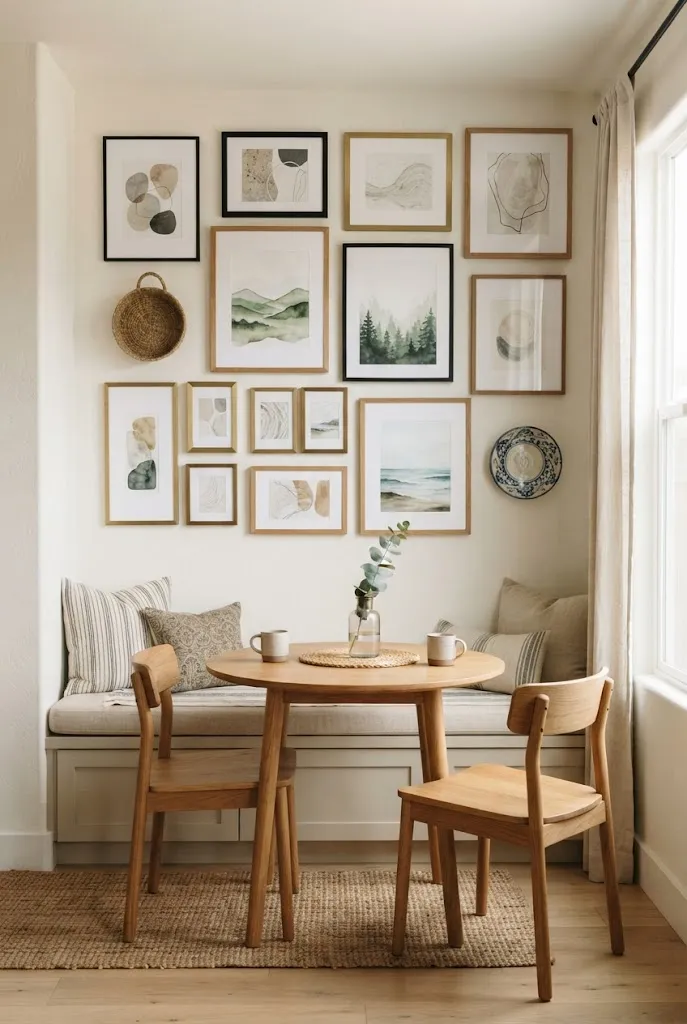
A gallery wall works well in a dining nook where there’s no space for a single large piece. Combine frames in a few finishes, like black, brass, and natural wood, and mix art, photographs, and small objects like a plate or a woven basket.
Lay everything out on the floor first and trade pieces around until the spacing feels even. Keep the gaps between frames consistent, about two or three inches, and center the group on the table or the sideboard beneath it.
15. Float a Bench Along One Side of the Table
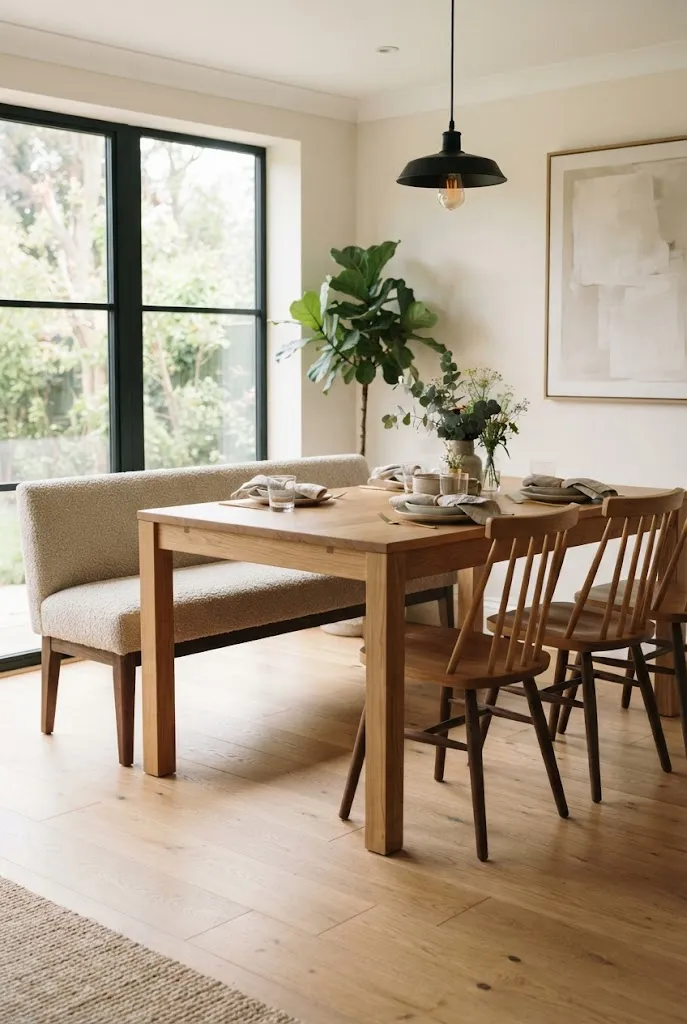
A bench holds more people than chairs and tucks fully under the table when not in use. It also gives you a way to seat kids, guests, and the occasional extra person without dragging in another chair.
Choose a bench about the same length as the table’s side, with a seat height that matches the chairs. Upholstered cushions add comfort for longer meals, and a woven or leather top wipes clean easily.
16. Warm the Table With Taper Candles in Mixed Holders
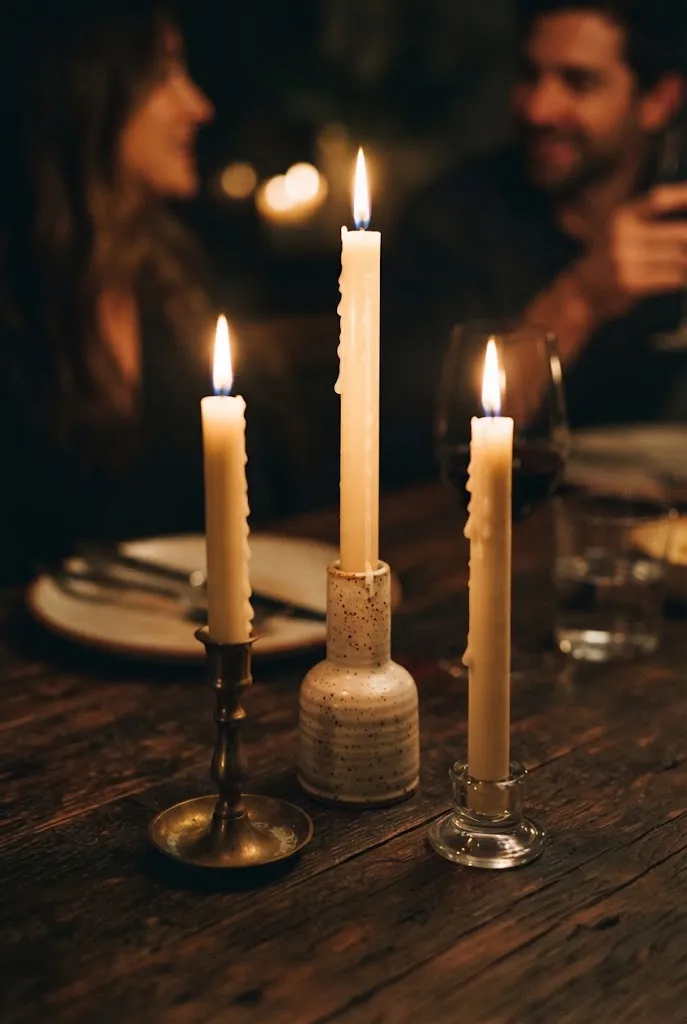
Candlelight is one of the quickest ways to make a weeknight dinner feel different. Group two or three tapers in brass, ceramic, or glass holders at varied heights, and don’t worry about a perfect match.
Light them unscented, since strong fragrance competes with food. Keep them away from low-hanging foliage and pendants, and put them out before leaving the room.
17. Turn a Corner Into a Drinks Cart Station
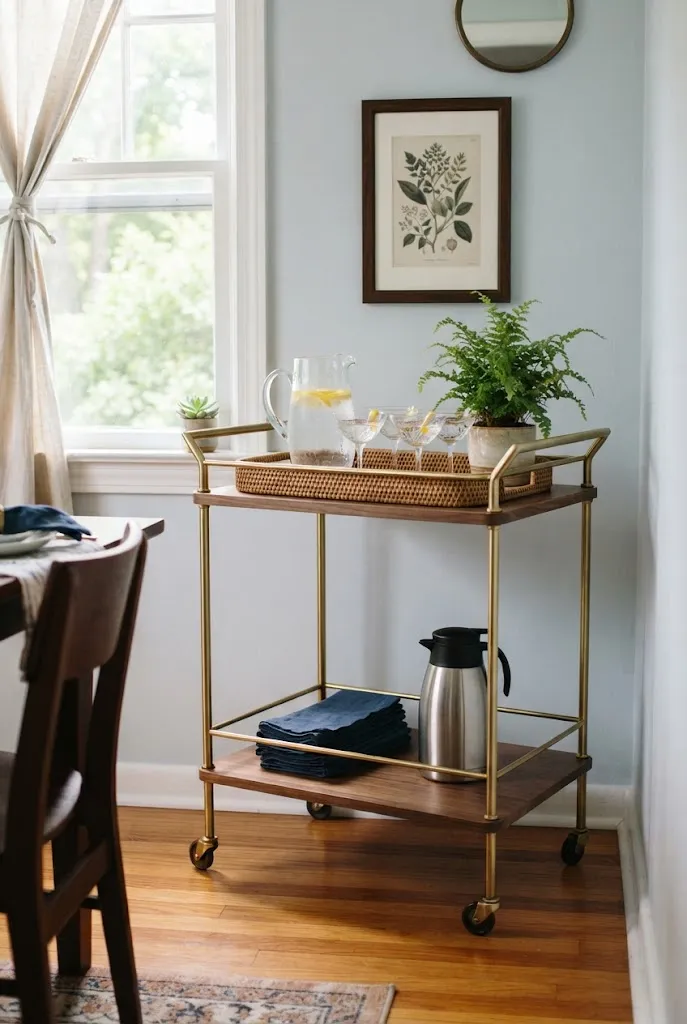
A bar cart or a small console in a corner gives the dining room a purpose beyond meals. Keep the top simple: a tray, a few glasses, a pitcher, and a plant or a small lamp.
Use the lower shelf for things you’d otherwise carry from the kitchen, like extra napkins or a coffee carafe. A cart on wheels moves out of the way when you need floor space for a big gathering.
18. Hang Linen Curtains High and Full-Length
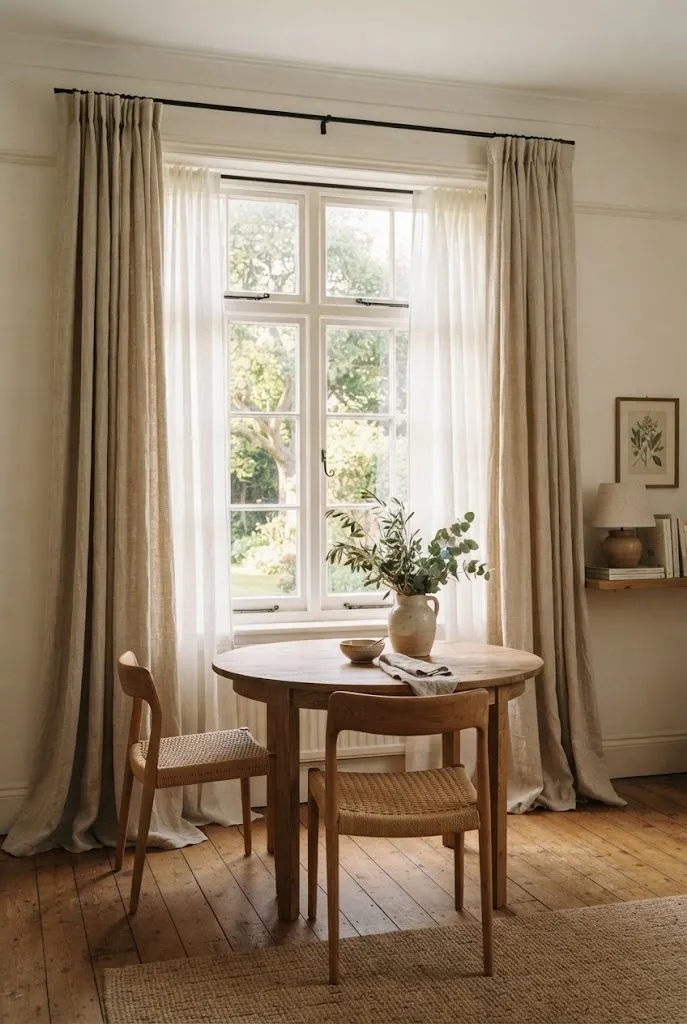
Curtains hung close to the ceiling make windows look taller and soften the room’s hard edges. Choose a lightweight linen or linen blend that filters daylight rather than blocking it.
- Mount the rod a few inches above the window frame, or closer to the ceiling if you can
- Let the fabric just brush the floor or hover slightly above it
- Extend the rod beyond the window frame so the curtains clear the glass when open
Fullness matters. Panels that look too sparse can make even good fabric look cheap.
19. Display a Collection of Plates on the Wall
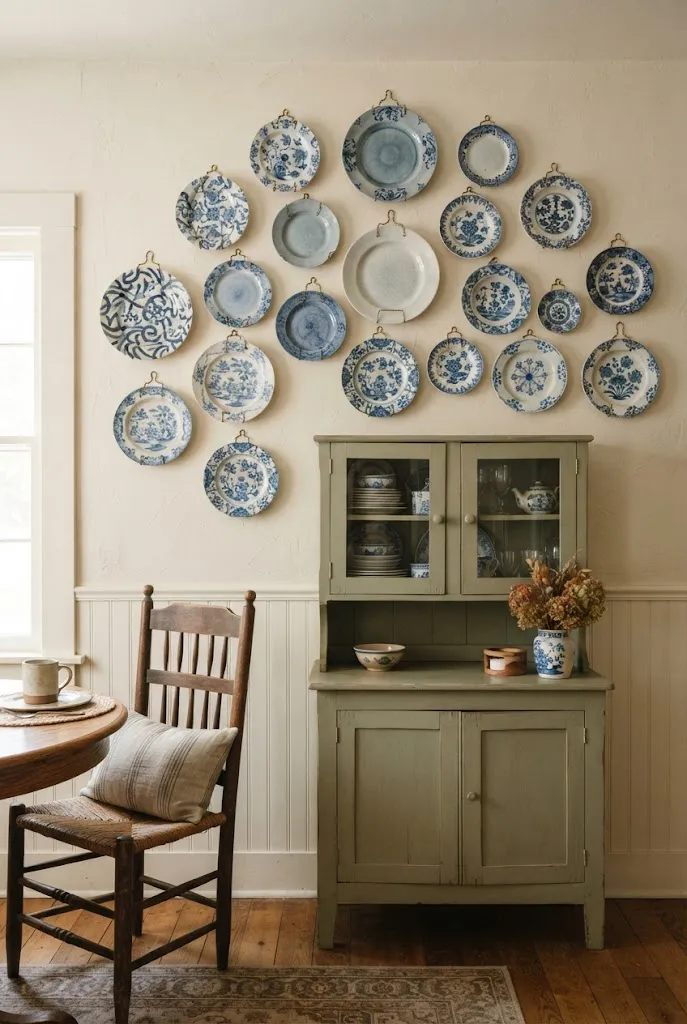
Plates arranged on a wall feel traditional in a good way. They suit a cottage, farmhouse, or eclectic dining room, especially when the plates have a shared color like blue and white or terracotta.
Use plate hangers or adhesive discs rated for the weight, and lay the group out on the floor first. A mix of sizes looks more natural than all one diameter. Secondhand shops and estate sales are good places to find them without spending much.
20. Choose a Pedestal Round Table for a Tight Room
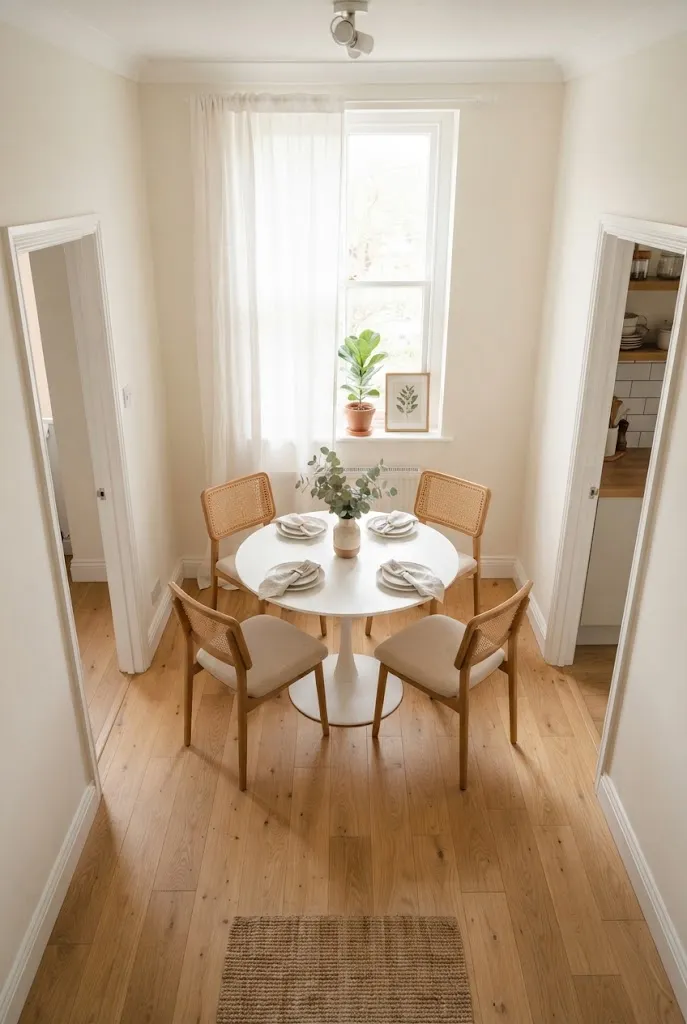
In a small dining room, a round pedestal table removes the corners and the legs that get in the way of chairs. It also makes conversation easier, since everyone faces everyone.
| Table Type | Advantage | Best Fit |
|---|---|---|
| Round pedestal | Easier traffic flow, no corner legs | Small rooms, nooks, square spaces |
| Rectangular | More surface and seating | Long rooms, larger groups |
A leaf that extends the table gives you flexibility for guests without taking over the room the rest of the time.
21. Add a Tall Plant in a Ceramic Planter
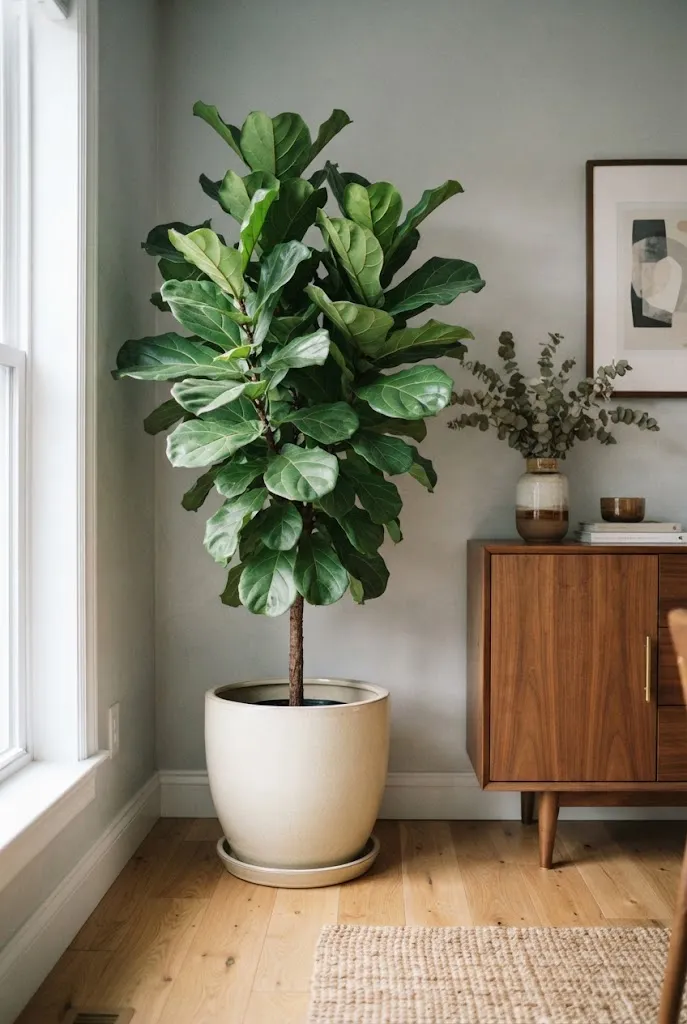
A sturdy floor plant gives a dining room height and a living element. Place it in a corner or beside the sideboard where it won’t block the path to the table.
Pick a plant that fits the light you actually have and check its care needs before buying. A large ceramic planter with a drainage tray in a matte glaze makes even a common plant look intentional. If real plants aren’t realistic, a good faux version in a textured pot can stand in.
22. Run a Textured Table Runner Down the Center
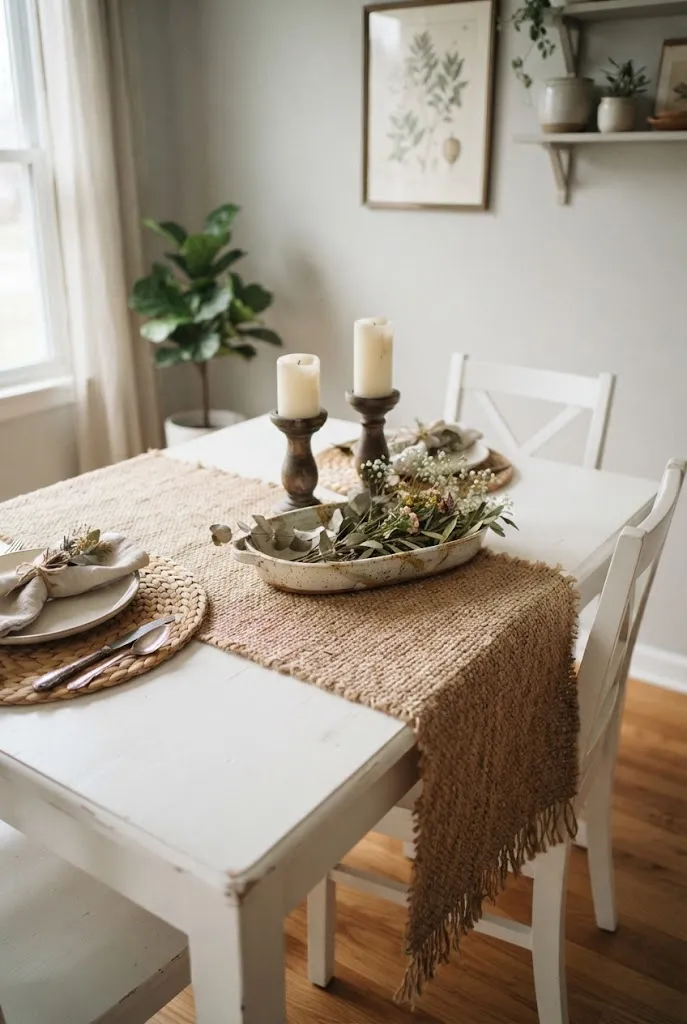
A runner organizes the table into zones and gives candles and serving dishes a place to rest. Choose a texture that contrasts with the table, like woven jute on a smooth painted surface or a smooth linen on a rough wood top.
Keep the runner a bit narrower than a placemat’s width and let it hang over the edges by several inches. Skip a runner if you need the whole surface for homework or craft projects.
23. Display Everyday Dishware on Open Shelves
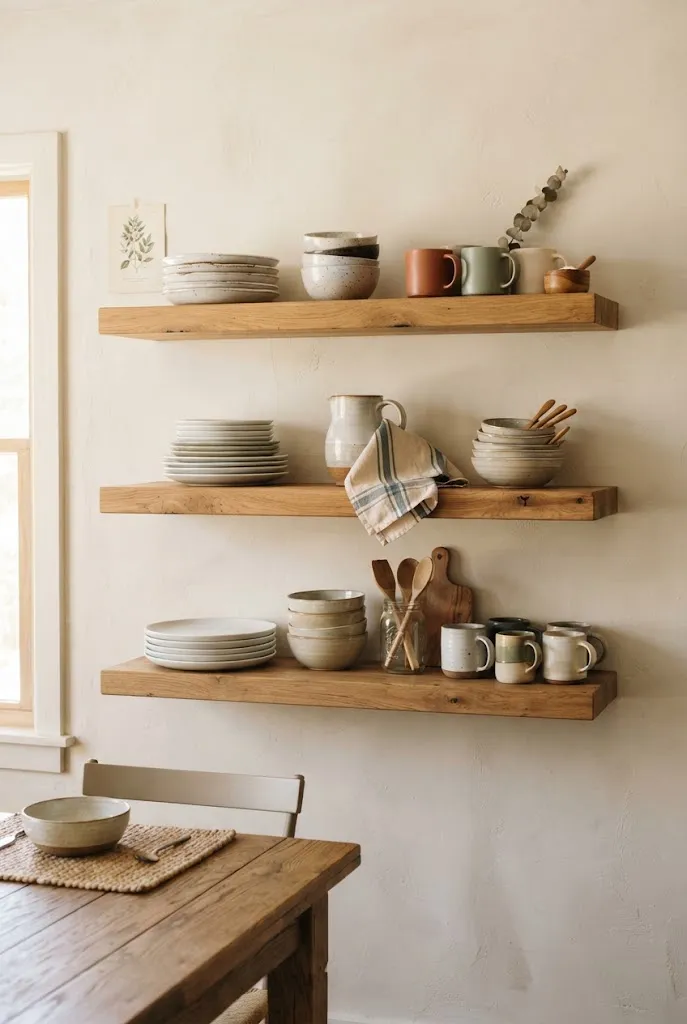
Open shelves in or near the dining room let plates, bowls, and glasses double as decor. White or neutral dishware looks tidy stacked, and a few colorful pieces add interest.
Group items by type and limit each shelf to two or three groupings so it doesn’t look crowded. Keep the most-used items at hand height and the decorative pieces higher up. Shelves work best where dust and grease won’t build up quickly, so they suit dining areas better than kitchens.
24. Pair Black Chairs With a Natural Wood Table
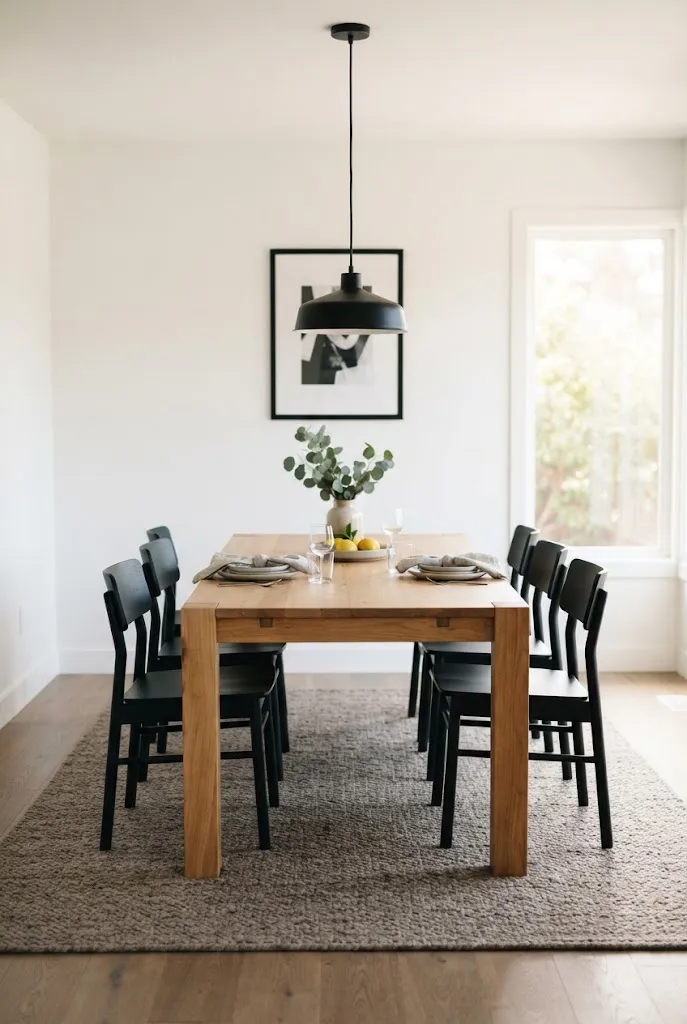
Black chairs around an oak or walnut table create a strong, simple contrast. The dark seats also hide scuffs and stains, which is useful for families.
Soften the look with a textured rug and warm lighting so the room doesn’t feel stark. A single black accent elsewhere, like a picture frame or a light fixture, ties the scheme together without adding more.
25. Wrap the Walls in Limewash or Plaster-Look Paint
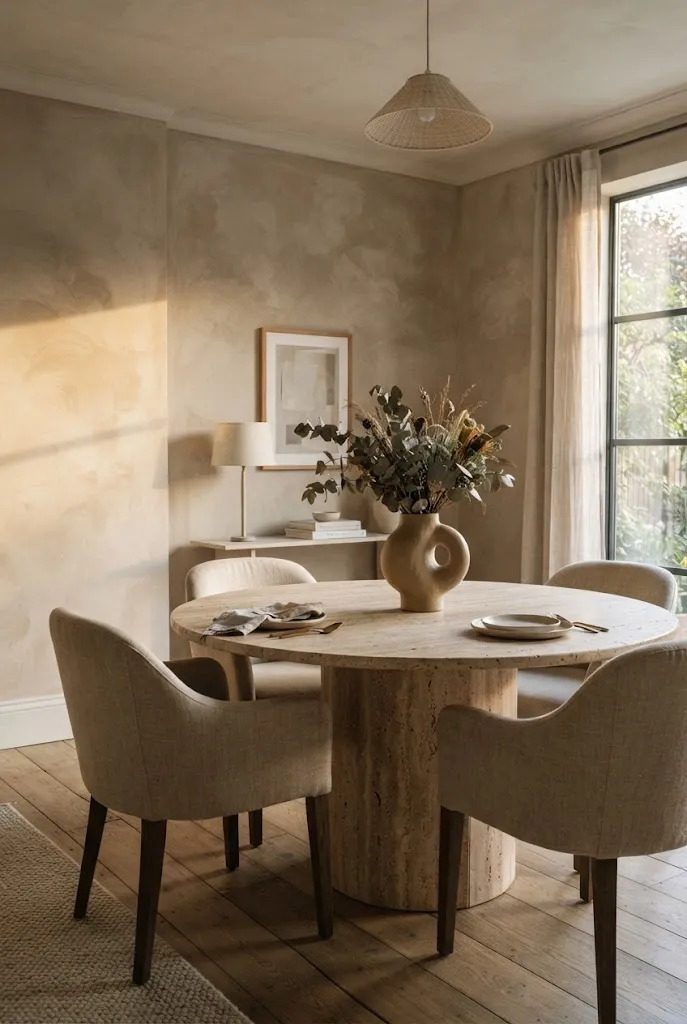
Limewash and plaster-look finishes give walls a soft, cloudy texture that flat paint can’t match. The variation in tone catches light differently throughout the day, which makes a dining room feel more considered.
This is a premium finish, both in material cost and in application skill. Applying it yourself is possible, but the results vary, so a test patch is a good first step. A professional finisher can give a more even, high-end result on a feature wall or the entire room.
26. Build a Banquette With Storage Underneath
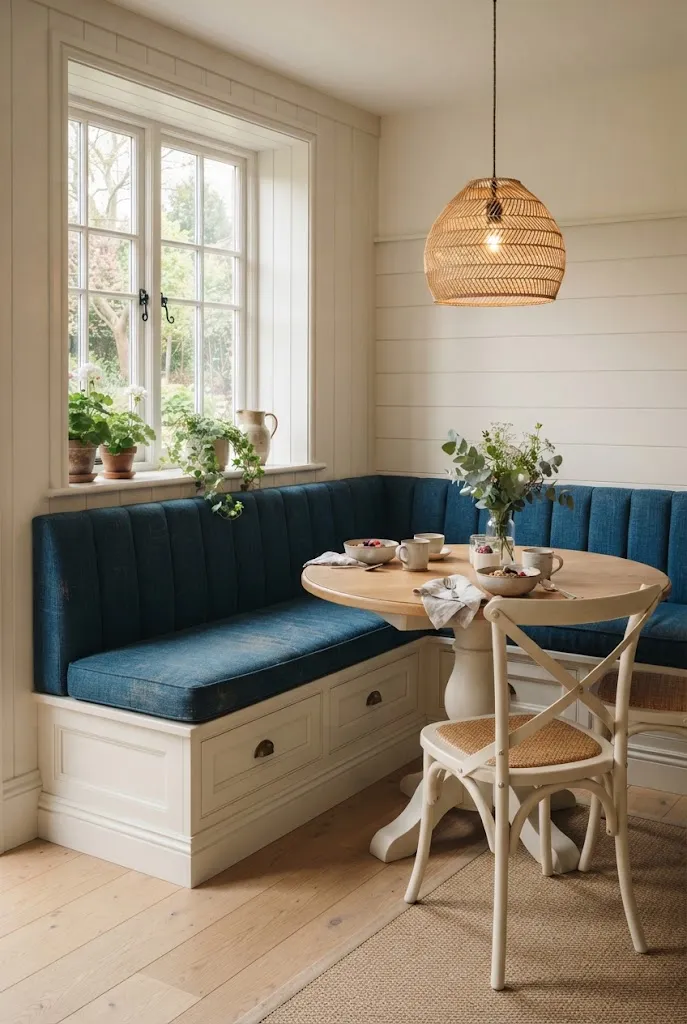
A built-in banquette uses a corner efficiently and seats more people than loose chairs. The seat can lift or have drawers underneath, which is useful storage for table linens, serving pieces, or seasonal items.
This is a custom project, best planned with a carpenter or a semi-custom cabinetry company. Plan the seat depth and back angle for comfort. A seat that’s too deep or too upright gets uncomfortable quickly during a long meal.
27. Choose a Chandelier Scaled to the Room
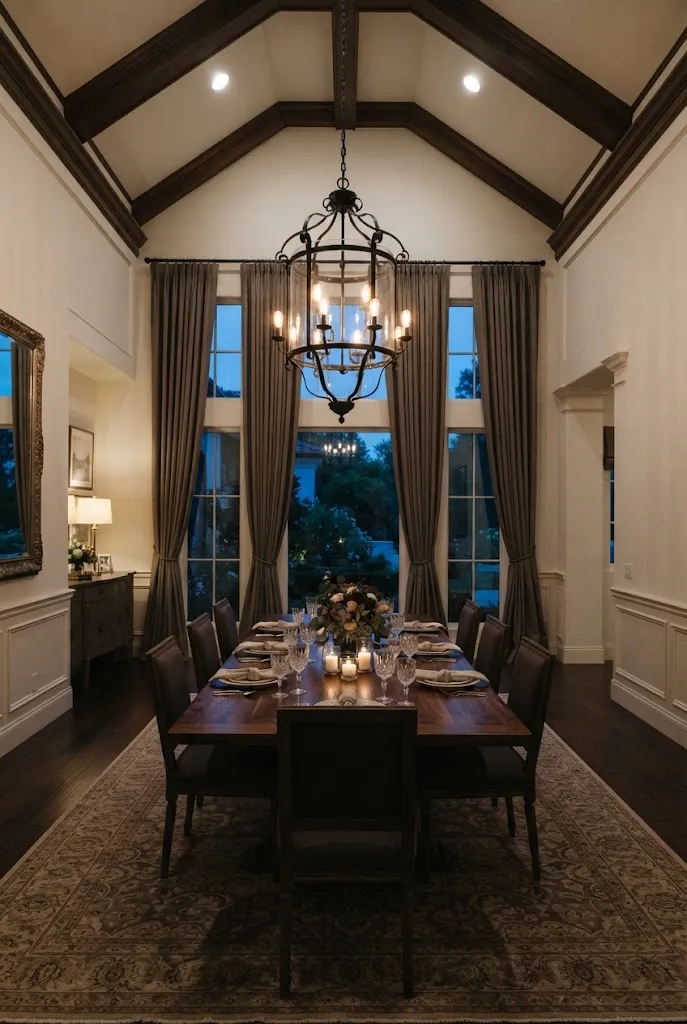
A chandelier gives a formal dining room a clear focal point. The scale is the main thing to get right: it should be proportioned to the table and the ceiling, not to the dream of what you’d like the room to be.
| Fixture | Feel | Works Best When |
|---|---|---|
| Chandelier | Formal, decorative | Ceilings are high and the table is large |
| Pendant | Clean, modern | The room is mid-sized or open-plan |
| Sconces | Soft, ambient | The ceiling has no wiring |
Use a dimmer and warm bulbs, and keep the fixture centered over the table, not necessarily the room.
28. Collect Mismatched Vintage Glassware

Vintage glassware in a mix of shapes and tones gives a table character. Stemmed water glasses, small juice glasses, and old coupes can be found at thrift shops and flea markets, usually for very little.
Keep to one color family, such as clear, amber, or soft green, so the mix feels deliberate. Wash by hand if you’re not sure the glass is dishwasher-safe, and avoid pieces with chips near the rim.
29. Define an Open-Plan Dining Zone With a Rug and Pendant
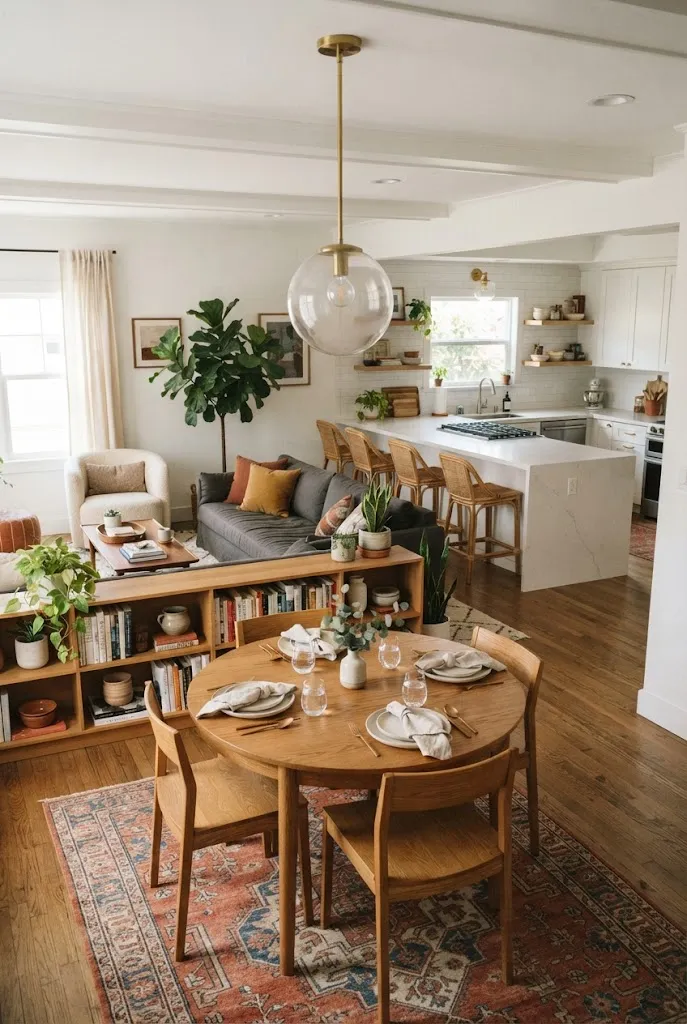
When the dining area shares a room with a living space or kitchen, visual boundaries help it feel like its own place. A rug under the table and a light fixture above it mark out the zone without walls.
Choose a rug color or pattern that relates to the nearby seating area but isn’t identical. Position the furniture so the chair backs don’t face directly into the living room. A sideboard or bookcase behind the table can act as a soft divider.
30. Repaint a Thrifted Hutch in a Color You’d Never Choose for a Wall
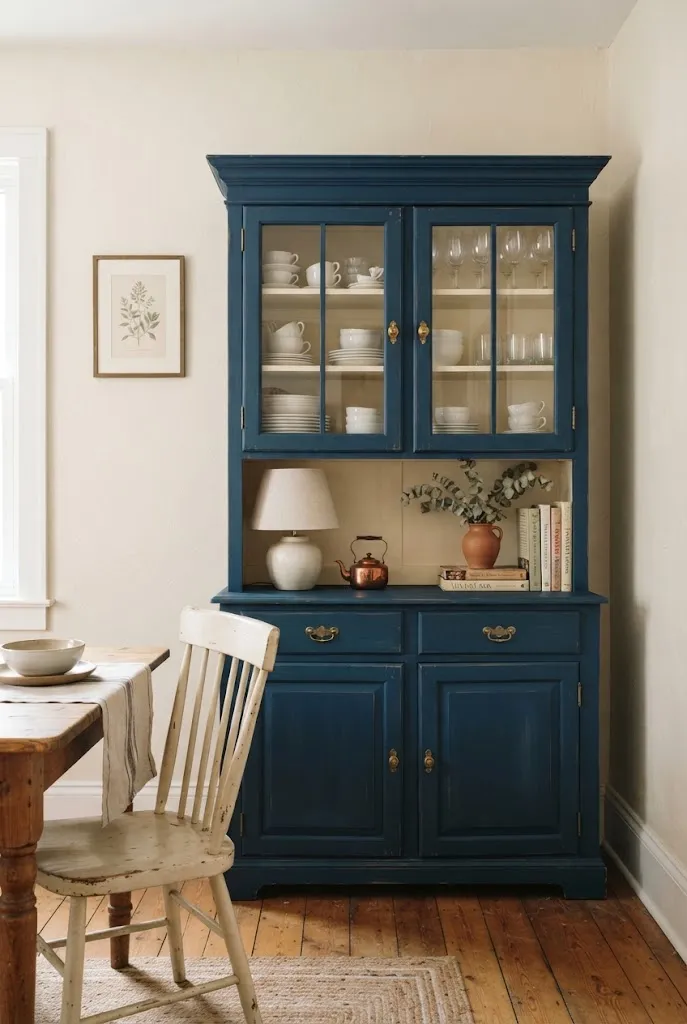
A secondhand hutch or china cabinet gives a dining room storage and presence. Paint it a deep blue, olive, or soft black, and it can look like a custom piece.
- Clean and lightly sand the surface so the paint adheres
- Use a primer made for the existing finish
- Replace the hardware if the style feels dated
Display your best dishes and glasses inside, and use the lower cabinets for linens or serving trays.
31. Keep a Tray of Table Essentials Ready
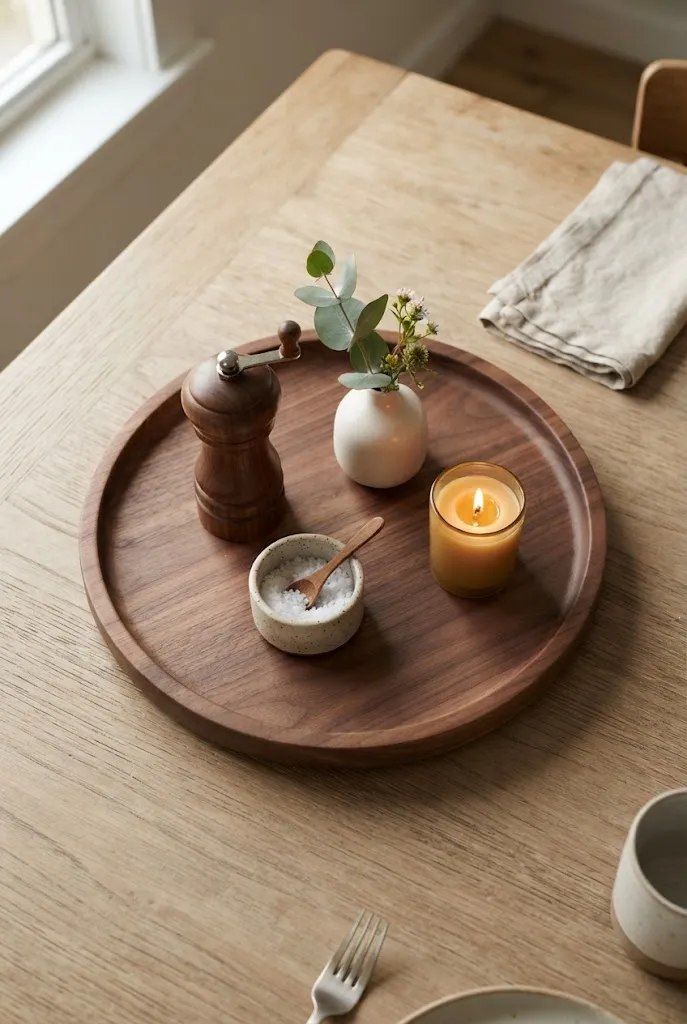
A small tray in the middle of the table, with a pepper mill, a salt dish, a small vase, and a candle, makes the table look finished even when it’s not set. It also puts what you reach for at every meal within hand’s reach.
Choose a tray with a lip so nothing slides, and keep the items to a few you really use. When you need the table surface for homework or a big dinner, lift the whole tray and set it on the sideboard.
Choosing Where to Start
If you only have an afternoon, start with lighting and the table: a dimmer or warm bulbs, cloth napkins, and a tray of essentials make a visible difference quickly. If you have a weekend, a rug sized to the table or a two-tone wall is a good next step. Save the larger projects, like molding, a banquette, or a plaster finish, for after you’ve lived with the room long enough to know how you actually use it.
Whichever you choose, aim for one or two changes at a time. A dining room that feels special usually comes from a few well-chosen details, not from trying every idea at once.