
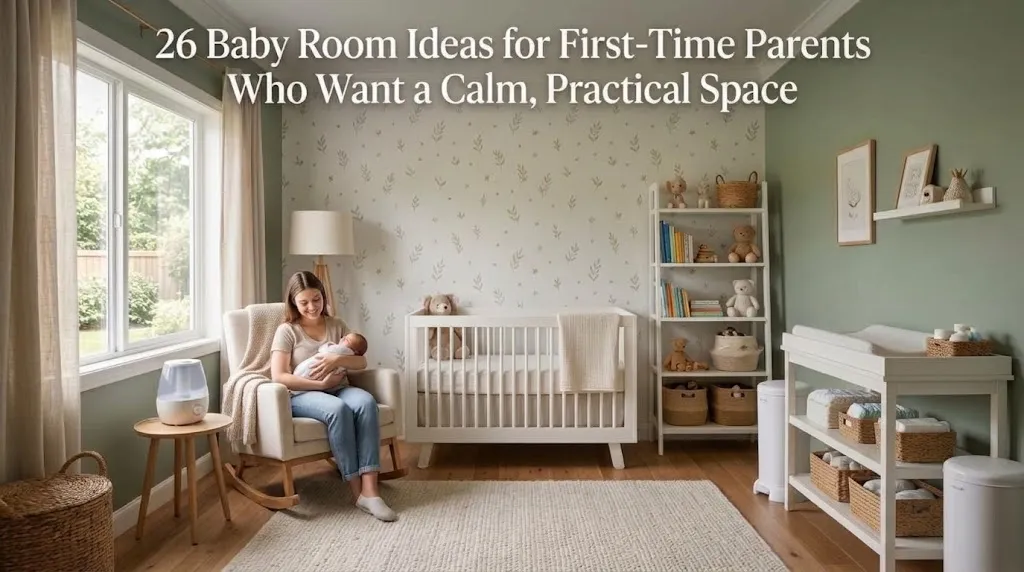
26 Baby Room Ideas for First-Time Parents Who Want a Calm, Practical Space
A baby room has a short list of real jobs. It needs to be quiet at 2 a.m., easy to wipe down, and flexible enough to survive the leap from newborn to toddler. Pretty comes third. The 26 baby room ideas below follow that order, so soft paint colors, one dependable chair, and dimmable light come before anything purely decorative. You’ll find options for rentals and starter homes, a handful of mid-range upgrades, and a few custom ideas worth borrowing from at a smaller scale. Where safe sleep guidance affects the layout, you’ll see a note, because the best nursery is the one where the crib stays simple.
1. Sage Green Walls With a Warm Oak Crib
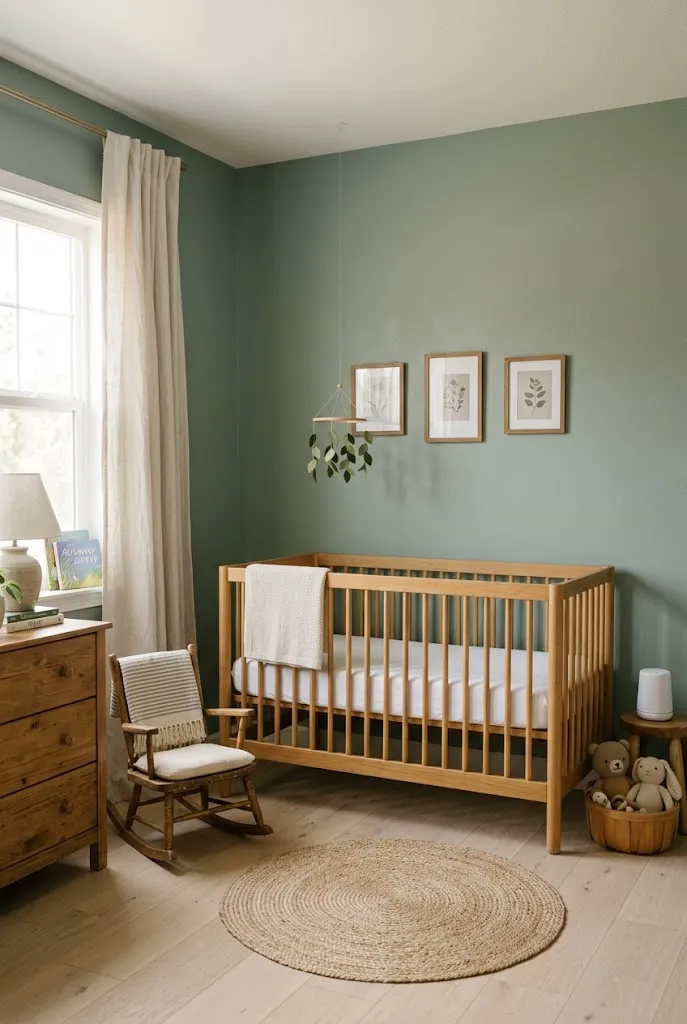
Muted sage is one of the easiest nursery colors to live with. It reads as neutral in daylight, turns a little moodier at night, and sits comfortably next to honey-toned wood. Choose an eggshell or satin finish so fingerprints and spit-up wipe off, and look for low-VOC paint. Finish painting a few weeks before the due date so the room can air out.
- Pair with oak or birch furniture, cream linen curtains, and a jute or wool rug.
- Keep bedding white or oat so the wall color stays the star.
- Add one deeper green, such as an olive throw, instead of several greens.
2. A Glider Corner Built for 3 A.M. Feedings
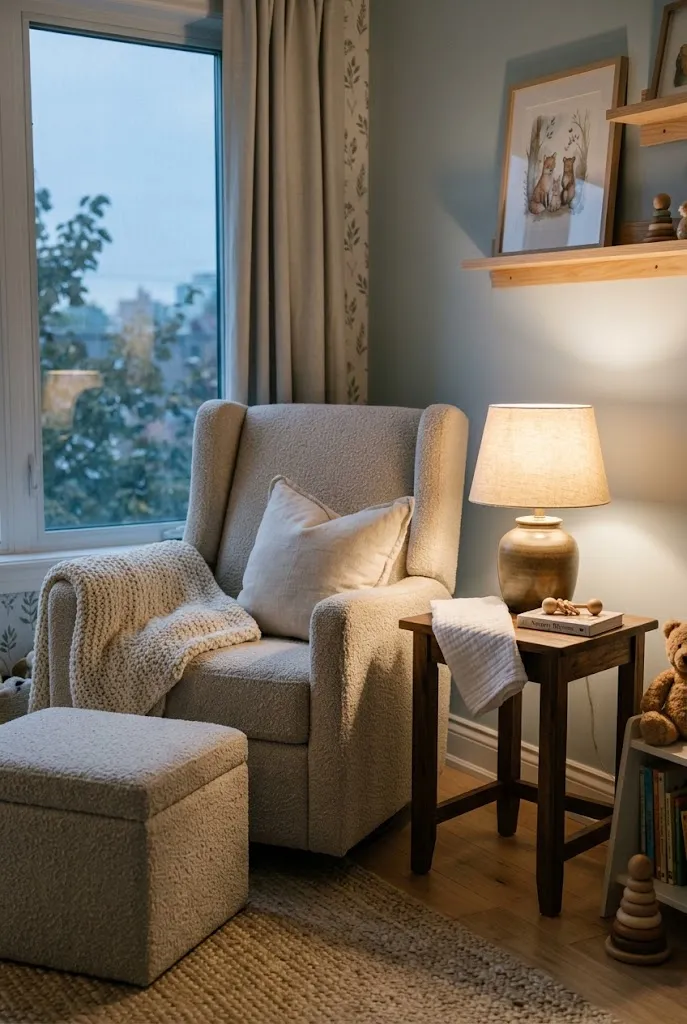
The chair is the hardest-working piece in the room, so give it a proper corner. Angle it toward the crib instead of the door, and put a small side table within arm’s reach for water, burp cloths, and a phone charger. A footstool takes pressure off your back during long feeds. A table lamp on a dimmer lets you see without waking everyone.
Quick Tip: Pick performance fabric or a removable washable cover. Upholstery in a pale color looks lovely until the first leak.
3. A Dresser Changing Station With Everything in Reach
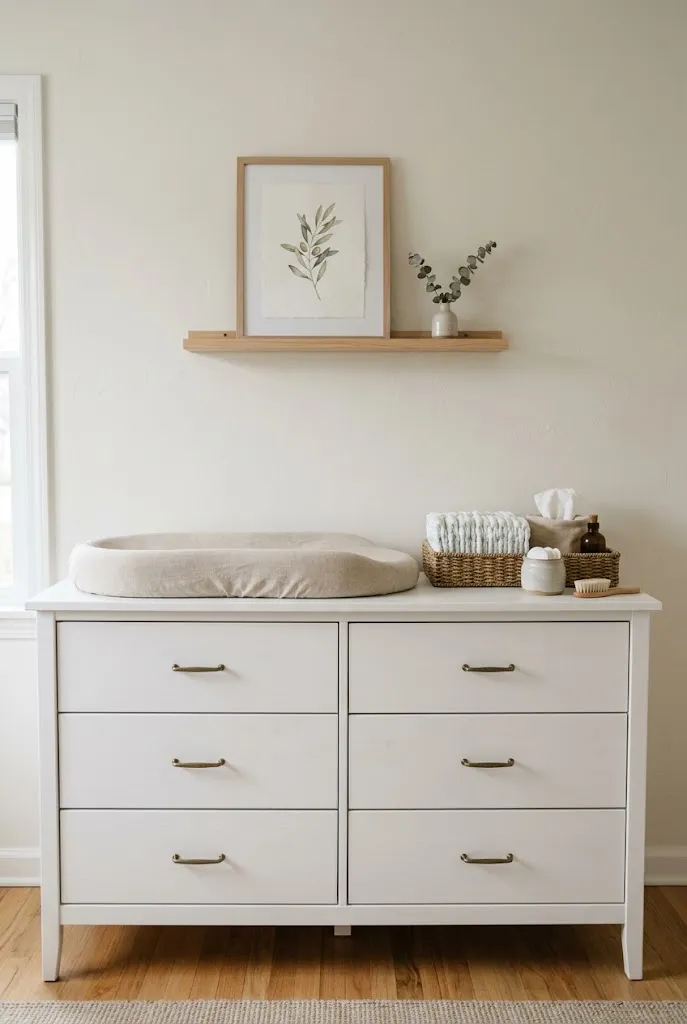
A sturdy dresser with a contoured changing pad on top saves floor space and doubles as storage for years. Anchor the dresser to the wall, strap the pad to the top, and never step away from the baby while changing. Keep diapers in a tray at hand height, with wipes, cream, and a spare outfit in the top drawer, so you never need to turn your back.
- Open trays on top for the things you grab every change.
- Closed drawers for backup supplies and extra sheets.
- A wall shelf above for a few jars and one framed print, kept out of reach.
4. Blackout Curtains Softened With a Linen Layer
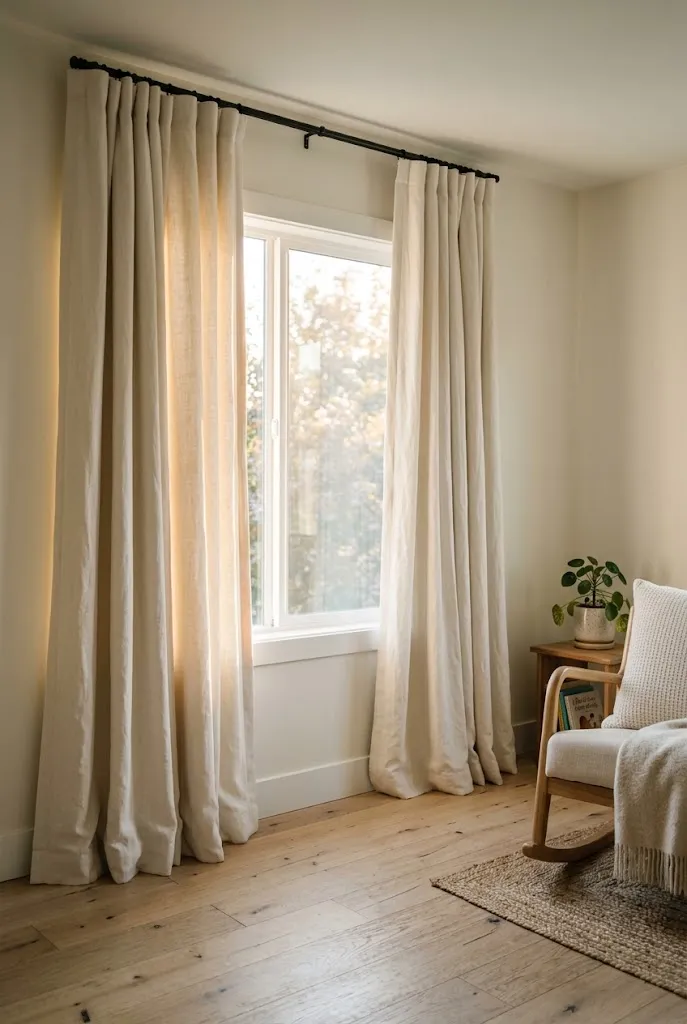
Good naps start with a dark room, and blackout curtains help with early summer sunrises. Hang a blackout liner or curtain behind a light linen panel so the room still looks soft and airy. Mount the rod several inches above the window and extend it past the frame on both sides to block light leaks. Choose cordless designs or keep every cord well secured and out of reach.
5. Layered Lighting That Never Wakes the Baby
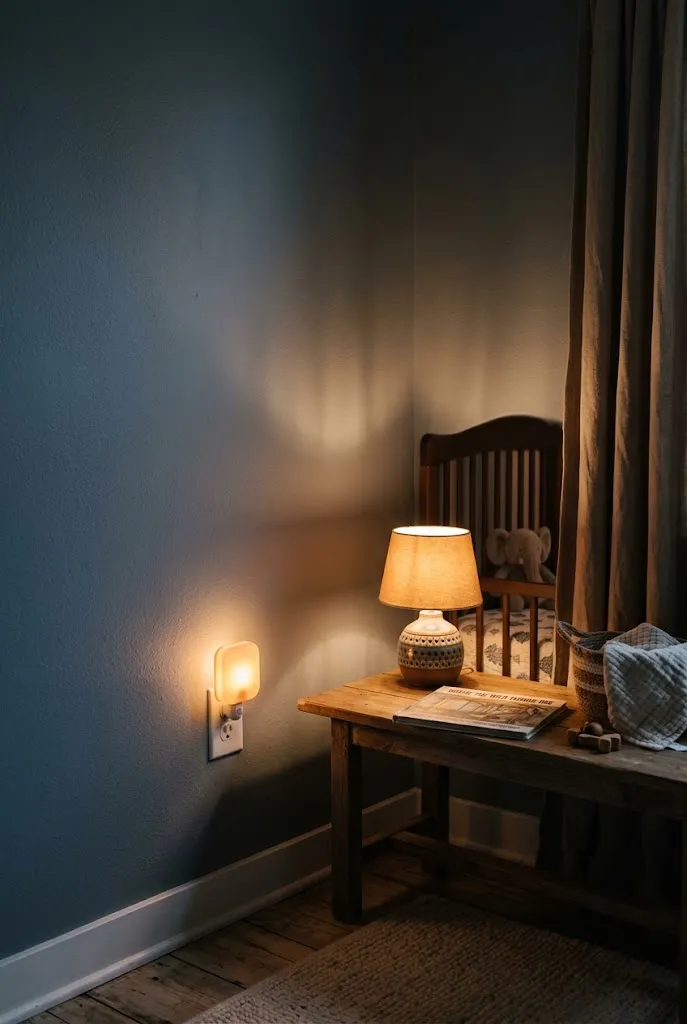
One overhead light is a recipe for glare at midnight. Build three layers: a dimmable ceiling fixture for daytime, a table lamp near the chair for feeds, and a low, warm-toned night-light for diaper changes. Warm amber light is gentler on sleepy eyes than cool white bulbs. If you rent, plug-in sconces and smart bulbs deliver the same layering without electrical work.
6. A Washable Low-Pile Rug That Survives Everything
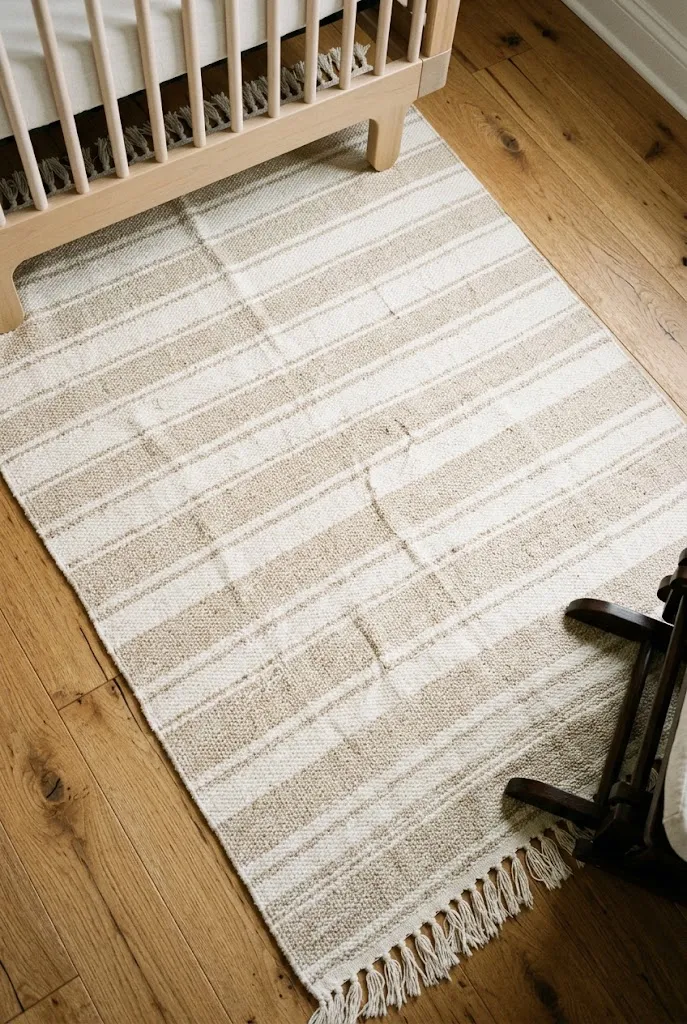
A nursery rug takes spills, crumbs, and eventually tummy time. Choose a flatweave or low-pile design in cotton or a machine-washable blend, and add a non-slip pad underneath. A 5 × 8 feet rug usually anchors the glider and the crib legs without swallowing the room. Soft stripes or a quiet geometric pattern hide marks better than solid cream.
7. A Painted Arch Behind the Crib
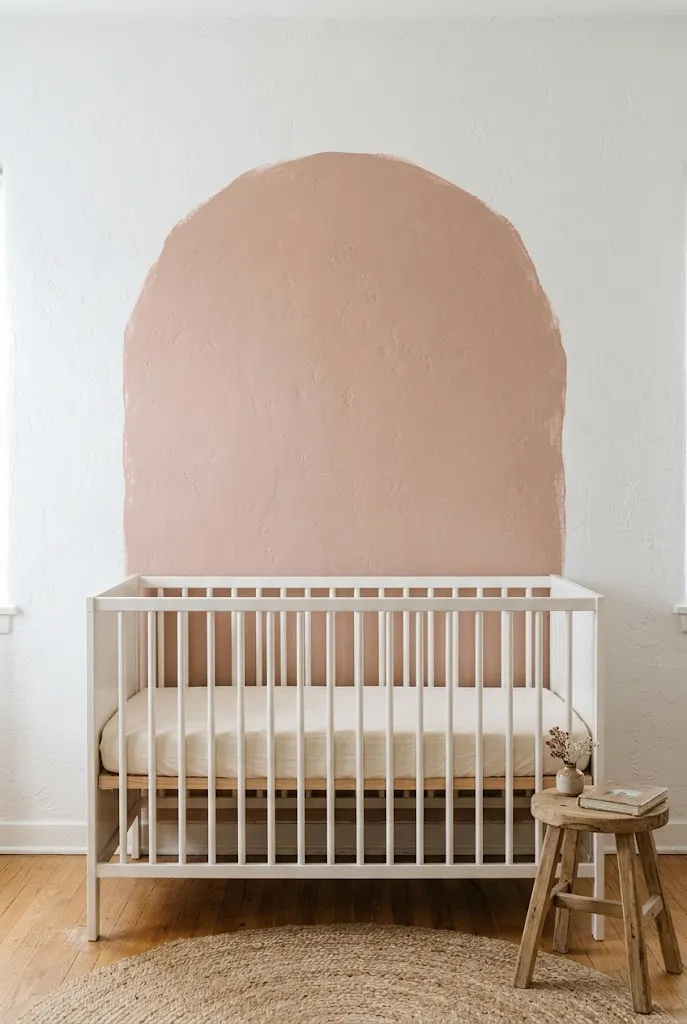
A painted arch gives a plain wall a focal point for the cost of one sample pot. Soft clay pink, warm oat, or pale sage all look gentle against white. It’s also easy to repaint when the room grows up.
- Mark the center point of the crib wall and tie a pencil to a string to sketch the curve.
- Tape the outline with painter’s tape and press the edge down firmly.
- Paint two thin coats, and peel the tape while the last coat is still slightly tacky.
8. Board and Batten in Soft Greige
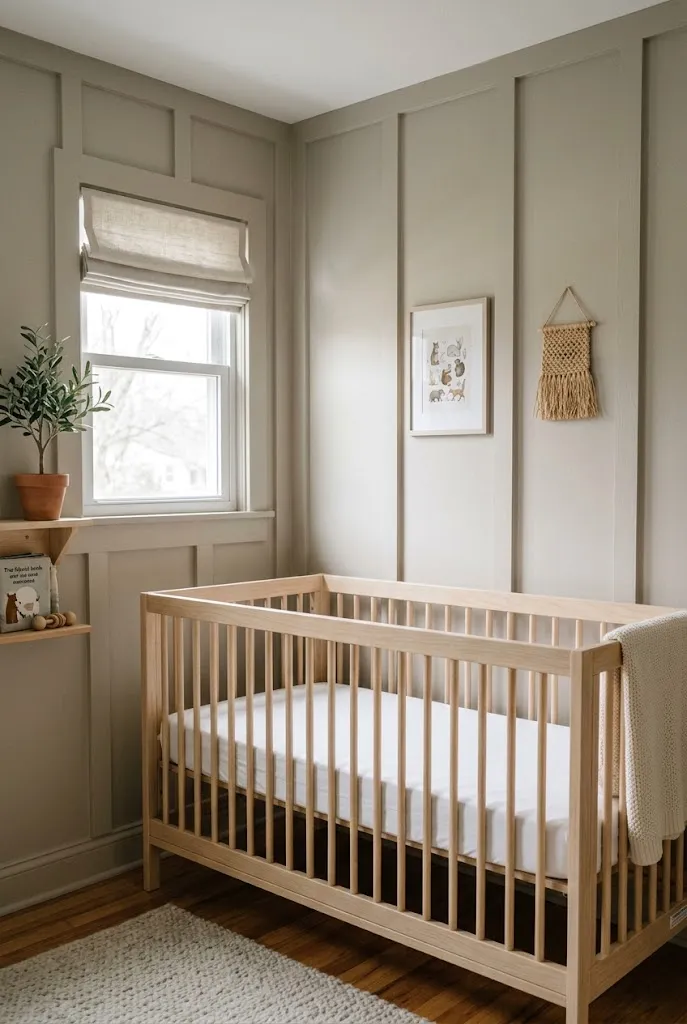
A board and batten wall adds architecture and takes scuffs better than flat paint. Use primed MDF strips, a level, construction adhesive, and a thin bead of caulk, then paint everything in one soft greige. Aim for the molding to reach roughly 48 to 60 inches, which suits most nursery furniture. It’s a moderate DIY investment with a custom look.
9. Dusty Blue and Cream Without the Theme
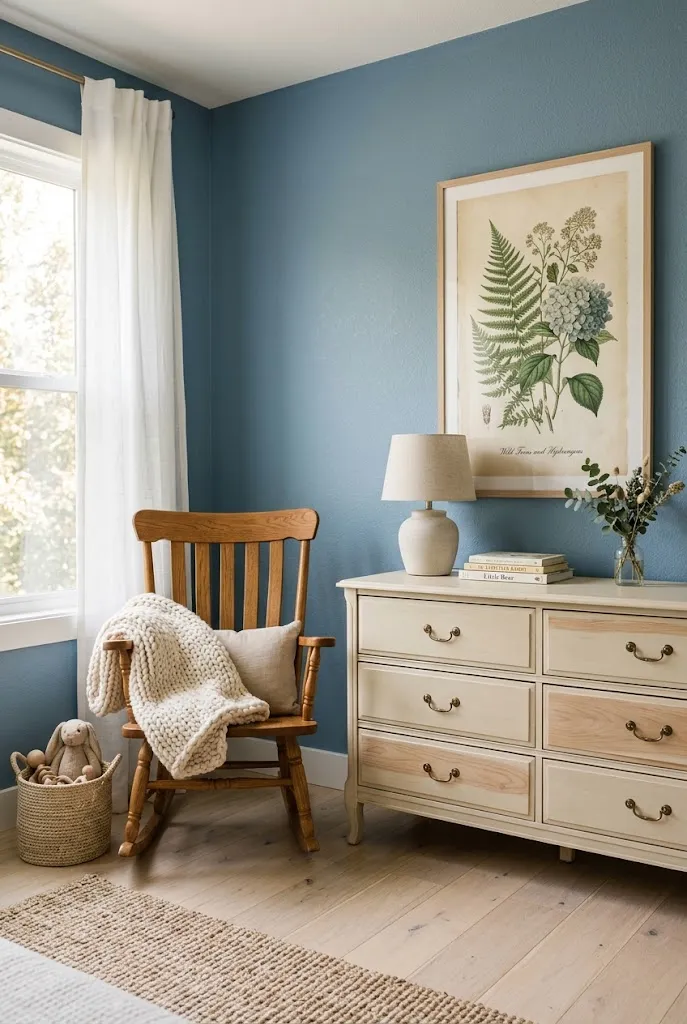
Blue doesn’t have to mean boy, and it doesn’t have to mean cartoons. Pair a dusty, slightly gray blue with cream bedding, natural wood, and one framed botanical print, and the room feels quiet instead of themed. Keep patterns tiny and repeated so the eye rests.
10. Peel-and-Stick Botanical Wallpaper for Renters
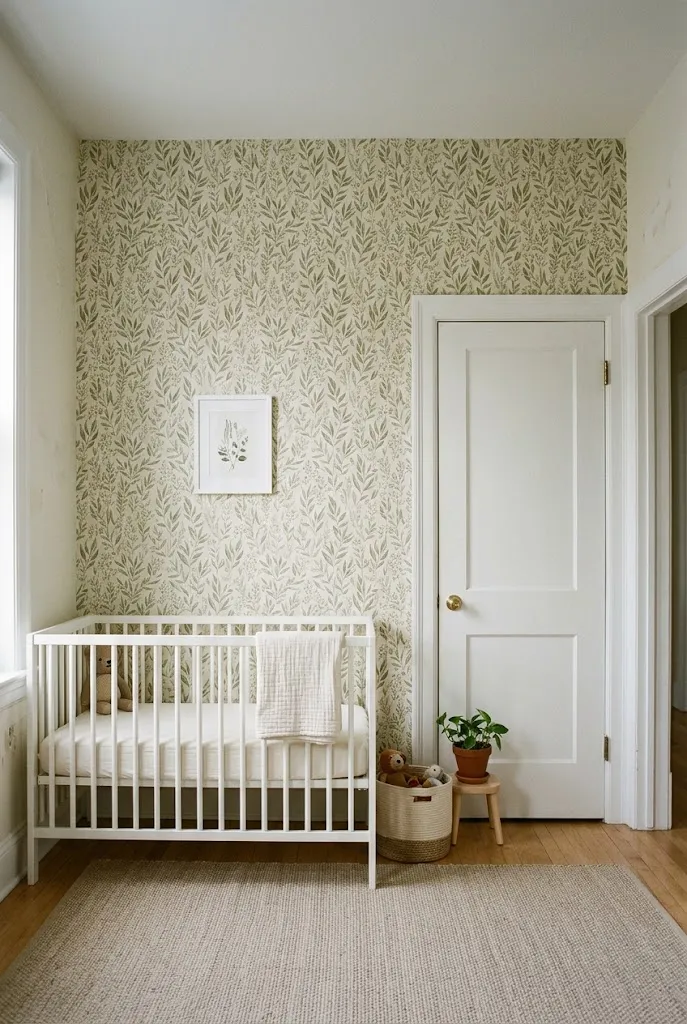
Rentals can still have a feature wall. Choose a small-scale botanical print in olive and cream, test a small hidden patch first, and apply to a clean, smooth wall. Peel-and-stick works best on one wall or inside a closet. Let the room air out for a few days before it becomes the sleep space.
11. A Low Picture-Book Ledge Instead of a Bookcase
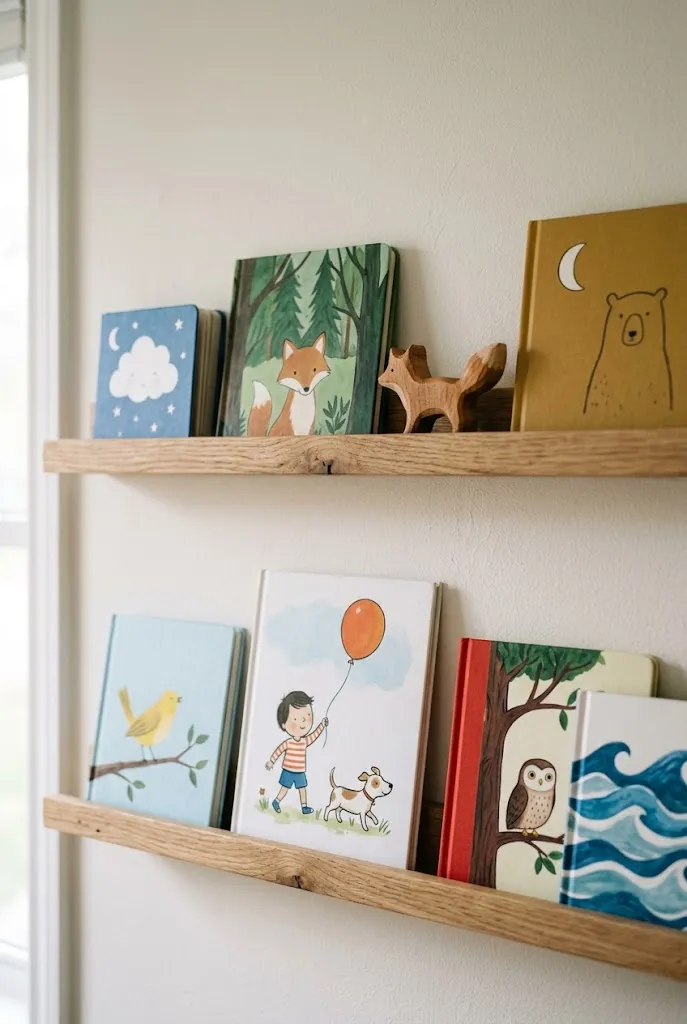
Front-facing book ledges let a baby or toddler see covers instead of spines, and they stay light enough to anchor securely. Install two or three narrow shelves at a reachable height, and keep only a few favorites on display. Rotate the books each season.
12. Dresser Drawers Organized by Size
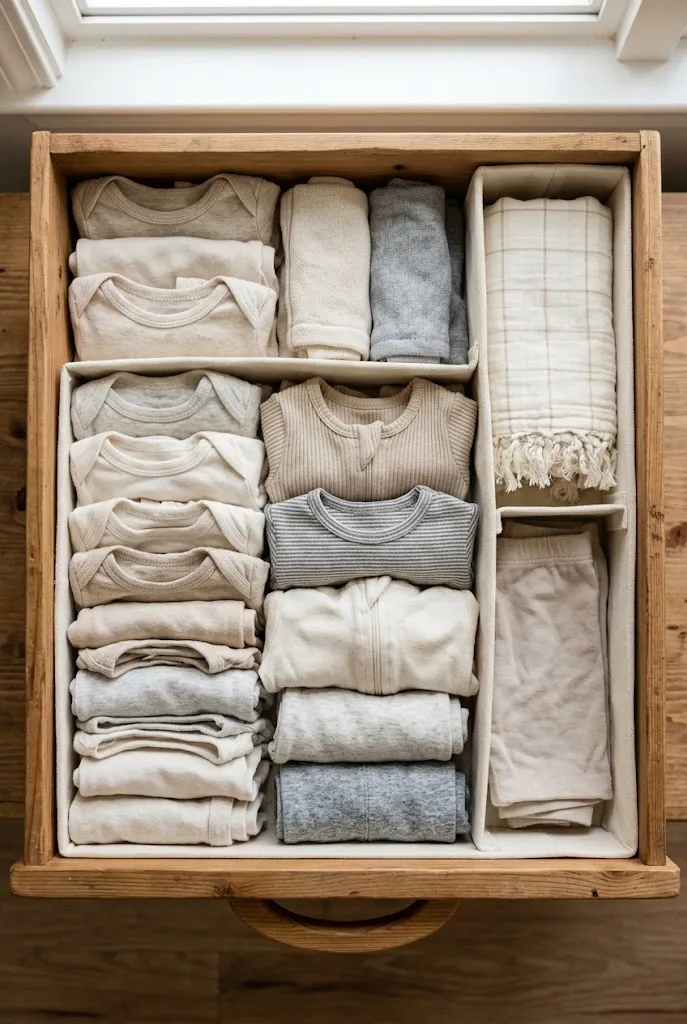
Baby clothes change sizes quickly, so organize by size instead of type. Use fabric dividers or shallow boxes to separate newborn, 0–3 months, and 3–6 months, and keep a separate drawer for swaddles and sleep sacks. Roll or file-fold small items so you can see every piece when the drawer opens at 3 a.m.
Quick Tip: Keep one empty basket for outgrown pieces, and empty it into a donation bag monthly.
13. A Safe-Sleep Crib, Kept Beautifully Bare
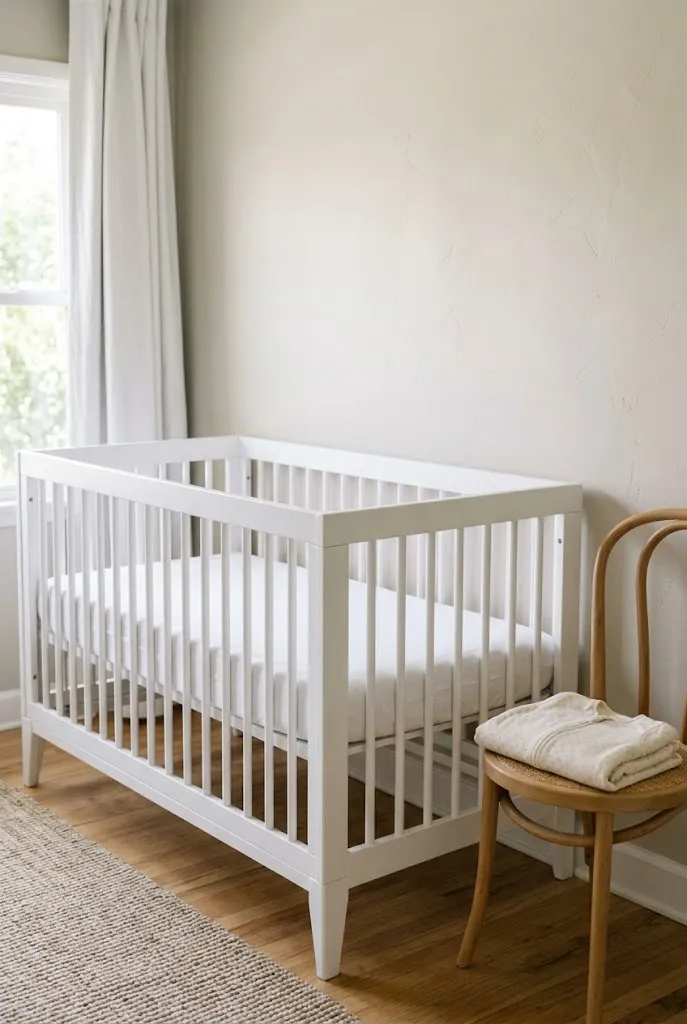
Pediatric safe sleep guidance generally calls for a firm, flat mattress with a tightly fitted sheet and nothing else in the crib, so no bumpers, pillows, loose blankets, or plush toys. Use a wearable sleep sack for warmth. Place the crib away from windows, blind cords, and wall hangings. A bare crib can still look good if the room around it carries the style.
14. A Compact Layout for Small Rooms
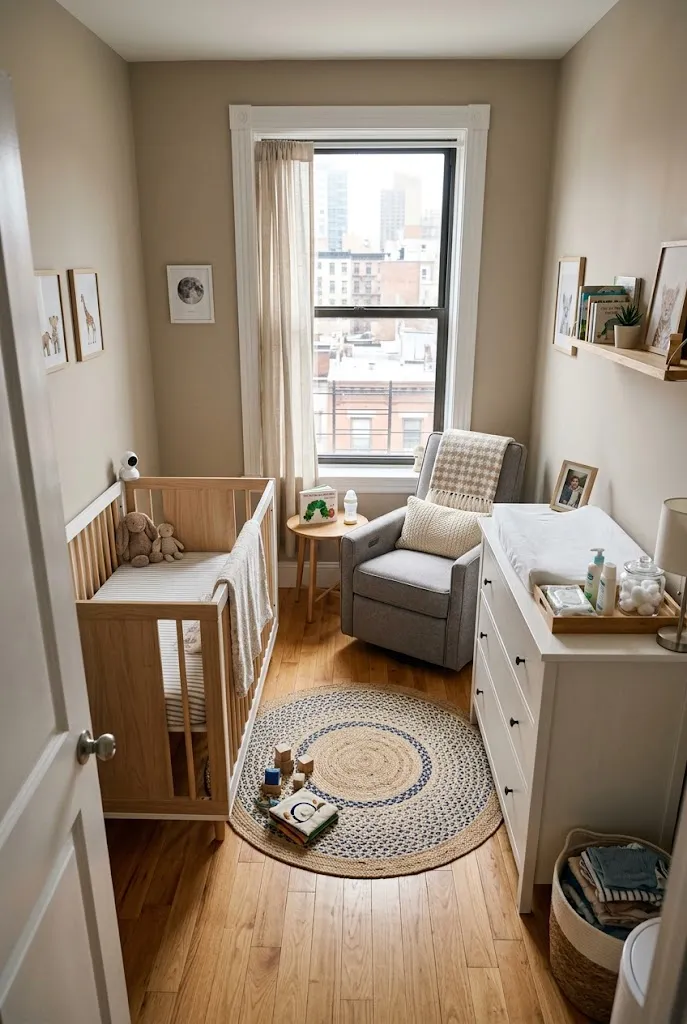
In a small room, think in zones instead of furniture. Run the crib along the shortest wall, put the dresser opposite with the changing pad on top, and tuck the glider diagonally into the remaining corner. Leave a clear walking path of about two feet so you can reach the crib in the dark. Wall-mounted shelves and a slim dresser keep the floor visible, which makes the room feel larger.
15. A Bassinet Corner in the Parents’ Bedroom
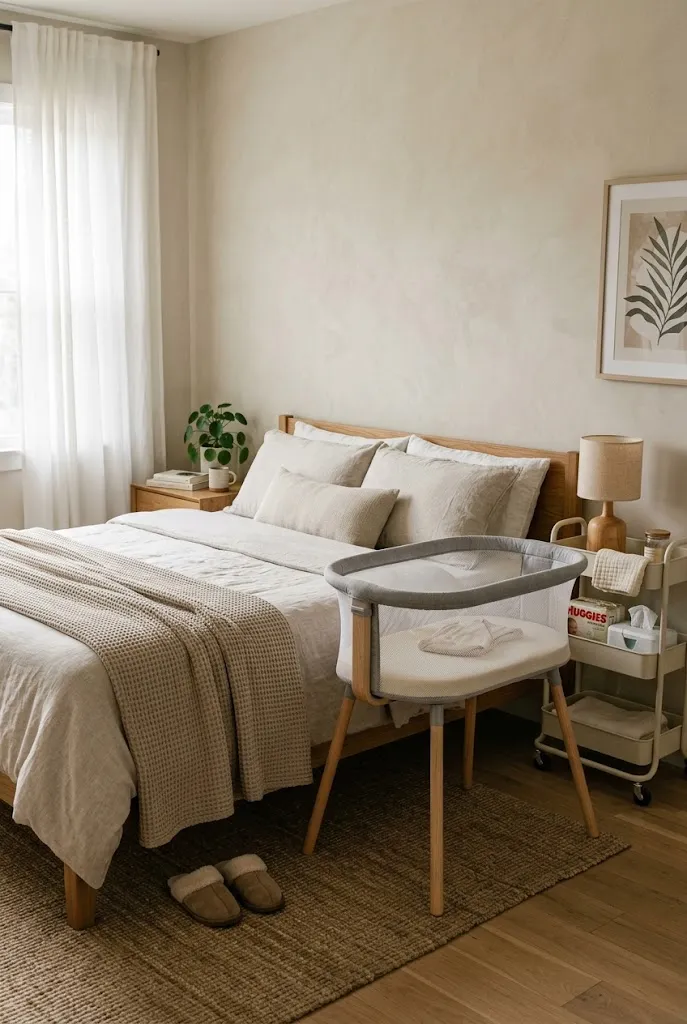
Many pediatric groups suggest that babies sleep in their own sleep space in the parents’ room for the early months. You don’t need a full nursery yet. Park a bassinet beside your side of the bed, add a rolling cart with diapers and wipes, and tuck a small lamp within reach. A folding screen or a plant shelf can visually separate the baby zone without blocking airflow or the view of the bassinet.
16. Woven Baskets for the Things That Pile Up
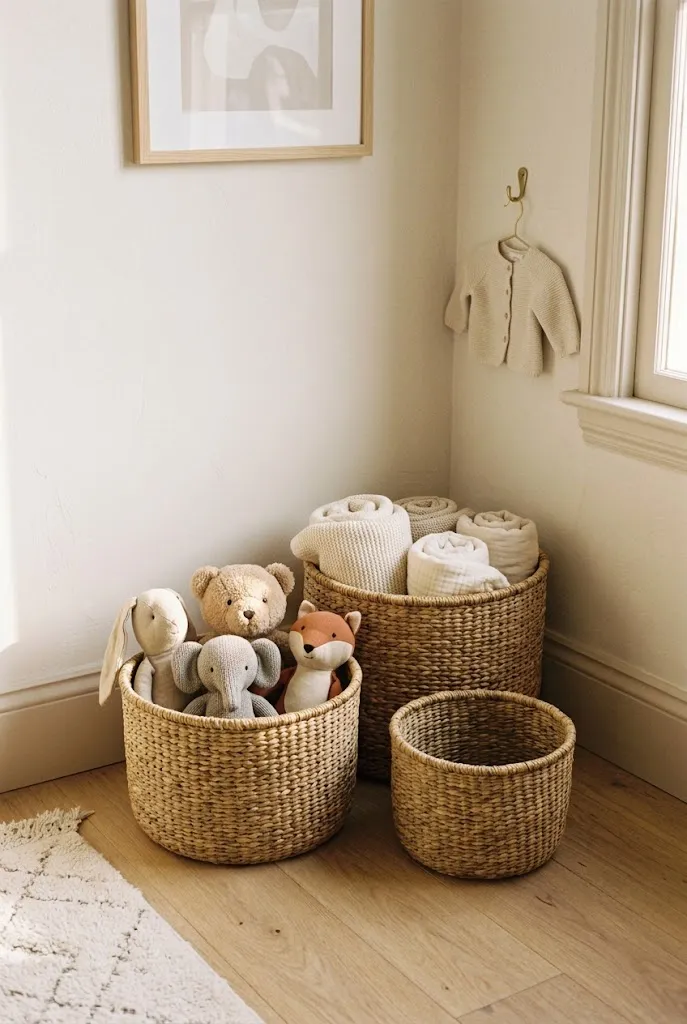
Laundry, soft toys, and extra blankets all need a home that isn’t the crib. Mix two or three baskets of different sizes, keep one with a liner for dirty laundry, and choose handled designs that are easy to lift. Look for smooth weaves without loose ends. Rolled receiving blankets in a basket by the glider look neat and stay within reach.
17. A Gallery Wall Above the Dresser, Not the Crib
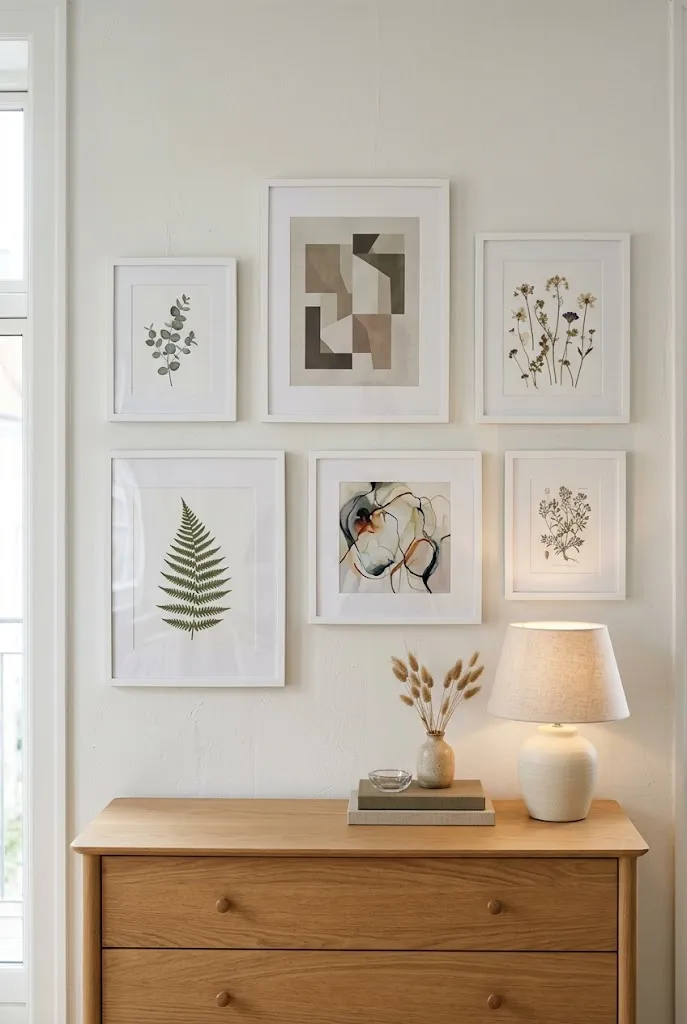
Art makes a nursery feel finished, but placement matters. Hang prints above the dresser or glider instead of directly over the crib. Choose lightweight frames with acrylic fronts instead of glass, and secure them with proper hardware. Mix botanical prints, soft abstracts, and one personal piece, such as a framed child’s drawing from a family member, in a consistent white or oak frame.
18. Rattan, Jute, and Natural Texture
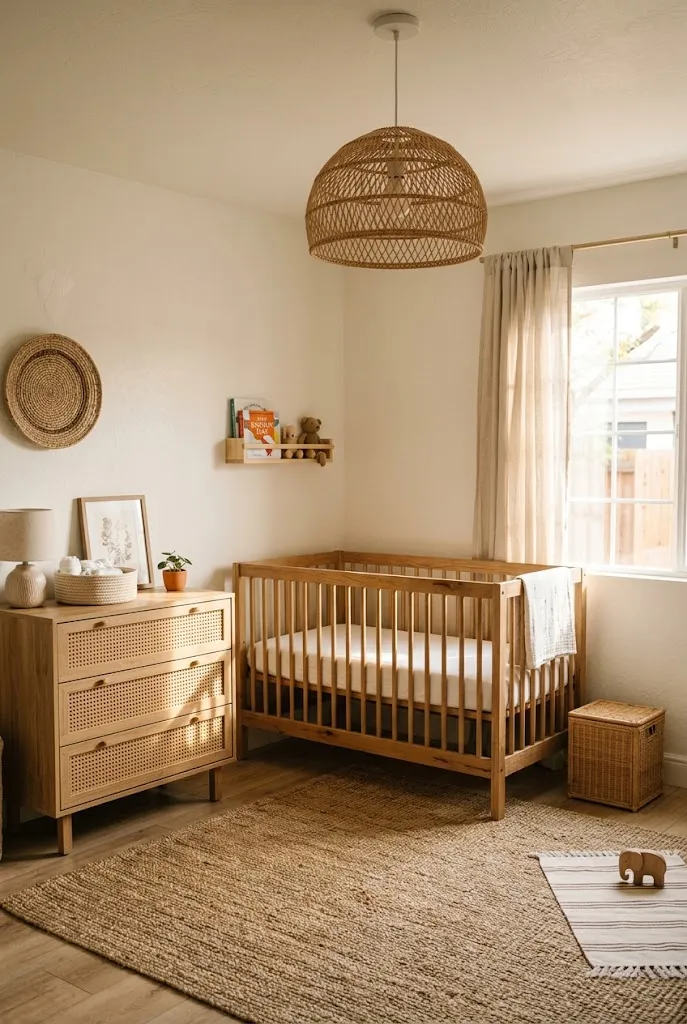
A natural, boho-leaning nursery relies on texture instead of pattern. A woven pendant shade, a cane-front dresser, a jute rug, and cotton bedding give the room depth without color. Keep dangling or hanging decor well above and away from the crib, and skip small beaded pieces.
- Pick one statement texture, such as rattan, and repeat it twice.
- Soften with linen and cotton in oat and cream.
- Keep metals warm and minimal.
19. A Floor-Cushion Reading Nook
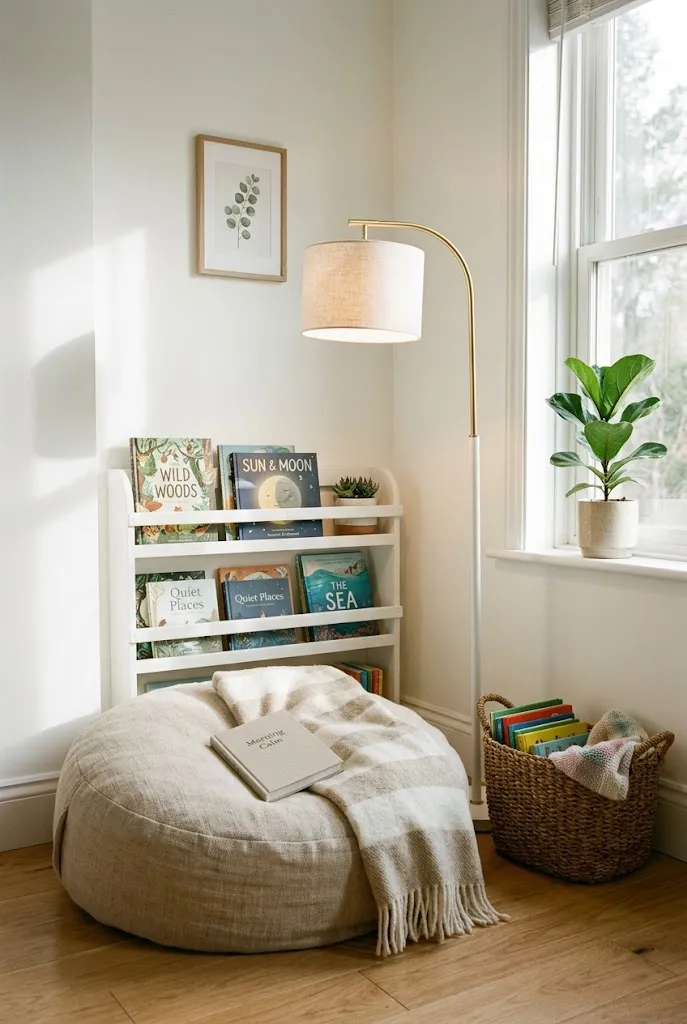
A reading corner serves you now and your toddler later. Place a large round floor cushion or small armchair beside a low bookshelf, add an arc lamp or wall sconce with a warm bulb, and keep a basket of favorites within reach. Anchor the bookshelf to the wall. It’s a gentle way to turn a nursery into a bedtime-story room.
20. A Quiet-Tech Corner for Sound and Air
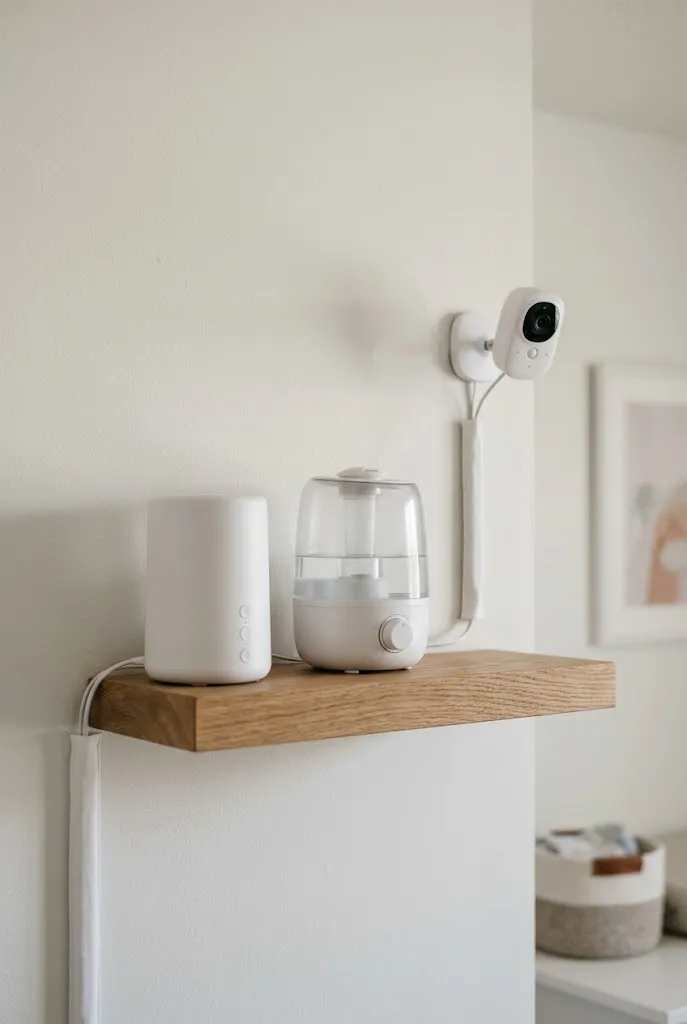
A white noise machine, humidifier, and monitor are common nursery gear, and they work best when placed thoughtfully. Put the sound machine across the room at a modest volume, not inside the crib. Set a cool-mist humidifier on a stable surface out of reach, and secure every cord. Mount the monitor camera according to its manufacturer’s instructions.
Quick Tip: Group devices on one shelf with a cord cover so the room still feels calm.
21. Terracotta and Cream for a Warmer Room
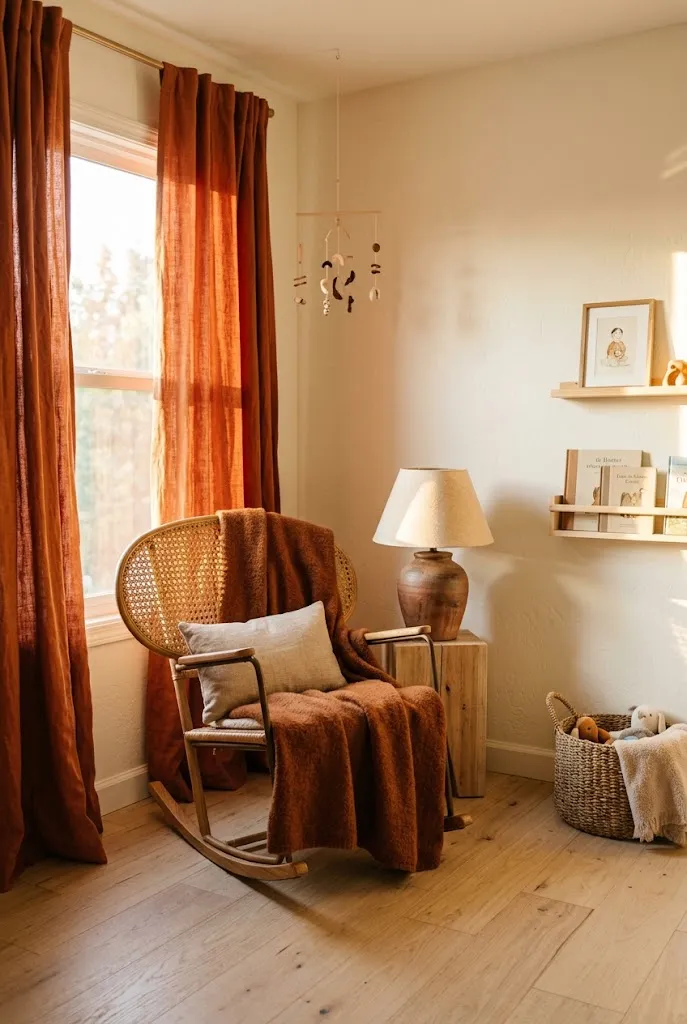
Not every nursery needs to be cool and pale. Terracotta curtains, a clay-toned lamp base, or a rust-colored throw add warmth against cream walls. Use the saturated tone in two or three spots only, and balance it with plenty of off-white. The room stays restful but feels more welcoming on gray days.
22. Soft Gray and White, Scandinavian Style
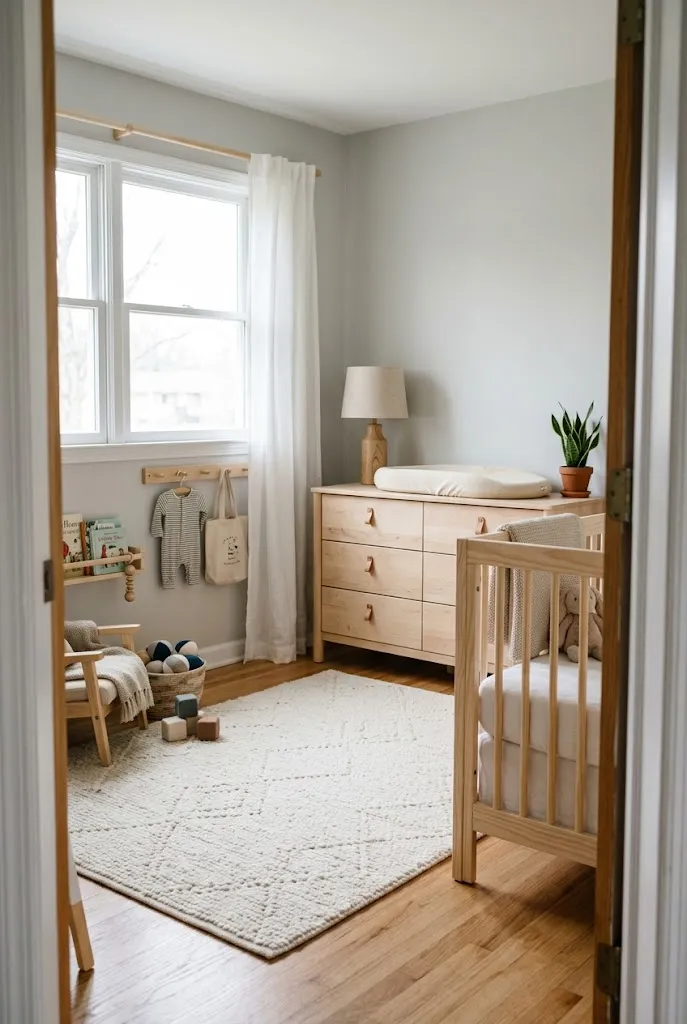
Pale gray walls, a white pine crib, birch furniture, and a sheepskin or wool rug give a Scandinavian nursery its quiet look. It’s mostly about restraint: fewer objects, light surfaces, and a lot of daylight. Add warmth with wood tones instead of more color.
23. A Window Seat With Built-In Storage
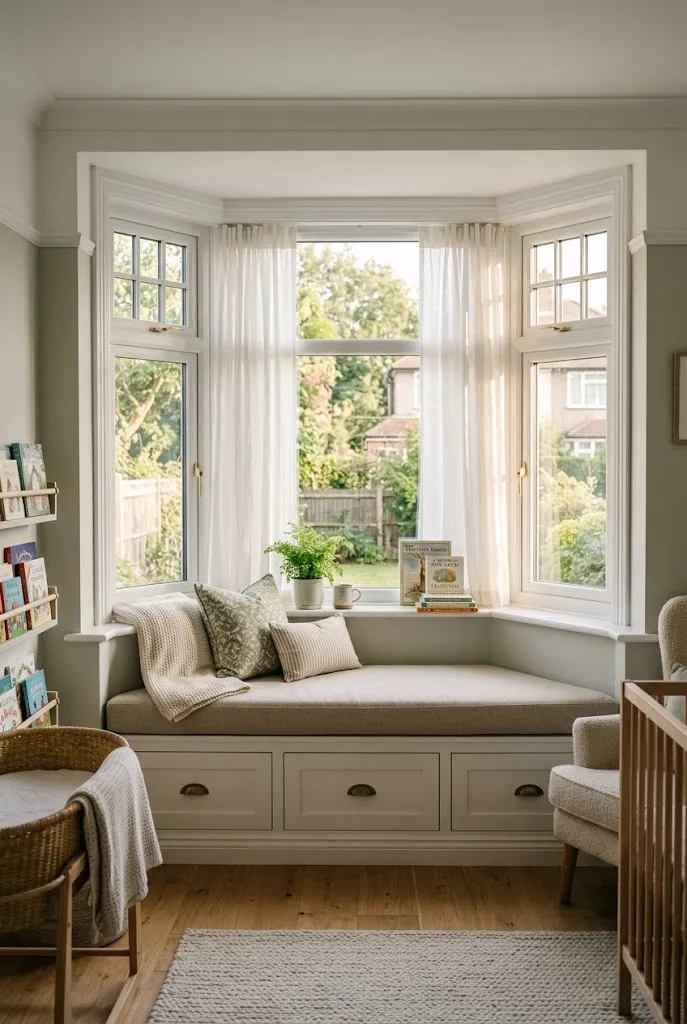
For a premium upgrade, a custom window seat adds a place to sit, a view for the baby, and drawers for supplies. Have a carpenter build a cushioned bench with deep drawers below, finished in the same color as the trim. The principle works at smaller scale too: a low storage bench under a window gives you much of the same function.
24. A Convertible Crib That Grows With the Room
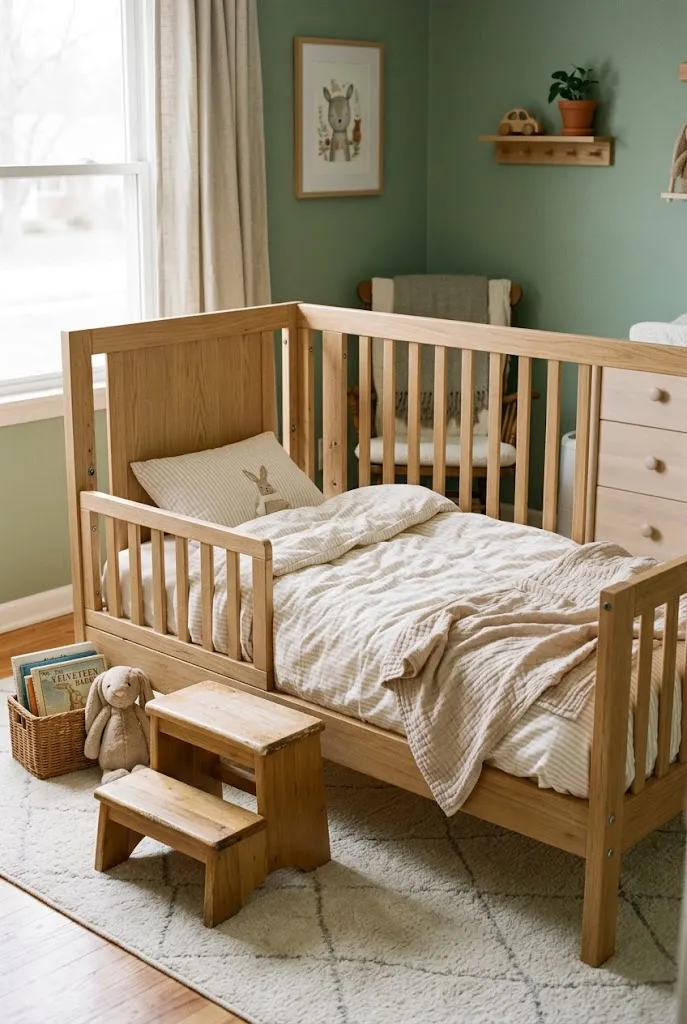
A convertible crib is a practical mid-range investment. It starts as a crib, then converts to a toddler bed and sometimes a daybed, depending on the model. Pick a neutral wood or white finish that works in both stages, and confirm the conversion kit and mattress requirements before buying.
25. Greenery Kept Out of Reach
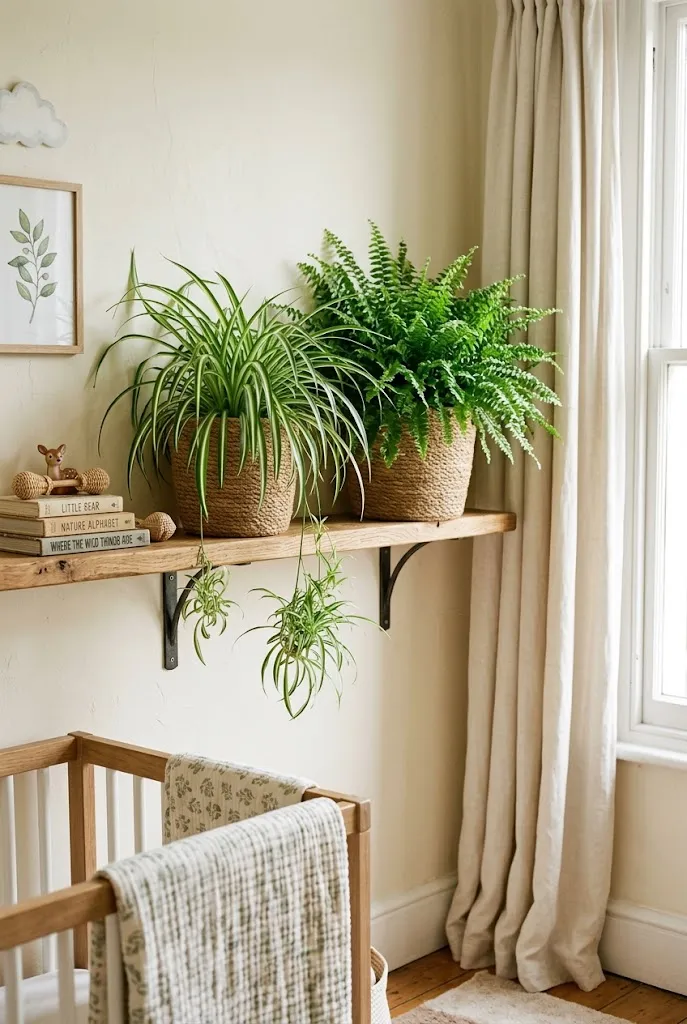
Plants soften a nursery, but some are toxic if chewed. Choose faux plants or species listed as non-toxic, such as spider plants and Boston ferns, and verify each one with a reliable plant-toxicity list. Place them on high shelves or wall-mounted ledges, never within a crawler’s reach.
26. A Custom Closet Sized for Tiny Clothes
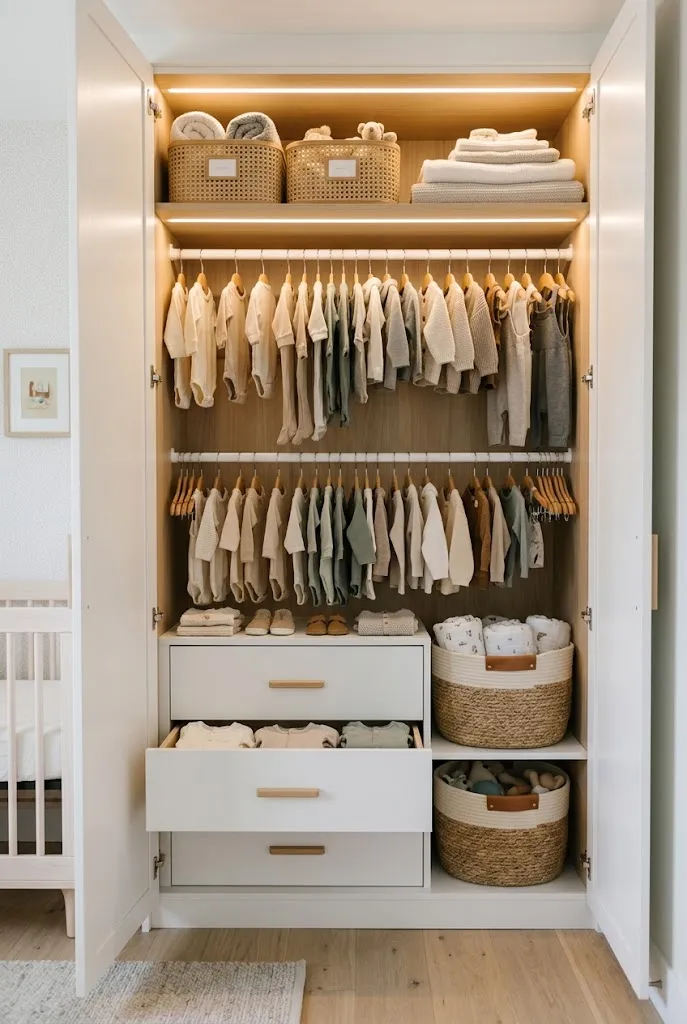
For a premium upgrade, a custom closet system gives you a low double-hang rod, a stack of drawers, and adjustable shelves that adapt as the child grows. The same idea works in a standard closet with a second rod and modular bins. Lower the rods now, raise them later.
Where to Start
You don’t need all 26 ideas. Start with the things you’ll use every day: the glider corner, layered lighting, and a changing station that keeps supplies within reach. Then choose one color direction and let it carry the room. Paint, a rug, and curtains do more than any single accessory. Keep the crib simple, anchor every tall piece of furniture, and add the decorative layer last.