

21 Primary Bedroom Ideas to Turn Your Room into a Peaceful Sanctuary
Introduction
The primary bedroom is usually the last room to get attention. Guest rooms get styled, living rooms get repainted, and the room where you start and end every day keeps the mismatched lamp and the pile of laundry on the chair. A peaceful bedroom doesn’t need a renovation, though. It comes from a handful of decisions about light, color, texture, and what you choose to leave out.
These 21 primary bedroom ideas range from a ten-minute lighting swap to a weekend wall project and a few bigger upgrades. Some suit a rental apartment, others a larger suburban suite. Pick one or two that fit your room and build from there.
1. Anchor the Room With a Linen Headboard and Warm White Walls
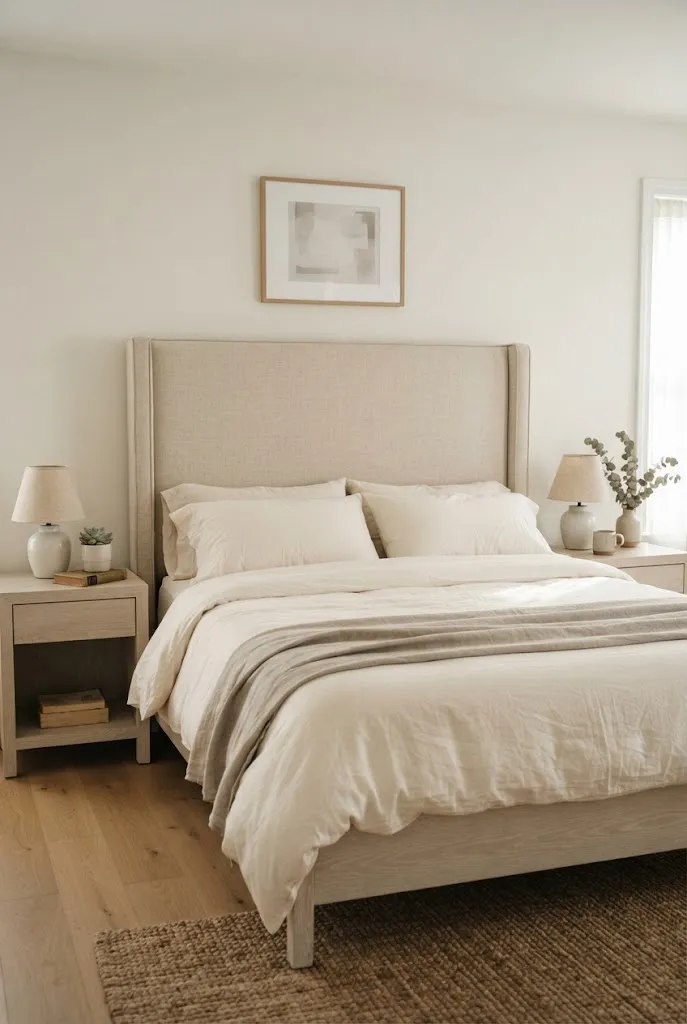
A tall, upholstered headboard in oatmeal or flax linen gives the bed a soft focal point. Against warm white walls, it reads as calm instead of stark. Choose a headboard that rises at least 12 to 18 inches above the mattress so the bed looks grounded, and let it be slightly wider than the bed frame.
For the walls, look for white with a yellow or beige undertone rather than a blue-leaning one. The room will feel gentler in both morning and evening light. Keep bedding in the same quiet family: ivory, stone, and one slightly darker accent.
Quick Tip: Slipcovered headboards can be removed and washed, which matters in a bed you use every night.
2. Pair Sheer Curtains With Blackout Panels
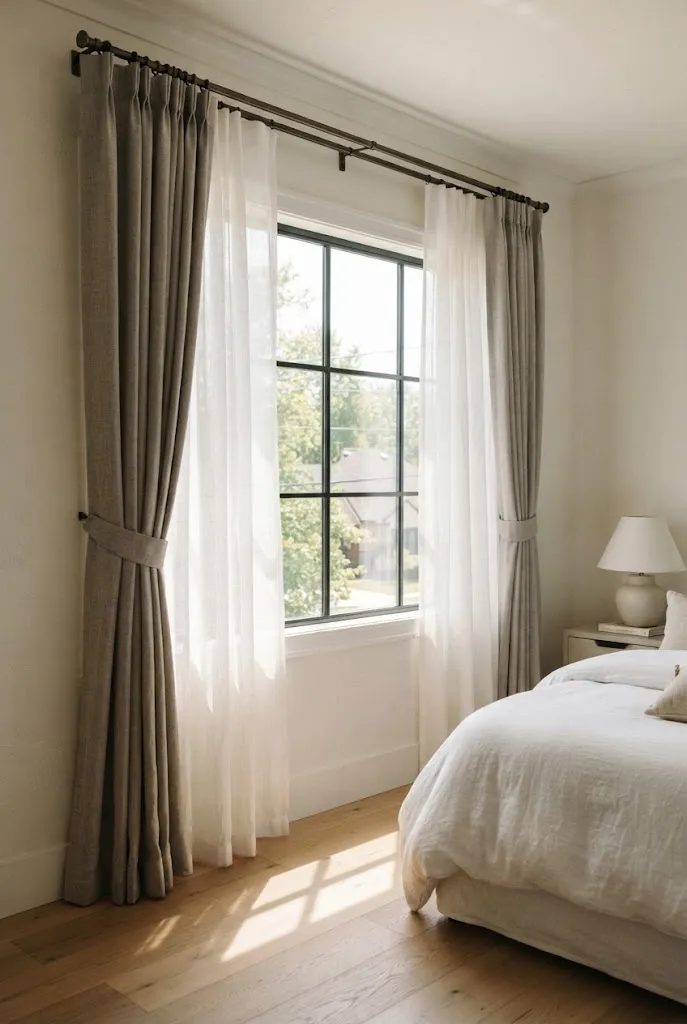
Light control matters in a restful bedroom. Hanging two layers on one double rod lets you have both: a sheer panel that softens daylight during the day, and a blackout or room-darkening panel you close at night.
- Mount the rod 4 to 6 inches above the window frame, or closer to the ceiling, to make the window look taller.
- Let the panels touch the floor or hover about half an inch above it.
- Choose a blackout liner in a color close to your wall so the back of the curtain doesn’t show through the sheers.
- Pick panels about two times the window width so they look gathered and soft rather than flat.
Natural-fiber blends in white, cream, or pale gray work with most color schemes.
3. Paint the Walls a Muted Sage Green
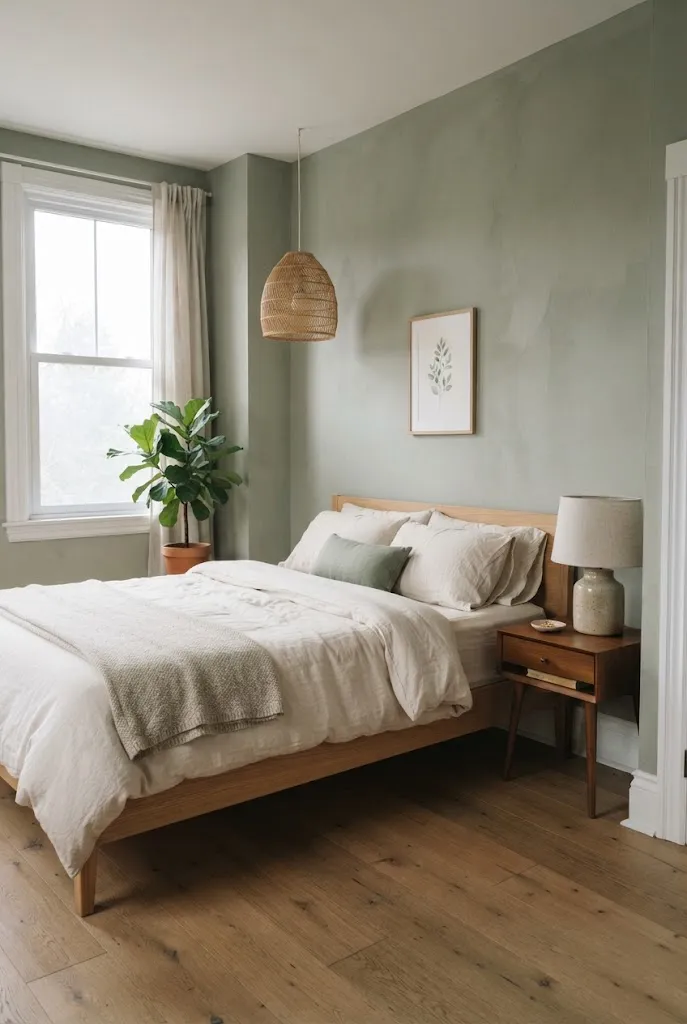
Soft sage sits between neutral and color, which is why it works well in a room meant for rest. It reads as green in daylight and almost gray at night. It pairs naturally with oak, walnut, cream bedding, and brass or black hardware.
Test paint swatches on two different walls and look at them in the morning, at midday, and in the evening before committing. Sage with a gray base stays quiet, while sage with a yellow base can look brighter than expected in south-facing rooms.
| Wood tone | Effect with sage | Best fit |
|---|---|---|
| Light oak | Fresh and airy | Smaller or north-facing rooms |
| Walnut | Grounded and warm | Larger rooms with plenty of daylight |
| Painted white | Soft and cottage-like | Rentals with existing white trim |
4. Carve Out a Reading Nook by the Window
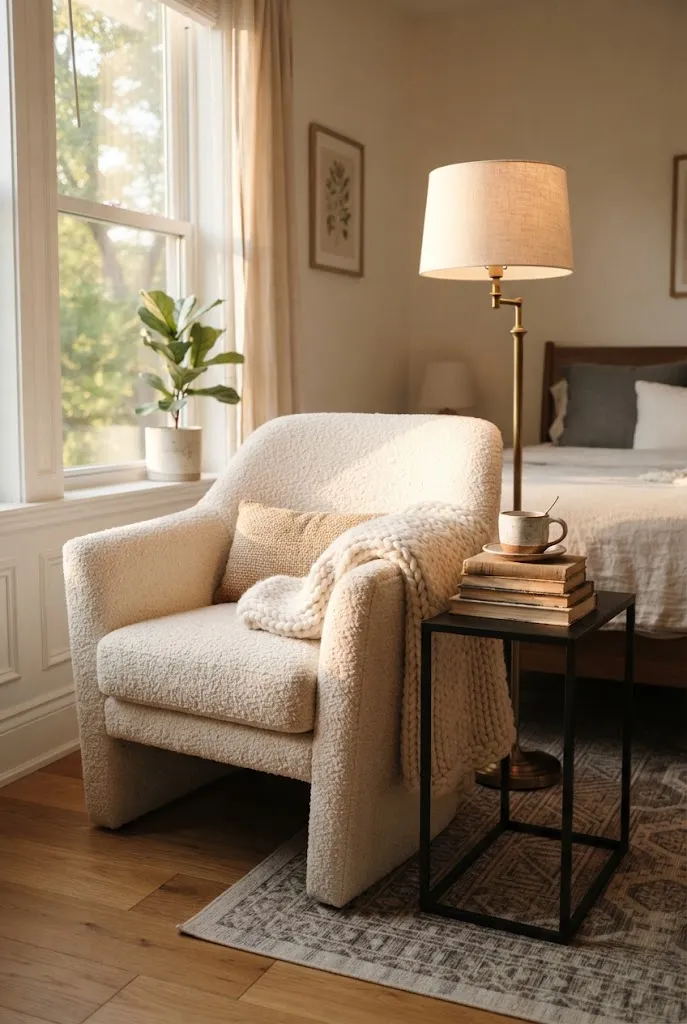
If there’s even 30 inches of free space near a window, there’s room for a nook. A compact armchair with a slim side table, a swing-arm floor lamp, and a throw blanket is enough to create a spot that isn’t the bed. That separation helps: the bed stays for sleep, the chair for winding down.
Choose a chair with a supportive back and arms, since you’ll sit in it longer than you expect. Boucle, textured cotton, and washed velvet are comfortable and forgiving. A small basket for books and a rug underneath finish the corner without crowding it.
5. Add Plug-In Wall Sconces Beside the Bed
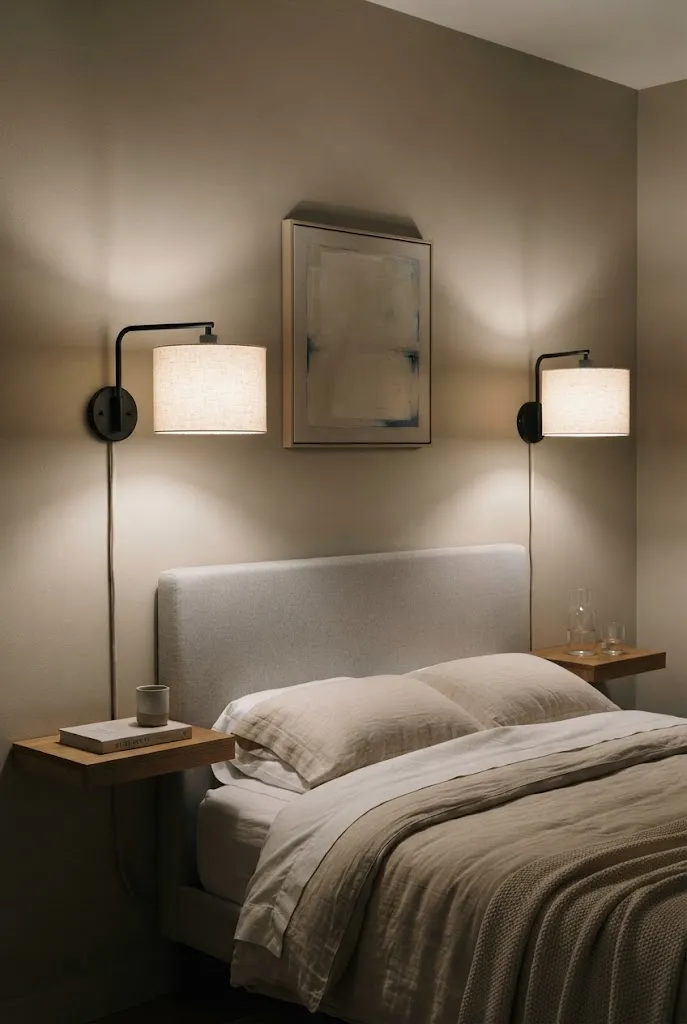
Bedside lamps take up nightstand space. Wall sconces free it for a book, a glass of water, or a charger, and they put light exactly where you read. Plug-in versions with fabric cords or cord covers work well for renters and need no electrician.
Mount them roughly 55 to 60 inches from the floor, or about 20 inches above the mattress, then adjust to where your shoulders and book sit. Swing-arm styles are practical for reading, while shaded, fixed sconces cast a gentler wash. Put them on a dimmer or use warm-white bulbs around 2700K.
Do: Choose bulbs with a soft, warm tone.
Don’t: Leave cords visible down the wall. A paintable cord cover keeps the line clean.
6. Build a Board-and-Batten Headboard Wall
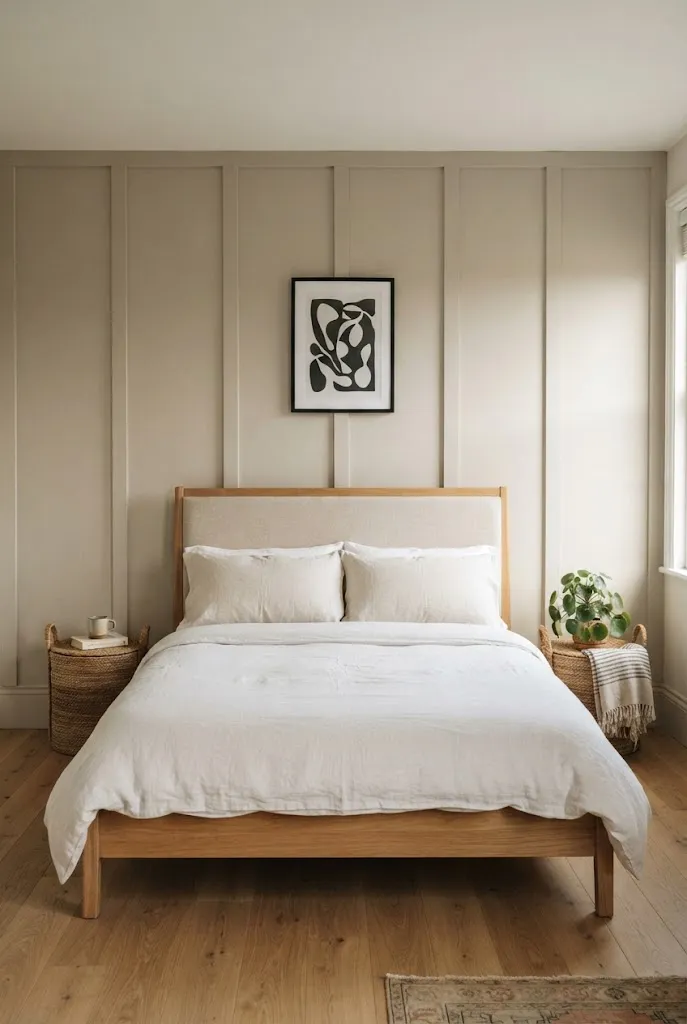
A wall of vertical battens behind the bed adds architecture without adding clutter. It’s one of the more approachable weekend projects: thin MDF or pine strips, construction adhesive, a finish nailer or small brad nails, caulk, and paint.
- Measure the wall and mark evenly spaced vertical lines, typically 8 to 12 inches apart.
- Attach a horizontal top rail first, then the vertical battens.
- Fill nail holes, caulk the seams, and sand lightly.
- Paint in a satin or eggshell finish, in one color for wall and battens.
Painting everything one shade, such as soft greige or deep olive, keeps it quiet, and the shadow lines add detail on their own. Check your lease first if you rent.
7. Choose a Dusty Blue-Gray Palette With Crisp White Bedding
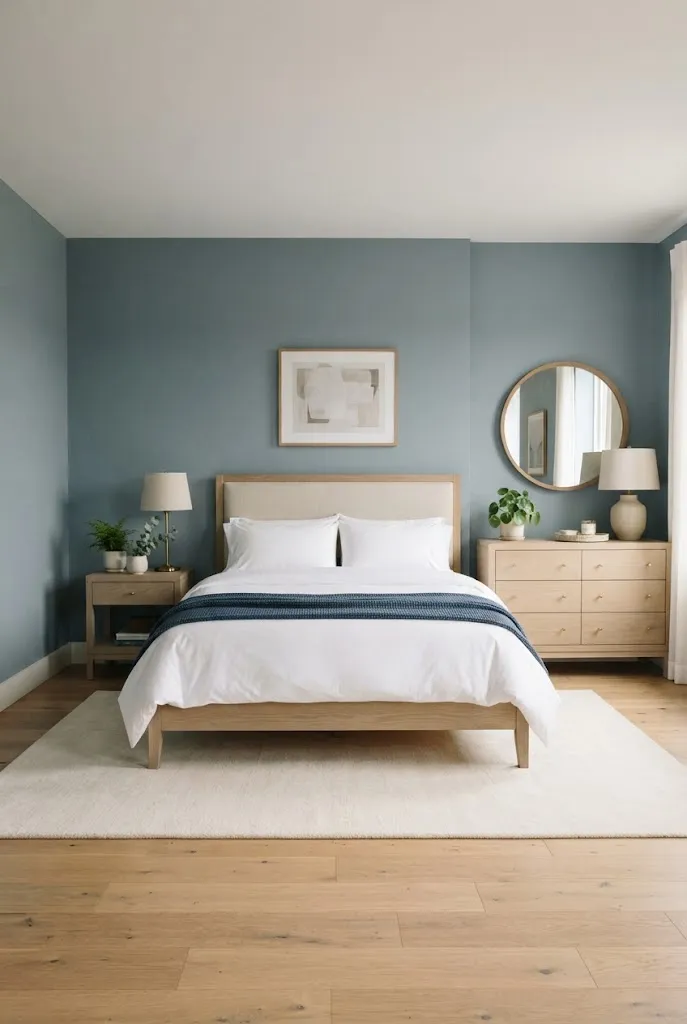
Blue-gray is a classic bedroom color: it recedes, feels cool without being cold, and plays well with almost any wood. Crisp white bedding keeps it from tipping into gloomy.
Keep contrast soft. A navy throw, a slightly deeper blue-gray pillow, and a pale oak dresser give the room depth without breaking the calm. If the room faces north and feels cold, pick a blue-gray with a touch of green or warmth, and add brass or warm wood accents.
8. Layer Natural Textures: Jute, Rattan, and Washed Linen
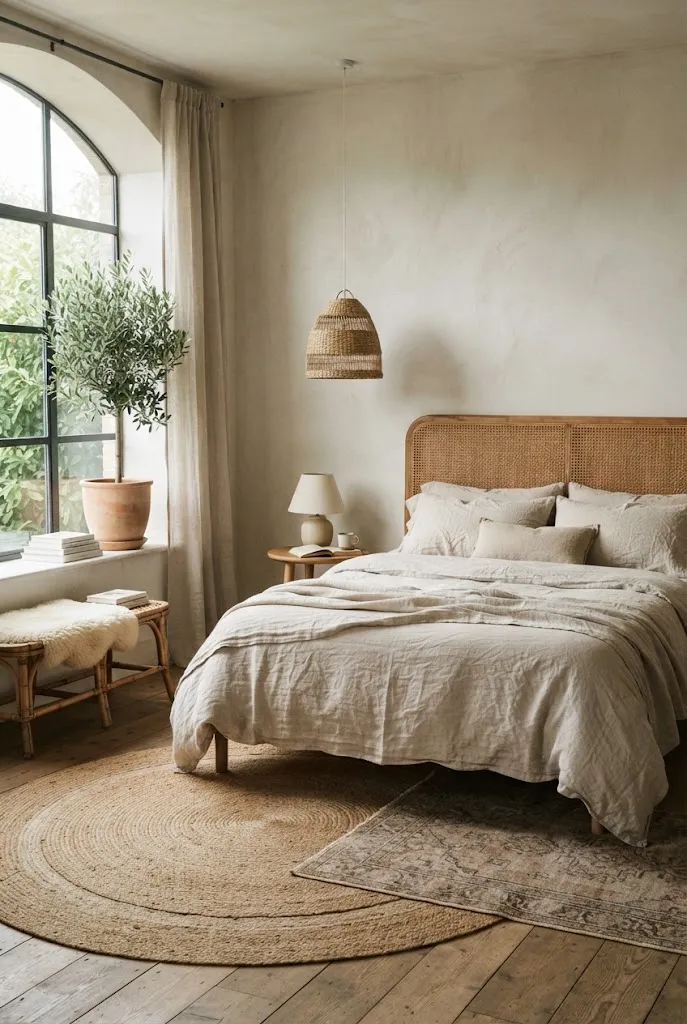
When a room is mostly one color family, texture adds the interest. A jute rug, a rattan or cane headboard, washed linen bedding, and a woven pendant all bring tactile variation without extra color.
Stick to three or four materials so the room stays cohesive rather than busy. Place the roughest texture, usually jute, on the floor, and the softest, linen or cotton, where your body touches. A jute rug can feel scratchy underfoot, so layer a smaller wool or cotton rug beside the bed where your feet land in the morning.
9. Mix Two Different Nightstands on Purpose
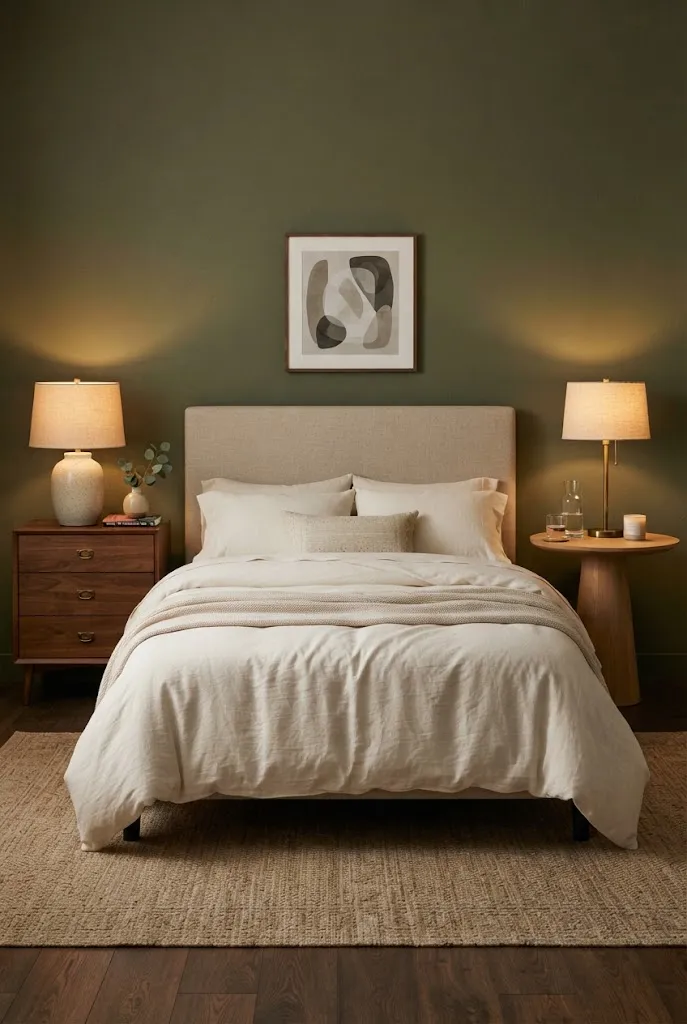
Matching nightstands can feel stiff. Using two different pieces gives the bed a collected look, as long as they share something: similar height, a shared wood tone, or the same metal finish.
For example, try a small chest of drawers on one side and a round pedestal table on the other. Keep the tops within about two inches of mattress height, and balance visual weight so one side doesn’t overwhelm the other. This approach also lets you give the side you use more storage, and the other a simple surface.
10. Hang a Full-Wall Curtain Behind the Bed
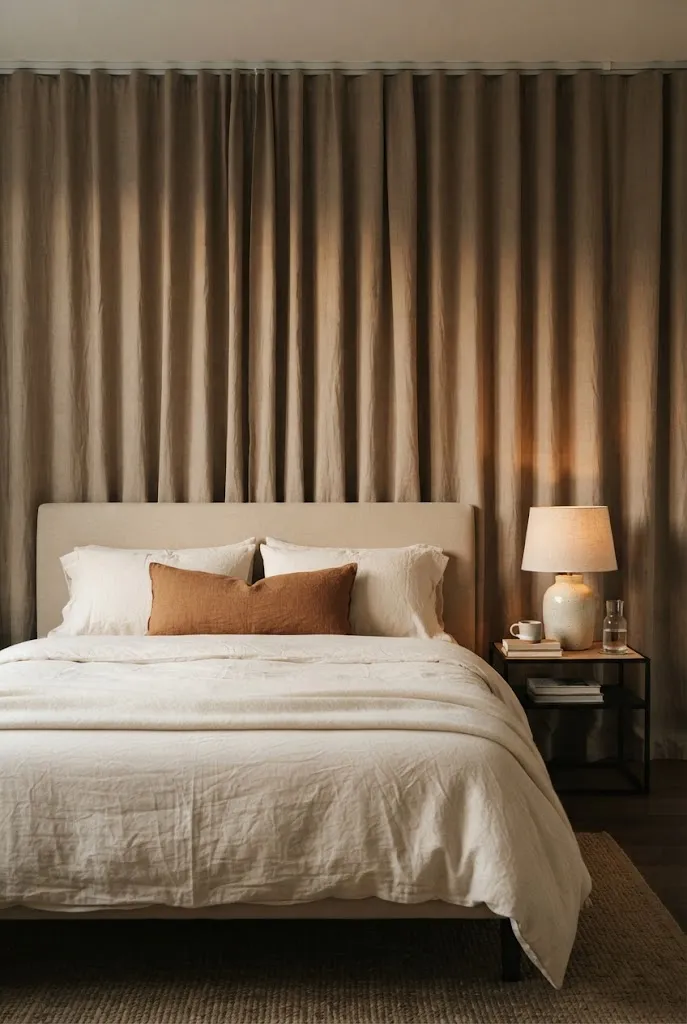
A floor-to-ceiling curtain behind the headboard is an alternative to a headboard or paneling. It adds softness, absorbs a bit of sound, and can hide a window or awkward wall. It also works in rentals, since a ceiling-mounted track or tension rod leaves little damage.
Use heavyweight cotton, linen, or velvet that falls in deep folds. Choose a shade a step darker than the walls for subtle depth, such as warm taupe on cream. Make sure the fabric is wide enough to look full, and keep the bed centered to the curtain.
11. Make the Bed Like a Hotel: Layers That Work

A hotel-style bed is mostly layering. Start with a good mattress protector, fitted and flat sheets, then a duvet or comforter, a folded coverlet or quilt at the foot, and a considered pillow arrangement.
| Top layer | Feel | Best fit |
|---|---|---|
| Down-alternative duvet | Light and puffy | Year-round comfort |
| Quilt or coverlet | Flat and tailored | Warmer climates or hot sleepers |
| Wool or heavy cotton blanket | Dense and cozy | Cold winters |
Aim for two sleeping pillows per person, two to three euro shams, and one lumbar. White or ivory is easiest to keep fresh, and a washable duvet cover makes maintenance simple.
Editor’s Note: Too many decorative pillows is the most common issue. If you have to remove more than three to get into bed, scale back.
12. Place an Upholstered Bench at the Foot of the Bed
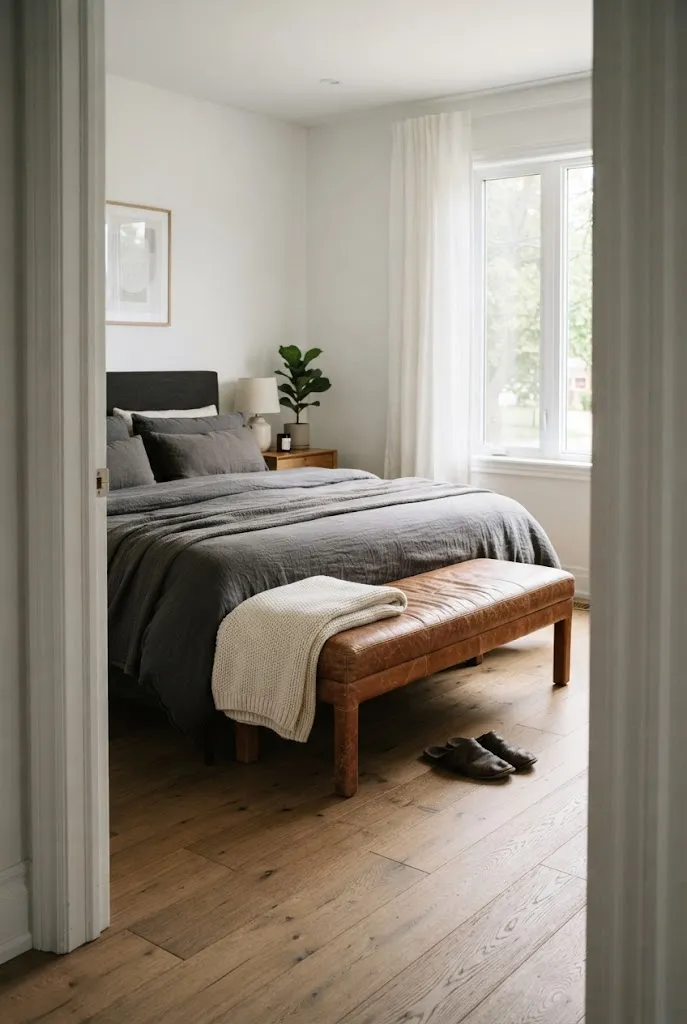
A bench gives you somewhere to sit while putting on shoes and somewhere to drop a folded blanket or weekend bag. It also visually finishes the end of the bed.
Keep it narrower than the bed by roughly 6 to 12 inches, and low enough that it doesn’t block the view of the bedding. Leather or performance fabric holds up well to daily use. Leave at least 24 to 30 inches of walkway around it. If space is tight, a slim storage ottoman can do the same job.
13. Warm the Room With Terracotta and Clay Tones
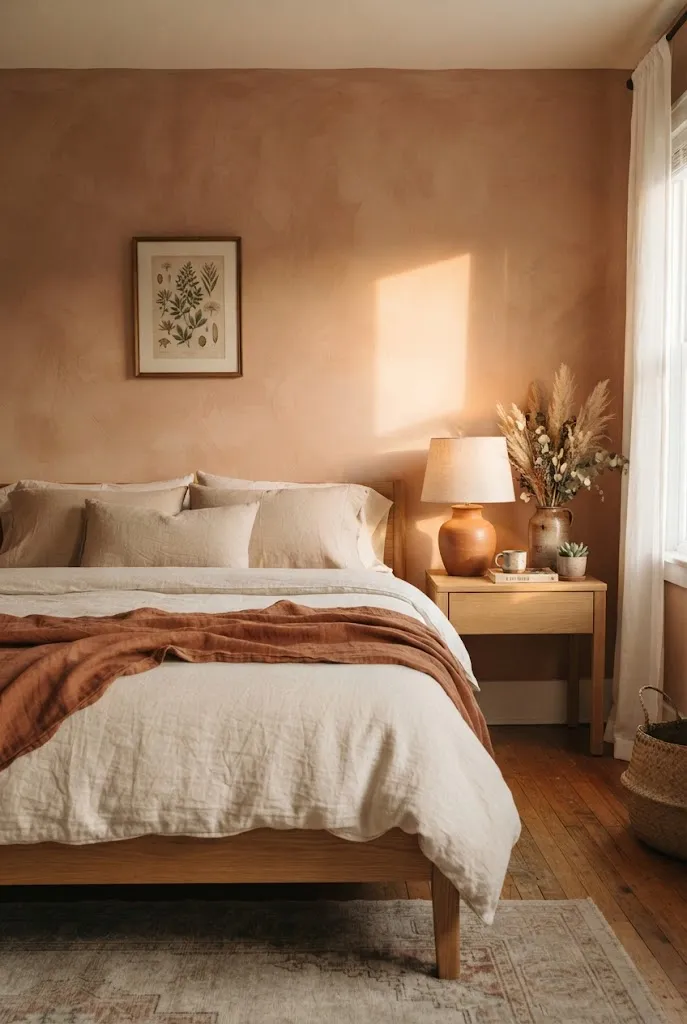
Earthy terracotta, clay pink, and sand give a bedroom a quiet warmth. Restraint matters here. One painted wall or one large textile in terracotta, with cream and warm white elsewhere, feels calm. A whole room in saturated rust can feel heavy.
Pair it with natural wood, off-white linen, black metal accents, and a few dried stems in a ceramic vase. If you’re nervous about paint, start with a terracotta throw, ceramic lamp base, or art print and see how it looks in your light.
14. Add an Arched Mirror and a Plant Corner
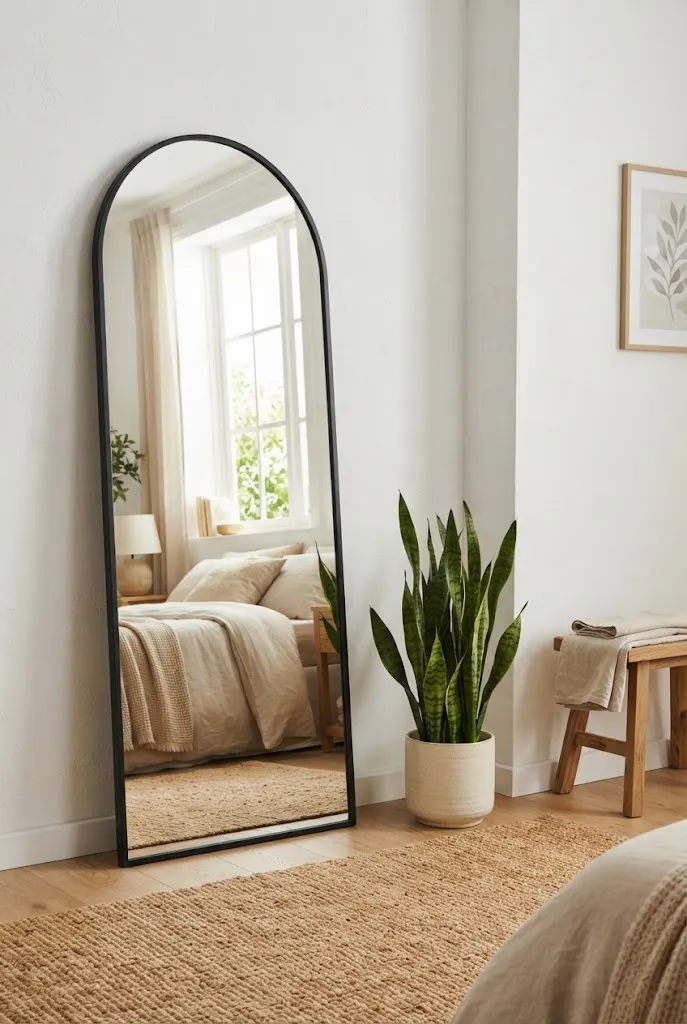
A leaning floor mirror bounces light and makes a bedroom feel larger. An arched shape softens the squarer lines of most furniture. Place it opposite or adjacent to a window so it reflects daylight rather than clutter.
Pair it with a plant that tolerates moderate indoor light, such as a snake plant or ZZ plant, in a ceramic pot. Both are forgiving and don’t need much attention. Check the mirror’s reflection from the bed. If it shows a messy closet or doorway, move it.
15. Go Deep With Charcoal-Green Walls
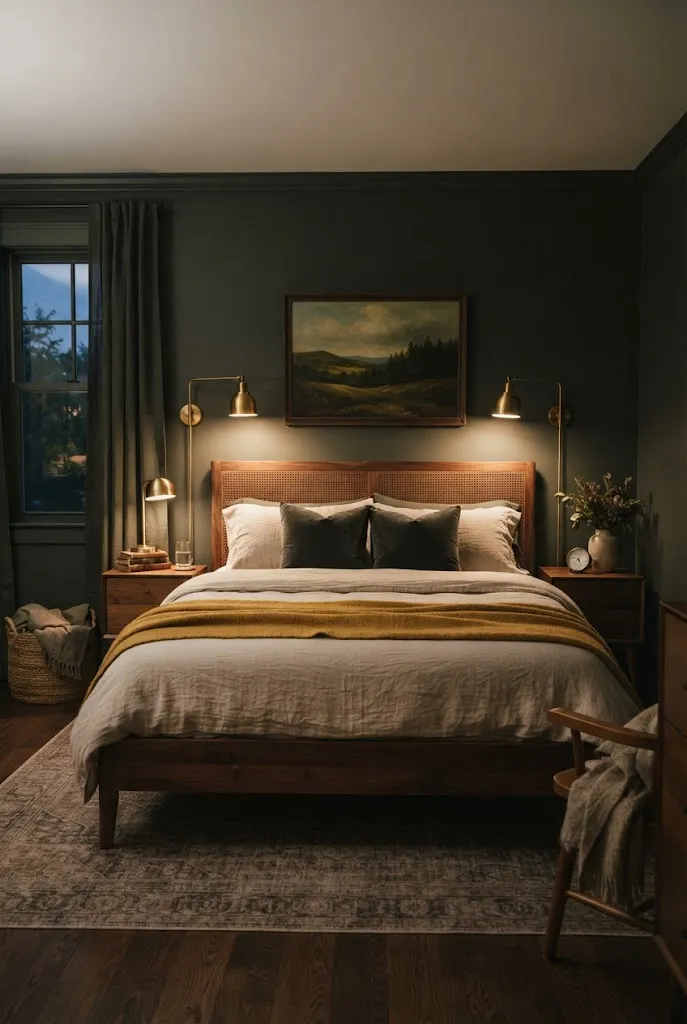
Dark walls can be restful when the whole room commits to them. A deep charcoal-green or forest shade wrapped around the walls, and sometimes the trim and ceiling, makes the room feel enclosed and quiet.
This works best with good layered lighting, since dark paint absorbs light. Warm bulbs, brass fixtures, and cream or oatmeal bedding keep the room from feeling gloomy. Matte or eggshell finishes hide wall imperfections better than glossy.
Common Mistake: Painting only one dark wall in a room with little natural light.
Better Approach: Paint all walls the same dark shade so the room reads as intentional, then add warm lighting at several heights.
16. Finish the Walls in Limewash
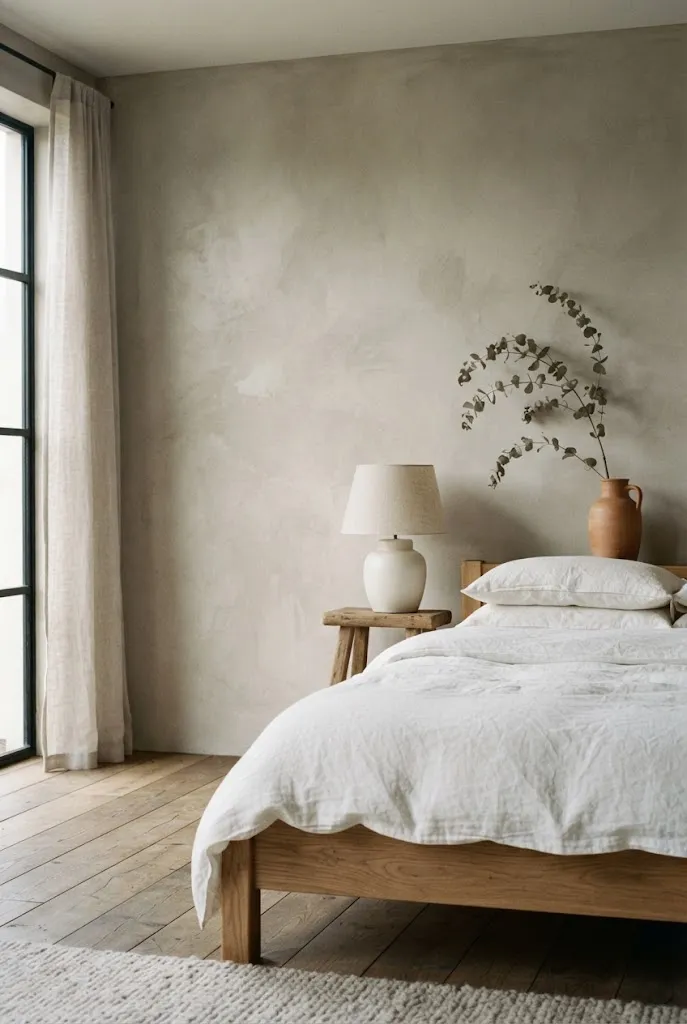
Limewash and mineral-based plaster paints create soft, cloudy variation that flat paint can’t. Walls look a bit like aged plaster, which adds depth in a bedroom without pattern or color.
Application takes some practice, since it’s brushed in crisscross strokes. Test on a sheet of drywall or a corner first. Warm whites, soft greiges, and pale clay work well. Because the finish varies, it hides small flaws and looks better with time.
| Finish | Look | Best fit |
|---|---|---|
| Limewash | Cloudy, matte, organic | Calm, textured rooms |
| Flat paint | Even and clean | Modern, minimal rooms |
| Venetian plaster | Smooth with subtle sheen | Higher-end renovations |
17. Add a Small Sitting Area to a Larger Primary Suite
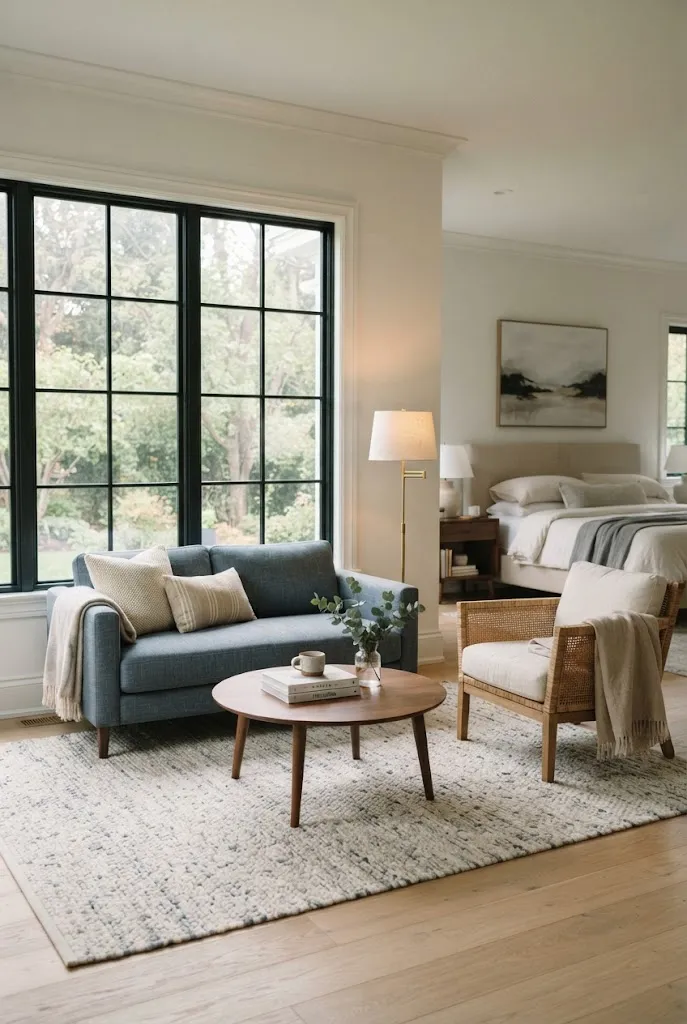
If your primary bedroom has space, a small seating group turns it into a suite. A loveseat or two chairs, a small round table, and a lamp are enough. It gives you a place for coffee, a phone call, or a quiet evening while the other person sleeps.
Keep a clear path of about 3 feet between the seating area and the bed. A round table is friendlier in tight corners. Choose a rug that’s large enough for the front legs of the chairs to sit on it, which ties the zone together.
18. Hide the Clutter Behind a Built-In Wardrobe Wall
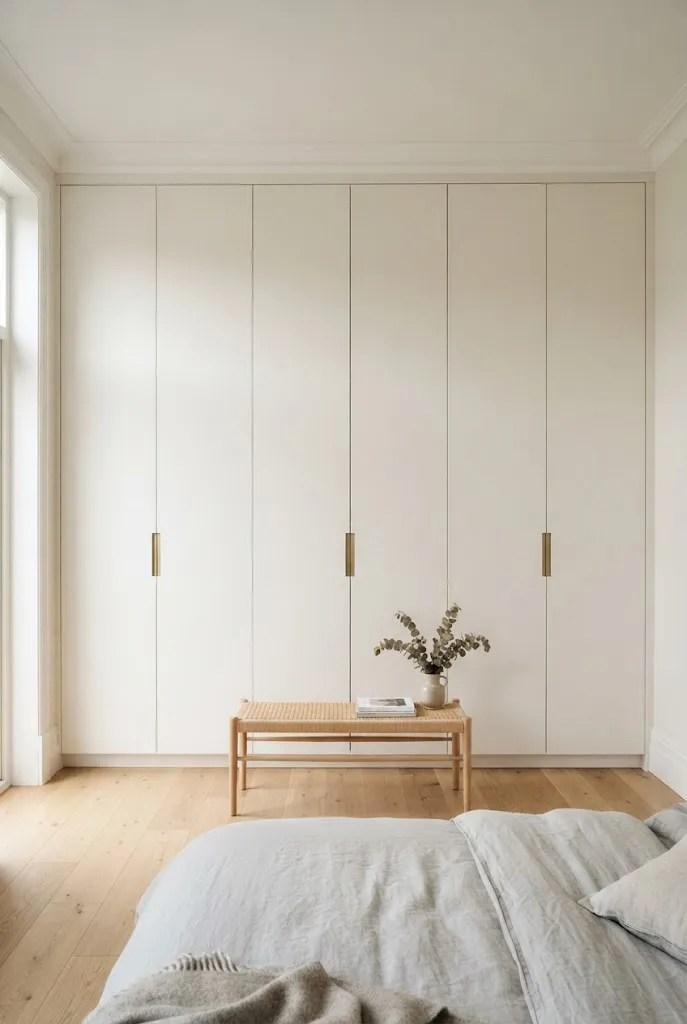
Visual noise makes a bedroom harder to relax in. A wall of floor-to-ceiling wardrobes with simple flat or shaker-style doors hides clothing, shoes, and bags, and leaves the room clean.
Painting the doors the same color as the walls makes them blend in. Interior fittings matter as much as the doors: adjustable shelves, double-hang rods, and drawers keep things organized so it stays tidy. For a lower budget, modular wardrobe systems with trim added around them can look built-in.
19. Keep It Low and Quiet With a Japandi Platform Bed
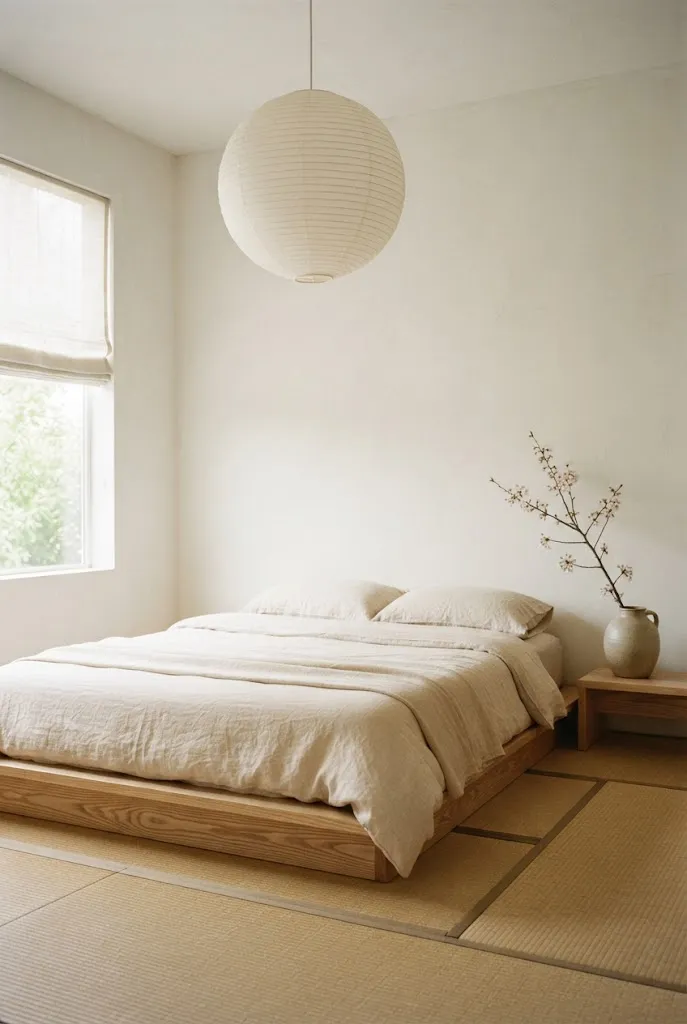
Japandi blends Japanese restraint with Scandinavian warmth. In the bedroom, that means a low platform bed, pale or mid-tone wood, undyed linen, and very little on the surfaces.
- Choose a bed frame with a low profile and clean lines.
- Use paper or fabric lanterns for light.
- Keep to two or three colors: warm white, wood, and black or charcoal.
- Leave a bare wall or hang one simple piece of art.
If you can’t resist styling, edit objects down to what you use daily.
20. Keep It Light and Breezy With Coastal Whites and Soft Blues
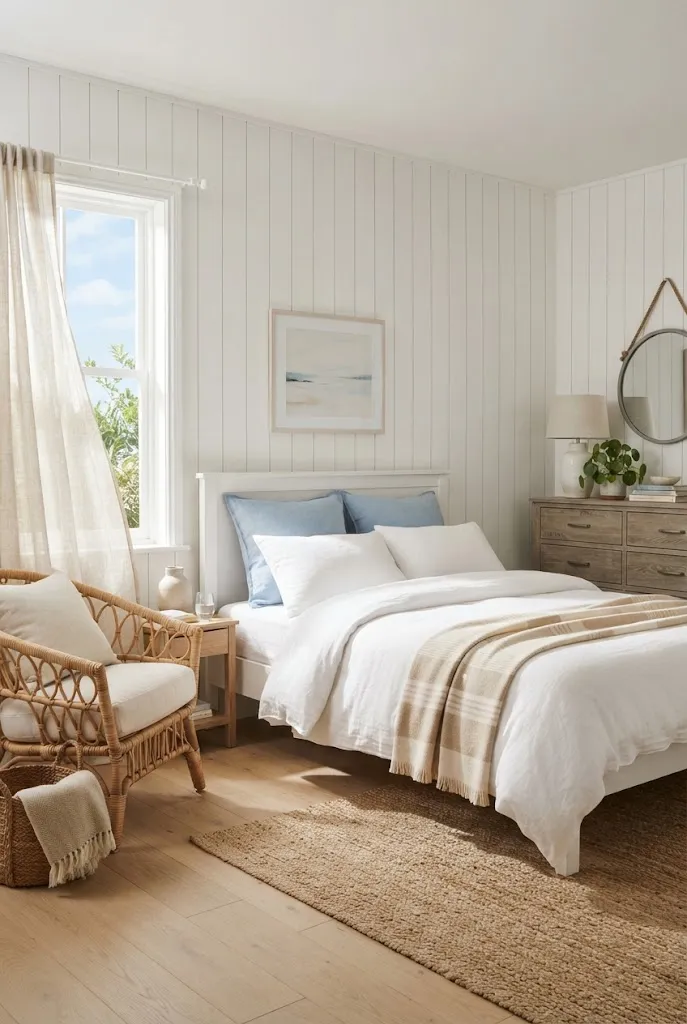
You don’t need to live near the ocean to want a coastal bedroom. Whitewashed wood, cotton and linen bedding, pale blue accents, and woven textures give a relaxed, airy feel.
Skip nautical clichés. Instead of anchors and ropes, rely on color and material: sandy neutrals, seafoam or sky-blue pillows, a rattan chair, and driftwood-toned furniture. Shiplap or beadboard walls add casual coastal character. Light, washable fabrics keep it practical.
21. Set Up a Compact Vanity Station
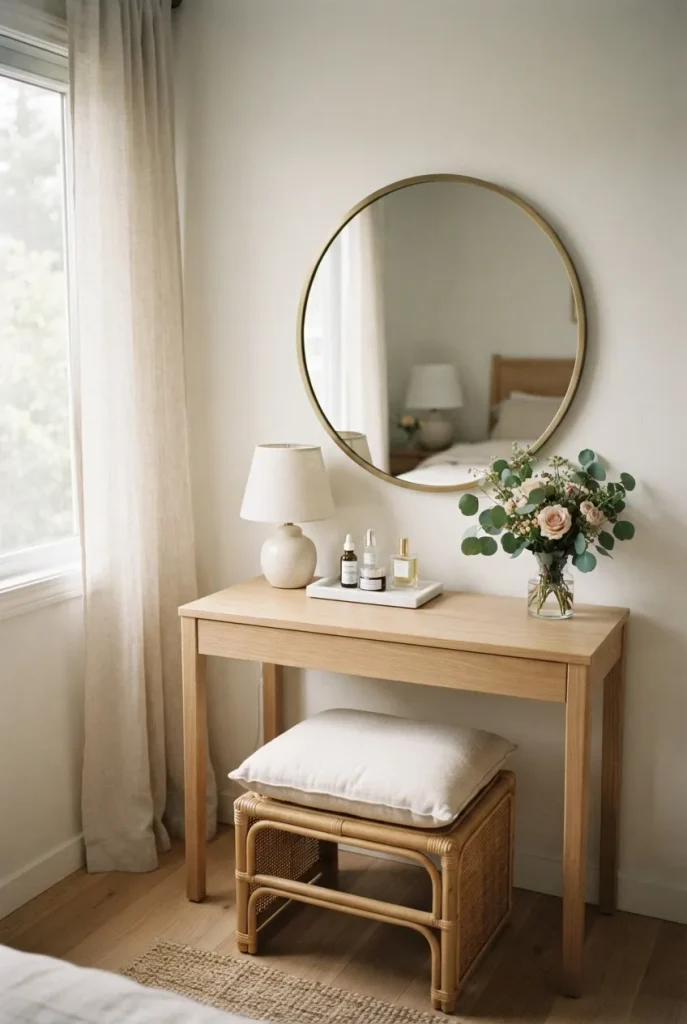
A small vanity gives a primary bedroom a dedicated place for getting ready, which keeps the bathroom counter and nightstand clear. A narrow desk or console table, a mirror, and a comfortable stool or chair are enough.
Place it near a window if possible, since daylight is the most flattering and accurate light for skincare and makeup. If not, add a pair of small lamps on either side of the mirror. Use trays, small jars, and a drawer organizer so everyday items have a home.
Where to Start
You don’t have to do all 21. If the room feels loud, begin with what you can remove or soften: curtains, lighting, and bedding. If it feels flat, add one texture layer or one wall treatment. Bigger projects like built-ins, limewash, or board-and-batten pay off most once the basics are calm.