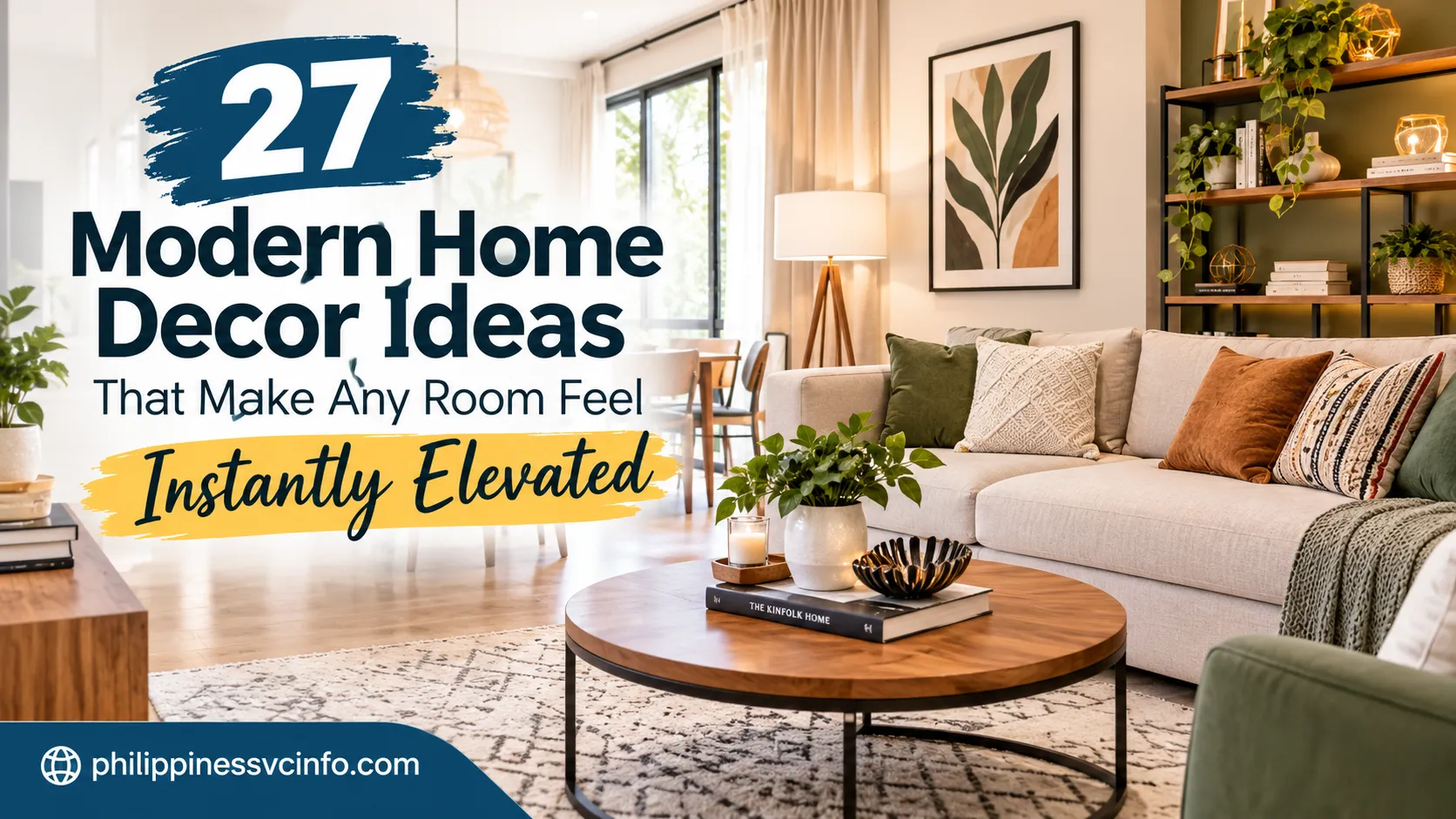
27 Modern Home Decor Ideas That Make Any Room Feel Instantly Elevated
Introduction
Modern decor isn’t about stripping a room until nothing is left. It’s about editing: fewer pieces, better proportions, and materials that feel good to look at and live with. A room usually looks more finished when the scale is right, the lighting is layered, and a few well-chosen textures do the work that clutter used to do.
The 27 modern home decor ideas below run from simple styling changes that suit rentals to custom details for homeowners ready to invest. Some take an afternoon and a roller. Others are worth saving for. Each one comes with practical notes on materials, placement, and the small mistakes that weaken an otherwise good look, so you can adapt the idea to your own space instead of copying a photo.
1. Pair Warm White Walls With One Deep Accent Wall
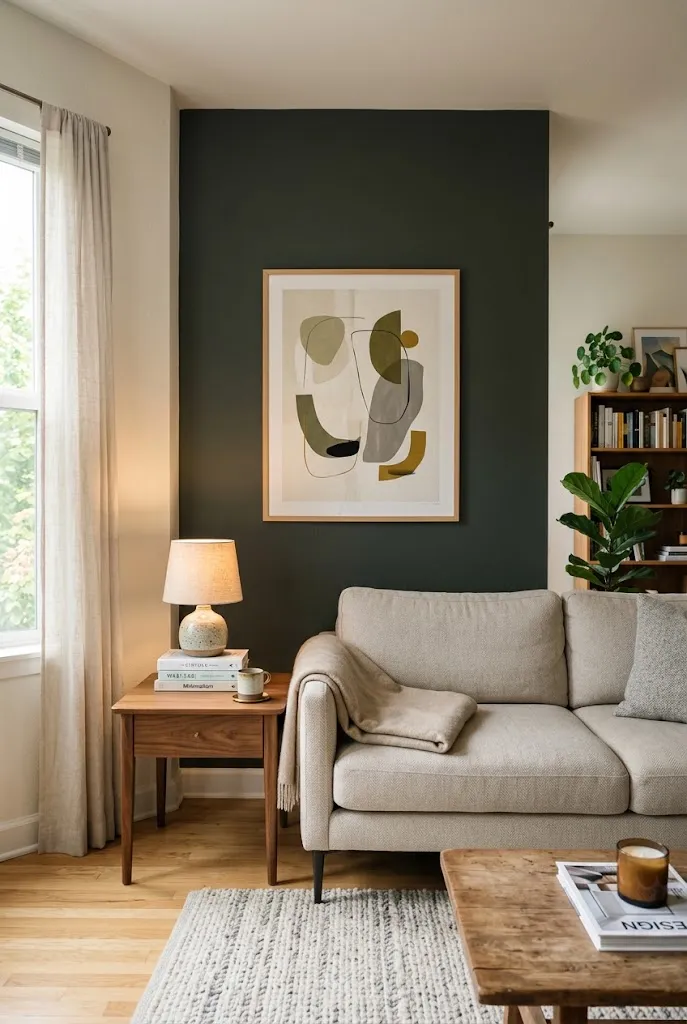
A warm white keeps a room bright, and a single deeper wall gives the eye somewhere to land. Think charcoal-green, inky navy, or a smoky taupe behind the sofa or bed rather than on all four walls. The contrast adds depth without making the room feel smaller.
Choose the wall that already draws attention, usually the one you face when you walk in or the one behind the largest piece of furniture. Sample paint on the wall itself and check it in morning and evening light, since north-facing rooms can turn cool and flat.
Quick Tip: Paint the ceiling and trim of the accent wall in the same warm white as the other walls so the dark color reads as a deliberate block, not a stain.
2. Soften the Room With a Curved Sofa
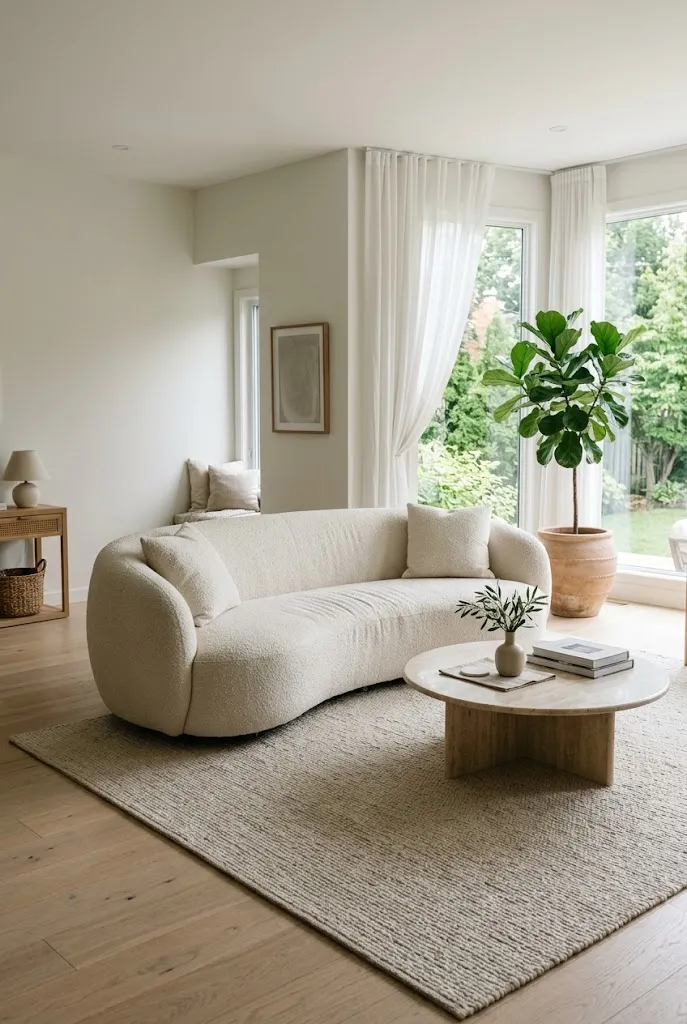
Modern interiors lean on straight lines: rectangular windows, flat-front cabinets, square coffee tables. A sofa with a rounded back or curved arms breaks that rhythm and makes a room feel less rigid. It also helps in tight spaces because there are no sharp corners to bump into.
- Look for firm, performance-type upholstery if you have kids or pets.
- Keep the surrounding pieces simple so the curve stays the focal point.
- Leave about 30 inches of walkway on at least one side.
- Float it away from the wall slightly if the room allows.
Curved sofas often cost more than standard ones, so this is a moderate-to-premium investment. A rounded armchair is a smaller way to borrow the same effect.
3. Hang an Oversized Round Mirror Over a Slim Console
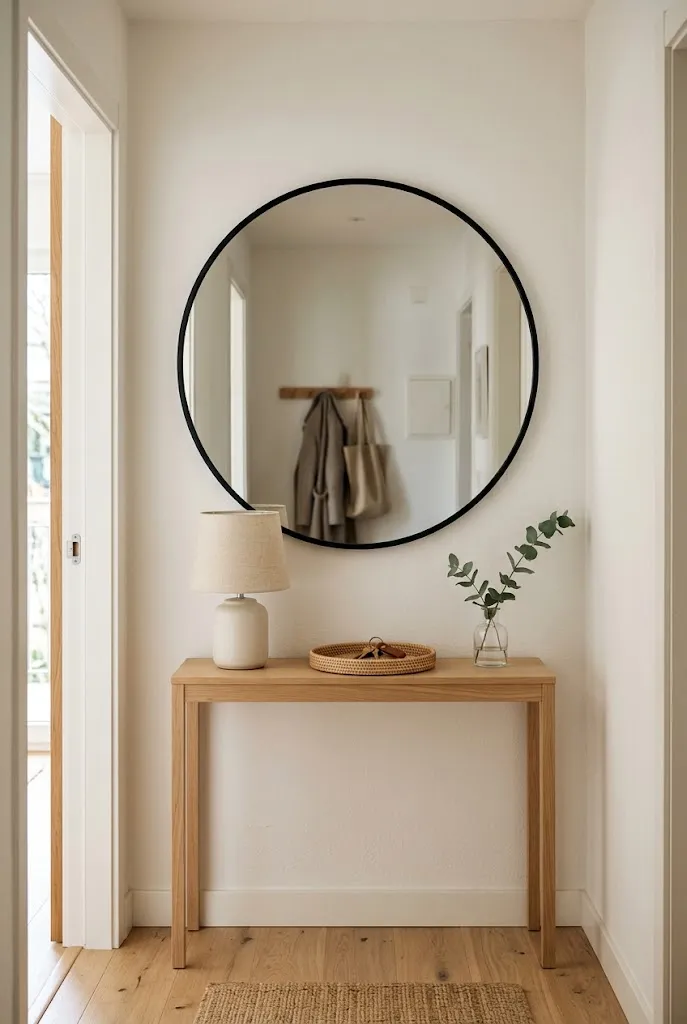
In a small entry, a large round mirror does two jobs: it bounces light from the nearest door or window, and its curve counters the straight edges of a narrow console. Choose a mirror at least two-thirds the width of the table beneath it so it doesn’t look lost.
Keep the console shallow, ideally 10 to 12 inches deep, so the walking path stays clear. A small tray for keys, one sculptural lamp, and a single stem in a vase are plenty.
Common Mistake: Hanging the mirror too high.
Better Approach: Center it so the middle sits around eye level, roughly 57 to 60 inches from the floor, then check how it reflects before drilling.
4. Style Picture Ledges Instead of a Gallery Wall
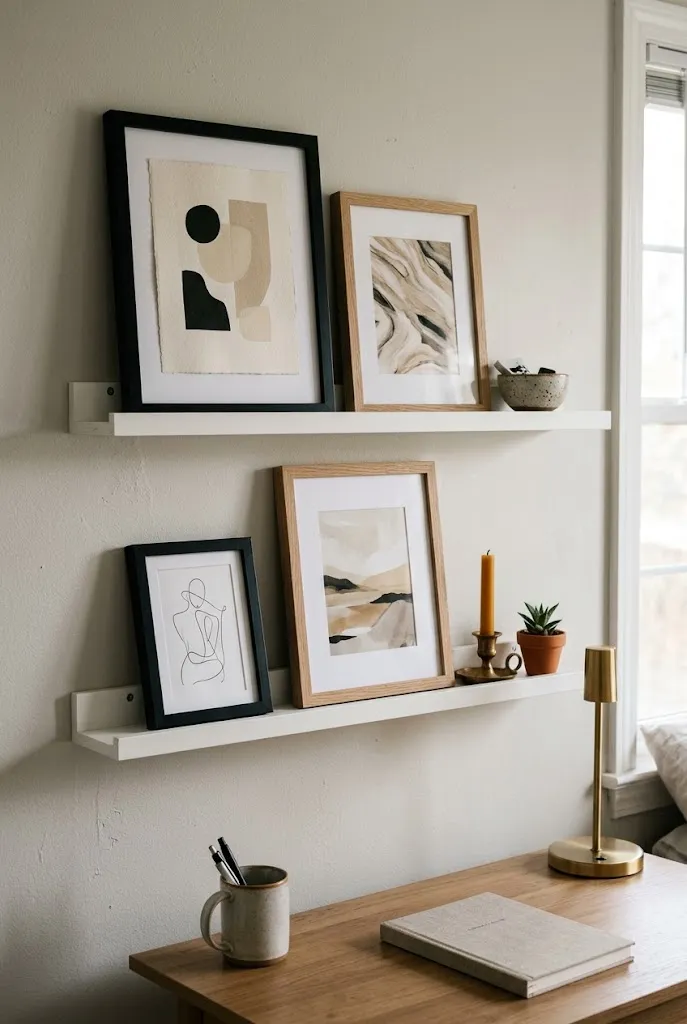
A gallery wall demands planning, measuring, and a lot of nail holes. A picture ledge, a shallow shelf with a lip, lets you lean art against the wall and swap pieces whenever you like. It suits renters and anyone who changes their mind often.
Mix frame sizes but stay within one or two frame finishes, like black and natural wood. Overlap a few pieces, leave some breathing space, and add one small object, such as a ceramic bowl or a candle, to break up the frames.
- Use 2 or 3 ledges in a row for a modern, orderly look.
- Pair heavy frames with at least two screws into studs or proper anchors.
- Print inexpensive black-and-white photos to start.
5. Add Fluted Wood Paneling Behind the Bed
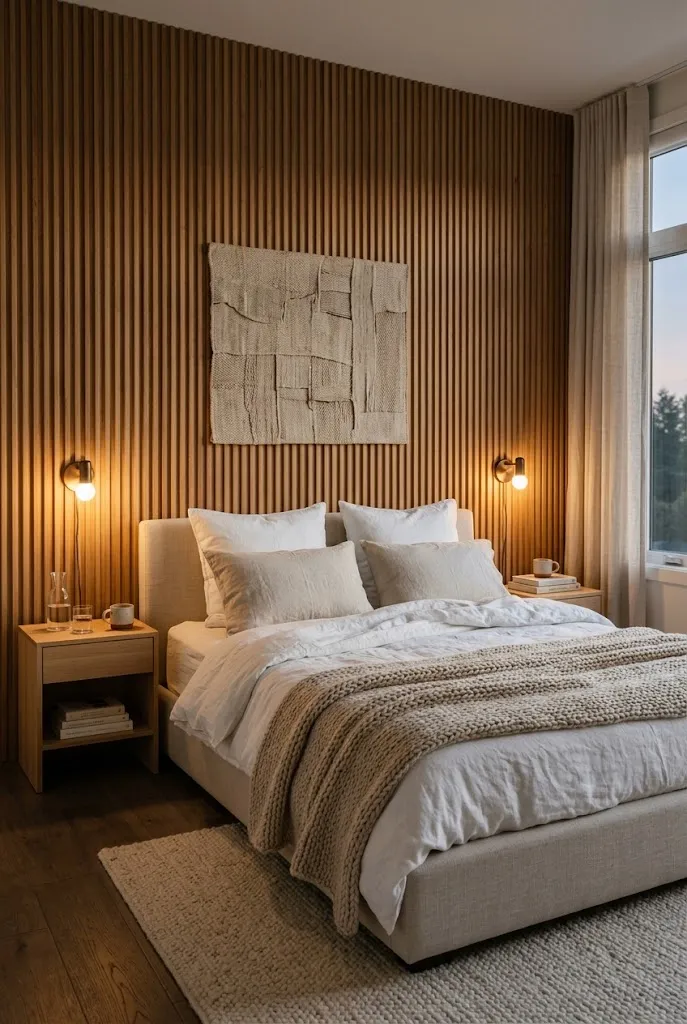
Vertical slats bring texture and shadow to a flat wall, and a bedroom headboard wall is a natural spot. Real wood slats are solid and long-lasting but need careful installation. Peel-and-stick or MDF versions are faster and lighter on the budget.
| Option | Effect / Advantage | Best Fit |
|---|---|---|
| Solid oak or walnut slats | Real grain, deeper shadow lines, can be refinished | Owners, long-term homes |
| Primed MDF slats, painted | Smooth, flexible color choice, moderate cost | DIYers, painted look |
| Peel-and-stick panels | Quick install, easier to remove | Renters, small areas |
Whichever you choose, run the slats floor to ceiling for the cleanest look, and mount sconces or a headboard that doesn’t compete with the pattern.
6. Place an Arc Floor Lamp Over a Reading Chair
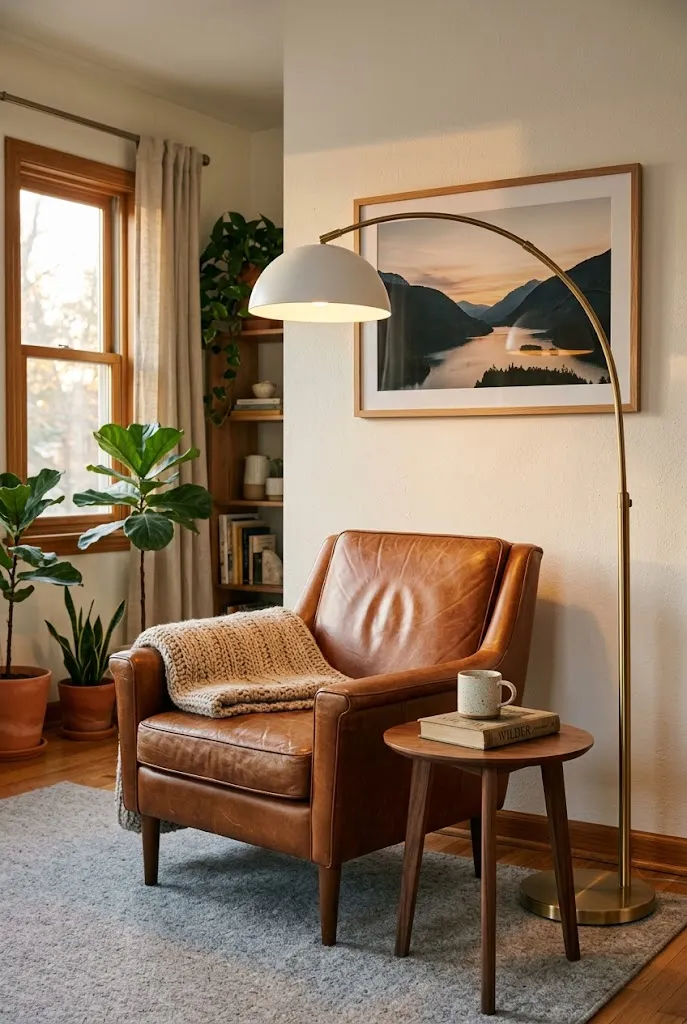
A tall arching lamp lights a seat without needing a nearby outlet or a side table, and its curve adds sculptural interest to a corner. It’s one of the quickest ways to make an under-used corner feel intentional.
In practice, the lamp works best when the shade hangs over the chair’s armrest, roughly head height when seated. Pair it with a warm bulb, around 2700K, for reading comfort.
Editor’s Note: Check the weight and base before buying. A marble base keeps a tall arc stable, but it’s heavy to move, so decide on placement before it goes in.
7. Try a Limewash or Plaster-Look Wall
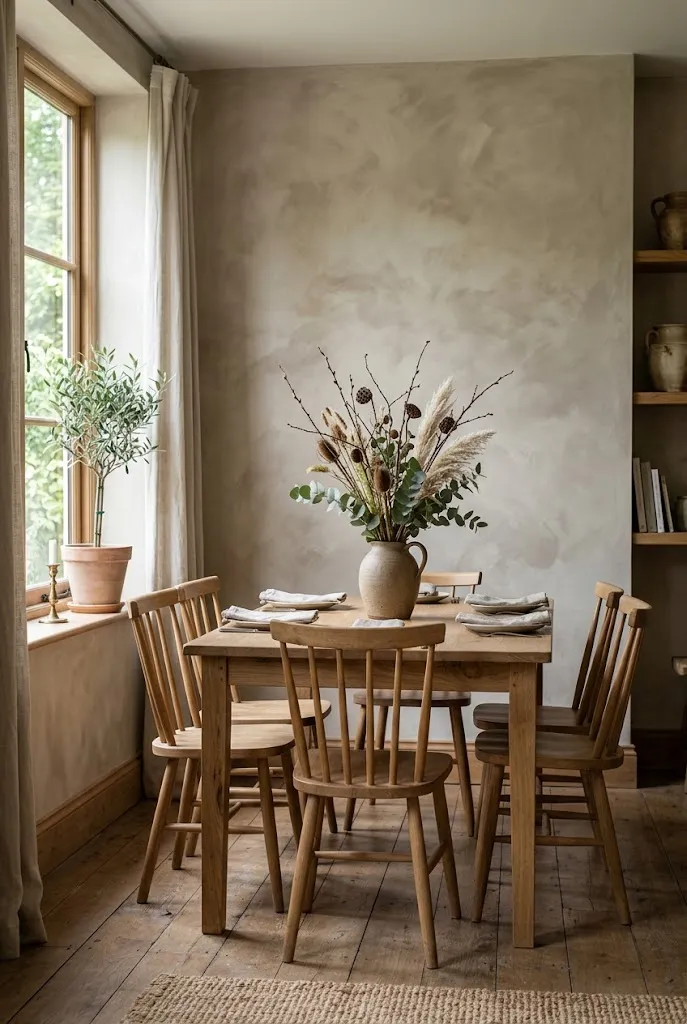
Limewash and plaster-style paints have a soft, cloudy depth that flat paint can’t match. The color shifts slightly with the light, which makes a wall feel layered and calm. It works well in bedrooms, dining rooms, and stairwells.
Premium versions use true lime or Venetian plaster applied by a skilled finisher. Accessible alternatives include limewash-effect paints you apply with a wide brush in crisscross strokes.
Do: Test a large sample board first, apply in thin coats, and keep strokes loose for a natural variation.
Don’t: Use it in a steamy bathroom without confirming the product is rated for moisture, and don’t expect a perfectly uniform finish; the variation is the point.
8. Layer a Bed in Tone-on-Tone Textiles
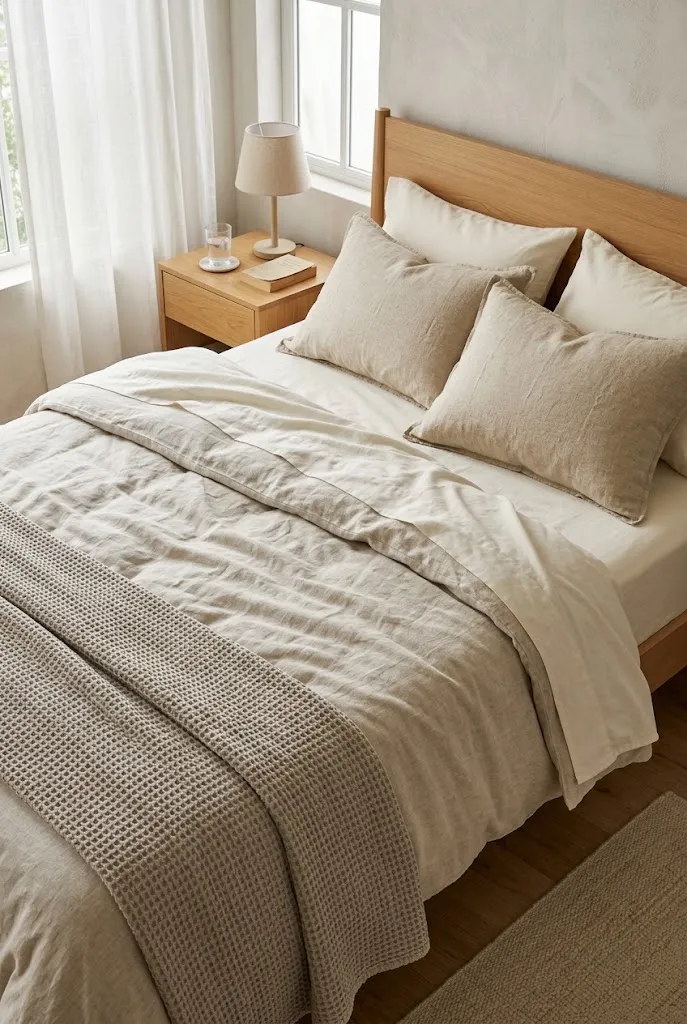
A bed that looks hotel-calm usually depends on texture, not color. Start with white or ivory sheets, add a washed linen duvet in oatmeal or stone, then lay a chunky knit or waffle throw across the foot.
- Limit the palette to two or three tones within the same warm family.
- Use two sleeping pillows and two Euro pillows, plus one lumbar for shape.
- Choose washed cotton or linen for a relaxed fold that doesn’t need constant smoothing.
- Skip decorative pillows with busy patterns.
This is one of the most accessible upgrades because you can build it gradually, one set of bedding at a time.
9. Style a Floating Oak Shelf in the Kitchen
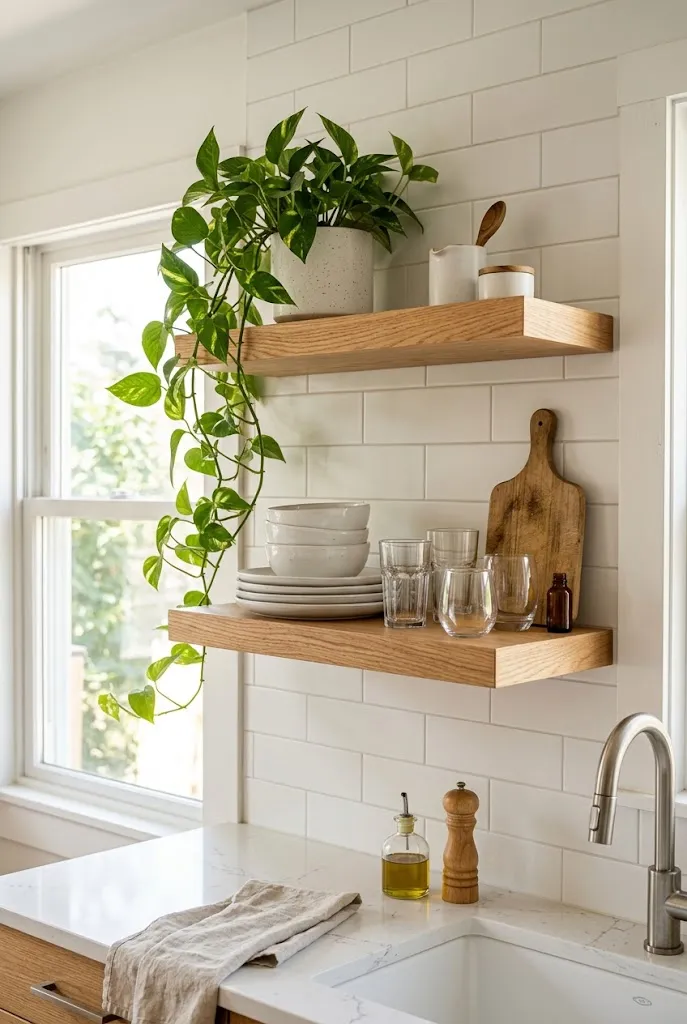
Open shelving can be overcrowded or beautifully edited, and the difference is restraint. One or two floating oak shelves beside the range or above the sink hold the things you use daily: a few plates, glasses, a cutting board, a plant.
Keep items to a limited palette and leave empty space between groups. In a cooking zone, avoid anything that will collect grease, and expect to wipe the shelf occasionally.
Common Mistake: Loading every shelf with mismatched mugs and containers.
Better Approach: Group by function, keep 30–40% of the surface empty, and put the rest behind doors.
10. Add Simple Picture-Frame Molding to a Plain Wall
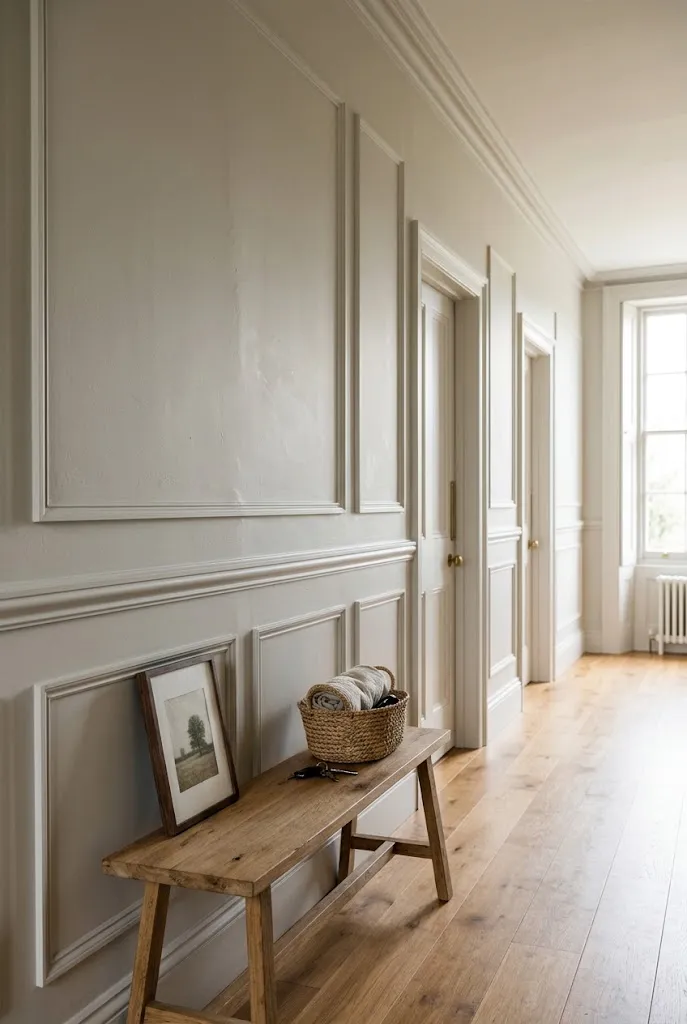
Applied molding gives a flat wall architectural detail for the cost of lumber, caulk, and paint. Rectangles of thin trim are painted the same color as the wall for a quiet, modern effect.
- Measure the wall and sketch the rectangles on paper first; keep spacing consistent.
- Mark lines with a level and painter’s tape.
- Cut and attach the trim with construction adhesive and finish nails.
- Fill gaps, caulk the edges, and paint the whole wall in one color.
Matte or eggshell paint keeps the shadows soft. It’s a moderate DIY project, and the finish depends on clean cuts and patient caulking.
11. Let One Large Abstract Piece Do the Work
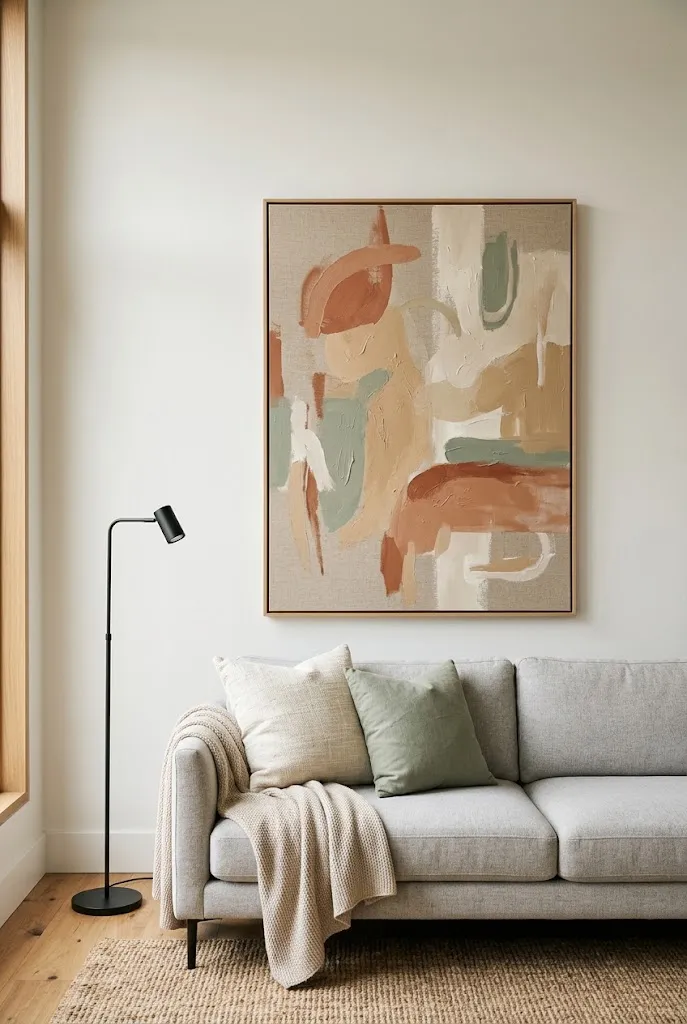
Instead of a crowd of small frames, one large abstract canvas over the sofa or bed fills the wall and gives the room a single clear focal point. A piece roughly two-thirds the width of the furniture beneath it usually looks balanced.
Choose colors already present in the room, like clay, sand, or soft green, so the art feels connected. An oversized print in a simple frame is a budget-friendly route; an original painting from a local artist is a more personal upgrade.
Quick Tip: Cut a paper template to the artwork’s size and tape it to the wall before hanging to check height and proportion.
12. Anchor the Room With a Stone-Look Coffee Table
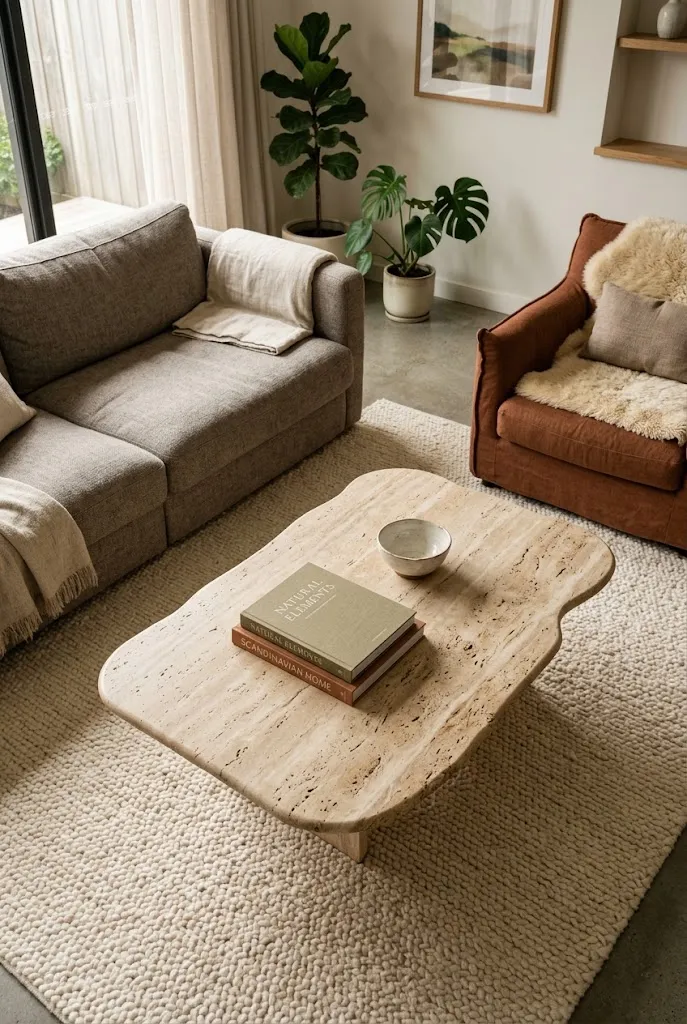
A heavy, tactile coffee table grounds a living room the way a rug does. Travertine, limestone, and honed marble have a calm, earthy look, and they pair well with soft upholstery.
| Option | Effect / Advantage | Best Fit |
|---|---|---|
| Natural travertine or limestone | Real weight and variation; needs sealing | Premium investment |
| Stone-look composite or veneer | Similar look, lighter and often cheaper | Everyday family use |
| Wood with a stone-toned finish | Warmer feel, easier to move | Accessible upgrade |
Don’t claim a veneer will behave like solid stone; it won’t have the same weight or durability. But the visual principle, a substantial rounded form in a muted mineral tone, carries across all three.
13. Swap Hardware for Matte Black Details
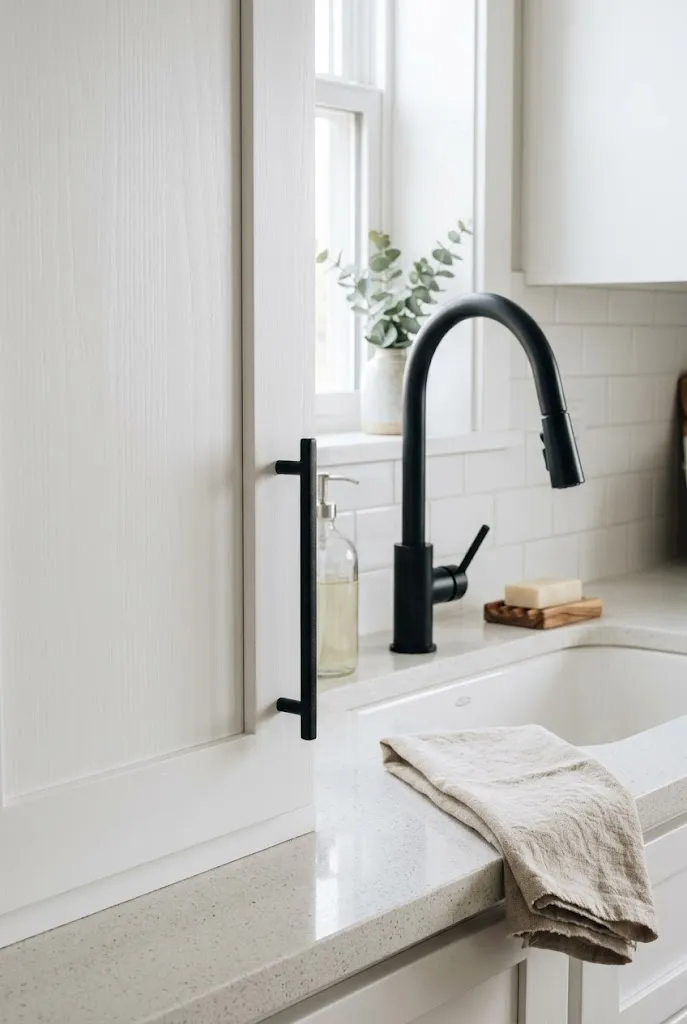
New pulls, hooks, faucets, and curtain rods are small purchases that change how a room reads. Matte black is crisp against white cabinets, wood, or light tile, and it ties scattered elements together.
- Start with cabinet pulls; they’re easy to replace in an afternoon.
- Match the finish across a room so it looks planned.
- Check the center-to-center hole spacing before ordering pulls.
- Mix in warm wood or natural fabric so the black doesn’t feel harsh.
Be cautious of overdoing it. Black fixtures everywhere can feel heavy in a small, dark room.
14. Hang One Well-Scaled Pendant Over the Dining Table
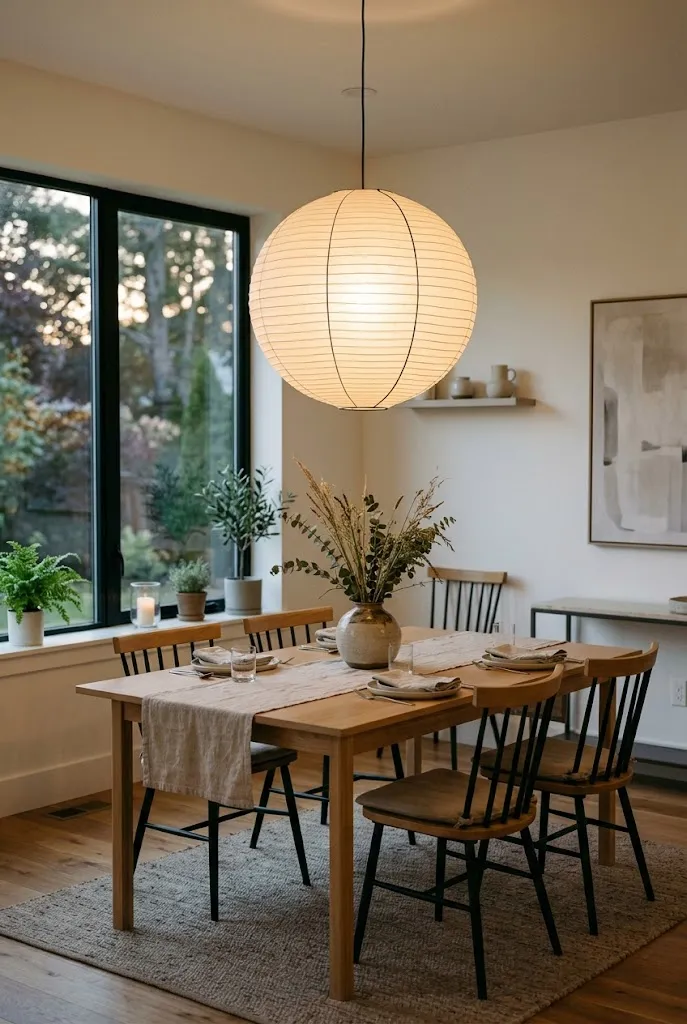
One statement fixture often looks more modern than several small ones. The key is scale: a pendant roughly one-half to two-thirds the width of the table keeps it from looking either tiny or crowded.
Best For: Dining tables and kitchen islands Investment: Accessible to premium, depending on materials Visual Effect: A clear focal point and a warmer pool of light
Hang the bottom of the fixture roughly 30 to 36 inches above the tabletop so it lights the table without blocking sightlines. If you rent, a plug-in pendant with a ceiling hook can avoid rewiring.
15. Build a Window Nook With Custom Cabinetry
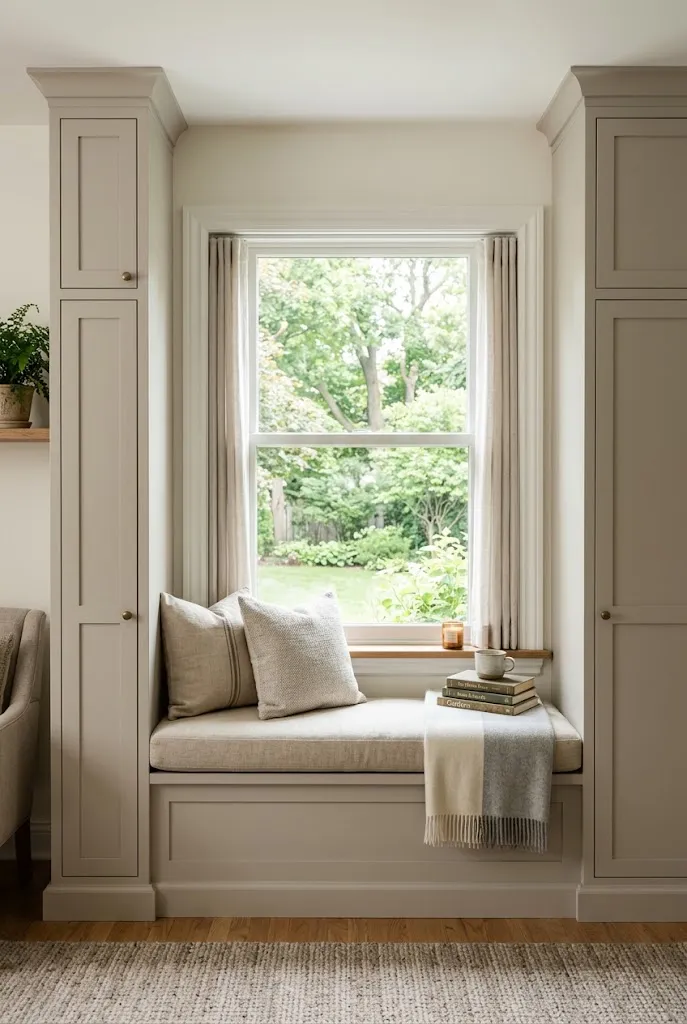
A bench tucked under a window, flanked by tall cabinets, turns an awkward wall into the best seat in the house. Custom millwork can hide storage, frame the view, and make the room look architecturally finished.
This is a premium project. Expect carpentry, careful measurement, and a painted or stained finish. A more attainable version uses modular cabinets set side by side with a cushioned bench top between them, then trimmed to look built-in.
Editor’s Note: Plan outlets, window opening, and radiator or vent placement before cabinets are built; they’re the details that cause problems later.
16. Give One Large Plant a Textured Planter
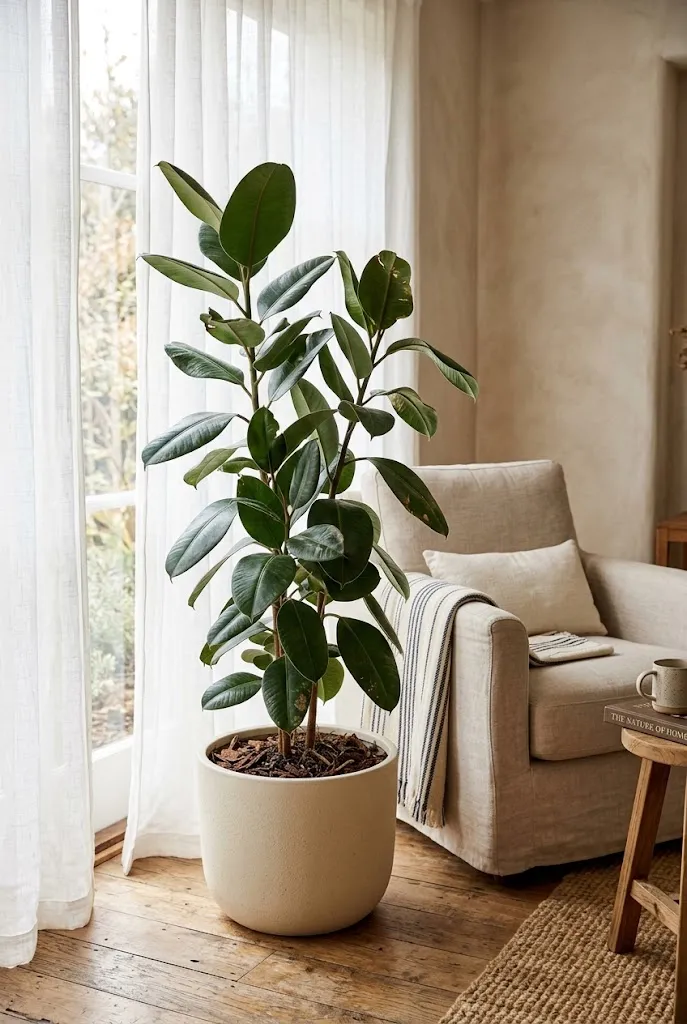
A single large plant brings scale and life to a corner. Pair it with a plain ceramic or concrete-look planter so the foliage remains the focus.
- Choose a plant that suits the light you actually have: bright indirect light for a fiddle-leaf fig or rubber plant; lower light for a snake plant or ZZ plant.
- Pick a planter with a drainage hole, or use a nursery pot inside it.
- Keep the planter about 2 inches wider than the nursery pot.
- Rotate it occasionally so growth stays even.
Don’t assume any large plant is easy; most want consistent light and careful watering.
17. Hang Sheer Linen Curtains High and Wide
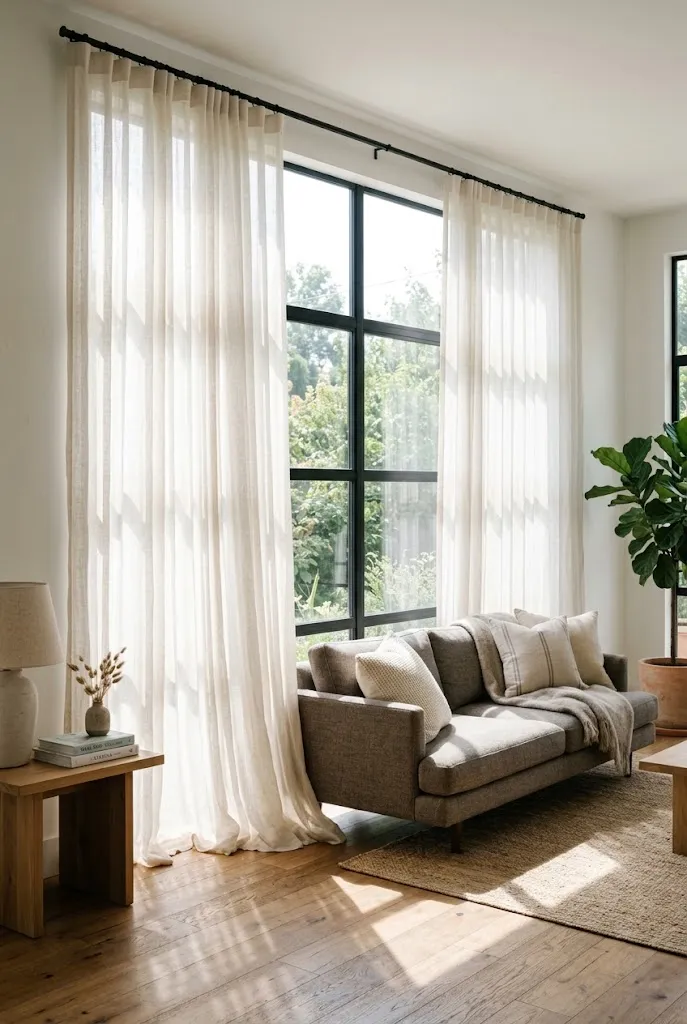
Curtains do more for a room than almost any other textile. Mounted close to the ceiling and extending past the window frame on both sides, they make windows look taller and let in more light when open.
Common Mistake: Hanging the rod right above the window frame.
Better Approach: Mount it 4 to 6 inches below the ceiling (or near the crown molding), extend 8 to 12 inches beyond each side, and let panels just graze the floor.
Sheer or light-filtering linen gives soft daytime privacy and keeps the room airy. Add blackout liners in bedrooms where you need darkness.
18. Choose a Rug That’s Large Enough
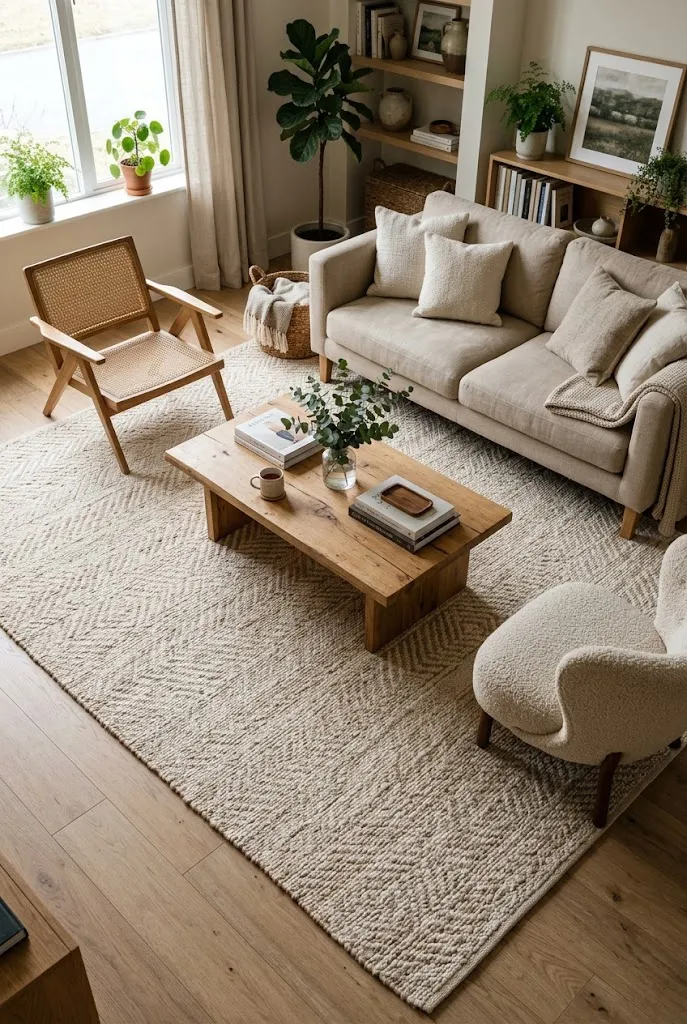
A rug that’s too small is one of the most common reasons a room looks unfinished. In a living room, aim for at least the front legs of every seat to rest on it; an 8 × 10 or 9 × 12 usually works for a standard sofa grouping.
In a bedroom, extend the rug 18 to 24 inches beyond the sides and foot of the bed. In a dining room, give chairs enough rug that they stay on it when pulled out, about 24 inches past the table’s edge.
Flat-weave wool or a wool-blend is easier to clean than a high pile. A quality jute-and-wool blend is a good middle path for texture and durability.
19. Keep a Bathroom Tonal and Textured
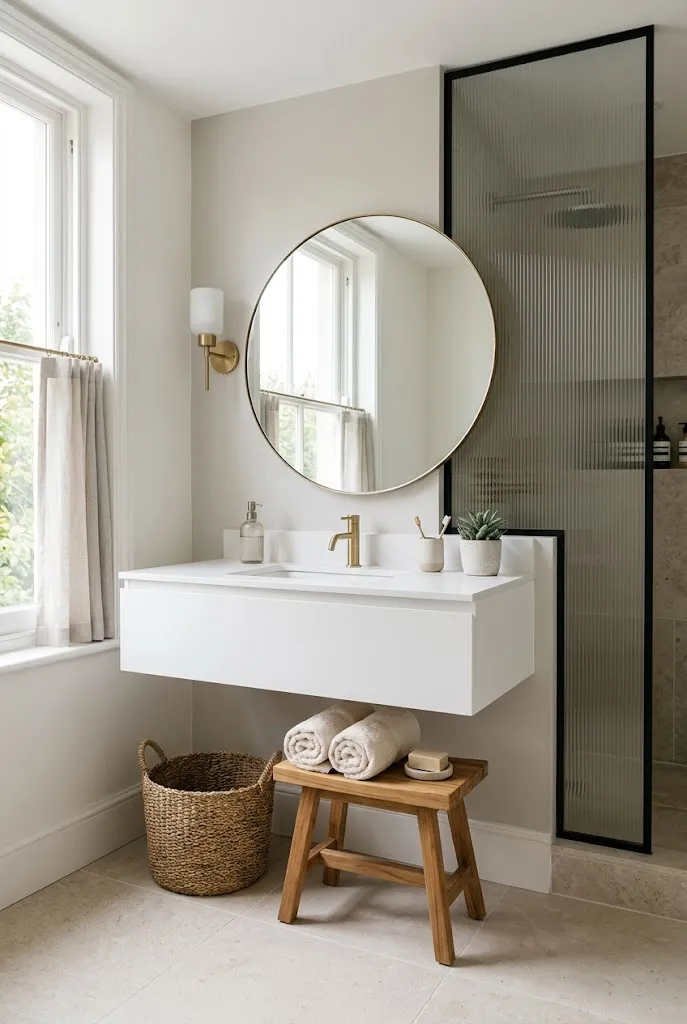
A bathroom feels calmer when the colors stay within one family and the interest comes from texture: ribbed glass, stone-look tile, woven baskets, thick cotton towels. White, sand, and soft gray work well.
- Fold towels in one or two colors.
- Add a small wood stool or tray for warmth.
- Choose a plain shower curtain or glass screen.
- Keep counters nearly clear with a lidded jar and one pump bottle.
It’s an accessible refresh because most of it is textiles and accessories. Wood in a bathroom needs a water-resistant finish, so choose teak or sealed pieces.
20. Curate a Console Vignette With Three Objects
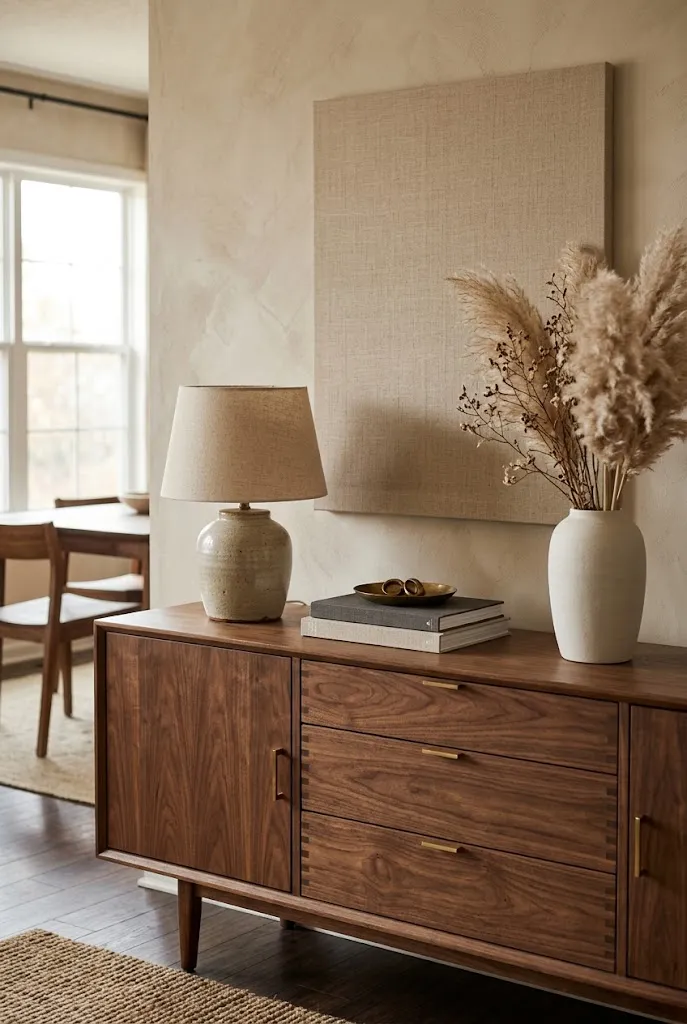
A console or sideboard looks best when styled like a small composition: one tall element, one low, one with texture. For example, a lamp, a stack of books with a small bowl, and a vase with branches.
Vary heights, leave open space, and repeat a color or material from elsewhere in the room. Odd numbers usually look more natural than pairs.
Quick Tip: Step back and squint. If your eye can’t find a path from one object to the next, remove one item.
21. Wrap the Fireplace in Plaster or Large-Format Tile
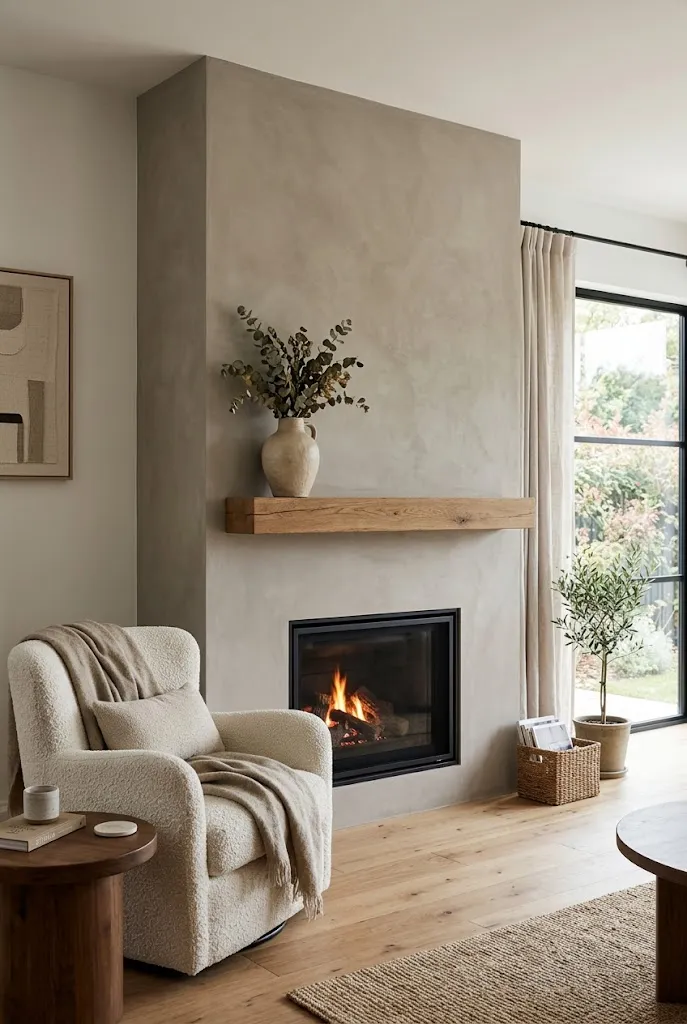
A plain brick or builder-grade surround can take over a room. Smooth plaster, microcement, or large-format porcelain tile in a muted tone gives it a seamless, sculptural look.
Because fireplaces involve heat and building codes, this is a job for qualified installers. Materials near an open firebox must be rated for heat and clearances, so verify with your installer and local requirements before choosing a finish.
An attainable version is painting existing brick in a warm white or soft charcoal with heat-appropriate paint, which still simplifies the visual texture.
22. Fit a Round Pedestal Table Into a Small Dining Nook
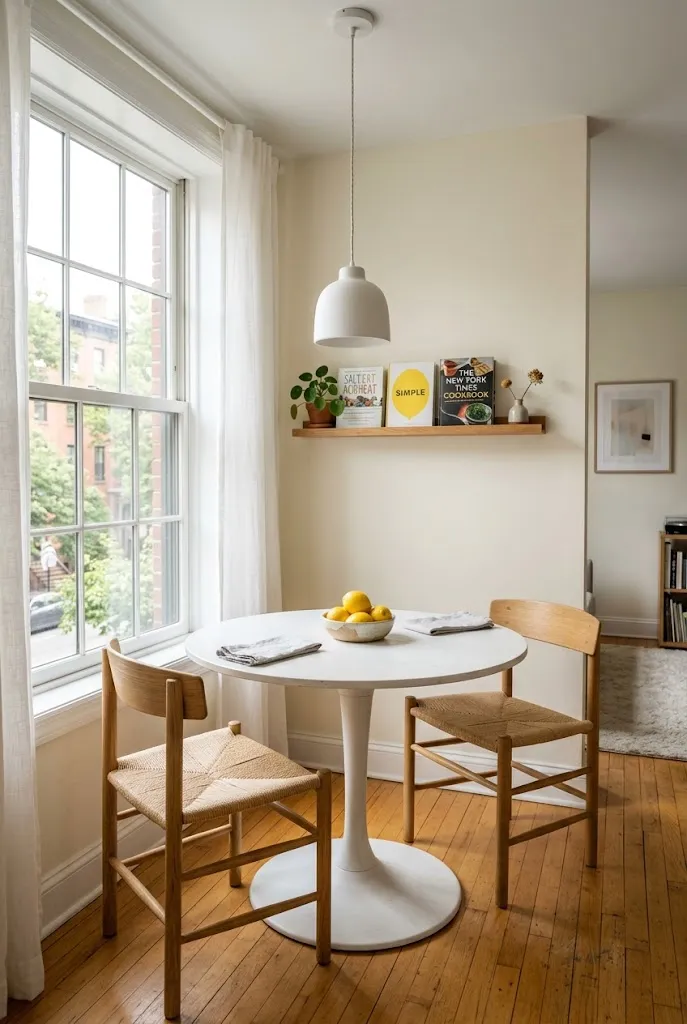
Round tables move traffic more easily than rectangular ones, and a pedestal base leaves legs out of the way. In an apartment, a 36 to 42 inch round table can seat two to four.
- Pair with armless chairs that slide fully under.
- Place it near a window to borrow daylight.
- Add a wall-mounted shelf or banquette to save floor space.
- Use a simple pendant or a plug-in wall light above.
It’s a smart answer for compact dining areas where you want flexibility.
23. Layer Lighting With Lamps and Plug-In Sconces
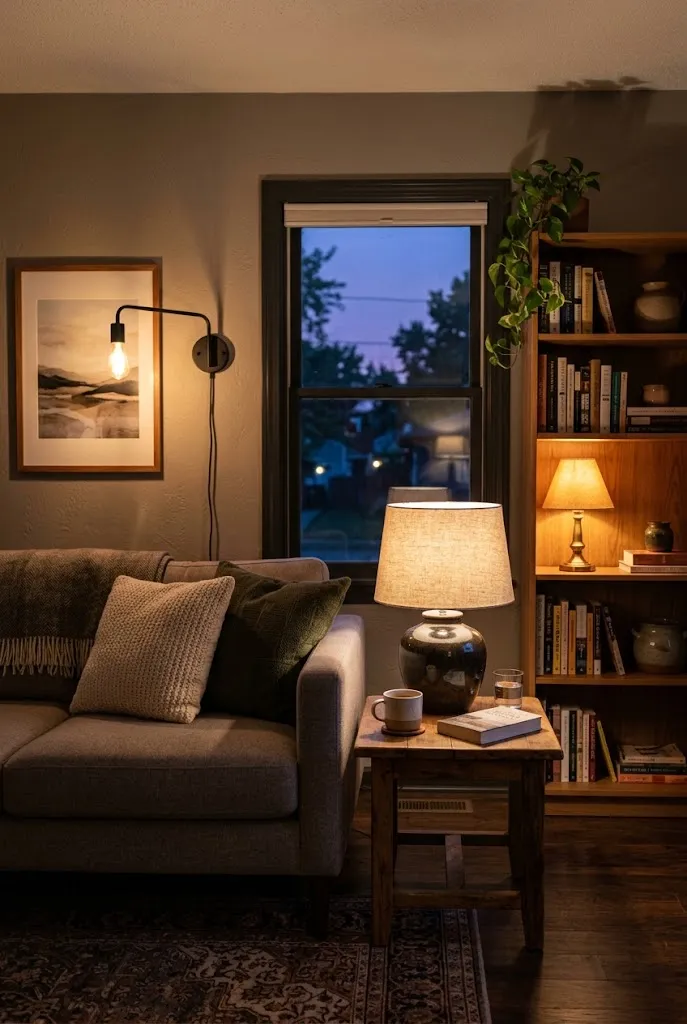
Ceiling lights alone flatten a room. Modern spaces typically use three levels: ambient (overhead or large lamps), task (reading or counter lights), and accent (small lamps, sconces).
Plug-in sconces with a cord cover are a renter-friendly way to add wall light without electrical work. Table lamps at different heights add pools of warmth. Put lamps on dimmers or smart plugs where possible.
Tips & Tricks:
- Use warm bulbs (2700K) in living and sleeping spaces.
- Aim for three light sources in each room.
- Choose shades that diffuse light instead of exposing the bulb.
24. Turn a Balcony Into an Outdoor Room
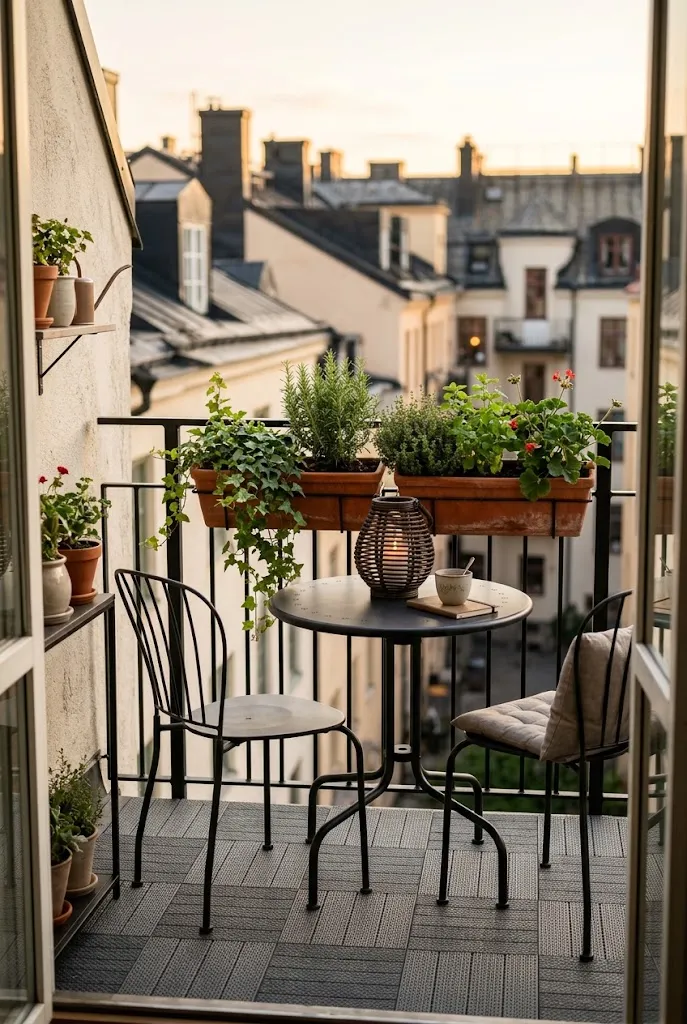
A small balcony or patio feels bigger when it’s arranged like a room instead of a storage spot. Define a floor with outdoor rug tiles, add a compact bistro table or a two-seat bench, and layer in a few weather-resistant plants.
Choose materials that handle sun and rain: powder-coated metal, teak, and outdoor-rated fabric. Check your building’s rules on railings, hanging items, and weight limits.
Common Mistake: Overfilling with furniture.
Better Approach: Choose one seating zone and one plant cluster, and leave a clear path to the door.
25. Add a Slim Bench and Hooks to the Entry
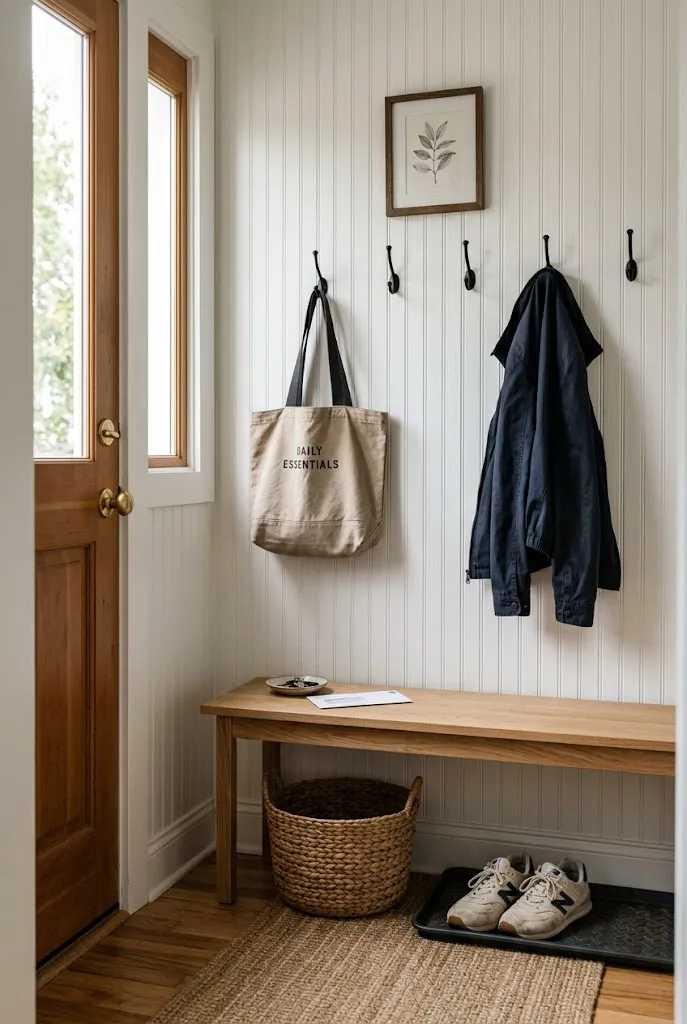
An entry without storage becomes a landing zone for shoes and bags. A slim bench with wall hooks above, plus a basket underneath, creates a small drop zone that still looks tidy.
- Mount hooks at about 60 inches for adults and lower for kids.
- Use a shoe tray to protect floors.
- Choose a bench 14 to 16 inches deep for narrow spaces.
- Add one mirror or art piece so it reads as decor, not just storage.
In a rental, adhesive-free or no-drill options exist, but check weight limits.
26. Create a Reading Corner With Chair, Table, and Light
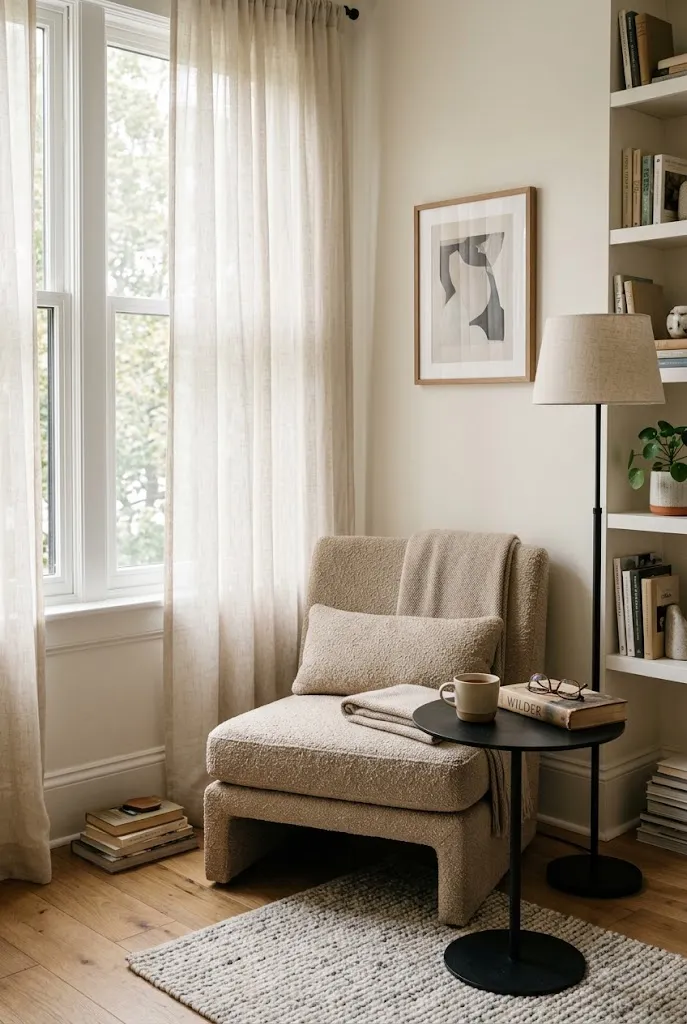
An unused corner becomes a destination with three elements: a comfortable chair, a small surface for a drink or book, and a dedicated light.
A swivel or lounge chair in a textured fabric suits modern rooms. Keep the side table at about the height of the chair arm. Add a small rug or a throw to define the zone.
Best For: Bedrooms, living rooms, and wide landings Investment: Accessible to moderate Visual Effect: A quiet, intentional pause in the room
27. Go Dark and Dramatic in the Powder Room
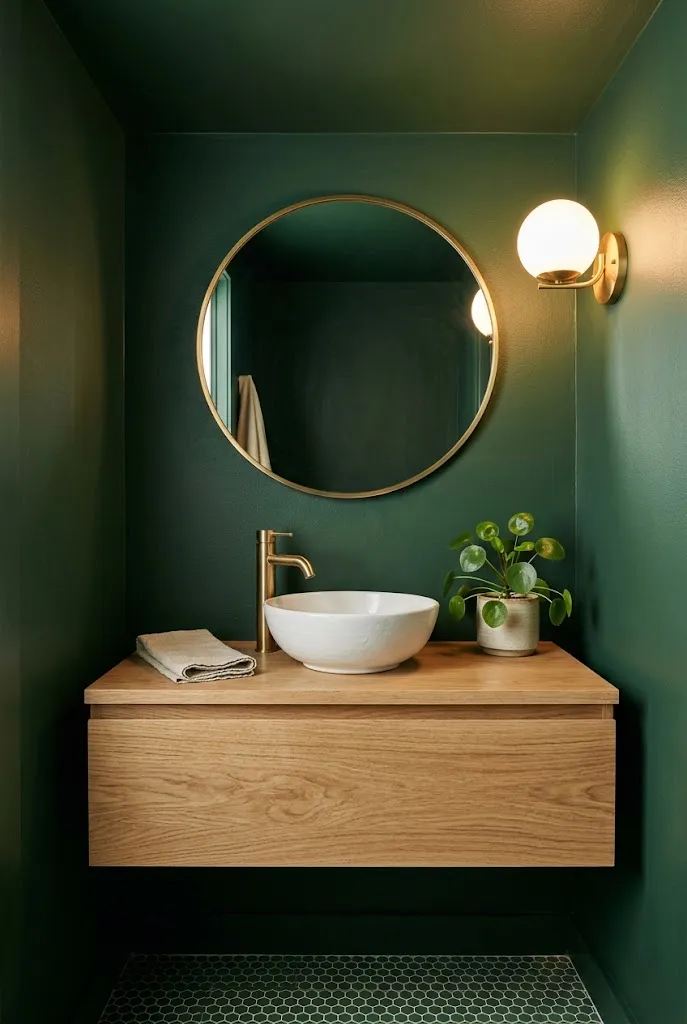
A powder room is small and used briefly, which makes it a good place to take a risk. A deep color like forest green, ink navy, or charcoal on walls and ceiling feels cocooning rather than cramped.
Pair it with a sculptural vanity light, a round or arched mirror, and a simple pedestal or floating sink. Brass, wood, or stone accents stand out against the dark backdrop.
Do: Use a washable finish like satin or semi-gloss and add enough lighting at face height.
Don’t: Paint a dark color in a windowless room without checking how it looks under your actual bulbs.
Where to Start
You don’t need all 27 ideas. Start with what costs the least and changes the most: lighting, curtains, and a correctly sized rug. Then pick one project that suits your budget, such as a limewash wall, molding, or a new focal piece. Finally, save custom millwork and stone for when you’re sure of the room’s layout. A few thoughtful decisions will do more than a long shopping list.