23 Small Entryway Decor Ideas That Look Stylish and Stay Organized
Introduction
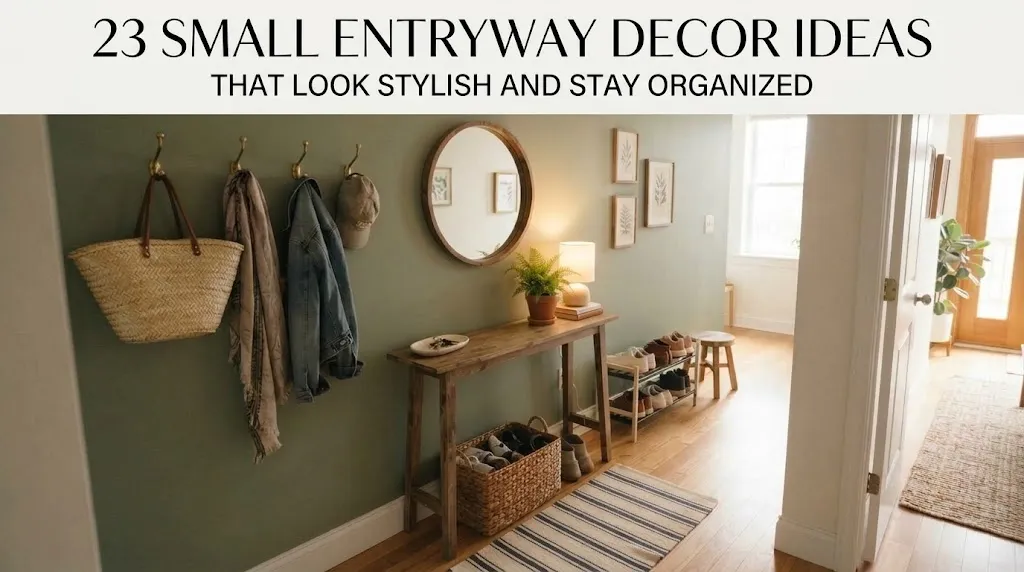
A small entryway has to do a lot in very little space. It catches shoes, coats, keys, mail, and the occasional umbrella, and it’s also the first thing anyone sees when the door opens. The best small entryway decor ideas solve the storage problem first and then add enough character that the space feels intentional rather than crowded. Below you’ll find 23 ideas for apartments, rentals, townhomes, and older houses, ranging from a ten-minute hook install to a custom built-in. Each one pairs a look with a practical reason it works, so you can pick what fits your door, your budget, and how many people come through it every day.
1. Mount a Slim Hook Rail Painted to Match the Wall
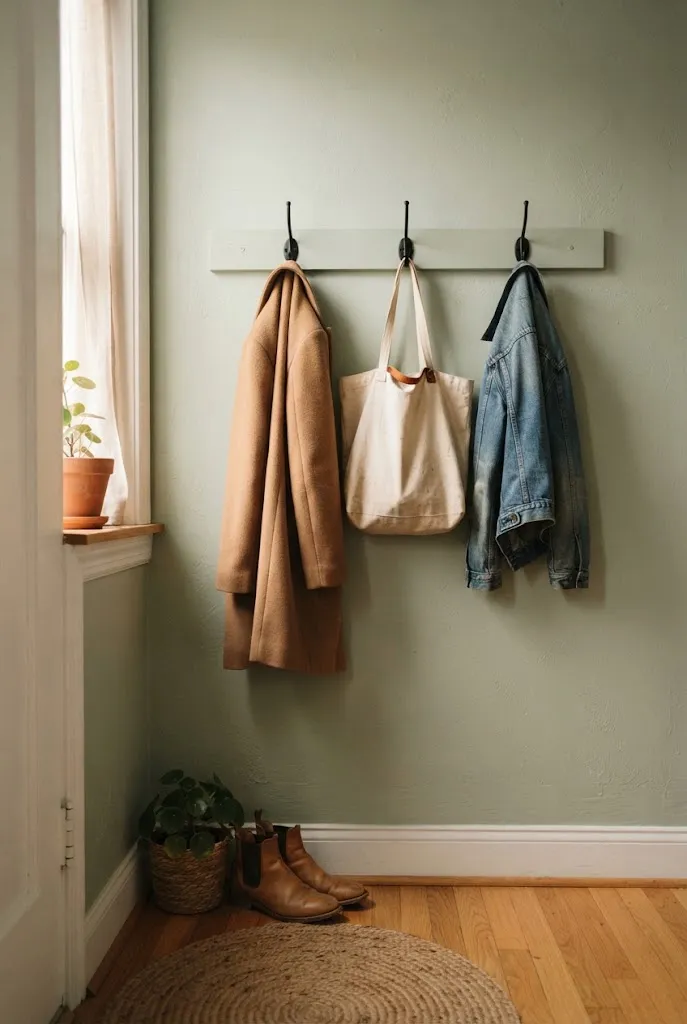
Hooks are the simplest way to get coats and bags off the floor, and a single rail looks tidier than a scatter of individual hooks. Painting the rail the same color as the wall lets it recede, which keeps a tight entry from looking busy. Choose hooks with enough projection to hold a bulky coat without it pressing flat against the wall.
- Space hooks evenly so each coat has its own spot.
- Use a stud or the appropriate wall anchors for the weight you expect.
- Mix one or two lower hooks in if kids or dogs live in the house.
A rail also works in a rental, since you only patch a few small holes when you move out.
2. Pair a Shallow Console With a Round Mirror
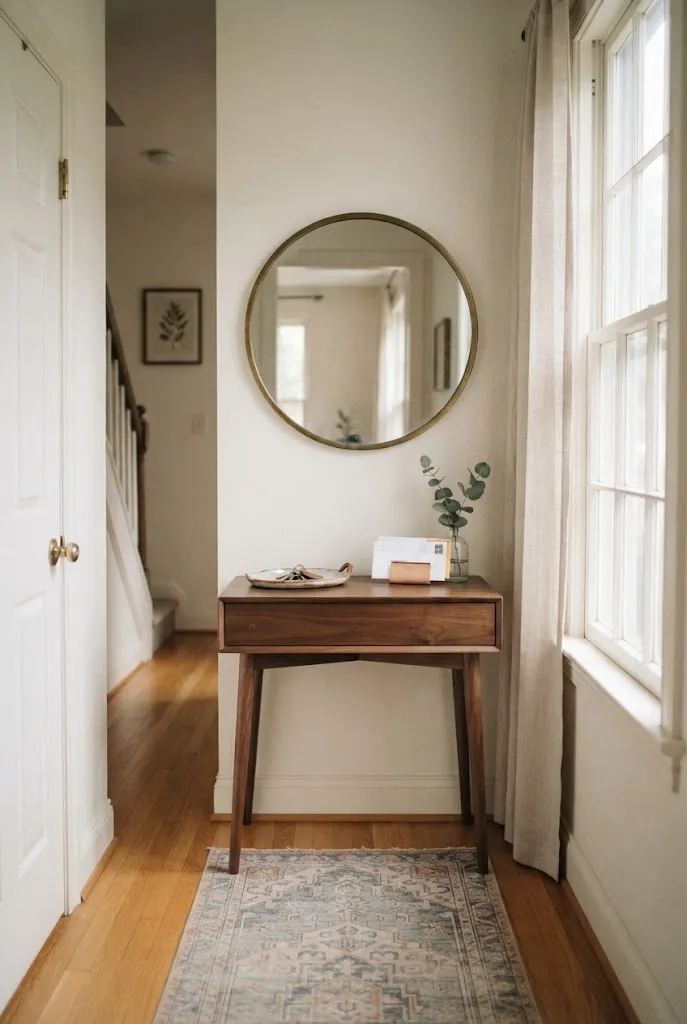
A narrow console gives you a landing spot for keys and mail without blocking the walkway. Look for a depth that leaves comfortable room to pass, and lean toward open legs so you can see floor underneath. A round mirror above it softens the straight lines of a long, thin entry and bounces light from the nearest window or doorway.
Editor’s Note: Hang the mirror so its center sits near eye level for the people who live there, not at a generic height. A mirror hung too high is mostly reflecting the ceiling.
3. Choose a Shallow Tilt-Out Shoe Cabinet
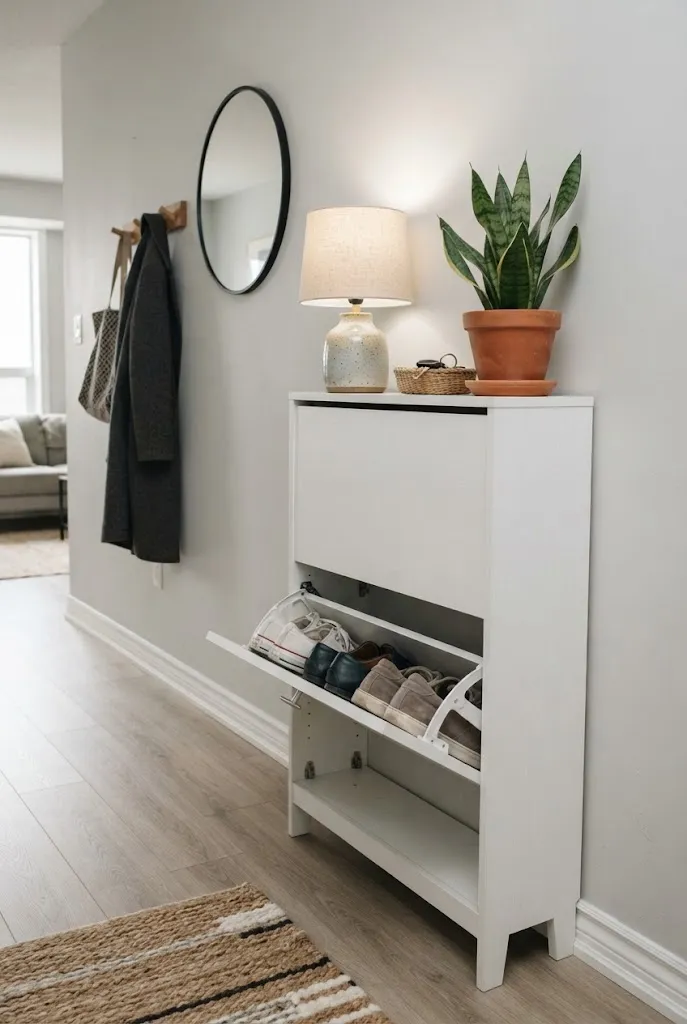
Shoes are usually what makes a small entry feel messy. A tilt-out cabinet stores several pairs behind a flat front, so the piece reads as a slim dresser rather than a shoe rack. The top surface can hold a tray, a lamp, or a plant.
| Option | Effect | Best Fit |
|---|---|---|
| Tilt-out cabinet | Closed, clean front | Households with many pairs of shoes |
| Open shoe shelf | Quick access, more visible | Narrow entries where airflow matters |
Closed storage tends to look calmer, while open shelving dries wet shoes faster. Decide based on what the entry deals with most often.
4. Install a Fold-Down Wall Bench
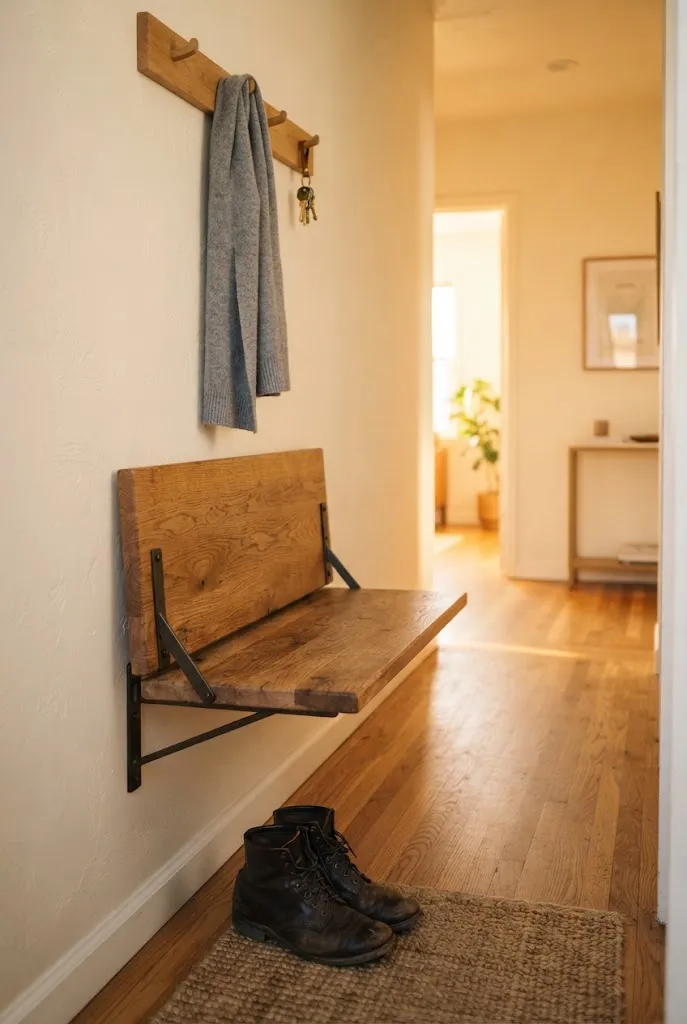
When floor space is tight, a bench that folds flat against the wall gives you a seat for putting on shoes without a permanent footprint. Close it and the entry returns to a clear walkway. These benches are usually mounted into studs because they carry real weight, so check the manufacturer’s load rating before buying.
- Mark stud locations and a comfortable seat height.
- Mount the bracket or hinge hardware level.
- Add hooks directly above so the seat and coat storage work as one zone.
5. Add Removable Wallpaper Behind the Hooks
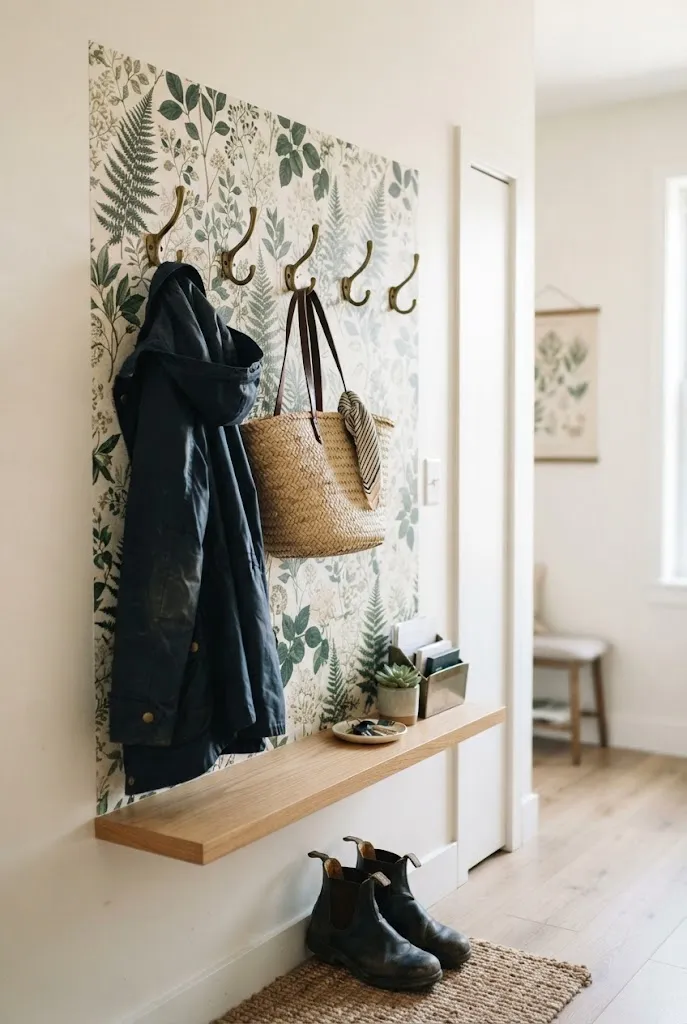
A small, defined patch of pattern behind your coat hooks gives a plain entry some personality without painting the whole space. Peel-and-stick wallpaper suits renters, and a small-scale botanical, stripe, or geometric print holds up well when partly covered by coats. Keep the rest of the walls a quiet, light color so the pattern reads as a feature rather than a visual overload.
Quick Tip: Test a small piece in a hidden spot first. Some textured or freshly painted walls pull paint when the adhesive is removed.
6. Tuck Baskets Beneath a Slim Bench
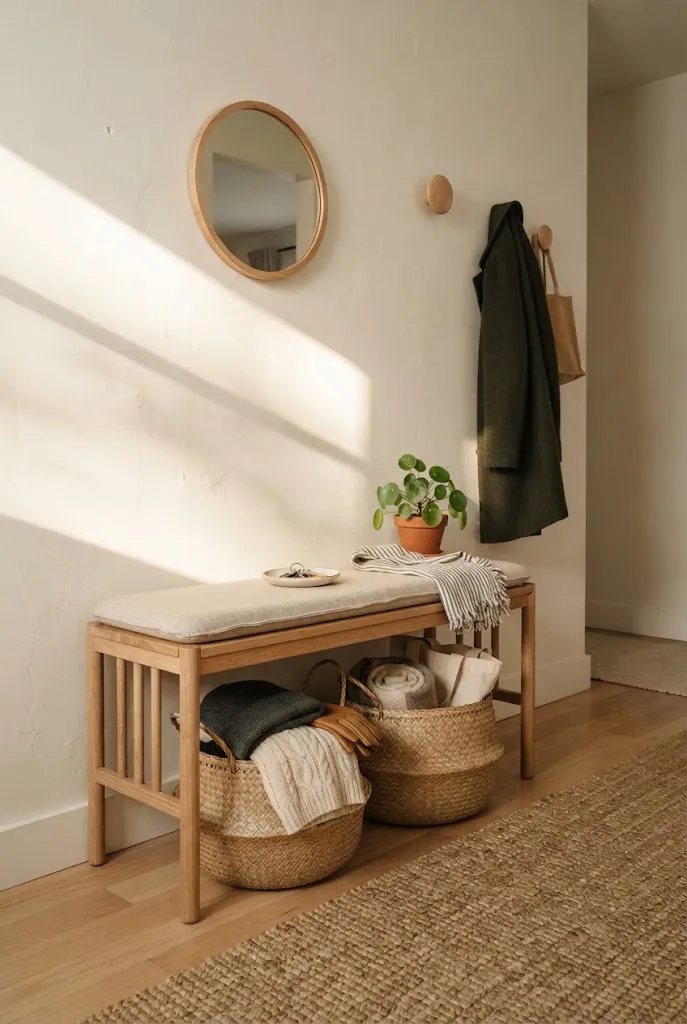
A narrow bench with open space underneath gives you seating and hidden storage in the same footprint. Woven baskets or fabric bins slide in and out for hats, gloves, dog leashes, and reusable bags. Choose baskets with handles, and keep one basket per category so things stay findable.
- Natural fiber adds warmth to a pale entry.
- Lidded bins hide clutter better than open ones.
- A thin cushion makes the seat more comfortable and adds a color accent.
7. Lean an Oversized Mirror Against the Wall
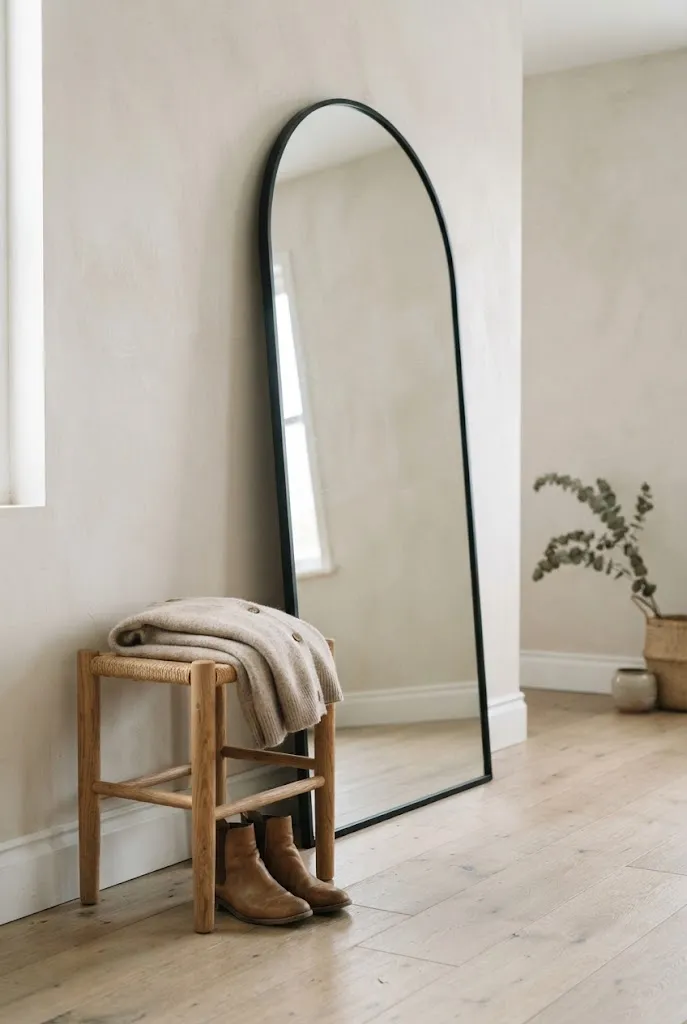
A tall floor mirror makes a small entry feel deeper and gives you a last-look check before leaving. Leaning it requires no hanging hardware, which is helpful in rentals or on plaster walls. Place it where it reflects light, such as across from a window, instead of facing a dark corner.
Common Mistake: Leaning a heavy mirror without any safeguard.
Better Approach: Use a wall strap or anti-tip bracket, especially in homes with children or pets. A stable mirror is a better design choice as well as a safer one.
8. Use Over-the-Door Storage When There’s No Foyer
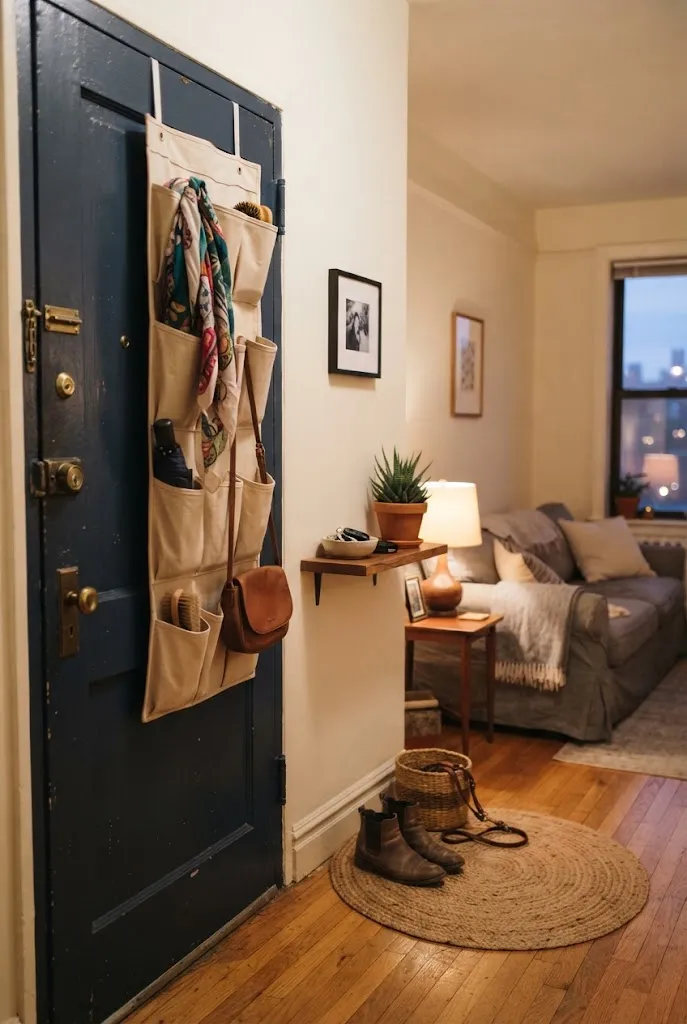
Many apartments open directly into the living area with no entry at all. In that case, the back of the front door is often the most useful surface you have. A hanging rack or fabric organizer holds scarves, umbrellas, and small bags, and a nearby wall shelf or tray can catch the rest. Check that the door still closes smoothly and that nothing scrapes the frame.
Pairing this with a small rug creates a visual “landing zone” even where there’s no architectural entryway.
9. Build a Wall-Mounted Key and Mail Station
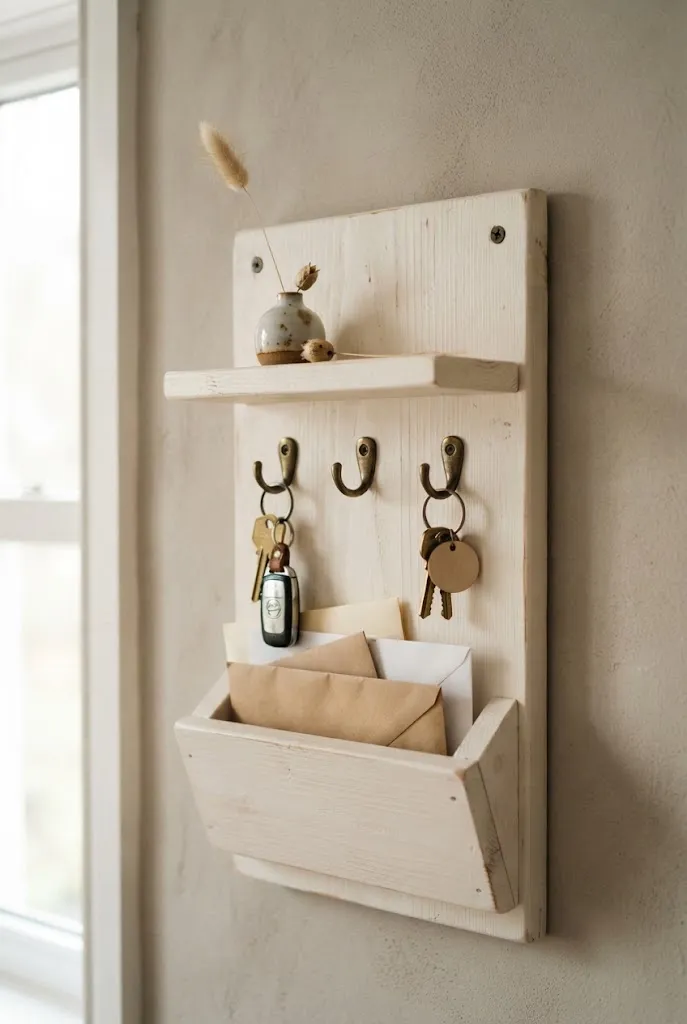
Keys and mail tend to pile up on whatever flat surface is closest. A wall-mounted organizer with a shelf, a few key hooks, and a slot for letters moves them off the furniture and into one defined spot. Wood, powder-coated metal, and painted finishes all suit different styles.
Best For: Entries too tight for a console
Investment: Accessible
Visual Effect: Compact and orderly, with a small decorative moment on the wall
10. Lay a Washable Runner in a Narrow Entry
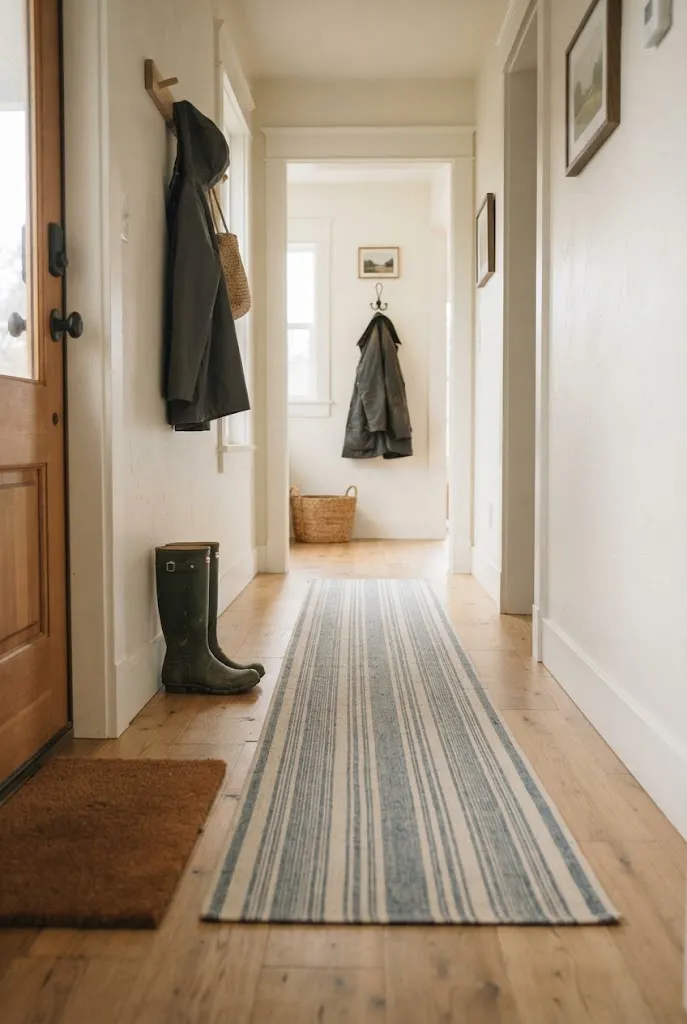
A runner defines the walkway and protects the floor from wet shoes and grit. For a small entry, a flat-weave or low-pile runner is easier to sweep and doesn’t catch the door. Washable runners have become common and are worth considering where mud and snow are routine. Stripes or a subtle repeating pattern make a short space look slightly longer, while a solid neutral keeps the space quiet.
- Add a non-slip pad under the rug.
- Leave a few inches of floor visible on each side.
- Check that the door clears the rug fully.
11. Swap Table Lamps for Plug-In Wall Sconces
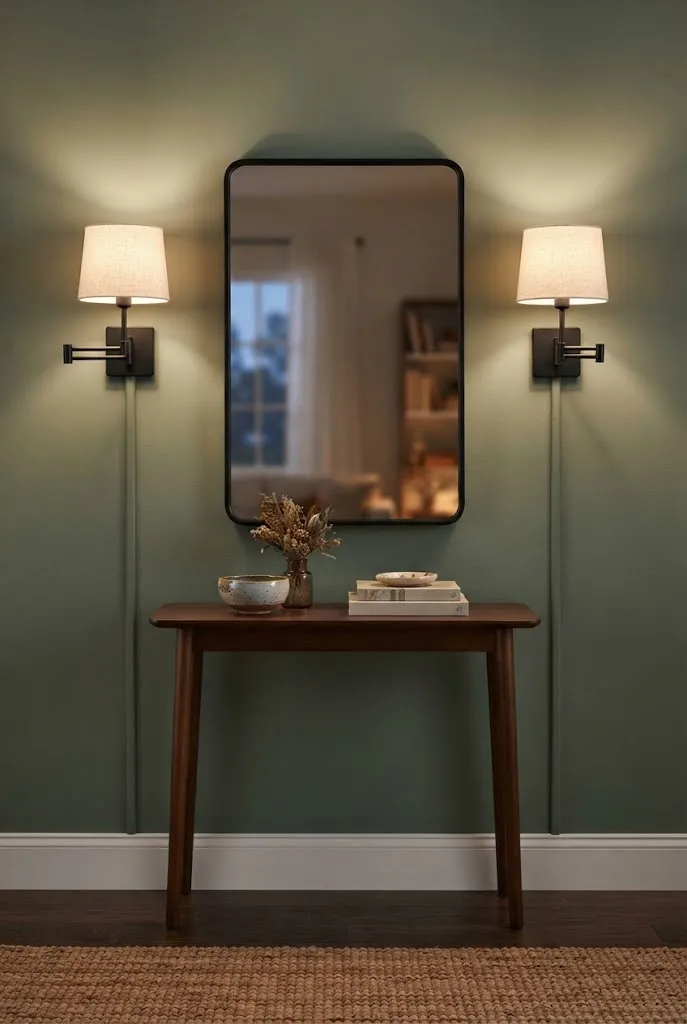
Surfaces are precious in a small entry, so lighting that doesn’t take up counter space is a real advantage. Plug-in sconces mount on the wall and run on a cord you can tuck along the trim, so no electrician is needed. A warm bulb gives the entry a welcoming glow, and a pair flanking a mirror feels balanced and finished.
In practice, choose a cord cover that matches the wall color. The cord is the part most people notice, and a painted channel makes it almost disappear.
12. Hang a Small, Tight Gallery Cluster
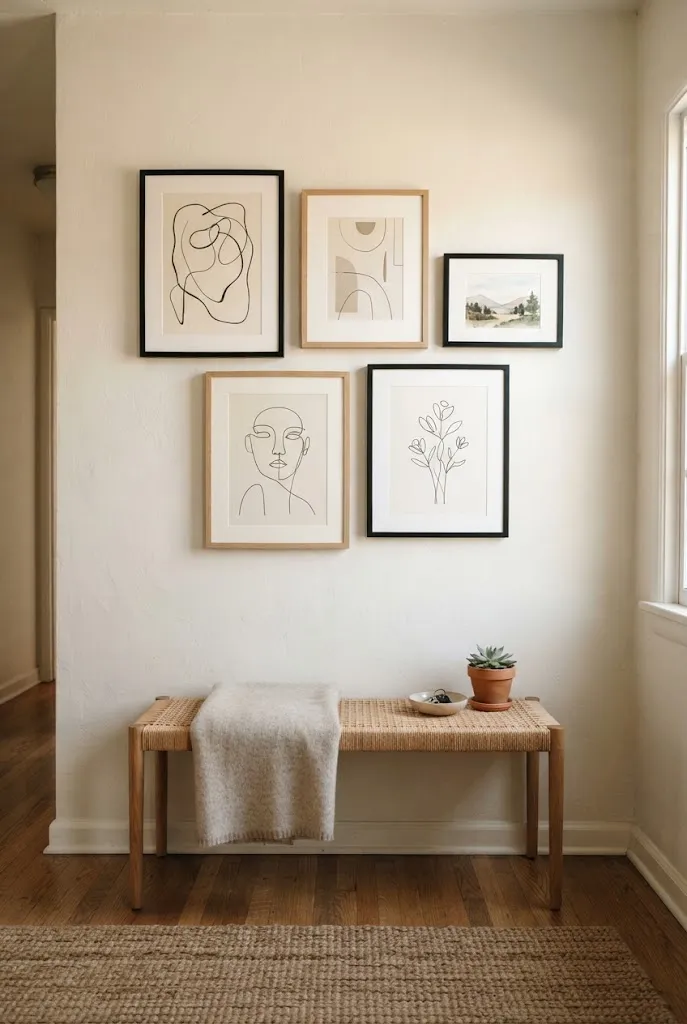
A few framed pieces grouped closely feel considered in a small space where one large piece might overwhelm. Keep the frames within one or two finishes, and let the artwork vary in size. Arrange them on the floor first so you can adjust the spacing before making holes.
- Pick one anchor piece, usually the largest.
- Place smaller frames around it with consistent gaps.
- Hang the whole arrangement slightly above the console or bench.
Lightweight frames can use removable strips where nail holes aren’t an option.
13. Invest in a Custom Nook With Cubbies and a Built-In Seat
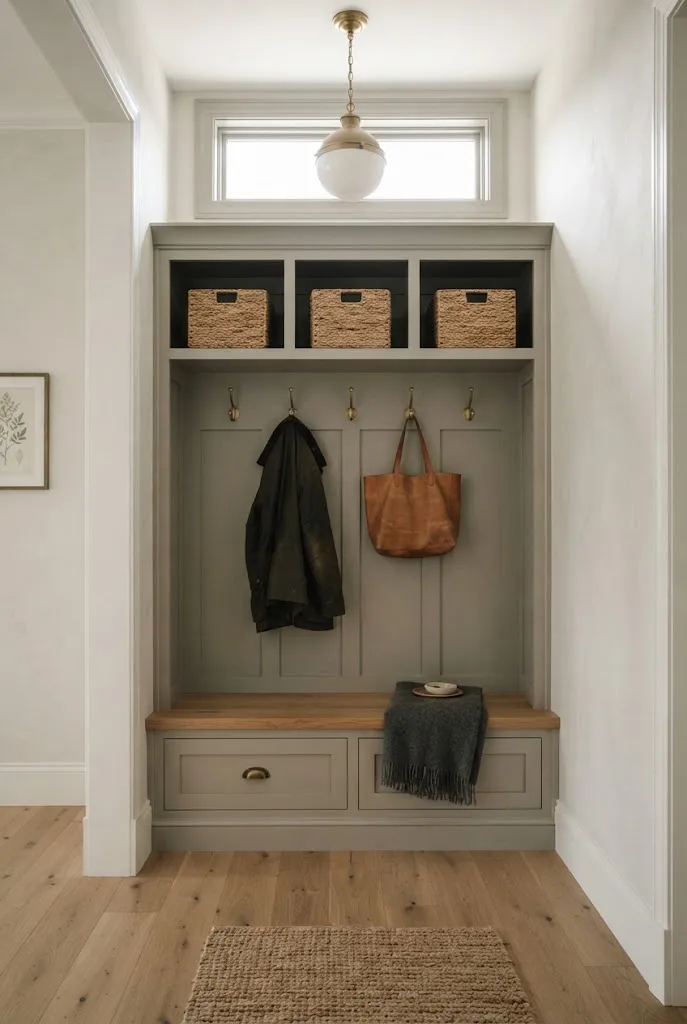
If you own the home and have an alcove, a short hallway, or a wall of unused depth, a built-in bench with cubbies above and drawers below is one of the most useful upgrades available. Custom millwork can match your trim and paint finish so it looks like part of the house’s original architecture. Plan the cubby widths around what actually gets stored, such as boots, a school backpack, or a dog leash.
Best For: Homeowners with a recessed wall or underused corner
Investment: Premium
Visual Effect: Architectural and finished, with generous hidden storage
A simpler version of the same principle is a ready-made modular bench with open shelving above.
14. Paint the Door and Trim in a Deep Color
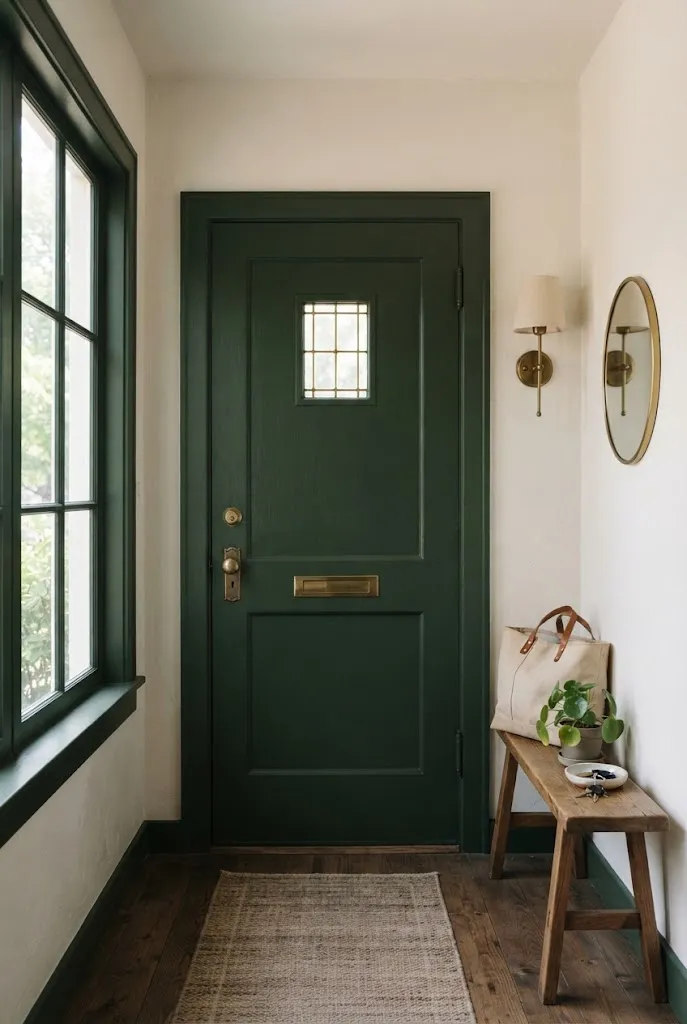
Dark paint isn’t only for large rooms. A deep green, navy, or charcoal on the inside of the front door and trim frames a small entry like a picture frame and gives it depth. Keep the walls light so the space doesn’t feel closed in, and add a bright mirror or sconce to balance the color.
| Choice | Effect | Best Fit |
|---|---|---|
| Deep door and trim, light walls | Defined, graphic look | Entries with decent natural light |
| All-over dark color | Moody, enclosed | Entries with good artificial lighting |
Paint only the interior face of the door if you share the exterior with neighbors or an HOA.
15. Organize With a Pegboard Wall
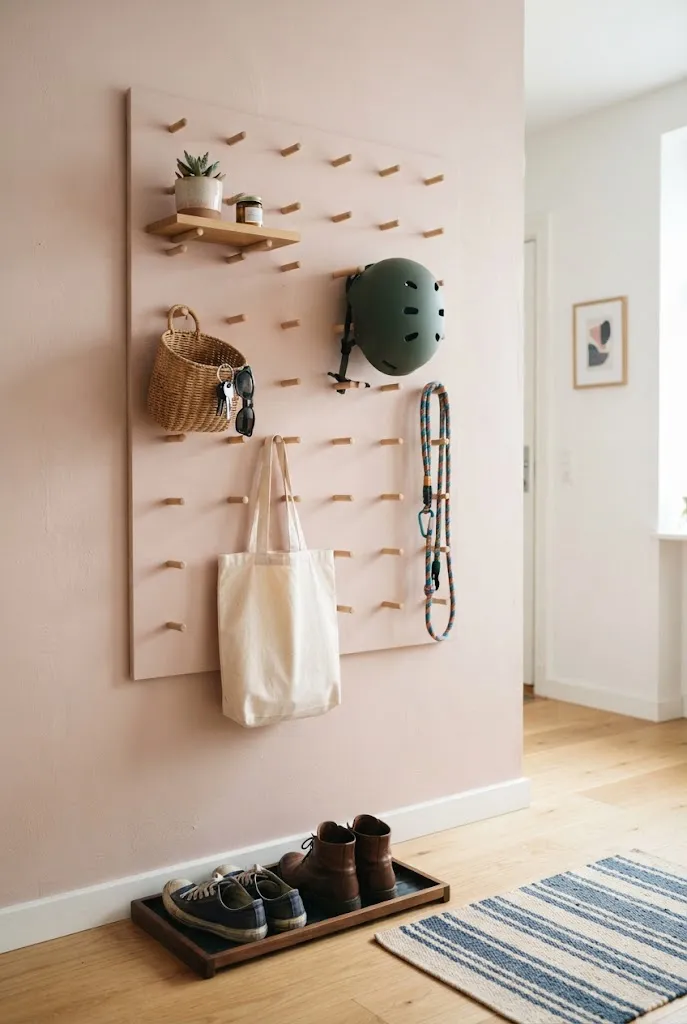
A pegboard lets you rearrange hooks, shelves, and small baskets as your needs change. Painted in a soft color or finished in natural wood, it can look deliberate rather than workshop-like. It suits households where the entry has to handle varied items, such as helmets, leashes, bags, and umbrellas.
- Use a simple, restrained color palette for accessories.
- Group items by person or by function.
- Leave a few open areas so the wall doesn’t feel crowded.
16. Set a Coat Tree in the Corner
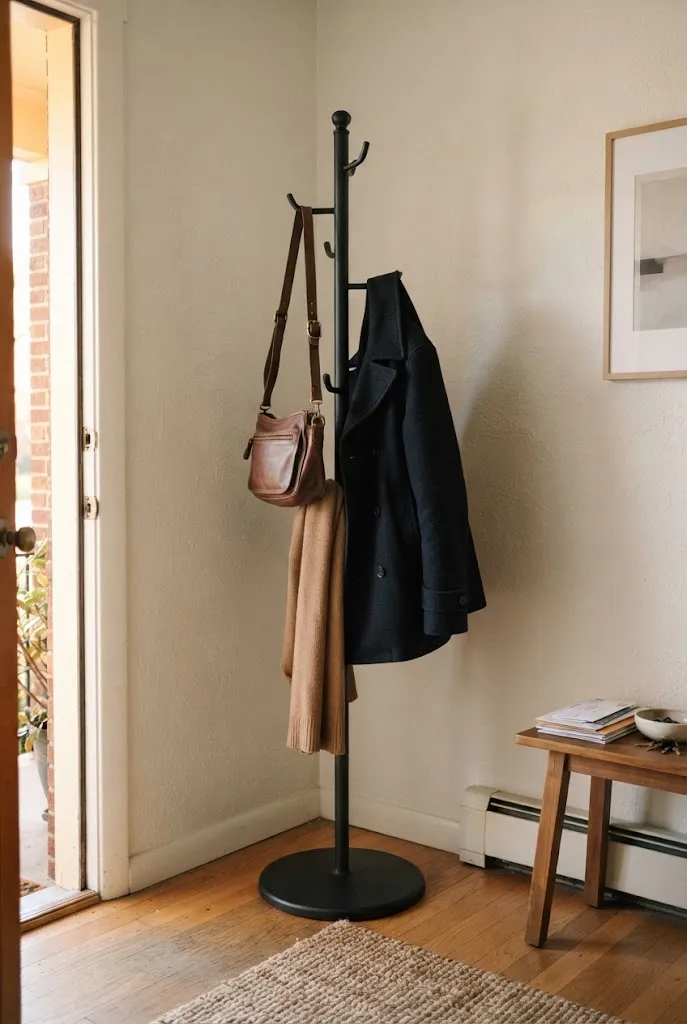
Where a wall can’t take hooks, a freestanding coat tree uses vertical space in an otherwise empty corner. Look for a stable base and enough arms to hold what the household actually wears each day. A narrow, tall piece takes up very little floor but can hold a surprising amount.
Do: Choose a sturdy base and keep heavy bags on the lower arms.
Don’t: Overload the top, which can make lighter models lean.
17. Create a Mini Mudroom With Beadboard
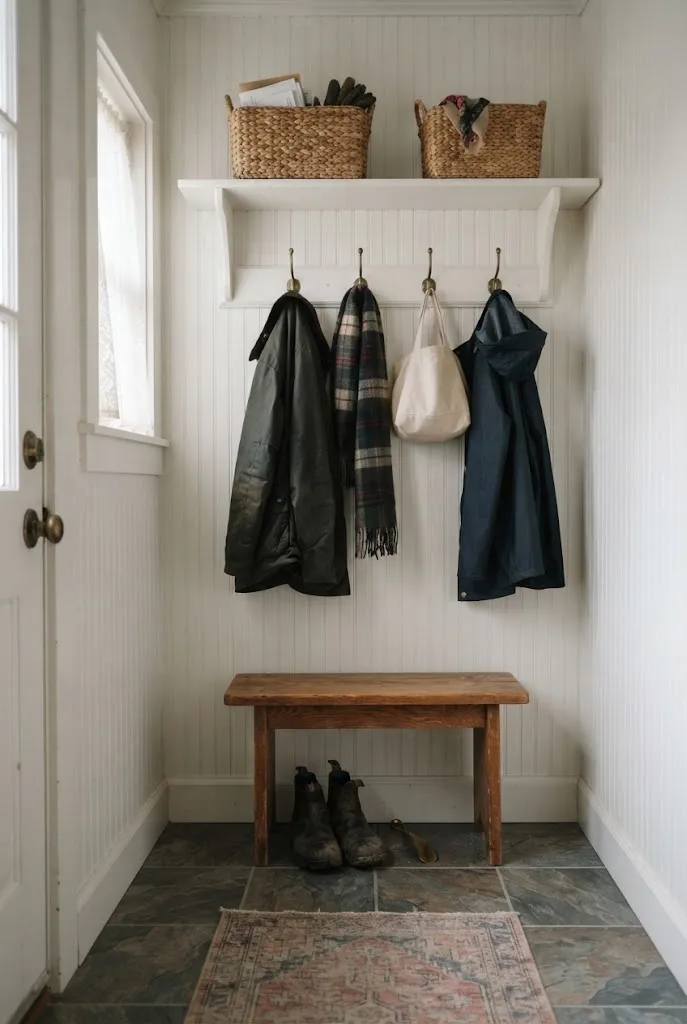
Beadboard paneling with a hook rail and a narrow shelf gives even a modest entry a mudroom feel. The vertical lines add texture, and the paneling protects the wall from bags and wet coats. Painted in a washable semi-gloss or satin finish, it wipes clean easily. This is a moderate project that usually involves cutting panels to fit, so measure carefully and account for outlets and switches.
A short bench or a pair of baskets beneath completes the look without crowding the walkway.
18. Convert a Shallow Closet Into an Entry Nook
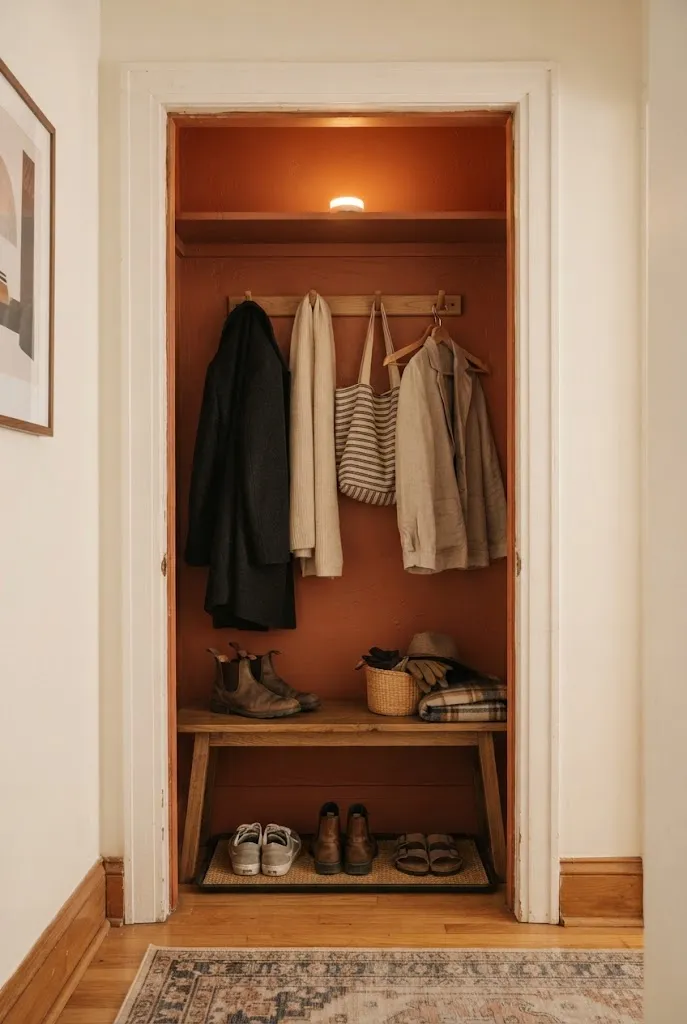
If your entry has a small coat closet that never holds much, consider removing the door and treating the space as an open nook. Add a hook rail, a shelf above, and a slim bench or shoe tray below. Painting the inside a contrasting color makes the nook read as a deliberate feature.
- Remove the closet door and patch the hinge holes.
- Paint the interior and add lighting if there’s an outlet nearby.
- Install hooks, a shelf, and floor storage.
Check lease terms or have a professional review the work if the closet wall is structural or contains wiring.
19. Build a Drop Zone Under the Stairs
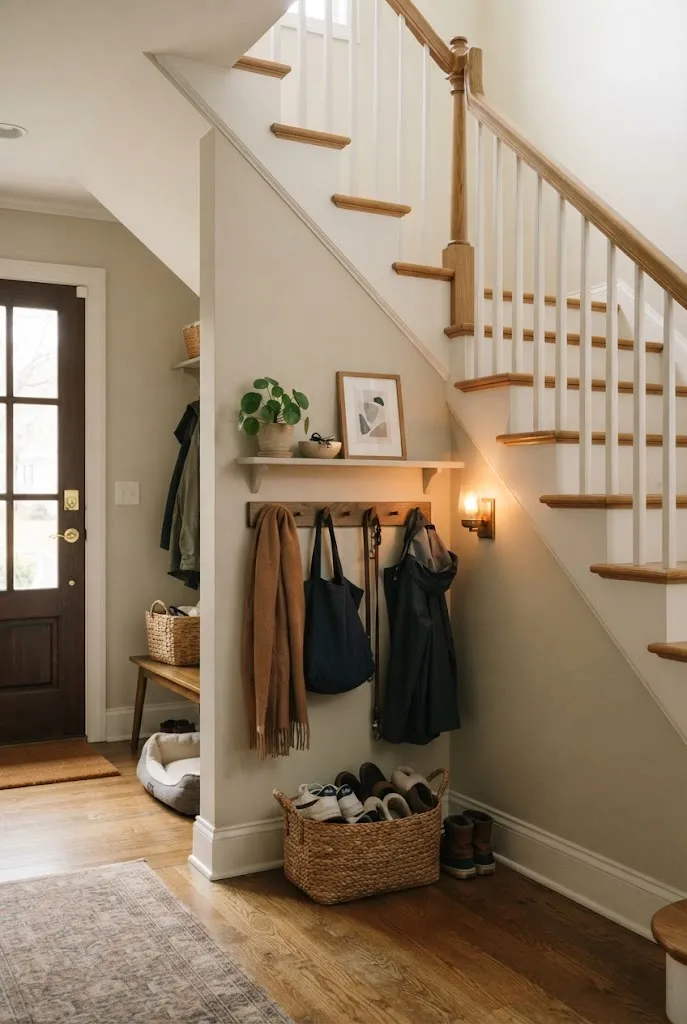
The space beside or beneath a staircase near the front door is often wasted. A slim shelf, a few hooks, and a basket can turn it into a practical station, and a built-in bench works if the geometry allows. Keep head clearance in mind, especially where the stair slopes down, and avoid placing sharp-cornered furniture at heights people could hit.
Lighting matters here because the area can be dim. A small plug-in or battery-operated light helps.
20. Style a Slim Drawer Chest With a Table Lamp
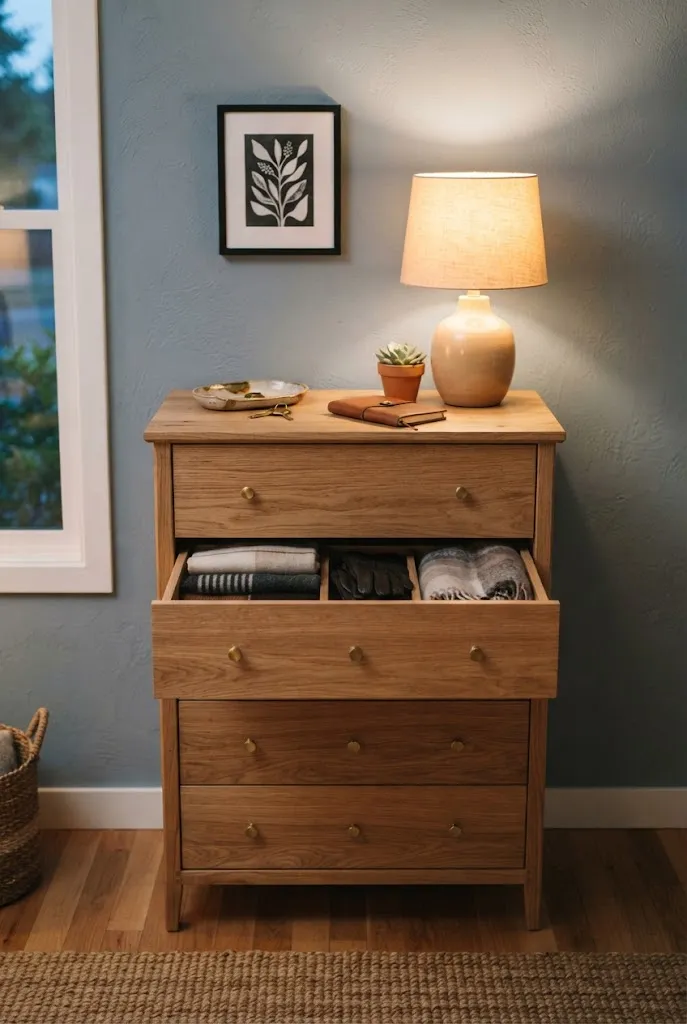
A narrow chest of drawers hides gloves, scarves, pet supplies, and spare keys in a way open shelves can’t. The top becomes a styling surface, and a small lamp with a warm bulb adds the evening glow that makes arrival feel welcoming. Keep the arrangement simple: a lamp, a tray for daily items, and one small object of personal interest.
Quick Tip: Use drawer dividers for small items. They keep things sorted and prevent the drawer from turning into a catch-all pile.
21. Define the Zone With Peel-and-Stick Floor Tile
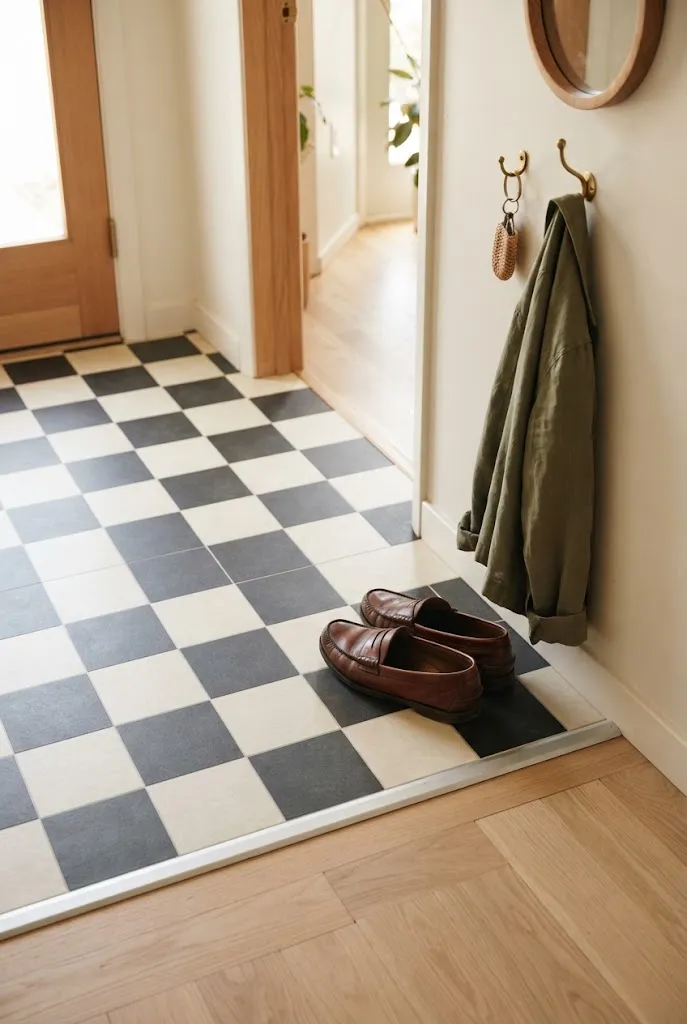
Even a tiny entry feels more intentional when the floor looks different from the adjoining room. Peel-and-stick tiles in a simple checkerboard, stone look, or terracotta tone create a defined landing area, and they’re friendlier to renters than permanent tile. Floor prep matters a great deal: a clean, smooth, dry surface helps the tiles stay put.
- Lay out a dry run before peeling any backing.
- Stagger seams if the pattern allows it.
- Choose a finish that handles wet shoes and is easy to mop.
22. Upgrade the Ceiling Fixture
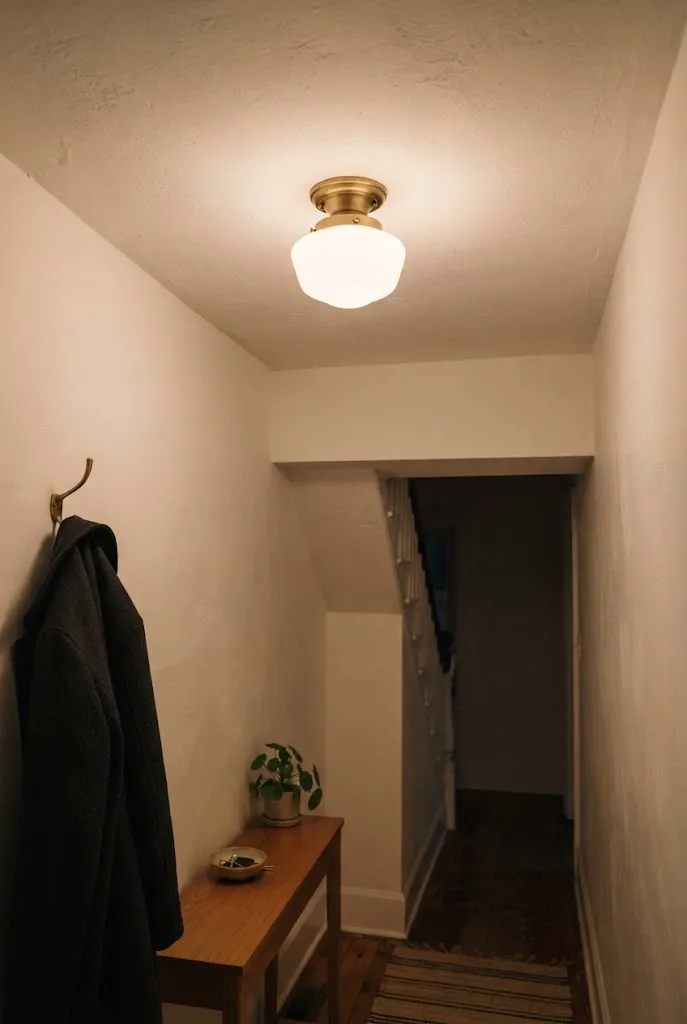
The overhead light is often an afterthought in small entries, and builder-grade fixtures can look flat. A semi-flush mount or a modest pendant adds style, and a warm bulb makes the whole space feel more inviting. In an entry with a low ceiling, choose a flush or semi-flush style so no one has to duck.
This is a mid-range upgrade that often involves some electrical work. Turn off power at the breaker, and consider hiring a licensed electrician if you’re not comfortable with wiring.
23. Soften the Space With a Trailing Plant on a Floating Shelf
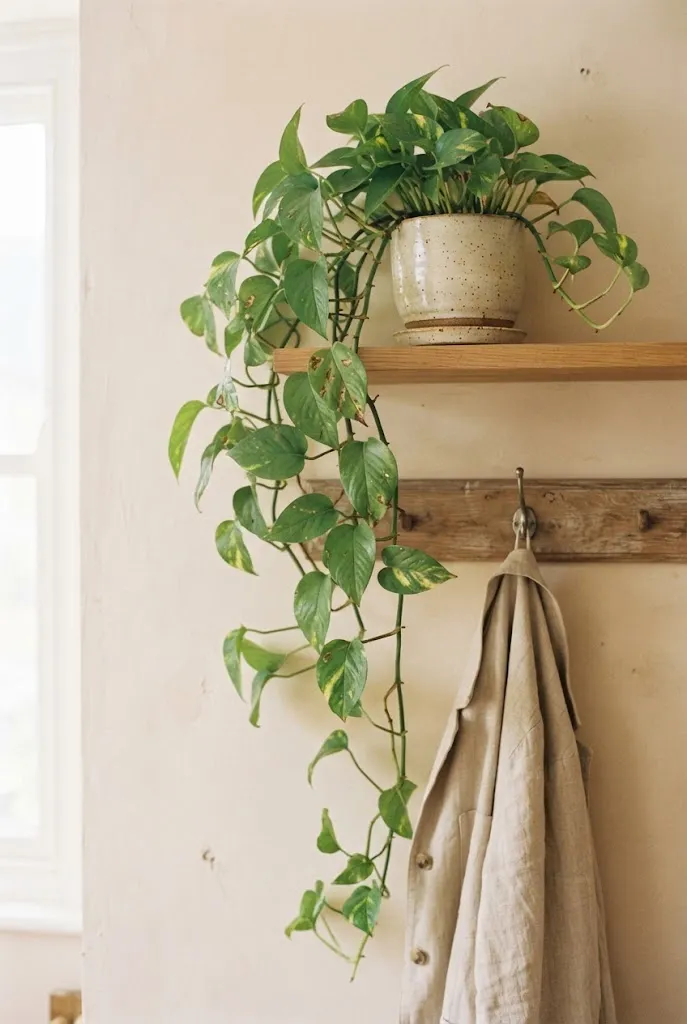
A single plant adds life to a compact entry without using floor space. A floating shelf above the hooks or beside the door can hold a trailing plant whose leaves drape down the wall. Pick a plant suited to the light you actually have. Many entries are dim, so confirm the light needs of the plant you choose, or use a realistic faux plant if daylight is limited.
Editor’s Note: Make sure the pot has a saucer or a waterproof liner. A leaking pot on a shelf above shoes and coats is a quick way to ruin a good setup.
Where to Start
You don’t need all 23 of these. Most small entries improve a lot with three moves: a place for coats, a place for shoes, and one surface for keys and mail. Handle those first, then add a mirror and a warm light source, and let a pattern, color, or plant provide the personality. If you rent, start with the removable options such as hooks, wallpaper, floor tile, and plug-in lighting. If you own, consider whether a built-in nook would give you years of use. Take a few minutes to watch how your household actually uses the space before you buy anything, because the best layout is the one that fits real habits.