
20 Cozy Living Room Ideas for a Stylish and Comfortable Home
Introduction
A cozy living room doesn’t have to feel crowded, overly rustic, or covered in neutral fabrics. The most inviting rooms usually combine comfort with thoughtful scale, soft lighting, useful furniture, and layers of texture that make the space feel lived-in without becoming cluttered. Whether you’re furnishing an apartment, updating a suburban family room, or refreshing an older home, small changes can make a noticeable difference. These cozy living room ideas explore everything from warm wood and layered rugs to reading corners, built-ins, fireplace styling, and relaxed seating arrangements. The goal is a room that looks polished enough for everyday entertaining but comfortable enough for a quiet evening at home.
1. Layer Soft Textures Across the Seating Area
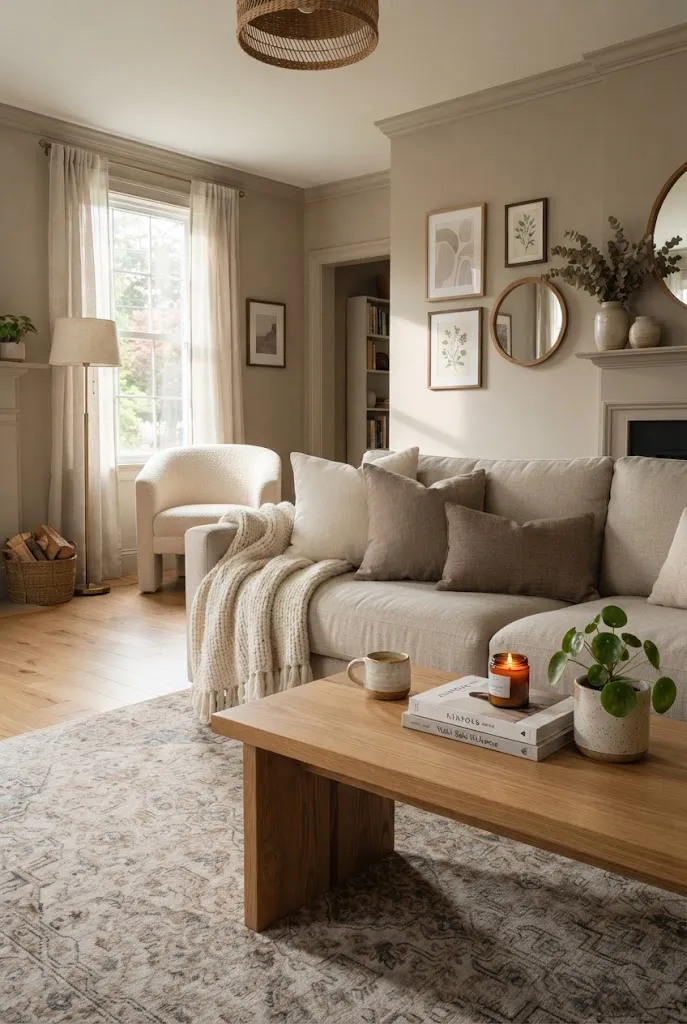
One of the simplest ways to make a living room feel cozy is to build layers of tactile materials. Start with an upholstered sofa or comfortable sectional, then add a woven throw, linen or cotton pillows, and a rug with visible texture beneath the furniture. Bouclé, brushed cotton, wool, velvet, and chunky knits can create different levels of softness without requiring a major renovation.
Keep the palette related rather than matching every textile exactly. Cream, warm beige, muted brown, soft gray, or earthy green can work together while still giving each material its own identity. In a busy family room, choose washable or durable fabrics where practical.
2. Warm Up the Room With Natural Wood
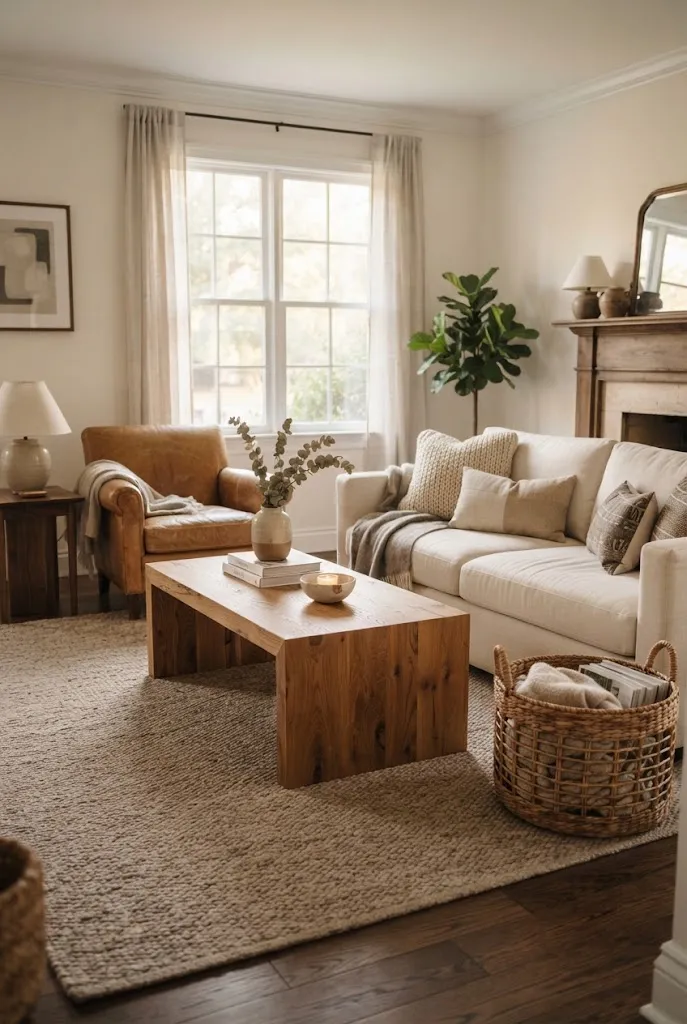
Natural wood introduces visual warmth that can keep a living room from feeling flat. A solid wood coffee table, oak media console, exposed shelving, or even a smaller wooden side table can bring organic variation to upholstery and painted walls.
For a modern room, look for clean-lined oak or walnut pieces. A more traditional space can handle turned legs, antique finishes, or reclaimed-looking wood. You don’t need matching wood throughout the room. In fact, slightly different tones can make the space feel more collected over time.
Pair warm wood with softer materials such as linen, wool, cotton, and upholstered furniture. The contrast between hard and soft surfaces is what makes this approach feel comfortable rather than heavy.
3. Create a Conversation-Friendly Furniture Layout
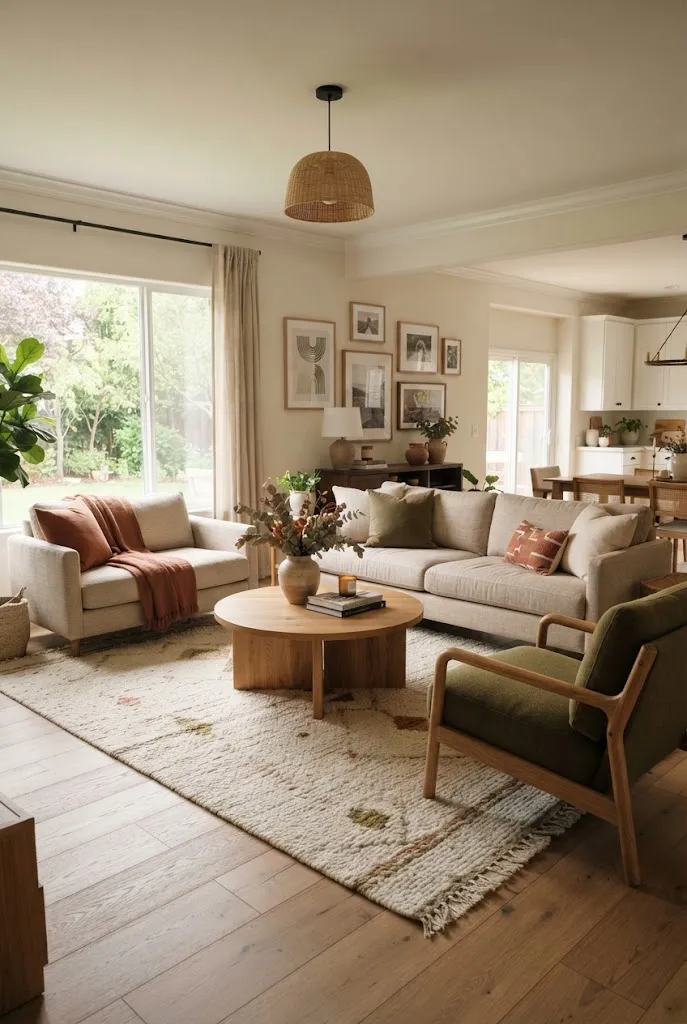
A cozy room should be comfortable to sit in, but furniture placement matters just as much as the furniture itself. Instead of pushing every piece against the walls, consider creating a central conversation zone. A sofa can face two comfortable chairs with a coffee table positioned between them.
Leave enough space for people to move naturally around the seating area. The coffee table should be accessible from the main seats without making the walkway feel cramped. In a larger room, an area rug can visually connect the furniture and establish a defined zone.
For open-concept homes, this arrangement can also separate the living area from the dining or kitchen space without requiring a physical wall.
4. Use a Soft, Warm Lighting Plan
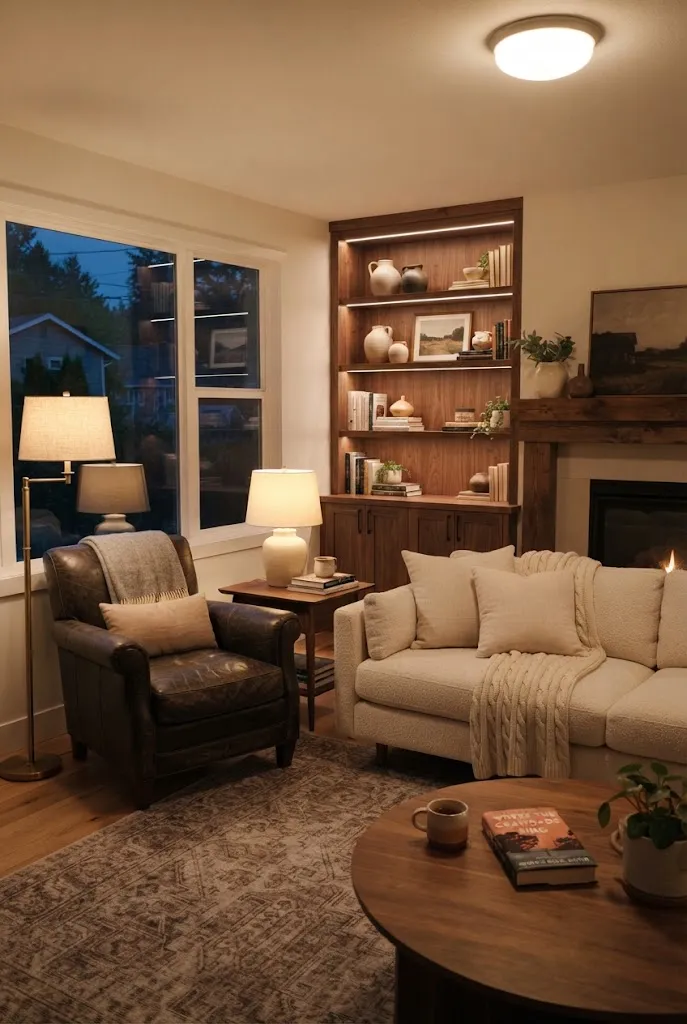
Overhead lighting alone can make an otherwise comfortable room feel stark. A layered lighting plan creates a softer atmosphere by combining different sources at different heights.
Place a floor lamp beside a reading chair, add a table lamp to a console or side table, and use warm-toned practical lighting around the room. A statement pendant or ceiling fixture can provide general illumination while smaller lamps create intimate pools of light.
Choose shades and fixtures that complement the room rather than competing with it. Linen shades, aged brass, ceramic bases, wood details, and softly diffused glass can all contribute to a warmer evening atmosphere.
5. Add a Reading Corner Beside a Window
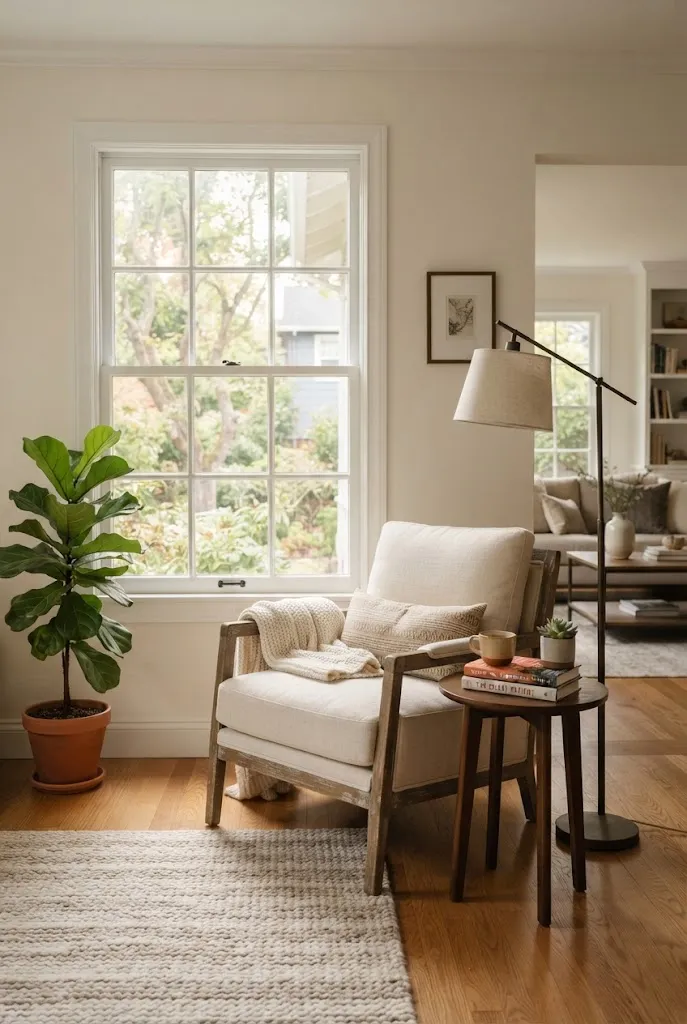
A small reading corner gives a living room a purpose beyond watching television. Choose a comfortable chair that fits naturally beside a window, then add a compact side table and a floor lamp for evening use.
The chair doesn’t have to match the sofa. A textured fabric, leather finish, or wood-framed lounge chair can provide contrast. Add a small stack of books or a basket nearby, but keep the area open enough to remain practical.
For apartments and smaller homes, a reading corner can occupy an unused section beside a window or next to a bookcase without requiring additional square footage.
6. Ground the Room With a Large Area Rug
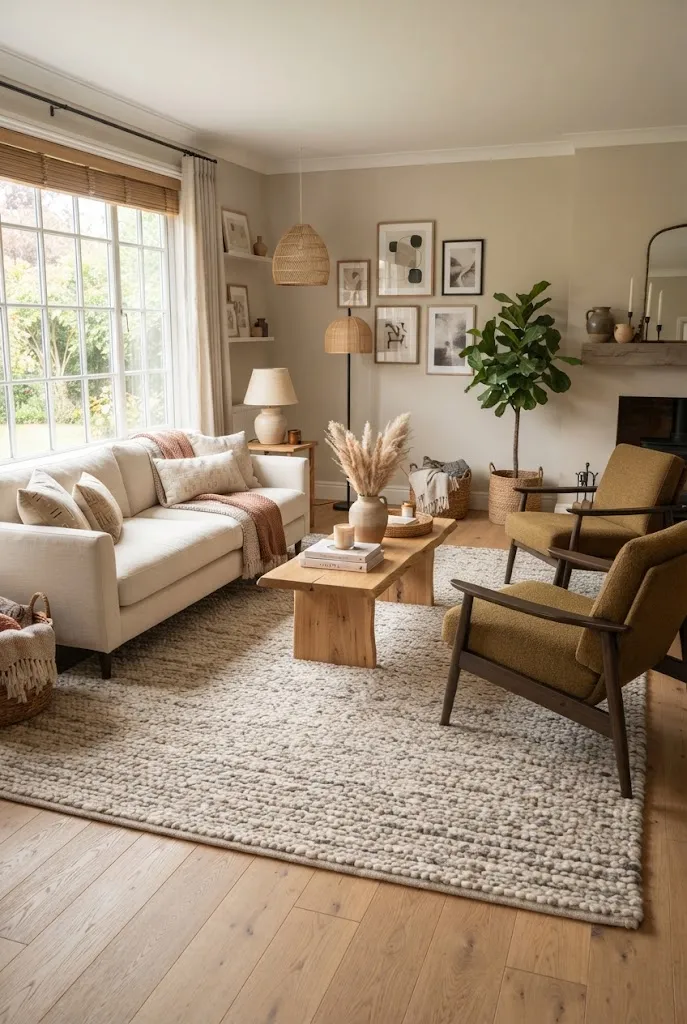
An area rug can visually pull a living room together while adding softness underfoot. For a cozy arrangement, choose a rug large enough to connect the main seating pieces rather than using a small rug that floats in the middle of the room.
Natural wool, cotton blends, flatweaves, and textured synthetic options can all work depending on the household. If you have pets or children, consider a durable, easy-care material and a pattern that can disguise everyday wear.
The rug’s color doesn’t need to match the sofa. A tonal pattern can introduce subtle depth without overwhelming the room.
7. Bring in Greenery for an Organic Touch
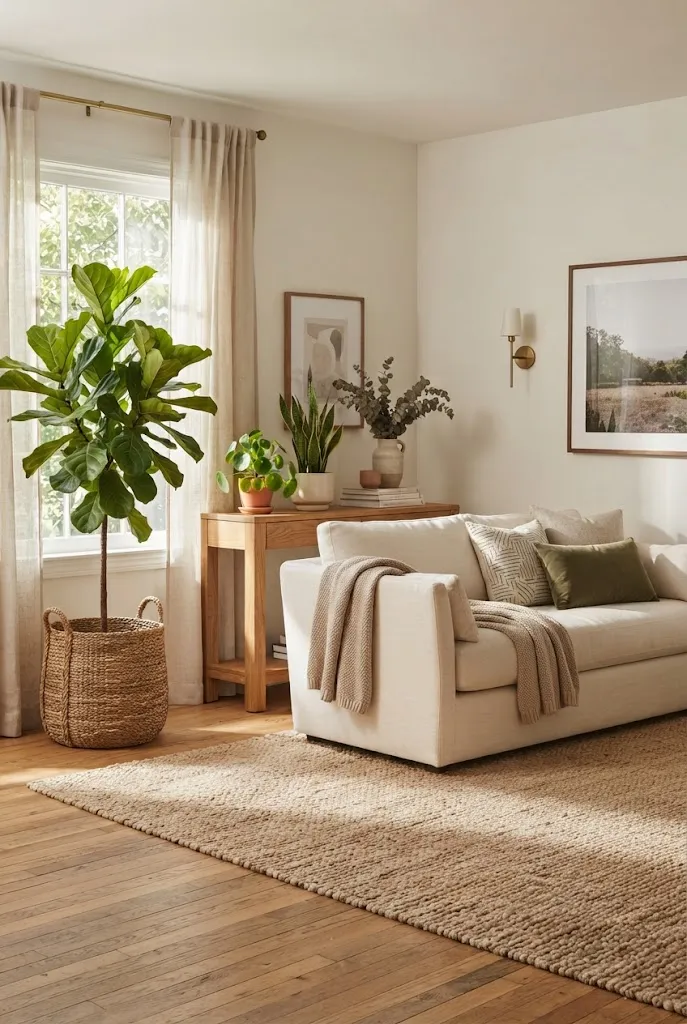
Plants can soften the visual lines of furniture and introduce natural color into a living room. A tall plant can fill an empty corner, while smaller plants can sit on shelves, consoles, or side tables.
Choose plants according to the actual light available in the room rather than selecting them only for appearance. If maintenance is a concern, use a smaller number of well-positioned plants instead of filling every surface.
Natural baskets, ceramic planters, and wooden stands can reinforce the organic feeling without making the room look like a greenhouse.
8. Make the Fireplace the Cozy Focal Point
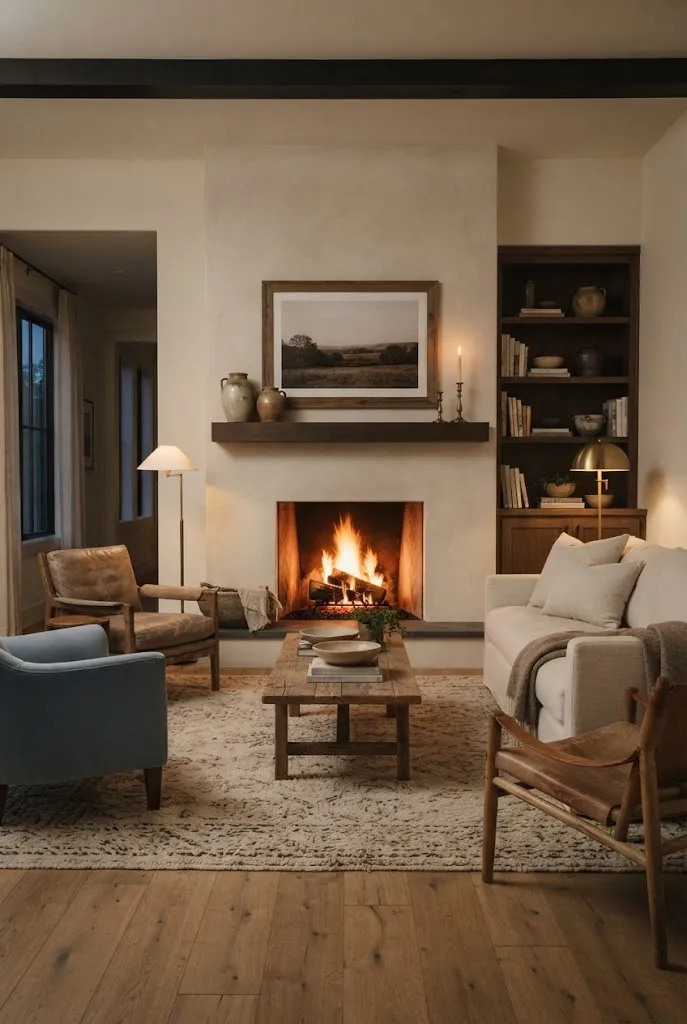
If your living room has a fireplace, let it anchor the furniture and visual composition. The mantel can remain relatively simple while the seating arrangement faces or relates naturally to the fireplace.
A wood-burning or gas fireplace may already provide strong architectural character, so avoid covering it with excessive accessories. A large framed artwork, simple mirror, ceramic vessels, or seasonal greenery can be enough.
For homes without a traditional fireplace, an appropriately designed electric fireplace can provide a similar visual focal point, provided its scale and installation suit the room.
9. Mix Cream With Earthy Accent Colors
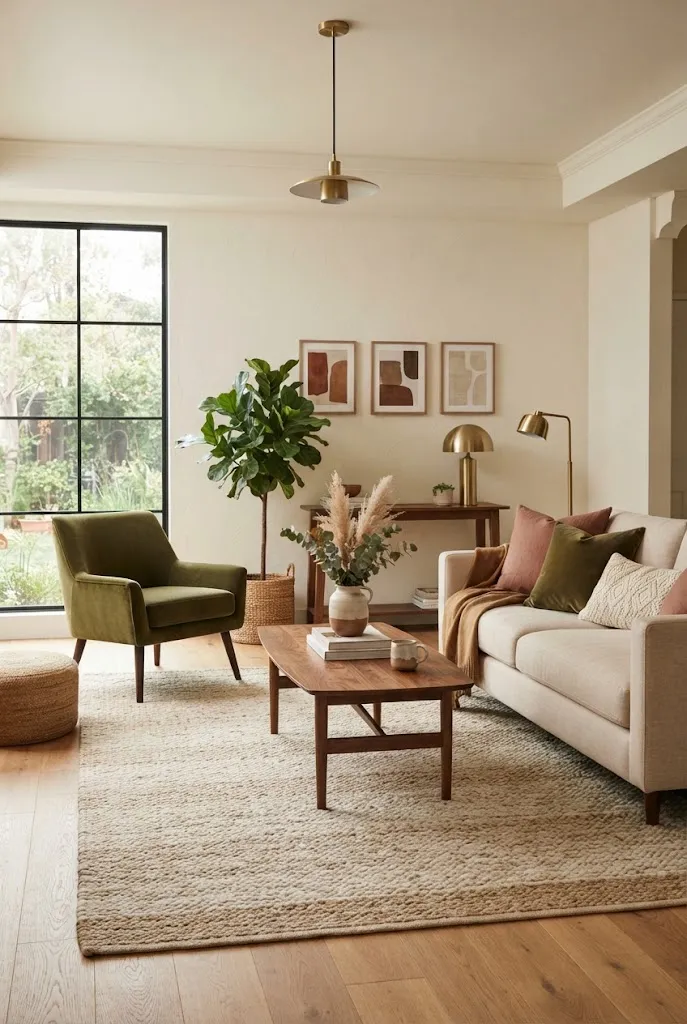
A cozy palette doesn’t have to be entirely beige. Start with a calm foundation such as warm white, cream, oatmeal, or soft taupe, then introduce a few earthy accent colors.
Terracotta, olive green, caramel, muted rust, dusty blue, and warm brown can add personality without making the room visually busy. Use accent colors through pillows, artwork, ceramics, curtains, or a single upholstered chair rather than distributing every color equally.
The result feels more collected and personal than a room where every surface is the same neutral shade.
10. Choose an Oversized Sofa for Everyday Comfort
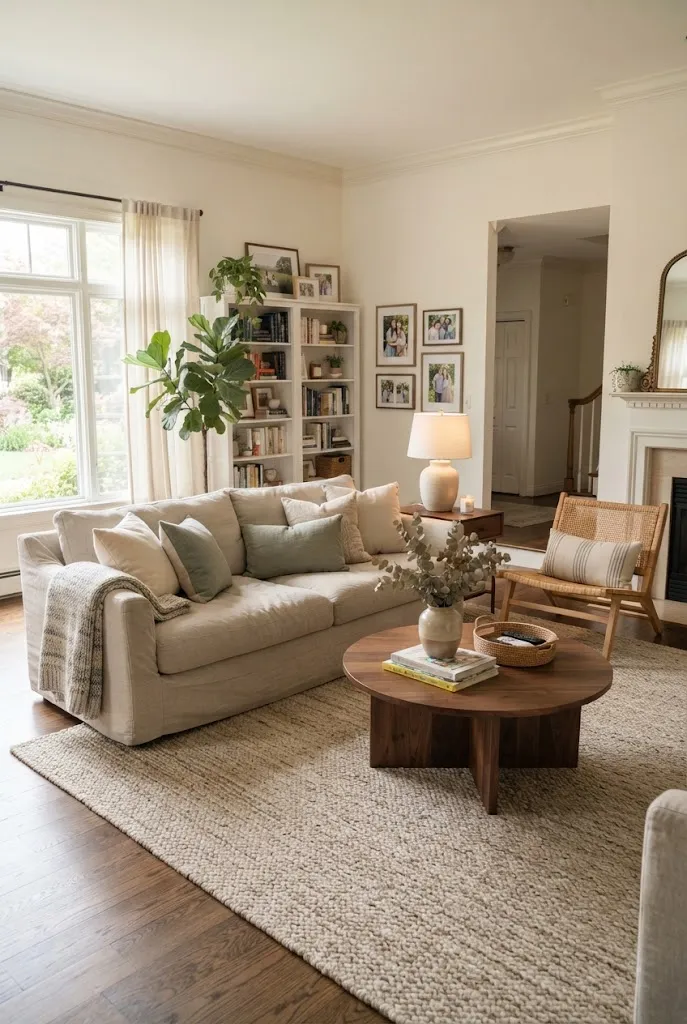
For a larger living room, an oversized sofa can create an especially inviting place to relax. Look for generous seat depth and supportive cushions while keeping the sofa proportionate to the room.
A large sectional can work particularly well for family spaces, but it should not block major walkways or dominate every other piece of furniture. In a smaller room, a standard sofa with a deep-looking profile can provide some of the same visual comfort without overwhelming the space.
Balance a substantial sofa with lighter occasional furniture, such as a slim side table or open-leg chair.
11. Use Built-In Shelving to Add Character
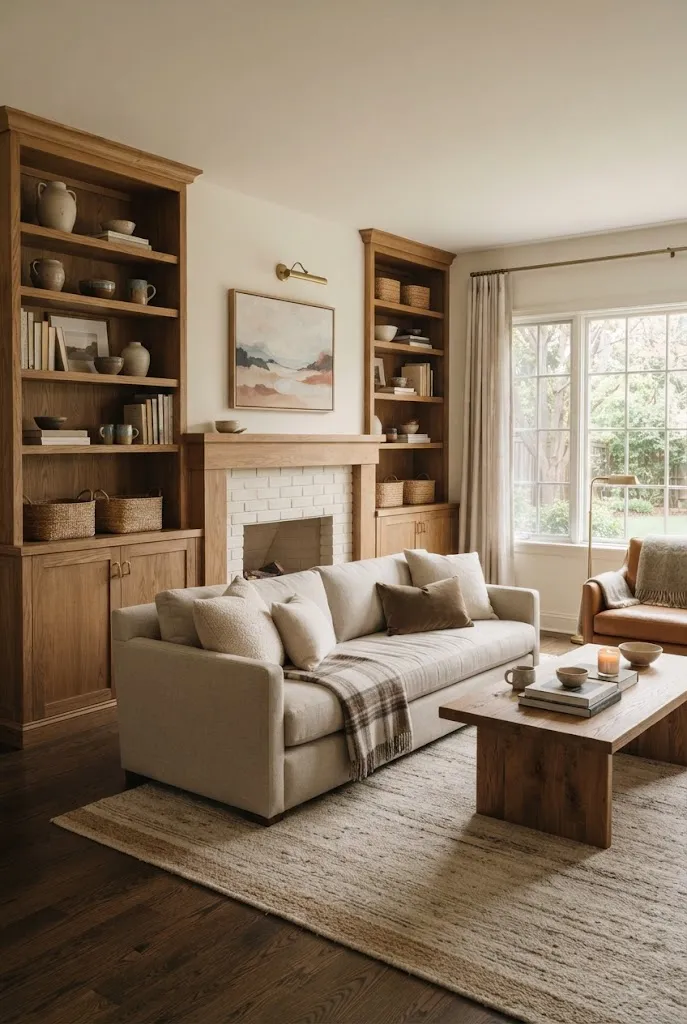
Built-in shelving can make a living room feel more intentional while providing space for books, art, ceramics, baskets, and personal objects. The key is to leave some open space between groupings rather than filling every shelf.
Combine vertical books with horizontally stacked books, then add objects at different heights. A few empty areas allow the shelving itself to remain part of the design.
For a more accessible update, freestanding bookcases can create a similar visual effect without permanent construction.
12. Soften the Windows With Full-Length Curtains
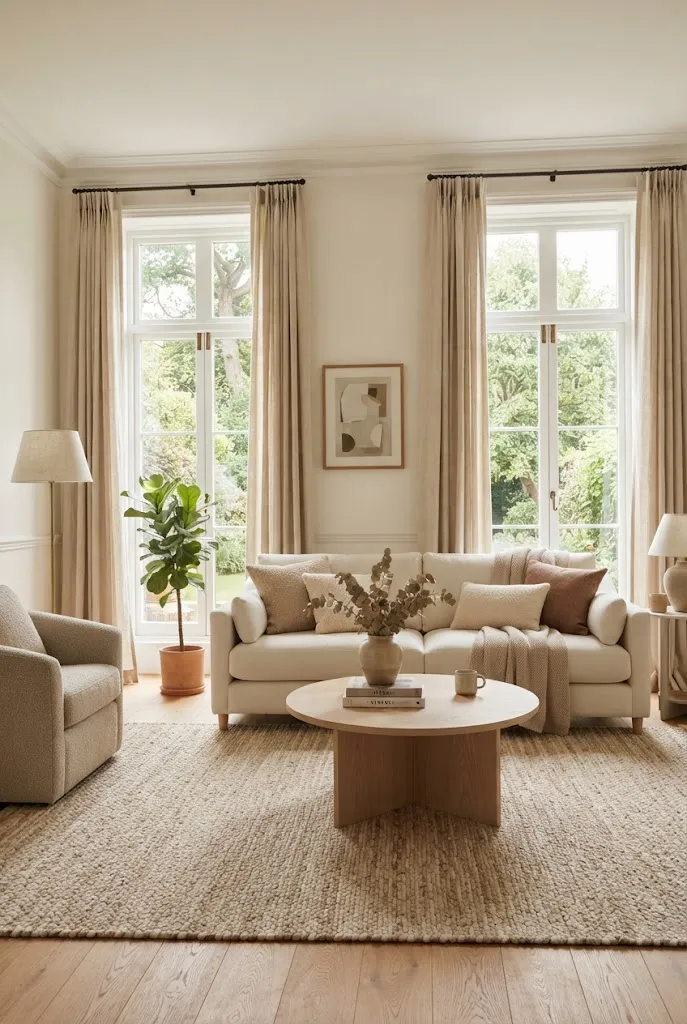
Window treatments can dramatically change the mood of a living room. Full-length curtains made from linen, cotton, or another softly draping fabric can make windows feel taller and add another layer of texture.
Mounting the curtain rod appropriately above the window and allowing the fabric to fall close to the floor can create a more finished appearance. For rooms that receive strong afternoon sun, lined or layered window treatments can also help manage brightness.
Choose a tone that relates to the walls or upholstery without necessarily matching them exactly.
13. Add a Curved Chair or Rounded Coffee Table
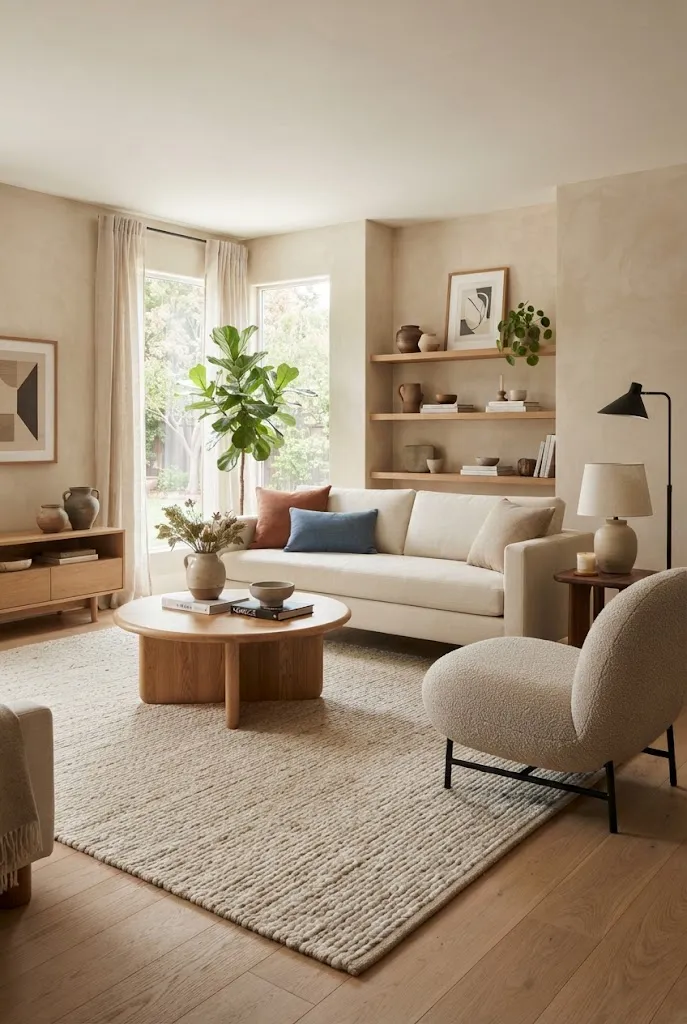
Curved furniture can soften a room dominated by straight architectural lines. A rounded coffee table, barrel chair, curved sofa, or oval ottoman introduces a different silhouette without changing the overall style.
Use one or two curved elements rather than turning every piece into a rounded form. A circular table can also improve circulation in a compact seating arrangement because there are no sharp corners to navigate around.
Pair rounded forms with straight-lined shelving or a rectangular rug for balance.
14. Create a Cozy Corner With a Floor Lamp and Ottoman
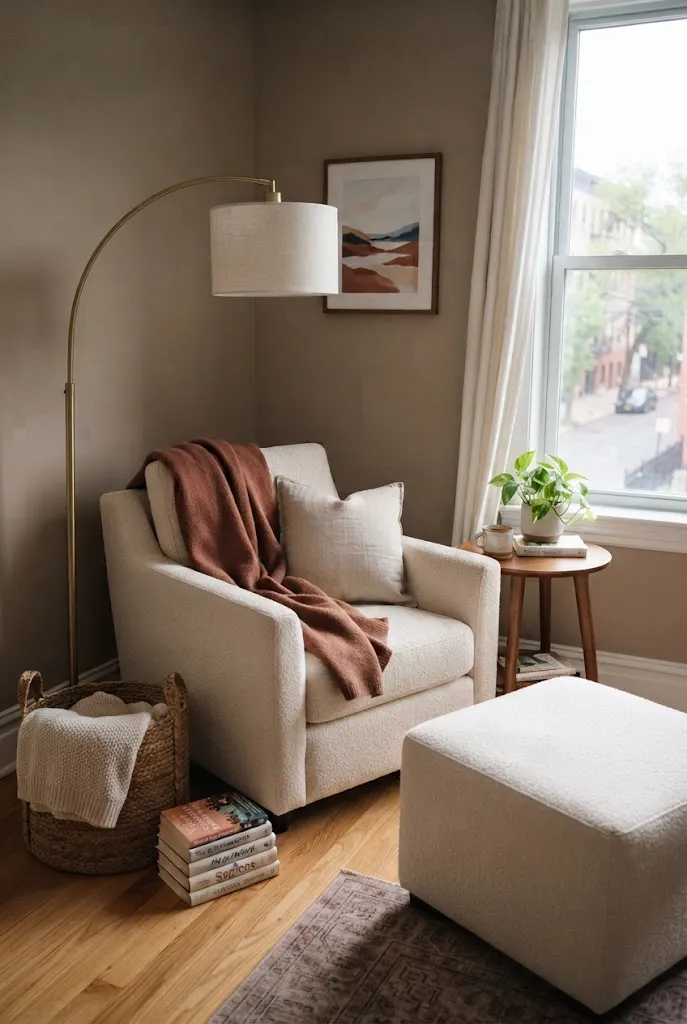
An unused corner can become one of the most comfortable parts of the room with just a chair, ottoman, floor lamp, and small side table. The arrangement works particularly well when the chair faces into the room rather than simply facing a wall.
Choose a floor lamp with an adjustable or appropriately directed shade, then use the ottoman as a footrest or extra seating. A small basket nearby can hold blankets while keeping the corner organized.
This approach is especially useful in apartments where every part of the room needs a practical purpose.
15. Style the Coffee Table With Practical Layers
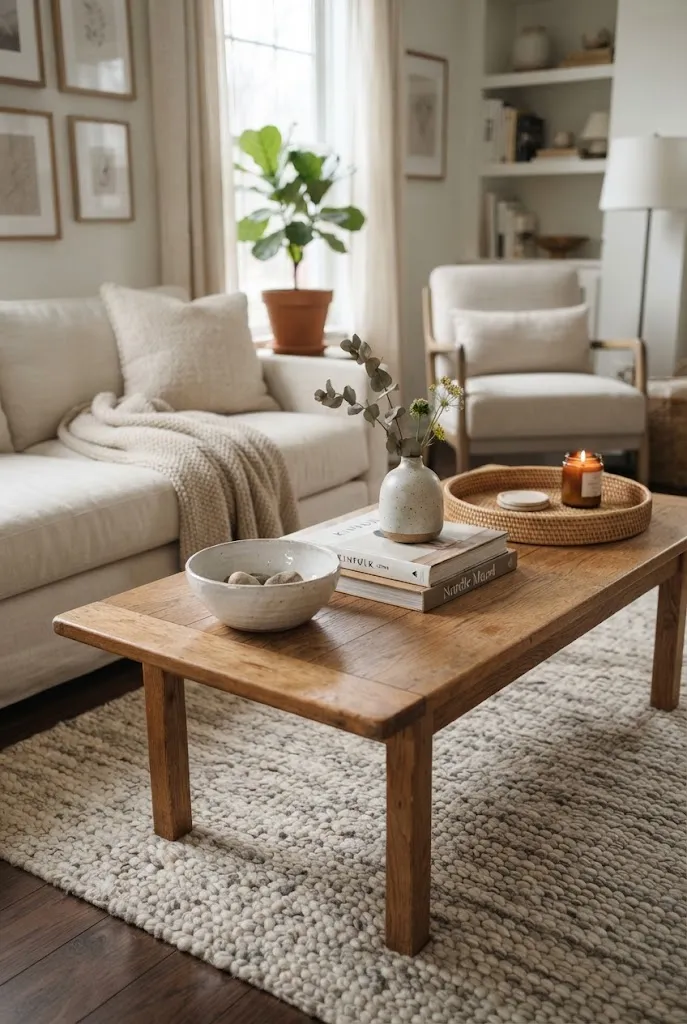
A coffee table can contribute to the room’s cozy feeling without becoming a collection of decorative objects that need to be moved every time someone uses the table. Start with one tray or shallow bowl, then add a few books, a ceramic vessel, and perhaps a small natural element.
Leave enough open surface for drinks and everyday use. The arrangement should feel intentional but easy to live with.
For families, use sturdy pieces and avoid fragile objects near the edges. A large tray can also make it easier to clear the table quickly when needed.
16. Mix Vintage Pieces With Modern Furniture
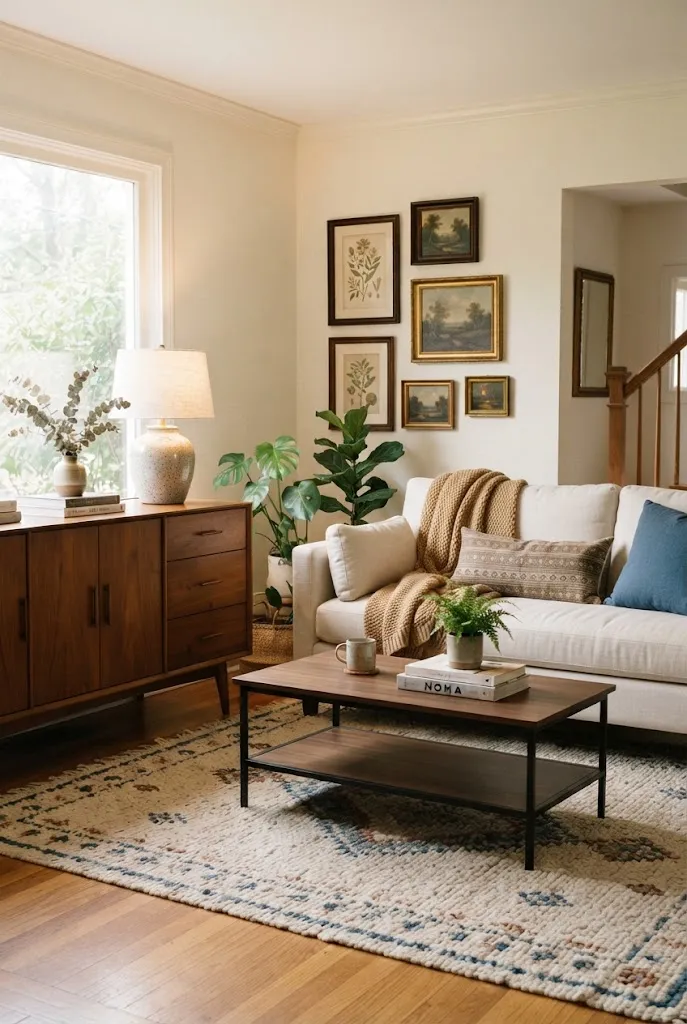
A room can feel warmer when it isn’t assembled entirely from pieces purchased at the same time. Combine a contemporary sofa with a vintage wood cabinet, antique-style mirror, older side table, or traditional artwork.
The contrast creates a collected feeling while keeping the room current. Look for one or two pieces with visible character instead of filling the space with antiques.
The most successful mix usually has some common thread, such as a shared wood tone, repeated accent color, or related shape.
17. Use a Gallery Wall With Breathing Room
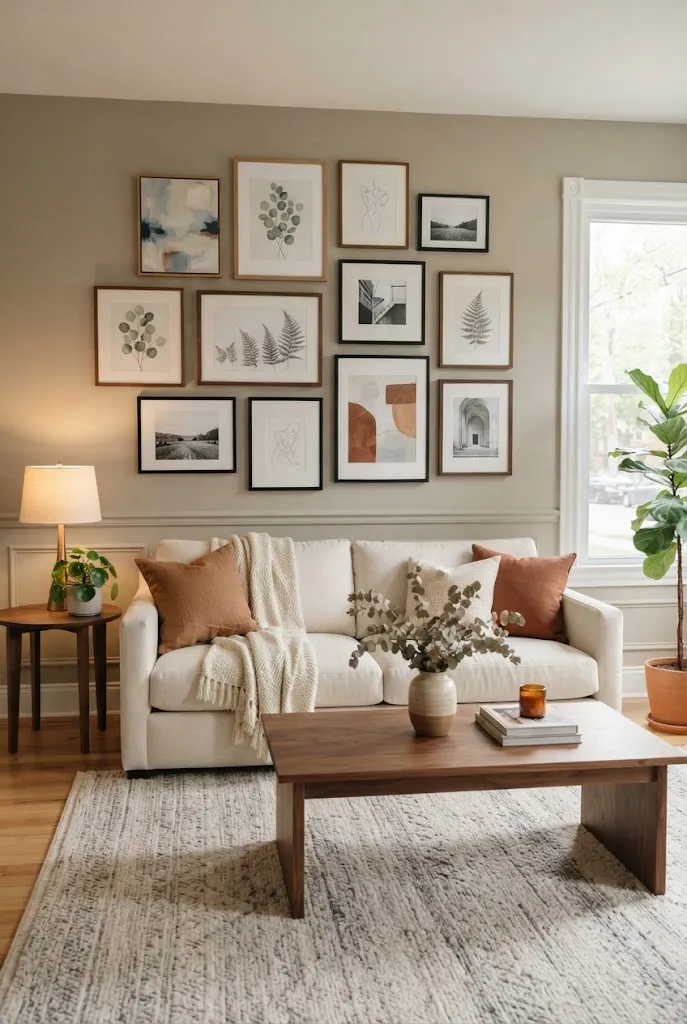
Artwork can make a living room feel personal and finished without adding bulky furniture. A gallery wall works particularly well above a sofa or along a large empty wall, but the arrangement should relate to the size of the furniture beneath it.
Mix framed artwork, photography, sketches, or simple prints in a restrained palette. The frames don’t have to match perfectly, although repeating one finish can make a varied collection feel more cohesive.
Leave enough visual breathing room between the artwork and surrounding furniture.
18. Add a Small Ottoman for Flexible Seating
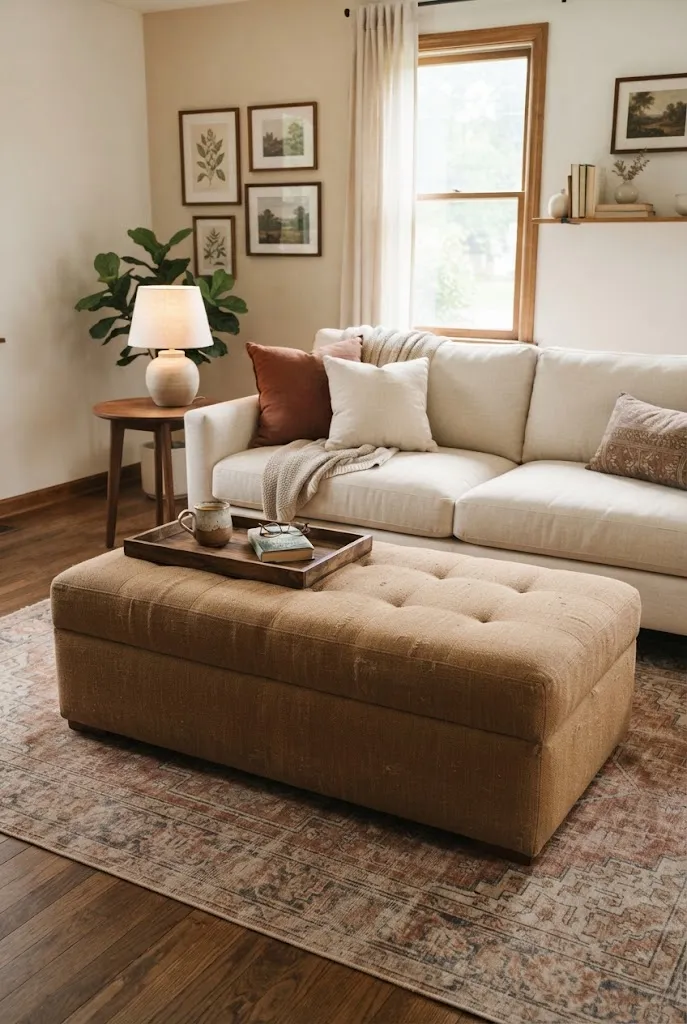
An ottoman can make a living room more flexible without requiring another full-size chair. Use it as a footrest beside the sofa, an occasional seat, or a small surface when topped with a sturdy tray.
Round and rectangular ottomans can both work. Choose the shape according to the existing furniture: a rounded ottoman can soften a room with angular pieces, while a rectangular version can visually extend a sofa.
For family spaces, performance upholstery or durable fabric can make the piece easier to use every day.
19. Add a Subtle Moody Accent Wall
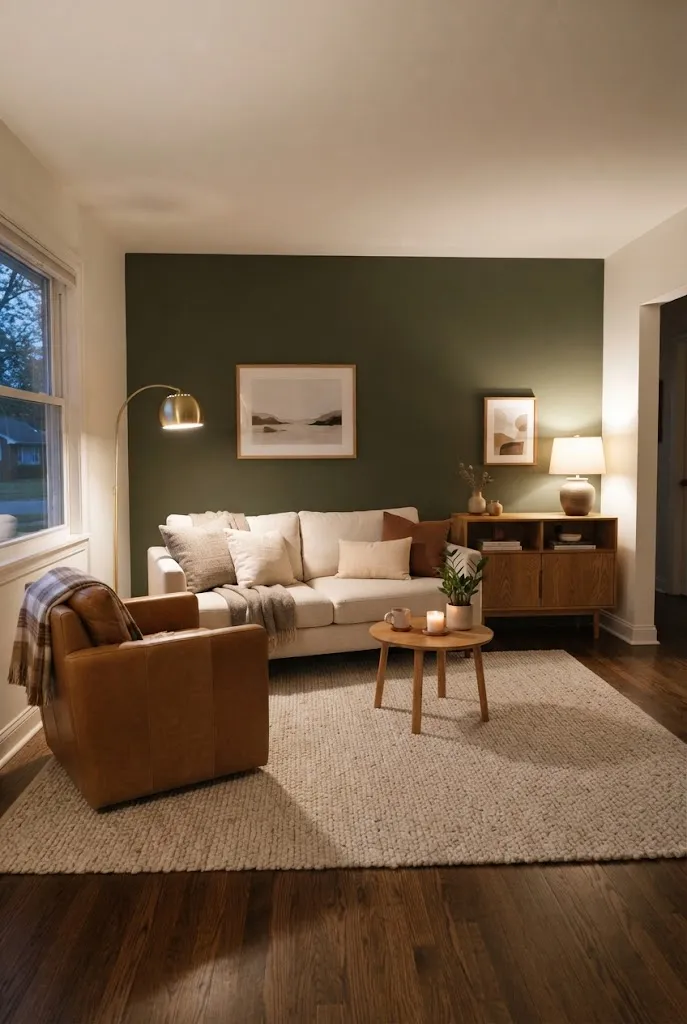
Cozy doesn’t always mean light and bright. A deeper accent wall can make a living room feel intimate, especially when paired with warm lighting and lighter upholstery.
Consider muted charcoal, deep olive, warm clay, smoky blue, or rich brown rather than an extremely saturated shade. Keep the surrounding furniture relatively calm so the wall provides atmosphere without becoming visually overwhelming.
This approach can be particularly effective around a fireplace, media wall, or built-in shelving.
20. Finish With Personal Objects and Everyday Comforts
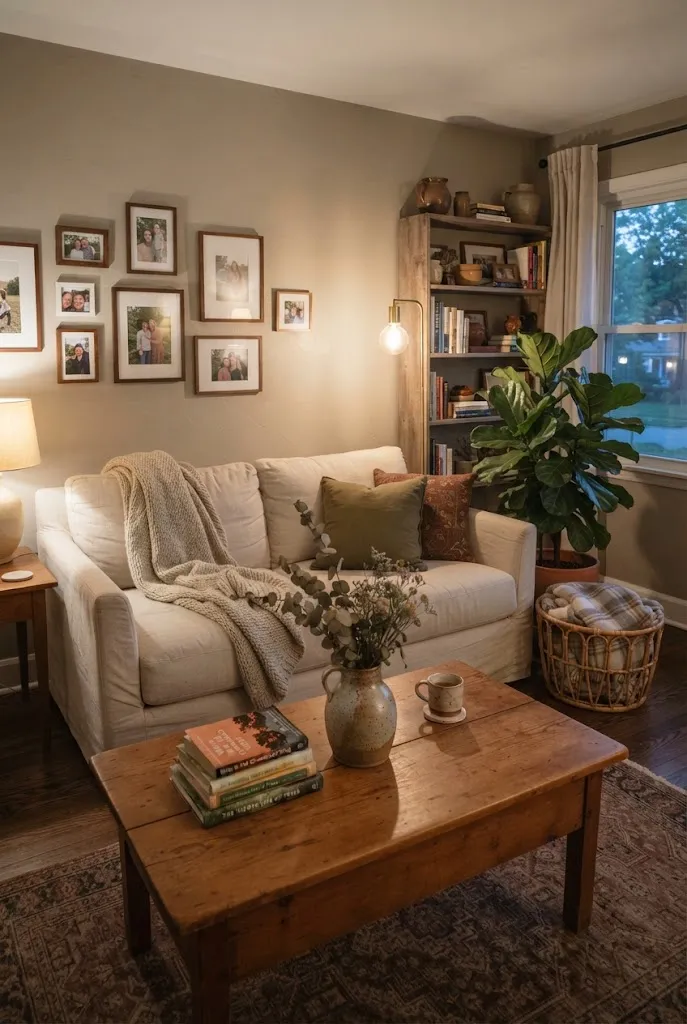
The final layer of a cozy living room is often the least expensive: objects that make the room feel connected to the people who use it. Books, framed photographs, travel finds, handmade ceramics, blankets, baskets, plants, and a few meaningful decorative pieces can give a room character.
The key is editing. Choose objects that have some personal relevance or visual connection rather than filling every surface. Leave room for everyday life to happen.
A stylish living room shouldn’t look untouched. A folded throw on the arm of a chair, a few books on the coffee table, and a basket holding blankets can communicate comfort without creating clutter.
Making Cozy Living Room Ideas Work in Your Space
The best cozy living room ideas are the ones that fit the way you actually use the room. Start with the biggest visual or functional issue rather than changing everything at once. If the space feels cold, try warmer lighting and more natural textures. If it feels disconnected, reconsider the furniture layout and rug size. If it feels cluttered, edit the accessories before adding anything new.
A small apartment may only need a comfortable chair, floor lamp, rug, and a few textiles. A larger suburban living room might benefit from a defined conversation zone, built-ins, layered lighting, and multiple seating options. The same design principles can work at different investment levels because coziness comes as much from proportion, texture, light, and usability as from expensive furniture.