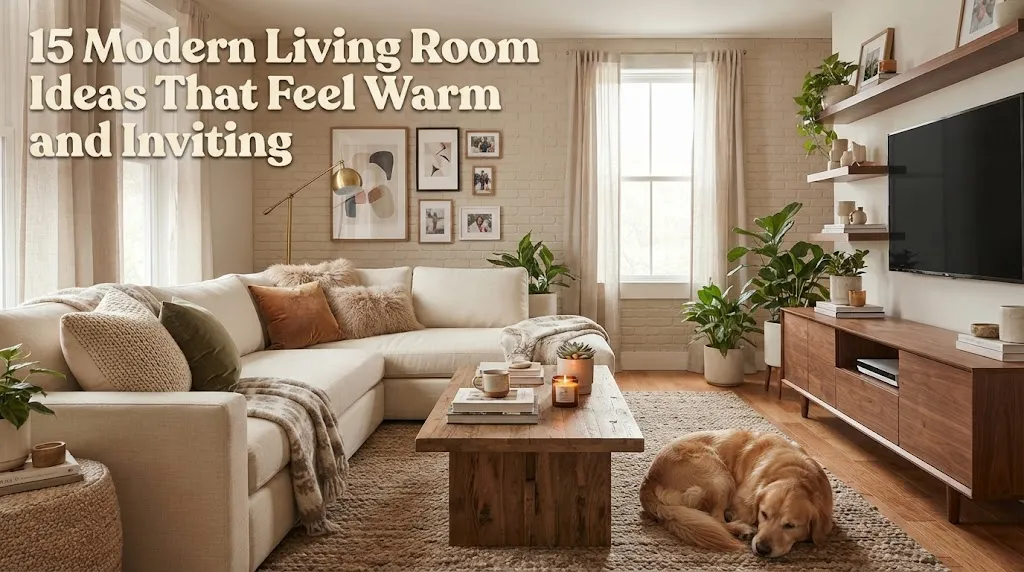
15 Modern Living Room Ideas That Feel Warm and Inviting
Introduction
Modern living rooms don’t have to feel cold, stark, or overly minimal. The most inviting spaces balance clean architecture and simple furniture with materials, colors, lighting, and textures that make the room comfortable enough for everyday life. Warm wood, soft upholstery, layered lighting, natural fabrics, and thoughtfully chosen accessories can give a contemporary room plenty of personality without making it feel cluttered.
These modern living room ideas explore different ways to create that balance. Some focus on color, while others use furniture arrangement, lighting, architectural details, plants, or tactile materials to make the space feel more relaxed. Whether you’re decorating a compact apartment or a spacious suburban home, the goal is the same: a room that looks current but still feels genuinely lived in.
1. Pair a Neutral Sofa With Warm Wood
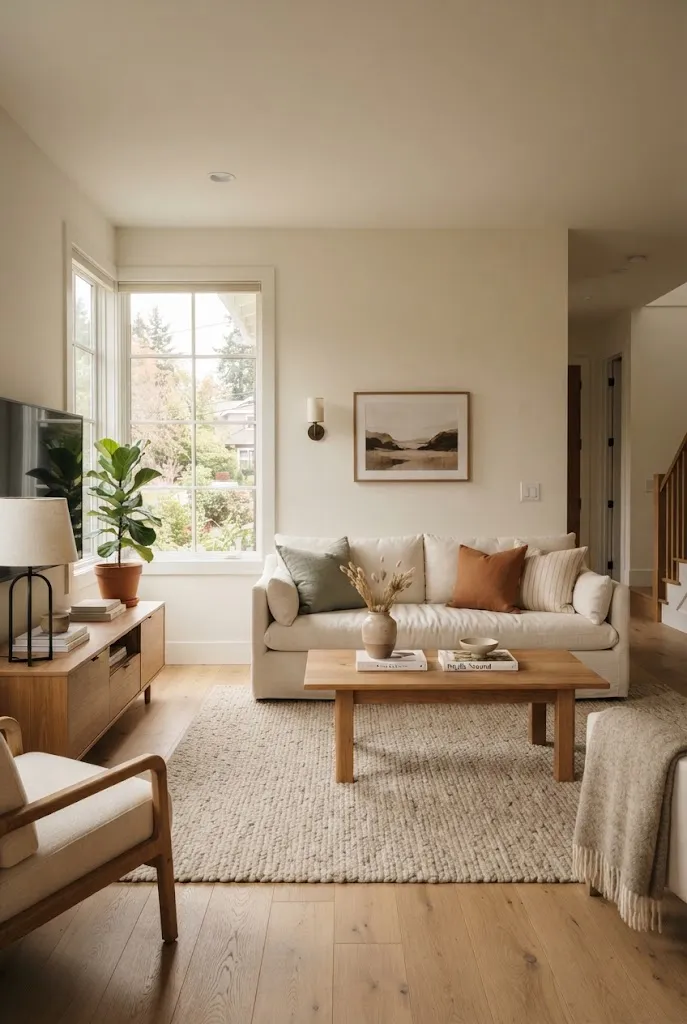
A neutral sofa is a natural starting point for a modern living room, but the surrounding materials determine whether it feels inviting or overly plain. Instead of building the entire room around cool gray or stark white, introduce warm oak, walnut, or natural wood tones through a coffee table, media console, shelving, or accent chair.
Keep the furniture silhouettes relatively simple so the wood becomes part of the visual warmth rather than decorative clutter. A cream, oatmeal, or soft taupe sofa works particularly well with medium-toned wood.
2. Use Cream Instead of Bright White
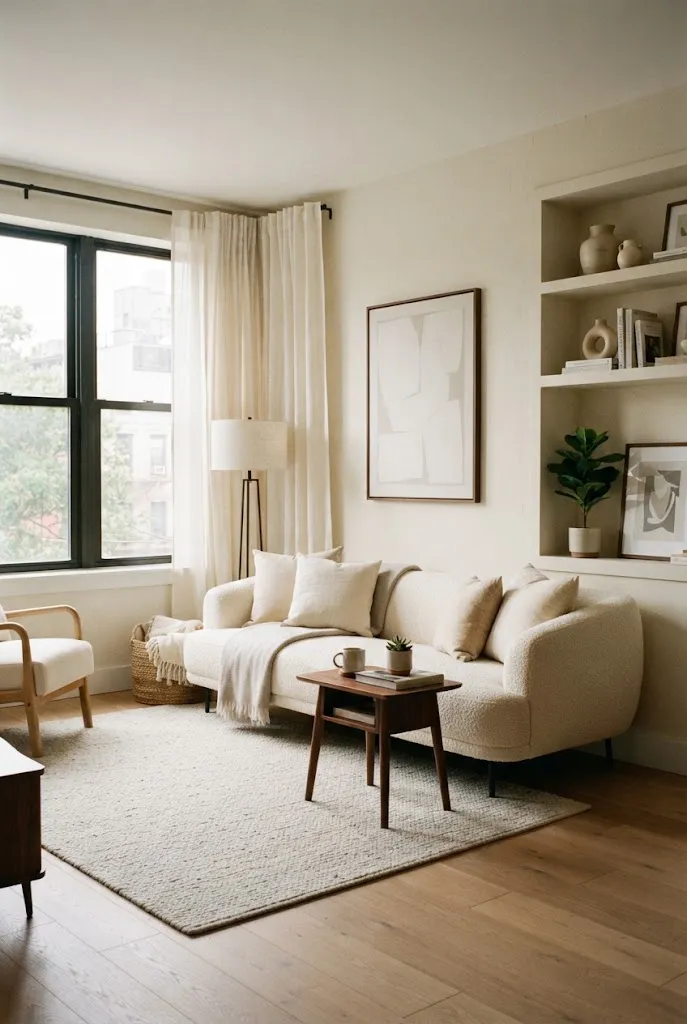
White can make a modern room feel fresh, but a warmer cream palette often creates a softer atmosphere. Think ivory walls, creamy upholstery, warm white curtains, and pale beige textiles rather than brilliant white surfaces throughout the room.
The difference is subtle but important. Cream reflects natural light beautifully while reducing the sharp contrast that can sometimes make minimalist interiors feel formal. Add a darker wood table or a muted brown accent chair to keep the palette grounded.
For a small living room, this approach can also maintain a light visual quality without making the space feel sterile.
3. Add a Large Textured Rug
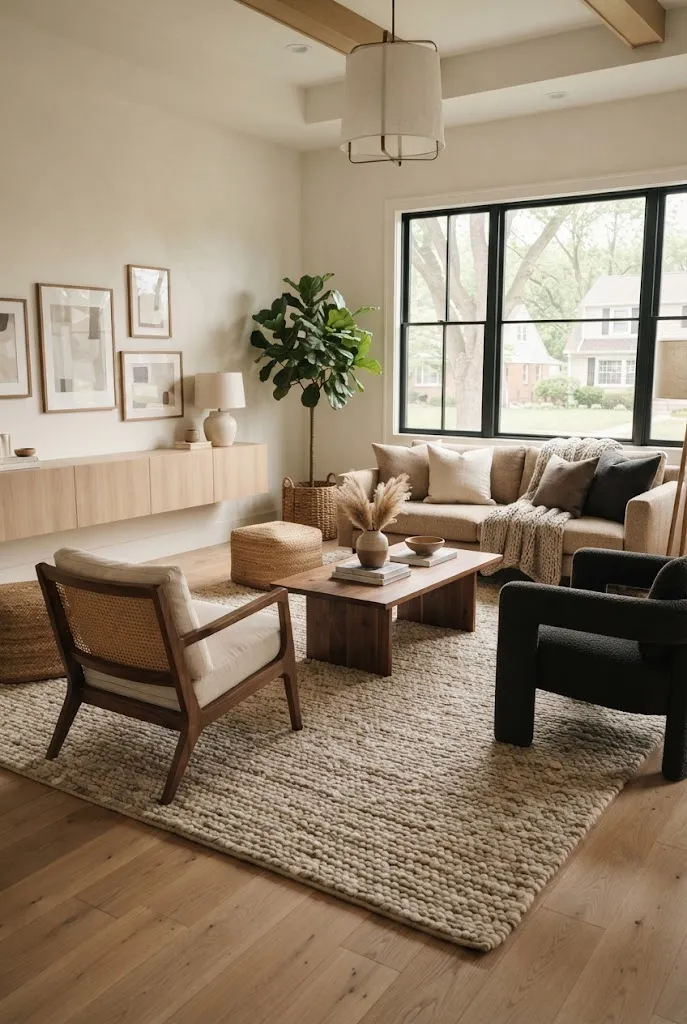
A modern living room can become much more comfortable simply by changing what’s underfoot. A large rug visually connects the seating area and introduces softness without requiring additional decoration.
Choose a rug with subtle texture rather than an overly busy pattern. Wool, wool-look, woven, or gently ribbed designs can work well with contemporary furniture. Ideally, the rug should extend far enough beneath the main seating pieces to make them feel like one intentional arrangement.
4. Introduce a Curved Accent Chair
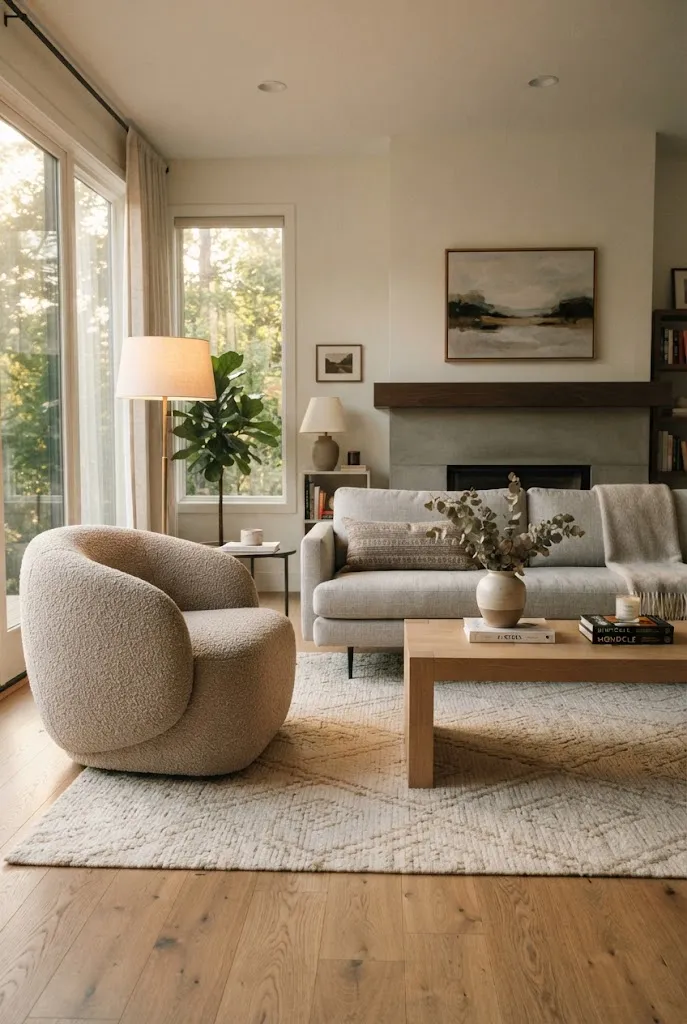
Straight lines are common in contemporary furniture, so a single curved chair can soften the overall composition. Look for a rounded lounge chair, curved-back accent chair, or gently sculptural seat in boucle, linen, leather, or another tactile upholstery.
Place it beside the sofa rather than directly matching every other piece. The contrast between straight architectural lines and curved furniture creates visual movement while keeping the room modern.
A rounded coffee table can reinforce the idea, but it isn’t necessary. One strong curved element may be enough.
5. Warm Up the Room With Layered Lighting
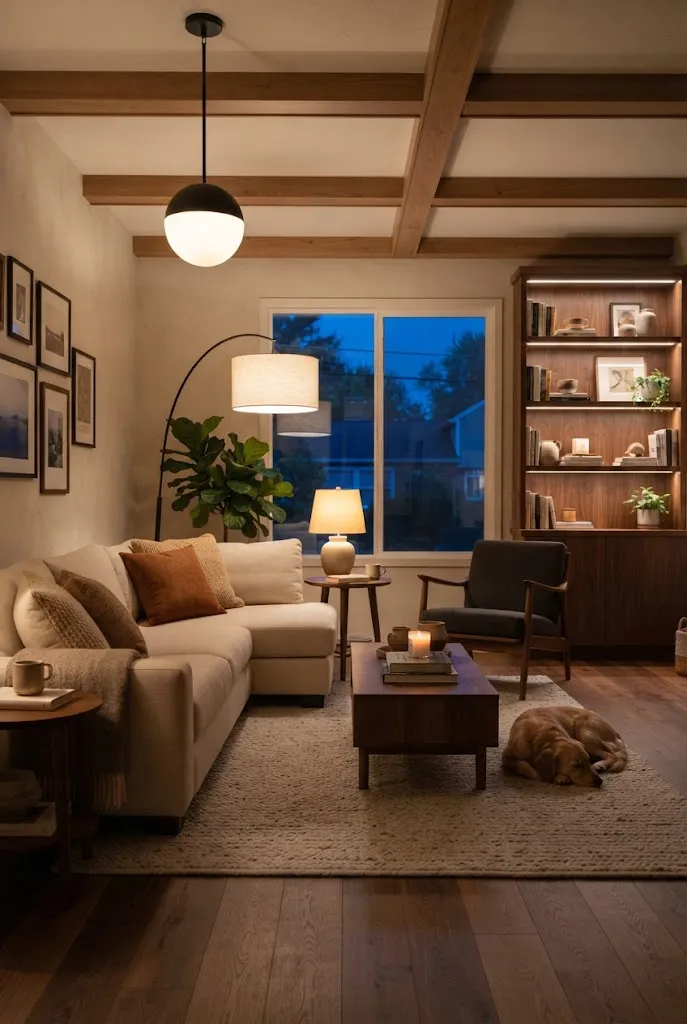
One ceiling fixture rarely creates the most welcoming atmosphere. Modern living rooms benefit from several sources of light placed at different heights.
Try combining:
- A simple ceiling fixture for general illumination
- A floor lamp beside the sofa
- A table lamp on a console or side table
- Soft accent lighting near shelving or artwork
The goal isn’t to make every corner equally bright. Instead, create gentle pools of light that make the room feel comfortable in the evening.
6. Mix Linen, Wool, and Woven Textures
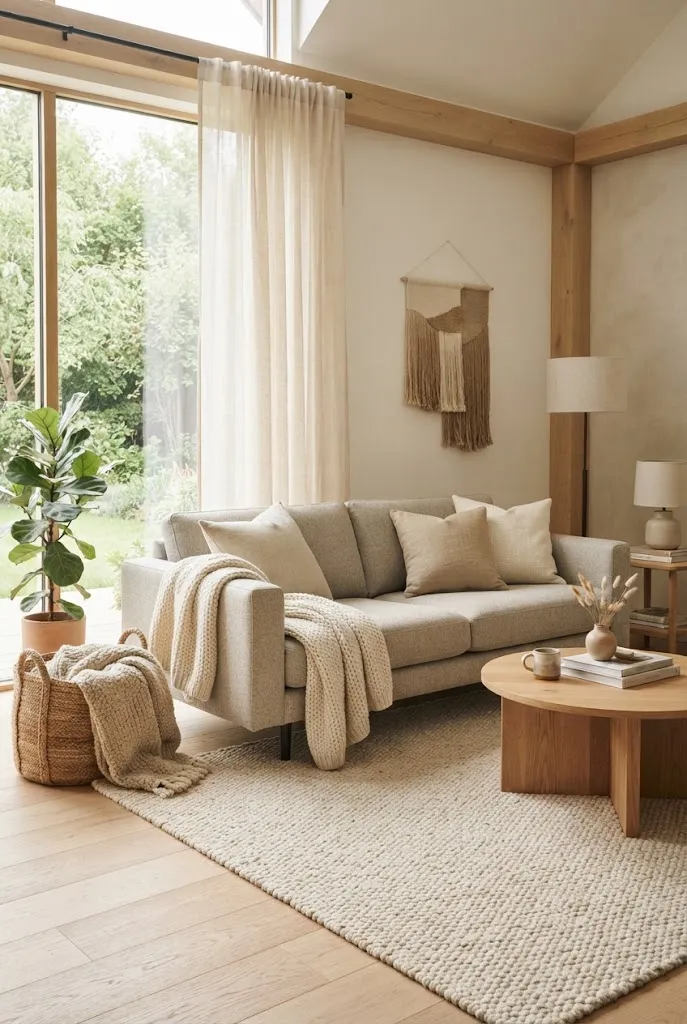
A room can have a restrained color palette and still feel rich when the textures vary. Linen curtains, a wool rug, woven baskets, cotton cushions, and a textured throw can create depth without introducing lots of color.
This strategy is particularly useful in neutral modern interiors. Rather than adding more decorations, change the surfaces and fabrics people see and touch.
Keep the colors within a related family so the different materials feel intentional.
7. Create a Warm Focal Wall With Paint
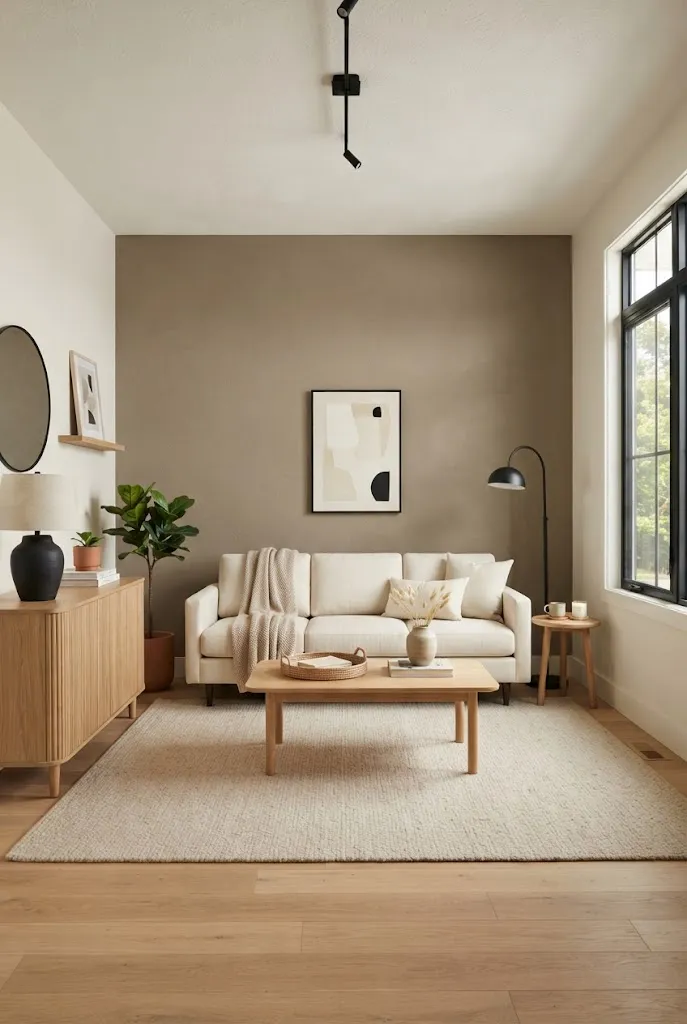
A modern room doesn’t need elaborate wall treatments to have a strong focal point. A carefully selected warm paint color can create depth behind a sofa or media console.
Consider muted clay, warm greige, soft olive, earthy taupe, or a subdued mushroom shade. The best choice depends on the room’s natural light and existing furniture.
If you’re unsure about committing to the entire room, use the color on one architectural wall and keep the remaining surfaces lighter.
8. Bring in Greenery With One Oversized Plant
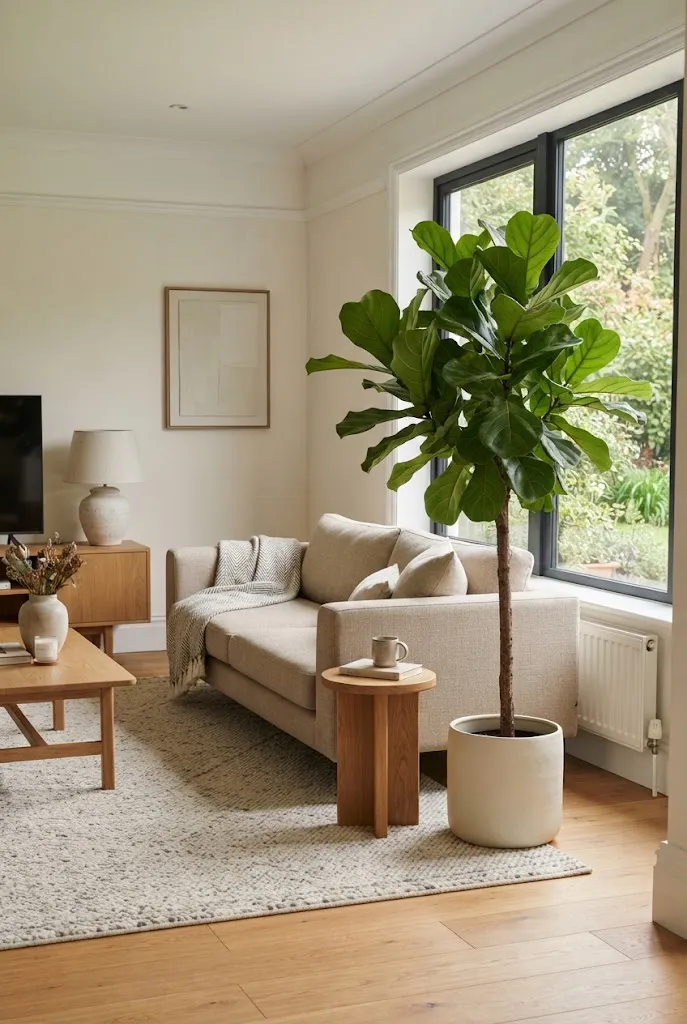
Plants can make modern interiors feel more connected to nature without disrupting a clean design. Instead of filling every surface with small plants, consider one substantial floor plant in a simple ceramic or woven planter.
A tall plant beside a sofa, window, or empty corner can fill vertical space while maintaining an uncluttered look. Choose a plant suited to the actual light conditions of the room rather than selecting one purely for appearance.
The container matters, too. A simple matte ceramic or natural basket planter usually works better than an overly decorative pot in a minimalist setting.
9. Choose a Wood Coffee Table With Character
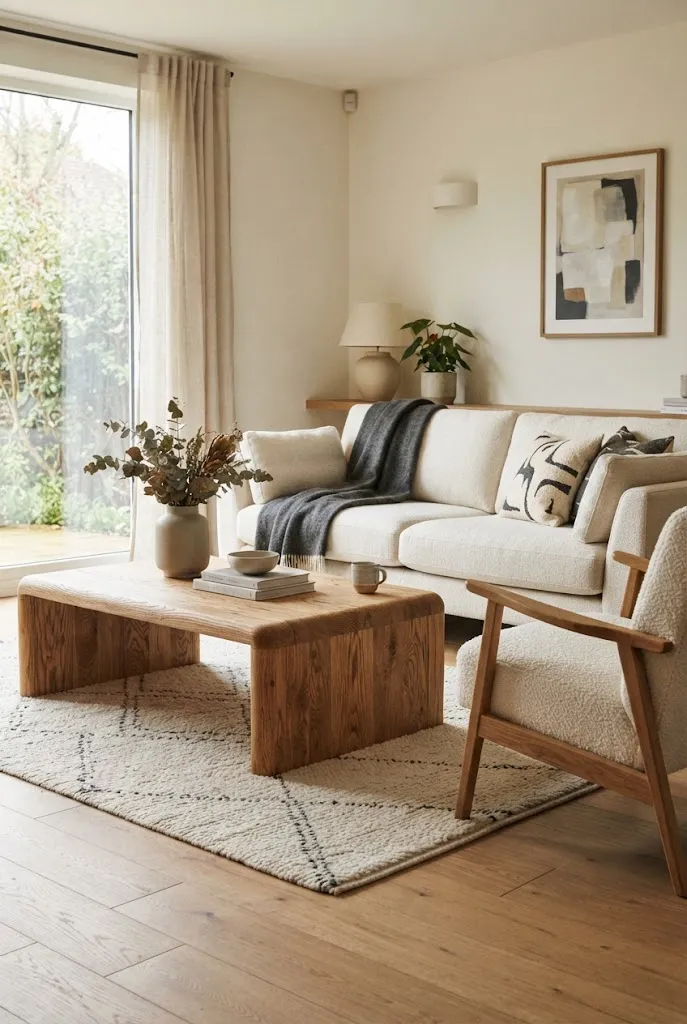
Modern doesn’t have to mean perfectly uniform. A coffee table with visible wood grain, gently rounded edges, or a handcrafted appearance can introduce warmth while preserving a contemporary silhouette.
Look for a piece that has enough visual presence to anchor the seating area but doesn’t overpower the sofa. Organic wood forms work particularly well against straight-lined furniture.
Leave some of the tabletop open. A single tray, book stack, or small ceramic object often looks more intentional than a crowded arrangement.
10. Use Soft Brown as a Modern Accent Color
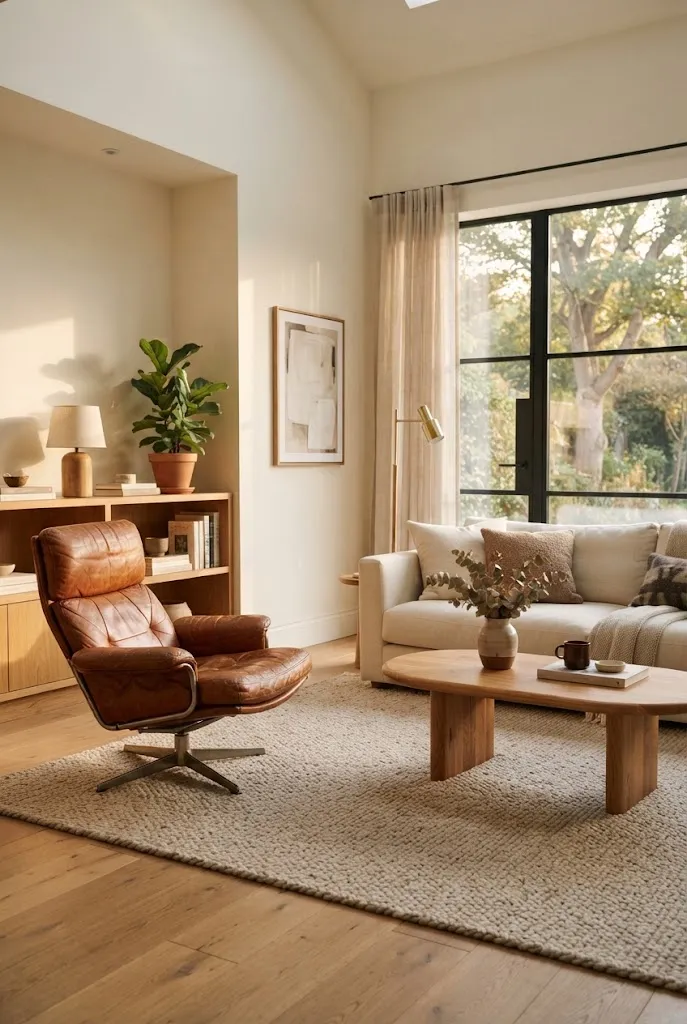
Brown has become an especially useful way to warm a contemporary palette without abandoning a modern aesthetic. Instead of using bright accent colors, introduce chocolate, caramel, cognac, or muted mocha through a leather chair, cushions, curtains, artwork, or smaller furniture.
The key is repetition. If you use a brown leather chair, echo that tone subtly in another part of the room with wood, ceramics, or textiles.
| Brown Accent | Works Well With | Overall Effect |
|---|---|---|
| Cognac | Cream and oak | Warm and relaxed |
| Chocolate | Ivory and black | Deeper and moodier |
| Mocha | Beige and walnut | Soft and earthy |
11. Frame the TV With Simple Built-In Storage
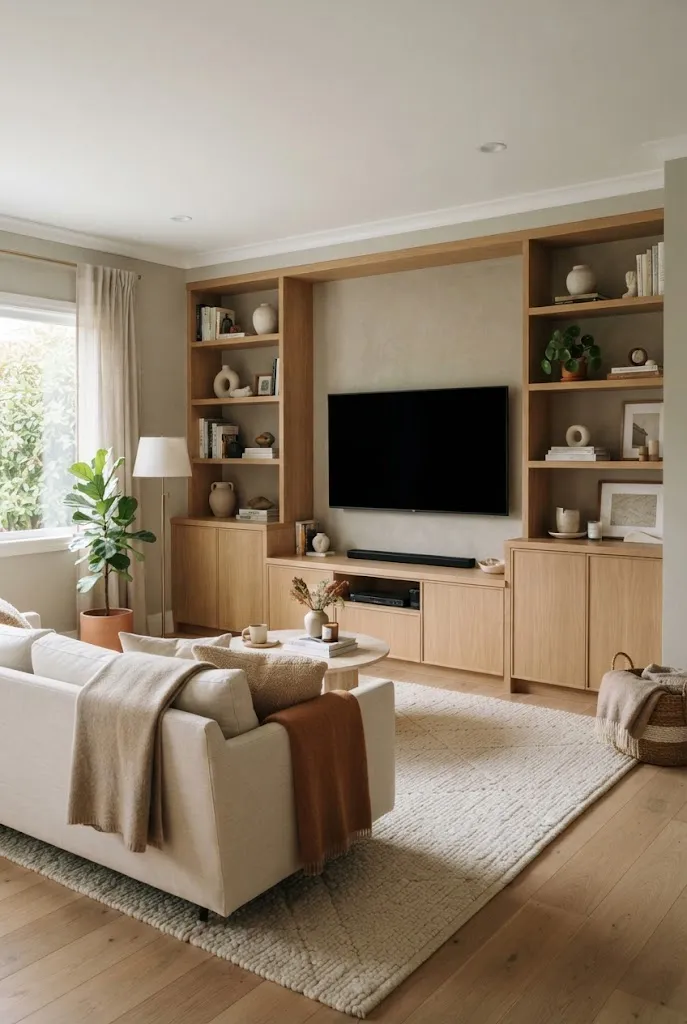
A television can easily become the visual center of a living room, but surrounding it with thoughtful storage can make the wall feel more integrated. Simple built-in shelving or cabinetry can provide space for books, baskets, ceramics, and everyday items.
Keep the cabinetry visually calm. Flat fronts, warm wood, or a combination of painted panels and open shelves can complement contemporary architecture without making the wall feel heavy.
12. Add a Fireplace With Natural Material
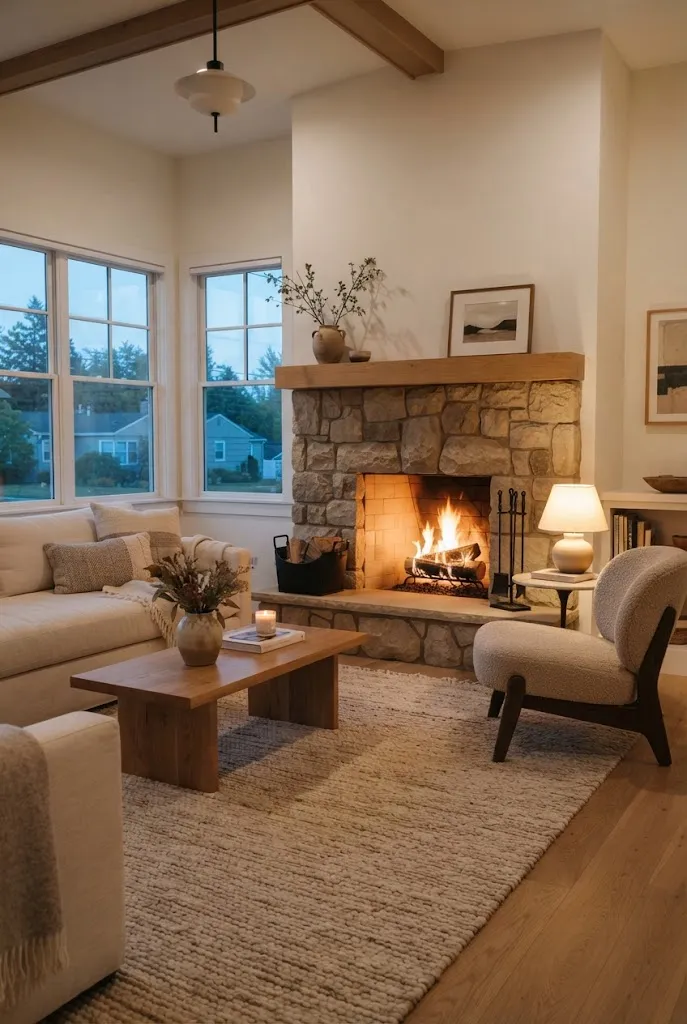
If your room has a fireplace, let it become an architectural source of warmth. Natural stone, textured plaster, brick, or warm-toned tile can create a focal point while maintaining a modern profile.
A simple fireplace surround often has more impact than a heavily decorated mantel. Pair it with comfortable seating and a few tactile materials so the architectural feature doesn’t feel disconnected from the rest of the room.
For a rental or renovation-free space, a similar effect can sometimes be suggested with a freestanding electric fireplace and carefully selected surrounding furniture.
13. Let the Windows Stay Light and Simple
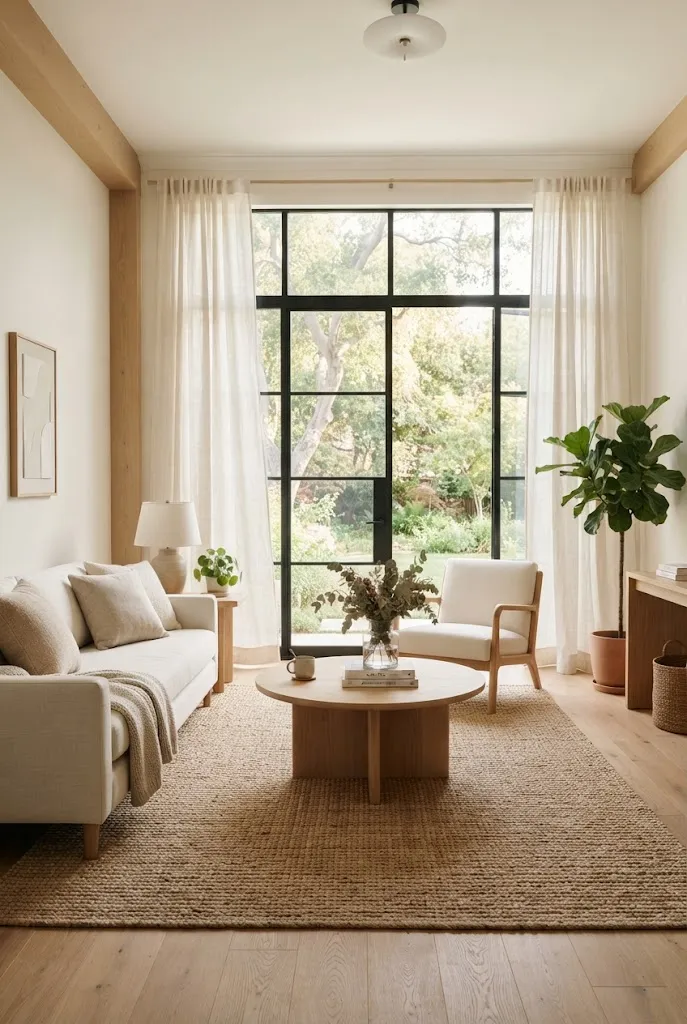
Heavy window treatments can sometimes make a contemporary room feel darker than necessary. Lightweight linen or cotton curtains allow natural light to remain part of the design while adding softness around the windows.
Hang curtains high and allow enough fabric to frame the window without creating excessive bulk. If privacy is important, combine sheer panels with a practical shade rather than relying on heavy curtains alone.
This approach works particularly well in modern spaces where the windows themselves are an important architectural feature.
14. Mix Modern Furniture With Vintage-Looking Pieces
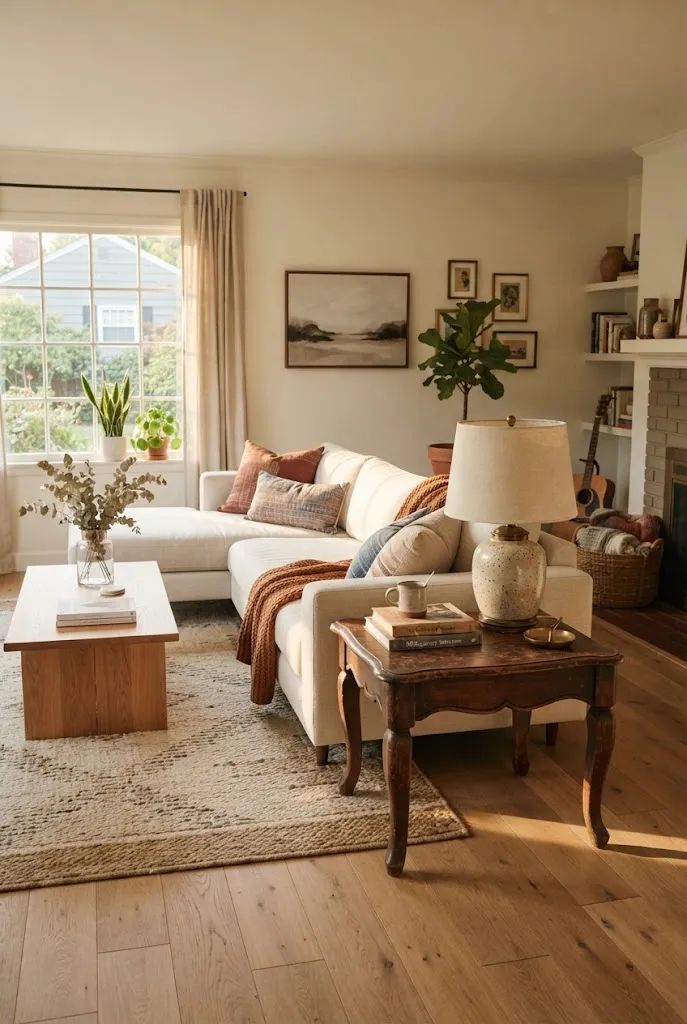
A room filled entirely with new contemporary furniture can sometimes feel too coordinated. One vintage-inspired or genuinely older piece can introduce character and make the space feel collected over time.
Try an older wooden side table, vintage-style lamp, antique ceramic, framed artwork, or secondhand chair with an interesting silhouette. The piece doesn’t need to dominate the room. Its role is to provide contrast against newer furniture.
Quick Tip: Choose one or two character pieces rather than turning the entire living room into a period-style space.
15. Keep the Styling Simple but Personal
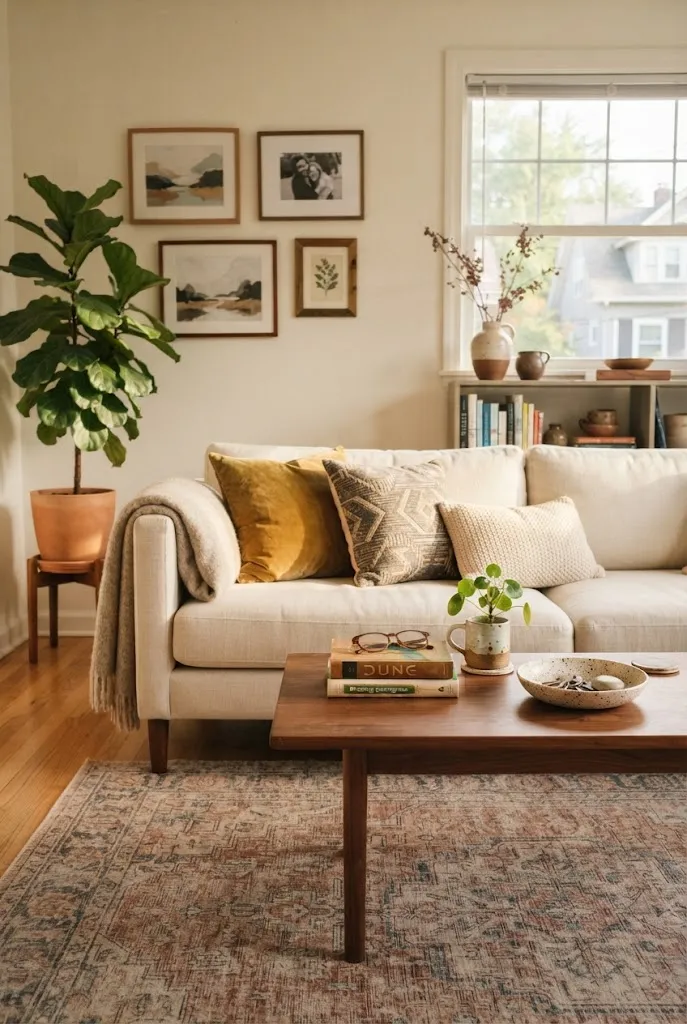
Warmth ultimately comes from more than furniture and finishes. A modern living room feels more inviting when it contains a few objects that suggest the people who actually use it.
Display a small collection of books, meaningful artwork, travel finds, ceramics, family photographs, or a favorite blanket. The trick is editing. Keep enough open space around personal pieces so the room retains its modern clarity.
A useful approach is to begin with the larger furniture and lighting, then add personal objects gradually. If something doesn’t serve a practical, emotional, or visual purpose, it doesn’t necessarily need to stay.
How to Make a Modern Living Room Feel Warmer
The easiest way to soften a contemporary living room is to work in layers rather than replacing everything at once. Start with the largest visual elements, then build warmth through smaller details.
- Choose a warm base: Cream, ivory, beige, taupe, or another softly neutral foundation can keep the room calm.
- Add natural materials: Wood, woven fibers, stone, linen, and wool introduce visual and tactile variation.
- Soften the lighting: Combine overhead illumination with lamps at seating and storage areas.
- Balance straight lines: A curved chair, rounded table, or organic accessory can make a modern room feel less rigid.
- Edit the accessories: A few meaningful pieces usually create more character than a crowded collection.
The strongest rooms don’t rely on one trick. They combine several small choices that support the same feeling.