
22 Renter-Friendly Decor Ideas That Make Your Apartment Feel Like Home
Introduction
Beige walls, a ceiling light that flattens everything, and a lease that says “no nails” are the usual starting point in a rental. They don’t have to be the finishing point. The best renter-friendly decor ideas work in two directions: they change how the space looks today, and they pack into a moving truck without leaving a trace behind.
The 22 ideas below lean on lighting, layered textiles, freestanding furniture, and carefully chosen removable products. Most are easy and attainable, a handful call for a moderate investment, and a few are worth saving for because you’ll keep them through several apartments. Before you start, skim the short lease-check section near the end, since every landlord handles walls, paint, and hardware a little differently.
1. Lean an Oversized Floor Mirror Against the Wall
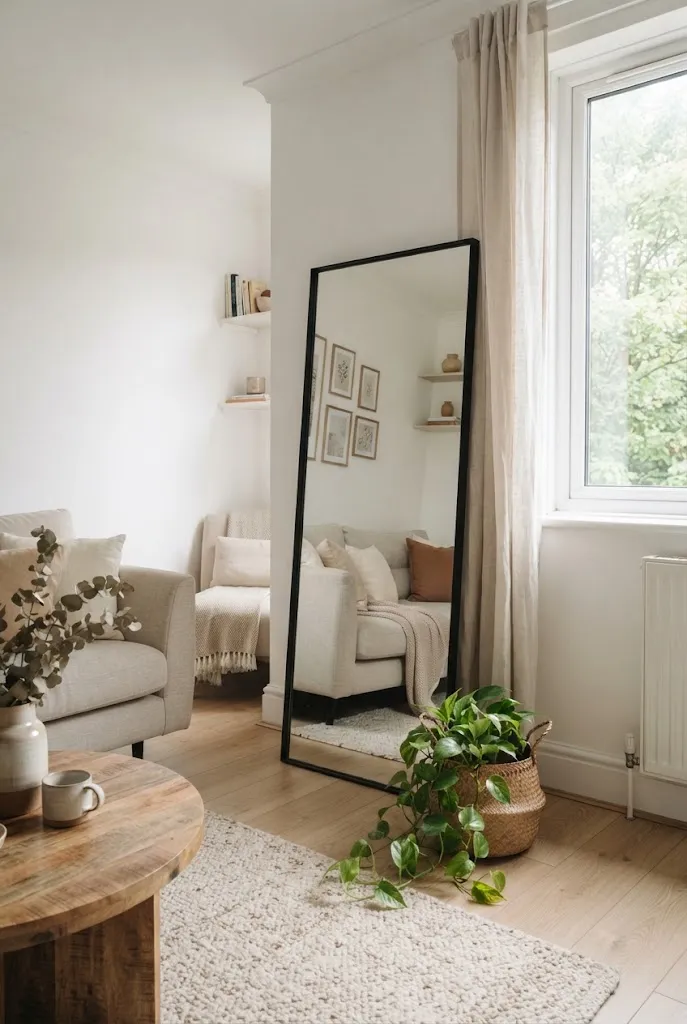
A tall mirror leaning against the wall does the job of a wall-mounted piece without a single screw. Choose one that’s at least five feet tall so it reads as architecture rather than an afterthought. A thin metal frame in black or brass looks crisp in modern apartments, while a wood frame fits warmer, older units.
Place it opposite or perpendicular to a window so it catches daylight and pushes it deeper into the room. In a dim hallway or a studio’s sleeping area, that reflected light can make the space feel noticeably less closed in.
Quick Tip: Slip a small rubber furniture grip or felt pad under each bottom edge so the mirror can’t slide on hard floors, and keep it out of the main walking path.
2. Build a Gallery Wall With Removable Adhesive Strips
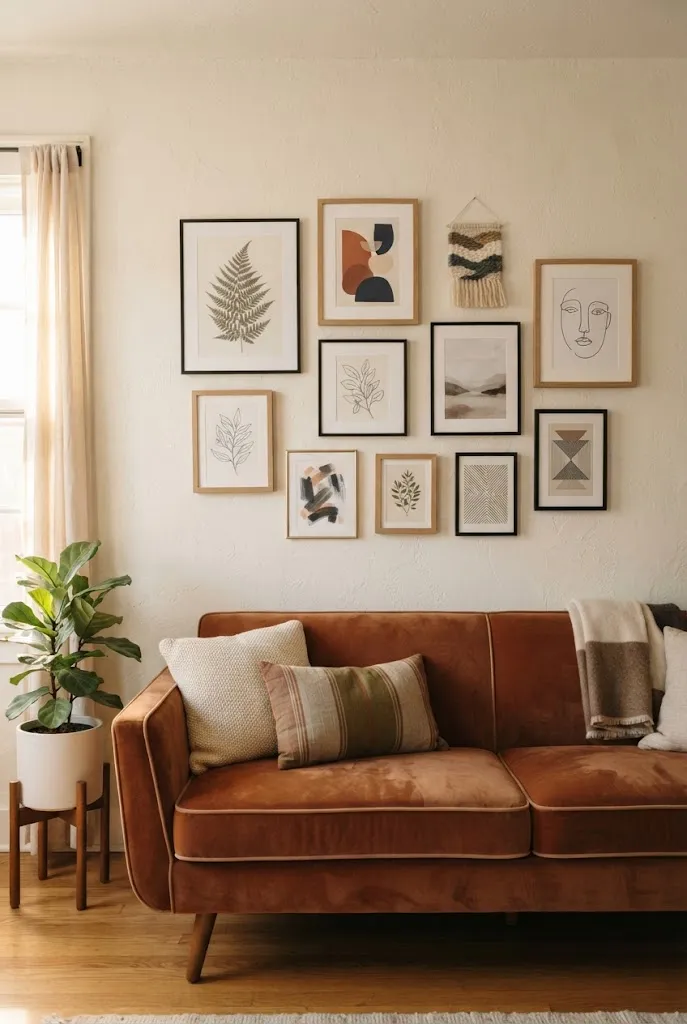
A gallery wall is one of the fastest ways to make a rental feel like it belongs to a specific person. Adhesive picture-hanging strips let you build one without nail holes, provided you stay within each package’s stated weight limit and apply them to clean, properly cured walls.
Lay everything out on the floor first. Mix framed prints, a small canvas, and one or two lightweight objects, then keep consistent spacing of about two to three inches between pieces. A shared frame color, such as all black or all natural wood, makes a varied collection look intentional.
- Anchor the arrangement with the largest piece slightly off-center.
- Use paper templates taped to the wall to check placement before committing.
- Choose acrylic glazing over glass for bigger frames to keep weight down.
- Press each strip firmly for the time the instructions specify.
Editor’s Note: Walls with textured or flaking paint don’t hold adhesive reliably. Test one strip in an inconspicuous spot for a few days first.
3. Put a Peel-and-Stick Wallpaper Panel Behind the Sofa
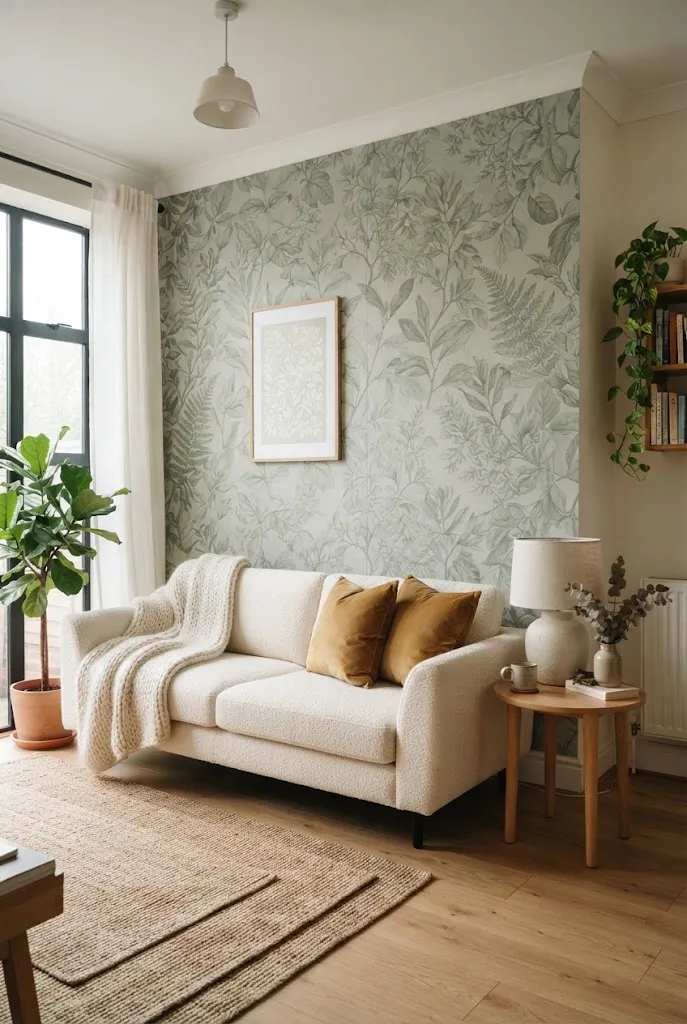
If you want one dramatic wall without paint, removable wallpaper delivers. A single feature wall behind the sofa creates a focal point and makes a standard rental living room look more designed than a full-room application would.
Large-scale botanical patterns, subtle grasscloth looks, and soft geometric prints all work well in apartments. Measure the wall carefully and order a little extra for pattern matching.
| Option | Effect | Best Fit |
|---|---|---|
| Large botanical print | Bold, organic movement | Neutral rooms needing a focal point |
| Grasscloth-look paper | Subtle texture, calm feel | Small living rooms, layered neutrals |
| Small geometric | Light pattern without busyness | Rooms already full of textiles |
Removal isn’t always risk-free. Poorly adhered paint can peel when the paper comes off, so apply a small test piece first and leave it for a few days before committing to the full wall.
4. Swap Hardwired Fixtures for Plug-In Wall Sconces
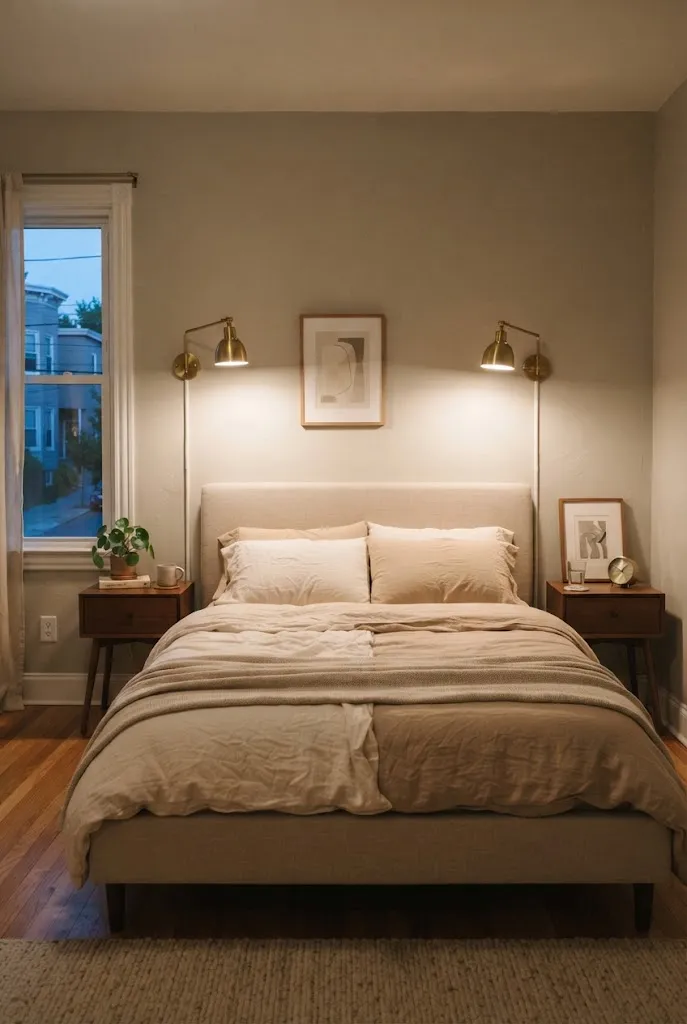
Plug-in sconces give you wall-level lighting without an electrician. Look for models with long cords and an on/off switch on the cord or fixture. Mount them using whatever your lease allows. Many renters hang them on a single small hook, and others lean on adhesive options for the lightest designs.
Place them on either side of a bed, sofa, or dining nook, roughly at eye level when seated. Warm bulbs in the 2700K range give a softer, more residential glow than the cool white commonly found in builder-grade rentals.
Do: Run the cord in a straight vertical line and cover it with a paintable or color-matched cord channel.
Don’t: Let cords loop across doorways or hang loosely near heat sources.
5. Layer a Rug Over Builder-Grade Flooring
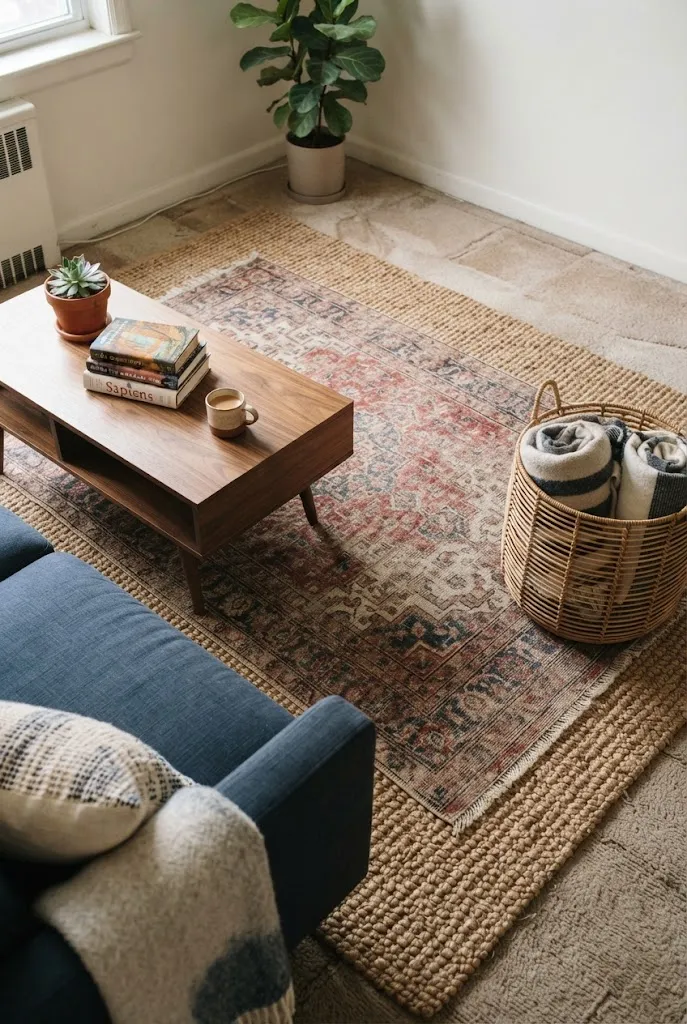
Beige carpet and worn laminate are common rental headaches. A large area rug resets the whole room at once, hiding the flooring while adding warmth, sound dampening, and pattern. Size matters: in living rooms, the front legs of the sofa and chairs should sit on the rug, and a rug that’s too small tends to make the room feel unfinished.
For a more collected look, layer a smaller patterned or vintage-style rug over a larger neutral jute or flatweave base. The base ties in with the room, and the top layer supplies the personality.
Common Mistake: A thick rug placed over carpet without a grip layer tends to shift and bunch.
Better Approach: Use a thin, non-slip pad rated for rugs over carpet, then choose a flatweave that lies flat.
6. Trade the Overhead Light for Lamps at Three Heights
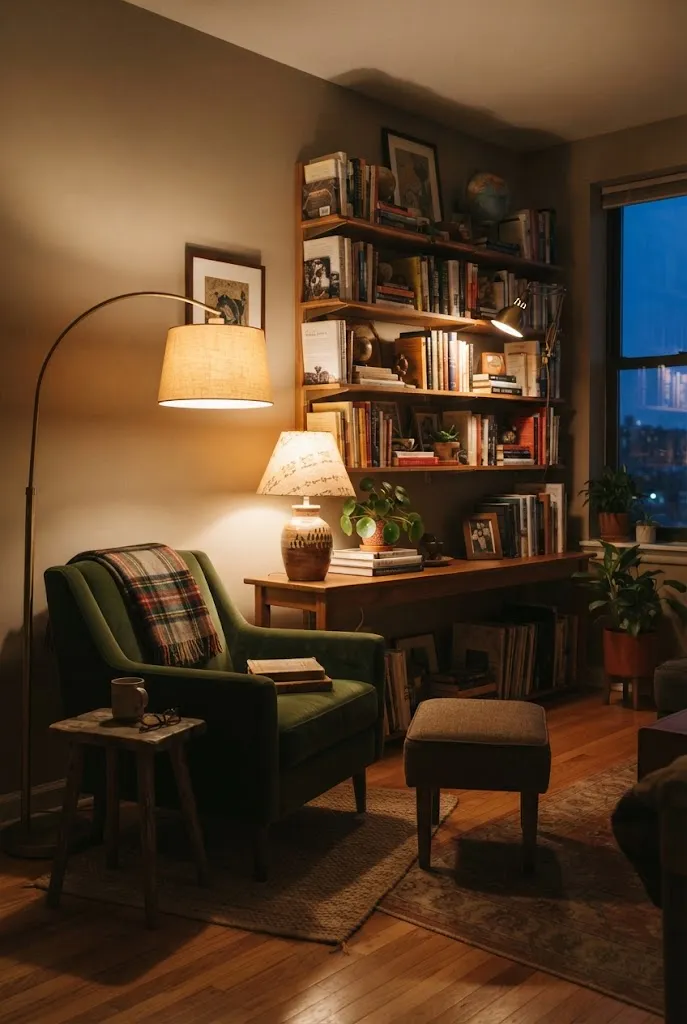
Harsh ceiling lights flatten a room and make even a good apartment feel institutional. The simplest fix is to stop using them in the evening and light the space with lamps at different heights: a floor lamp, a table lamp, and something small, like a shelf or desk lamp.
That layering is what makes spaces look designed. Light at different levels creates depth, lets you highlight the corners, and builds contrast.
- Start with a floor lamp near the main seating area.
- Add a table lamp at a medium height on a console, nightstand, or side table.
- Finish with a small accent lamp on a shelf or windowsill.
Warm, dimmable bulbs help, and smart plugs let you control everything with one tap.
7. Cover a Dated Backsplash With Peel-and-Stick Tile
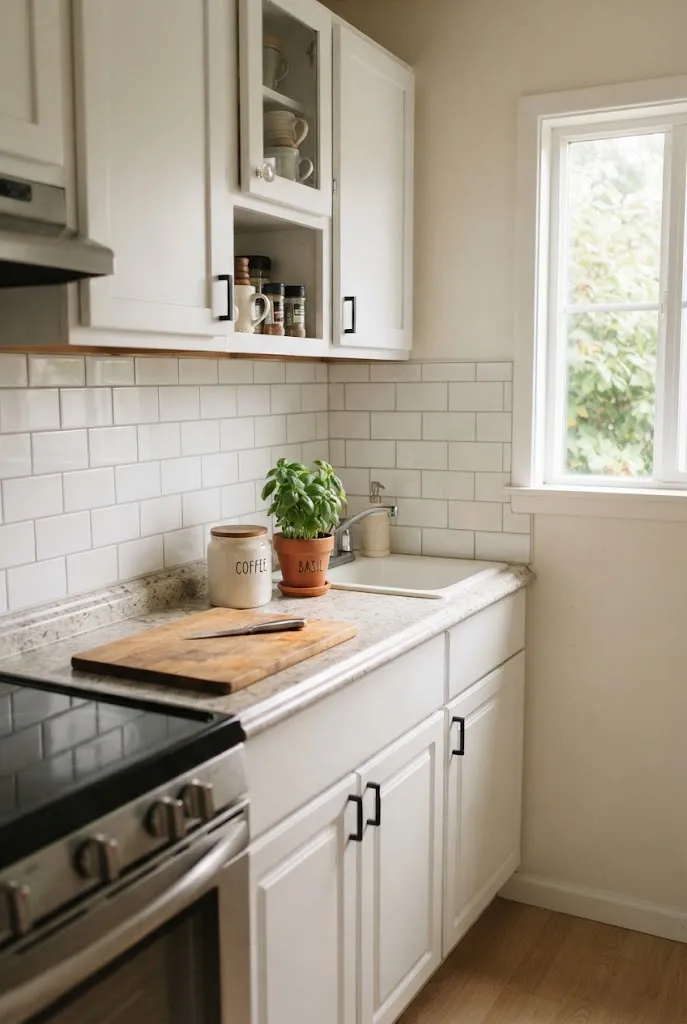
Kitchen backsplashes in rentals tend to be either missing or unfortunate. Peel-and-stick tile gives you a clean, graphic look with no grout, no mess, and no permanent changes. Subway styles, zellige-look tiles, and simple hex patterns photograph well and fit most rental kitchens.
Preparation matters more than the product. A deeply degreased, dry, smooth wall is essential, and tiles should be pressed from the center outward to avoid bubbles.
Quick Facts
Best For: Kitchens with a flat, smooth wall surface
Investment: Accessible to moderate
Visual Effect: A finished, tiled look without grout work
Editor’s Note: Check the manufacturer’s heat guidance if the tile sits directly behind a gas range. Keeping a safe margin from high heat matters for both safety and durability.
8. Hang Floor-Length Curtains on a Tension Rod
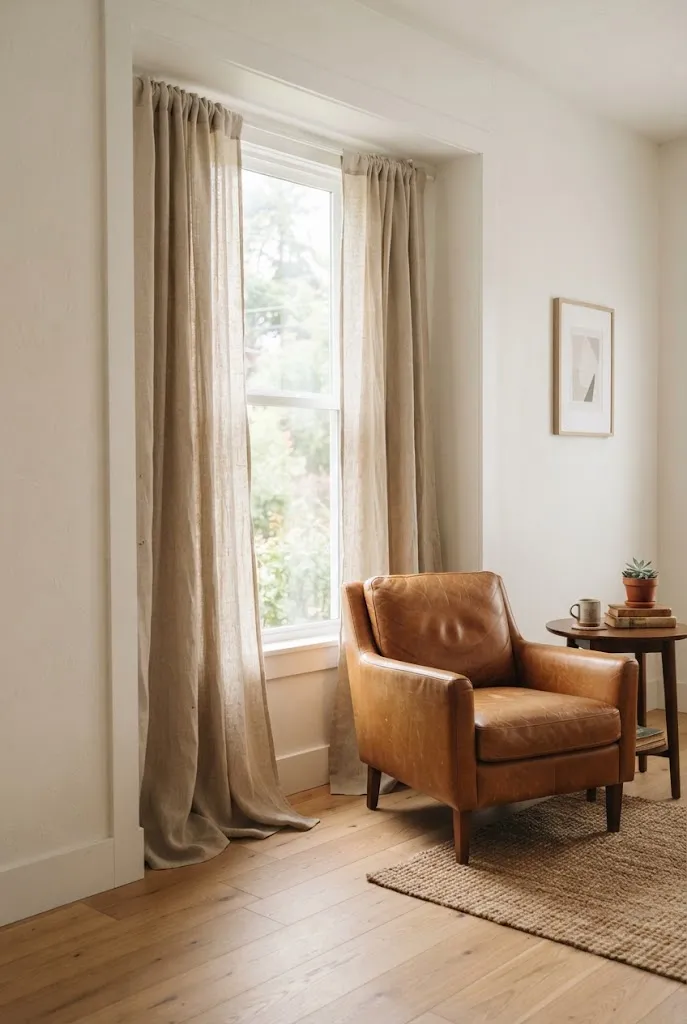
Curtains are among the highest-impact upgrades in a rental. Floor-length panels soften the hard edges of windows, hide dated blinds, and make the ceiling look taller. A tension rod fitted inside the window frame works where drilling isn’t allowed.
Mount the rod as close to the ceiling as the frame allows, and choose panels long enough to graze the floor. Linen-look fabrics or textured cotton add softness without heaviness. Always check the rod’s weight rating against your curtains.
- Lighter fabrics suit tension rods best.
- Use clip rings to avoid threading fabric onto a rod that’s already in place.
- Choose a panel width roughly twice the width of the window for fullness.
9. Divide a Studio With an Open Bookcase
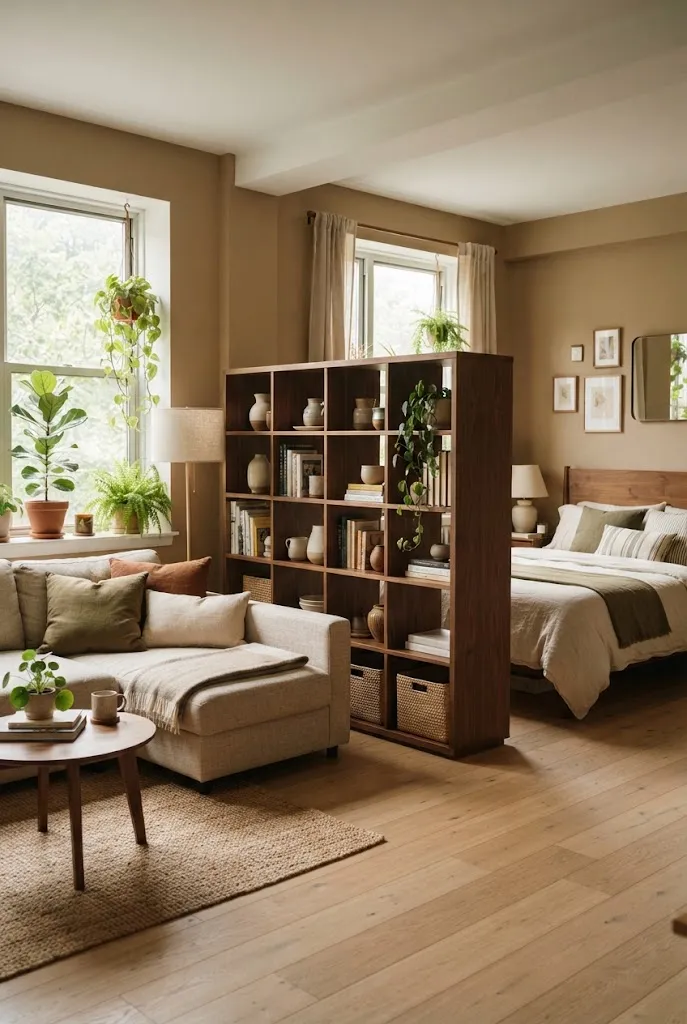
In a studio or open-plan apartment, an open shelving unit placed perpendicular to the wall can separate sleeping and living zones without blocking light. Choose a unit with open backs, or one finished on both sides, so it doesn’t look like furniture facing the wrong direction.
Style it for both sides. Use the bed side for lower, calmer items like books and baskets, and the living side for plants, art, and objects. Keep the top shelf lighter and the heaviest items low.
Editor’s Note: Tall freestanding shelving should be anti-tip secured whenever possible. If screws aren’t allowed, ask your landlord, or choose a lower unit.
10. Add Frosted Window Film for Privacy and Soft Light
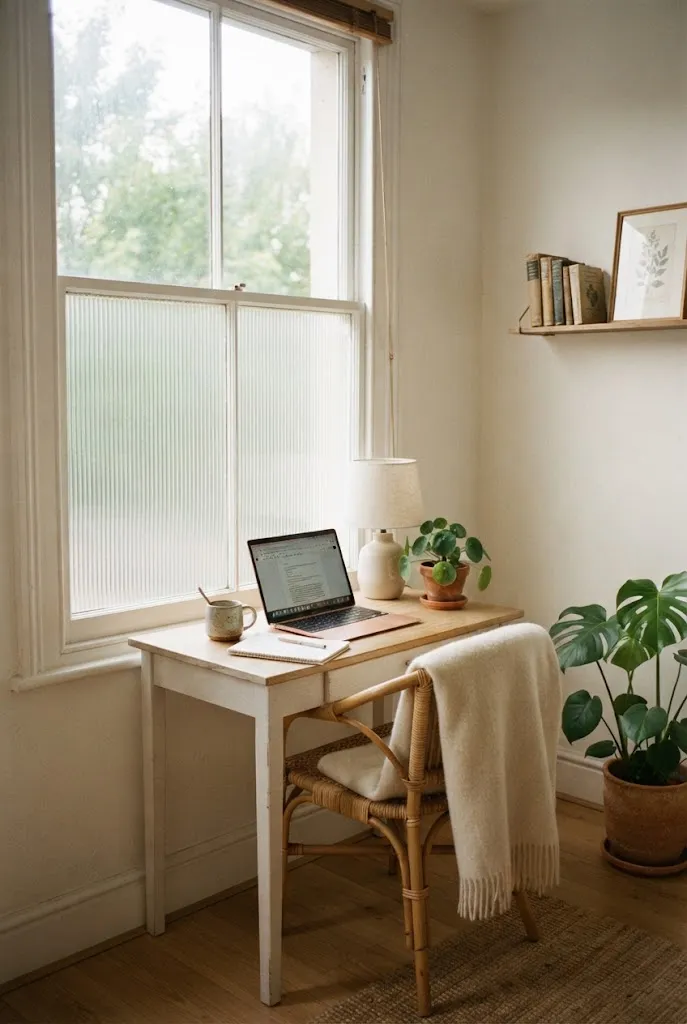
Ground-floor apartments and windows facing neighboring buildings can feel exposed. Removable static-cling or low-tack window film adds privacy while keeping daylight, and it needs no hardware. Frosted, reeded-glass look, and lightly patterned films each deliver a different feel.
Reeded-style film gives a modern, textural look in bathrooms and entryways, while soft frosted film suits bedrooms and home offices. Clean the glass thoroughly and apply it with a spray of soapy water for easier positioning.
| Film Style | Look | Best Fit |
|---|---|---|
| Frosted | Soft, even privacy | Bedrooms, street-facing windows |
| Reeded-glass look | Vertical texture, modern | Bathrooms, entry sidelights |
| Light pattern | Decorative, subtle | Kitchens, sunrooms |
11. Swap Cabinet Hardware and Keep the Originals
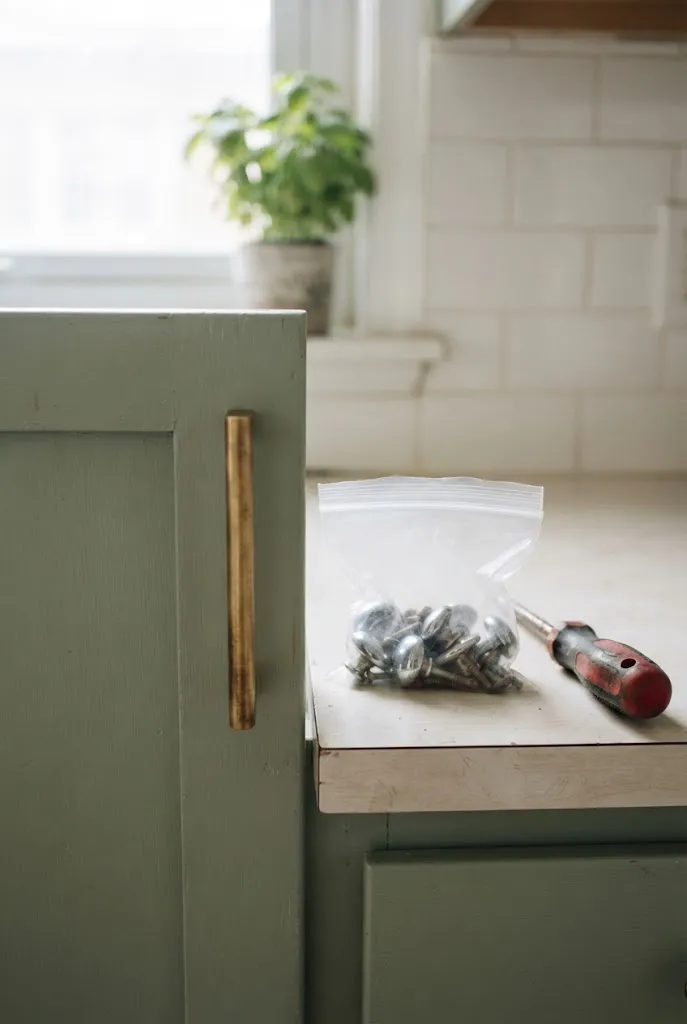
New knobs and pulls are among the most affordable upgrades in a rental kitchen or bathroom, and they’re completely reversible if you keep the originals. Brass, matte black, and brushed nickel each shift the room’s tone noticeably, and cabinets that looked flat start to look considered.
- Photograph the existing hardware and note the screw size.
- Measure the hole spacing on pulls (center-to-center) before buying.
- Remove the originals and store them with their screws in a labeled bag.
- Install the new hardware and check that doors close cleanly.
- Reinstall the originals before move-out.
Choose pulls with the same hole spacing as the old ones whenever possible, so you don’t have to drill.
12. Give the Rental Bathroom a Textile Makeover
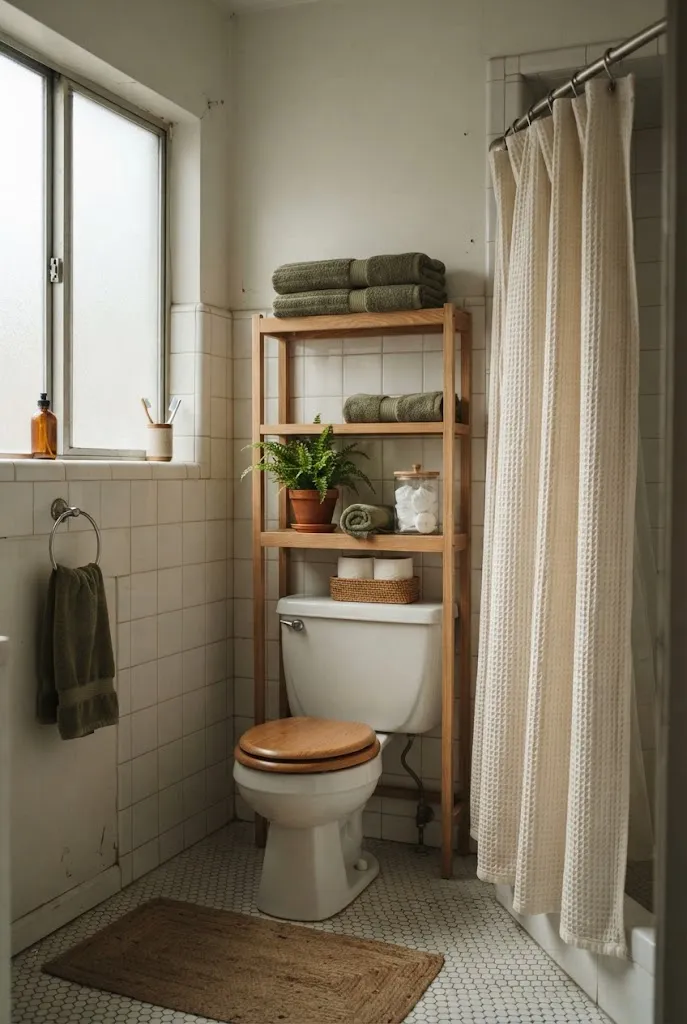
Rental bathrooms rarely allow changes to the tile, vanity, or fixtures, but textiles and freestanding storage can shift the room’s character. Start with a good shower curtain in a heavy waffle or linen-look fabric, then add matching towels in a limited palette.
An over-the-toilet freestanding shelf adds display and storage without anchoring to the wall. Use it for folded towels, a plant that tolerates humidity, and a few glass jars. A bath mat with a good texture makes the floor feel finished.
Do: Keep the palette to two or three tones.
Don’t: Cover every surface in accessories. Leave breathing room around the shelf.
13. Layer the Bed Against a Freestanding Headboard
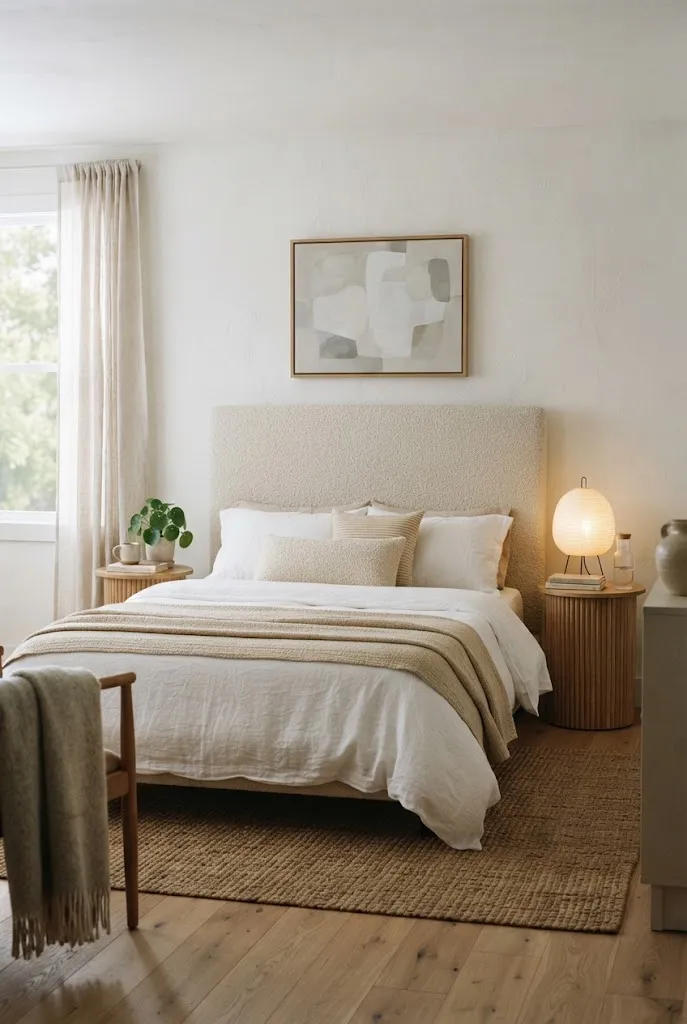
A headboard changes how a bedroom reads. Because it attaches to the bed frame or rests against the wall rather than being screwed in, a freestanding upholstered or wooden headboard is one of the easiest ways to make a rental bedroom feel finished.
Pair it with layered bedding: a crisp white or ivory base, a textured quilt or coverlet, and two or three pillows in varied sizes. Keep the palette quiet and add depth through texture, like linen, bouclé, and cotton.
- Choose a headboard that extends at least a few inches above the pillows.
- Add a throw blanket folded at the foot of the bed.
- Use two sleeping pillows, two European squares, and one small lumbar.
14. Fill a Bare Corner With a Large Floor Plant
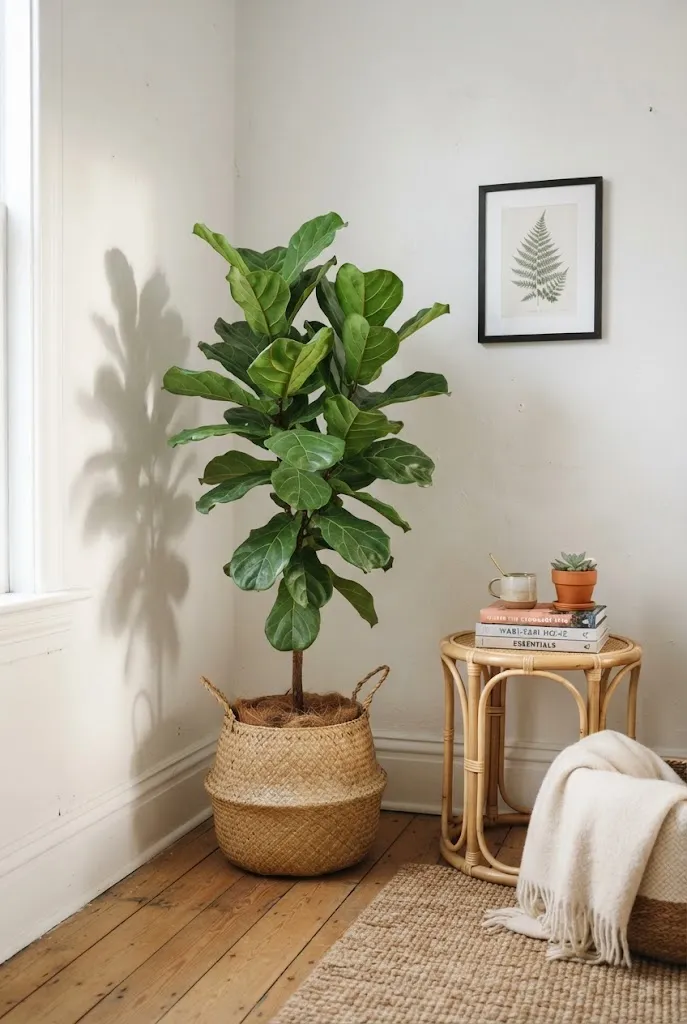
Empty corners are common in apartments, and a tall plant is one of the best ways to fill them. A single large plant in a woven basket or glazed planter adds height, softens hard angles, and brings a living texture to a room.
Choose a plant that suits your actual light: some tolerate low light better than others, and a plant in the wrong spot struggles regardless of how good it looks. Make sure the pot has drainage, with a saucer or liner beneath it to protect rental flooring from water damage.
Common Mistake: Choosing a plant for appearance without checking the window’s light.
Better Approach: Observe how much direct sun the spot gets, then match a plant to that condition. If the corner is dark, a good faux plant is a perfectly legitimate choice.
15. Build a Landing Strip in the Entryway
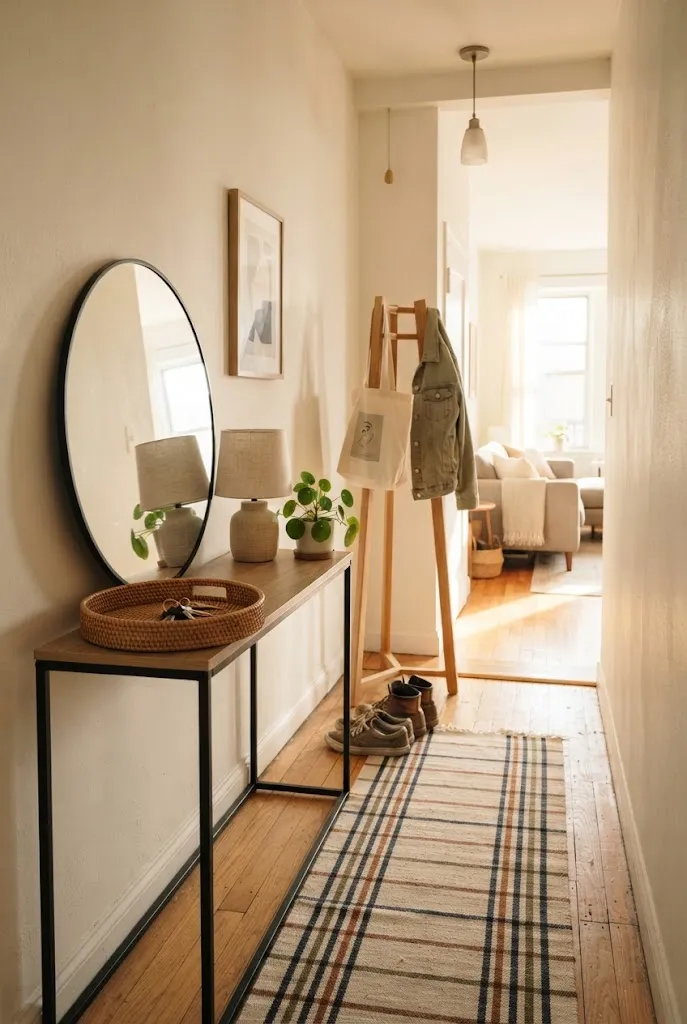
Many apartments have little or no real entryway. You can create one with a slim console or narrow shelf, a mirror, and a few hooks. For hooks, an over-the-door rack or a freestanding coat stand avoids wall damage.
A tray for keys, a small basket for mail, and a single lamp make the zone useful and welcoming. A runner or small rug anchors the space visually and catches dirt before it travels further in.
Quick Facts
Best For: Small apartment entries and open-plan front doors
Investment: Accessible
Visual Effect: A defined arrival spot with built-in storage
Editor’s Note: Choose a console no deeper than about 10–12 inches in narrow spaces so the walking path stays comfortable.
16. Paint One Wall a Deep Color (With Written Approval)
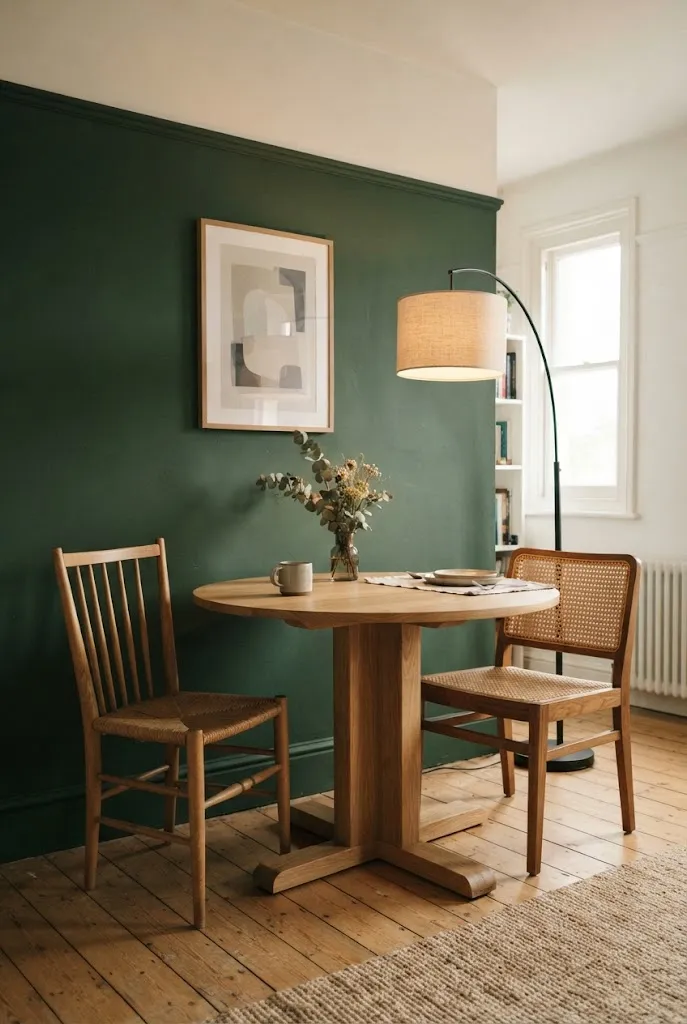
Some landlords allow painting, especially if you agree to repaint before move-out or use an approved color. When it’s permitted, one deep wall in forest green, navy, or warm terracotta can give a rental more character than almost any other low-cost change.
Pick a wall that has a natural focal point, such as behind a bed, sofa, or dining table. Choose a quality paint with good coverage, tape carefully, and keep the rest of the room light.
Common Mistake: Painting without written permission, or choosing a color that takes several coats to cover at move-out.
Better Approach: Get approval in writing, ask about repainting expectations, and consider a mid-tone color that’s easier to cover later.
17. Refresh a Tired Sofa With a Slipcover and Layered Textiles
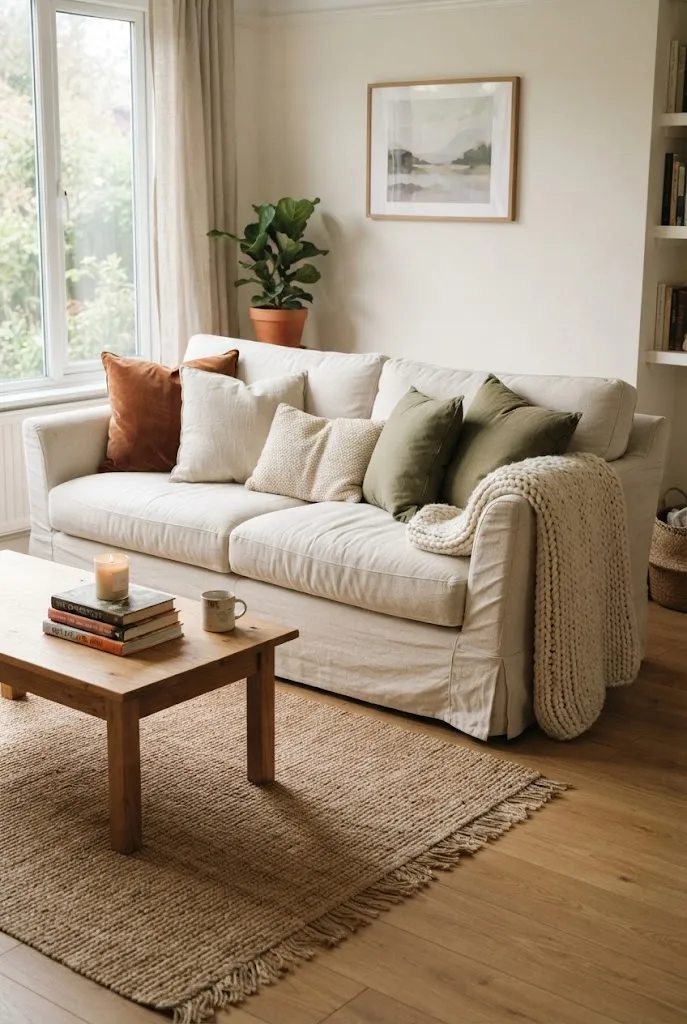
Rentals often come furnished with, or require you to bring, a sofa that has seen better days. A well-fitted slipcover in a washable fabric resets its look, and layering textiles on top finishes the job.
Add pillows in varying sizes and textures, such as linen, bouclé, and velvet, and a throw draped casually over one arm. Keep to a defined palette so the layers feel curated rather than random.
- Choose a slipcover designed for your sofa’s style and dimensions.
- Mix at least two pillow sizes and two textures.
- Include one solid, one pattern, and one tone-on-tone.
18. Roll In a Kitchen Cart for Extra Counter Space
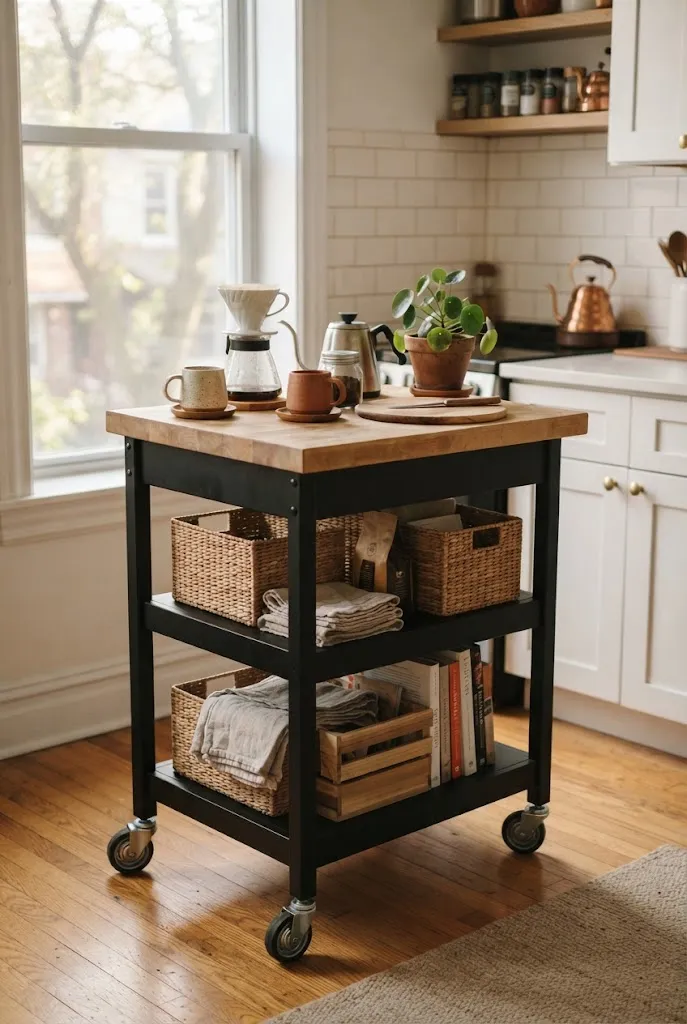
Rental kitchens often lack counter space and storage. A rolling cart adds both without installation, and it can move to the living room or balcony when needed.
Look for one with a butcher-block or solid top, lower shelves for baskets, and locking wheels. Style it with a few useful items, like a coffee station, a fruit bowl, or a small plant, rather than cluttering every surface.
| Use | Setup | Best Fit |
|---|---|---|
| Coffee station | Mugs, kettle, canisters | Small kitchens, studios |
| Prep space | Cutting board, utensils crock | Galley kitchens |
| Bar cart | Glasses, bottles, tray | Living areas |
19. Carve Out a Reading Nook by the Window
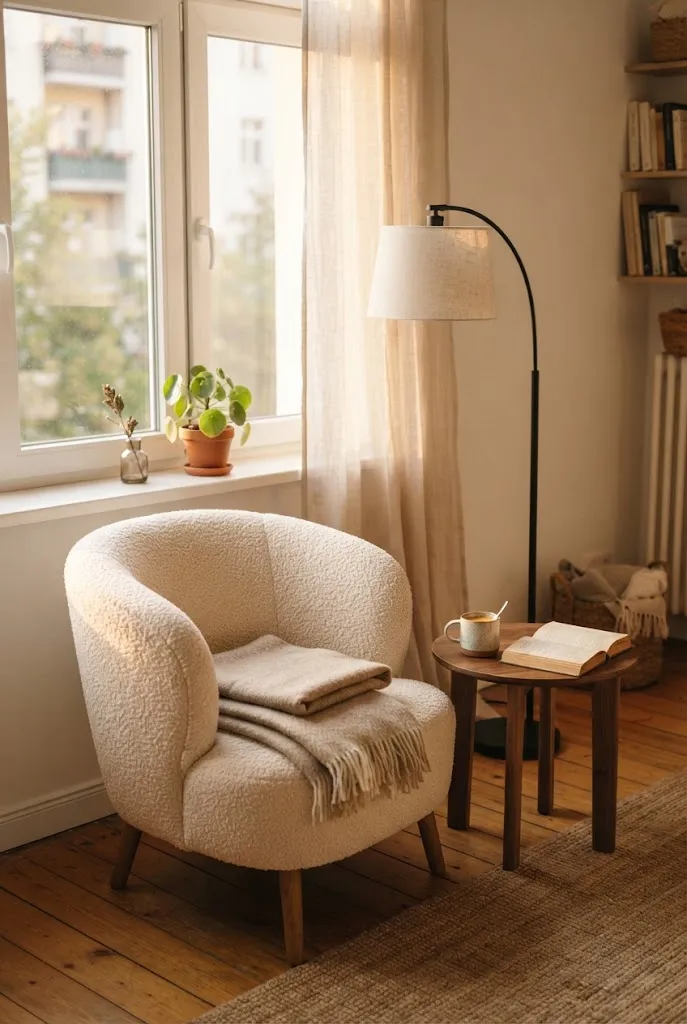
A reading nook doesn’t need extra square footage. A comfortable armchair, a small side table, and a lamp placed by a window are enough to create a spot you actually want to use.
Choose a chair with a shape that suits the corner, like a rounded accent chair or a compact lounge chair. Add a soft throw and a side table at a practical height for a mug and book. A floor lamp with an adjustable arm makes the corner usable after dark.
Quick Tip: Angle the chair slightly toward the room rather than flat against the wall. It gives the corner a more relaxed, deliberate feel.
20. Create Built-In Style With Freestanding Bookcases
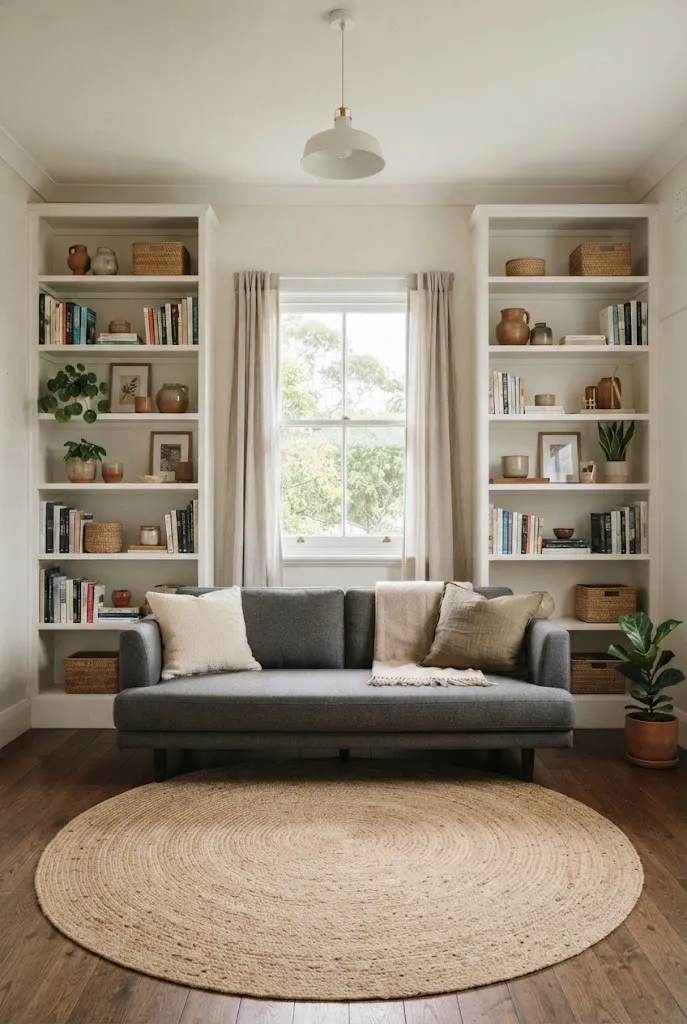
Real built-ins aren’t an option in a rental, but you can get a convincing version. Place two matching bookcases on either side of a window or fireplace-like focal point, or line up several tall units along one wall for a library effect.
The key is consistency: same finish, same height, and aligned edges. Fill the shelves thoughtfully with books grouped by color or size, baskets for concealed storage, and a few objects with personality.
Editor’s Note: Tall bookcases should be secured against tipping. If your lease prohibits wall anchors, ask permission for a minimal anchoring solution, or choose lower units.
Quick Facts
Best For: Living rooms with a flat wall or window
Investment: Moderate
Visual Effect: A custom, architectural look without permanent changes
21. Anchor the Room With One Investment Piece
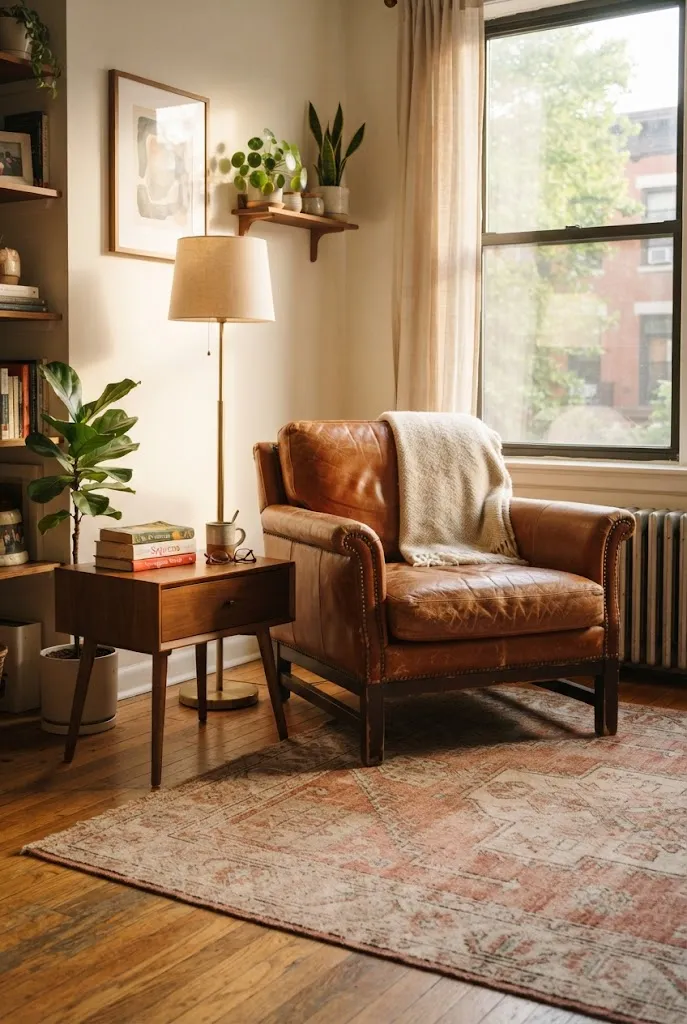
If you plan to move several times, one well-made, portable investment piece can do more for a space than a dozen small purchases. A high-quality wool rug, a vintage leather chair, or a solid wood dining table will adapt to different layouts and last through multiple apartments.
Choose something with a timeless shape and a material that ages well. Build the rest of the room around it using simpler, more affordable pieces.
- Select a size that suits future spaces, not just the current one.
- Consider secondhand or vintage for better materials at a lower cost.
- Prioritize construction and materials over trend.
22. Turn a Small Balcony Into an Outdoor Room
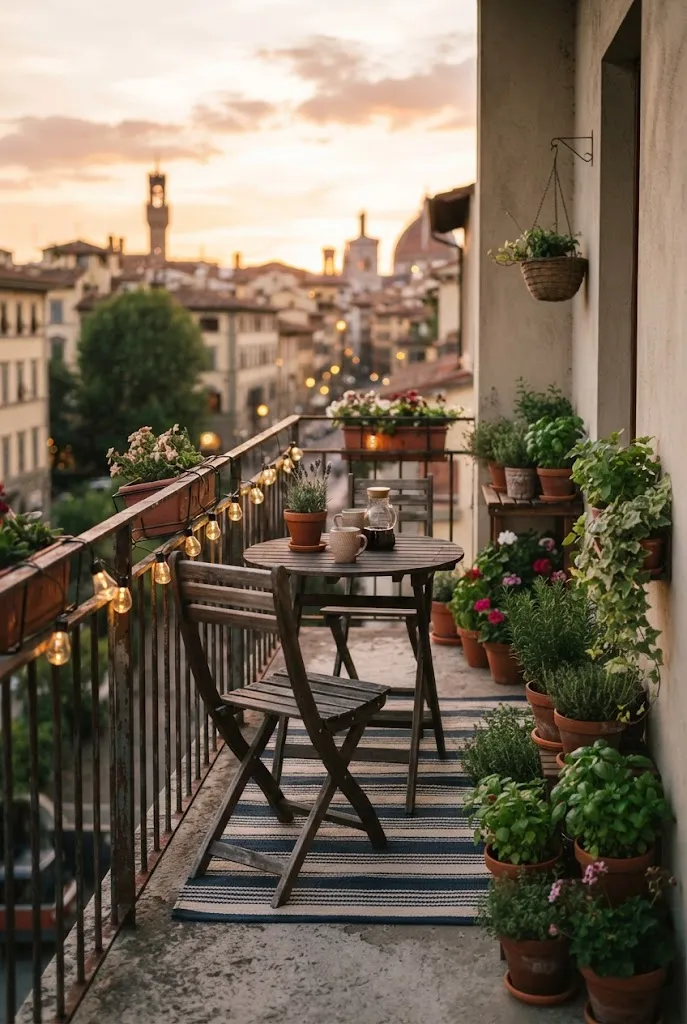
A balcony or small patio extends your living space, and most of what makes it feel finished is portable. Start with an outdoor rug to define the floor, then add a folding bistro set or a compact two-seat bench.
Use pots of different heights, and string lights powered by plug or solar for evening. Check your building’s rules before hanging anything from rails.
- Lay down an outdoor rug sized to fit the space.
- Add seating that folds or stacks.
- Group potted plants in odd numbers at varying heights.
- Finish with a plug-in or solar light source.
Before You Start: A Quick Lease Check
A few minutes with your lease can save you a deposit dispute. Look for language about nails, paint, wallpaper, adhesives, and fixtures. If anything is unclear, ask your landlord or property manager in writing and keep the reply. When you remove hardware or hang something temporary, photograph the original condition first, and store removed items somewhere you won’t lose them before move-out.
Where to Start
You don’t need to do all 22. Pick the change that bothers you most each time you walk in the door. If the room feels harsh at night, start with lamps. If it feels empty, add a rug and a floor plant. If nothing feels like yours yet, build a gallery wall. Small, removable changes add up quickly, and the best ones come with you to the next place.