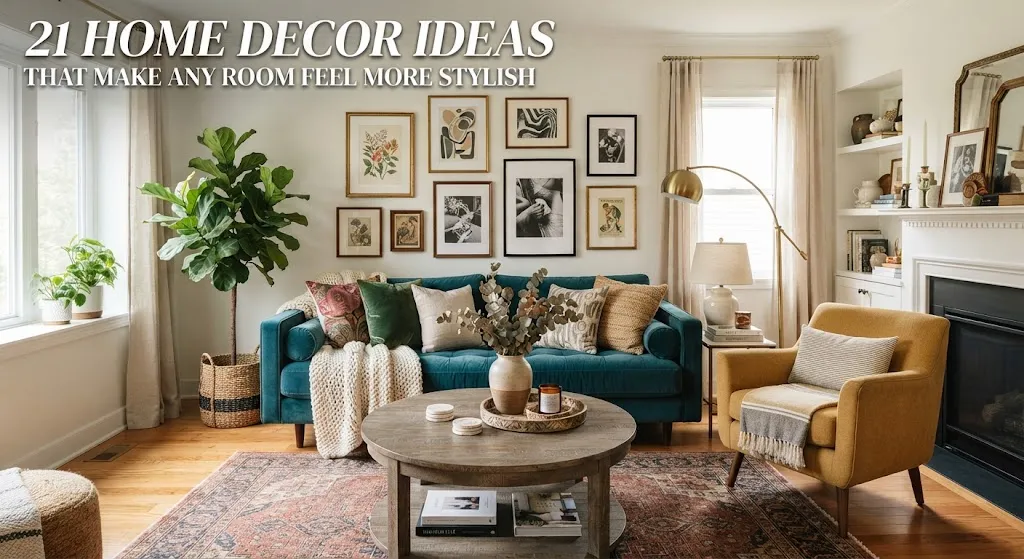
21 Home Decor Ideas That Make Any Room Feel More Stylish
Introduction
A stylish home doesn’t require a complete renovation or a house filled with expensive furniture. Often, the biggest difference comes from a few thoughtful choices: better lighting, balanced furniture placement, layered textures, meaningful artwork, or a well-chosen accent color. These home decor ideas are designed for real American homes, from apartments and condos to suburban houses and older spaces that need a fresh touch. Some changes are quick and accessible, while others are worth considering when you’re ready for a larger upgrade. The key is to create rooms that look intentional while still feeling comfortable enough for everyday life.
1. Create a Layered Neutral Color Palette
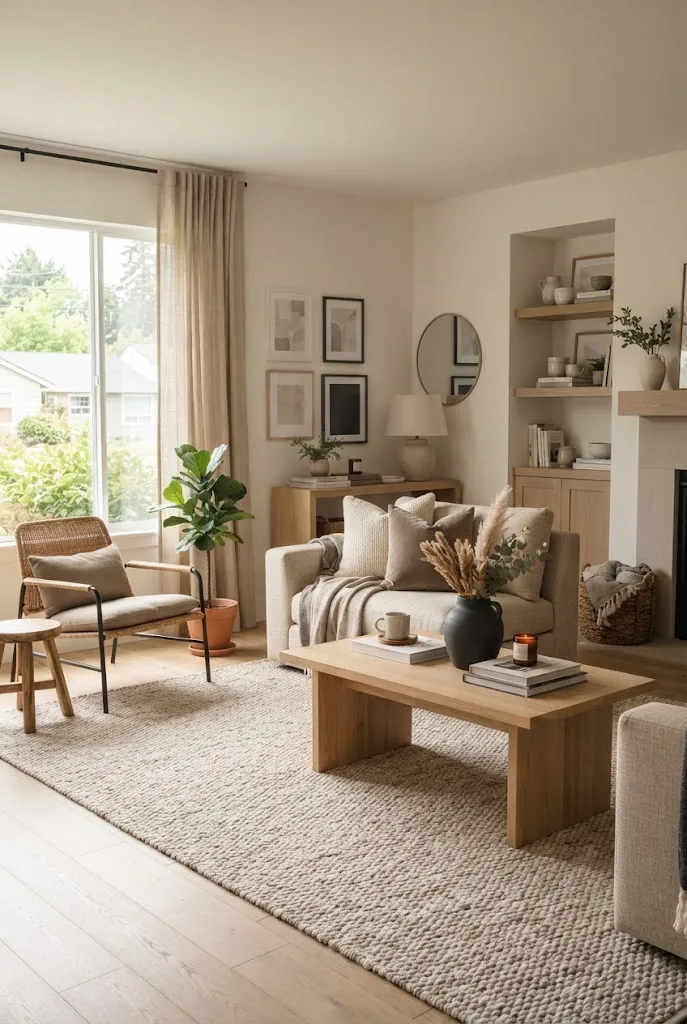
Neutral rooms become much more interesting when they use several related shades instead of one flat color. Combine warm white walls with beige upholstery, light wood, taupe textiles, and slightly darker accents to create depth without overwhelming the room.
The trick is to vary the texture as well as the color. A linen curtain, woven basket, wool rug, ceramic lamp, and smooth wood table can all belong to the same palette while creating noticeably different surfaces.
2. Add One Oversized Piece of Artwork
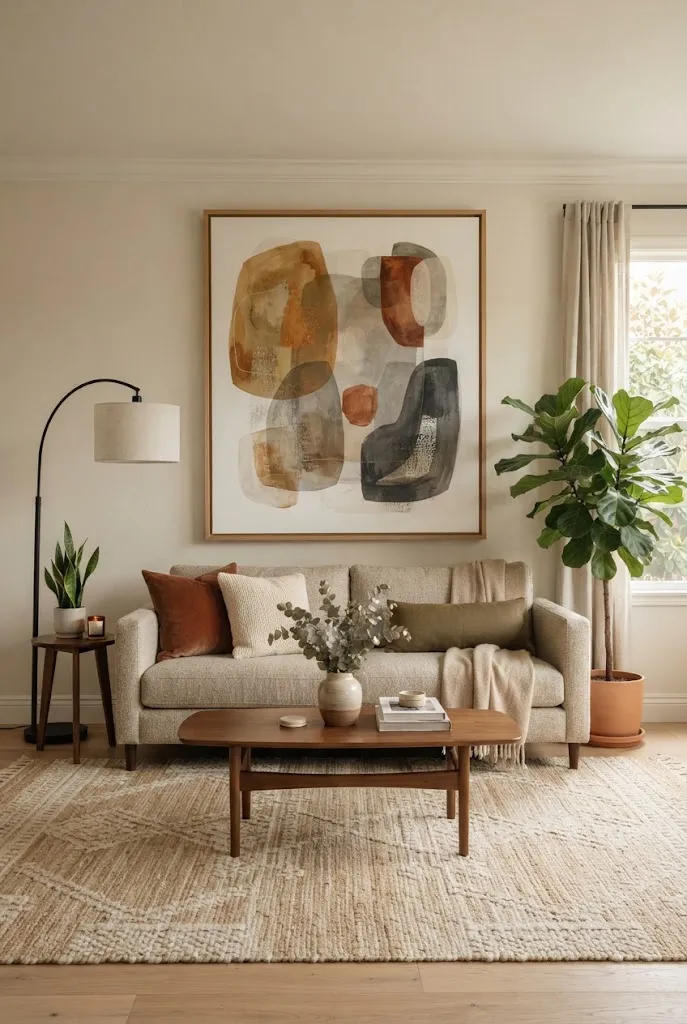
A large piece of artwork can give a room an immediate focal point without requiring lots of smaller decorations. Hang one substantial abstract, landscape, botanical, or photographic piece above a sofa, console, bed, or dining table.
The artwork doesn’t need to match every item in the room. Instead, look for one or two colors that connect naturally with the existing furnishings. A generous frame also helps the piece feel intentional rather than lost on a large wall.
3. Layer the Lighting Instead of Relying on One Fixture
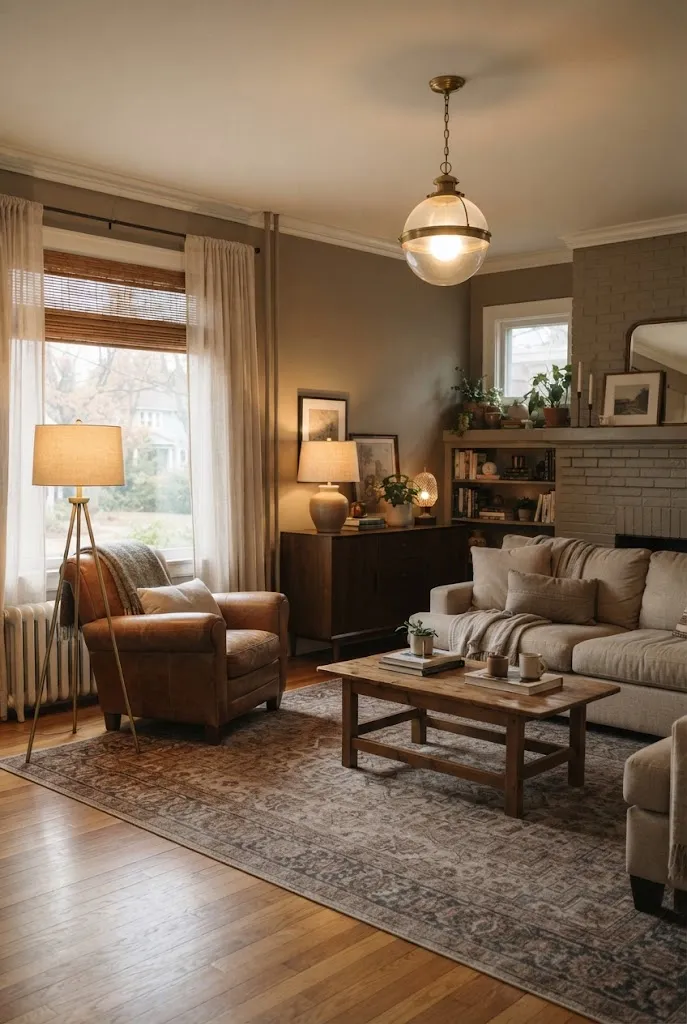
A single ceiling fixture rarely creates the most comfortable atmosphere. Stylish rooms usually benefit from several sources of light placed at different heights.
Combine overhead lighting with a table lamp, floor lamp, wall sconce, or small accent light. During the day, allow natural light to do most of the work, then use warmer practical lighting in the evening.
4. Bring in Natural Wood
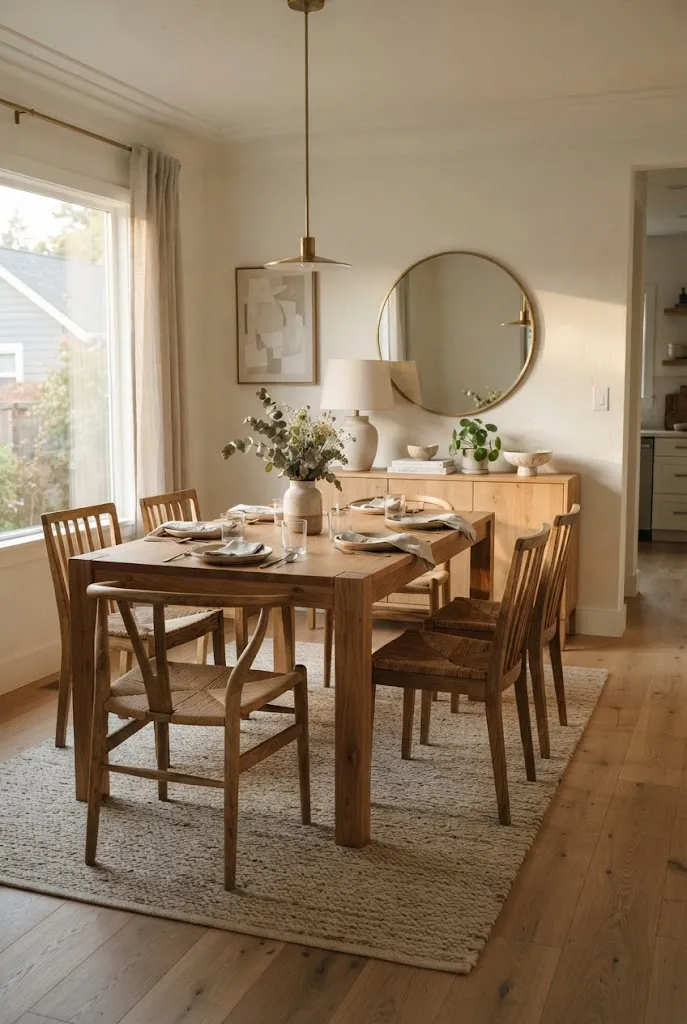
Natural wood introduces warmth that works across many decorating styles. A solid wood coffee table, oak console, walnut side table, or wooden dining chairs can soften rooms dominated by painted surfaces or synthetic finishes.
You don’t have to match every wood tone exactly. In fact, a controlled mix can make a room feel collected over time. Keep the undertones reasonably compatible and repeat the main wood tone in at least one other location.
5. Use a Statement Rug to Define the Room
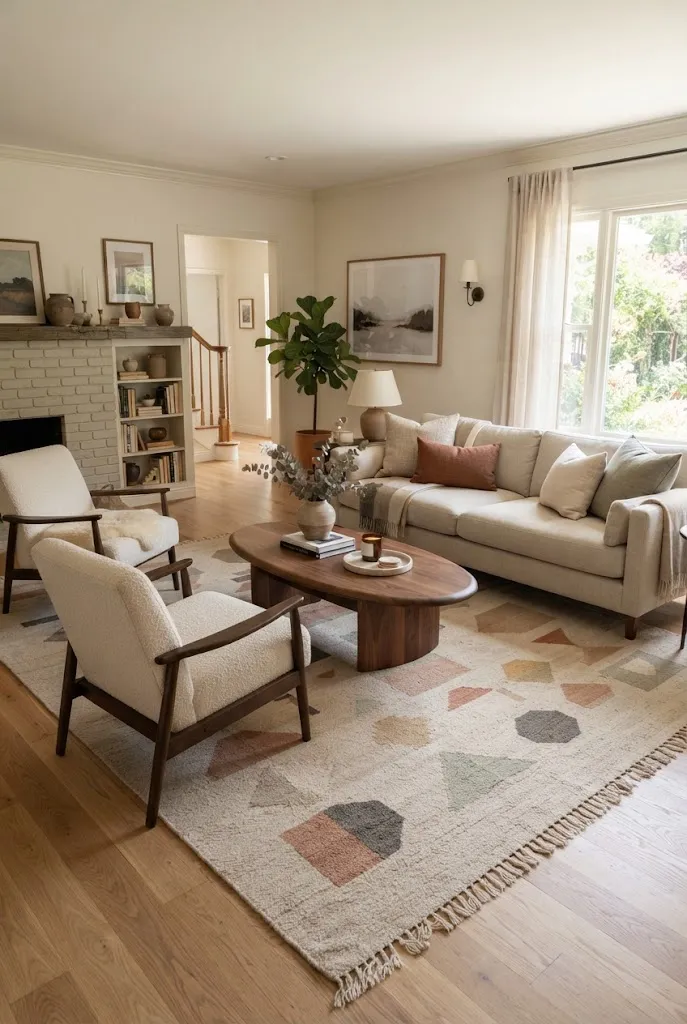
A rug can do more than make a floor feel comfortable. It visually connects furniture and helps establish the boundaries of a seating, dining, or bedroom area.
For a living room, choose a size that allows at least the front legs of major seating pieces to sit on the rug when possible. In an open-plan home, a rug can also distinguish the living area from an adjacent dining or kitchen zone.
When the furniture is visually simple, a patterned rug can supply the personality.
6. Style Your Coffee Table in Three Layers
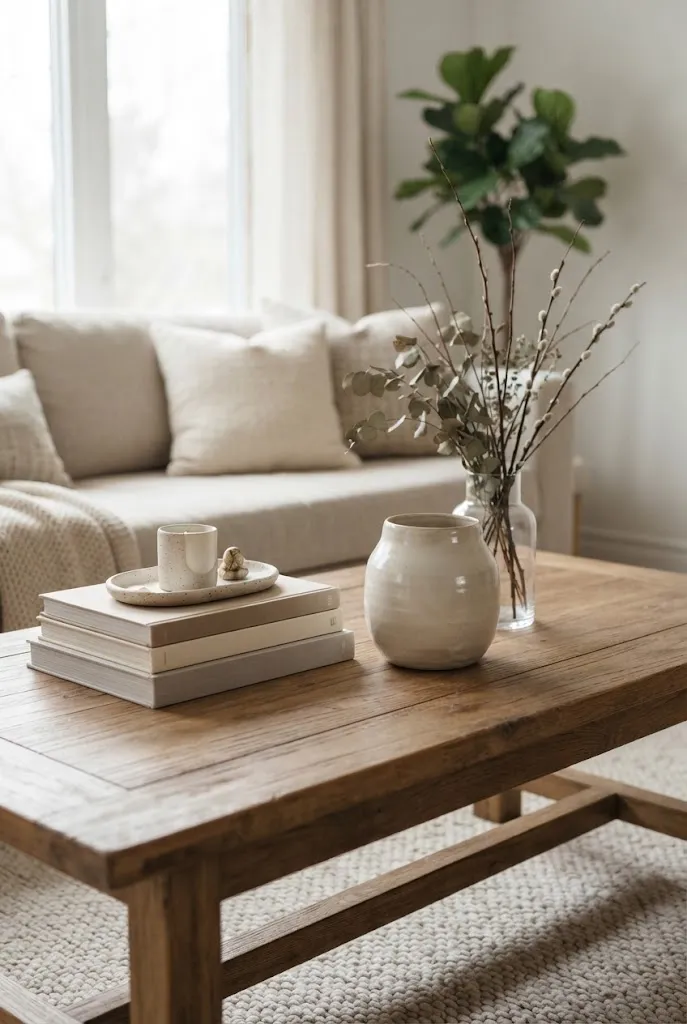
A coffee table doesn’t need to be crowded to look finished. Try building the arrangement around three different visual levels: a low tray or book stack, a medium decorative object, and one taller organic element such as a branch or small plant.
Leave some of the tabletop visible. Negative space makes the arrangement easier to use and prevents decorative objects from becoming visual clutter.
7. Mix Textures for a More Inviting Room
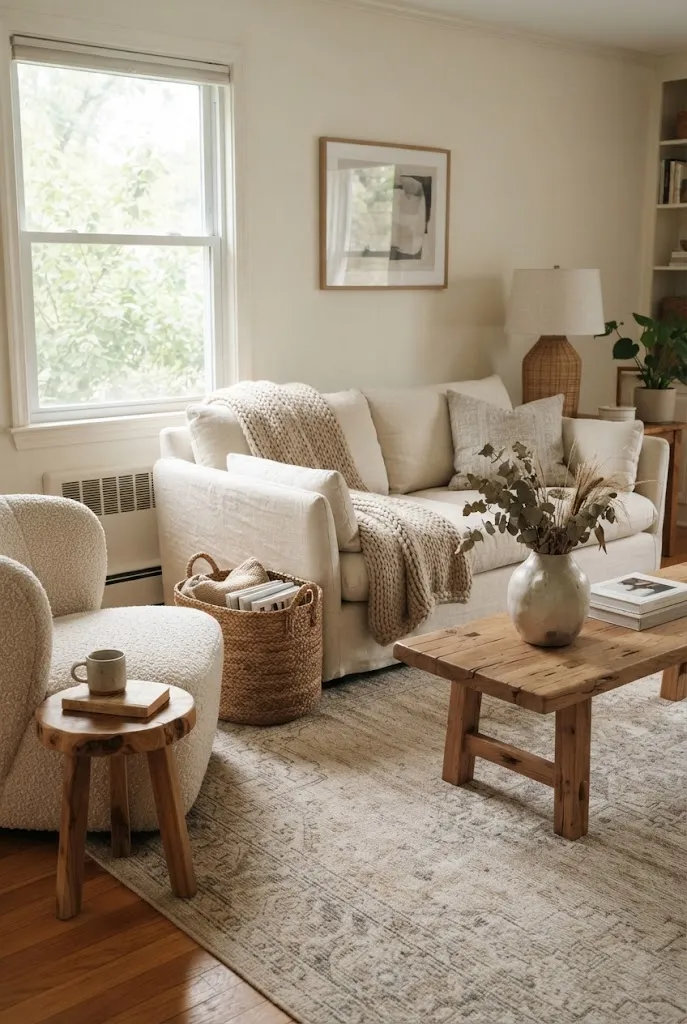
Rooms can feel flat when everything has the same surface quality. Texture gives the eye something to explore even when the color palette remains simple.
Combine materials such as linen, boucle, wool, cotton, rattan, wood, stone, ceramic, and metal. You can introduce texture through a throw blanket, woven basket, upholstered chair, ribbed vase, or natural-fiber rug without replacing major furniture.
8. Give the Entryway a Clear Focal Point
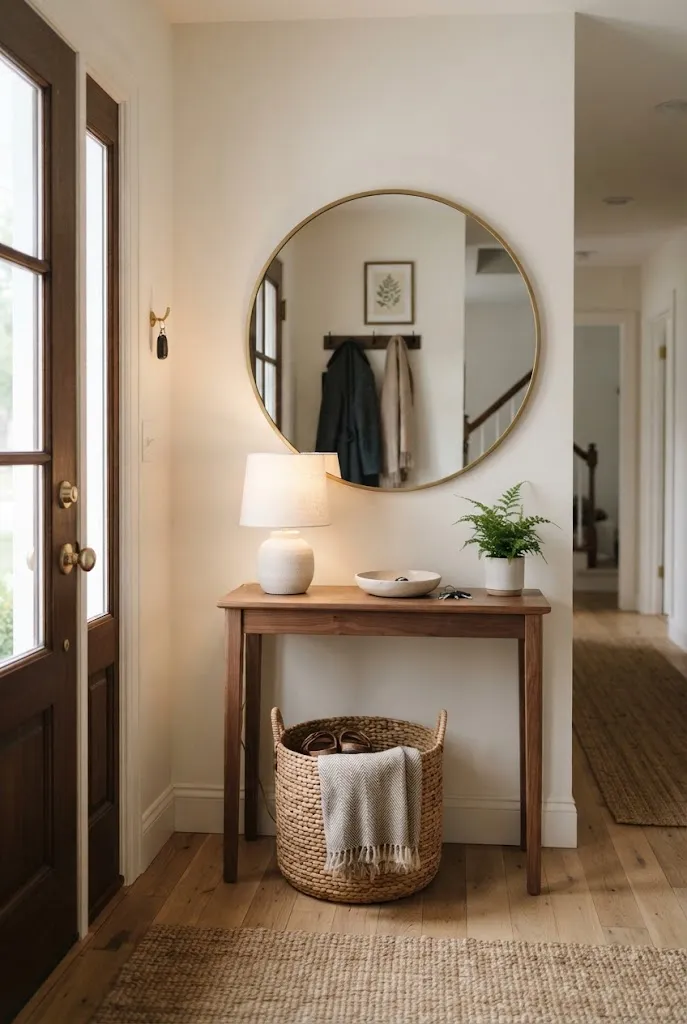
The entryway sets the tone for the rest of the home. Instead of filling it with miscellaneous accessories, choose one clear focal point such as a round mirror, artwork, console, statement light, or distinctive bench.
A narrow console can provide a landing spot for keys while a mirror adds practical function. If the entry is compact, wall-mounted storage can preserve walking space.
9. Add Greenery at Different Heights
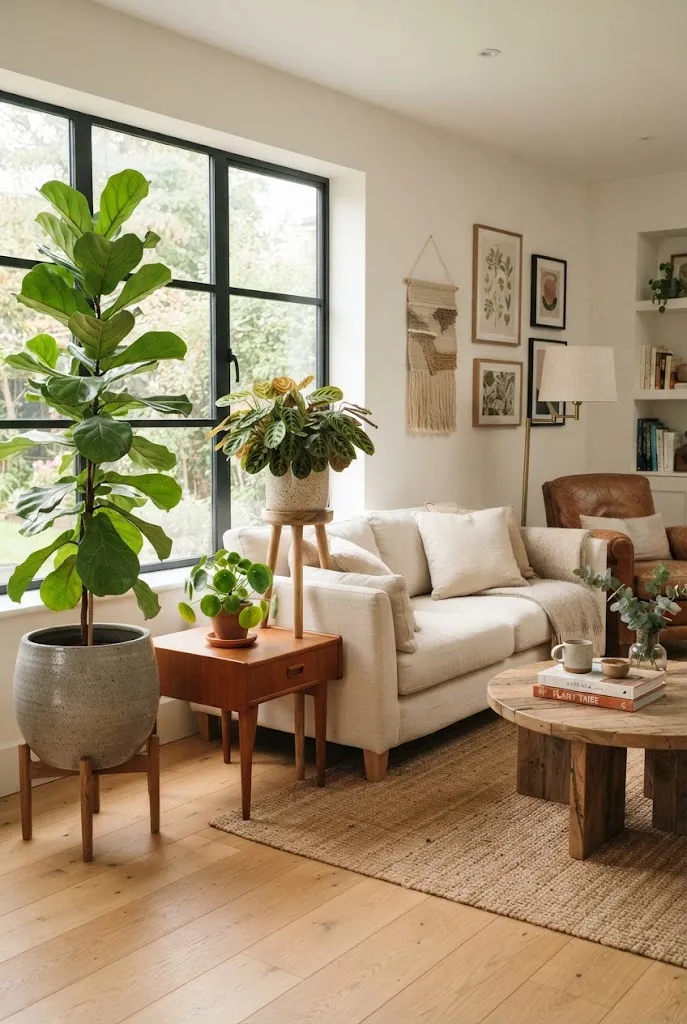
Plants can soften hard furniture lines and bring a natural element into rooms dominated by neutral finishes. Rather than grouping every plant on one surface, distribute greenery at different heights.
A tall floor plant can occupy an empty corner, a medium plant can sit on a stand, and a small plant can decorate a shelf or side table. Choose plants based on the actual light conditions instead of selecting them solely for appearance.
10. Make Curtains Part of the Architecture
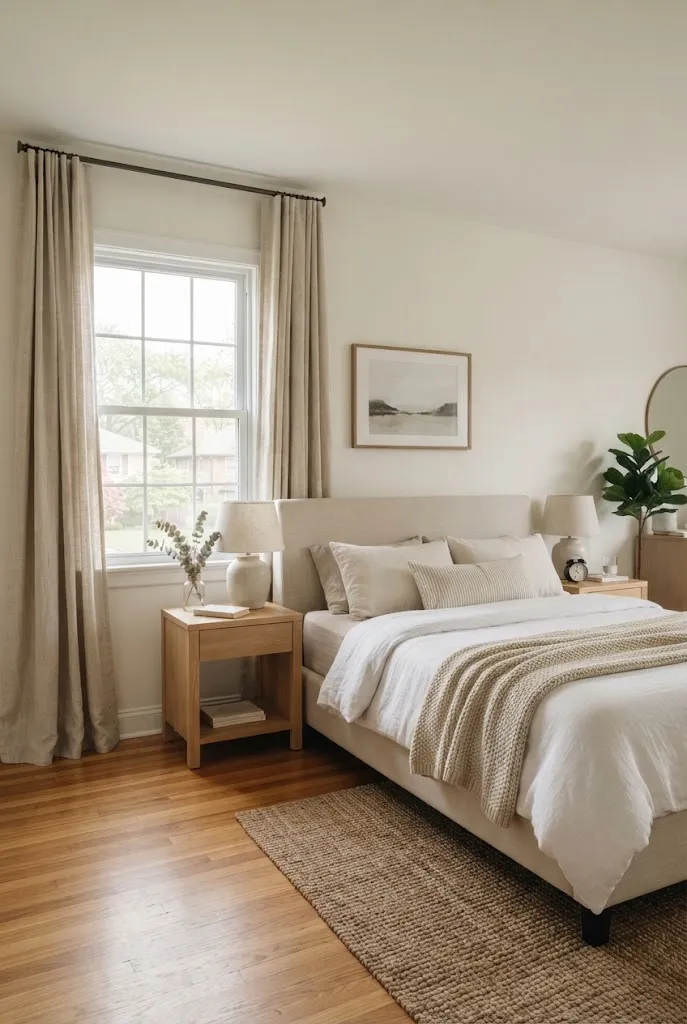
Window treatments can dramatically influence how tall and finished a room feels. Mounting curtain hardware higher and wider than the window frame can visually extend the wall and allow more daylight into the room when curtains are open.
Choose fabrics according to the atmosphere you want. Linen and linen-look fabrics feel relaxed, while heavier drapery can create a more substantial appearance.
11. Create a Small Reading Corner
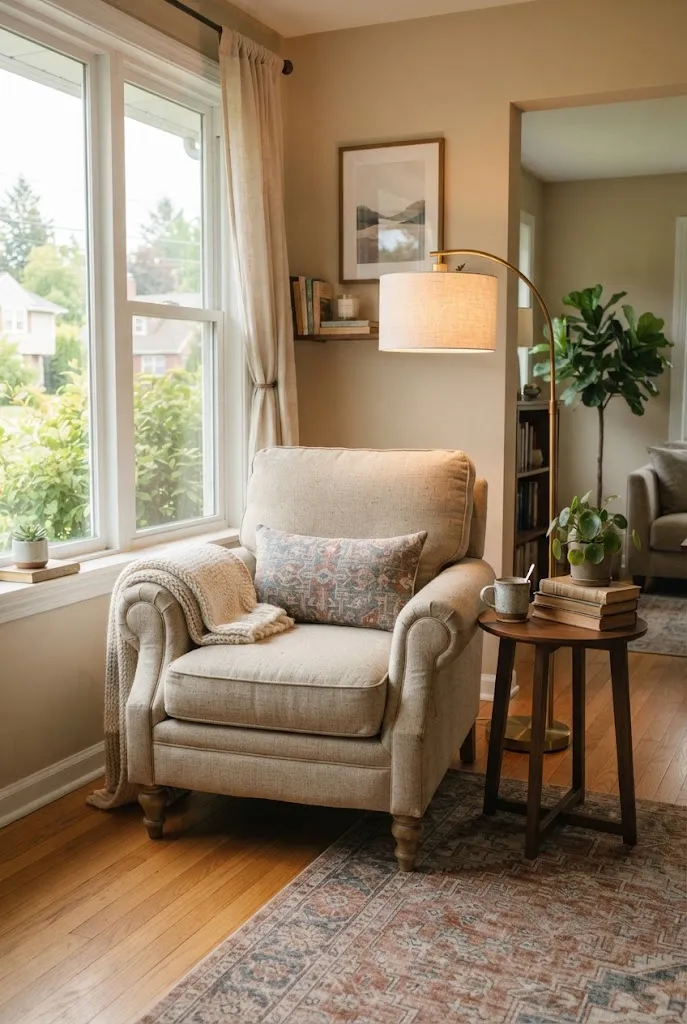
An unused corner can become one of the most appealing areas in a room when given a clear purpose. A comfortable chair, small side table, floor lamp, and soft throw are enough to establish a reading spot.
The scale matters. Choose a chair that leaves comfortable clearance around it rather than forcing oversized furniture into a narrow corner. A small bookshelf or basket can complete the setup if space allows.
12. Use Mirrors to Bounce Light
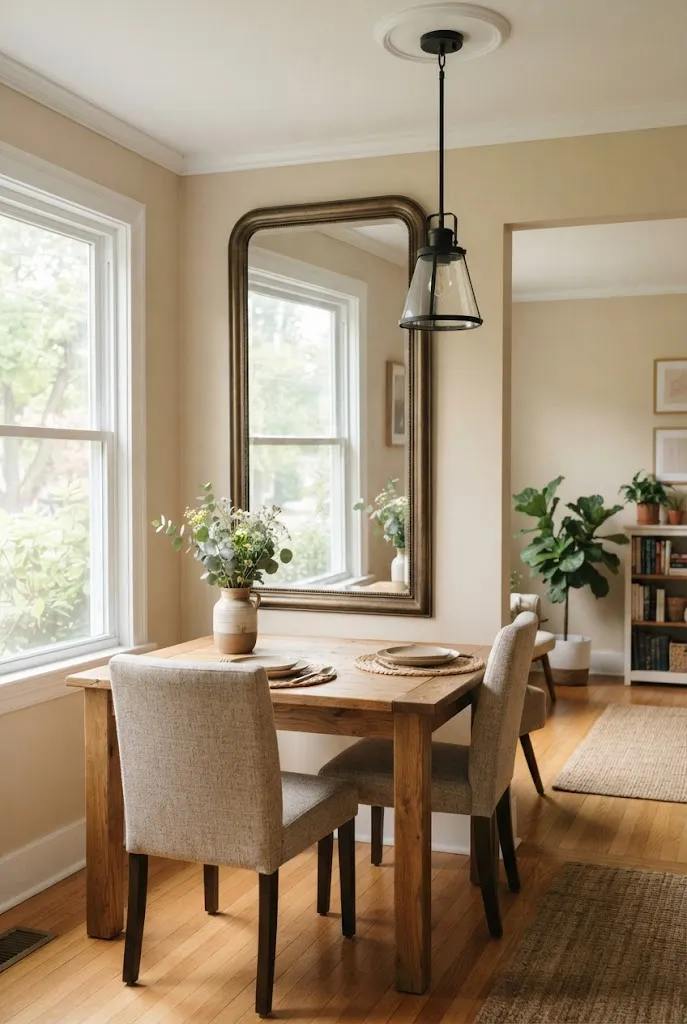
A strategically placed mirror can make a room feel brighter and add another layer of visual depth. Instead of automatically choosing the largest mirror available, consider what it will reflect.
A mirror facing a window or bright doorway can help distribute the sense of daylight. In darker rooms, a smaller decorative mirror can still create interest without pretending to add more natural light than the space actually receives.
13. Introduce a Curved Furniture Piece
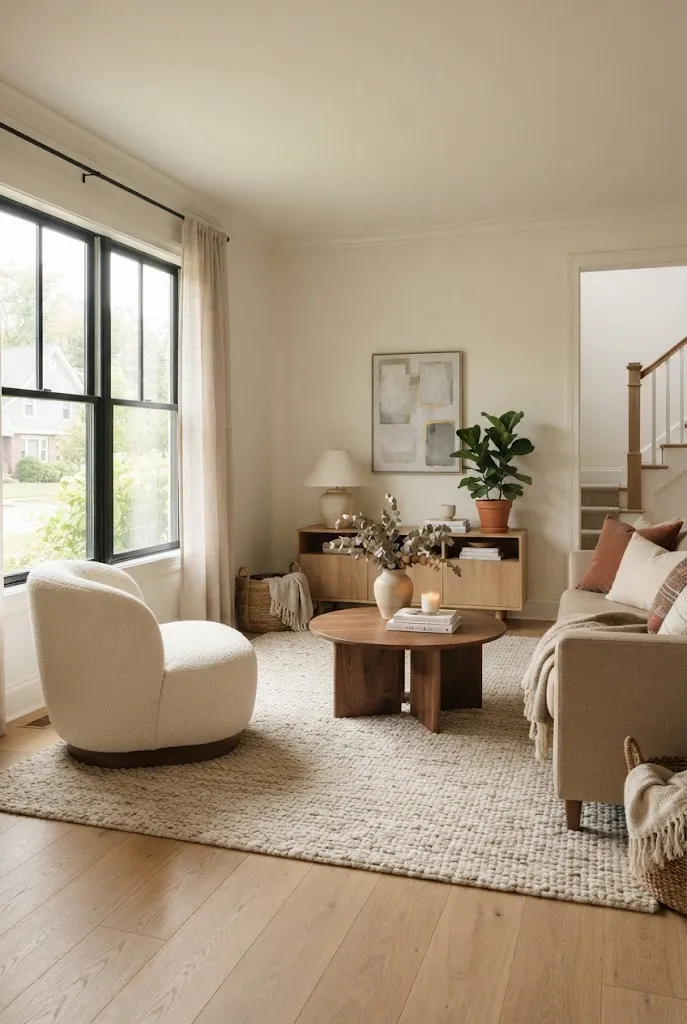
Straight lines dominate many homes, particularly through rectangular sofas, cabinets, tables, and shelving. A curved chair, rounded coffee table, arched cabinet, or softly shaped sofa can break up that repetition.
You don’t need multiple curved pieces. One well-positioned shape can create contrast while keeping the overall room orderly.
14. Turn Open Shelves Into a Curated Display
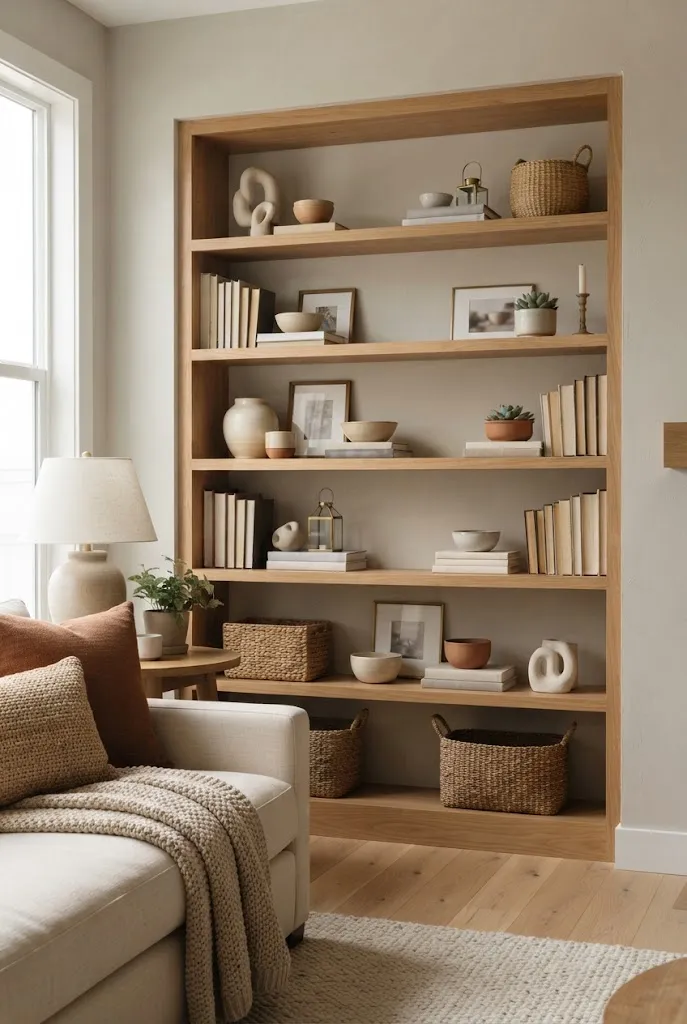
Open shelving can look stylish when it is treated as a collection rather than storage for everything you own. Mix books, ceramics, framed art, baskets, and a few meaningful objects while leaving some open space.
Vary the heights and group similar objects together. If every shelf is completely full, the display can quickly feel busy.
15. Paint an Accent Wall With Purpose
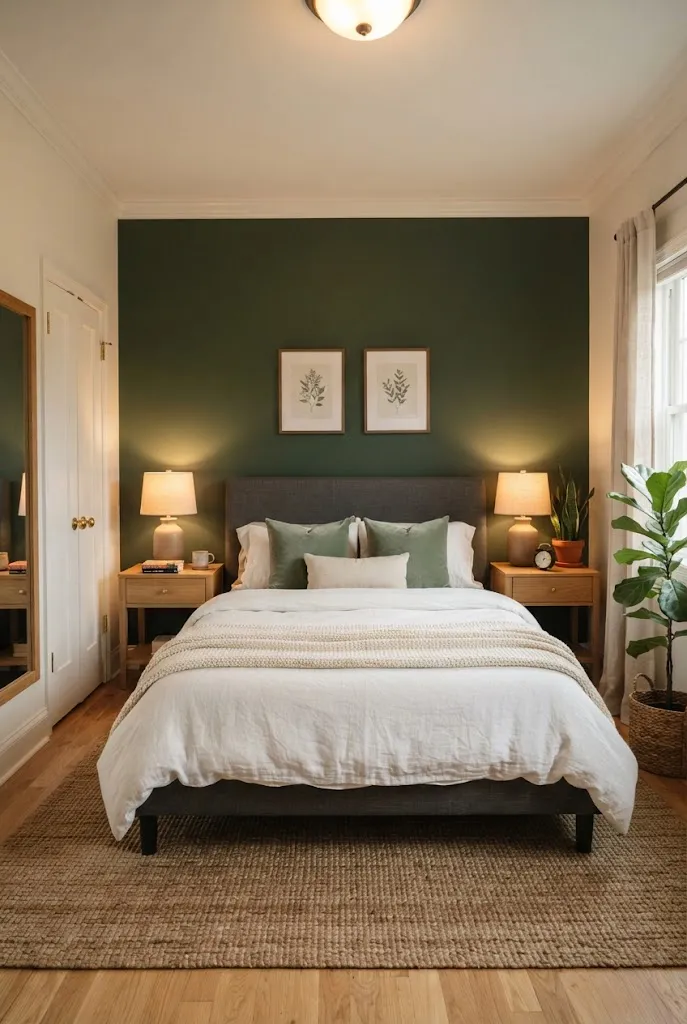
An accent wall works best when it supports the room’s architecture rather than appearing randomly selected. Consider highlighting the wall behind a bed, fireplace, dining table, or built-in shelving.
The color can be dramatic, but it doesn’t have to be. A deeper version of an existing neutral can create subtle definition without overwhelming the rest of the room.
Before committing, observe the color throughout the day because natural and artificial light can change how it appears.
16. Give the Dining Table a Simple Centerpiece
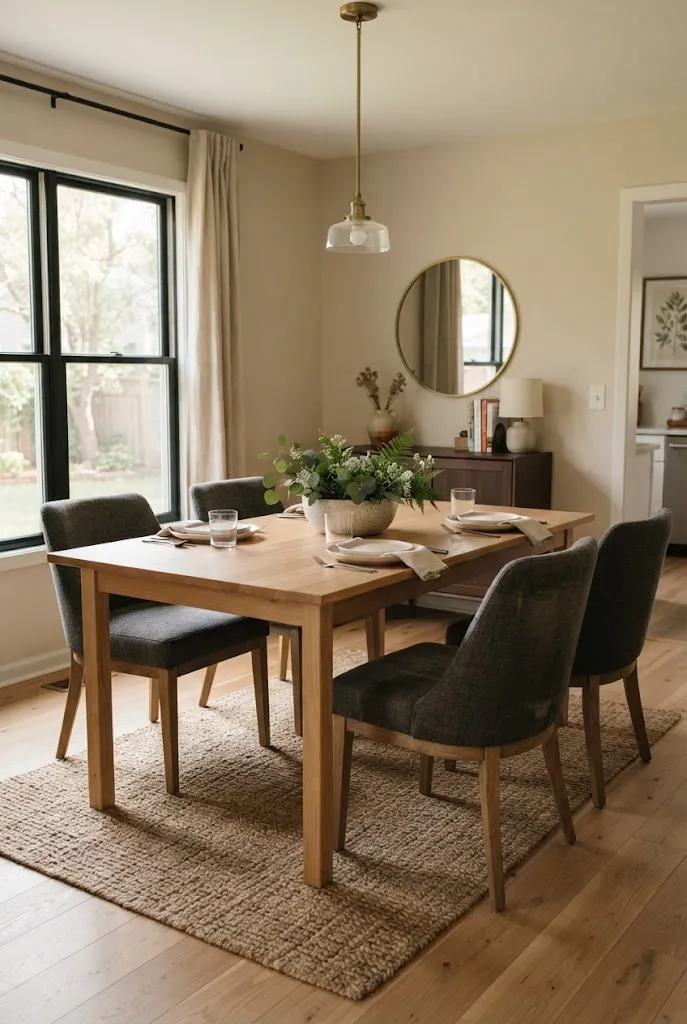
A dining table doesn’t need a permanent elaborate arrangement. A low bowl, ceramic vessel, branches, or a simple floral arrangement can create a focal point while leaving enough room for everyday use.
For rectangular tables, a longer low arrangement can echo the shape of the surface. Round tables often work better with one central object or a compact grouping.
17. Repeat One Accent Color Throughout the Room
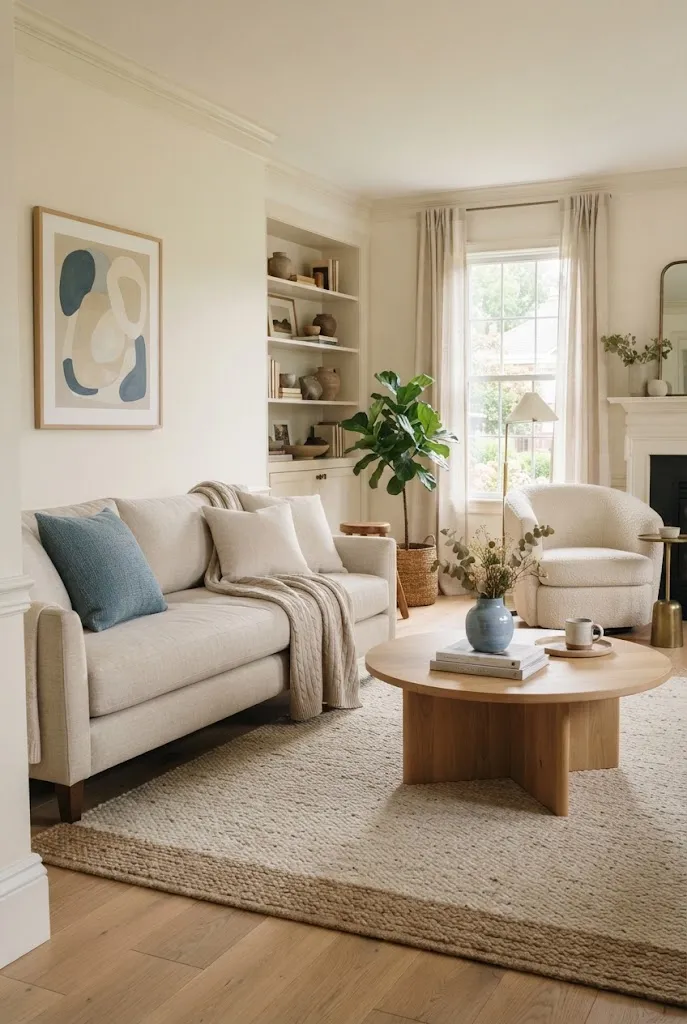
A single recurring accent color can make separate pieces feel connected. The color doesn’t need to dominate the room; it can appear in a cushion, artwork, vase, throw, lamp, or small decorative object.
For example, muted blue can appear in artwork, one pillow, and a ceramic vase while the rest of the room remains neutral.
The goal is repetition, not matching everything exactly.
18. Upgrade Small Hardware Details
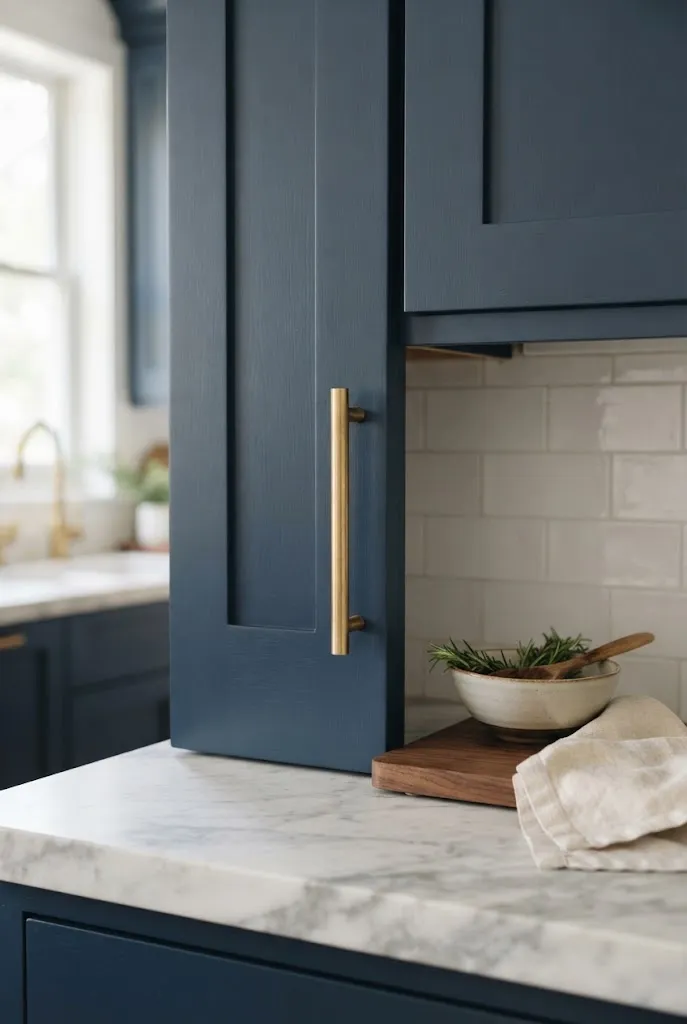
Cabinet pulls, drawer handles, switch plates, and other small hardware can have an outsized effect on how finished a room feels. Replacing dated hardware is especially useful when the larger furniture or cabinetry is still in good condition.
Choose a finish that works with the existing room rather than introducing several competing metals. Black, brushed brass, bronze, and polished chrome can each create different effects depending on the surrounding materials.
19. Create a Dedicated Drop Zone
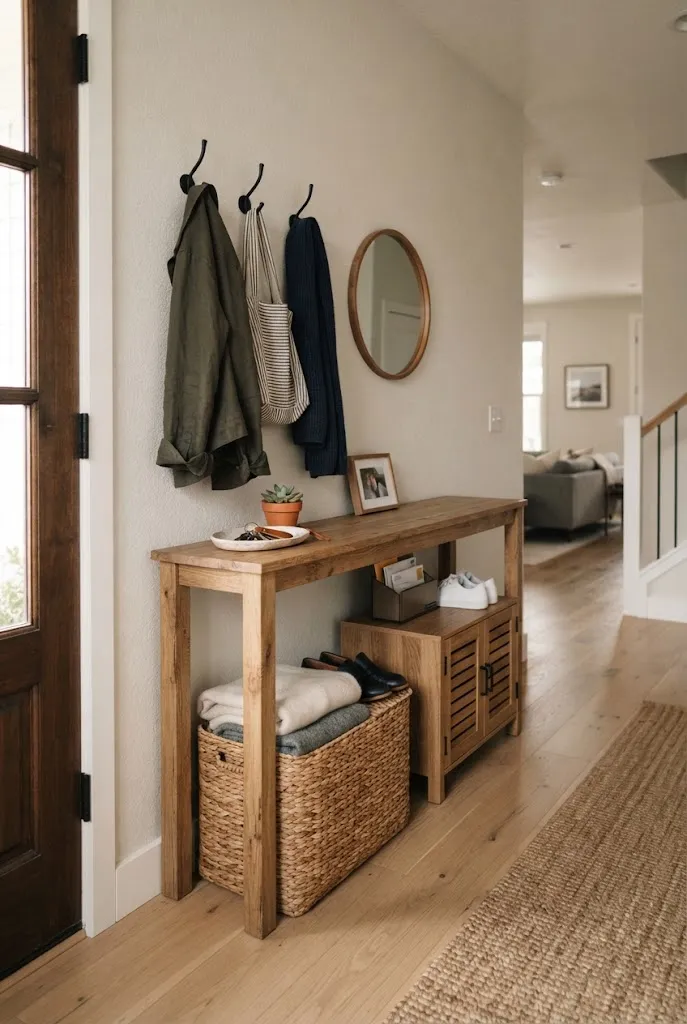
Stylish homes also need practical systems. A small drop zone near an entry can keep keys, mail, bags, shoes, and everyday items from spreading through the house.
A narrow console, wall hooks, baskets, tray, or closed cabinet can provide structure without making the entry look like a storage area.
20. Add an Architectural Detail With Molding
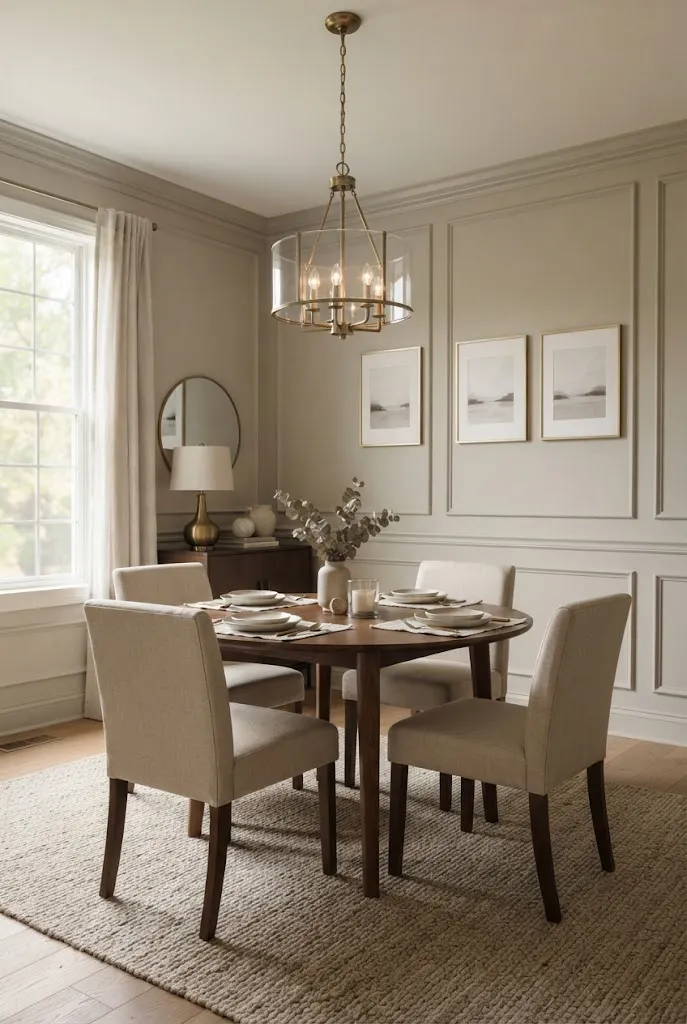
Wall molding can introduce architectural character even when the room itself has simple construction. Applied box molding, vertical paneling, or a restrained picture-frame treatment can give plain walls more dimension.
For a subtle result, paint the molding the same color as the wall. A contrasting finish creates a stronger statement but requires more commitment.
This is particularly useful in dining rooms, bedrooms, hallways, and living rooms where a large uninterrupted wall needs definition.
21. Leave Room for Negative Space
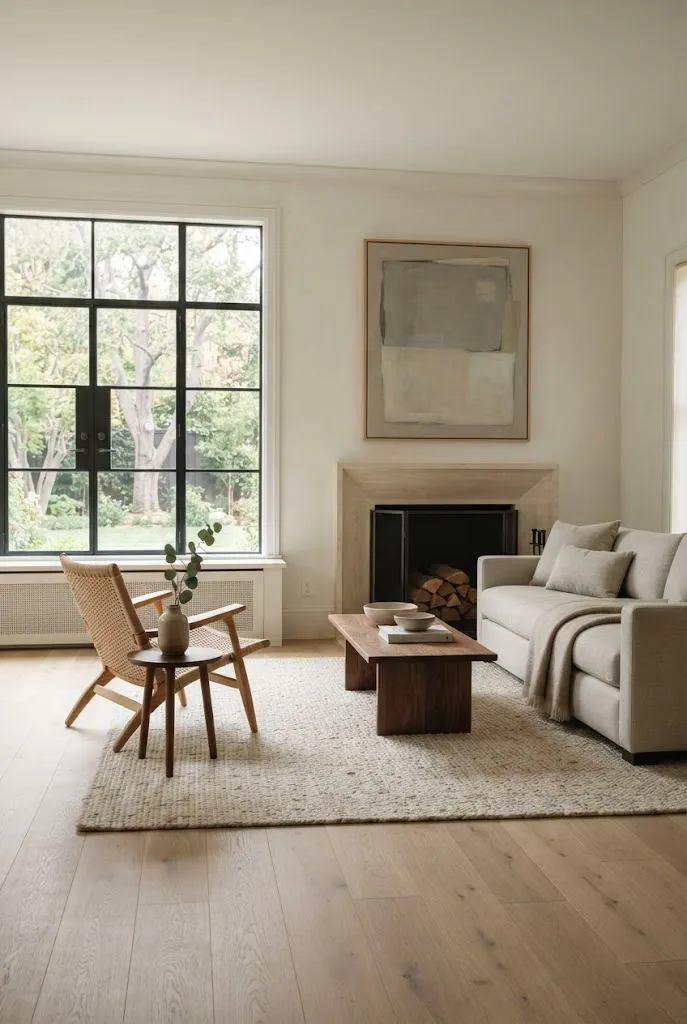
One of the easiest ways to make a room feel more intentional is to stop decorating every available surface. Empty space allows furniture, artwork, architecture, and meaningful objects to stand out.
Look around the room and identify areas that feel crowded rather than assuming they need another accessory. Removing one or two pieces can sometimes improve the composition more than adding something new.
How to Choose the Right Home Decor Ideas for Your Space
You don’t need to tackle all 21 ideas at once. Start by identifying what your room is missing.
If the space feels flat, focus on lighting, texture, artwork, wood, or greenery. If it feels cluttered, create negative space and introduce better storage. If it feels unfinished, consider curtains, a rug, hardware, or a stronger focal point.
For renters, prioritize changes that don’t require permanent construction, such as lighting, rugs, textiles, artwork, plants, and freestanding furniture. Homeowners who want a more substantial change can consider molding, paint, built-ins, or upgraded finishes.
The strongest result usually comes from choosing a few ideas that solve actual problems in the room rather than trying to recreate an entire showroom.