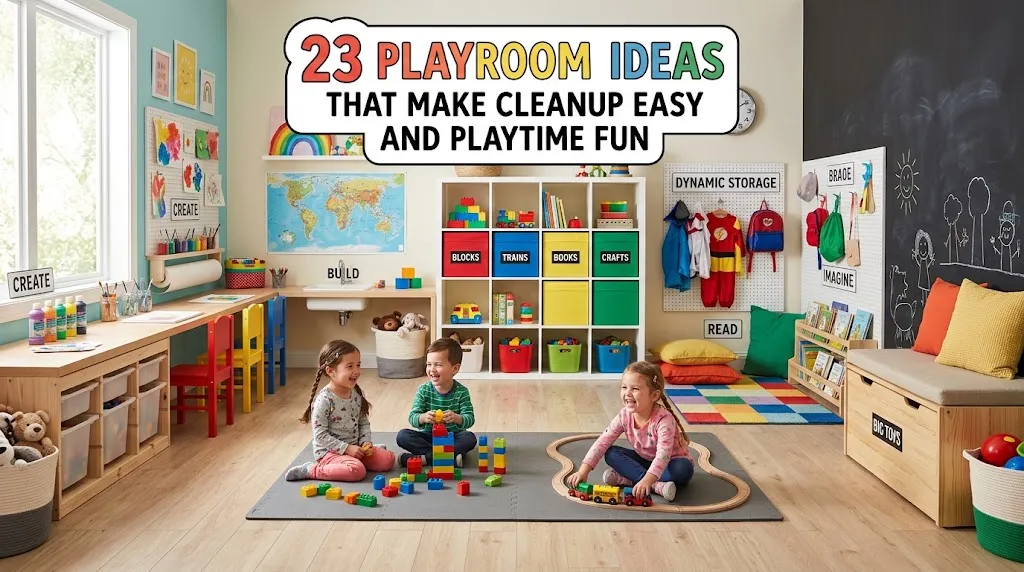
23 Playroom Ideas That Make Cleanup Easy and Playtime Fun
A playroom usually fails at the same moment: when it’s time to put everything away. Toys end up in one giant bin, art supplies migrate to the couch, and the floor becomes a puzzle nobody wants to solve. The fix is rarely more storage. It’s storage that matches how kids actually play, with low shelves they can reach, containers they can recognize without reading, and zones that tell them where each activity belongs.
The playroom ideas below cover every budget and space, from a rental living-room corner to a finished basement. Some take ten minutes and a few baskets. Others involve built-ins or a climbing wall. Each one is designed to make tidying feel like a short, doable routine, while leaving enough open floor and creative space for play to be the main event.
1. Cube Shelving With Kid-Height Bins
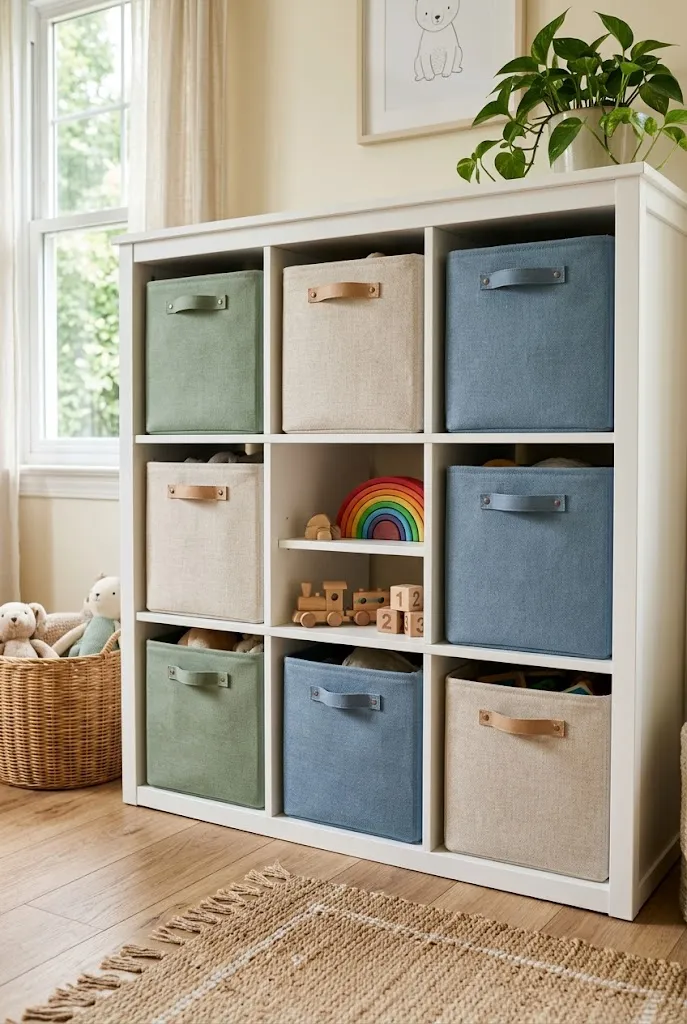
A simple cube bookcase is one of the most flexible playroom foundations because every opening becomes a “home” for one category of toy. Keep the heavier bins on the bottom row and the lighter ones higher, so small hands can pull out and return things without wrestling a shelf.
- Choose bins with soft handles or cutouts that small hands can grip.
- Use one bin per category: vehicles, animals, blocks, dolls.
- Leave one or two cubes open for display items or a basket of current favorites.
Anchor any tall unit to the wall with the hardware that comes in the box. Once it’s secured, the shelf doubles as a room divider if you pull it a few feet from the wall in a larger space.
2. A Toy Rotation Closet
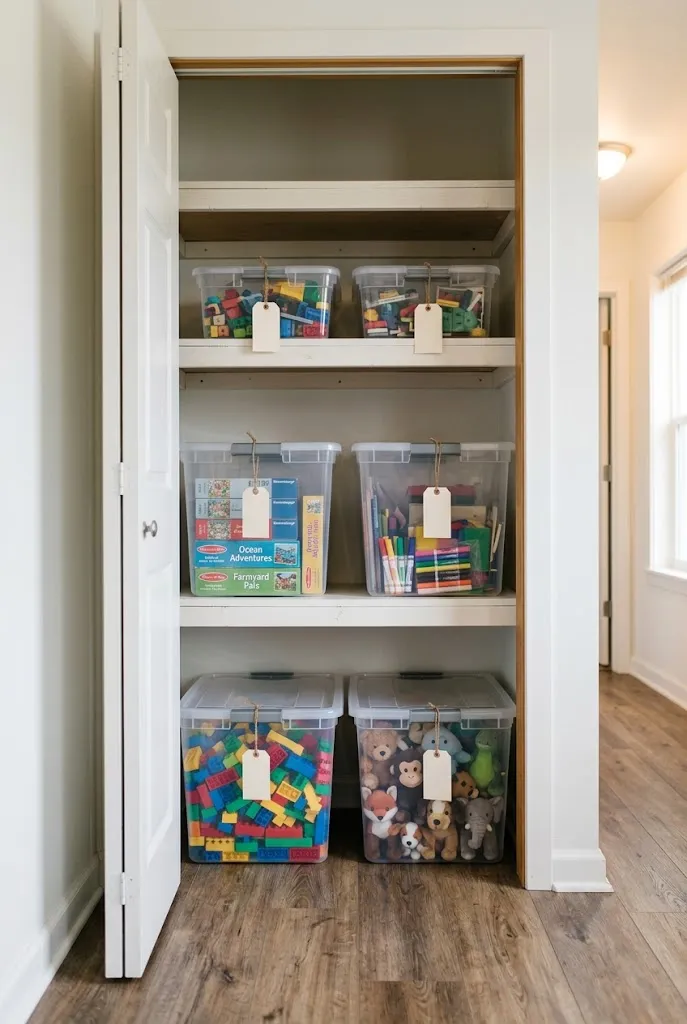
Most children play with a small share of their toys on any given week. A rotation system takes advantage of that: keep a limited selection out, store the rest, and swap them every couple of weeks. Cleanup gets faster because there’s simply less to put away, and old toys feel new again.
- Sort toys into broad categories (building, pretend play, puzzles, vehicles).
- Pack most of them into clear lidded bins or labeled boxes in a hallway closet or garage shelf.
- Leave about a third out on the playroom shelves.
- Swap one or two categories whenever the room starts to feel stale.
Editor’s Note: Keep the stored bins somewhere easy to reach. A rotation system that requires a ladder tends to get abandoned after the second swap.
3. Picture Labels on Every Bin
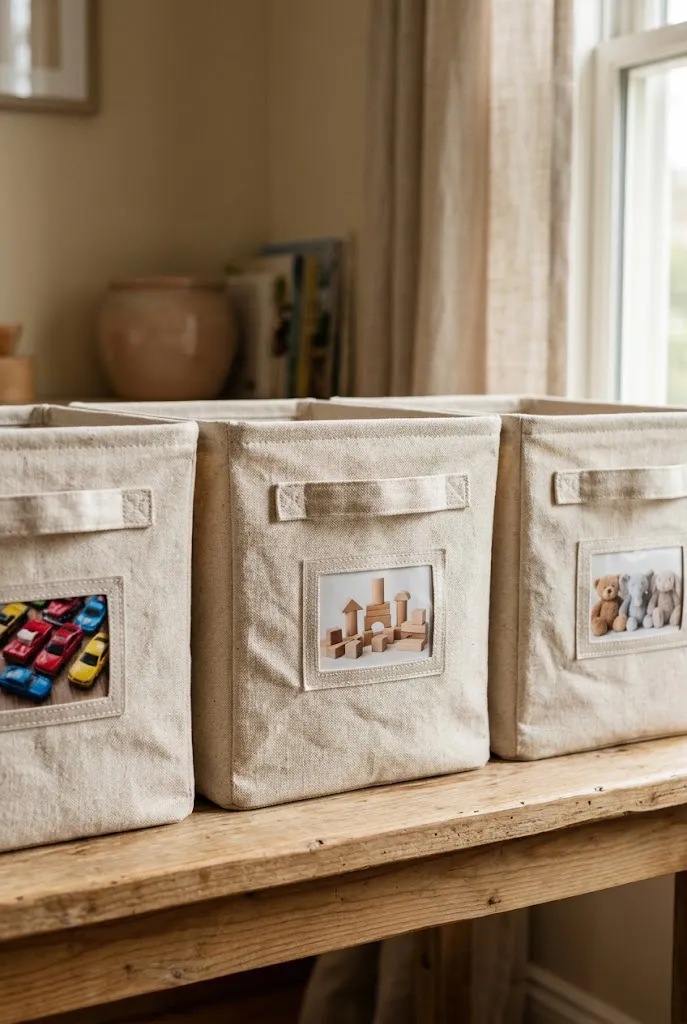
Pre-readers can’t use word labels, but they can match a photo or simple drawing to a bin in seconds. Print a photo of the toy category (a car for vehicles, a block for building toys), laminate or slip it into a clear label holder, and attach it to the front of each bin. Adding the word underneath helps early readers connect text and object.
Quick Tip: Take the photos against a plain background and print them in a consistent size. Matching labels make the whole shelf look intentional, not like a collection of scraps.
4. A Rolling Art Cart
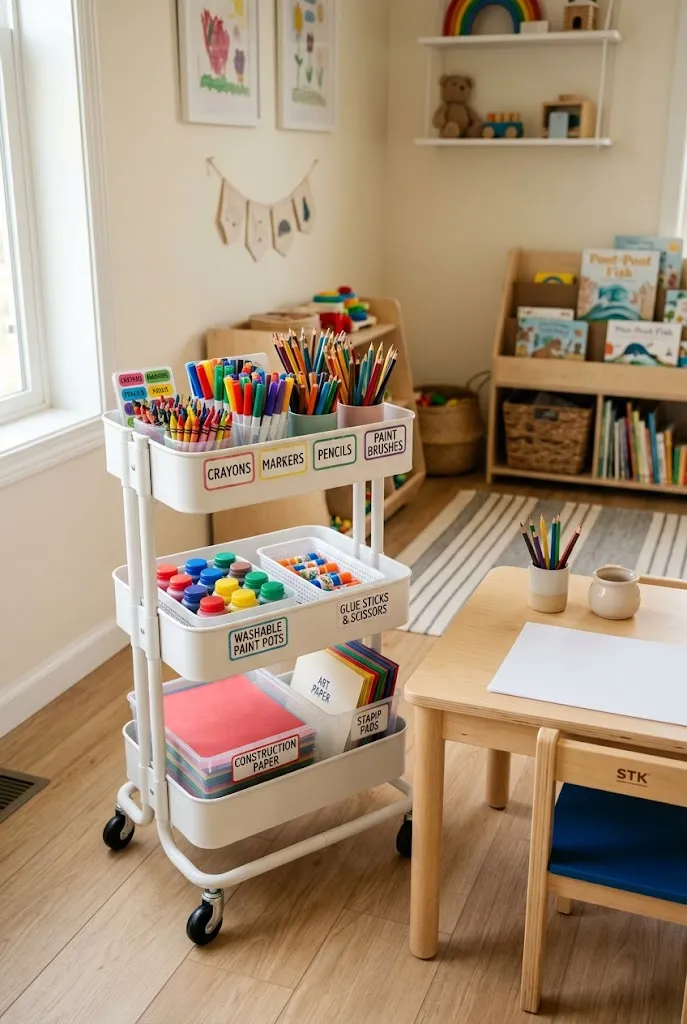
Art supplies tend to spread out quickly, which is why they do well on wheels. A three-tier rolling cart holds crayons, markers, paper, stickers, and washable paint in separate trays. At the end of the session, the cart slides into a corner or closet, and the table is clear again.
| Option | Advantage | Best Fit |
|---|---|---|
| Three-tier plastic cart | Lightweight, easy to wipe clean | Apartments, quick budget fix |
| Wooden cart with trays | Looks like furniture, sturdier | Shared living spaces |
| Cart with locking casters | Stays put during use | Households with toddlers who push |
Keep paint and scissors on the top tier only if an adult supervises. Younger kids do better with a lower tier limited to crayons and paper.
5. Zone the Floor Into Activity Areas
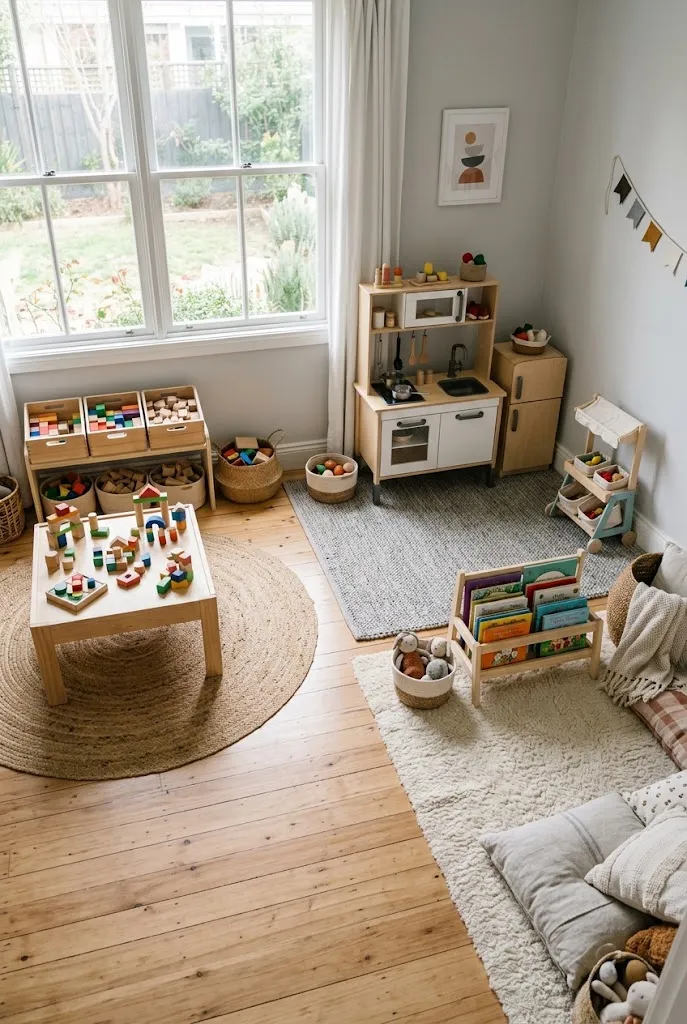
Cleanup improves when every activity has a defined spot. Even a small room can hold three zones: a building area, a pretend-play area, and a quiet reading area. Define them with a rug, a low shelf, or even tape on the floor, and keep the matching toys within arm’s reach of each zone.
When a toy has a zone, kids learn to return it there. The building bricks go back to the building corner, and the dress-up clothes go back to the costume rack. It also stops the “everything everywhere” effect that makes a room feel chaotic even when it’s mostly tidy.
Common Mistake: Placing noisy active toys next to the reading corner.
Better Approach: Put the quiet zone on the opposite side of the room from the building area, with a shelf between them as a visual barrier.
6. A Window Seat With Drawers
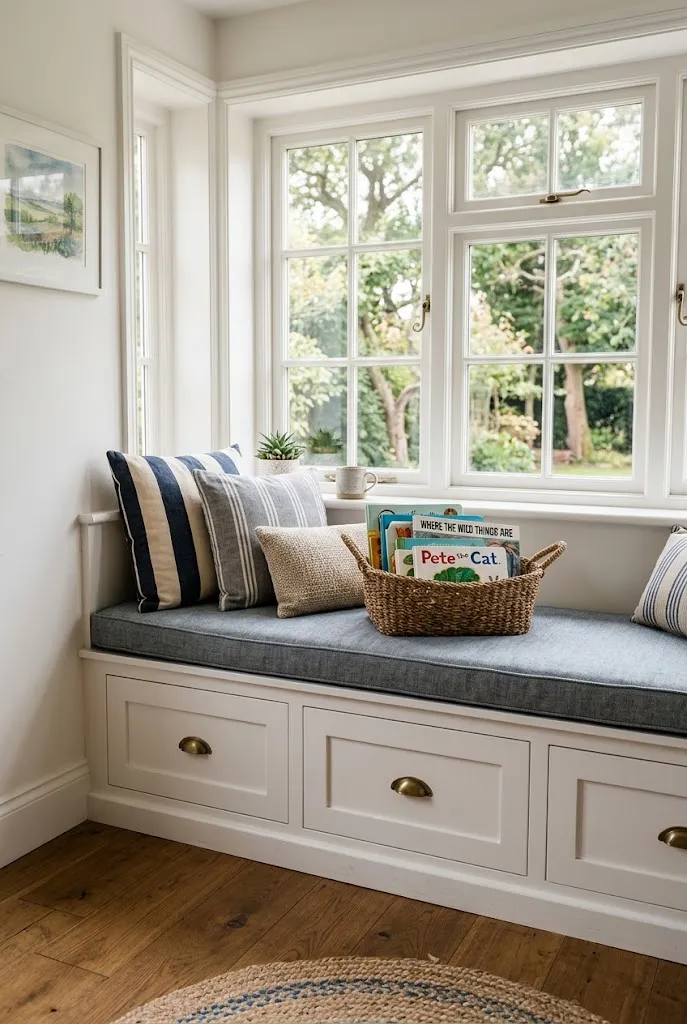
A built-in or ready-made window bench gives you seating, storage, and a sunny reading spot in one footprint. Drawers are the safer and easier choice for kids compared with a heavy hinged lid, because lids can slam and are hard to lift. Deep pull-out drawers hold larger toys, blankets, and sports gear while the cushion on top turns the bench into a reading perch.
Do: Choose drawers with soft-close slides and finger-friendly pulls. Don’t: Install a heavy, non-supported lid on any toy storage a young child can reach.
For a rental, a freestanding storage bench under a window can create a similar effect without touching the walls.
7. Wall Rail With Hanging Buckets
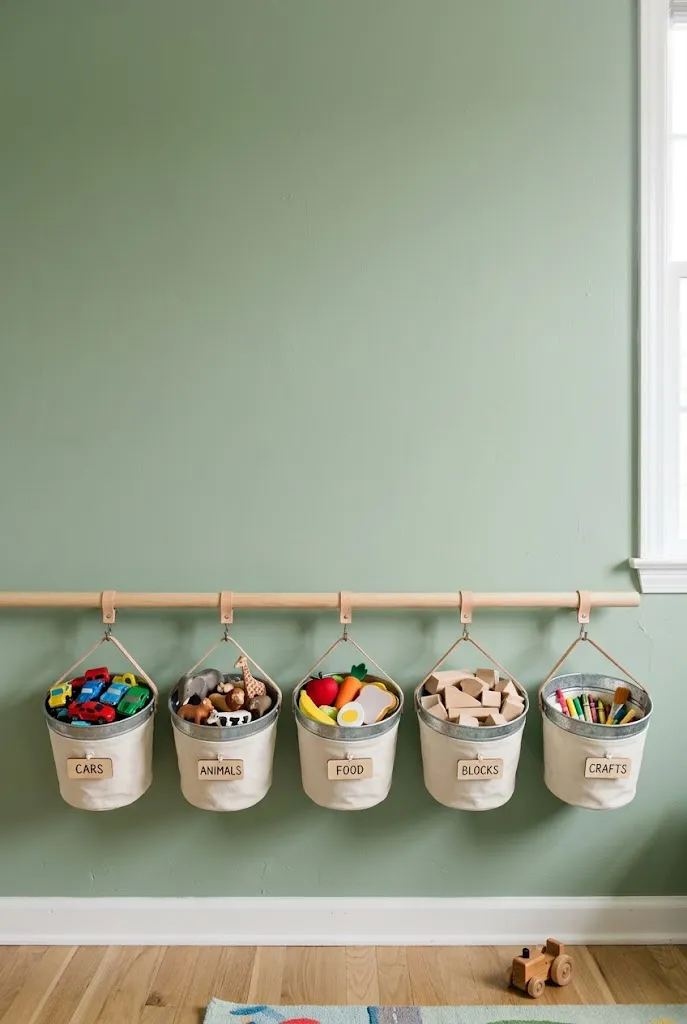
When floor space is tight, go vertical. A wall-mounted rail with S-hooks and small buckets holds stuffed animals, cars, art supplies, or play food at child height. It’s also one of the most renter-friendly ideas here, since a rail with a few screws is easy to patch later, and adhesive-hook versions work for lighter loads.
Mount the rail at a height the child can reach on their own. Use lightweight canvas or metal buckets so nothing heavy falls if a bucket is tugged. Group buckets by category and keep one color family to hold the wall together visually.
8. A Dress-Up Peg Rail and Costume Bar
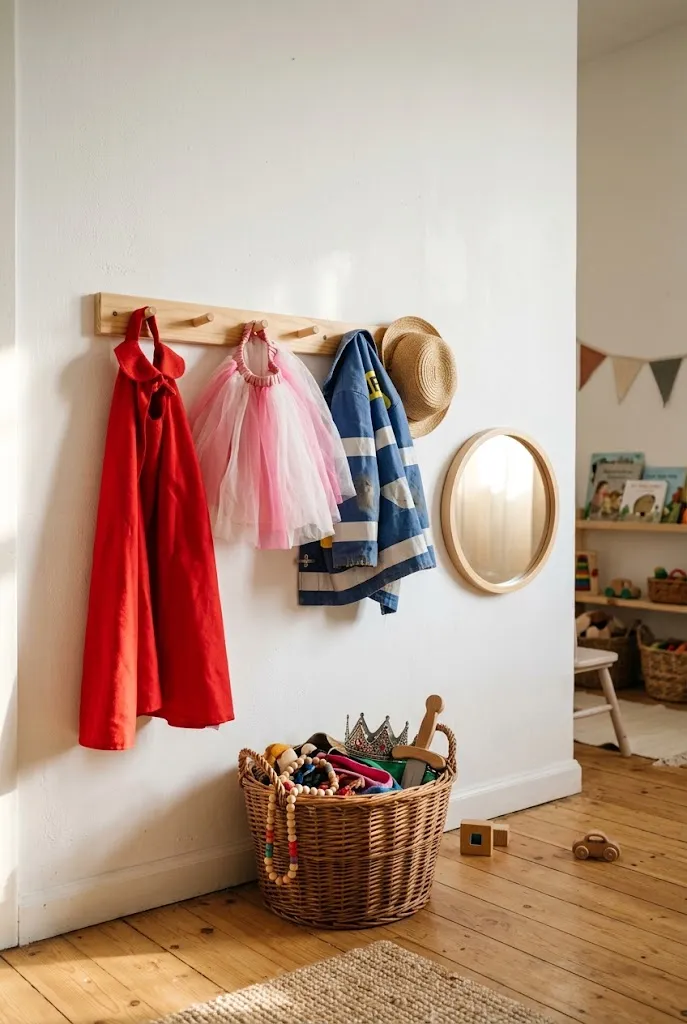
Costumes are bulky and tend to wind up in a heap. A low wooden peg rail, or a tension rod with kid-size hangers, keeps capes, tutus, and doctor coats visible and easy to hang back up. Pair it with a small basket for hats, wands, and shoes.
- Use hooks rather than hangers for younger kids.
- Keep the rail low enough that kids can reach without a stool.
- Rotate costumes seasonally to keep the rack from overflowing.
A mirror mounted at child height nearby turns the corner into a small stage.
9. Front-Facing Book Ledges
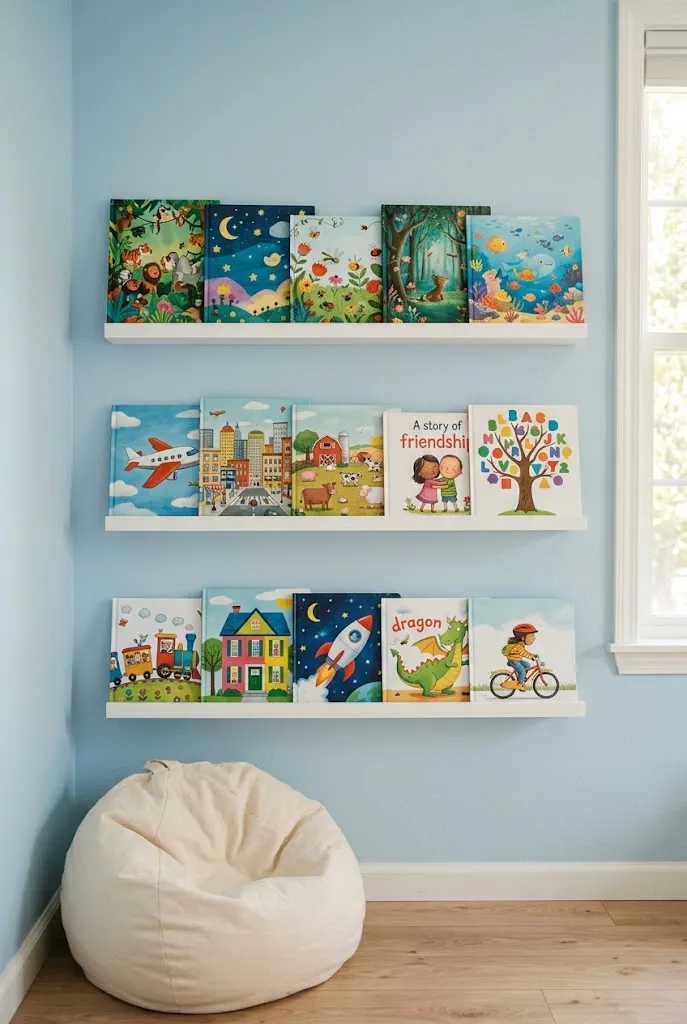
Kids pick books by cover, not by spine. Narrow wall ledges, or low front-facing shelves, let covers show and make it easy to return books because there’s one obvious slot for each. Mount a few at child height along a quiet wall and rotate the books every few weeks.
From a practical standpoint, ledges also keep the floor free, which matters in smaller rooms. Choose a ledge with a lip deep enough to hold the book without it sliding forward. Soft-edged wood is a better choice than sharp metal in a room full of running feet.
10. Foam Tiles or a Rug?
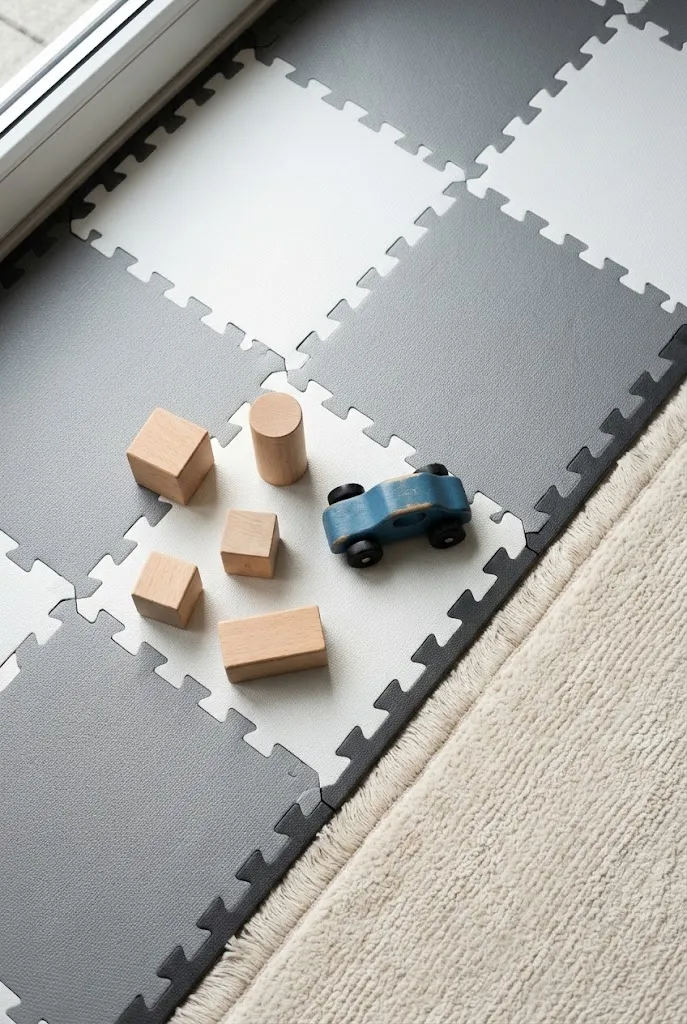
Flooring shapes how a playroom works, and the two most common choices solve different problems. Foam tiles cushion falls and wipe clean. A rug is warmer and quieter underfoot but can hold crumbs.
| Option | Effect / Advantage | Best Fit |
|---|---|---|
| Interlocking foam tiles | Cushioned, easy to clean, can be rearranged | Toddlers, active play, hard floors |
| Low-pile washable rug | Softer look, absorbs sound | Older kids, multi-use rooms |
| Mixed: tiles in play zone, rug in reading zone | Combines both | Medium to large rooms |
Choose tiles that interlock securely so edges don’t curl, and check manufacturer guidance on materials for very young children.
11. A Washable Low-Pile Rug Under the Building Zone
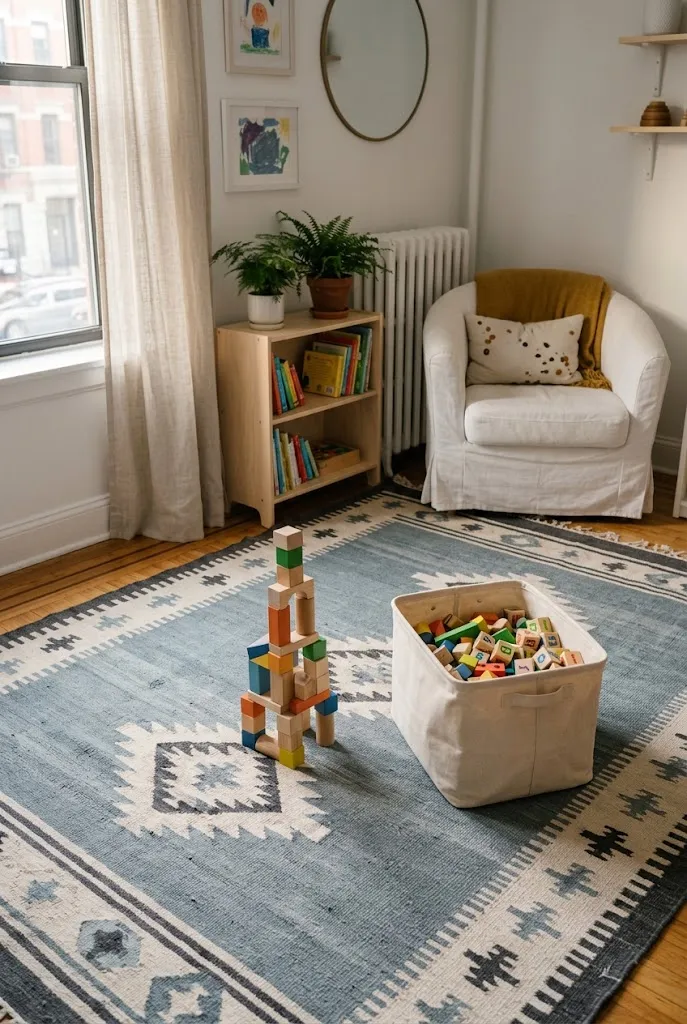
Blocks and brick sets sit best on a low-pile surface. Thick shag rugs swallow small pieces and make cleanup frustrating. A flat-weave or low-pile rug in a washable fabric keeps things visible and can usually go in the machine after the inevitable juice spill, depending on the manufacturer’s care label.
Choose a pattern that hides everyday marks, like a muted geometric or heathered neutral, rather than solid white. Size it large enough that the whole building area fits on top, so pieces don’t scatter onto the hard floor.
12. A Building Table With Storage Underneath
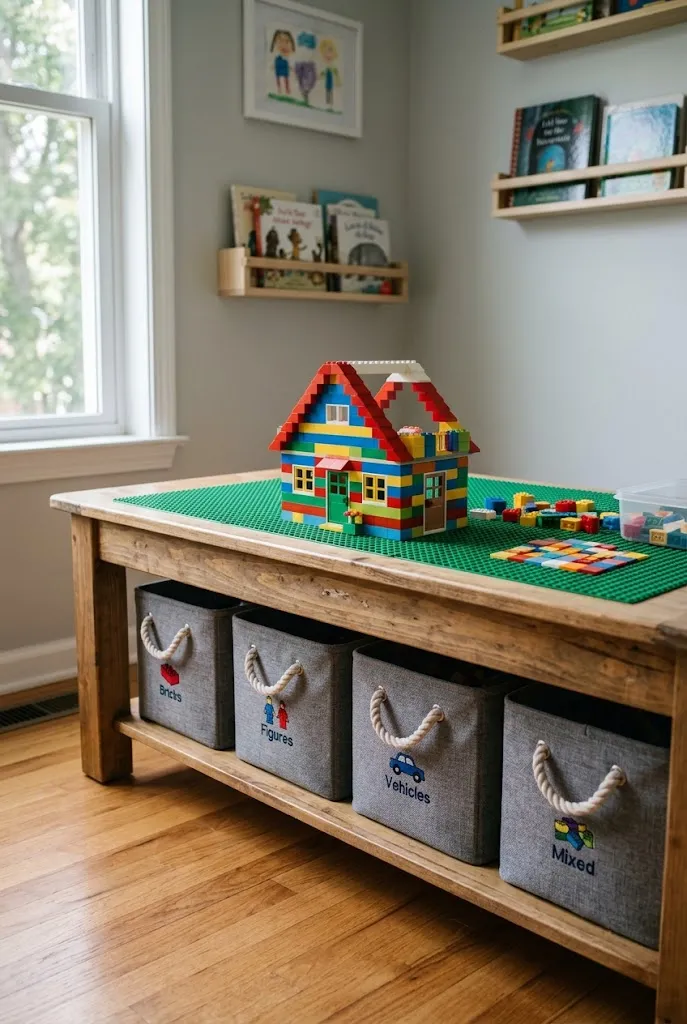
Brick and block builders often want to leave a project half-finished. A table with a flat top and bins underneath lets them build, pause, and clean up without dismantling their work. Some tables have a baseplate surface, while others are plain, in which case you can clip a baseplate on top.
Common Mistake: Placing a building table without nearby storage, which leads to pieces being carried across the room and lost.
Better Approach: Slide labeled bins beneath the table, sorted by color or piece type, so sorting is part of the routine rather than a separate chore.
13. A Magnetic Chalkboard Wall
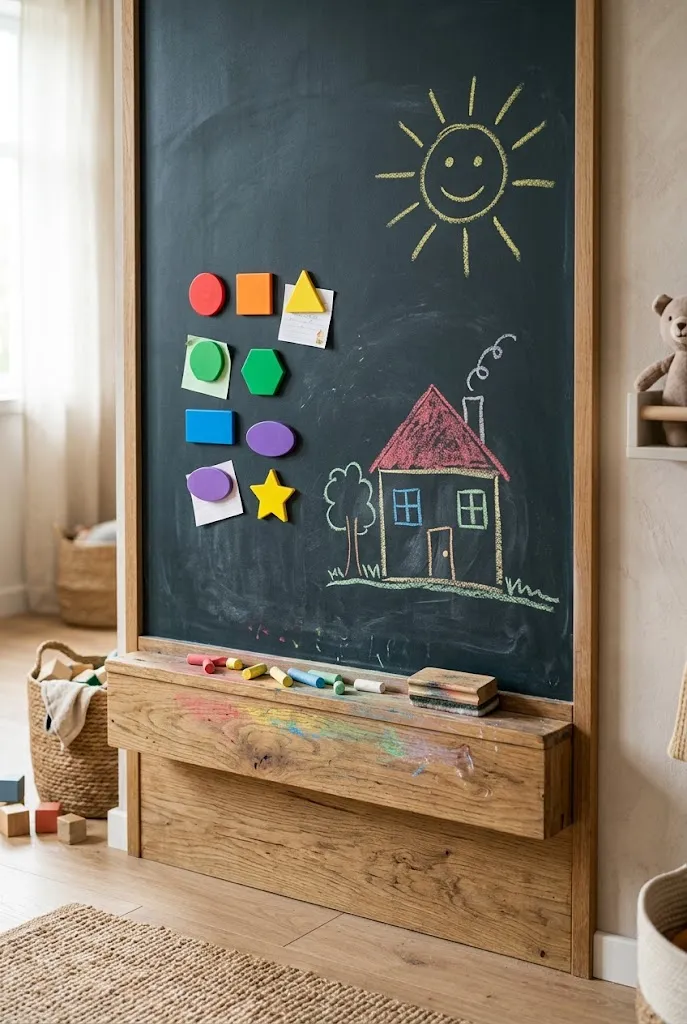
A painted section of wall in magnetic chalkboard paint turns one blank area into drawing space and a magnet board at once. It works well in a playroom because it doesn’t need floor space and it contains the mess to one spot. Check the product’s instructions for the number of coats and drying time, since magnetic primers typically need several layers.
Keep chalk, a small eraser, and a damp cloth in a basket directly beneath, so cleanup happens at the same place as the mess. A chalk ledge catches dust and keeps sticks from rolling away.
14. A Clipped Art Display Line
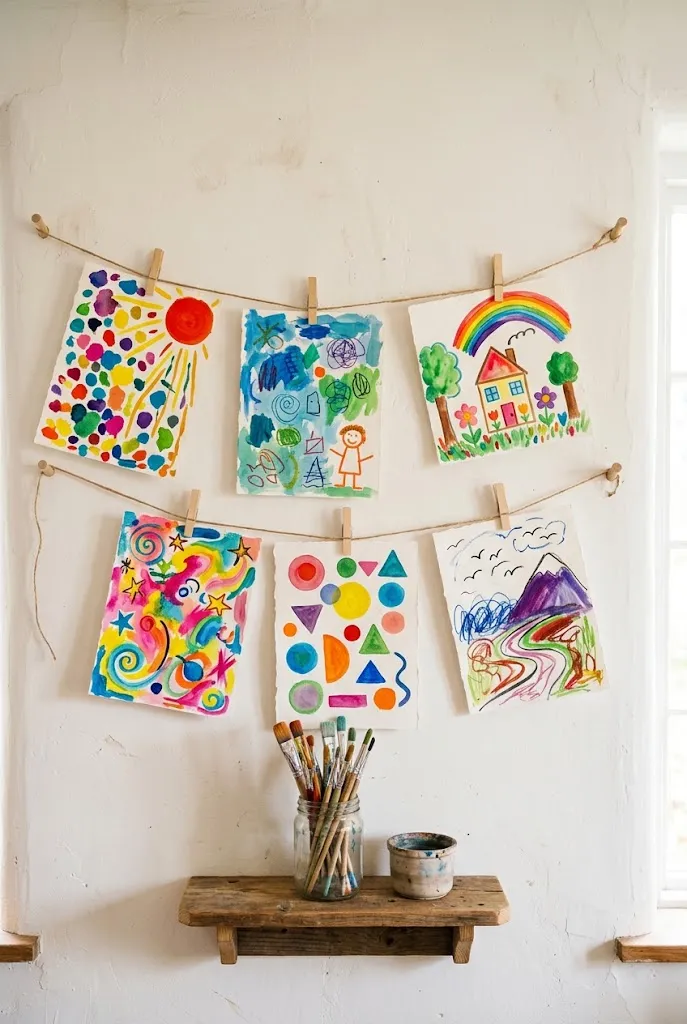
Kids produce art constantly, and the fridge fills up fast. A wire or string with mini clothespins across one wall gives the artwork a place to live. When the line is full, a rotation rule keeps it manageable: one new piece goes up, one old piece goes into a keepsake folder.
This is also a gentle cleanup trick. Instead of papers piling on the table, there’s a visible, proud place for finished work. Hang it at kid height so they can swap pieces themselves.
15. A Reading Nook Canopy
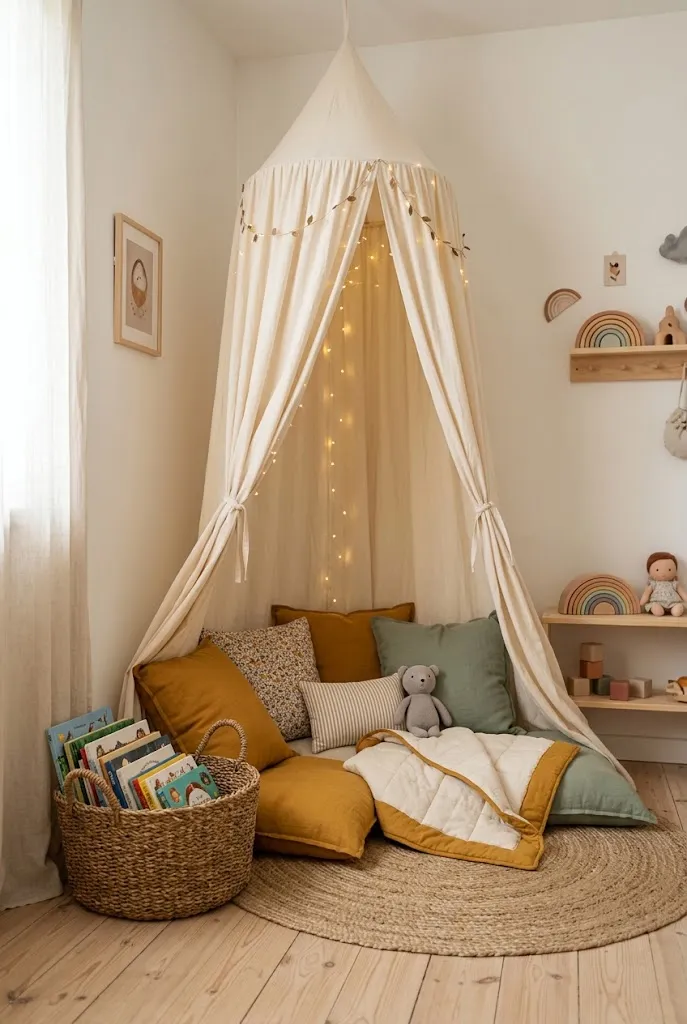
Tuck a cozy nook into a corner using a canopy, a few floor cushions, and a basket of books. A hanging canopy or a simple teepee-style tent defines the space without needing furniture. It becomes a place kids go on their own, which tends to reduce overstimulation in the main room.
- Use washable cushions and a low-pile rug underneath.
- Add a battery-operated string light rather than anything with a cord.
- Keep books in a basket within arm’s reach.
Anchor any hanging element securely to a ceiling joist or use a freestanding frame, and keep fabric away from heat sources.
16. Built-In Cabinetry With Open and Closed Storage
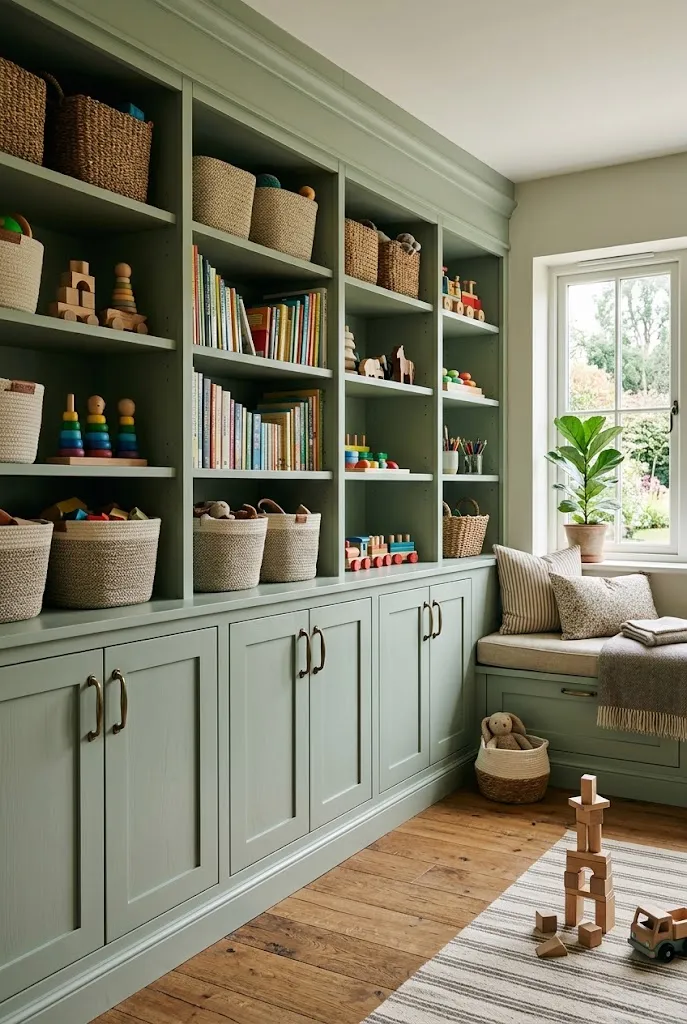
For a long-term playroom, custom or semi-custom built-ins make the biggest difference to how tidy the room stays. The most effective layouts mix closed doors below, which hide clutter at a glance, with open cubbies above, which hold current favorites and display pieces.
In practice, closed lower cabinets are the more forgiving choice, since a quick sweep of toys into a cabinet is faster than sorting into bins. Choose durable painted finishes, soft-close hinges, and rounded edges. This is a premium option, but the principle translates: modular cabinets from a home-goods retailer can create a similar effect at a lower investment.
17. A Basement Playroom With Layered Lighting
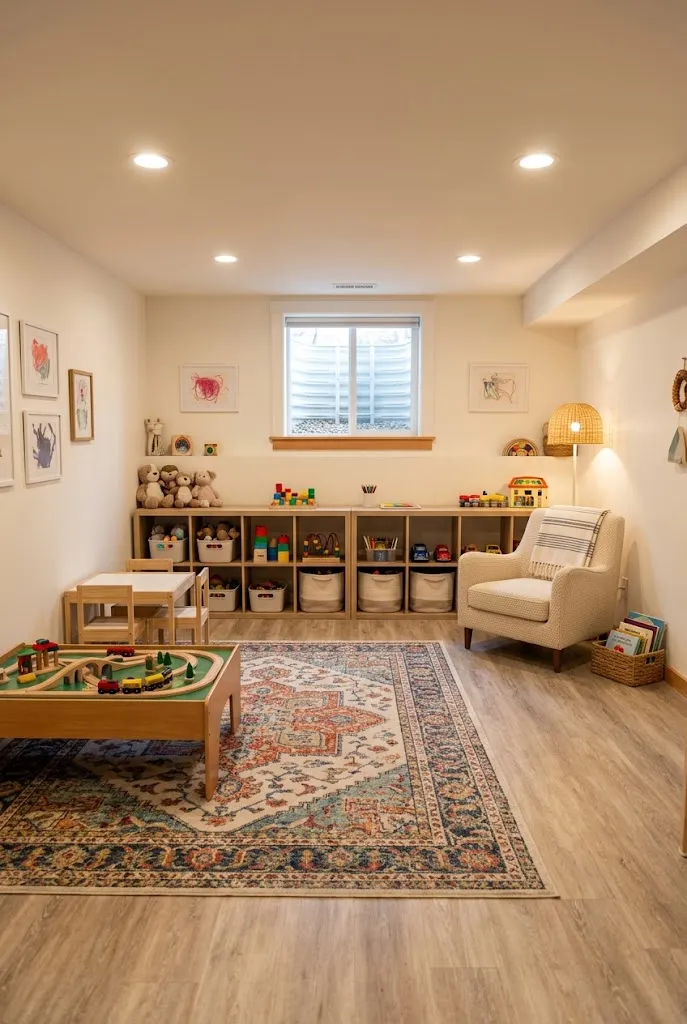
Basements offer space, but they can feel dim. Layered lighting does most of the work: flush ceiling lights for general brightness, a floor or table lamp for the reading corner, and a string light for atmosphere. Keep the paint light and warm to help bounce what daylight there is.
Practical considerations matter below grade. Choose flooring that tolerates moisture, such as luxury vinyl plank or foam tiles over a clean, dry slab, and consider a dehumidifier if the area tends to feel damp.
18. A Closet Turned Playroom
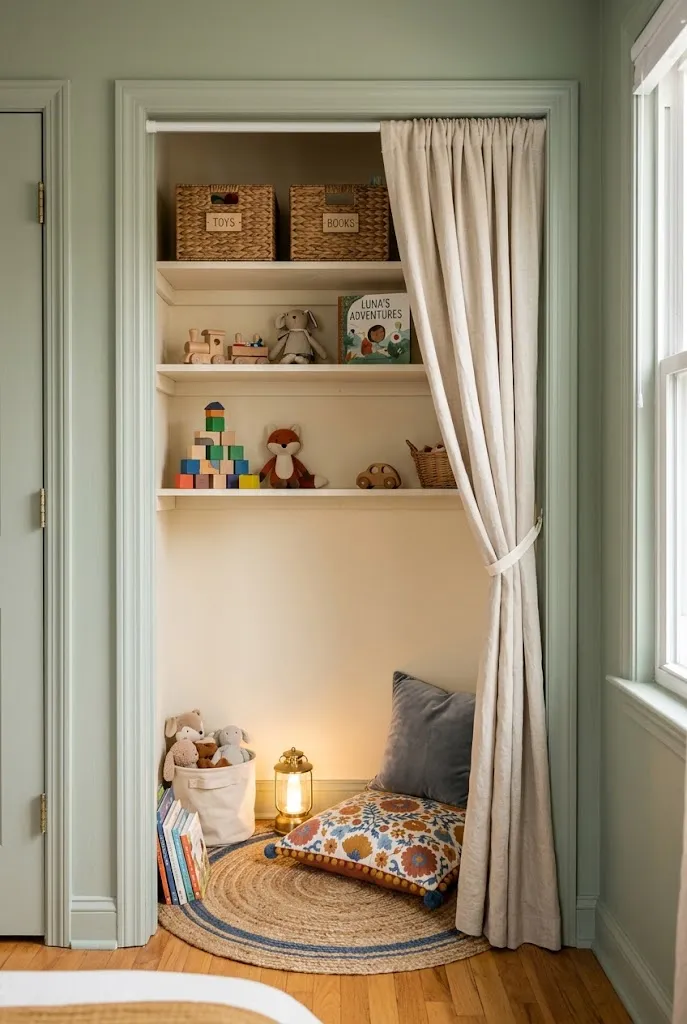
A shallow closet makes a surprisingly useful play space. Remove the doors or swap them for a curtain, add a shelf or two, a small rug, and a cushion, and you have a contained mini playroom. When playtime ends, the curtain pulls shut and the room looks tidy.
Best For: Small apartments or shared bedrooms. Investment: Accessible. Visual Effect: A tucked-away, cozy corner with a built-in look.
Mount shelves at a safe height and keep anything heavy on the floor.
19. A Play Kitchen With a Pantry Basket System
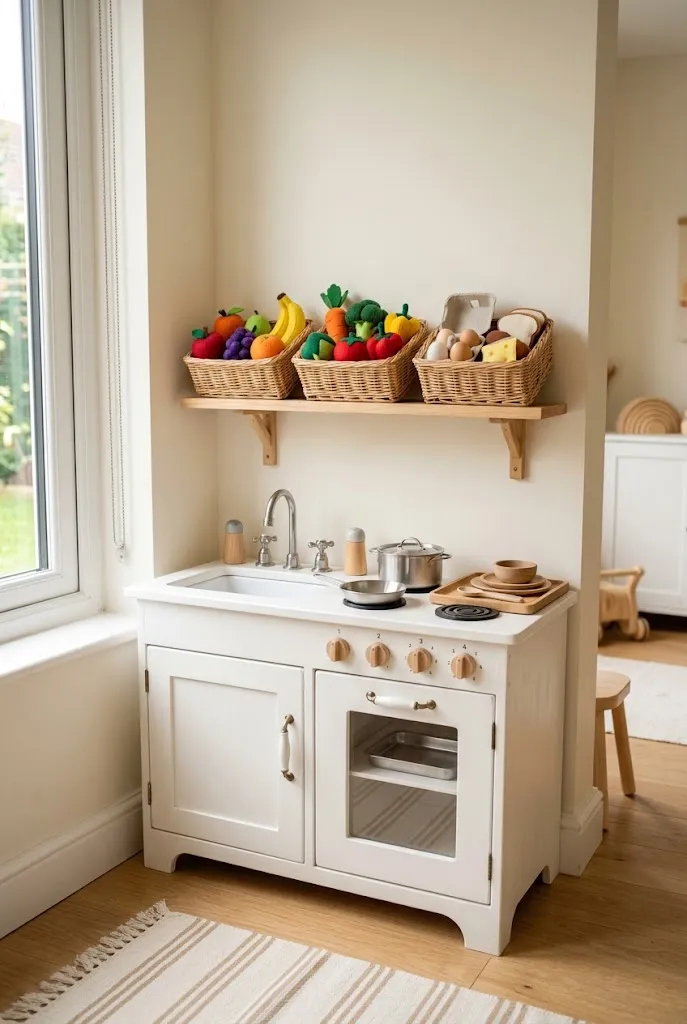
Pretend-play kitchens come with a lot of tiny accessories. A basket for play food, a bin for dishes, and a shelf for pots keep it organized. Mount a small wooden shelf on the wall next to it for a “pantry” with labeled picture baskets.
A play kitchen also works well as a zone anchor: pretend-play toys all belong here, so cleanup has a clear destination. Choose a kitchen that’s sturdy and sized to the child’s height.
20. A Craft Table With a Paper Roll Dispenser
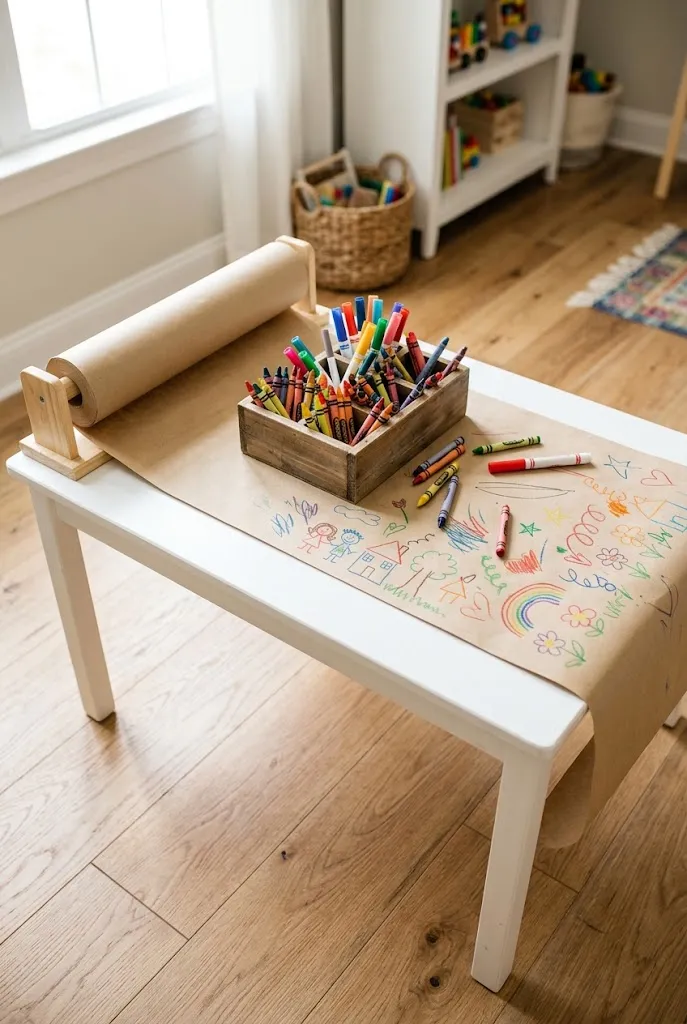
A kid-height table with a roll of paper mounted at one end encourages big drawing sessions without a stack of loose sheets. Tear off a length, draw, and when the paper is full, roll it up or cut it to pin on the display line.
Tips & Tricks:
- Cover the table with butcher paper for messy projects, and replace when done.
- Keep supplies in a caddy that lives in the center of the table.
- A wipeable table surface speeds cleanup after glue or paint.
21. A Quiet Calm-Down Corner
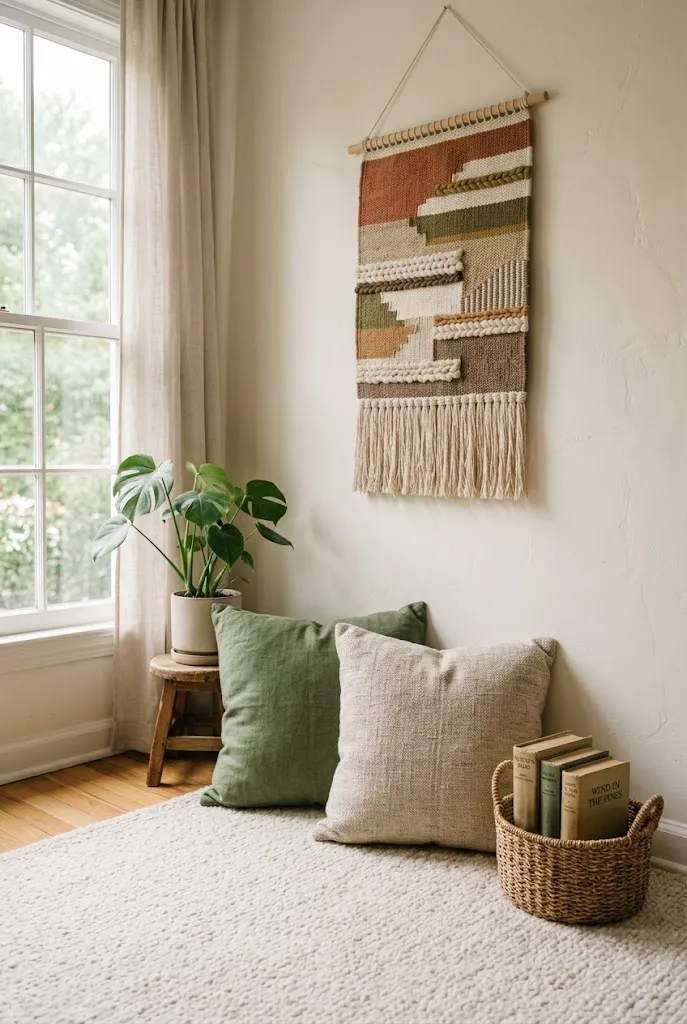
Playrooms are active by nature, and having a deliberately calm corner gives kids a place to reset. Think a soft rug, two floor cushions, a small basket with a few books and a sensory item, and dimmer lighting. Keep it clutter-free so the corner reads as restful.
From a design standpoint, a muted palette helps. Soft greens, warm neutrals, and natural textures create a quieter look than bright primaries. Avoid turning it into a punishment space; framing it as a cozy, chosen spot works better.
22. An Indoor Climbing Wall and Slide Corner
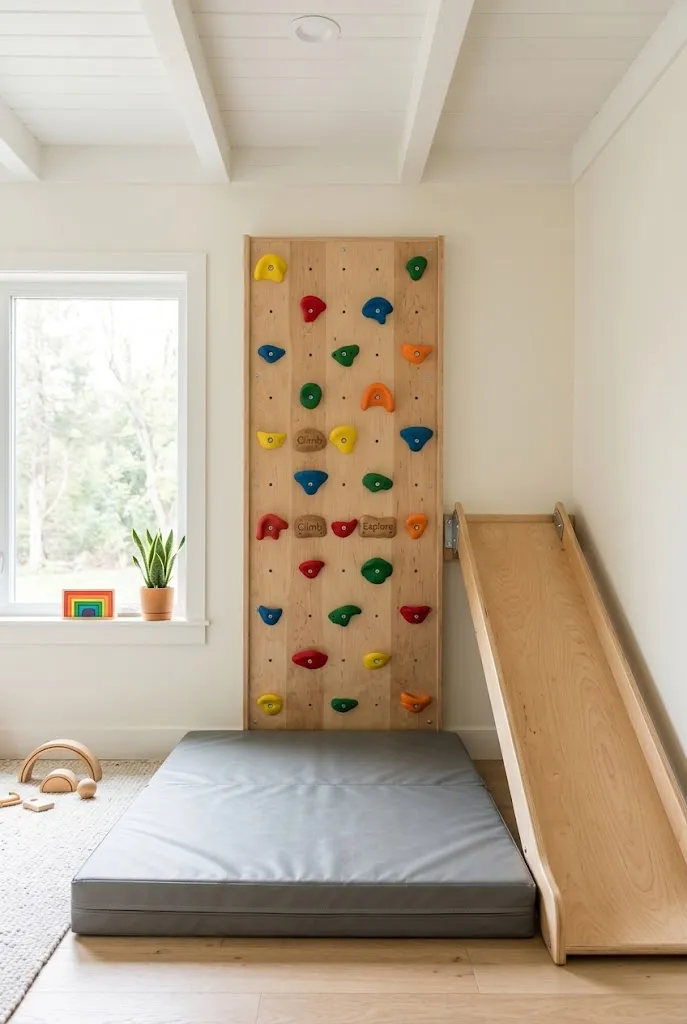
For high-energy kids and larger rooms, a climbing wall with a crash mat and slide gives burn-off space indoors. This is a premium investment and needs proper installation into wall studs or a freestanding frame, with a thick mat underneath, so follow the manufacturer’s instructions closely and consider a professional installer.
Editor’s Note: Leave enough clear floor around the mat. A climbing feature works best in a room with a ceiling tall enough for the equipment and no hard furniture nearby.
23. A Reset Basket by the Door
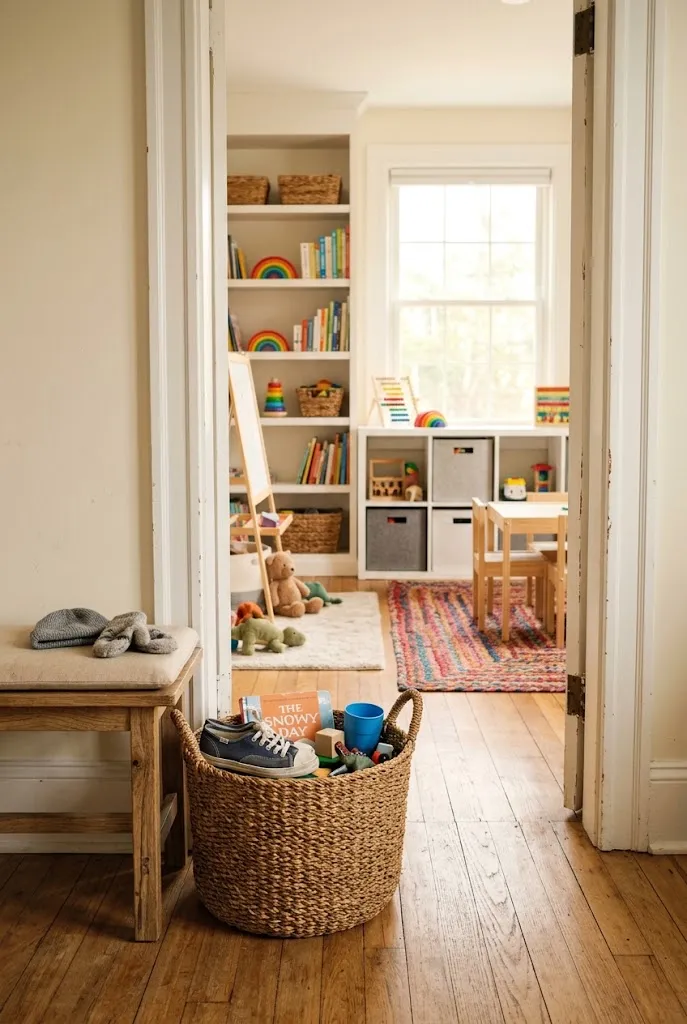
Toys wander. A single large basket near the playroom exit, designated as the “reset basket,” catches everything that doesn’t belong in the room: cups, shoes, library books, other family items. At the end of the day, one person empties it and returns items home.
It also supports a daily five-minute reset: set a timer, sweep toys into their bins, and drop strays in the basket. Pair it with a low bench so kids can sit to put on shoes on the way out.
Where to Start
You don’t need all 23 ideas. Pick the one that solves your messiest moment. If toys end up everywhere, start with zoning and labeled bins. If art supplies take over, try the rolling cart. Add one change at a time, and let your kids help set it up, since they’re far more likely to maintain a system they built.