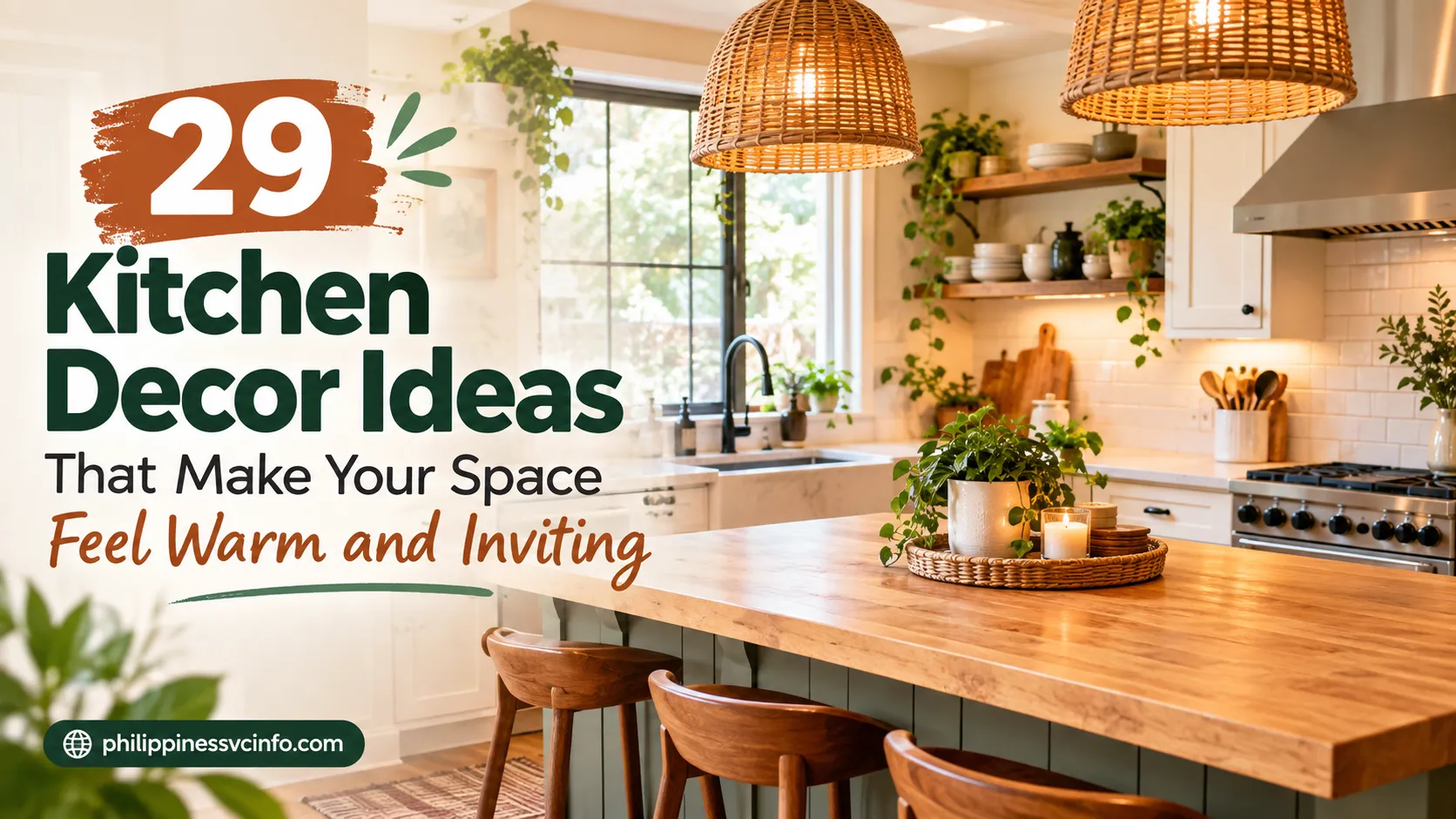
29 Kitchen Decor Ideas That Make Your Space Feel Warm and Inviting
Introduction
A kitchen feels warm when it gives people a reason to linger: a lamp glowing near the coffee maker, a wooden counter that shows its grain, a rug that softens the floor in front of the sink. The kitchen decor ideas below focus on those small physical cues rather than a full renovation. You’ll find paint colors, lighting choices, textiles, shelving, and counter styling that work in apartments, rentals, and starter homes, plus a handful of larger upgrades for anyone planning a remodel. Each idea includes practical notes on scale, materials, and common pitfalls, so you can borrow a single detail or build an entire room around several of them.
1. Paint the Lower Cabinets a Creamy Butter Tone
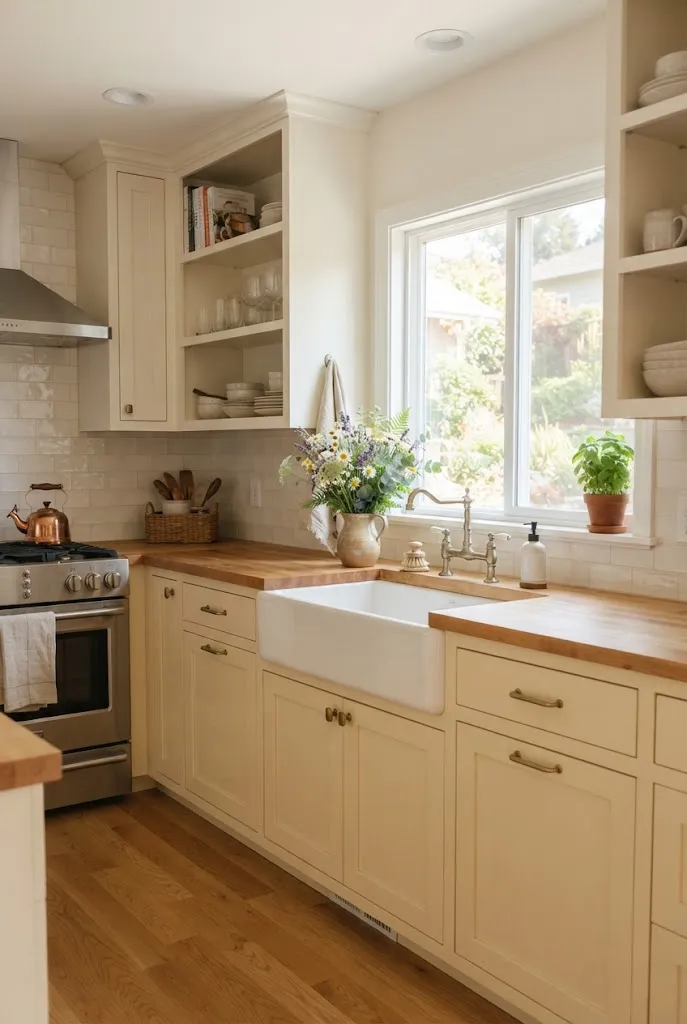
A warm off-white with a soft yellow undertone reads friendlier than stark white, especially in kitchens that get cool north light. Painting only the lower cabinets keeps the upper run light and airy while giving the room a grounded base. Cabinet-grade primer and a durable enamel matter more than the exact shade, since doors take daily handling. Degrease first, sand lightly, and let each coat cure fully before rehanging doors.
Quick Tip: Brush a large swatch on a piece of poster board and tape it up near the window. Check it at morning, midday, and evening before committing, because yellow undertones can shift quickly with daylight.
2. Swap in Unlacquered Brass Pulls
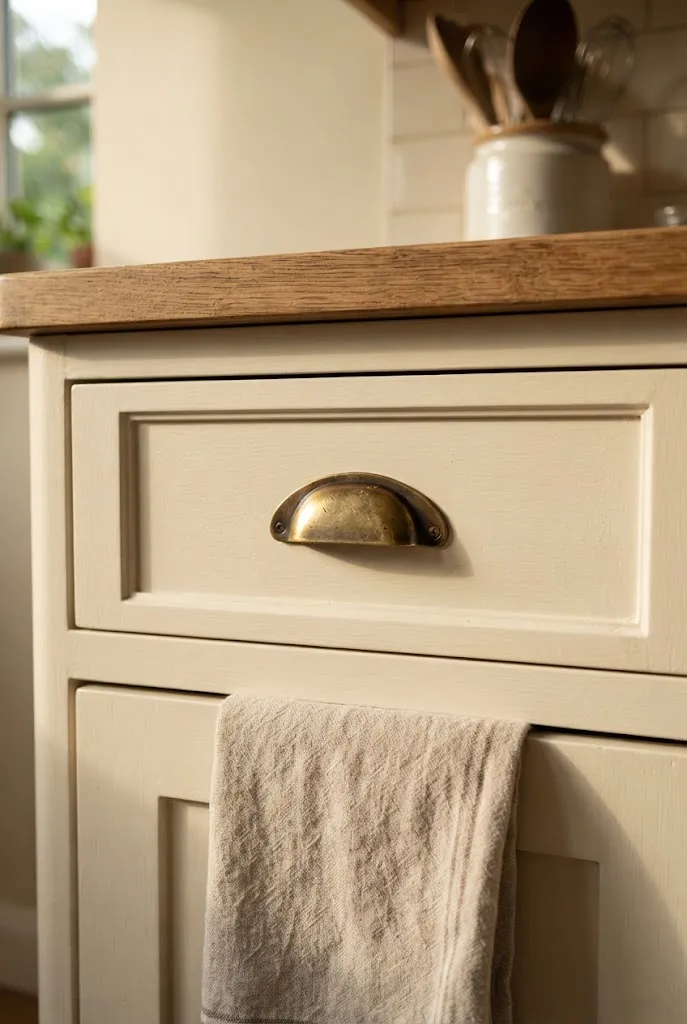
Hardware is one of the fastest ways to change how a kitchen feels, and warm metals add a quiet glow against painted cabinets. A few details help the swap go smoothly:
- Measure the distance between existing screw holes (center to center) so new pulls fit without drilling.
- Unlacquered brass darkens and softens with use, while lacquered brass stays bright, so pick based on the look you want over time.
- Cup pulls suit drawers, and round knobs suit doors, which gives the set a classic rhythm.
- Stick to one main metal, with a second finish only in small doses such as the faucet.
The change costs little, takes an afternoon, and can be reversed by keeping the old hardware in a labeled bag, which is useful for renters.
3. Open Shelving That Mixes Wood, Stoneware, and Glass
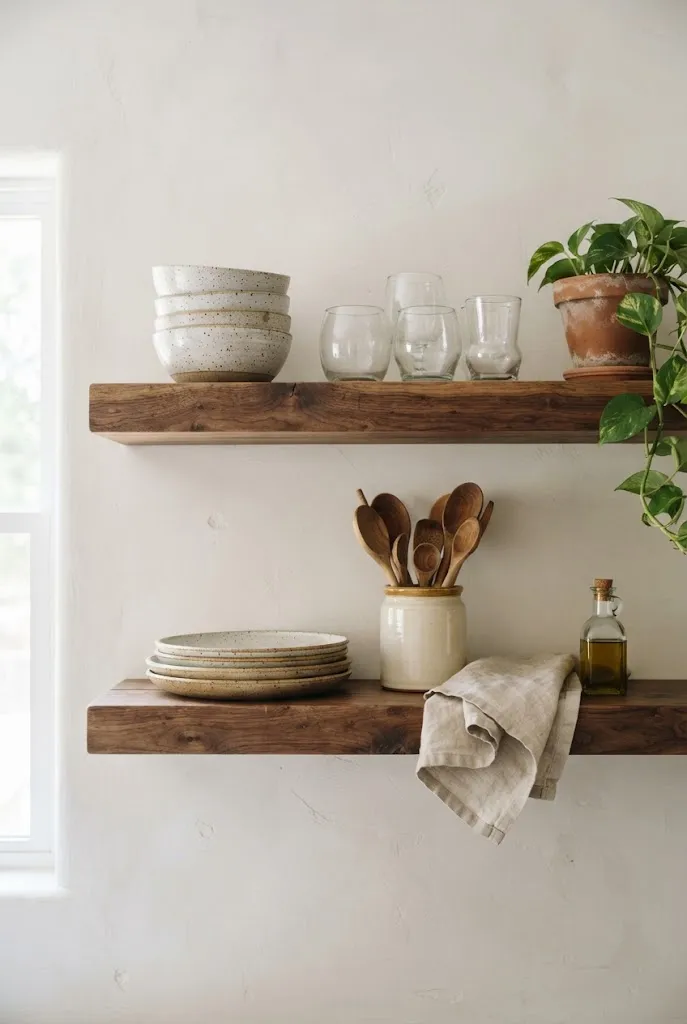
Open shelves let everyday dishes double as decor, and warmth comes from mixing materials rather than matching them. Pair a thick wood shelf with stoneware bowls, a few clear drinking glasses, and one or two handmade pieces with slightly irregular glazes. Group items in odd numbers, stack bowls for height, and leave real gaps so the shelf doesn’t feel packed. Anchor brackets into studs, since a loaded shelf carries more weight than it looks like.
Common Mistake: Filling every inch with decorative objects.
Better Approach: Keep the dishes you actually use on the shelf and add only a couple of non-functional accents. The kitchen stays practical, and the display looks collected rather than staged.
4. Hang Woven Pendants Over the Island
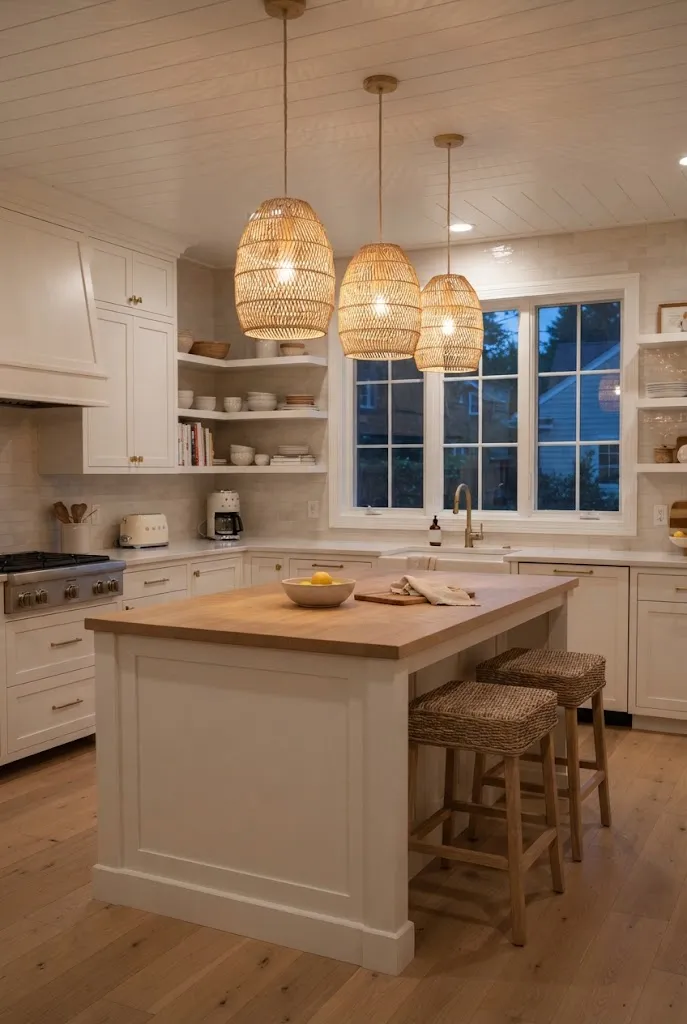
Rattan and cane pendants cast patterned, softly diffused light that makes an island feel like a gathering spot. Scale decides whether they look right:
- A commonly used guideline places the bottom of pendants roughly 30 to 36 inches above the counter, so sight lines stay open.
- Two or three fixtures usually suit an island of average length, spaced evenly with room between each.
- A dimmer switch lets the same lights work for early breakfast and slow evenings.
- Warm-white bulbs keep the glow gentle.
Check the fixture’s weight and wiring instructions, and confirm any electrical changes with a licensed electrician.
5. Lay a Faded Vintage-Style Runner Rug
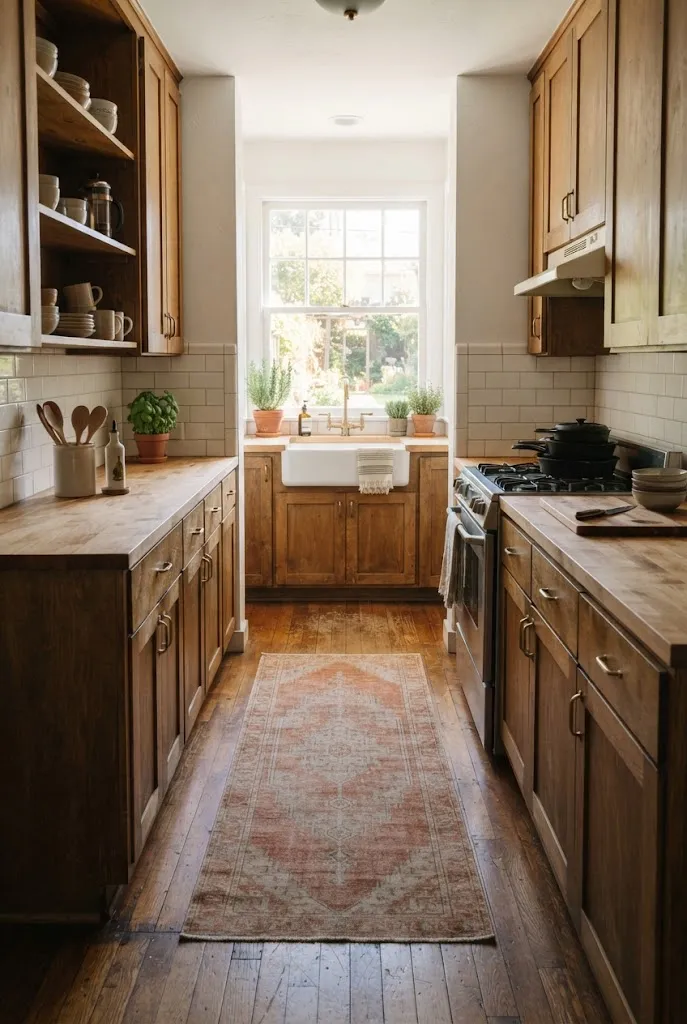
A runner in washed reds, rust, and cream pulls warmth underfoot and hides everyday crumbs far better than a solid color. Choose a low-pile or flatweave style so it lies flat and slides easily under a vacuum, and add a non-slip pad to prevent shifting. Many washable runners now exist, which makes spills much less stressful.
Editor’s Note: Leave a few inches of bare floor on each side so the rug looks intentional, and avoid thick shag in front of a stove or sink, where it can catch feet and trap moisture.
6. Line the Windowsill With Terracotta Herb Pots
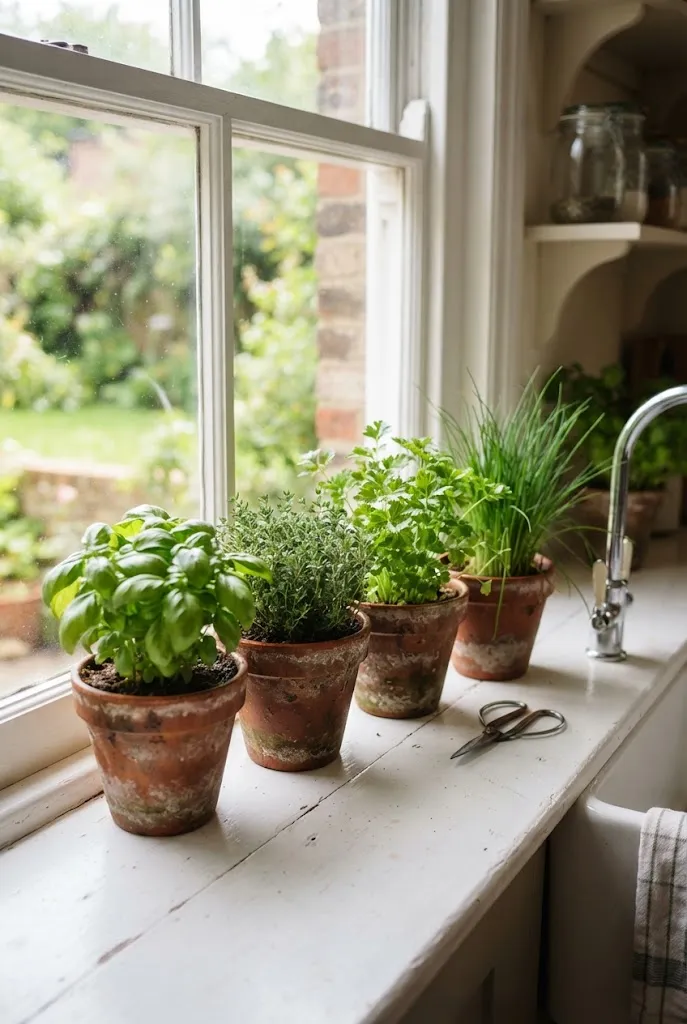
Fresh herbs add scent, color, and a sense that the kitchen is actually used. Start with the light, since that decides which plants will do well in the window, and choose pots with drainage holes and matching saucers so water doesn’t pool on the sill.
Best For: Small kitchens with a bright window
Investment: Accessible
Visual Effect: Soft green texture against warm clay tones
Group three to five pots of different heights and keep scissors nearby, so snipping becomes part of the routine. If a window is too dim, a small tabletop grow light is an option, though real plant needs vary, so check care tags for each herb.
7. Install Honey-Toned Butcher Block on the Island
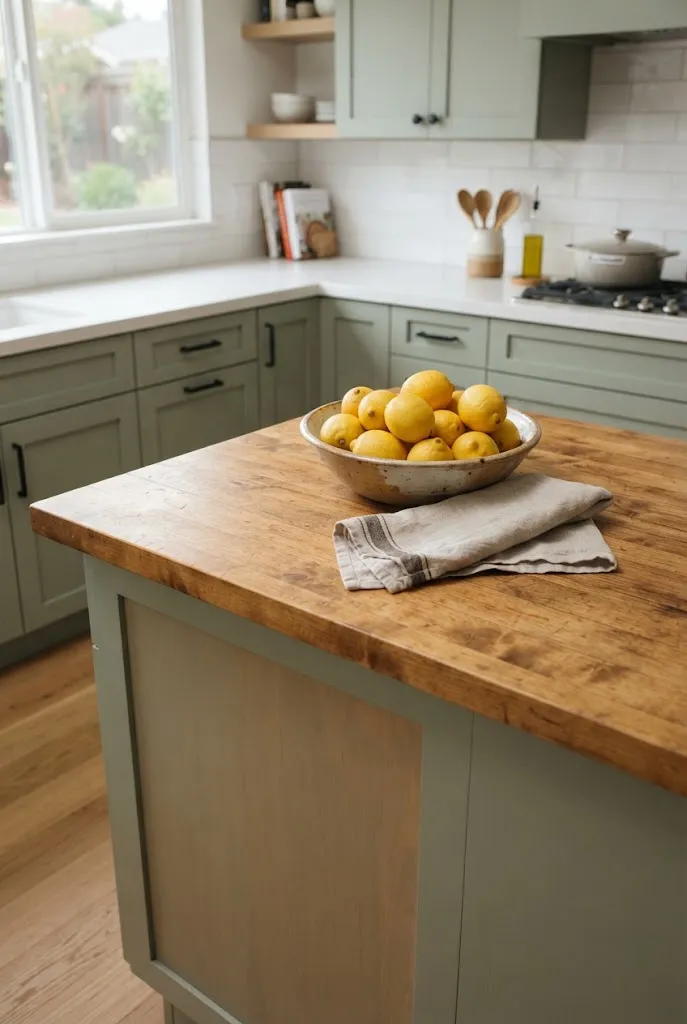
Wood is one of the simplest ways to bring warmth into a room, and an island is a smart place to use it because it takes less material than a full countertop run. Butcher block can be sanded and refinished over time, which suits households that like a lived-in surface.
| Countertop Material | Effect / Advantage | Best Fit |
|---|---|---|
| Butcher block | Warm grain, can be refinished | Islands, baking zones, farmhouse or cottage kitchens |
| Quartz | Uniform look, low upkeep | Busy family kitchens |
| Laminate | Wide range of patterns, budget-friendly | Rentals, quick updates |
Use a food-safe finish where the surface meets food, and seal edges near the sink so water doesn’t seep in. Expect to re-oil or reseal periodically.
8. Hang Linen Café Curtains Across the Lower Window
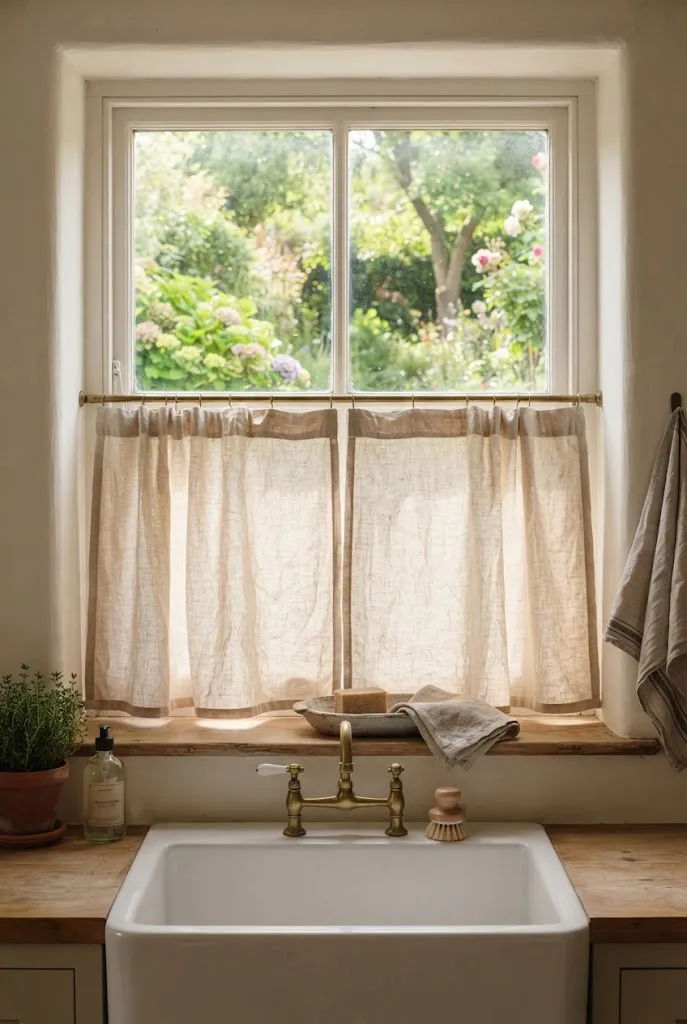
Café curtains cover only the lower half of a window, which adds privacy and softness while keeping the upper glass open to daylight. Natural linen filters light into a warm, diffused glow, and the fabric adds a gentle texture that hard kitchen surfaces lack. It’s also an easy renter-friendly project.
- Measure the window frame at its midpoint, then add a little width for gentle gathering.
- Mount a tension rod or small curtain rod at that midpoint.
- Hang the panel with clip rings or a rod pocket, and adjust until it falls just below the sill.
Keep fabric a safe distance from burners and wash it according to the care tag.
9. Add a Peel-and-Stick Handmade-Look Backsplash
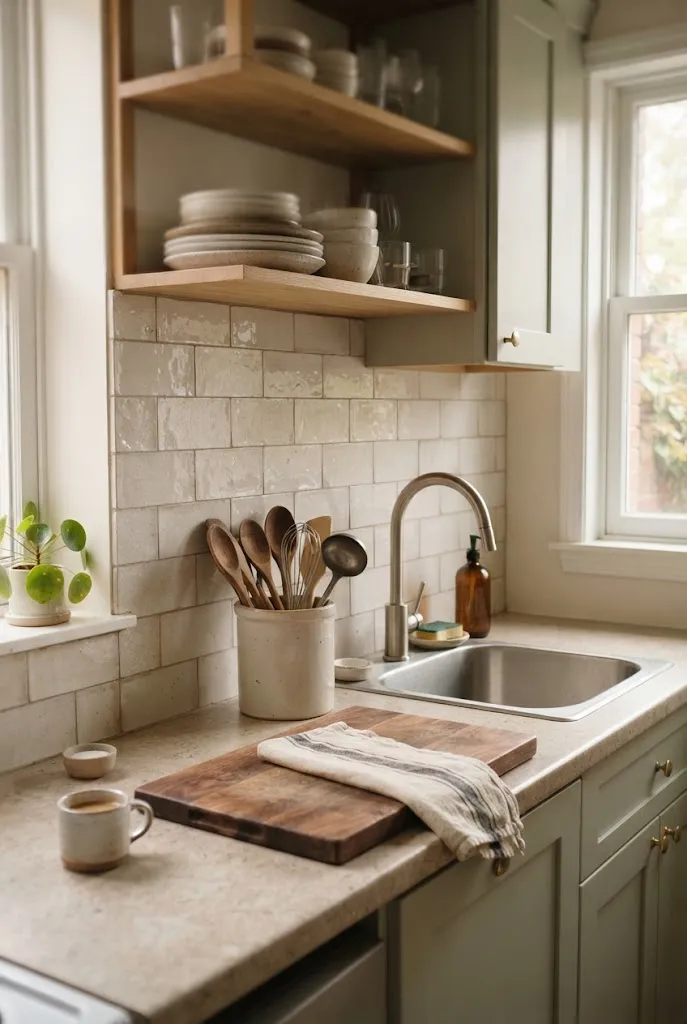
A tile with a slight crackle glaze in cream or warm clay can change the whole mood of a kitchen without grout or demolition. Prep makes the difference. The wall should be clean, dry, and free of grease, and the first row should be set level, since small errors multiply across the wall.
Do:
- Order extra tiles to cover cuts and mistakes.
- Check the manufacturer’s heat guidance, especially near the range.
Don’t:
- Apply tiles to a greasy or textured wall without cleaning or testing first.
- Rush the first row, which guides every row after it.
Peel-and-stick tile is a practical rental solution and a reasonable trial run for anyone considering a permanent tile later.
10. Lean a Cutting Board Collection Against the Backsplash
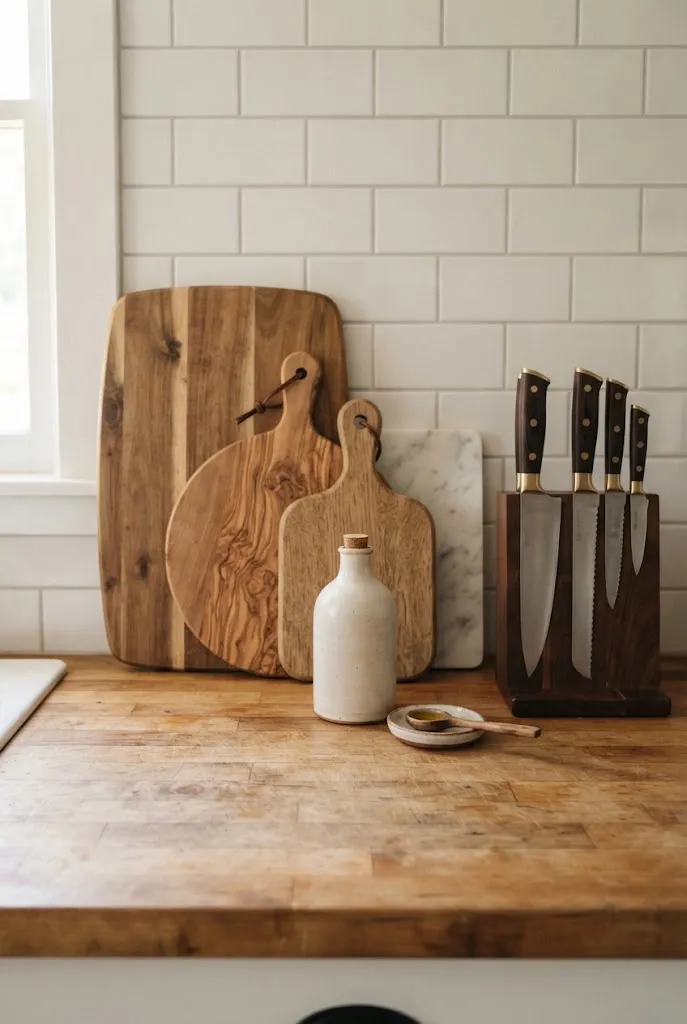
Wooden boards bring warmth, and leaning them against a backsplash makes them part of the decor while keeping them within reach. Mix shapes: a round pizza peel, a long rectangle, a small marble slab for cheese. Limit the display to two or three boards you use often, so the arrangement doesn’t turn into a storage pile. Wipe the wall behind them occasionally, since steam and splatter collect in the same spot.
11. Pair Sage-Green Cabinets With Walnut Accents
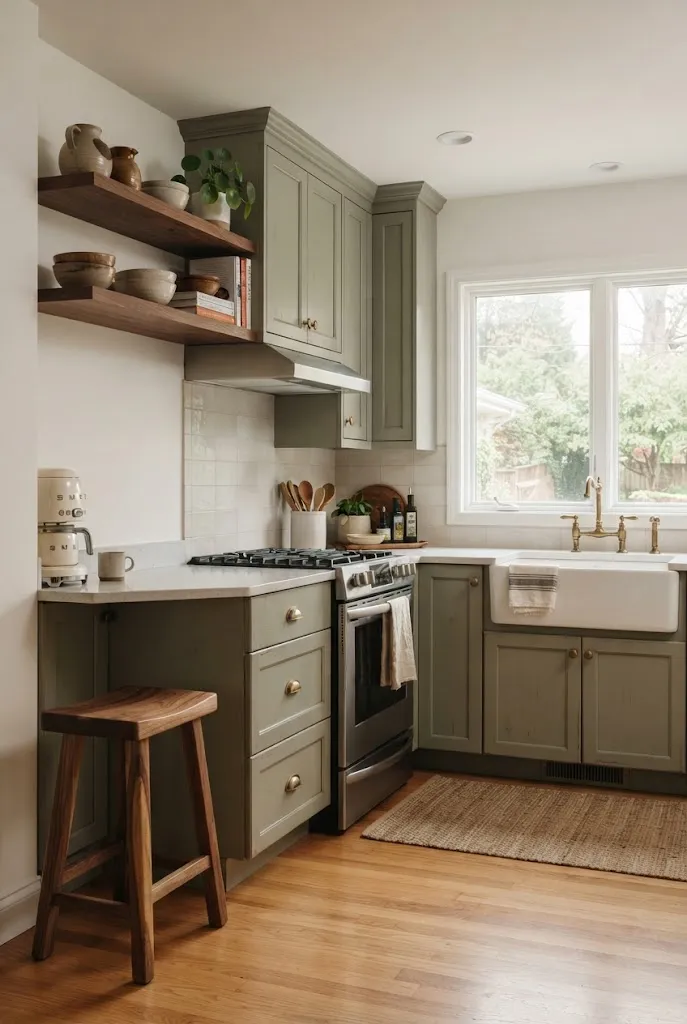
Muted green brings a calm, garden-like warmth, and walnut or other mid-tone wood keeps it from feeling cold. Look closely at undertones before buying paint: gray-greens read cooler, while olive-leaning greens feel snugger.
- Pair with a walnut shelf, cutting boards, or stool legs.
- Use brass or aged nickel hardware for a soft contrast.
- Keep walls a warm white so the cabinets remain the main color.
- Add one tonal textile, such as a striped dish towel in cream and moss.
The result feels natural and relaxed without leaning on a trendy accent wall.
12. Build a Cushioned Banquette Breakfast Nook
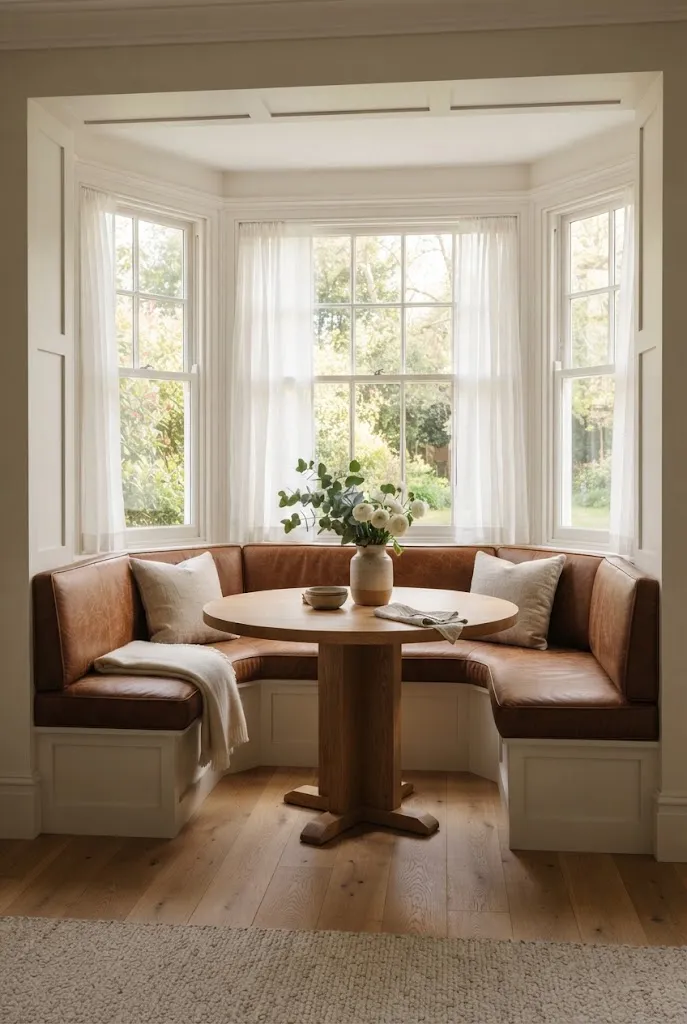
A built-in bench along a wall makes a table feel cozier and uses space more efficiently than separate chairs. Lift-up or drawer storage beneath the seat holds table linens, seasonal serving pieces, or rarely used small appliances.
Best For: Kitchens with an unused corner or bay window
Investment: Moderate to premium, depending on custom work
Visual Effect: Snug, café-like seating that anchors the room
Typical dining seat heights run in the 17 to 19 inch range, and leaving enough clearance between table and bench keeps sliding in and out comfortable. Performance fabric or leather-look upholstery handles spills and daily wear.
An accessible version uses a ready-made storage bench and wall cushions against a straight wall.
13. Plug In Wall Sconces Beside the Window
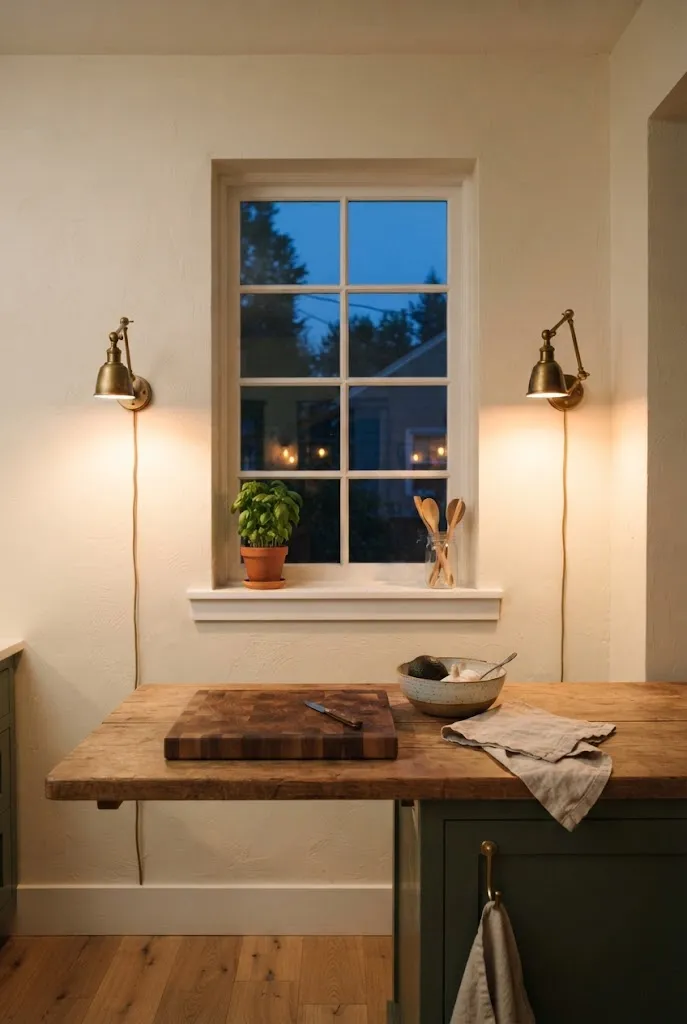
Layered lighting is what makes a kitchen feel inviting after dark, and plug-in sconces add that layer without rewiring. Mounted on either side of a window or over a stretch of open wall, they provide a soft glow at eye level that overhead fixtures can’t match.
Use warm-white bulbs, often labeled around 2700K, for a gentle tone. Run the cord down the wall with a paintable cord cover, or choose a rechargeable style where there’s no outlet nearby. Keep them clear of splashes from the sink and stove.
14. Hang Cookware From a Wall Rail
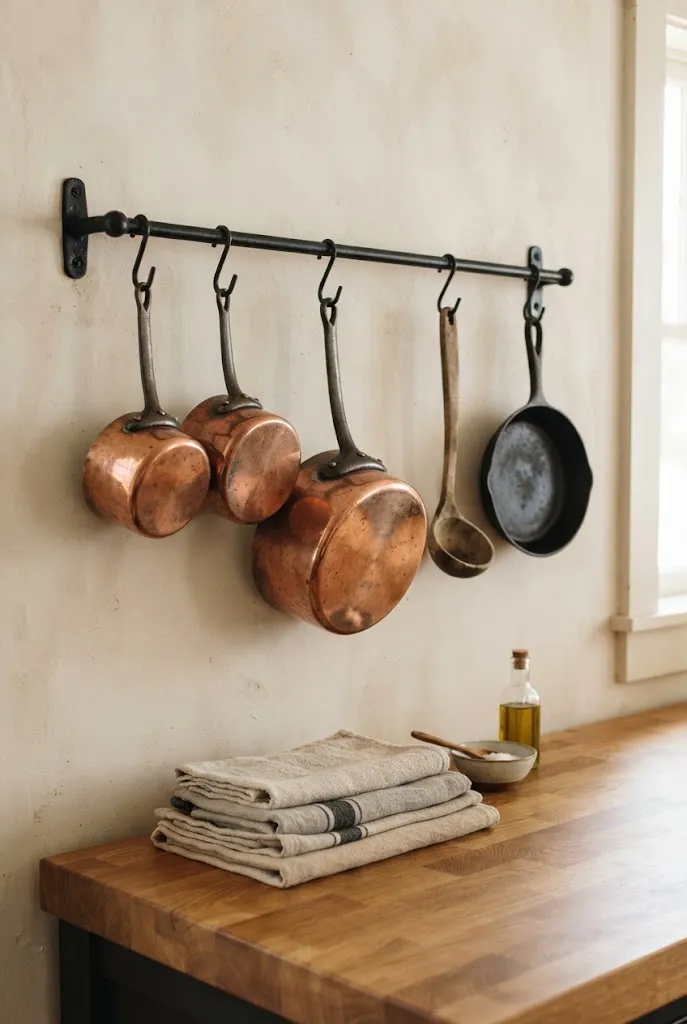
A rail with hooks puts good pans and utensils on display and frees up cabinet space. Copper, enameled cast iron, and well-seasoned carbon steel all add warmth, but choose pieces that you’ll actually use, so they earn their wall space.
Editor’s Note: Cookware is heavy. Anchor the rail into studs or use rated wall anchors, and keep the rail well away from the stove so grease doesn’t coat the pans. A narrow wall beside a window or between cabinets works well.
15. Create a Small Framed Art Gallery Wall
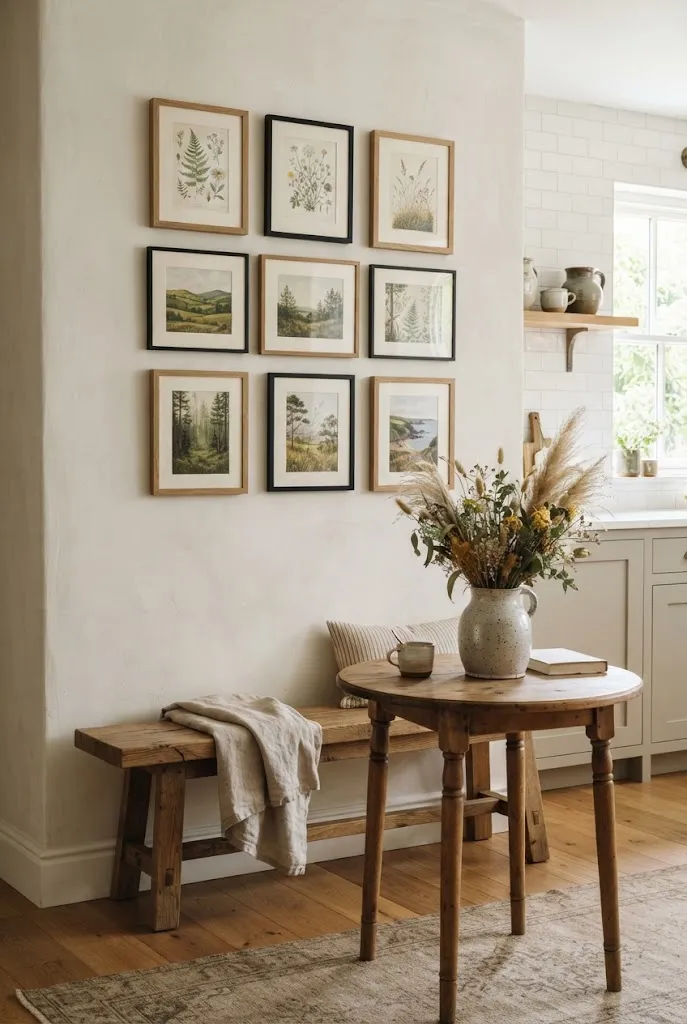
Art makes a kitchen feel personal rather than purely functional. Botanical prints, vintage food illustrations, and small landscape paintings in mismatched wood frames suit the space well. Cluster pieces on a wall near a table or doorway, away from steam and splatter from the cooktop.
- Lay frames on the floor first and photograph the layout.
- Keep about two inches between frames so the grouping reads as one unit.
- Mix frame sizes, but stick to two finishes, such as oak and black.
- Use removable hanging strips for lightweight frames in rentals.
16. Paint the Island a Deep Rust or Terracotta
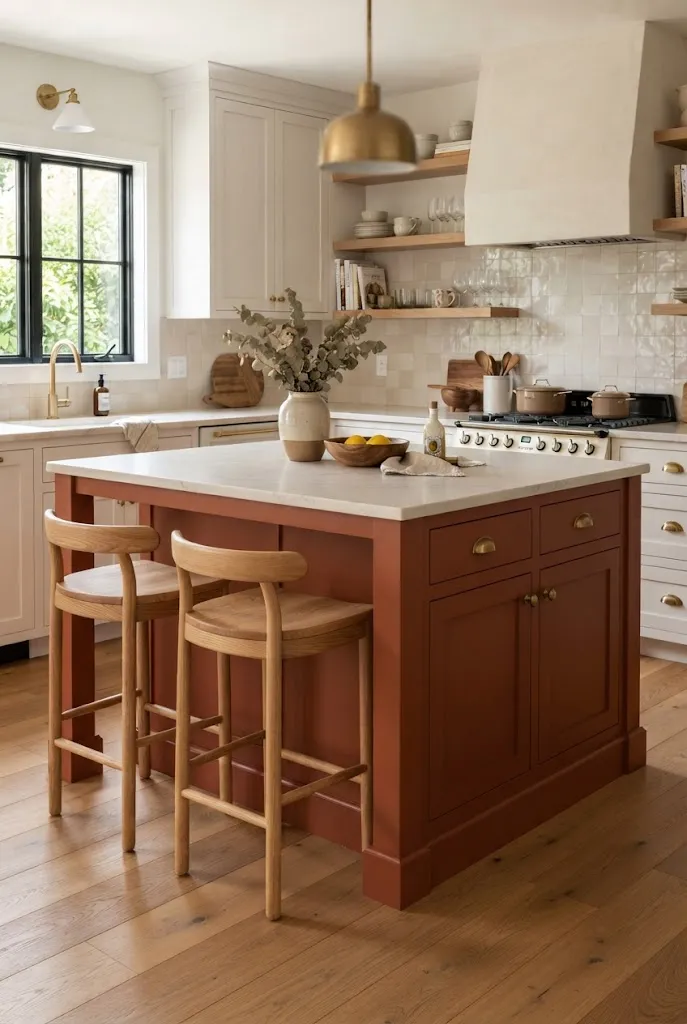
A darker island gives the kitchen a focal point and a feeling of depth, particularly when surrounding cabinets are lighter. Rust, clay, and cinnamon tones feel earthy and comforting, and they look good against wood stools and brass hardware.
Before: A uniform white kitchen where everything blends together.
After: A pale perimeter with one warm island that draws the eye and defines the gathering zone.
Use a durable semi-gloss or satin enamel suited to cabinetry, and test the color in the room’s natural light first. If a full painted island feels like too much, try painting only the base and keeping the top light.
17. Add Leather-Seated Counter Stools
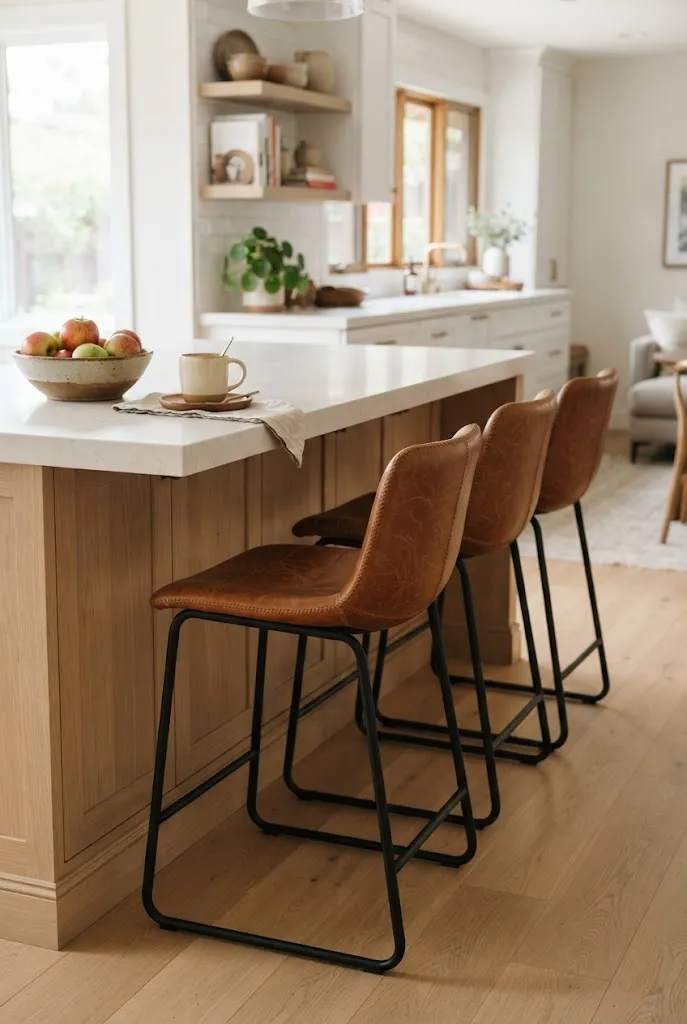
Stools with warm leather or leather-look seats add softness and a worn-in richness that develops over time. Seat height is the detail that matters most.
- Counter stools typically suit a standard 36-inch counter, with a seat height of about 24 to 26 inches.
- Bar stools suit taller 42-inch counters, with seat heights around 28 to 30 inches.
- Leave roughly 24 inches of counter width per seat so elbows have room.
- A low back or open frame keeps the space from feeling crowded.
Quick Tip: Check that stools slide under the overhang before buying, since depth varies.
18. Install a Farmhouse Apron Sink With a Bridge Faucet
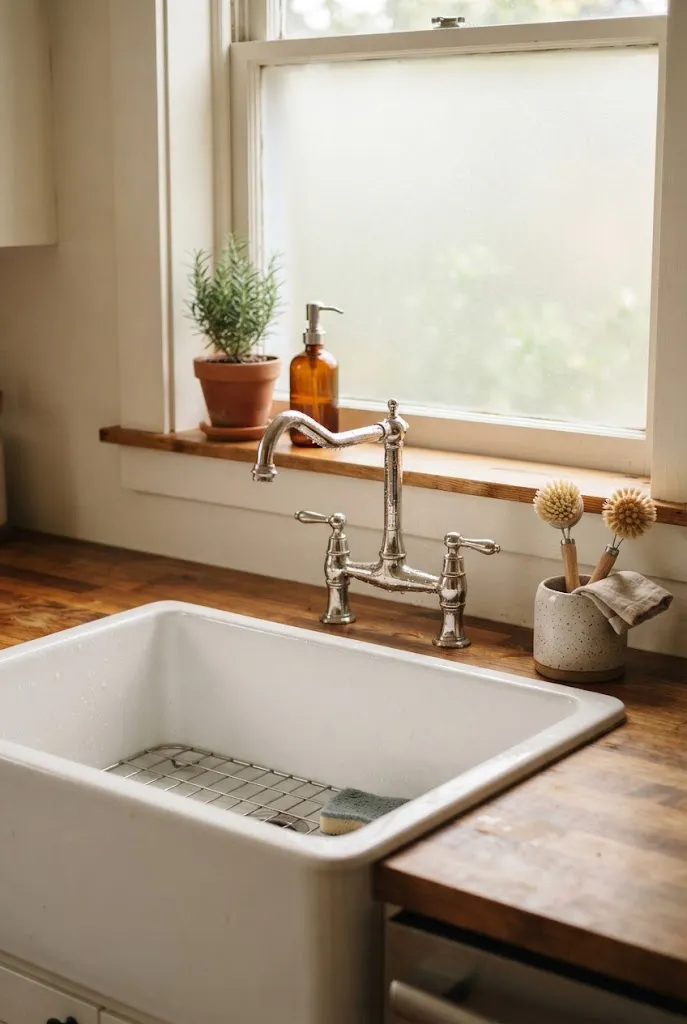
A deep apron-front sink creates a strong focal point, and a bridge faucet with exposed arms adds a vintage feel. Fireclay is a popular material, but the cabinet below usually needs modification to fit the exposed front, so measure and plan before ordering.
Common Mistake: Buying the sink first and discovering the existing base cabinet doesn’t fit.
Better Approach: Confirm cabinet dimensions with your installer, and order the sink and faucet together so the hole spacing matches.
For a lighter-touch version, a new bridge-style faucet on the existing sink can still change the look.
19. Finish the Range Hood in a Plaster-Look Surface
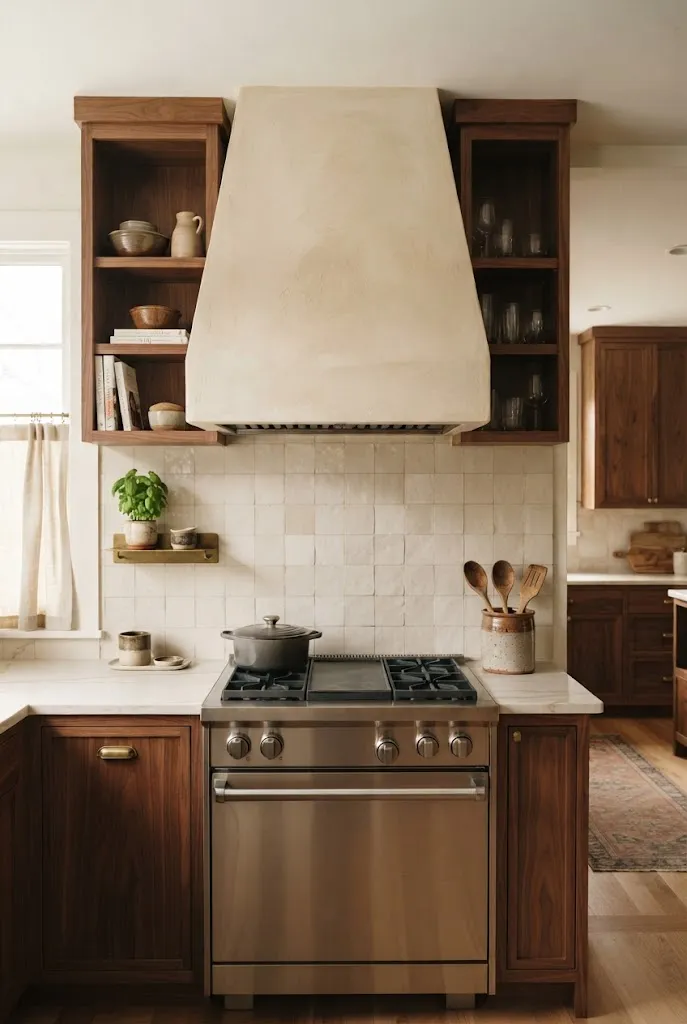
A custom hood wrapped in lime plaster or a microcement-style finish gives a kitchen a soft, hand-finished focal point. It works because the matte, slightly uneven texture breaks up the straight lines of cabinets and counters. This is a premium upgrade that depends on skilled finishing, so expect to work with a contractor or specialist.
The principle can be borrowed more simply. A matte limewash-style paint on the surrounding wall can echo the same mellow texture, but any finish near a cooktop should be confirmed as heat-appropriate by the installer or manufacturer.
20. Warm Up Glass-Front Cabinets With Soft Lighting
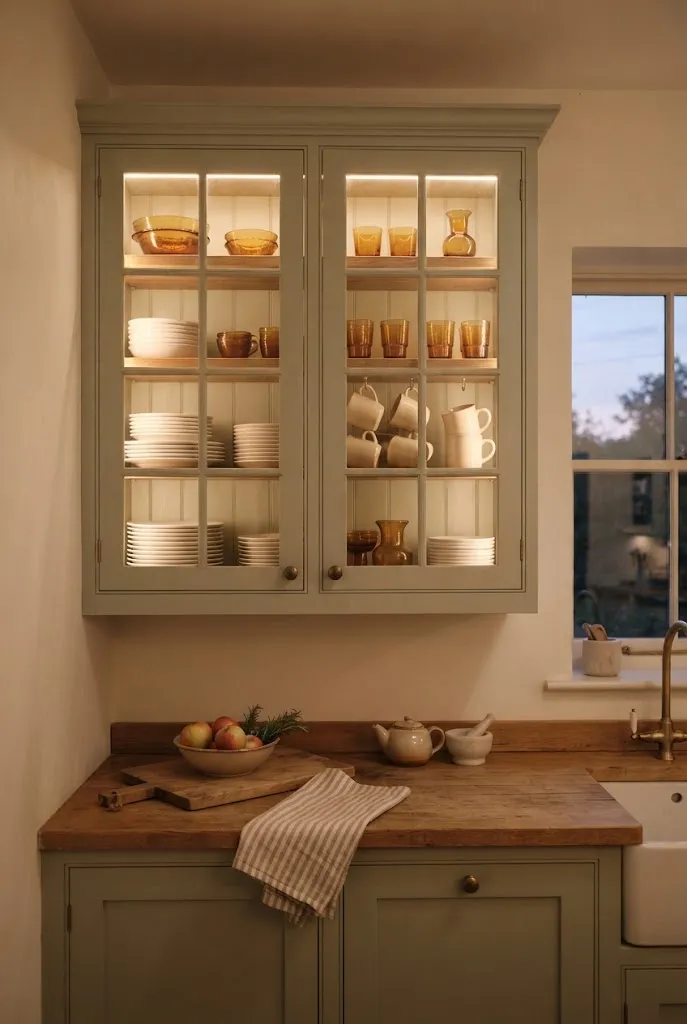
Glass-front uppers display favorite dishes, and a gentle light inside them makes the whole wall glow in the evening. Plug-in or rechargeable puck lights work for renters, while hardwired LED strips suit remodels.
- Match the color temperature of the lights to your other bulbs for a consistent look.
- Choose dimmable lights so the mood can shift from daytime to dinner.
- Display coordinated pieces, such as white ironstone, cream mugs, or amber glass.
- Keep wiring tucked inside the cabinet frame.
21. Style the Pantry With Wicker Baskets and Glass Jars
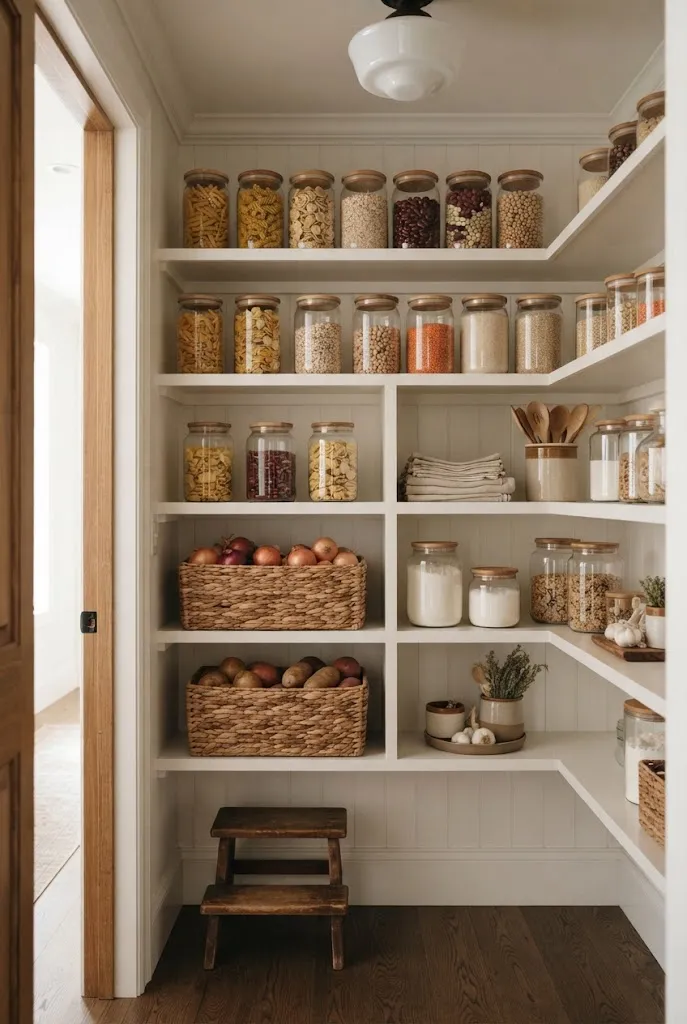
Even a plain pantry feels more inviting when the contents are corralled in natural materials. Wicker baskets hold potatoes, snacks, or linens, while clear glass jars with wooden lids show off pasta, oats, and flour. Decant only the items you use regularly, and keep original packaging for anything where instructions or expiration dates matter.
Common Mistake: Buying a full set of matching containers before checking shelf depth.
Better Approach: Measure the shelves, buy a few jars and baskets in varying sizes, and expand once the system proves practical.
22. Run Natural Stone Up the Wall as a Slab Backsplash
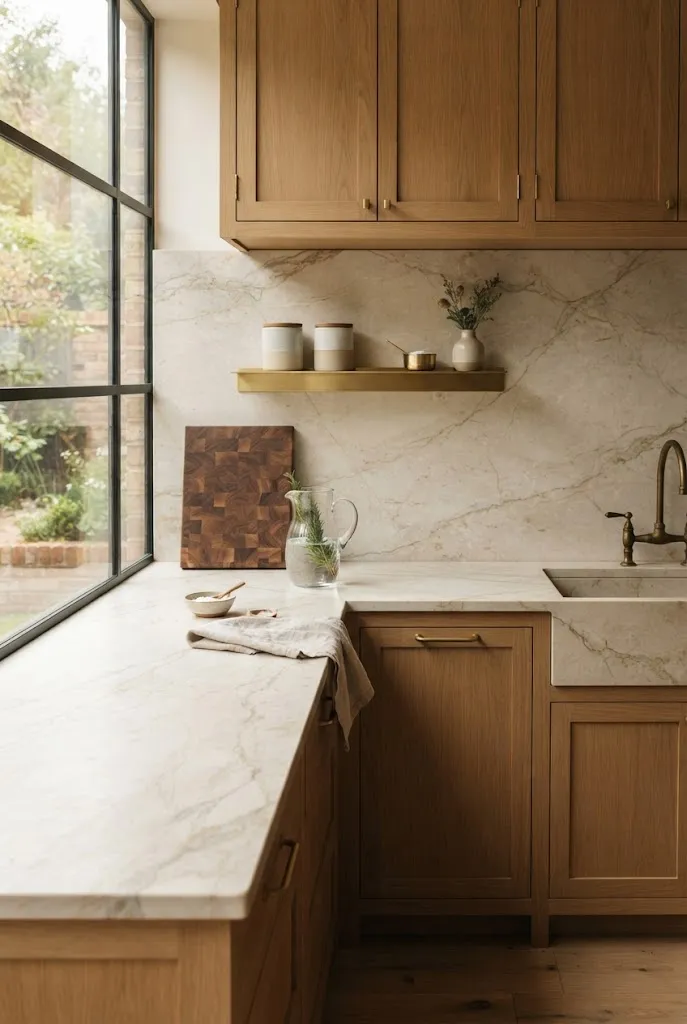
Carrying the countertop material up the wall in one continuous slab creates a seamless, high-end look with few grout lines to clean. Warm marble, creamy quartzite, or a soft-veined limestone-style slab all bring depth, and the veining acts like built-in art. It’s among the more costly choices and typically needs professional templating and installation.
To borrow the principle, use large-format porcelain tile with subtle veining and minimal grout lines. It won’t match natural stone in every respect, but it can recreate the calm, continuous look.
Editor’s Note: Natural stone can require sealing and care. Ask the supplier about maintenance before committing.
23. Gather Around a Farmhouse Table With Mismatched Chairs
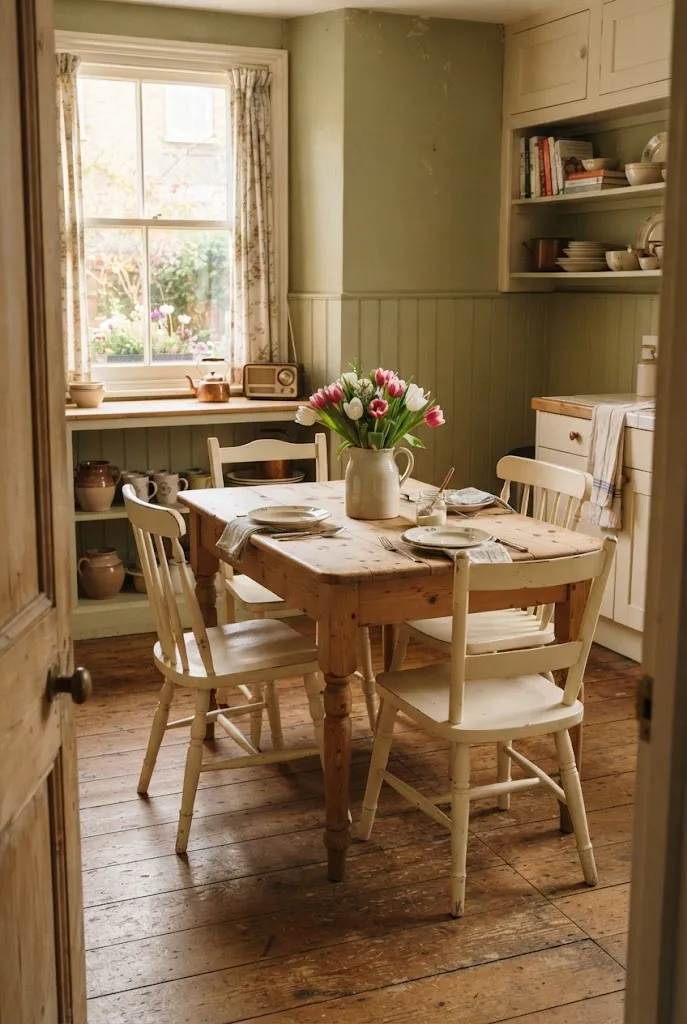
A sturdy wooden table with chairs of different shapes feels collected and welcoming. Secondhand shops, estate sales, and online marketplaces are good sources, and a unifying element, such as one paint color or shared wood tone, keeps the group from looking random.
- Keep seat heights similar so everyone sits comfortably.
- Choose two or three chair styles, not six.
- Add seat pads in the same fabric to tie the set together.
- Leave at least a few feet of space behind each chair for pulling out.
24. Tuck a Cushioned Window Seat Beneath the Kitchen Window
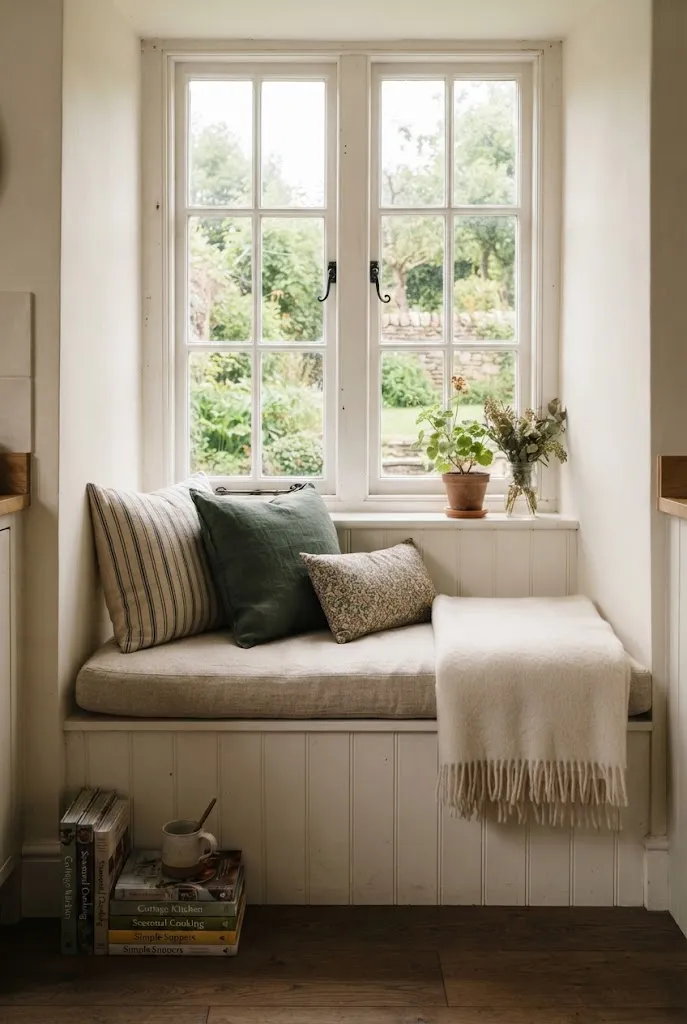
A bench beneath a window creates a reading and coffee spot without taking much room. Drawers or hinged tops can hold cookbooks or seasonal items, and a thick cushion with a few pillows turns it into a place to sit rather than just a ledge.
Best For: Kitchens with a deep sill or an alcove
Investment: Moderate, if built by a carpenter, or accessible with a ready-made storage bench
Visual Effect: A softer, more layered window wall
Choose washable cushion covers, and make sure the seat doesn’t block a heating vent or window latch.
25. Lay a Checkerboard Floor in Warm Neutrals
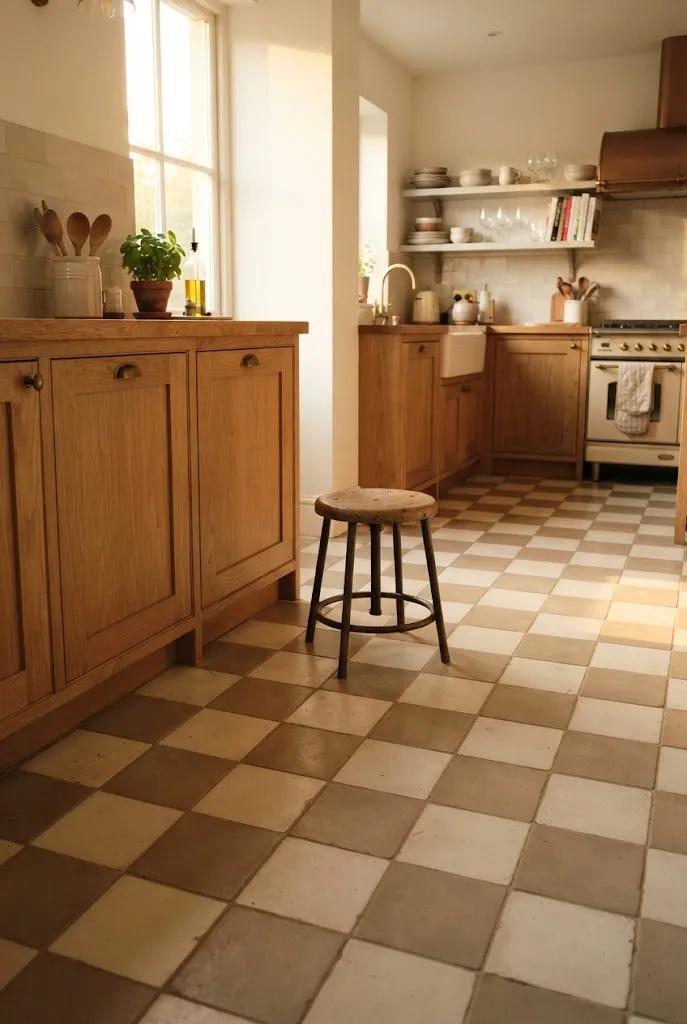
A cream-and-tan or cream-and-warm-gray checkerboard adds pattern without loud color and gives a kitchen a classic feel. Soft tones keep the look calm, and the pattern leads the eye through the room.
| Floor Option | Effect / Advantage | Best Fit |
|---|---|---|
| Peel-and-stick vinyl tile | Quick, lower cost, removable in some cases | Rentals and short-term updates |
| Porcelain tile | Durable, wide pattern selection | Long-term homeowner remodels |
| Natural stone | Rich variation, high-end look | Larger budgets, careful maintenance |
Natural stone typically needs sealing, and any flooring should suit the subfloor and moisture conditions in your kitchen.
26. Add Faux Wood Beams to the Ceiling
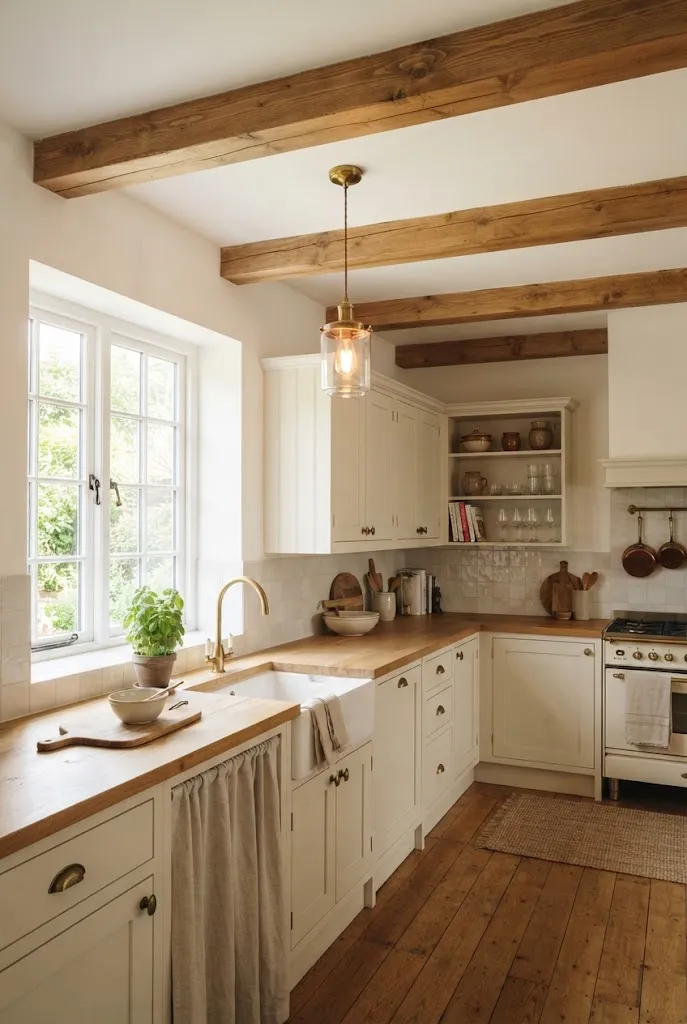
Ceilings are the fifth wall of a kitchen, and a few beams can add structure and warmth, especially under a flat white surface. Lightweight, hollow beams give the look of timber without heavy loads, and a stain that echoes the stools or shelves ties them in.
Check the ceiling height first, because beams lower the visual space. In rooms with low ceilings, a single slim beam or a painted wood plank ceiling may feel better. Ask an installer about the correct fastening method for your ceiling type.
27. Layer Linen Tea Towels and Textiles on the Oven Handle
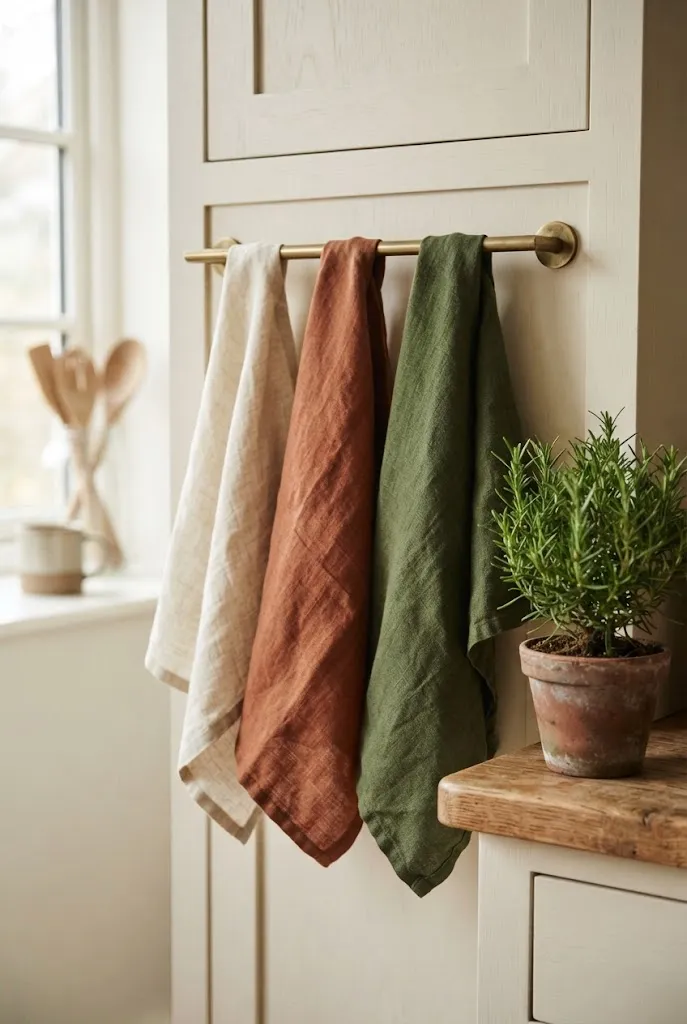
Soft fabrics make hard kitchen surfaces feel friendlier. Striped, checked, and plain linen towels in cream, rust, and moss add color in an easy-to-change way, and they’re useful as well as decorative.
Quick Tip: Hang towels from hooks or a rail rather than draping them over a hot oven while it’s in use, which is a safety concern.
Choose two or three coordinating patterns and swap them with the seasons. Heavier cotton and linen blends absorb better than purely decorative fabrics.
28. Set a Rechargeable Table Lamp on the Counter
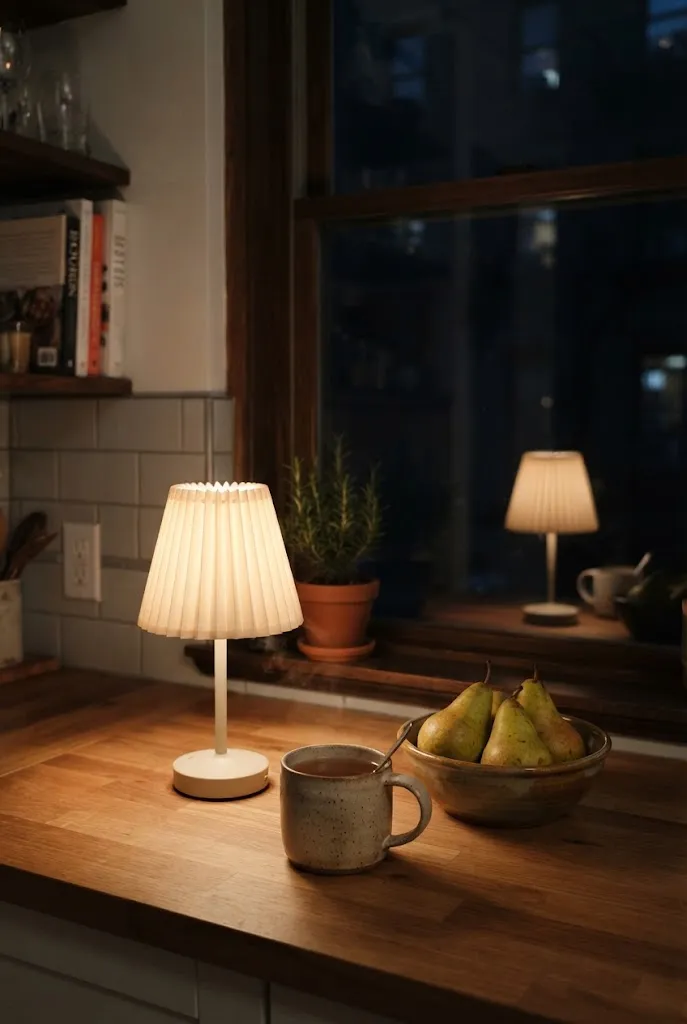
A small cordless lamp on a counter gives the kitchen an after-dinner glow that overhead lights can’t. A shade in cream or ivory diffuses the light, and a ceramic or metal base fits with everyday items. Flameless LED candles add a similar mood and avoid the risks of open flame near cooking areas.
Place the lamp where it won’t be knocked over, such as a corner or beside a bread box. Use it in the evening when the main lights are dim, and the kitchen starts to feel like part of the living space.
29. Make a Coffee Corner on a Wooden Tray
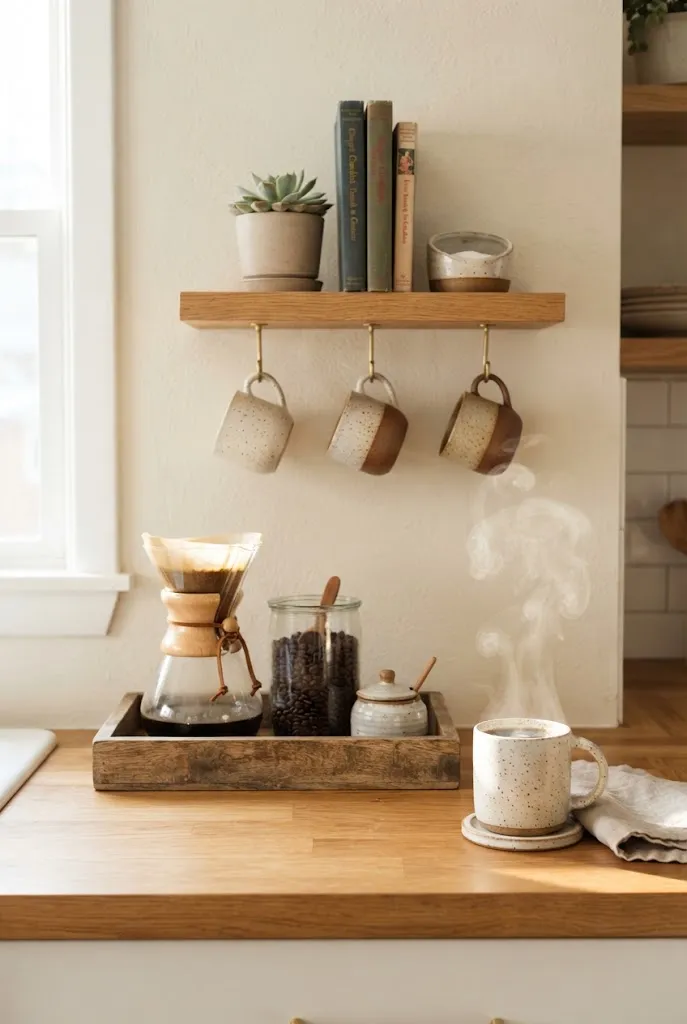
A dedicated coffee station gives the kitchen a clear, inviting spot where the day begins, and a tray keeps everything contained and easy to move for cleaning.
- Choose a stretch of counter near an outlet and a water source.
- Place a wood or metal tray under the machine and a small canister of beans or pods.
- Add a few favorite mugs on a hook or open shelf above, plus a small pitcher or sugar bowl.
Keep it edited, with only what you reach for each morning, so the corner stays pretty and practical.
Where to Start
Not every idea needs a full project. A practical way to begin is to pick one change from each level of effort. Start with something quick, such as new hardware, towels, or a lamp, then add a mid-range change like pendants or butcher block, and save larger upgrades, like a banquette, a slab backsplash, or a custom hood, for a time when the budget and plan are ready.
Warmth tends to come from layering. Add a bit of wood, a soft textile, and a gentle light source, and the rest of the room often follows.