
21 Winter Bedroom Decor Ideas for the Coziest Sleep Space Ever
A bedroom feels different in January. The light fades by late afternoon, the windows run colder, and the room starts working harder as a retreat. Winter bedroom decor is mostly about warmth you can see and feel: heavier fabrics, softer light, and surfaces that make you want to stay put.
These 21 ideas cover quick textile swaps for renters, moderate upgrades like better curtains and lighting, and a few custom-built options for anyone planning a bigger project. Each one is a distinct look, so you can borrow a single detail or build a whole seasonal scheme. None of them depend on Christmas decorations, which means they work from December through the last cold week of February.
1. Layer a Chunky Knit Throw Over a Linen Duvet
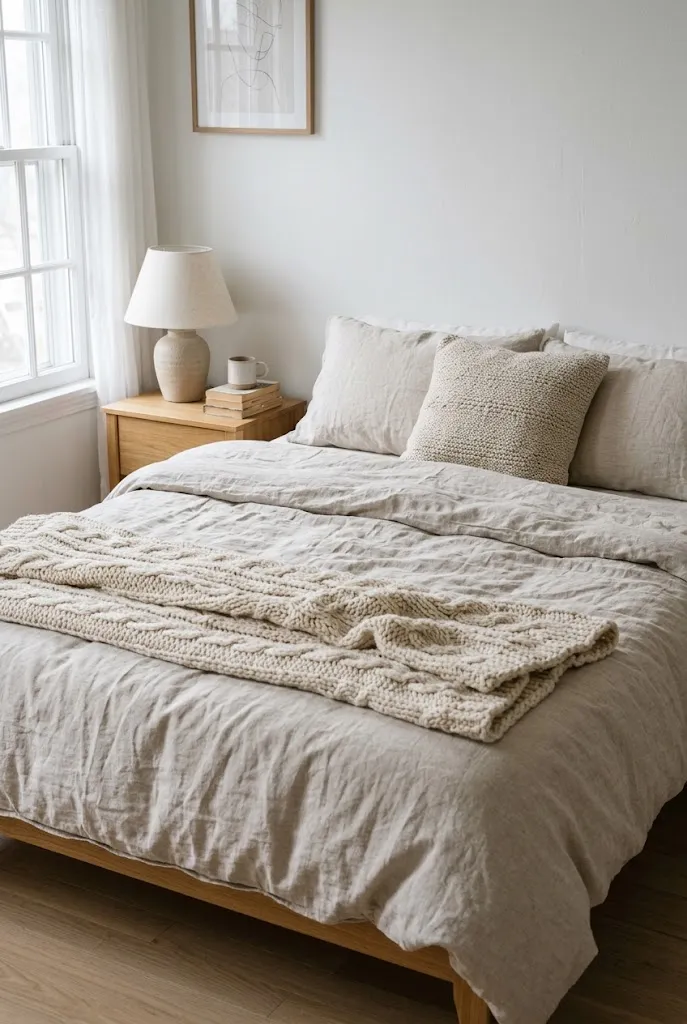
Linen has a relaxed, slightly rumpled look that suits winter surprisingly well, especially in oatmeal, stone, or warm white. Pair it with a heavy knit throw folded in thirds across the lower third of the bed and the whole bed looks softer and deeper.
- Choose a throw in a tone one shade darker than the duvet for depth
- Use a wool blend or cotton chenille if you want weight without scratchiness
- Leave the throw slightly off-center for a lived-in look
- Add a second, smaller blanket at the foot for variety
The layering matters more than the price. A well-folded throw on a basic duvet reads far more intentional than a pile of items with no structure.
2. Switch to Flannel or Brushed Cotton Sheets in a Deep Color
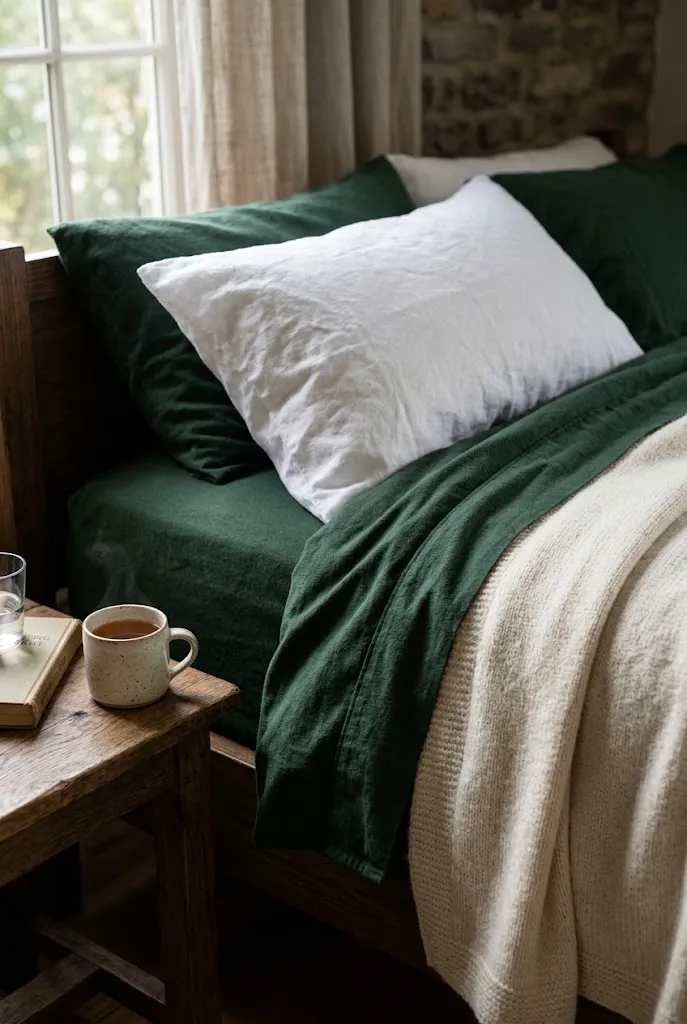
Sheets are the first thing you feel when you get into bed, so a seasonal swap makes a real difference. Deeper colors such as navy, forest green, charcoal, or plum also make the room look more settled in low winter light.
| Fabric | Winter Feel | Best Fit |
|---|---|---|
| Flannel | Soft, brushed surface that feels warm to the touch | Anyone who sleeps cold |
| Brushed cotton | Lighter than flannel, with a gentle fuzz | Heated homes or people who run warm |
| Jersey knit | Stretchy and t-shirt soft | Easy care and casual style |
Editor’s Note: Flannel can pill over time if washed hot or with rough fabrics. Washing it on a gentle cycle helps it last through several winters.
3. Build a Warm Wood Slat Wall Behind the Bed
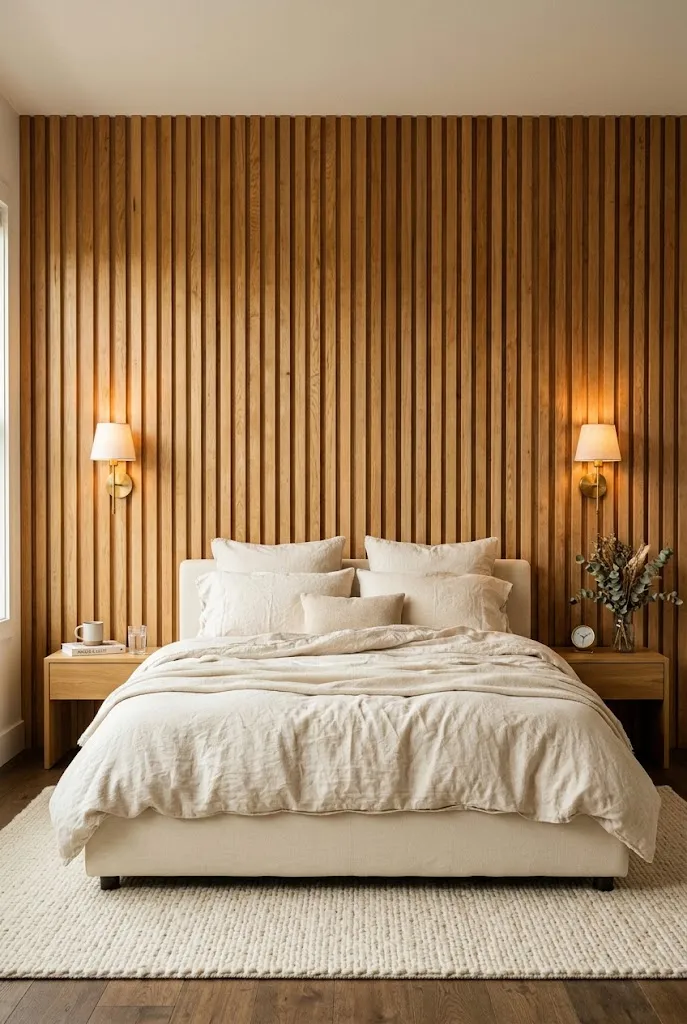
A full-height wall of vertical oak or walnut slats adds the kind of warmth paint can’t. It also frames the bed like a headboard and absorbs some echo, which makes a bedroom feel quieter. This is a mid-range to premium project, but ready-made slat panels have made it more approachable.
Keep the slat color close to your flooring or nightstands so it feels planned rather than pasted on. Pair it with soft linen bedding so the wood doesn’t overwhelm the room, and add wall-mounted sconces to wash the grain with warm light.
Quick Tip: Check your lease before attaching panels. Renters can look for freestanding slat headboards instead.
4. Hang Thermal-Lined Curtains From Ceiling to Floor
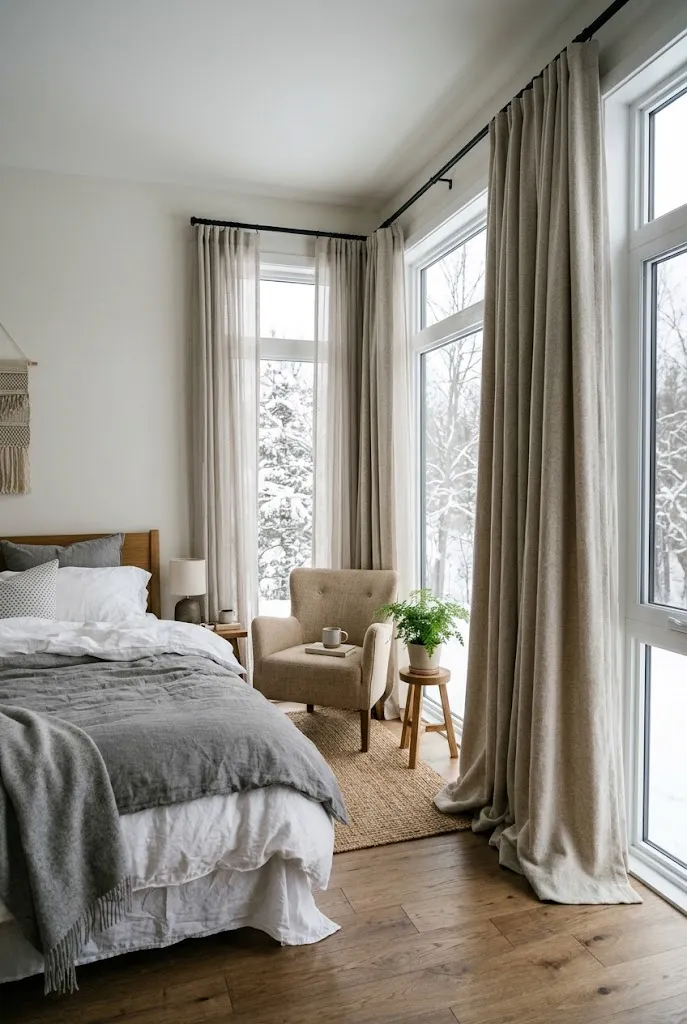
Windows are where a bedroom loses comfort in winter, and where it can gain the most visual softness. Hang the rod close to the ceiling and let heavy curtains fall to the floor or just graze it. This makes ceilings look taller and gives the window wall a finished look.
Common Mistake: Short curtains hung right at the top of the window frame.
Better Approach: Mount the rod several inches above the frame and extend it past each side so the curtains stack off the glass. The window looks larger, more light gets in during the day, and the lined fabric blocks more drafts when closed.
Look for curtains labeled thermal, blackout, or insulated, in textured wool-look fabrics or velvet in muted tones.
5. Place a Thick Wool-Blend Rug Under the Lower Two-Thirds of the Bed
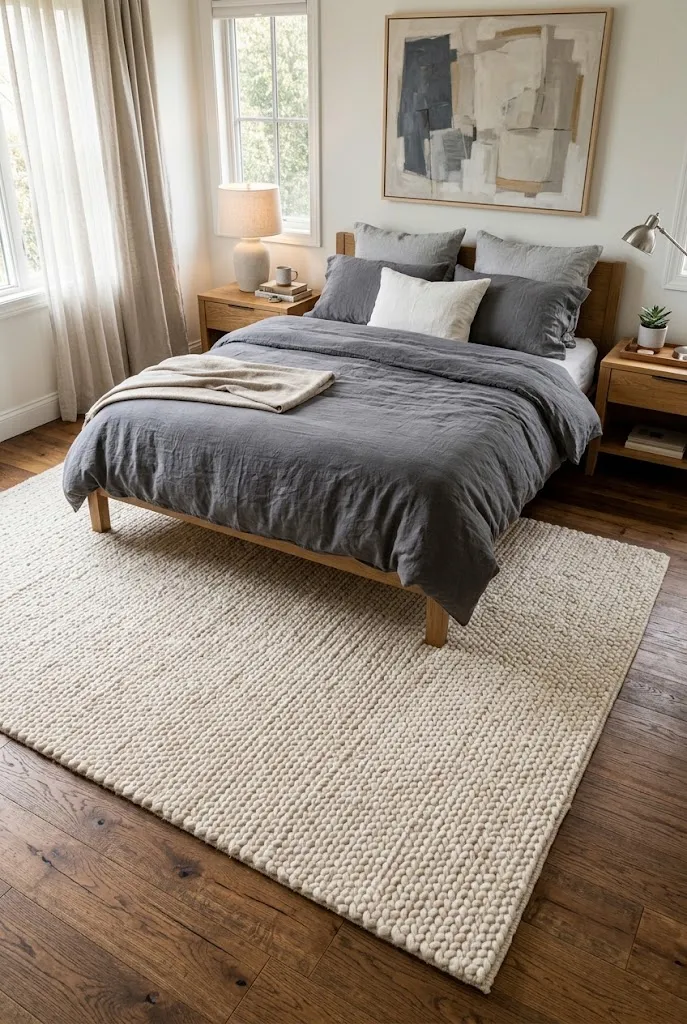
Cold floors are one of the biggest winter complaints in older homes. A thick rug solves it and anchors the bed visually. The placement matters: the rug should start about halfway up the mattress and extend at least a foot and a half beyond each side.
- Position the bed first, then slide the rug underneath.
- Check that the rug extends past the nightstands, or at least that your feet land on it when you step out.
- Add a non-slip pad to keep the edges from curling.
A medium or low pile is easier to vacuum and less likely to catch bed legs than a very high shag.
6. Paint One Wall Deep Forest Green
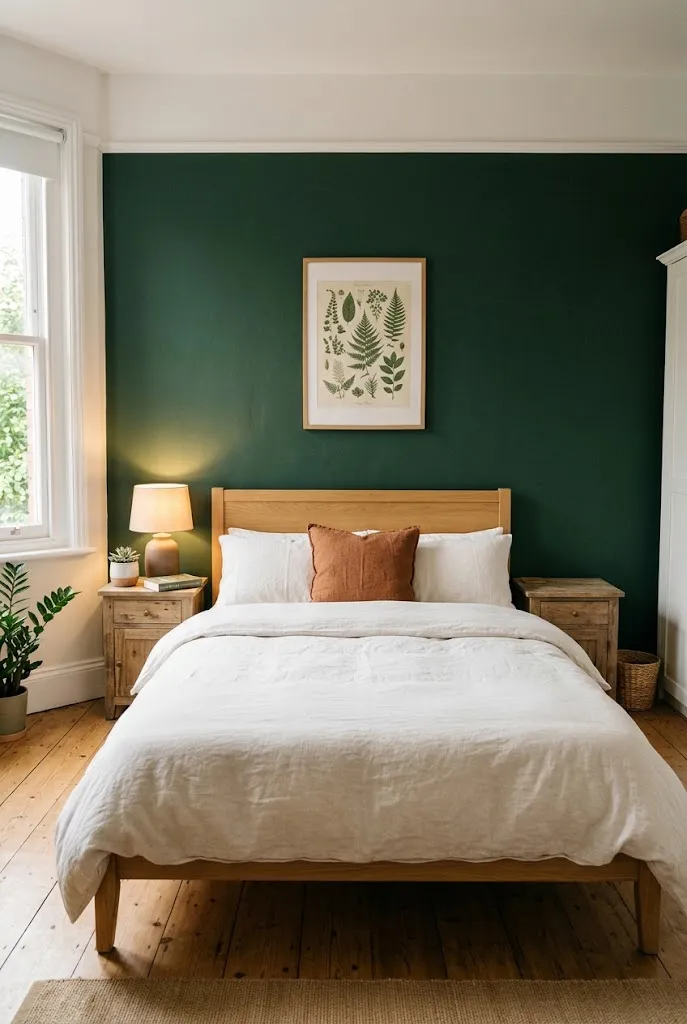
Dark green looks right in winter. It recalls evergreen without being obviously seasonal and makes a bedroom feel enclosed and calm. Painting just the wall behind the bed is a manageable weekend project that costs very little.
Do: Use a matte or eggshell finish, which hides wall imperfections and keeps the color rich.
Do: Pair it with warm whites, natural wood, and brass or black hardware.
Don’t: Pick a green with a cold blue undertone if your room gets little light, since it may look flat.
Test a large swatch on the wall and look at it at night, since lamp light changes dark colors more than daylight does.
7. Layer Lighting With Dimmable Lamps and Plug-In Sconces
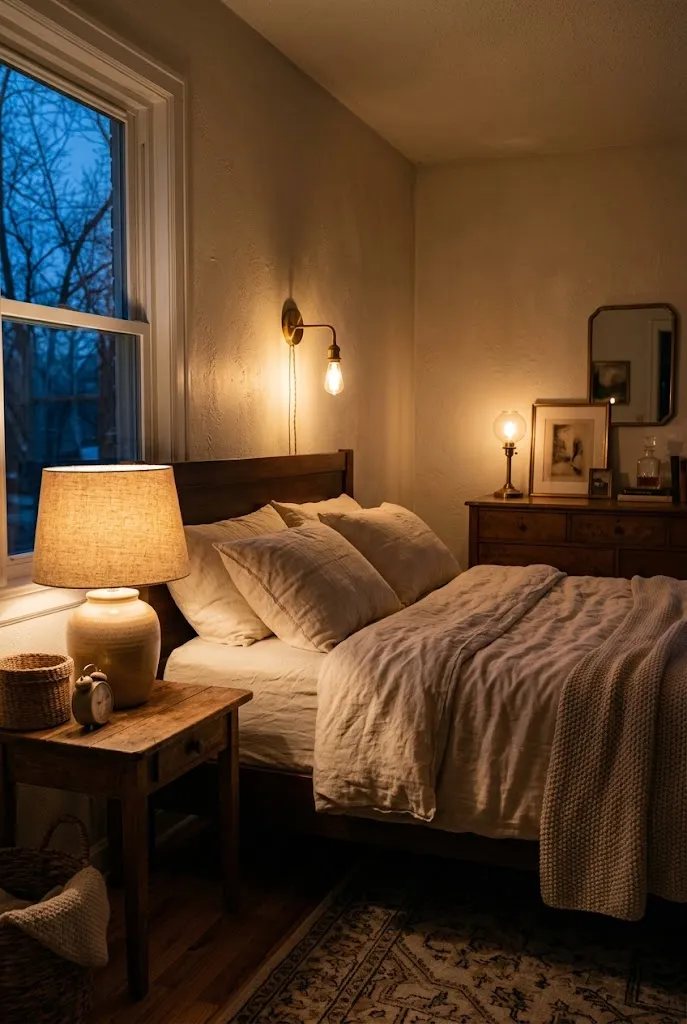
Overhead lighting makes a bedroom feel like an office after sunset. Replace it, or at least supplement it, with three light sources at different heights: a bedside lamp, a wall sconce or floor lamp, and a small accent light somewhere else in the room.
- Choose bulbs around 2700K for a warm, amber glow
- Use plug-in sconces with cord covers for a renter-friendly wall light
- Add smart plugs or dimmers so you can lower the brightness in the evening
- Use fabric or linen shades to diffuse the glow
The goal is soft pools of light, with no single bright spot.
8. Add a Window Seat Reading Nook With Sheepskin
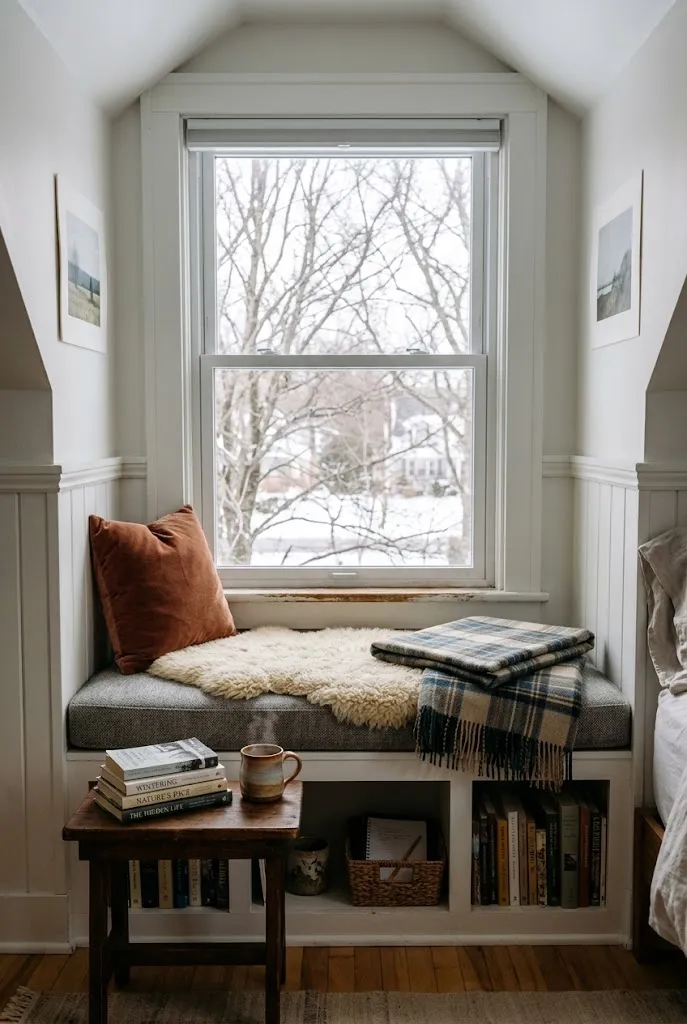
If your bedroom has a bay or deep window, a built-in or upholstered bench turns it into a place to read with a hot drink. A sheepskin or wool pad on top softens a hard seat and adds visible texture. The moderate version uses a store-bought storage bench and a cut-to-size cushion.
Even a simple setup works: one bench, one cushion, one blanket, and a small light nearby. Keep the area clear of heater vents, since fabrics can overheat.
Editor’s Note: Window seats work best when you can sit with your back supported. Add one firm bolster or wedge pillow.
9. Style Tonal Faux-Fur and Bouclé Pillows in Cream and Oatmeal
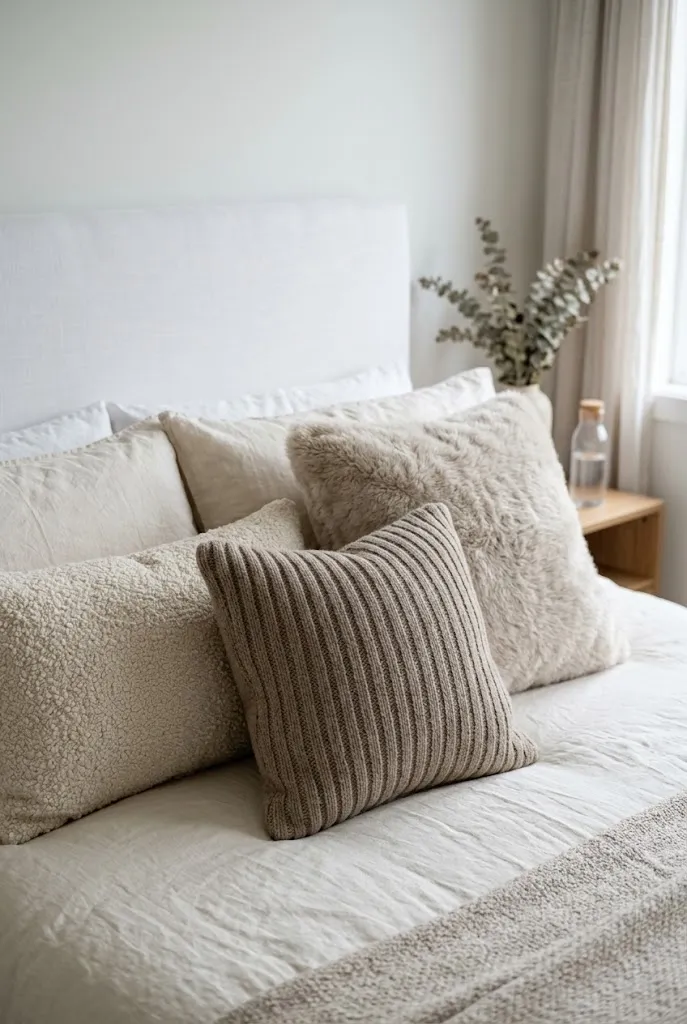
A set of three or four pillows in related tones looks calmer than a mix of unrelated patterns. Vary the textures instead: bouclé, faux fur, ribbed knit, and smooth cotton in shades from white to taupe.
Do: Use odd numbers, vary sizes, and place the largest pillows at the back.
Don’t: Add more than one strong pattern, or the quiet effect disappears.
It’s one of the cheapest changes here and one that reads clearly in a photograph.
10. Style Evergreen Branches in a Ceramic Vase
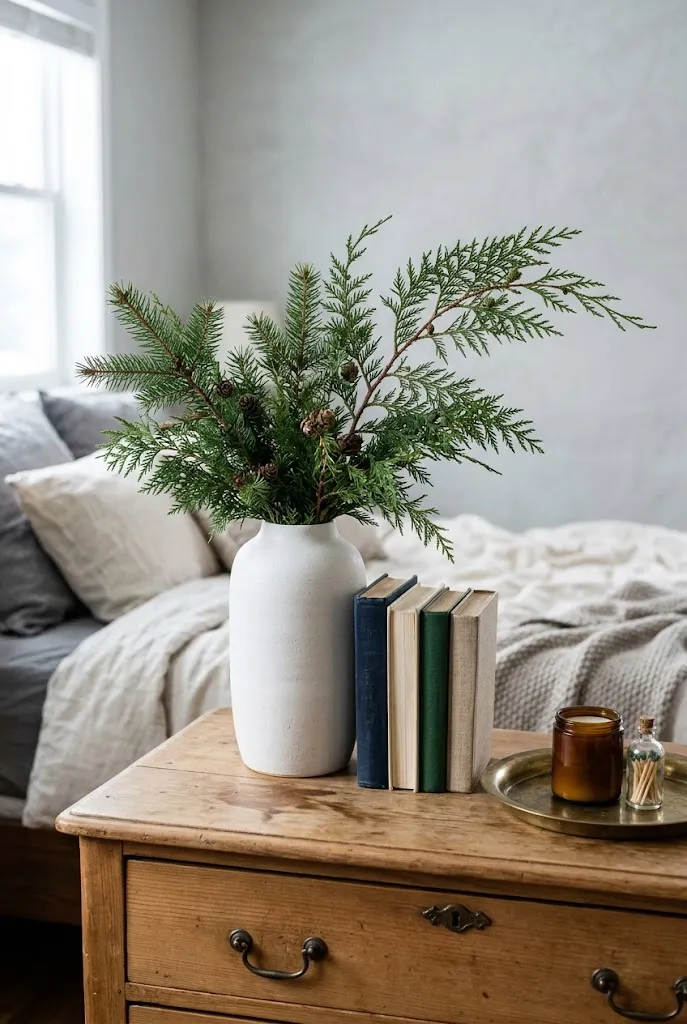
Fresh pine, cedar, or fir branches can look sculptural in a bedroom, and they aren’t tied to a holiday. A few stems in a wide ceramic vase on a dresser or bedside table bring in scent and natural texture.
Choose a vase with a heavy base so the branches don’t tip. Trim the stems on an angle and change the water every few days. If you’d rather skip upkeep, high-quality faux stems in a matte finish can work, though they look best in smaller arrangements.
11. Bring In Velvet in Muted Rust or Plum
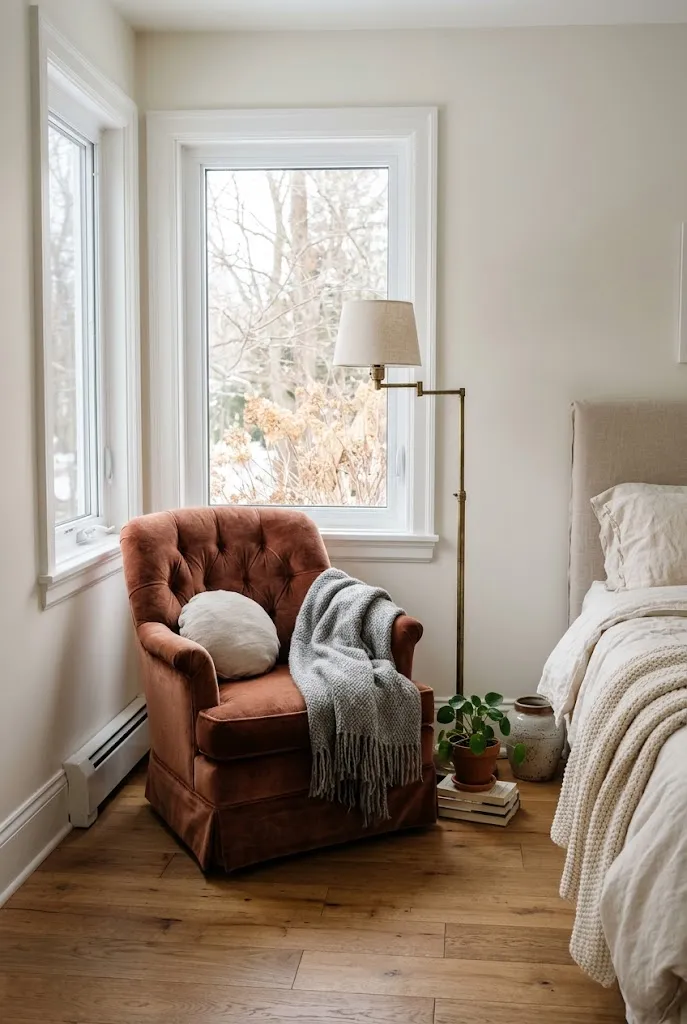
Velvet picks up light in a way other fabrics don’t, and in winter it adds depth. Muted rust, plum, or deep burgundy feels warmer than saturated jewel tones and pairs naturally with cream or gray bedding.
Best For: Pillows, a bed throw, or an accent chair
Investment: Accessible for pillows, moderate for upholstered pieces
Visual Effect: A rich accent that anchors a neutral room
A little goes a long way. One velvet piece in a color you repeat elsewhere, such as a small print or vase, ties the room together.
12. Create a Cozy Alcove Bed Nook With Built-In Shelves
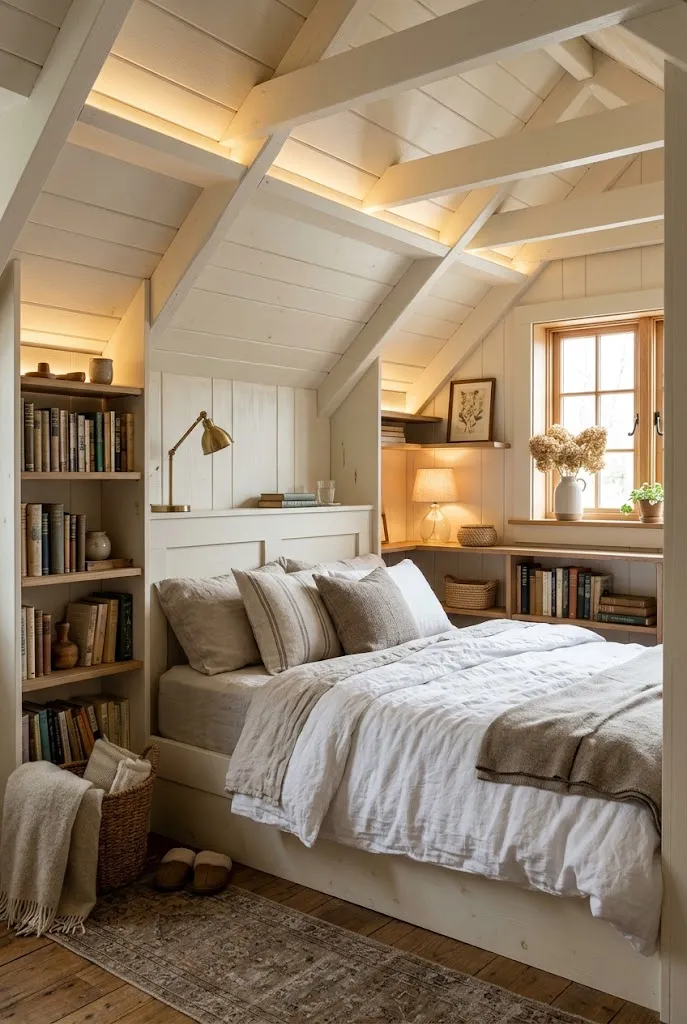
In a bedroom with a recessed wall or a roof slope, building a custom frame around the bed turns it into a snug alcove. Side shelves and integrated lighting double as nightstands, and a curtain across the front can add privacy and warmth.
This is a premium, custom option, since it normally requires a carpenter. The idea behind it, enclosing the bed in layers, can be borrowed more simply with a deep headboard, wall-mounted shelves, and a ceiling-hung curtain track.
13. Add a Bench at the Foot of the Bed With Folded Blankets
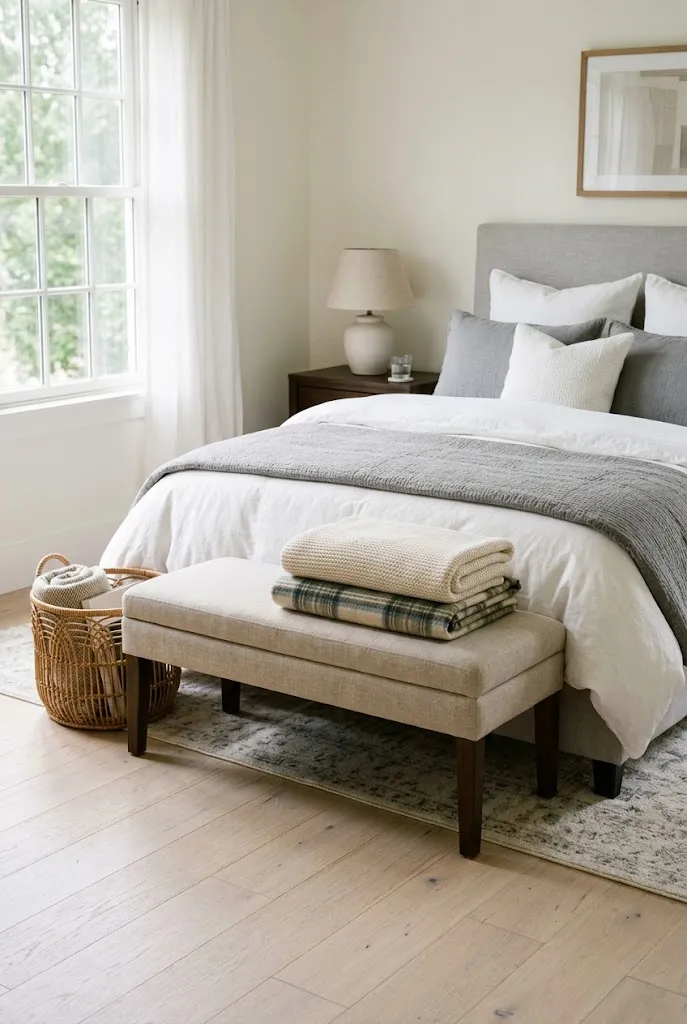
A bench at the end of the bed gives you a place to sit while putting on socks and a spot to stash extra blankets within reach. Pick one about two-thirds the width of the bed so it looks proportionate, and keep the walking path clear on both sides.
Rolled or folded blankets in different textures add a layered feel. Storage benches with lift-up tops keep spare bedding tucked away and tidy.
14. Set Up a Bedside Tea Station on a Tray
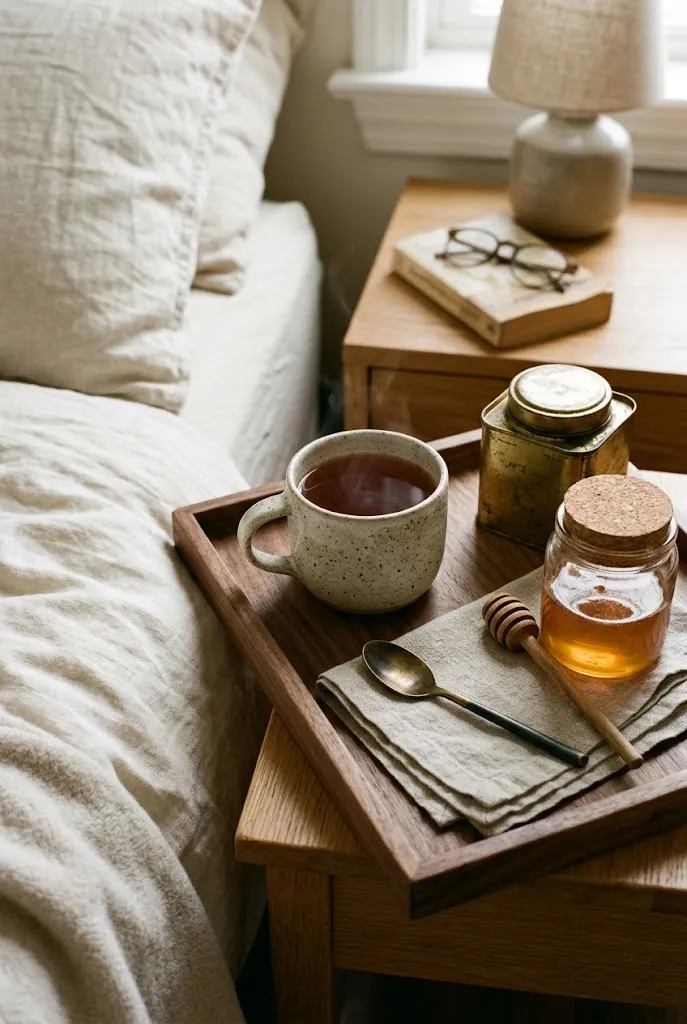
A small tray on the nightstand or dresser with a kettle-free setup, such as a thermos, a mug, and a tin of tea, makes the room feel hospitable. It also keeps small items from sprawling across the surface.
Tips & Tricks:
- Use a wood or marble tray with a lip
- Include a coaster so the mug never marks the surface
- Keep a small jar of honey or a spoon on the tray
- Skip an electric kettle at the bedside to avoid cord and safety issues
15. Hang a Woven Wall Piece Above the Bed
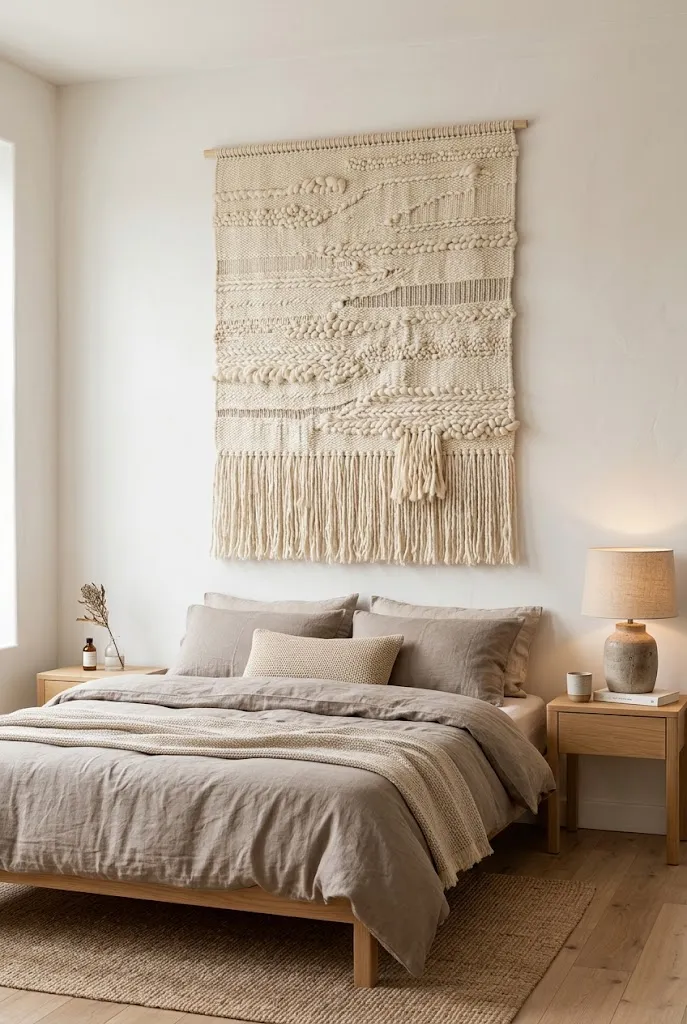
A large woven or macramé-style hanging adds texture to a plain wall without needing a frame. Choose natural wool, cotton, or jute in cream and tan so it blends with the bedding.
Scale is the main consideration. A piece that’s about two-thirds the width of the bed looks balanced. Hang it with the bottom edge about six to ten inches above the headboard or pillows.
16. Go for a Cream and Charcoal Scandinavian Winter Palette
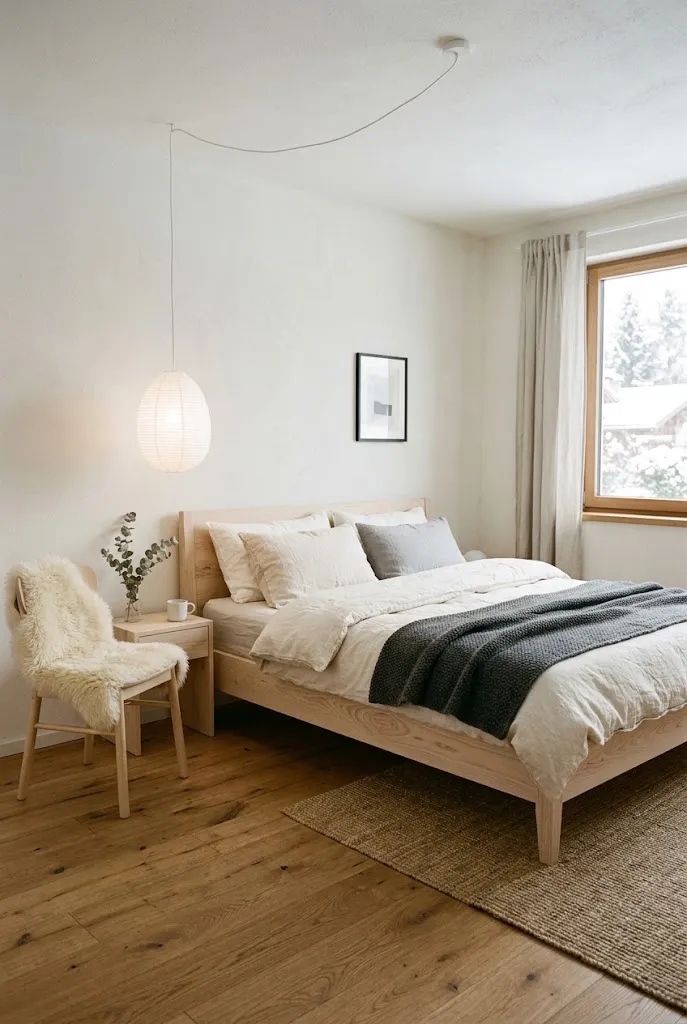
A restrained palette of warm whites, soft grays, and charcoal, with light wood and a single textured throw, creates calm rather than drama. This is the quiet version of winter decorating.
| Element | Suggested Choice |
|---|---|
| Walls | Warm white or very light gray |
| Bedding | Cream with a charcoal throw |
| Wood | Pale oak or birch |
| Accent | One sheepskin or wool piece |
Keep surfaces fairly clear, so the few objects you do display feel considered.
17. Hang Bed Curtains Along the Headboard Wall
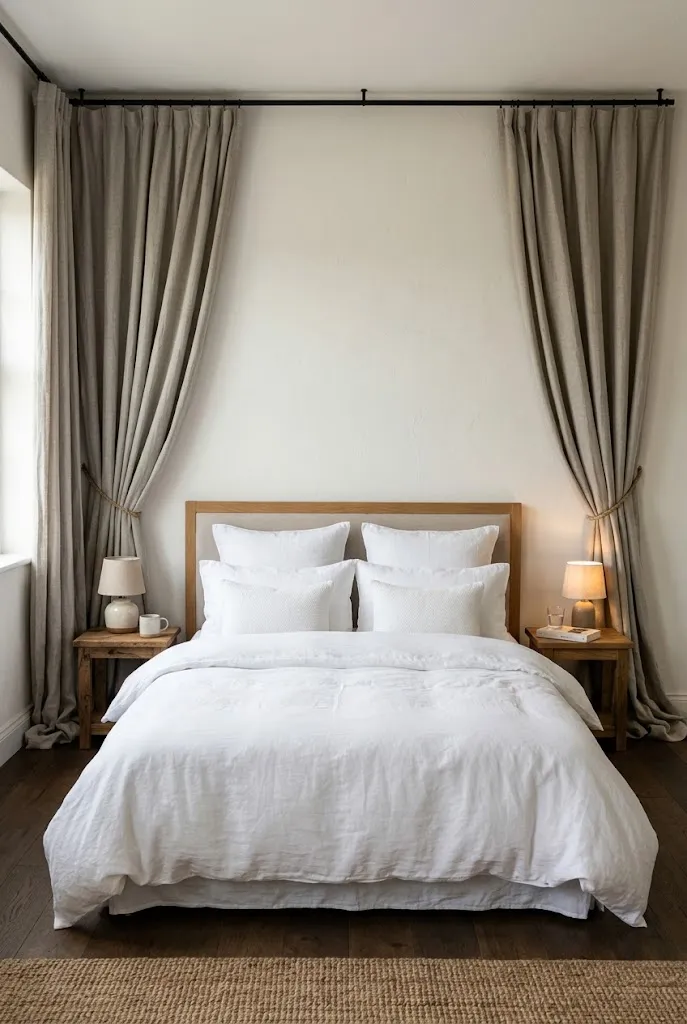
A pair of curtains hung on a track or rod behind the bed and pulled to the sides looks soft and finished, and in cold rooms the extra fabric adds a bit of insulation along the wall. Choose a heavy linen or cotton in a color slightly different from the bedding.
Quick Tip: Use a ceiling-mounted track if you want the curtains to fall in a clean line without a visible rod.
18. Style a Mantel or Dresser as a Fireplace Vignette
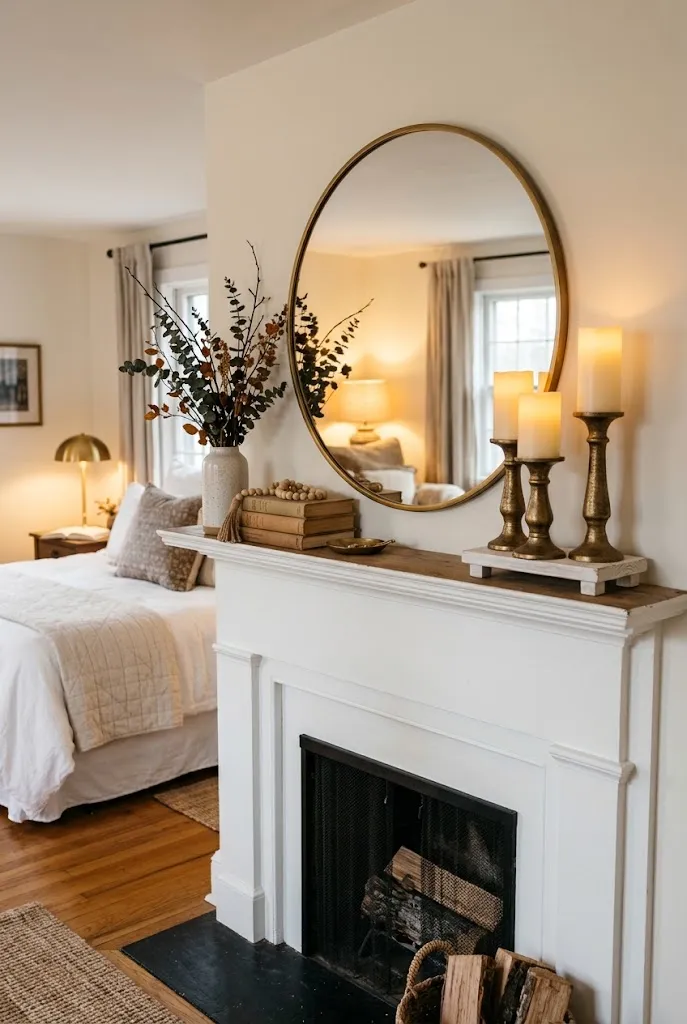
If your bedroom has a fireplace, even a decorative one, styling the mantel gives the room a focal point. Without one, a long dresser topped with a leaning mirror, candles, and branches can create the same effect.
Use flameless LED candles if the room is unattended or if you have pets or children, and keep real candles away from fabrics. Layer objects at different heights: a tall mirror, medium candlesticks, and a few small items at the front.
Editor’s Note: An electric fireplace insert can supply glow and warmth in rooms without a chimney, but check clearance requirements in its manual.
19. Mix Wool Plaid With Solid Neutrals

Plaid reads as cabin and cold-weather without being heavy-handed. Use it in one or two places, such as a blanket at the foot of the bed or a pair of pillows, and keep the rest of the bedding solid.
- Choose a plaid with colors that already exist in the room.
- Keep other patterns small or absent.
- Repeat one plaid color in a solid item, such as a lampshade or vase.
This keeps the pattern as an accent instead of the main event.
20. Build a Frosted Blue-Gray Palette With Warm Wood
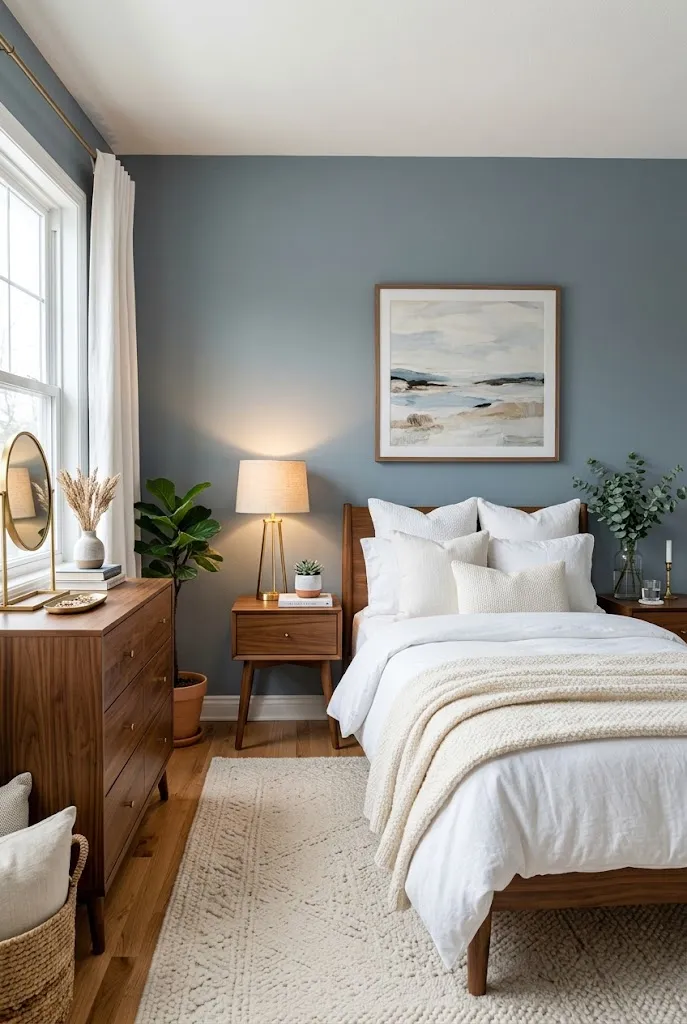
A cool winter palette of soft blue-gray and white can feel fresh, as long as you balance it with warm wood and a few creamy textiles. The warmth keeps it from reading cold.
- Choose a dusty blue-gray rather than icy blue
- Add oak or walnut furniture for warmth
- Use white and cream bedding to keep it bright
- Include one warm metal such as brass
21. Keep Extra Blankets in a Wide Woven Basket Within Reach
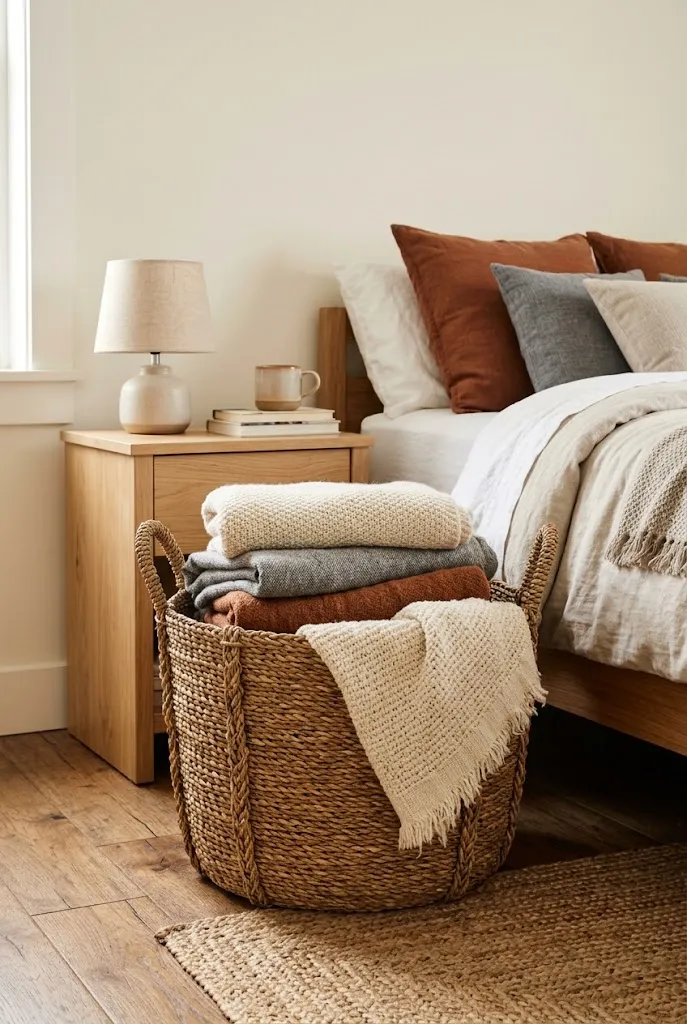
A big basket beside the bed or at the foot holds spare blankets and also adds a natural, handmade texture. Choose a wide, sturdy one with handles in seagrass, jute, or rattan.
Stack two or three blankets with the softest on top and let one corner drape over the edge. It’s useful on nights when you need an extra layer, and it keeps the bed from looking overloaded in the daytime.
Where to Start
If you only have an hour, begin with lighting and bedding: swap to warm 2700K bulbs and add one textured throw. If you have a weekend, add heavier curtains and a rug. The paint, paneling, and built-in ideas are better left for when you’re ready for a longer project. Layer slowly and check how the room feels at night, since that’s when winter bedrooms matter most.