

23 Beautiful Cozy Bedroom Ideas for a Warm & Dreamy Space
Introduction
A cozy bedroom should feel inviting the moment you walk through the door. Soft bedding, warm lighting, natural textures, calming colors, and carefully chosen furniture can make even a modest bedroom feel more comfortable without requiring a complete renovation.
The best cozy bedroom ideas aren’t about filling every corner with decorations. Instead, they create layers: a comfortable bed, tactile fabrics, gentle illumination, useful storage, and a few personal details that make the room feel lived-in rather than staged.
Whether you’re decorating an apartment, updating a guest room, refreshing a primary bedroom, or working with a small space, these cozy bedroom ideas offer different ways to create a warmer atmosphere. Some are simple styling changes, while others involve more substantial upgrades.
1. Layer the Bed With Soft Neutral Bedding
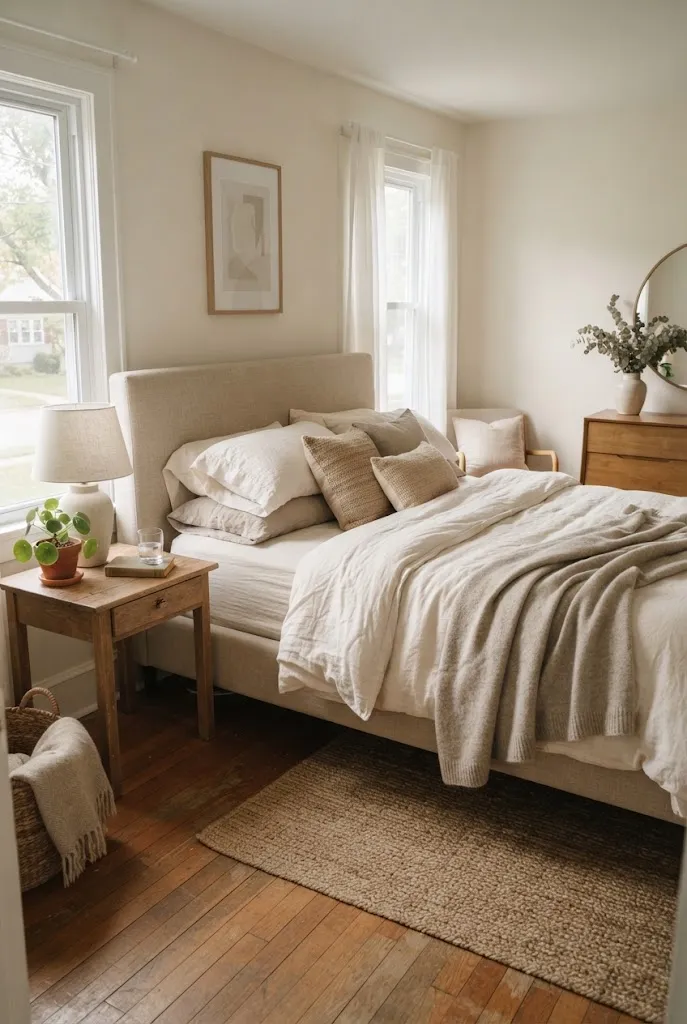
Start with the bed because it naturally becomes the focal point of the bedroom. A combination of ivory, oatmeal, warm beige, and soft taupe creates a calm foundation without making the room feel flat.
Layer a fitted sheet with a duvet, folded blanket, quilt, and several pillows in slightly different textures. Linen, cotton, brushed fabrics, and chunky knits can add depth while keeping the palette restrained.
For a polished look, avoid making every textile exactly the same shade. Subtle tonal differences help the bedding look collected rather than purchased as one matching set.
2. Create a Warm Glow With Bedside Lamps
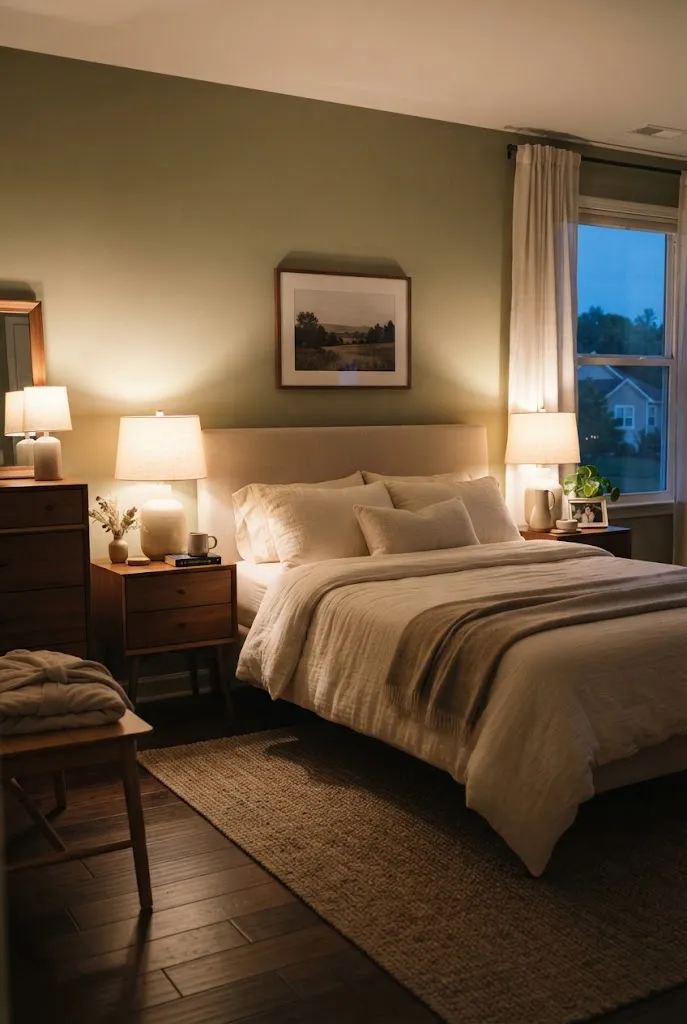
Overhead lighting rarely creates the intimate feeling people associate with a cozy bedroom. Instead, use bedside lamps to introduce pools of warm light around the bed.
Choose lamps with fabric, frosted, ceramic, or softly diffused shades. Matching lamps can create symmetry, while mismatched lamps in similar visual weights give the room a more collected appearance.
Place the lamps where their light is useful for reading without overpowering the room. A warm bulb temperature can also make cream, wood, and earthy colors feel richer in the evening.
3. Add a Chunky Knit Throw
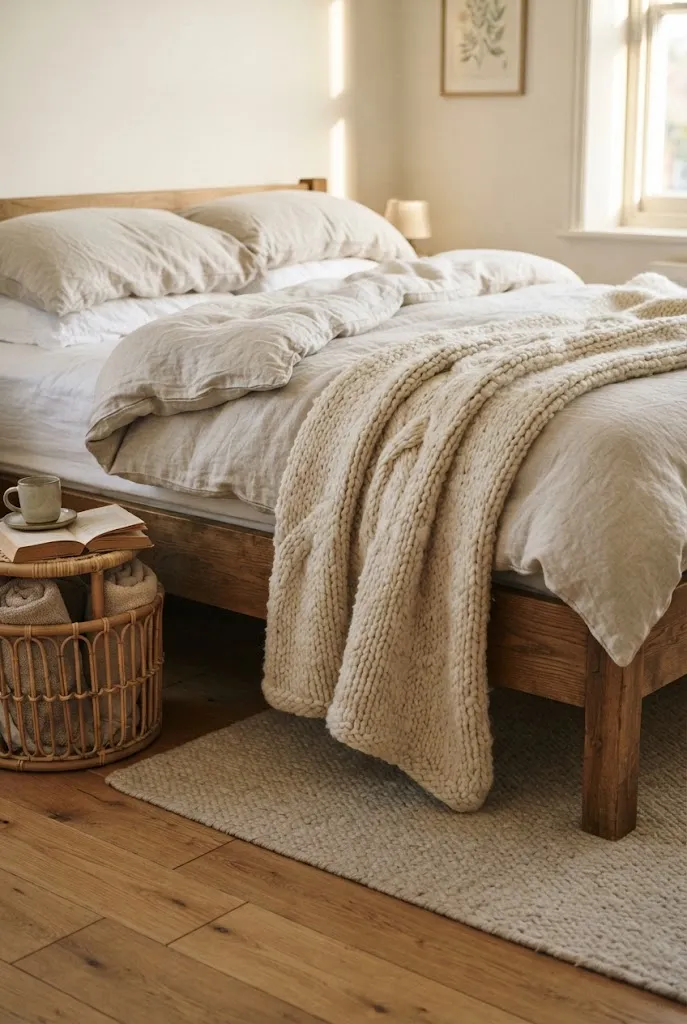
Texture can make a bedroom feel warmer without changing its architecture. A chunky knit throw draped casually across the foot or corner of the bed introduces visual softness and an inviting tactile quality.
Cream, camel, warm gray, muted rust, and oatmeal work particularly well in neutral bedrooms. The goal isn’t to create a perfectly arranged blanket but to give the bed a relaxed appearance.
A single substantial throw is often more effective than several competing blankets.
4. Bring in Warm Wood Tones
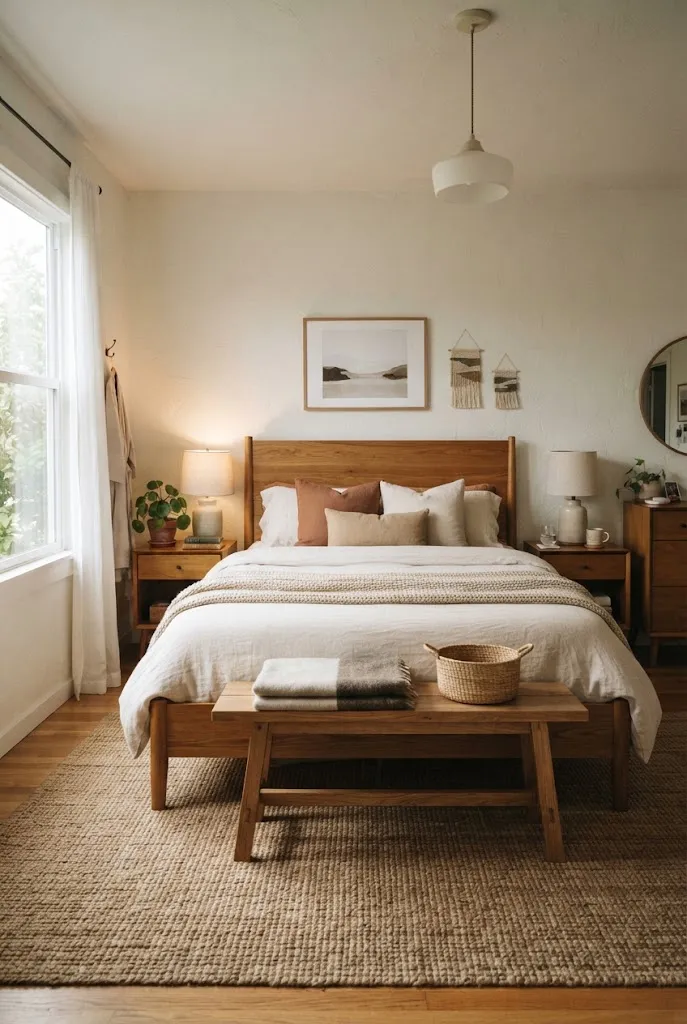
Wood instantly adds visual warmth and works across many bedroom styles. Consider an oak bed frame, walnut nightstands, a wooden bench, or even a small stool beside the bed.
You don’t need every wooden element to match perfectly. Combining two related wood tones can make the space feel more natural, particularly when the rest of the palette is restrained.
For a smaller bedroom, choose furniture with visible grain and relatively simple profiles so the material provides warmth without adding visual heaviness.
5. Make the Room Moody With Deep Wall Color
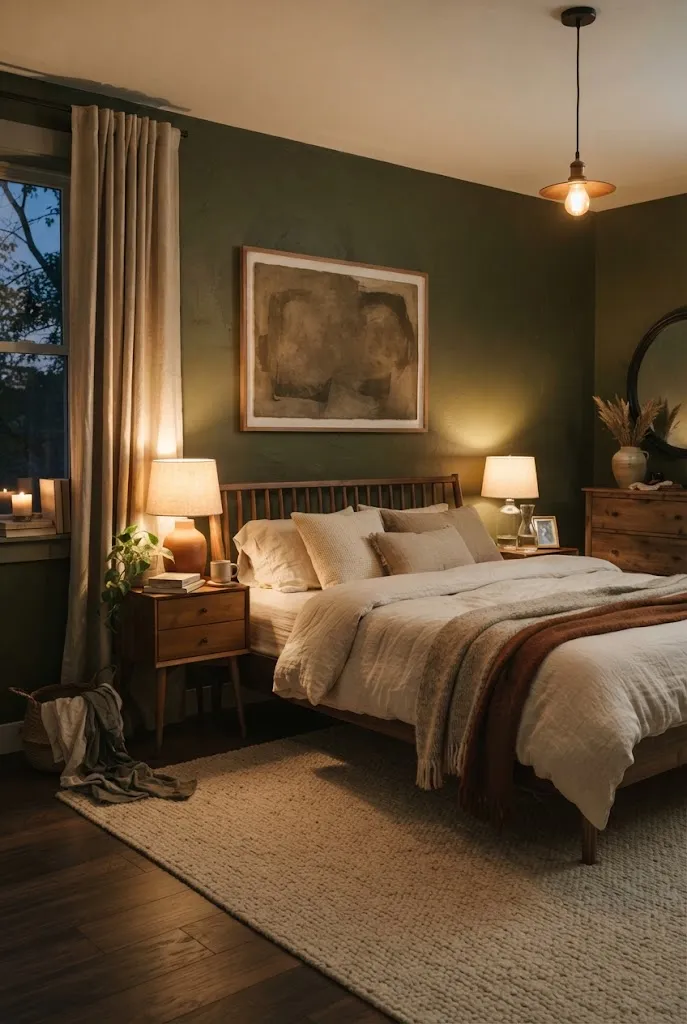
Cozy doesn’t always mean light. Deep olive, charcoal, chocolate brown, muted navy, or warm clay can create a cocoon-like bedroom when balanced with lighter bedding and carefully placed lighting.
The key is controlling contrast. If the walls are dark, introduce lighter textiles, warm wood, and soft lamps so the room feels enveloping rather than visually heavy.
For renters, a similar effect can come from removable wallpaper or concentrating the darker tone on furniture and textiles.
6. Use Layered Lighting Instead of One Ceiling Fixture
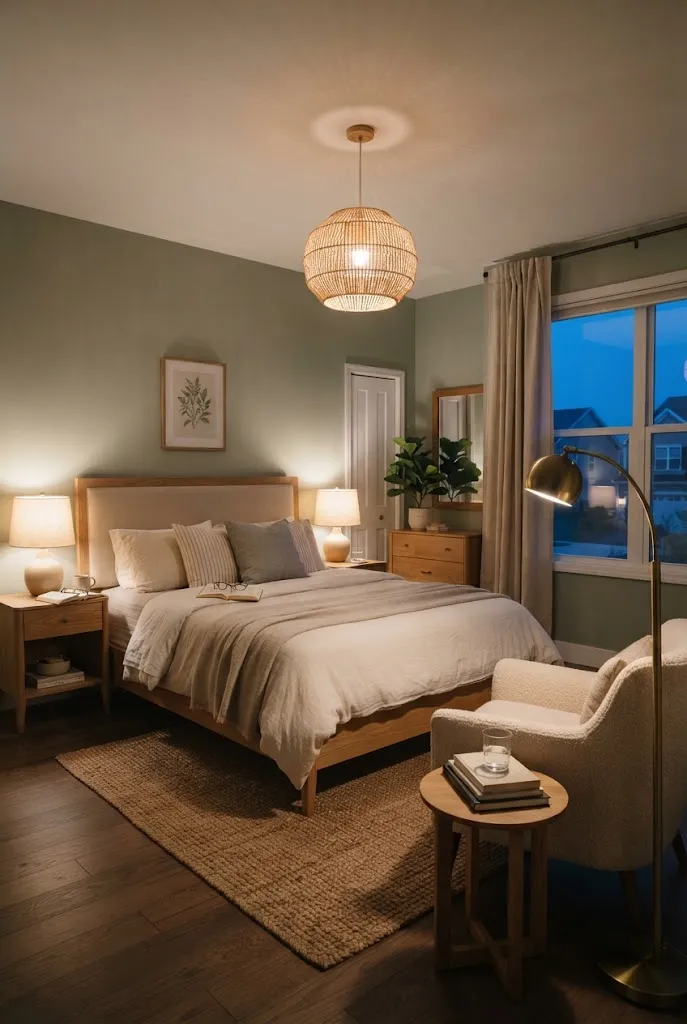
A cozy bedroom benefits from multiple levels of illumination. Rather than relying entirely on a central fixture, combine ambient, task, and accent lighting.
- Start with the room’s general ceiling light.
- Add bedside lamps for reading and nighttime use.
- Introduce a small accent light where useful, such as a picture light or subtle floor lamp.
- Keep the brightest source from dominating the entire room.
This approach gives you more control over how the bedroom feels at different times of day.
7. Add a Soft Rug Under the Bed
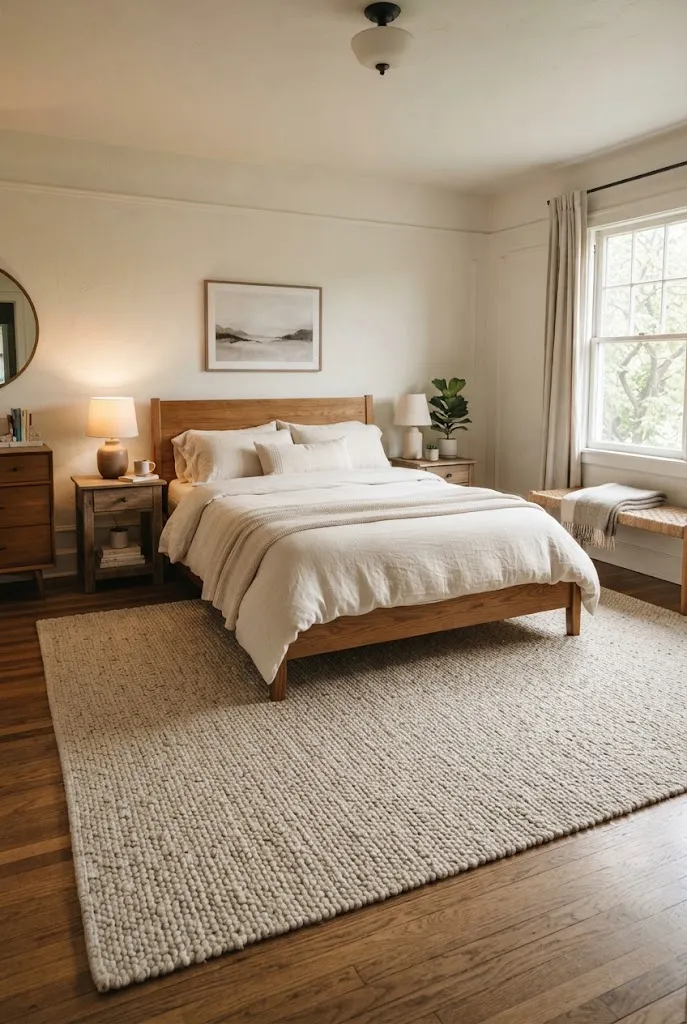
A rug can make the bedroom feel warmer both visually and physically. A large rug extending beyond the sides and lower portion of the bed creates a soft transition between furniture and flooring.
For a neutral room, try wool-like texture, subtle geometric pattern, faded vintage tones, or a solid warm cream. In a smaller room, the rug doesn’t necessarily need to cover the entire floor; its relationship to the bed is more important.
8. Create a Reading Corner
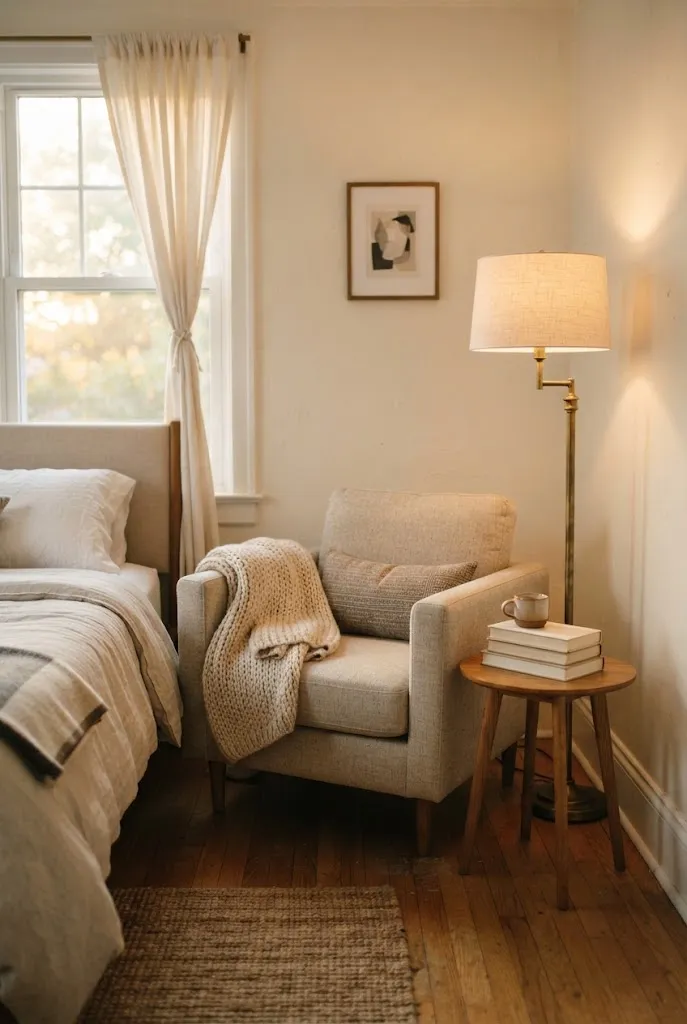
If the bedroom has enough floor space, turn one underused corner into a small reading retreat. A comfortable chair, floor lamp, side table, and folded throw can make the room feel more complete without competing with the bed.
Choose a chair that fits the scale of the room. In a compact bedroom, a slim upholstered chair may work better than a deep lounge chair.
The reading corner also creates a secondary visual destination, which keeps the room from feeling like it contains only a bed and nightstands.
9. Choose Linen Curtains for Softness
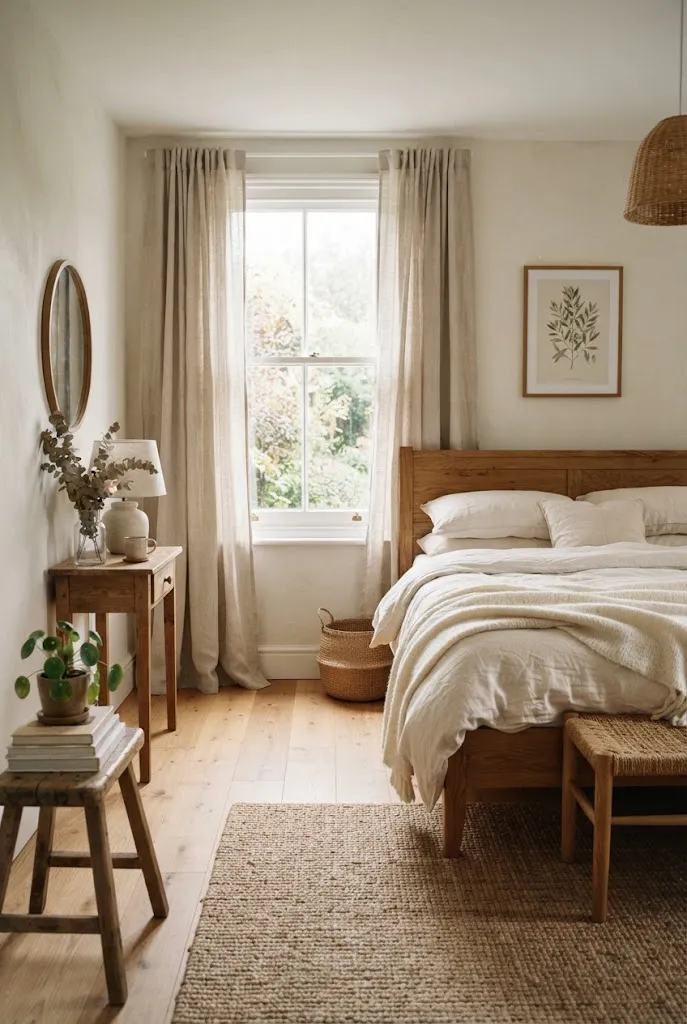
Window treatments influence both the appearance and atmosphere of a bedroom. Linen or linen-look curtains can soften hard window lines and create a more relaxed visual texture.
Hang curtains high enough to give the window a taller appearance when the architecture allows it. Let the fabric fall naturally rather than creating overly stiff folds.
Warm white, flax, oatmeal, and soft beige are versatile choices for bedrooms with natural wood and neutral bedding.
10. Style the Nightstand With Restraint
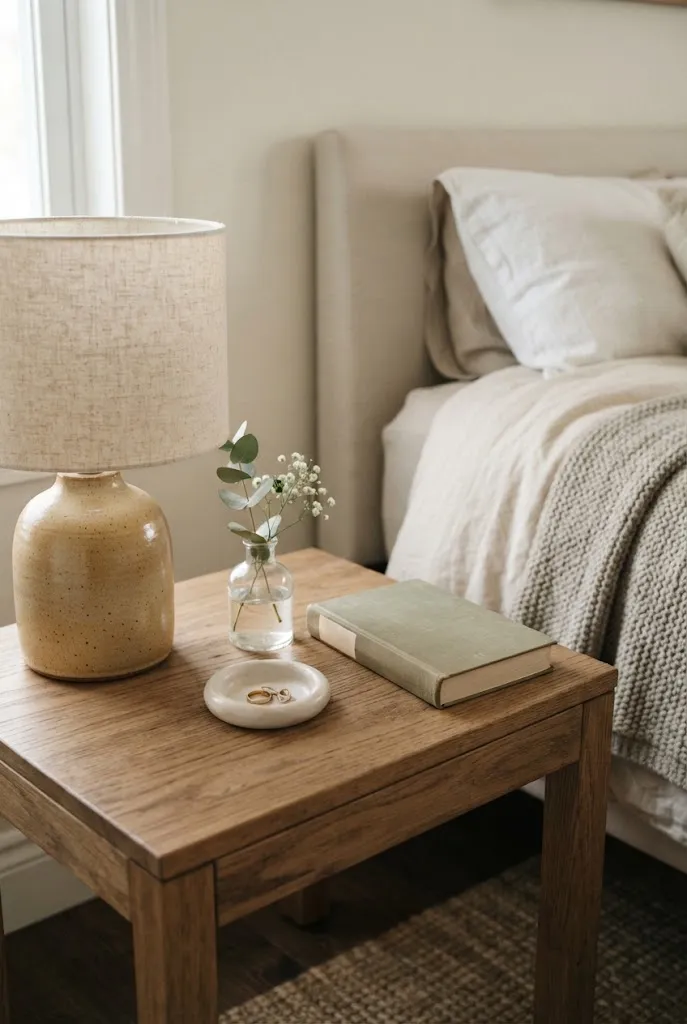
A nightstand doesn’t need to become a miniature storage shelf. A lamp, small dish, book, vase, or framed photograph can be enough.
Keep everyday necessities accessible but visually organized. If the surface becomes crowded, move less-used objects into a drawer or nearby storage.
11. Mix Cream, Beige, and Warm Brown
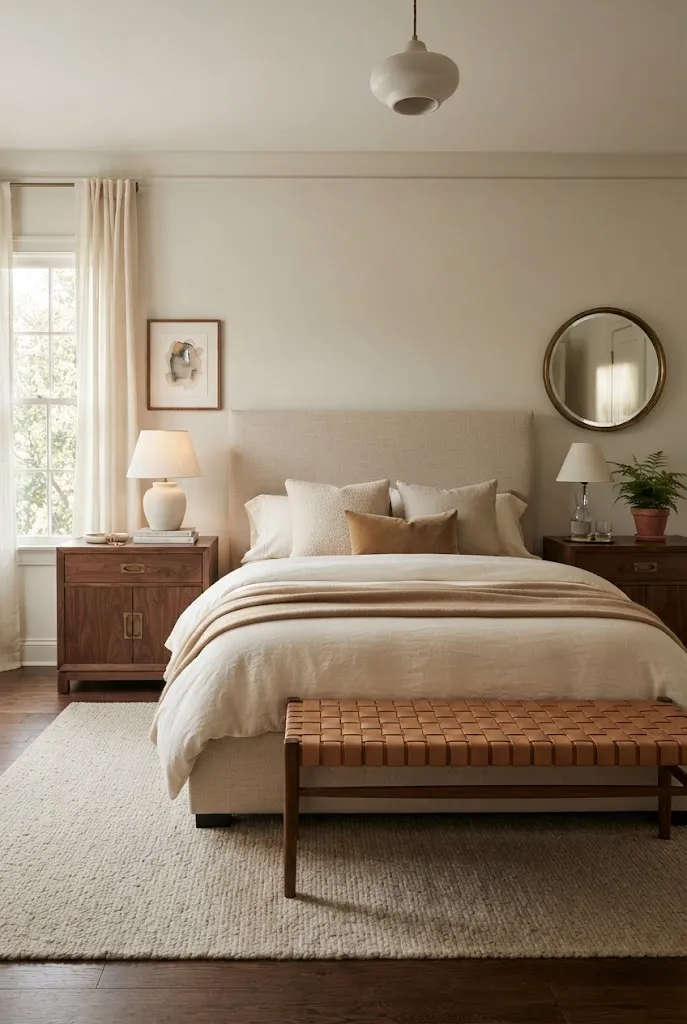
A neutral bedroom becomes more interesting when several related shades are layered rather than relying on one beige tone.
Try this simple palette:
| Layer | Suggested Tone | Purpose |
|---|---|---|
| Walls | Warm white or soft beige | Calm backdrop |
| Bedding | Cream and ivory | Light foundation |
| Wood | Oak or walnut | Natural warmth |
| Accent | Camel or muted brown | Depth |
| Metal | Aged brass or matte black | Definition |
The colors should relate to one another rather than compete. Small variations in tone often create more depth than adding a completely different accent color.
12. Hang Oversized Artwork Above the Bed
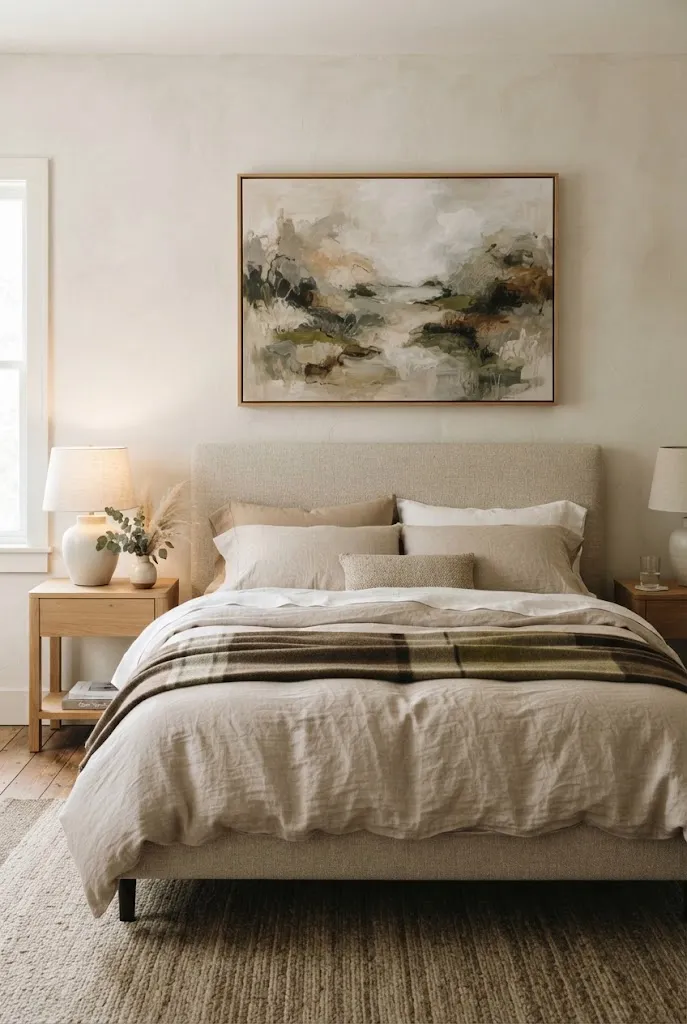
One substantial artwork piece can give the bed wall a strong focal point without requiring a gallery wall.
Look for an abstract landscape, muted botanical composition, atmospheric photograph, or textured artwork that repeats colors already present in the room.
Scale matters. Artwork that is too small can make the wall feel unfinished, while an oversized piece with a quiet palette can create a more intentional appearance.
13. Try a Canopy Bed for a Cocooning Effect
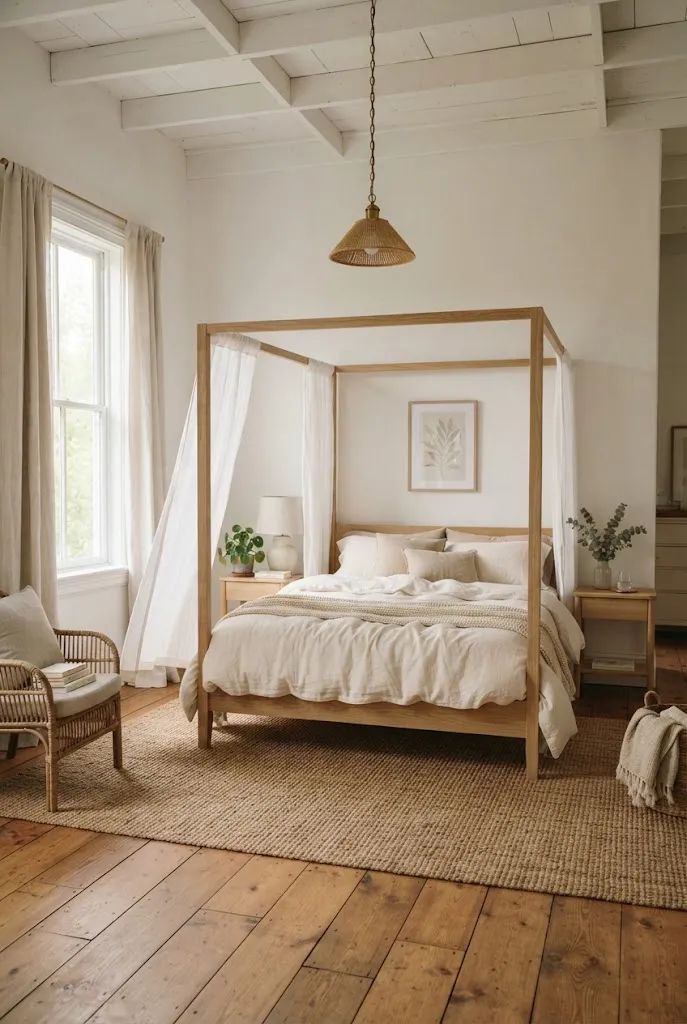
A canopy bed creates architectural interest without necessarily requiring a major room renovation. The frame itself defines the sleeping area and can make a larger bedroom feel more intimate.
Keep the bedding simple so the structure remains the visual feature. For a softer result, lightweight curtains can be draped around portions of the frame rather than fully enclosing the bed.
This approach works especially well in bedrooms with high ceilings.
14. Add a Small Upholstered Bench
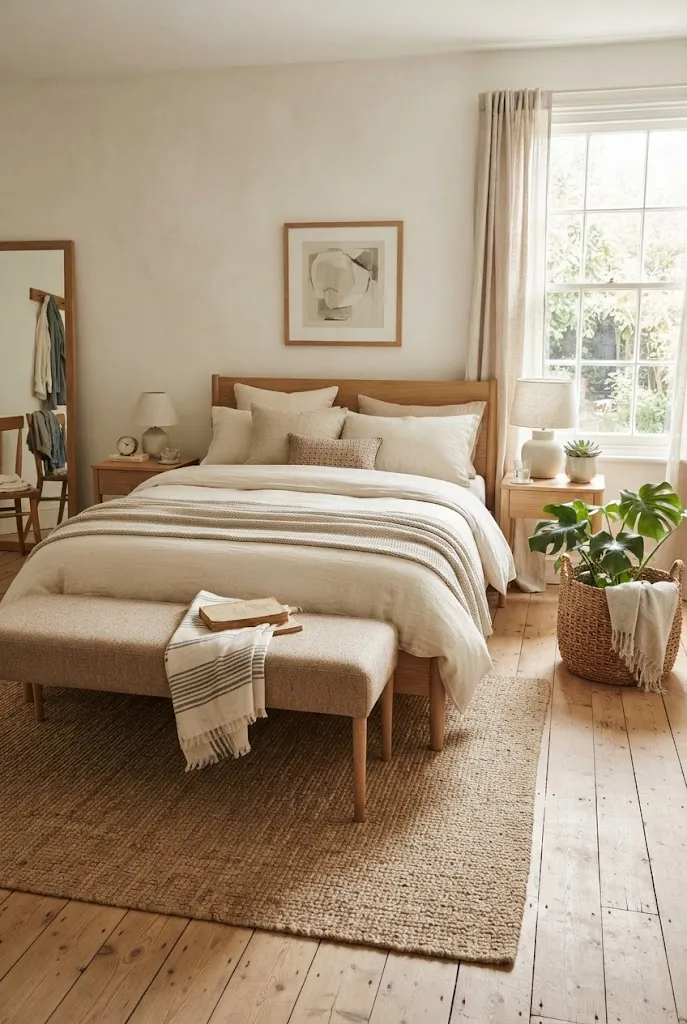
An upholstered bench at the foot of the bed adds both function and softness. It provides a convenient place to sit, put on shoes, or temporarily place a folded blanket.
For a small bedroom, choose a narrow bench with an open or visually light base. Larger rooms can accommodate a deeper upholstered design.
A fabric in oatmeal, warm gray, camel, or muted olive can connect the bench to the rest of the bedroom without making it look overly coordinated.
15. Use a Textured Headboard as the Focal Point
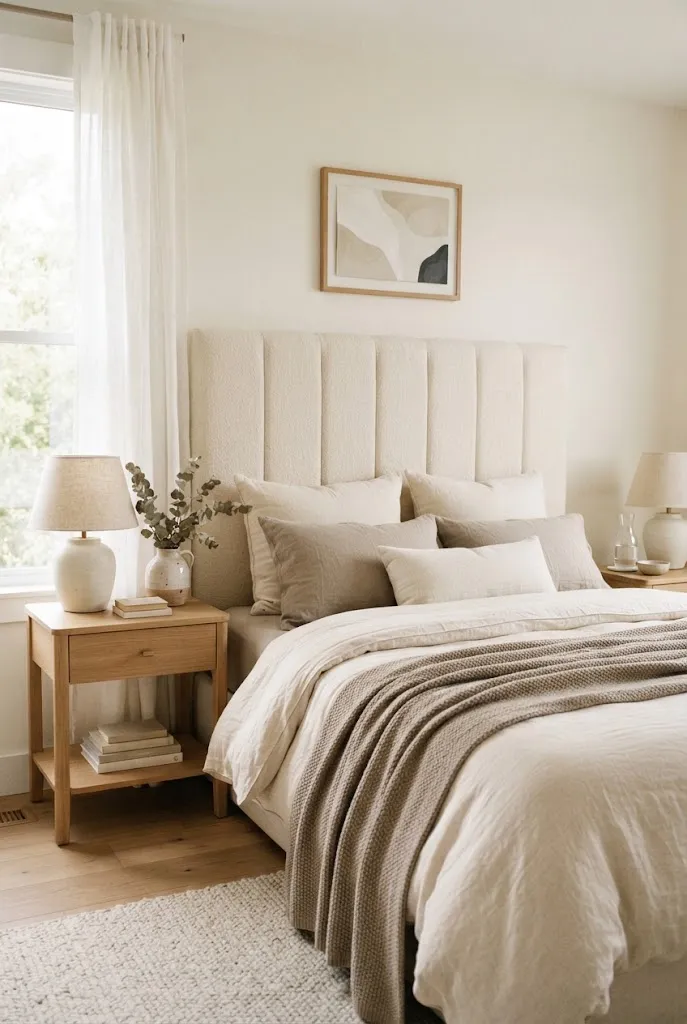
An upholstered headboard can make a bed feel more substantial and comfortable. Bouclé, linen, cotton, or subtly patterned fabric adds tactile interest without relying on bold decoration.
For a calm bedroom, choose a headboard with a simple silhouette and let its texture do the work. A taller headboard can also visually anchor the bed on a wall with high ceilings.
16. Introduce Soft Terracotta or Muted Rust
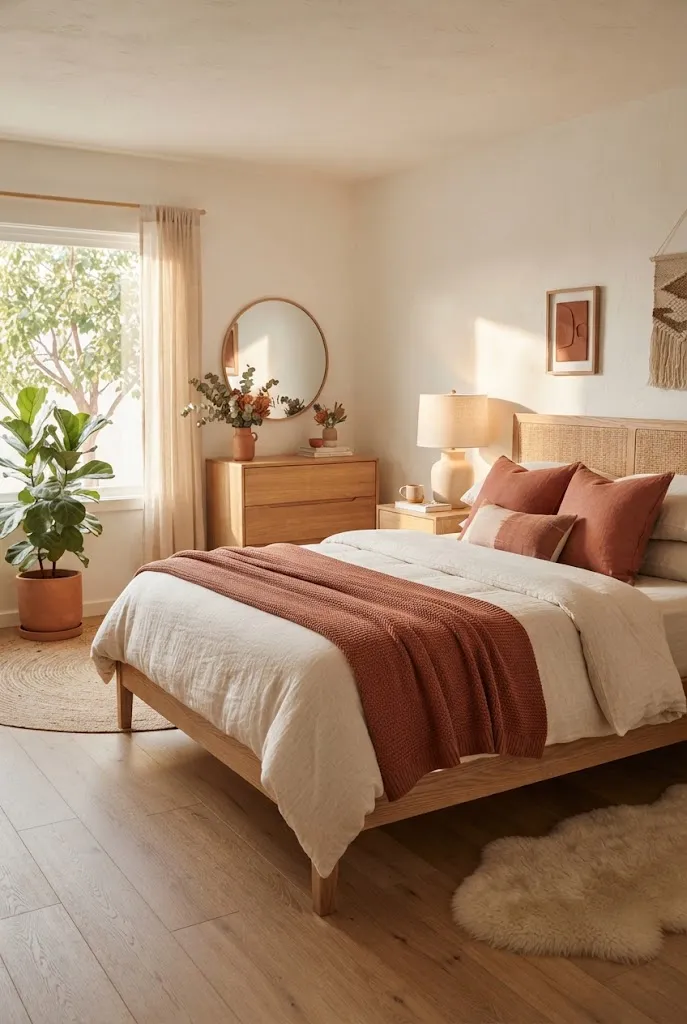
A bedroom doesn’t have to remain entirely neutral to feel peaceful. Muted terracotta, clay, cinnamon, and dusty rust can add warmth without becoming visually loud.
Use these colors in moderation: a quilt, pillow, throw, artwork, or small upholstered piece can be enough.
The warm undertones pair particularly well with cream, walnut, natural oak, and warm white walls.
17. Create a Small Gallery Wall
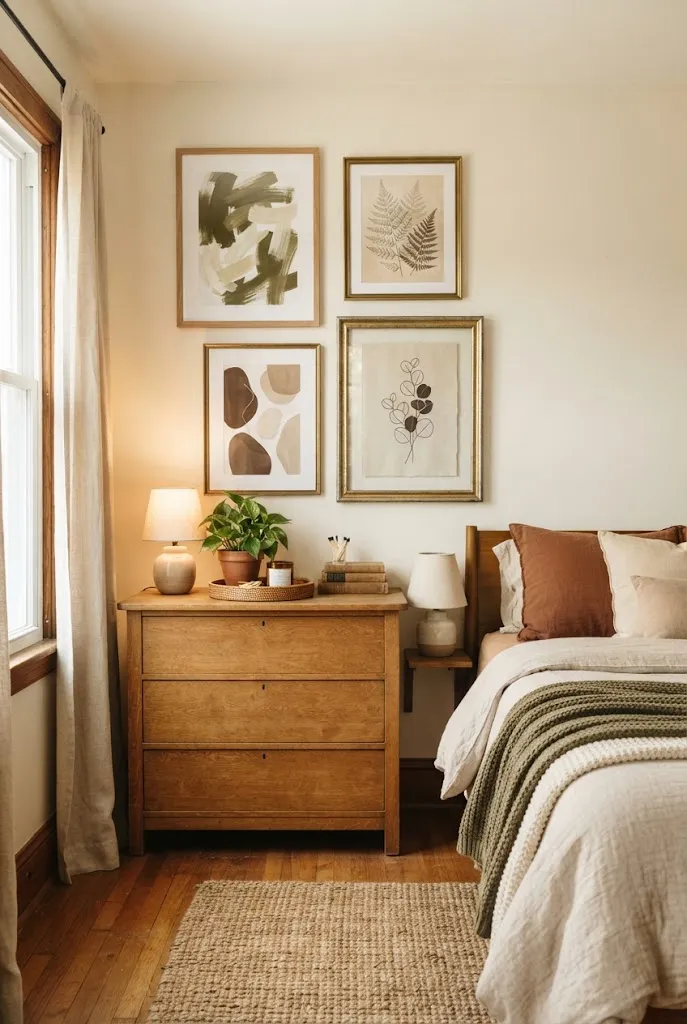
A carefully edited collection of artwork can make a bedroom feel personal without overwhelming it.
Instead of filling an entire wall, choose three to five pieces with a common color relationship. Botanical drawings, abstract shapes, landscapes, and quiet photography can work particularly well.
Use consistent spacing and let the wall breathe around the arrangement.
18. Use Woven Baskets for Practical Warmth
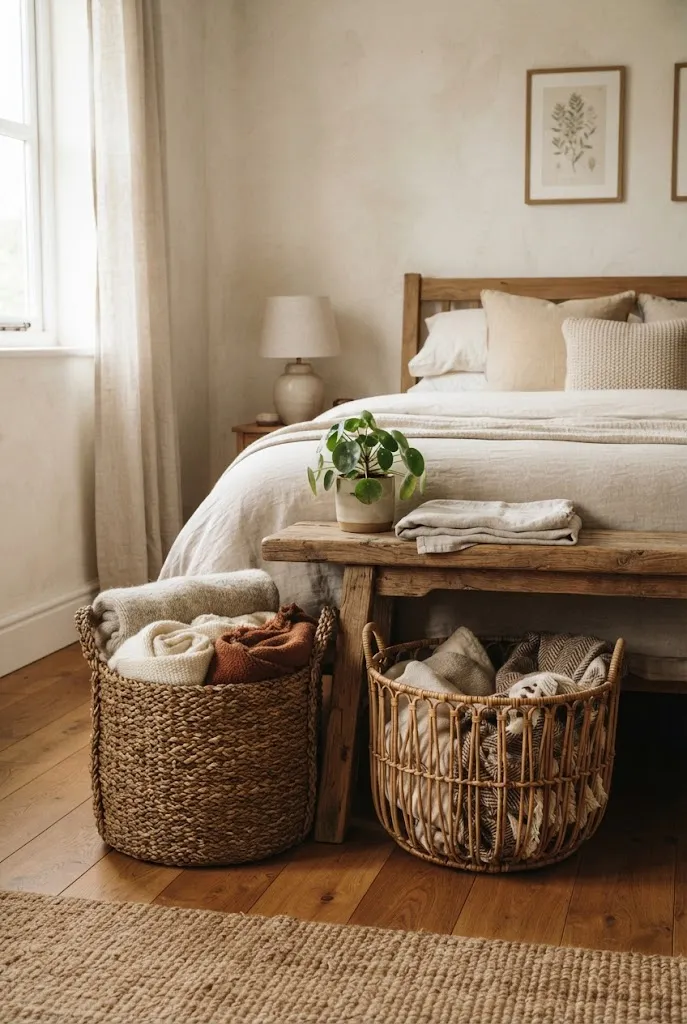
Storage can contribute to the bedroom’s visual warmth when the containers themselves have attractive texture.
Woven baskets work well for extra blankets, pillows, laundry, or everyday items. Place one beneath a bench, beside a dresser, or in an unused corner.
Choose basket sizes according to their purpose rather than buying several identical containers simply for decoration.
19. Add a Soft Accent Chair
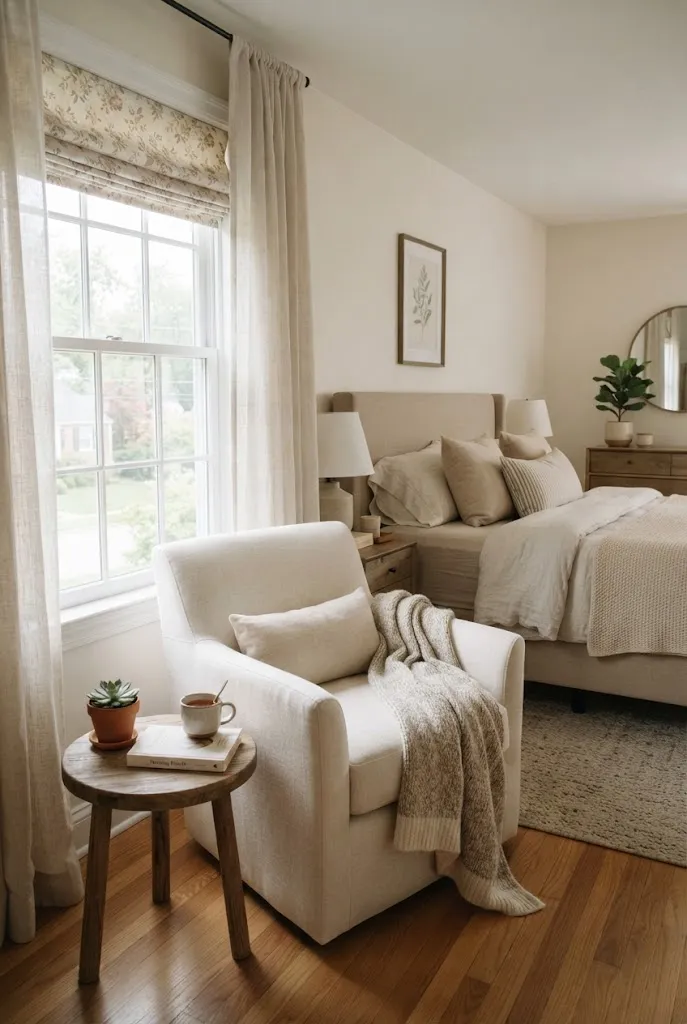
A bedroom chair can make the room feel more like a retreat rather than simply a place for sleeping.
Choose a chair with a comfortable silhouette but avoid one so large that it blocks circulation. Place it near a window, beside a dresser, or in a corner with enough clearance.
Add a small cushion or throw for texture, but keep the arrangement usable rather than treating the chair as purely decorative.
20. Use a Statement Pendant Over the Bedside Area
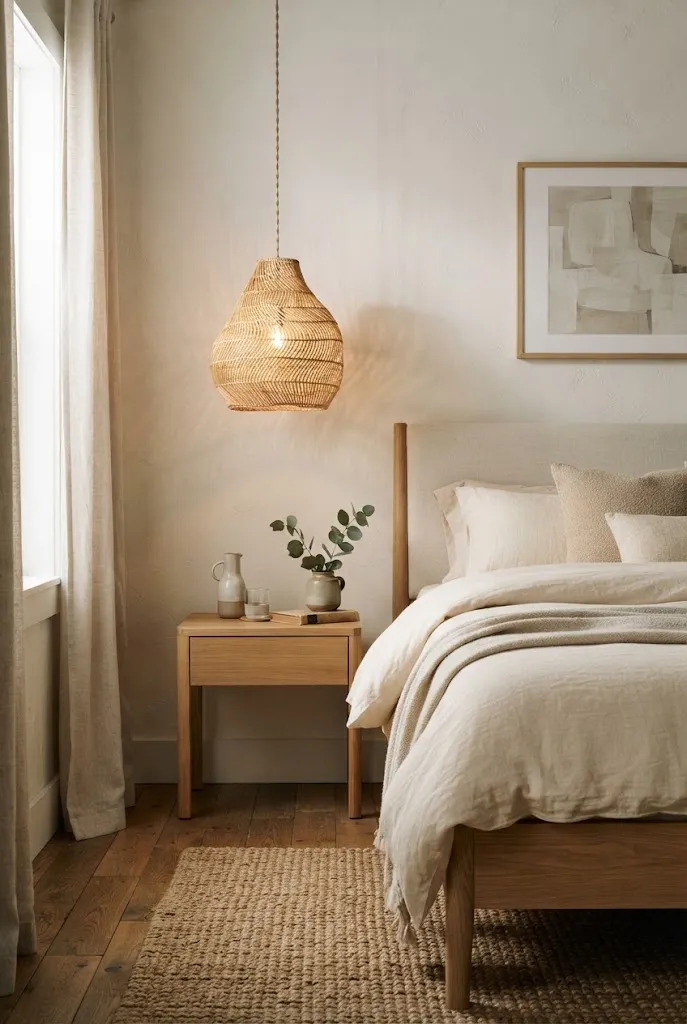
A pendant can free up nightstand space while giving the bedroom a stronger vertical element. This works particularly well when bedside surfaces are small or when you want a more architectural look.
Choose a fixture that is appropriately scaled to the room. A woven shade creates a relaxed effect, while glass, ceramic, or metal can introduce a more refined direction.
Make sure the installation and placement are appropriate for the existing electrical setup and bedroom layout.
21. Build a Cozy Small Bedroom With Vertical Storage
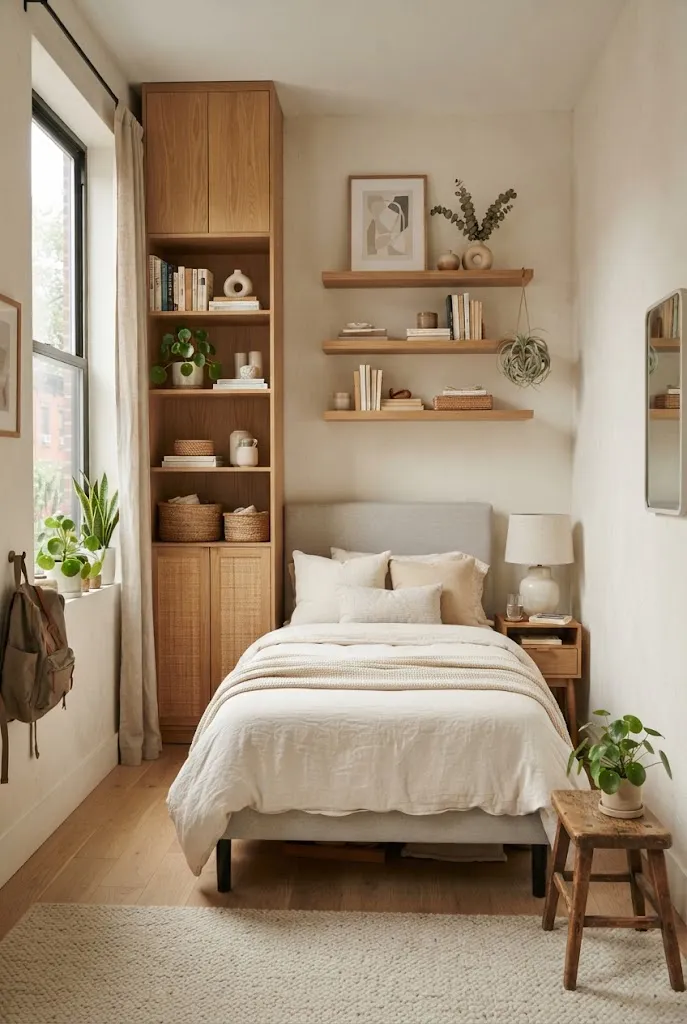
Small bedrooms benefit from using wall height rather than adding bulky furniture to the floor.
Tall shelving, narrow wardrobes, wall-mounted hooks, or vertically arranged artwork can draw the eye upward while keeping valuable floor space available.
Use closed storage for visually busy belongings and reserve open shelves for a few attractive objects. This combination helps a compact bedroom remain functional without feeling crowded.
22. Bring in a Few Easy-Care Greenery Accents
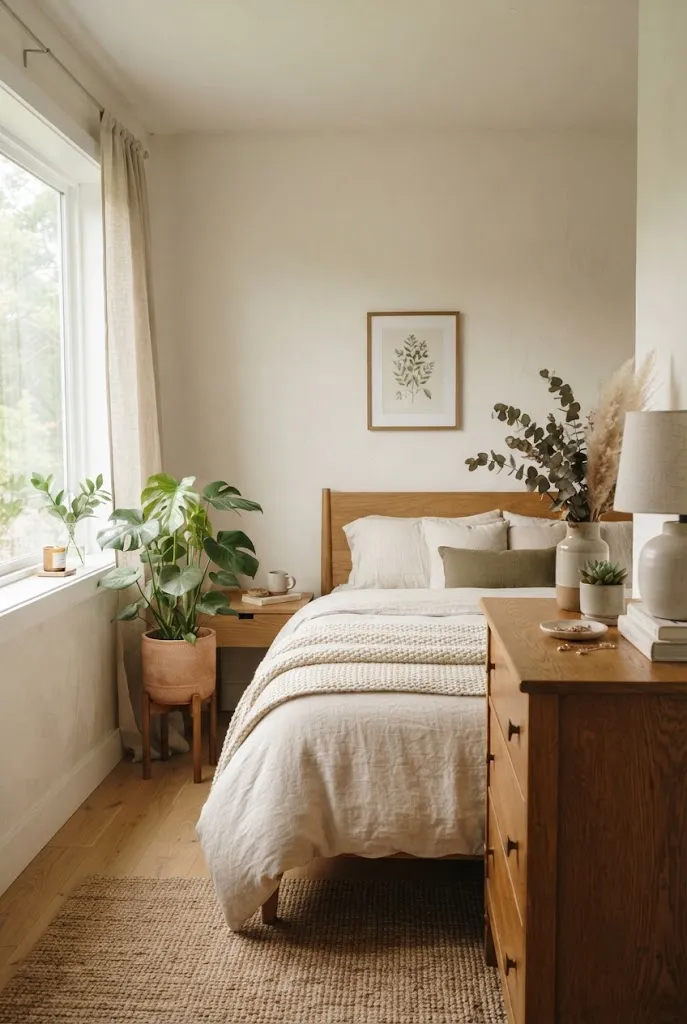
A small amount of greenery can soften the hard lines of furniture and add a natural element to a bedroom.
Choose plants according to the actual light and care conditions of the room rather than selecting one purely for appearance. A single larger plant can become a focal point, while a small plant on a dresser provides a quieter accent.
For a low-maintenance approach, even natural branches in a simple vase can provide an organic shape without turning the bedroom into a plant collection.
23. Finish With Personal, Lived-In Details
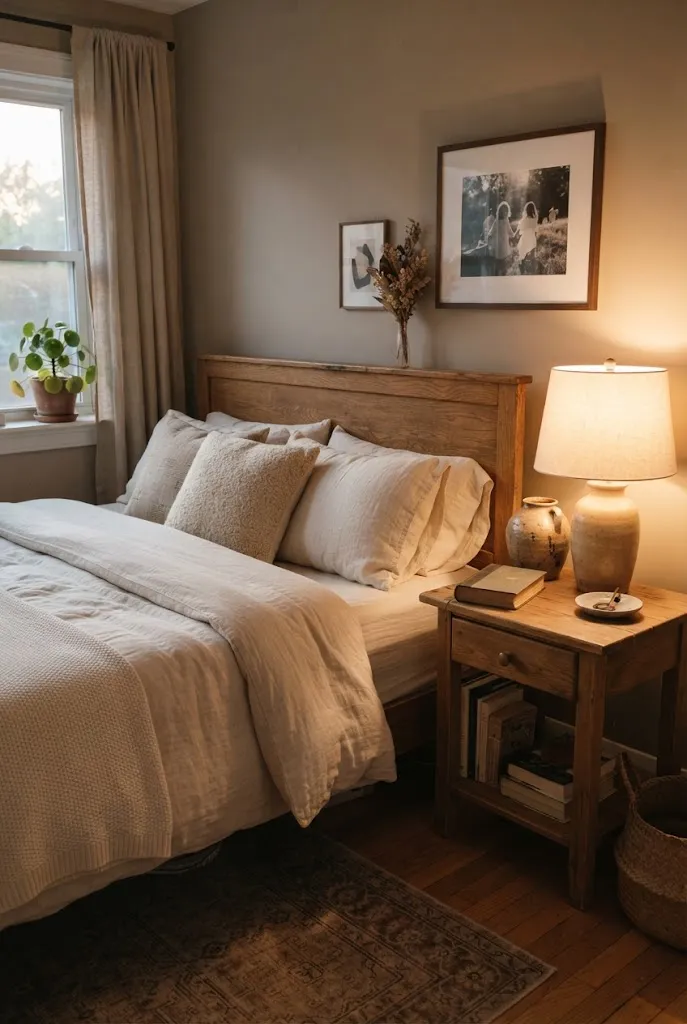
The final layer is what makes a bedroom feel like a real retreat rather than a showroom. Add a few objects that have meaning or practical value: a favorite book, framed photograph, handmade ceramic, small travel keepsake, or carefully chosen piece of art.
The trick is editing. A cozy room doesn’t need dozens of personal objects. A handful of meaningful details can make the space feel warmer while keeping the overall design calm.
How to Make Your Bedroom Feel Cozier Without Redecorating Everything
You don’t need to change every piece of furniture to create a warmer bedroom. Start with the elements that have the greatest visual and tactile impact.
- Change the bedding: Add a duvet, quilt, throw, and pillows in related neutral shades.
- Improve the lighting: Replace harsh illumination with warm bedside and accent lighting.
- Add texture: Bring in linen, wool-like fabrics, knits, woven baskets, or a textured rug.
- Edit the nightstands: Remove unnecessary objects and keep only useful or meaningful pieces.
- Introduce warmth: Use wood, muted earth tones, and natural materials.
- Finish personally: Add a few objects that make the room feel connected to the people who use it.
The biggest improvement often comes from layering several small changes instead of making one dramatic purchase.
Cozy Bedroom Style Combinations to Try
Different combinations can create very different moods while still feeling warm and inviting.
| Style Direction | Key Elements | Overall Feeling |
|---|---|---|
| Warm Minimalist | Cream, oak, linen, simple lighting | Calm and uncluttered |
| Modern Rustic | Wood, wool-like textures, earthy colors | Relaxed and grounded |
| Moody Retreat | Deep walls, warm lamps, light bedding | Cocooning and intimate |
| Soft Traditional | Upholstery, layered textiles, classic lamps | Comfortable and familiar |
| Organic Modern | Natural materials, sculptural pieces, muted tones | Airy and collected |
The important part is choosing one dominant direction and letting the supporting pieces reinforce it.
Small Details That Make a Big Difference
A bedroom can feel substantially warmer through small adjustments:
- Pull the bedding slightly over the sides of the mattress for a fuller appearance.
- Use lamps at different heights rather than placing every light source at eye level.
- Keep some empty surface area on dressers and nightstands.
- Repeat one accent color in at least two or three places.
- Combine smooth and textured fabrics instead of using only one type.
- Keep walking paths clear so comfort doesn’t come at the expense of usability.
- Use curtains, rugs, and upholstered furniture to soften hard architectural surfaces.
The goal isn’t maximum decoration. It’s visual and physical comfort.
Choosing the Right Cozy Bedroom Ideas for Your Space
Start with the bedroom’s existing strengths rather than trying to recreate a completely different room. If the space has beautiful wood floors, let them contribute warmth. If natural light is limited, prioritize layered lighting. If the room is small, focus on textiles, wall color, vertical storage, and furniture scale.
For renters, removable treatments, textiles, lighting, artwork, and freestanding furniture can make a substantial difference without permanent alterations. Homeowners with more flexibility can consider built-in storage, wall treatments, upgraded flooring, or custom millwork.
The most successful cozy bedroom is one that looks inviting and works for everyday life. Choose the ideas that solve something your room actually needs, then layer in the decorative details gradually.