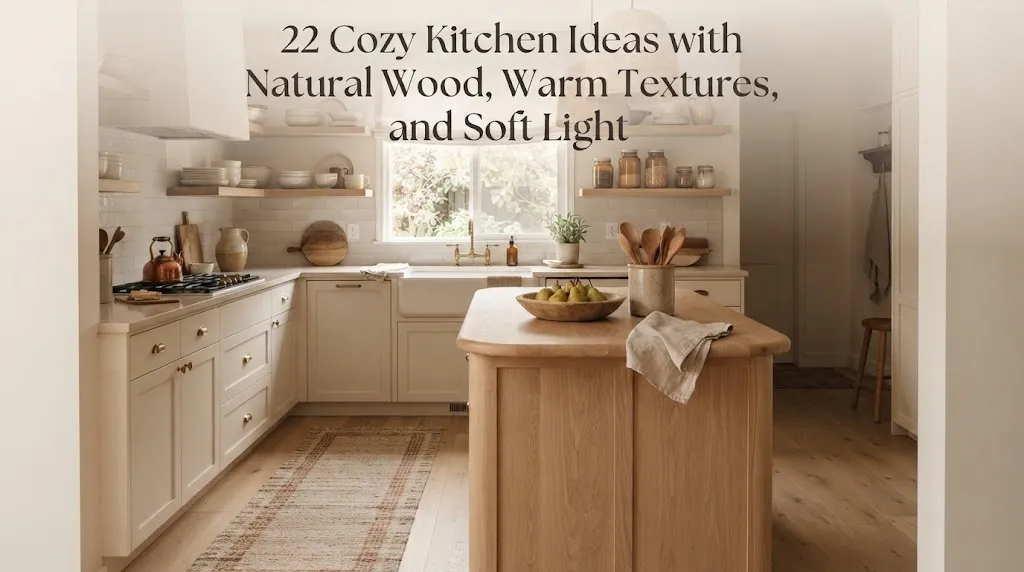
22 Cozy Kitchen Ideas with Natural Wood, Warm Textures, and Soft Light
Introduction
A kitchen feels cozy when it softens the hard edges: wood grain where there would be glossy laminate, woven shades where there would be bare glass, and lamplight where there would be one overhead fixture. These cozy kitchen ideas lean on that formula of natural wood, warm textures, and soft light. They also cover very different budgets and floor plans.
Some changes need only a screwdriver and a weekend, like a plug-in sconce or a new set of linen shades. Others, like walnut cabinetry or a reclaimed beam ceiling, are renovation-level projects. Mix and match to suit the kitchen you have, whether that’s a rental galley or a family kitchen with an island.
1. Open Oak Shelves Beside the Range
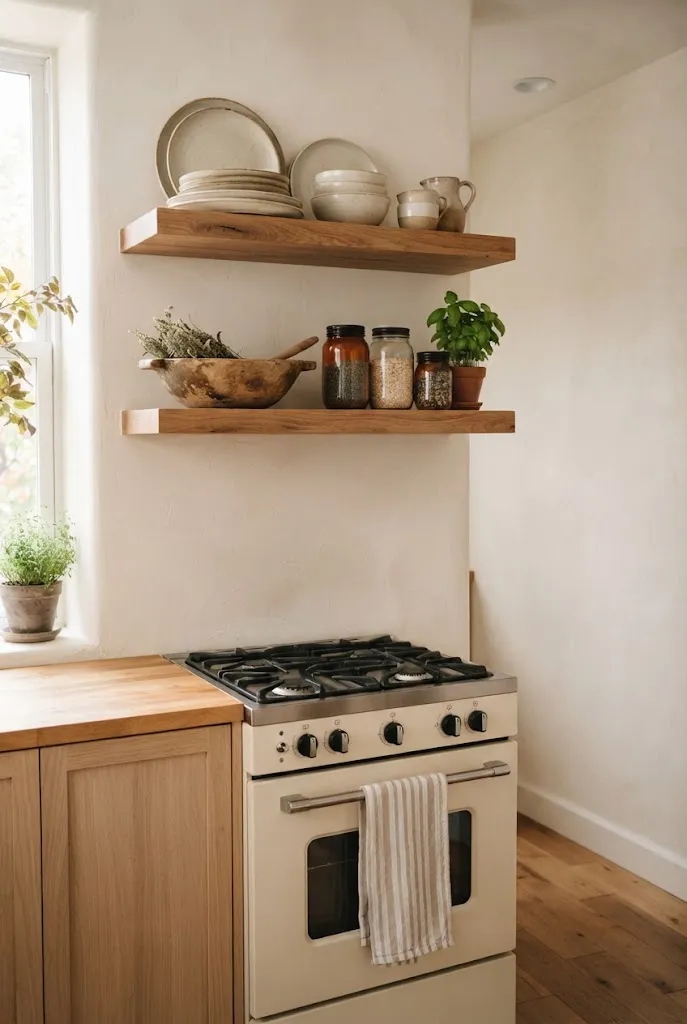
Replacing one run of upper cabinets with two or three thick oak shelves opens a closed-in wall and gives everyday dishes a place to be seen. Choose boards deep enough to hold dinner plates, usually in the 8 to 10 inch range, and mount them into studs or with anchors rated for the load.
Keep the styling edited: stacked stoneware, a wooden bowl, a few glass jars. The wood does the decorating.
Common Mistake: Hanging shelves directly beside the cooktop.
Better Approach: Leave a few inches of clearance from the burners, and put plates and bowls you use daily on the shelves. Cooking grease settles on anything within reach, and dishes you actually use get washed often enough to stay clean.
2. Butcher Block Counters Against Painted Cabinets
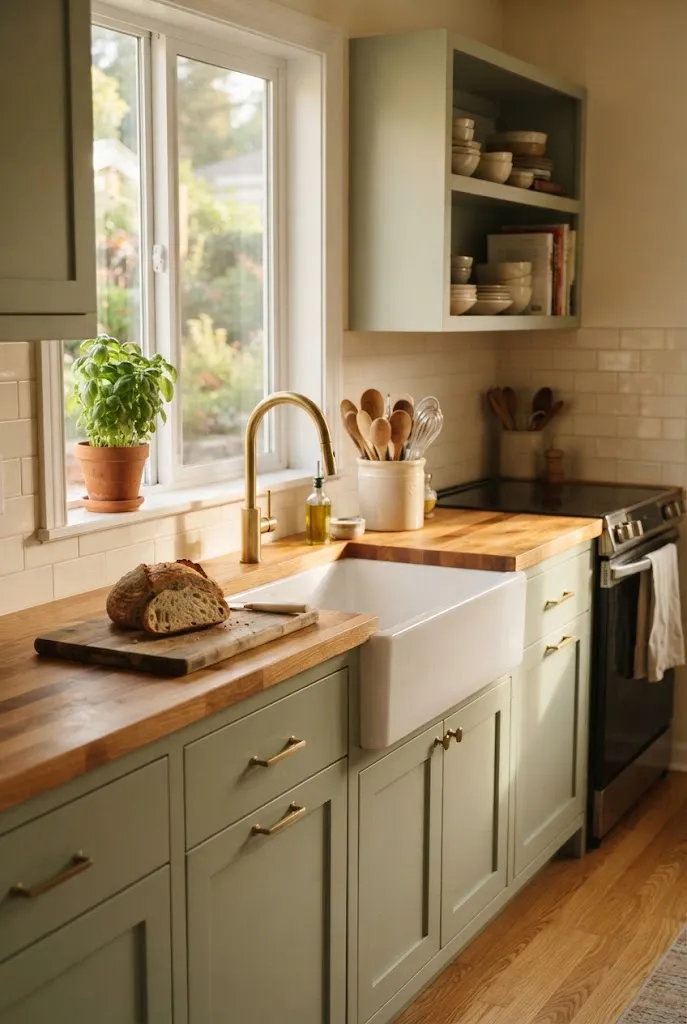
Butcher block is the quickest way to bring real wood into a kitchen that already has painted cabinets. The warm top breaks up a run of white or soft green and brings the wood closer to where you actually work.
The finish matters more than the species when it comes to everyday use.
| Finish | Look and Feel | Best Fit |
|---|---|---|
| Oil | Matte, deeply natural, shows wear softly | Prep zones and baking areas |
| Sealed or film finish | More wipe-clean, slightly more polished | Sink runs and busy family kitchens |
Whichever you choose, follow the manufacturer’s care directions, and seal cut edges and sink cutouts carefully, since standing water is the main enemy of any wood counter.
3. Walnut Cabinetry Under Soft Under-Cabinet Light
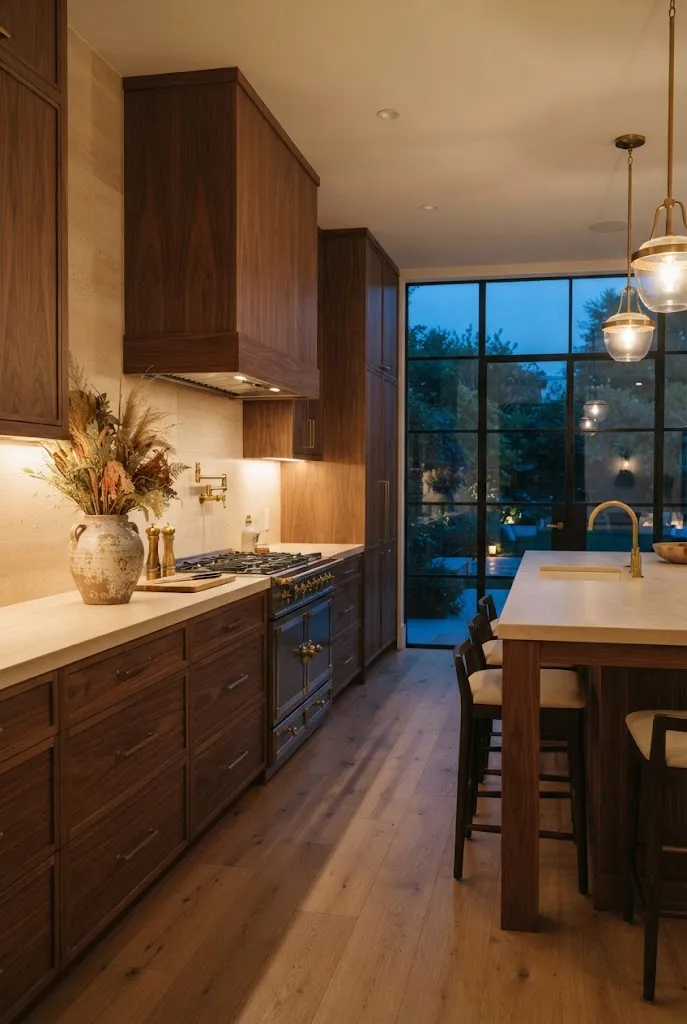
Dark, richly figured walnut cabinetry is a premium choice, and it works best when the light is kind to it. Low-glare LED strips tucked under the upper cabinets graze the counters and the wood face of the cabinets, so the room glows at night without the flat look of a single ceiling fixture.
Best For: Open-plan kitchens with enough daylight to balance dark wood
Investment: Premium
Visual Effect: A calm, enveloping evening atmosphere
Pair walnut with a lighter countertop, such as honed quartz or cream stone, so the room doesn’t turn heavy. A warm white LED, typically labeled around 2700K, keeps the wood from looking gray.
4. Renter-Friendly Warmth With Boards, Risers, and Trays
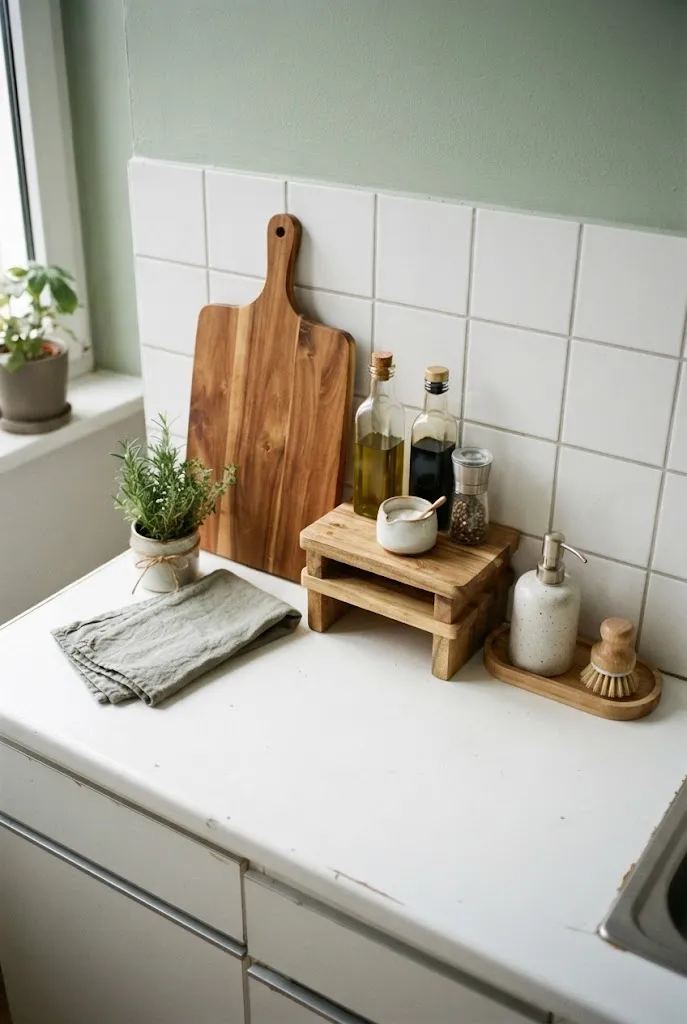
You don’t need to touch the cabinets to bring wood into a rented kitchen. Surface-level pieces can do most of the work:
- A large wooden cutting board propped against the backsplash
- A tiered wood riser for oils, salt, and everyday jars
- A simple wooden tray corralling the soap and sponge by the sink
- A wood-handled utensil crock instead of a plastic one
- A pair of wood-and-linen coasters or a small bread box
Group the pieces in one corner instead of scattering them around the room, and pick two or three wood tones that sit close together. Everything here is removable, so the kitchen looks the same when you move out. It simply feels more settled while you live there.
5. Cane or Rattan Panels on Cabinet Doors
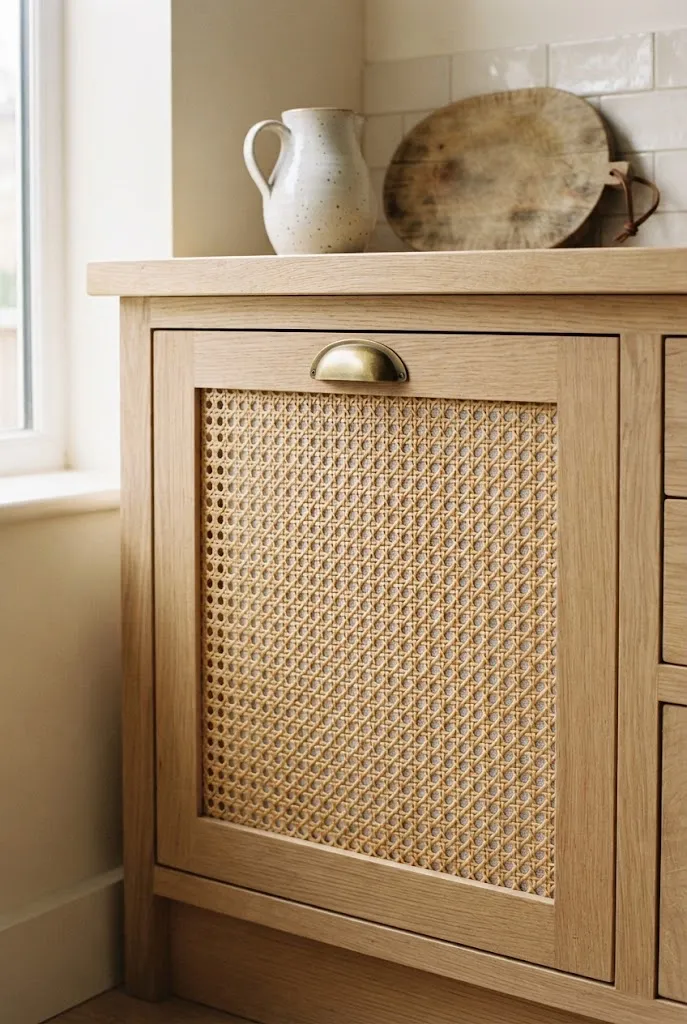
Woven cane inserts give flat cabinet fronts an immediate texture and let some light pass through. They work especially well on a sideboard-style lower cabinet, a pantry door, or a run of uppers around a window.
Use it where it won’t take much abuse. Open weave collects dust and cooking residue, so it belongs on dry-goods storage and well away from the range.
Editor’s Note: The cane is only as good as its backing. A light fabric, such as linen in a warm neutral, behind the weave hides what’s inside and keeps the doors from looking busy.
6. Linen Shades That Filter Window Light
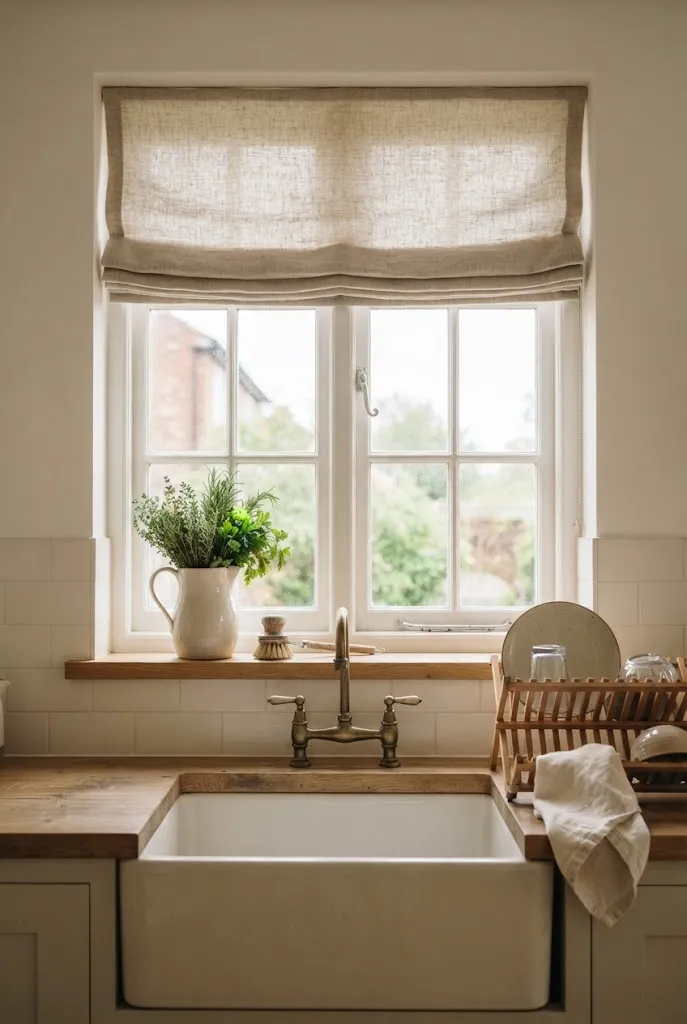
Bare glass produces the harshest light in a kitchen, especially at midday. Linen or linen-blend Roman shades diffuse that glare into something gentler and add a woven texture that reads as cozy even when the shade is raised.
A shade that’s almost translucent is usually the best match for a kitchen window, since you still get daylight. In steam or splash zones, a washable cotton-linen blend or a moisture-resistant alternative is a more practical choice than natural linen.
Quick Tip: Mount the shade a couple of inches above the frame and let it stack above the glass when raised, so it never blocks the view.
7. A Limewash-Finished Range Hood
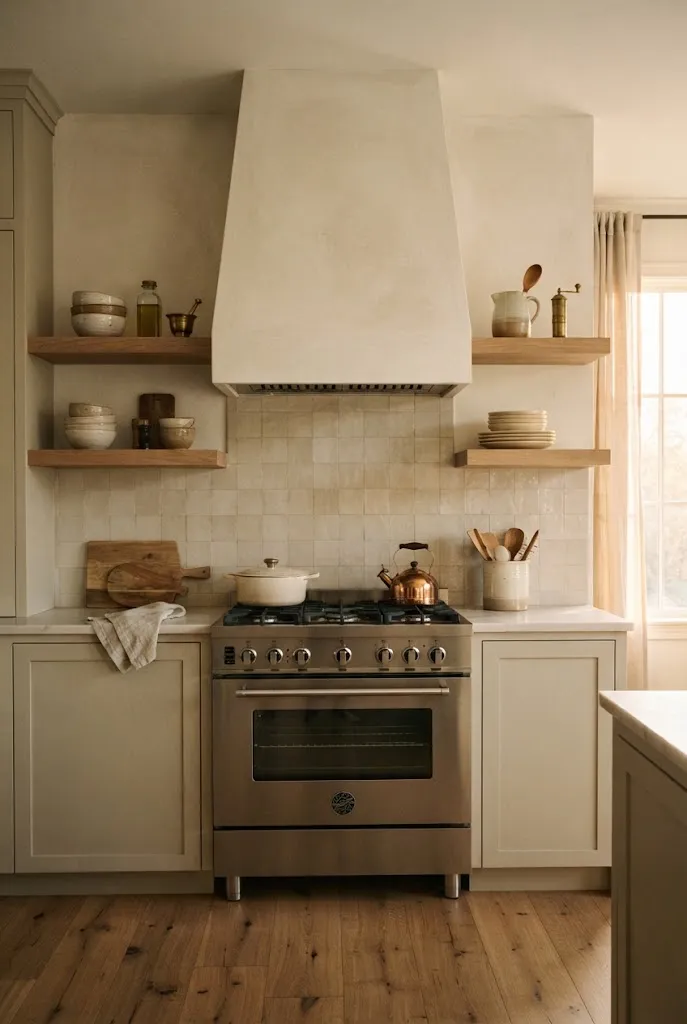
A tall range hood is the most obvious vertical element in many kitchens. Wrapping it in a textured, tonal plaster or limewash finish turns it into a quiet focal point instead of a stainless-steel block, and the soft, cloudy surface plays well against wood shelves or a wood island.
Choose a warm white, putty, or pale clay shade, and keep other surfaces simpler so the texture doesn’t compete. Limewash and plaster finishes are generally a mid-range to premium choice, depending on whether the hood is custom-built.
Do: Match the hood tone to the wall or choose a slightly deeper tone from the same color family.
Don’t: Add heavy decorative trim on top of a textured finish, since the surface already provides the interest.
8. Warm White Shaker Cabinets With an Oak Island
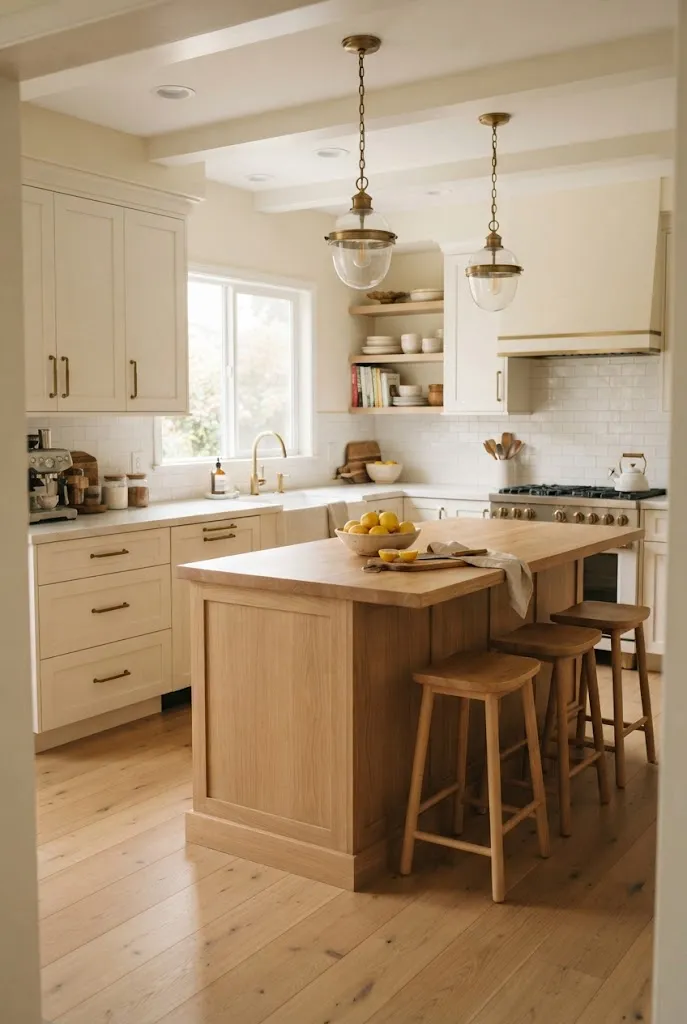
Many American kitchens already have white or cream shaker cabinets. The easiest way to warm them up is to give the island a wood personality of its own: an oak base, an oak-topped island, or a stained-wood end panel. Brass or aged-bronze pulls tie the two together.
It’s a good approach for resale-conscious owners, because the perimeter stays neutral while the island carries the warmth.
9. A Wood-Slat Breakfast Banquette
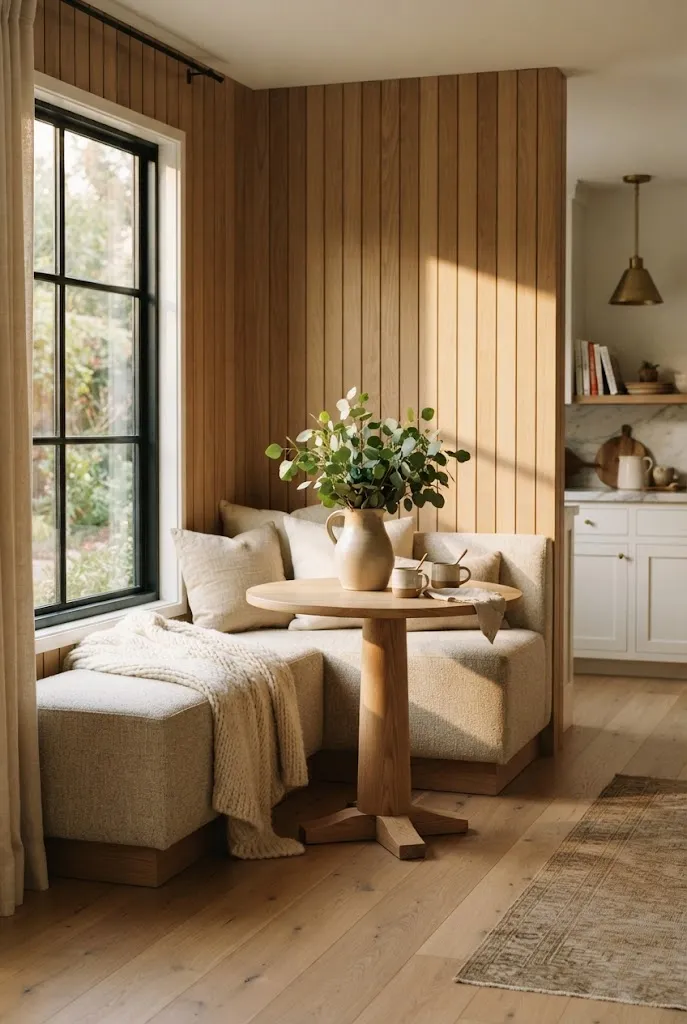
A built-in nook gives a kitchen a real corner to settle into. Vertical wood slats on the wall behind the bench add warmth and a light rhythm, and they pair well with a simple round table.
- Measure the corner. Allow enough room to slide in and out without bumping the table.
- Set the seat height and depth. A seat that’s too deep is uncomfortable for meals, so plan on a back cushion if it is.
- Add storage and finish. Hinged seat lids or drawers beneath turn the bench into pantry space.
- Layer the textiles. A fitted seat cushion and one or two woven pillows finish the corner.
The slat wall can be a straightforward carpentry project or a store-bought paneling product, so the cost varies widely.
10. Handmade-Look Tile in a Creamy Glaze
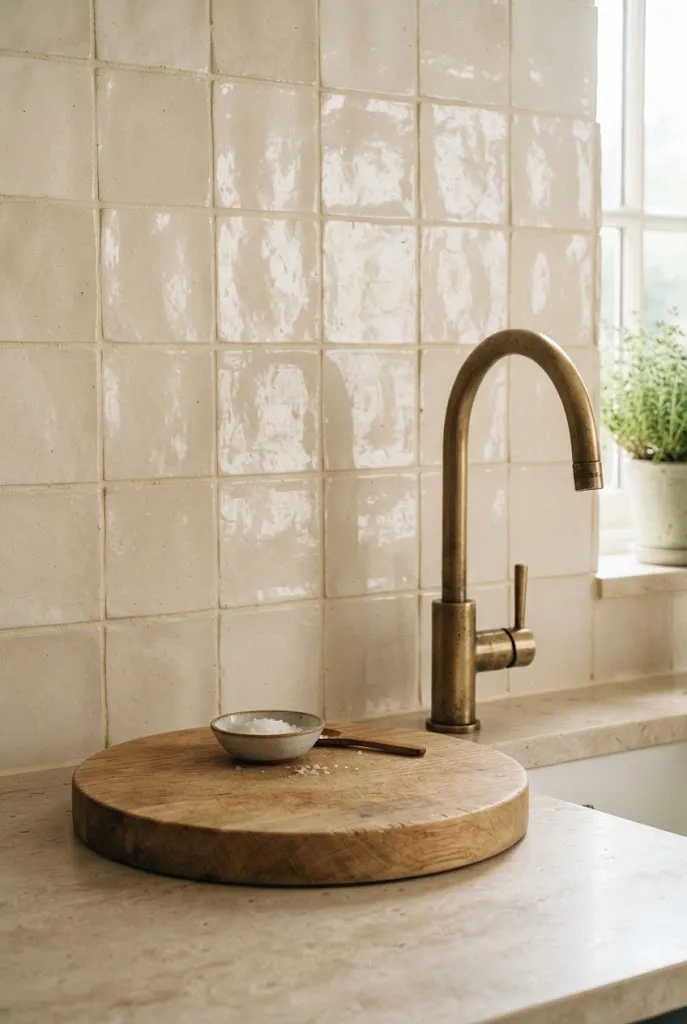
A glossy, slightly uneven cream tile catches light in a way flat white subway tile doesn’t. Each piece reflects a little differently, which adds depth and warmth next to wood shelves and a brass faucet.
| Option | Effect / Advantage | Best Fit |
|---|---|---|
| Handmade or artisan tile | Irregular surface, strong glaze variation | Owners with a remodel budget |
| Machine-made tile with a crackle or wavy glaze | Similar softness, more consistent sizing | Mid-range remodels |
| Peel-and-stick tile | Removable, no grout | Renters and temporary updates |
Choose a warm grout close to the tile color to keep the surface looking calm, rather than creating a grid of contrast.
11. Woven Pendants Over the Island
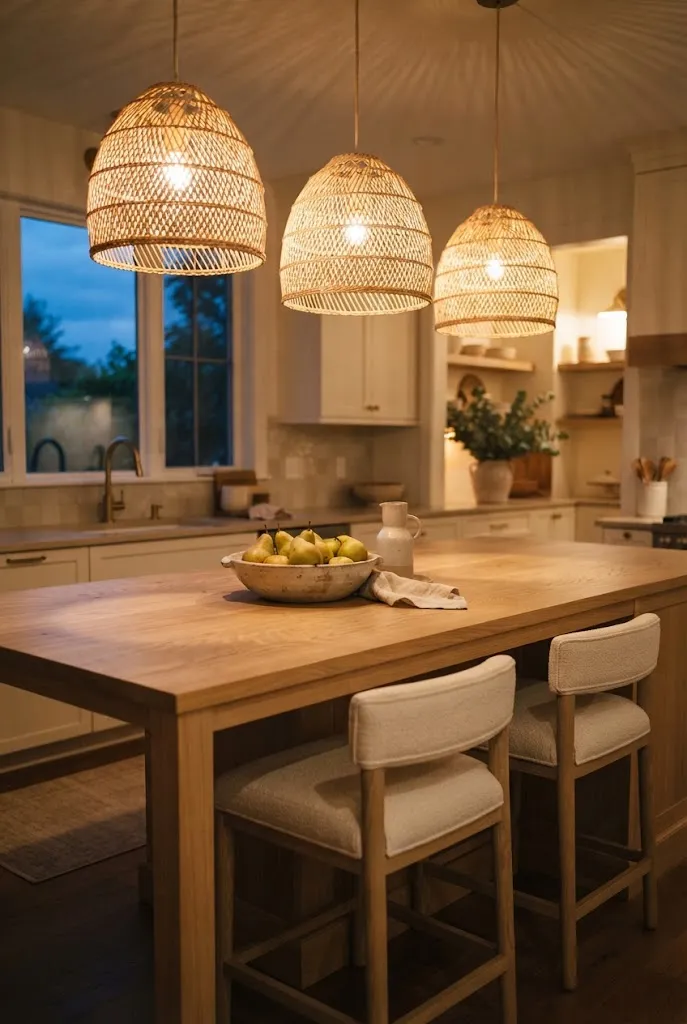
Pendants made of rattan, rope, or wood strips scatter warm, patterned light and add an organic texture at eye level. Two or three over an island read as a unified row, while one large pendant over a small table makes a quieter focal point.
Tips & Tricks
- Hang pendants so the bottom edge sits roughly 30 to 36 inches above the counter, then adjust for ceiling height and sightlines.
- Space them evenly along the island, and center the group on the counter rather than the room.
- Put them on a dimmer so you can lower the glow in the evening.
- Choose a warm white bulb, and check the manufacturer’s rating for shade materials.
12. A Plug-In Sconce Beside the Window
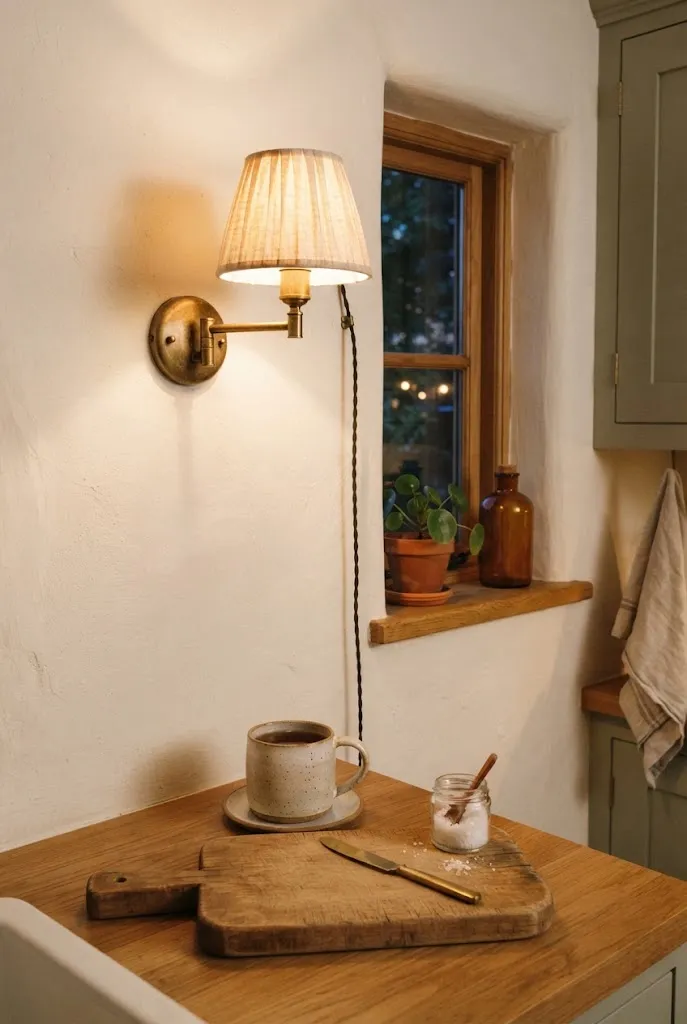
If your kitchen has no wall wiring for lighting, a plug-in sconce with a fabric shade and a cord cover is one of the cheapest ways to get a warm, low light source at eye level. Place it near a window, above an open shelf, or at the end of a counter where you’d normally rely on a harsh overhead fixture.
A small lamp-style light beside the sink makes evening cleanup feel less clinical, and it keeps a pleasant glow after the main lights are off.
13. Wood Beams Across the Ceiling
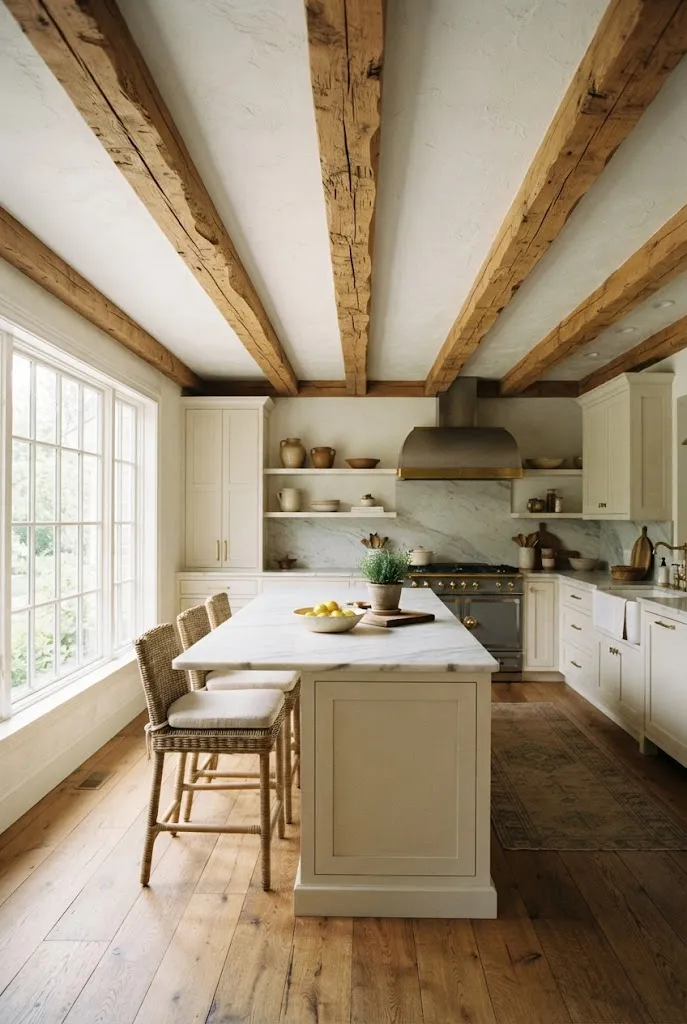
Beams add warmth overhead, where kitchens often feel flattest. Genuine reclaimed timbers are a premium option, and lightweight box beams are a more practical alternative that give a similar silhouette.
Editor’s Note: Structural changes should be handled by a qualified professional, and decorative beams still need to be fastened securely to the ceiling framing. In a lower-ceiling kitchen, slim beams and a lighter stain keep the room from feeling pressed down.
Pair them with plain walls and simple cabinetry so the ceiling stays the star.
14. Terracotta-Toned Floor Tile
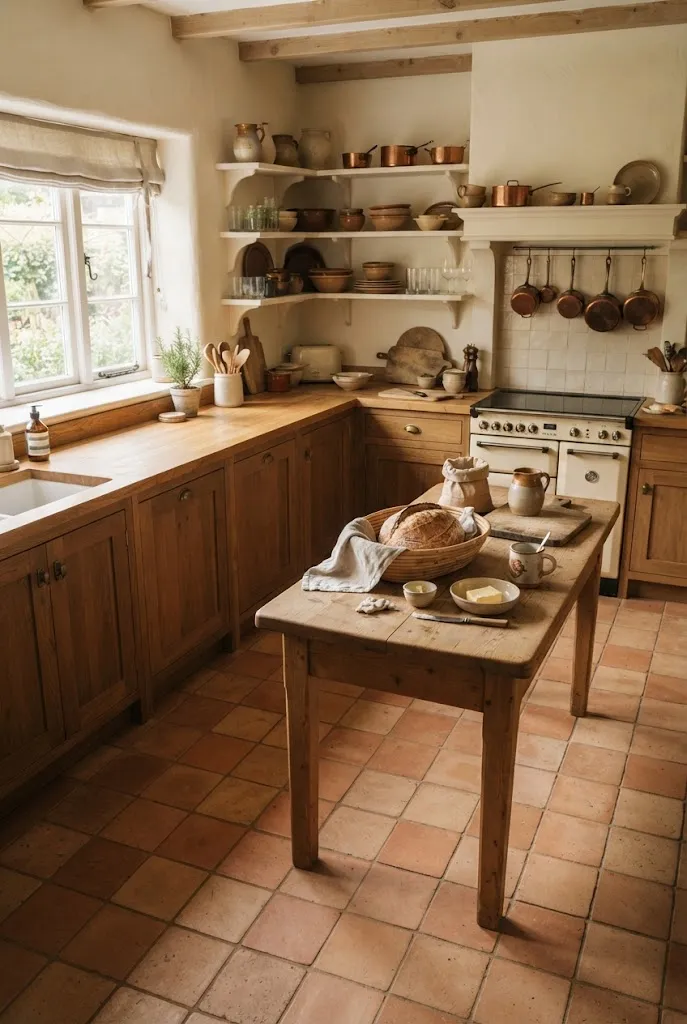
A floor in warm clay tones grounds a wood-heavy kitchen without turning it into a sea of brown. Matte terracotta-look tile, whether true terracotta or a ceramic or porcelain alternative, picks up the warmth of nearby oak and walnut and hides everyday dust better than a very pale floor.
Common Mistake: Choosing tile that matches the cabinet wood too closely.
Better Approach: Let the floor lean slightly redder or softer than the wood, so the two read as separate layers. Check slip resistance and sealing requirements for the specific product.
15. A Vintage Wood Hutch for Extra Storage
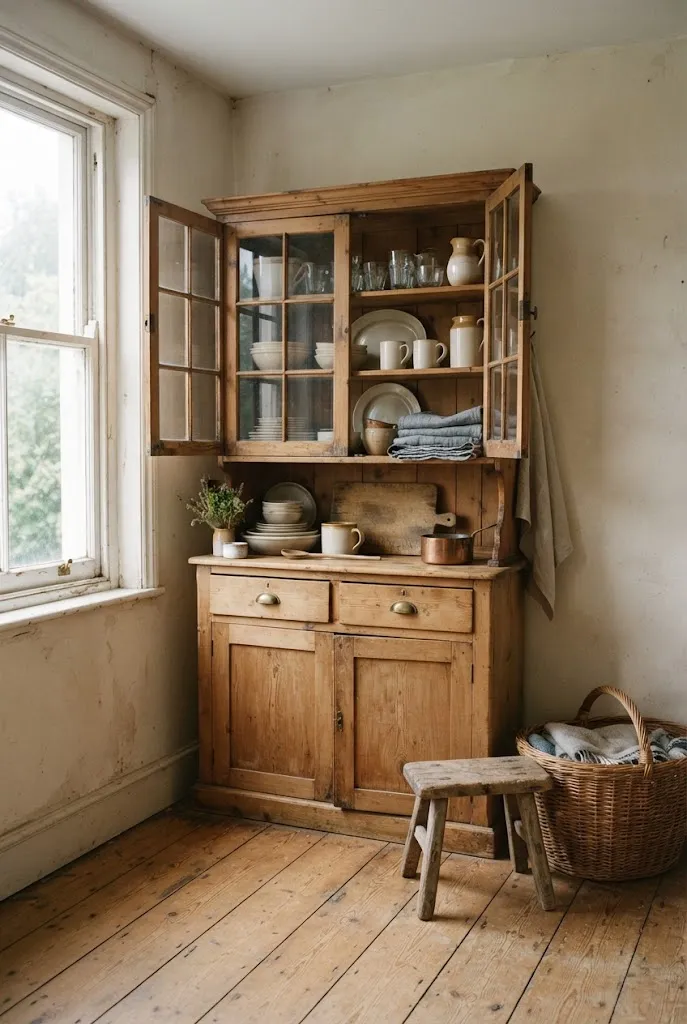
A secondhand hutch or sideboard gives a small or older kitchen storage that new cabinets cannot imitate: aged finish, character, and furniture-style proportions. It also supplies wood without a remodel.
Do: Check that the piece fits the wall, doors swing clear, and the floor is level.
Don’t: Fill every shelf. Leave some breathing room so the hutch still looks like a piece of furniture rather than a storage unit.
If the finish is worn, a gentle clean and a coat of wax or oil can refresh it without erasing the age.
16. Sage Cabinets Warmed by Oak Trim
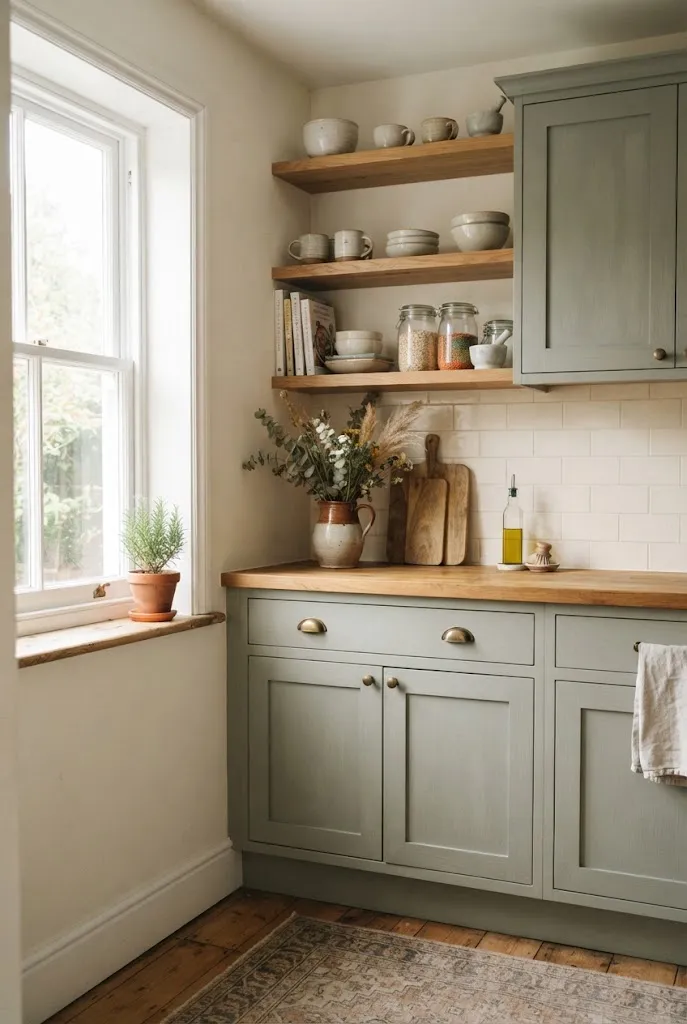
Sage green sits well next to wood because both come from the natural world. A muted, gray-leaning sage on the cabinets plus oak shelves, an oak range hood surround, or oak open framing gives you a calm kitchen that doesn’t rely on beige.
Paint is the accessible route here. Prep and primer matter more than the color on cabinet doors, so use a product made for cabinetry and give it time to cure before heavy use. Test swatches in morning and evening light, since green shifts a lot.
17. Fluted Wood Detail on the Island
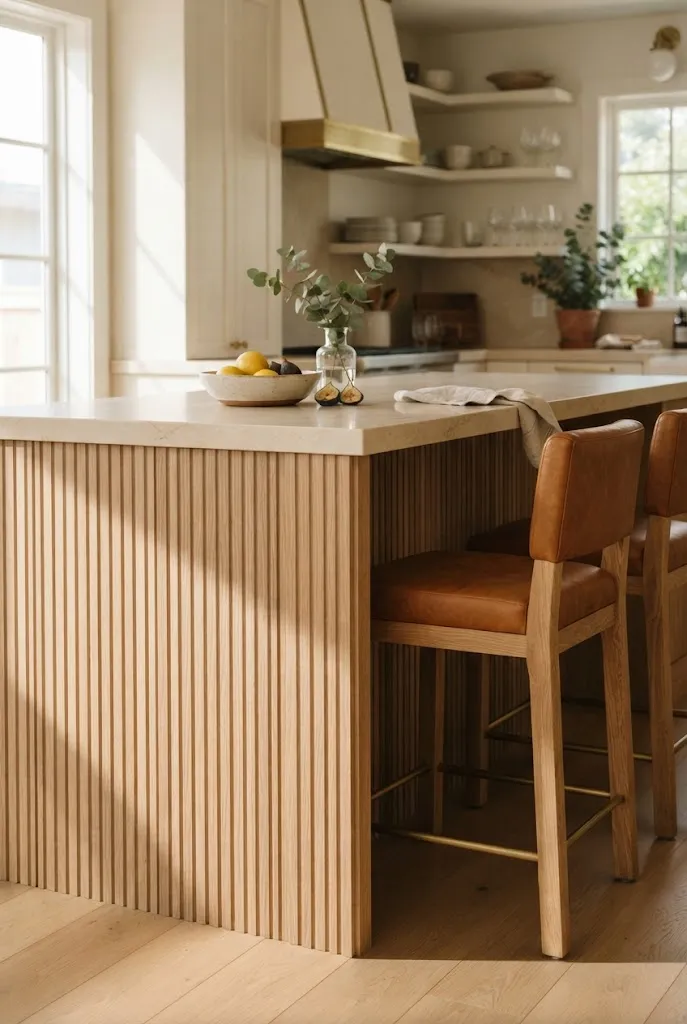
A fluted or reeded panel on the front of an island adds rhythm and shadow play to what is often a flat, visible surface. In oak or a warm walnut stain, it also gives the island a furniture-like quality.
Best For: Open kitchens where the island faces the living area
Investment: Moderate to premium, depending on whether panels are custom-milled
Visual Effect: Fine vertical shadows that change through the day
Keep the rest of the cabinetry simple so the fluting reads as a deliberate detail rather than a trend piled on trend.
18. A Coffee Corner on a Wood Tray With a Warm Lamp
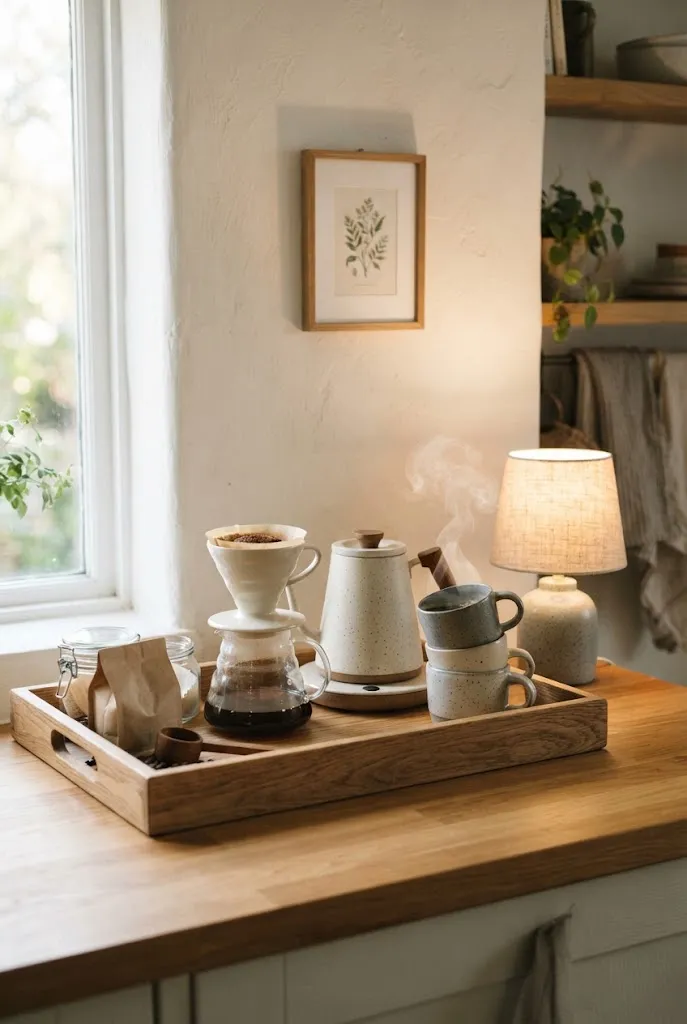
A small coffee station gives the kitchen a gathering point that feels deliberate. Set everything on one oak tray so it reads as a single unit and wipes clear easily, and add a small lamp for a glow that makes mornings and evenings feel gentler.
- A tray large enough to hold the machine or kettle, mugs, and a canister
- A compact lamp with a fabric shade near the wall
- A short stack of ceramic mugs and a small wooden spoon rest
- A framed print or small mirror above, if wall space allows
19. Layered Counter Styling With Wood, Stoneware, and Linen
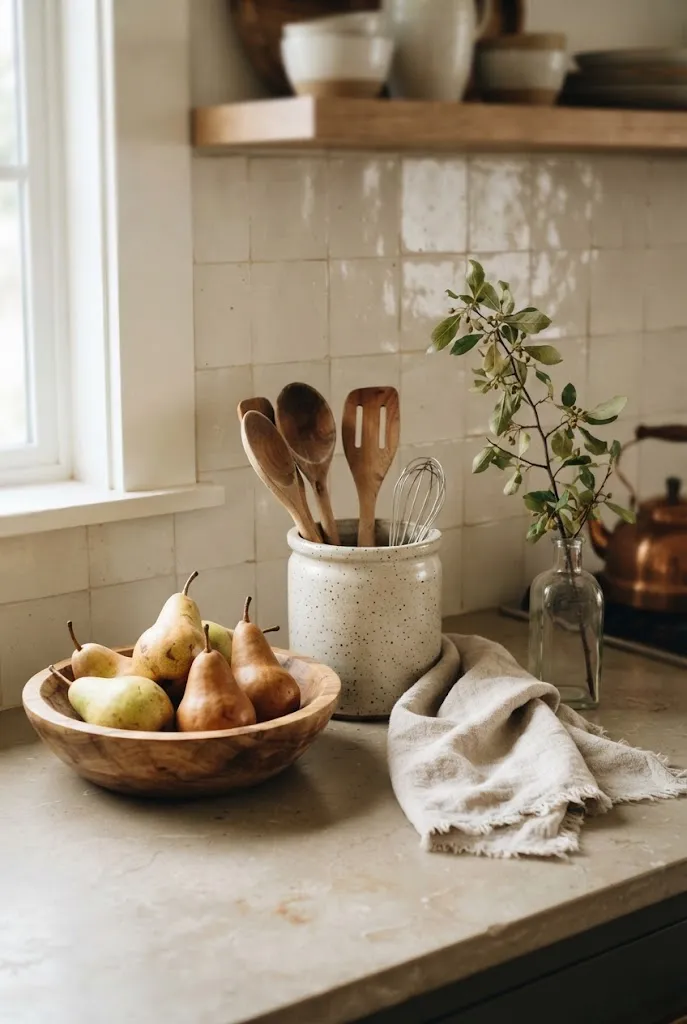
You can get a surprisingly cozy kitchen simply by arranging a handful of materials with some thought: a wooden bowl, speckled stoneware crocks, a folded linen towel, and a small plant or branch. Vary height so the eye moves up and down, and group things in odd numbers.
Quick Tip: Keep two-thirds of the counter clear for actual work. Styling should sit in the corner or against the backsplash, not across the prep area.
Rotate seasonal items, such as pears in fall or branches in spring, to keep the look fresh without buying more.
20. Glass-Front Uppers With Lit Interiors
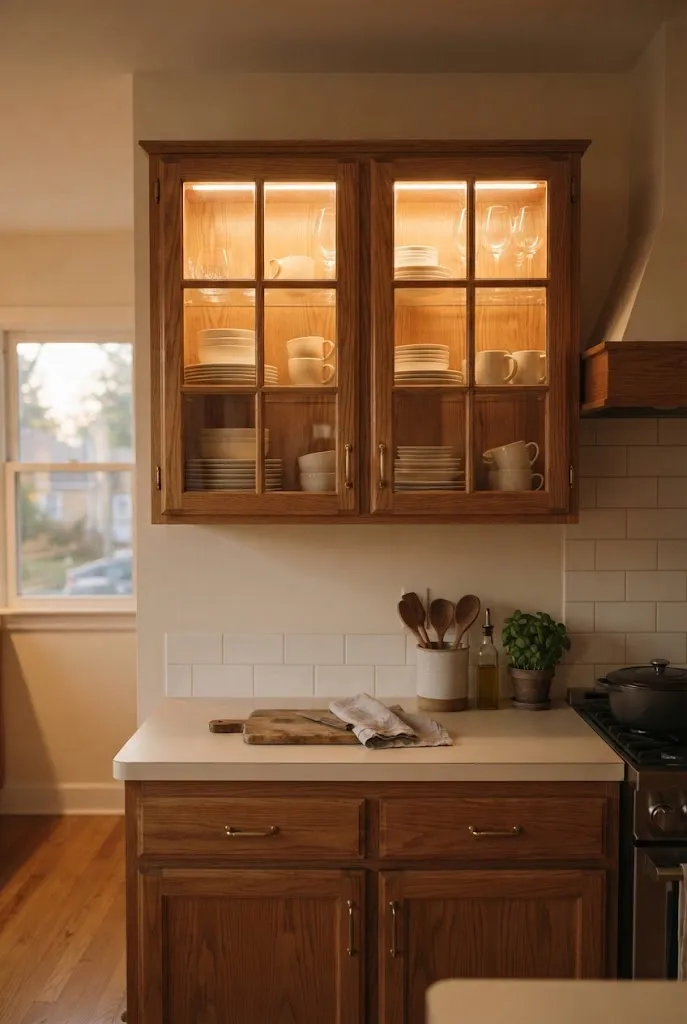
Swapping a few solid cabinet doors for glass-front doors in warm wood frames lets you show off ceramics and glassware, and a small LED strip inside lights them from within. It’s a moderate investment, since you’re changing doors and adding lighting rather than replacing cabinets.
Keep what’s inside organized and limited to attractive, similar items, since everything becomes part of the view. Frosted or seeded glass is a good compromise if full visibility feels too exposed.
21. A Woven Runner in Front of the Sink
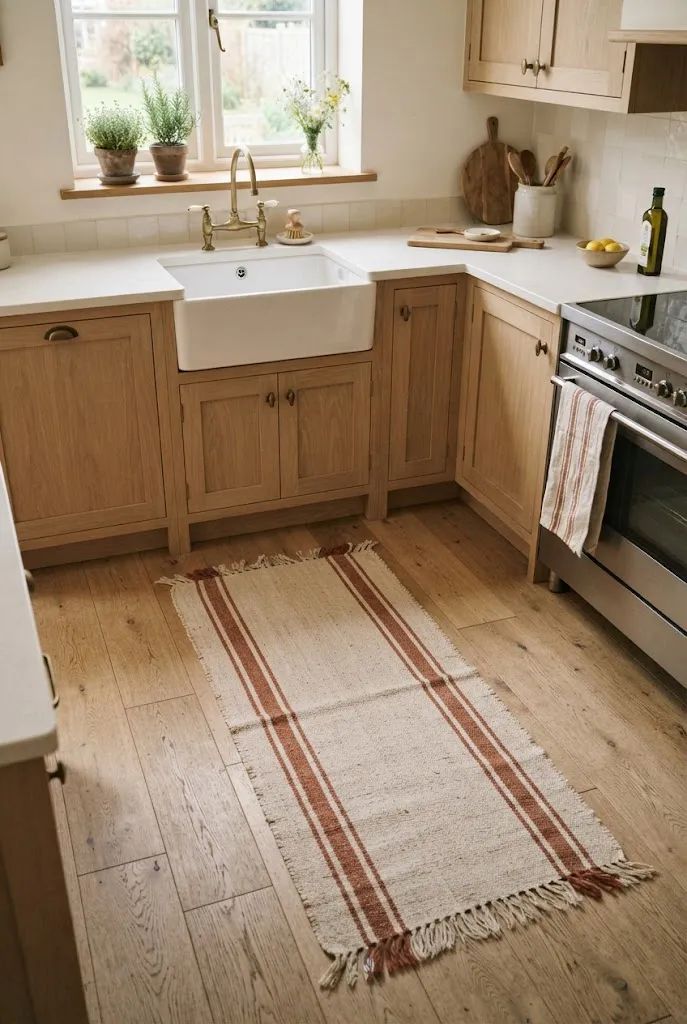
Hard flooring in a kitchen can feel cold underfoot and sound sharp. A flat-woven or washable runner in a warm neutral adds texture, absorbs a little noise, and comforts your feet where you stand the longest.
Choose a rug with a non-slip backing suited to your floor, and keep it thin enough that doors and drawers still open freely. Machine-washable rugs make sense in a kitchen where spills are likely.
22. A Slim Wood Rolling Cart in a Small Kitchen
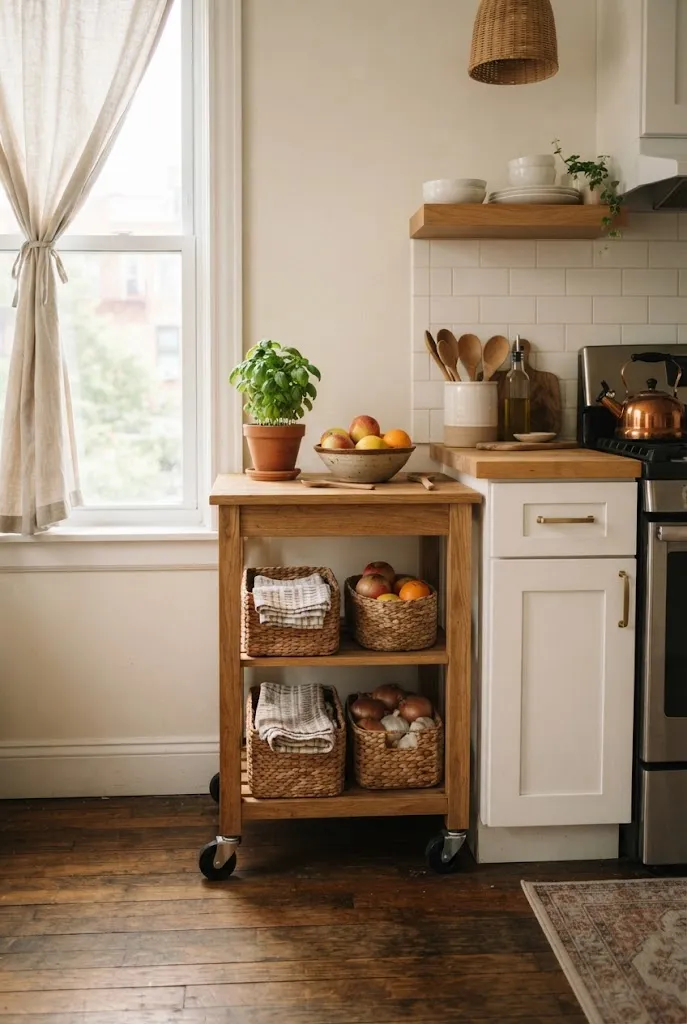
In a compact kitchen, a narrow wood rolling cart adds counter space, storage, and some furniture warmth without a remodel. It can sit beside the range during cooking and tuck against a wall afterward.
- Choose a cart with a solid top you’re comfortable chopping or setting hot dishes on, within its manufacturer’s guidance.
- Look for lockable casters if your floor is uneven.
- Use the lower shelf for baskets that hide small items.
Style the top lightly, with a plant or a bowl of fruit, so it still works as a prep surface.
Where to Start
You don’t need all 22 ideas. Start with the light, since it changes how every other material looks: soften the window, add a lamp, and dim the overheads. Then bring in one wood element that fits your budget, whether that’s a cutting board, a shelf, or a new island. Add texture last, through a runner, linen, or woven fixtures, and live with the room for a few weeks before adding more.