25 Living Room Ideas That Make Your Space Feel Warm & Inviting
Introduction
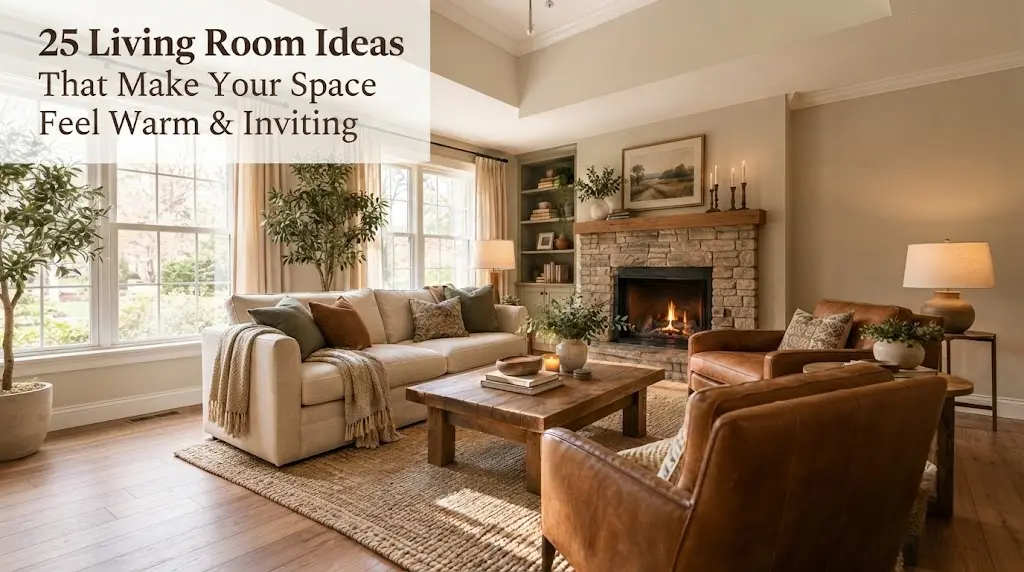
A comfortable living room should feel welcoming the moment you walk through the door. The right combination of furniture, lighting, color, texture, and personal details can make even a modest room feel relaxed and thoughtfully designed. These living room ideas range from simple styling changes to more substantial upgrades, so there are options for apartments, rentals, suburban homes, and larger spaces. Think beyond matching furniture sets: layered textiles, warm wood, soft lighting, natural materials, greenery, and intentional furniture placement can all contribute to a room that feels collected rather than overly decorated. The goal isn’t to make everything perfectly coordinated. It’s to create a space where people naturally want to sit, talk, read, relax, and spend time together.
1. Layer a Soft Neutral Color Palette
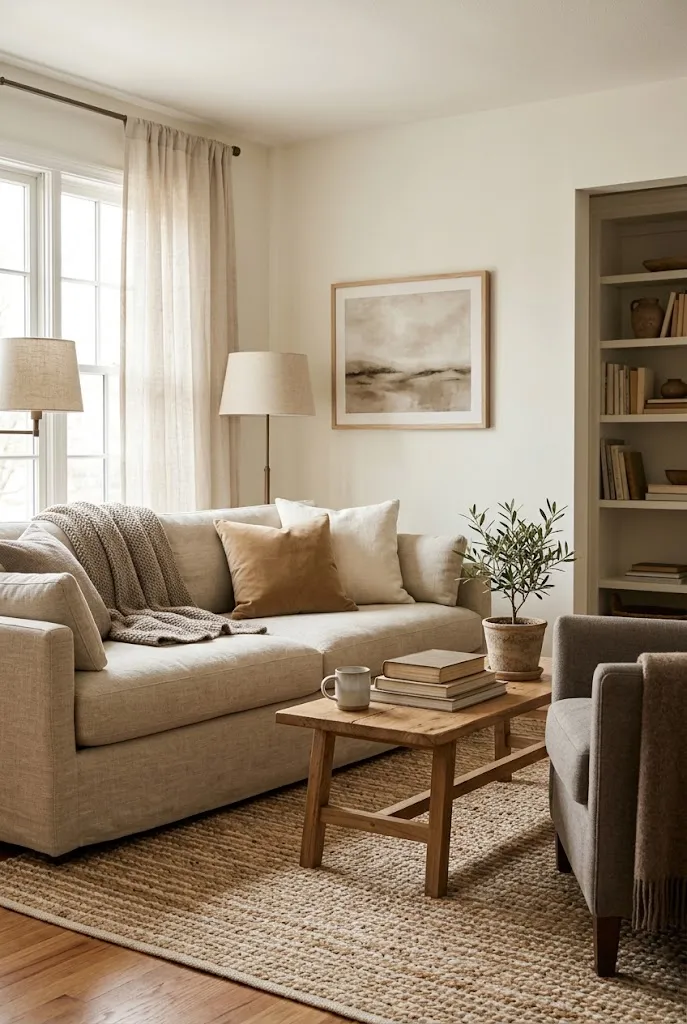
Warm neutrals are an easy foundation for a living room that feels calm without becoming flat. Instead of using one shade of beige throughout the entire space, combine several related tones such as ivory, oatmeal, taupe, warm gray, camel, and soft brown.
Use the palest shade on larger surfaces and introduce deeper tones through furniture, pillows, rugs, or artwork. The subtle contrast gives the room dimension while keeping the overall atmosphere relaxed.
2. Bring in Warm Wood
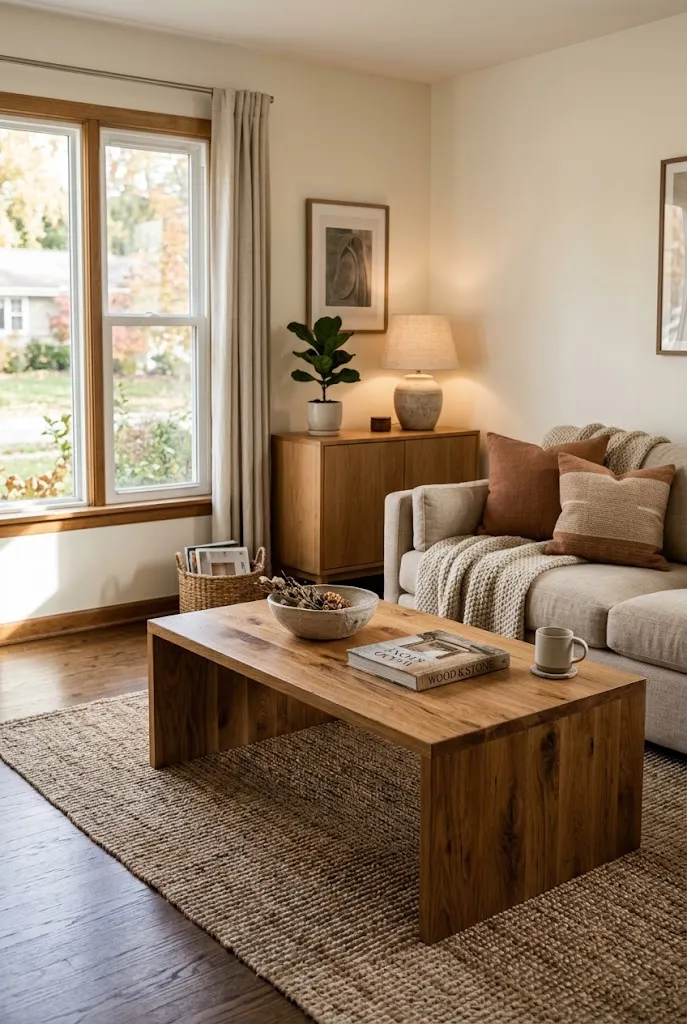
Wood immediately adds visual warmth because of its natural grain and variation. A wooden coffee table, media console, side table, exposed shelving, or even a small stool can prevent a neutral living room from feeling overly sterile.
You don’t need every wooden element to match. A combination of oak, walnut, or other natural wood tones can create a more collected appearance when the undertones work together.
For a smaller room, choose one substantial wood piece rather than filling every surface with accessories.
3. Add an Oversized Cozy Rug
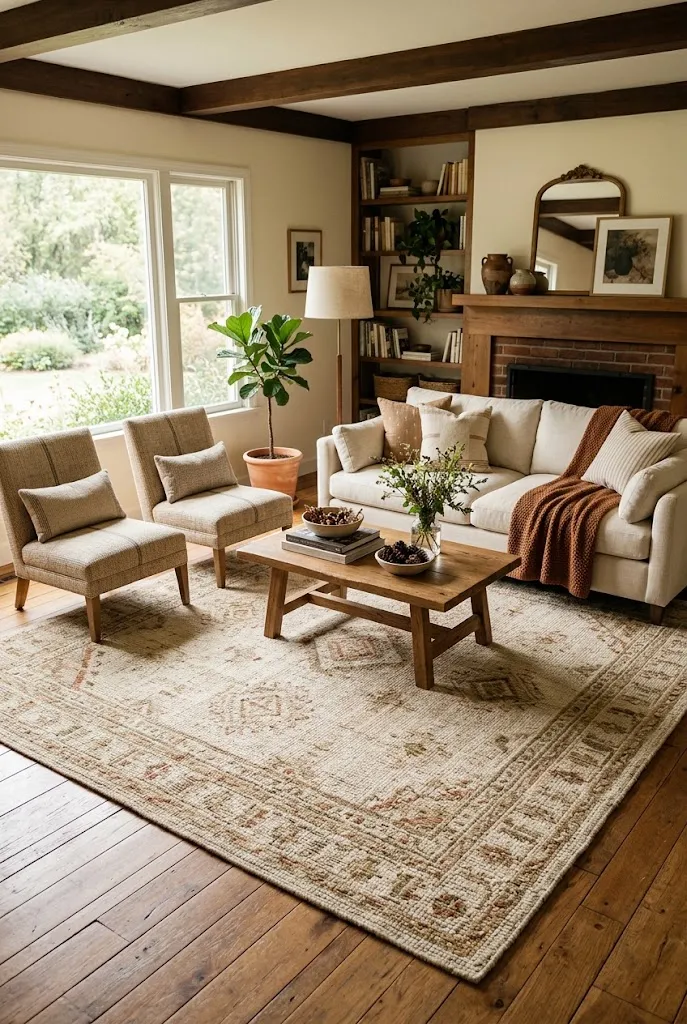
A large rug can visually connect the seating arrangement while making the room feel softer and more grounded. Whenever possible, choose a size that allows at least the front legs of the main seating pieces to sit on the rug.
For a warm atmosphere, look for wool, wool-look, cotton, jute blends, or other tactile surfaces in muted colors. A subtle pattern can hide everyday wear better than a completely solid pale rug.
4. Create a Conversation-Friendly Furniture Layout
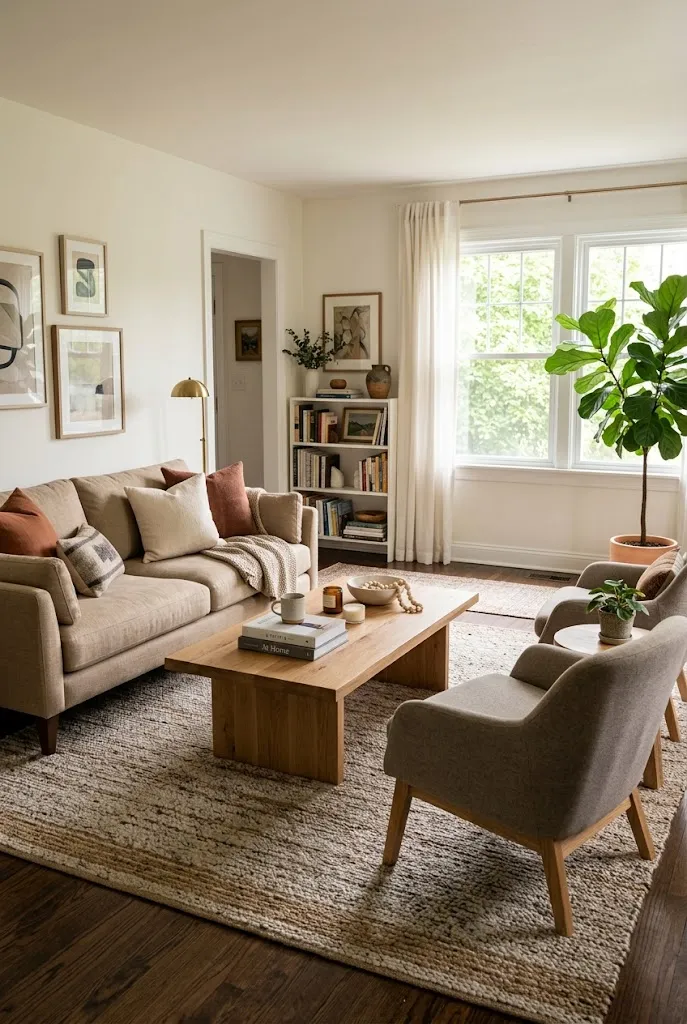
Furniture placement can change the feeling of a living room more dramatically than adding decorations. Instead of pushing every piece against the walls, consider creating a central seating arrangement that encourages conversation.
A sofa facing two chairs can work beautifully in a medium-sized room. In larger spaces, a pair of chairs angled toward the sofa can make the arrangement feel social without blocking natural walking paths.
Leave enough room to move comfortably between the seating, doorway, coffee table, and other frequently used areas.
5. Use Lamps Instead of Relying Only on Overhead Lighting
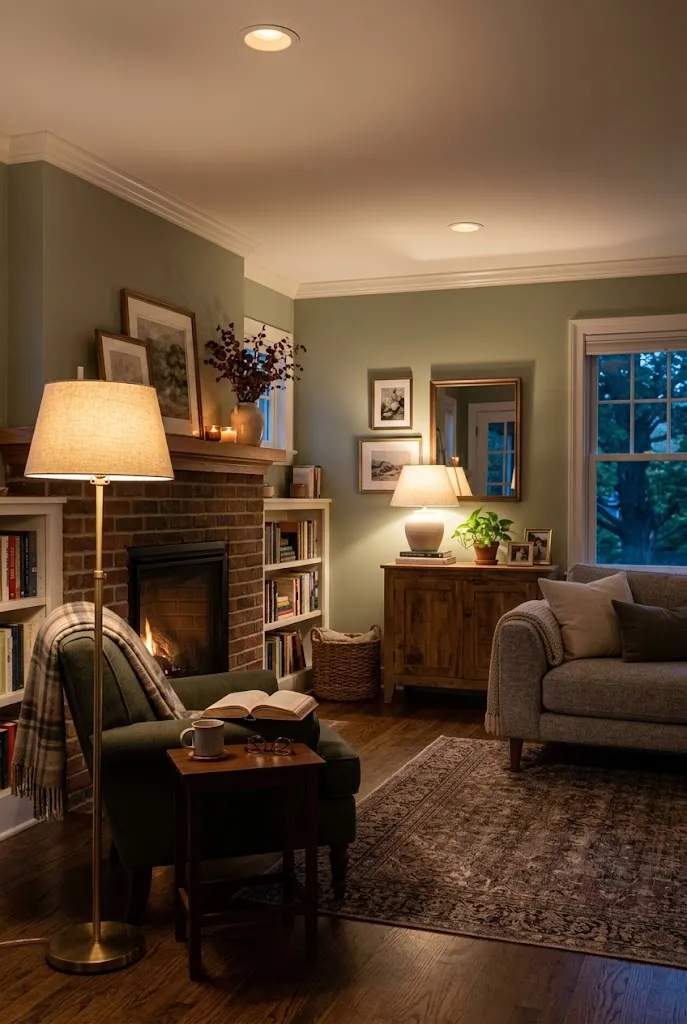
A single ceiling fixture rarely creates the warmest evening atmosphere. Layer the room with table lamps, floor lamps, wall sconces, or other practical lighting where appropriate.
Place lighting at different heights so the room doesn’t appear evenly illuminated from one source. A floor lamp beside a reading chair and a table lamp on a console can create comfortable pools of light.
Warm-toned bulbs can also make textiles and wood appear richer in the evening.
6. Add Layers of Throw Pillows
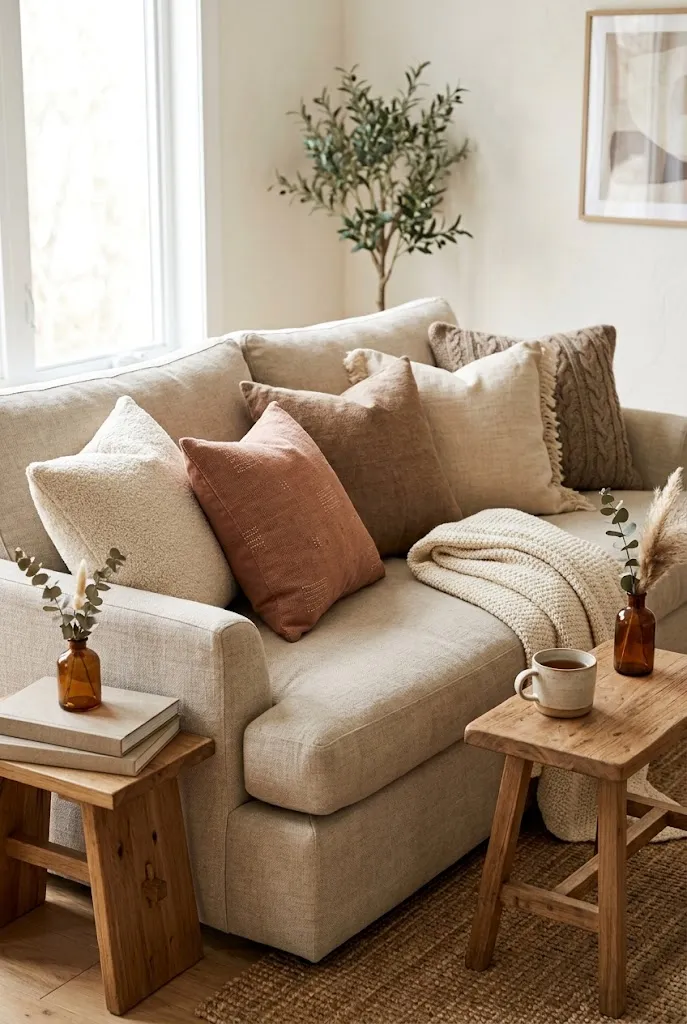
Throw pillows are one of the simplest ways to make a sofa feel more inviting. Instead of buying a perfectly matching set, combine a few fabrics and shapes within a related color palette.
Try linen with boucle, cotton with velvet, or a subtle woven pattern beside a solid texture. Use larger pillows toward the back and smaller decorative cushions toward the front.
The goal is comfortable layering rather than filling every available inch of the sofa.
7. Introduce Natural Greenery
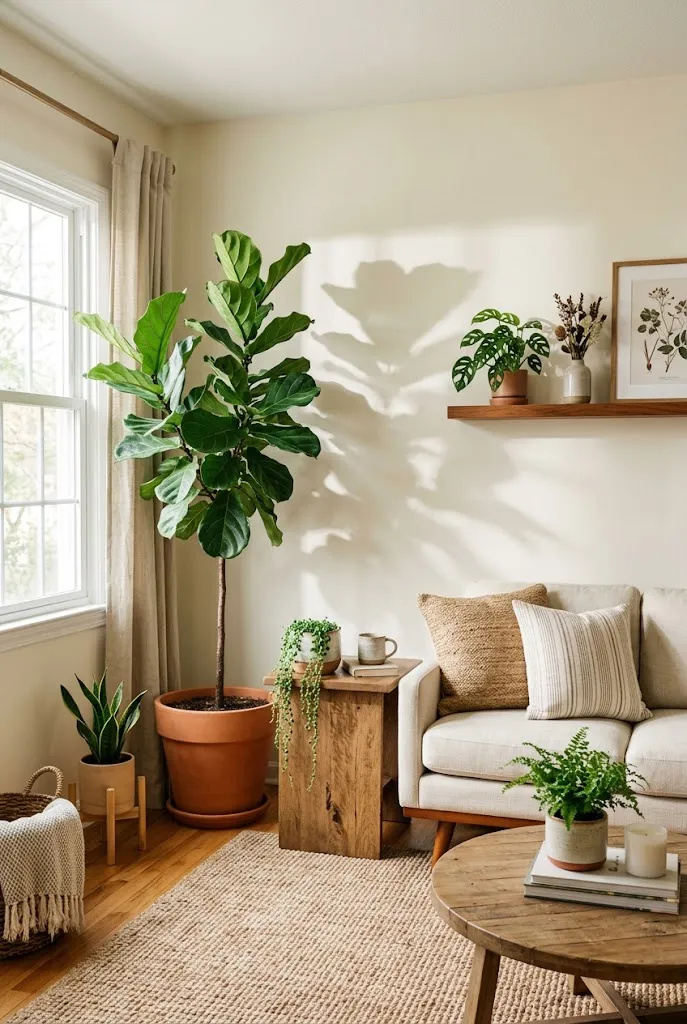
Plants can make a living room feel more alive without requiring a major decorating project. A tall plant beside a window, a smaller plant on a shelf, or a simple branch arrangement can break up a room filled with hard surfaces.
Choose plants according to the actual light and care conditions available rather than selecting purely for appearance. A beautiful plant in the wrong location will be difficult to maintain.
8. Choose Curtains That Soften the Windows
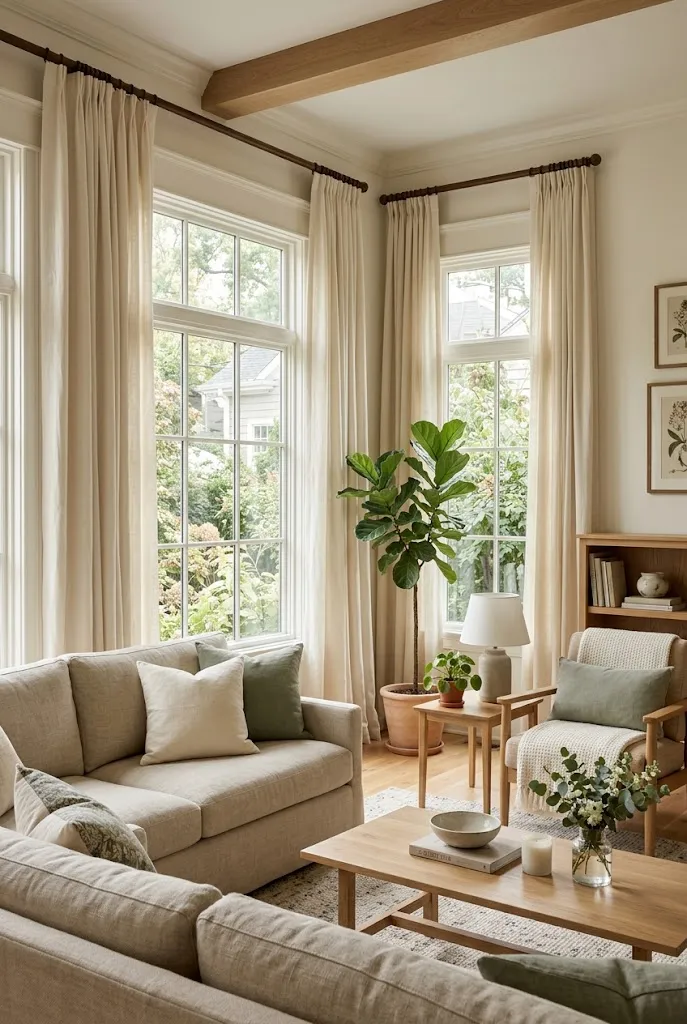
Window treatments can dramatically affect the softness of a room. Lightweight linen-look or cotton curtains allow natural light to filter through while adding vertical texture.
For a more spacious appearance, hang curtains high and allow them to extend generously beside the window. A warm white, cream, flax, or soft taupe fabric works easily with many living room palettes.
Avoid choosing curtains that stop awkwardly above the floor unless the room requires a different treatment.
9. Build a Cozy Reading Corner
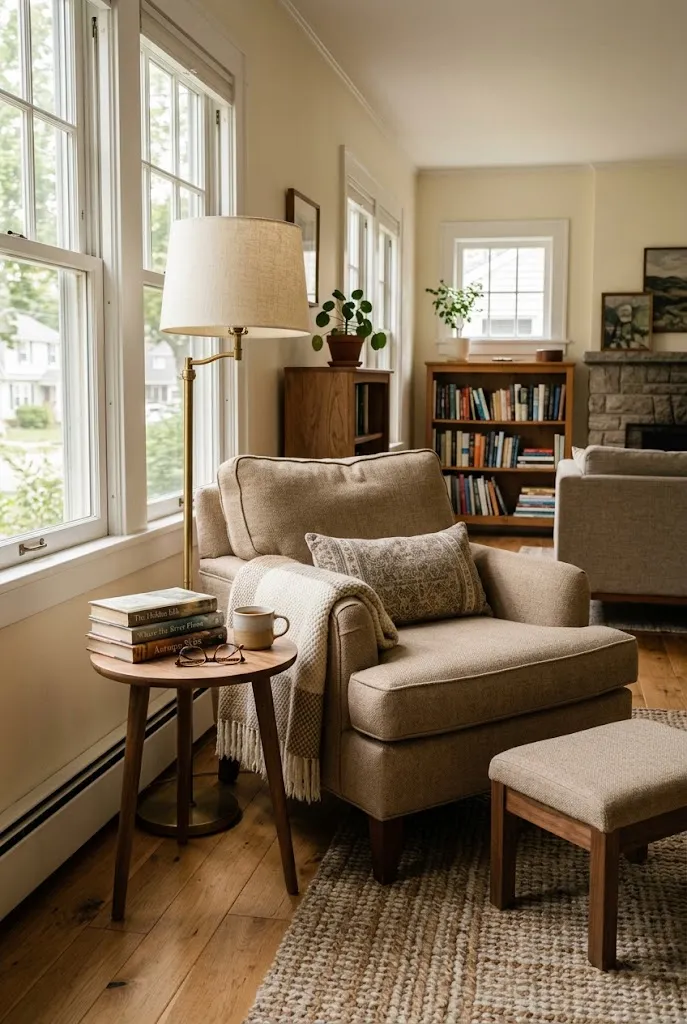
A living room becomes more useful when it includes a small area dedicated to a specific activity. A comfortable chair, floor lamp, side table, and small stack of books can create an inviting reading corner without requiring a separate room.
Position the chair near natural light when possible, but avoid placing it where it interrupts the main walkway. A small ottoman can provide extra comfort without taking up much space.
10. Mix Textures Instead of Adding More Decor
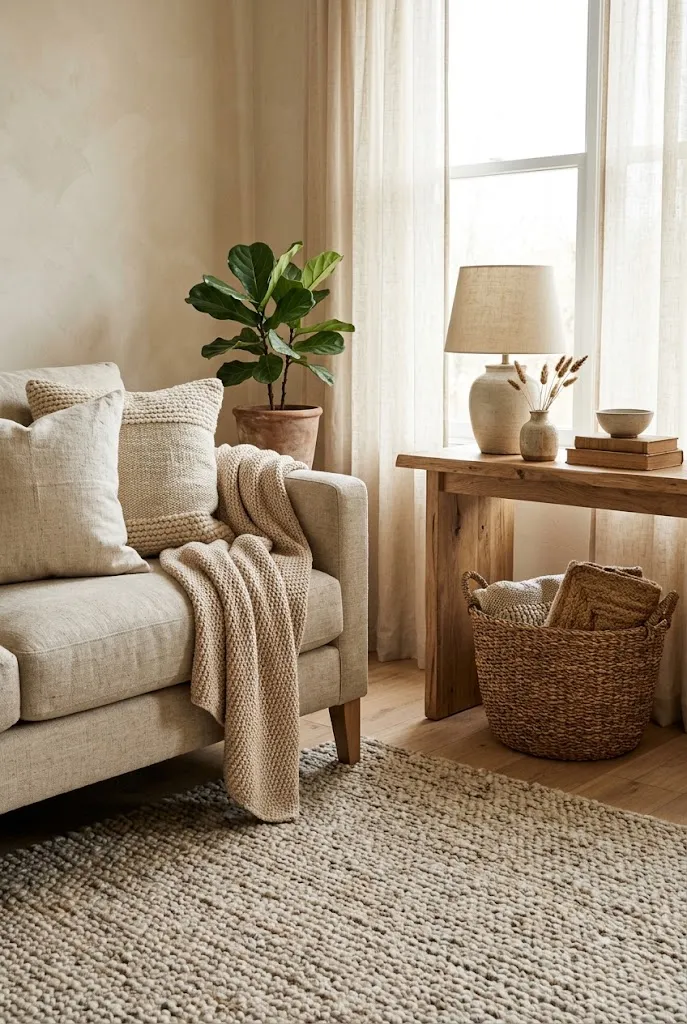
Texture can create visual richness without making a room cluttered. Combine smooth painted walls with woven baskets, a nubby rug, linen cushions, wood furniture, ceramic objects, and soft upholstery.
This approach is especially useful in monochromatic rooms where color contrast is intentionally limited.
11. Create a Gallery Wall With Personal Character
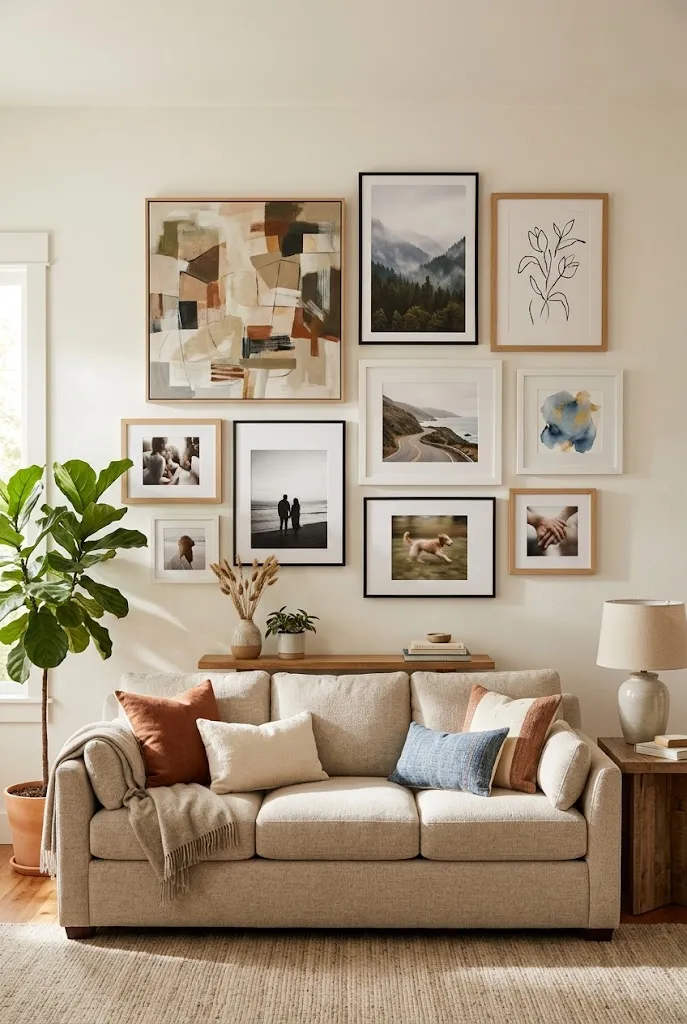
A gallery wall can make a living room feel more personal without requiring expensive artwork. Combine family photographs, landscapes, abstract pieces, vintage-inspired prints, or simple line art in a deliberately varied arrangement.
Use frames that share a visual relationship without necessarily matching perfectly. Wood, black, brass, or neutral frames can work depending on the surrounding furniture.
Lay out the arrangement on the floor first to experiment with spacing.
12. Warm Up the Room With a Fireplace Focal Point
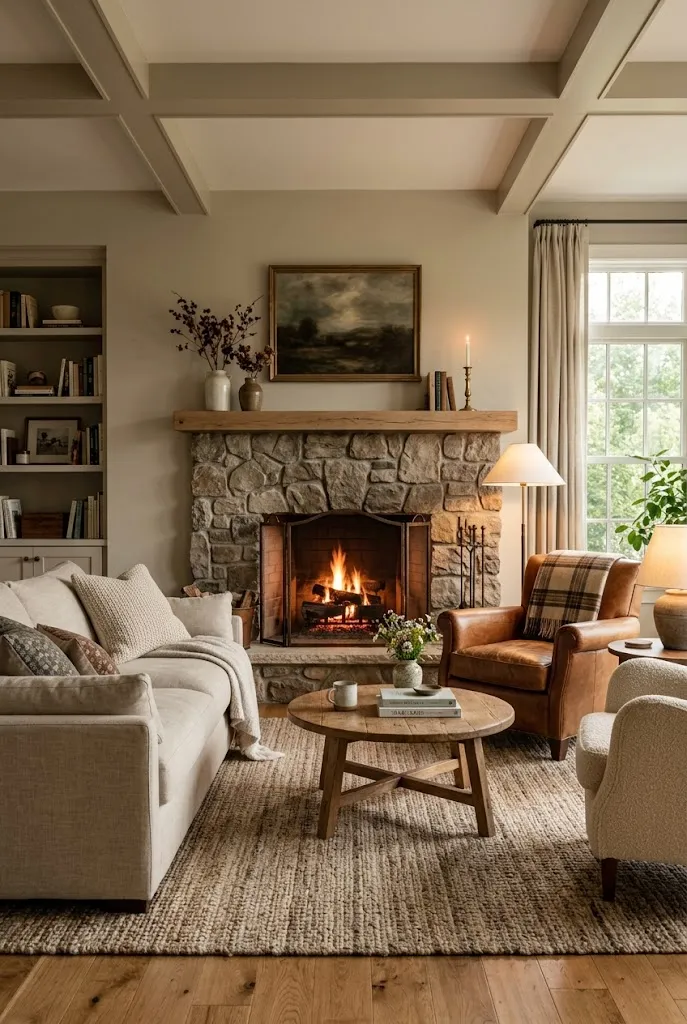
A fireplace naturally creates a gathering point, but it doesn’t need to dominate the room with elaborate decoration. Keep the mantel relatively restrained and let the architecture provide the visual anchor.
For a traditional home, natural stone or painted brick can reinforce the character of the room. In a more contemporary space, simple plaster, tile, or clean-lined millwork can create a quieter effect.
Arrange seating so the fireplace remains visible without sacrificing conversation or television viewing needs.
13. Use a Round Coffee Table to Soften Hard Lines
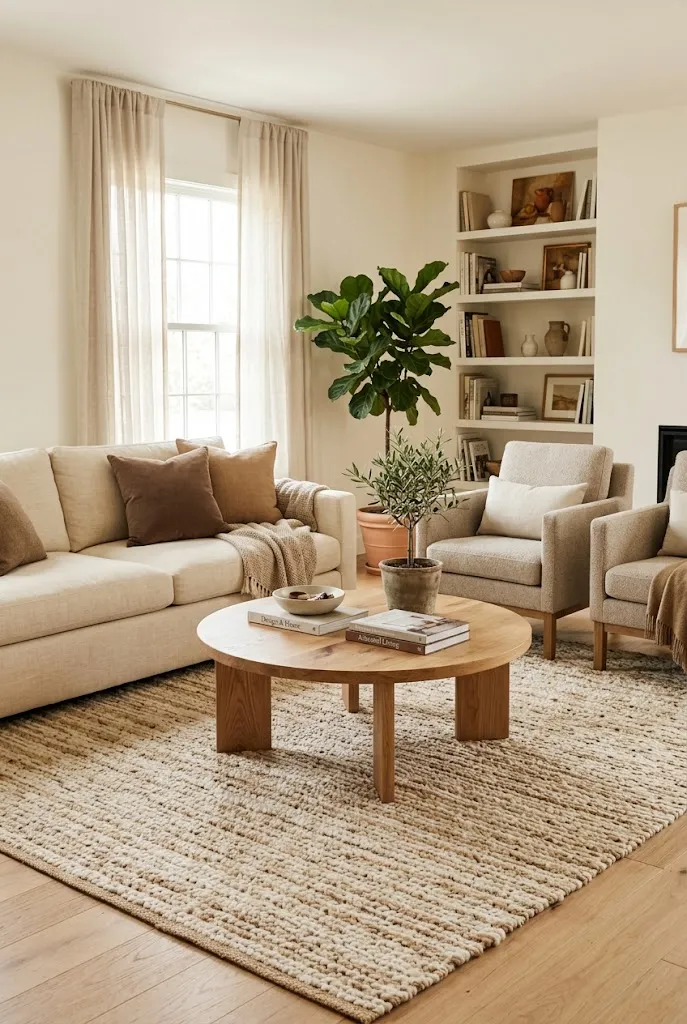
A round coffee table can introduce a softer shape into a room dominated by rectangular sofas, media consoles, windows, and rugs.
Beyond aesthetics, rounded corners can be practical in homes where people frequently move around the coffee table. Choose a table that leaves comfortable circulation space around it.
Wood provides warmth, while stone, glass, or painted finishes can create different visual effects.
14. Add a Soft Throw to the Sofa
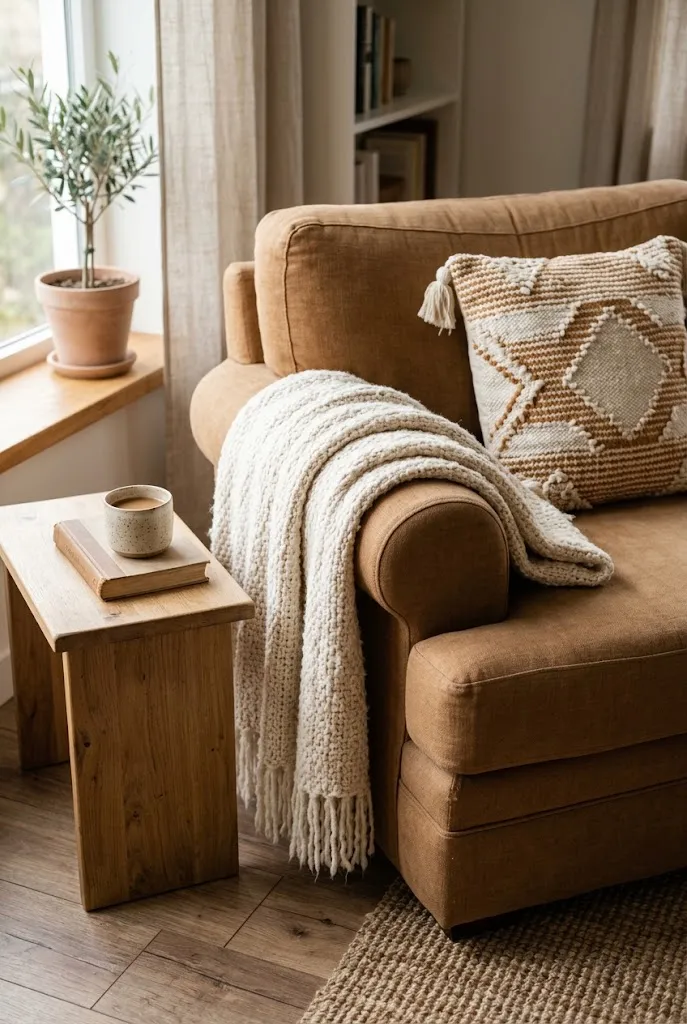
A casually draped throw can make a room feel more relaxed with almost no structural change. Choose a fabric appropriate to the season and the rest of the room: chunky knit for colder months, cotton or linen for warmer weather.
Avoid arranging the blanket too perfectly. A natural fold over one arm or across the back of a sofa creates the impression that the room is meant to be used.
15. Give the Coffee Table a Simple Styling Moment
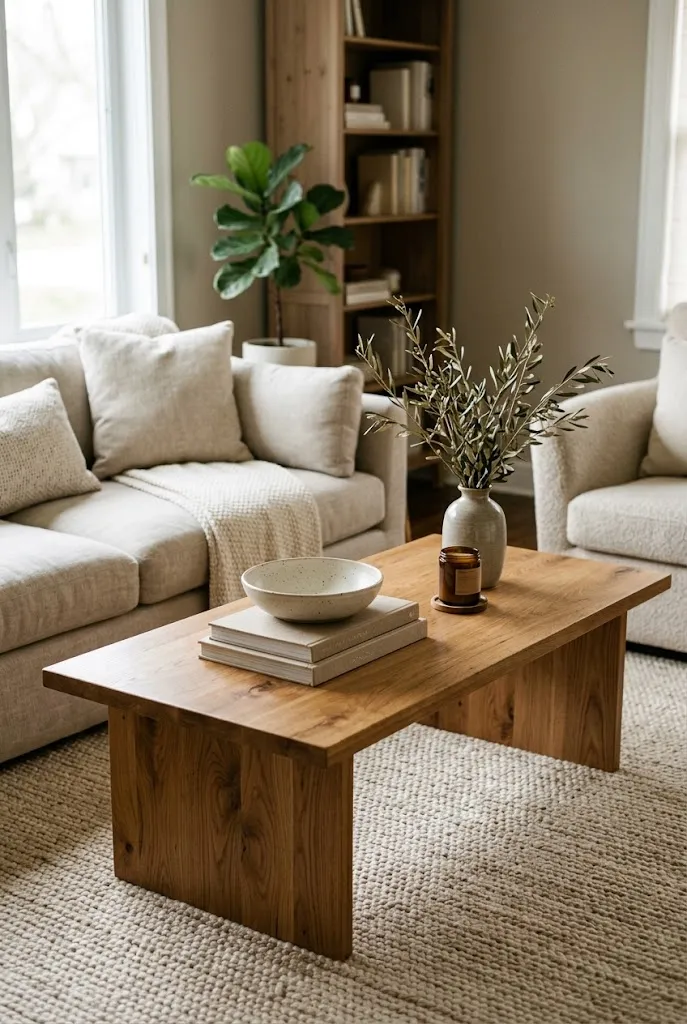
A coffee table doesn’t need to be covered with decorative objects to look finished. A small tray, low vase, candle, stack of books, or ceramic bowl can be enough.
Keep taller pieces away from the main sightline if people regularly sit around the table. The best styling should look attractive without becoming an obstacle to conversation.
16. Add a Warm Accent Chair
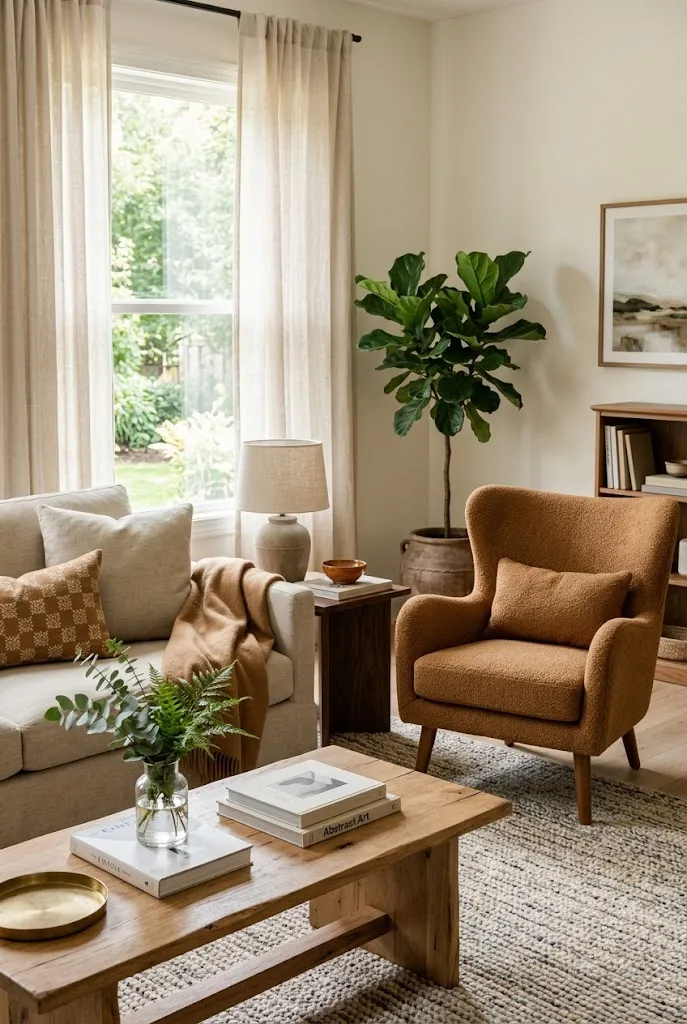
A single accent chair can introduce color or texture without requiring a complete furniture replacement. Consider rust-colored upholstery, caramel leather, olive fabric, warm plaid, or a textured cream boucle depending on the existing room.
Place it where it adds another useful seat rather than simply filling an empty corner.
17. Use Built-In Shelving for Warm, Organized Display
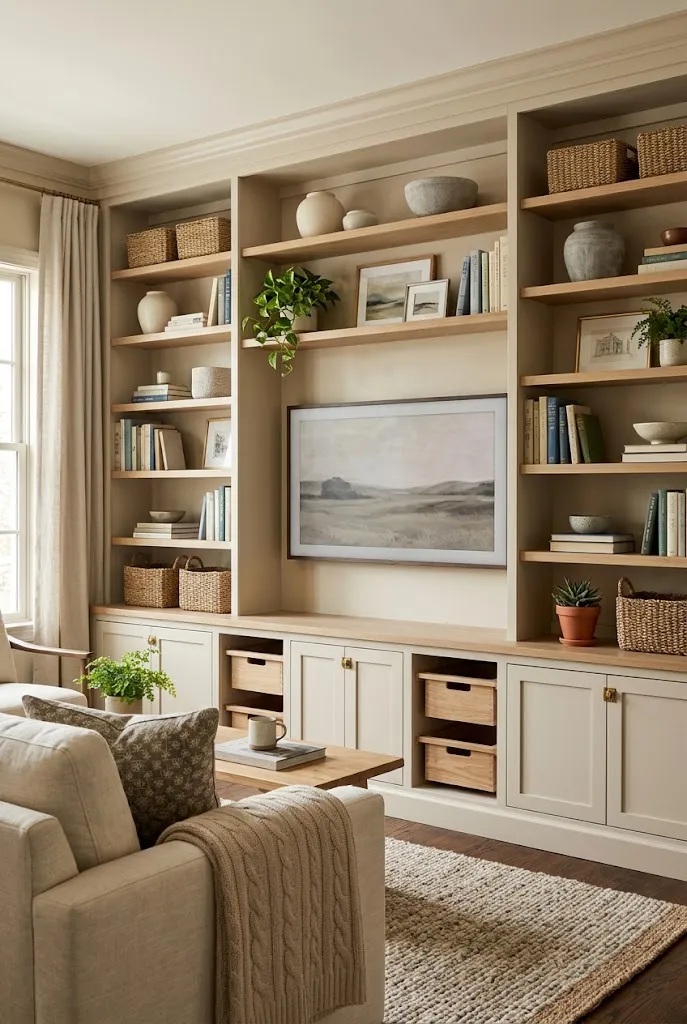
Open shelving can make a living room feel more personal when it combines useful storage with carefully edited objects. Books, baskets, ceramics, framed art, plants, and a few meaningful pieces can create depth.
For built-ins, leave some negative space instead of filling every shelf. A mixture of horizontal and vertical objects helps prevent the display from becoming visually repetitive.
18. Try a Tonal Earthy Color Scheme
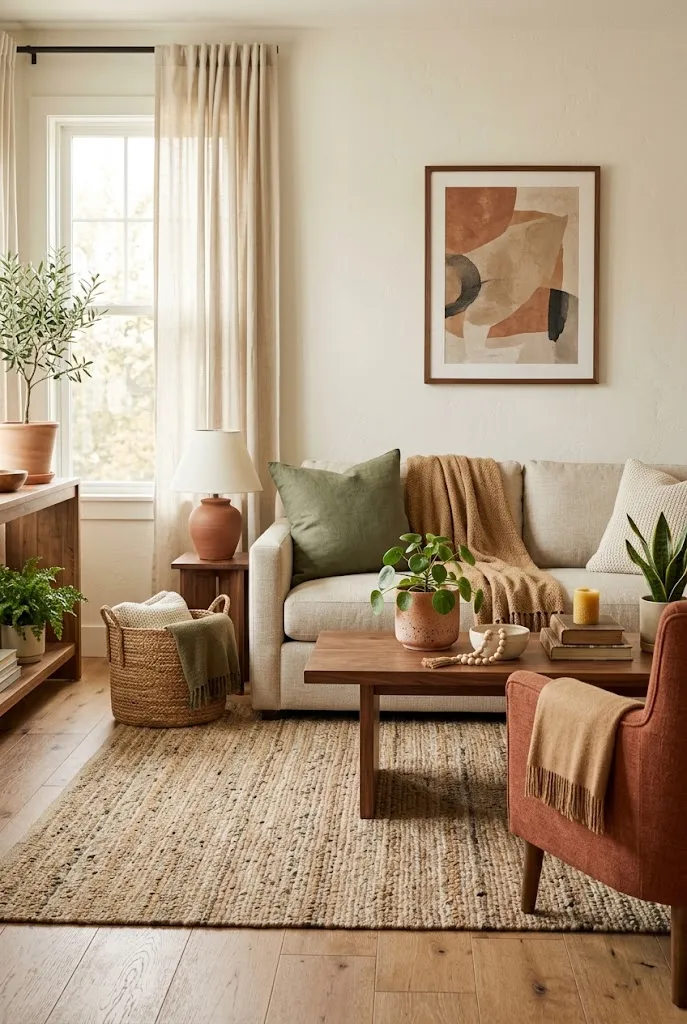
Earthy colors can make a living room feel grounded without becoming dark. Combine shades such as clay, terracotta, olive, sand, camel, cream, and walnut.
You don’t need to paint the entire room in a strong color. Use earthy tones selectively through an accent chair, artwork, cushions, ceramics, or rug.
The key is repetition: let a color appear in at least two places so it feels intentional.
19. Make a Small Living Room Feel More Open
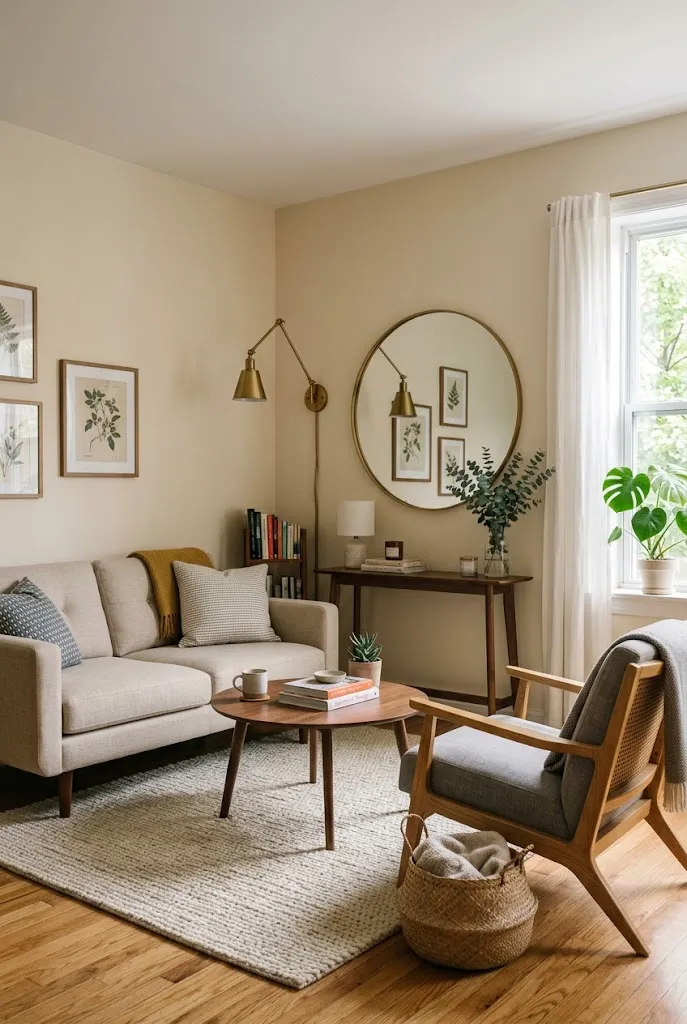
Small spaces don’t have to sacrifice warmth. Choose furniture that fits the room rather than oversized pieces that leave narrow pathways.
A compact sofa, appropriately scaled coffee table, wall-mounted lighting, lighter textiles, and furniture with visible legs can help preserve a sense of openness.
Mirrors can also reflect light and create more visual depth, although they work best when positioned to reflect something attractive.
20. Mix Old and New Pieces
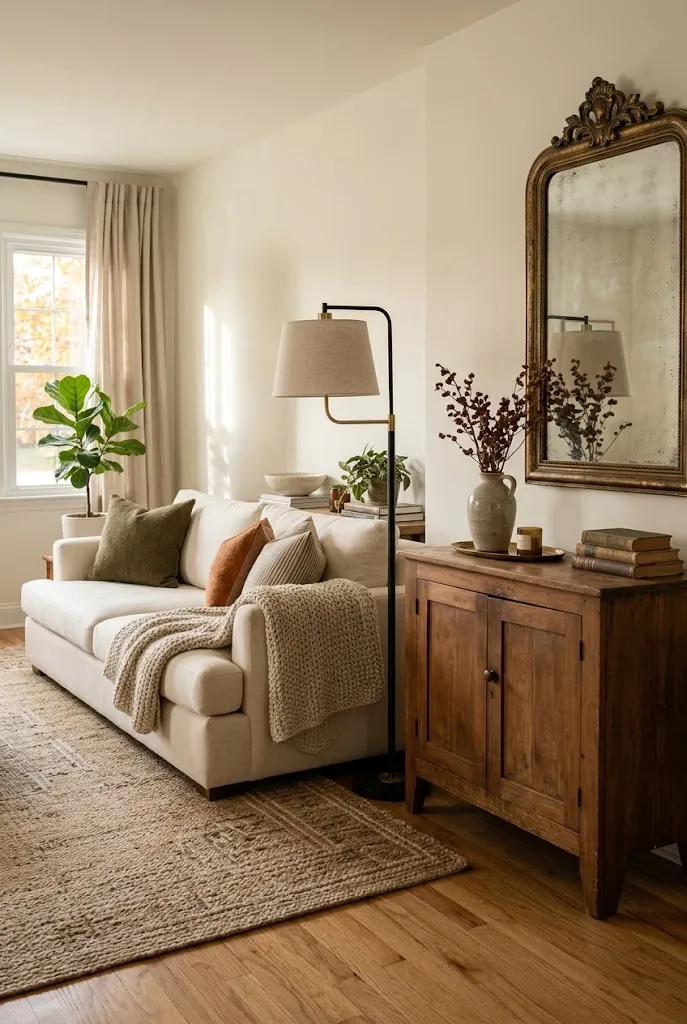
A room can feel more interesting when contemporary furniture is paired with pieces that have age or visual character. Try a modern sofa with a vintage-style wood cabinet, an antique-inspired mirror, or a secondhand side table.
The combination prevents the room from looking like everything was purchased from the same collection.
21. Use a Statement Pendant or Chandelier
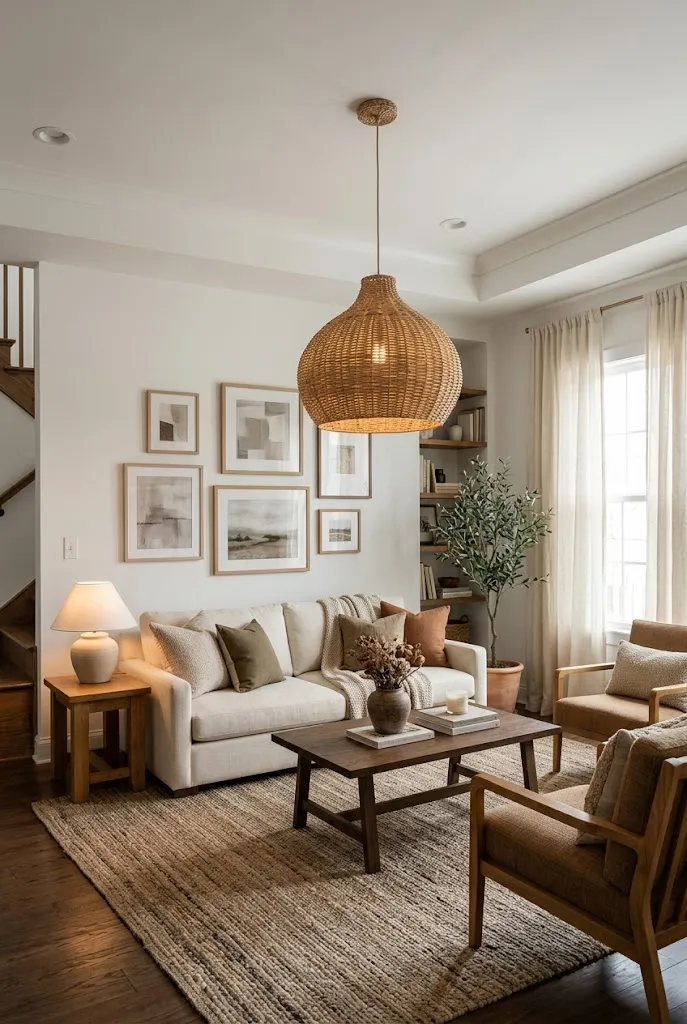
Lighting can become architectural decoration when the fixture is appropriately scaled to the room. A woven pendant, sculptural chandelier, or simple aged-metal fixture can create a focal point without adding another piece of furniture.
Choose the fixture according to the ceiling height and room scale. A large fixture needs enough visual breathing room around it.
Keep the rest of the ceiling visually quiet so the light remains the main feature.
22. Add an Upholstered Ottoman for Flexible Comfort
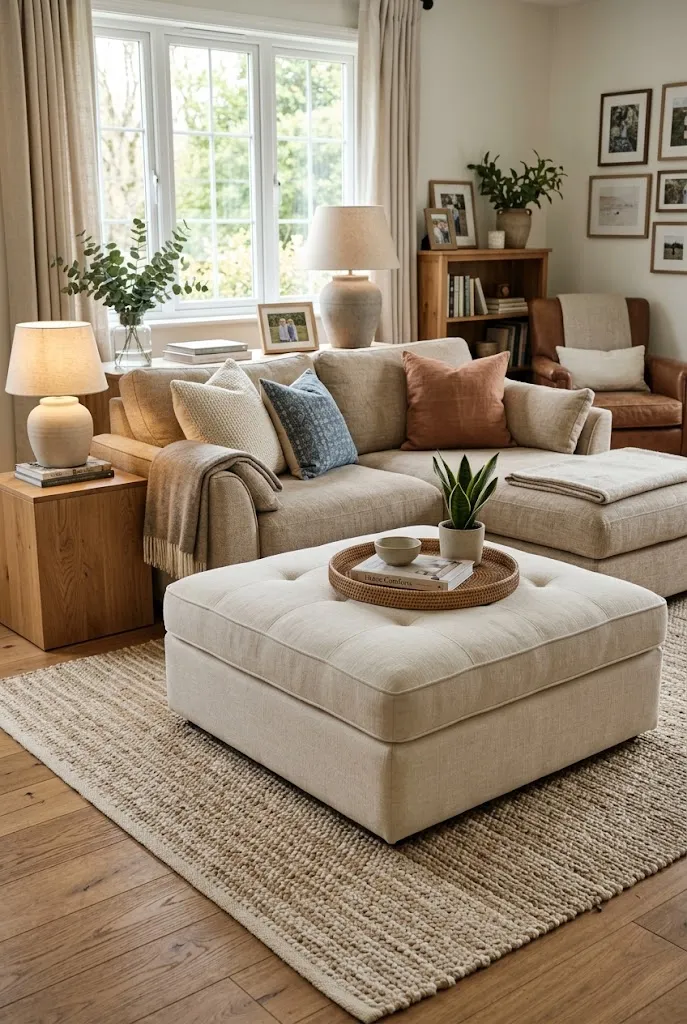
An upholstered ottoman can function as a footrest, extra seating, or a soft visual counterpoint to a structured sofa. Choose a fabric that coordinates with the room without matching everything exactly.
In a small space, a compact ottoman can replace a larger coffee table. In a family room, a durable fabric and rounded corners may make more practical sense.
23. Create a Calm Monochromatic Living Room
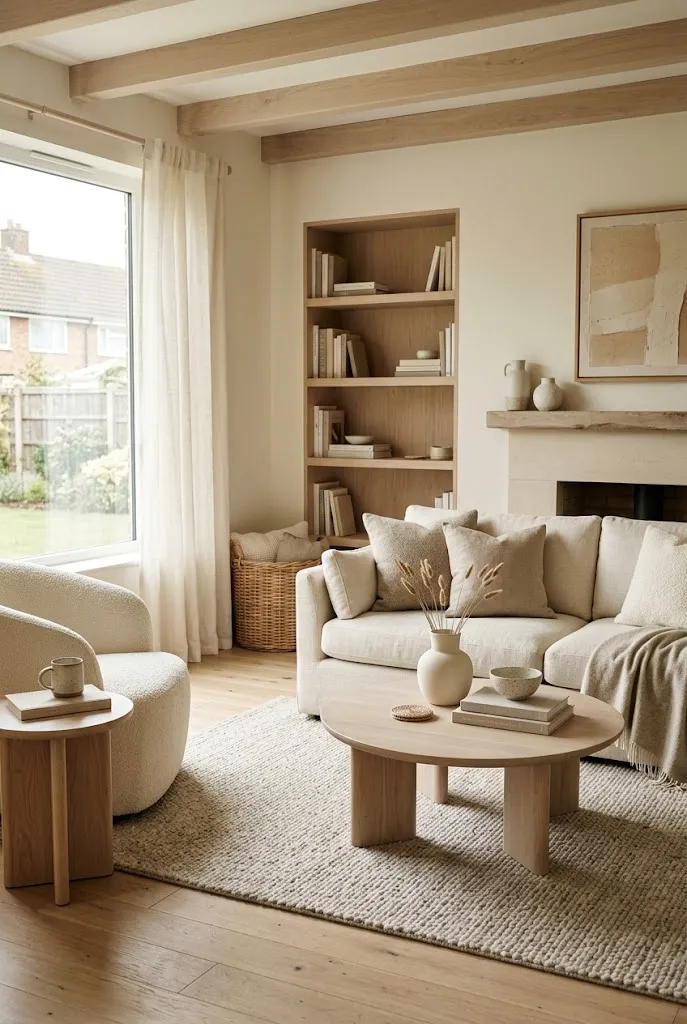
A monochromatic room doesn’t have to be boring. Use several shades of one color family and create contrast through texture, shape, and material.
For example, a cream-based room can combine ivory walls, oatmeal upholstery, pale oak, beige wool, off-white ceramics, and slightly deeper taupe accents.
The restrained palette makes architectural details and material differences more noticeable.
24. Style the Room Around a Large Window
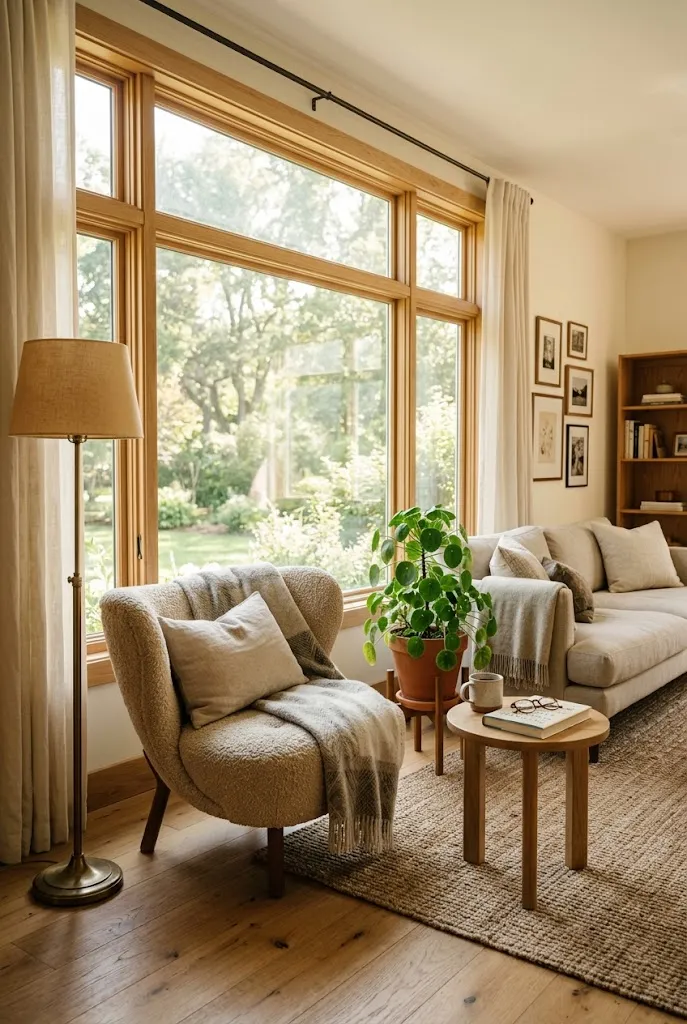
Natural light can become one of the room’s most attractive features. Instead of placing bulky furniture directly in front of a beautiful window, use the area around it to create a comfortable seating or reading zone.
Keep window-adjacent styling relatively light so daylight can spread through the room. A chair, small table, plant, and soft curtain can be enough.
25. Finish With Personal Objects That Tell a Story
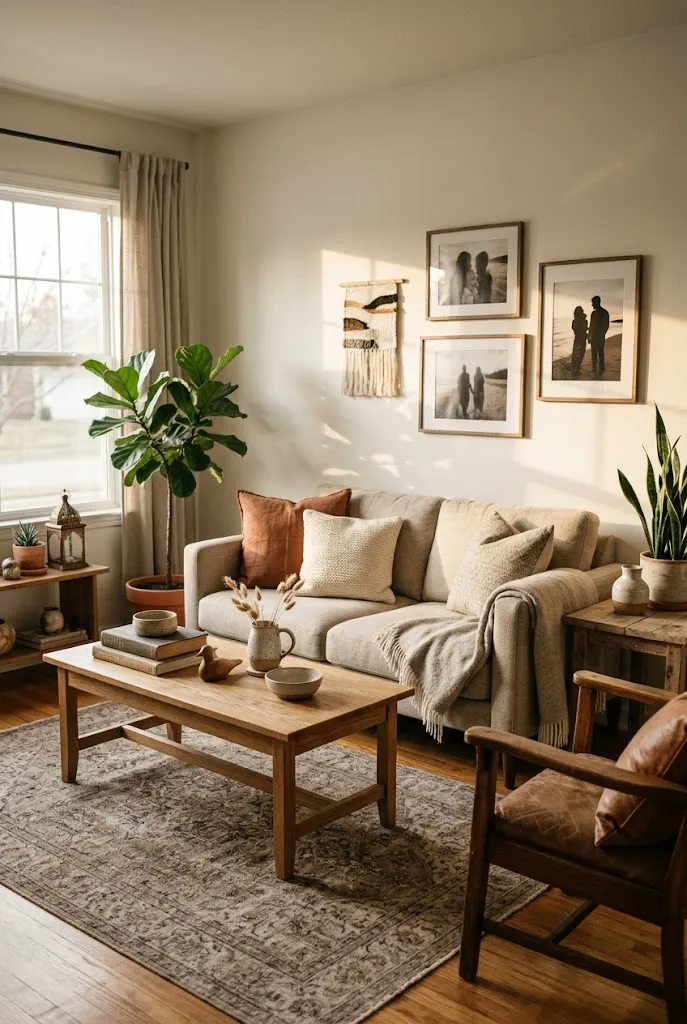
The warmest living rooms usually don’t feel anonymous. A stack of favorite books, framed photographs, travel finds, handmade ceramics, inherited furniture, or meaningful artwork can make the space feel connected to the people who use it.
The trick is editing. Display enough personal objects to create character while leaving some open space so individual pieces can be appreciated.
A few meaningful items will generally have more visual impact than a room packed with generic decorations.
How to Make Your Living Room Feel Warmer Without Redecorating Everything
You don’t need to replace an entire room to make it feel more inviting. Start with the elements that have the greatest visual impact and are easiest to change.
- Improve the lighting. Add one floor or table lamp before buying new furniture.
- Soften the seating. Introduce a throw and a few varied-texture cushions.
- Add natural material. Wood, woven baskets, linen, and ceramics can immediately add warmth.
- Reconsider the rug. A properly scaled rug can visually connect a disconnected furniture arrangement.
- Edit the accessories. Remove objects that don’t contribute to the room and give meaningful pieces more space.
- Add greenery. One appropriately placed plant can bring life to an otherwise neutral palette.
- Rearrange the furniture. Sometimes better circulation and conversation are more valuable than another decorative purchase.
The strongest living room ideas usually work because several small decisions support one another. Warm lighting looks better with soft textiles; wood feels richer beside neutral upholstery; greenery becomes more noticeable against restrained colors. Rather than copying an entire room, identify the design principle you like and adapt it to your own space.