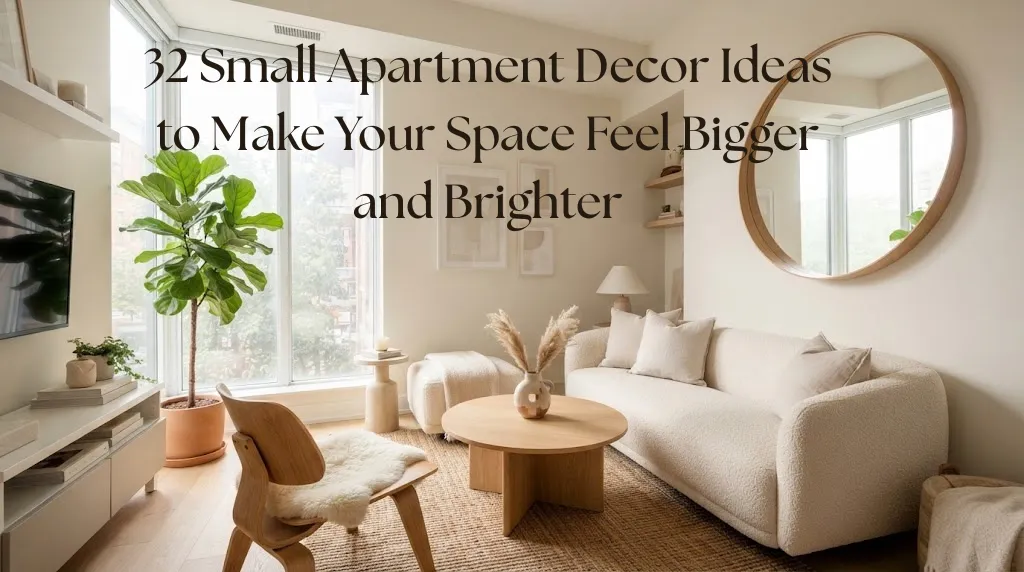
32 Small Apartment Decor Ideas to Make Your Space Feel Bigger and Brighter
Introduction
A small apartment rarely feels cramped because of square footage alone. It’s usually the combination of heavy furniture, dim corners, visual clutter, and walls that stop the eye too early. The good news is that most of those problems can be fixed with smart choices rather than a renovation, which matters when you’re renting, sharing, or working with a modest budget.
These small apartment decor ideas cover everything from a leaning mirror and sheer curtains to wall beds and built-in window seats. Many are renter-friendly and low-cost, some are worthwhile upgrades, and a few are custom projects worth saving for. Each one is chosen for how it changes the room: more light, clearer sight lines, smarter storage, or a floor plan that finally makes sense. Pick two or three that suit your space and start there.
1. Lean a Full-Length Mirror Opposite the Window
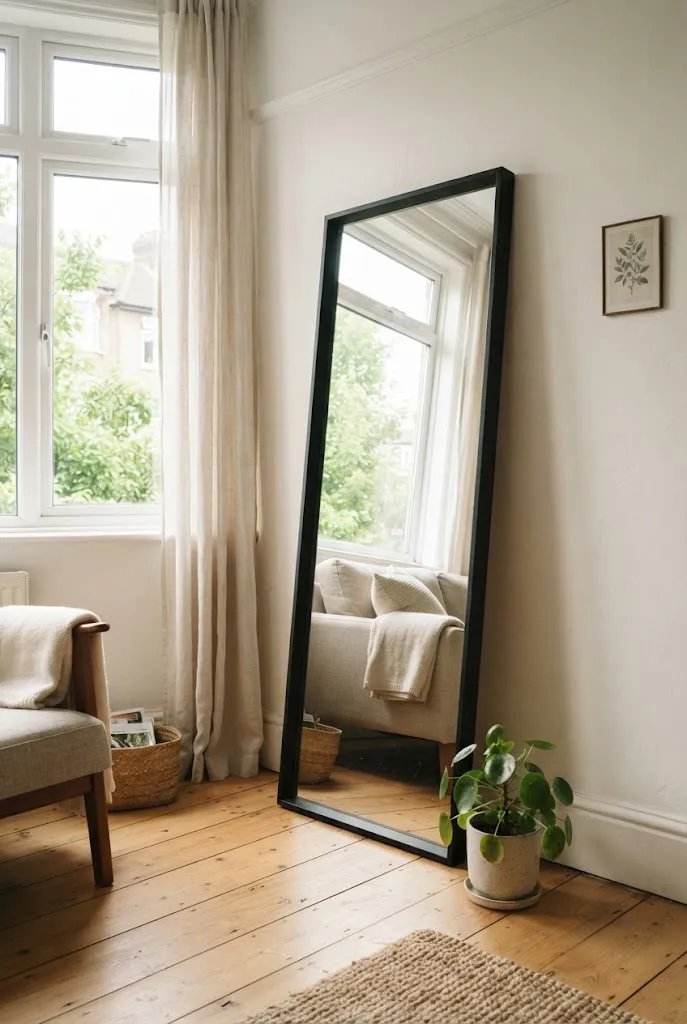
A tall mirror placed across from natural light does two jobs: it bounces daylight deeper into the room, and it visually doubles the sight line. Choose one that’s at least five feet tall, with a slim frame in black metal, pale wood, or no frame at all, so the mirror reads as an opening rather than a heavy object.
- Place it where it reflects a window or an attractive corner, not a pile of laundry.
- Angle it slightly off a corner to avoid an obvious “mirror wall” look.
- Pair it with a small plant or a slim lamp at its base.
Quick Tip: Leaning mirrors can tip. Use an anti-tip strap or a removable wall anchor, especially in homes with kids or pets.
2. Hang Sheer Curtains High and Wide
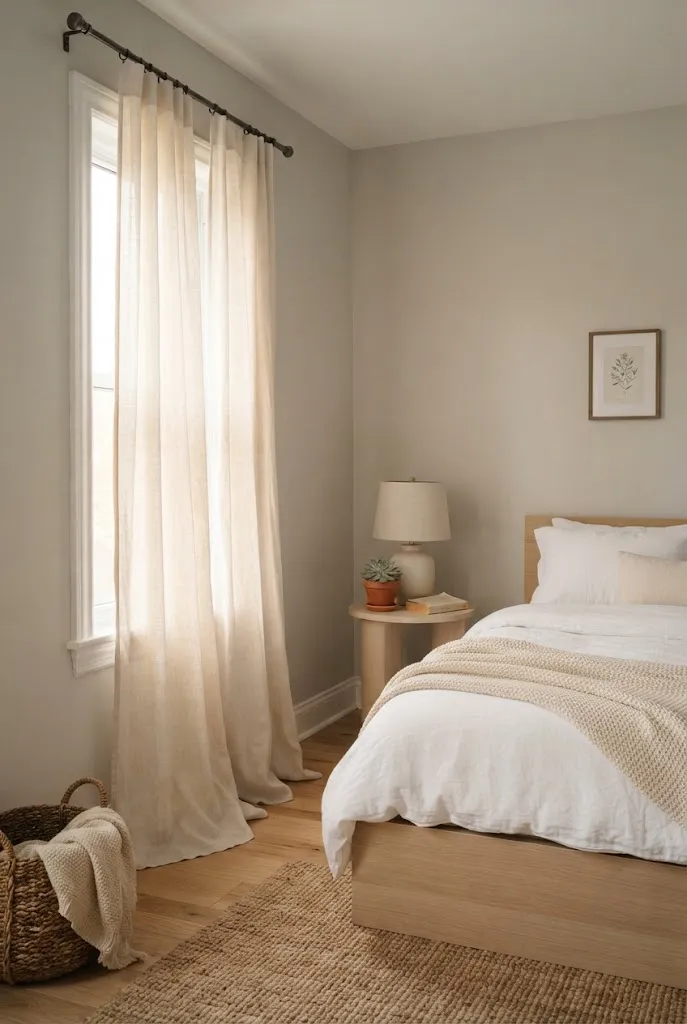
Mounting the rod close to the ceiling, and extending it several inches past each side of the window, makes the window look larger and the walls look taller. Sheer white or soft ivory panels let daylight through while still softening the view and giving the room some privacy.
Linen-blend sheers look more tailored than ultra-thin polyester, and a slightly longer panel that just kisses the floor reads as more finished than one that stops at the sill. If you can’t drill, tension rods and adhesive hooks rated for the curtain weight can work in some window frames.
Do: Let the curtains stack beside the window rather than across the glass.
Don’t: Use heavy, dark drapes in a room with only one small window.
3. Choose a Warm White That Suits Your Light
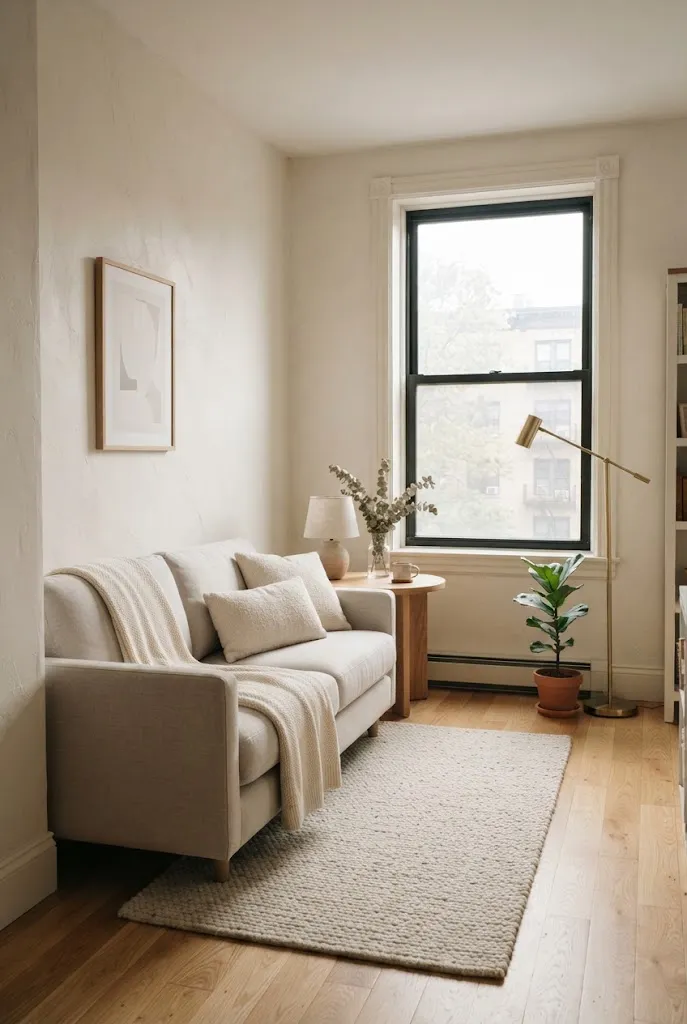
If you’re allowed to paint, a well-chosen white is one of the most effective upgrades for a small apartment. The right shade depends on your light. North-facing rooms can look gray and flat with cool whites, while south-facing rooms can handle a wider range. Test large swatches on two walls and check them at morning, midday, and evening.
| Option | Effect | Best Fit |
|---|---|---|
| Warm white (soft cream undertone) | Cozy, bounces light gently | North-facing or dim rooms |
| Crisp neutral white | Clean, bright, a little stark | Sun-filled rooms with warm wood |
| Soft greige-white | Calm, slightly shadowed | Rooms with strong sun and cool flooring |
A satin or eggshell finish bounces slightly more light than a flat one but shows wall flaws, so lightly patch any dents first. Always confirm paint rules with your lease.
4. Lift the Sofa on Slim Legs
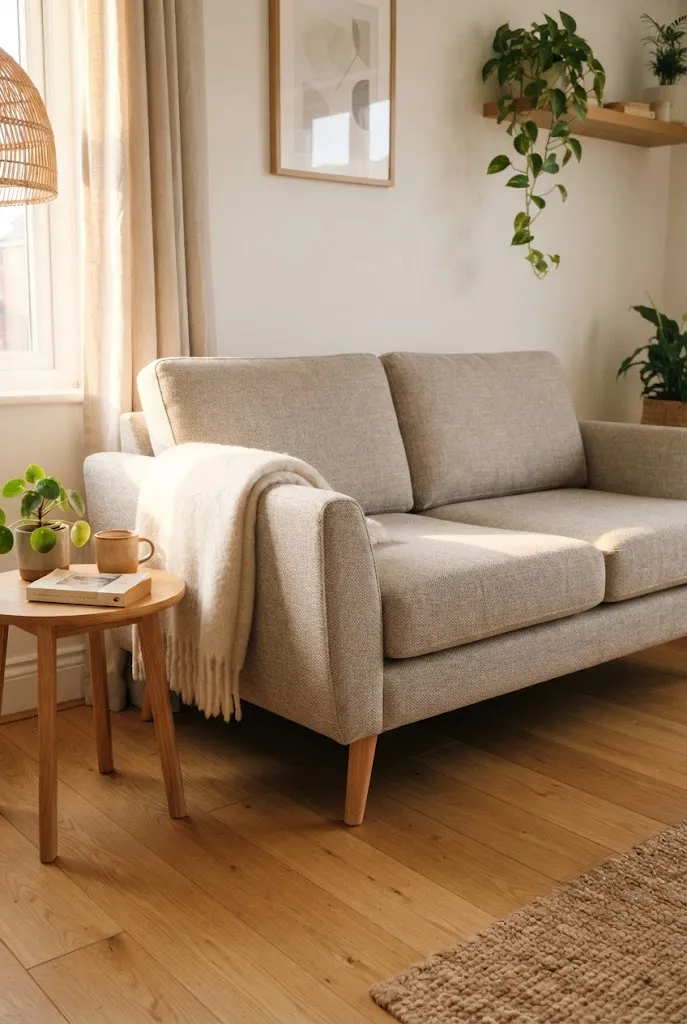
A sofa that sits on the floor like a block makes a compact room feel heavier. Choosing one with exposed, tapered legs lets you see a strip of floor underneath, which tricks the eye into reading more open space. Look for a seat depth that’s comfortable but not oversized, and a back that isn’t towering.
In practice, apartment sofas in the 70- to 80-inch range often fit better than oversized sectionals, particularly in rooms under 12 feet wide. Measure your doorway, stairwell, and elevator before buying. A raised sofa also makes it easier to run a robot vacuum underneath, a small practical bonus.
Best For: Living rooms under roughly 200 square feet
Investment: Moderate
Visual Effect: Lighter, more open floor line
5. Swap a Heavy Coffee Table for Glass and Thin Metal
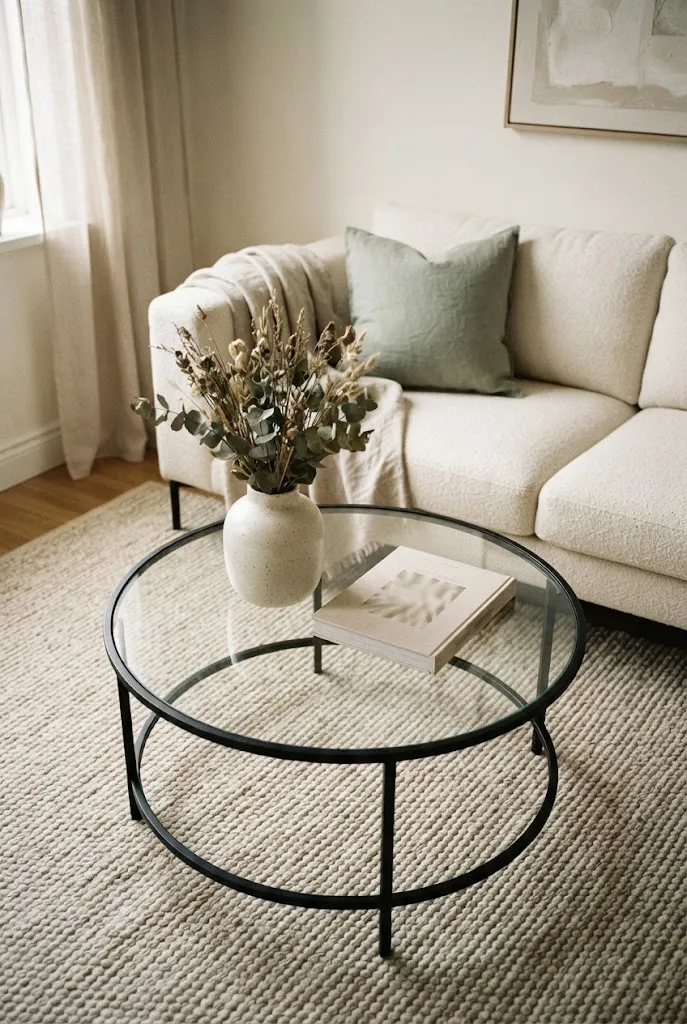
A solid wood coffee table can eat up visual space. A glass top on a slim metal frame keeps the footprint but lets sight lines continue through it, so the room doesn’t feel chopped up. Nesting tables are another option, since you can slide them apart for guests or tuck them together for daily use.
If glass makes you nervous around toddlers or pets, look for tempered glass with rounded corners, or choose a slim table with a light-colored open frame and a lower shelf.
Common Mistake: Choosing a coffee table that’s too large for the walkway.
Better Approach: Leave about 16 to 18 inches between the sofa and the table so people can move comfortably and still reach their drinks.
6. Hang One Oversized Art Piece Instead of a Crowded Gallery Wall
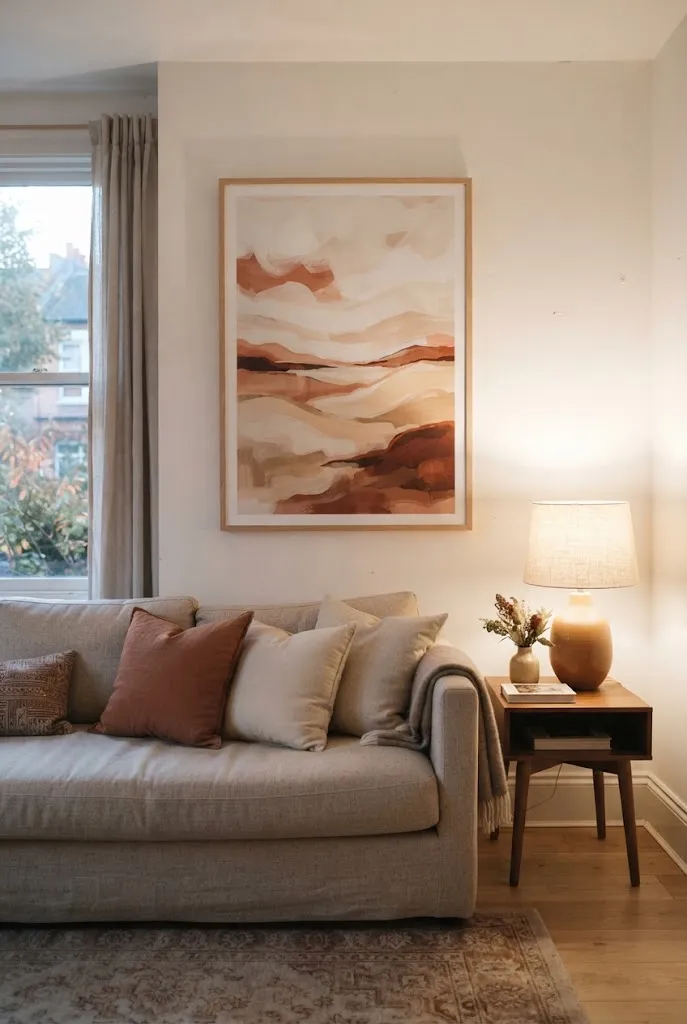
Several small frames can look busy on a short wall. A single large piece, even an inexpensive printed canvas or framed poster, gives the eye one calm place to rest and makes the wall feel more deliberate. Choose artwork with plenty of light or negative space so it doesn’t weigh the wall down.
As a general guide, art that’s about two-thirds the width of the sofa below it tends to look balanced. Hang it so the center sits around 57 to 60 inches from the floor, a common gallery height, and lower it slightly if it sits above furniture.
7. Anchor the Seating With a Right-Sized Light Rug
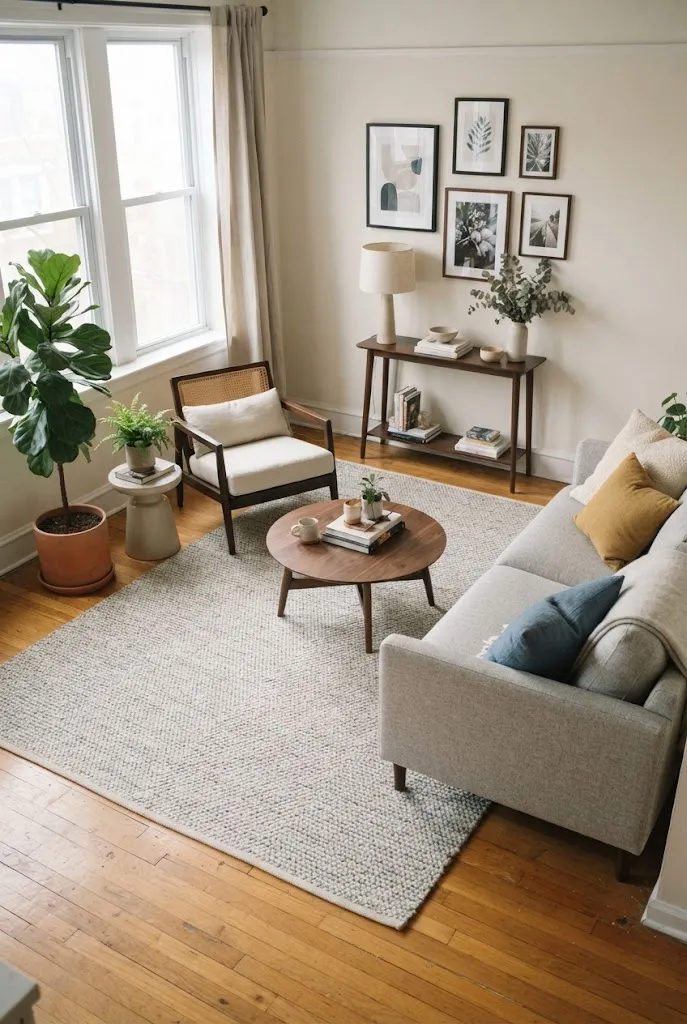
A rug that’s too small makes furniture look like it’s floating. In a studio or small living room, a 5×8 or 8×10 rug in a light, low-pile weave usually does more than a tiny accent rug because it ties the seating area together and makes the floor feel continuous.
Aim to have at least the front legs of the sofa and any armchairs sitting on the rug. Flat-weave and low-pile styles are easier to clean and don’t trip doors or vacuum cleaners. A subtle pattern, such as a faint stripe or a washed vintage look, hides daily wear better than a solid pale color.
Common Mistake: Choosing a rug that stops short of the furniture.
Better Approach: Size up so the seating group sits at least partly on it.
8. Plug In Wall Sconces Instead of a Floor Lamp
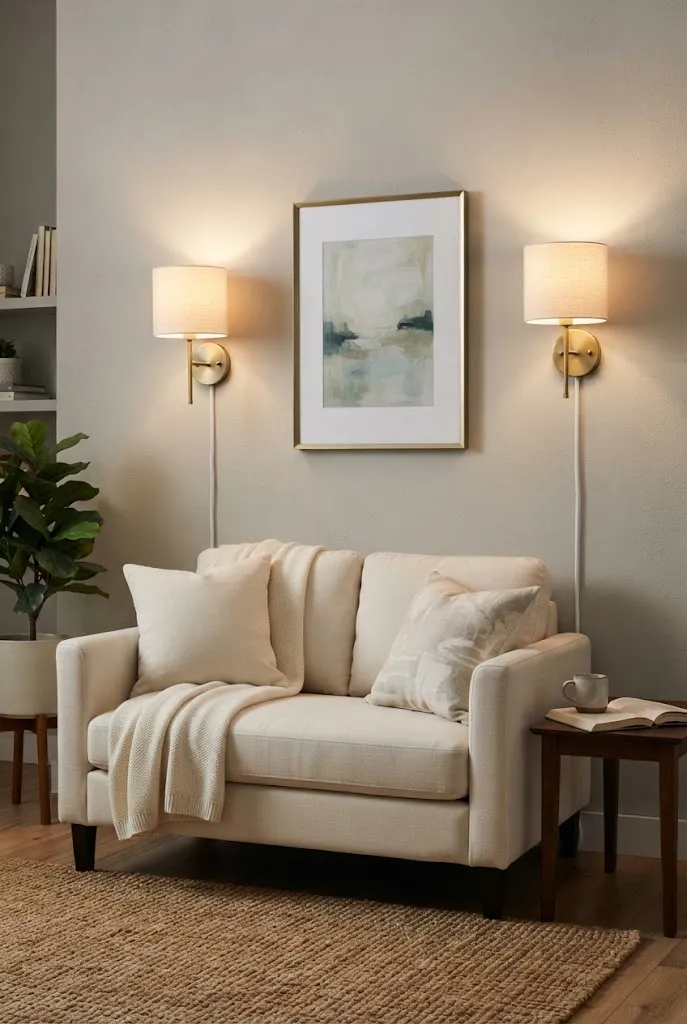
Floor lamps take up floor space. Plug-in wall sconces free it, and they add light at a more flattering height. Many styles come with a long cord that you can hide with a cord cover or run neatly along a corner, which keeps the install renter-friendly.
- Choose sconces that mount with one or two small screws or a removable hook system.
- Hold the fixture at the proposed height (often 60 to 66 inches) and mark the spot.
- Mount it and route the cord with paintable cord channels.
- Use a warm bulb (around 2700K) and a dimmer plug if you can.
If you’re not allowed to drill, look for sconces designed for adhesive mounting, and check the weight limits.
9. Tuck a Round Pedestal Table Into a Corner
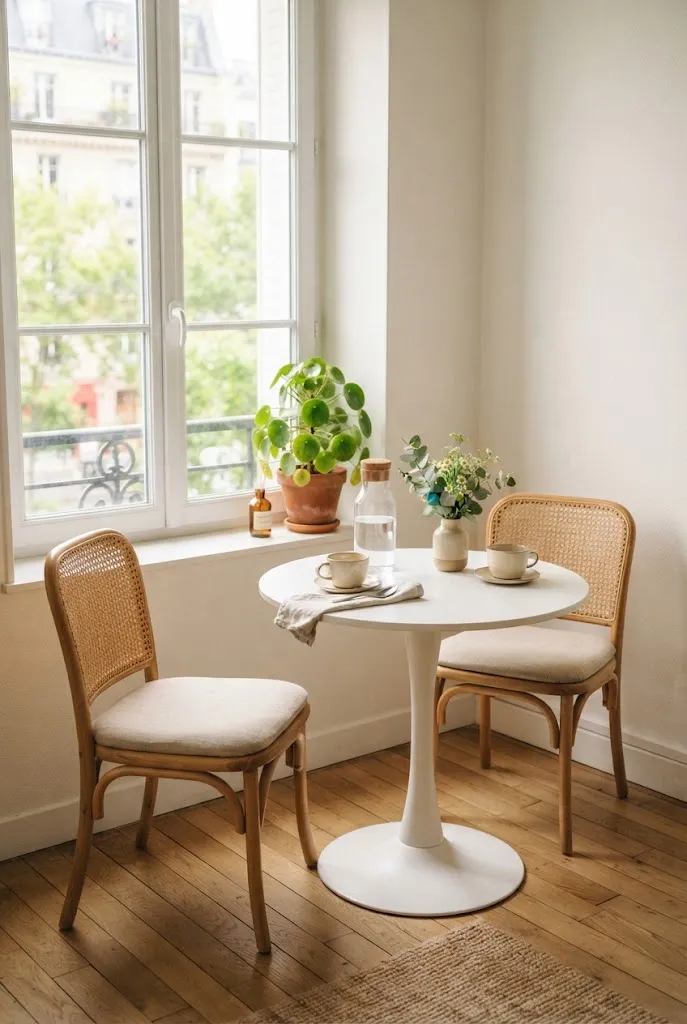
Round tables have no sharp corners to bump into, and a pedestal base keeps legs out of the way, so two or four people can sit without the table feeling like a roadblock. Placed in a corner, or against a window, a small round table can serve as a dining spot, a desk, or a breakfast nook.
Look for a 30- to 36-inch diameter for two people and up to 42 inches for four. A pale wood or white laminate top looks lighter than a dark finish, and two simple chairs in a contrasting texture, like woven rattan or cane, add warmth without bulk.
10. Let a Bookcase Divide a Studio
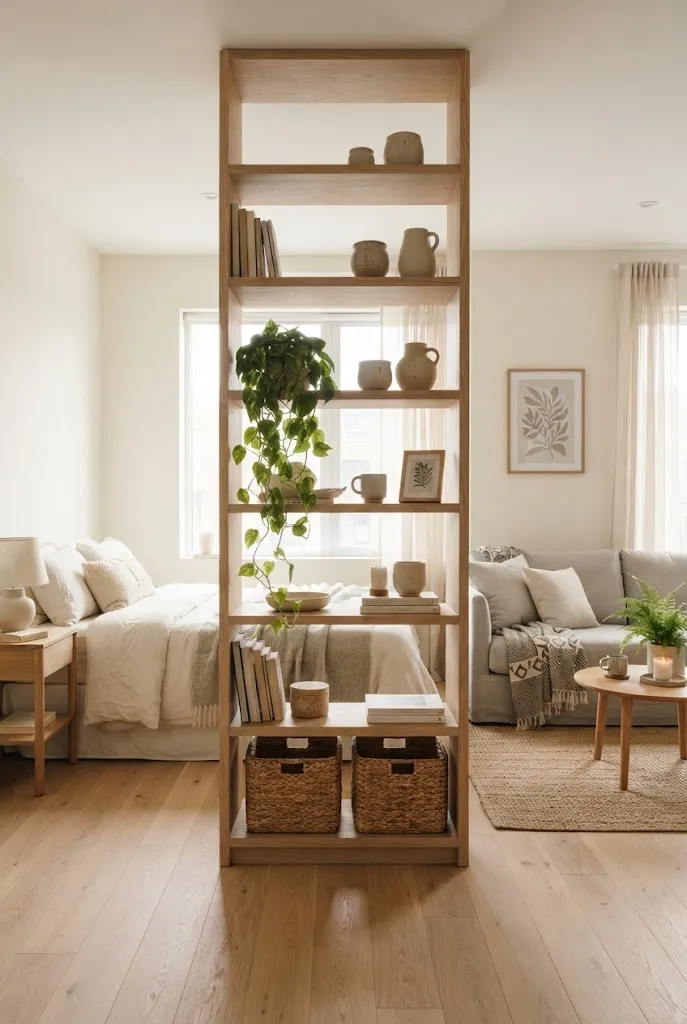
In a studio, an open-backed bookcase can define a sleeping area without blocking light. Unlike a solid wall or tall screen, a shelving unit with an open back lets daylight pass and keeps the room feeling connected.
Keep the top shelves light and sparse, with a few books, baskets, and plants, so the divider doesn’t become a heavy wall. Place heavier items on the lower shelves for stability, and secure the unit to a wall or floor if possible, particularly if it’s tall. Check lease rules before anchoring.
Quick Facts
Best For: Studios and long, narrow rooms
Investment: Accessible to moderate
Visual Effect: Separation without closing the room off
11. Carry Storage All the Way to the Ceiling
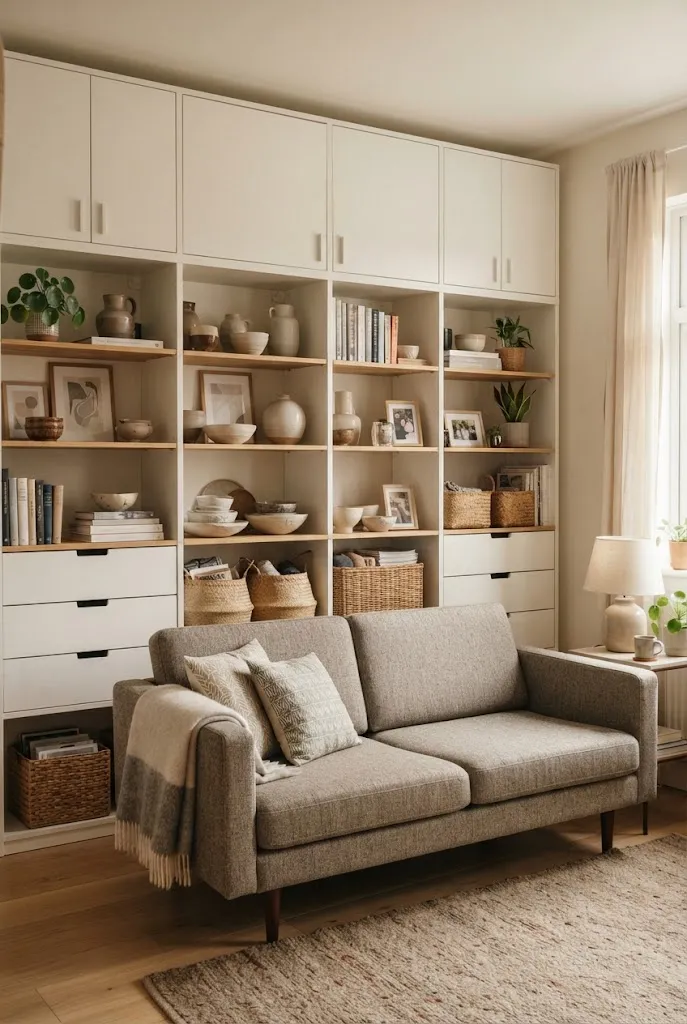
Furniture that stops at waist height leaves the upper wall empty, which makes the ceiling feel lower and wastes storage. Tall, narrow shelving or cabinetry that runs to the ceiling emphasizes height and gives you a place for less-used items.
Painting the unit the same color as the wall helps it blend in. Use baskets or closed doors for the upper sections so the top doesn’t look cluttered. Many modular systems come in white or light wood, can be adjusted over time, and offer a more affordable alternative to custom millwork.
Editor’s Note: Keep the front of the storage clean. A few deliberate gaps make it look lighter than one packed, solid mass.
12. Add a Wall Bed That Disappears by Day
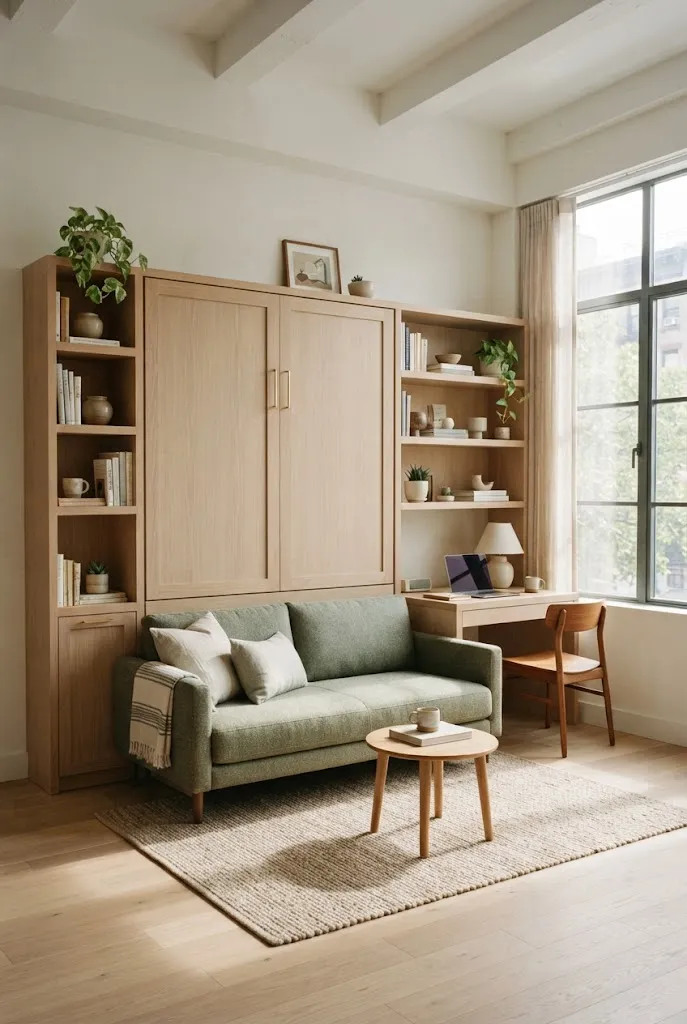
A wall bed folds up into a cabinet and turns a bedroom or studio corner into usable living space during the day. It’s a significant investment, but it can make a small apartment function like a larger one, especially as a guest room or home office combination.
A wall bed needs secure anchoring into the building structure, so professional installation and landlord approval are usually necessary. Some versions include a fold-down desk or flanking shelving, which makes the cabinet face feel like furniture rather than an appliance.
| Option | Effect / Advantage | Best Fit |
|---|---|---|
| Vertical wall bed | Takes less width | Narrow rooms with higher ceilings |
| Horizontal wall bed | Lower profile, can sit under a window | Studios with limited ceiling height |
| Wall bed with sofa | Seating when closed | Multi-purpose living rooms |
13. Layer Tonal Neutrals From Oat to Ivory
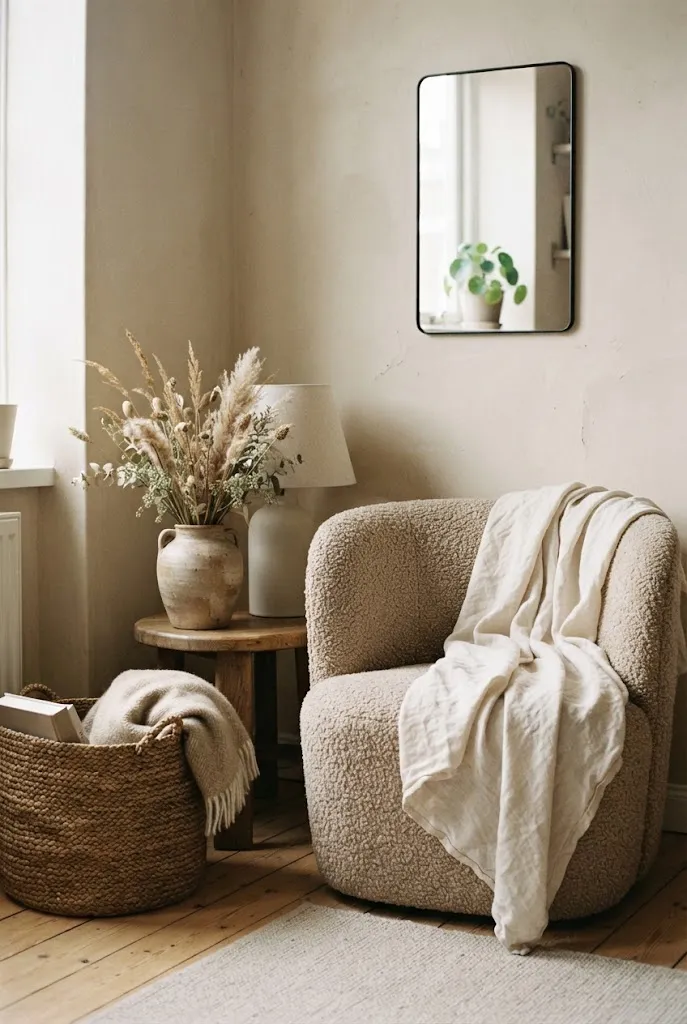
A room built from closely related tones, such as oat, ivory, sand, and pale taupe, feels calmer and larger because the eye doesn’t stop at color contrast. The key is variation in texture, not just color: bouclé, linen, wool, woven jute, and matte ceramic keep the palette from feeling flat.
Add a single darker element, such as a black picture frame or a charcoal lamp, to give the room some depth and prevent it from reading washed out. Use two or three tones of the same family and vary the finish between matte and slightly textured.
14. Add Window Film for Privacy Without Losing Light
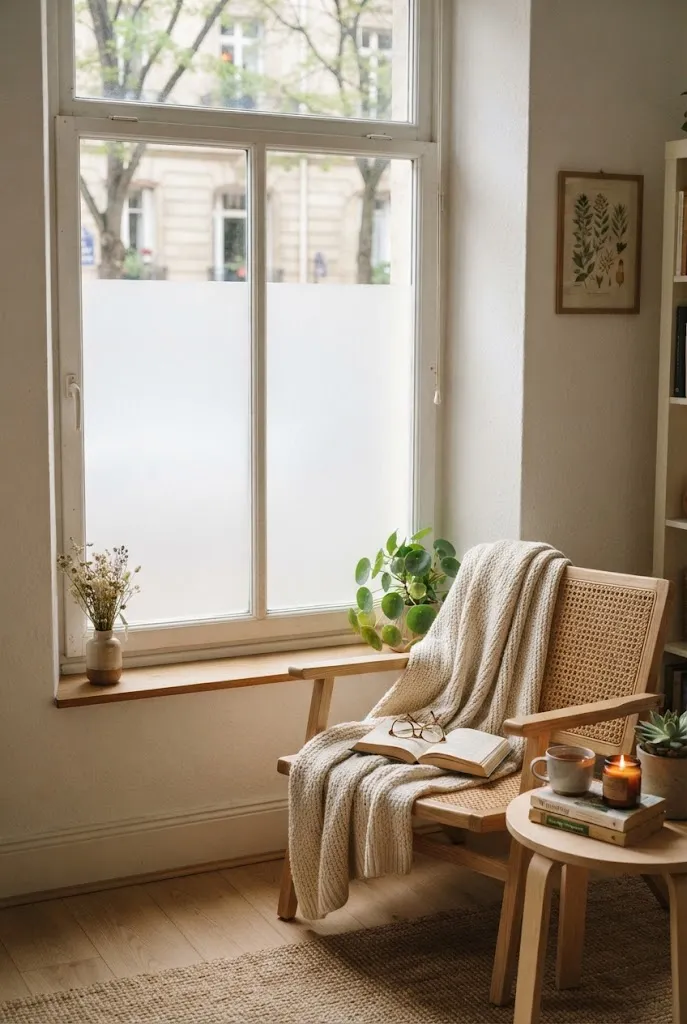
Ground-floor and street-facing units often keep curtains closed all day for privacy, which blocks daylight. Frosted or etched window film lets light in while obscuring the view, so you can keep the room bright without blinds.
Static-cling versions peel off cleanly and are usually the more renter-friendly choice, while adhesive types stay put better but can be harder to remove. Measure carefully, apply with a spray of soapy water to reposition, and leave the top section clear if you’d like to keep some view of the sky.
Do: Test a small piece first.
Don’t: Cover bathroom windows with film that traps moisture and peels.
15. Soften a Small Window With a Light-Filtering Shade
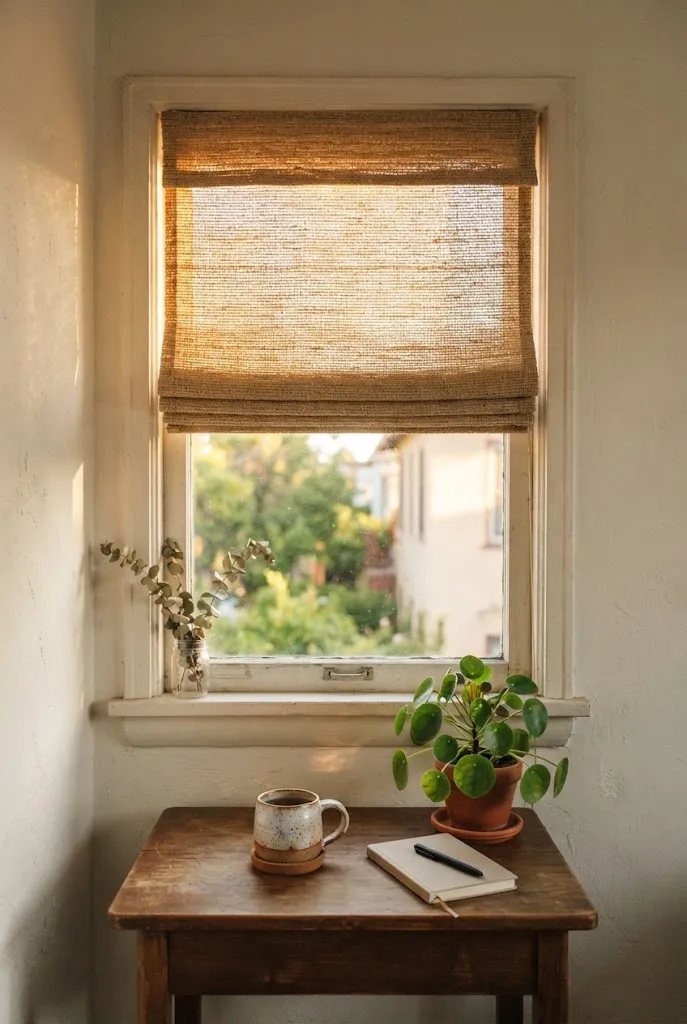
A woven wood or light linen Roman shade adds texture and warmth while still letting daylight in. Hung inside the window frame, it looks tidy; mounted above the frame, it can make the window feel taller.
Light-filtering fabric usually offers more glow than blackout options, and layering it with a sheer panel can add privacy. In a bedroom, consider pairing a light-filtering shade with a thin blackout liner if you sleep during the day.
Quick Tip: Raise the shade fully during the day so it doesn’t eat up glass.
16. Build a Window Seat With Hidden Drawers
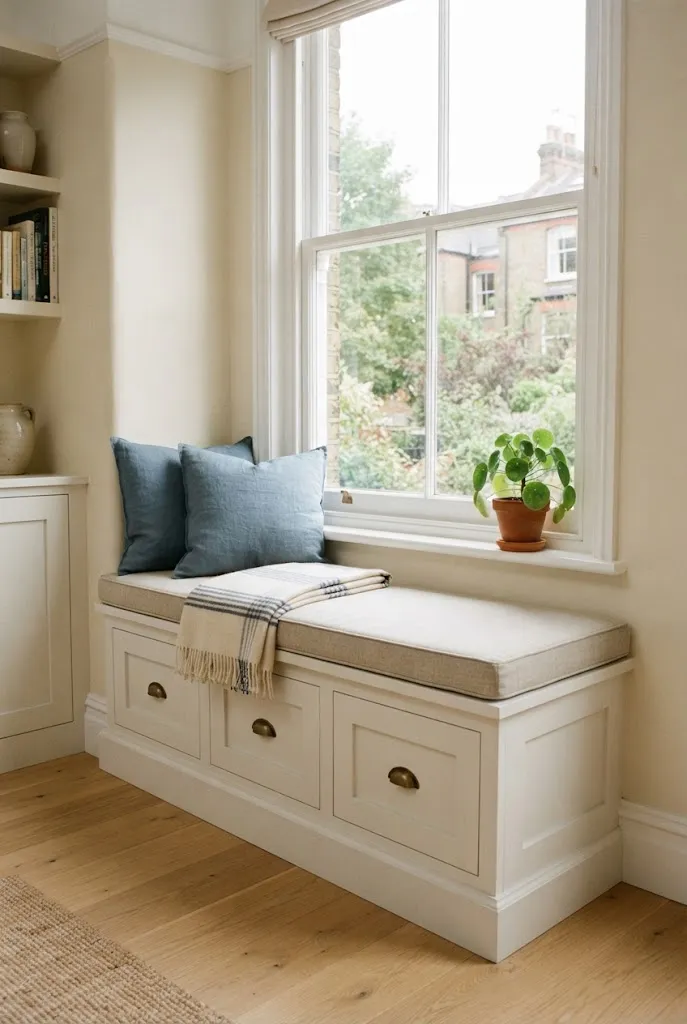
A custom window seat turns an awkward window wall into seating, a reading spot, and storage. Drawers or lift-up lids underneath hold blankets, shoes, or seasonal items, so the bench contributes to a clutter-free room.
This is a premium or semi-custom idea, and it usually requires permission or a landlord-approved project. A removable freestanding version, such as a deep bench with storage baskets, can deliver much of the same effect in a rental. Top it with a slim cushion in a light fabric and a few pillows, and keep the window itself unobstructed.
17. Use Peel-and-Stick Stripes to Stretch the Walls
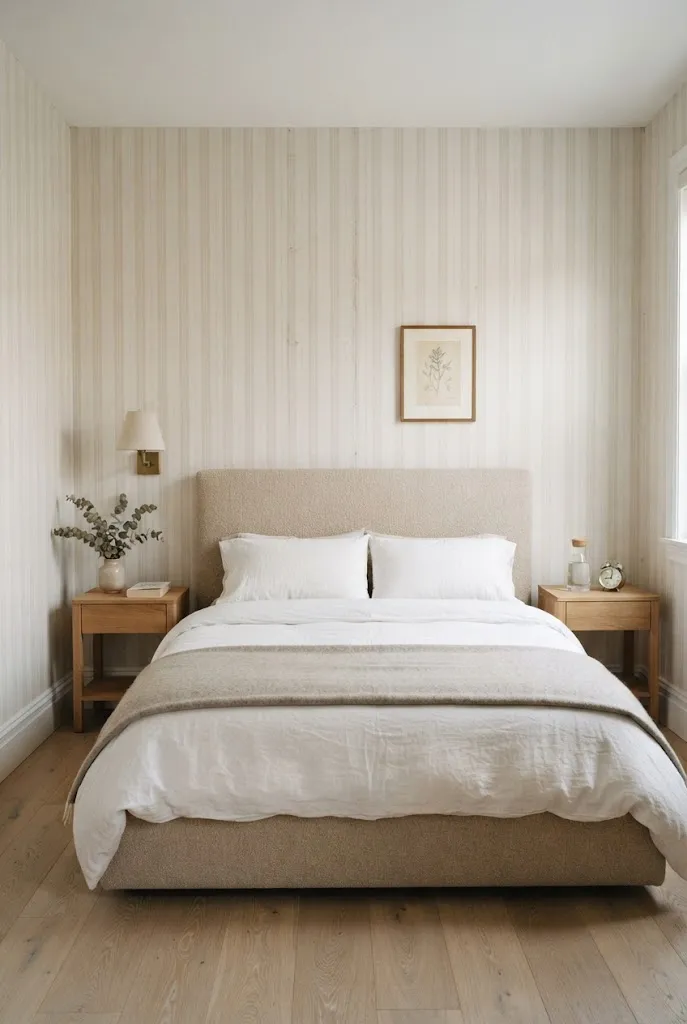
Vertical stripes draw the eye upward, which can make low ceilings feel taller. Peel-and-stick wallpaper in a soft, low-contrast stripe, such as white on pale beige, adds interest without making a room feel darker.
Apply it to one accent wall only, such as behind a bed or sofa, so the rest of the room stays light. Clean the wall first, and check how easily the product removes from paint. Some can pull paint on poorly bonded walls, so test a small, hidden area before committing.
Best For: Renters wanting an accent wall
Investment: Accessible
Visual Effect: Added height and gentle texture
18. Create a Slim Entry Landing With Hooks and a Bench
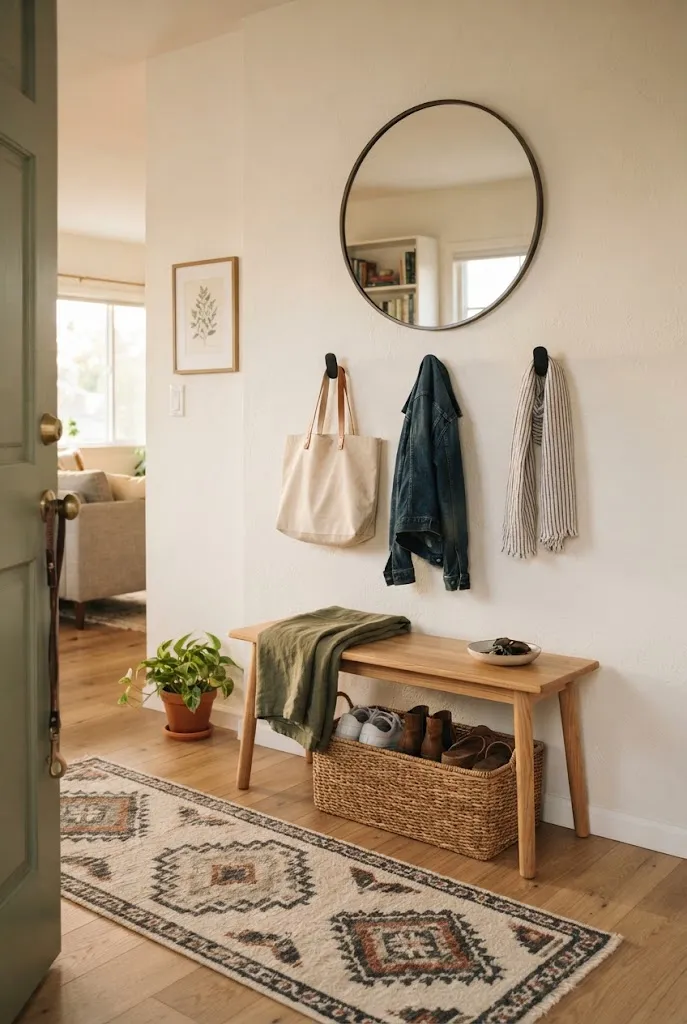
Many apartments open straight into the living room with no entry at all. A narrow bench, a row of wall hooks, and a small mirror define a landing zone and keep coats, bags, and shoes out of the main space.
Choose a bench that’s shallow, around 12 to 14 inches deep, so it doesn’t obstruct the door. Add a basket underneath for shoes and a small tray for keys. A light rug or runner makes the zone feel intentional, and a wall mirror brightens the corner.
- Mark a spot near the door that doesn’t block its swing.
- Mount hooks at a comfortable height.
- Add the bench and basket below.
- Finish with a mirror or small art piece.
19. Choose Lidded Baskets and a Storage Ottoman
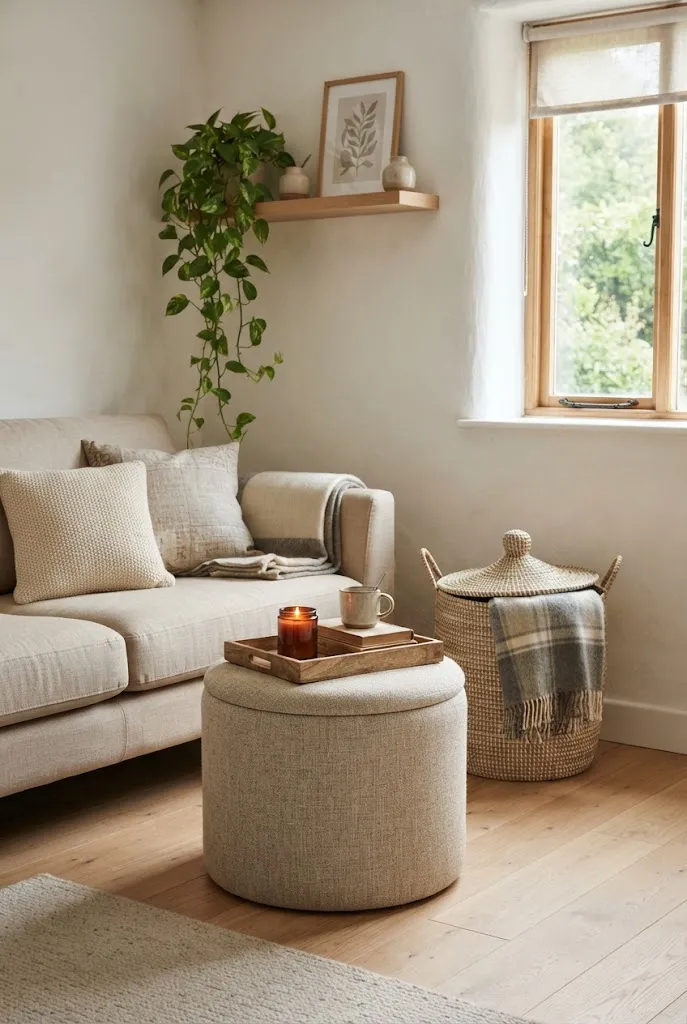
Open storage looks pretty until it’s full. Lidded baskets and a storage ottoman hide the mess and provide extra seating or a footrest. Pick pieces in the same tonal family as the room so they blend in rather than draw attention.
A storage ottoman can double as a coffee table when topped with a tray. Look for sturdy lids and interiors that can hold blankets, board games, or remote controls.
Common Mistake: Buying lots of small bins that don’t match.
Better Approach: Choose two or three larger pieces in a consistent material, such as woven seagrass or felt.
20. Brighten the Kitchen With Under-Cabinet LED Strips
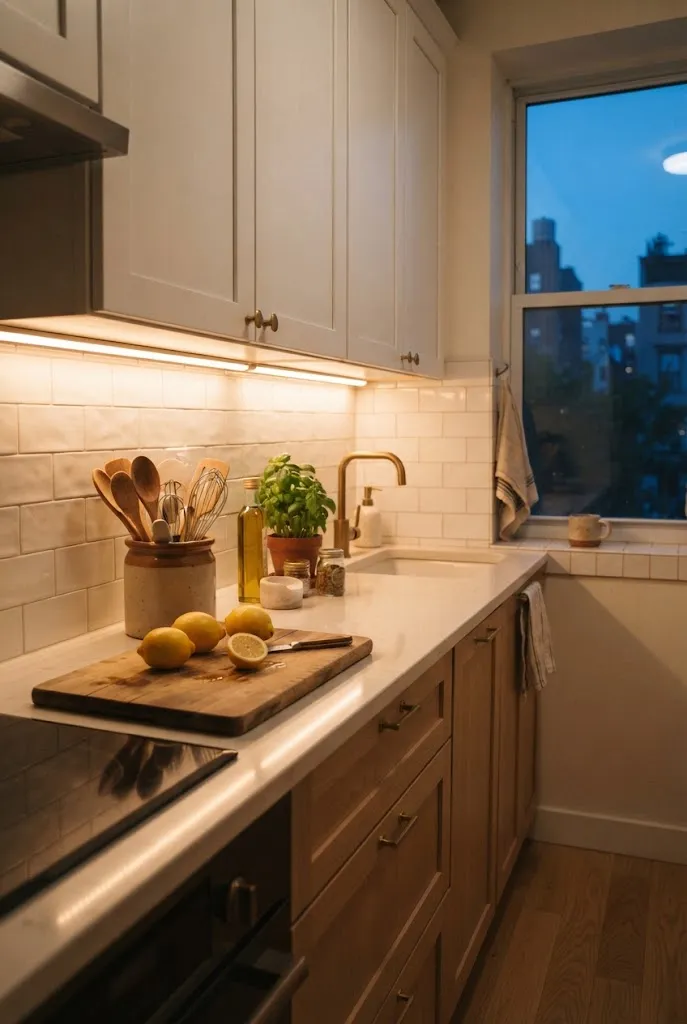
Small apartment kitchens often have dim counters. Adhesive LED strips or plug-in light bars under the upper cabinets illuminate the work surface and make the room feel more finished without electrical work.
Choose warm white (about 2700K to 3000K) for a cozy look, or a slightly cooler tone if you prefer a crisper feel. Clean the underside of the cabinet first, mount the strip toward the front edge so the fixture is hidden, and use cord clips. Some adhesives struggle on greasy or textured surfaces, so test before relying on them.
21. Try a Peel-and-Stick Backsplash in Soft White Tile
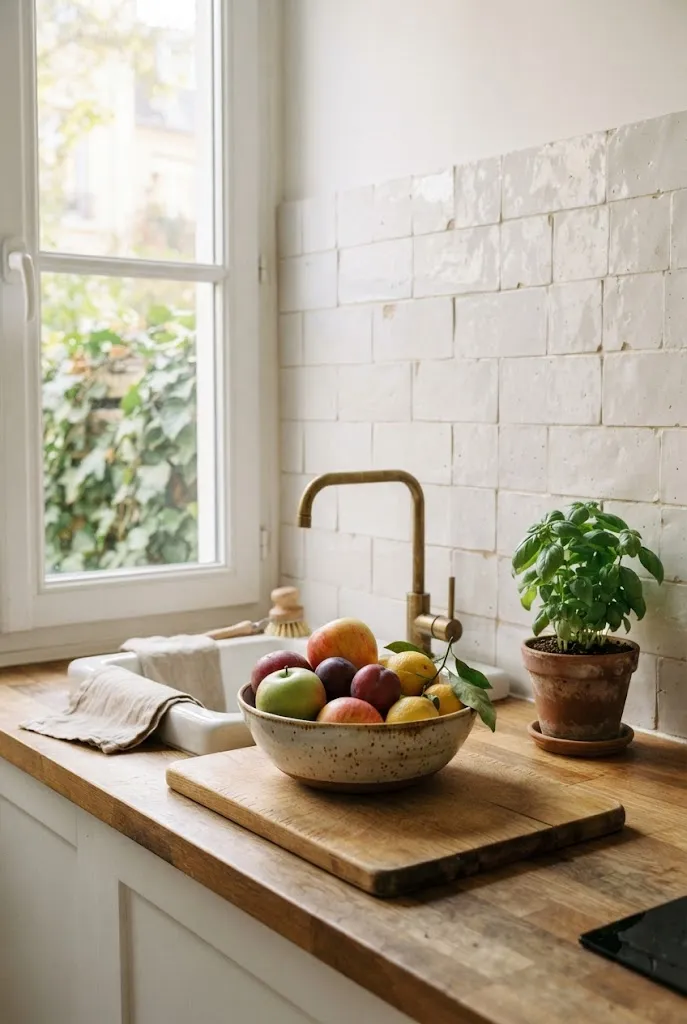
A temporary backsplash can reduce the “rental kitchen” look. A light, subtly glossy tile pattern, such as a classic subway or a soft zellige look, bounces light and refreshes dated walls.
Clean and dry the wall, plan the layout so cut pieces fall in corners, and use a level to keep lines straight. Heat from the stove can affect some adhesives, so check manufacturer guidance for use near cooking surfaces.
Do: Choose a finish with slight texture so it doesn’t look like a sticker.
Don’t: Use thin film products directly behind an open flame without checking heat ratings.
22. Make a Small Bathroom Glow With a Backlit Mirror
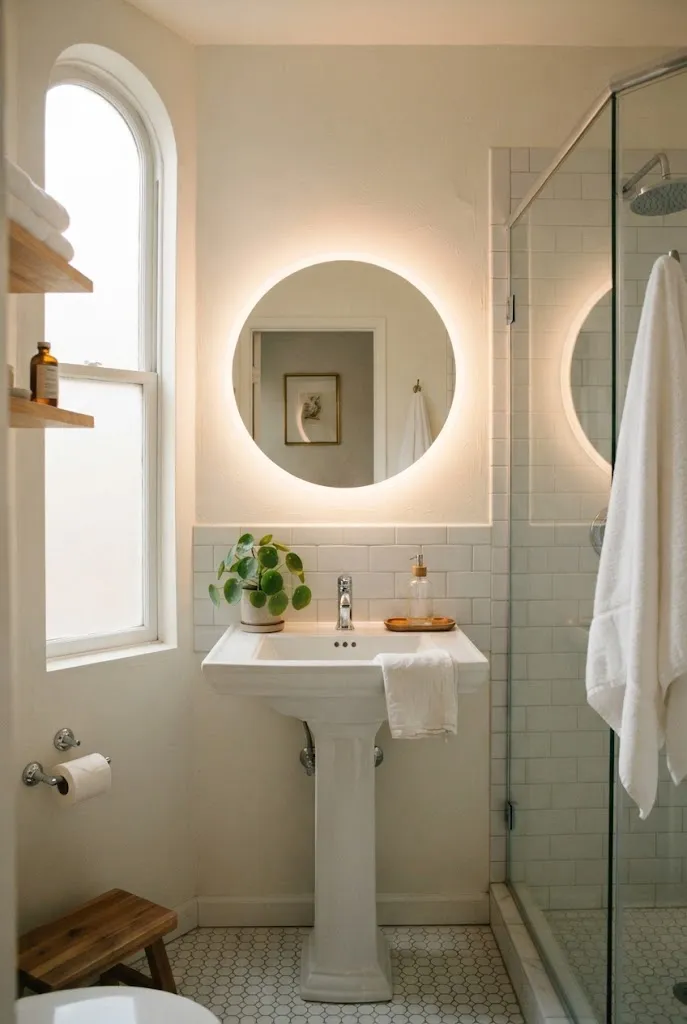
A backlit mirror adds even light around the face and reflects more brightness into a compact bathroom. It’s a moderate upgrade, and plug-in options let renters avoid wiring work.
Pair it with white or pale towels, a clear or light shower curtain, and one small plant if the room has some natural light. Keep the counter clear with a tray or a wall shelf so the mirror remains the focal point.
Editor’s Note: Choose a color temperature you like. Very cool light can feel clinical, while warm white tends to look softer.
23. Fold a Desk Into the Wall
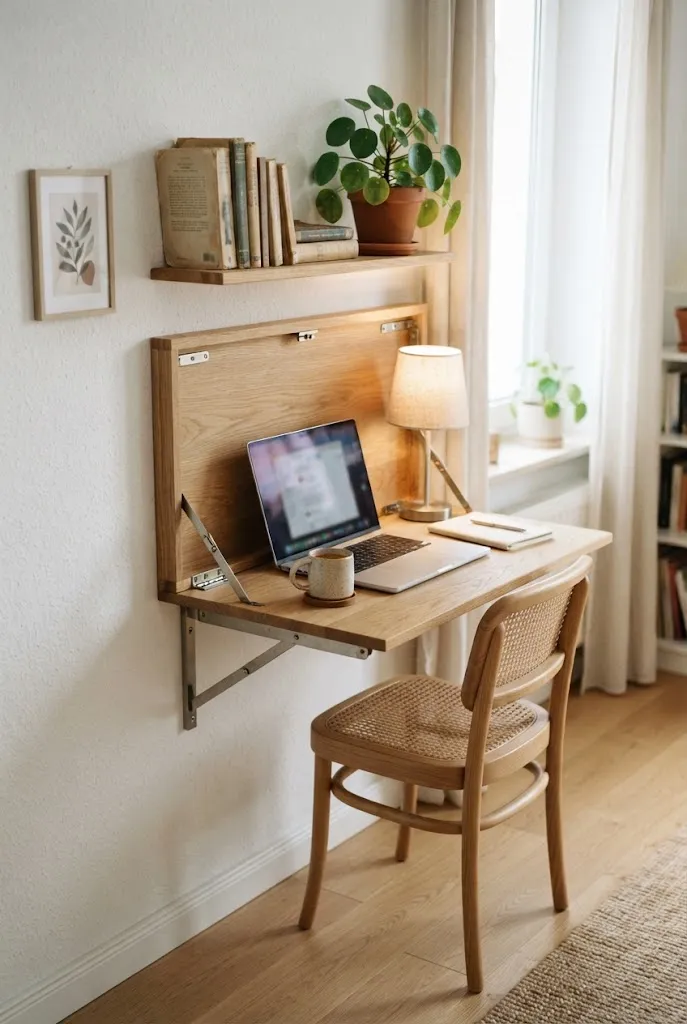
A wall-mounted fold-down desk gives you a workspace when you need it and clears the floor when you don’t. It’s a good fit for a studio, a bedroom corner, or an entry wall.
Choose a model rated for your laptop and monitor weight, and mount into studs or with appropriate anchors. A slim shelf above can hold a lamp and a few supplies. Check lease terms before drilling.
- Locate wall studs.
- Mark the height so your elbows rest comfortably.
- Install the bracket and desk.
- Add a wall lamp and cable clips.
24. Use a Drop-Leaf Table for Flexible Dining
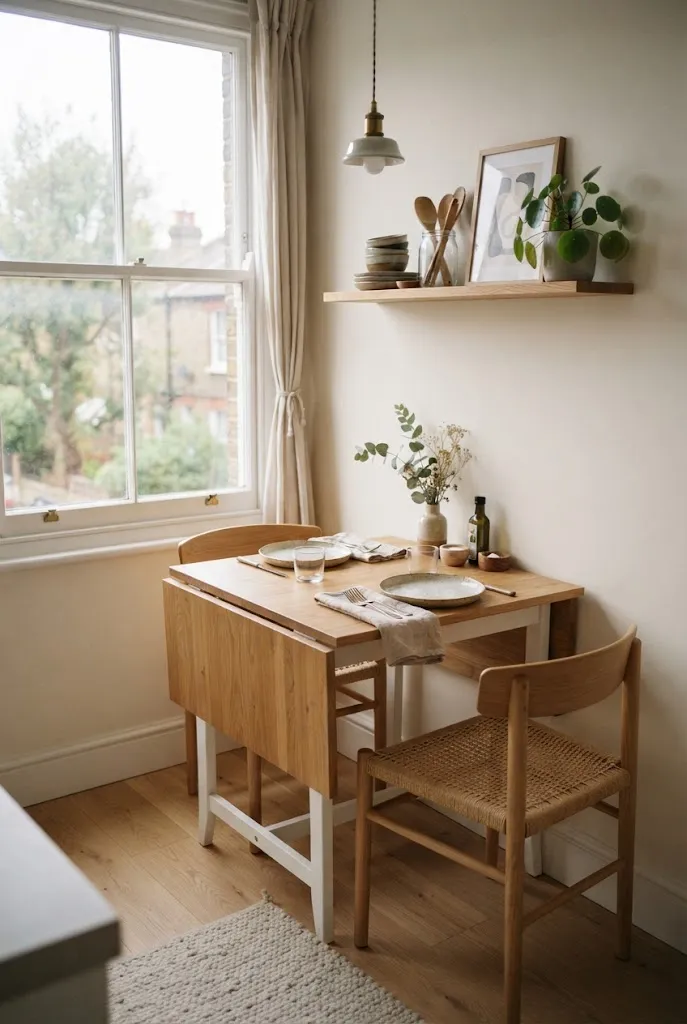
A drop-leaf table folds down to a slim profile for daily life, then extends for guests. It’s a good compromise in apartments without a dining room, particularly when placed against a wall.
Look for sturdy hinges and leaves that sit flush when extended. Pairing it with folding chairs or stackable seating means you can store extras in a closet.
Best For: Small apartments that host occasionally
Investment: Accessible to moderate
Visual Effect: Flexible footprint
25. Place One Tall Plant in a Bright Corner
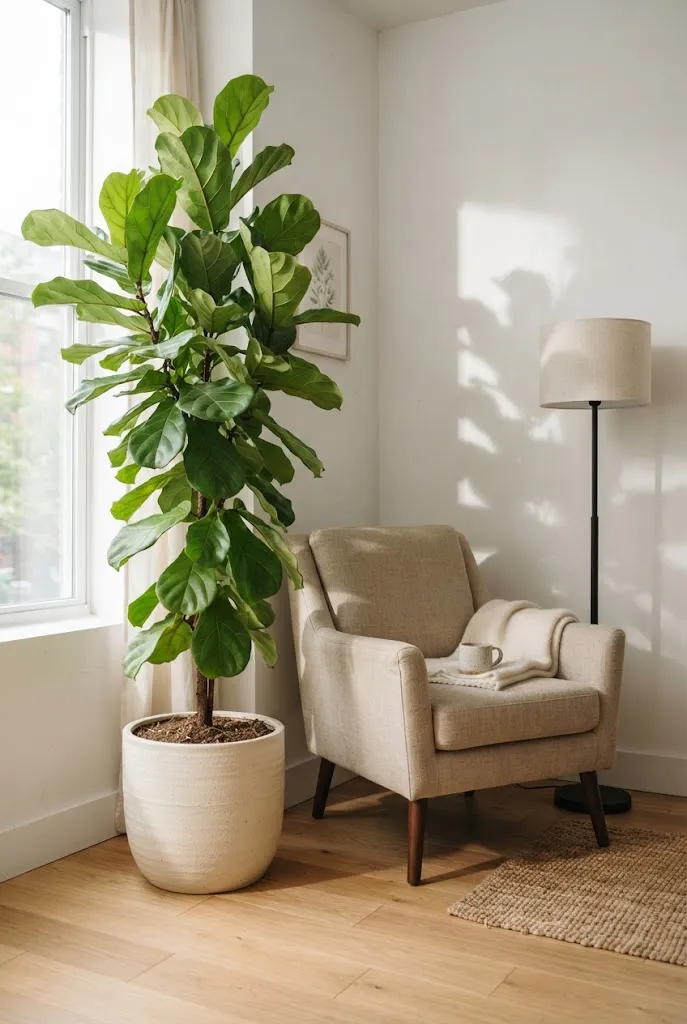
A single tall plant draws the eye upward and softens hard corners. Choose a plant that suits your light, since most larger indoor plants prefer bright, indirect light, and check the care tag for exact needs. A realistic faux plant is a fair alternative in a dim room.
Use a simple ceramic or woven planter in a tone that matches your palette, and keep it slightly away from the wall for airflow. A plant stand adds height and keeps the pot off the floor.
Editor’s Note: One bold plant often looks better than five small ones competing for attention.
26. Warm Up White With Pale Oak
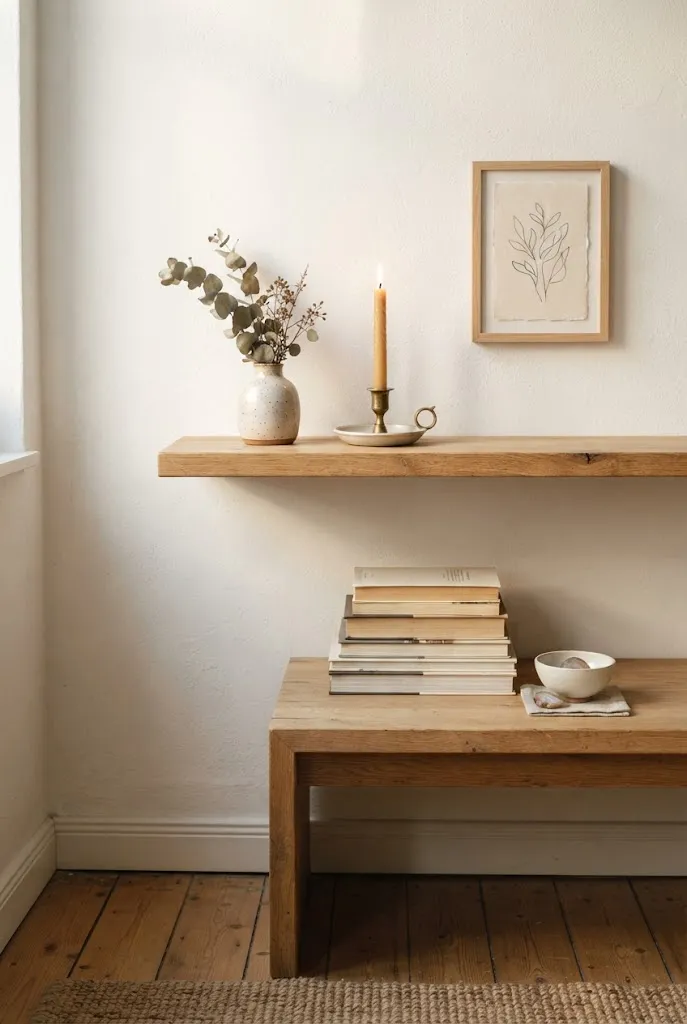
All-white rooms can feel sterile. Adding pale wood in a few places, such as a shelf, a side table, or a frame, brings warmth without making the room heavier.
| Option | Effect | Best Fit |
|---|---|---|
| Pale oak or ash | Light, airy warmth | Small or north-facing rooms |
| Medium walnut | Rich, grounded | Rooms with strong light and white walls |
| Painted white wood | Clean, minimal | Very small spaces needing maximum brightness |
Use two or three wood items in a similar tone, and mix in metal or ceramic for balance.
27. Add One Saturated Accent
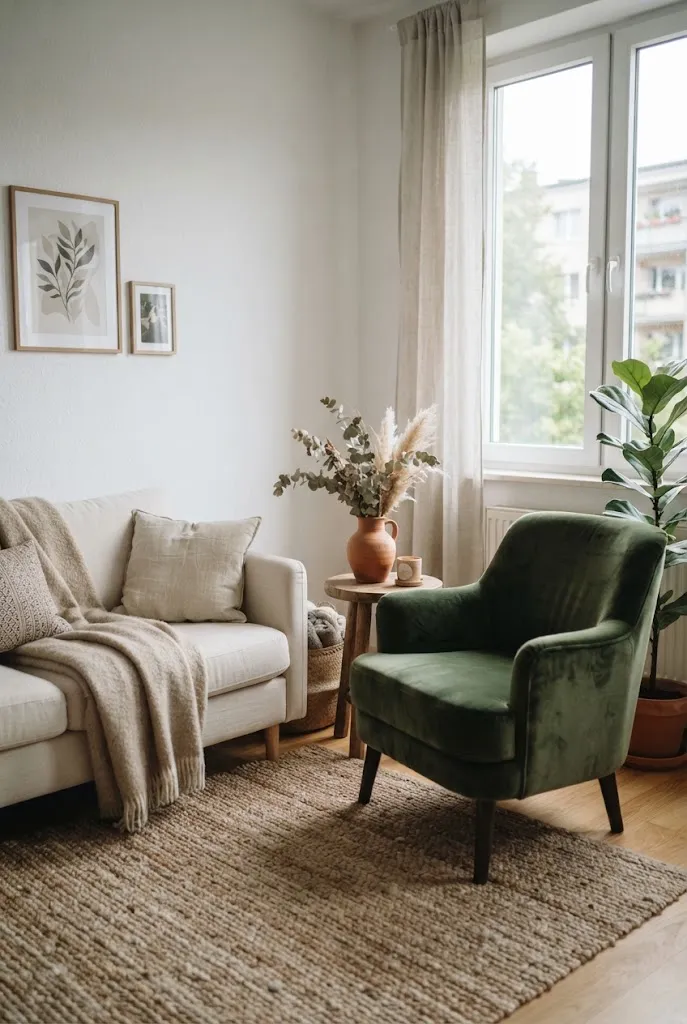
Neutral rooms can benefit from a single saturated color to add personality and depth. A deep green chair, a mustard pillow, or a terracotta vase gives the eye a focal point.
Limit yourself to one or two accent pieces, and repeat the color in a small way elsewhere, such as in a book spine or artwork.
Do: Pick an accent you’ll enjoy for years.
Don’t: Scatter many bold colors across a tiny room.
28. Keep the Bed Low and the Bedding Light
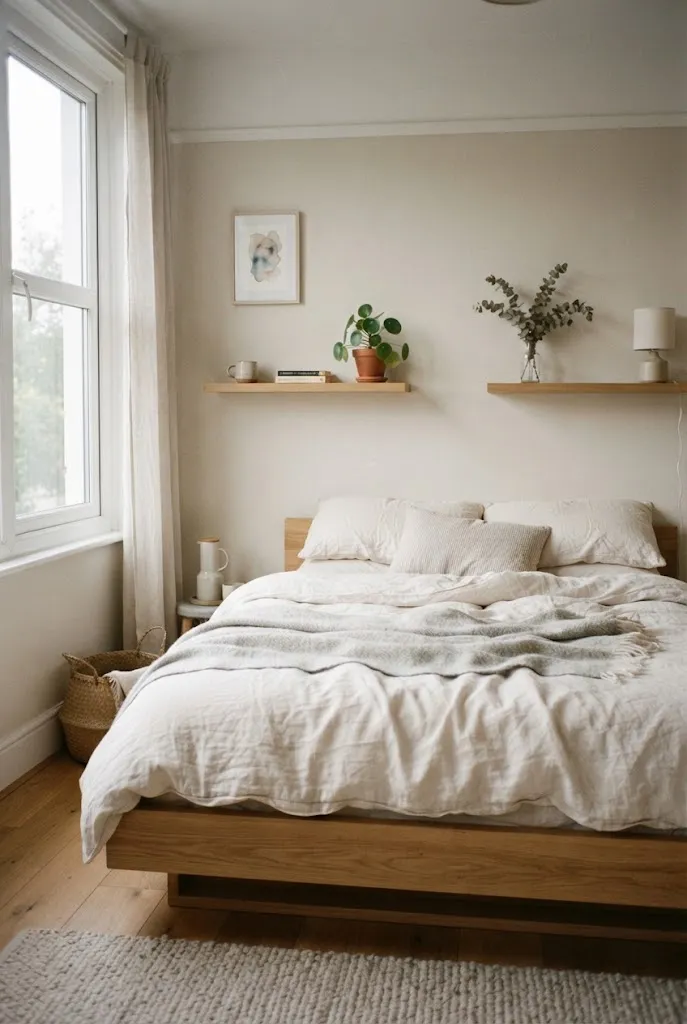
A low-profile bed keeps sight lines open, and light bedding makes a bedroom feel airy. Choose a platform or low frame, and layer white, ivory, or pale gray linen or cotton.
Skip heavy headboards in tiny rooms or choose a slim upholstered one. A pair of narrow nightstands or wall-mounted shelves frees up floor space.
Common Mistake: Overloading the bed with decorative pillows.
Better Approach: Use two sleeping pillows, two euro shams, and one lumbar for a tidy look.
29. Run a Slim Credenza Along the Long Wall
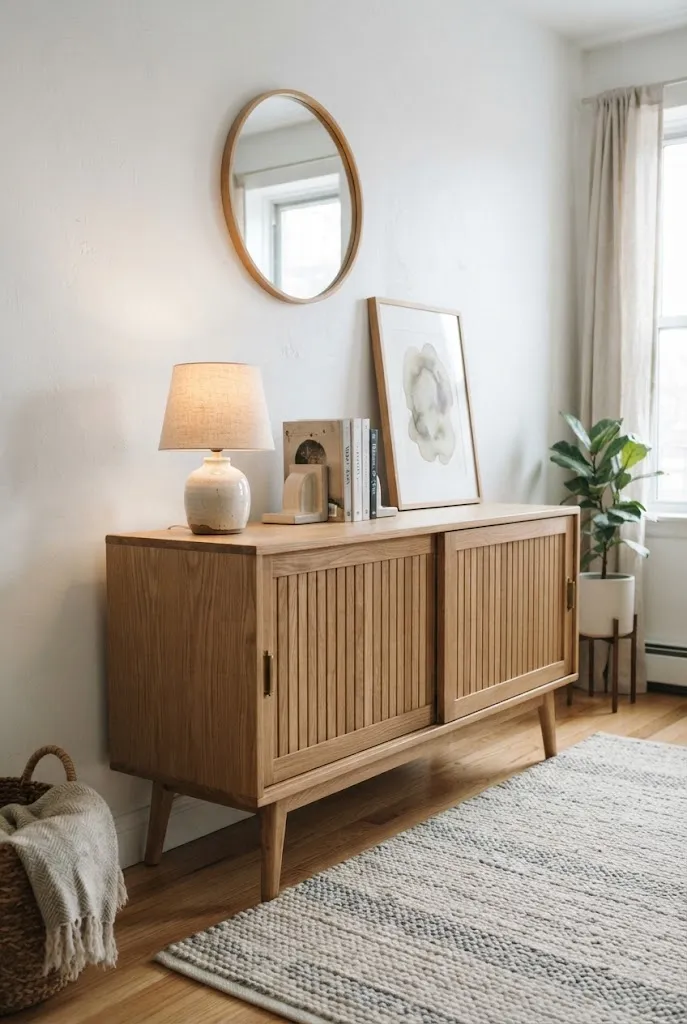
A narrow credenza, around 14 to 16 inches deep, provides closed storage without crowding the walkway. Place it along the longest wall and top it with a lamp, a mirror, or a piece of art.
Choose legs and a light finish so it feels less heavy. Inside, store media, linens, or board games so the surface can stay clear.
Quick Facts
Best For: Living rooms and long hallways
Investment: Moderate
Visual Effect: Clean horizontal line and storage
30. Float Shelves With a Restrained Edit
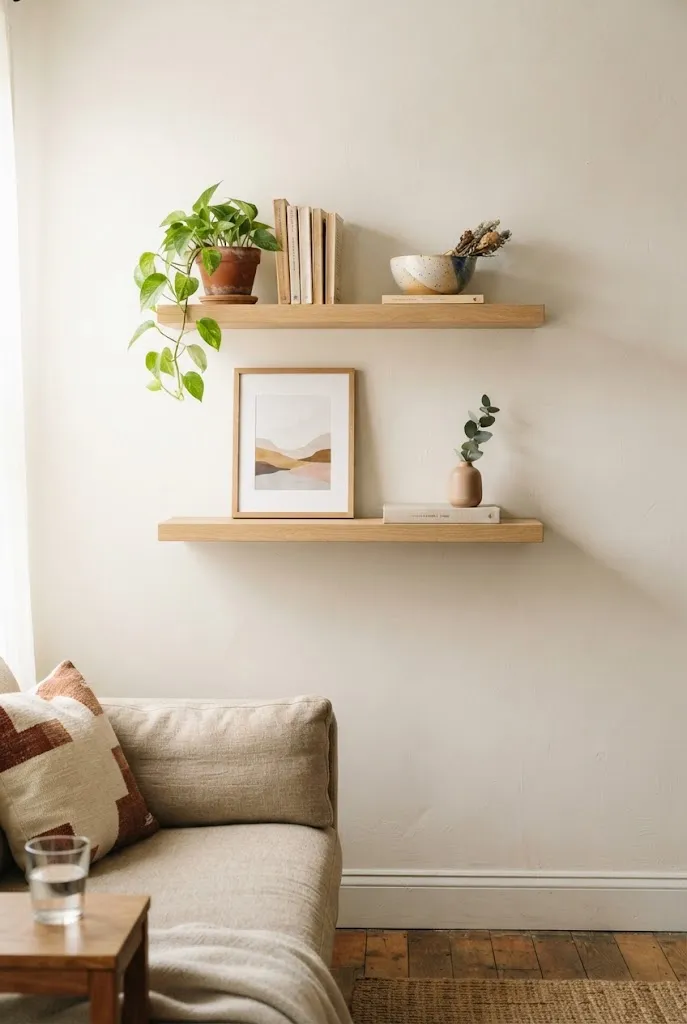
Floating shelves free the floor and display favorites, but too many objects look cluttered. Style with a few items: one or two books laid flat, a small plant, a ceramic piece, and open space.
Use the “rule of three” and vary heights. Mount into studs or use proper anchors for the weight.
Do: Leave negative space.
Don’t: Fill every inch with decor.
31. Arc a Floor Lamp Over the Sofa Corner
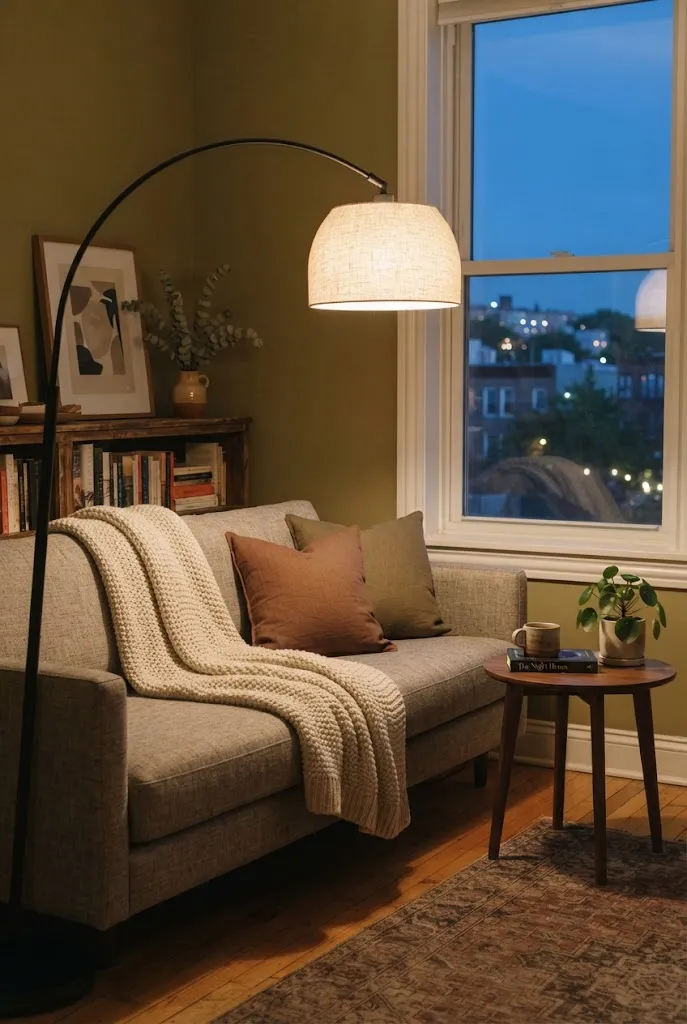
An arc floor lamp provides overhead light without a ceiling fixture, which helps apartments with limited lighting. The base stays tucked behind the sofa while the shade hangs over seating.
Choose a warm bulb (about 2700K) and a dimmable option. Make sure the base is weighted and the arc height clears heads.
Quick Tip: Place it so the shade hangs just beyond the sofa arm, not directly over people’s heads.
32. Extend Indoors With a Balcony Nook
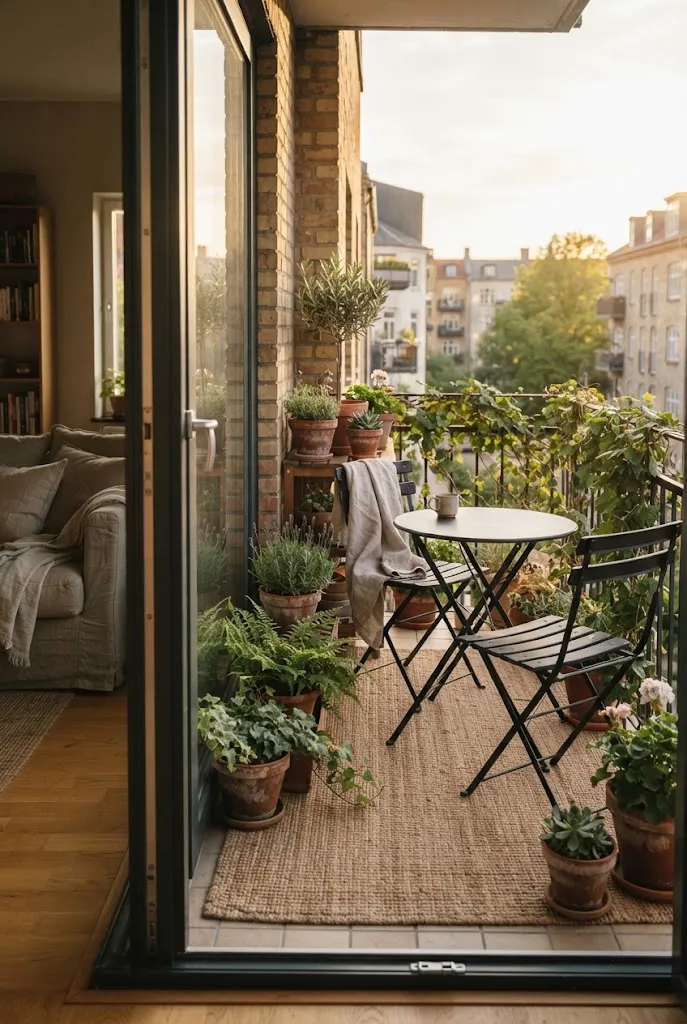
A balcony, even a tiny one, can feel like an extra room. A bistro set, an outdoor rug, and a few weather-safe plants extend the living area visually when the door is open.
Keep colors consistent with the interior so the view flows. Check building rules about balcony items and weight, and choose furniture that folds or stacks.
Best For: Apartments with a balcony or patio
Investment: Accessible
Visual Effect: Extra space and a brighter view
Where to Start
You don’t need to try all 32 ideas. Pick the issue that bothers you most: a dark corner, a crowded floor, or a flat wall. Then choose one or two ideas that address it. Lighting and mirrors tend to deliver quick changes, while layout tweaks and storage upgrades help the room work better day to day. Save the custom projects for when you own or have landlord approval.