

21 Laundry Room Ideas That Make Washday Easier
Most laundry rooms get designed last, which is why so many of them end up with a stack of baskets and a detergent jug on the dryer. The good news is that a few well-chosen changes can make the whole chore flow better. Somewhere to fold, somewhere to hang, a spot to sort, and lighting you can actually see stains by do more than any single decorative touch.
These 21 laundry room ideas cover closets, hallway nooks, basements, mudroom combos, and full-size rooms. They range from a weekend of paint to custom cabinetry, so you can borrow what fits your home and budget. Each one is about making the work smoother and the room a little nicer to walk into.
1. Hide a Stacked Washer and Dryer Behind Bifold Doors
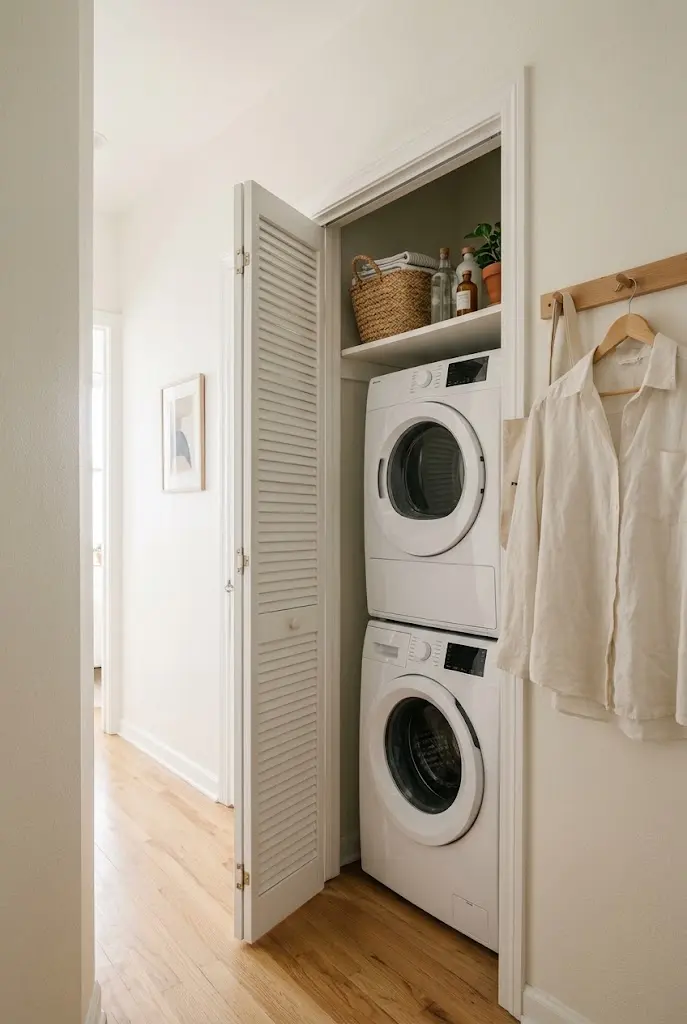
A stacked pair fits into a footprint not much wider than a standard closet. Louvered or paneled bifold doors keep the machines out of sight when they aren’t running. This is a common fix in apartments, condos, and townhomes where the laundry lives off a hallway.
- Choose louvered doors if the closet needs airflow around the dryer.
- Add a shallow shelf above the machines for detergent and stain remover.
- Mount a tension rod or slim rail on a side wall for hanging air-dry items.
- Paint the inside of the closet a light color so it doesn’t feel like a cave.
Check your manufacturer’s clearance requirements before closing the doors on a running dryer. Many models need ventilation space.
2. Run a Butcher-Block Counter Across Front-Loaders
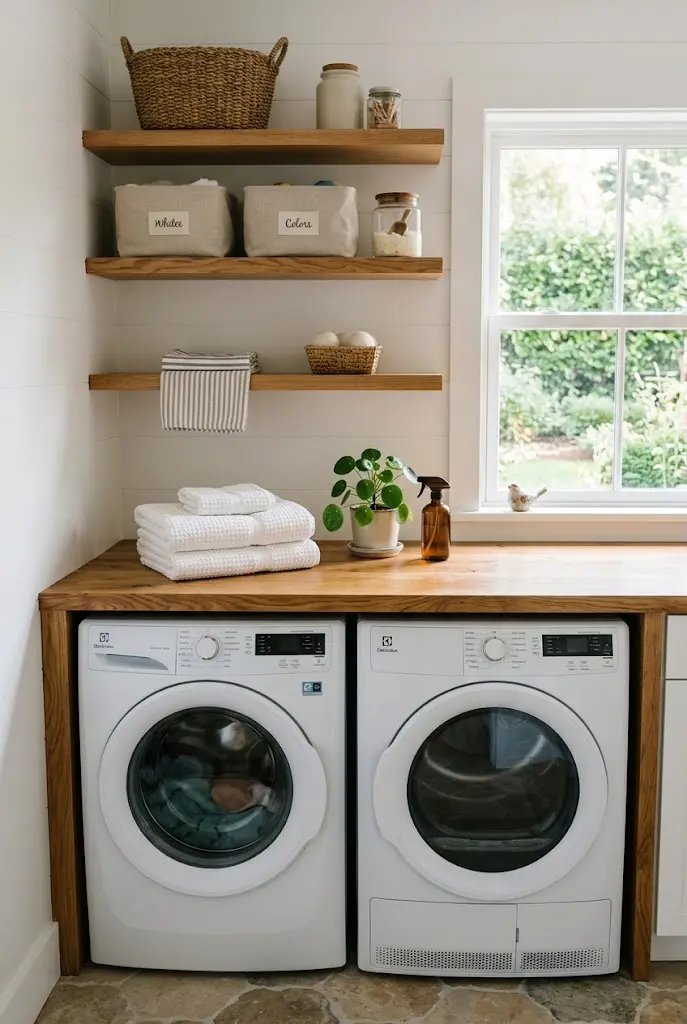
Front-loading washers and dryers share a flat top, which makes them natural support for a continuous counter. A single slab of butcher block turns two machines into a folding station at a comfortable working height.
| Option | Effect / Advantage | Best Fit |
|---|---|---|
| Butcher block | Warm, forgiving, easy to refinish | Most family laundry rooms |
| Laminate | Budget-friendly, wipes clean | Rentals and starter homes |
| Quartz or stone | Durable, polished look | Remodels with custom cabinetry |
Leave a small gap at the back for hoses and venting, and plan the counter so the machines can still slide out for service. Seal wood well, since damp towels and spilled bleach are part of the job.
3. Paint the Lower Cabinets Deep Green
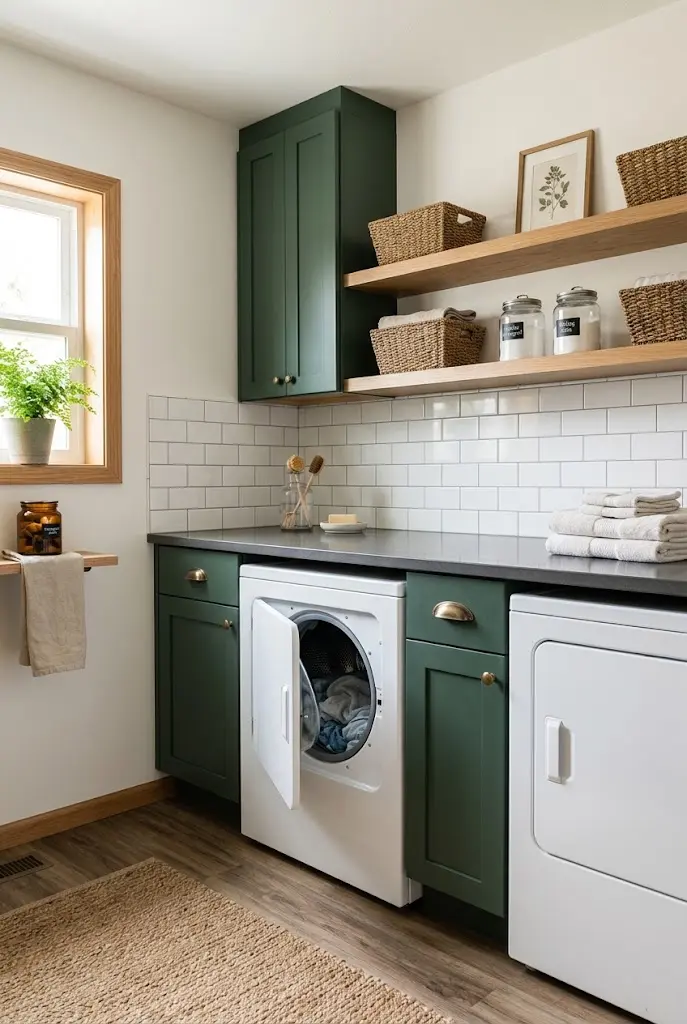
Color goes a long way in a utility room because the surfaces are usually plain. Deep green on lower cabinets grounds the space, hides scuffs better than white, and pairs well with brass or black hardware. Keep the walls and upper cabinets light so the room doesn’t feel small.
Common Mistake: Painting cabinets without degreasing and priming first.
Better Approach: Clean thoroughly, scuff-sand lightly, use a bonding primer, and finish with a durable cabinet-grade enamel. Laundry rooms see steam and splashes, so surface prep determines how long the finish lasts.
4. Hang a Drying Rod Beneath the Wall Cabinets
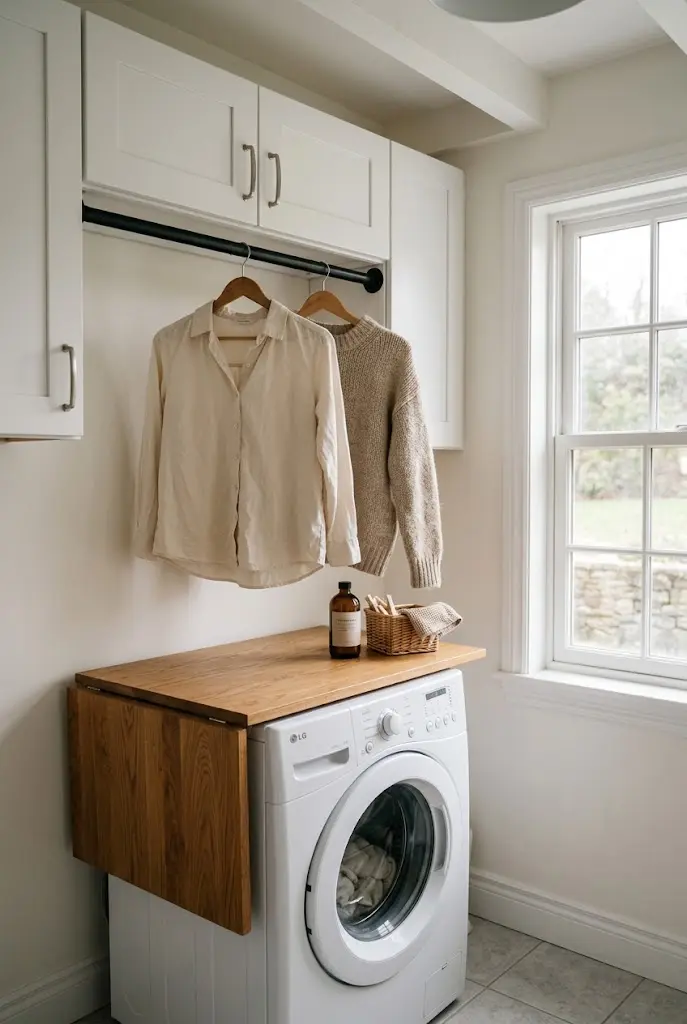
If you already have wall cabinets, the underside is wasted air. A simple rod, or two brackets and a dowel, gives you a drip-dry zone for blouses, sweaters on hangers, and delicates that shouldn’t go in the dryer.
- Mark stud or anchor locations on the cabinet’s underside or the wall below it.
- Install a sturdy rod with enough clearance for hangers to swing freely.
- Place a washable mat or shallow tray on the counter below to catch drips.
A rod near a window helps items dry faster, but keep dark colors out of strong direct sun to avoid fading.
5. Install a Pull-Out Drying Rack Cabinet
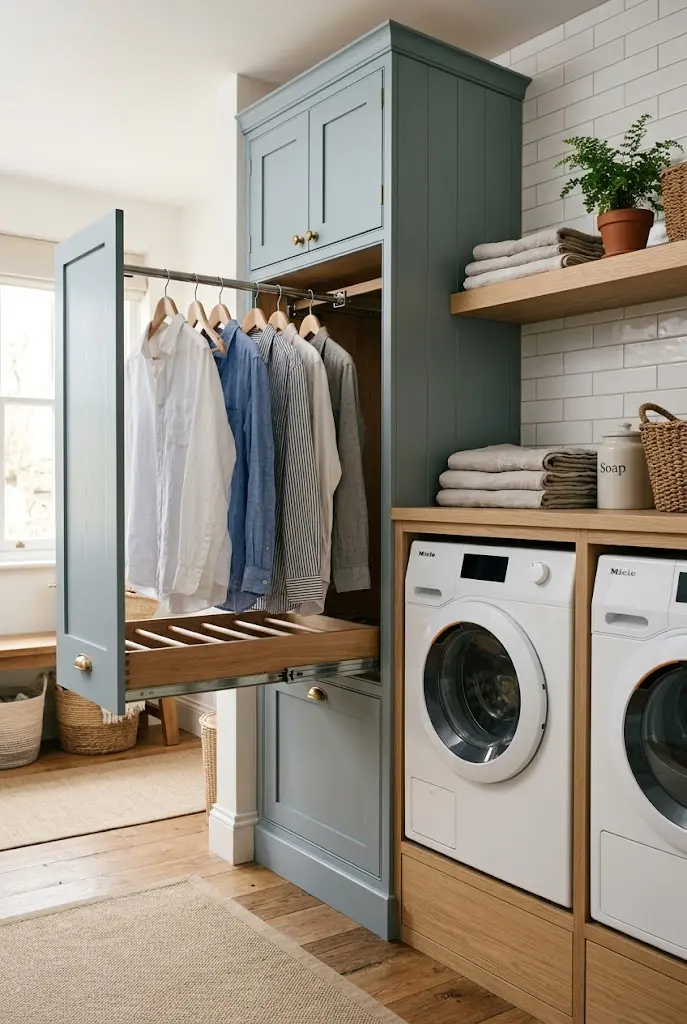
A built-in rack that slides out from a cabinet is one of the cleaner solutions for air-drying. It disappears when closed and holds a surprising amount when open. It requires custom or semi-custom cabinetry, so it sits at the upgraded end of the budget.
Best For: Households that air-dry often
Investment: Moderate to premium
Visual Effect: Clean cabinet fronts with hidden function
Ask whether the rack hardware is rated for wet weight, since soaked linens are heavier than they look.
6. Slide a Narrow Rolling Cart Into the Gap
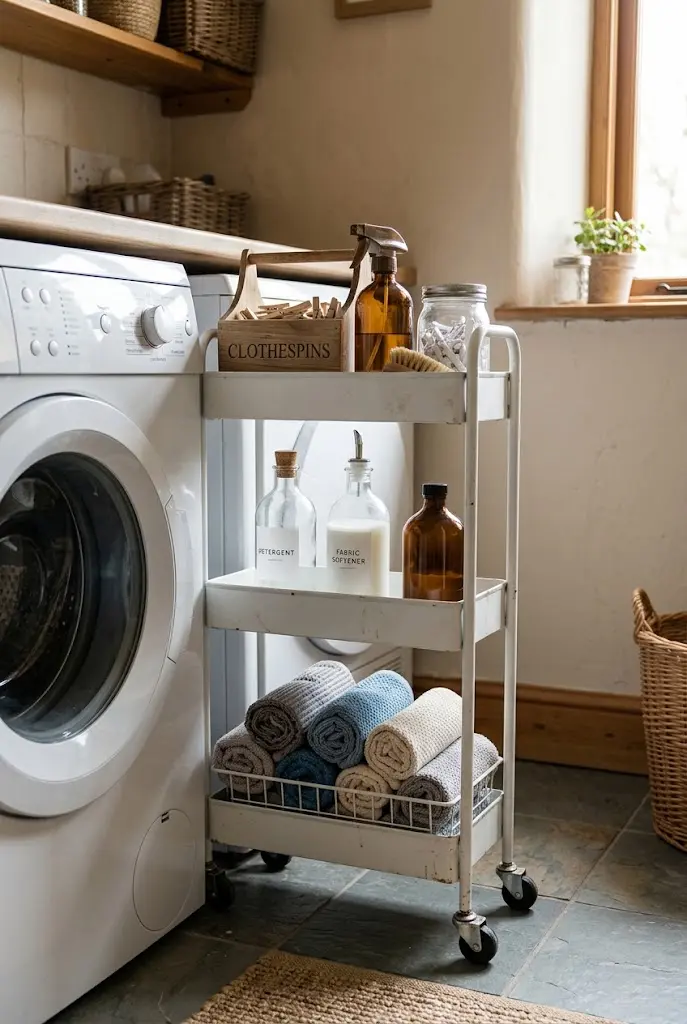
Many laundry rooms have a three- to six-inch gap beside the machines that nothing seems to fit. A slim rolling cart on locking wheels uses that space for detergent, dryer sheets, and stain sticks, and rolls out when you need to reach behind the washer.
Tips & Tricks
- Measure the gap twice and subtract a little for wheel clearance.
- Choose open shelves so you can see supplies at a glance.
- Keep heavy liquids on the bottom shelf for stability.
- Use waterproof liners if drips are likely.
7. Lay Patterned Floor Tile for a Focal Point
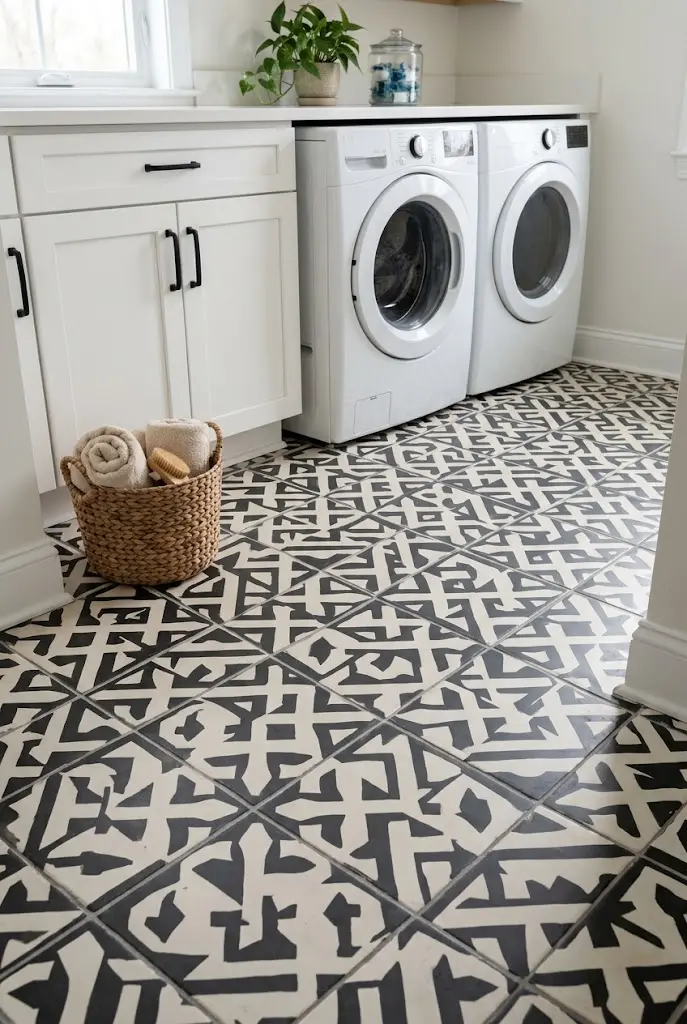
When the walls are simple, the floor can carry the design. Cement-look porcelain in a geometric pattern gives a laundry room character and tolerates water better than wood or standard vinyl planks. Matte finishes are friendlier underfoot when the floor gets wet.
Do: Choose a porcelain or tile rated for floors, and use a darker grout that hides detergent splashes.
Don’t: Pick a high-gloss tile for a room where wet feet and spills are routine.
Keep cabinets and walls simple so the pattern doesn’t compete.
8. Turn One Wall Into a Pegboard Station
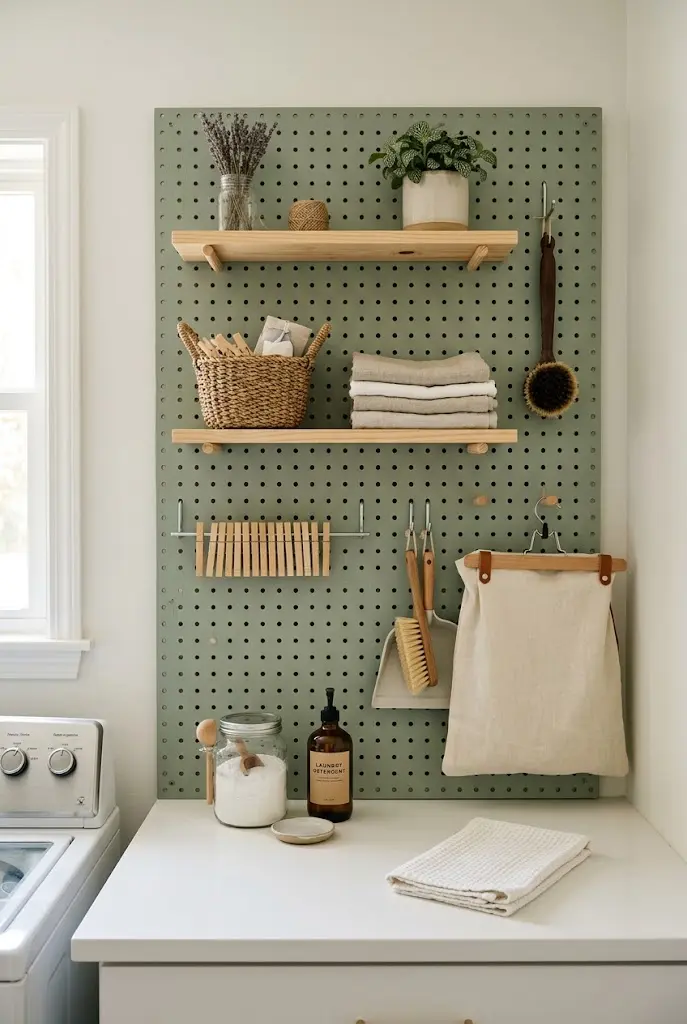
A painted pegboard gives you adjustable storage for scrub brushes, lint rollers, small shelves, and a hook for the drying clips. It’s inexpensive, easy to rearrange, and visually interesting in a plain room.
- Paint it the same color as the wall for a subtle look, or a contrast shade for a statement.
- Use small baskets and shelves for loose items.
- Add a hook or two for a lint brush or spare hangers.
- Keep the arrangement edited so it doesn’t read as clutter.
9. Tuck a Skirted Utility Sink Into the Corner
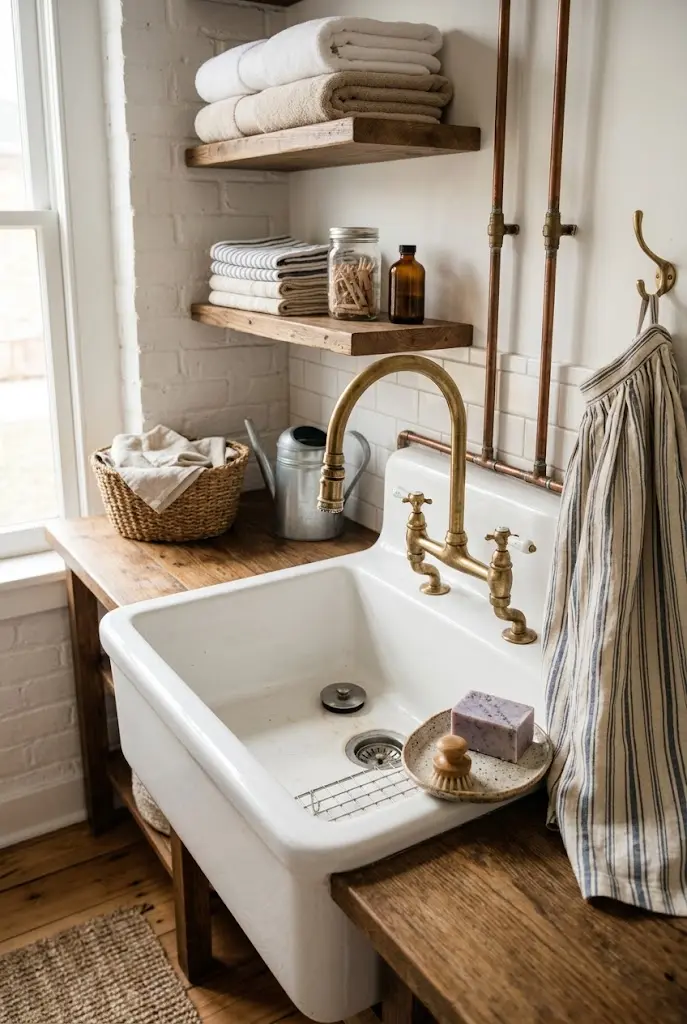
A deep sink makes hand-washing and stain treating far easier. A fabric skirt on a freestanding sink hides pipes and storage underneath, and softens the room. In a more built-in room, a sink set into a cabinet gives a cleaner look.
Editor’s Note: Faucet height matters. A high-arc faucet is easier for filling buckets, but make sure there’s enough room above for the wall cabinets.
10. Sort With Labeled Cubby Baskets
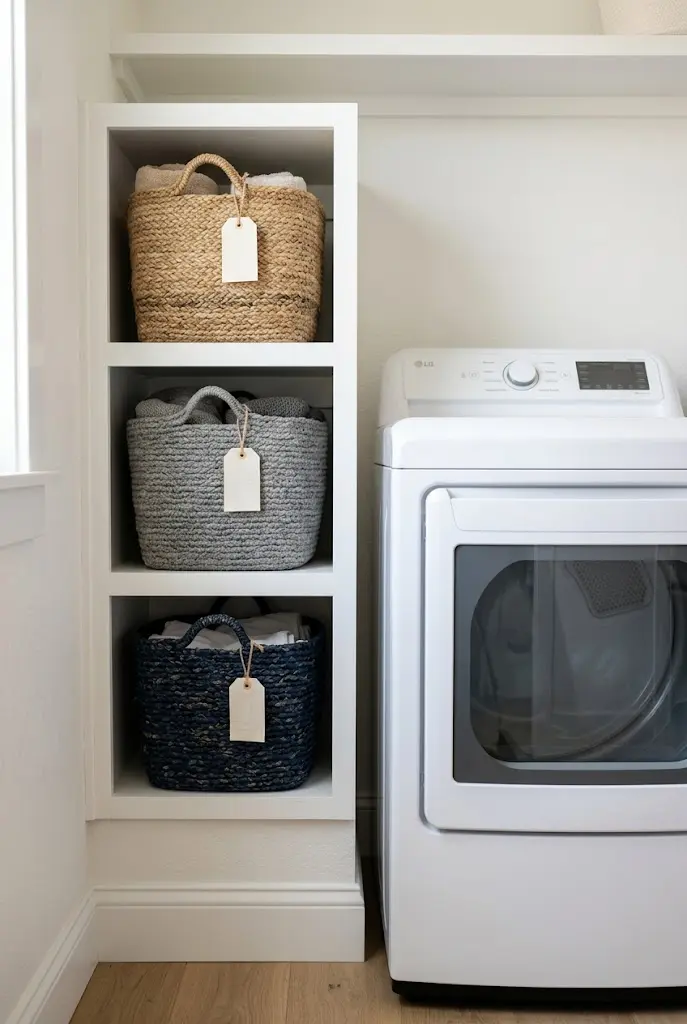
Pre-sorting saves work later. A row of three bins or hampers, one each for lights, darks, and delicates, keeps loads ready as clothes come off. Open cubbies or a shelf unit with removable baskets make the system flexible.
Best For: Busy households
Investment: Accessible
Visual Effect: Tidy and easy to scan
Use labels with a clear system so everyone in the house can follow it.
11. Close the Laundry Nook With a Pocket Door
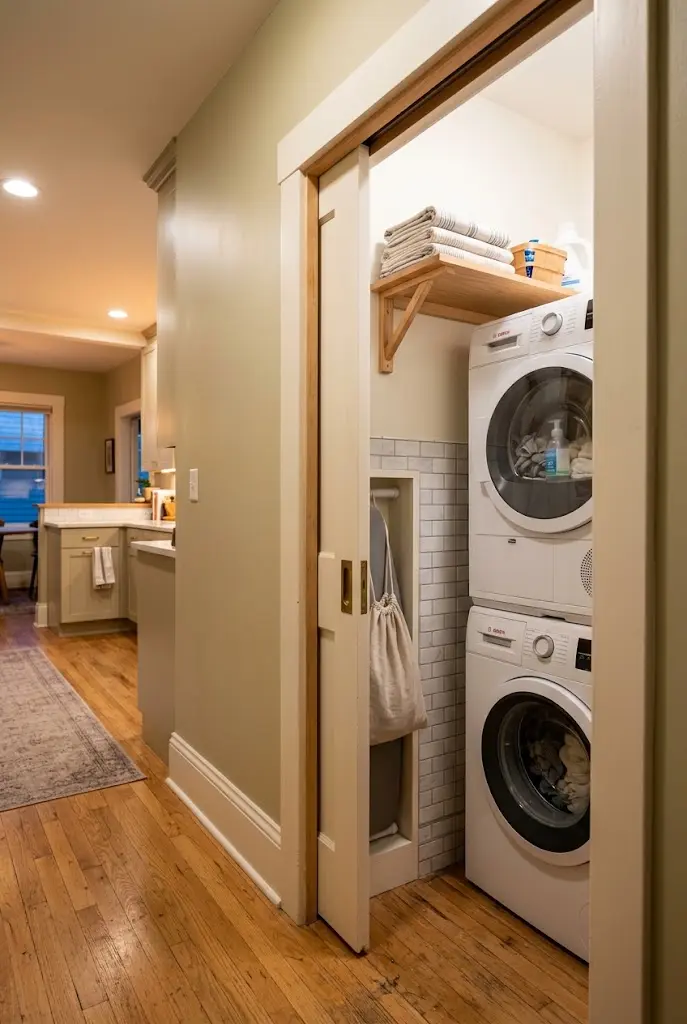
If the laundry opens off a kitchen or main hallway, a pocket door can hide the machines and the noise without taking up swing space. It’s a larger project because the wall has to accommodate the door track, so it’s better suited to remodels.
A solid-core door dampens sound better than a hollow one, which matters if the machines run in the evening.
12. Decant Supplies Into Glass Jars on Open Shelves
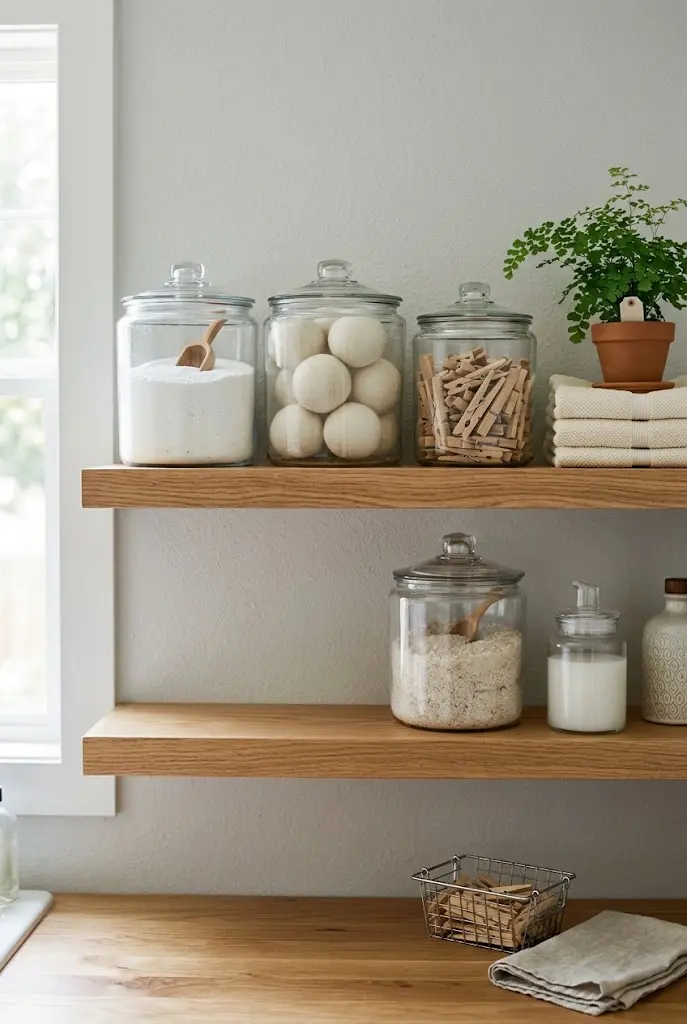
Replacing branded bottles with clear jars and a few wooden scoops makes the shelf look intentional. It also reduces visual noise.
- Use airtight lids for powders and pods.
- Keep a matching tray for smaller items.
- Reserve a spot for the original container’s instructions if needed.
Don’t pour different products into unmarked jars, since it’s easy to mix them up. Label each clearly.
13. Add Beadboard and Shaker Cabinets for a Farmhouse Feel
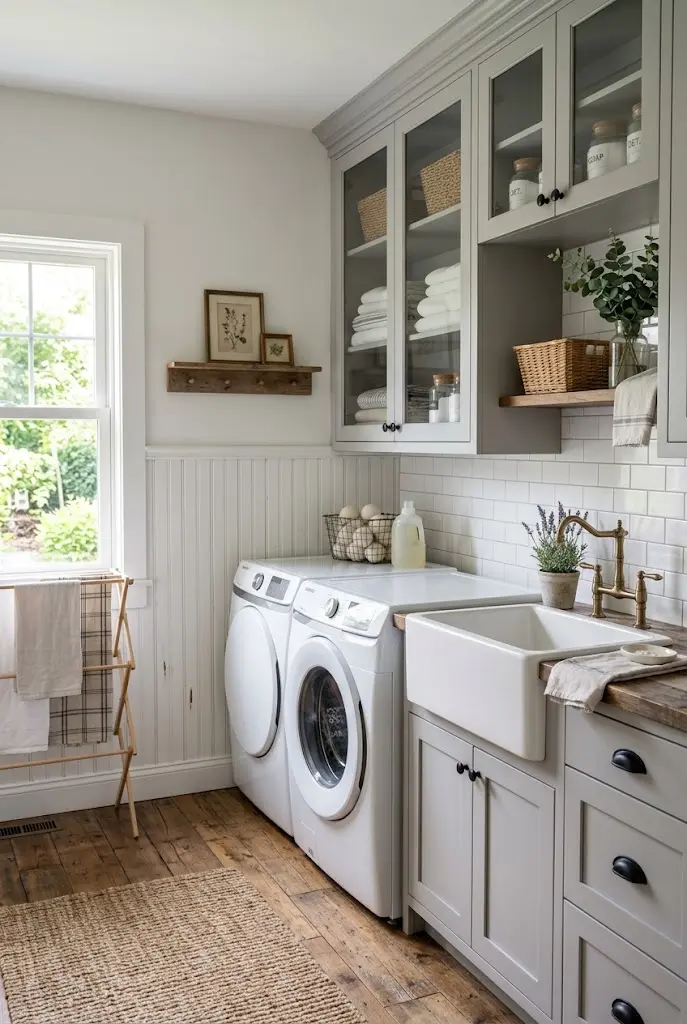
Beadboard on the lower wall and simple shaker cabinets create the classic farmhouse look. It’s durable, wipeable, and forgiving.
| Option | Effect / Advantage | Best Fit |
|---|---|---|
| Beadboard panels | Real texture, sturdy | Homeowners doing a refresh |
| Peel-and-stick beadboard | Lighter lift, removable | Renters |
Seal the paint well near the sink and baseboards, where moisture is most likely.
14. Wallpaper One Wall With a Peel-and-Stick Pattern
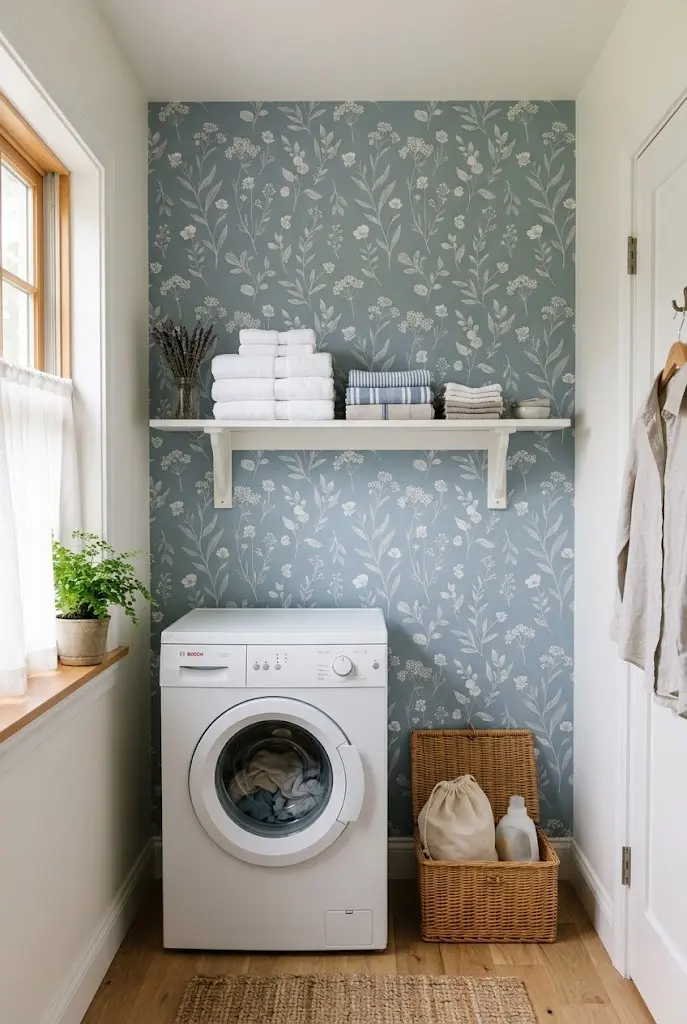
A single accent wall changes the mood of a small room without a full renovation. Peel-and-stick wallpaper suits renters and can be removed later, though it works best on smooth, clean, painted surfaces. Keep it away from direct water splashes.
Common Mistake: Wallpapering behind a steamy dryer vent area.
Better Approach: Place the pattern on a dry wall, away from vent runs and splash zones.
15. Combine the Laundry With a Mudroom Bench
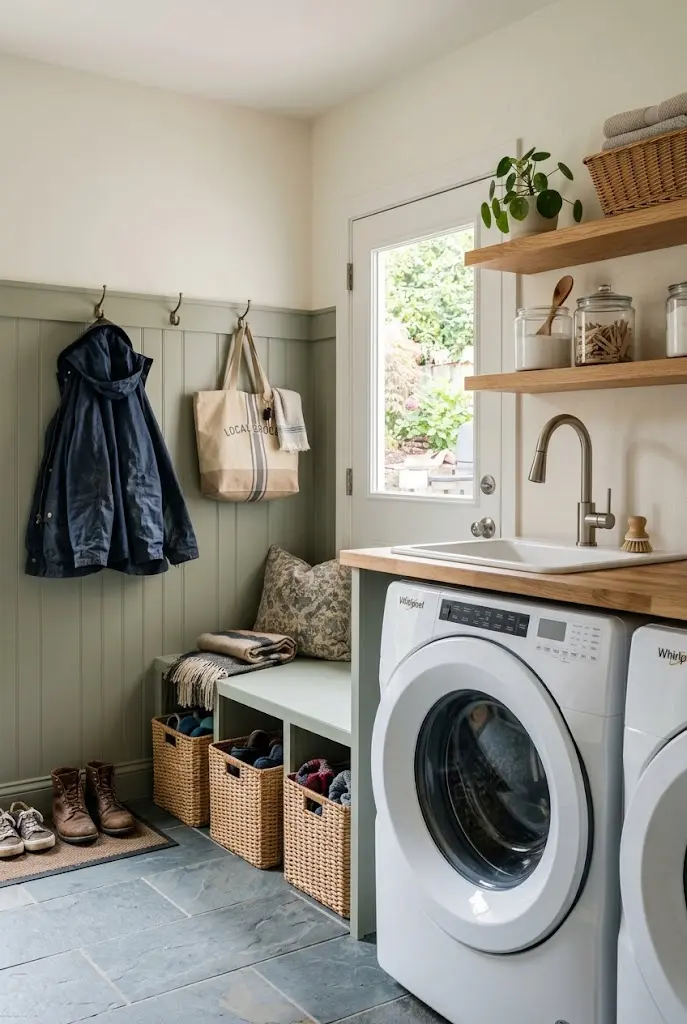
When laundry shares space with the back entry, a bench with hooks above and baskets below handles muddy shoes and dirty clothes in one pass. Dirty items can go straight into the basket on the way in.
Tips & Tricks
- Choose durable, wipeable flooring.
- Use hooks at multiple heights for kids and adults.
- Keep a small tray for wet shoes.
16. Build In a Fold-Down Ironing Board
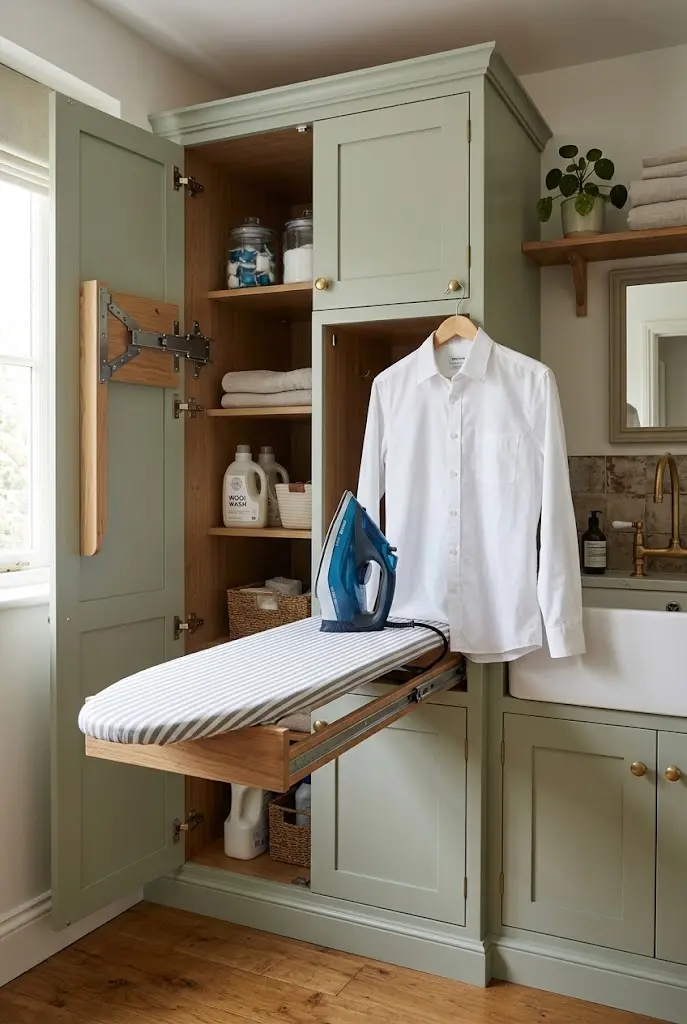
A cabinet with a fold-down ironing board gives you a proper surface without a bulky board in the corner. It’s a more upgraded option, but pays off if you iron regularly. Look for a unit with a built-in cord outlet if possible.
Editor’s Note: Allow adequate floor space in front of the cabinet, since you need room to stand and reach.
17. Set Up a Garment Steamer Corner
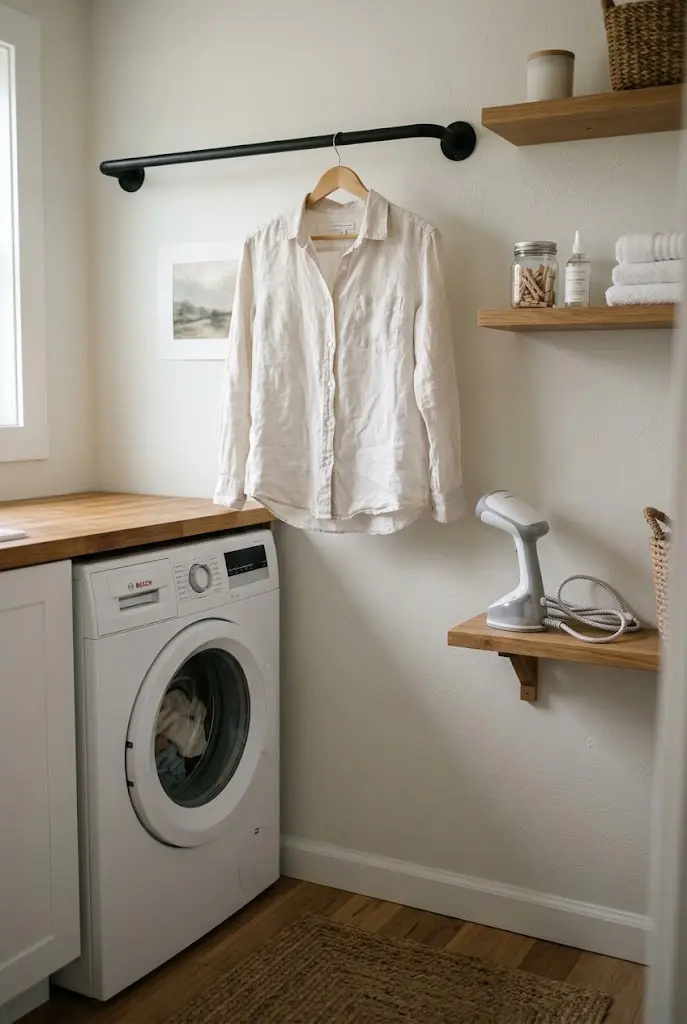
A hanging rail and a handheld steamer is a lighter-weight alternative to an ironing setup. It’s good for quick refreshes, and works well in a closet laundry.
- Mount a sturdy rail at head height.
- Keep a small tray for the steamer.
- Use hooks for hangers.
Always check the steamer’s manual for fabric guidance and water-use instructions.
18. Brighten a Basement Laundry With Better Lighting
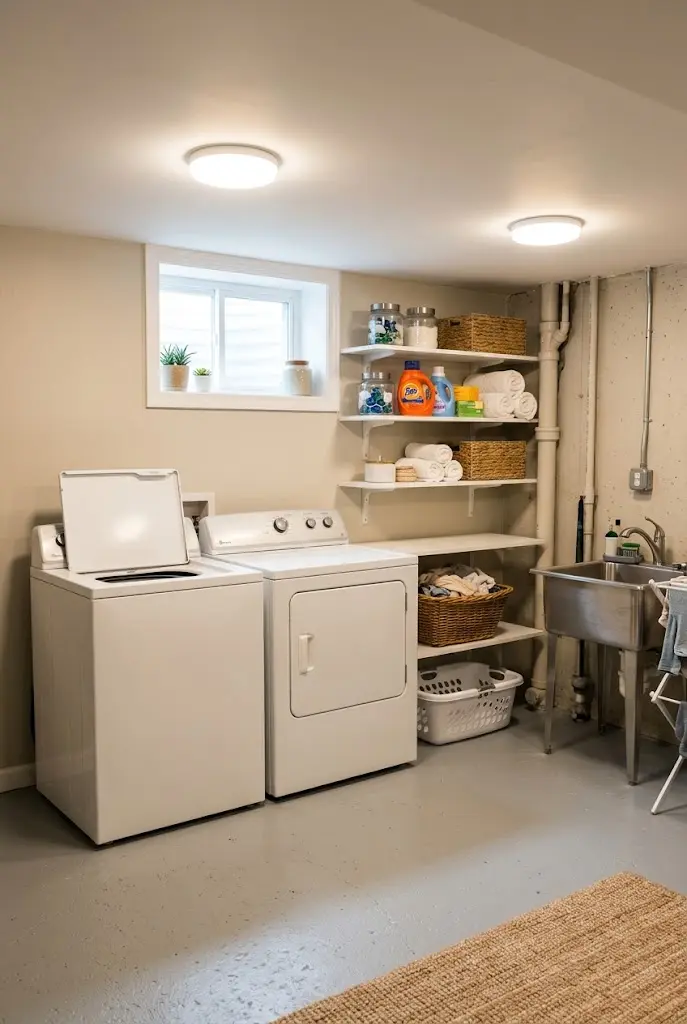
Basements often depend on a single bare bulb. Layer in bright flush-mount ceiling fixtures and a light under the cabinets, and paint the concrete floor a light color. Seeing stains clearly is a practical benefit.
Best For: Basement laundry rooms
Investment: Accessible to moderate
Visual Effect: Cleaner, brighter, less dungeon-like
Use sealed paint made for concrete and make sure the area stays dry.
19. Invest in Full-Height Cabinetry With Hamper Drawers
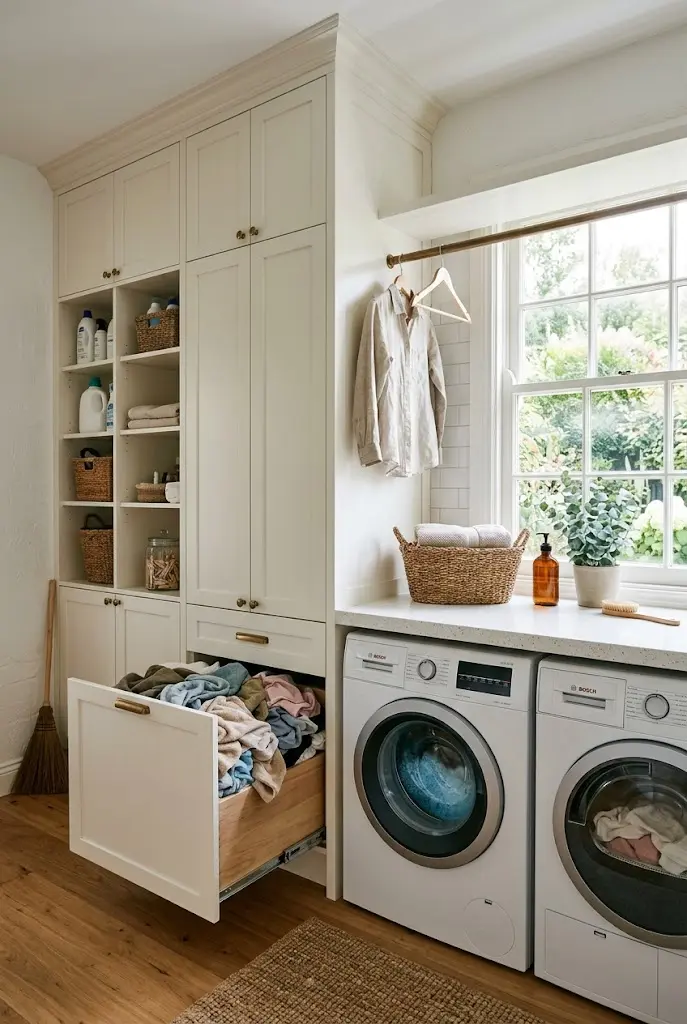
Floor-to-ceiling cabinets make a laundry room feel like a designed room. Pull-out hamper drawers keep dirty clothes out of sight, and tall cabinets store cleaning supplies and linens.
To borrow the idea at a lower cost, consider semi-custom or modular cabinetry with a few slide-out bins.
Best For: Larger laundry rooms and remodels
Investment: Premium
20. Make Room for a Raised Dog Wash Station
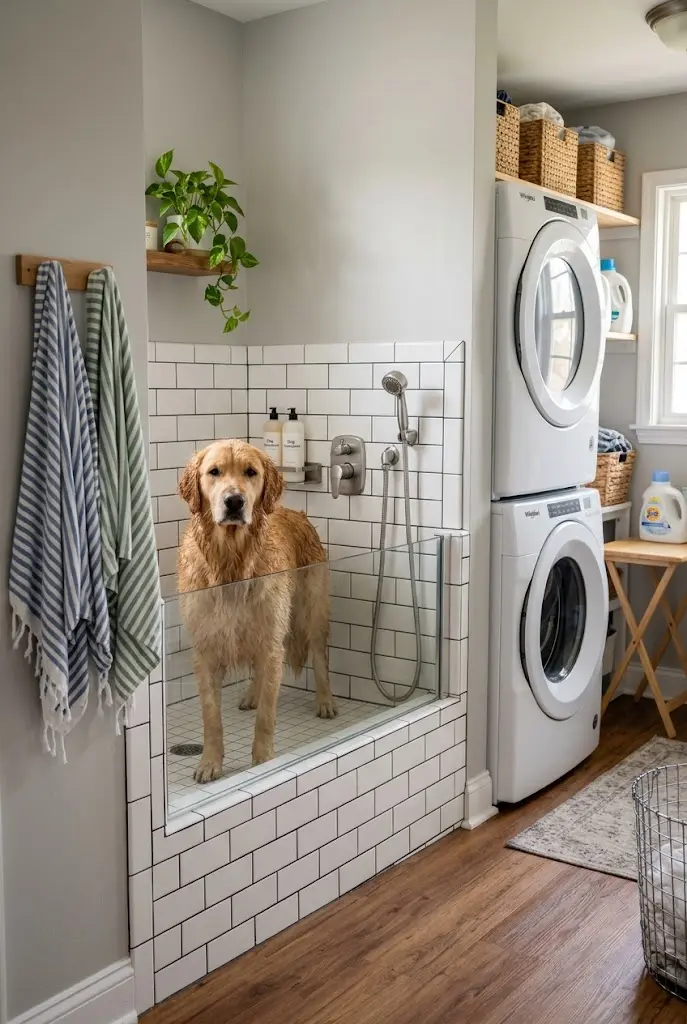
For pet owners, a raised tub with a handheld sprayer saves your back and keeps muddy paws out of the bathroom. It’s a larger plumbing and cabinetry project, so it suits remodels.
Editor’s Note: Choose a non-slip surface for the tub base, and keep a hook nearby for leashes and towels.
21. Bring In Light Wood, Plants, and Soft Textiles
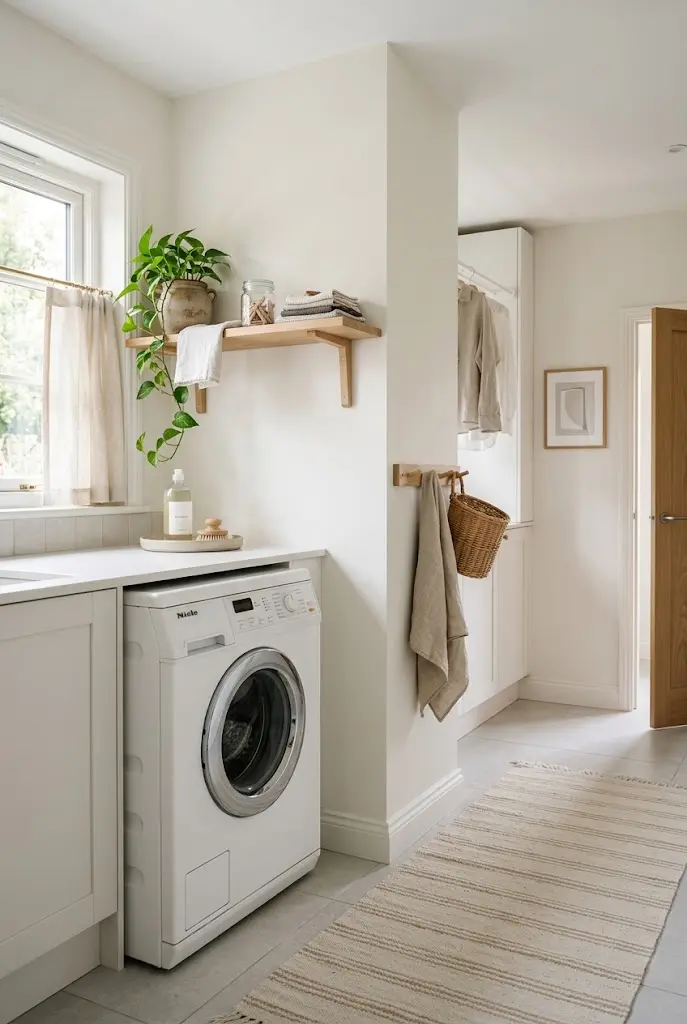
Warmth makes a utility room more pleasant. A light wood shelf, a linen curtain, and a plant that tolerates humidity soften the space. Make sure any plant gets suitable light, and choose a variety that handles indoor humidity.
- Use a washable cotton rug.
- Choose a plant you can confirm does well in your light conditions.
- Keep surfaces clear so the room doesn’t feel cluttered.
Where to Start
If you can only change one thing, start with the surface you use most: a folding counter, a drying rod, or a clear sorting system. Cosmetic updates like paint and wallpaper can follow once the room works the way you do laundry.