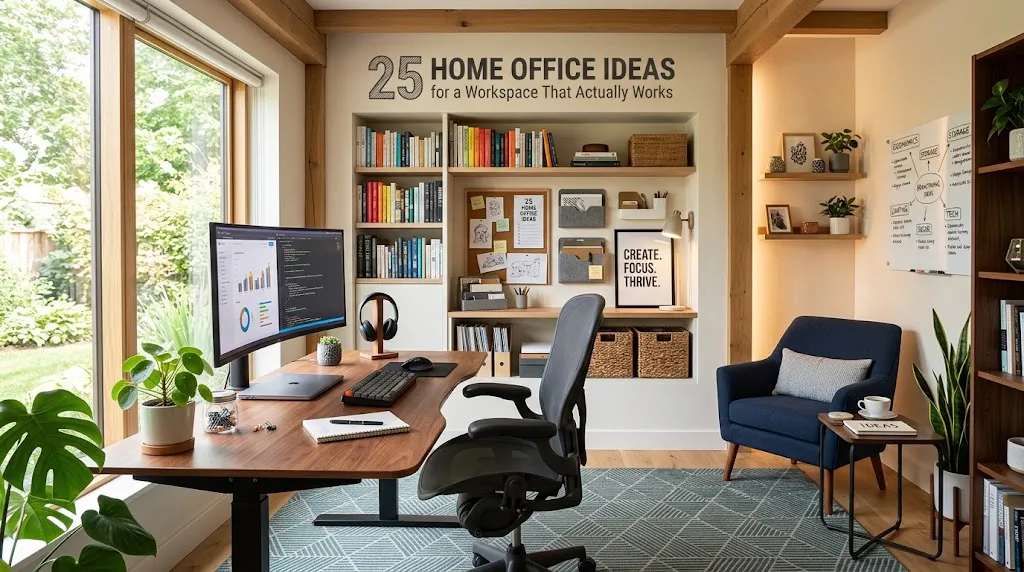
25 Home Office Ideas for a Workspace That Actually Works
A good home office rarely depends on square footage. It depends on small decisions: where the daylight falls, whether the chair fits the desk, and whether your cables end up behind a monitor or across your lap. Plenty of people work from a bedroom corner, a hallway, or a closet that used to hold winter coats, and those spaces can work as well as a dedicated room.
These 25 home office ideas cover that range. Some take an afternoon and a few basic supplies. Others involve custom millwork or an outbuilding. Each one explains how it looks, why it works, and what to watch for, so you can borrow what suits your home and skip the rest.
1. Anchor the Desk Beside a Window
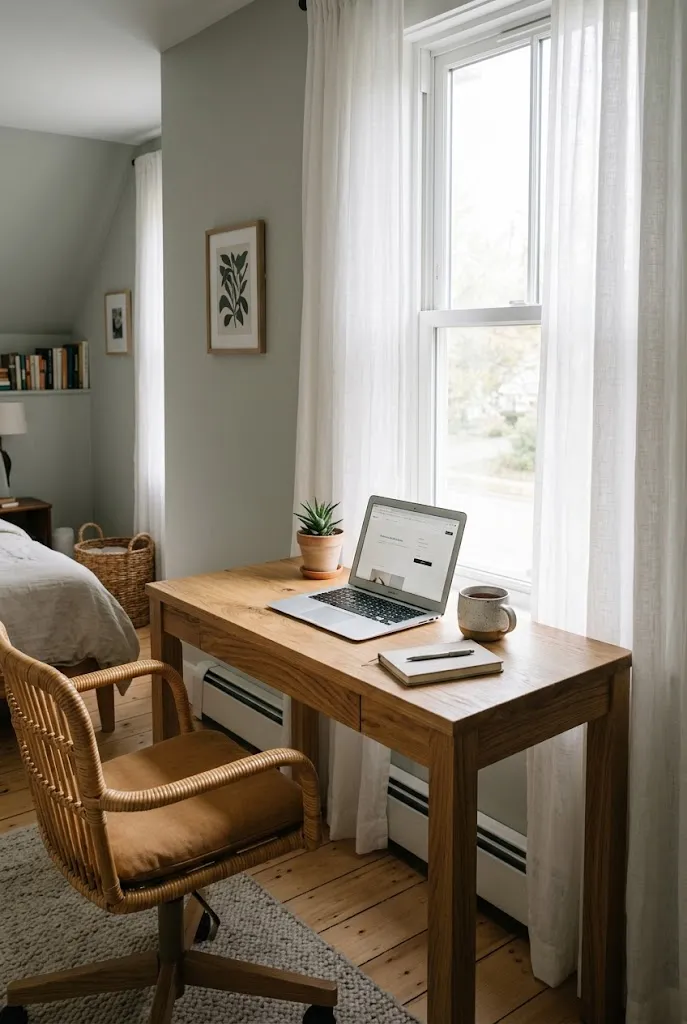
Daylight is the cheapest upgrade a workspace can get. Setting a desk beside a window, rather than directly facing it, gives you natural light without glare on the screen. Facing the glass can make a monitor hard to read by midday, while turning your back to it often throws reflections onto the display.
A side-lit setup also gives you something to look at during calls and breaks. Keep the window sill clear or hold it to a small plant and a lamp so the view stays the focus. Sheer linen curtains or a light-filtering shade handle harsh afternoon sun without making the room dim.
Editor’s Note: If the window is the only light source, add a small task lamp anyway. Winter afternoons get dark early, and the room will feel very different at 4:30 p.m.
2. Turn a Reach-In Closet Into a Compact Workstation
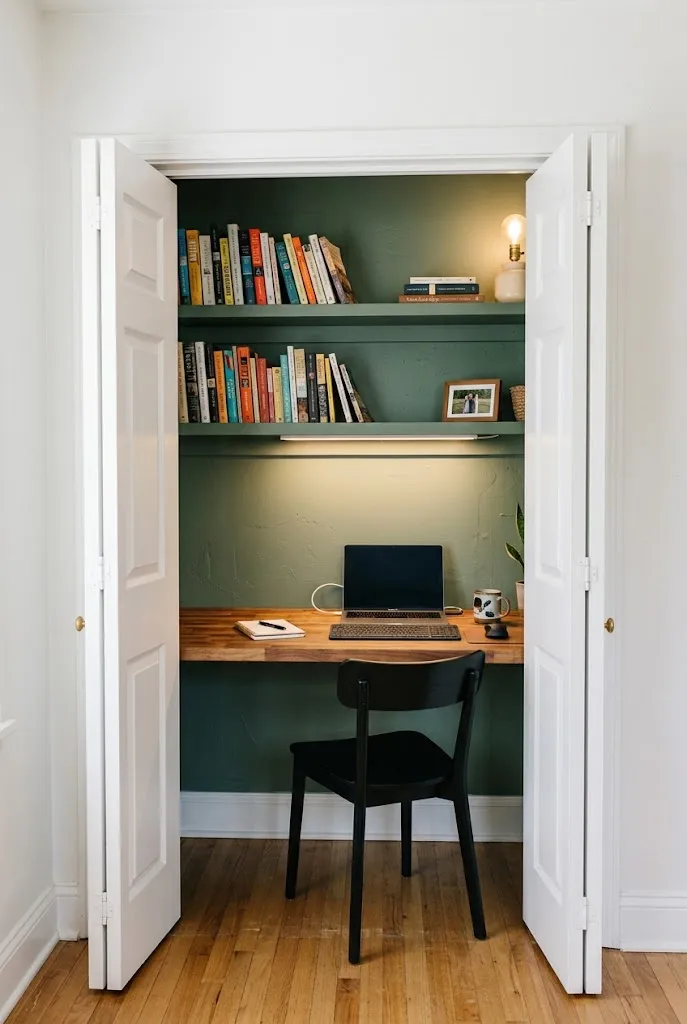
A standard reach-in closet is often deep enough for a desk once the doors and rod come out. The enclosed shape also works in your favor, since it blocks household noise and lets you close the doors on unfinished work at the end of the day.
Here’s a sequence that works for most closets:
- Remove the doors (or swap them for bi-fold or sliding versions) and take down the hanging rod.
- Install a shelf at desk height, usually around 29–30 inches, across the full width of the closet. A deep butcher-block or laminate countertop cut to length works well.
- Add two floating shelves above, and mount a plug-in or hardwired light under the lowest one.
Painting the interior a color that contrasts with the room outside makes the nook read as a deliberate feature. If you rent, keep the original hardware in a labeled bag so the closet can be restored.
3. Mount a Fold-Down Desk on a Bedroom Wall
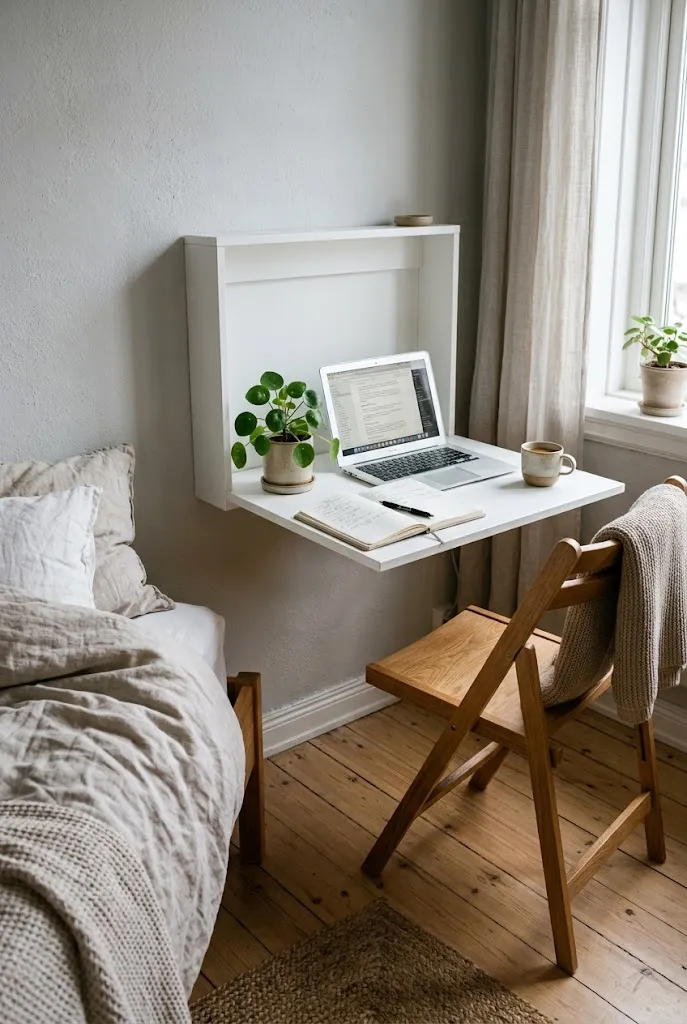
A wall-mounted drop-leaf desk takes up almost no floor space when closed. That makes it one of the most useful home office ideas for studio apartments and bedrooms where a permanent desk would crowd the room.
- Mount it into wall studs, not just drywall anchors, since a laptop and a forearm resting on the edge add real load.
- Choose a leaf depth of at least 16 inches so a laptop and a notebook fit together.
- Pair it with a lightweight folding or stackable chair that tucks into a closet.
- Add a row of hooks or a narrow shelf above for supplies, so nothing has to live on the desktop.
Some versions include built-in cubbies, which help keep small items from migrating around the room. When the desk is closed, the cabinet front can double as a pinboard or display space.
4. Build a Full Desk Wall With Open and Closed Storage
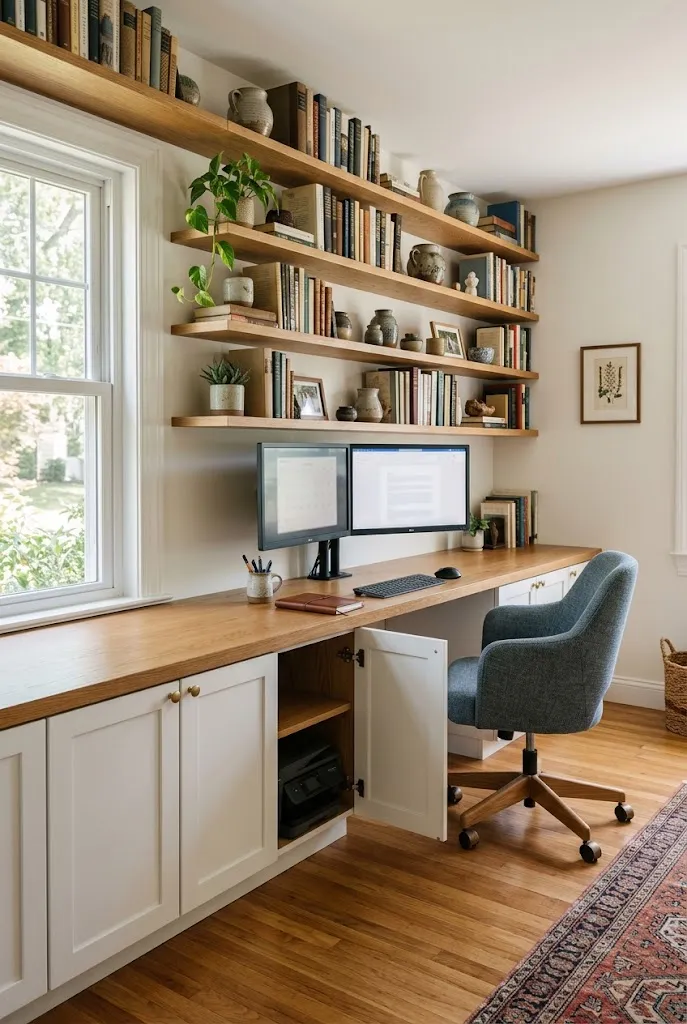
When a spare room is dedicated to work, a single wall of shelving, cabinets, and a continuous desktop can make the whole room feel organized. The trick is mixing storage types. Closed cabinets hide paperwork and supplies, while open shelves hold books and a few decorative pieces.
| Storage Type | Advantage | Best Fit |
|---|---|---|
| Open shelving | Easy access, adds visual interest | Books, plants, frequently used items |
| Closed cabinets | Hides clutter and cables | Printers, files, supplies |
| Drawer units | Sorts small items | Chargers, stationery, cables |
Modular systems from big-box and flat-pack retailers can approximate this look with painted fronts or new hardware. A custom version costs more but fits awkward walls and ceiling heights exactly.
5. Choose a Sit-Stand Desk With a Warm Wood Top
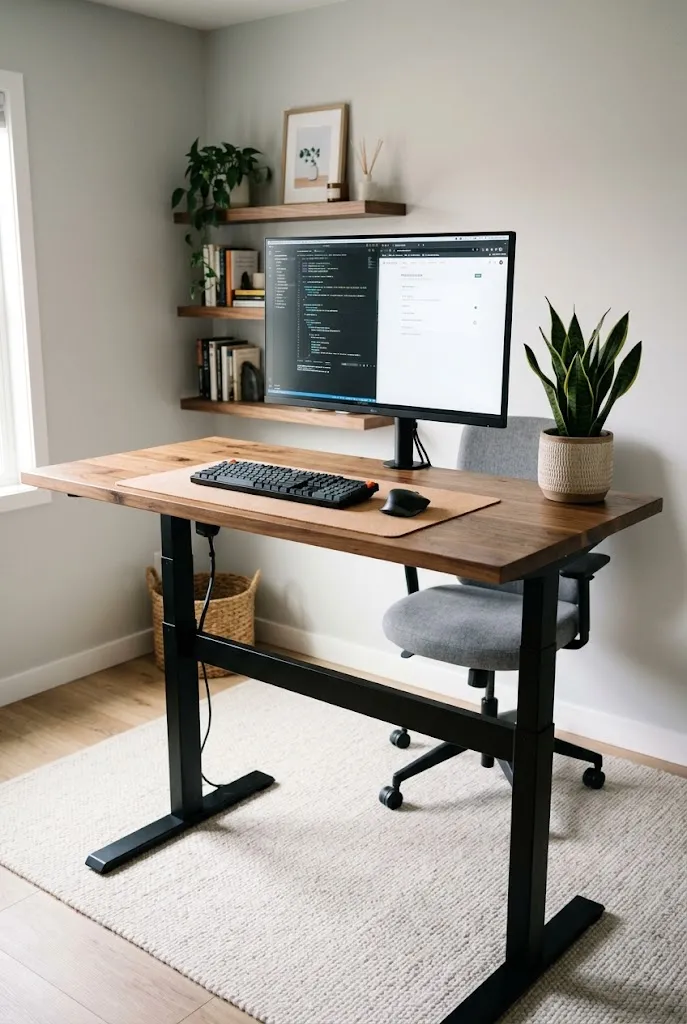
Adjustable-height desks have become common in home offices because they let you change position during the day. A wood or wood-look top softens the otherwise technical look of the metal frame.
Best For: People who work long stretches at a computer
Investment: Moderate
Visual Effect: A clean, flexible workspace with a warm finish
Pay attention to the lowest height setting, especially if you’re shorter, and the highest, if you’re taller. Look at the desktop depth too. Around 24–30 inches is usually comfortable for a monitor and keyboard. A cable tray under the desktop keeps cords from tangling as the desk moves.
6. Layer Three Types of Light
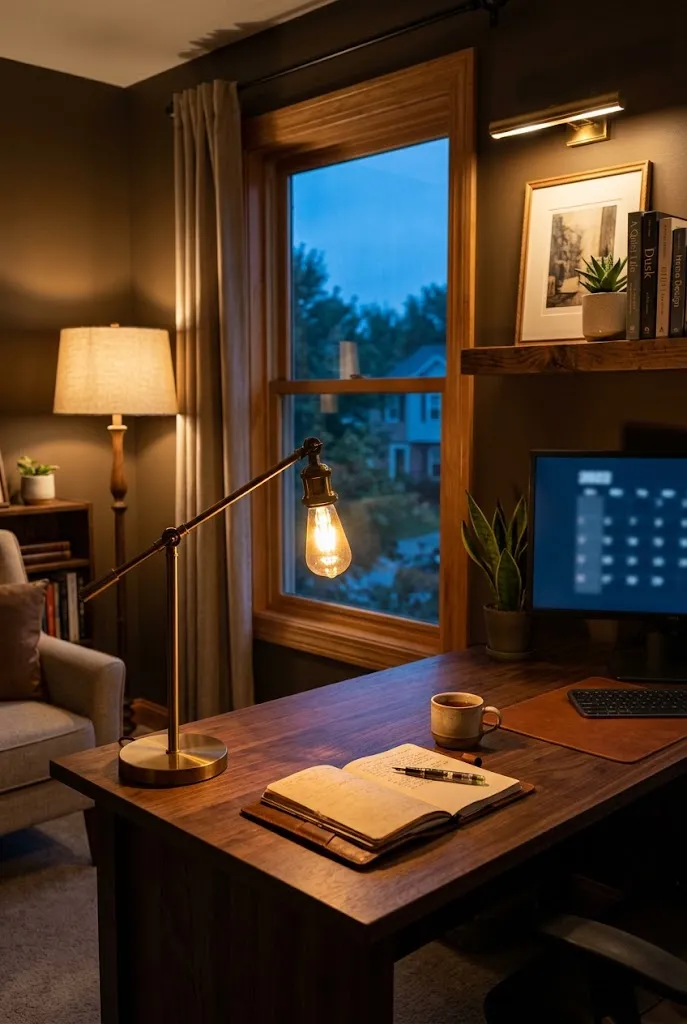
A ceiling fixture alone can leave a desk flat and shadowy. Better home offices use at least three sources:
- Ambient: a ceiling fixture, floor lamp, or wall sconce for general brightness
- Task: an adjustable desk lamp aimed from the non-dominant side to reduce shadows from your hand
- Accent: a small lamp, picture light, or shelf light that adds warmth
Tips & Tricks
- Choose bulbs with a similar color temperature across the room so the lighting looks cohesive.
- Use a dimmer on the main fixture if possible.
- Keep screens from facing bare bulbs, which causes glare.
- A lamp with a flexible neck can shift as the day changes.
Layering light costs less than most furniture and often does more for how a room feels.
7. Define an Office Zone With a Rug
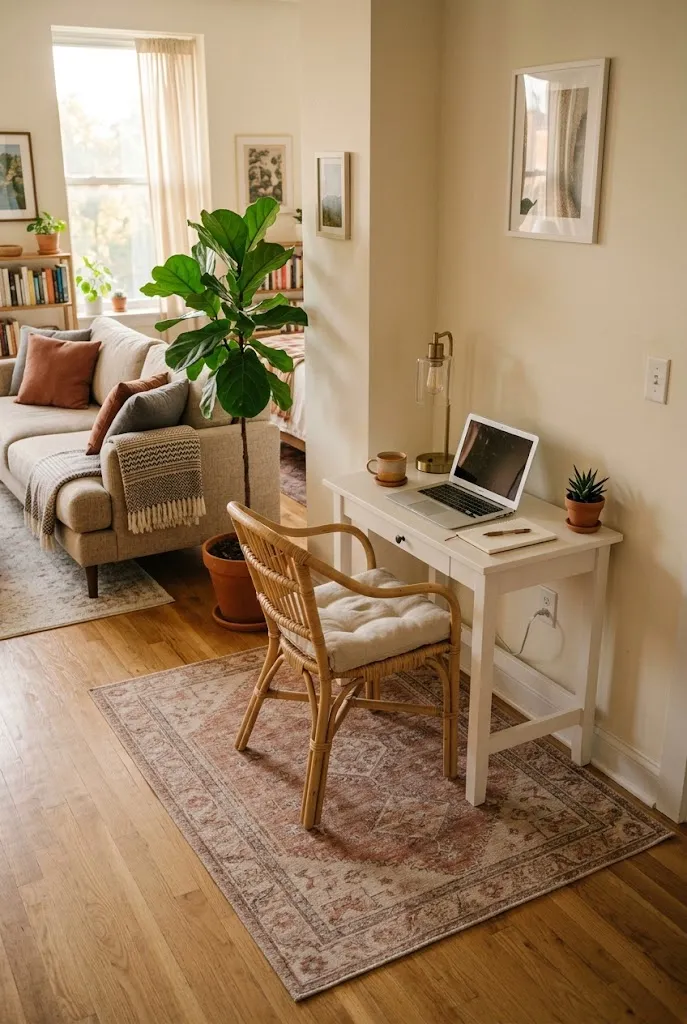
In an open living area, a desk can look like it’s wandering through the room. A rug under the desk and chair draws a visual border that says “this is the work area.”
Common Mistake: Choosing a rug so small that the chair legs roll off the edge whenever you push back.
Better Approach: Size the rug so the chair stays on it when pulled out, which usually means extending at least 24 inches past the desk on all sides.
Flat-weave or low-pile rugs let a chair glide more easily than shaggy ones. A rug that picks up one color from the adjacent living room ties the two zones together without matching them exactly.
8. Divide the Room With an Open Bookcase
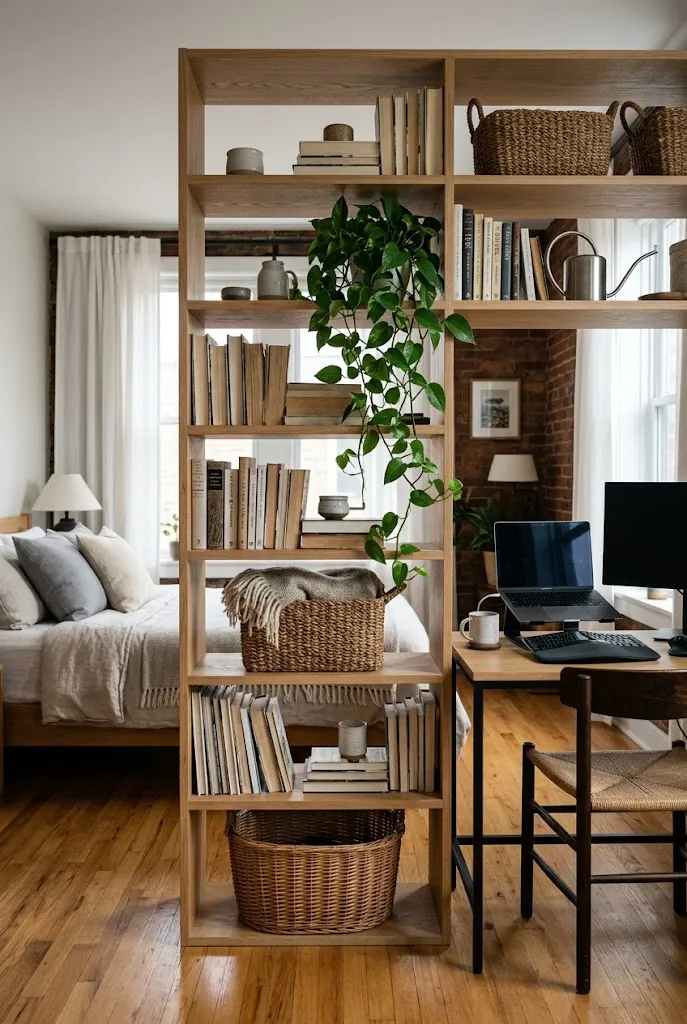
A freestanding bookcase set perpendicular to a wall can partition a bedroom, loft, or living room without blocking light. Open backs allow daylight through while still hiding some of the desk from the main space.
Fill the shelves unevenly. Mix books, baskets, small plants, and empty gaps so the divider looks like furniture instead of a wall. Anchor tall units to the wall or floor, especially in homes with children or pets. If you rent, a unit with an anti-tip strap to a stud is usually removable with a small patch.
9. Wrap the Room in Deep Green
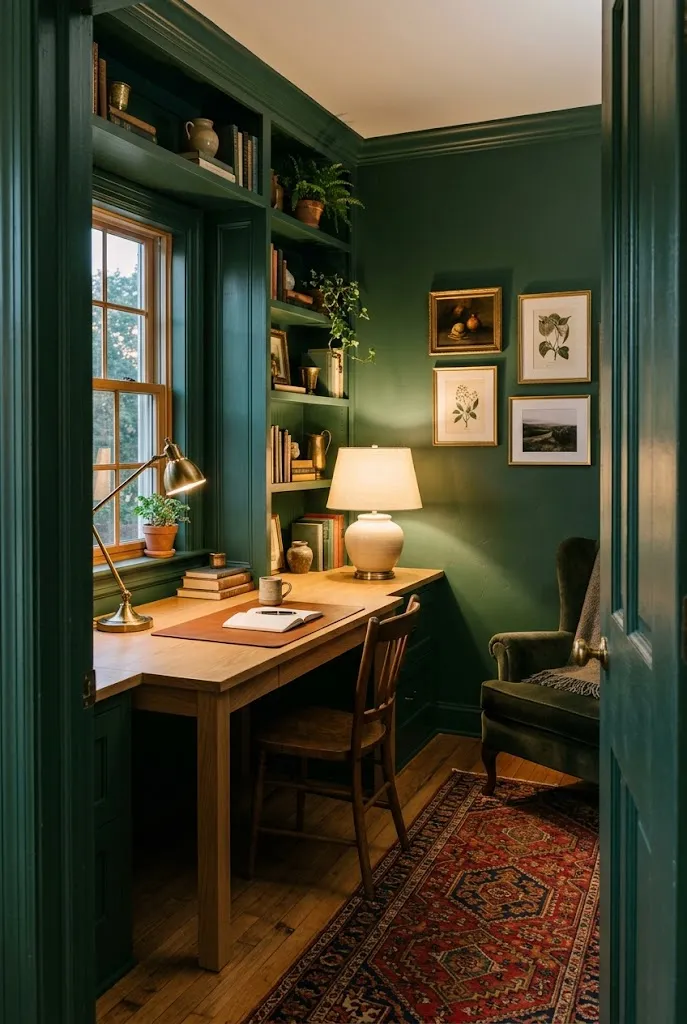
Dark paint in a small office can feel cocooning rather than cramped, particularly when the walls, trim, and even the ceiling share the same color. Deep green, navy, and charcoal all work, but green tends to pair well with wood and brass.
Test large swatches on at least two walls and look at them in morning and evening light, since dark colors shift a lot. Choose a matte or eggshell finish to reduce glare on the walls. Keep the furniture lighter, such as natural wood, a pale rug, and white lampshades, so the room doesn’t go heavy.
This is a good accessible option because paint costs far less than most renovations. If you rent, check what your lease allows before committing.
10. Tuck a Desk Under the Stairs
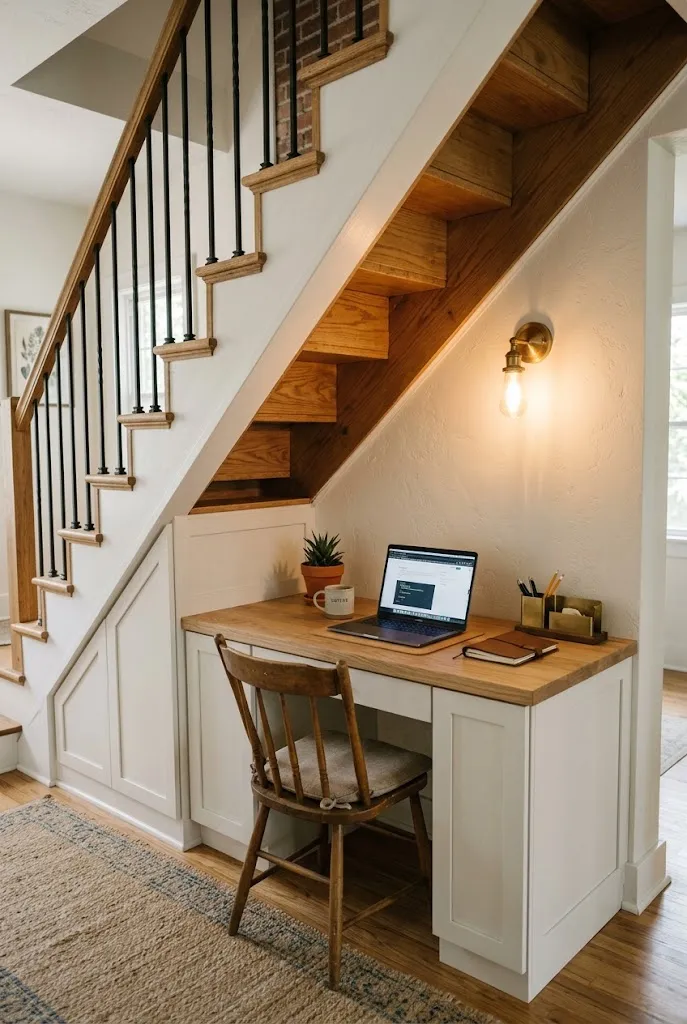
The triangular space beneath a staircase often goes unused. A desk built or placed into it gives you a defined workspace that stays out of the way of foot traffic.
Mind the headroom, since the sloping underside can make one end too low for comfortable sitting. Put the chair at the tallest point and use the lower end for storage drawers or a shallow cabinet. Add a wall sconce or a row of recessed lights, because these spaces tend to be dim. A custom carpenter can build the desk and cabinets to follow the stair angle exactly.
11. Tame the Cables Behind a Dual-Monitor Setup
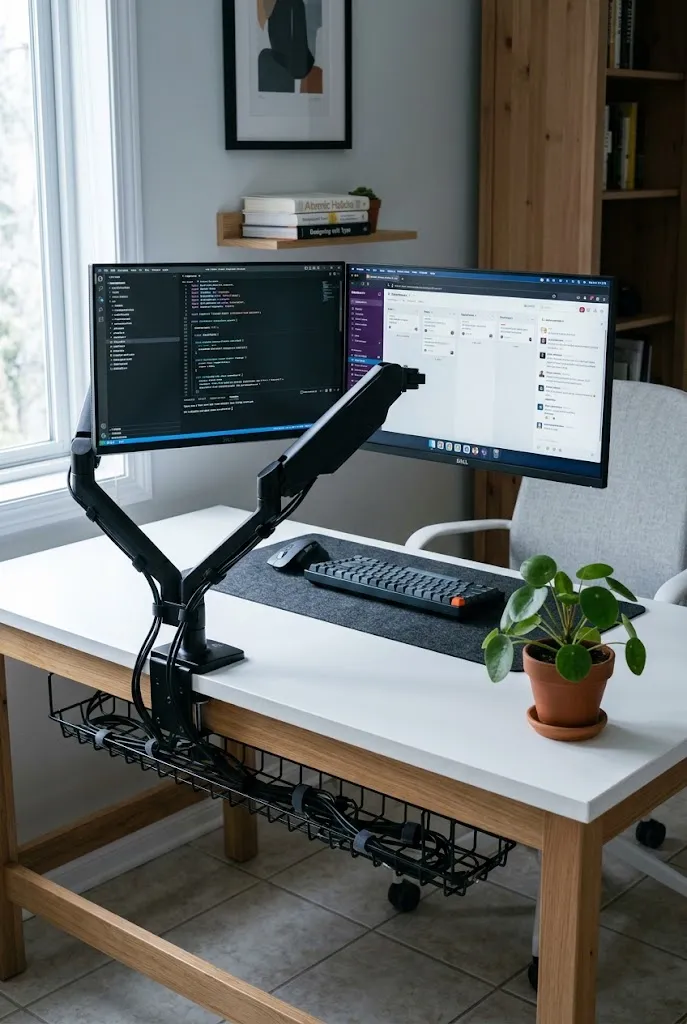
Two monitors look impressive until the tangle behind them shows. A few small additions make a big visual difference.
- Mount the monitors on a dual-arm stand that clamps to the desk, which also frees surface space.
- Run power strips under the desktop with adhesive clips or a mesh tray.
- Bundle remaining cords with reusable hook-and-loop ties.
- Choose wireless peripherals when it makes sense.
If the desk sits in the middle of a room, route cords along a leg to a floor-level cover. Straight, quiet lines make a desk look finished even when it holds a lot of equipment.
12. Commission a Custom Built-In Office
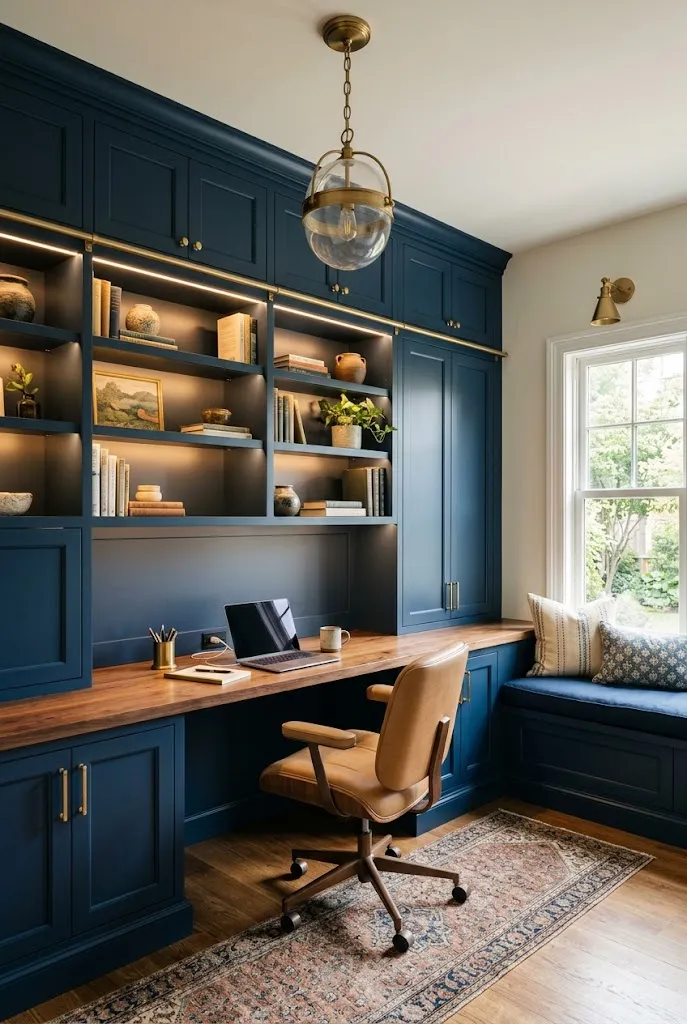
A full built-in, with cabinets, a desk, and shelving cut to the room, is the premium route and the most architectural. It handles awkward features such as a chimney bump, a sloped ceiling, or a window in an odd spot.
The details matter more than the quantity of material. Look for shadow-gap reveals, integrated lighting, a desk with a stone or solid-wood top, and hardware that matches the rest of the house. A paint-grade build is more affordable than stained hardwood and looks just as polished when finished well.
Editor’s Note: Plan outlet and data locations early, including pop-up outlets in the desktop. Adding them after the cabinetry is installed is much harder.
13. Share a Guest Room With a Sleeper Sofa Office
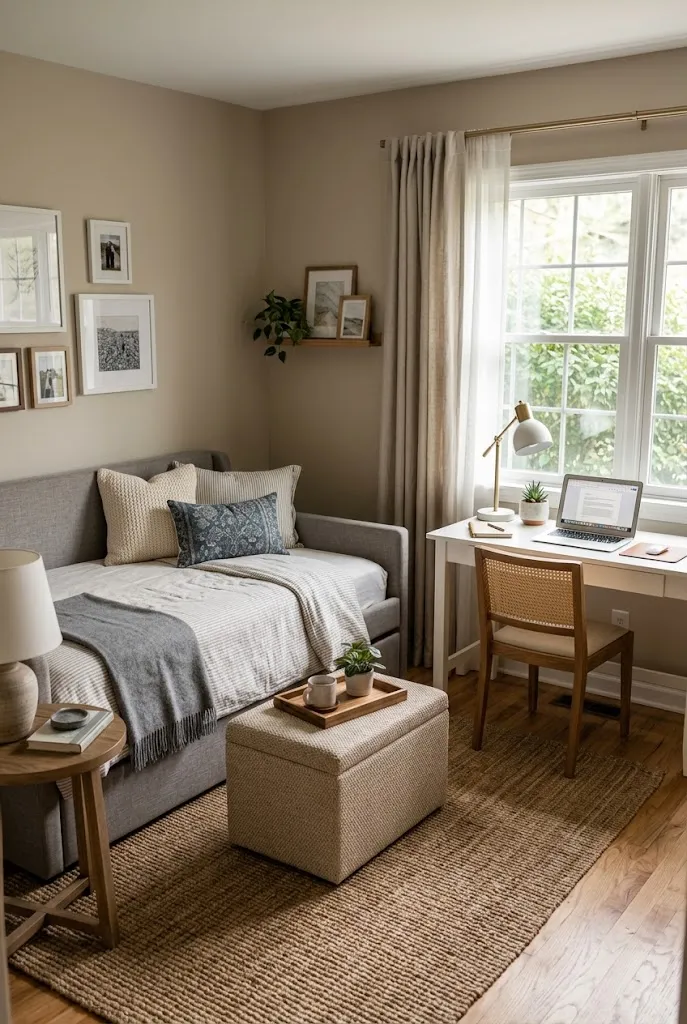
A spare room doesn’t have to choose between guests and work. A sleeper sofa or daybed along one wall, with a compact desk on the opposite wall, lets the room switch roles.
Pick a desk with a narrow footprint, around 40–48 inches wide, and leave a path wide enough to open the sofa fully. Store bedding in a lidded ottoman or a trunk so it isn’t a clutter source. A foldable room-darkening shade makes the room usable for overnight guests as well as daytime work.
14. Organize With a Pegboard and Rail Wall
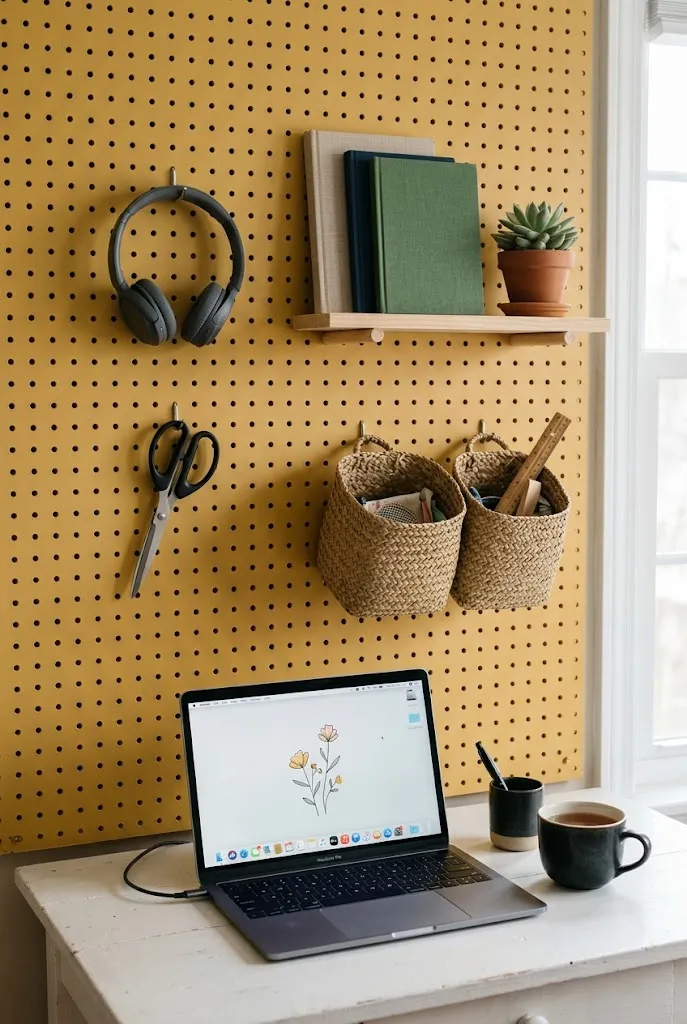
Wall-mounted organization frees the desktop. A painted pegboard, a metal rail with hooks and baskets, or a grid panel can hold headphones, scissors, notebooks, and small shelves, and you can rearrange it whenever your needs change.
Start by deciding what you reach for daily, then place those items at arm’s length. Keep the layout deliberately simple, since a wall crowded with every possible accessory looks messier than a bare desk. Painting the panel in a color that contrasts with the wall gives it a graphic look.
15. Add a Small Reading Chair Beyond the Desk
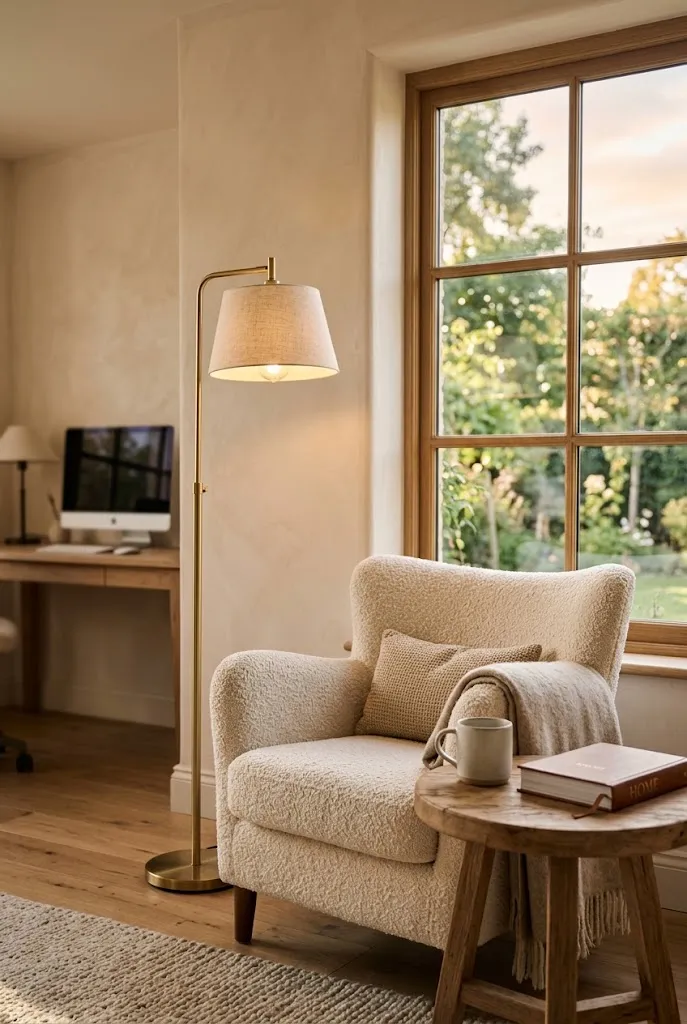
A desk is for focus. A separate seat across the room gives you somewhere to read, think, or take a call without sitting in front of a screen. Even a compact accent chair and a floor lamp changes how the room feels.
Choose something comfortable but not so deep that you’d slouch into a nap. Place it so you can look out a window or toward a shelf instead of at your own desk. A small side table holds a cup and a notebook.
16. Invest in a Chair That Supports a Full Workday
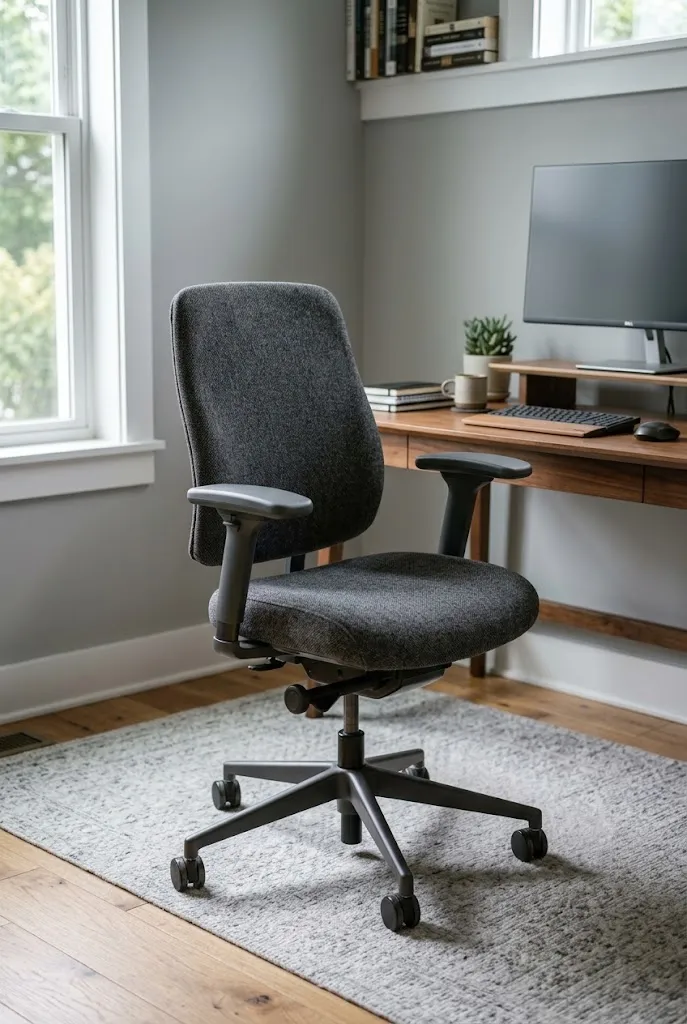
A chair gets more daily contact than any other piece in the office, so it’s one place where spending more tends to pay off.
Do
- Look for adjustable seat height, so your feet rest flat and your knees sit near a right angle.
- Try lumbar support that fits your lower back.
- Choose a seat depth that leaves a small gap behind your knees.
Don’t
- Buy based on looks alone, since a beautiful chair can be uncomfortable after a few hours.
- Assume a higher price guarantees a better fit.
If you can, sit in a few models in a store before buying. A chair with a woven or upholstered finish can still look like home furniture.
17. Add a Slatted Wood Feature Wall Behind the Desk
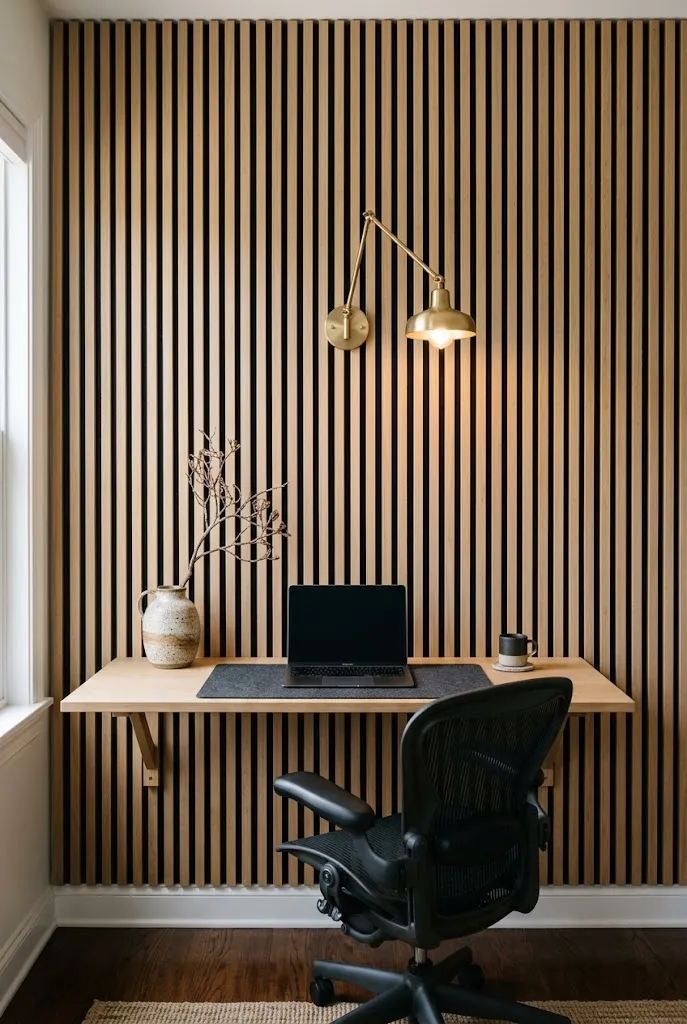
Vertical wood slats give video-call backgrounds a clean, textured look and add warmth to an office that otherwise relies on drywall. Slat panels come in ready-made sheets, which makes this a manageable weekend project.
- Stick to one wood tone for a calm look.
- Choose narrower slats for a refined effect, wider ones for a bolder look.
- Add a felt or dark backing so the gaps read as shadow.
- Hang a single piece of art or a shelf to avoid overcrowding.
For renters, freestanding slatted panels leaned or screwed to a stand can create a similar look without wall damage.
18. Use a Narrow Console as a Hallway Desk
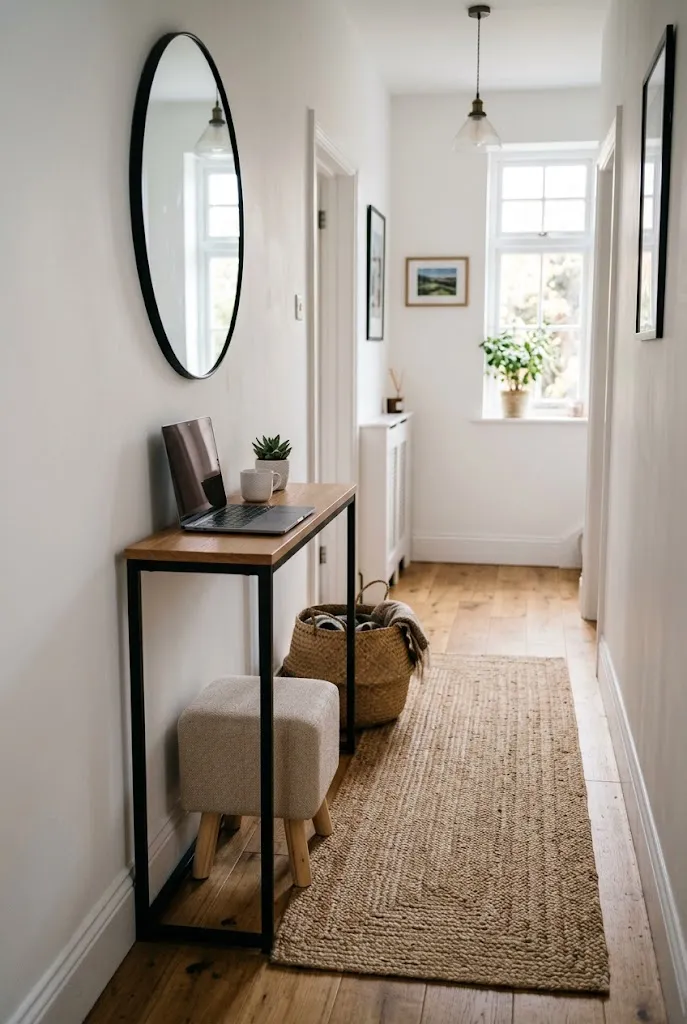
A wide hallway or landing can host a slim console that doubles as a laptop desk. At around 12–16 inches deep, it holds a laptop and not much more, which is exactly the point: the setup stays tidy because there’s no room for clutter.
Pair it with a compact stool that slides under. Place a mirror or art above to keep the area looking like a hallway first and an office second. A basket underneath holds a charger and notebook when you pack up.
19. Convert a Sunroom or Enclosed Porch
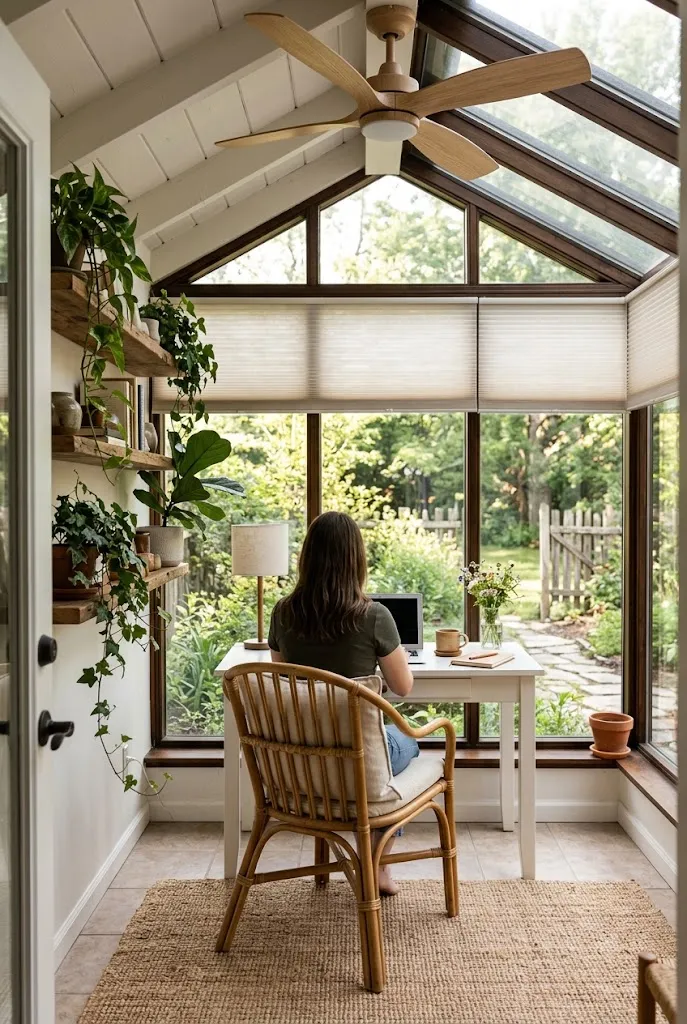
A sunroom brings in plenty of light, though it needs some planning. Heat, cold, and glare can all be issues depending on climate.
| Consideration | Practical Solution |
|---|---|
| Glare on screens | Cellular or woven shades that can be adjusted |
| Summer heat | Ceiling fan, UV-filtering window film |
| Winter cold | Insulated shades, a rug, a space heater rated for indoor use |
Furnish with materials that handle sunlight, such as wood, rattan, and performance fabrics. Check whether the room is insulated and conditioned before relying on it year-round.
20. Set Up a Shared Desk for Two
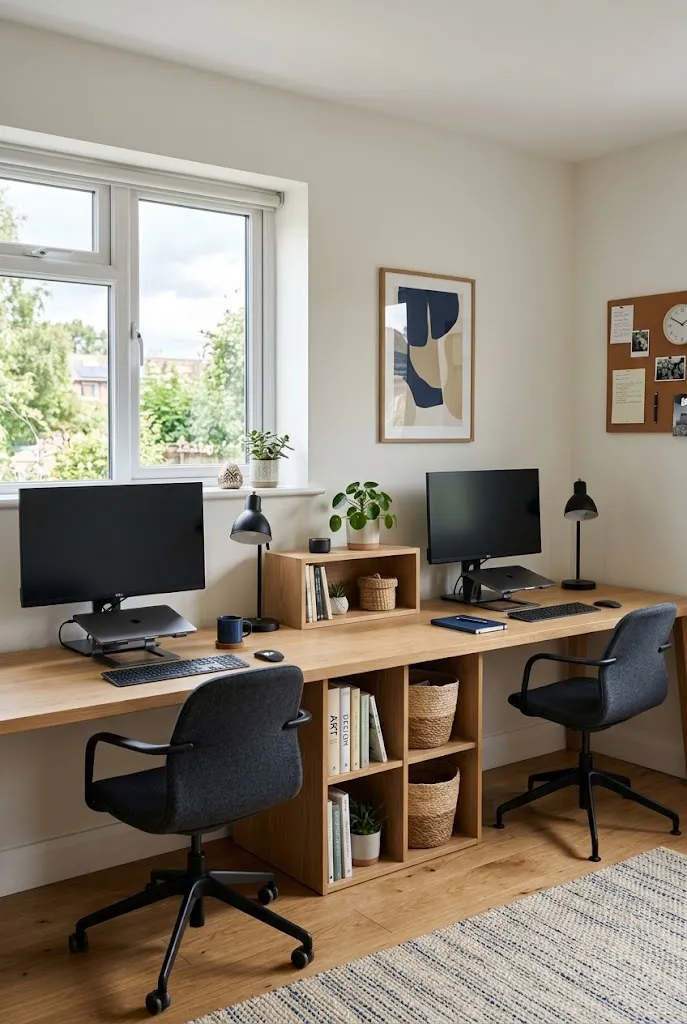
For couples or roommates who both work from home, a single long desk can make the room feel calmer than two separate stations. Pick a desktop at least 70 inches wide, ideally more, so each person has space for a monitor and some elbow room.
Place the desk against a wall facing into the room, or float it in the middle if the room is large enough. Add a divider such as a low shelf or a fabric panel if you take calls at the same time. Separate lighting for each side lets each person adjust as needed.
21. Soften a Screen-Heavy Desk With Plants
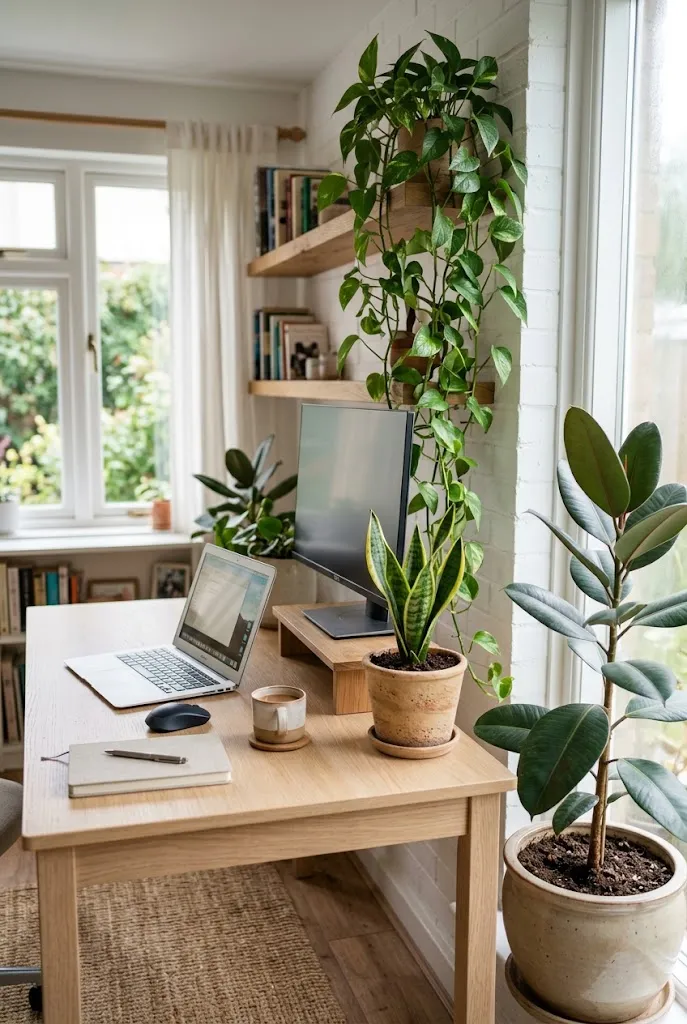
Plants break up the hard edges of monitors and keyboards. Pick species that suit the light in the room. Pothos and snake plants tolerate lower light, while a fiddle-leaf fig or a rubber plant wants a bright spot. Check each plant’s care needs before buying, since light and watering matter more than looks.
Place a trailing plant on a shelf above the desk and a small pot beside the monitor. Use a saucer or a cachepot to protect the desk, and keep any plants that are toxic to pets out of reach if you have animals.
22. Hide the Whole Office in a Cabinet
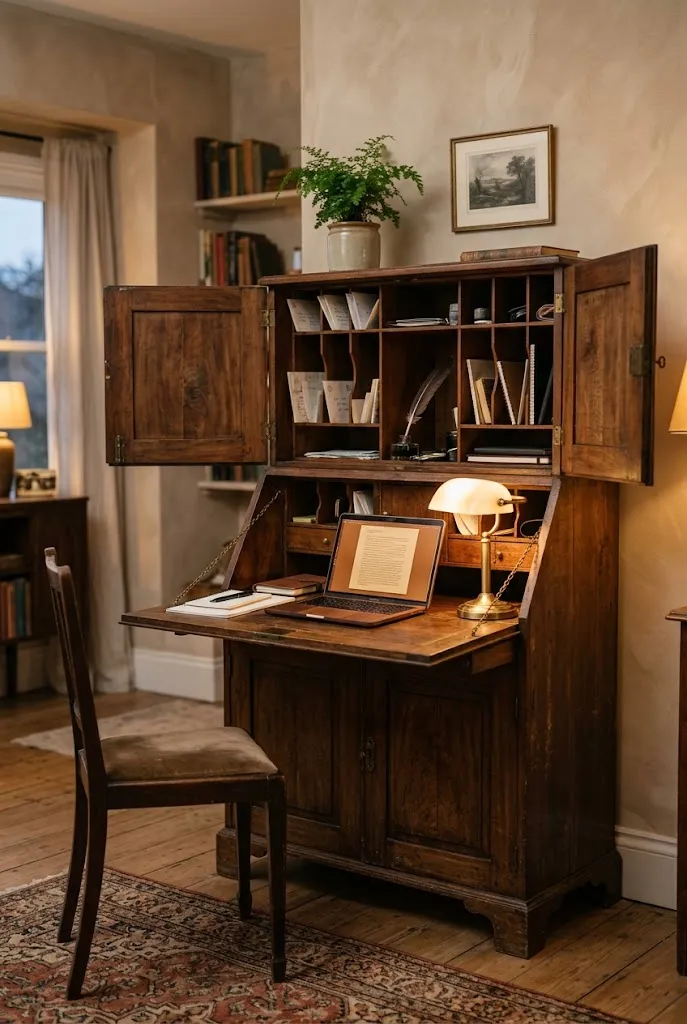
A secretary desk, an armoire, or a wall cabinet with a fold-out desktop lets you close the doors on your work. This is helpful in living rooms and bedrooms where the office shouldn’t be on view in the evening.
Look for a cabinet with a built-in cord opening or drill one yourself. Vintage pieces can be a good fit, but check the interior depth for a laptop and the height for a chair. A modern wall-mounted cabinet in matte lacquer gives a cleaner, more contemporary look.
23. Build a Backyard Garden-Room Office
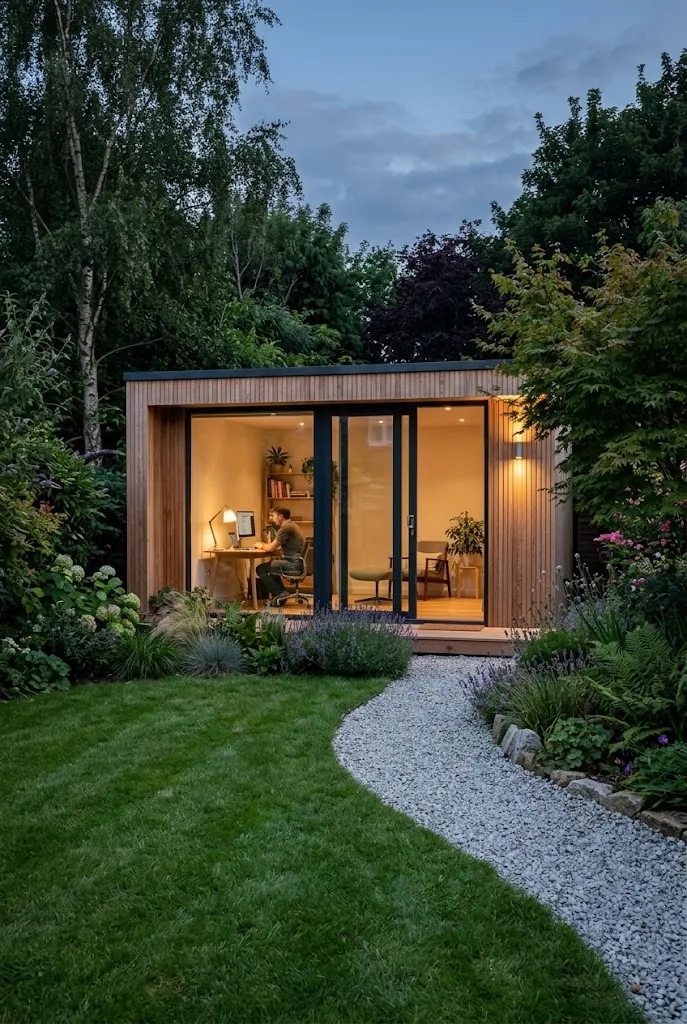
A small detached studio or garden room gives you real separation between home and work. It’s the aspirational end of the home office spectrum, and it comes with practical requirements: permits, utilities, insulation, and heating and cooling.
Check local zoning and building rules before planning, since requirements vary by city and county. Plan for electricity and internet from the start, and choose windows that give you light without overheating the room. Kits and prefabricated models can be quicker than a fully custom build.
24. Keep a Coffee and Water Station Within Reach
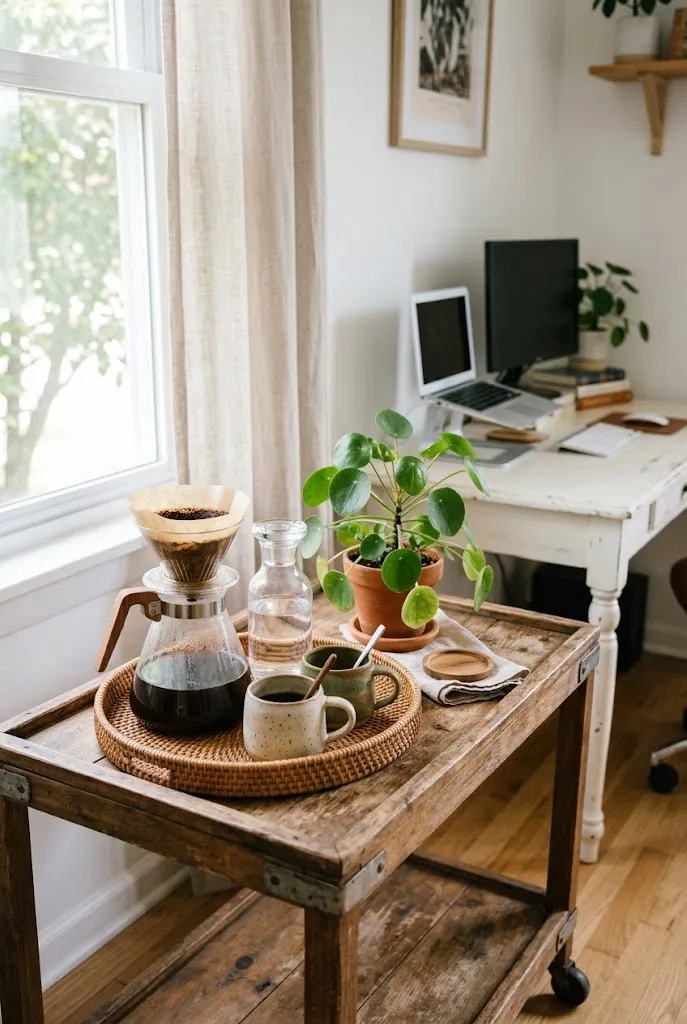
Walking to the kitchen is a good break, but a small beverage station near the desk saves time on busy days. A tray on a side table or shelf can hold a kettle or a small drip coffee maker, a few mugs, and a water carafe.
Use a tray so spills stay contained. Keep liquids on a separate surface from electronics. A small cabinet underneath can hold tea, filters, and napkins. In a tiny space, a rolling cart can tuck away when not needed.
25. Create a Shut-Down Corner to End the Workday
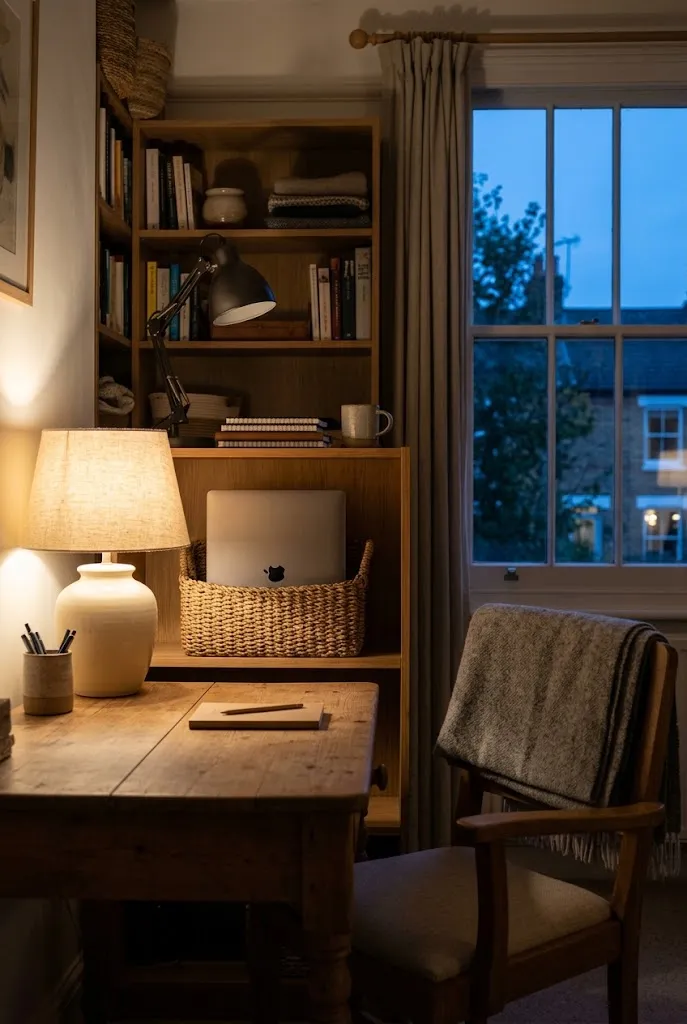
Many people struggle to switch off at the end of the day. A defined end-of-day routine can help, and a physical cue makes it easier. A shelf, a basket, or a closed cabinet where the laptop goes at the end of the day creates a visual boundary.
Pair it with a small habit, like switching off the task lamp, turning on a lamp in the living area, or pulling a cloth over the desk. The point is to make the end of work visible in the room, not just in your head.
Where to Start
You don’t need to adopt all 25. Pick one change that solves the most annoying problem you have right now. If the room is dark, start with lighting. If the desk is messy, start with cable management or wall storage. If you can’t switch off at night, try a shut-down routine before buying anything.
Small changes often add up faster than a full makeover, and you can build on them over time.