28 Teen Bedroom Ideas With a Built-In Study Space That Actually Gets Used
A desk shoved against a wall rarely turns into a study spot. Teens use a workspace when it’s comfortable, well lit, and set apart from the place where they sleep and scroll. Good teen bedroom ideas solve that problem along with the look of the room. The 28 setups below range from a $0 rearrangement to a custom built-in, and they fit everything from a 10-by-10 apartment bedroom to a spacious suburban room. Each one pairs a style with a practical reason the study space works, so your teen has somewhere they’ll actually want to sit down.
1. Float a Slim Desk Beneath the Window
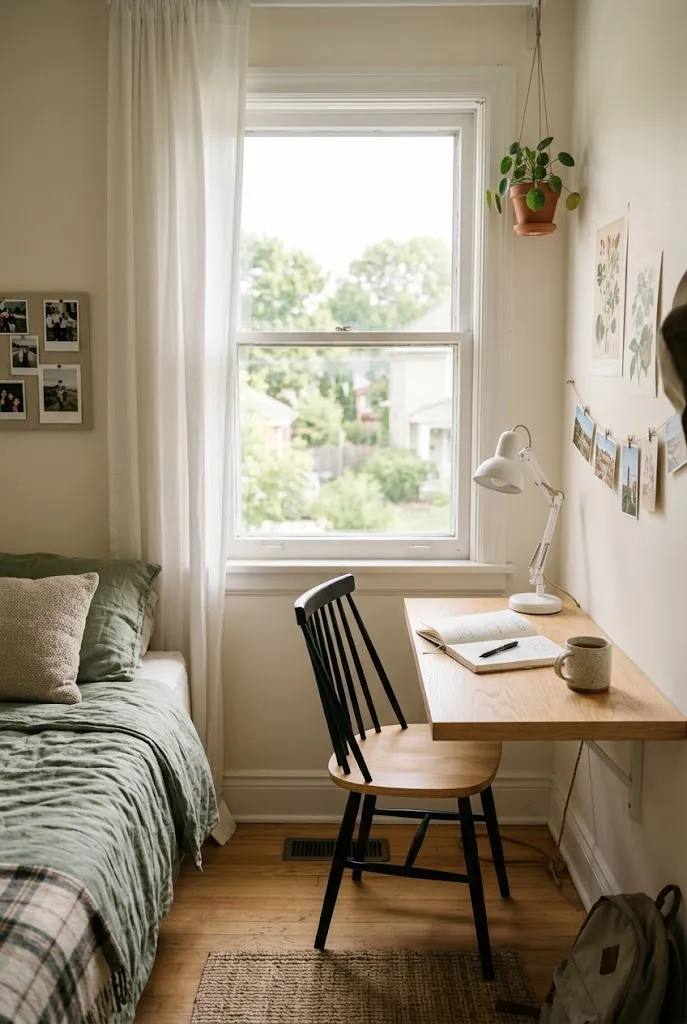
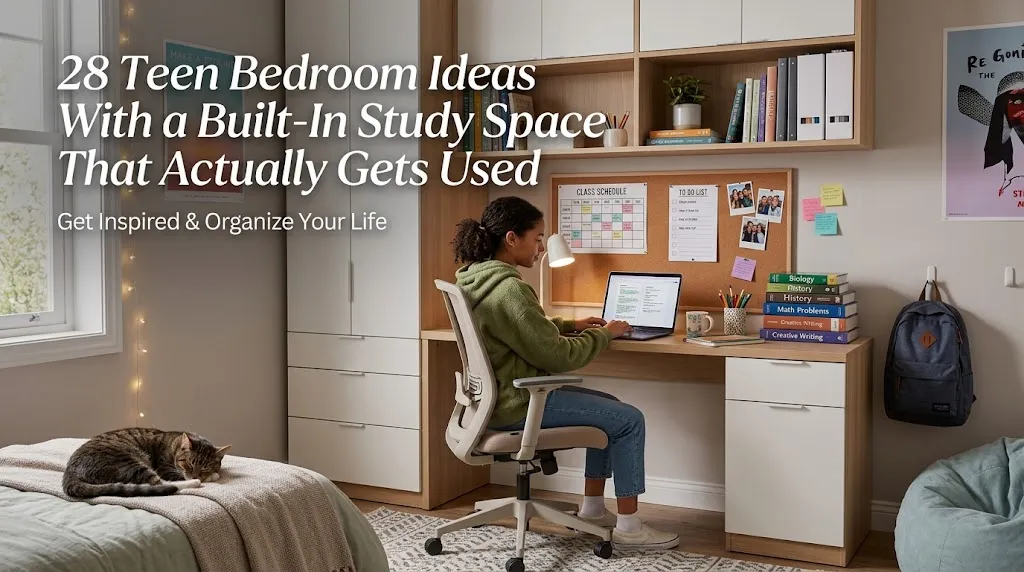
A wall-mounted desk about 20 inches deep keeps the floor open, which matters in a small bedroom. Placing it under a window gives daytime light without a lamp, and it leaves room for a bed and dresser nearby. Choose a solid wood or laminate top with enough width for a laptop, a notebook, and a mug, roughly 42 to 48 inches. A simple chair that tucks fully underneath keeps the walkway clear.
- Mount the brackets into wall studs, not drywall alone
- Add a small shelf above the sill for a lamp and a few books
- Pick a chair with a rounded back so it doesn’t block the window
Quick Tip: Check that the window opens freely over the desk before drilling anything.
2. Tuck the Desk Beneath a Loft Bed
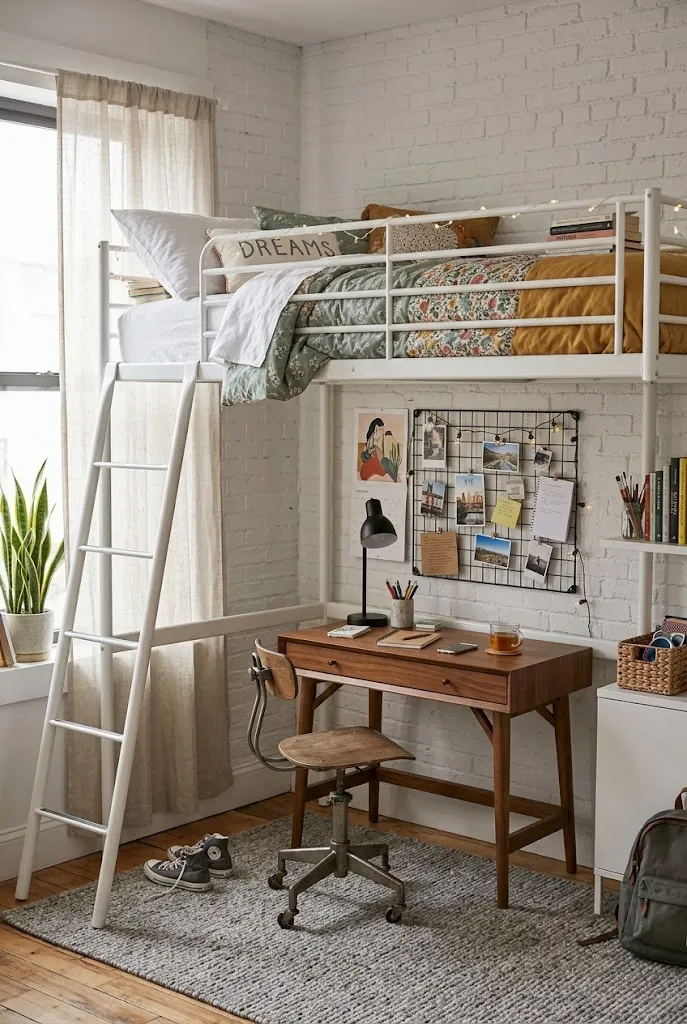
Raising the bed frees up an entire footprint for studying. A loft or high-sleeper bed with a desk below is one of the most effective ways to add a work zone to a small teen bedroom. The sleeping area stays separate from the work area, which helps some teens switch gears more easily. It suits rooms with at least average ceiling height, so confirm clearance above the mattress and follow the bed manufacturer’s guidelines and guardrail rules.
| Detail | What to look for |
|---|---|
| Ceiling height | Enough room to sit up in bed comfortably |
| Desk position | Light from a window or a clamp lamp |
| Safety | Sturdy ladder, full guardrails, firm assembly |
Hang a string of warm lights or a small clip lamp under the frame so the desk doesn’t feel like a cave.
3. Commission a Full Built-In Desk Wall
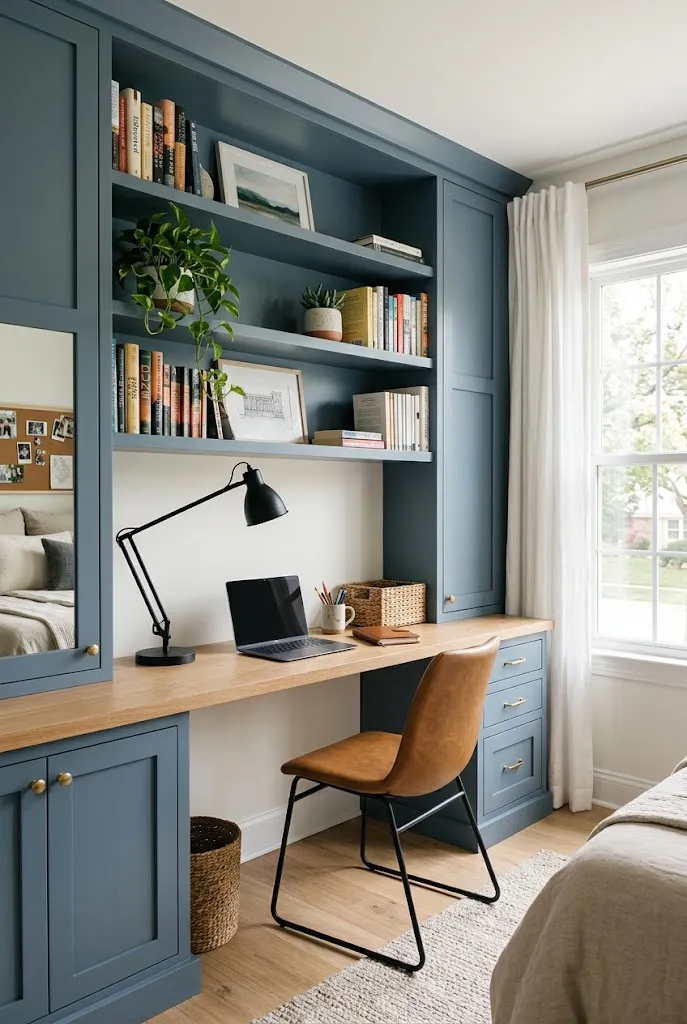
For a long-term upgrade, a custom wall of cabinetry pairs a continuous desktop with closed storage below and open shelves above. It replaces several freestanding pieces and can be sized exactly to the room, including around windows and outlets. The premium cost comes from the millwork and installation, so it makes sense for a room your teen will occupy for years. Painted MDF or plywood with a durable finish keeps things sturdy without moving into luxury-material territory.
Common Mistake: Putting every shelf at eye level so the wall feels like a tall bookcase.
Better Approach: Keep the shelving at varied depths and leave a clear zone above the desktop for a monitor, then use deeper lower cabinets for supplies and sports gear.
Editor’s Note: Ask for a pull-out keyboard tray or a pass-through opening for cables. Both are easy to add during construction and annoying to retrofit later.
4. Wrap a Corner With an L-Shaped Desk and Pegboard
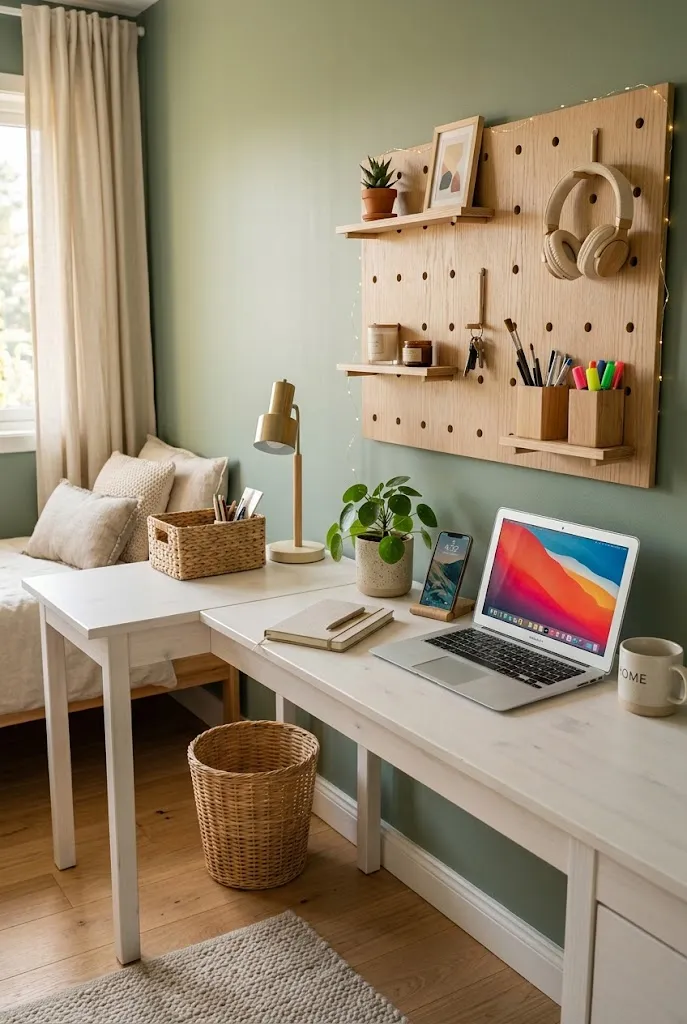
Corners often go unused. An L-shaped desk turns one into a dedicated study zone with a laptop side and a paper side, so notes and screens don’t compete for space. A pegboard above it holds hooks, small shelves, and cups for pens or earbuds, and it can be repainted whenever the room’s style changes. This is an accessible approach because both pieces are widely available, and the pegboard can be cut to size at most home improvement stores.
- Use one wall for a pegboard and keep the second wall for a calendar
- Choose a desk with a slightly rounded inner corner to avoid bumps
- Label nothing; let the pegboard layout stay flexible
5. Turn a Closet Into a Study Nook
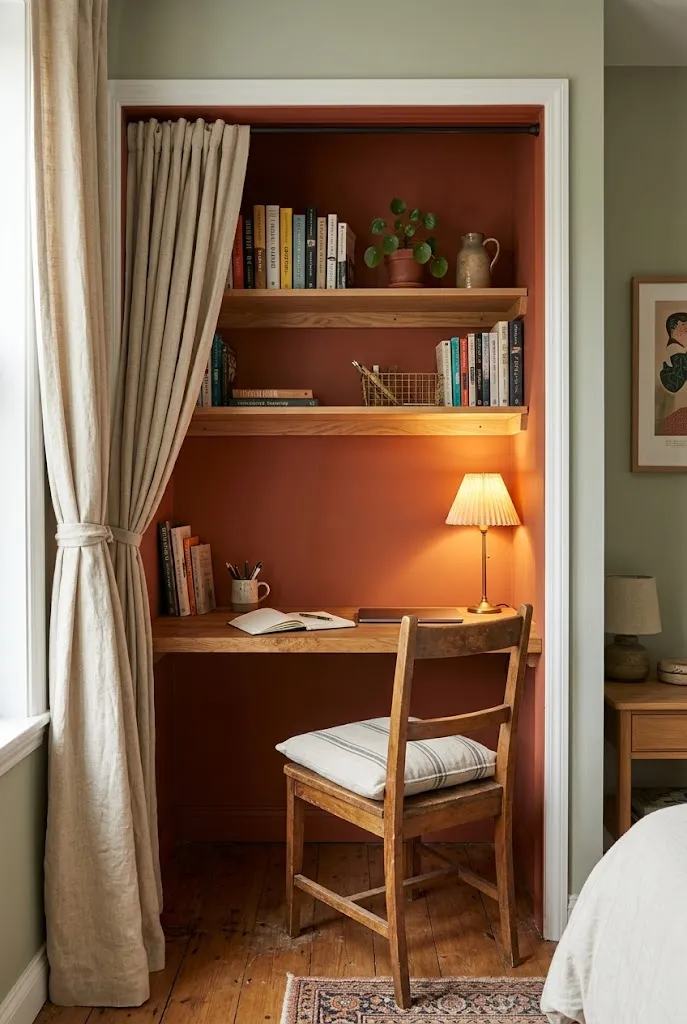
If the closet is shallow or the room has a second storage option, remove the doors and the hanging rod and slide a desk into the space. Paint the inside a bold color, install a shelf above the work surface, and add a plug-in sconce or LED strip. A curtain or bi-fold door can close the nook at the end of the day, which keeps homework out of sight. In a rental, keep the changes reversible: store the doors, avoid structural edits, and use removable lighting.
- Remove the doors and rod, then patch and paint the interior.
- Measure width and depth, then buy or cut a desktop to fit.
- Add a shelf and a light, then hang a simple curtain.
Quick Tip: Leave at least 24 inches of knee clearance below the desktop so it doesn’t feel cramped.
6. Install a Fold-Down Wall Desk
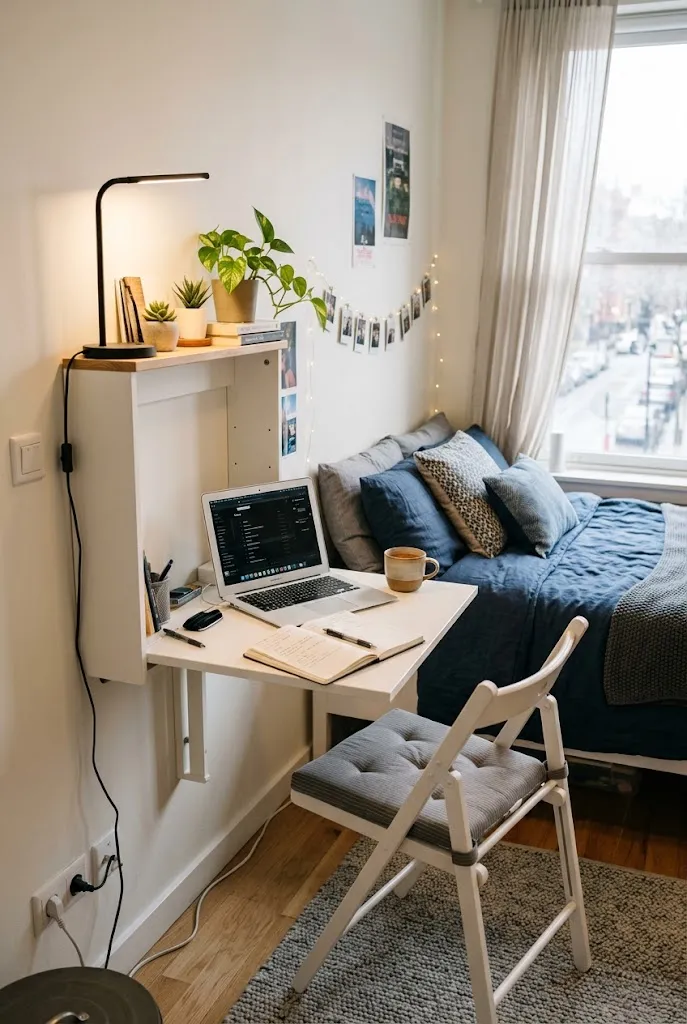
When floor space is truly limited, a wall-mounted fold-down desk behaves like a Murphy bed for homework. Closed, it looks like a shallow cabinet or a framed panel. Open, it supports a laptop and notes. It works best for lighter laptop-and-notebook study, and less well for large dual-monitor setups. Mount it securely into studs and check the weight capacity listed by the manufacturer before loading it with equipment.
| Pros | Trade-offs |
|---|---|
| Frees up the room when closed | Limited surface depth |
| Hides study clutter | Less suited to heavy gear |
| Works in tiny rooms | Needs a reliable stud location |
7. Run One Long Desk for Two
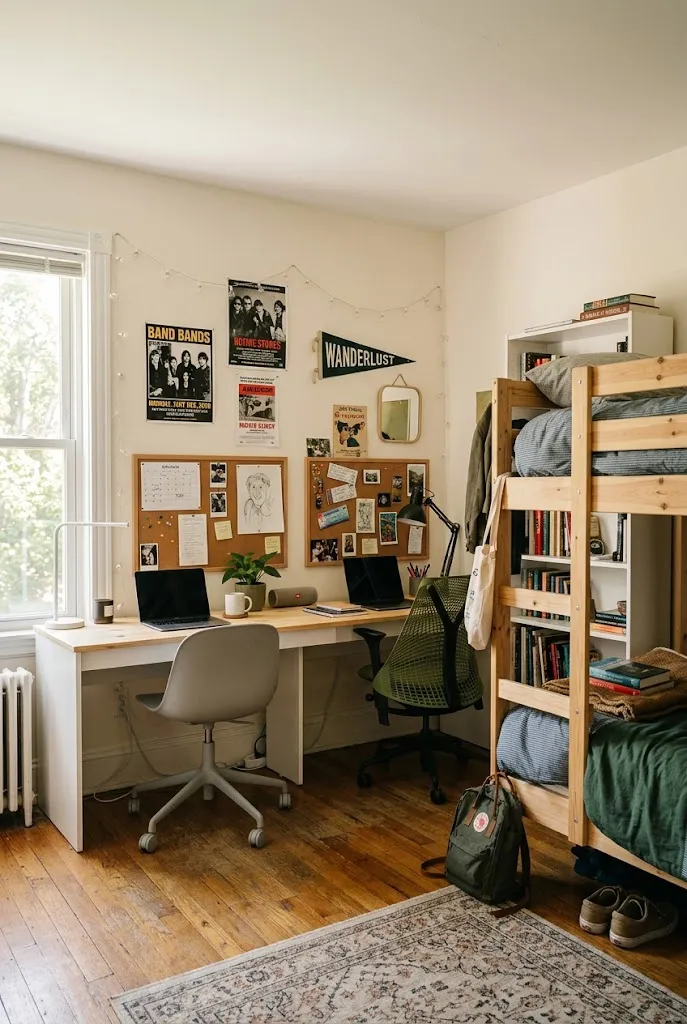
When siblings share a room, a single long desk avoids duplicate furniture and keeps the room feeling organized. A table of roughly 8 feet can seat two without crowding, especially with a low divider or a pair of pegboards. Give each person their own lamp, drawer unit, and wall space so the area feels equal. Different chair colors help each teen claim a spot without painting a center line down the room.
- Use two matching lamps to keep the setup balanced
- Add a small bookshelf as a soft divider between the two stations
- Let each teen choose one wall accessory for personalization
8. Use the Low Wall Under a Sloped Ceiling
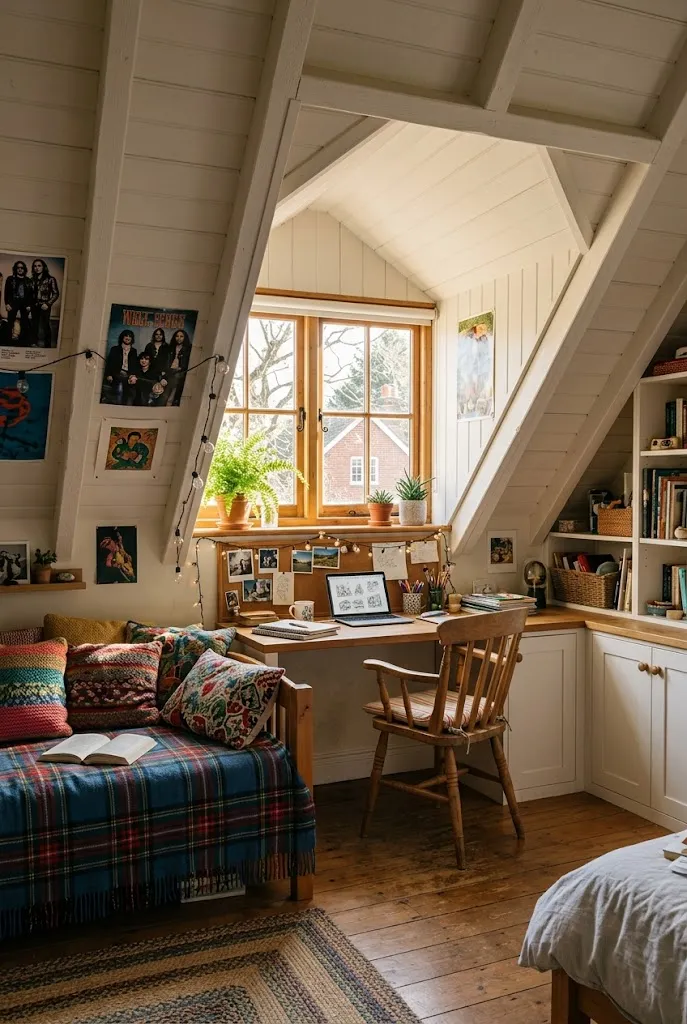
In attic and dormer bedrooms, the awkward low edge often goes unused. A desk placed where the ceiling slopes can work if the sitting position still has headroom. A dormer window gives the desk a natural light source, and short built-in cabinets along the knee wall make good storage for supplies. Test the seated height first so your teen isn’t hitting their head every time they stand up.
Do: Place the chair where the ceiling is highest.
Don’t: Put a tall hutch or shelves where the slope cuts the space.
9. Combine a Vanity and a Desk
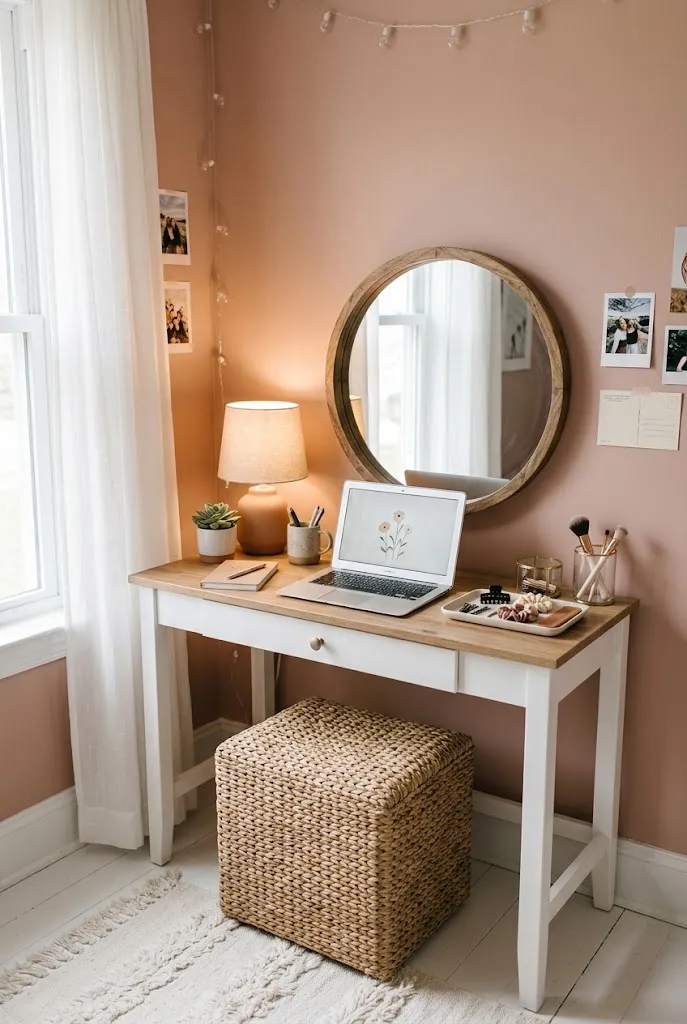
A single table with a mirror can serve as both a study surface and a getting-ready station. This works well in small bedrooms where two separate pieces won’t fit. Choose a mid-sized table, add a mirror above or beside it, and keep the surface organized with trays or small drawers. A good lamp matters here, since it serves both homework and grooming.
Quick Facts
Best For: Small rooms and shared dressers
Investment: Accessible to moderate
Visual Effect: Bright, open, and slightly boutique
Keep the mirror off the primary reading line so glare doesn’t distract during screen time.
10. Build a Cable-Tidy Gaming and Study Station
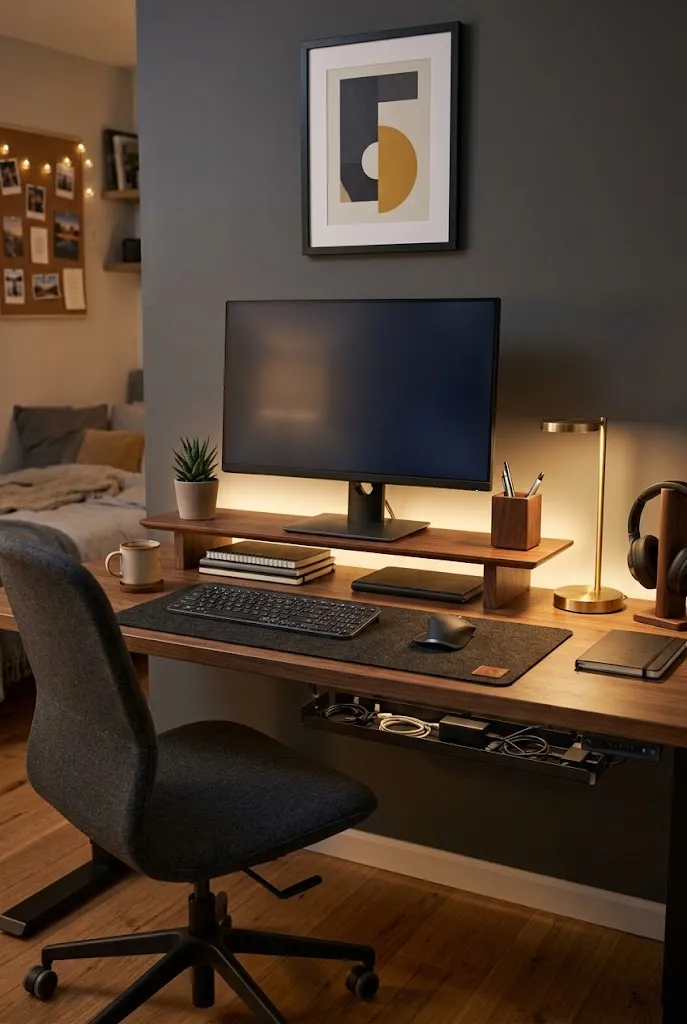
Many teens use the same computer for homework and games. A deeper desk with a monitor riser, a cable tray under the surface, and a power strip mounted out of sight keeps the setup clean. Choose a chair with real adjustability and put the screen at eye level, not below it. Soft indirect lighting behind the monitor reduces glare and makes the room feel like a thoughtful station rather than a pile of cords.
- Mount a power strip under the desk.
- Run cables through a clip or tray.
- Raise the monitor with a riser or arm.
11. Divide the Room With a Low Bookcase
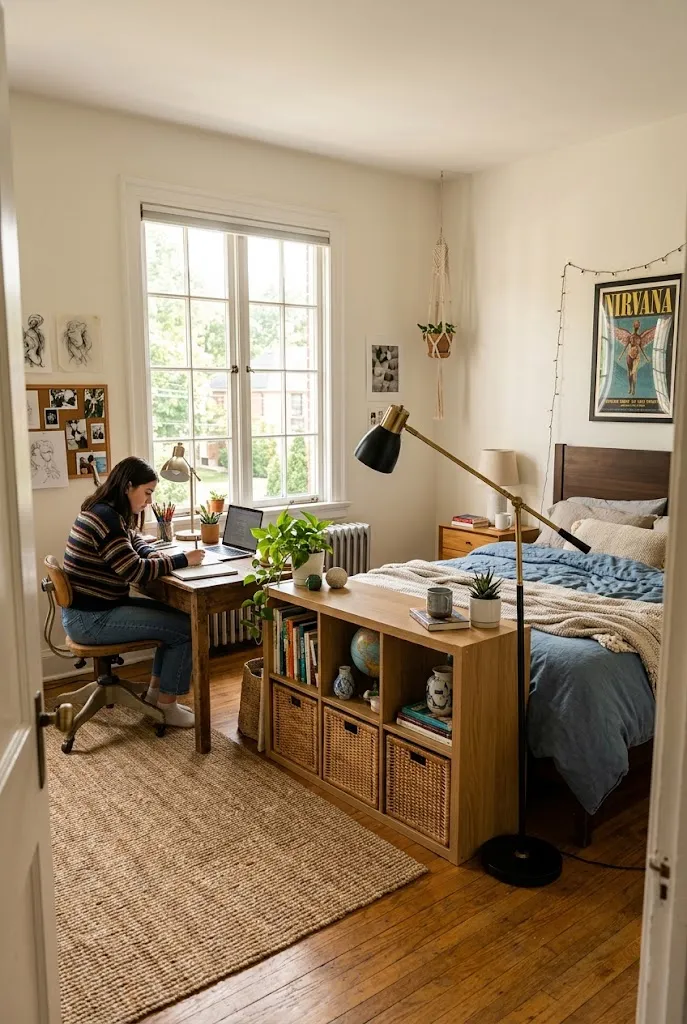
In a larger bedroom, a bookcase back-to-back with the bed creates a defined study area behind it without building a wall. Keep it below roughly shoulder height so natural light still travels through the room. The shelving doubles as storage for textbooks, baskets, and decorative objects. Seen from the sleeping side, the back of the unit can be styled with a headboard-like panel or a tidy art arrangement.
| Divider type | Effect |
|---|---|
| Open cube shelf | Light and airy |
| Closed back panel | More privacy |
| Mixed baskets and open cubes | Practical and flexible |
12. Add a Window Seat Study Bench
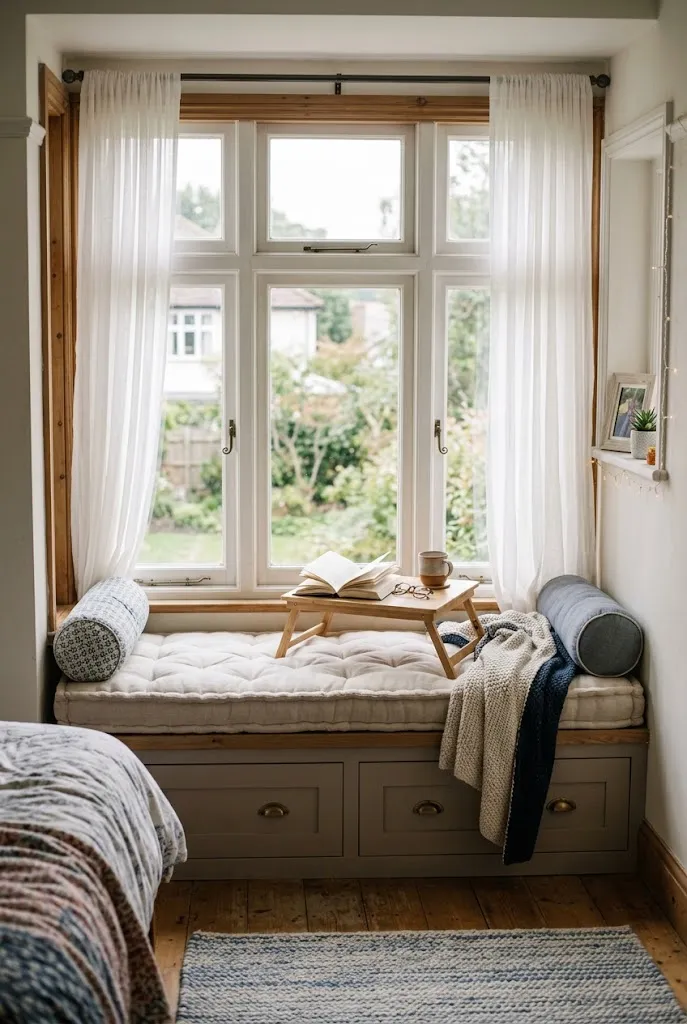
A built-in bench with storage below offers a different way to study: cross-legged, with a lap desk and a cushion. It suits teens who prefer to read, write, or sketch in a more relaxed position. Use drawers or lift-up lids for storage, add a firm cushion, and finish with a bolster or two. This is a premium idea since it involves carpentry, though a freestanding bench under a window can borrow the effect.
Editor’s Note: Choose a cushion firm enough to sit on for an hour. Soft sofa-style foam often becomes uncomfortable during longer sessions.
13. Build a Corkboard and Magnetic Planner Wall
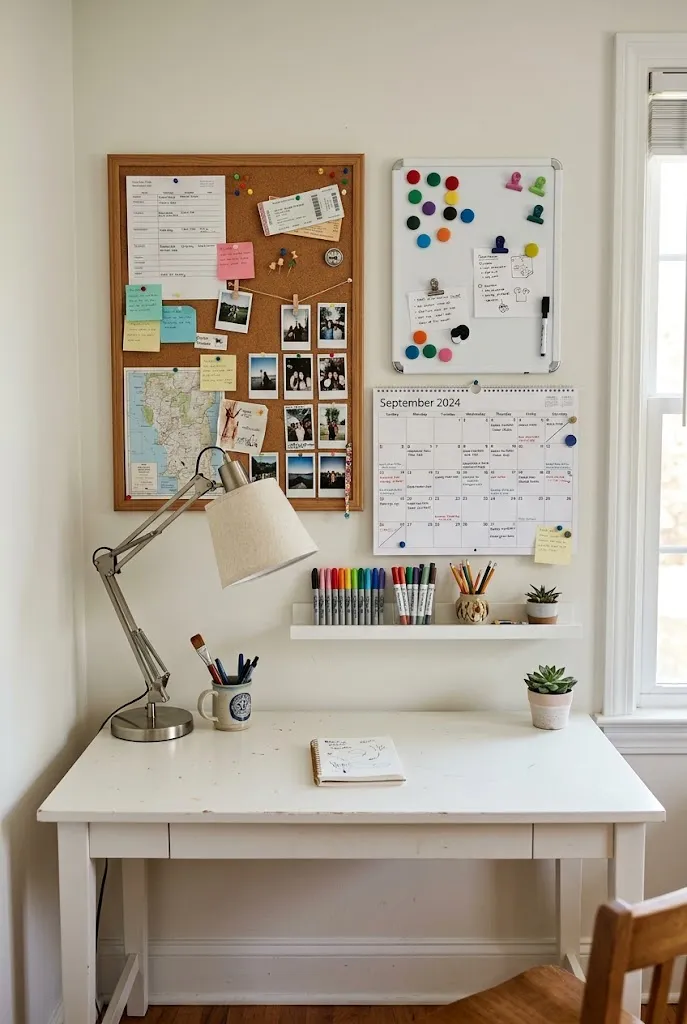
A wall dedicated to planning keeps due dates and notes visible. Combine a large corkboard, a magnetic whiteboard, and a monthly calendar so the teen can see the week at a glance. Place it directly above or beside the desk, within reach. Keep the layout simple: one board for schedules, one for inspiration, and one small shelf for supplies. This is an accessible project that needs only a few tools to mount.
- Corkboard for photos and quick reminders
- Magnetic board for weekly goals
- Small ledge for markers and clips
14. Go Dark With a Navy Study Corner
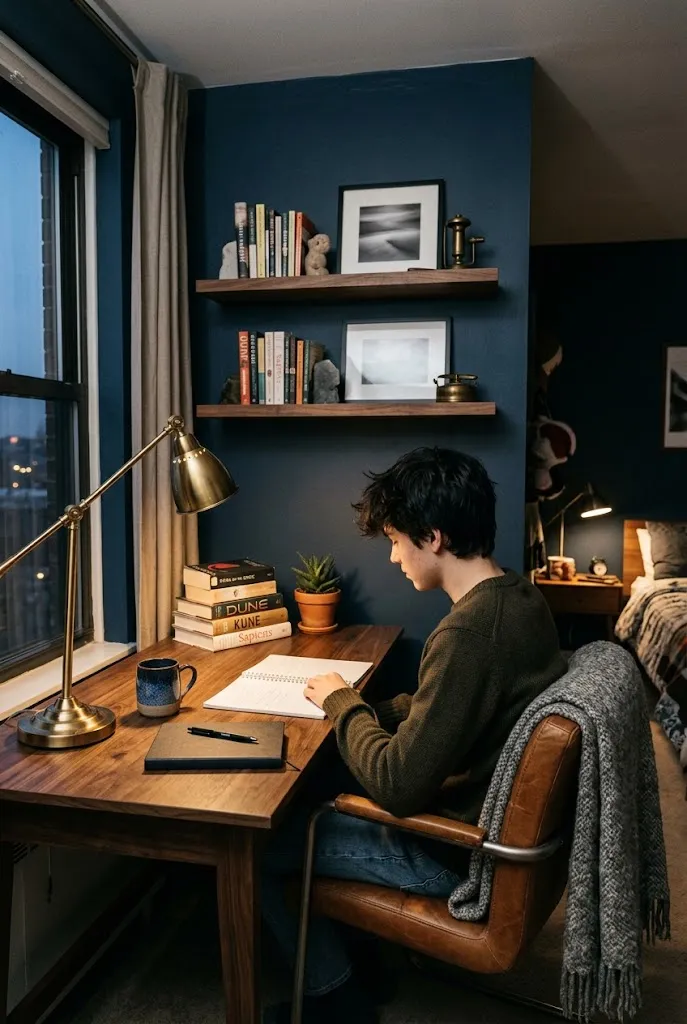
Deep navy or charcoal paint can make a study corner feel focused and enclosed, which some teens prefer. Pair it with warm lighting and natural wood to keep it from feeling heavy. Paint the wall behind the desk and the adjoining side, then leave the rest of the room lighter. Matte finishes reduce glare from lamps.
Do: Add a warm-toned lamp and light wood to balance the darker wall.
Don’t: Paint all four walls in a very small, windowless room.
15. Keep It Light With a Scandinavian-Style Desk
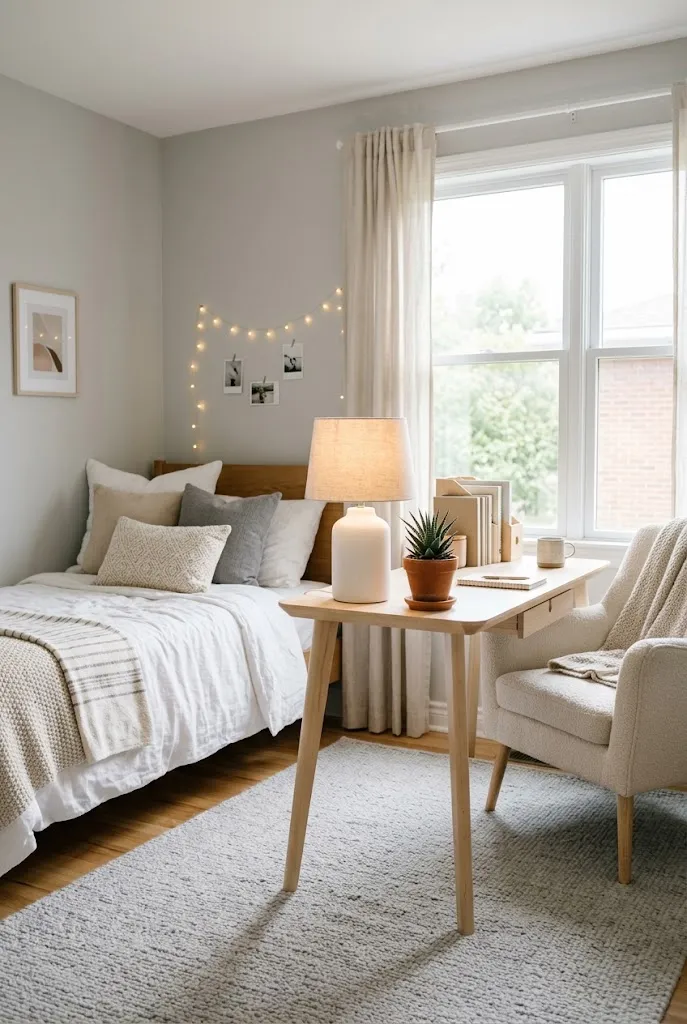
Pale wood, white walls, and simple lines make a small room feel larger, and they put the focus on the work itself. Choose a birch or light oak desk, a white lamp, and a chair in a neutral fabric. Add one soft accent, such as a green plant or a gray rug. The style is easy to maintain and works well in rooms with limited natural light.
- Birch or ash desktop with slim legs
- White or pale gray walls
- One plant and one soft textile for warmth
16. Refresh a Thrifted Desk
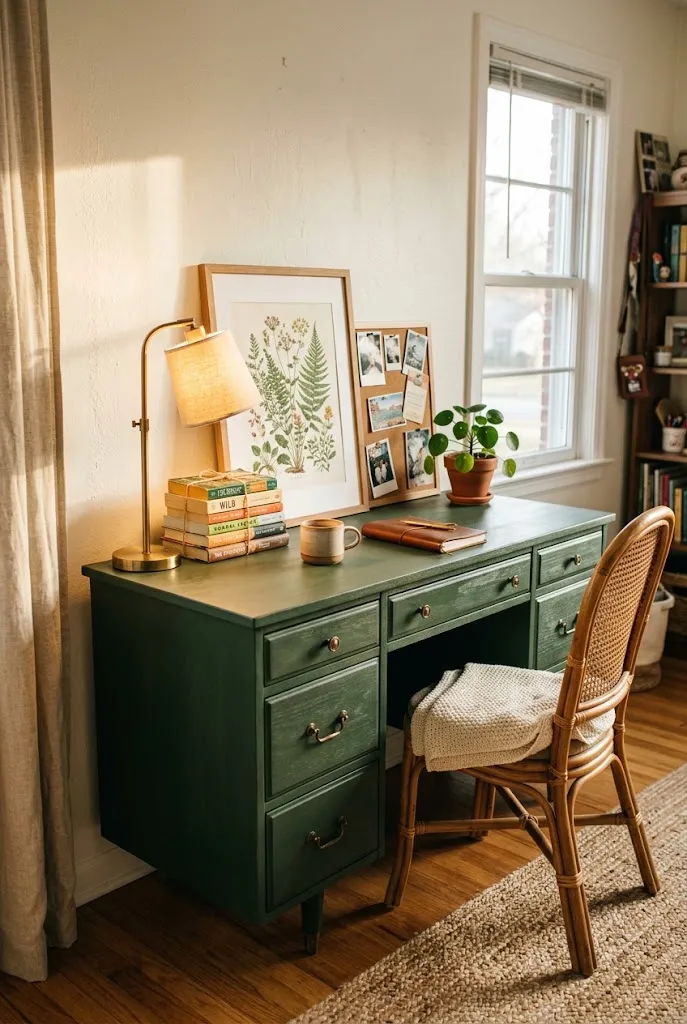
A secondhand desk is a budget-conscious way to get solid wood and character. Sand it lightly, prime if needed, and repaint it in a color your teen picks, then swap the hardware for something new. A used desk often has better construction than a flat-pack alternative, and the project gives your teen some say in the final look. Check drawers and legs for stability before buying.
- Clean and sand the surface.
- Prime, then apply two thin coats of paint.
- Seal the top with a durable clear finish.
- Install new knobs.
17. Roll In a Cart-Based Study Station
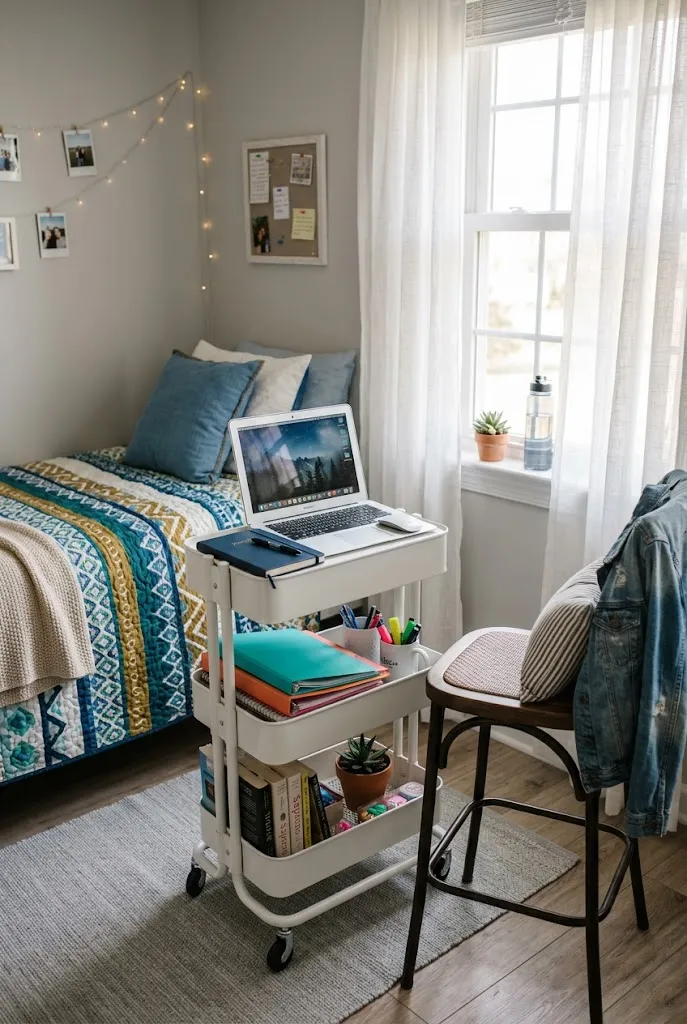
A rolling cart with drawers and a pull-out or fold-up top can serve as a movable homework base. It suits tiny rooms, shared rooms, and spaces where the study area needs to disappear. Store supplies in the lower tiers, and roll it near the bed or window when needed. Pair it with a lap desk or a small chair for flexibility.
Quick Facts
Best For: Very small rooms or shared spaces
Investment: Accessible
Visual Effect: Light, flexible, and tidy
18. Layer the Lighting Around the Desk
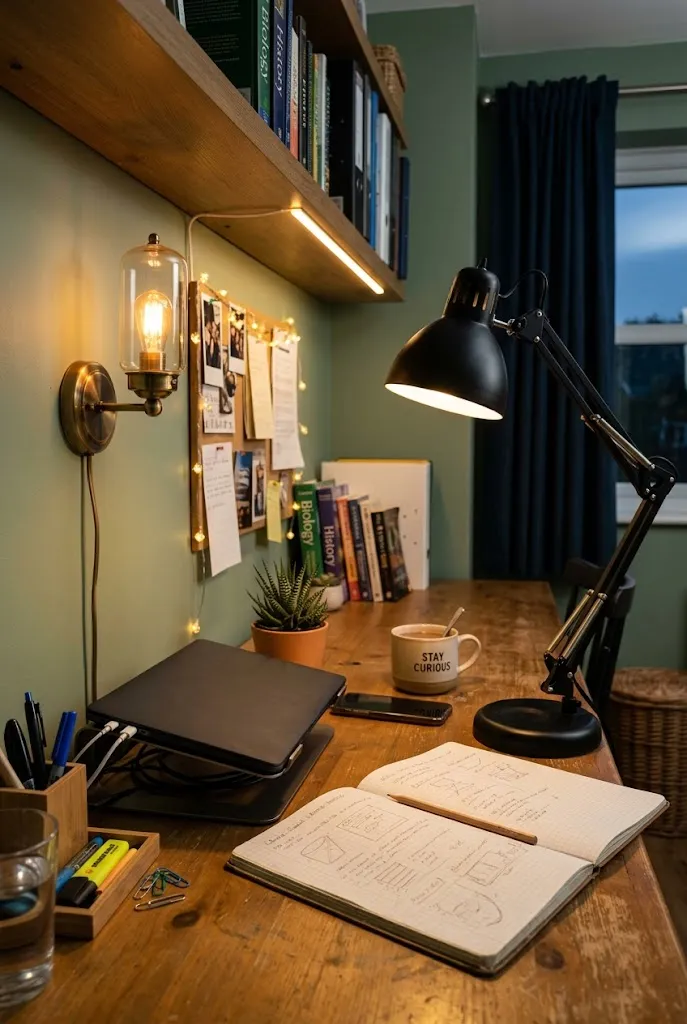
A single ceiling light leaves shadows across the work surface. Pair a focused task lamp with softer ambient lighting, like a wall sconce or a floor lamp, so the room feels comfortable at night. Position the task lamp opposite the writing hand to reduce shadows. Use warm-to-neutral bulbs for a relaxed feel, and consider a dimmable option.
| Light type | Role |
|---|---|
| Desk lamp | Direct task lighting |
| Wall sconce or floor lamp | Soft ambient fill |
| LED strip | Subtle accent glow |
19. Hang a Peg Rail Beside the Desk
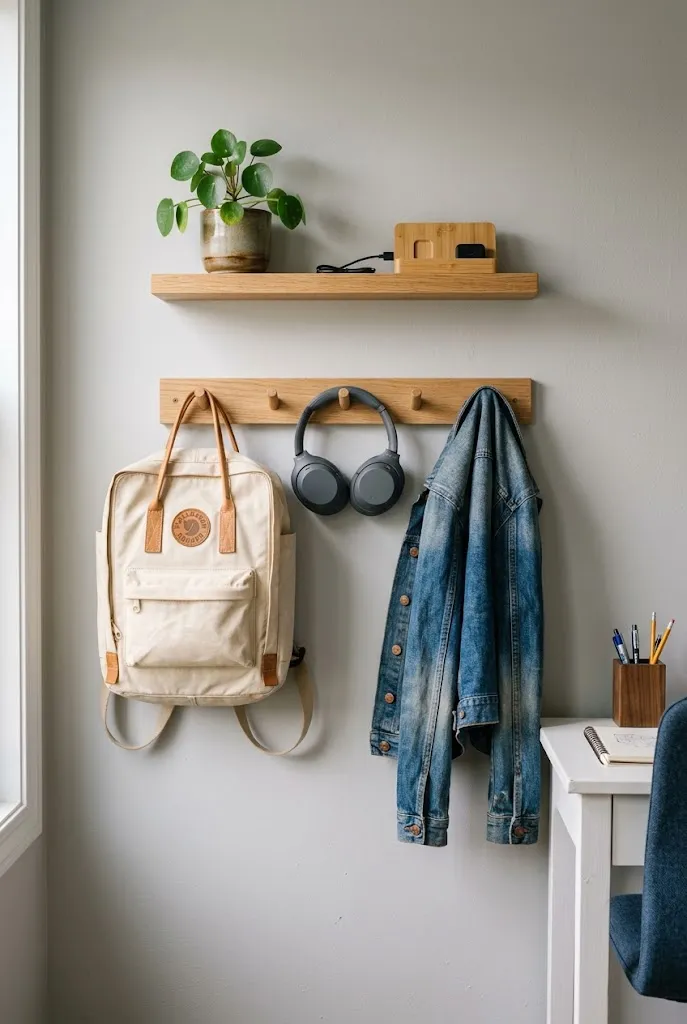
A wooden peg rail offers a place for backpacks, headphones, and jackets right beside the study zone, so these items don’t end up on the chair. Mount it at a height your teen can reach comfortably, and leave enough space between pegs for bulky items. Add a small shelf above it for keys and a charging dock. The look is tidy and handcrafted, and it’s easy to install.
- Install at a comfortable reach height
- Use 4 to 6 pegs depending on wall width
- Keep the shelf above shallow for small items
20. Pair a Reading Chair With a Lap Desk
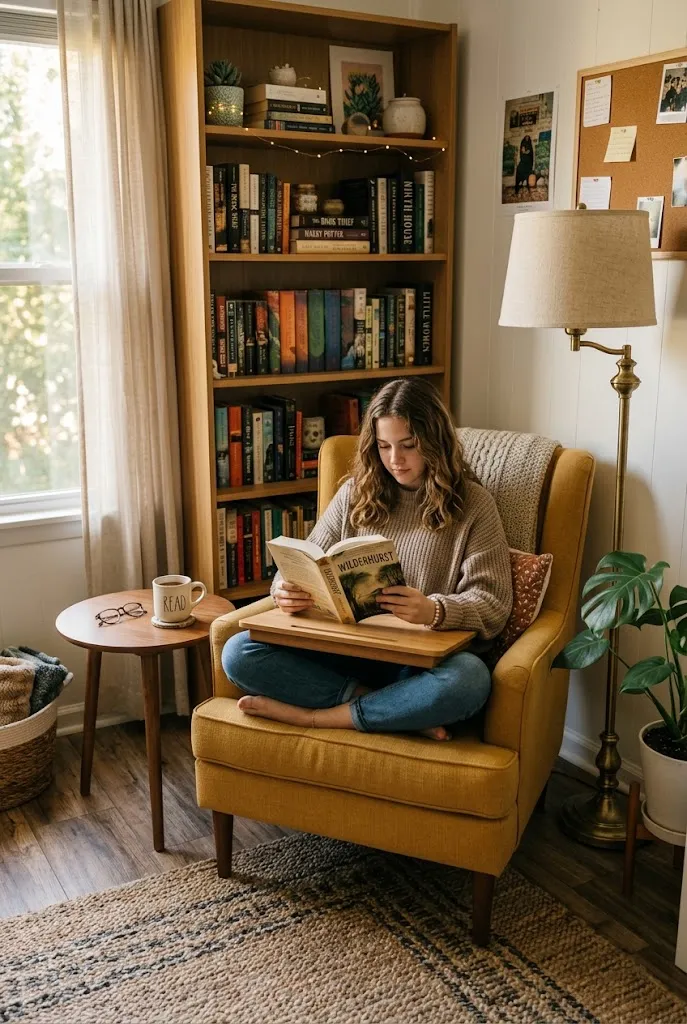
Not every study session happens at a desk. A comfortable armchair with a lap desk and a nearby side table gives teens a place for reading, journaling, and lighter homework. Choose a chair with firm support and arms low enough for a lap desk, and add a floor lamp behind one shoulder. It also works as an extra seat when friends visit.
Editor’s Note: Look for a chair with a seat height that lets feet rest flat on the floor. This keeps posture comfortable during longer reading sessions.
21. Set Up a Drafting Table for Creative Work
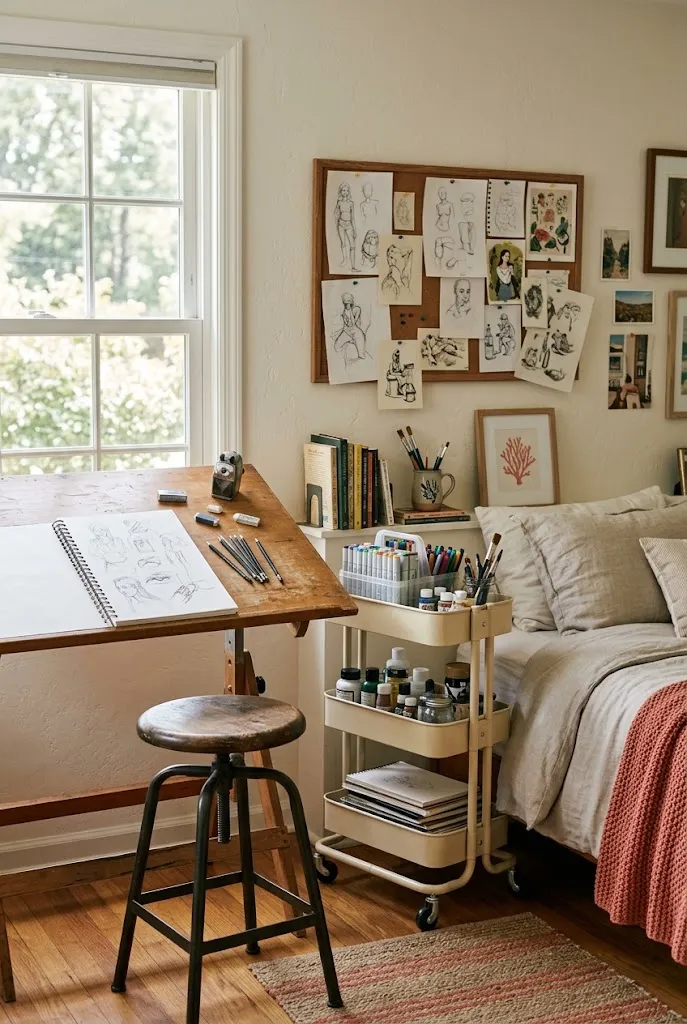
For teens who draw, design, or work on projects, a tilted drafting table or an easel-style desk makes a difference. It keeps the surface angled for comfortable drawing and leaves flat space nearby for supplies. A set of shallow drawers or a rolling art cart keeps pencils, markers, and paper accessible. Choose a stool that adjusts, and pair it with a bright, neutral light.
- Choose an adjustable-angle table.
- Position it near natural light.
- Keep supplies on a nearby cart.
22. Combine Music Practice and Homework
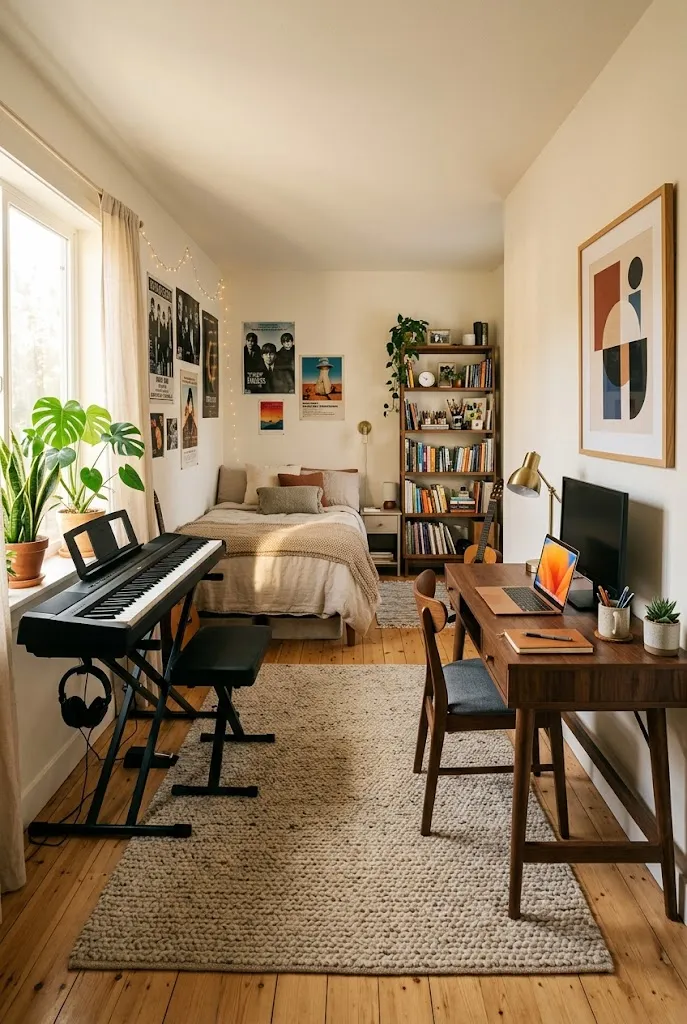
A keyboard or small instrument can share the room with a desk if the layout is planned. Place the instrument on one wall and the desk on the other, with a rug underneath to soften sound. Add wall panels or a bookshelf to absorb noise, and keep sheet music in a tidy holder. The room doubles as a practice space and a quiet study area, as long as the equipment stays organized.
Do: Keep headphones and a metronome within reach.
Don’t: Put the instrument directly next to the desk where it blocks the chair.
23. Color-Block the Desk Wall
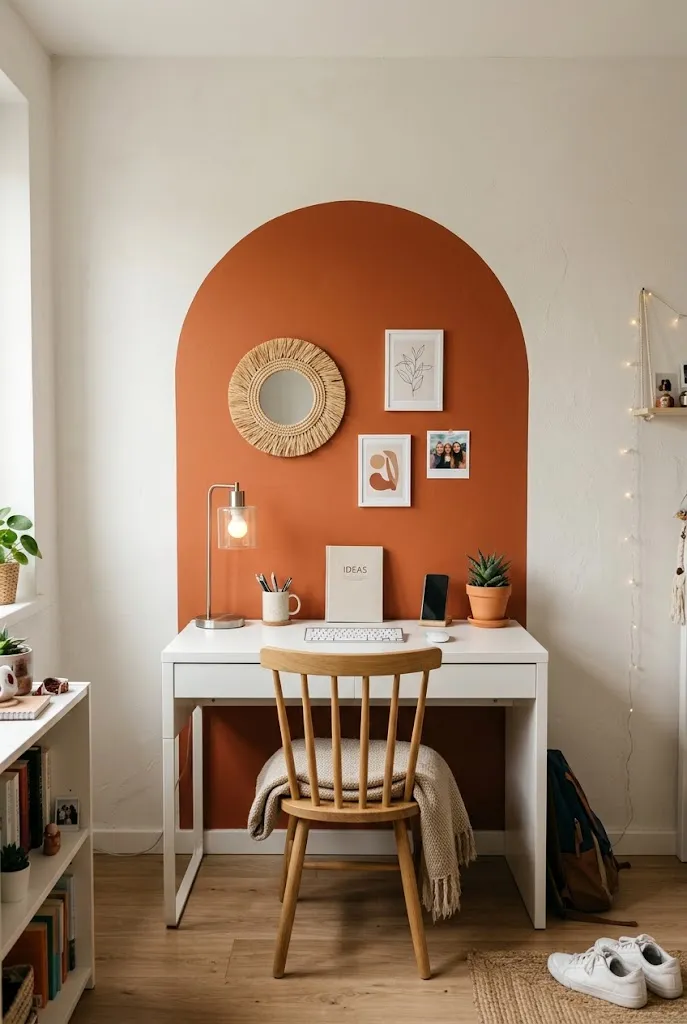
Paint a bold block of color behind the desk, such as a half wall, a tall rectangle, or an arch, to define the study zone without adding furniture. It’s an accessible project, and the color can match your teen’s taste. Choose a satin or matte finish, and use painter’s tape for crisp edges. A colored backdrop also makes a simple white desk look more intentional.
| Shape | Effect |
|---|---|
| Half-wall | Grounded and modern |
| Tall rectangle | Frames the desk |
| Arch | Softer and more playful |
24. Zone a Large Room With Rugs and Furniture
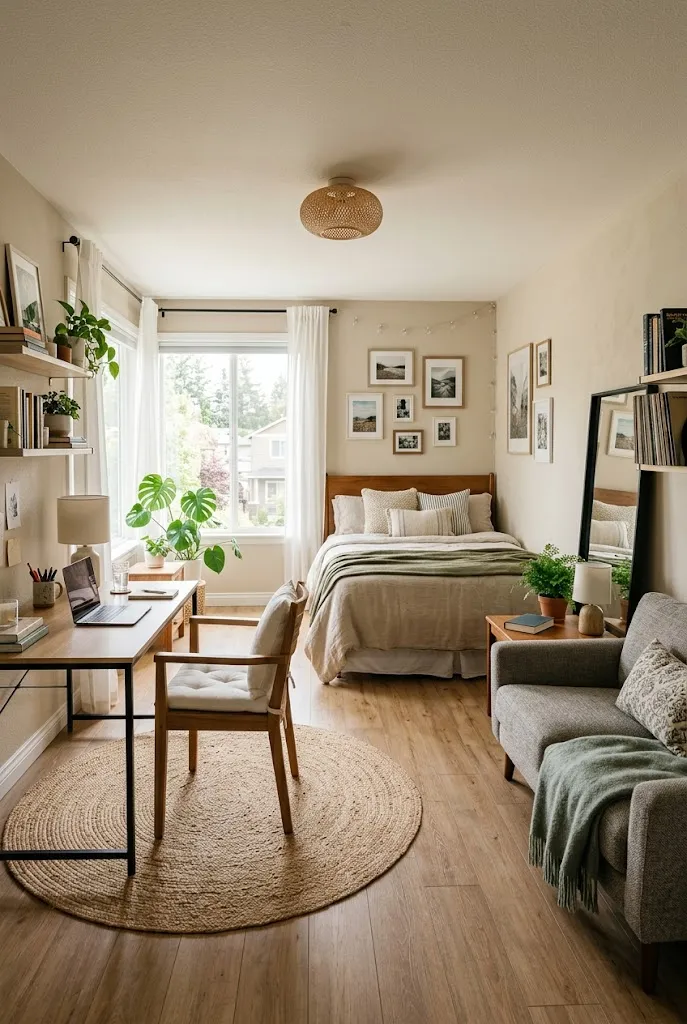
Spacious bedrooms benefit from defined zones: sleep, study, and hangout. Use a rug under the desk to anchor the work area, and position a sofa or bean bags in a separate corner. The desk can face the window, with the bed behind it or off to the side. This approach suits basements, bonus rooms, and larger suburban bedrooms.
- Use separate rugs to define each zone
- Keep walkways at least 3 feet wide
- Place the desk where it gets good light
25. Soften the Desk With Boho Rattan and Plants
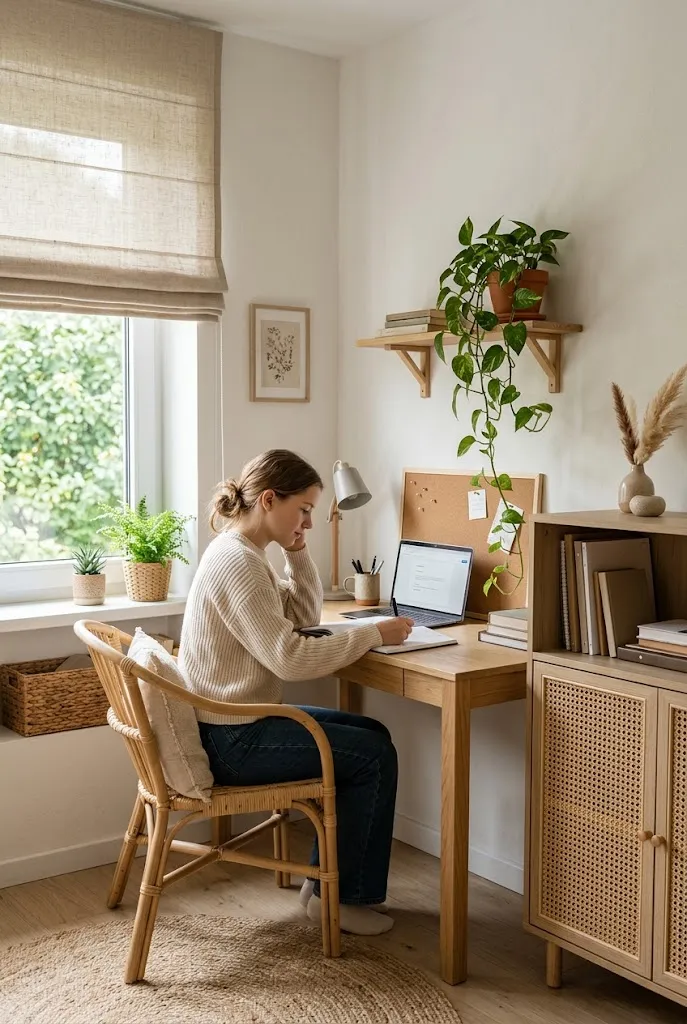
Rattan, linen, and plants bring a relaxed look to a study corner. A woven chair, a cane-front cabinet, and a trailing plant above the desk soften the work area. Choose plants that suit the room’s light, and keep the foliage away from the keyboard and screen. The result feels calm and organic without losing function.
Quick Tip: Use a small tray or saucer under each plant so watering doesn’t mark the desk.
26. Build an Industrial Desk With Black Metal and Wood
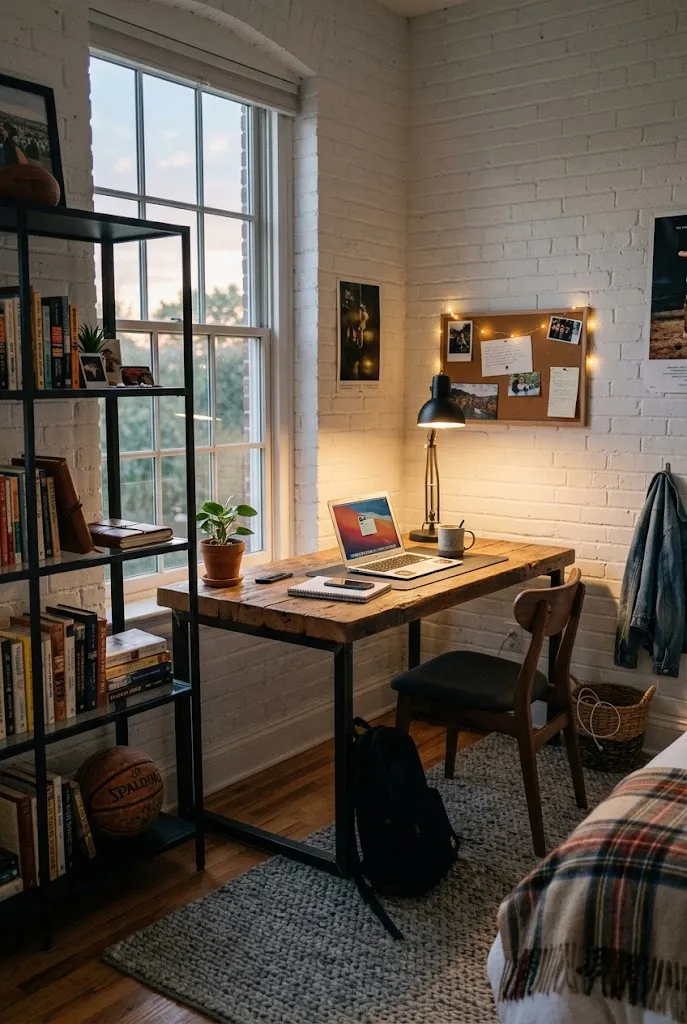
A black steel frame and a thick wood top give a sturdy, no-nonsense feel that suits many teens. Pair it with open metal shelving and a simple task lamp. The materials are durable, and the look works in both modern and loft-style rooms. Choose a matte black finish to avoid fingerprint marks, and add a felt pad under any metal feet to protect the floor.
- Black steel frame with a solid wood top
- Open metal shelf for books and boxes
- Matte task lamp in black or bronze
27. Create a Renter-Friendly Study Wall With Removable Finishes
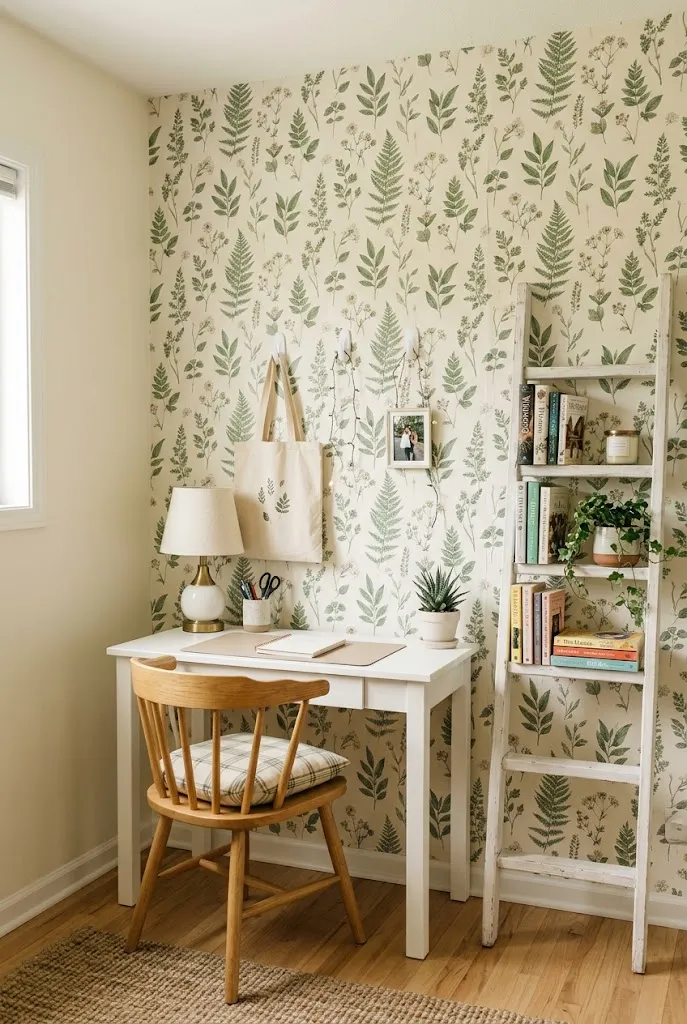
Renters can still define a study area. Use removable wallpaper or peel-and-stick panels behind the desk, add adhesive-backed hooks, and use a freestanding shelf rather than drilling. A tension-rod shelf or leaning ladder bookcase can add storage without damaging the walls. Read the product instructions and test a small hidden area first to make sure the finish comes off cleanly.
- Test the removable product on a small hidden spot.
- Apply the panels or wallpaper behind the desk.
- Add freestanding storage and hooks.
28. Place the Desk at the Foot of the Bed in a Narrow Room
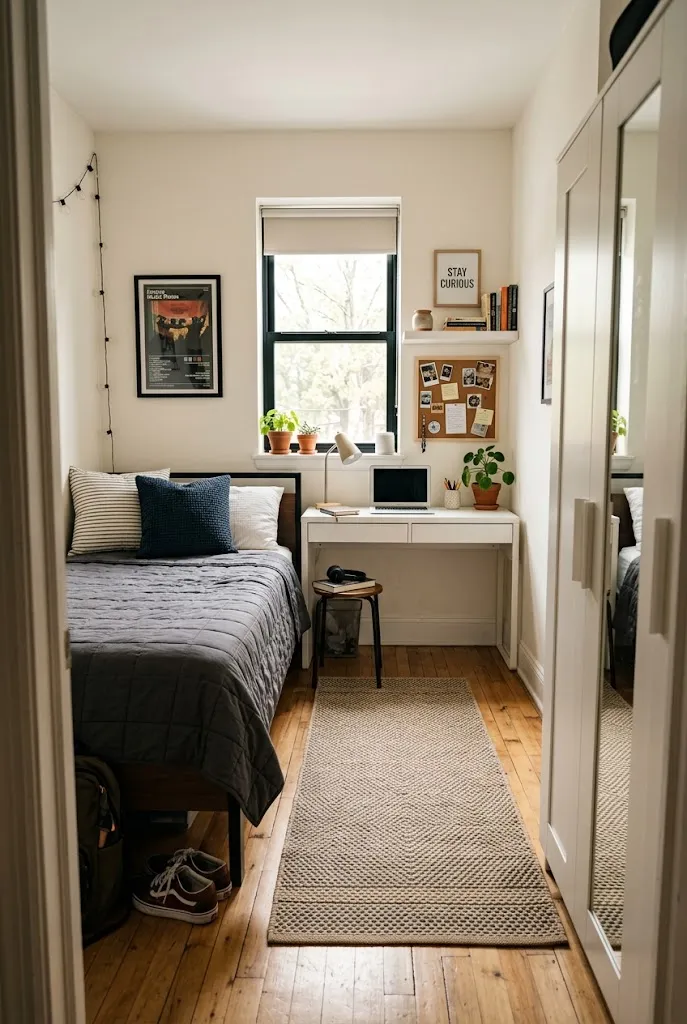
Long, narrow bedrooms are tricky. Placing a compact desk across the end of the room, at the foot of the bed, uses a spot that often goes unused. Choose a desk about 18 to 20 inches deep so the walkway stays open, and keep the chair on the side where the opening is widest. Add a low shelf on the side wall and a mirror to bounce light from the window.
Common Mistake: Choosing a deep desk that blocks the path to the closet.
Better Approach: Keep it shallow, then use wall shelving rather than a hutch for storage.
Choosing Where to Start
Start with the room’s biggest limit: space, light, or budget. A small room usually needs a floating desk, loft bed, or fold-down option. A bigger room can handle zoning and built-ins. Whichever direction you pick, involve your teen in choosing the chair, lamp, and wall color, because a study space tends to get used more when it feels like theirs. Test the setup for a couple of weeks, then adjust the lighting, storage, or layout.