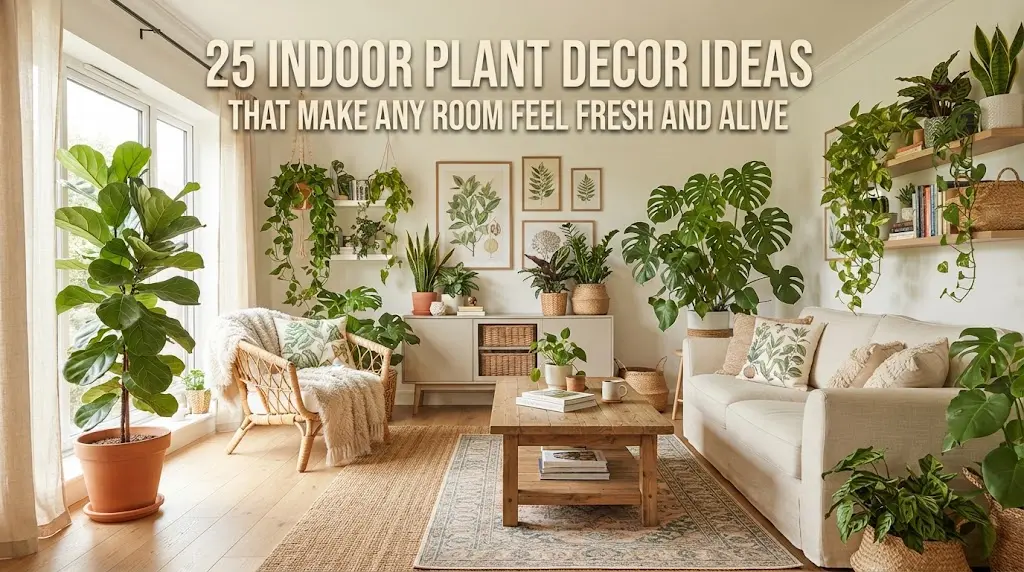
25 Indoor Plant Decor Ideas That Make Any Room Feel Fresh and Alive
A houseplant can soften a hard corner, fill an awkward gap, or give a plain shelf a focal point. The difference between plants that look intentional and plants that look scattered usually comes down to placement, scale, and the container. This guide covers 25 distinct ways to decorate with indoor plants, from a ledge of cuttings on a kitchen windowsill to a statement tree in a living room corner. Some ideas cost almost nothing and suit renters. Others involve custom shelving or larger investments. Each one includes the practical details that decide whether a look works in a real home: light, scale, drainage, and what to pair it with.
1. Line a Window With Floating Shelves
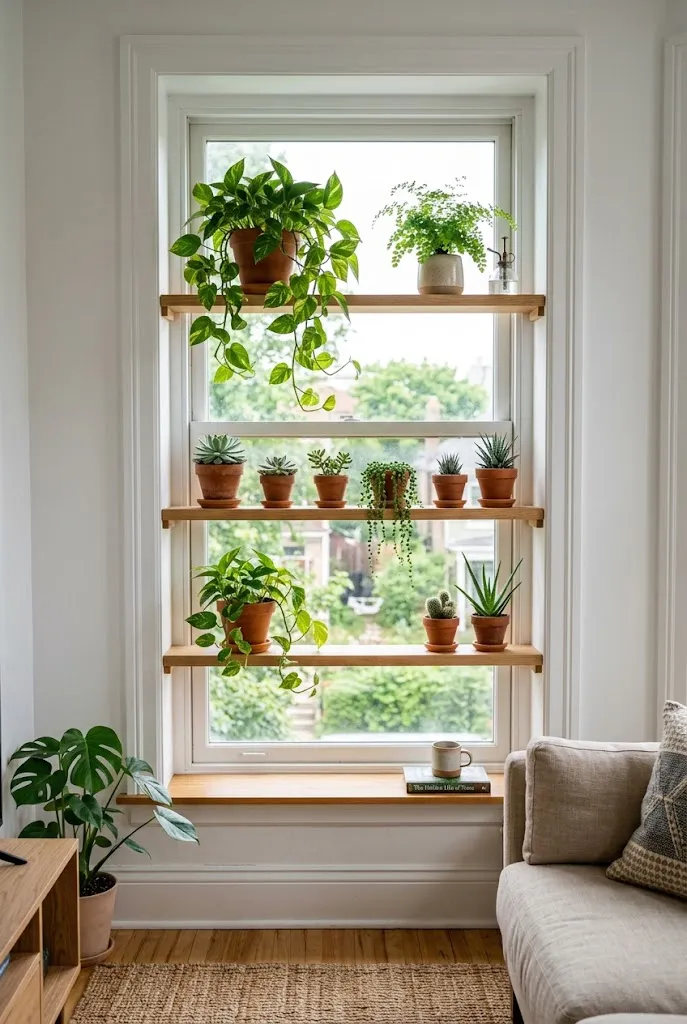
Mounting two or three narrow shelves across a bright window turns the glass into a living backdrop. Stagger the plant heights, with trailing pothos or heartleaf philodendron on the top shelf and compact succulents or small ferns lower down. Light shines through the leaves, so the arrangement looks different in morning and afternoon.
Quick Facts
Best For: Bright windows facing east, south, or west
Investment: Accessible to moderate
- Leave at least 8 to 10 inches between shelves so trailing stems don’t crowd the plants below.
- Choose shelf depth based on pot size, usually 6 to 8 inches for small pots.
- Use wall anchors rated for the weight of wet soil, which is heavier than it looks.
2. Anchor an Empty Corner With a Tall Floor Plant
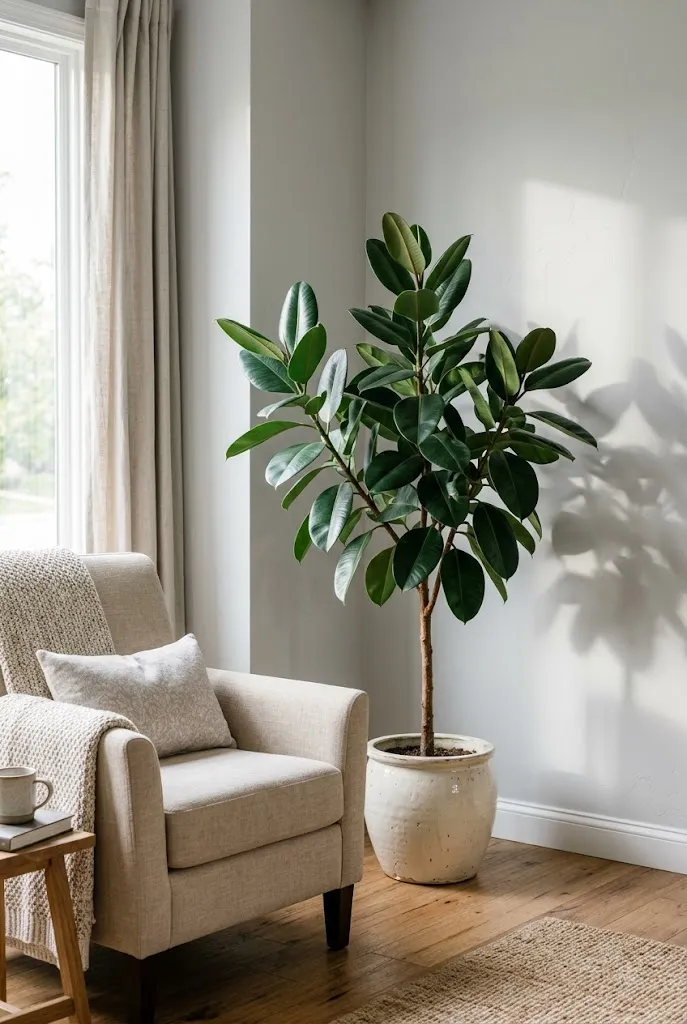
Empty corners tend to make a room feel unfinished. A tall plant such as a rubber plant, bird of paradise, or fiddle-leaf fig adds height and draws the eye upward. Place it where it gets bright, indirect light, and rotate the pot occasionally so growth stays even.
Common Mistake: Buying a tall plant in its flimsy nursery pot and dropping it in the corner.
Better Approach: Repot it into a weighty ceramic or fiber-clay planter one size up, with drainage. The heavier container steadies the plant and looks more finished.
Large plants are also easier to style when the surrounding space is quiet, so keep the corner free of competing decor.
3. Hang Macramé Planters Near a Bright Window
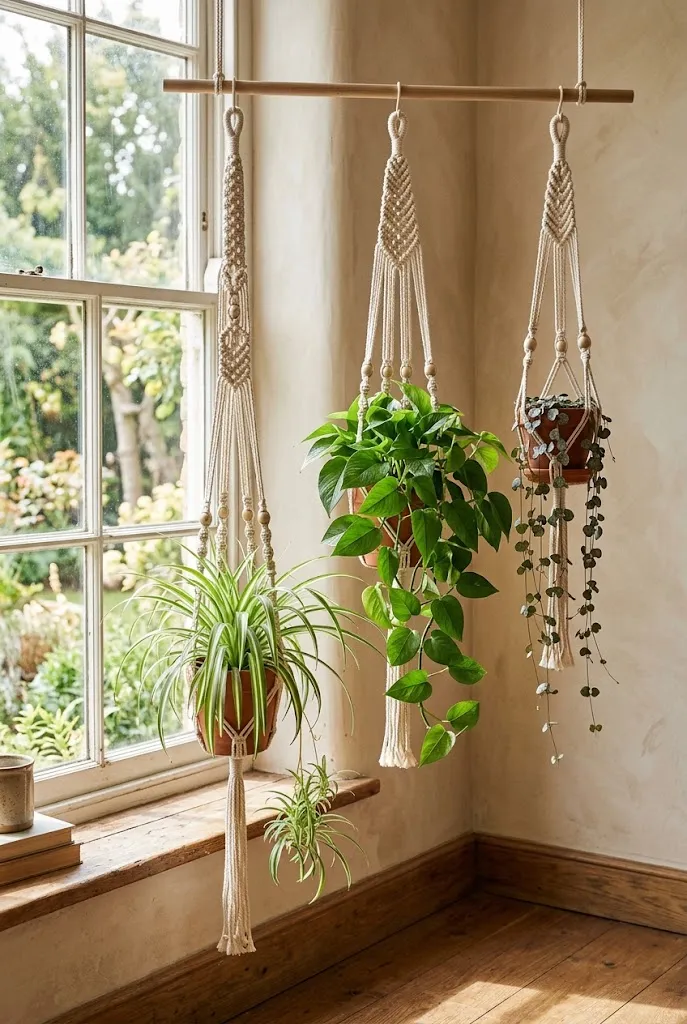
Hanging planters free up surfaces, which helps in apartments and rentals. A ceiling hook placed in a joist, or a tension rod across a window, holds trailing plants such as spider plants, string of hearts, or pothos at eye level. Vary the hanging heights so the planters don’t line up like laundry.
- Use cotton or jute cord, and check that the hook is rated for the planter’s wet weight.
- Hang pots with drainage over a saucer, or take them down to water.
- Group two or three at different drops rather than one lone planter.
A spider plant is a reasonable pick for a first hanging planter because it tolerates a range of conditions and produces trailing plantlets.
4. Build a Tiered Plant Stand Display
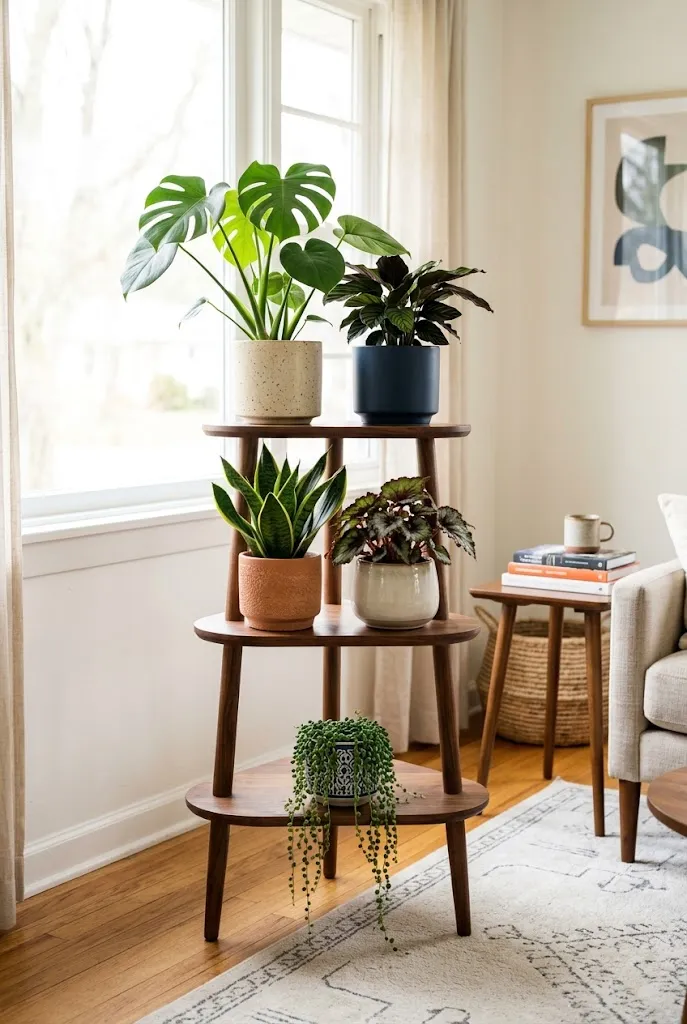
A tiered stand lets you show a collection without using floor space for each pot. Mid-century-style wooden stands with angled legs suit modern rooms, while black metal ladders work in more industrial spaces. Put the tallest plant on the top tier and smaller, trailing plants lower.
| Option | Effect | Best Fit |
|---|---|---|
| Wood plant stand | Warm, softer lines | Living rooms, bedrooms |
| Metal tiered stand | Slim, open, graphic | Small apartments, sunrooms |
| Wicker or rattan stand | Textured, relaxed | Boho or coastal rooms |
Keep light needs in mind. Plants on the lowest tier may get less light than those at the top, so put shade-tolerant types lower down.
5. Let Pothos Trail From the Top of a Bookshelf
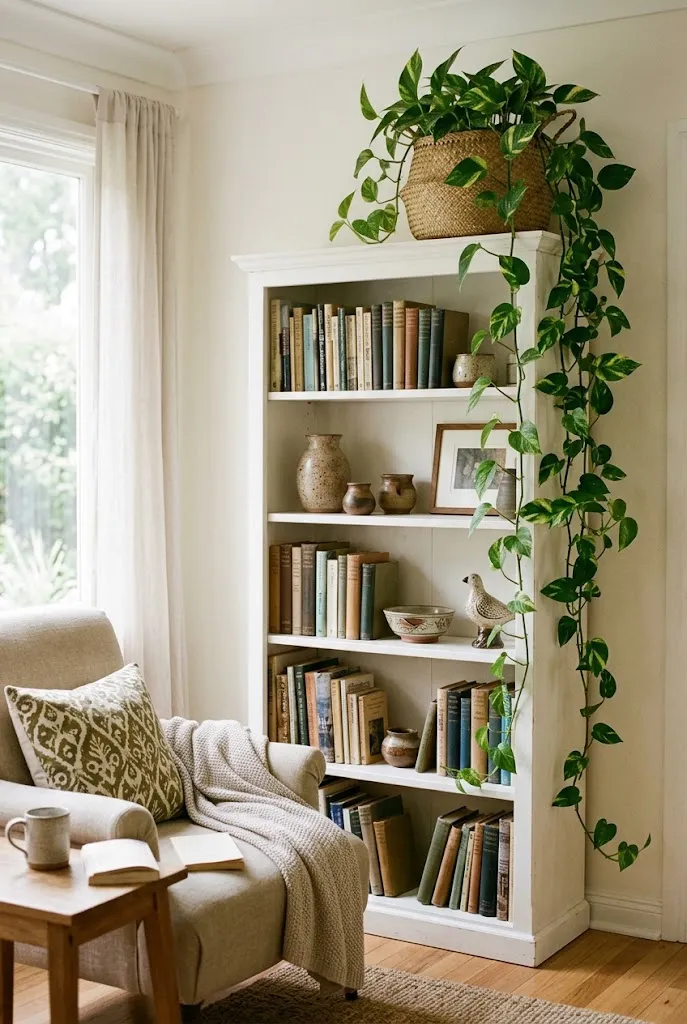
Tall bookcases often have dead space at the top. A pothos or philodendron there lets long vines spill down the side of the shelf, softening hard edges and adding vertical movement. Both tolerate moderate light, though growth is slower in dim rooms.
Because the pot sits out of sight, use a saucer or a waterproof inner liner. Water it at the sink and let it drain before returning it, rather than watering in place.
Editor’s Note: Pothos and philodendron are listed as toxic to cats and dogs if chewed, so households with curious pets may prefer a pet-safe option such as a spider plant in the same position.
6. Set Up a Kitchen Windowsill Herb Garden
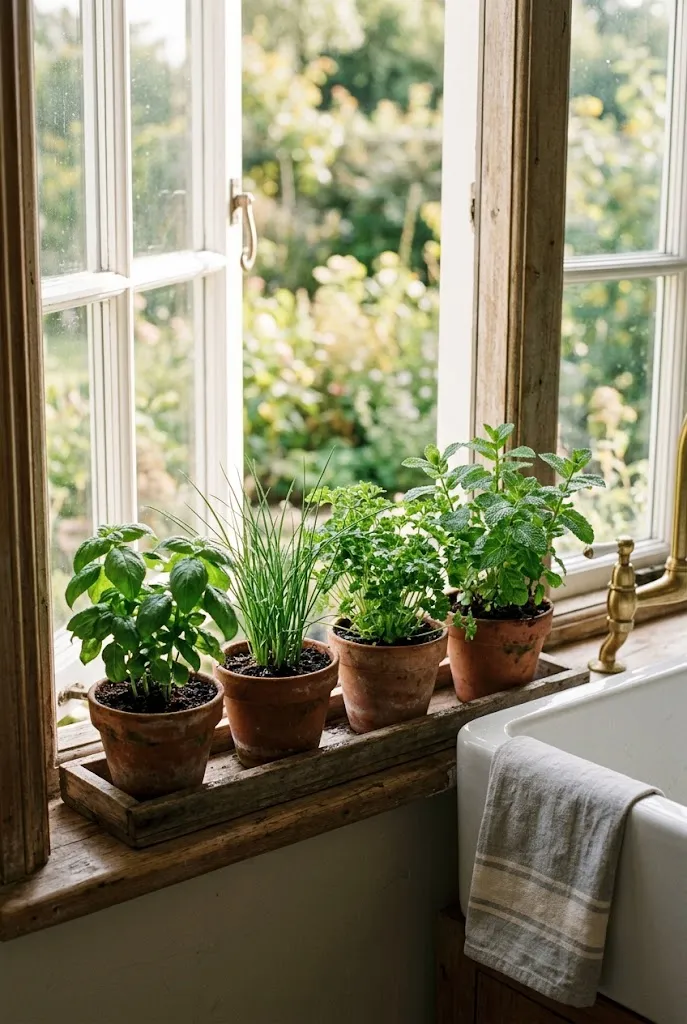
Basil, chives, parsley, and mint can live in small pots on a bright kitchen windowsill. A south-facing window works best, and a narrow tray underneath catches overflow. Herbs also need regular trimming, which keeps them compact.
- Choose pots with drainage holes and a saucer or tray.
- Use a general potting mix rather than garden soil.
- Pinch growth tips regularly to encourage bushy plants.
Mint spreads aggressively, so give it its own pot rather than sharing space with other herbs. If the sill is too narrow, a small tray or a clip-on rail can hold the pots.
7. Style the Bathroom With Humidity-Friendly Greens
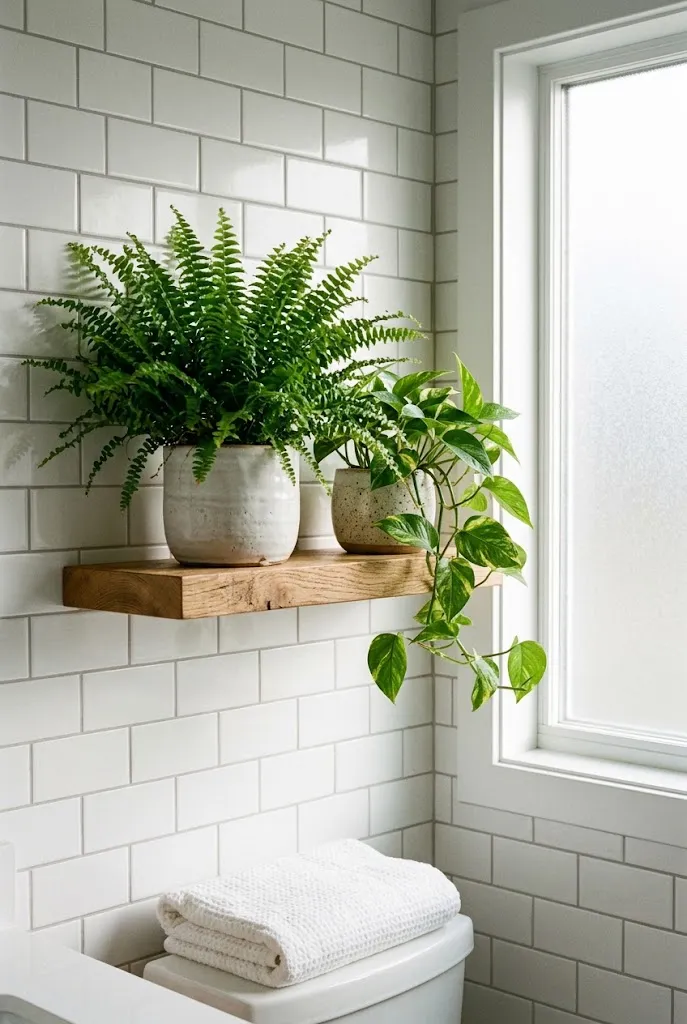
Bathrooms with a window can handle ferns such as Boston fern, which like consistent moisture, along with pothos and snake plants. Interior bathrooms with no natural light are harder, so a plant is only a good fit when there is a real light source.
- Place plants on a ledge, tank top, or floating shelf away from direct splash.
- Pair green foliage with white tile and warm wood for a calm, spa-like feel.
- Rotate plants to the living room occasionally if light is limited.
Steam alone does not guarantee a plant will thrive. Light still matters most.
8. Place a Snake Plant in the Bedroom
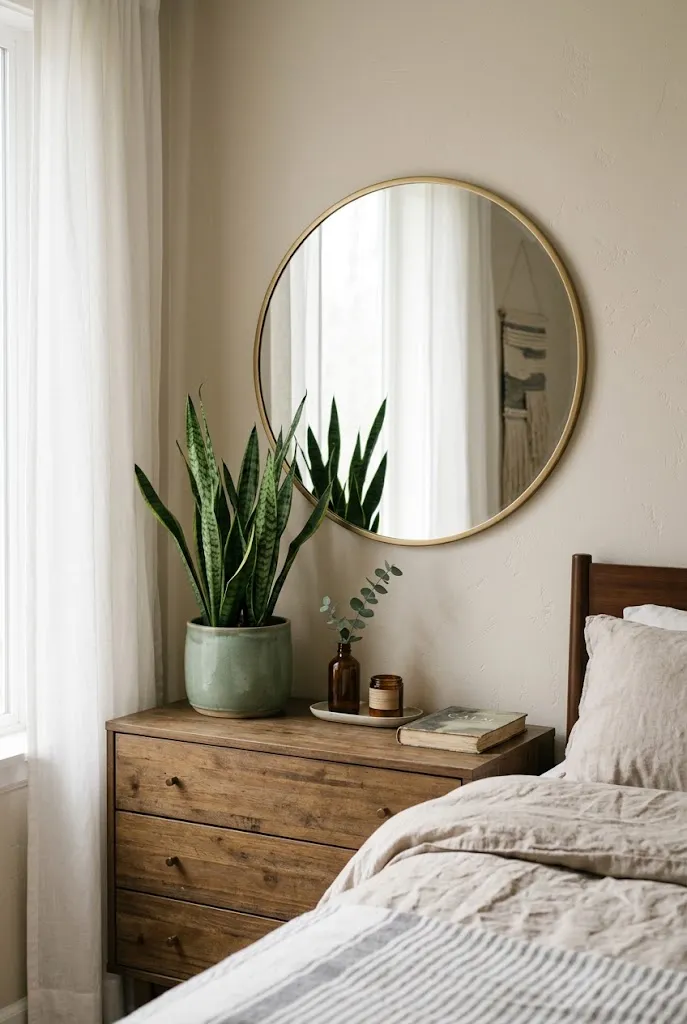
Snake plants tolerate lower light and irregular watering better than many houseplants, which suits a bedroom. Their upright leaves add vertical lines without taking much room, so they fit on a dresser, in a corner, or beside a dresser mirror.
Do: Water sparingly and let the soil dry between waterings.
Don’t: Keep it in a pot without drainage, since overwatering is the most common problem.
Choose a ceramic planter in a muted tone, such as sage, stone, or warm white, to keep the room restful. Snake plants are listed as toxic to pets if eaten.
9. Create a Terrarium Centerpiece for the Coffee Table
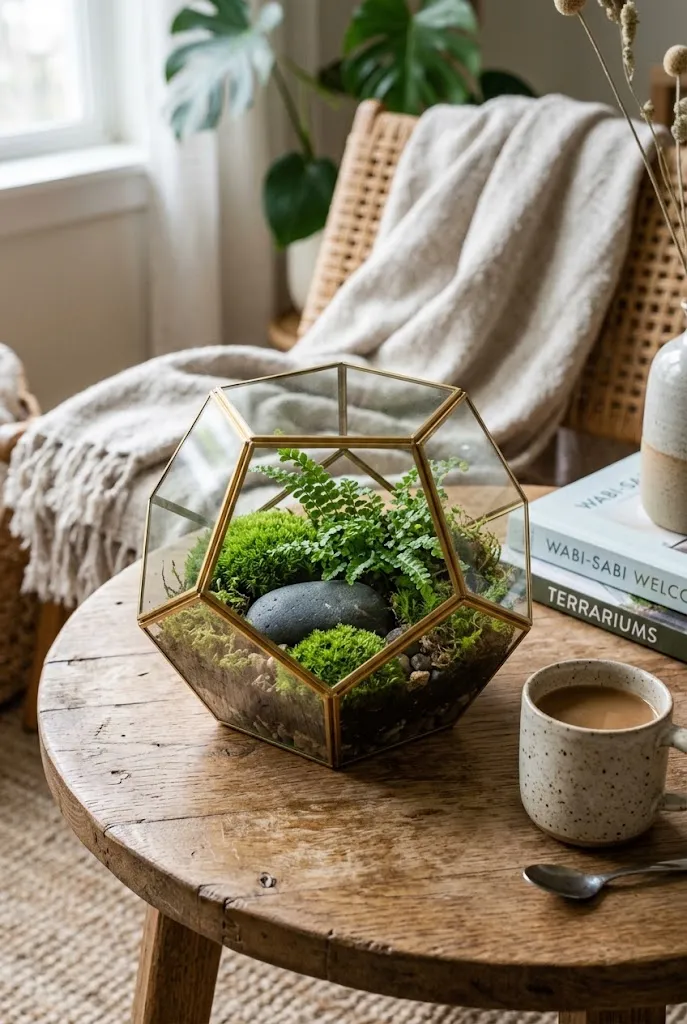
A closed or open glass terrarium works as a small landscape that sits at eye level when seated. Choose plants that match the type. Open containers suit succulents and cacti, while closed containers suit moisture-loving plants like small ferns and moss.
Best For: Coffee tables, side tables, desks
Investment: Accessible to moderate
Layer gravel, a thin barrier of activated charcoal, and potting mix. Because a terrarium has no drainage, water in small amounts. Keep it in bright, indirect light, since direct sun can overheat a closed glass container.
10. Mount a Vertical Wall Planter
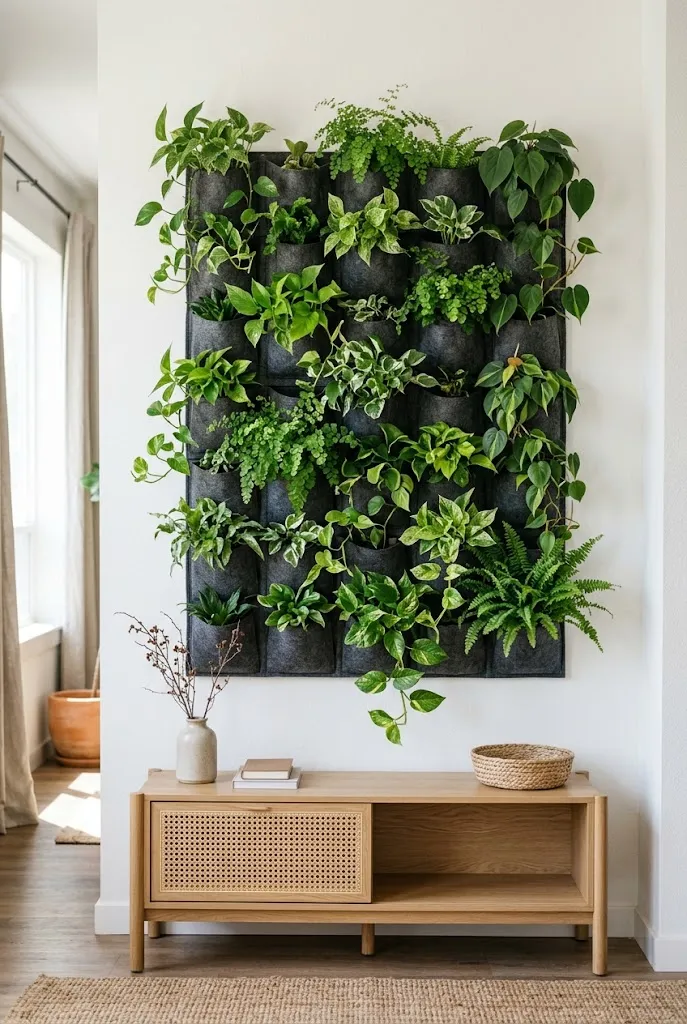
A wall-mounted planter system creates a green feature without using floor or table space. Felt pocket planters are lightweight and renter-friendly, while modular frames and trays hold more weight.
- Check that the wall can bear the weight, since wet soil adds up quickly.
- Choose plants with similar light and water needs for the same panel.
- Plan for watering, since vertical systems can drip.
Wall planters work best in bright rooms. A dim wall will leave plants struggling, however good the design looks.
11. Group a Low Trio as a Dining Table Centerpiece
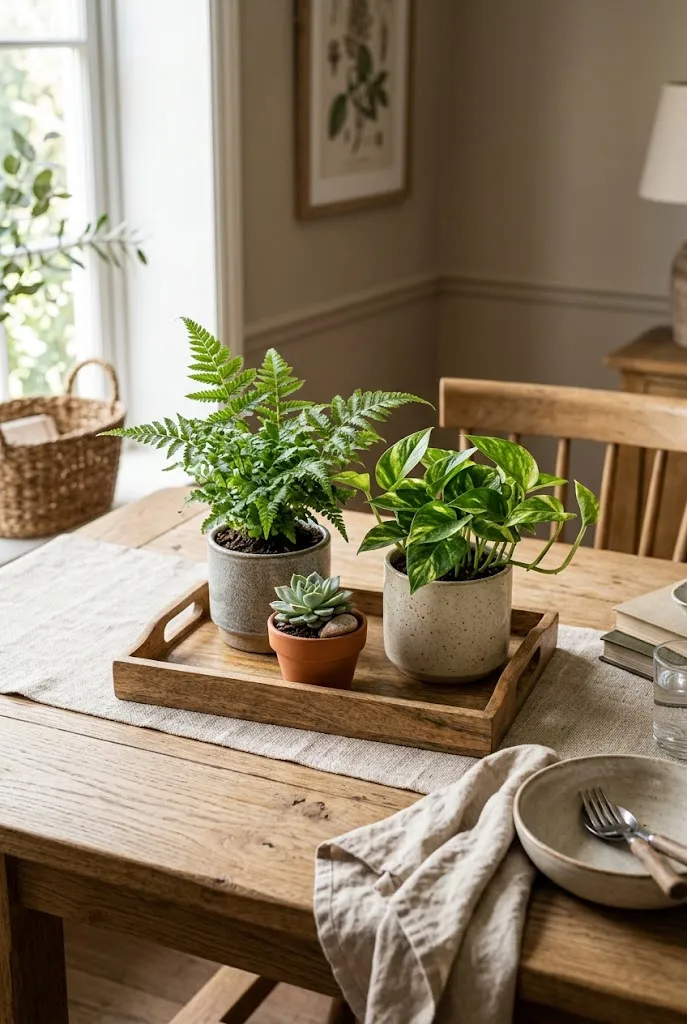
A dining table benefits from plants that stay below eye level so conversation isn’t blocked. Place three small plants of different heights on a wooden tray or runner, such as a small fern, a trailing pothos, and a compact succulent.
Odd-numbered groupings tend to look more natural than pairs. Match the planters through material or tone, such as three shades of warm ceramic, so the group looks cohesive even with different plants.
Quick Tip: Move the arrangement to a sideboard when you need the full table surface.
12. Tuck a Monstera Into a Woven Floor Basket
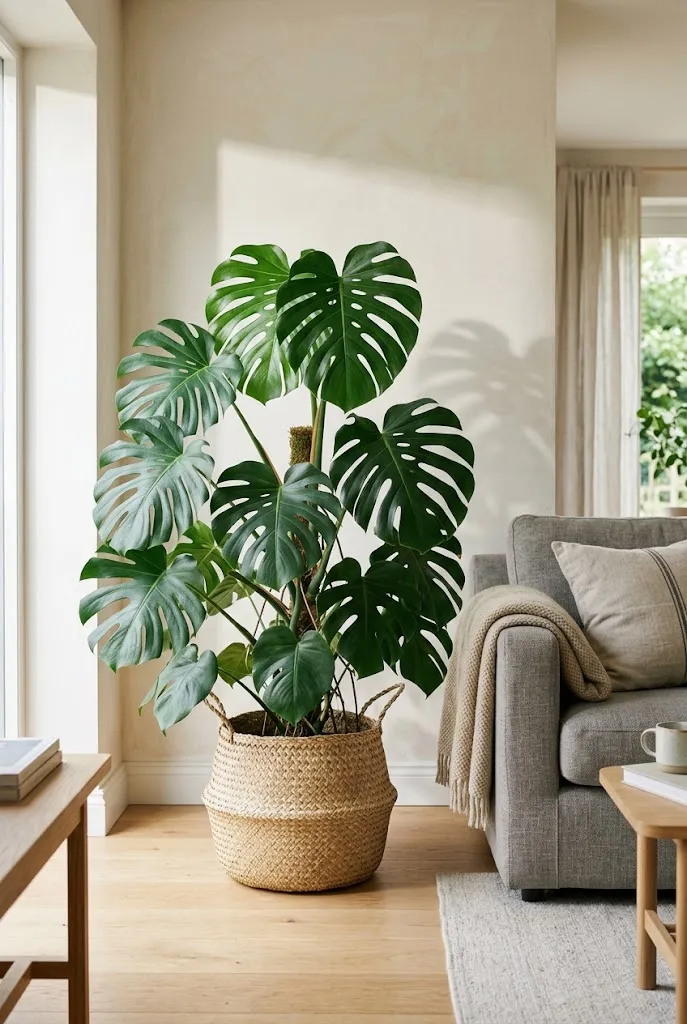
A large woven basket dresses up a plain nursery pot and adds texture to a living room. Place a monstera, a large pothos, or a philodendron inside it beside a sofa or reading chair. Keep the plastic nursery pot inside so you can lift it out to water.
Large leaves create a bold shape against a plain wall. Monstera does best in bright, indirect light, and it may eventually need a moss pole to climb.
Common Mistake: Setting the basket directly on a wood floor.
Better Approach: Place a waterproof saucer inside the basket to protect the floor from leaks.
13. Mount a Staghorn Fern as Living Wall Art
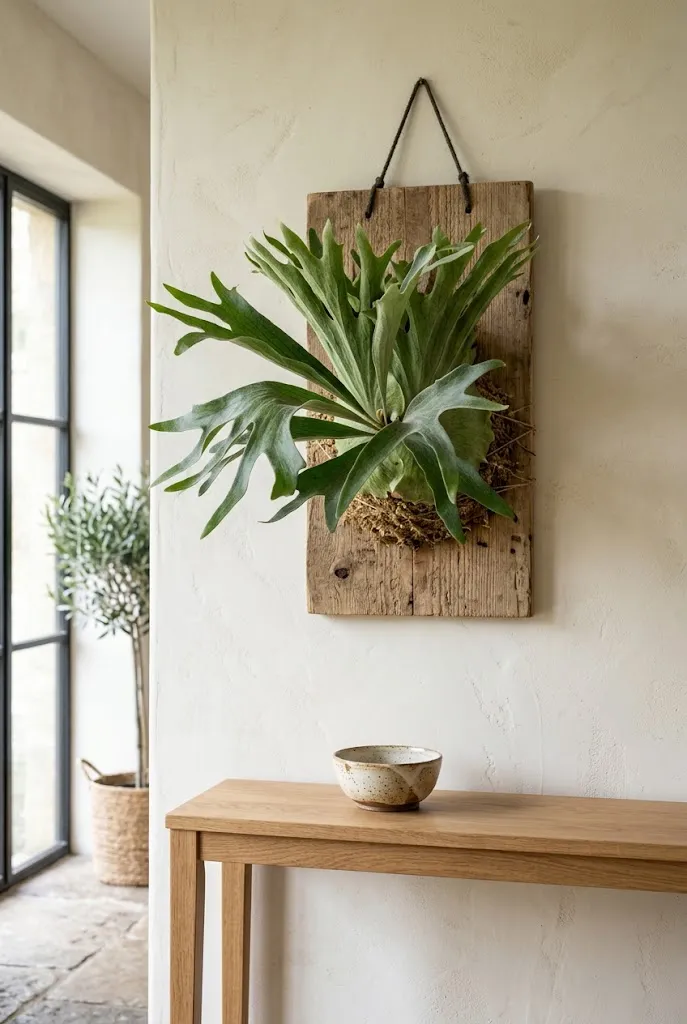
Staghorn ferns are typically sold mounted on a wooden board, so they hang like a sculpture. Hang one in a bright spot with indirect light and soak or mist the mounted root ball according to the plant’s care guidance.
Because it hangs flat, a staghorn works in narrow spots like a hallway or above a console. It’s a more specialized plant, so expect a learning curve on watering.
Best For: Hallways, above consoles, plain walls
Investment: Moderate
14. Pair a ZZ Plant With a Matte Black Planter in the Hallway
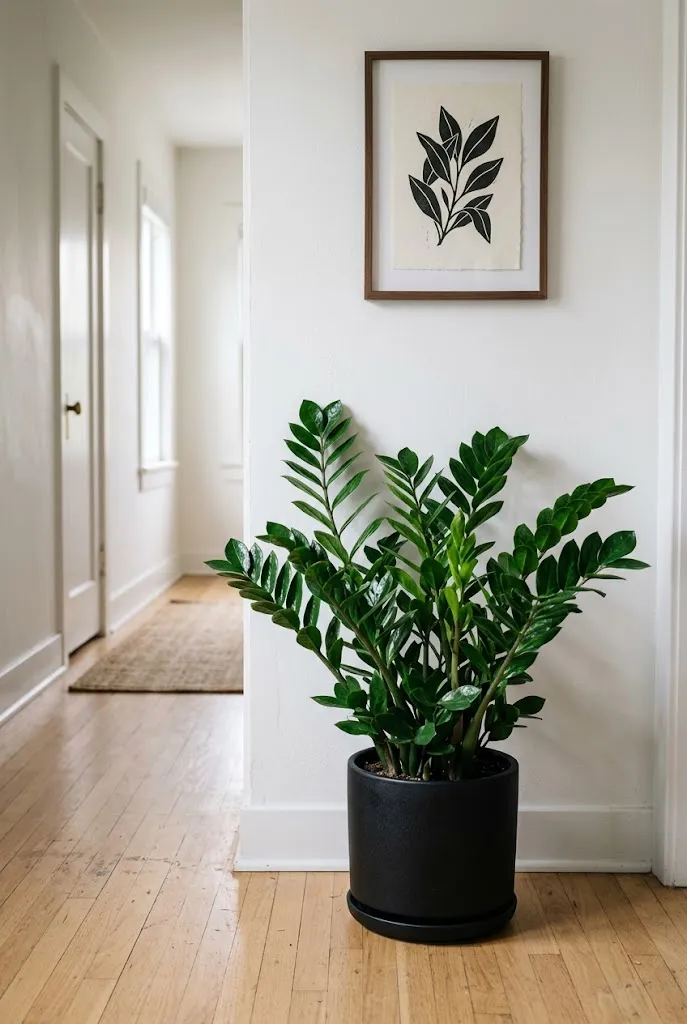
A ZZ plant handles lower light and irregular watering, which suits a hallway that gets little sun. Its glossy leaves look sharp in a matte black or charcoal planter, giving a modern look without much fuss.
The contrast works because the dark planter grounds the bright leaves. Keep decor around it restrained, such as one framed print or a mirror, so the plant stays the focus. ZZ plants are listed as toxic to pets if chewed.
15. Add a Small Desk Plant to a Home Office
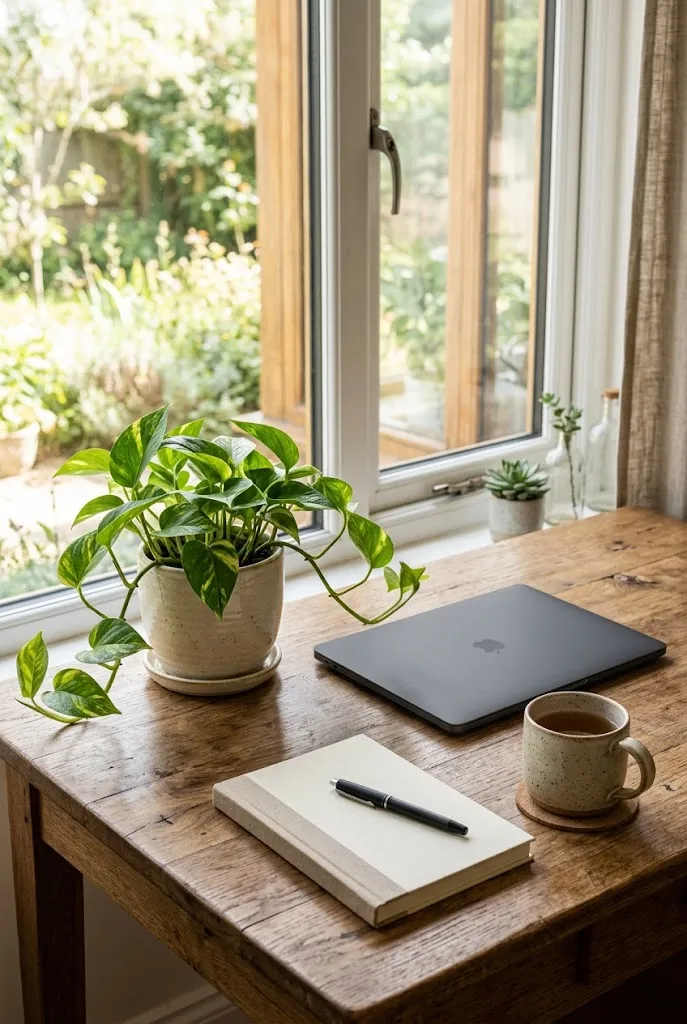
A plant at a desk breaks up screens and paperwork. Keep it compact so it doesn’t take workspace, such as a small pothos, a jade plant, or a desktop snake plant. Place it where it gets light from a nearby window.
- Choose a low, wide planter that doesn’t tip when you bump the desk.
- Use a saucer so water never reaches electronics or paperwork.
- Keep it on the window side of the desk if light allows.
16. Hang a String of Pearls in a Bright Spot
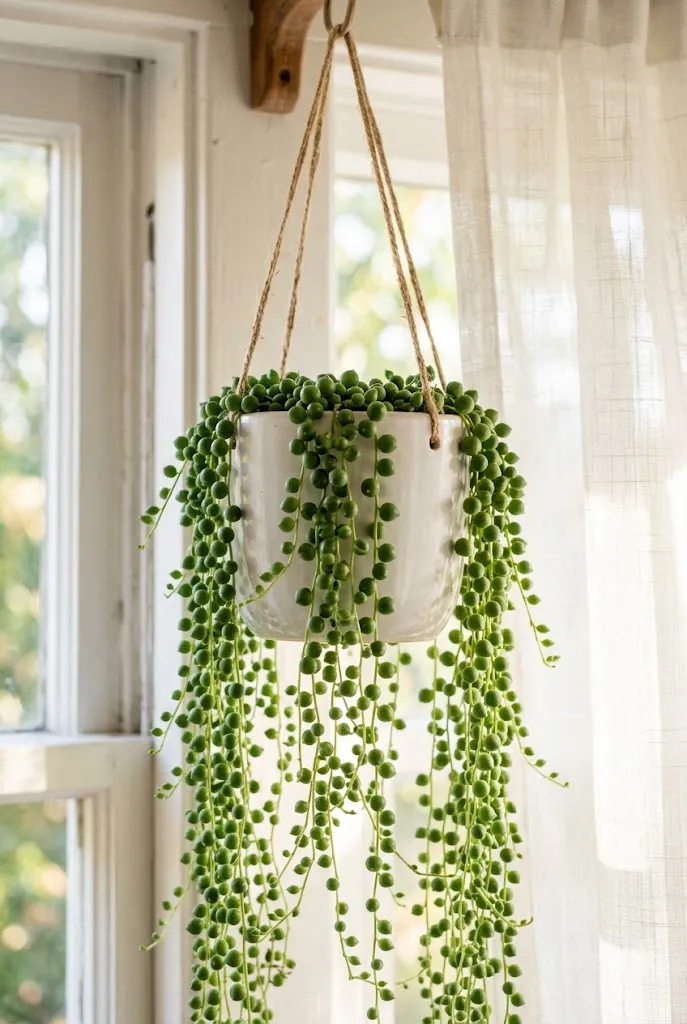
String of pearls has bead-like trailing stems that look sculptural when hung at eye level or higher. It needs bright light and careful watering, and it can be sensitive to too much moisture.
Because it is a succulent, it prefers a well-draining mix and a pot with drainage. A simple clay or ceramic hanging pot lets the stems spill without competing visually.
Editor’s Note: String of pearls is listed as toxic to pets, so hang it out of reach.
17. Arrange Cacti and Succulents in a Shallow Bowl
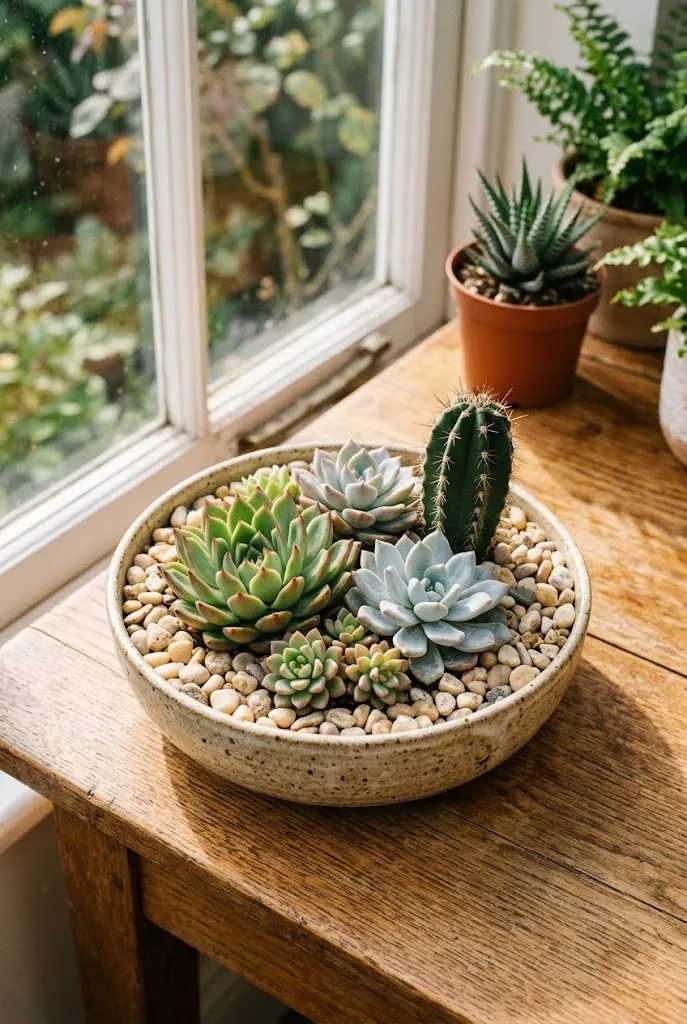
A wide, shallow dish gives succulents a tidy, sculptural look. Use a bowl with a drainage hole and a gritty, fast-draining succulent mix, then group plants of different shapes and colors with small stones as a top dressing.
Succulents generally need bright light, so a sunny sill or a bright table near a window works best. A shallow bowl also dries out quickly, which suits plants that dislike wet soil.
| Plant Style | Look | Best Fit |
|---|---|---|
| Rosette succulents | Soft, flower-like shapes | Sunny sills |
| Columnar cacti | Upright, architectural | Modern shelves |
18. Repurpose Vintage Containers as Planters
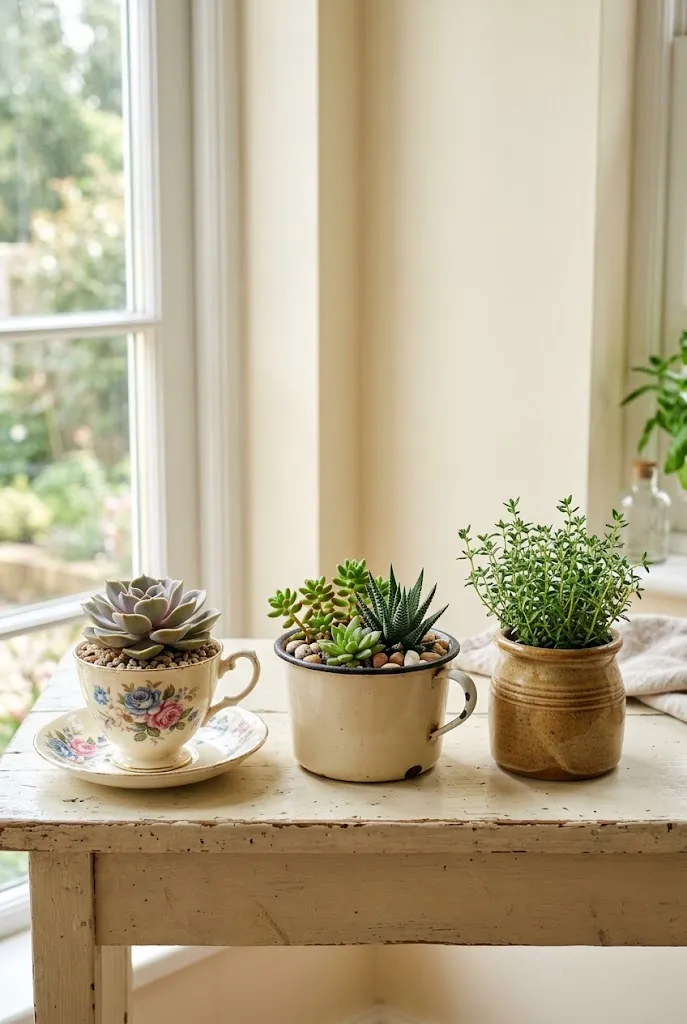
Teacups, enamel pots, tins, and crocks can become planters with small adjustments. Containers without drainage holes need a nursery pot placed inside, or a layer of drainage material, to avoid standing water.
- Choose plants with small root systems, such as small succulents, baby tears, or herbs.
- Group items with a shared tone, such as cream and blue, so the mix looks curated.
- Avoid containers that rust or leach when wet unless you use a liner.
This approach suits secondhand shopping and yard sales, and it adds personality without a big budget.
19. Set a Calathea on a Vintage Stool
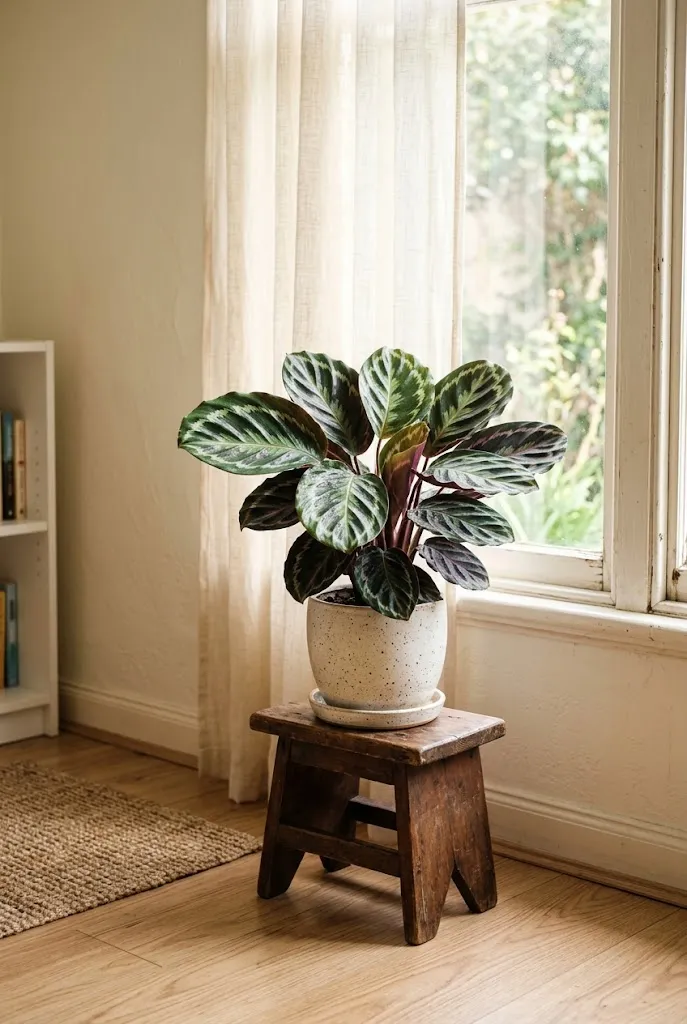
Calatheas have patterned leaves that make them a good decorative focal point, but they’re fussier than many houseplants, preferring consistent moisture and indirect light. Placing one on a small wooden stool raises it to eye level so the leaf pattern is visible.
Common Mistake: Putting a calathea in direct sun, which can fade or scorch the leaves.
Better Approach: Choose a spot with bright, filtered light, away from drafts and heating vents. Calatheas are generally listed as non-toxic to cats and dogs.
20. Style the Entryway Console With a Plant and a Mirror
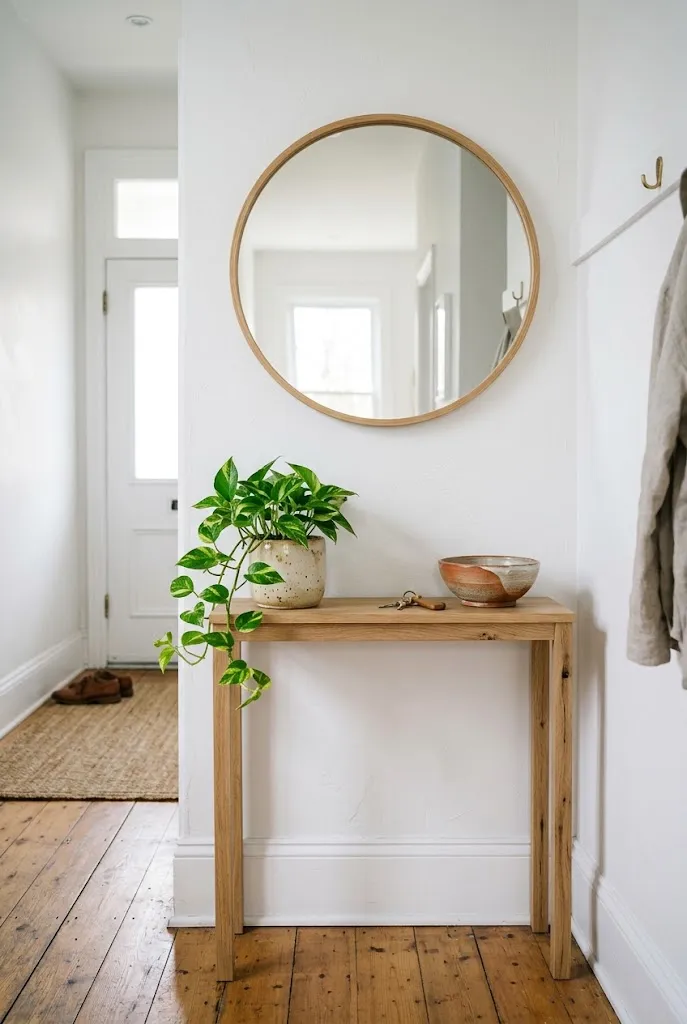
A plant at the entry creates a welcoming first impression. A shallow console holds a small trailing plant, a mirror above reflects light, and a small bowl holds keys. Choose a plant that tolerates the available light, such as a pothos or snake plant.
Editor’s Note: Keep the console shallow enough to preserve the walking path. The mirror bounces light from nearby windows, which also helps a plant by spreading light.
21. Build a Propagation Station on a Shelf
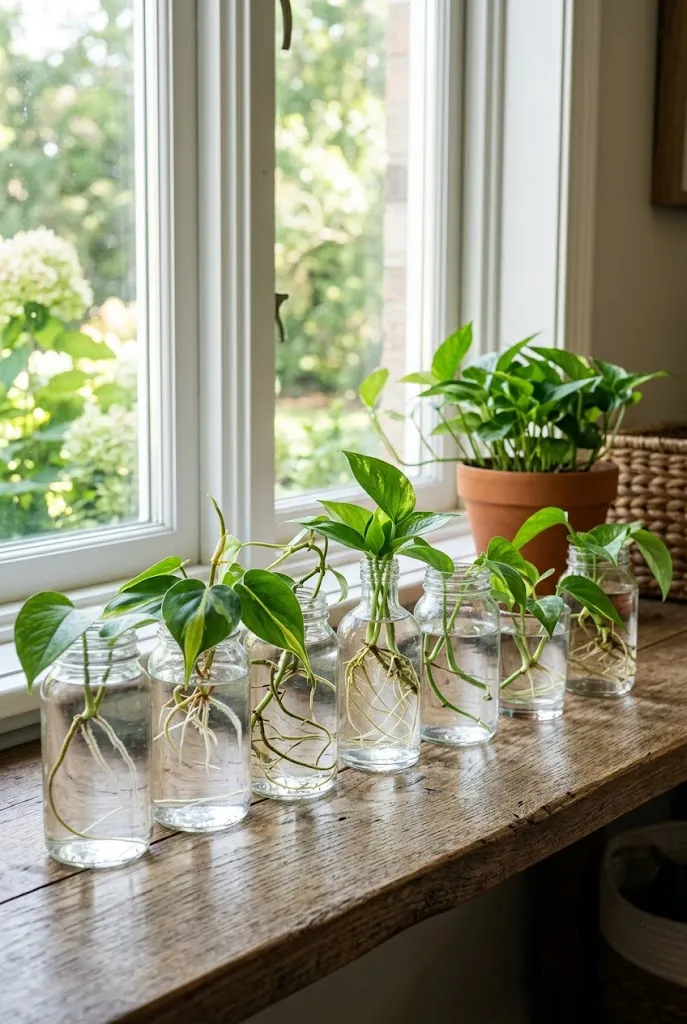
A propagation station is a row of glass vessels holding cuttings rooting in water. It doubles as decor and a low-cost way to grow new plants. Pothos, philodendron, and tradescantia cuttings root readily in water.
- Cut just below a node, the point where a leaf joins the stem.
- Place the cutting in water so the node is submerged and the leaves stay dry.
- Change the water regularly and move rooted cuttings to soil.
Use clear glass or small bottles in matching tones for a tidy look.
22. Layer a Boho Corner With Mixed Heights
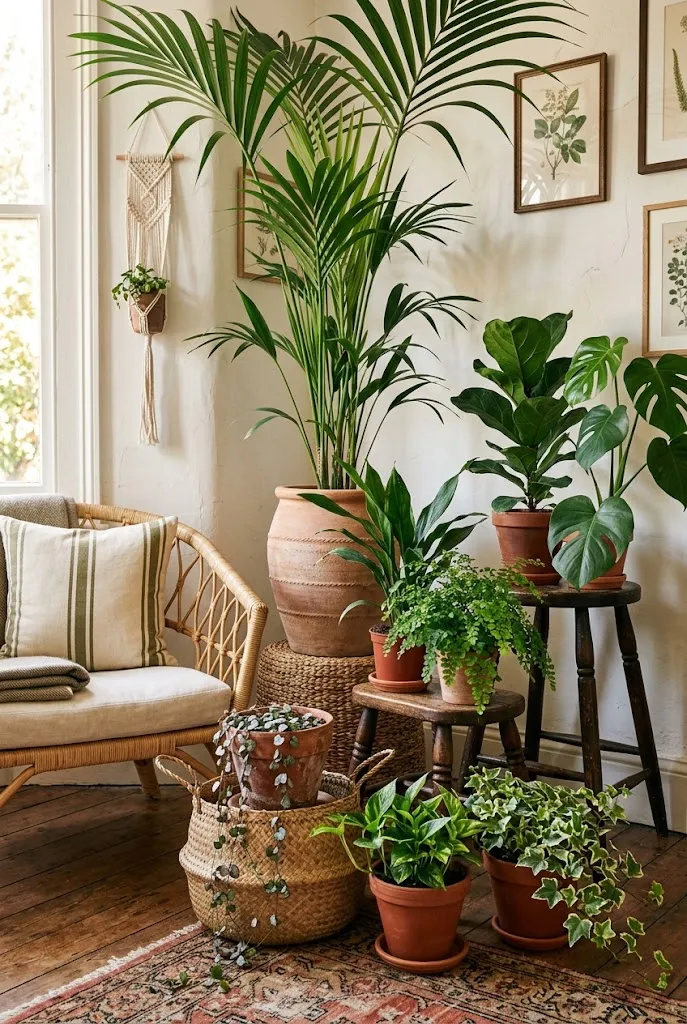
A layered plant corner feels full without feeling chaotic when you vary height and texture. Start with a tall plant at the back, add medium plants at different heights using stools or stands, and finish with trailing plants in front. Odd-numbered groups tend to look more natural.
Quick Facts
Best For: Living rooms, sunrooms, bedrooms
Visual Effect: Lush, layered, relaxed
Investment: Accessible to moderate
Keep the pots in a related palette, such as terracotta, cream, and woven natural fibers, so the variety of leaf shapes stays the focus.
23. Fill an Unused Fireplace With Plants
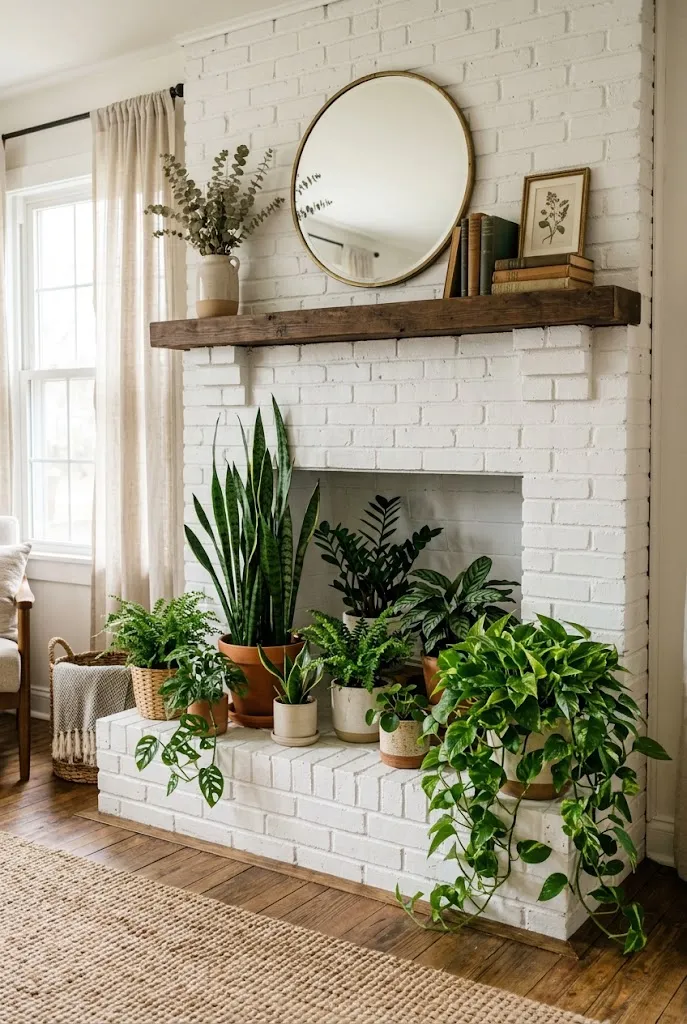
A fireplace that isn’t in use can hold plants. Place pots on the hearth or inside the firebox, and keep in mind that fireplace interiors are dark, so choose a plant suited to low light, such as a snake plant, or use a grow light.
Make sure the fireplace is fully out of service, with the flue closed or the opening blocked, before putting anything inside. Rotate plants out to brighter spots periodically to keep them healthy.
24. Add a Grow Light to a Dim Corner
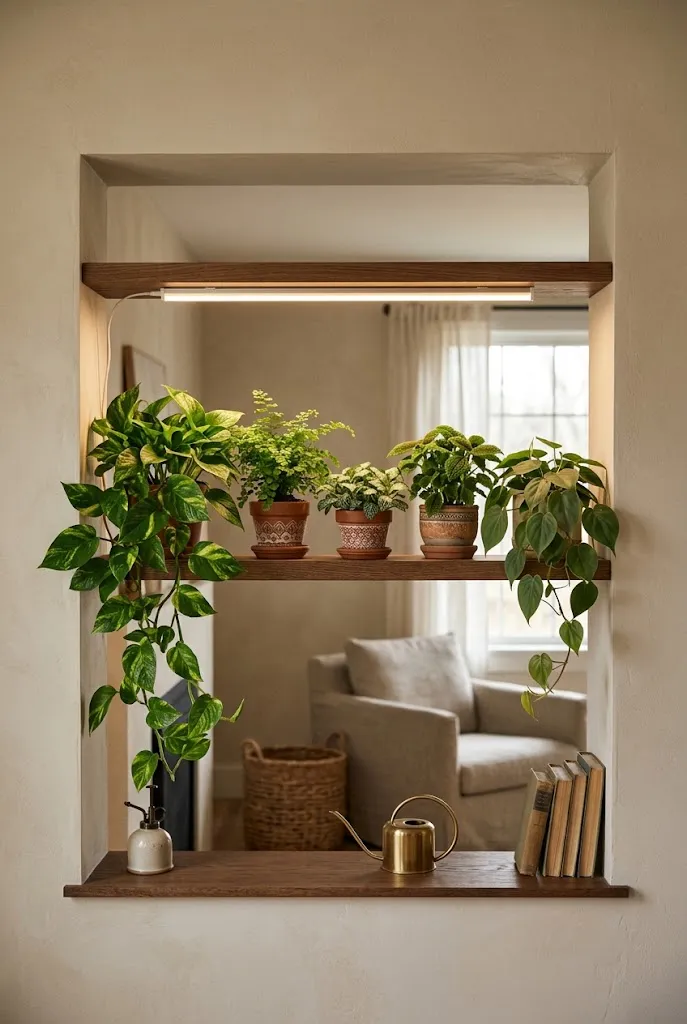
Many homes have corners that look ideal for a plant but get too little light. A full-spectrum LED grow light, in a clip-on, bar, or floor lamp style, makes these spots workable. Choose a fixture with a warm, attractive design if it will be visible.
- Place the light according to the manufacturer’s recommended distance.
- Use a timer so the schedule stays consistent.
- Choose plants suited to the intensity your fixture provides.
A grow light lets you place plants on a built-in shelf or alcove that would otherwise stay dark.
25. Swap In Warm-Toned Planters for Fall
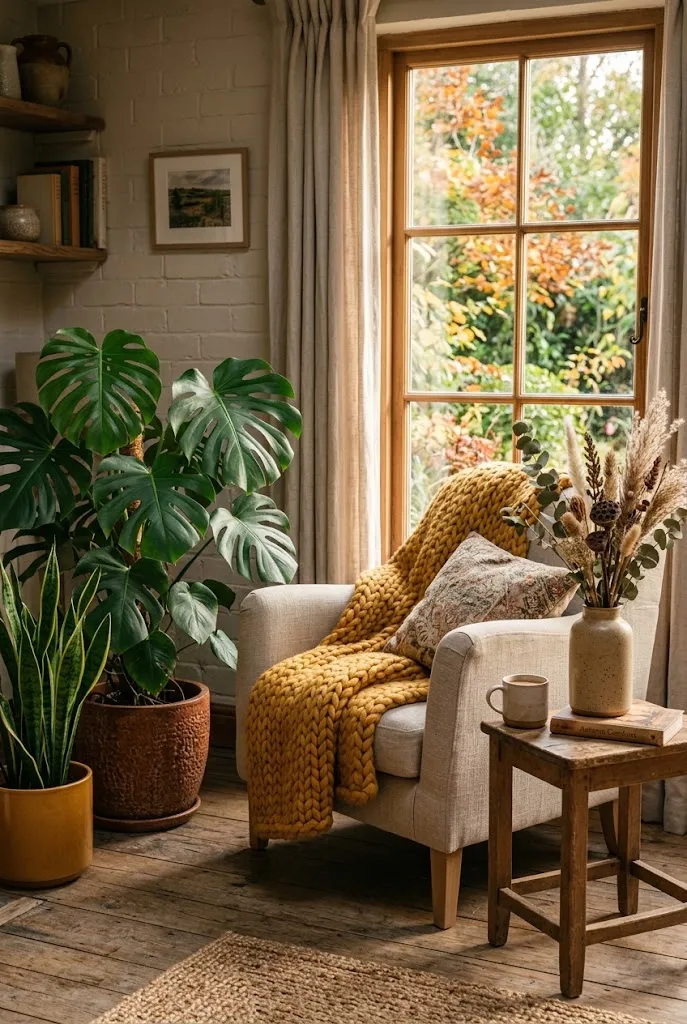
Seasonal styling can be as simple as changing containers. Rust, ochre, and warm terracotta planters, a wool throw nearby, and a few dried stems suit autumn without a full redecoration. The plants stay the same while the mood shifts.
Before / After Logic: Cool white pots feel crisp in summer. Swapping to warm ceramics and adding a textured throw makes the same plants feel cozier as the weather cools.
Repot only when a plant needs it. Slip a decorative planter over the existing pot instead to keep disturbance low.
How to Choose Where Each Plant Goes
Light matters more than looks. Before buying, check what each spot actually gets: direct sun, bright indirect light, or low light. A beautiful arrangement fails quickly when the plant doesn’t suit the spot. If you’re unsure, start with forgiving plants like pothos, snake plant, or ZZ plant, and add fussier ones once you know your light.