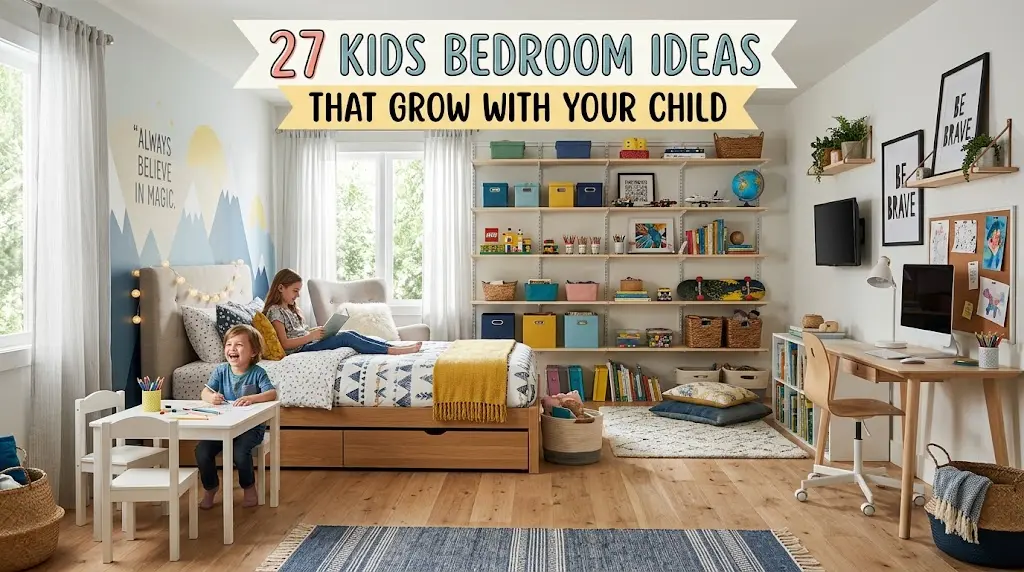
27 Kids Bedroom Ideas That Grow With Your Child From Toddler to Teen
A room painted around a favorite cartoon character can feel outdated by the time the paint is fully dry. Kids change fast: a toddler needs floor space and a safe bed, a second grader needs a homework spot, and a thirteen-year-old wants a room that doesn’t look like it belongs to a younger sibling. The good news is that most of that evolution doesn’t require a full remodel.
The strongest kids bedroom ideas separate the permanent parts of the room, such as the bed, the storage, the wall color, and the layout, from the parts that can change cheaply, like bedding, art, lighting, and small furniture. The 27 ideas below mix renter-friendly swaps, moderate upgrades, and a few custom projects, so you can pick what suits your home and budget and build the room in stages.
1. Start With a Calm Shell and Let the Accents Do the Changing
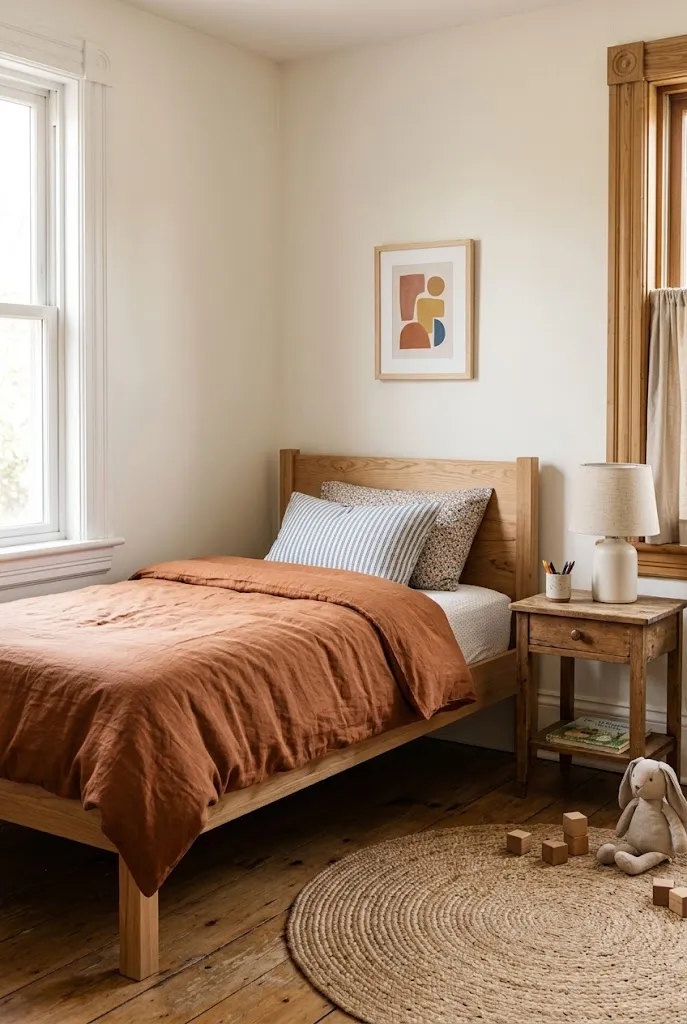
Warm white, soft greige, pale oat, or a muted sage on the walls gives a room a base that doesn’t fight with whatever comes next. The personality then lives in things that are easy to replace: a duvet cover, a lampshade, a framed print, a rug.
In practice, this approach works because a child’s taste changes far more often than a room’s architecture does. A neutral shell doesn’t have to be boring. Pair it with one saturated color in the textiles, say rust or deep teal, and the room still reads as intentional and playful.
Quick Tip: Buy bedding in solid colors and add personality through pillowcases and throws. Solids are easier to mix and cheaper to replace than character-themed sets.
2. Choose a Crib That Converts to a Toddler Bed
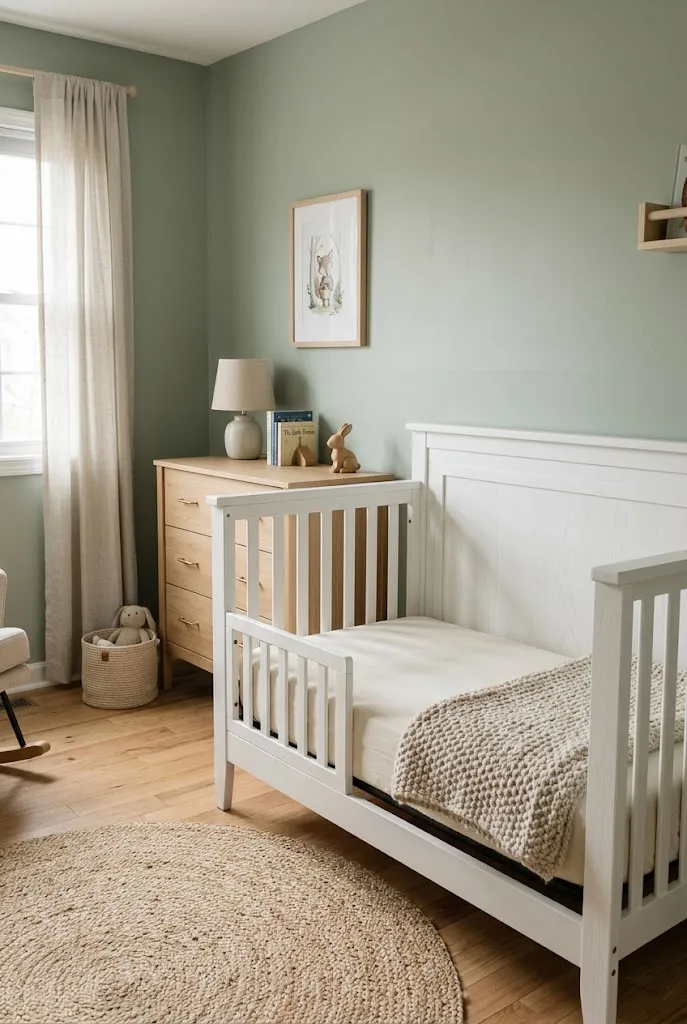
Convertible cribs are a practical starting point because the same frame can move from infant sleep to a toddler bed, and some models extend further into a daybed or full-size headboard. Check the manufacturer’s instructions for which conversion kits fit your specific model, since they are not interchangeable across brands.
Quick Facts
Best For: Nursery-to-toddler transitions Investment: Moderate Visual Effect: A clean, simple silhouette that suits a range of styles
Timing varies by child. Many families move a toddler out of the crib when climbing becomes a safety concern, so watch the child, not the calendar. Keep the mattress firm and the sleep surface free of loose bedding, pillows, and bumpers for as long as pediatric guidance advises.
3. Try a Low Floor Bed for Early Independence
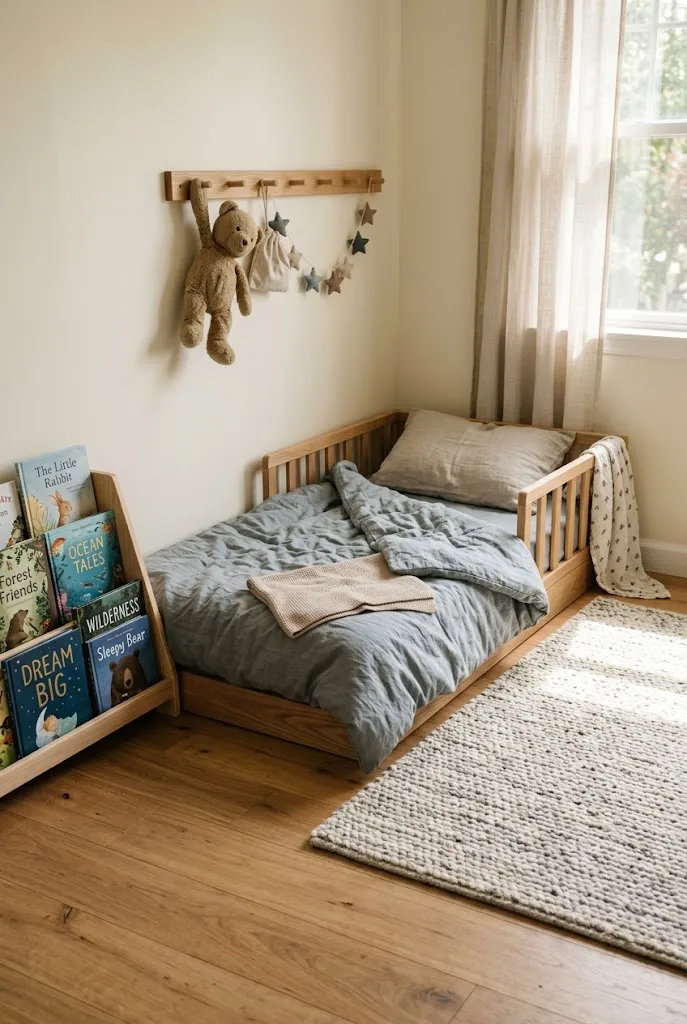
A mattress on a low frame, sometimes called a floor bed, lets a toddler climb in and out without help. It works especially well when the whole room is made safe, since the child can wander freely.
- Choose a low, solid platform frame or a mattress with a minimal border, rather than improvising a pile of cushions.
- Anchor every dresser and bookshelf to the wall.
- Cover outlets and keep cords well out of reach.
- Add a soft rug beside the bed to cushion the floor.
Many families find a floor bed comfortable for the toddler years and then swap the frame for a standard twin once the child wants a taller bed. The mattress often carries over.
Common Mistake: Treating the whole room as unsafe and keeping the door closed forever.
Better Approach: Childproof the entire room once, so the bed becomes a safe space instead of a restricted one.
4. Install an Adjustable Shelving Track on One Wall
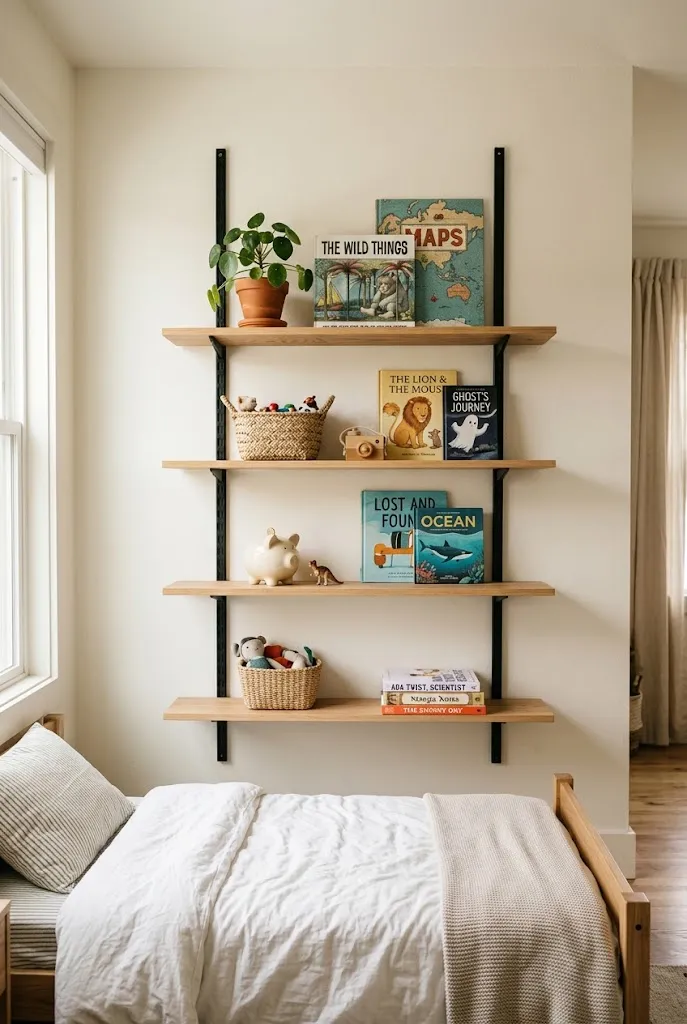
Wall-mounted track systems, with brackets that slide up and down a vertical rail, are one of the most useful investments in a growing kid’s room. Shelves can sit low for a toddler’s picture books, then rise as the child grows and the book collection changes into trophies, plants, and a speaker.
- Locate the studs and mount the vertical tracks securely into them.
- Start with the lowest shelf about child height so books stay reachable.
- Move the shelves up as the child ages, filling the lower area with baskets or a desk.
The system can stay in place for a decade, and the shelving itself is easy to swap or add to.
5. Pick a Paint Color That Ages Up Gracefully
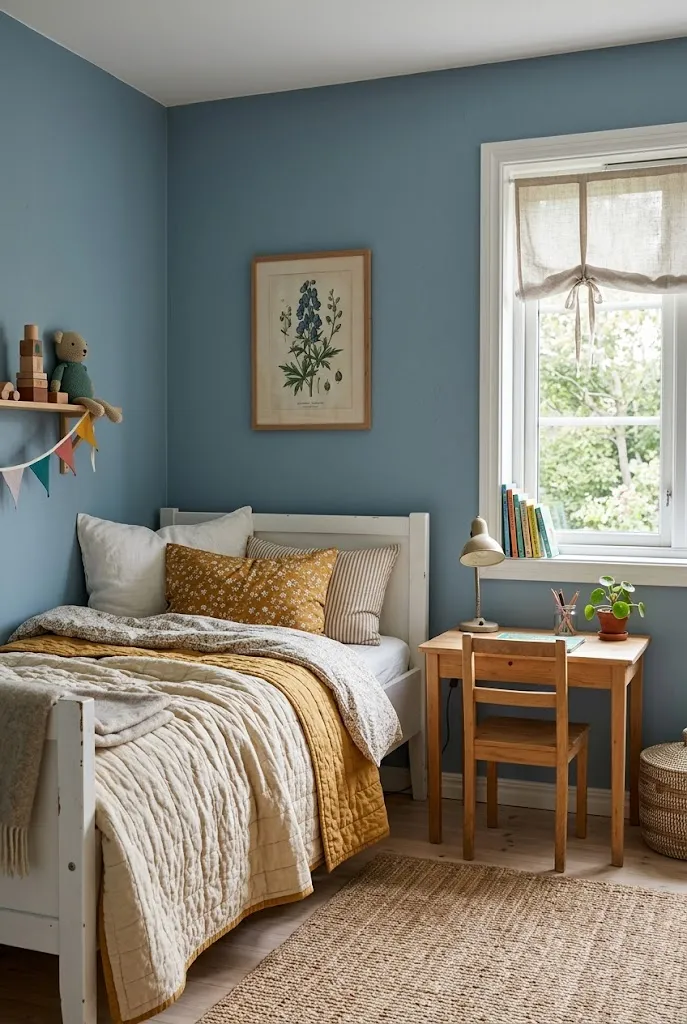
Colors that feel playful at four can feel babyish at twelve. Mid-tone, slightly muted shades, such as dusty blue, sage, warm clay, or soft navy, tend to age better than primary brights or pastels.
| Color Family | Visual Effect | Best Fit |
|---|---|---|
| Muted sage | Calm, natural, gender-neutral | Toddler through teen |
| Dusty blue | Soft but not juvenile | Shared rooms, north-facing rooms |
| Warm clay | Cozy, earthy | Rooms with good natural light |
| Deep navy | Moody, grown-up | Tweens and teens, as an accent wall |
Always test paint samples on the wall and check them in morning and evening light, since a color can shift noticeably through the day. A washable, scuff-resistant finish handles the fingerprints that come with kids.
6. Use Peel-and-Stick Wallpaper for a Renter-Friendly Accent
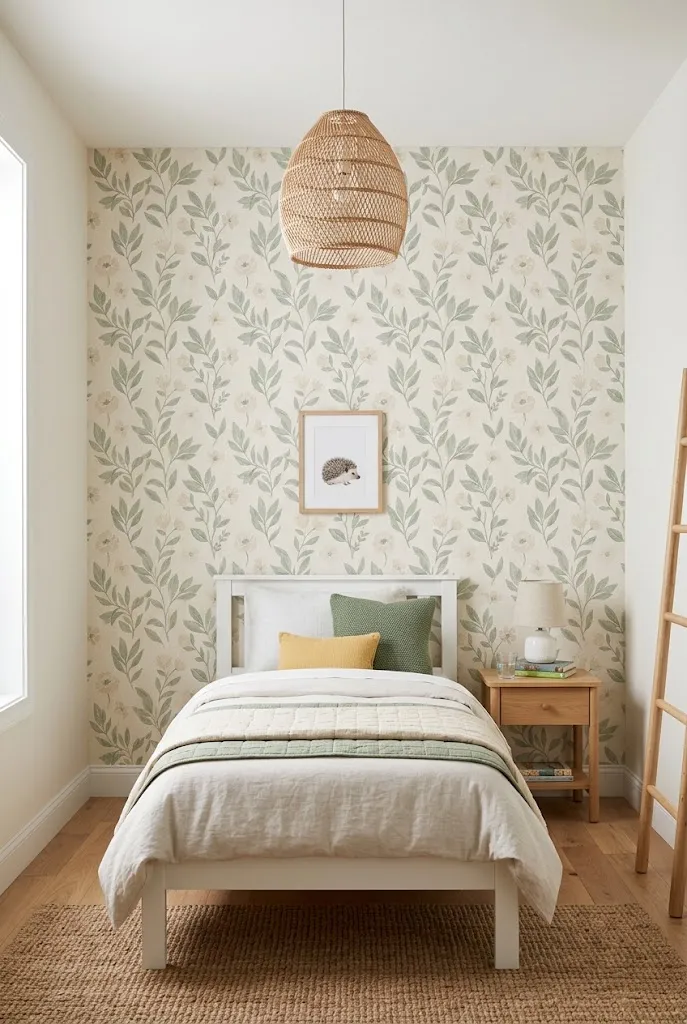
Removable wallpaper behind the headboard gives a room a clear focal point without a paint commitment, and it is among the most practical ideas for rentals. Because it’s removable, it can change when the child’s taste does, which is likely sooner than you expect.
Tips & Tricks
- Start with a clean, smooth, fully dry wall. Textured or freshly painted walls may not hold well.
- Choose an abstract or botanical pattern over a character theme to extend its lifespan.
- Order a little extra for matching pattern repeats.
- Keep the instructions handy, since removal technique affects whether the paint underneath is damaged.
7. Pick a Bed With Built-In Drawers
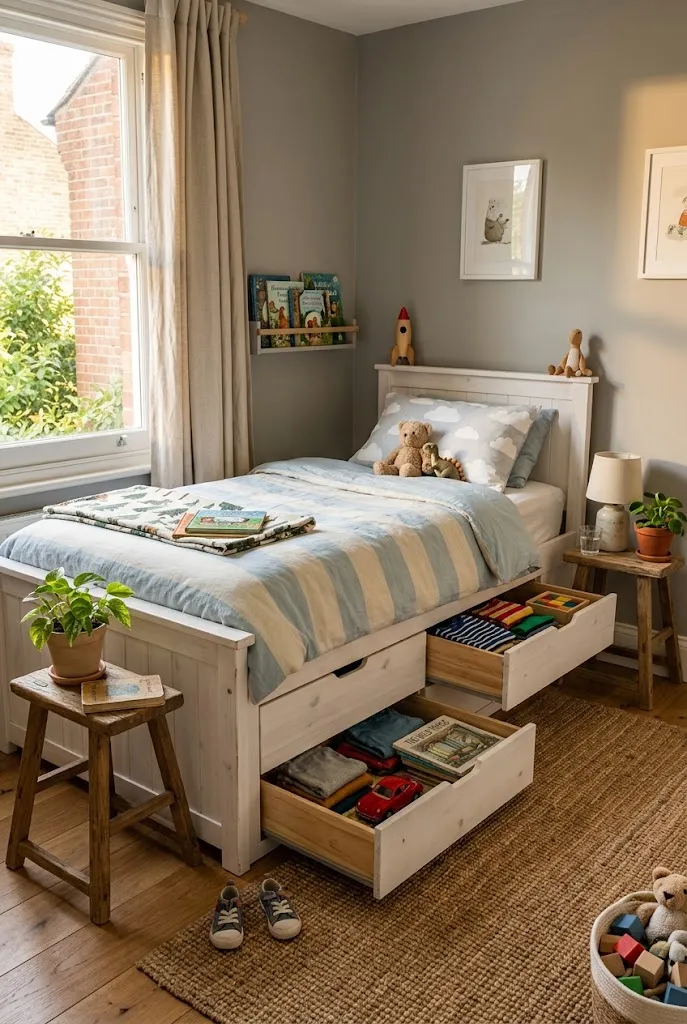
Kids accumulate stuff: clothes outgrown, craft supplies, stuffed animals, sports gear. A bed frame with drawers underneath turns dead space into practical storage and can reduce the need for a second dresser in a small room.
Check how much floor clearance the drawers need to open, and whether the bed sits close to a wall that blocks them. Drawers on rollers are usually easier for children to manage than heavy ones on glides. Keep the heaviest items in the drawers closest to the floor.
8. Build a Window Reading Nook With a Bench
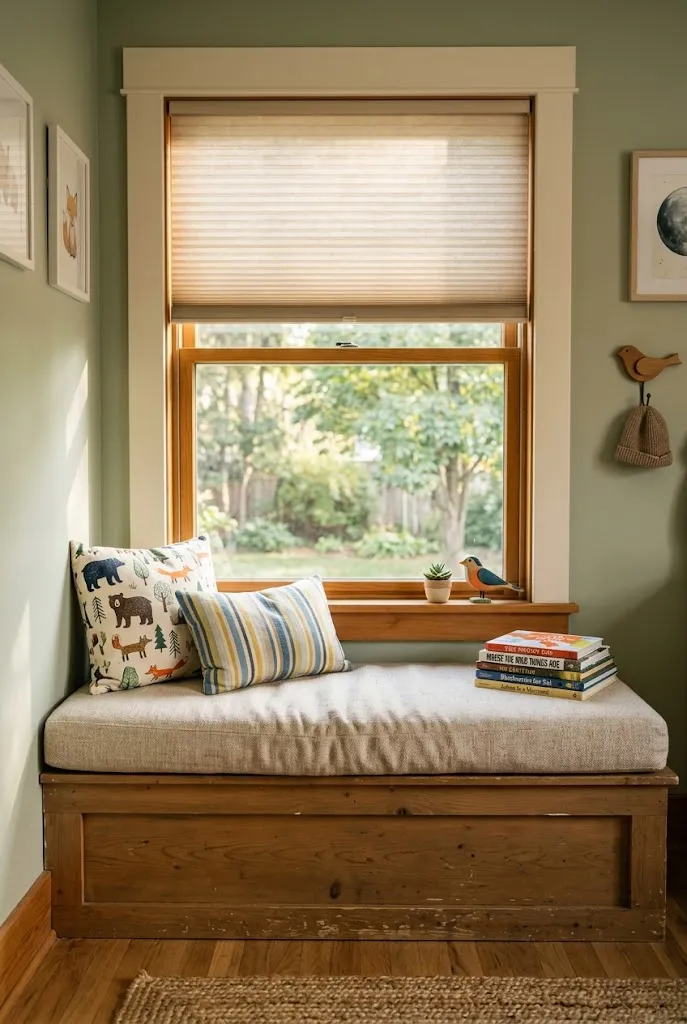
A bench tucked into or beneath a window gives a child somewhere to read, daydream, or draw, and it provides hidden storage under the seat. For toddlers it holds picture books; for teens it becomes a hangout spot.
For window safety, choose cordless window coverings in kids’ rooms, since looped cords are a recognized strangulation hazard. Keep furniture that a child could climb away from windows that open wide, and make sure screens and locks are secure.
Editor’s Note: A bench needs a firm, comfortable cushion at least a few inches thick, or it won’t get used. A thin foam pad rarely holds up.
9. Add a Loft Bed With a Desk Underneath
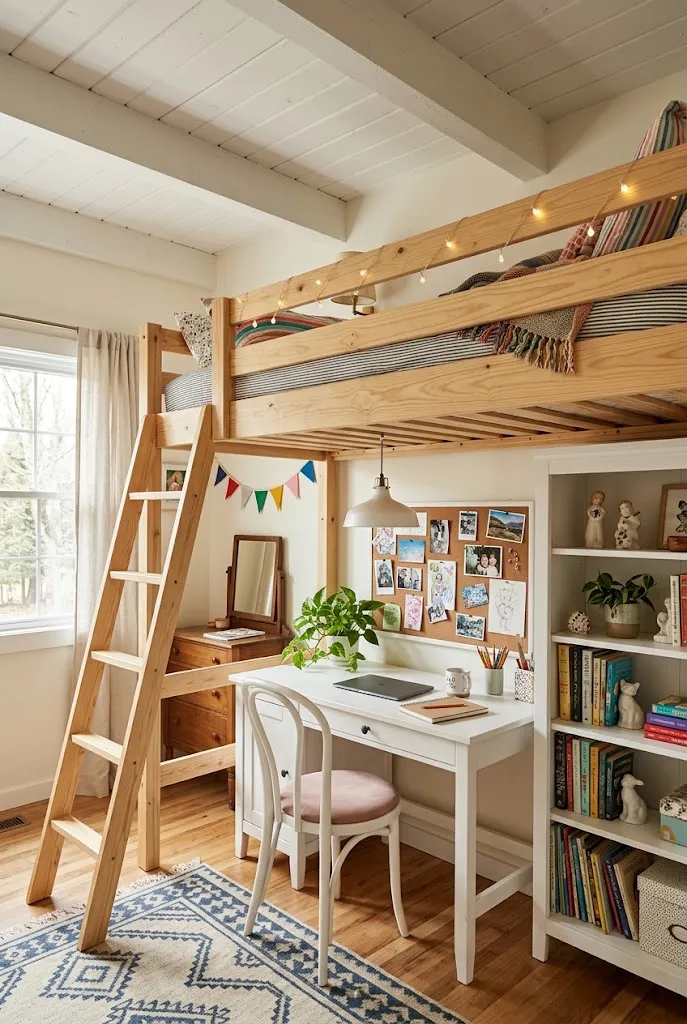
A loft bed opens up the floor beneath the sleeping area for a desk, a lounge chair, or a play zone. It’s a smart choice in small rooms, though it suits older kids better than young ones.
Do:
- Check the manufacturer’s recommended age and weight limits.
- Keep the ceiling clearance in mind, since a child sitting up in bed needs headroom.
- Use a sturdy ladder or stairs with secure handholds.
Don’t:
- Place the bed near a ceiling fan or light fixture.
- Let younger children sleep up high without checking safety guidance.
Loft beds are best treated as a school-age and up purchase, with a standard bed in earlier years.
10. Plan a Bunk Bed Layout for Shared Rooms
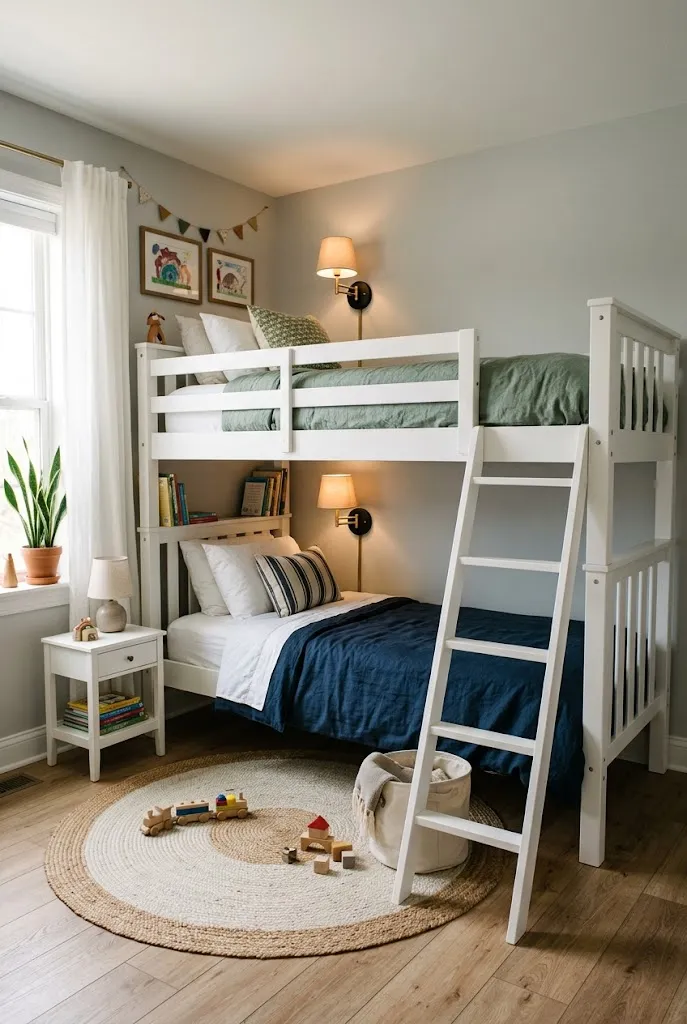
Bunks free up a lot of floor space when two kids share a room. They work best when you plan the surrounding room rather than just dropping the frame in a corner.
Safety guidelines generally advise against children under six sleeping in the top bunk, and the upper bunk should have guardrails on all sides. Use the mattress thickness the manufacturer specifies, so the rail stays high enough.
Best For: Siblings sharing a room, rooms under about 12 by 12 feet Investment: Moderate Visual Effect: Vertical emphasis that preserves floor space
Give each child a small personal zone, such as a hook, a shelf, a reading light, or a labeled bin, so the shared bed doesn’t feel like shared everything.
11. Hang Picture Ledges So Art Can Rotate
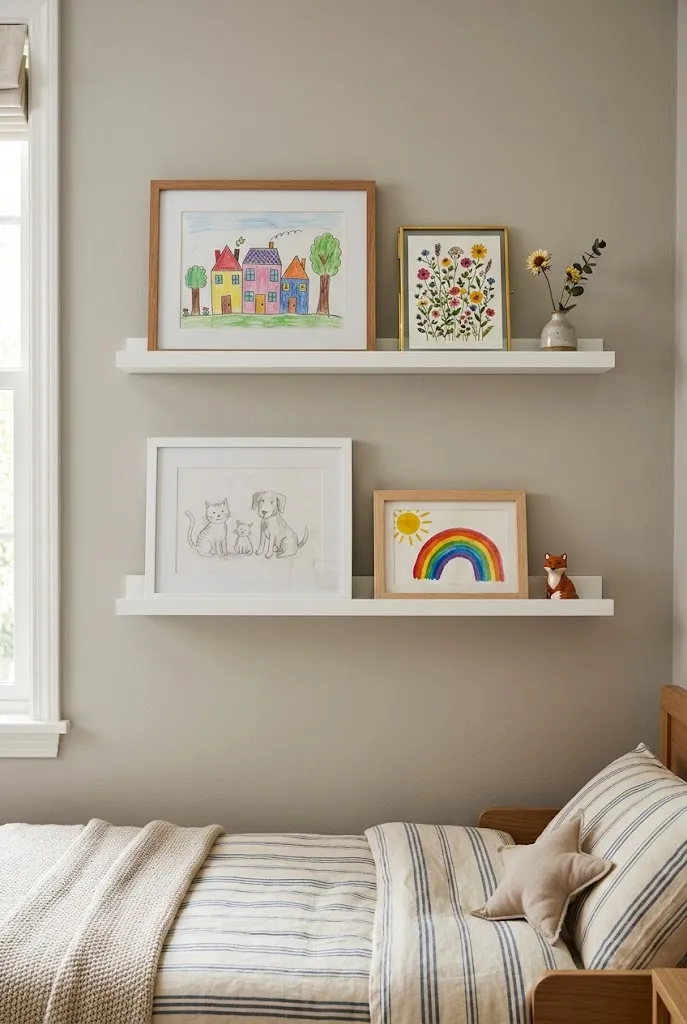
Narrow picture ledges let you display and swap art without new nail holes every time. A preschooler’s drawings, school art projects, and eventually posters or prints can rotate through one setup.
Lean frames at different heights, overlapping slightly for a relaxed look. Keep heavier frames on the lower ledge and lighter ones above. In a toddler’s room, hang ledges well above reach, since small objects can fall.
12. Paint a Chalkboard or Magnetic Wall
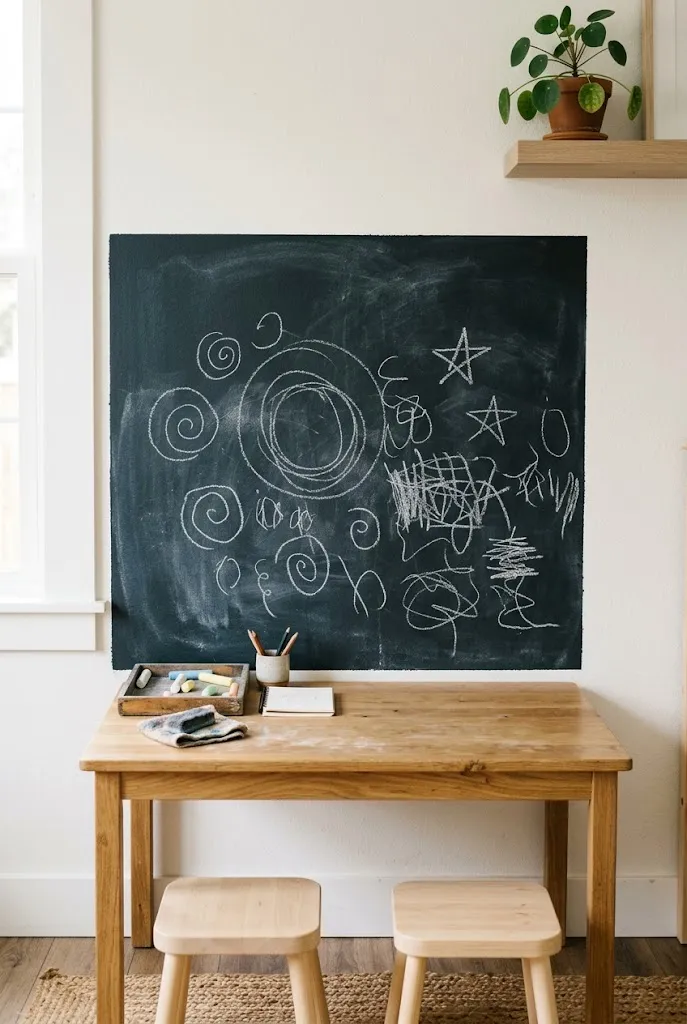
A section of wall painted with chalkboard or magnetic paint becomes a drawing surface for young children and a message board for teens. Magnetic paint also lets kids display artwork with magnets.
- Mark off a rectangle with painter’s tape for a clean edge.
- Follow the product’s prep and curing instructions, which vary by brand.
- Place it at kid height for little ones and shift higher later by adding another section.
- Keep chalk dust in mind, and use a washable-marker alternative if dust is a concern.
13. Choose a Dresser That Doubles as a Changing Table
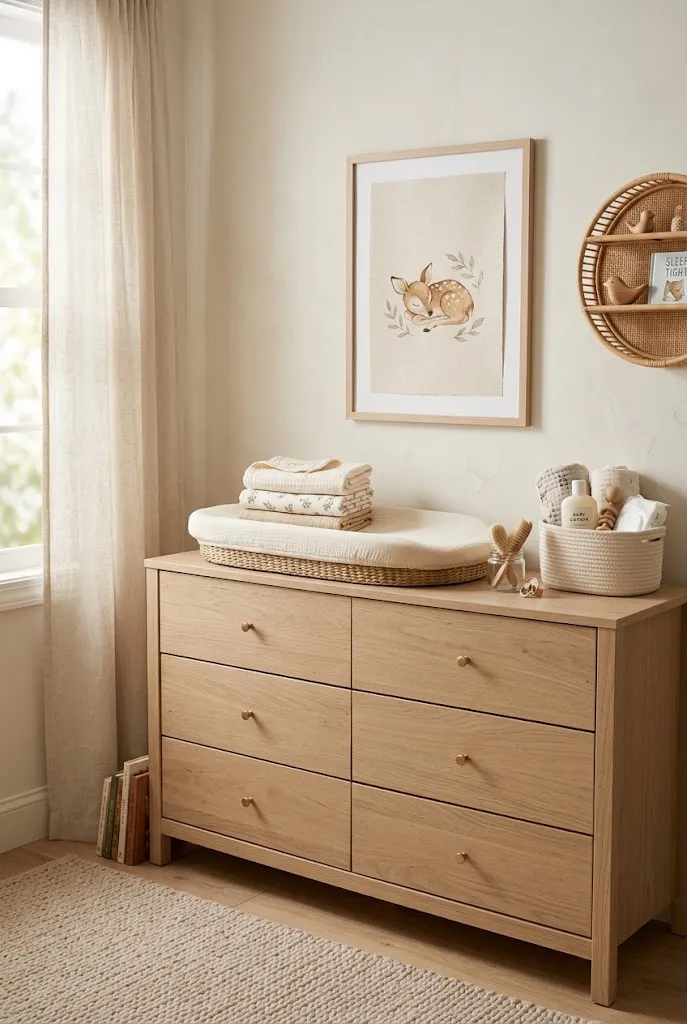
A sturdy, wide dresser with a removable changing tray works in the nursery and then simply becomes a dresser. The key is picking a piece with enough depth and a solid construction.
- Choose a dresser at a comfortable standing height with a wide top.
- Add a contoured changing pad secured by the tray’s restraining design.
- Anchor the dresser to the wall with the provided hardware.
- Remove the tray when diapering ends.
Wall anchoring matters. Tip-over incidents with unanchored furniture are a documented safety concern, so treat it as non-negotiable.
14. Create a Canopy or Tent Play Corner
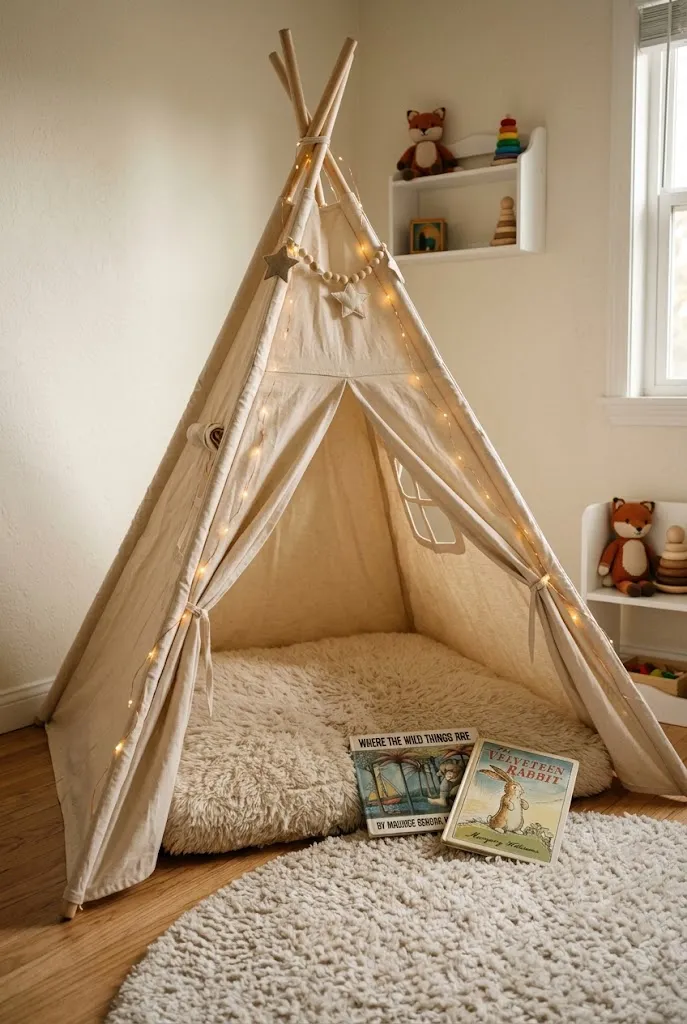
A fabric canopy or a simple teepee gives a child a cozy hideaway for imaginative play or quiet reading. Keep it lightweight and easy to remove, since it will lose its appeal as the child ages.
A corner works well, since two walls give the structure support. Pair it with a floor cushion and a battery-powered string light, and avoid heat-producing bulbs near fabric. For older children, the same corner can transition into a bean bag chair and a reading lamp.
15. Lay Modular Rug Tiles Instead of One Big Rug
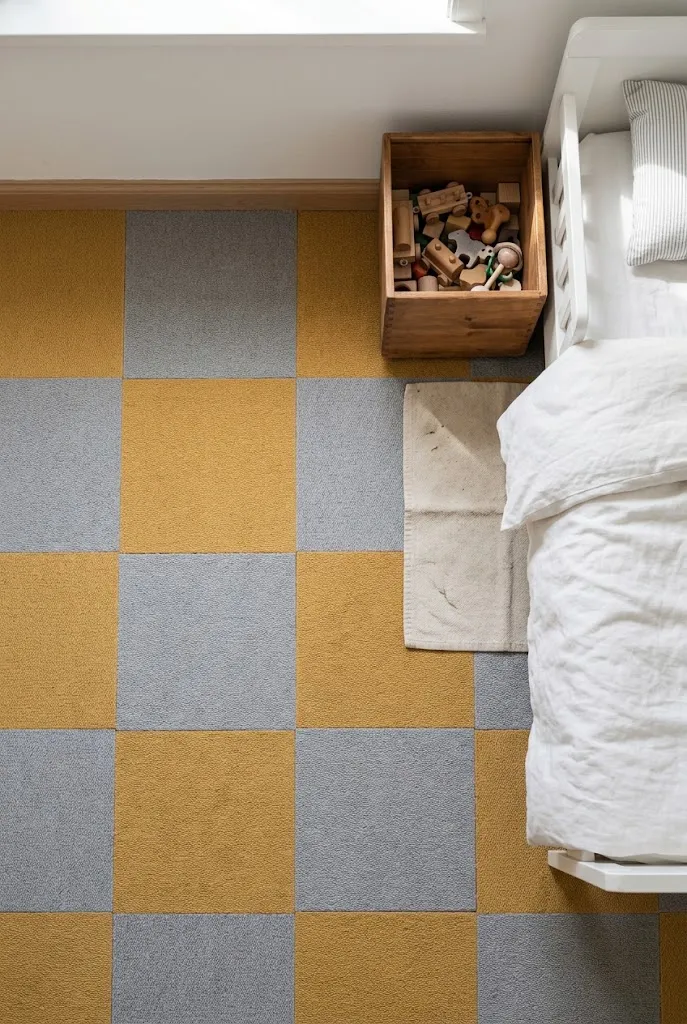
Carpet tiles let you build a rug to fit any space, replace stained squares individually, and reconfigure the layout as the room changes. They are also useful when you want a soft play area now and a smaller rug later.
| Option | Advantage | Best Fit |
|---|---|---|
| Carpet tiles | Replaceable, customizable shape | Play areas, rooms with spills |
| Large wool rug | Softer, more durable look | Teen rooms, long-term use |
| Washable rug | Easy cleaning | Toddlers and messy activities |
Use a rug pad or non-slip backing to keep any rug from sliding on hard floors.
16. Use Wall Pegs and a Rail for Low Storage
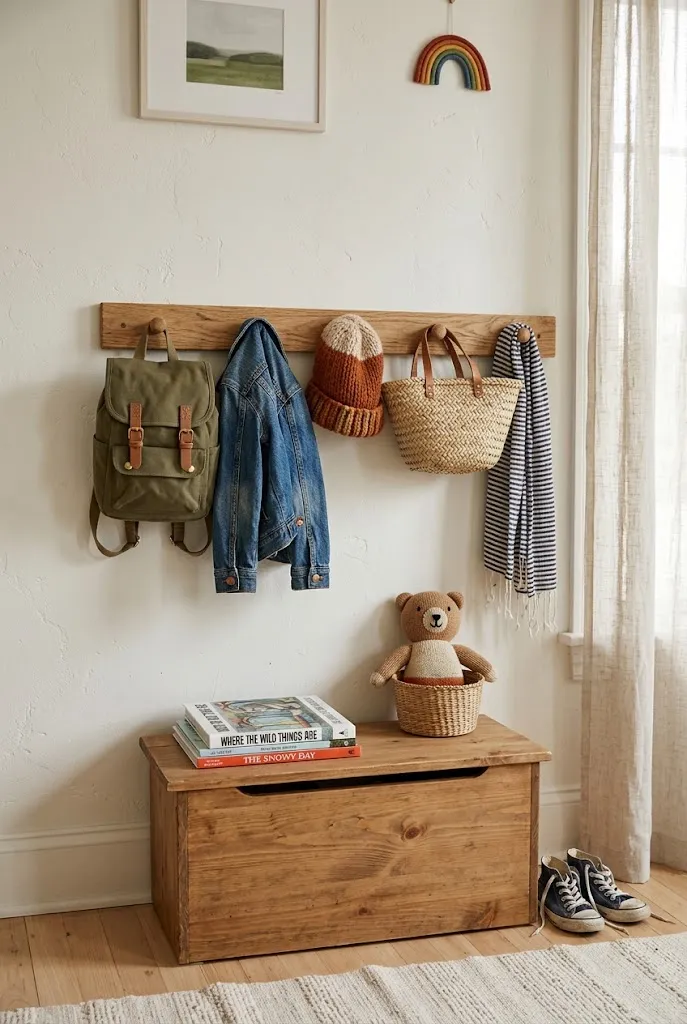
A row of pegs or a wooden rail at child height lets a toddler hang a jacket or backpack without help, and it holds a teen’s bag, hoodie, and headphones just as well.
Choose rounded pegs and mount them securely. Adjust the height by simply moving the rail up. Add small baskets or a fabric sling for toys and sports gear. It’s one of the cheapest ideas in this list, which is part of its appeal.
17. Layer Lighting That Matures With the Room
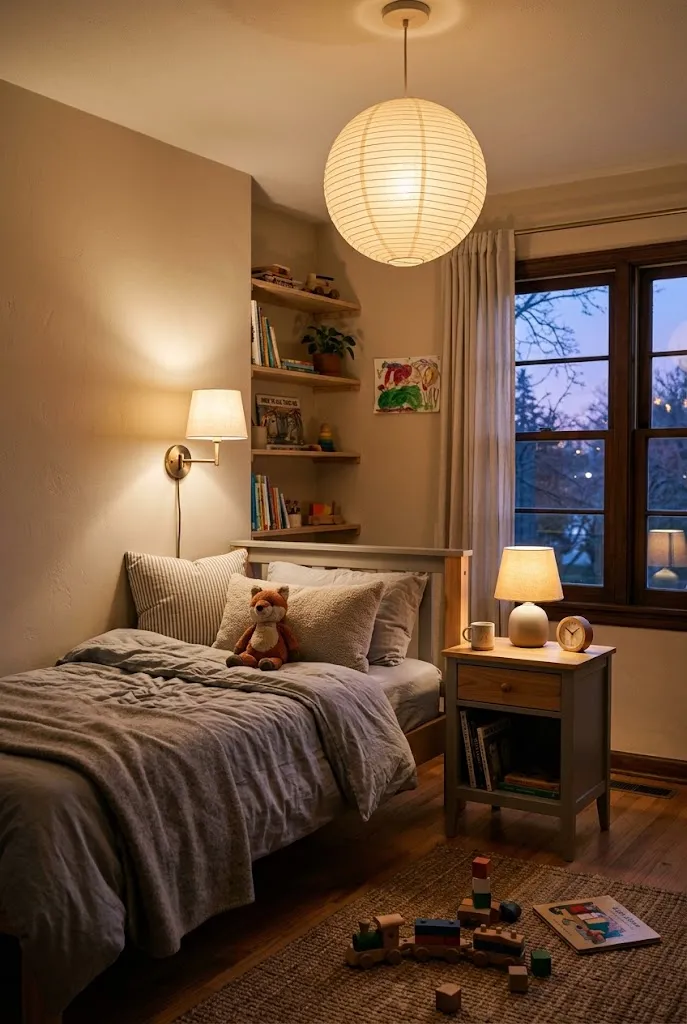
A single overhead fixture rarely does the job in a kid’s room. Layering lets you adapt the mood as the child ages: a dimmable ceiling light, a bedside lamp for reading, and a soft nightlight for younger kids.
- Use a dimmer or a warm-toned bulb for a calmer bedtime atmosphere.
- Swap the shade on the ceiling fixture as tastes change, which is far cheaper than replacing the fixture.
- Choose cordless or plug-in wall sconces to free up nightstand space.
Quick Tip: Keep lamp cords tucked behind furniture and out of a young child’s reach.
18. Pick an Adjustable-Height Desk
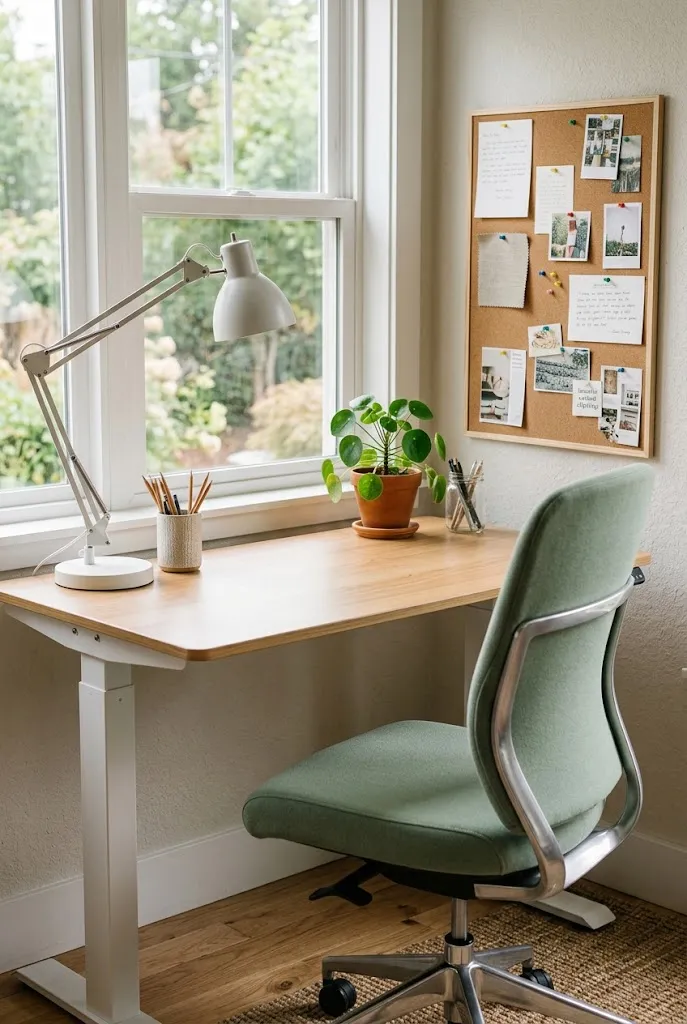
A desk that raises as the child grows can serve from kindergarten coloring through high school homework. Look for sturdy construction, a stable base, and a chair that supports the right posture.
A child’s feet should rest on the floor or a footrest, and the screen, if used, should sit near eye level. Place the desk near natural light and away from the bed, if possible, to separate rest from work.
Quick Facts
Best For: Ages roughly 5 through teen years Investment: Moderate to premium Visual Effect: Clean, functional, easy to style
19. Set Up an Adjustable Closet Rod
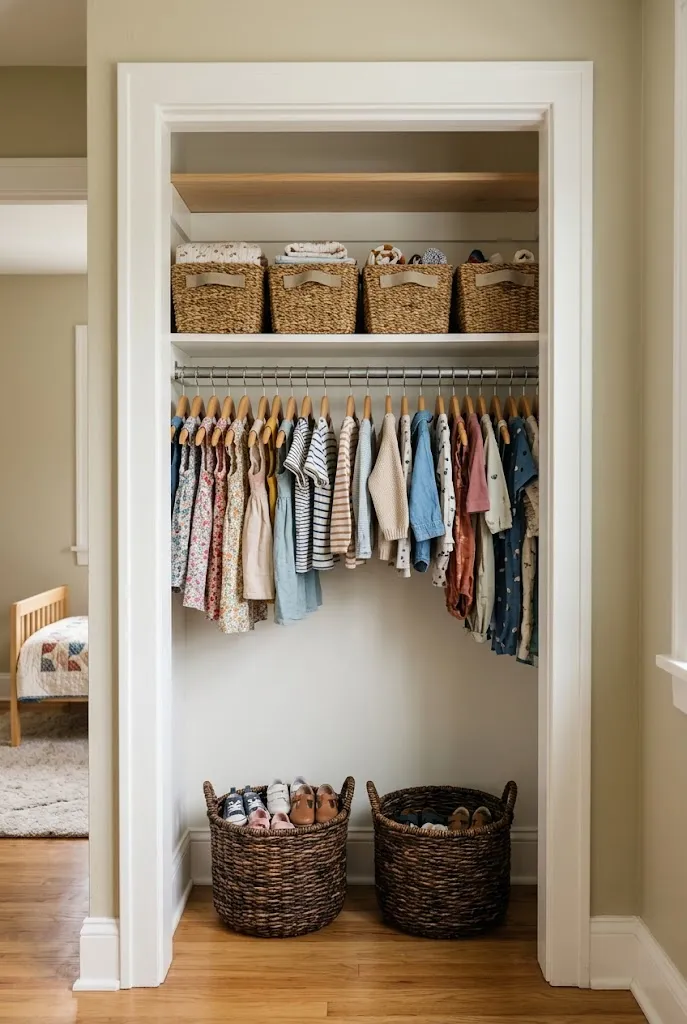
A closet rod that sits low for a small child can be raised later, and the extra space below can hold bins or shoes. Many closets are set at adult height, so a second lower rod or a hanging organizer fixes it for little ones.
- Hang a second, lower rod or a tension rod at the child’s reach.
- Add a set of shelves or bins beneath it.
- Raise the rod, or remove the lower one, as the child grows.
Matching hangers and labeled bins help kids keep the closet in order without constant reminders.
20. Grow a Gallery Wall That Matures With the Child
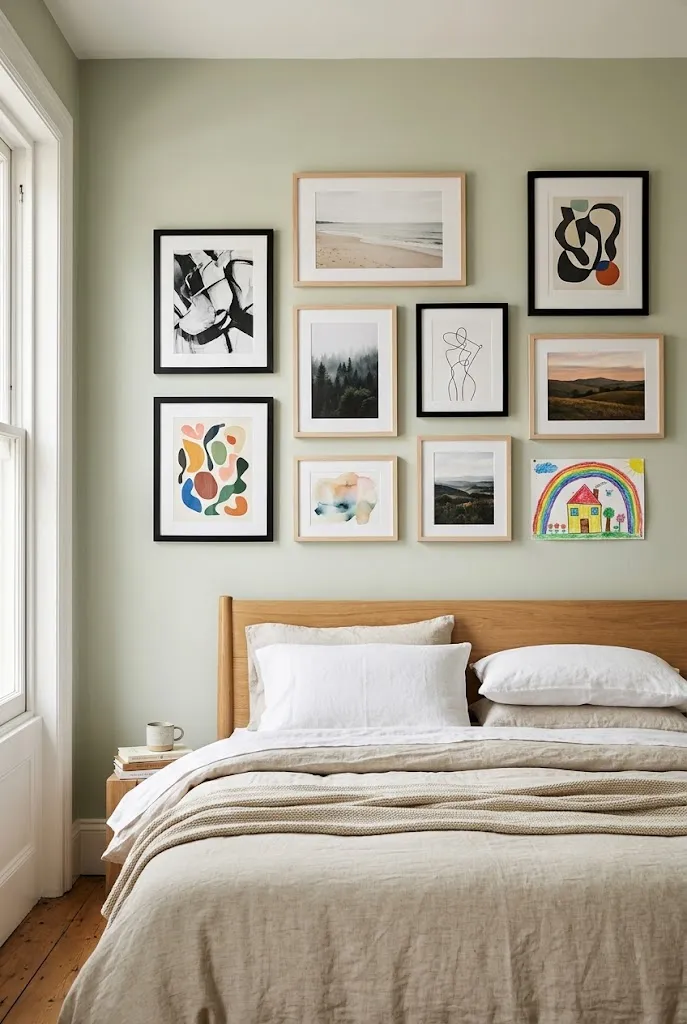
Start with a few framed kid drawings and simple prints, then swap in photography, band posters, or travel prints as the child’s interests develop. Using matching frames keeps it cohesive even as the content changes.
Lay out the arrangement on the floor first, trace each frame on paper, and tape the templates to the wall to check spacing. Leave extra room for additions. In a teen’s room, giving them control over what goes up builds ownership of the space.
21. Add a Trundle Bed for Sleepovers
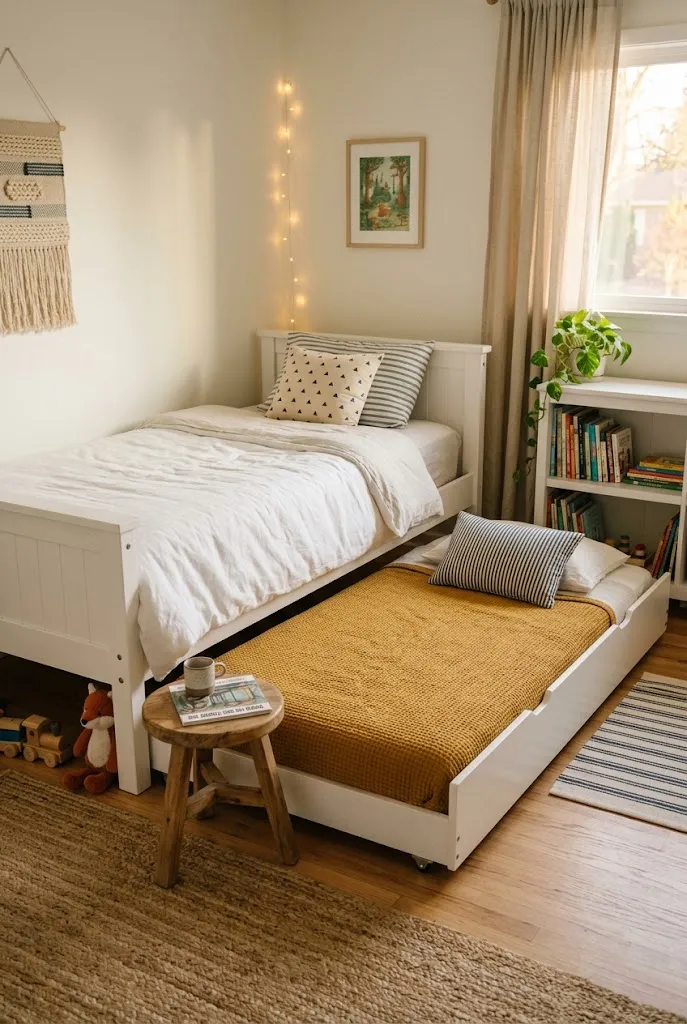
A trundle slides out from under the main bed and gives you a second sleeping spot without permanently using the floor space. It works for sleepovers in the elementary years and beyond, and it also suits a room that may share siblings later.
| Option | Advantage | Best Fit |
|---|---|---|
| Trundle bed | Hidden when not in use | Single kids with frequent guests |
| Bunk bed | Two permanent beds | Siblings sharing |
Check that the trundle clears the rug and any floor storage, and keep the mattress thin enough to slide fully under.
22. Build a Premium Sleeping Alcove With a Curtain
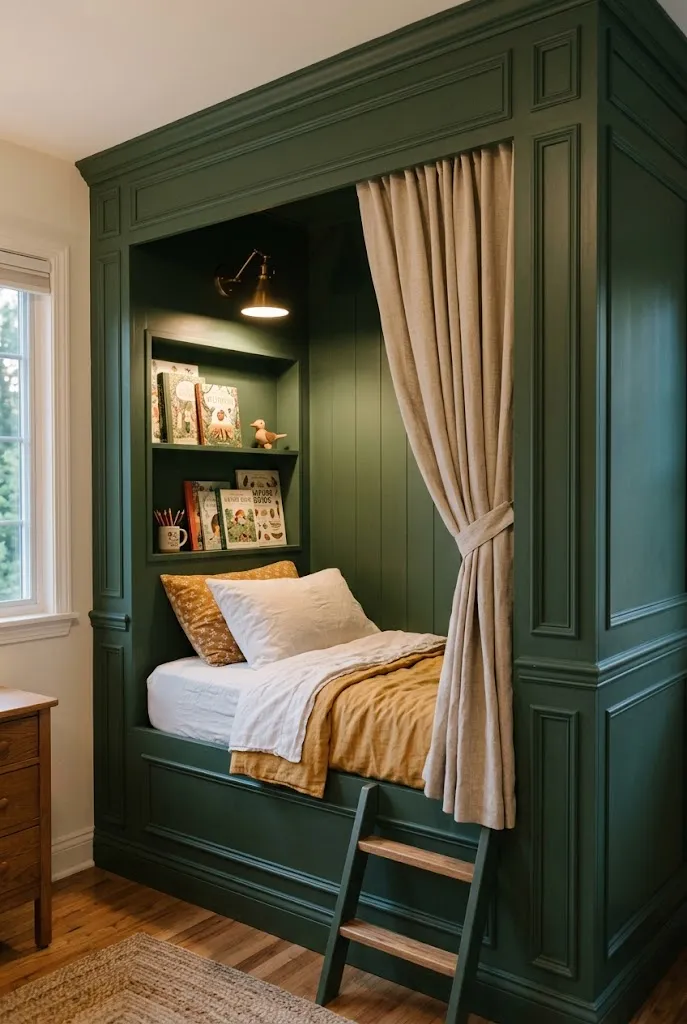
A built-in bed alcove with side storage, a reading light, and a curtain gives a child a cozy, den-like sleeping nook. It’s a custom millwork project, so it suits a homeowner who wants a long-term room feature.
The premium approach is in the detail: shelving in the walls, concealed outlets, and drawers beneath the bed. A simpler version can be borrowed with a bed pushed into a nook, a curtain rod, and a wall-mounted light.
Editor’s Note: Ventilation matters in any enclosed sleeping space. Leave the front open or use a lightweight curtain that doesn’t trap air.
23. Create a Teen Lounge Corner
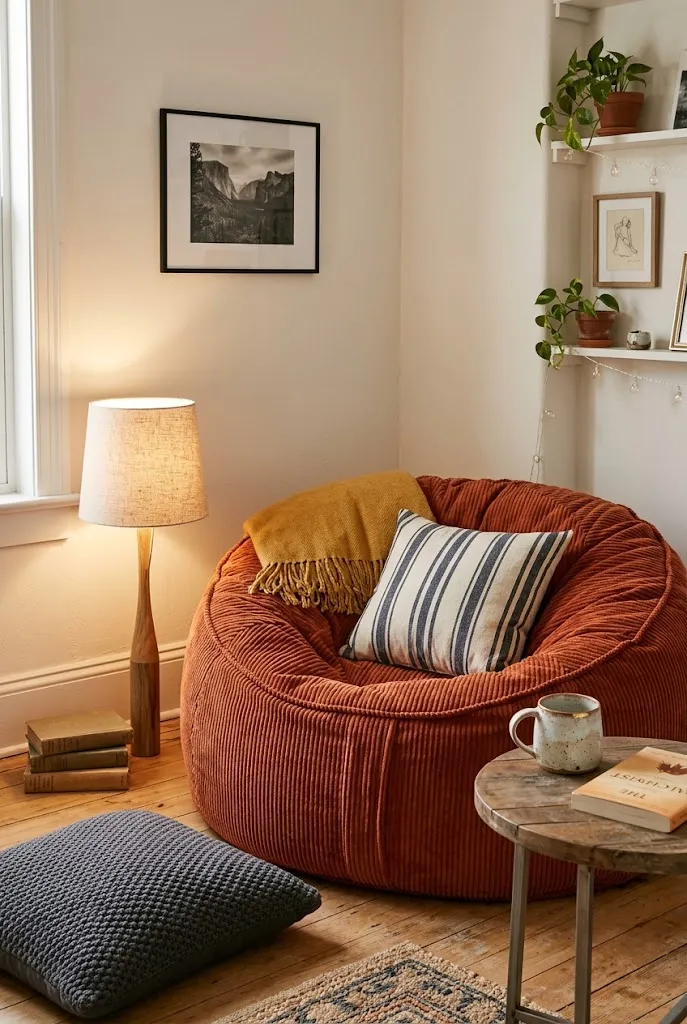
By the teen years, a bedroom becomes a hangout space as much as a sleeping space. A corner with a bean bag, a floor cushion, a small side table, and soft lighting gives friends a place to sit without crowding the bed.
- Choose seating that moves easily and can be stored when needed.
- Use string lights or a floor lamp for warm, indirect light.
- Add a small shelf or ledge for drinks and a charging station.
Let the teen choose the colors and layout. A space they helped shape is one they’ll take care of.
24. Install a Corkboard or Pinboard Wall
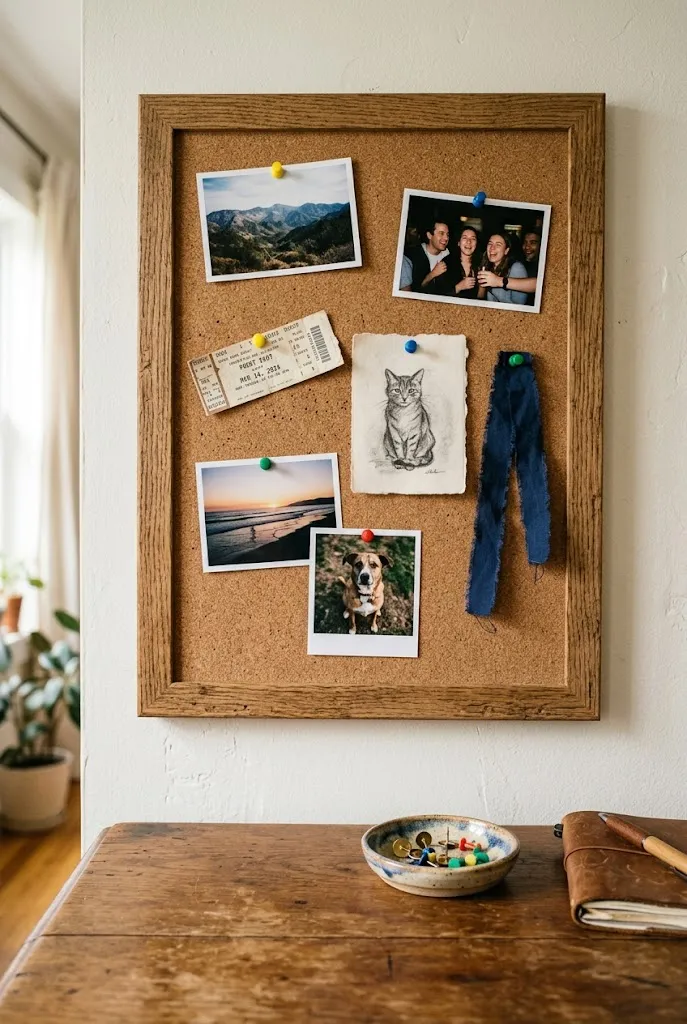
A large corkboard, or a row of framed pin panels, gives kids a place to display ticket stubs, photos, ribbons, and schoolwork without damaging the walls. It develops naturally from a preschooler’s art display into a teen’s collage.
Use a linen or felt-covered panel for a more finished look than plain cork. Frame it if you want it to feel intentional. Keep a few pins or magnets in a small dish nearby so the board stays tidy.
Quick Tip: A framed board mounted above the desk keeps notes and reminders in sight without cluttering the surface.
25. Move From Theme to Style With Removable Decor
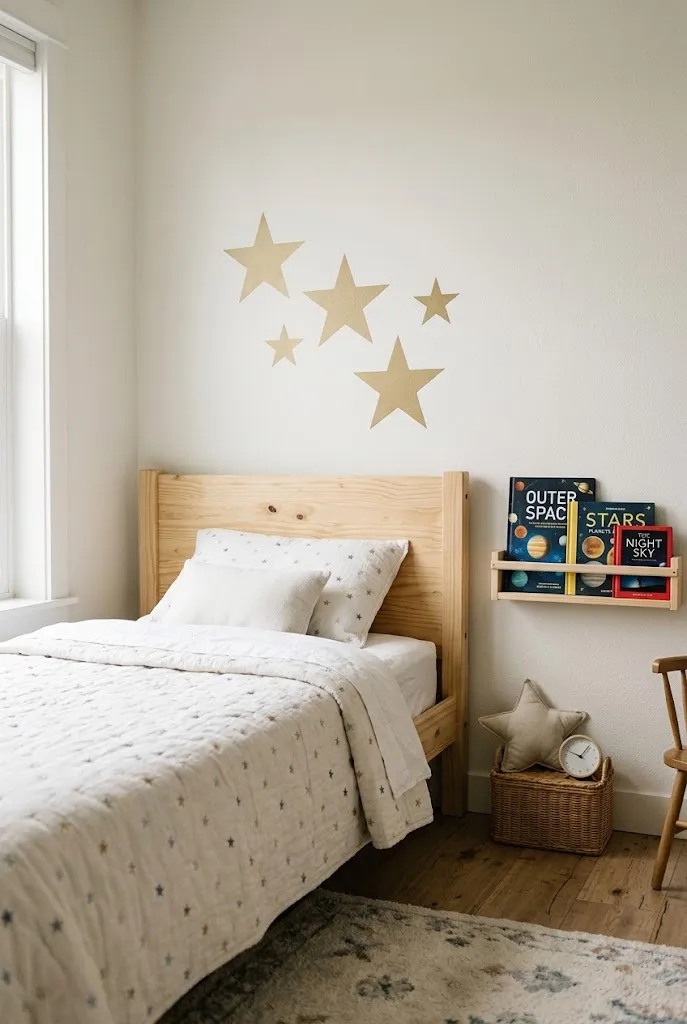
A themed room doesn’t have to be redone from scratch. Wall decals, a themed duvet, and a few decorative accessories carry the theme while the furniture and walls stay neutral.
Before: Characters on the wall, themed bedding, a bright toy-box color scheme.
After: Botanical or abstract prints, solid-color bedding, and a more grown-up palette in the same room, using the same bed, dresser, and paint.
The principle is simple: put the theme in things you can peel, fold, or hang, and keep the big-ticket items plain.
26. Add a Vanity-Style Desk for Tweens and Teens
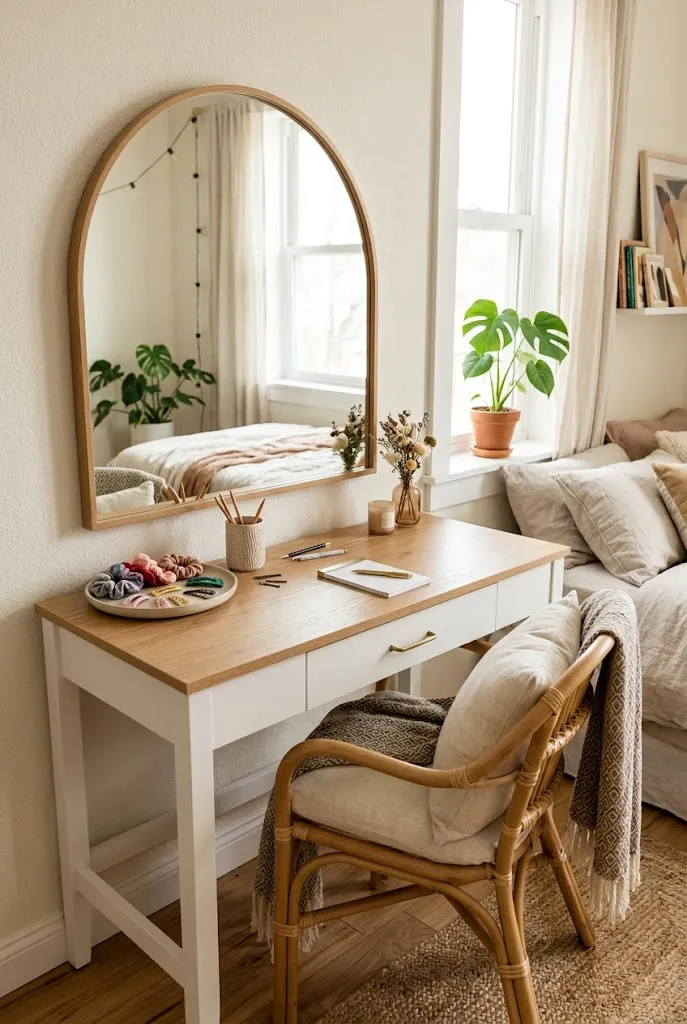
As kids hit the tween years, a combined desk and vanity gives them a spot for homework, hair, and getting ready, without needing two separate pieces. A small desk with a mirror and a drawer for supplies does the job.
- Choose a desk with at least one shallow drawer for small items.
- Mount a mirror on the wall above, or use a tabletop mirror.
- Provide good, even lighting from a window or lamp, placed so it lights the face without glare.
27. Plan the Layout in Stages and Leave Room to Change
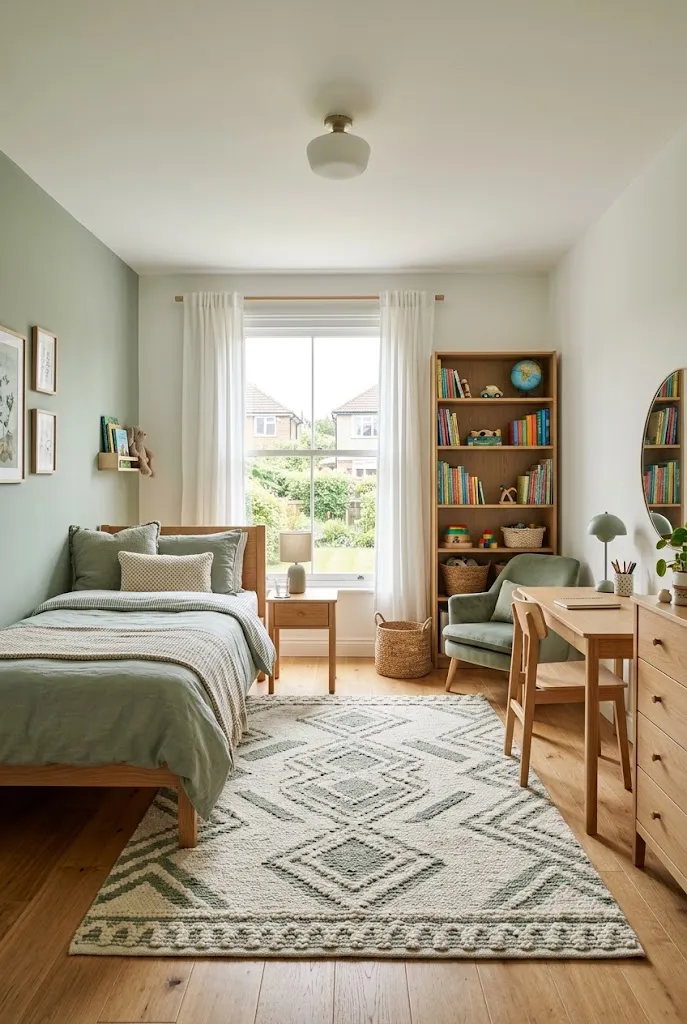
The most useful idea of all is a layout that isn’t locked in. Float the bed away from walls where possible, keep the center of the room open for toddlers, and leave a wall free for a future desk or shelving.
| Stage | Priority | Layout Idea |
|---|---|---|
| Toddler | Safety and floor space | Low bed, open center, anchored storage |
| School age | Storage and a study spot | Add desk, shelving, and a reading nook |
| Teen | Privacy and hangout space | Add lounge seating, a larger desk, and updated decor |
Measure the room, sketch a simple floor plan, and mark where outlets, windows, and doors are. A plan that leaves each stage a clear spot to grow into saves money and effort over the years.
Where to Start
You don’t need to do everything at once. Begin with the items that carry the most weight and last the longest: a safe, adaptable bed, anchored storage, and a calm wall color. Then add the swappable layers, such as bedding, art, lighting, and a desk, as your child grows and develops opinions.
If budget is tight, paint, bedding, pegs, and a few picture ledges go a long way. If you’re planning a bigger project, an adjustable shelving system or a custom alcove bed can anchor the room for a decade. Whichever route you take, involve your child as they get older. A room they helped shape is one they’ll actually want to spend time in.