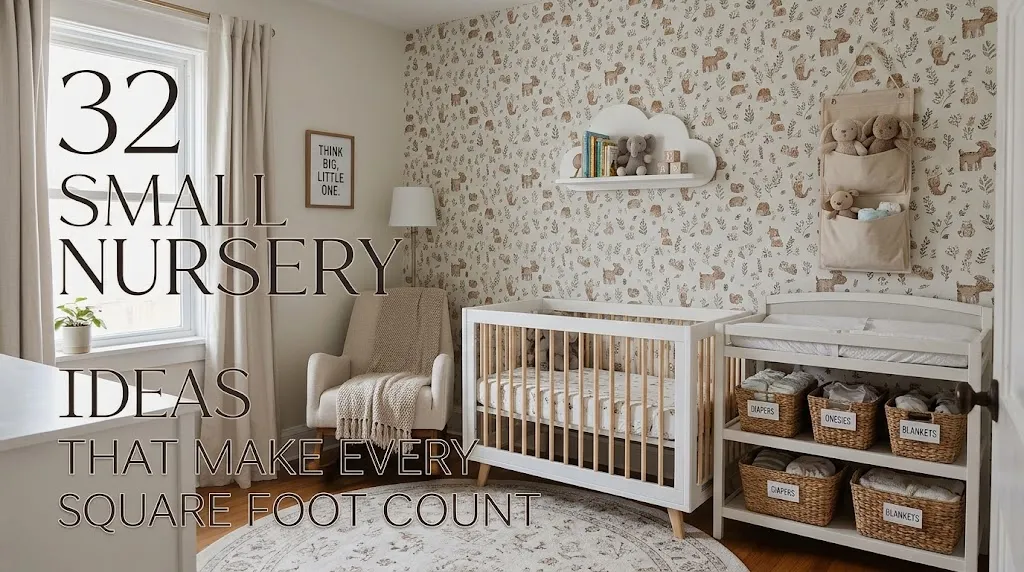
32 Small Nursery Ideas That Make Every Square Foot Count
A nursery doesn’t need a big room, but it does need a plan. Between a safe sleep space, a spot for diaper changes, clothes that get outgrown every few months, and somewhere to sit at 3 a.m., a 9-by-10 bedroom (or a repurposed closet) can fill up fast. The good news is that small nursery ideas tend to be smarter than large-room ones, because every piece has to earn its place.
The 32 ideas below cover layout, furniture, storage, color, lighting, and a few bigger upgrades for people who want to invest. Most work in rentals and apartments, and a handful lean toward custom work. Pick two or three that suit your room and build from there.
1. Tuck the Crib Into a Corner
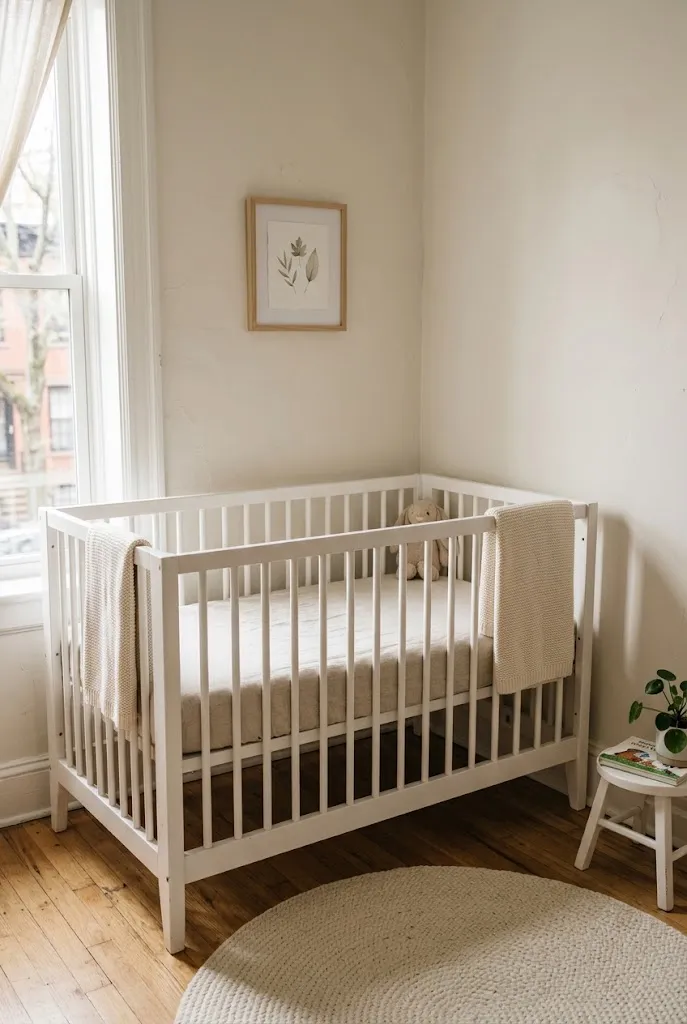
Pushing a crib into a corner leaves the rest of the floor open for a chair, a rug, or simply room to walk. Two walls become the crib’s boundary, which also makes the room feel organized. Choose a corner that’s away from the door swing and not directly beside a window, since drafts and window cords are best avoided.
Quick Tip: Measure the door swing and the closet door before choosing the corner. A crib that blocks either one quickly becomes frustrating.
2. Turn a Walk-In Closet Into the Nursery
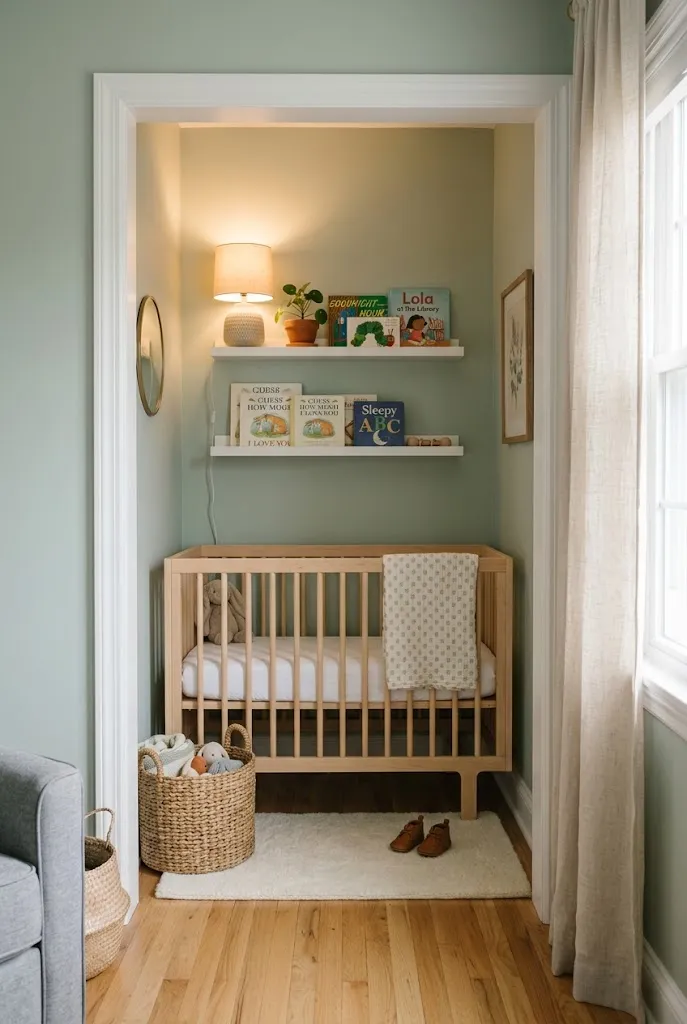
A walk-in closet can work well for a baby’s first months, especially if there’s no spare bedroom. Take the doors off, remove the hanging rods, and paint the interior a soft, light color. A mini crib usually fits, with a shelf or two above. The practical hurdles are ventilation, lighting, and temperature, so check that the space gets airflow and add a dimmable fixture.
- Remove bifold or sliding doors to open up the space
- Use a plug-in sconce if there’s no overhead light you can dim
- Keep a monitor in the room, since walls may be thick or the closet may sit far from where you sleep
- Hang a curtain on a tension rod in place of the door for privacy and a softer look
3. Choose a Mini Crib When Space Is Truly Tight
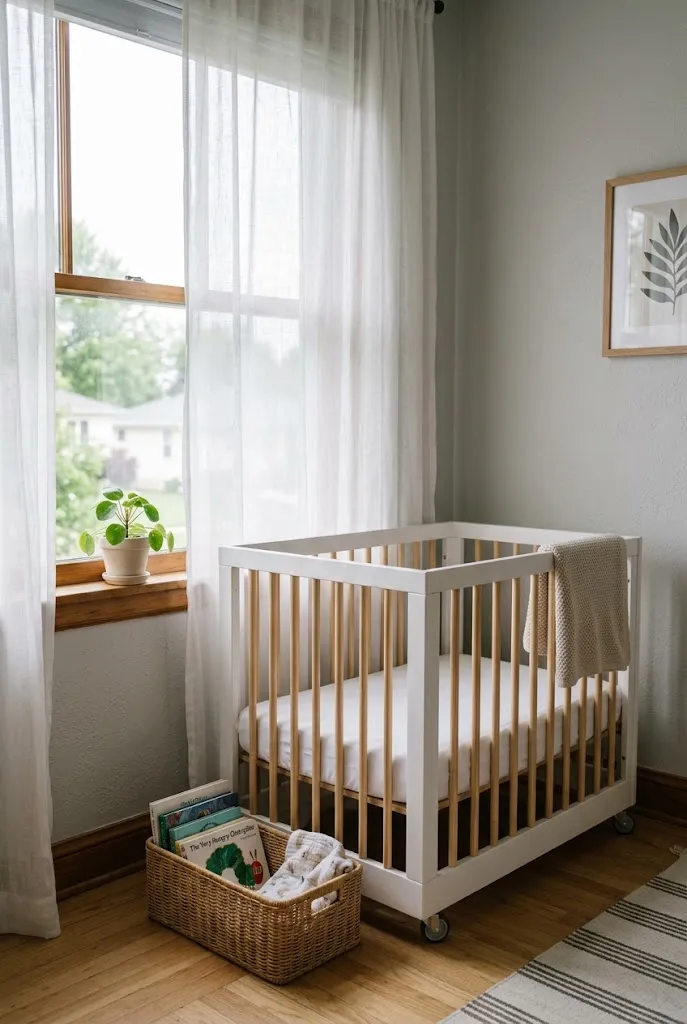
A full-size crib is roughly 52 inches long, and mini cribs are typically a few inches shorter and narrower. In a tiny room, that difference can free up a clear walking path. Some mini cribs have wheels, which is handy for cleaning or moving the baby’s sleep space between rooms.
| Option | Advantage | Best Fit |
|---|---|---|
| Full-size crib | Longer use before moving to a toddler bed | Rooms with at least a 9×10 footprint |
| Mini crib | Smaller footprint, often portable | Closets, studio corners, shared bedrooms |
The tradeoff is lifespan: a baby will outgrow a mini crib sooner. If you plan more than one child or a longer timeline, a convertible full-size crib may still make more sense.
4. Use a Dresser as the Changing Station
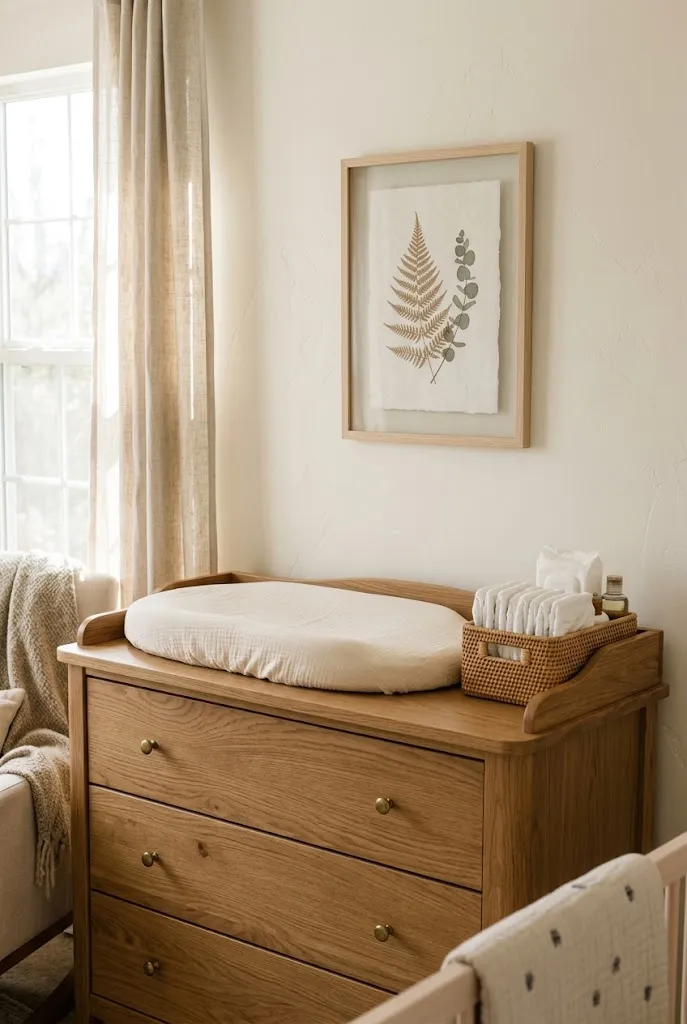
A sturdy dresser with a contoured changing pad on top replaces a separate changing table, and it stays useful long after diapers are gone. Pick a dresser around 30–36 inches tall so you aren’t bending over, and secure it to the wall with an anti-tip kit. Keep wipes, diapers, and creams in a small caddy so you can reach them without taking a hand off the baby.
Common Mistake: Putting the changing pad on a dresser that is shallow or uneven.
Better Approach: Choose a dresser deep enough that the pad sits fully supported, and use the pad’s strap each time.
5. Add Picture Ledges for Books
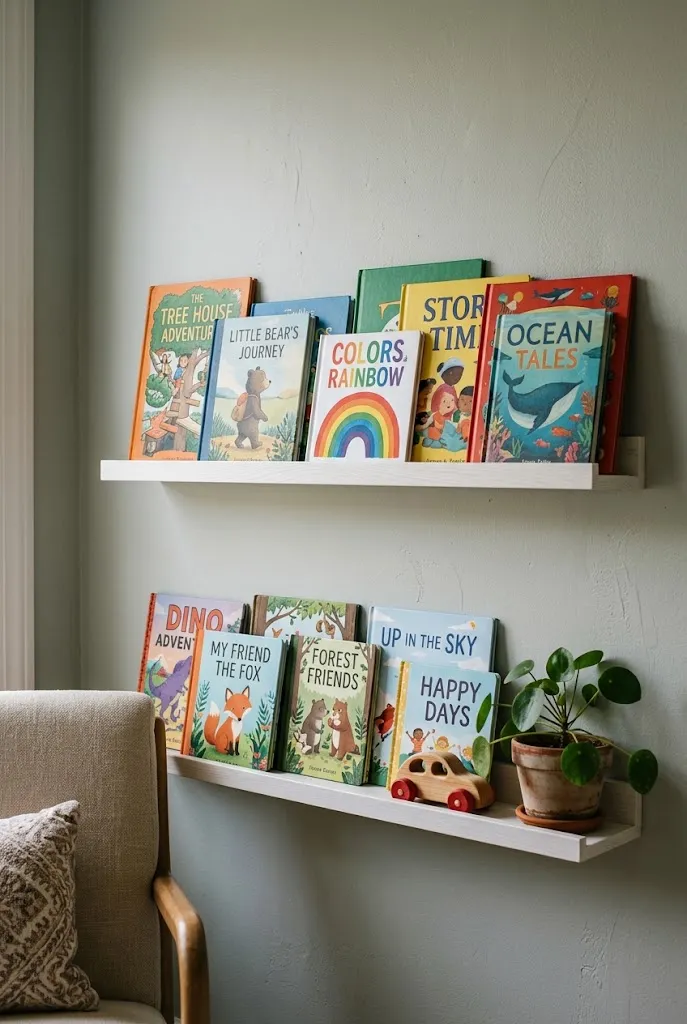
Slim picture ledges let you display books with the covers facing out, which feels like art and takes almost no floor space. They’re shallow enough to fit in tight nursery walls, and they’re easy to install in a rental with proper anchors. Mount them above the changing area or by the chair, and keep them away from the crib so nothing can fall in.
6. Go Vertical With a Tall, Narrow Bookcase
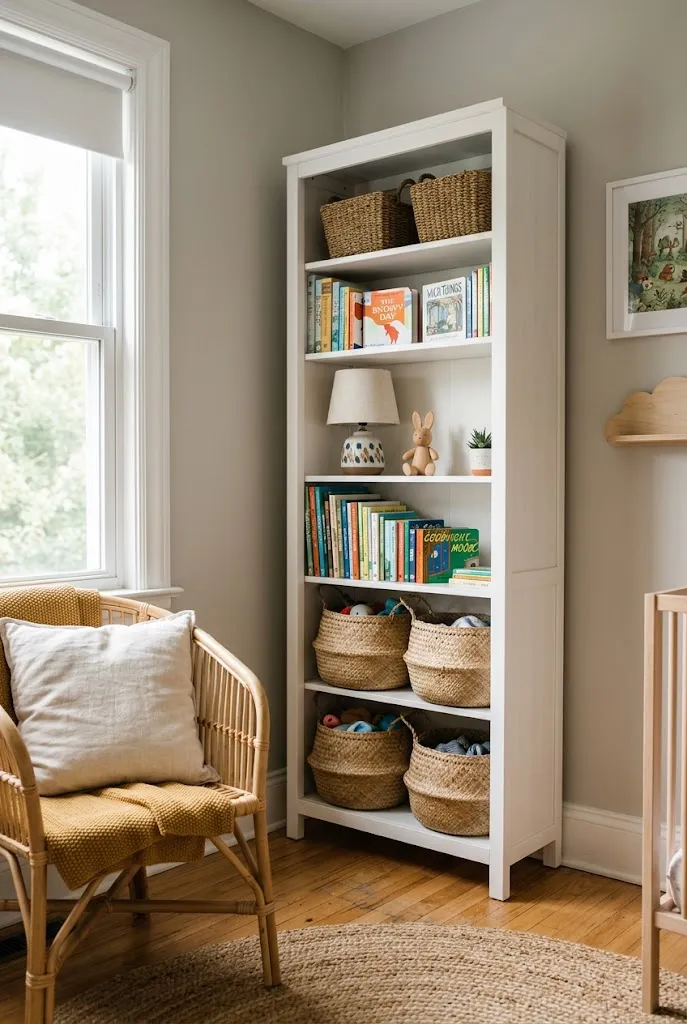
When the floor is limited, the wall is your extra square footage. A tall, narrow bookcase (anchored to the wall) stores books, baskets, and keepsakes in just 12 inches of width. Put the heavier and more frequently used items at waist height and lighter display items higher.
Tips & Tricks
- Use matching baskets on the middle shelves to hide small items
- Reserve the top shelf for sentimental pieces
- Leave one open shelf so the unit doesn’t feel heavy
7. Roll Storage Under the Crib
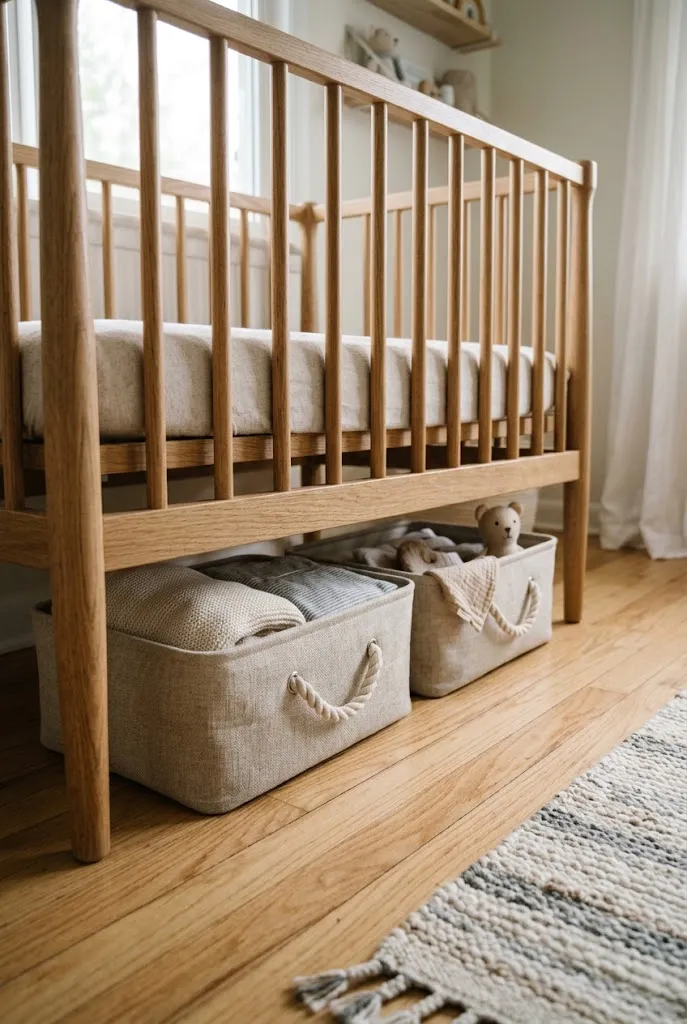
If your crib has enough clearance, flat rolling bins or low baskets can hold extra bedding, seasonal clothing, and diapers. Check the clearance first, because some crib designs sit too low or have a solid base. Keep stored items well clear of the mattress support and out of the baby’s sleeping space.
8. Mount Hooks and a Pegboard for Everyday Gear
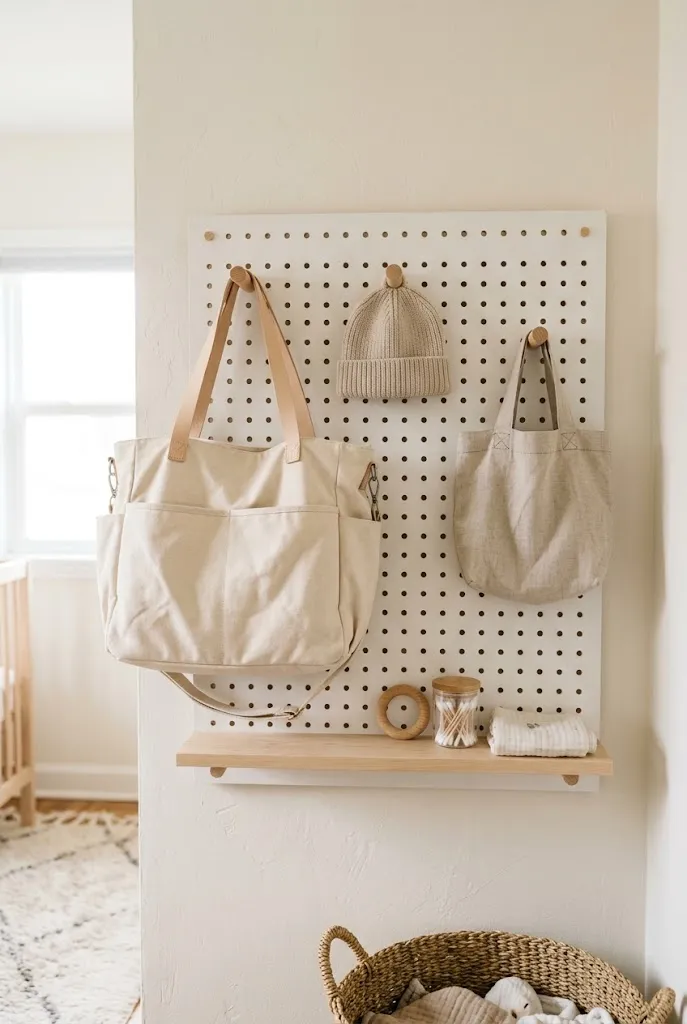
Diaper bags, hats, and soft carriers pile up quickly. A small pegboard or a row of sturdy wall hooks near the door keeps them off the floor and out of the way. Pick hooks with rounded ends and mount them above where a toddler could eventually reach.
- Hang the diaper bag where you’d grab it on the way out
- Add a small shelf to hold a pacifier tin and keys
- Use a pegboard in a pale or natural wood finish for a calmer look
9. Paint the Room One Light, Warm Color
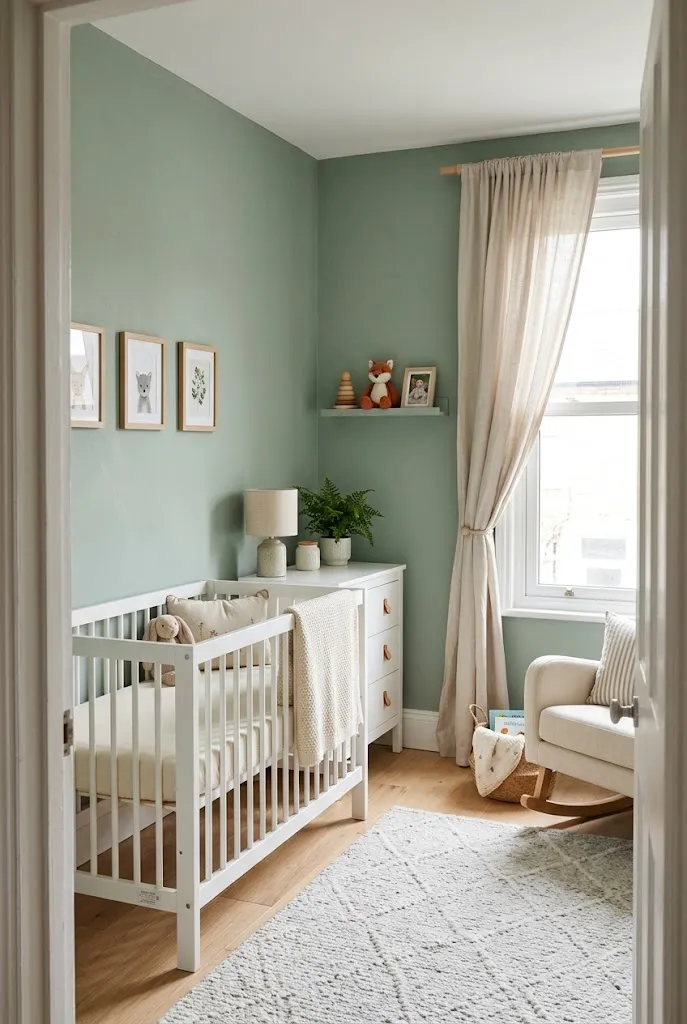
Using one soft, warm tone on the walls and trim keeps a small nursery from feeling chopped up. Warm whites, pale sage, and soft greige all reflect light well. Paint with a washable finish, since baby rooms see spit-up and wipe-downs, and choose low-VOC paint when possible.
Do: Keep the trim and walls close in tone to make the ceiling feel higher.
Don’t: Use several saturated colors on every wall in a very small space.
10. Use Peel-and-Stick Wallpaper Behind the Crib
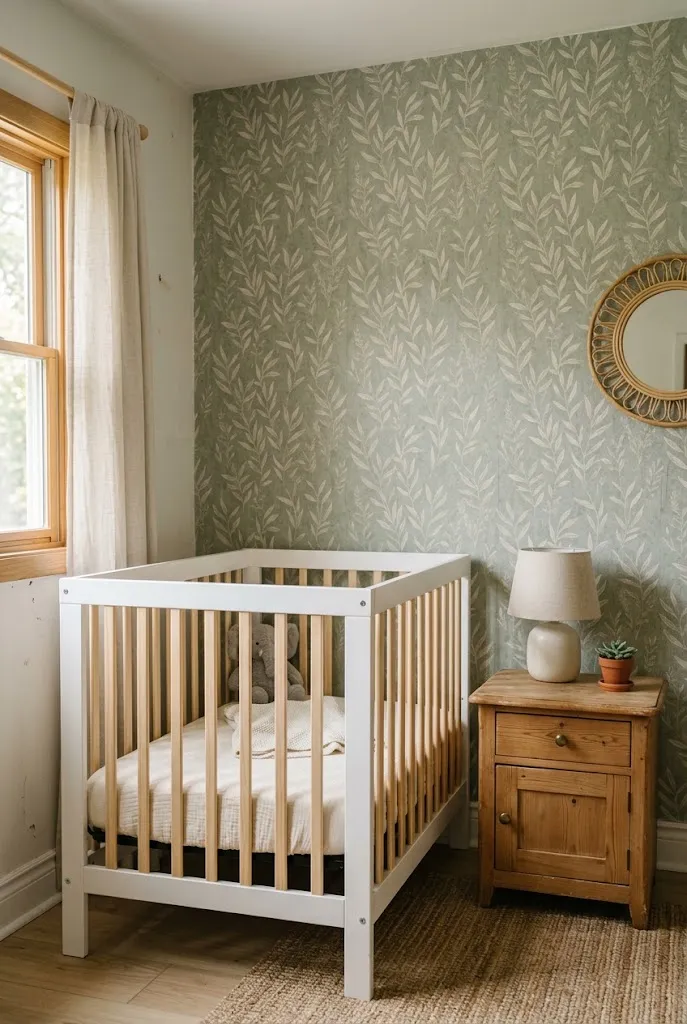
For renters, peel-and-stick wallpaper behind the crib gives a feature wall without paint or permanent changes. A subtle pattern, such as small botanicals or a soft stripe, reads as an accent without crowding a small room.
| Option | Advantage | Best Fit |
|---|---|---|
| Paint | Lower cost, easy to refresh | Owners and flexible renters |
| Peel-and-stick wallpaper | Removable, patterned look | Rentals and accent walls |
Use it on one wall only. Make sure the surface is clean and smooth, and expect a bit of patience to line up the seams.
11. Replace a Swinging Door With a Sliding or Pocket Door
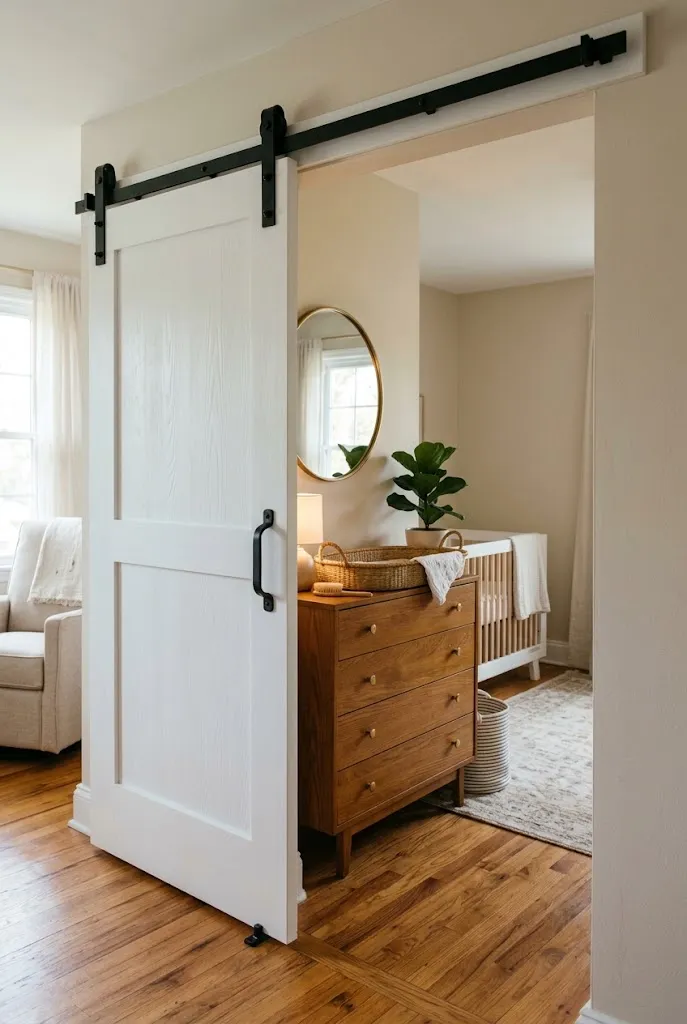
A swinging door can take up a surprising amount of floor space. A sliding barn-style door or a pocket door frees up the swing area for furniture. This is a mid-to-premium change and usually needs hardware and some installation, so it’s more suitable for owners.
12. Double the Closet With a Second Hanging Rod
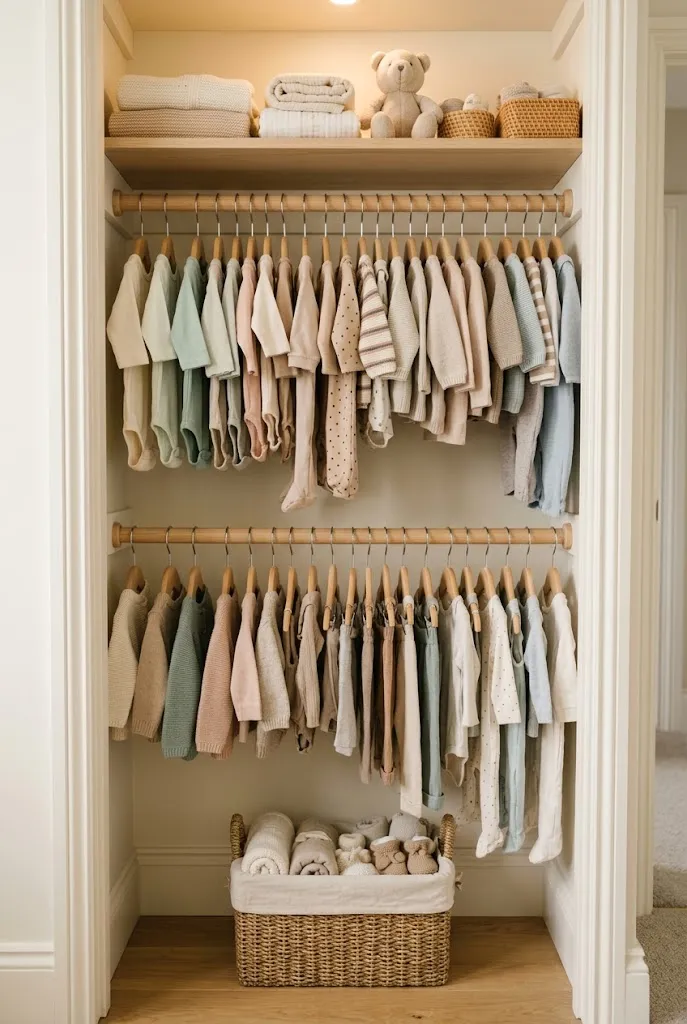
Baby clothes are small, so a closet can handle two rods. Install a lower rod at about 40 inches and an upper rod at roughly 80. This roughly doubles hanging space without any remodeling.
Quick Facts
Best For: Small closets with a single high rod
Investment: Accessible
Visual Effect: Neat, organized, and clearly separated
13. Organize by Size With Closet Dividers
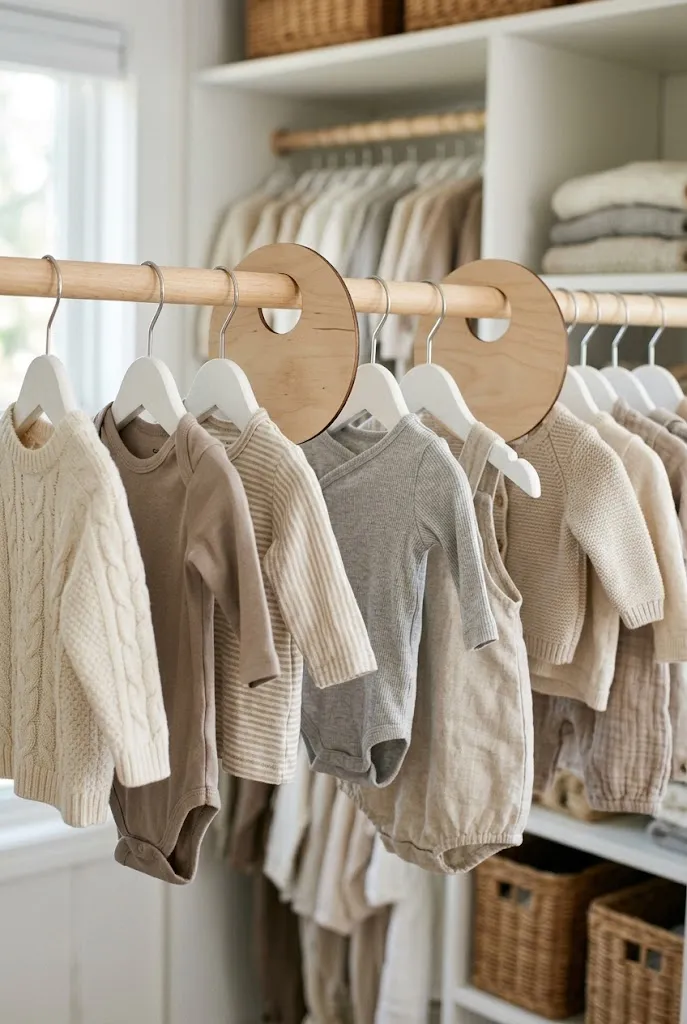
Babies move through sizes quickly. Hanging dividers labeled by age (using a simple tag or a discreet card) keep outgrown clothing from mixing with what fits. Rotate the out-of-season sizes into a bin up high or in another closet.
- Sort clothes by size
- Hang dividers between each group
- Move outgrown pieces to a labeled bin
14. Choose a Compact Glider or Armchair
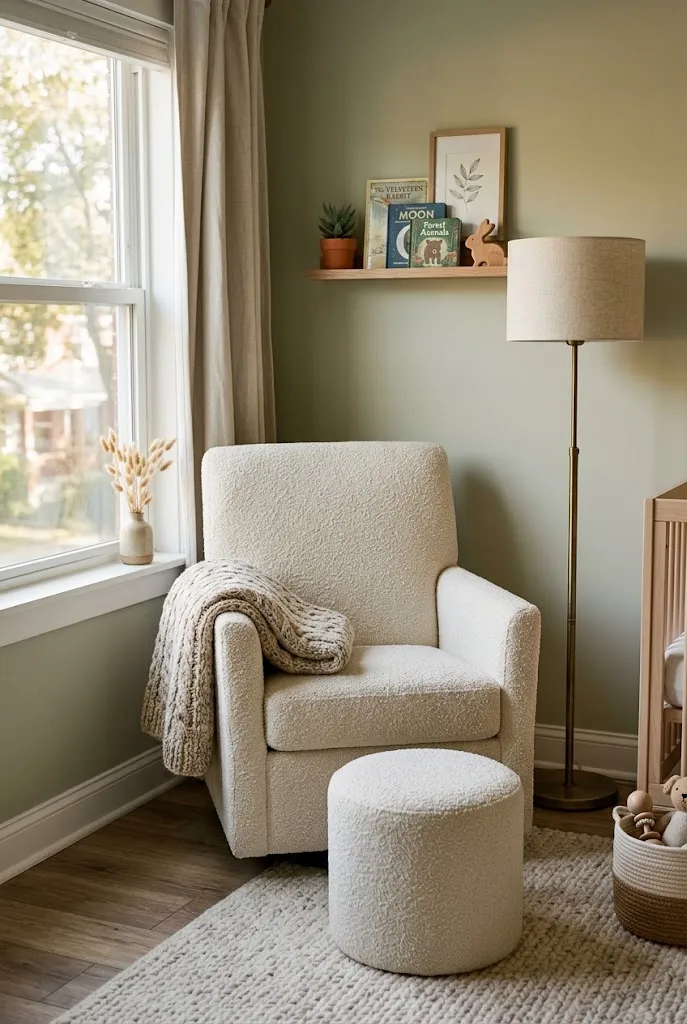
A full-size glider can swallow a small nursery. A smaller armchair or compact recliner with a footstool gives you a feeding spot without crowding. Look for supportive back height, firm cushions, and arms at a comfortable level.
Editor’s Note: Test the chair for comfort before buying. You may spend hours in it, so support matters more than looks.
15. Use a Round Rug to Soften Tight Corners
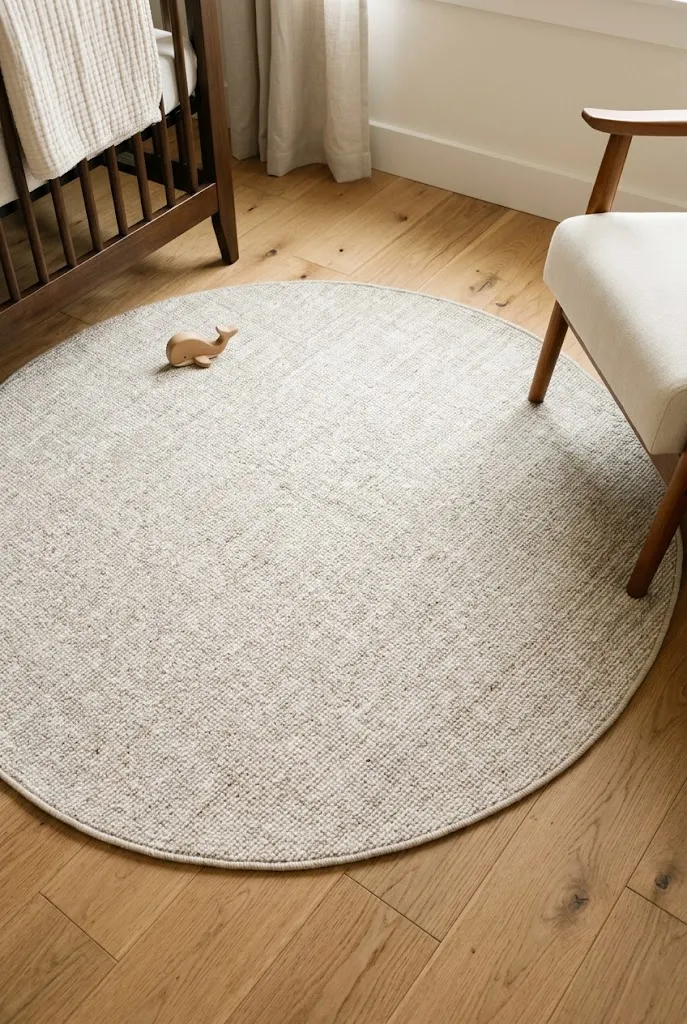
A round rug breaks up the boxiness of a small room and gives the floor a focal point. A 5-foot circle is usually enough for a small nursery. Choose a low pile that’s easy to clean and won’t catch wheels or little feet.
16. Reflect Light With a Round Mirror
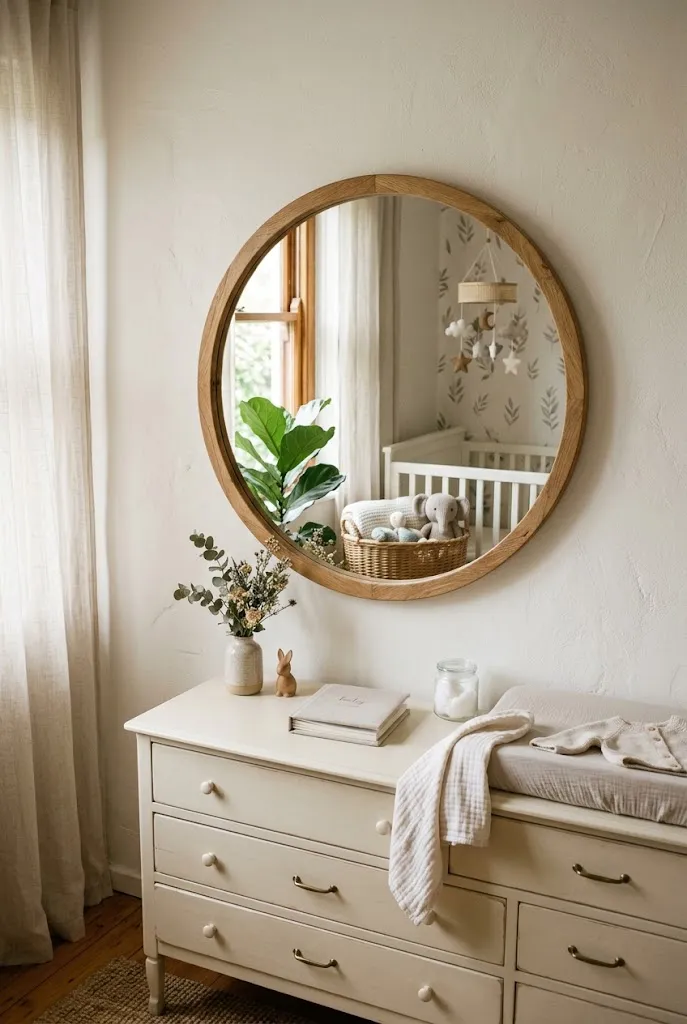
A well-placed mirror bounces light and makes a narrow room feel wider. Hang it on a side wall, well away from the crib, and anchor it securely. A lightweight mirror with a rounded or soft-edged frame suits a nursery best.
- Hang it opposite a window to carry daylight deeper into the room
- Mount it securely, high enough to be out of reach
- Choose a thin frame in wood or brass so it doesn’t dominate
17. Layer Lighting for Night Feedings
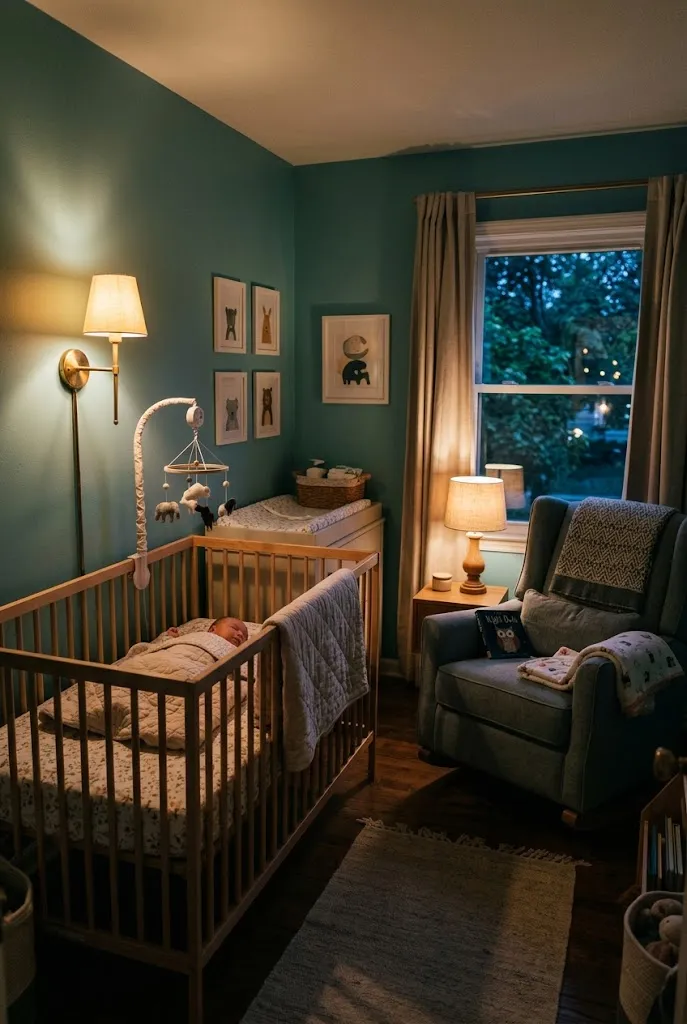
Overhead lighting is harsh at 2 a.m. Layer a dimmable ceiling fixture, a small table or floor lamp, and a warm night-light. Plug-in wall sconces save table space and work well for renters.
Tips & Tricks
- Choose warm bulbs (around 2700K)
- Put the lamp on a dimmer or use a dimmable bulb
- Keep cords tidy and out of reach
18. Install Blackout Cordless Shades
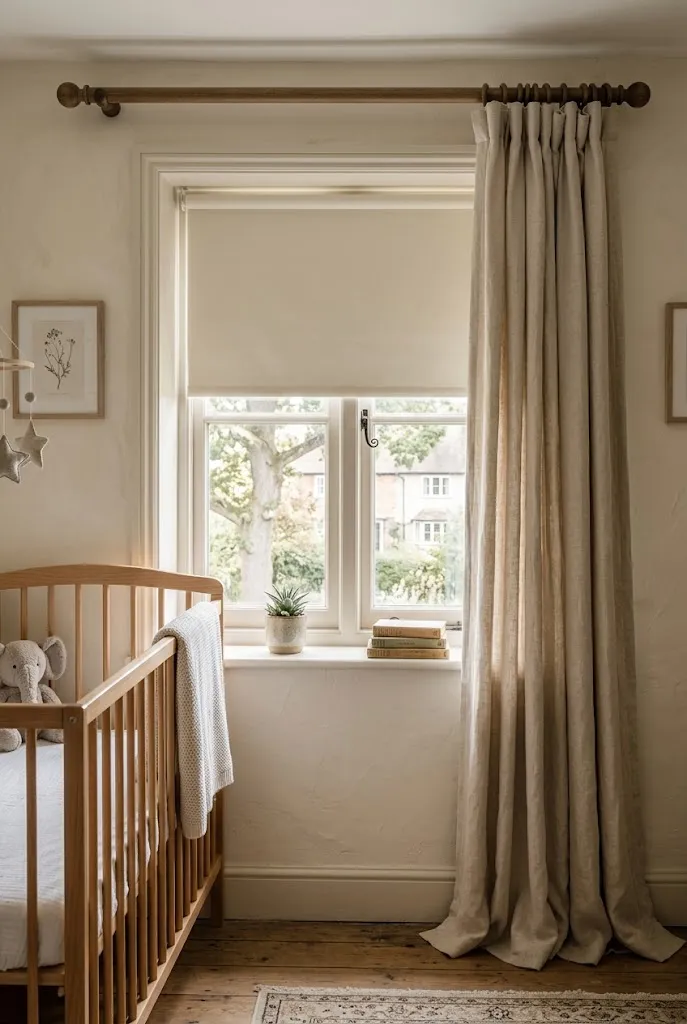
Good sleep helps everyone, and blackout cordless shades help control light for naps. Cordless is the safer choice, since window cords can be a hazard in a child’s room. Pair shades with a soft curtain for a finished look.
19. Share Your Bedroom With a Nursery Corner
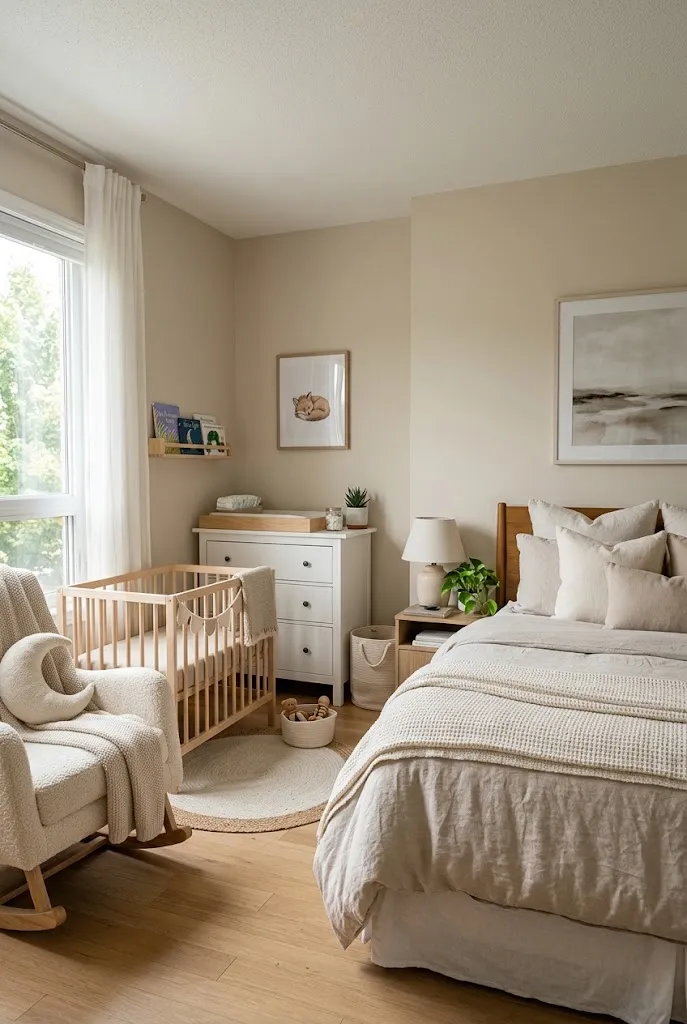
Many families keep the baby in the parents’ room in the early months. A small, defined corner with a mini crib, a narrow dresser, and a rug can feel like a nursery without a separate room. Place the crib away from curtain cords and heat sources.
Quick Facts
Best For: Room-sharing in apartments
Investment: Accessible
Visual Effect: A clear baby zone within a bedroom
20. Divide a Studio With a Low Bookcase
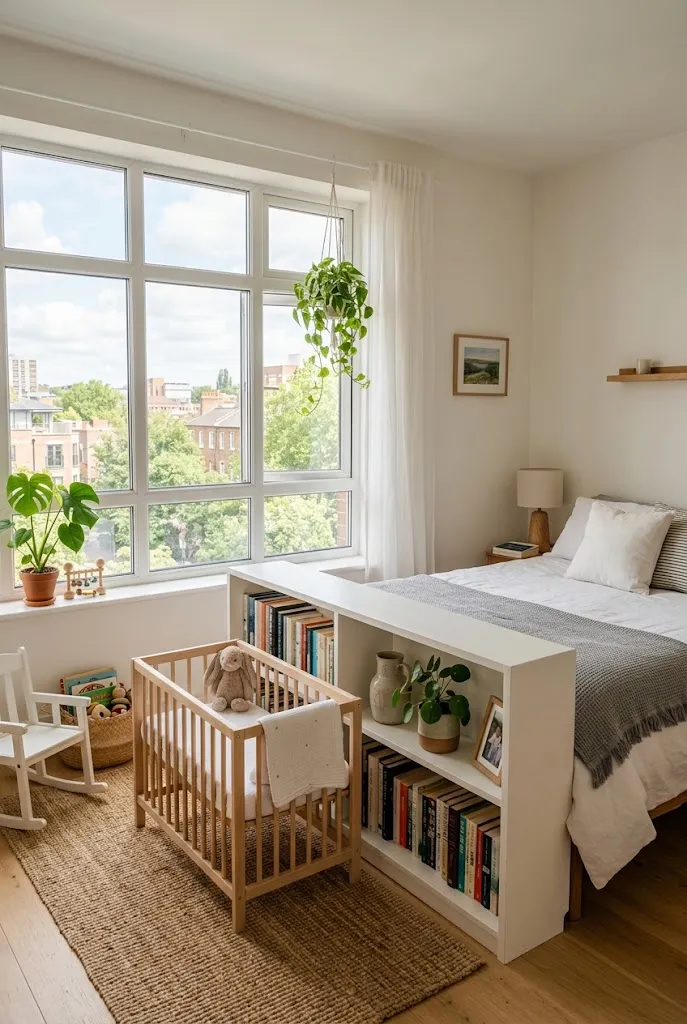
In a studio apartment, an open-backed low bookcase can separate the sleeping area from the baby’s corner. It keeps sightlines open, adds storage, and stops the space from feeling closed in. Anchor it to the wall or floor as appropriate.
21. Make Use of a Sloped Ceiling
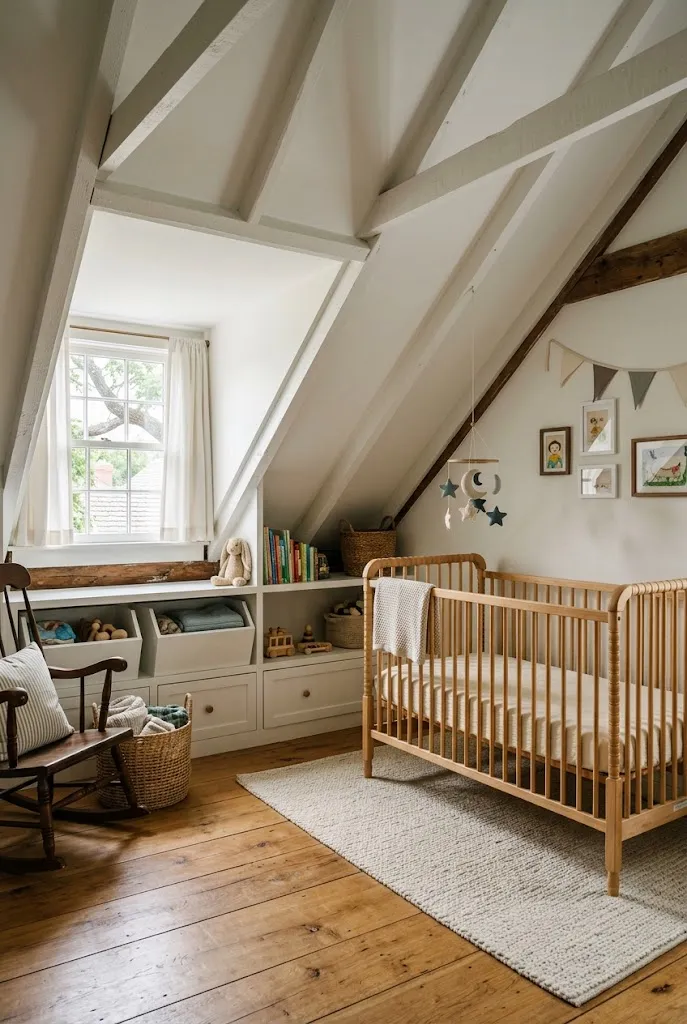
An attic or under-eave room may feel awkward, but the lowest section is a good place for storage while the tallest section handles the crib and walking path. Keep tall furniture under the highest part and low bins under the slope.
22. Place the Crib on the Short Wall of a Narrow Room
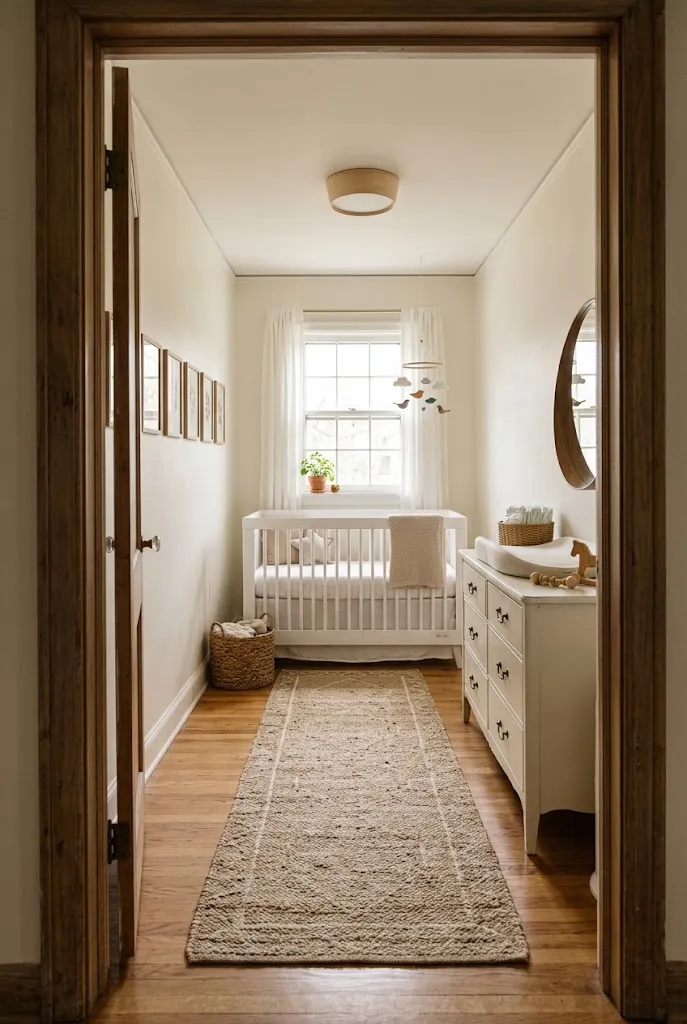
In a long, narrow room, placing the crib along the short wall keeps a clear walking path and avoids a tunnel feeling. Put the dresser along one long wall and leave the other open.
23. Keep Toys in Low Baskets and Rotate Them
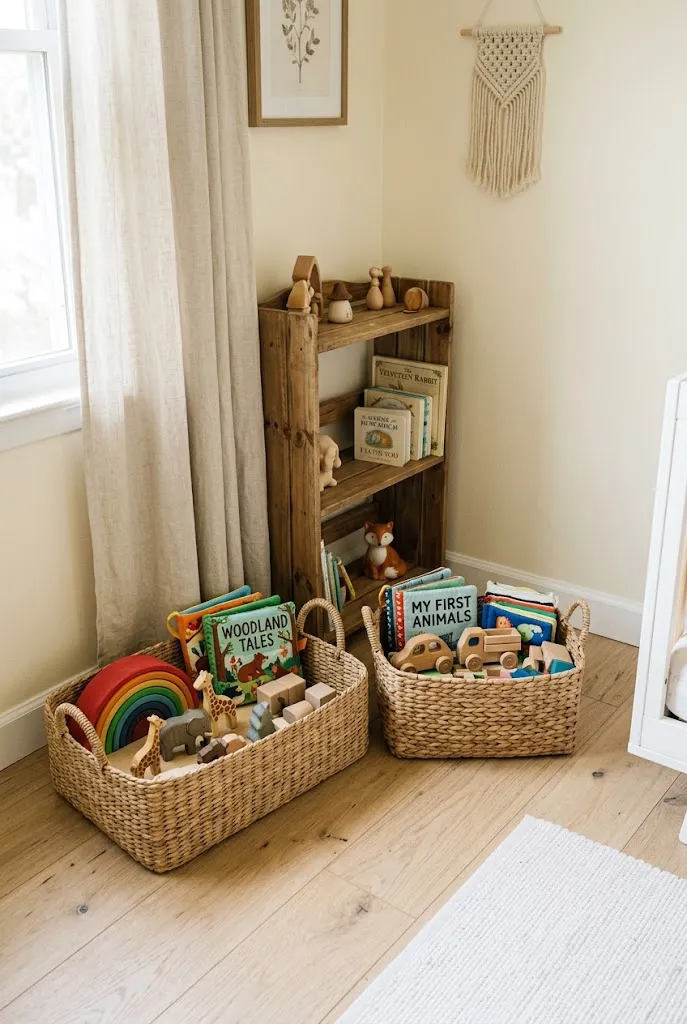
Toys multiply quickly. Keep only a few in the room, in low baskets that a child can reach later, and rotate the rest from a closet bin. This keeps the floor clear and makes each toy more interesting.
24. Build a Window Seat With Drawers
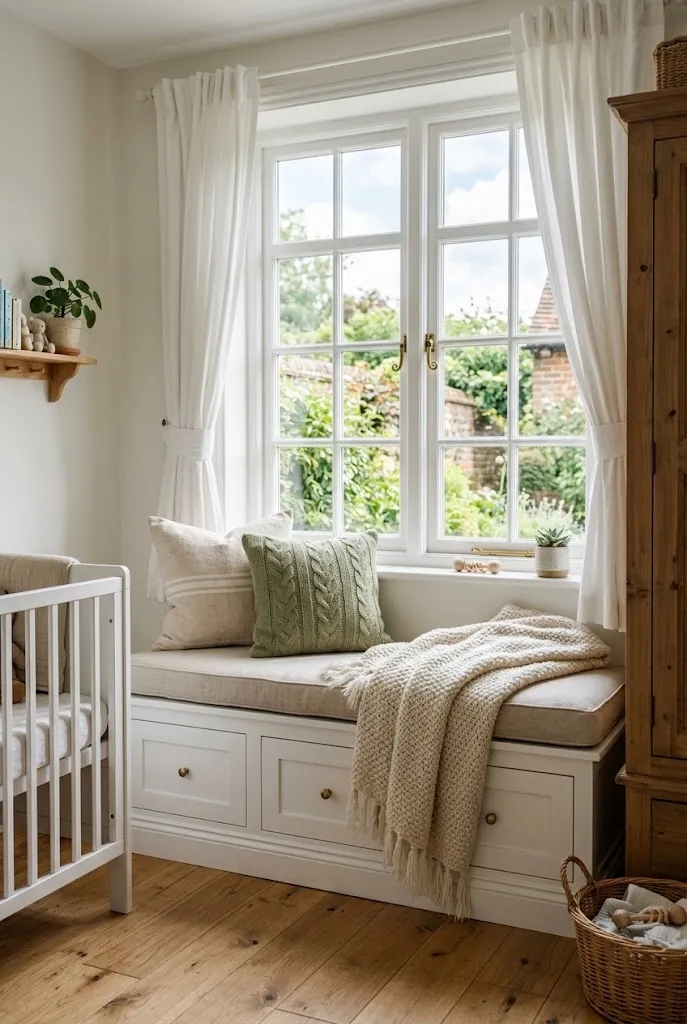
If you own your home or have a landlord’s permission, a built-in window seat with drawers adds seating and hidden storage. It’s a mid-to-premium project, but it can replace a separate chair and a small dresser.
25. Add a Wall-Mounted Fold-Down Changing Station
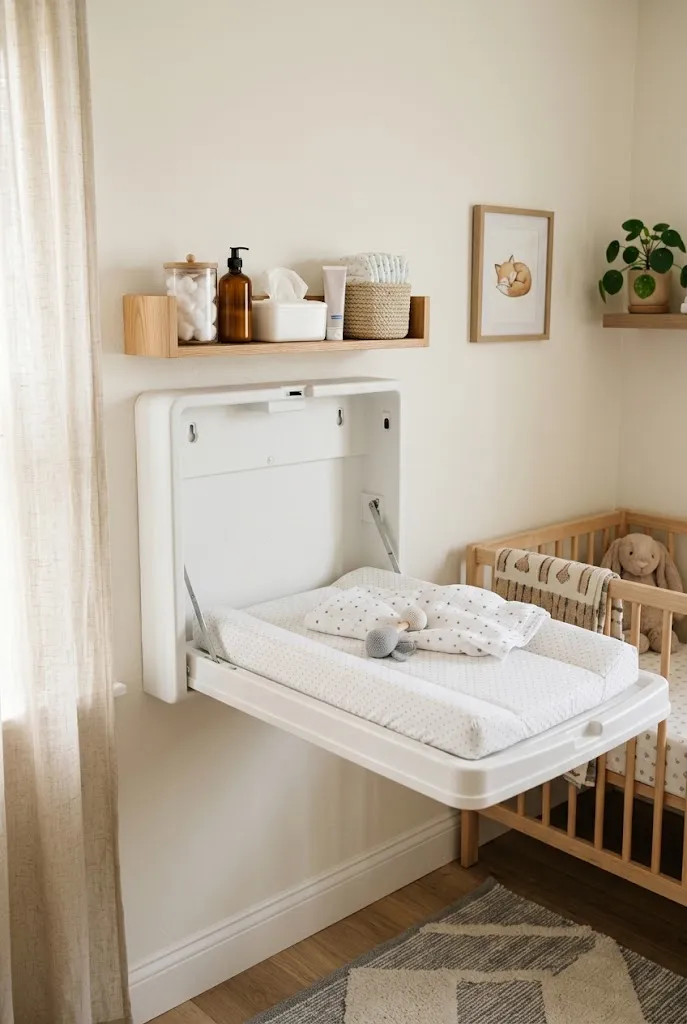
A wall-mounted changing table folds up when it’s not in use. It’s useful in very small nurseries, but it must be installed properly into studs, and the weight limit should be checked. This is a better fit for owners than renters.
26. Roll Supplies on a Slim Cart
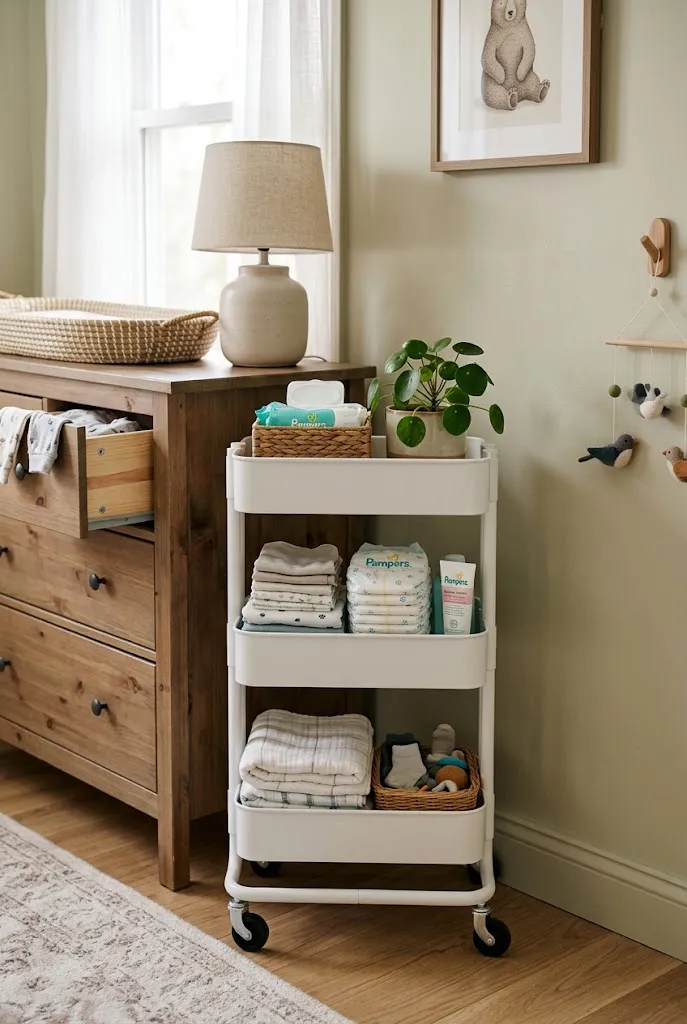
A narrow rolling cart with three tiers holds diapers, wipes, creams, and extras, and it can roll to the changing area or out of the way. Look for one around 12–15 inches wide.
27. Keep Wall Art Minimal and Soft
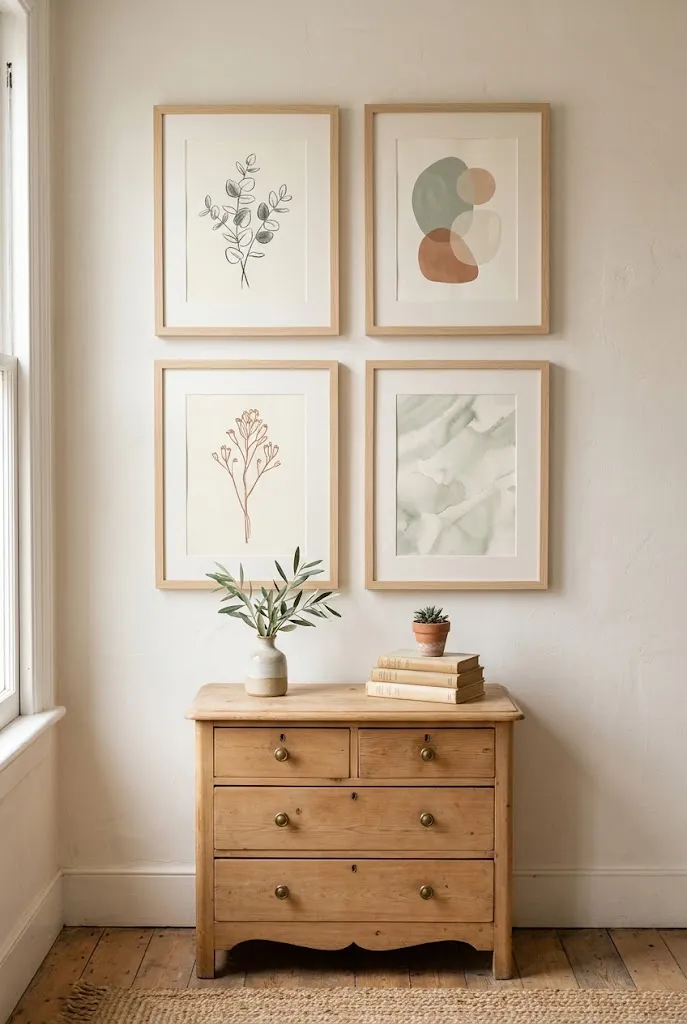
In a small room, a small gallery of three or four prints reads as deliberate while a wall full of art feels crowded. Choose simple prints (botanical, abstract, or animal) in a consistent palette. Keep frames lightweight, and hang them away from the crib.
28. Layer Natural Textures
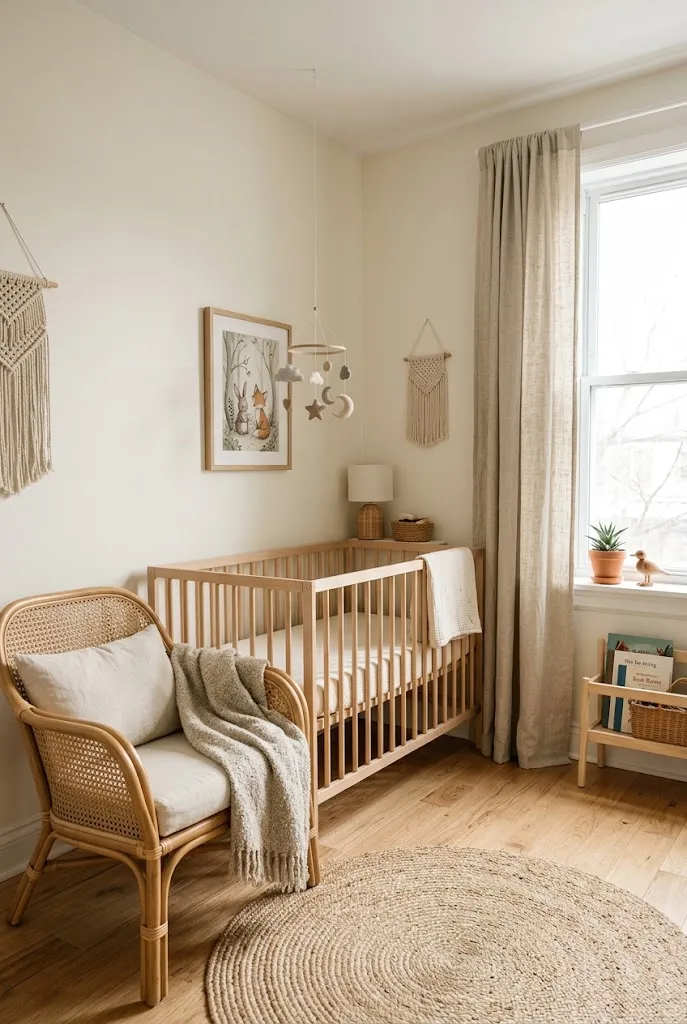
Rattan, jute, linen, and light wood warm up a small room without adding visual noise. Keep the palette tight, and use texture instead of pattern to add interest. A woven basket, a rattan chair, and a linen curtain can do the work of a whole theme.
29. Try a Deep Green Accent Wall
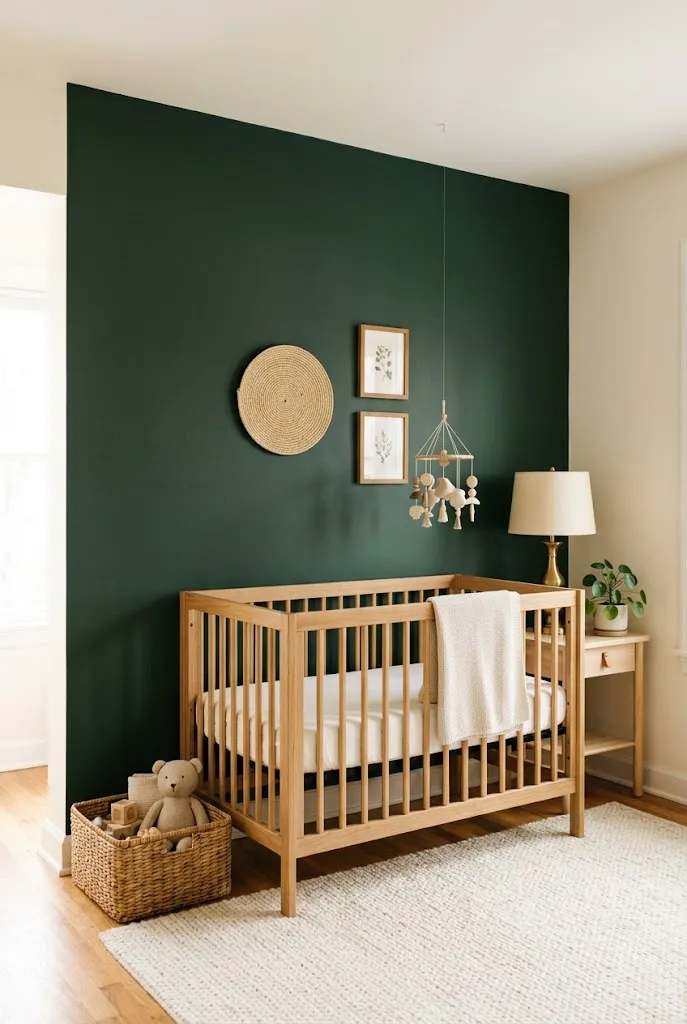
A darker, moodier color can work in a small room if you use it on one wall behind the crib and keep the others light. Deep green with warm white and natural wood is a calm combination.
Common Mistake: Painting all four walls dark in a small room with little light.
Better Approach: Limit it to one wall and keep the rest light.
30. Create a Tiny Reading Nook
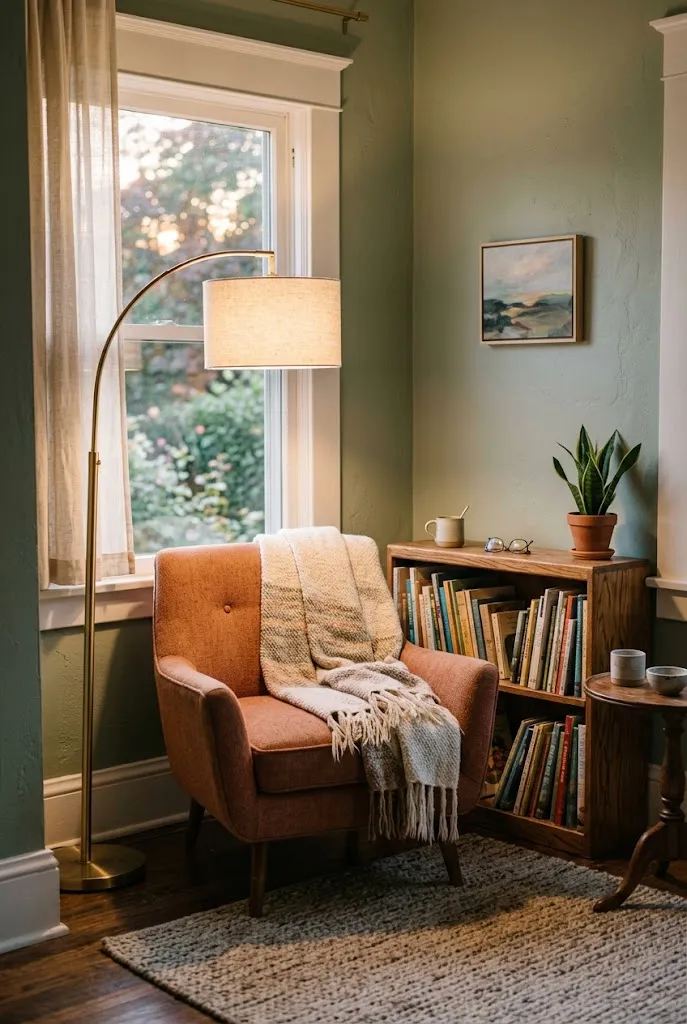
A small chair, a floor lamp, and a low shelf of books can make a reading nook in a corner. Keep it simple: one chair, one light, one basket for books.
31. Buy Furniture That Grows With the Child
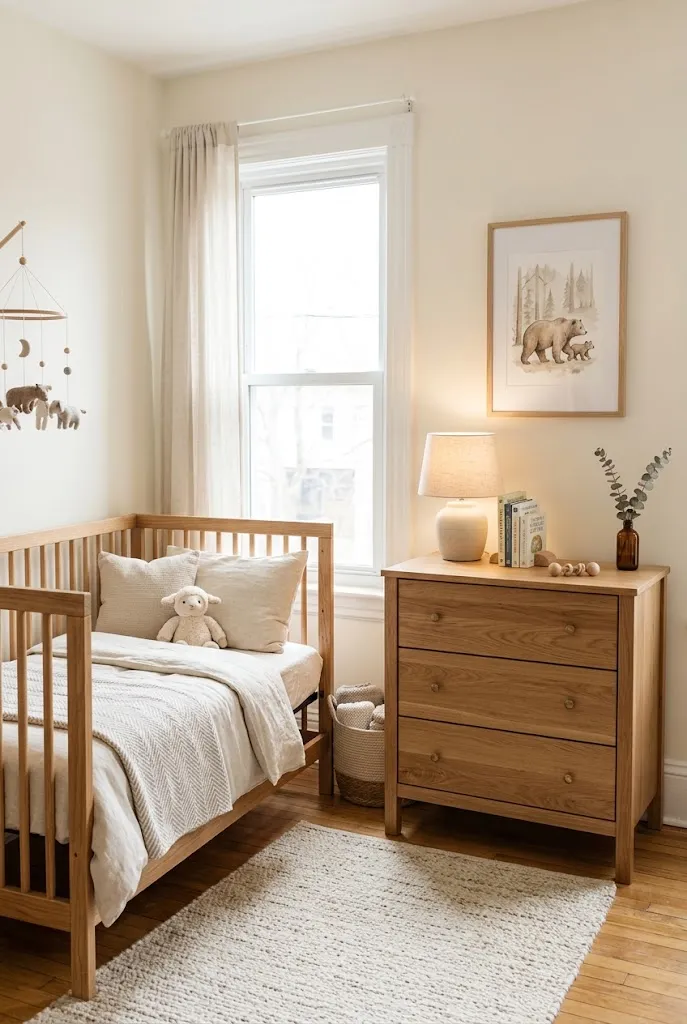
A convertible crib that becomes a toddler bed, and a dresser that works as a changing table now and a regular dresser later, mean you won’t need to replace everything in two years. Choose simple lines and neutral finishes so the pieces adapt.
32. Build a Floor-to-Ceiling Storage Wall With a Crib Niche
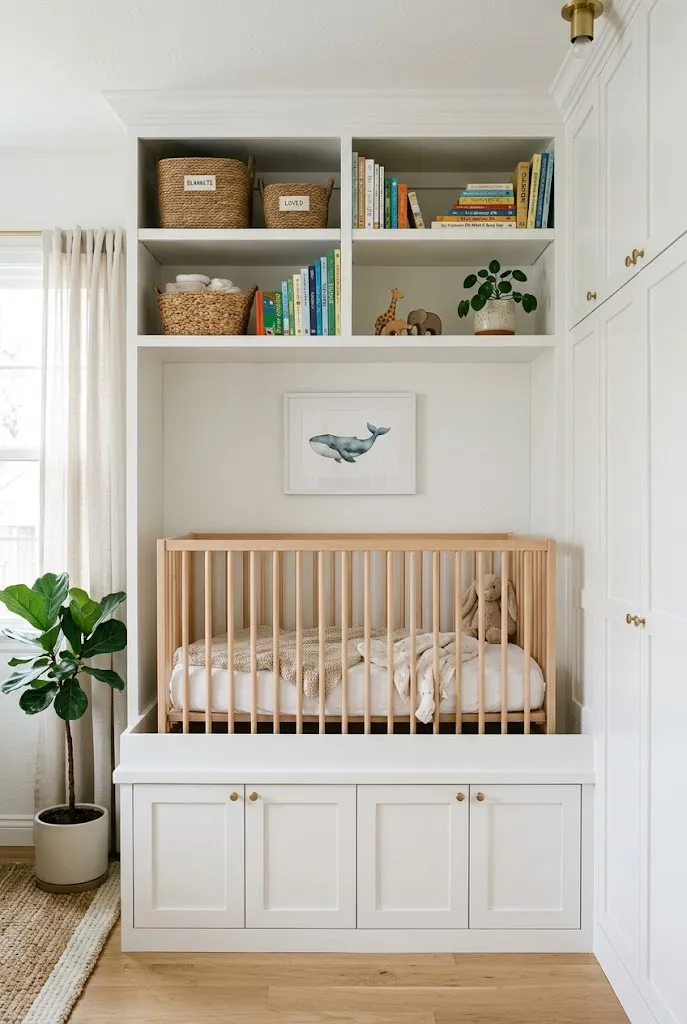
For a premium solution, custom built-ins can wrap a crib alcove with closed storage, open shelves, and a drawer base. It uses the full height of the wall and keeps the floor clear. This is a larger investment, but it can solve storage and layout together.
Editor’s Note: If a custom build isn’t in the budget, modular shelving units with matching trim can borrow the same idea.
A Few Safety Notes Before You Set Up
- Follow current safe-sleep guidance from the American Academy of Pediatrics: a firm, flat sleep surface, a fitted sheet, and no loose bedding, bumpers, or soft objects in the crib.
- Anchor dressers, bookcases, and tall furniture to the wall with anti-tip hardware.
- Keep window cords and any cables well out of reach.
- Check that your crib meets current U.S. safety standards, and follow the manufacturer’s assembly and weight guidance.
Where to Start
If the room feels overwhelming, begin with the layout: decide where the crib goes and how people will walk through the room. Then add vertical storage, then lighting, then color and decor. A small nursery works best when each piece has a job, and you can always add finishing touches over time.