
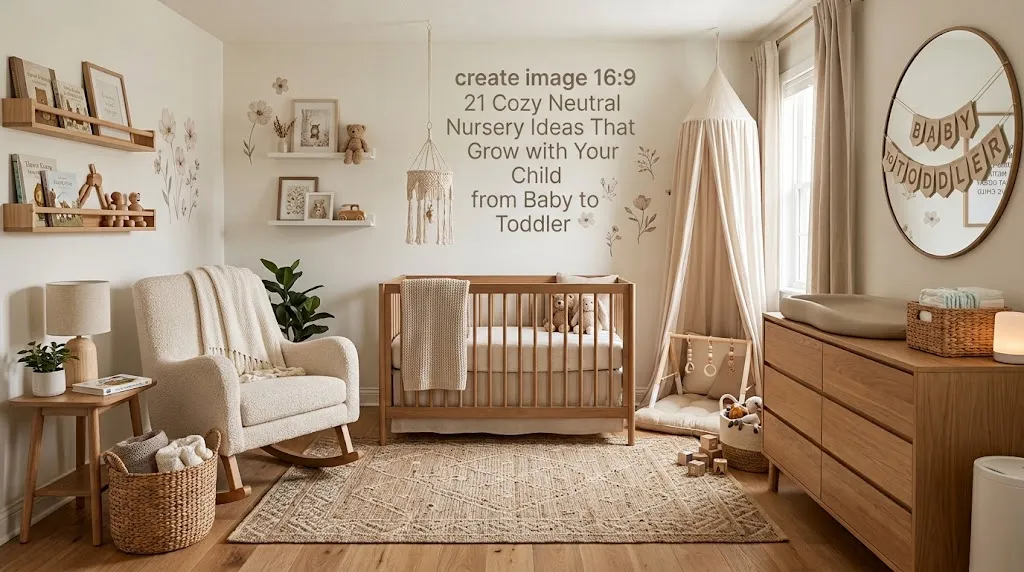
21 Cozy Neutral Nursery Ideas That Grow with Your Child from Baby to Toddler
A nursery is usually planned around a newborn, but the baby in it becomes a crawling, climbing, book-grabbing toddler faster than most people expect. A neutral palette helps because it doesn’t lock the room into a theme. Oat, cream, warm wood, and soft greige stay calm at 3 a.m. and still look right when the toy bin appears.
The ideas below cover a range of budgets and layouts, from renter-friendly changes to custom built-ins. Each one is picked for how it works now and what it can become later, so the room doesn’t need a full redo at age two.
1. Paint the Walls a Warm Oat With Soft White Trim
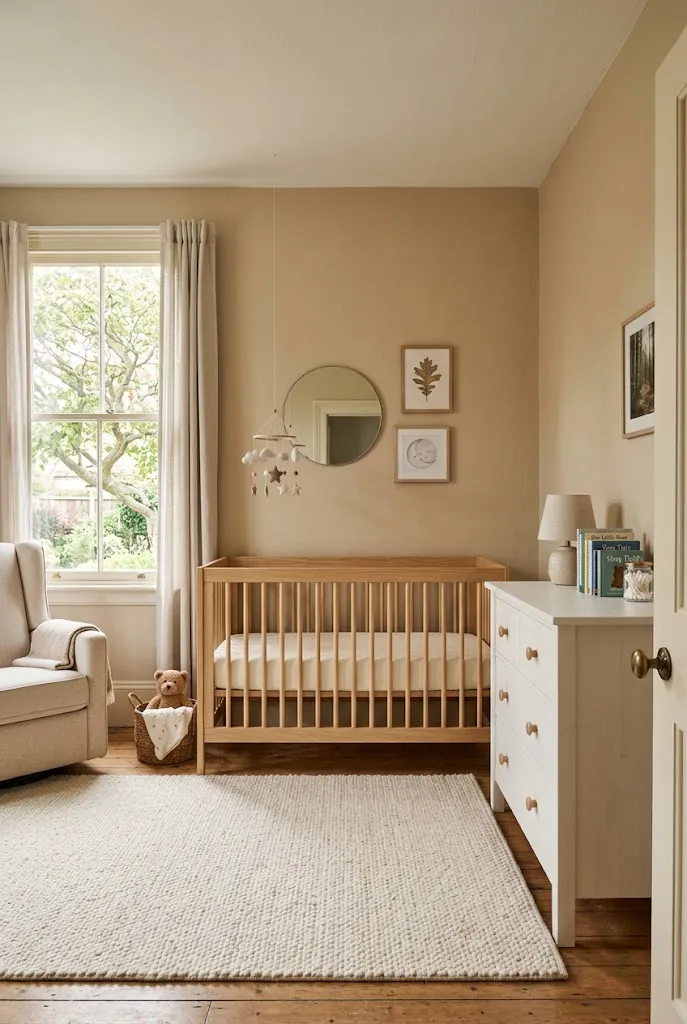
A warm oat or pale putty shade reads as neutral without the flatness of stark white. Against creamy white trim and a white ceiling, it makes the room look soft and finished, and it forgives scuffs better than pure white.
- Look at paint swatches in the room itself, in morning and evening light, before committing.
- Choose a washable finish such as eggshell or satin for walls, since sticky toddler hands are coming.
- Lower-VOC paints are widely available, and many parents choose them for a room used so much for sleep.
Quick Tip: Paint a large sample board and move it around the room for a few days. Undertones that look creamy at noon can turn yellow under a warm lamp.
2. Choose a Convertible Crib in Natural Wood
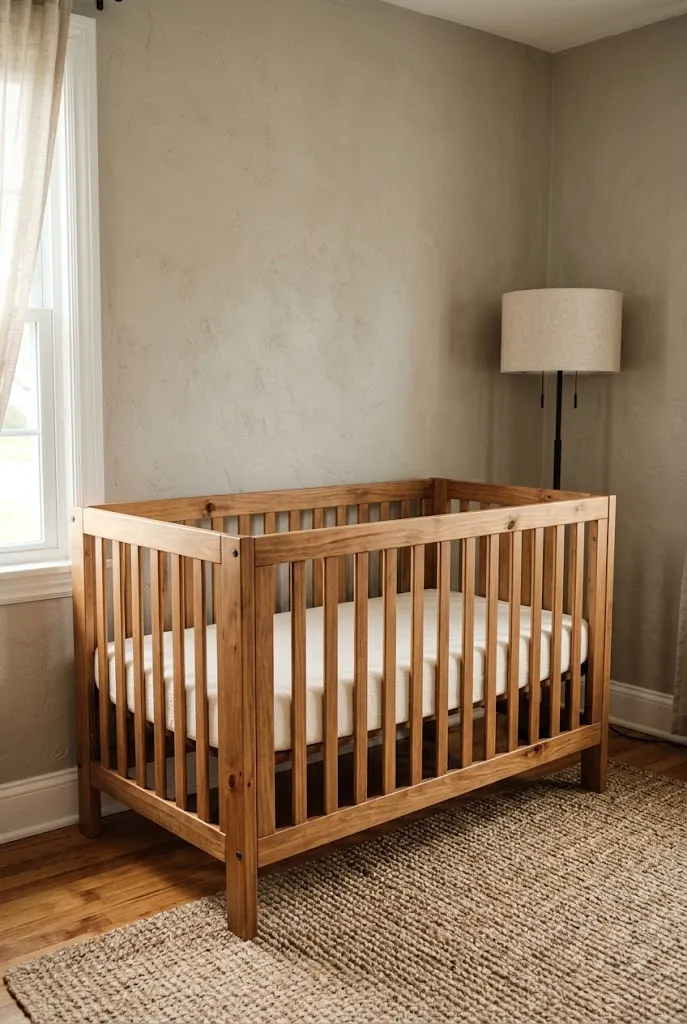
A crib that converts to a toddler bed is the clearest example of a nursery that grows. Natural oak, birch, or a pale stained finish suits almost any neutral scheme, and the grain adds warmth that painted furniture sometimes lacks.
Before buying, check the manufacturer’s conversion details. Some models need a separate conversion kit, and some convert to a daybed or full-size bed. Confirm that the model meets current U.S. crib safety standards, and for sleep, keep the crib bare. The American Academy of Pediatrics recommends a firm, flat sleep surface with nothing else in the crib.
Editor’s Note: Place the crib away from windows, blind cords, and wall-mounted shelving so nothing hangs within reach.
3. Layer a Washable Rug Over Hardwood or Laminate
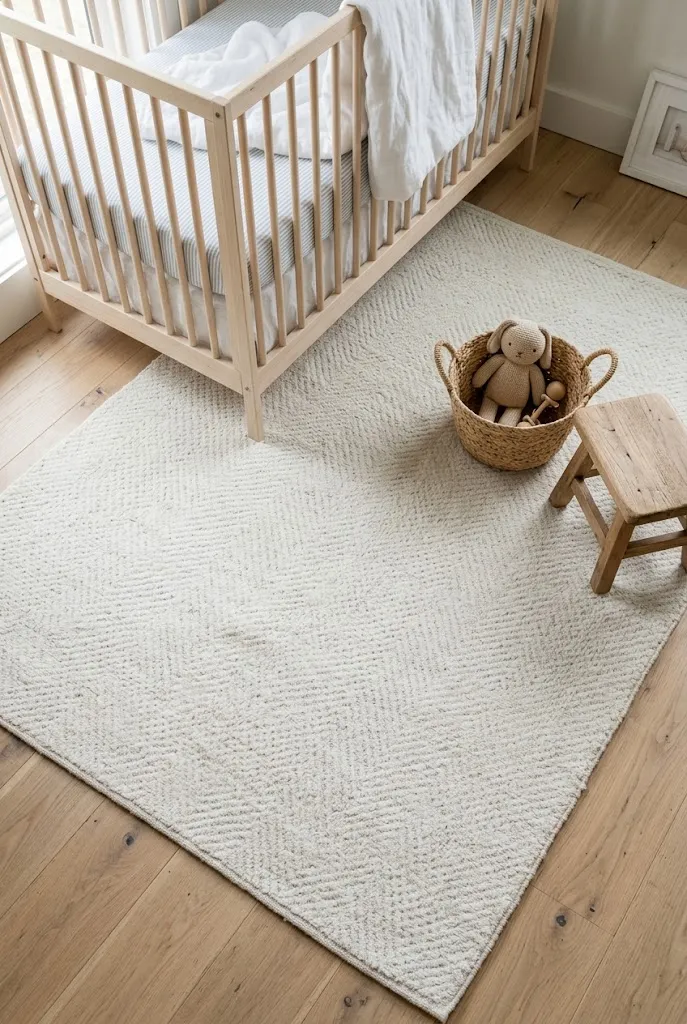
A rug softens the room’s acoustics and gives a crawling baby somewhere comfortable to land. Pick a low pile in an ivory, oatmeal, or light-gray pattern so it hides crumbs without looking busy. Spills happen at this stage, so cleaning ease matters more than luxury.
| Rug Type | Practical Advantage | Best Fit |
|---|---|---|
| Washable machine-wash rug | Easy to clean after spills | Renters, busy households |
| Wool flat-weave | Dense and durable | Long-term, higher investment |
| Cotton or jute blend | Natural texture, lighter feel | Moderate budgets |
Add a non-slip pad underneath, and size the rug so at least the front legs of the main furniture sit on it.
4. Add a Board-and-Batten Half Wall
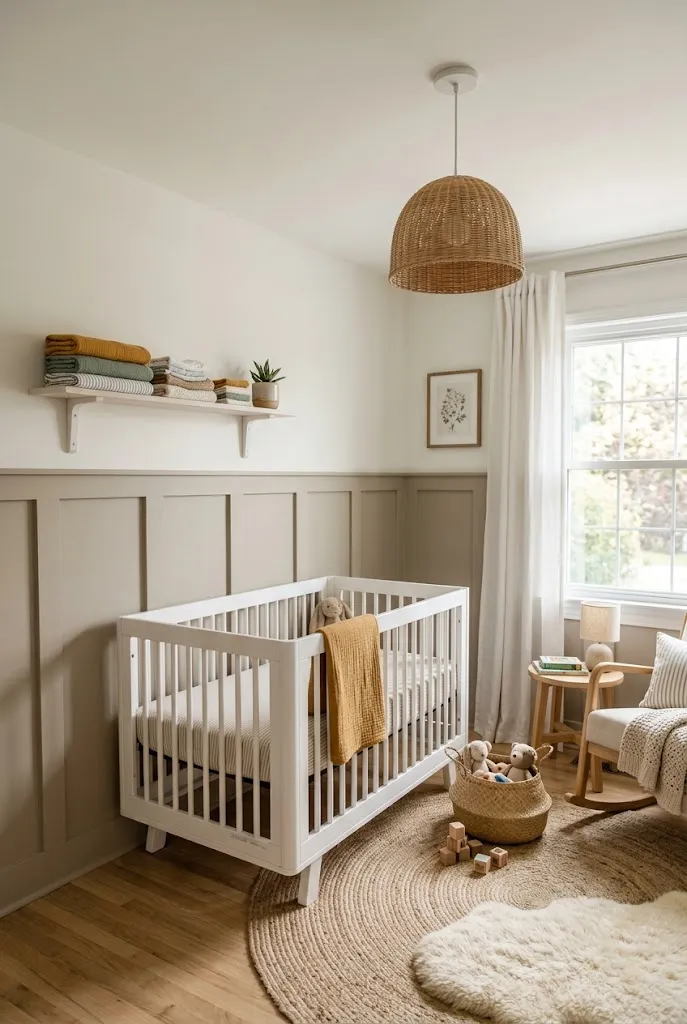
Vertical battens painted the same soft color as the wall add architectural interest without introducing a pattern. The texture catches light in a quiet way, and the lower section also protects walls from toddler scuffs later.
Standard MDF battens and a brad nailer make this a manageable weekend project for many homeowners. Space the battens evenly, caulk the seams, and paint everything in one color for a cohesive finish. Renters can look for removable panel kits, though adhesive suitability varies by wall surface.
Common Mistake: Setting the batten height at an arbitrary spot.
Better Approach: Align the top rail with a window sill or a chair rail height so the lines feel intentional and the room looks balanced.
5. Set Up a Glider Beside a Window
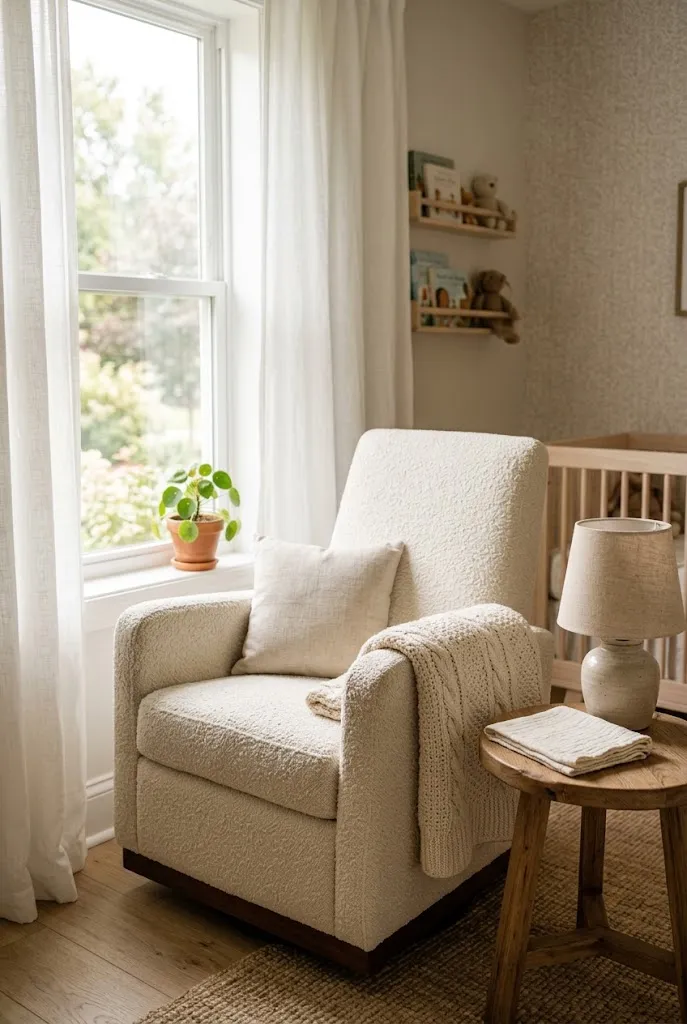
A comfortable chair is where much of nursery life happens, so give it the best position in the room. Beside a window, daylight helps with reading and feeding, and the view gives a tired adult something to look at.
Bouclé, performance linen, or a textured cotton blend in cream or oatmeal fits the palette. Choose a performance or washable cover if you can, since spit-up and snacks arrive in sequence. A slim side table within reach is more useful than a large one.
- Leave room for the chair to move without bumping the crib.
- Keep the table surface for a lamp, a glass of water, and a burp cloth.
- Later, the same chair becomes a story-time seat.
6. Install Low Open Shelves at Toddler Height
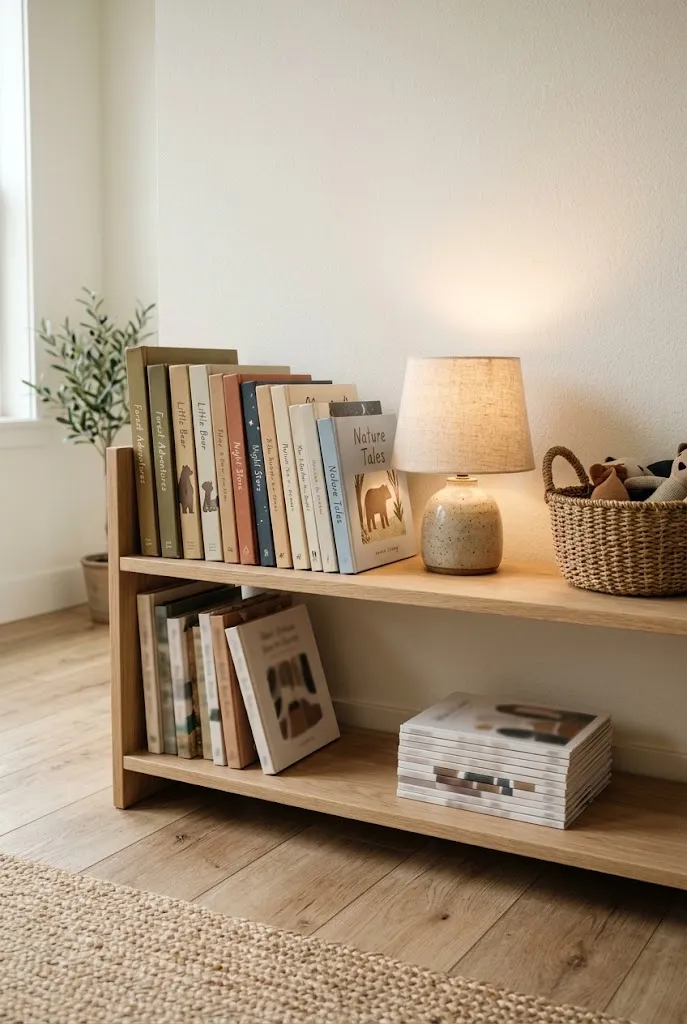
Books displayed with their covers facing out are easy for small hands to reach and turn a shelf into an invitation. A low, wide shelf in white or light wood stays useful for years, and the top surface can hold a lamp or a few keepsakes at adult eye level.
For a baby nursery, use the shelf for folded blankets and baskets and keep items small and light. As your child grows, shift the contents to picture books and a few simple toys.
Editor’s Note: Anchor any shelf or tall furniture to the wall. It’s a standard safety step for anything a climbing toddler might pull on.
7. Hang Linen Curtains With a Blackout Liner
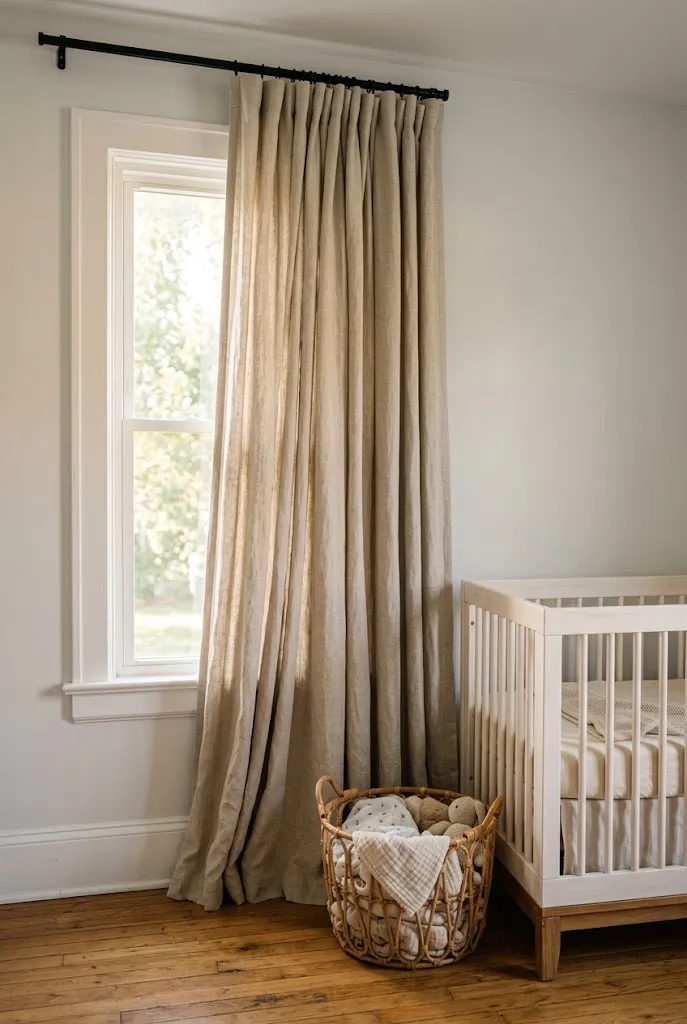
Layered window treatments handle two jobs: soft daytime light and darker sleep conditions. Natural linen or a linen-look fabric in ivory or oatmeal fits the palette, while a blackout liner behind it helps with naps.
Hang the rod higher and wider than the window frame to make the window look larger. Choose cordless or cord-free options where possible, because loose cords are a known hazard for young children.
| Option | Effect | Best Fit |
|---|---|---|
| Curtains with blackout liner | Soft look, strong light control | Most nurseries |
| Cordless cellular shade | Clean, compact, cord-free | Small windows, tight spaces |
8. Pick a Dresser With a Removable Changing Topper
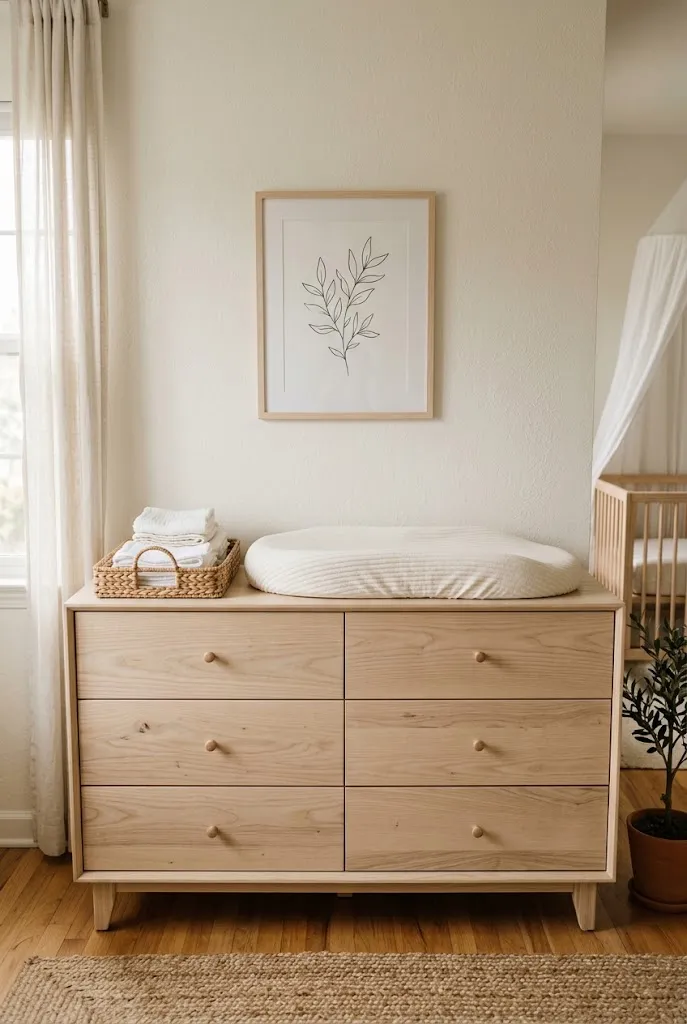
A sturdy dresser with a changing pad and a removable topper does double duty. During diaper years it’s a changing station, and once those are over, it becomes ordinary storage for a toddler’s clothes. Skipping a dedicated changing table saves money and floor space.
- Choose a dresser with deep drawers and smooth glides.
- Use a contoured changing pad with a washable cover and a safety strap.
- Never leave a baby unattended on the surface.
- Anchor the dresser to the wall.
A pale ash or white-painted finish suits the neutral scheme, while a walnut tone adds contrast.
9. Use Woven Baskets to Rotate Toys and Linens
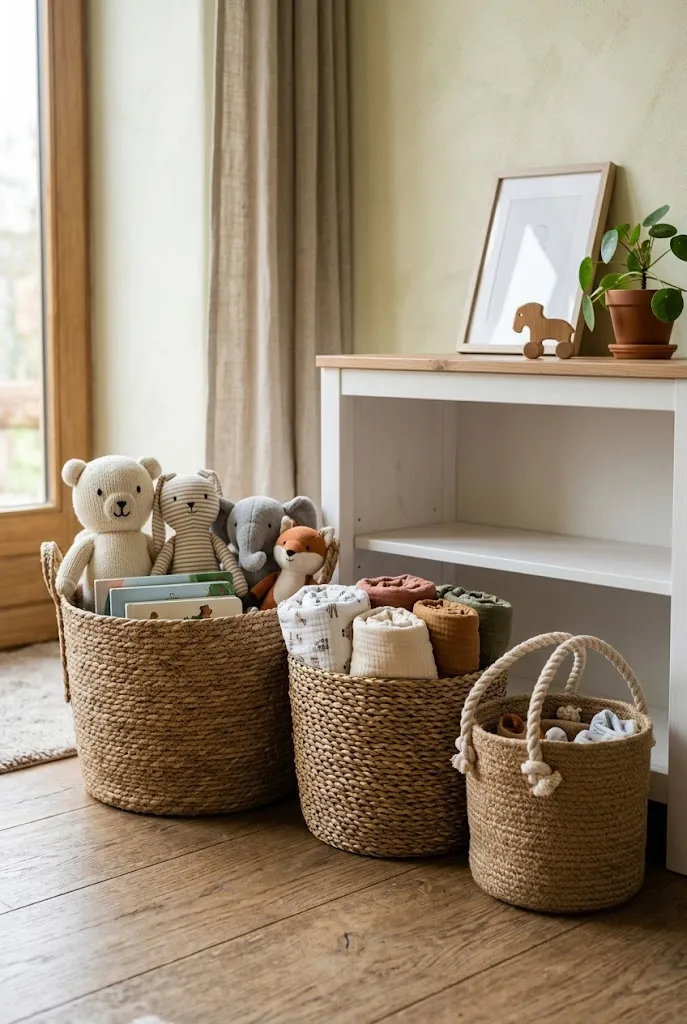
Baskets are the most forgiving storage in a nursery. A mix of seagrass, rattan, and cotton rope adds texture while hiding the visual noise of toys, blankets, and spare diapers. They’re also an easy budget option, and they move with you from room to room.
Choose sizes in a few shapes rather than a matching set. Large lidless baskets work for floor toys, and smaller lidded ones suit spare parts and bath items. Rotating a handful of toys out of the basket, rather than displaying everything, also keeps a small room calmer.
Quick Tip: Line rough-edged baskets with a removable fabric liner so toys and tiny fingers don’t catch on loose fibers.
10. Build a Custom Arched Reading Nook
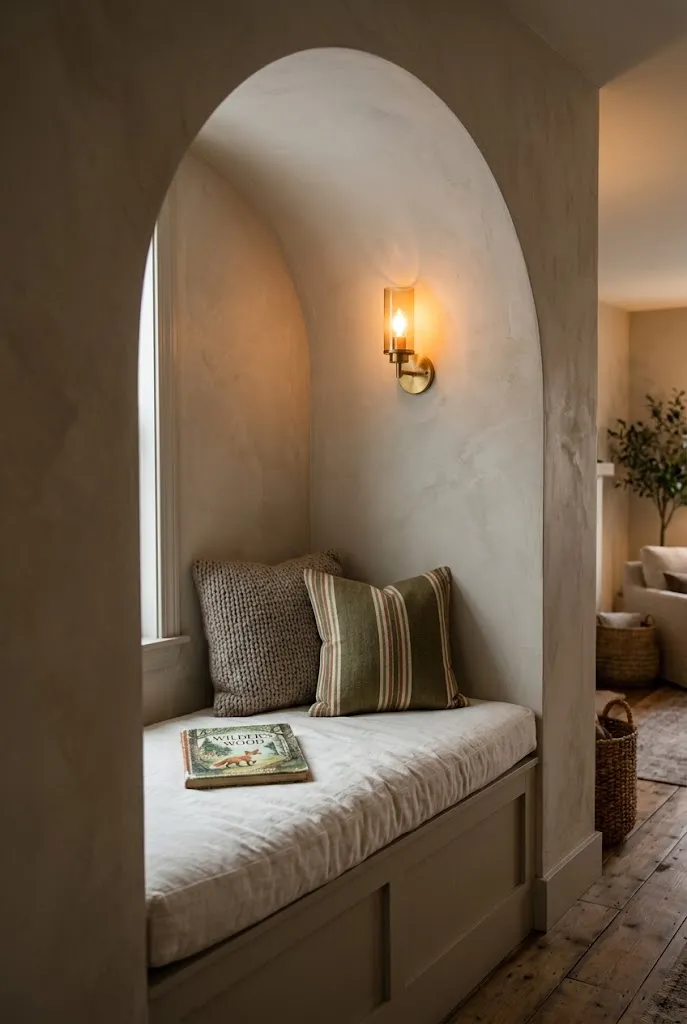
An arched alcove with a built-in bench is a premium upgrade, but it gives the room a permanent focal point. Painted in the same soft color as the walls, the arch adds shape without adding color. The bench seat can include drawers for storage, and a thick cushion turns it into a reading spot that suits a child of two just as well as a parent of one.
This is a job for a carpenter or an experienced DIYer, because the arch framing and bench structure need careful measurement. If a full build isn’t realistic, a freestanding arched shelf or a curved headboard-style panel behind a chair borrows the same shape.
11. Try Peel-and-Stick Wallpaper in a Quiet Texture
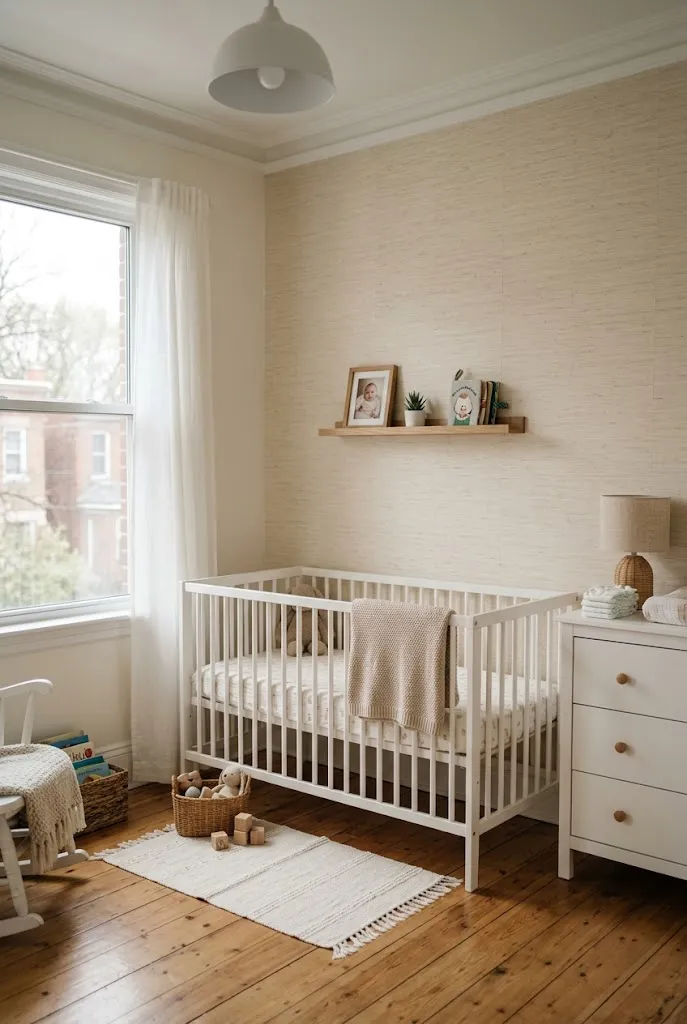
For renters or anyone who wants pattern without commitment, removable wallpaper in a faint grasscloth, linen weave, or tiny tonal stripe adds depth. Keep it on one wall, usually behind the crib, so the room doesn’t feel busy.
Preparation matters. Clean the wall, check that the paint is fully cured, and test a small area. Results depend on the wall surface, so read the manufacturer’s removal instructions before you start.
Do: Choose a pattern with low contrast so it supports sleep rather than competing with it.
Don’t: Cover all four walls in a bold print. A baby’s room benefits from visual calm.
12. Add Soft Sage Accents to a Cream Base
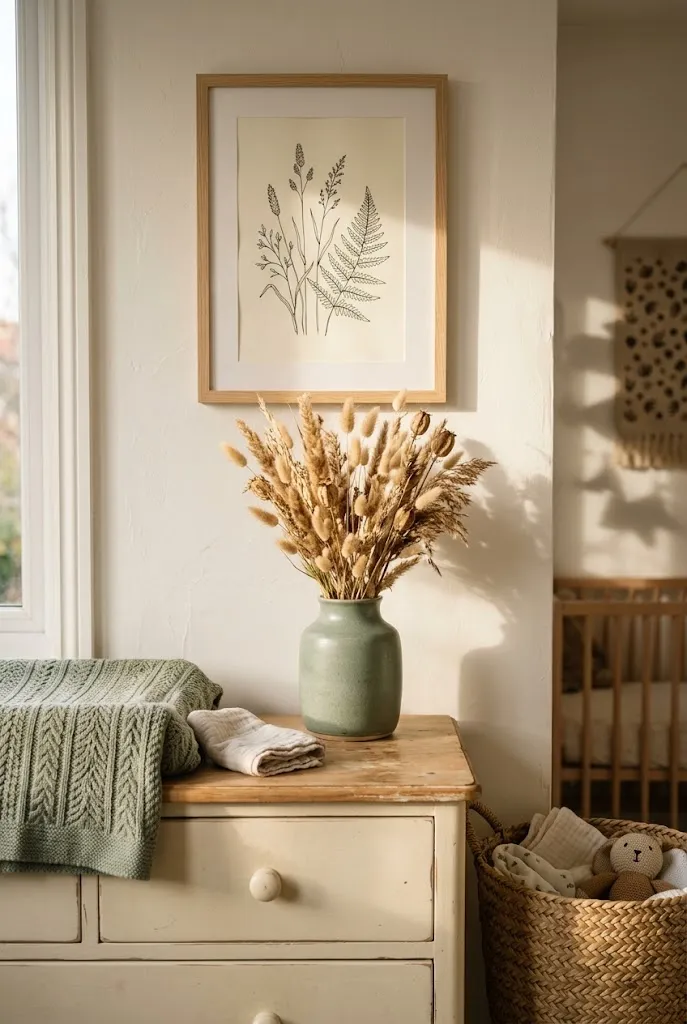
Neutral doesn’t have to mean colorless. A few touches of muted sage in a knit blanket, a ceramic vase, or a framed botanical print add life while staying quiet. Sage works well with warm woods and creamy whites, and it feels gender-neutral without being a default.
Keep the green dusty and gray-leaning rather than bright. Limit it to two or three small items so it reads as an accent. If you want a living touch, a faux plant out of reach keeps things easy, since many common houseplants are not safe for kids or pets.
13. Create a Simple Gallery Wall in Wood Frames
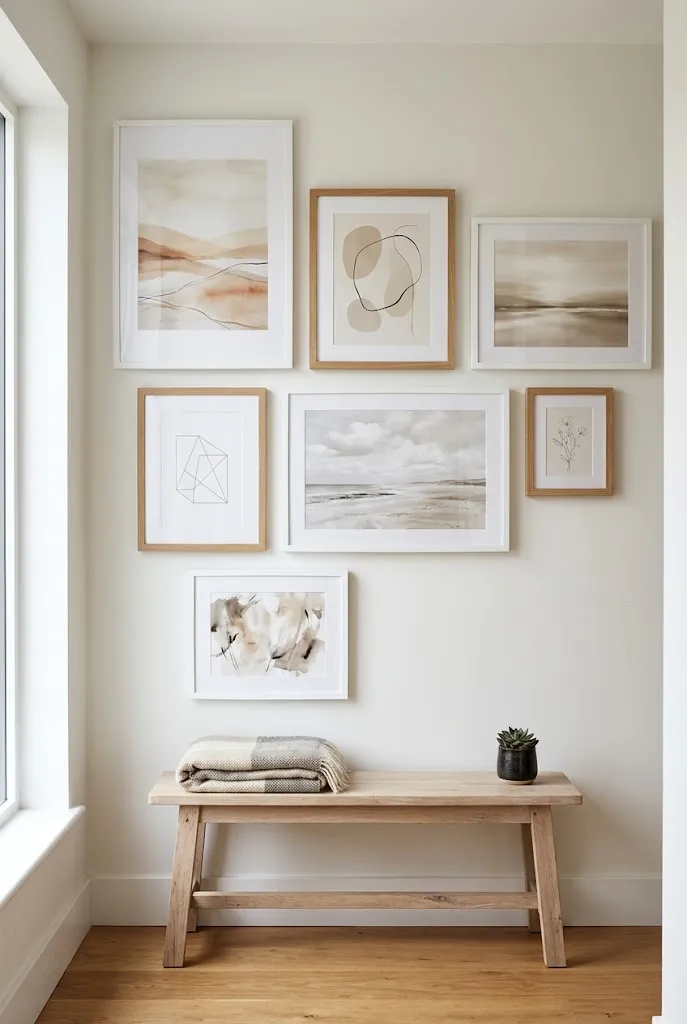
A tidy cluster of line drawings, black-and-white photography, and soft abstract prints makes a wall feel finished. Use frames in oak, white, or matte black, and keep the artwork in one tonal family so it reads as a set.
Hang pieces above a dresser or chair rather than directly over the crib. Use lightweight frames with acrylic instead of glass, which is safer in a room with a future toddler. Plan the layout on the floor first, then transfer it to the wall with paper templates.
Quick Facts
Best For: Blank wall above a dresser or glider
Investment: Accessible to moderate
Visual Effect: Adds personality without color
14. Tuck a Nursery Corner Into a Primary Bedroom
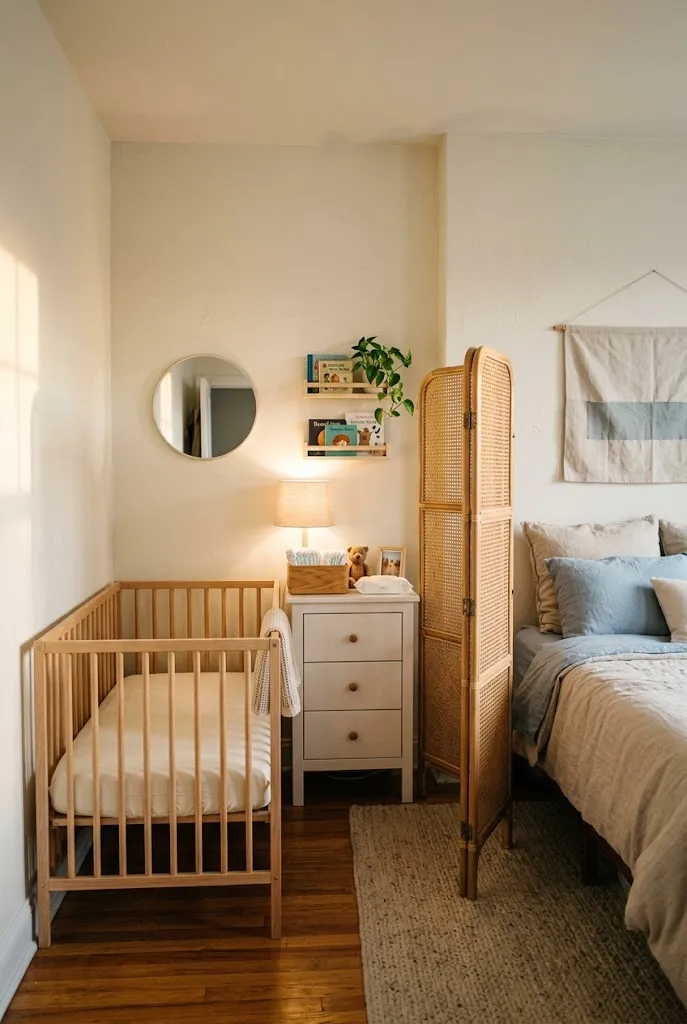
Not every baby gets a separate room. A corner of the parents’ bedroom works with a compact crib, a small dresser, and a screen or open shelf as a soft divider. Keep the colors in the same family as the main room so the two areas feel connected.
In practice, this works best when the crib sits against a wall with enough room to reach in comfortably. A slim bookshelf or a rattan folding screen creates separation without blocking airflow or light. A lamp with a warm dimmable bulb helps with night feedings without waking everyone.
- Choose a mini or standard crib that fits your corner.
- Use vertical storage, such as wall shelves above the dresser.
- Keep the nursery items in matching baskets to avoid a cluttered look.
15. Layer the Lighting for Night Feeds and Daytime Play
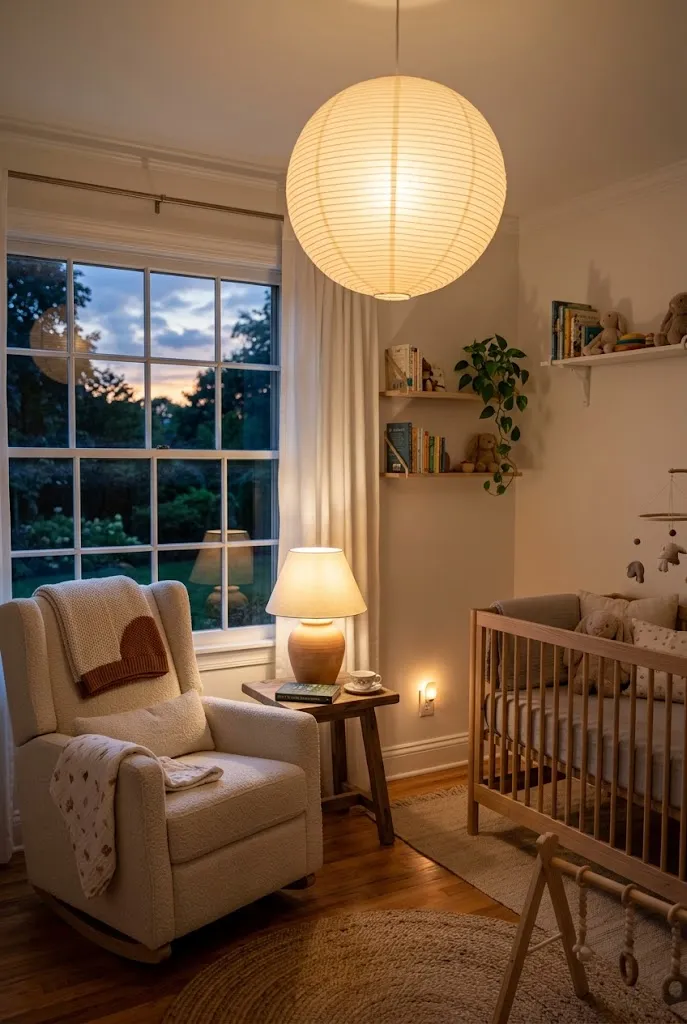
One overhead light rarely suits a nursery. Layering gives you control: a dimmable ceiling fixture for general light, a lamp near the chair for reading or feeding, and a soft night-light for quick check-ins.
Use warm bulbs in the 2700K range for the evening, which look gentler than cool white. A dimmer switch is one of the more useful low-cost upgrades. Choose lamps with stable bases and tuck cords behind furniture so a toddler can’t pull them.
Editor’s Note: A paper or linen pendant shade diffuses light well and adds texture overhead at a modest price.
16. Ground the Palette With a Few Matte Black Details
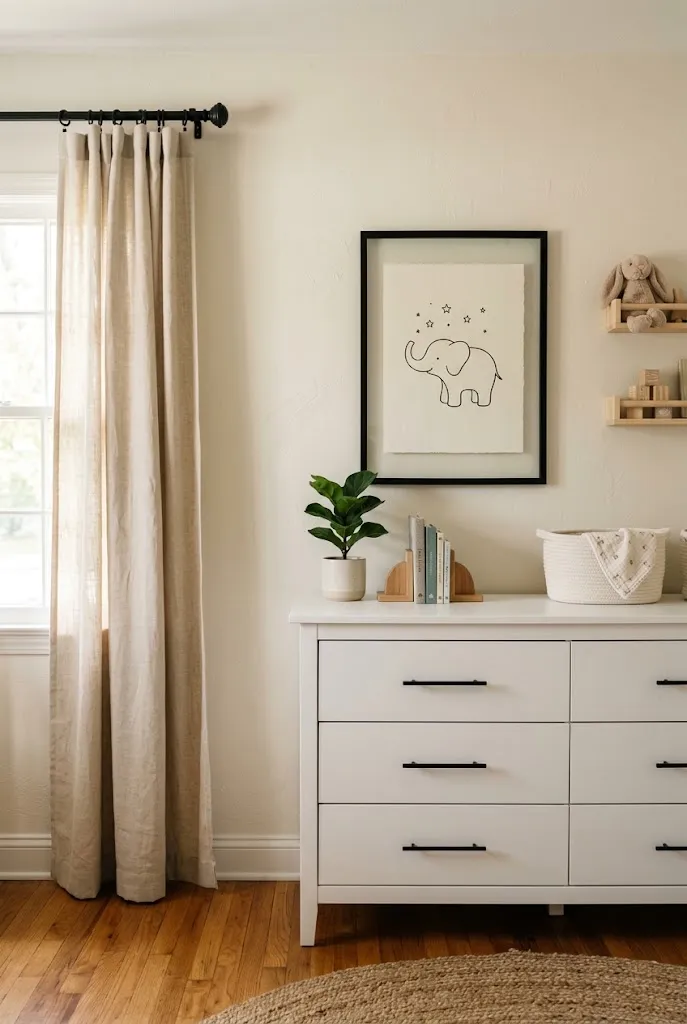
Cream, oat, and wood can start to feel soft to the point of washed out. A few matte black accents, such as drawer pulls, a picture frame, a curtain rod, or a slim lamp base, give the eye a place to rest and add definition.
Keep it to three or four small touches. Too many black elements can feel stark in a baby’s room, and the contrast works best when it appears in thin lines rather than heavy blocks.
| Touch | Effect | Cost Level |
|---|---|---|
| Black drawer pulls | Sharpens furniture lines | Low |
| Black curtain rod | Frames the window | Low to moderate |
| Black-framed print | Adds a graphic anchor | Low |
17. Go Scandinavian With Pale Birch and Clean Lines
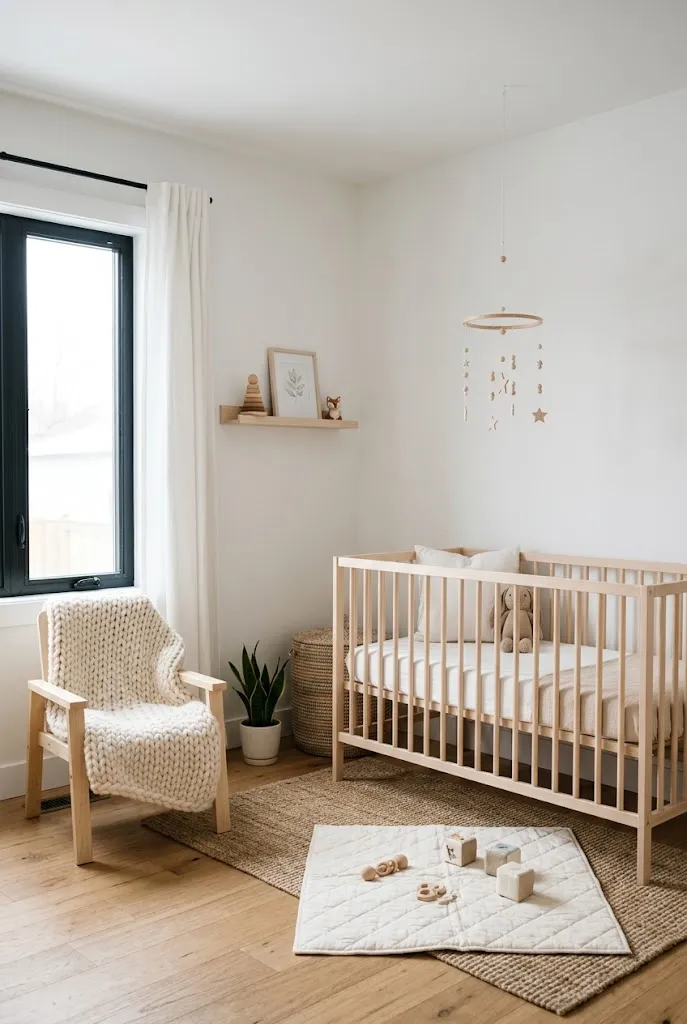
Light birch or ash furniture, simple silhouettes, and plenty of negative space create a quiet, airy room. A Scandinavian approach suits small nurseries because it avoids visual weight, and the furniture usually transitions well into a child’s room.
Stay with one wood tone for the main pieces, then vary textures through wool, cotton, and linen. A round wooden mobile or a few hand-turned toys add character without crowding the room.
Do: Leave some wall area empty so the room breathes.
Don’t: Mix three or four different wood tones unless you want a more eclectic look.
18. Turn the Closet Into Organized Nursery Storage
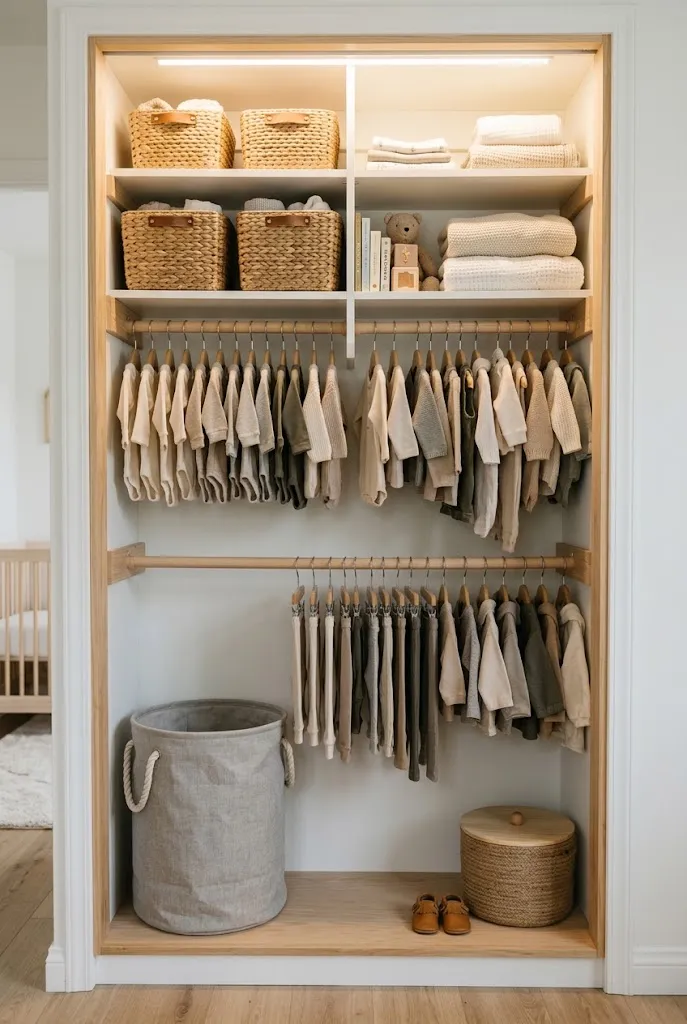
A standard closet is often the most underused storage in a nursery. Replace a single rod with a double-hang setup, then add shelves above and stackable bins below. Small clothing needs less hanging height, so a lower second rod increases capacity.
Label bins with picture or color cues rather than words for quick sorting. Store off-season sizes on the top shelf, and keep the items you reach for daily at waist level. As your child grows, lower the rod and shelves so they can choose clothes themselves.
- Remove the closet doors for a more open feel, or swap in a linen curtain.
- Use slim, matching hangers for a tidy appearance.
- Add a small laundry hamper at the base.
19. Make a Soft Play Corner With a Floor Mat and Low Mirror
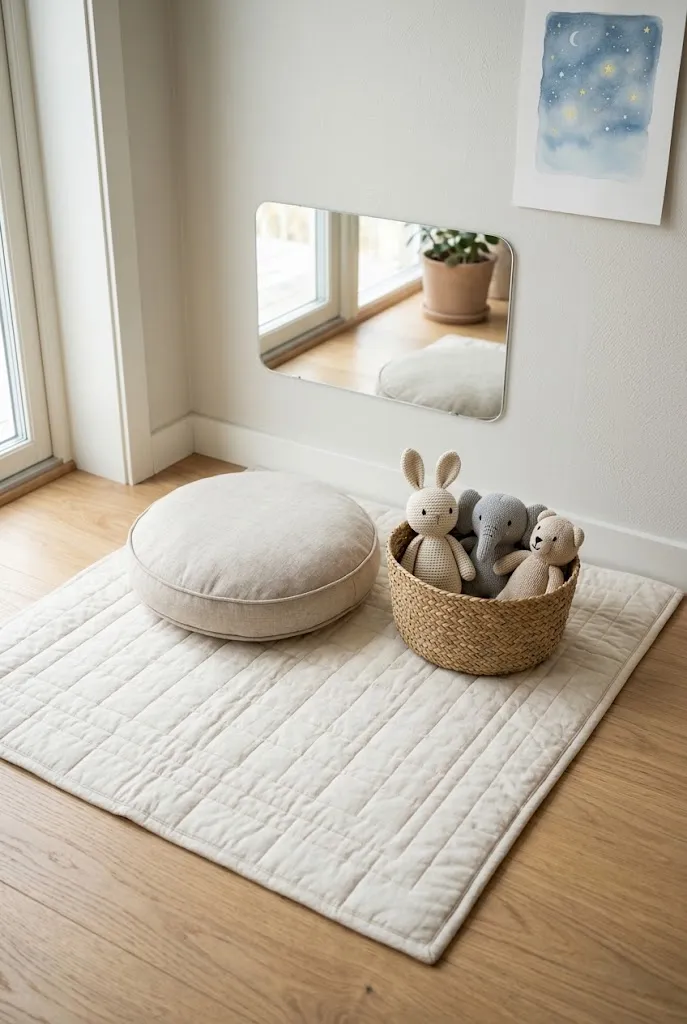
Once a baby starts rolling and crawling, floor time becomes a main activity. A play mat in a neutral gray, cream, or natural wood-look foam gives them a comfortable surface, and a wall-mounted, shatterproof baby-safe mirror encourages them to look and reach.
Keep the corner simple: the mat, a basket of a few toys, and a low cushion for resting. Choose a mat with no loose pieces for infants, and check the manufacturer’s age guidance for any toy.
Common Mistake: Filling the play space with too many toys.
Better Approach: Offer a few at a time and rotate them. A smaller selection holds attention better and keeps the nursery calm.
20. Plan the Toddler-Bed Switch Ahead of Time
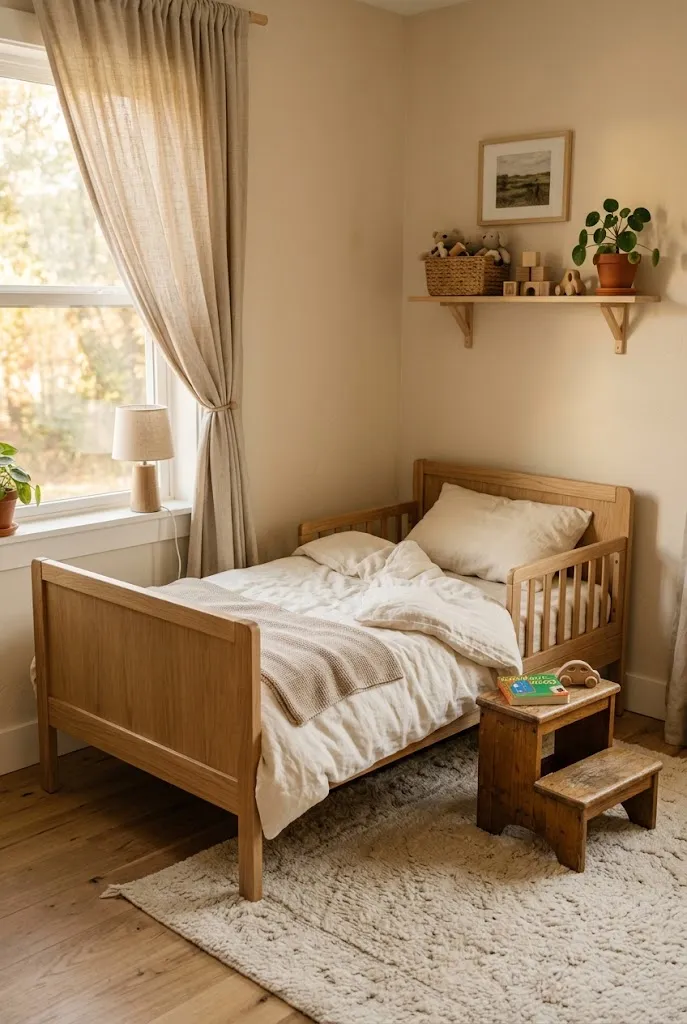
Moving from crib to toddler bed is easier when the room is already set up for it. Most children make the change somewhere in the toddler years, and there’s no single right age, so follow your child’s readiness and your pediatrician’s guidance.
- Check the crib’s conversion instructions and gather any required hardware.
- Move the bed to a spot away from windows, cords, and heavy furniture.
- Add a soft rug beside the bed and keep the floor clear.
- Keep bedding simple and age-appropriate, and follow current safe-sleep guidance for your child’s age.
Keeping the same wall color, curtains, and lighting makes the change feel familiar instead of dramatic.
21. Style the Shelf With Heirlooms and Handmade Pieces
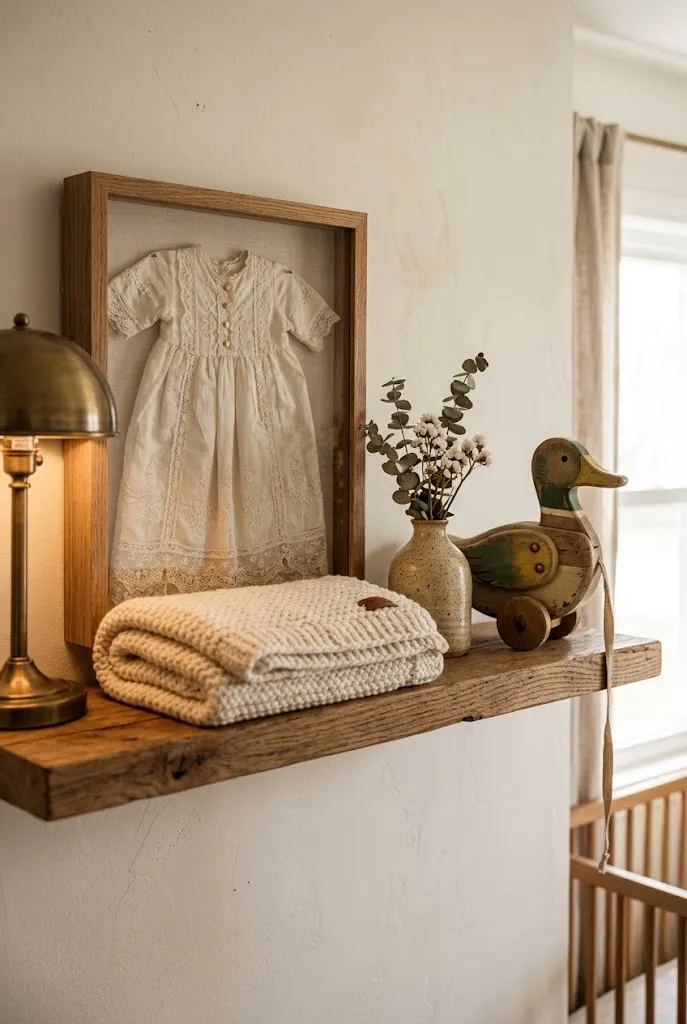
Personal items give a neutral room character that no store-bought set can. A christening gown in a frame, a hand-knit blanket from a relative, a small pottery piece, or a childhood book from a parent adds warmth and story without any extra color.
Keep display items on a high shelf where a toddler can’t reach them, and rotate them with the seasons. A mix of old and new, such as a vintage wooden toy beside a modern ceramic vase, avoids the catalog look.
Editor’s Note: If a keepsake is fragile or valuable, use a closed shadow box rather than leaving it on open display.
Choosing Where to Start
You don’t need all 21 ideas at once. If budget is tight, begin with the paint, rug, and lighting, which shape the room more than any single piece of furniture. If you’re planning for the long term, the convertible crib, dresser, and wall-anchored shelving come next, followed by the details that add personality.
Whatever you choose, keep sleep surfaces bare, anchor tall furniture, and keep cords out of reach. A neutral room can stay calm and comfortable through the baby stage and still suit your child at age three.