
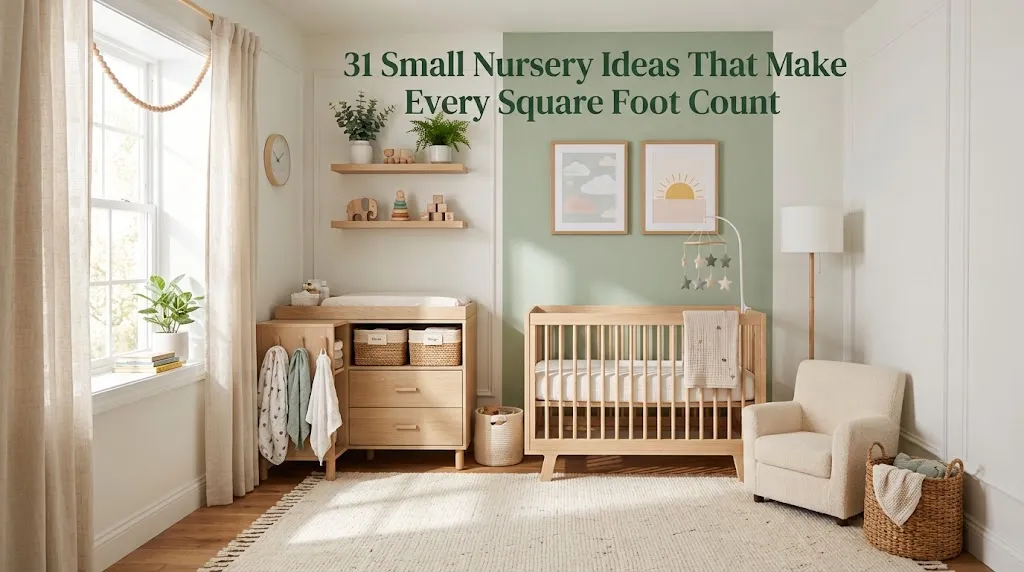
31 Small Nursery Ideas That Make Every Square Foot Count
A small nursery has to hold a crib, diapers, tiny laundry, books, and a chair for 3 a.m. feedings, often in a room that was meant to be an office or a guest closet. The good news is that small rooms respond well to a few smart decisions: where the crib goes, how storage works, and which pieces do two jobs. These small nursery ideas cover apartments, starter homes, and older houses with awkward corners. They run from renter-friendly fixes to custom builds, and most keep the floor clear and the room calm. Use them to pick a layout first, then layer in color and storage.
1. Tuck the Crib Into a Corner
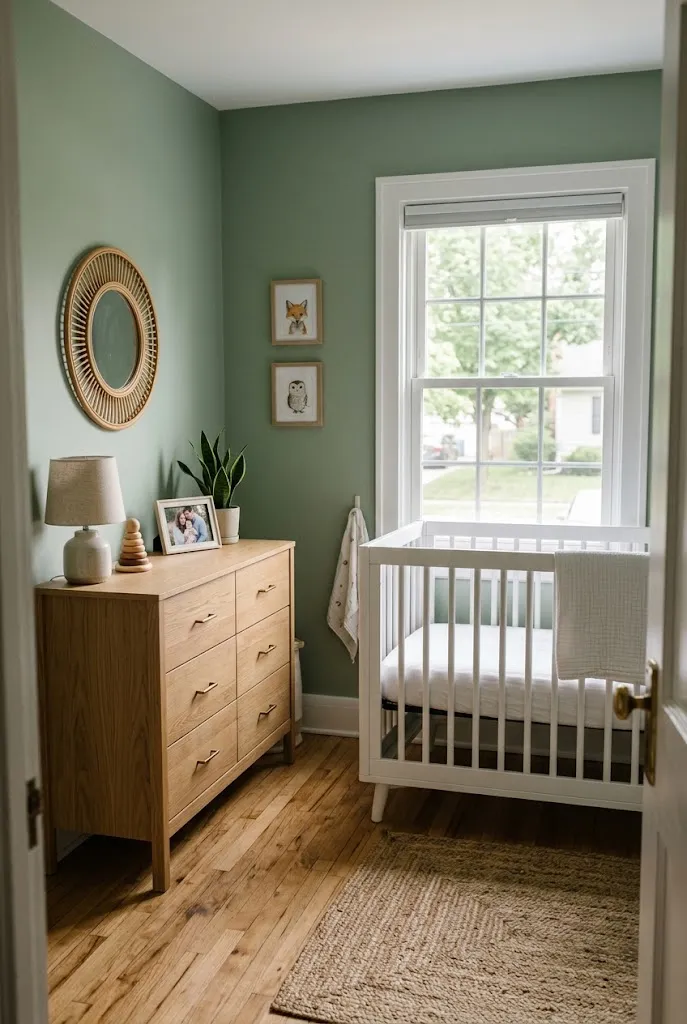
Pushing the crib into a corner frees the center of the room, and two solid walls make a small space feel more organized. Measure the room before buying, since a standard crib and a mini crib leave very different walking paths.
- Leave at least a comfortable arm’s reach on the open side for lifting the baby.
- Keep the crib away from windows, blind cords, and heating vents.
- Choose a slim-profile model with open slats to keep sightlines clear.
Editor’s Note: Corner placement also makes the room read as larger from the doorway, because the longest wall stays uninterrupted.
2. Turn a Dresser Into the Changing Station
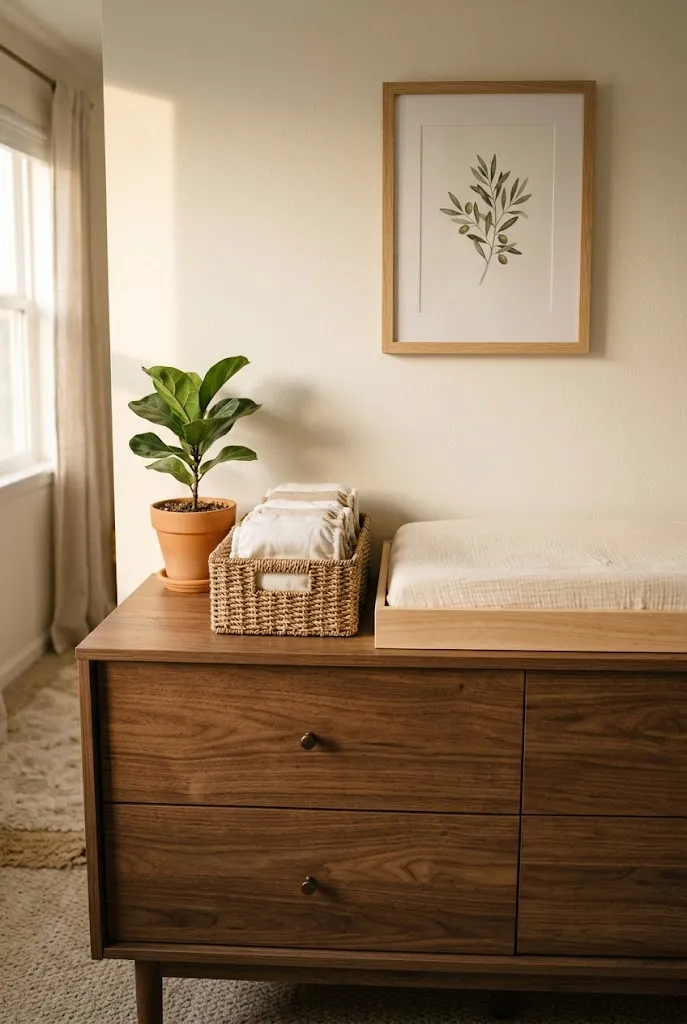
A wide, low dresser with a contoured changing pad on top replaces a separate changing table and stays useful for years. Drawers hold diapers, wipes, and sleepers within one reach.
- Pick a dresser about 30–34 inches tall so you aren’t bending at the back.
- Strap the changing pad to the top following its instructions.
- Anchor the dresser to the wall with furniture straps.
Put the daily items in open baskets on a shelf above the pad, and keep creams and wipes just within reach but out of the baby’s.
3. Double the Closet With Two Rods and Shelves
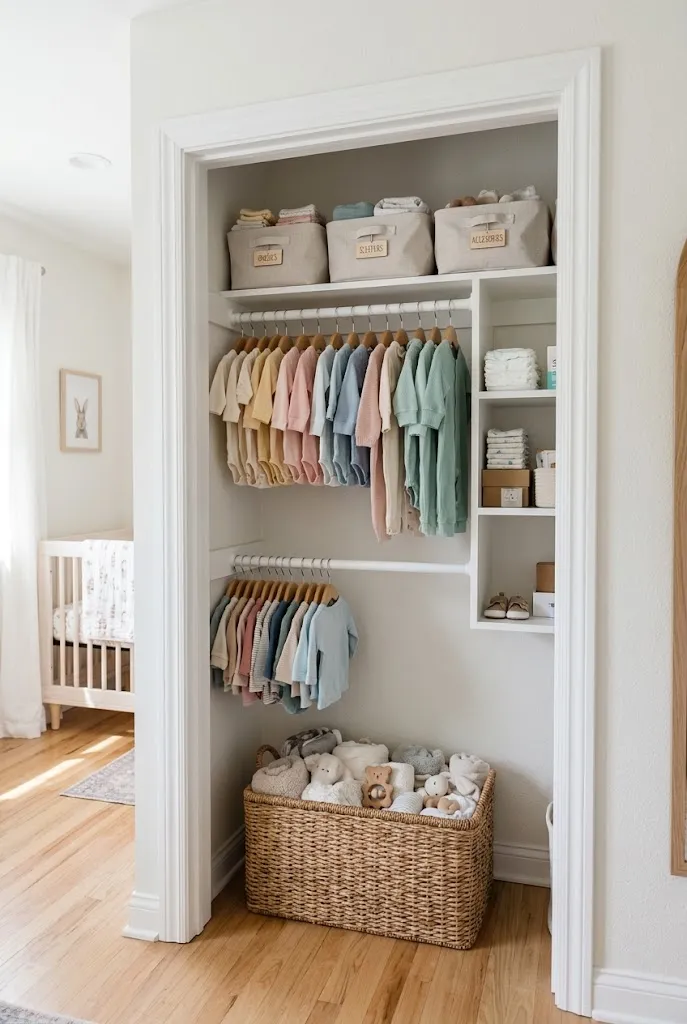
Baby clothes are short, so a closet can hold twice as much with a second rod hung below the first. Add a shelf above for bins and a basket on the floor for shoes and extras.
| Setup | Advantage | Best Fit |
|---|---|---|
| Two stacked rods | Doubles hanging space for small garments | Standard reach-in closets |
| Hanging cubbies | Sorts sizes and seasons | Renters who can’t modify the closet |
| Removable doors | Opens up the room visually | Closets next to the crib wall |
Label bins by size (3–6 months, 6–9 months) so outgrown clothes leave the rotation easily.
4. Use Picture Ledges Instead of a Bookshelf
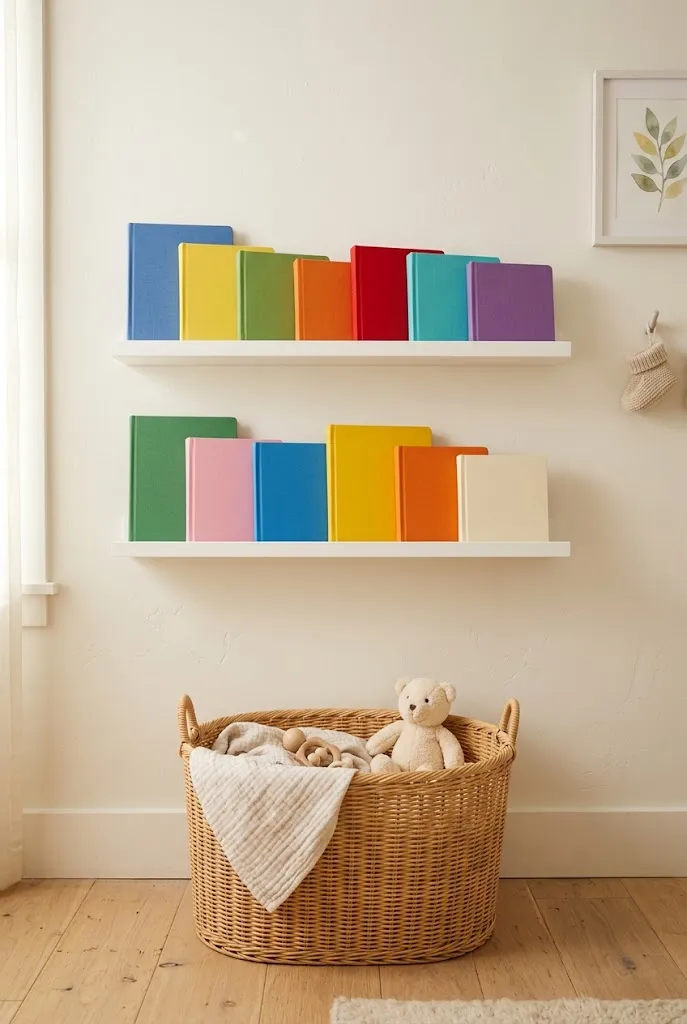
Narrow picture ledges hold front-facing books at about 3–4 inches deep, so the covers become the decor. They take far less floor space than a bookcase and keep titles visible for small hands later.
Mount them on a wall away from the crib, never above it, and into studs or with rated anchors. Stagger two ledges at different heights to avoid a rigid grid.
Common Mistake: Placing heavy objects on shallow ledges. Better Approach: Limit them to lightweight board books and soft decor.
5. Build a Nursery Nook in the Parent Bedroom
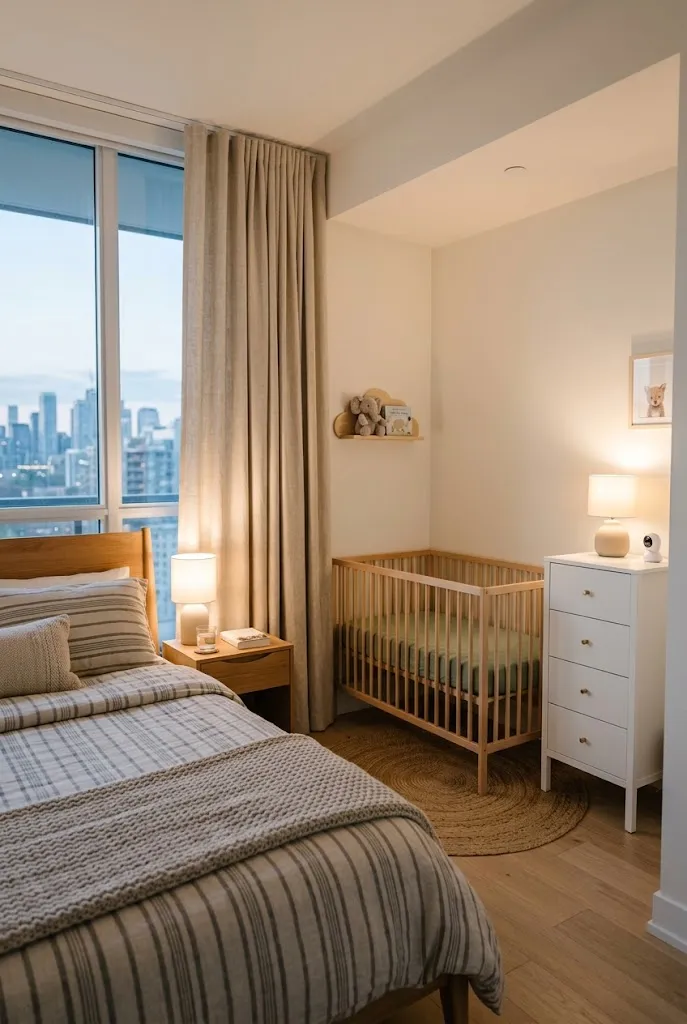
When there’s no spare room, a corner of the primary bedroom can serve as the baby’s space. Pediatric guidance generally favors room-sharing in the early months, so a compact nursery nook is a practical setup, not a compromise.
Define the zone with a rug, a slim dresser, and a curtain or open shelf as a soft divider. Keep the palette close to the bedroom’s so the two areas feel connected.
6. Choose a Tall, Narrow Bookcase
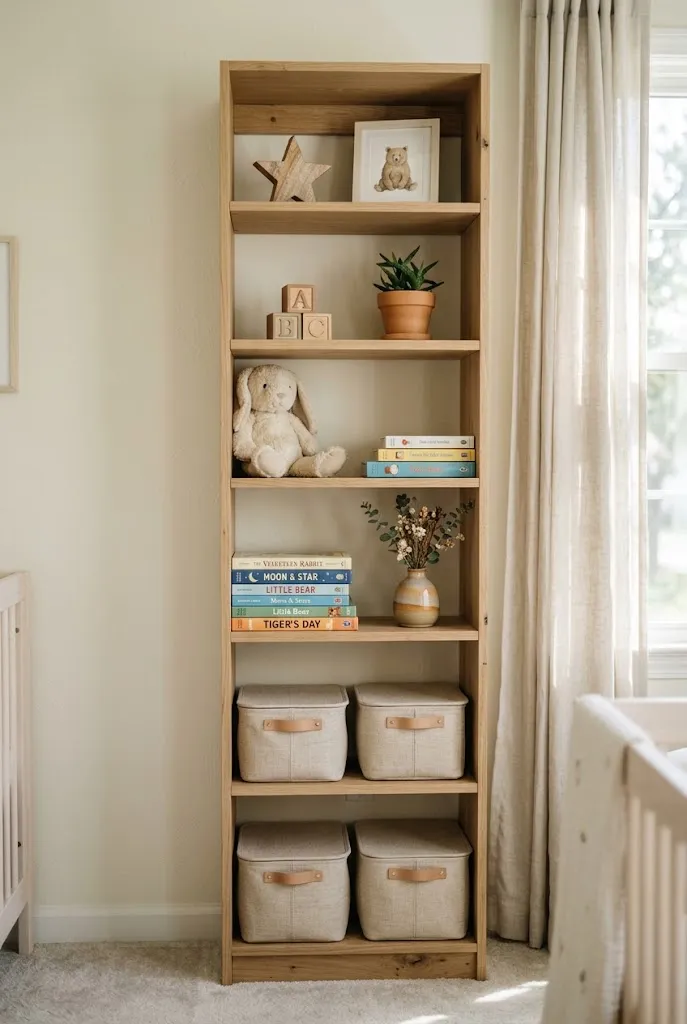
Where floor space is tight, go vertical. A tall, narrow bookcase uses only about 12 inches of floor depth but offers five or six shelves for diapers, baskets, and books. Anchor it to the wall.
- Heavy items go low, lighter decor high.
- Use closed baskets on lower shelves to hide clutter.
- Leave one or two shelves partly empty so the unit doesn’t feel heavy.
7. Add Storage Under the Crib
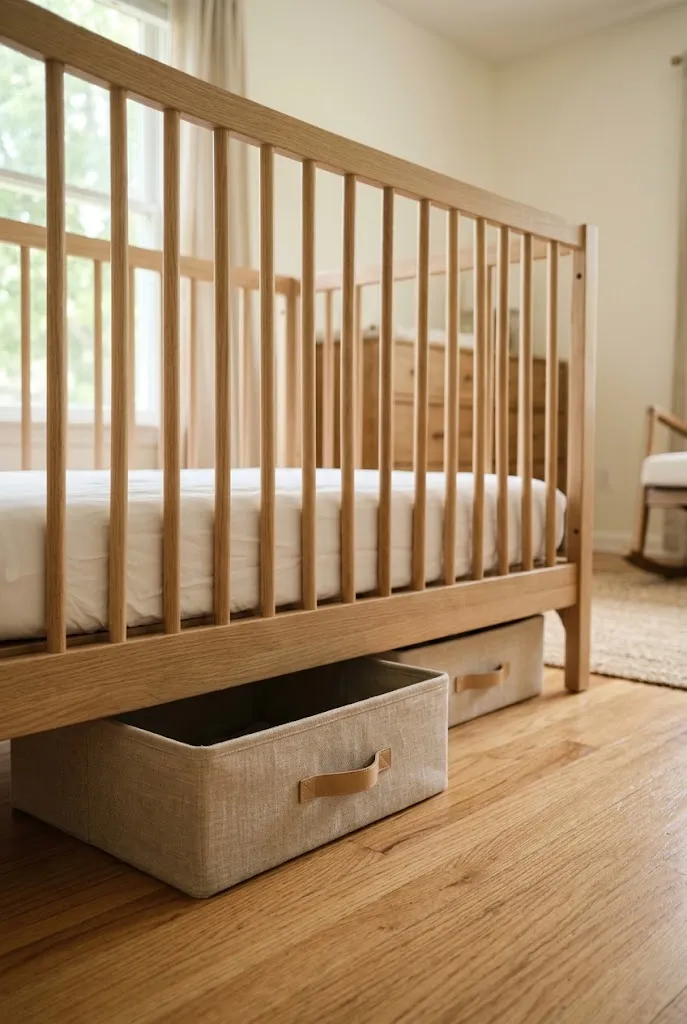
Many cribs have an adjustable mattress platform that leaves a hollow underneath, and flat bins or drawers can use that space. Check the crib manufacturer’s instructions first, because some models need the area left clear.
Good candidates: flat bed-storage boxes with handles, rolling drawers on caster wheels, or vacuum bags of out-of-season clothes. Keep the crib skirt out of the picture; it isn’t needed and tends to collect dust.
8. Paint With Soft, Light Colors
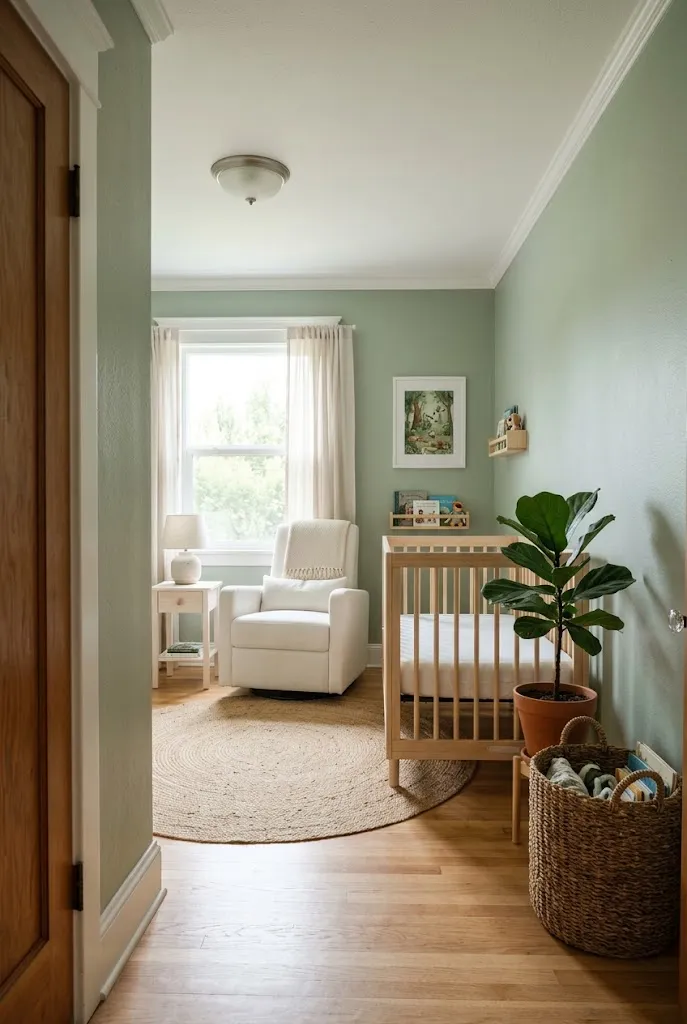
Light, low-contrast walls help a small room feel open. Warm white, soft sage, and pale blue-gray are reliable choices, and a low-VOC paint is a sensible pick for a room the baby will sleep in.
| Color | Effect | Best Fit |
|---|---|---|
| Warm white | Brightens and expands | Rooms with little natural light |
| Soft sage | Calm, natural backdrop | Rooms with wood furniture |
| Pale blue-gray | Cool, airy feel | Sunny, south-facing rooms |
Paint the trim and ceiling a similar tone to blur the room’s edges. Let paint cure and air out well before the baby arrives.
9. Peel-and-Stick Wallpaper Behind the Crib
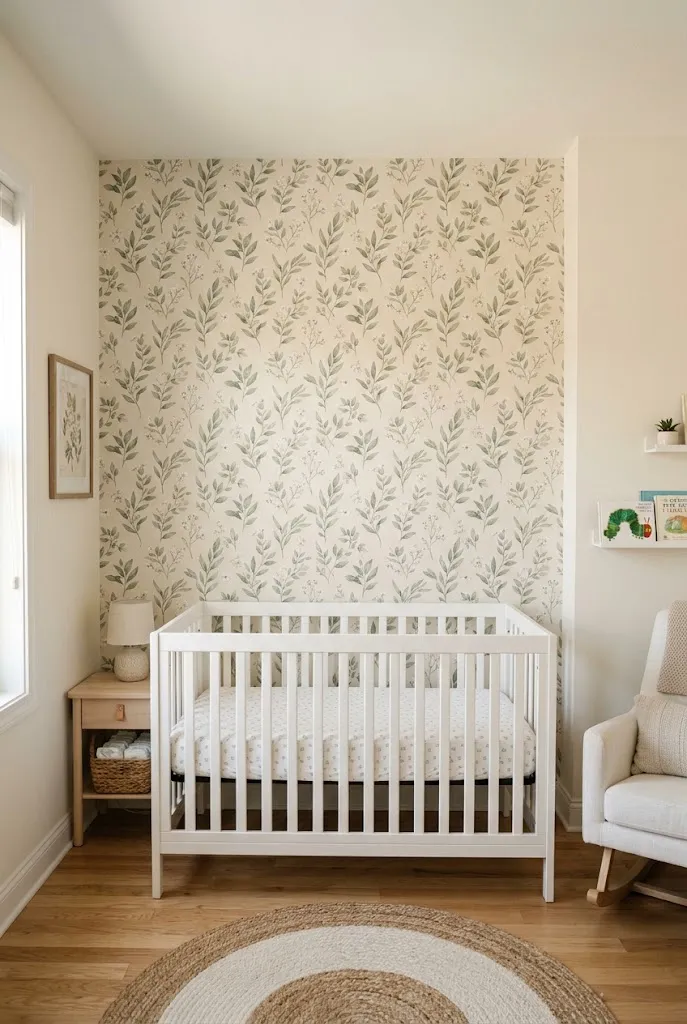
Renter-friendly wallpaper adds personality without a permanent commitment. A single accent wall behind the crib draws the eye to one spot and away from the room’s limits.
Smaller, tonal patterns, such as tiny botanicals, soft stripes, or fine arches, read as texture. Large, high-contrast prints can make a small wall feel crowded.
Quick Tip: Clean the wall and let new paint cure for a few weeks before applying, so the adhesive holds and removes cleanly later.
10. Choose a Compact Chair Over a Full Glider
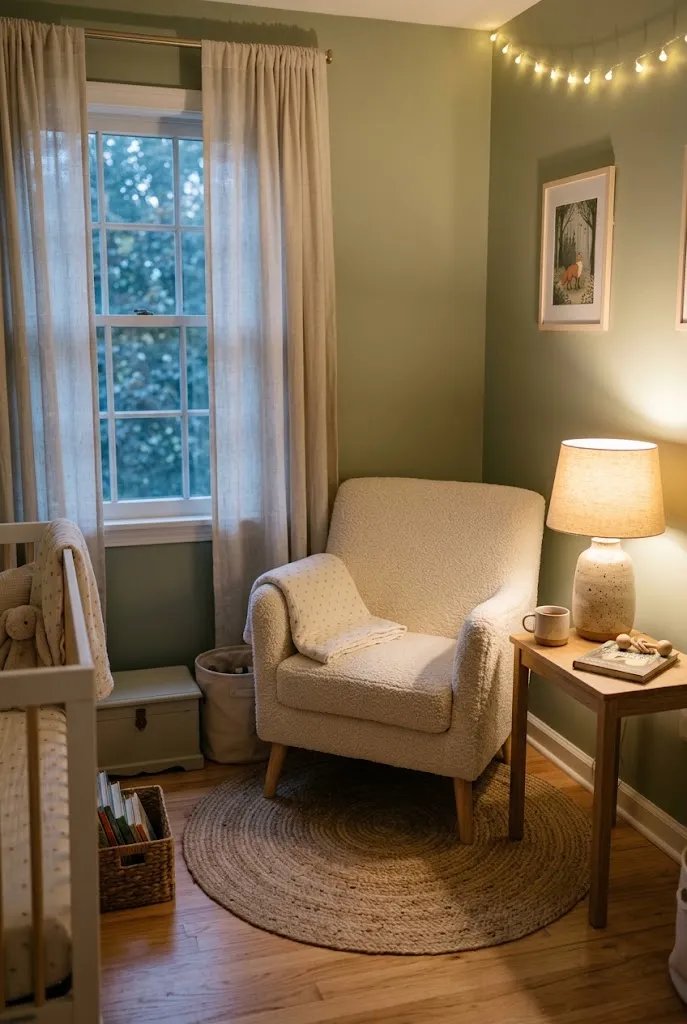
A bulky glider can eat up a quarter of a small nursery. A smaller armchair or a compact glider-recliner gives you the same place to sit and feed without crowding the crib.
| Option | Advantage | Best Fit |
|---|---|---|
| Compact armchair | Smallest footprint, easy to move | Very tight rooms |
| Slim glider | Motion for soothing, modest size | Rooms about 9 × 10 ft and up |
| Full recliner glider | Maximum comfort | Larger nurseries only |
Place the chair near a lamp and a small side table, and sit in it in the store if you can; comfort for long feedings matters more than looks.
11. Use the Back of the Door
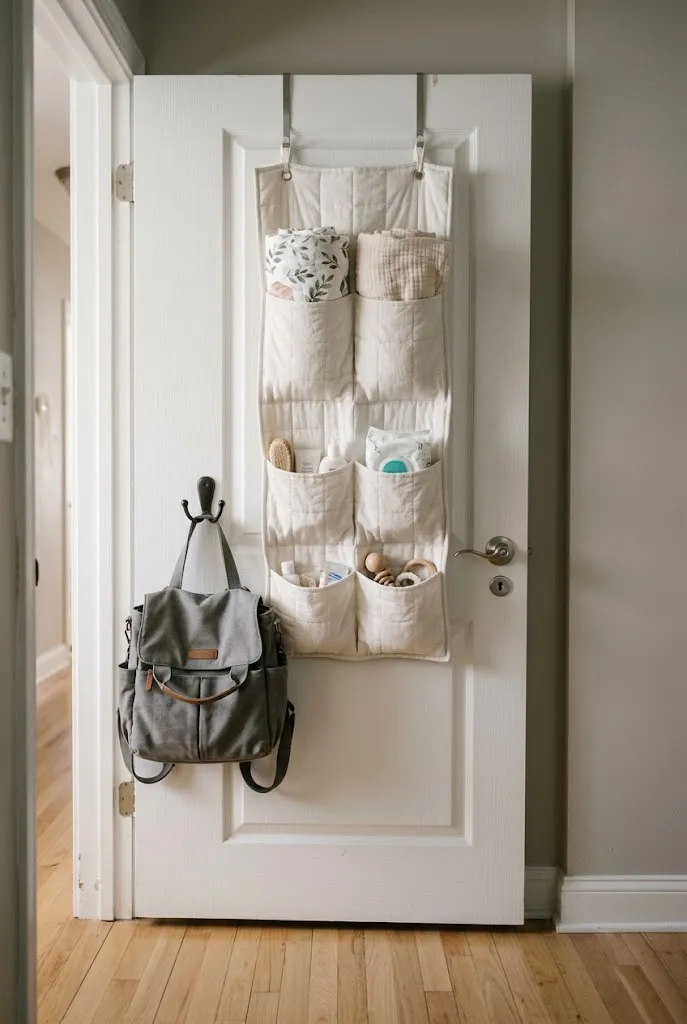
The back of the nursery door is free storage. Over-the-door hooks and fabric organizers hold swaddles, hats, spare burp cloths, and the diaper bag.
- Use sturdy hooks rated for the weight you’ll hang.
- Choose a pocket organizer for pacifiers, creams, and socks.
- Make sure the door still closes fully and quietly.
Keep heavy items low and avoid anything with long straps or cords that the baby could reach later.
12. Cube Storage With Fabric Bins
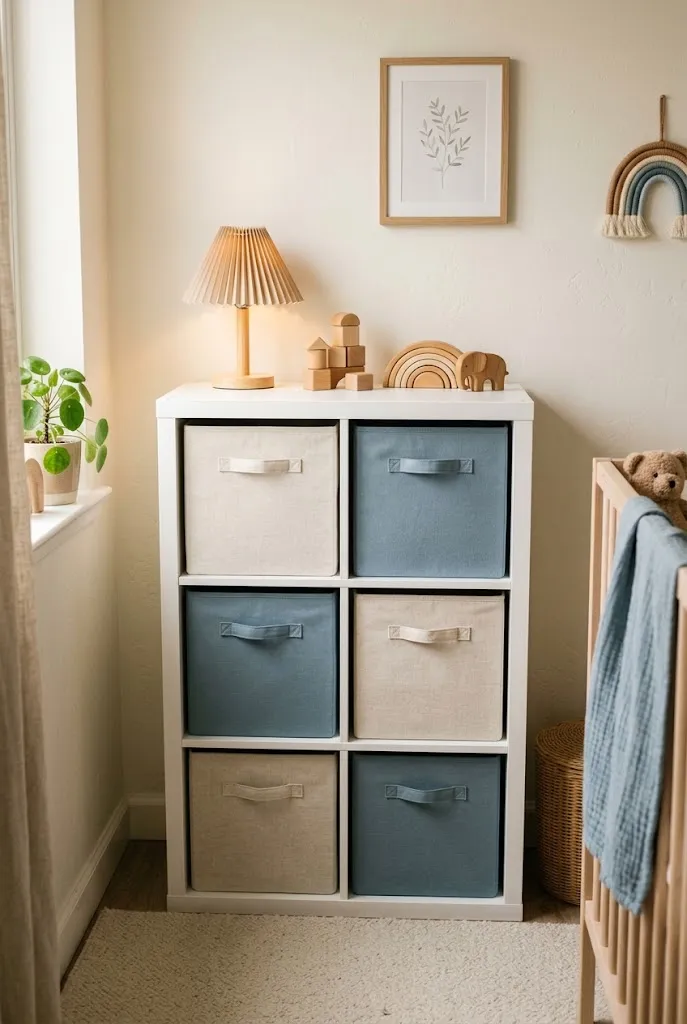
A simple cube organizer sorts toys, books, and supplies into bins that can be moved or relabeled as the baby grows. Pick a 2×2 or 2×3 unit for tight rooms.
A slightly raised top surface makes a handy place for a lamp and a few keepsakes. Anchor the unit to the wall, and choose fabric bins in two or three related colors so the shelves look intentional.
13. Pick a Crib That Converts
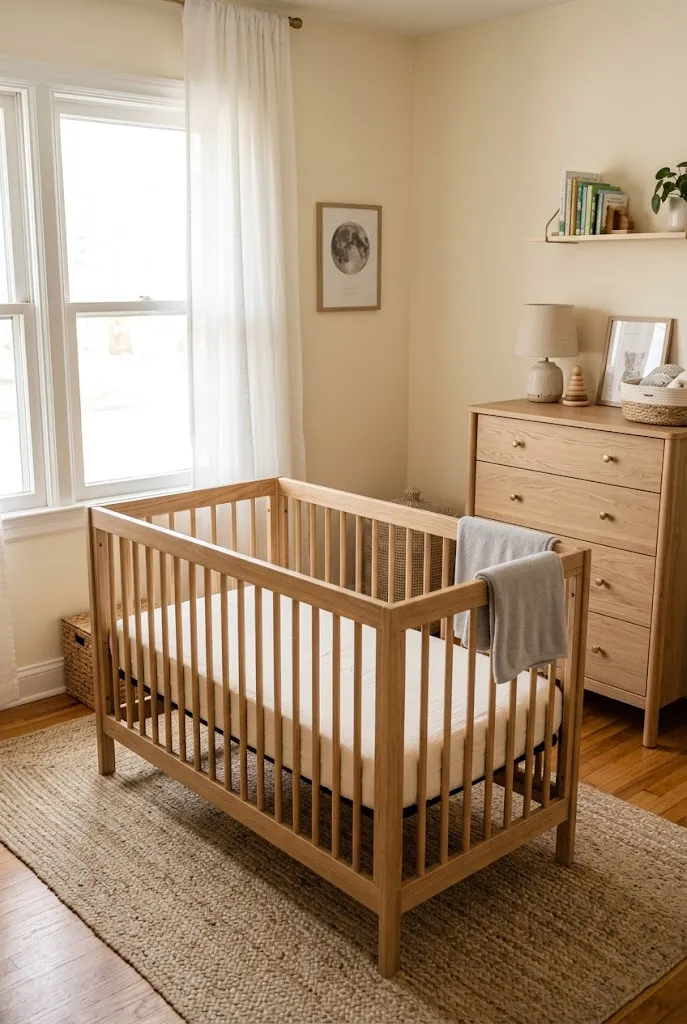
A convertible crib that becomes a toddler bed and later a daybed spreads one purchase across several years. It’s a moderate upfront cost that avoids buying twice in a small room.
Quick Facts
Best For: Long-term use in a room that can’t change much
Investment: Moderate
Visual Effect: Clean, simple lines that suit most styles
Check that the conversion kit is included, and choose a finish that matches your dresser so the room stays cohesive as the furniture shifts.
14. Work With a Sloped Ceiling
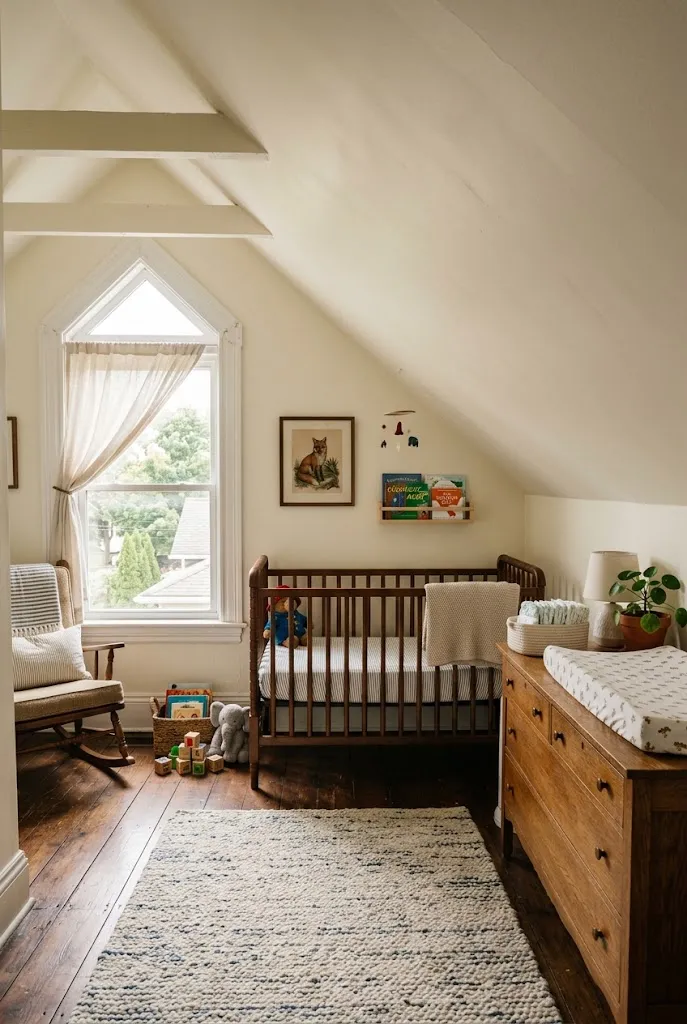
An attic or top-floor nursery with slanted walls can feel cozy rather than cramped. Put the crib where the ceiling is tallest, and use the low side for a dresser, low shelves, or a floor-level reading corner.
Painting the slope and ceiling the same color blends the angles into one soft shape. A pendant or flush mount works better than a hanging fixture in low areas.
15. Bounce Light With a Round Mirror
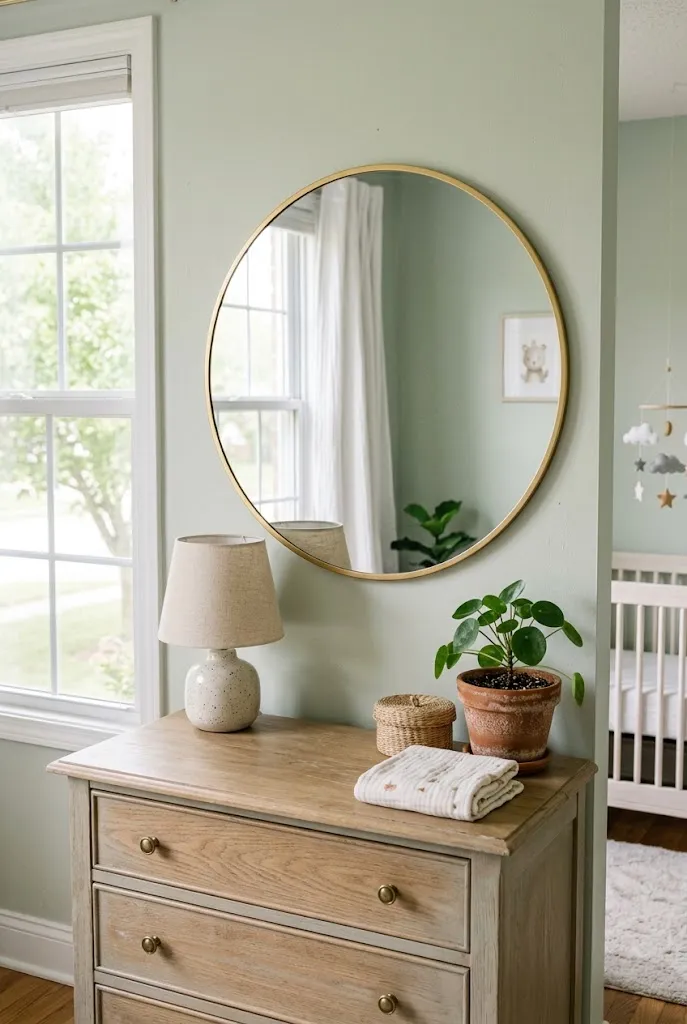
A round mirror opposite or beside a window sends daylight deeper into the room and softens the straight lines of cribs and dressers. Mount it high enough to be out of reach and securely into the wall.
Keep it away from the crib. Use a lightweight, shatter-resistant option if possible, and choose a thin frame in wood or brass so it adds light without adding bulk.
16. Layer Lighting for Night Feedings
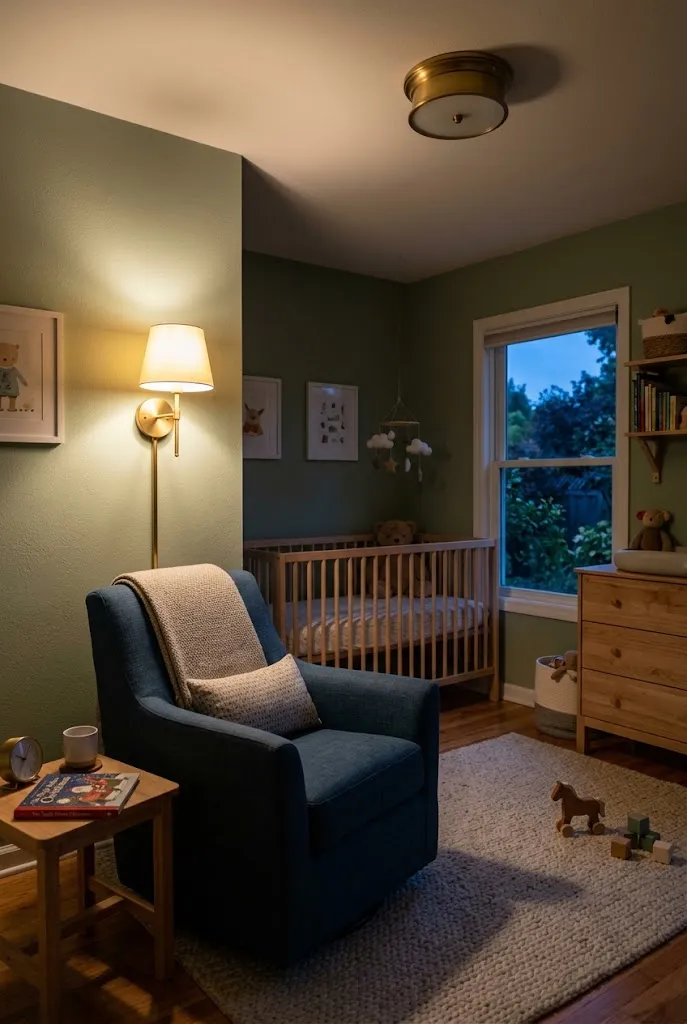
Small nurseries need light that is gentle at 3 a.m. and practical in the daytime. Combine a ceiling fixture on a dimmer, a table lamp with a warm bulb, and a plug-in wall sconce near the chair.
- Dimmable fixtures avoid waking a sleeping baby.
- Warm bulbs (around 2700K) feel softer than cool white.
- Cord covers keep wires tidy and out of reach.
17. Add Cordless Blackout Shades
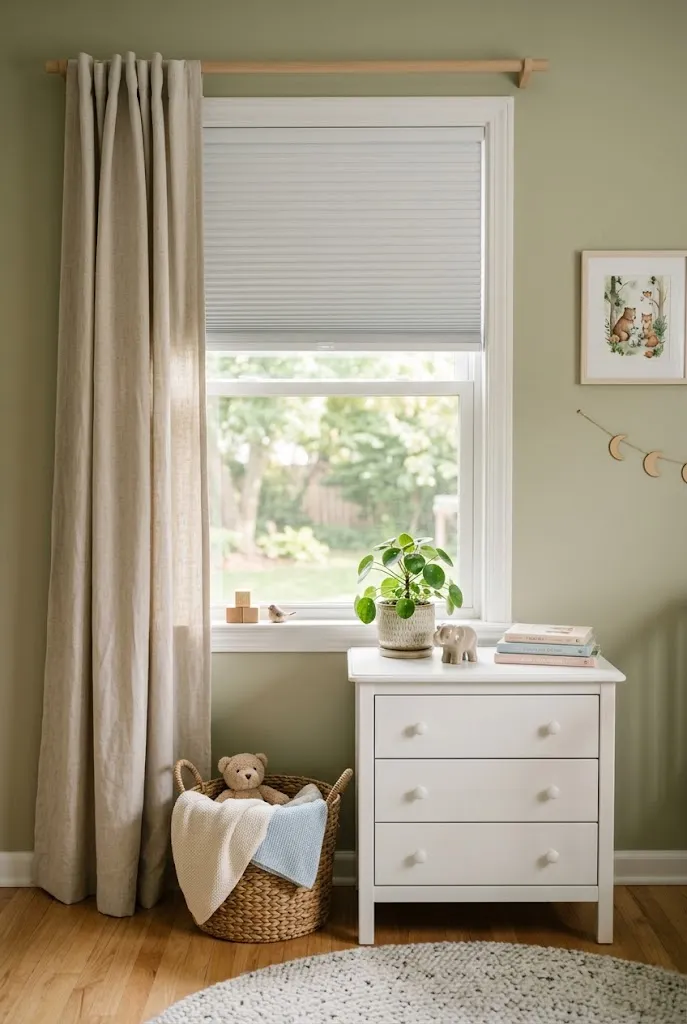
Cords from blinds are a known hazard for infants and toddlers, so cordless shades are the safer choice. Blackout lining helps with naps and early summer mornings.
- Choose cordless or motorized shades.
- Mount them inside the window frame for a clean look.
- Add a simple linen valance or drapery panel on a rod for softness.
Keep the crib and any furniture a safe distance from the window.
18. Pick the Right Rug Size
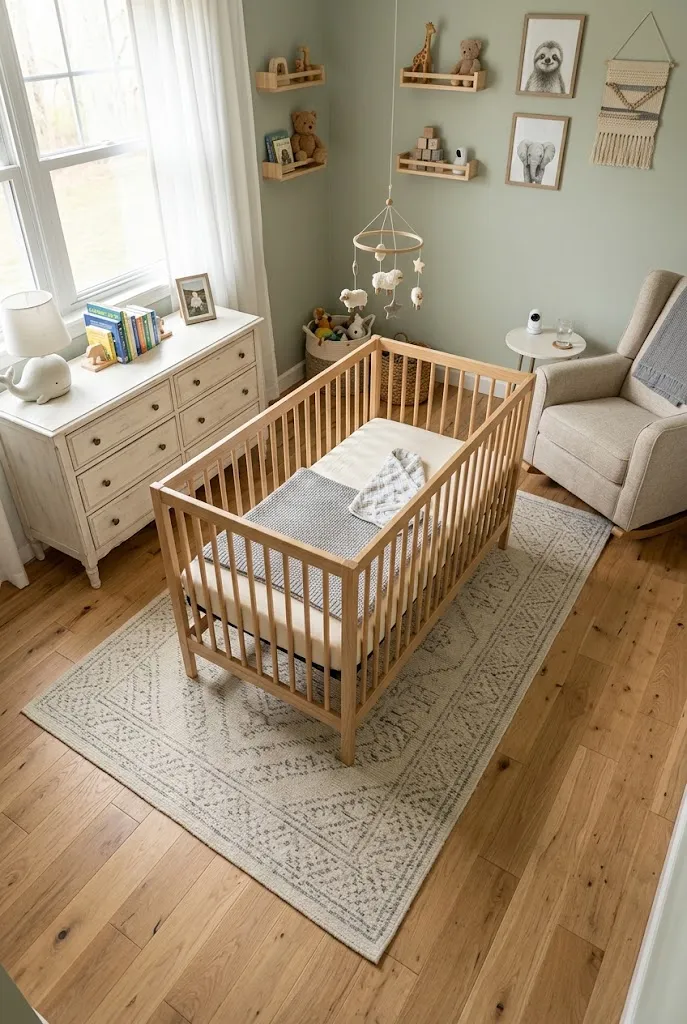
A rug that is too small makes the room feel chopped up. In a small nursery, a 5×8 rug often anchors the zone, with the crib partly on it, while a 4×6 suits very small rooms.
A non-slip pad is essential for safety. Choose a flat or low pile that’s easy to vacuum, and a washable option if budget allows.
Do: Choose a low-pile, rug-pad-backed rug in a light neutral.
Don’t: Use a thick shag that traps dust and trips new walkers later.
19. Build a Nursery Alcove With Custom Storage
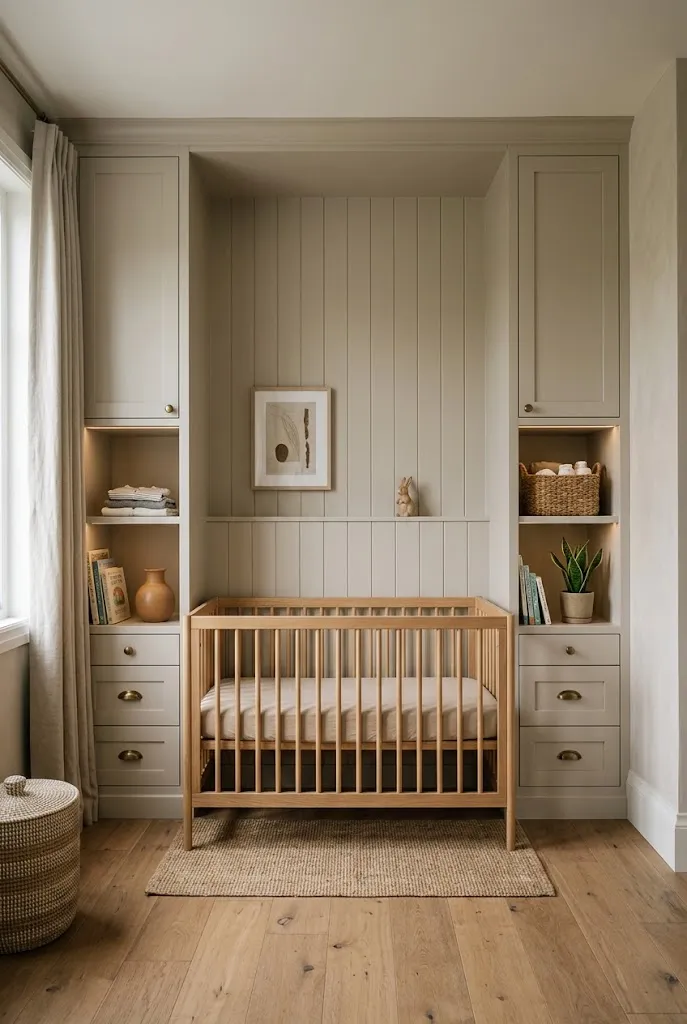
For a long-term home, built-in millwork around an alcove can hold the crib on one side, storage and a bench on the other, and a paneled back wall for a refined look. This is a premium option, but it uses the space exactly.
The principle can be borrowed more affordably with modular storage units and applied wall molding. It won’t have custom craftsmanship, but it will deliver a similar framed look.
20. Hang a Wooden Peg Rail
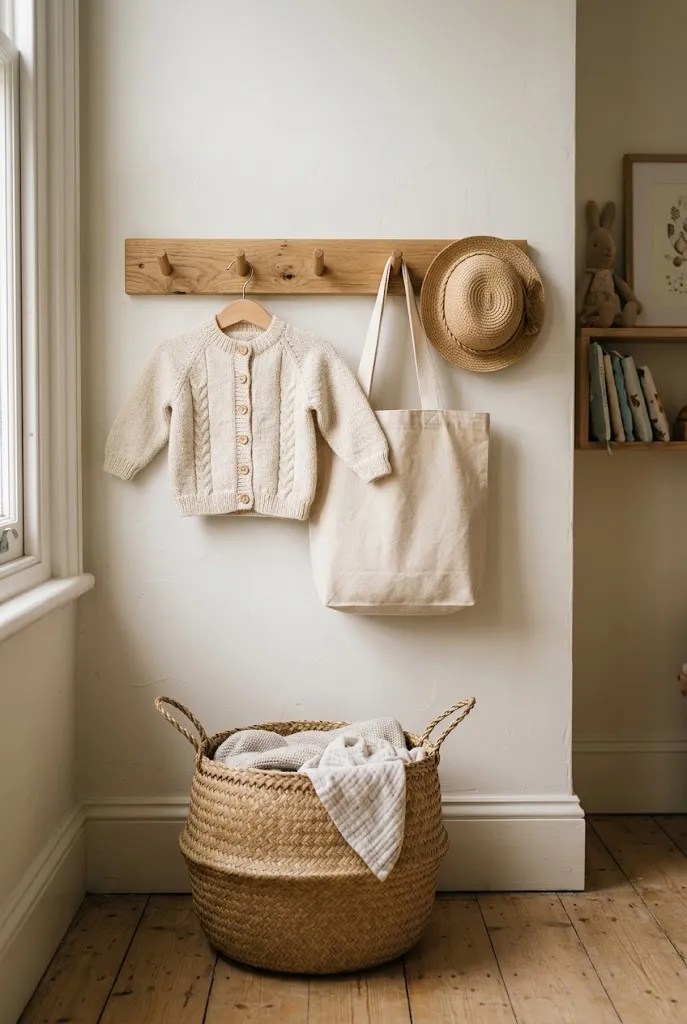
A Shaker-style peg rail gives you hooks for hats, cardigans, bags, and later, a toddler’s backpack. It’s inexpensive, easy to mount, and adds a graphic horizontal line.
Hang it at adult height for now and lower it later if you want the child to reach it. Pair it with a small basket underneath and keep heavy items near the bottom.
Quick Tip: Mount into studs for anything that will hold a loaded bag.
21. Roll a Cart for Diapering Supplies
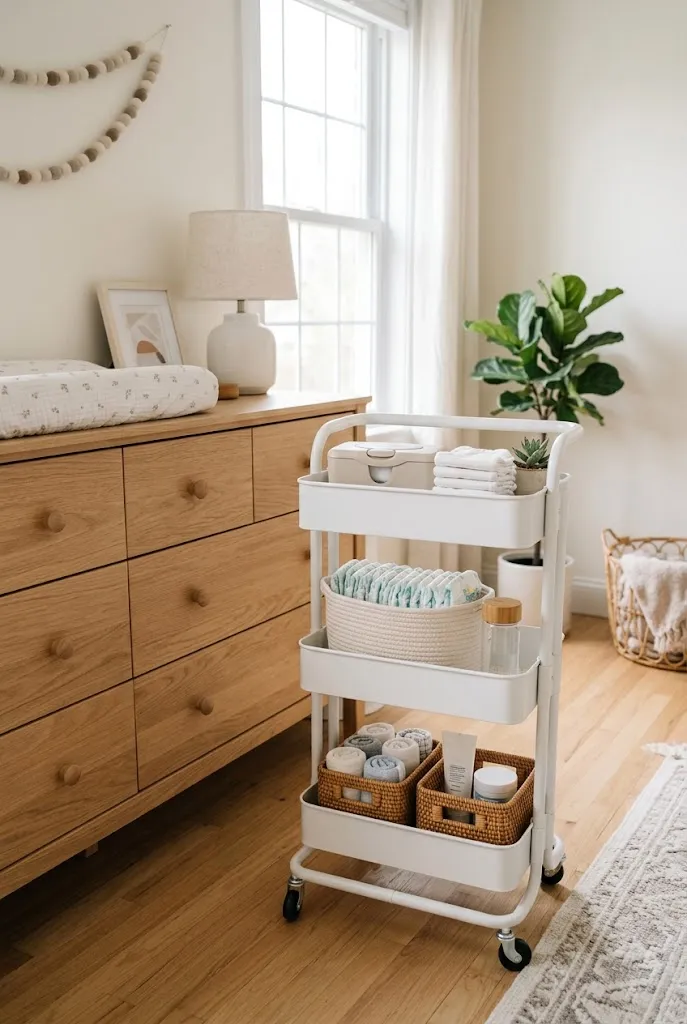
A three-tier rolling cart is a flexible caddy that moves from the changing station to the chair to the bathroom. It stores wipes, creams, diapers, and burp cloths in one place.
- Choose a slim cart that fits between the dresser and wall.
- Put the heaviest items on the bottom shelf.
- Keep creams and small items out of the baby’s reach as they grow.
22. Choose Furniture That Does Two Jobs
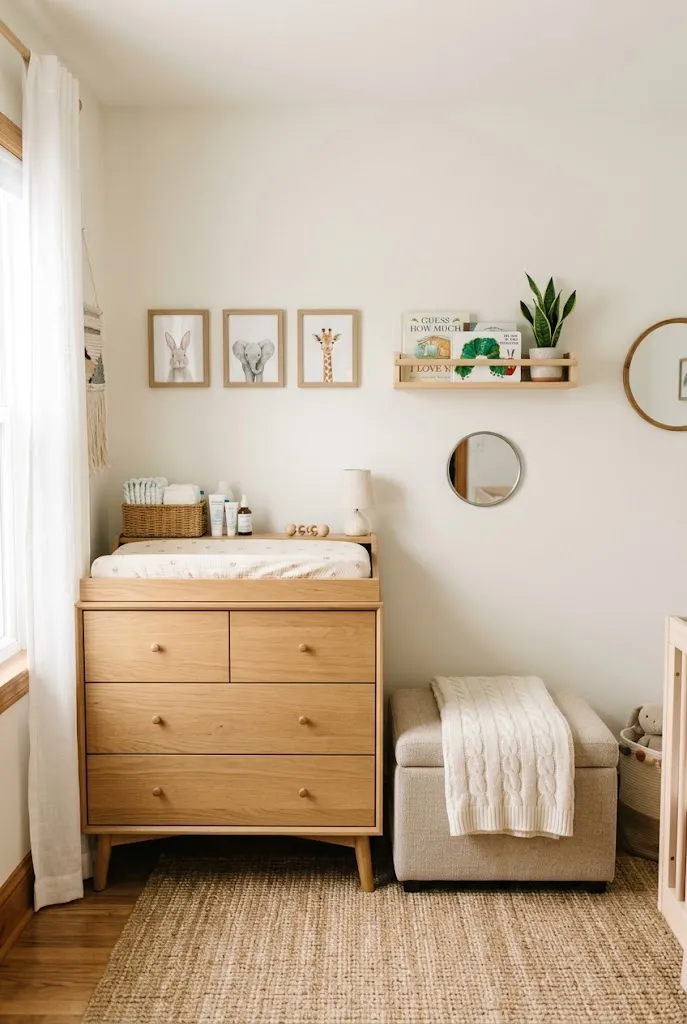
A dresser with a built-in changing top, a storage ottoman that doubles as a seat, or a bench with drawers all reduce the number of pieces the room needs.
Editor’s Note: In practice, every extra piece in a tiny room costs floor space and visual calm, so each item should earn its place with at least two uses.
Look for lower-profile pieces, since tall furniture can make a small room feel enclosed.
23. Make a Reading Nook Without a Big Chair
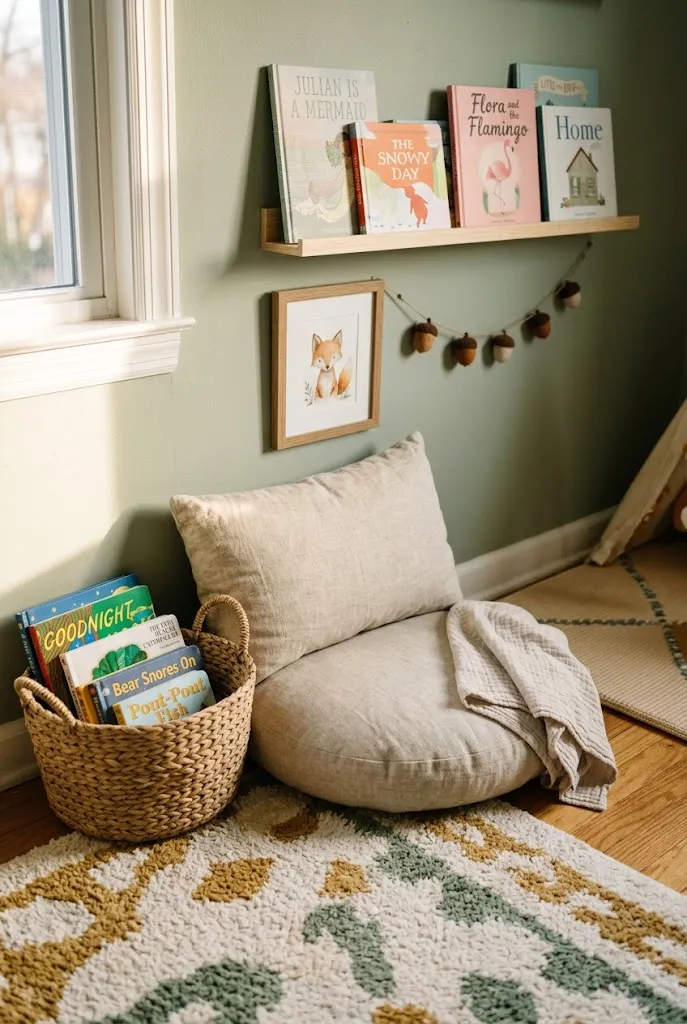
A floor cushion, a small basket of books, and a wall-mounted ledge can form a reading corner that fits in a two-foot-wide space. It works for a baby on a play mat now and a toddler later.
Use a washable cover and a thick rug pad. Place it away from the crib, ideally near natural light.
24. Bring in Natural Wood and Rattan
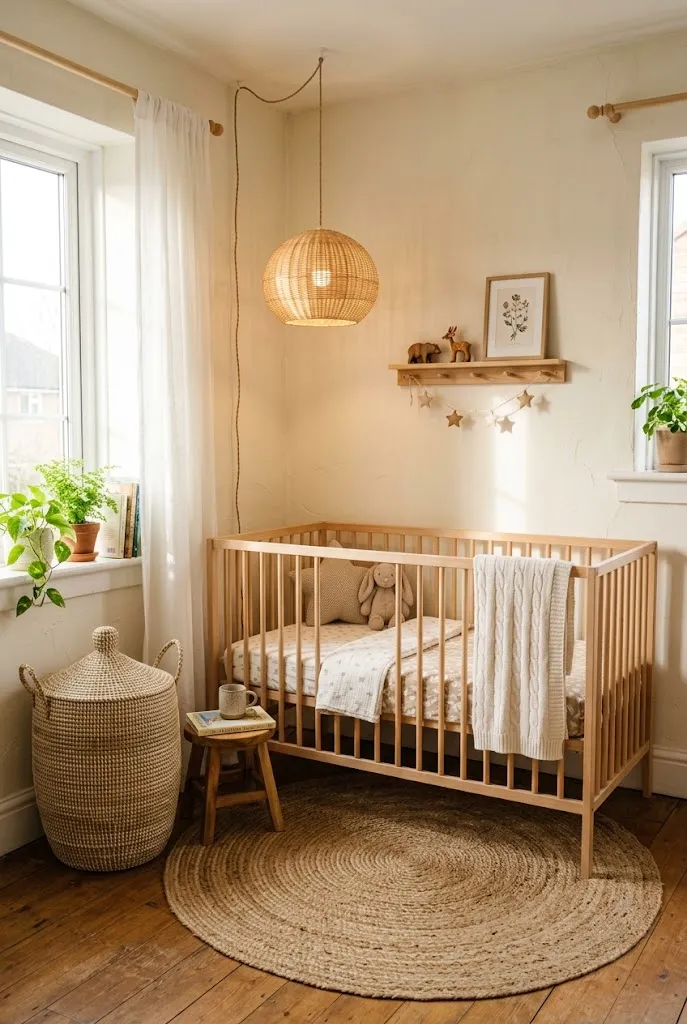
Natural materials add warmth and texture to a small, pale room without needing patterns. A rattan basket, a wooden crib, and a jute rug keep the look layered but calm.
- Mix two wood tones at most.
- Add one woven piece, such as a hamper or pendant.
- Balance with smooth, matte surfaces.
25. Hang a Gallery Wall Over the Dresser
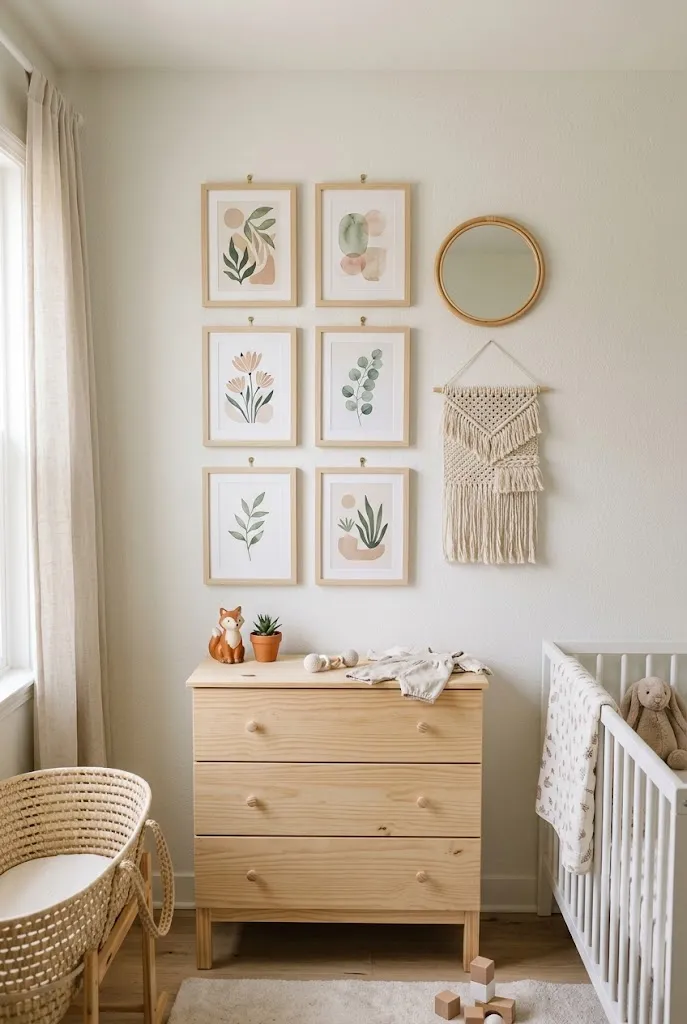
A grouped set of lightweight frames fills the wall above the changing station without taking any floor space. Use acrylic glazing instead of glass, and mount securely, away from the crib.
Aim for a mix of simple prints, a small mirror, and one soft textile piece. Keep a consistent mat color so the group reads as one composition.
26. Paint an Arch Behind the Crib
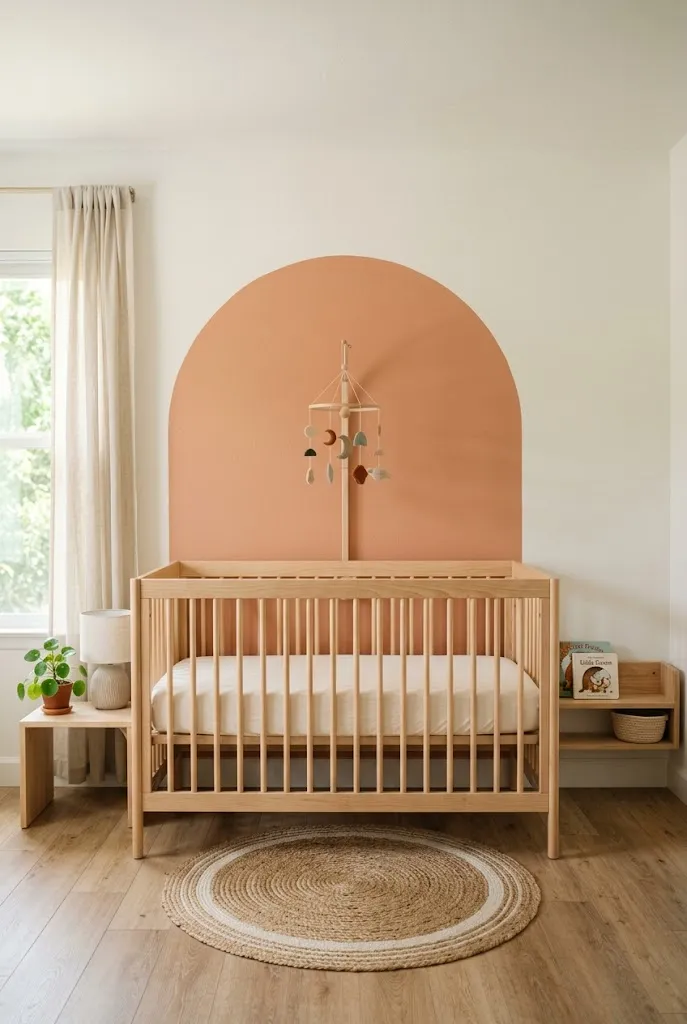
A painted arch is a graphic focal point that costs only a sample pot and tape. A soft terracotta or dusty blue arch against a warm white wall frames the crib and adds depth.
- Trace the arch with a string and a pencil from a center point.
- Tape the edge carefully.
- Apply two coats and remove the tape while the paint is slightly tacky.
27. Share the Room With a Sibling
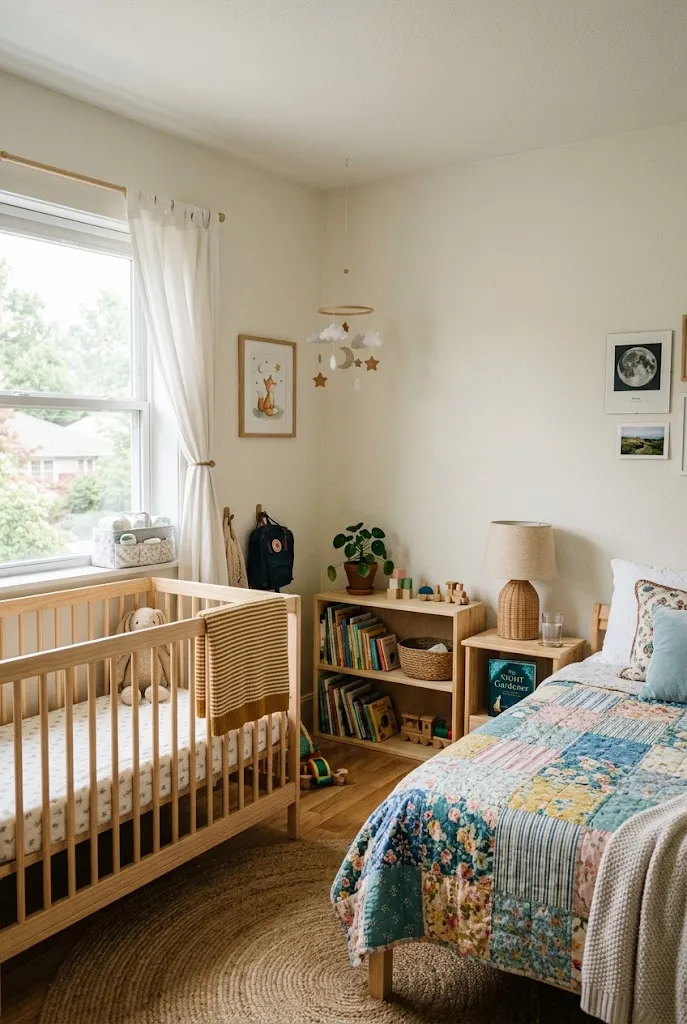
A small room can sometimes hold a crib and a twin bed if the layout is tight and clear. A slim bookcase, anchored to the wall, can divide the zones without blocking light.
Keep the two sleep areas on opposite sides and give each child a distinct basket or bin color. Safety comes first: the older child’s items should stay out of the crib.
28. Mount a Fold-Down Changing Table
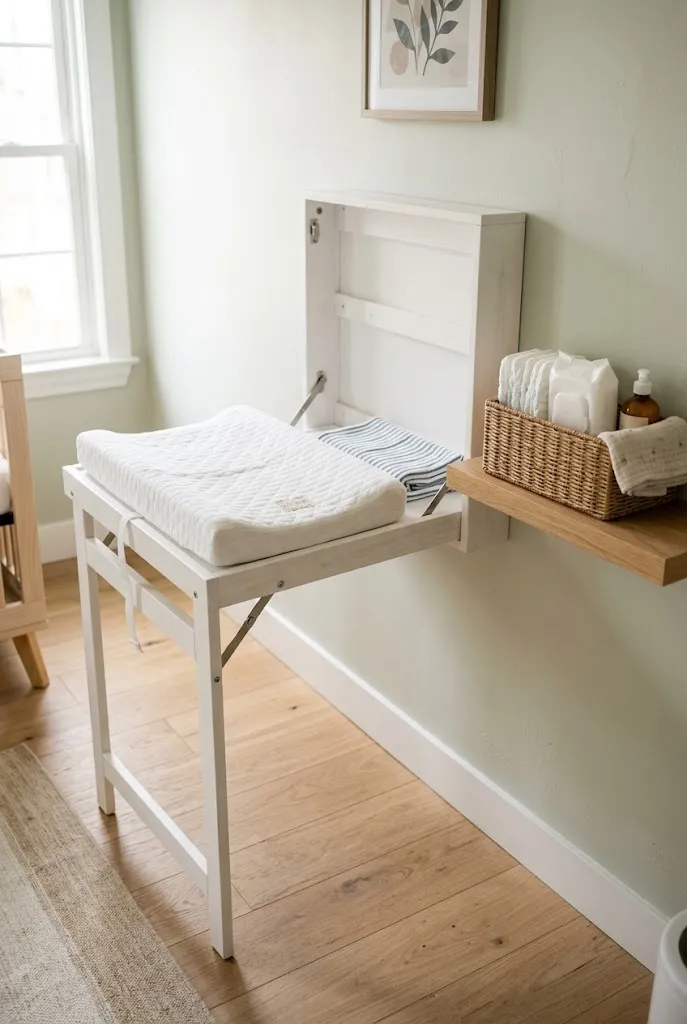
A wall-mounted changing table folds flat when not in use, saving a lot of floor space. It must be installed into studs, following the manufacturer’s weight limit and instructions.
Quick Facts
Best For: Very tight rooms
Investment: Moderate
Visual Effect: Clean, flat wall when folded
Pair it with a shelf or basket beside it to keep supplies in reach.
29. Add a Window Bench With Drawers
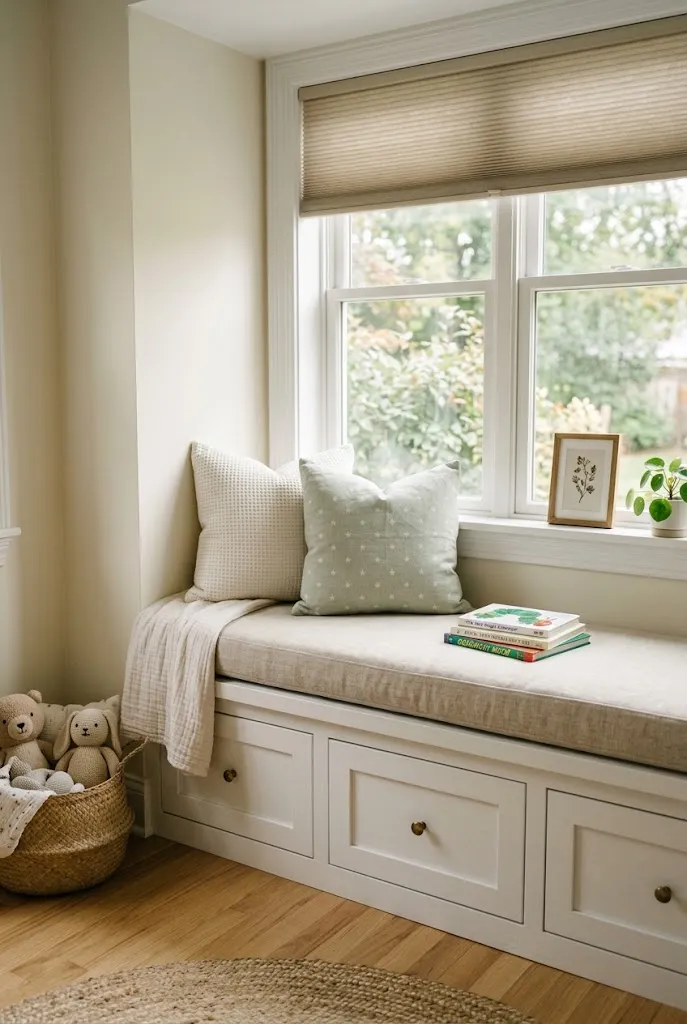
A built-in or ready-made bench under a window adds seating and hidden storage. It can hold blankets, extra diapers, and toys.
Keep the crib away from the window, and use cordless shades. A thick seat cushion in a washable fabric makes it a spot for quiet daytime feeds or story time.
30. Slot In a Slim Laundry Station
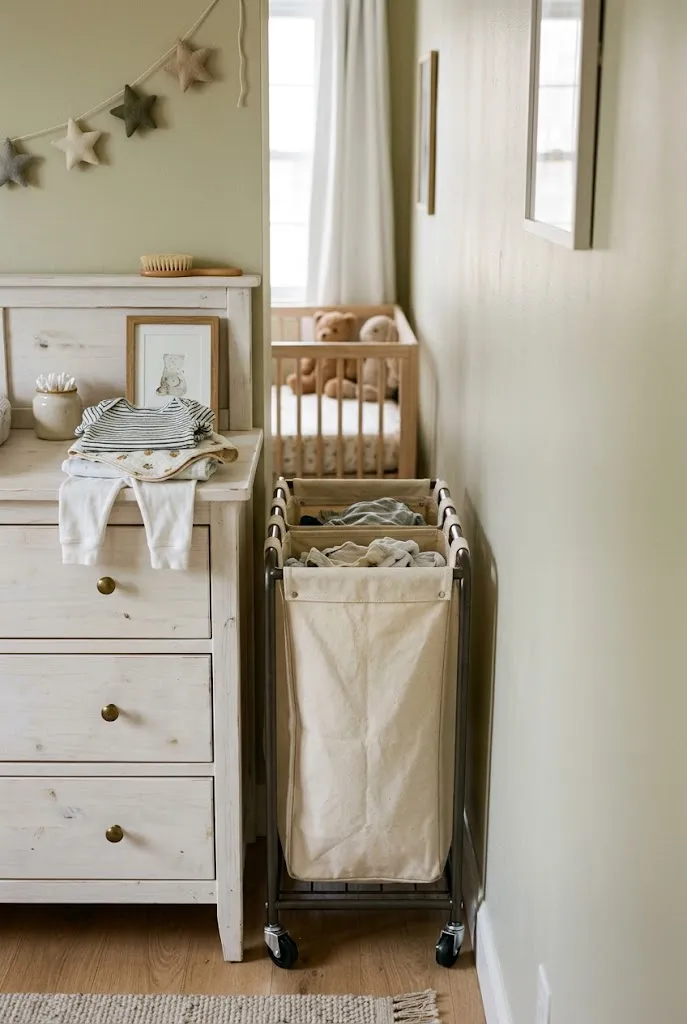
A narrow rolling hamper or a two-bag sorter fits into a gap beside the dresser or in the closet. Baby laundry piles up fast, and a dedicated spot keeps it off the floor.
Choose breathable fabric or a lidded design, and separate bags for darks and delicates make washing faster.
31. Edit the Decor Down to a Few Focal Points
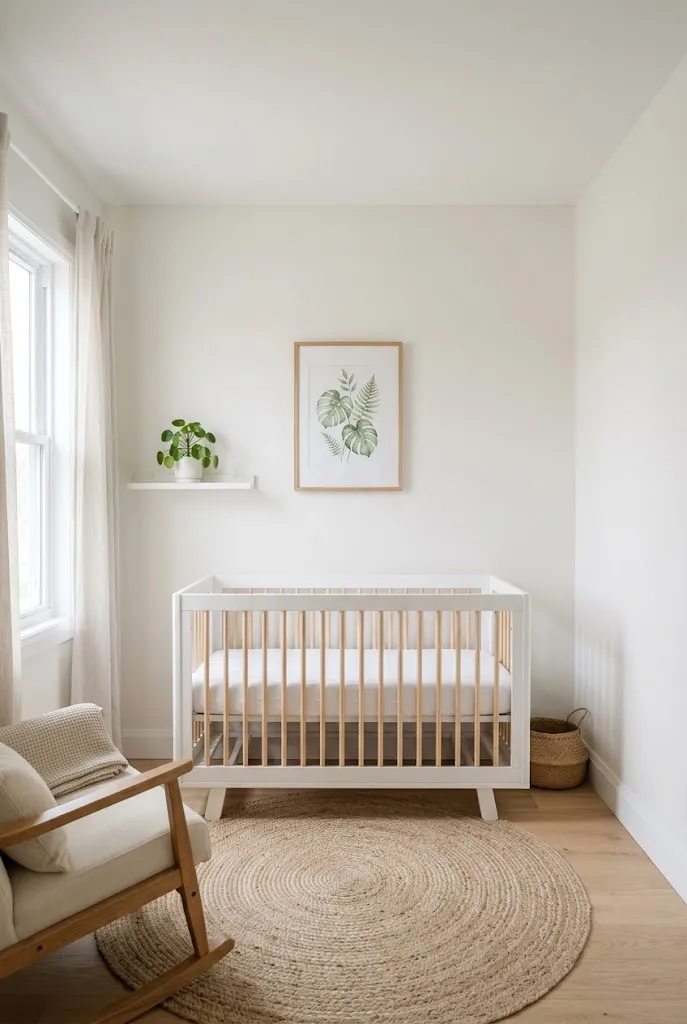
After the storage is solved, resist the urge to fill every surface. Pick two or three focal points, such as the crib wall, a framed print, and a plant, and let the rest breathe.
Common Mistake: Covering every wall and shelf with decor. Better Approach: Leave about a third of the surfaces empty so the room feels calm and open.
A restrained room is also easier to clean and adjust as the baby grows.
A Few Safety Checks Before You Arrange Anything
- Use a firm, flat mattress with only a fitted sheet in the crib. Leave out pillows, blankets, bumpers, and stuffed toys.
- Anchor dressers, bookcases, and any tall furniture to the wall.
- Keep cords, blind pulls, and monitor wires out of the baby’s reach.
- Follow each product’s manufacturer instructions for assembly and weight limits.
For current guidance, check recommendations from the American Academy of Pediatrics and the U.S. Consumer Product Safety Commission.
Choosing Where to Start
If the room feels overwhelming, begin with the crib’s position, then solve storage, then add color and lighting. Small changes, like a corner crib, a dresser changing station, and a good rug, often do more than any decor purchase.