
24 Small Bedroom Ideas That Make Your Space Feel Bigger and Cozier
Introduction
A small bedroom has to do a lot. It holds the bed, the clothes, the lamp you read by, and sometimes a desk too. The usual advice is to buy less, but most people need a room that works better, and a few well-chosen changes can do that. Layout, light, color, and storage all affect how much space you feel.
The 24 small bedroom ideas below run from renter-friendly fixes to built-in upgrades. Some take an afternoon and a screwdriver. Others are worth saving for when you renovate. Each one explains how to get the look, what to watch out for, and why it works. The aim is a room that looks bigger and still feels like somewhere you want to be at the end of the day.
1. Tuck the Bed Into a Corner to Free Up the Floor
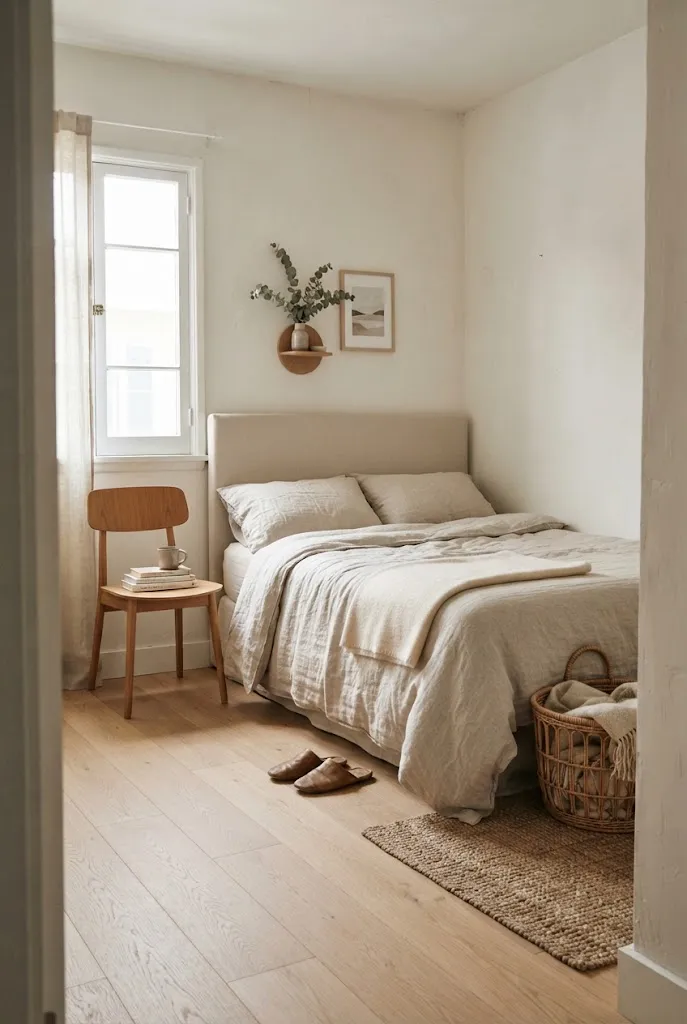
Pushing a bed against two walls is one of the quickest ways to gain usable floor. You lose access on one side, but you gain an open stretch of floor that makes the room feel wider. A full or queen bed in a corner can leave space for a slim chair, a dresser, or a clear path to the window.
This layout suits a single sleeper best. If two people share the bed, a corner placement means one person climbs over the other, so keep the bed centered on a wall instead. Choose a headboard that is flat against the wall rather than deep or winged, so it doesn’t eat into the corner.
Editor’s Note: Tucking a bed in also makes it harder to change the sheets. Choose a mattress size you can lift comfortably, and consider fitted sheets with deep elastic.
2. Swap Nightstands for Floating Shelves
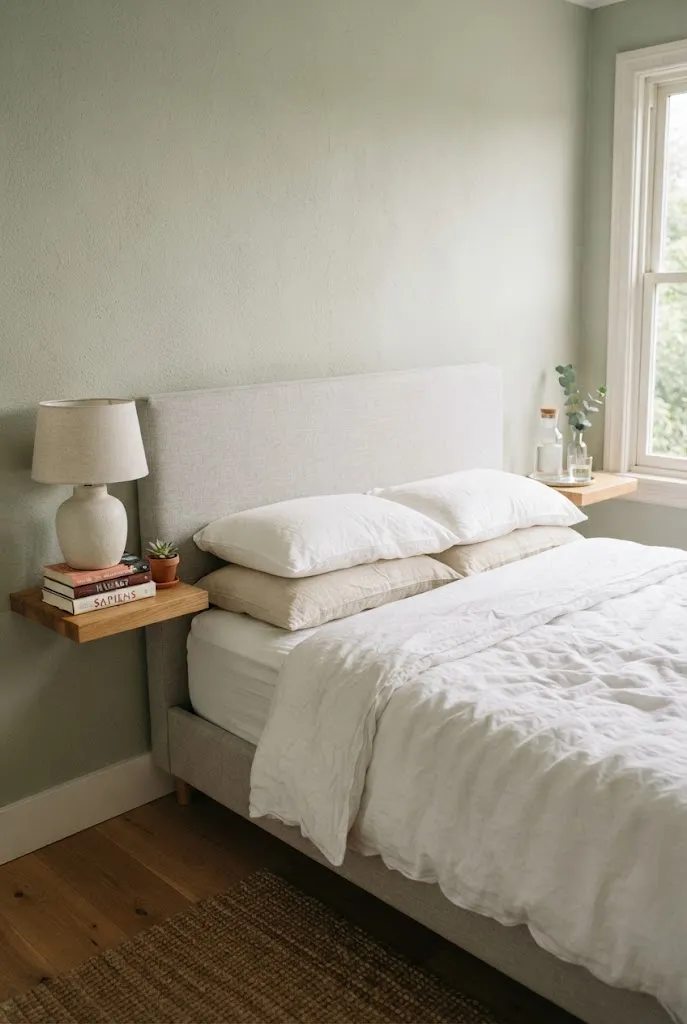
Bedside tables take up more floor than they seem to. A pair of floating shelves, mounted at mattress height or a little above, gives you a surface for a lamp and a glass of water with nothing touching the floor. Seeing flooring continue under the shelf makes the room feel less crowded.
- Mount each shelf about 6 to 8 inches above the mattress top so a lamp base clears the pillows.
- Choose a shelf at least 8 inches deep for a phone, glasses, and a book.
- Pick a finish that matches or sits close to the wall color so the shelf recedes.
- Use anchors rated for the wall type, especially for drywall without a stud.
For renters, a narrow clamp-on or hook-on bedside shelf does a similar job without drilling.
3. Paint the Walls and Ceiling the Same Warm White
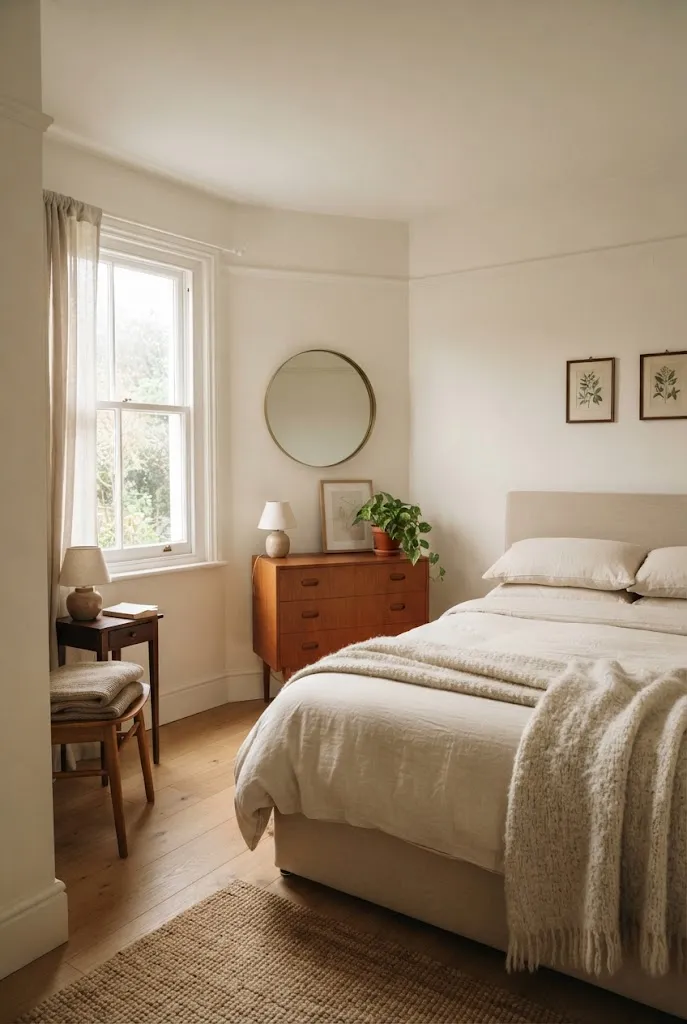
When trim, walls, and ceiling blur into one soft tone, the eye stops reading where the room ends. Warm whites with a slight cream or greige undertone usually feel gentler than stark bright white, especially at night under lamplight. A matte or eggshell finish hides small wall imperfections better than a gloss.
Test large swatches on at least two walls and look at them in morning and evening light. A white that reads soft in a south-facing room can turn cool and gray in a north-facing one.
Common Mistake: Painting only the walls and leaving a bright white ceiling.
Better Approach: Carry the same color up onto the ceiling, or use the same hue mixed 50 percent lighter. It removes the hard line overhead and makes the room feel lower less often.
4. Choose a Storage Bed With Deep Drawers
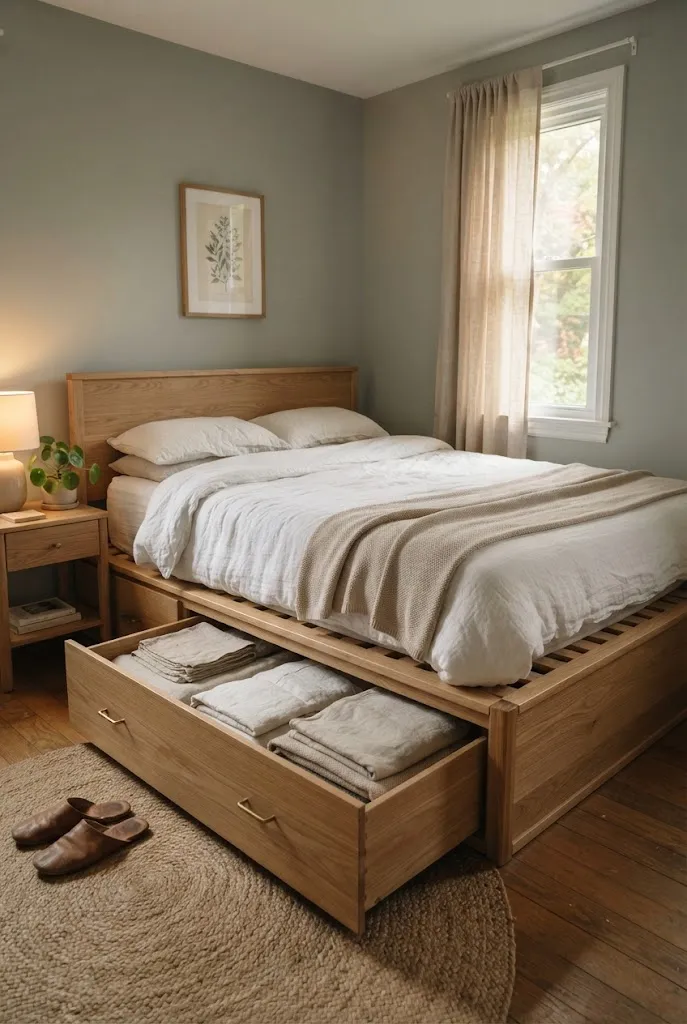
A bed takes up a third of a small room, so it makes sense to put it to work. Drawer-style beds hold bulky items like extra bedding, off-season clothes, and shoes. The result is a clean floor and one fewer dresser.
| Storage Type | Advantage | Best Fit |
|---|---|---|
| Drawer base | Easy access to everyday items | Rooms with room to pull drawers fully out |
| Lift-up (gas piston) | Large open cavity under the mattress | Rarely used items such as spare bedding |
| Platform with open cubbies | Lighter look, easy to grab baskets | Casual styling and renters who want flexibility |
Measure the clearance in front of the bed before you buy. Drawers that can’t open fully defeat the point, and a lift-up frame still needs room at the foot or side.
5. Hang Plug-In Wall Sconces Beside the Bed
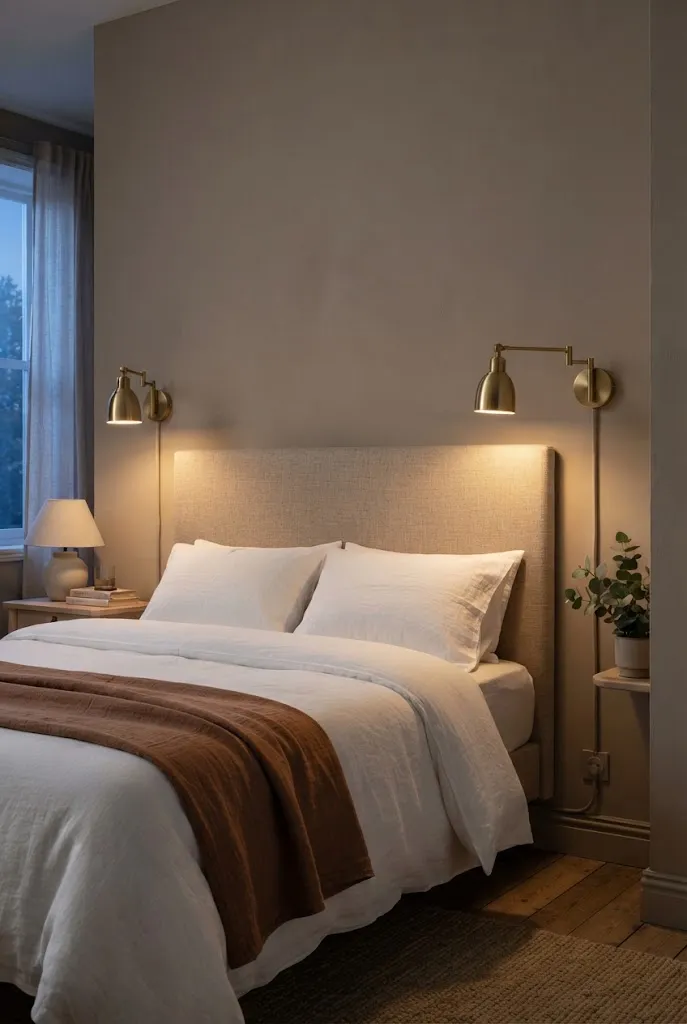
Table lamps take a surface. Wall sconces take only a little wall. Plug-in sconces are the most accessible option: no hardwiring, no electrician, and a cord that can run down the wall inside a paint-matched cover. Placed on either side of the bed, they give each sleeper their own reading light and leave the nightstand (or shelf) free.
- Sit in your normal reading position and mark where the light should fall on the page.
- Hold the sconce at that height and check that it clears the pillows.
- Mount it with the hardware that suits your wall.
- Run the cord through a paintable cord cover or along the headboard edge.
- Add a plug-in dimmer for softer light at night.
6. Hang a Tall Mirror Opposite the Window
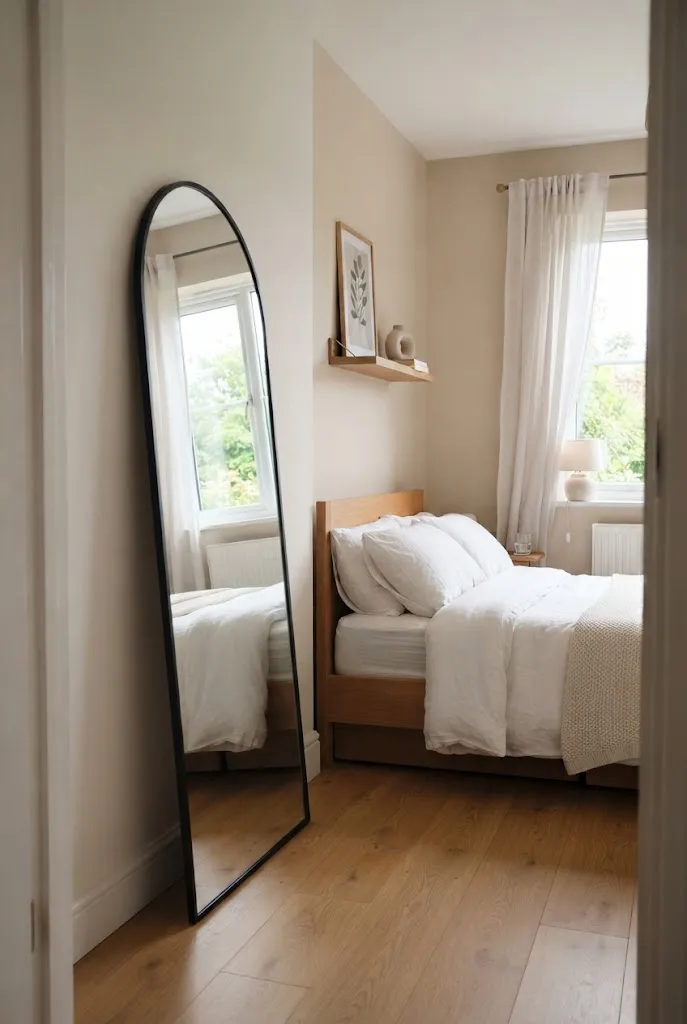
A mirror placed to catch daylight does two jobs. It doubles the light in the room, and it adds visual depth. A tall leaner or wall-mounted mirror also gives you a place to check your outfit without a separate piece of furniture.
Aim for a mirror that reflects the window or a bright wall rather than the bed or a pile of clutter. In a very small room, a simple frame or frameless edge keeps it light.
Do:
- Place it across from or at an angle to the main window.
- Anchor a heavy mirror to a stud or with rated wall hardware.
- Choose a size that is at least a third of the wall width it sits on.
Don’t:
- Hang it directly facing the bed if reflections bother you at night.
- Let it reflect a messy corner, since it will double that too.
7. Add a Slatted Wood Panel Behind the Bed
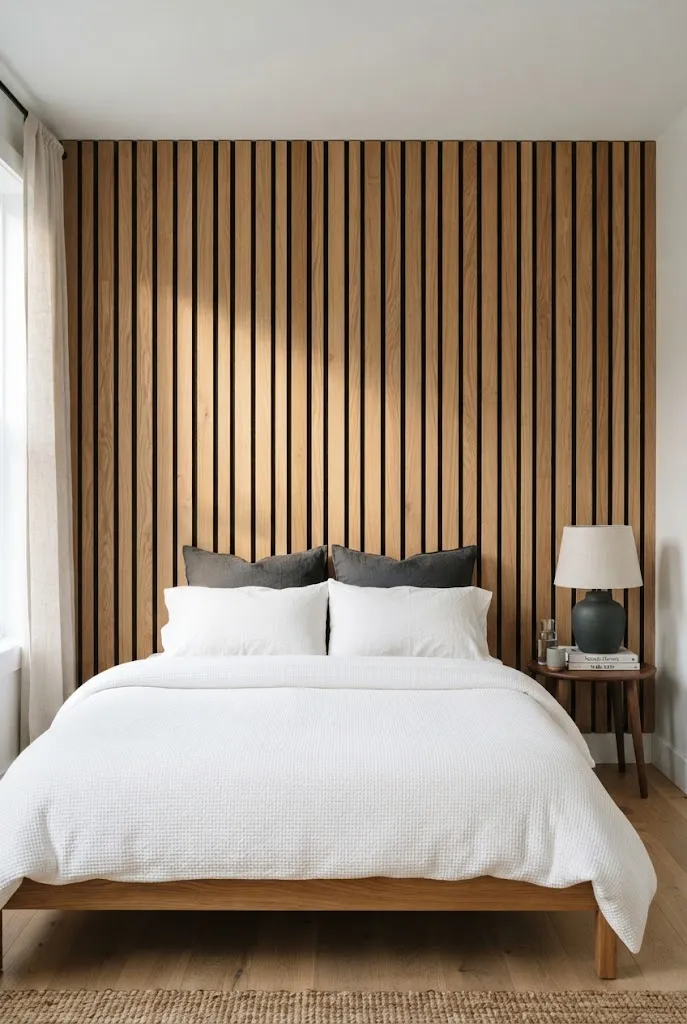
Vertical wood slats draw the eye upward, which helps low ceilings feel taller, and they add the warmth and texture a plain painted wall lacks. A slatted panel behind the bed also works as a headboard, so you can skip buying one.
Best For: Bedrooms with a plain wall behind the bed and a budget that allows a weekend project.
Investment: Moderate; pre-made slat panels cost less than custom millwork.
Visual Effect: Texture and height without adding bulk.
Pre-made acoustic-style slat panels are easy to install with adhesive or screws. For a more custom look, a carpenter can build slats the full height of the wall. Pick a wood tone close to your floor so the room doesn’t feel split in two.
8. Wrap the Room in a Muted Sage Green
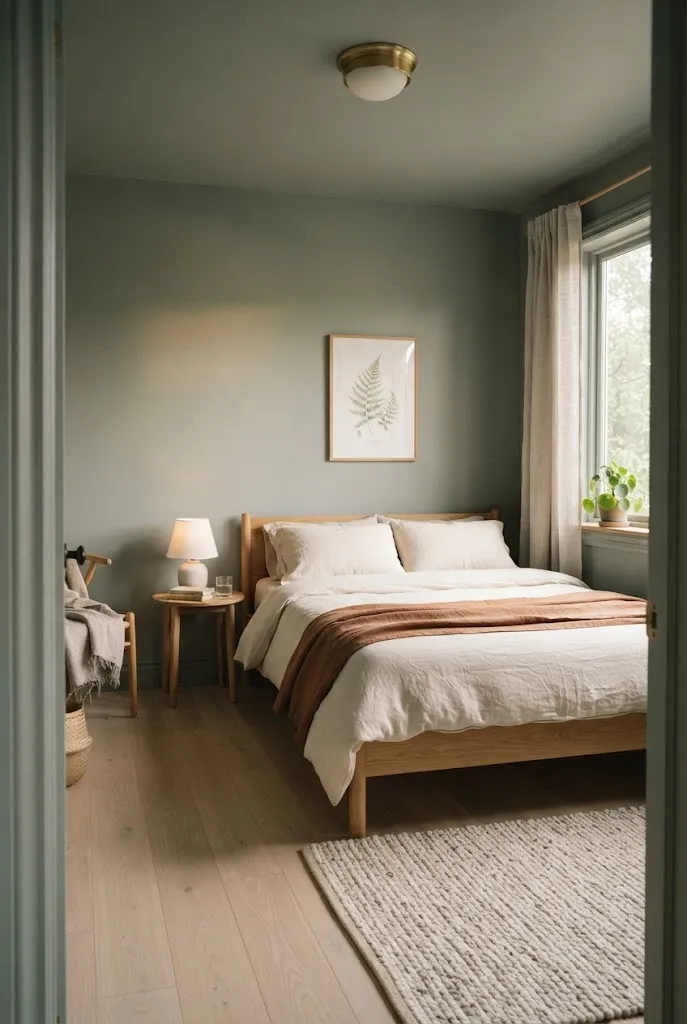
Painting walls, trim, and sometimes the ceiling in one color is called color drenching, and in a small room it removes visual interruptions. A muted sage keeps things restful because it carries both warm and cool tones, which makes it flexible with wood, white, and brass.
Choose a paint with some gray in it. A sage that’s too bright can feel more like a kitchen. Try it in a satin or eggshell finish for walls and a slightly higher sheen on the trim if you want subtle definition.
Pair it with natural fabrics like linen, cotton, or wool in cream, rust, or deep brown. Keep metals warm. Let the paint do the work and keep decoration minimal.
9. Hang Floor-to-Ceiling Curtains High and Wide
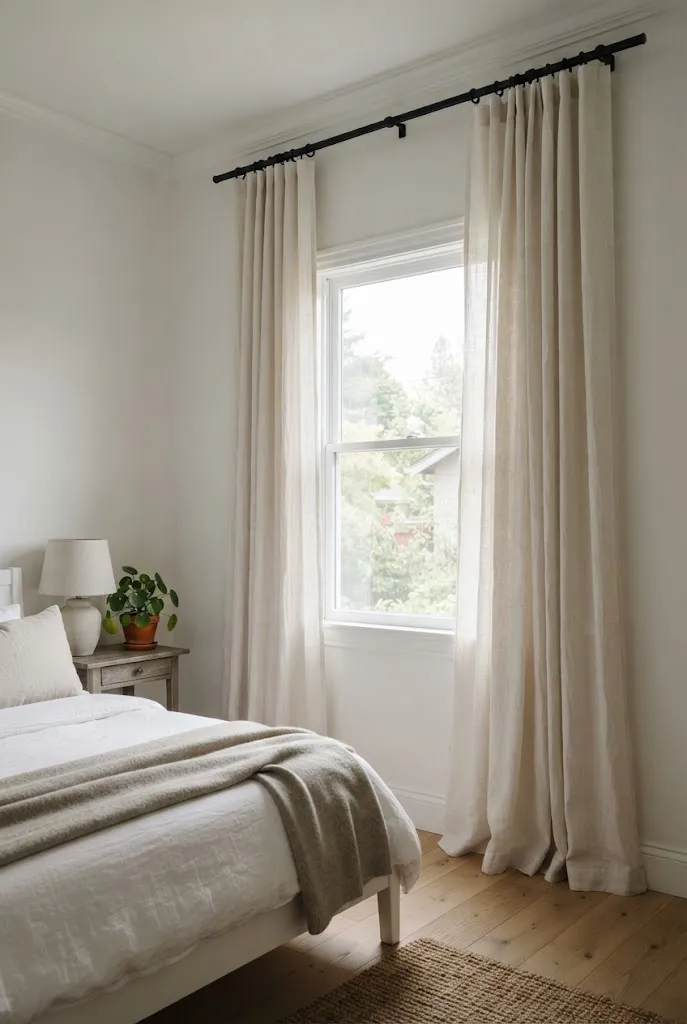
Mounting a curtain rod near the ceiling rather than right above the window frame makes both the window and the wall feel taller. Extending the rod 8 to 12 inches past each side of the window lets the curtains stack against the wall and leaves the glass uncovered, so you get more daylight.
| Fabric | Effect | Best Fit |
|---|---|---|
| Sheer linen | Soft, filtered light | Rooms where privacy is not an issue by day |
| Lined cotton | Subtle structure, some light blocking | Everyday use and mixed lighting |
| Blackout lining | Darkens the room fully | Bedrooms with early light or street lamps |
Let the hem just brush the floor or hover about half an inch above it. A curtain that’s too short breaks the vertical line you’re trying to create.
10. Turn an Awkward Corner Into a Reading Nook
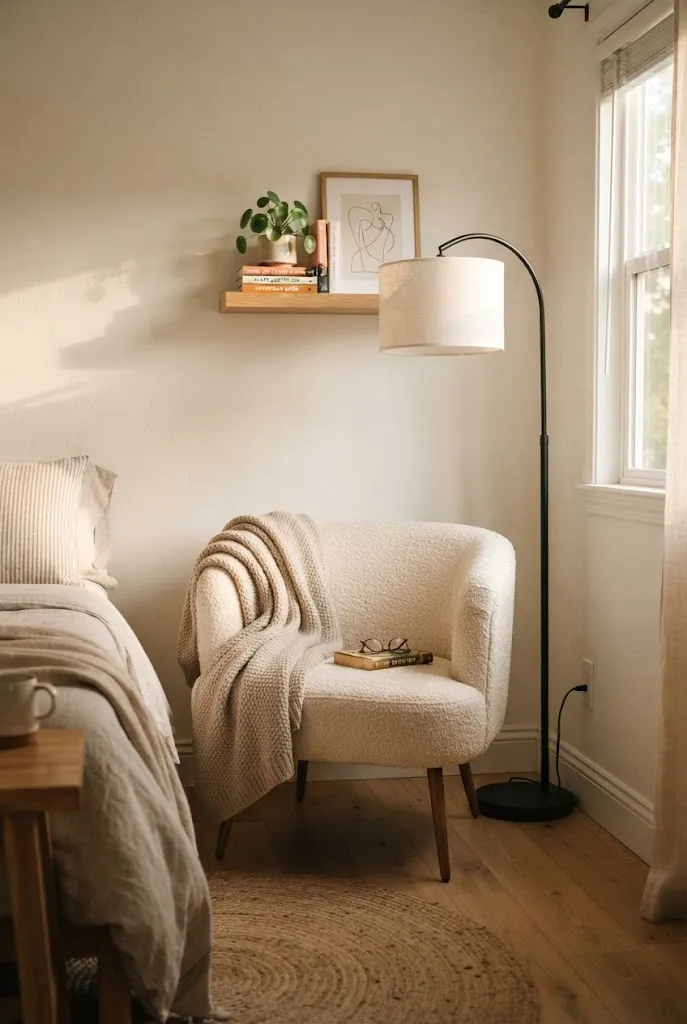
Most small rooms have one corner that doesn’t hold furniture well. A compact armchair, a floor lamp, and a small stool can turn it into a reading spot without adding anything bulky.
- Choose a chair with exposed legs, since visible floor makes it feel lighter.
- Add a slim floor lamp with an arched or adjustable head to save floor space.
- Use a small wall shelf or a stack of books instead of a side table.
- Keep the palette close to the rest of the room so it reads as part of it.
- Throw a lightweight blanket over the arm rather than adding extra cushions.
Place the nook so it gets some daylight and sits away from the main walkway.
11. Layer Linen Bedding in Tonal Shades
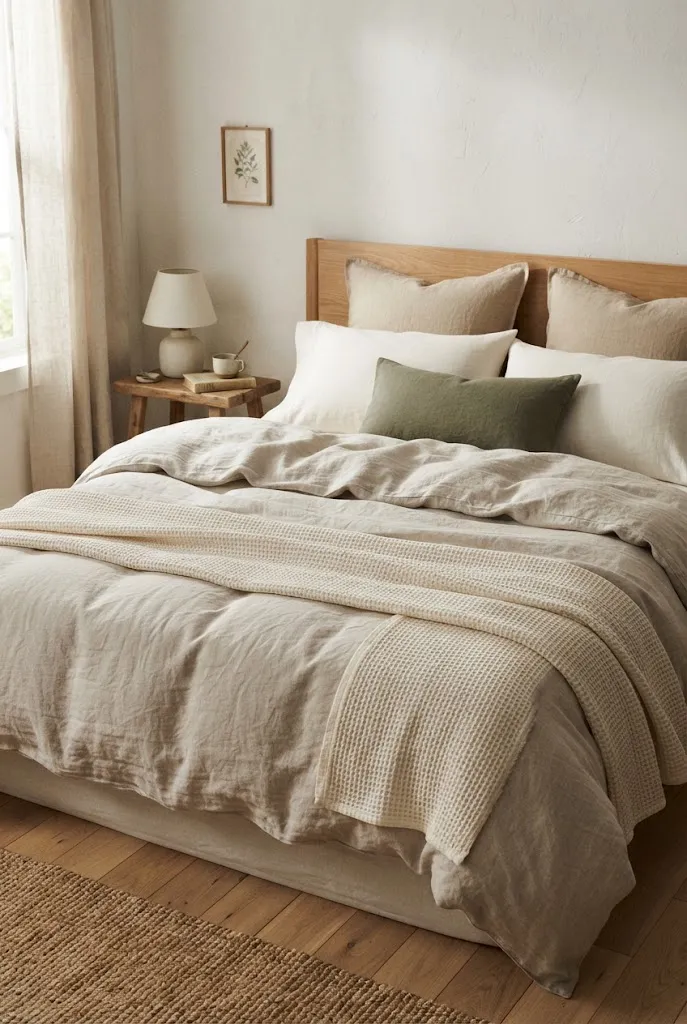
Because the bed dominates a small room, its colors set the mood. Instead of mixing several patterns, stay inside one color family: white, cream, oatmeal, and sand, for example, in different textures. The variety in texture keeps things interesting while the tonal range keeps things calm.
Washed linen and cotton waffle weave tend to look relaxed and slightly rumpled in a good way, which suits a cozy look and saves you from ironing. A duvet, a quilt at the foot, and two or three pillows are usually plenty for a small bed. Too many cushions leave you moving them every night.
Quick Tip: Add one darker accent, such as a deep olive pillow or rust throw, so the tonal palette doesn’t flatten into a single beige.
12. Build a Wardrobe Alcove Around the Bed
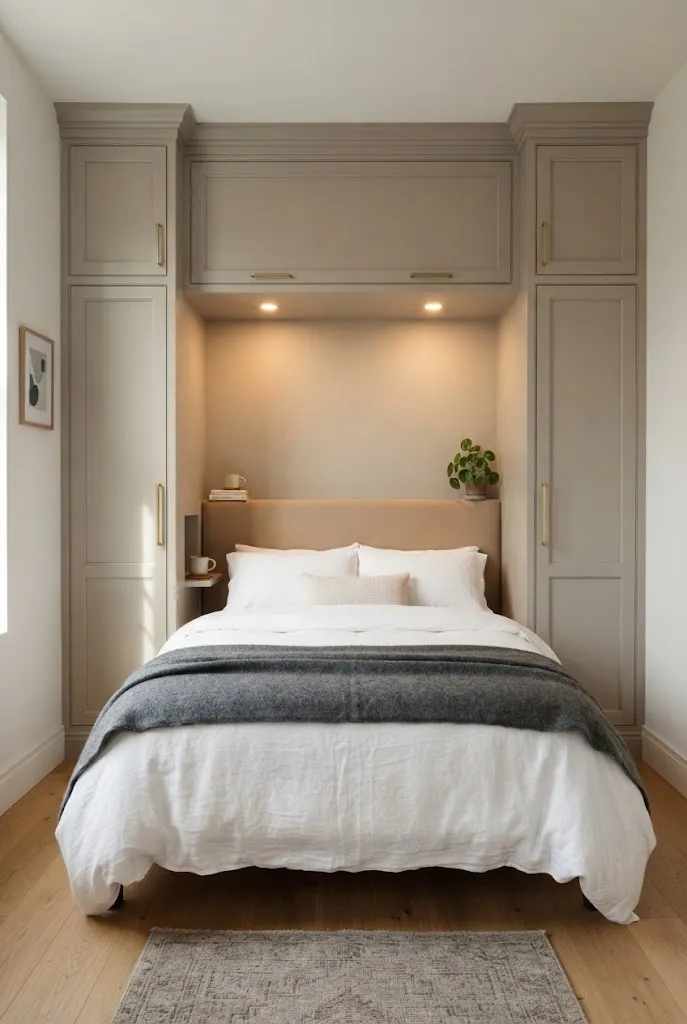
This is a premium idea that pays off in tight rooms. Custom cabinets on both sides of the bed and across the top form a recessed alcove, so the bed sits inside the storage rather than in front of it. The result is hidden clothing storage, built-in bedside shelves, and a very tidy, architectural look.
It requires a carpenter or a semi-custom modular system, and it works best when the room is narrow enough for the cabinets to span wall to wall. Add reading lights inside the alcove and a paint color that wraps the inside surfaces for a cozy, cocooned feel.
Editor’s Note: To borrow the principle on a smaller budget, line up two modular wardrobes on either side of the bed and add a shelf across the top, then paint everything one color.
13. Use Under-Bed Bins and Risers for Hidden Storage
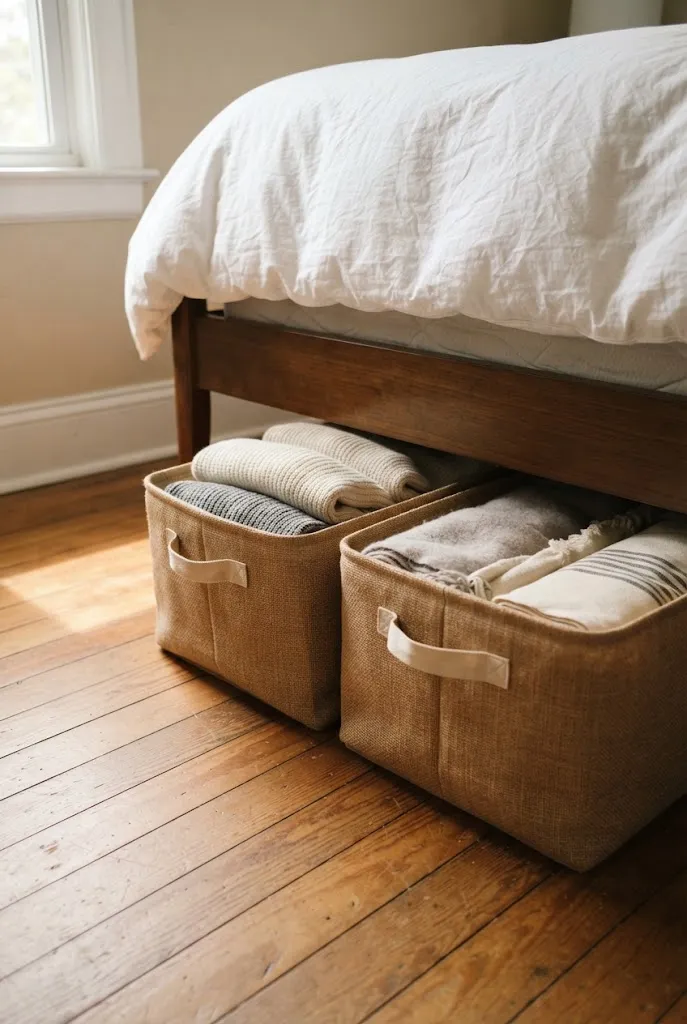
Almost every bed has unused space beneath it. Rolling bins, flat zippered bags, or a set of bed risers can turn that space into storage without a new bed frame.
- Measure the clearance between the floor and the bed frame.
- Pick bins that are slightly shorter than that height so they slide in easily.
- Choose fabric or woven bins with a closing lid or tight fit so dust stays out.
- Group items by season or use and label the end that faces you.
- Add risers if you need an extra few inches, ensuring the bed remains stable.
If your bedspread hangs to the floor, it hides the bins completely. Otherwise, choose bins in a color close to the floor or bedding.
14. Add a Fold-Down Wall Desk
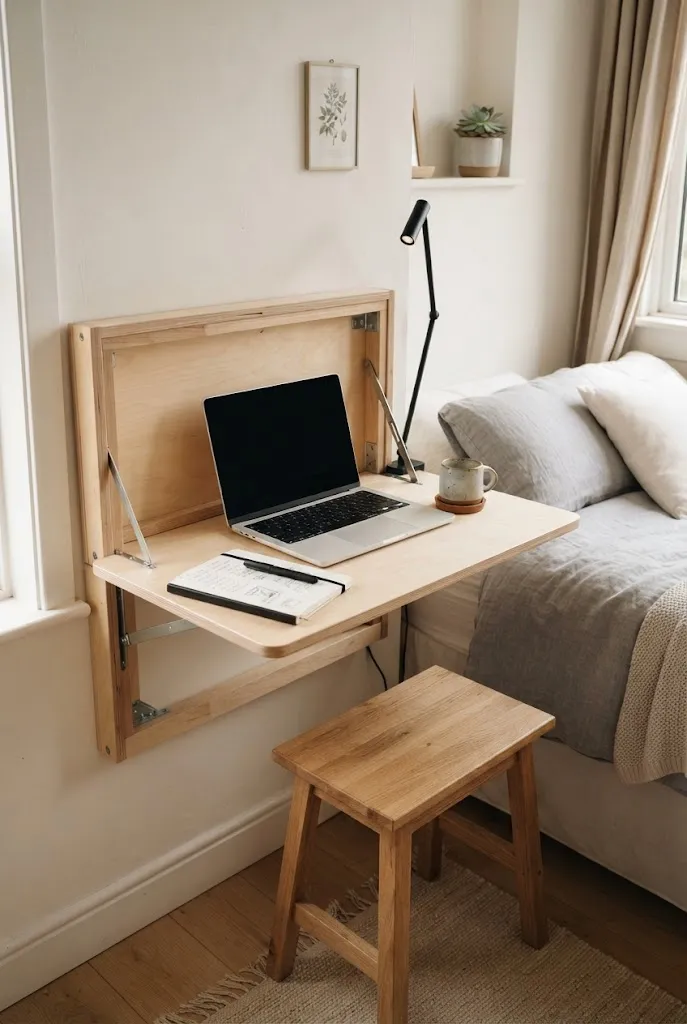
If you need a place to work but don’t have room for a full desk, a wall-mounted fold-down version gives you a work surface when needed and nearly disappears when closed. It works well in apartment bedrooms that double as home offices.
When folded up, the panel can look like a framed shelf or a clean panel against the wall. Open it, and you get a desk about the size of a laptop and a notebook.
Tips & Tricks:
- Mount it to a stud or use strong anchors rated for the load.
- Place it near natural light, and angle a small lamp to avoid glare.
- Use a stool or compact chair that tucks fully underneath.
- Store a small pencil cup or tray on a nearby shelf so nothing lives on the desk surface.
15. Swap a Swinging Closet Door for a Curtain or Sliding Panel
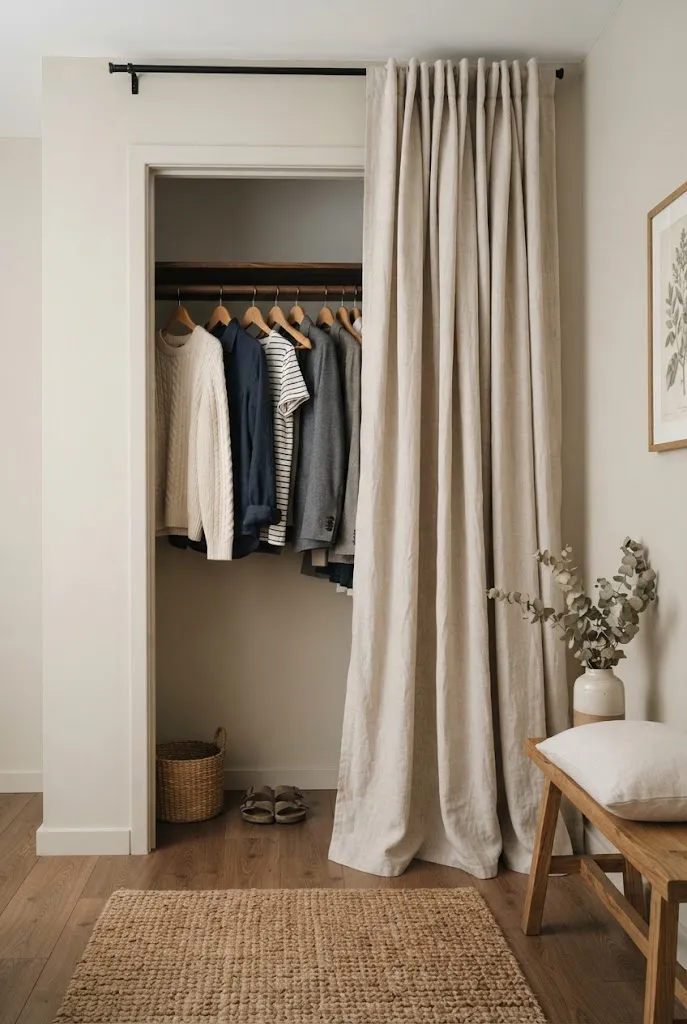
A closet door that swings into the room claims about 3 feet of floor. Replacing it with a curtain, a sliding panel, or a bifold gives that space back and often makes the wall look softer.
Common Mistake: Leaving a swing door in place and then arranging furniture around its arc.
Better Approach: Remove the door and hang a floor-length linen curtain on a ceiling-mounted track, or install a sliding panel in a finish that matches the wall. Both open without needing any clear floor in front.
A curtain is the most renter-friendly option and easy to change. A sliding door is more permanent and gives a cleaner, more architectural look. Keep the closet interior tidy and use matching hangers for a neat view when it’s open.
16. Hang Art in a Tall Vertical Column
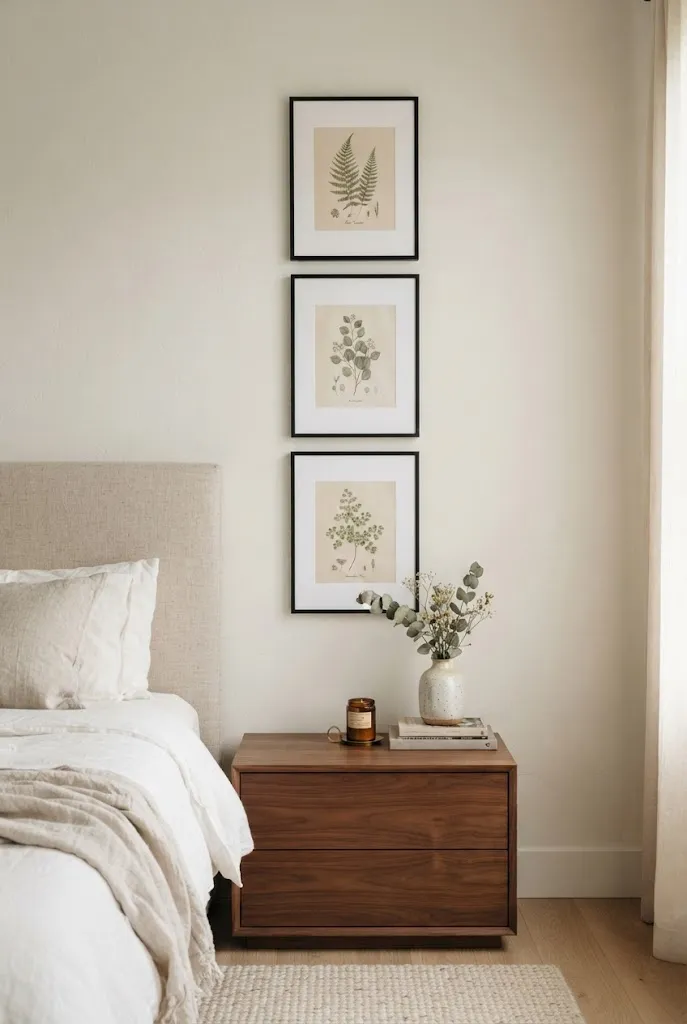
Wide, horizontal gallery walls can make a narrow wall feel wider and shorter. Stacking two or three frames in a tall column above a dresser or beside the bed pulls the eye upward, which helps small rooms feel taller.
Keep the frames in the same color family and leave consistent gaps, about 2 to 3 inches, between them. Choose artwork with simple subjects and generous white mats so the wall doesn’t feel busy.
A single oversized piece also works, as long as it’s hung higher than you’d instinctively place it. Place the center of the artwork around eye level when standing, or slightly higher if it hangs above furniture.
17. Choose a Rug That Extends Beyond the Bed
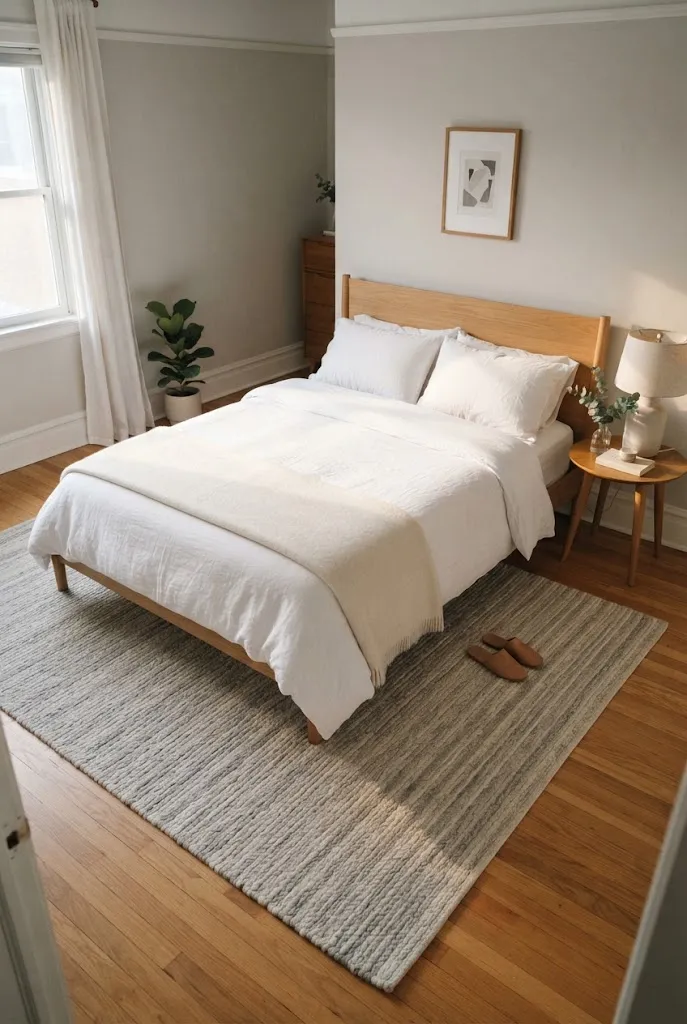
A rug that’s too small leaves a sliver of floor around it and makes the room feel chopped up. A larger rug that extends at least 18 to 24 inches on either side of the bed, or sits under the lower two-thirds of it, ties the area together and makes a small room feel anchored.
Best For: Rooms with hard flooring where the bed is the main feature.
Investment: Accessible to moderate, depending on material.
Visual Effect: A defined, grounded sleeping zone.
Low-pile or flat-weave rugs are easiest to keep clean and don’t catch the bed legs. Choose a color slightly lighter or darker than the floor for subtle contrast without loud pattern.
18. Hang a Simple Fabric Canopy
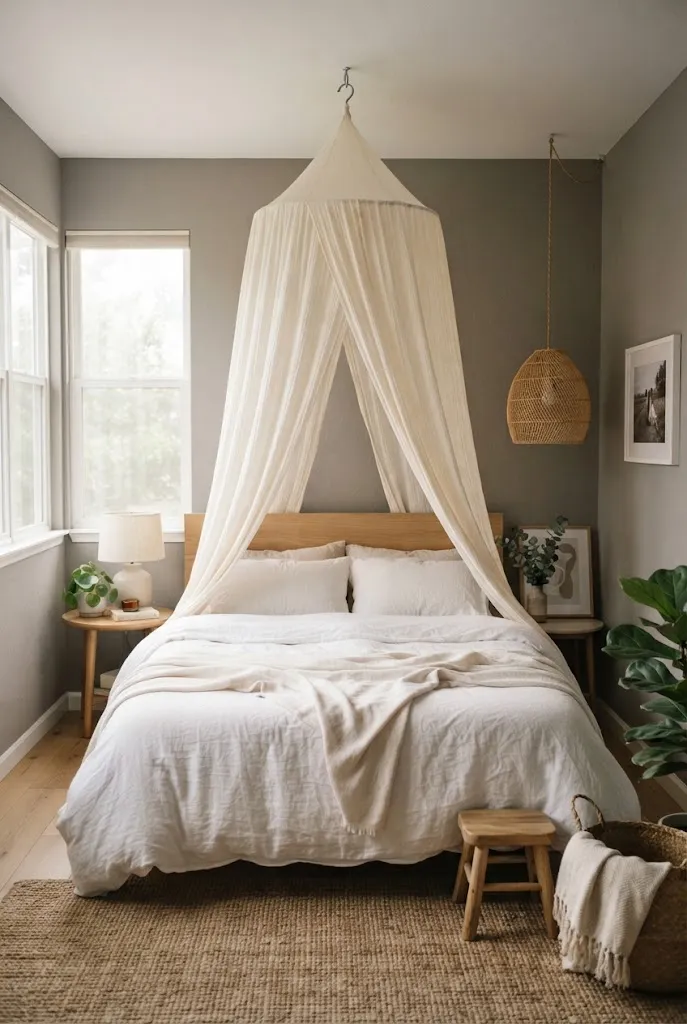
A canopy creates a room within the room, which makes a small bedroom feel more enclosed and cozy rather than cramped. You don’t need a four-poster frame. A single curtain panel or a length of light fabric hung from a ceiling hook above the head of the bed, draped to the sides, achieves a softer version.
Choose a lightweight fabric like gauze, cotton voile, or linen so it doesn’t feel heavy. Keep the colors close to the walls. Mounting is renter-friendly when you use ceiling hooks designed for fabric loads, or a tension rod across an alcove.
Avoid hanging fabric near heat sources or lamps with exposed bulbs.
19. Build a Warm Layered Lighting Plan
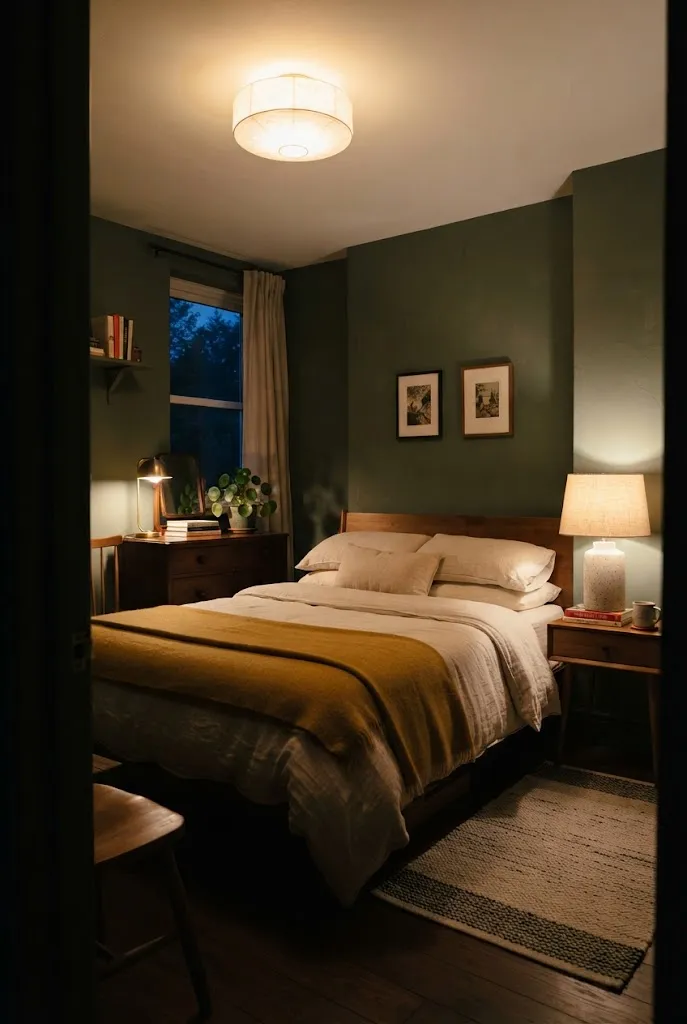
One overhead light flattens a small room. Mixing three sources at different heights makes it feel deeper and warmer.
- Ambient: A ceiling fixture or flush mount on a dimmer for general light.
- Task: A reading lamp or sconce at the bed, aimed at the page rather than the room.
- Accent: A small table lamp, string light, or LED strip that adds a soft glow in a corner.
Use warm white bulbs around 2700K for a restful feel. Place lights at different heights so shadows fall naturally and corners don’t go dark. Smart plugs and dimmers are inexpensive ways to adjust brightness without rewiring.
20. Lift the Bed Onto a Loft Frame
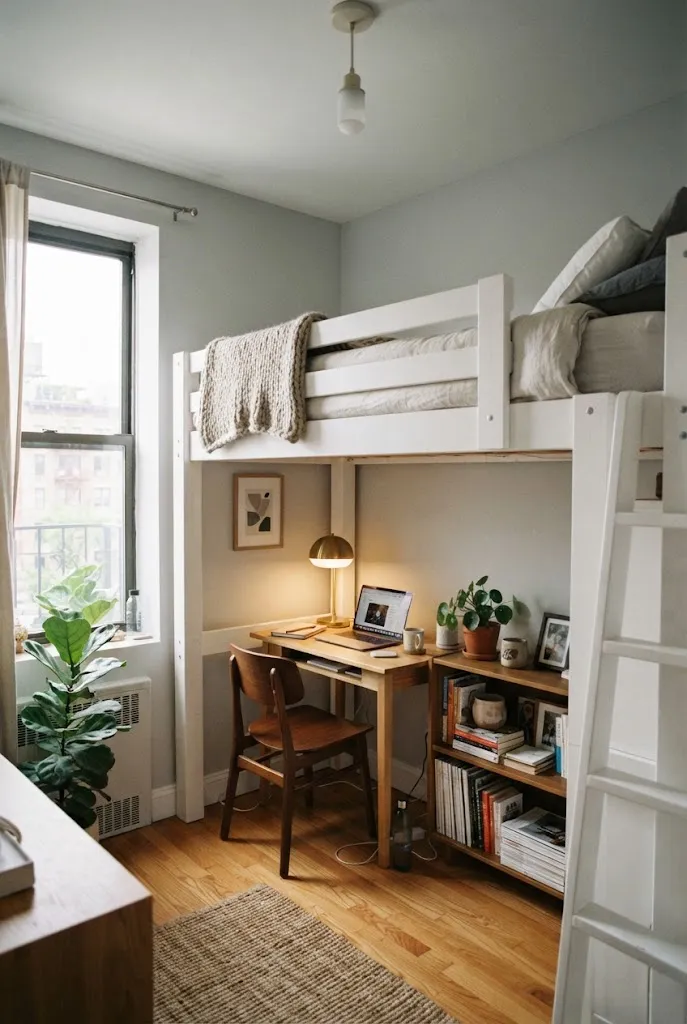
If the ceiling is high enough, raising the bed opens the floor below for a desk, a wardrobe, or a lounge corner. It’s a classic solution for studio apartments and compact rooms with limited square footage but decent height.
Editor’s Note: A loft bed needs enough clearance above the mattress to sit up without hitting the ceiling, a sturdy ladder or stairs, and a guardrail. Check the weight rating and ceiling height before you buy. This setup suits adults who are comfortable climbing at night, and not every ceiling is tall enough.
Choose a frame in a slim profile and a color that matches the walls so it doesn’t dominate the room. Add a small clip-on light inside the sleeping area.
21. Use the Eaves in a Sloped-Ceiling Bedroom
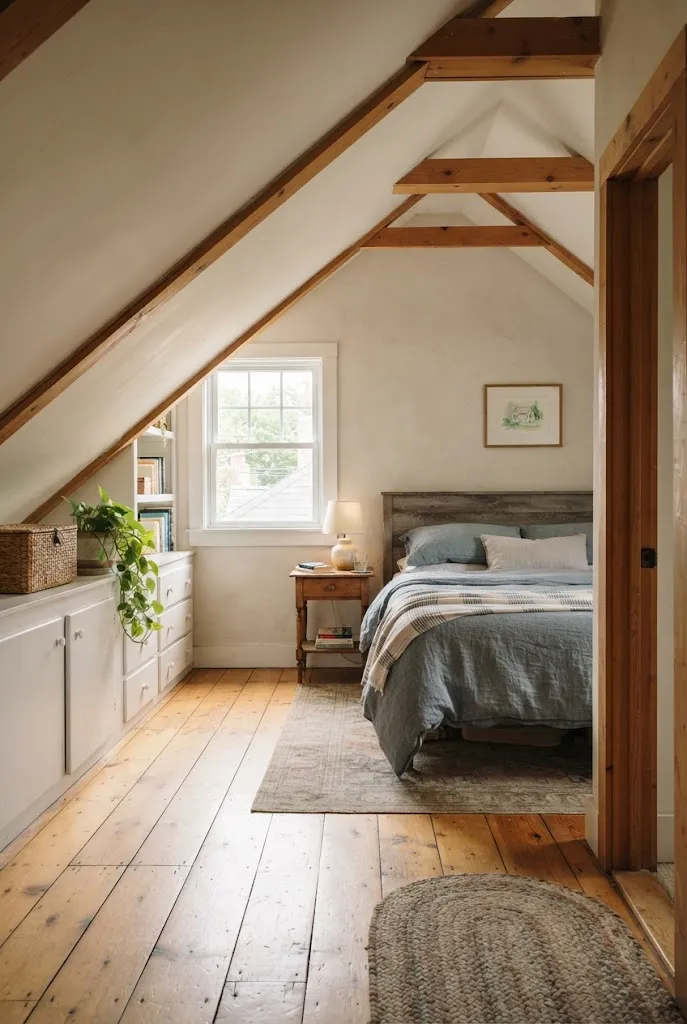
Attic and top-floor bedrooms often have low sloped walls that are hard to use. Rather than leaving them empty, build in low storage along the eaves.
Use shallow cabinets or drawers that fit under the slope, and keep the bed on the tallest side of the room where there’s headroom. Paint the slope and ceiling the same color to soften the angles.
Tips & Tricks:
- Measure the height at different points along the wall before buying anything.
- Use low rolling drawers or baskets for items you reach for rarely.
- Choose a light paint so the angled surfaces don’t feel heavy.
- Add a small skylight or a window seat if the structure allows.
22. Pick a Tall, Narrow Dresser Over a Wide One
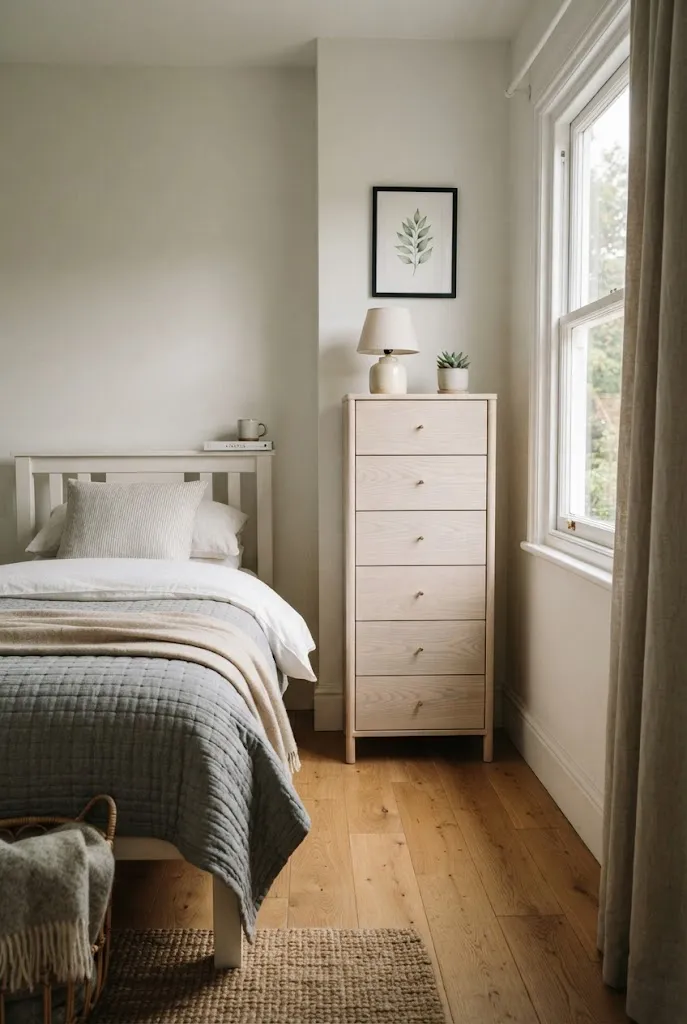
A wide dresser takes up wall length, while a tall one takes up height, which a small room usually has more of. A narrow chest of five or six drawers can hold the same amount as a wide three-drawer unit while taking a fraction of the floor.
Before, a wide dresser sits against the longest wall and blocks a walkway. After, a tall narrow chest tucks beside the window or in a corner and leaves the rest of the wall open.
Look for slim legs and a lighter finish to reduce visual weight. Keep the top styled lightly, with a lamp or small tray, so the tall form doesn’t feel crowded.
23. Warm the Room With Wood and Rattan Accents
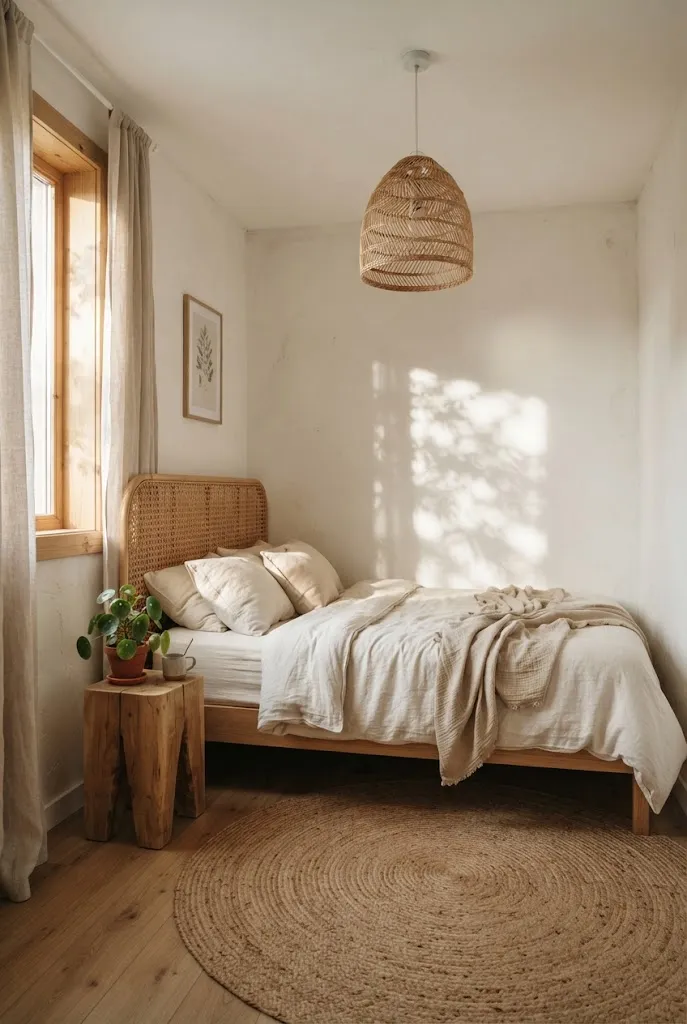
White walls and a small footprint can start to feel cold. Natural materials add warmth without taking space. A few well-placed wood and rattan pieces do more than a lot of small decorations.
- A rattan or cane headboard adds texture without bulk.
- A wooden bedside stool or small tray table brings in a warm tone.
- A woven pendant shade softens overhead light.
- A jute or wool rug adds a natural base underfoot.
- A wooden mirror frame or picture frames in a similar tone tie it together.
Stick to two or three finishes in the room so it doesn’t feel busy, and balance them with soft white or cream fabrics.
24. Lean Into a Deep, Moody Color for a Snug Retreat
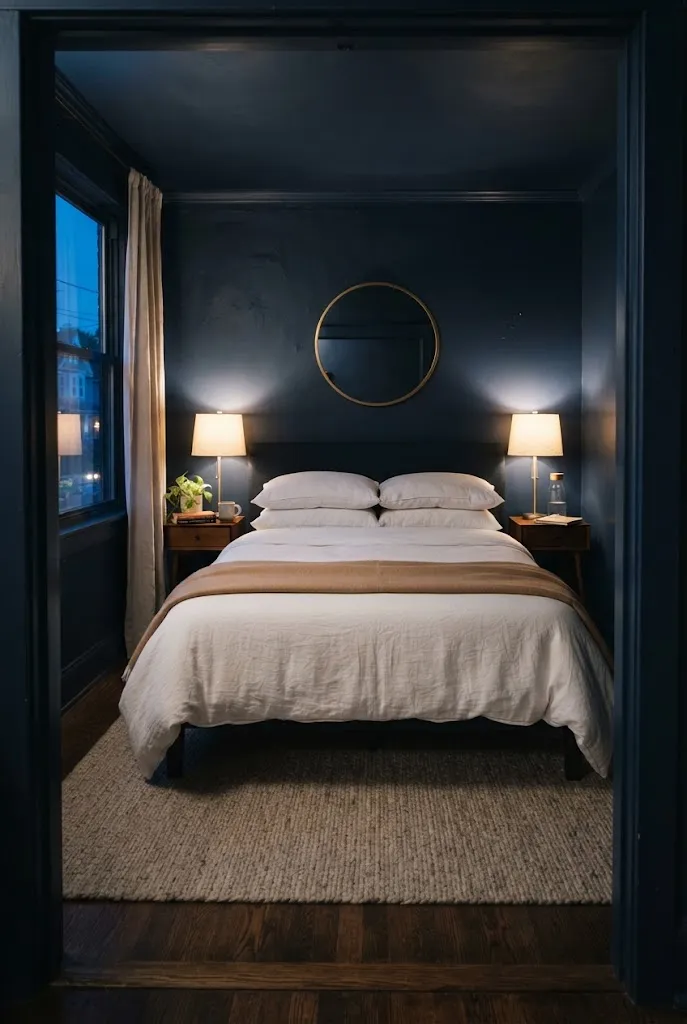
Small rooms don’t have to be pale. A deep navy, forest green, or charcoal can make walls recede and give the room a snug, cocoon-like feel. Because the edges of the room become hard to read, the space can feel less boxed in, especially at night.
This works best when you add enough light, with warm lamps and a light bedding, so the room doesn’t feel like a cave. Keep trim and ceiling in the same color for a seamless look, or paint the ceiling a lighter tone if you need a little lift.
Quick Tip: Use a matte or eggshell finish. Gloss on a dark wall shows every flaw and reflects light in ways that feel harsh.
Where to Start
You don’t need all 24 ideas. Pick the one that solves your most annoying problem first. If you keep tripping over furniture, start with the layout (ideas 1, 2, or 22). If the room feels dark, start with paint, mirrors, or lighting (3, 6, or 19). If it’s cluttered, look at storage (4, 13, or 15).
Make one change, live with it for a week, and see how the room feels before adding another. Small bedrooms usually improve through a few good decisions rather than a lot of new things.