

30 Cozy Reading Nook Ideas for Any Corner of Your Home
A reading nook doesn’t need a spare room or a custom build. It needs a comfortable seat, light that falls on the page instead of in your eyes, and a spot to set down a mug without getting up. That combination fits into a window frame, a stair landing, a closet, or the dead corner beside a bookshelf. These 30 reading nook ideas cover American homes of very different sizes, from rentals where nothing can be drilled to older houses with sloped ceilings and homes with room for built-ins. Some can be finished in an afternoon. Others are mid-range upgrades, and a few are custom projects worth borrowing from. Each includes practical notes on seating, lighting, and scale, so you can pick a corner and start planning.
1. Dress a Bay Window With a Deep Cushioned Seat
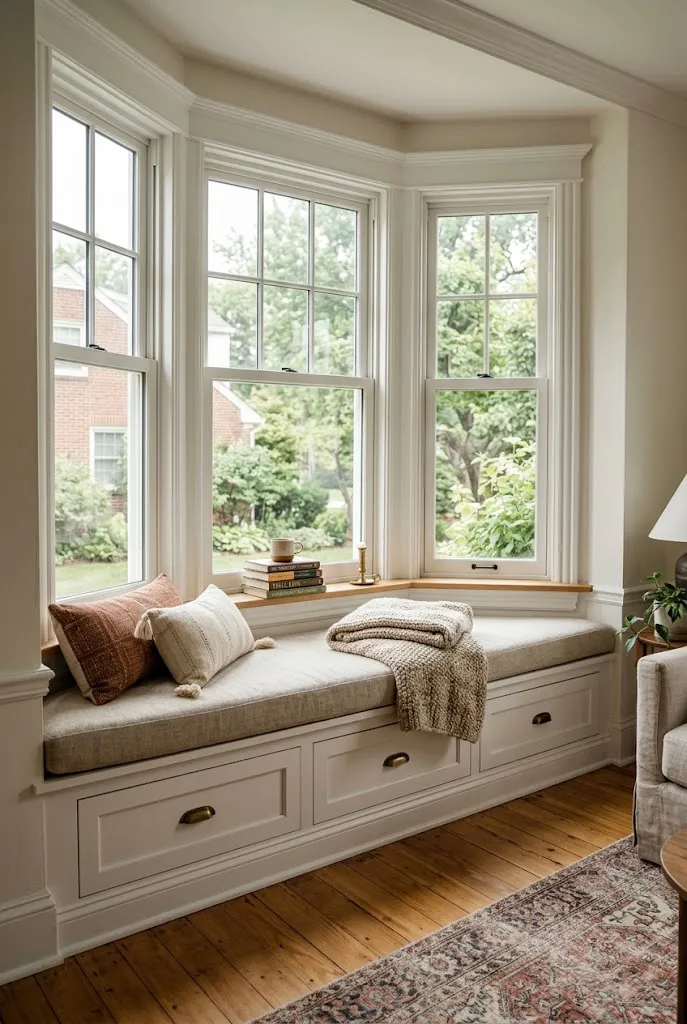
A bay or box window already forms an alcove, so a bench seat there looks intentional rather than added on. Aim for a seat deep enough to sit sideways with your legs up, which usually means around 20 inches. Drawers or lift-up lids underneath hold blankets and paperbacks. Add two bolster pillows at either end so you can lean against the window frame.
| Cushion fill | Feel | Best fit |
|---|---|---|
| High-density foam | Firm, holds its shape | Daily sitting |
| Foam wrapped in batting | Softer edges | Long lounging sessions |
| Plush topper over foam | Pillowy | Occasional reading |
Choose a washable cover, since sunlight and pets are hard on fabric.
2. Claim a Bare Corner With an Armchair, Arc Lamp, and Book Ledge
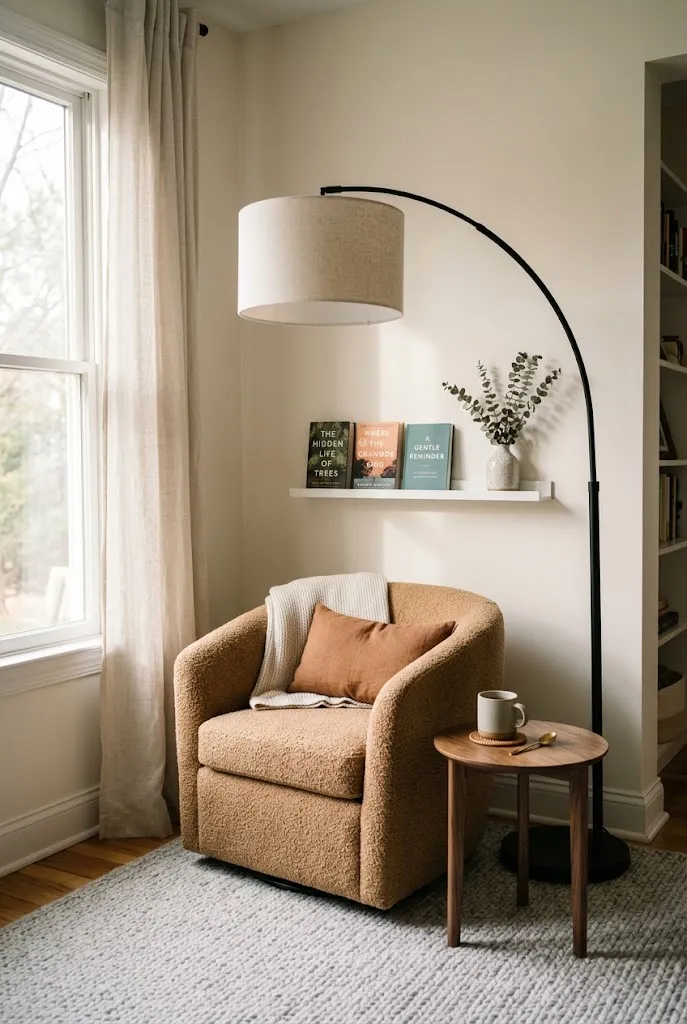
Nothing here requires construction. One comfortable armchair angled toward the room, an arc floor lamp that leans over the shoulder, and a slim picture ledge on the wall hold the whole setup together. The lamp places light on the page without a shade glare, and the ledge keeps your current reads within reach.
Do: angle the chair 30 to 45 degrees so you face the room instead of the wall.
Do: place a small side table on the lamp side so a mug has a home.
Don’t: push the chair flat against the wall, which makes the corner feel like storage.
Don’t: put a dark lamp base next to dark upholstery, because the lamp disappears.
3. Carve a Curved Alcove Beneath the Staircase
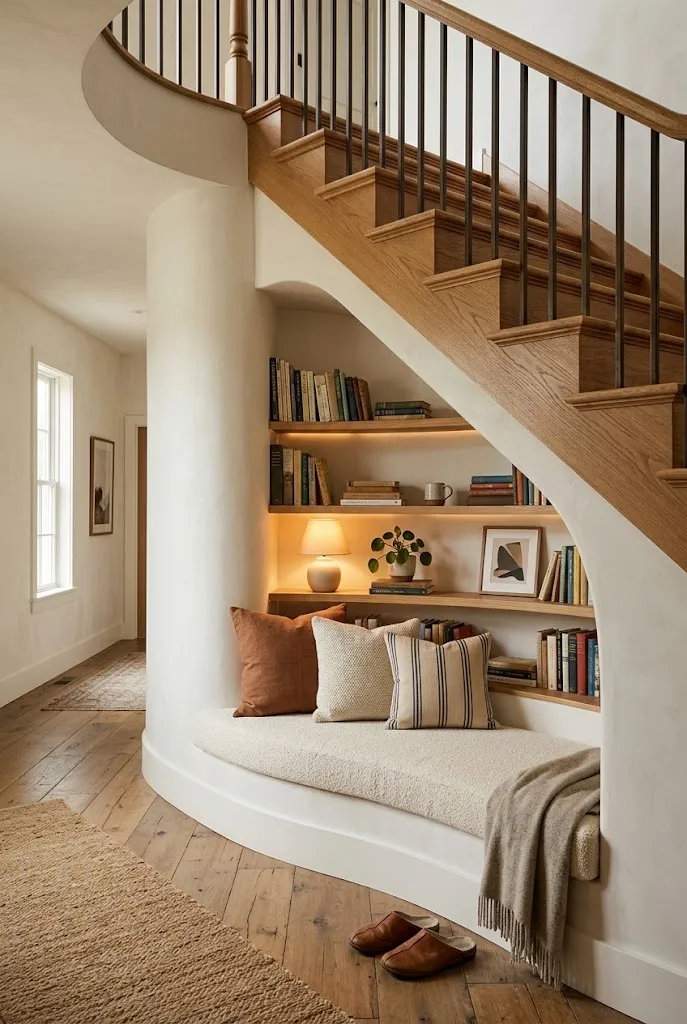
The space under a staircase is often wasted. A rounded plaster-look alcove with a low cushioned seat and built-in shelves turns it into a small private room. Low ceilings suit reclining, so think chaise-height seating rather than a standard chair. Recessed or LED strip lighting along the shelves means no cord has to cross the floor.
Editor’s Note: stair framing, headroom, and any electrical work should be checked against local building requirements before construction. A contractor can confirm what is possible in your home.
4. Hang a Sheer Canopy Over a Daybed
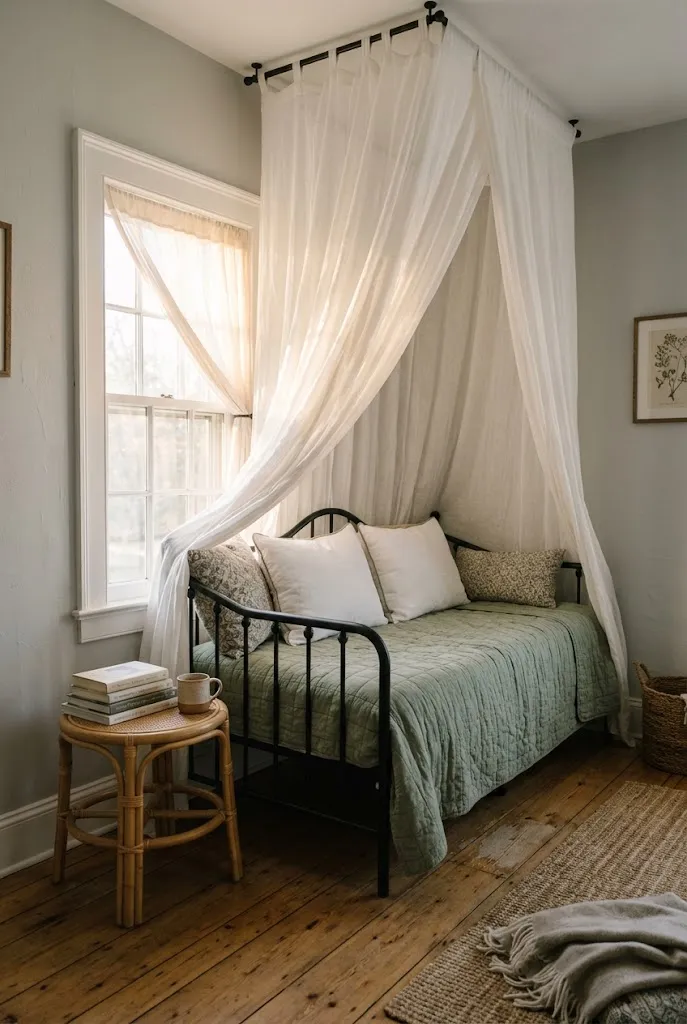
A daybed with a light curtain gathered above creates the sense of a separate room inside a bedroom. Mount a ceiling hook or a curtain rod above the head end and let a sheer panel drape down both sides. Keep the fabric light enough to let daylight through, and layer a quilt and two firm back pillows so it reads as seating by day.
- Choose linen-weave or voile in white, oatmeal, or pale sage.
- Use warm LED bulbs in any nearby lamp, and keep the fabric well away from hot bulbs and candles.
- Set a narrow side table at the foot or head rather than the middle.
5. Build a Renter-Friendly Corner With Peel-and-Stick Wallpaper and a Plug-In Sconce
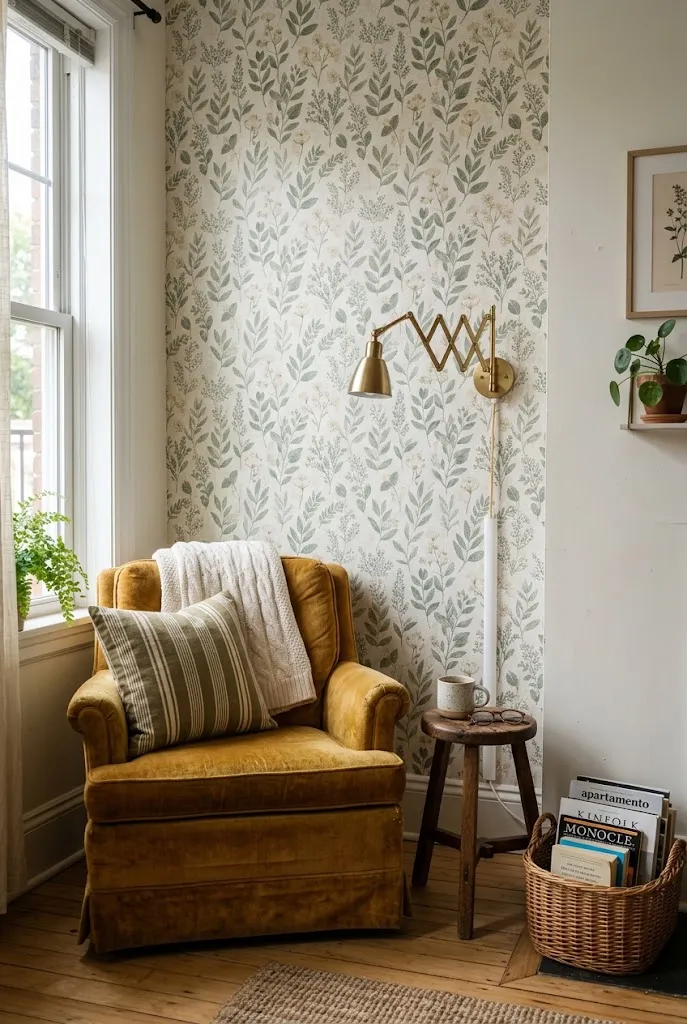
Rental rules often rule out paint and wiring, which makes this setup useful. Removable wallpaper on a single corner wall frames the seat, and a plug-in wall sconce with a cord cover provides reading light without an electrician. Pair them with a secondhand armchair and you have a defined corner for little money. Apply wallpaper to a clean, smooth, fully cured wall, and test a small patch first.
Quick Tip: hang the sconce so the bulb sits just above shoulder height when you’re seated, which lights the page without shining in your face.
6. Tuck a Reading Seat Into an Attic Dormer
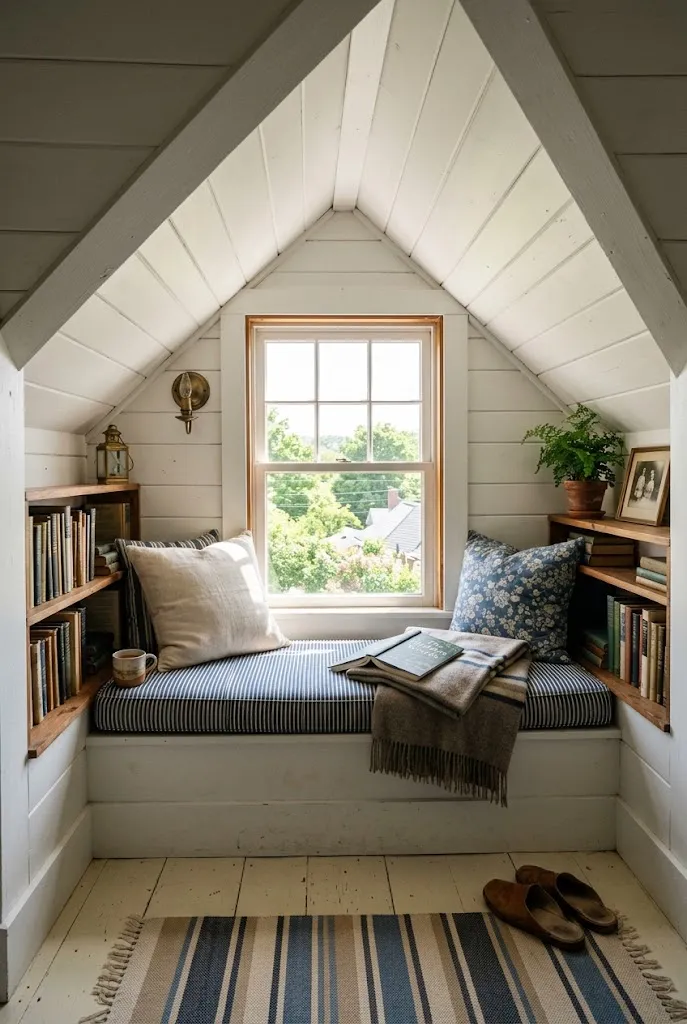
Sloped ceilings leave awkward spaces that suit sitting better than standing. A dormer window offers natural light and a built-in sitting height, so a fitted seat cushion with knee-wall shelves on either side works well. Keep the palette light and the furniture low so the slope feels cozy rather than cramped.
- Use low bookcases or cubbies in the knee wall space for storage.
- Choose a seat cushion in a tight-weave fabric that stands up to sun through the glass.
- Add a small rug so bare floorboards don’t feel cold underfoot.
7. Paint a Corner Deep Green and Add a Picture Light
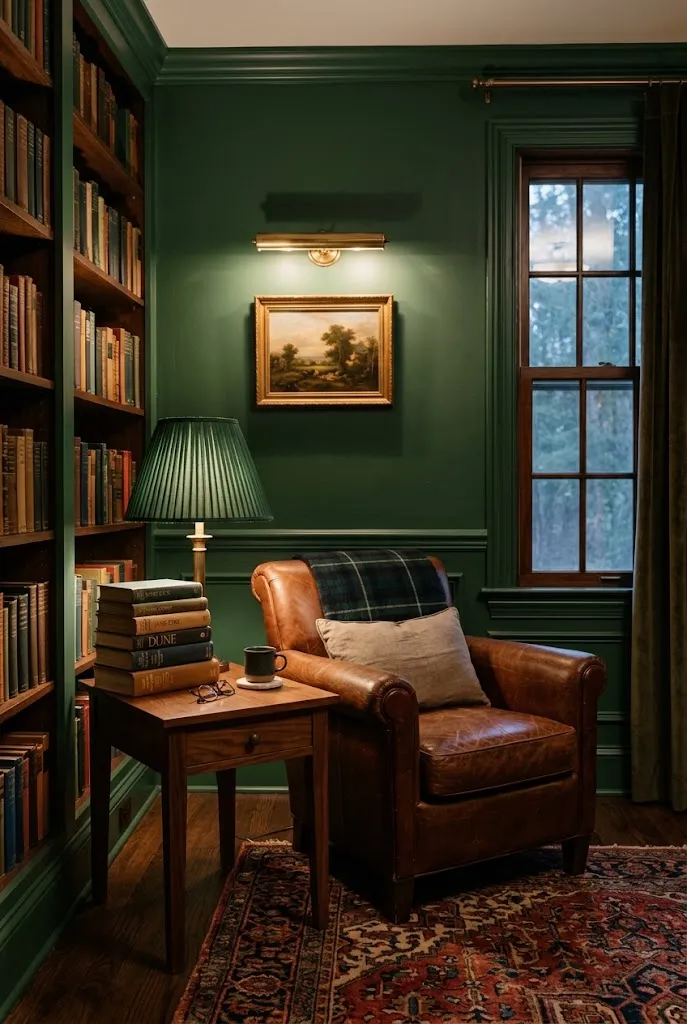
A saturated wall color wraps a small space like a book cover. Deep green, ink blue, and aubergine all suit evening reading, especially with warm lighting. Paint just the corner walls and the trim in the same shade so the nook reads as one enclosed shape. A brass picture light above a framed print adds focused light and a finished look.
Choose a matte or eggshell finish for a soft appearance, and check the color in your room at night as well as by day, because artificial light changes how dark shades read.
8. Layer Floor Cushions Into a Low Nook
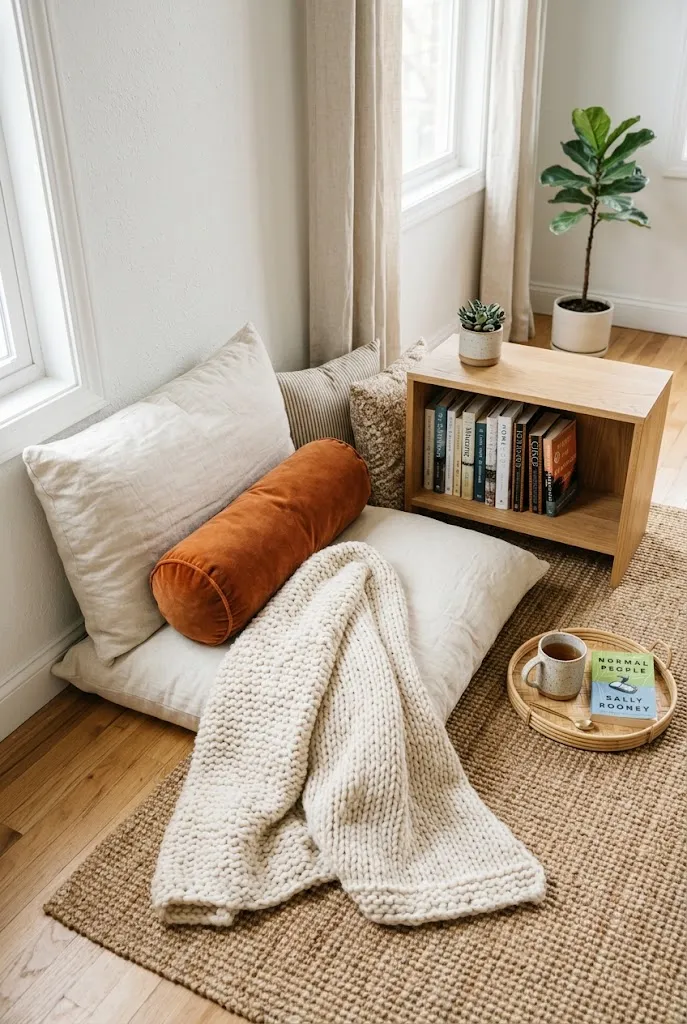
Floor seating suits readers who like to sprawl. Stack a large square floor cushion, a bolster, and a folded blanket against a wall to build a backrest, then place a low shelf or a crate of books within arm’s reach. It works in small apartments because nothing needs to be assembled.
Tips & Tricks
- Put a rug pad under the rug so the cushions don’t slide.
- Choose cushion covers with zippers so they can be washed.
- Add a wall-mounted lamp so a floor lamp doesn’t take up space.
- Keep the setup movable if the room serves other purposes.
9. Suspend a Rattan Chair in a Sunroom Corner
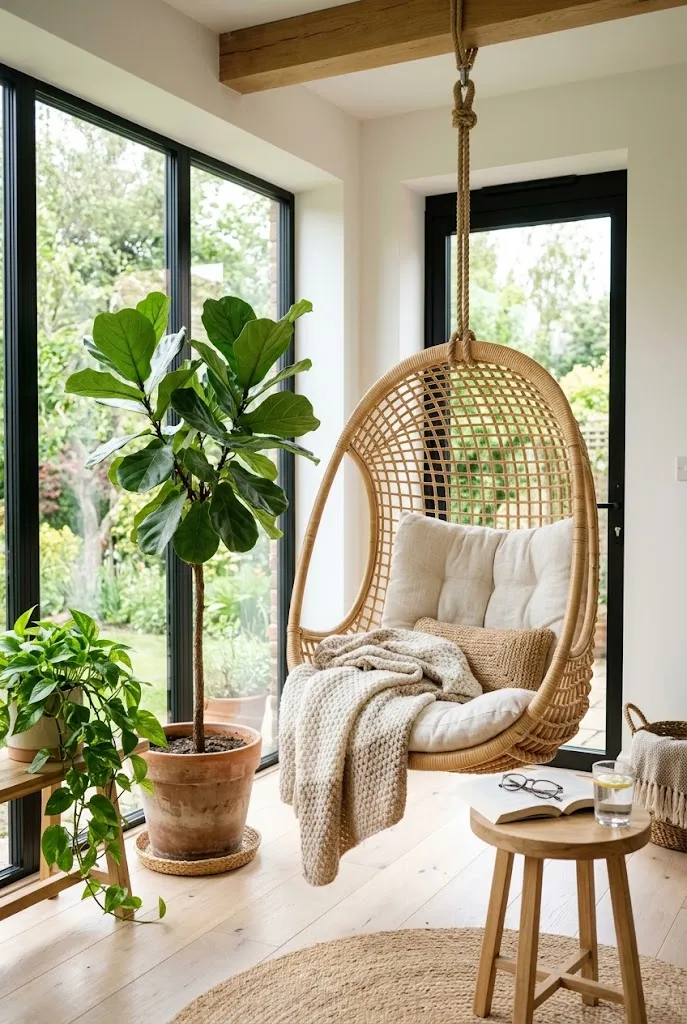
A hanging chair turns a bright corner into the most inviting seat in the house. Two mounting options are common, and the right one depends on your ceiling.
| Mount type | Advantage | Consideration |
|---|---|---|
| Ceiling joist hook | Fixed and free of floor clutter | Needs a joist and hardware rated for the chair and rider |
| Freestanding stand | No drilling, movable | Takes floor space and needs a stable, level base |
Confirm the weight rating of whichever hardware you choose, and add a thick cushion and a small side table.
10. Convert a Closet Into a Private Reading Pocket
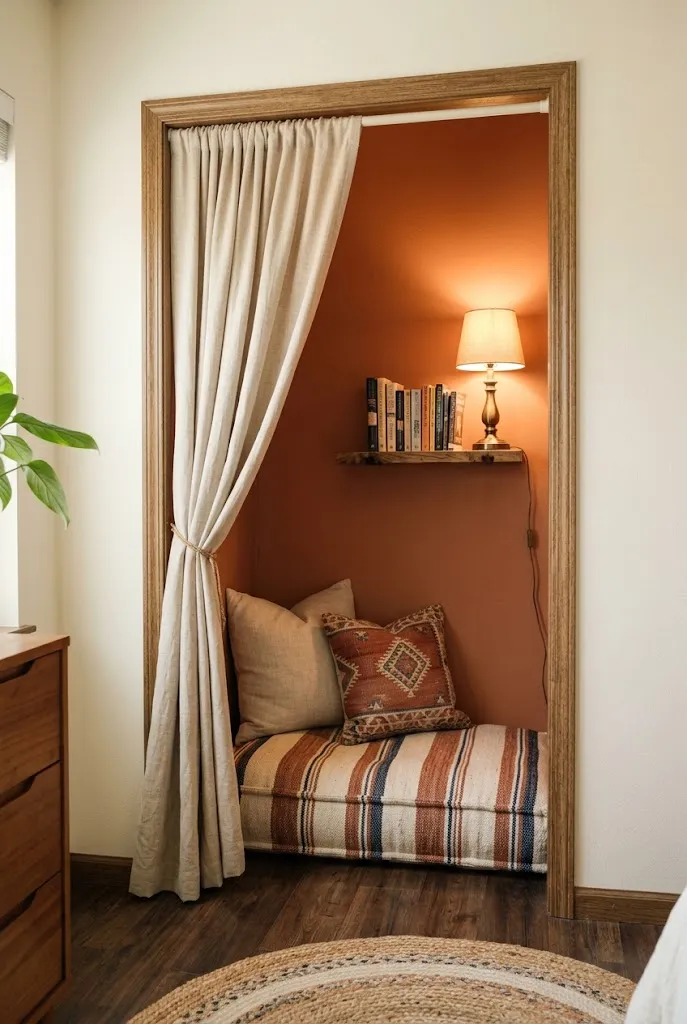
A closet that holds little can become the most private spot in the home. Treat it like a small room: remove the doors or swap them for a curtain, paint the interior a warm color, and fit a cushion and a light.
- Empty the closet and remove the rod and shelves that you don’t need.
- Paint the interior, ceiling included, in a warm mid-tone.
- Add a bench-height platform or a thick floor cushion.
- Install a battery or plug-in LED light, then a shelf at arm’s reach.
- Add a curtain or a curtain rod in place of doors if you want a cozy enclosed feel.
Leave airflow in mind. A tightly enclosed space with no ventilation can feel stuffy during longer sessions.
11. Set a Cushion on the Stair Landing Window
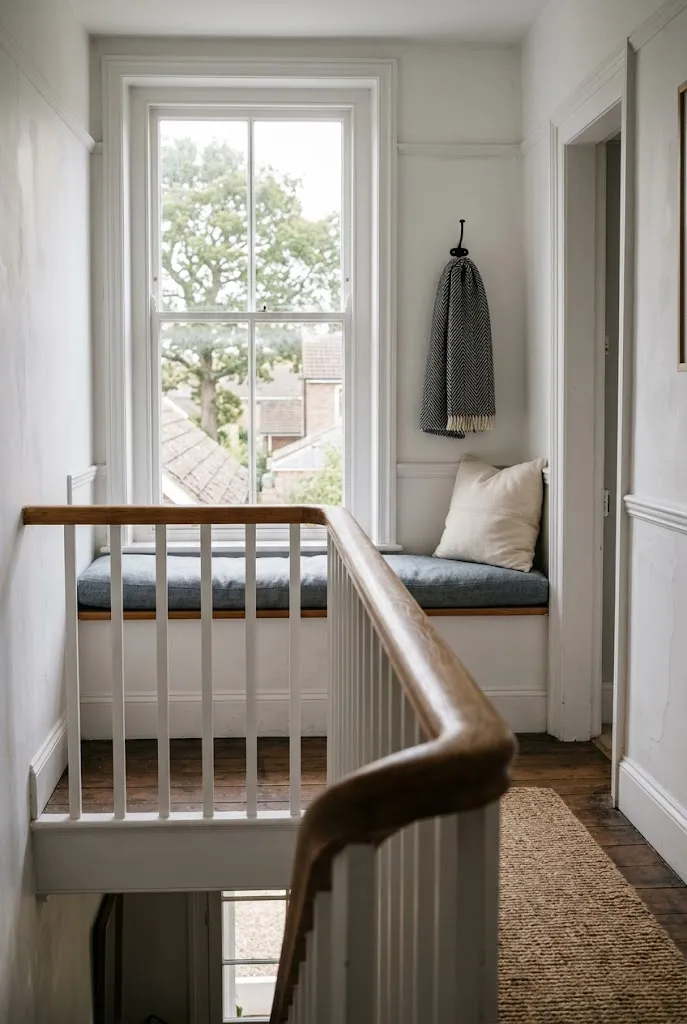
A landing with a window is a quiet, overlooked spot. A custom-cut seat pad on the sill, with a pillow and a small hook for a throw, gives it a purpose. You don’t need a bench here if the sill is deep enough, which saves the cost and effort of building.
Quick Tip: measure the sill depth before you buy a cushion, and look for a pad with a non-slip base so it doesn’t creep off a smooth surface.
Keep the walkway clear. A landing is still a path, so choose slim items that don’t crowd the stairs.
12. Flank a Built-In Bookcase Alcove With a Bench
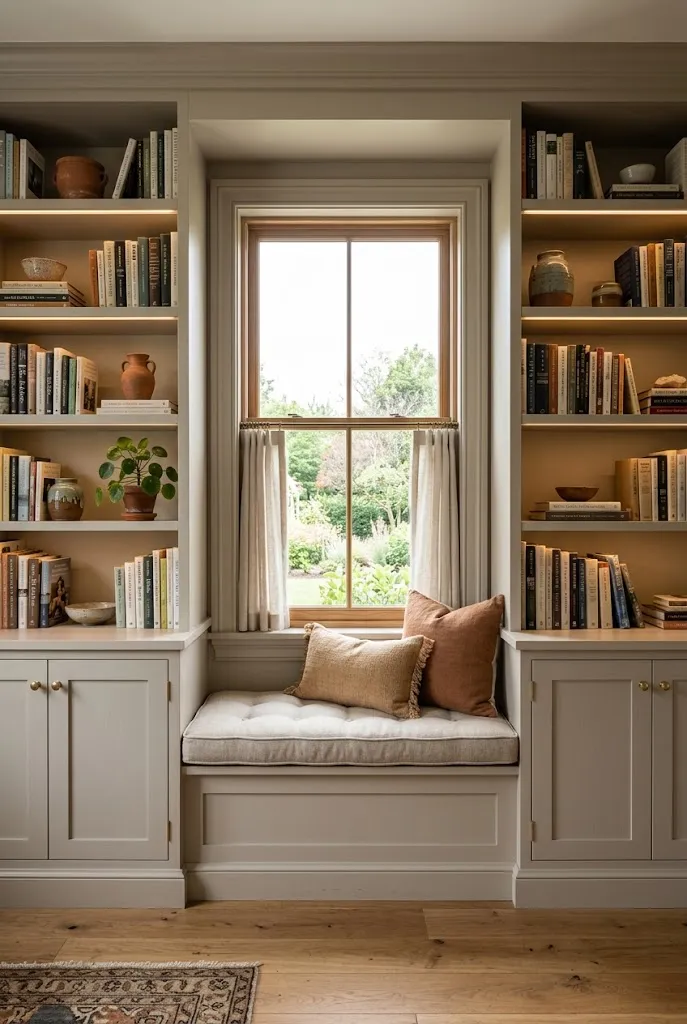
A recessed wall between two shelving units gives you the classic library nook. A bench seat with a cushion runs across the center, with cabinets below and shelves above. Custom millwork is the most expensive route here, so check semi-custom or modular cabinet options that are trimmed to look built in.
Do: paint the shelves and the back wall in a single color for a unified look.
Do: add light inside the shelves so books glow in the evening.
Don’t: fill every shelf edge to edge, because a few empty gaps keep the alcove from looking heavy.
13. Keep It Light With a Scandinavian Corner
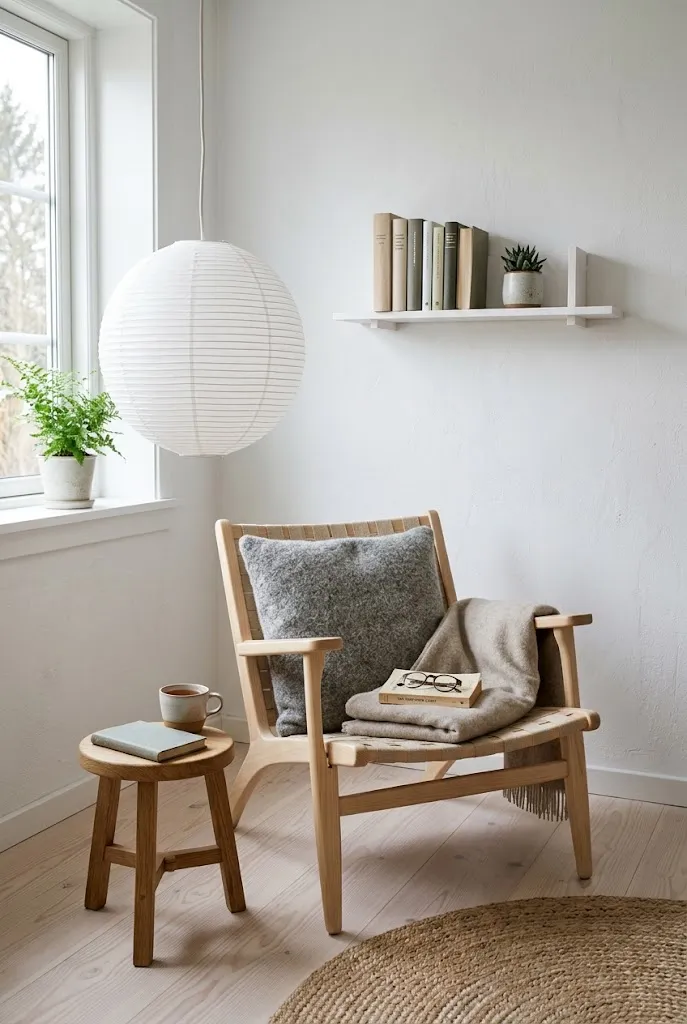
Pale wood, white walls, and one soft textile make a calm, uncluttered spot. A birch or ash lounge chair with a wool-look cushion, a paper lantern pendant, and a simple stool as a side table are enough. This approach suits small apartments because the pieces are slim and the colors keep the room open.
- Choose a chair with exposed legs so the floor stays visible.
- Use one wool or cotton throw in a muted color.
- Add a single plant or branch in a plain vase.
14. Turn the Space Under a Loft Bed Into a Hideaway
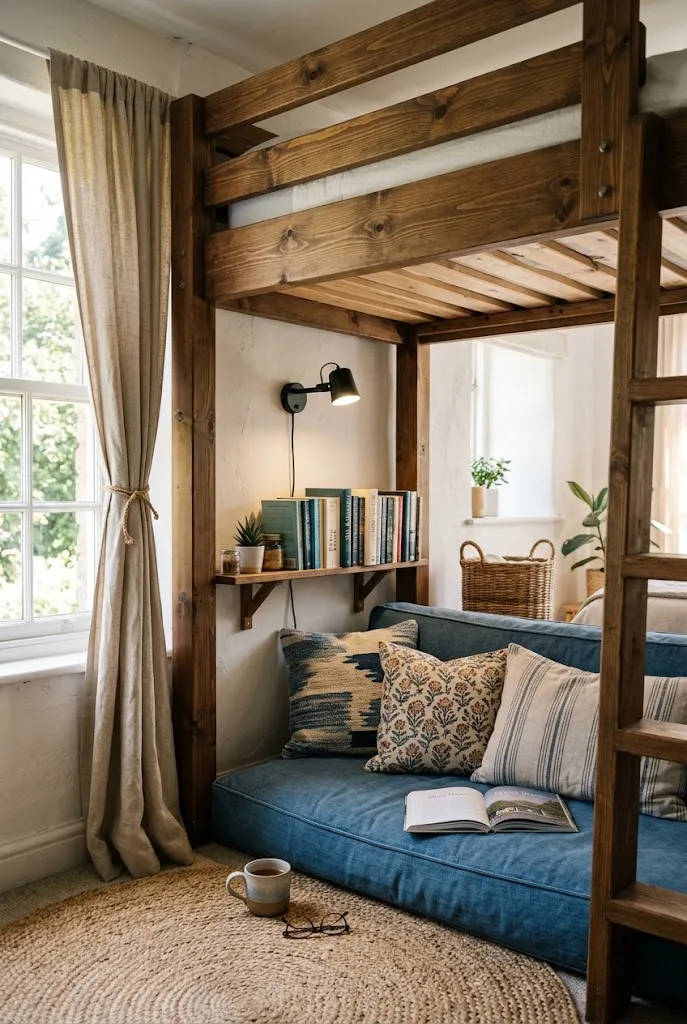
A loft bed leaves room underneath for a nook. A low sofa or large cushion, a wall-mounted light, and a curtain on one side make it a retreat inside a bedroom. Check clearance first: you want to sit comfortably without bumping the frame.
Tips & Tricks
- Use clip-on or wall LED lights so you don’t need a lamp base.
- Hang a lightweight curtain on a rail to close off the space when you like.
- Choose a mattress-height seat so the nook doesn’t feel too tight.
- Keep cords tidy and out of reach from the bed above.
15. Pair a Wingback With a Tea Table in a Cottage Corner
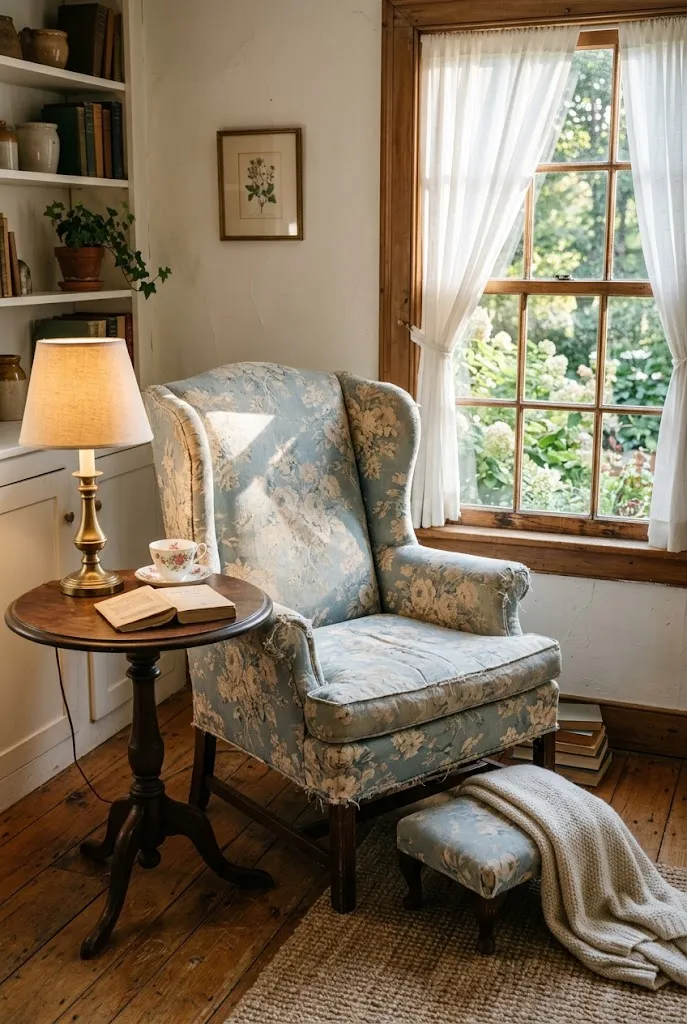
A wingback chair gives your head and shoulders support, which is useful for longer reading. Upholster in a small floral, a faded stripe, or plain linen, and add a pedestal table with a lamp and a teacup. The effect is old-fashioned in a pleasant way, and it suits older homes with trim and wood floors.
- Choose a chair with a seat height that lets your feet rest flat.
- Add a footstool to extend the seat.
- Pick a lamp with a shade that diffuses the light.
16. Pull Two Poufs and a Throw Beside the Fireplace
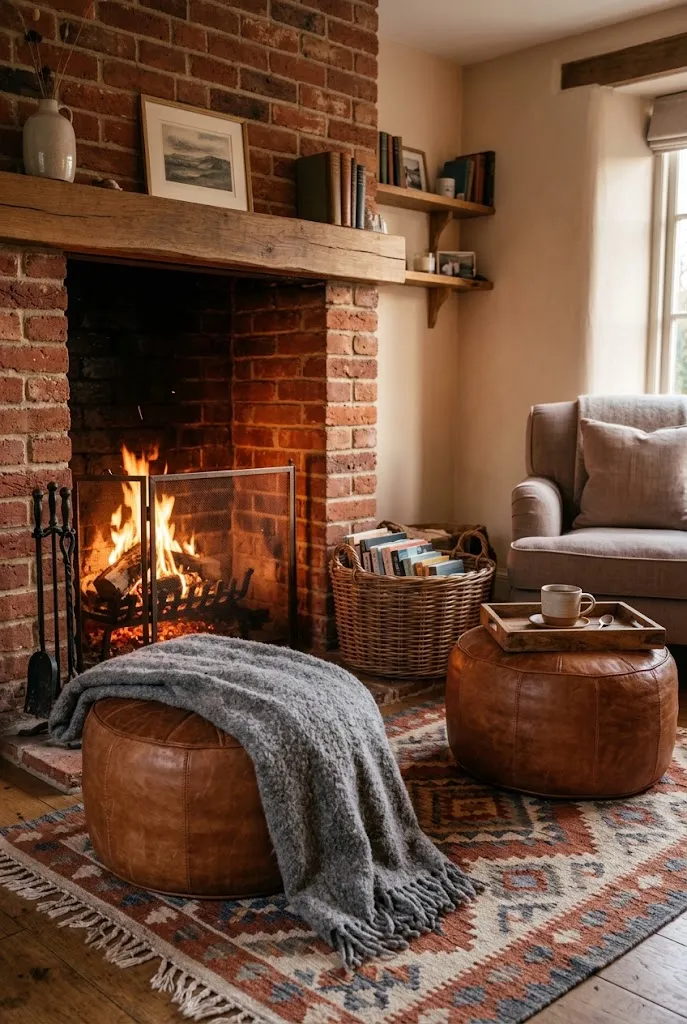
A fireplace draws people in on its own, and a nook beside it needs little more than seating that can move. Use two leather or woven poufs, a wool throw, and a basket of books, so you can sit close to the fire or move farther back. A rug under the poufs keeps things neat.
- Pick materials that tolerate warmth, and keep fabrics and baskets a safe distance from the firebox.
- Use a fireplace screen if you have an open fire.
- Add a small tray for a cup so nothing sits on the hearth edge.
17. Hang a Porch Swing and Add Weatherproof Cushions
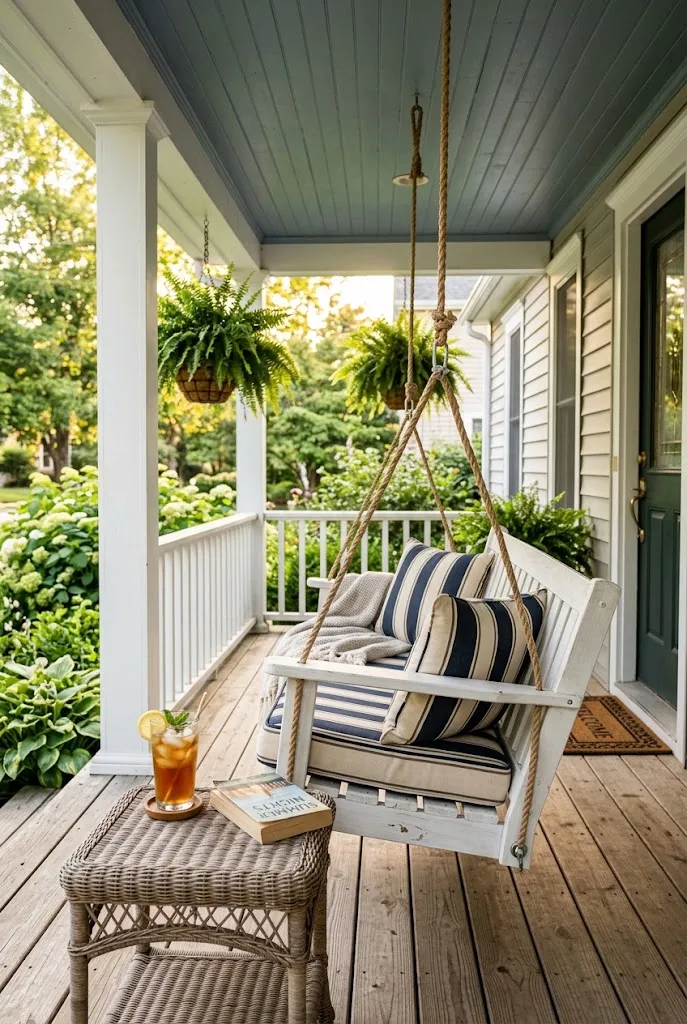
A covered porch can serve as a reading room from spring through fall. A swing with an outdoor cushion and a small side table is enough. Choose fabric labeled for outdoor use and be sure the hanging hardware and the ceiling beam are suitable for the swing’s weight rating.
Quick Facts
Best For: covered porches and screened patios
Investment: moderate
Visual Effect: relaxed and airy, with room for plants
Bring a blanket on cooler evenings, and consider a hook for a lantern.
18. Gather Boho Poufs, Macramé, and Plants
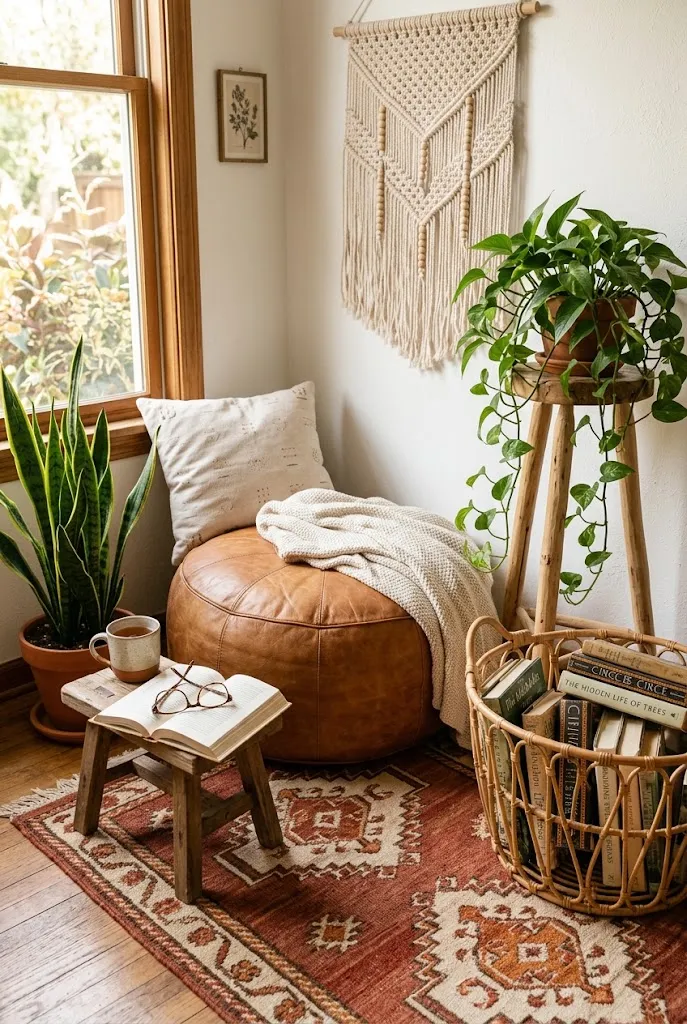
Layered texture defines this look: a low floor pouf, a woven rug, a macramé wall hanging, and a couple of plants at different heights. It suits readers who like color and pattern, and it comes together with thrifted and inexpensive pieces.
Common Mistake: covering every surface in pattern, which makes the space look busy.
Better Approach: pick two patterns and one solid, then repeat a single accent color three times. The nook looks collected rather than crowded.
19. Pair a Mid-Century Lounge Chair With a Brass Arc Lamp
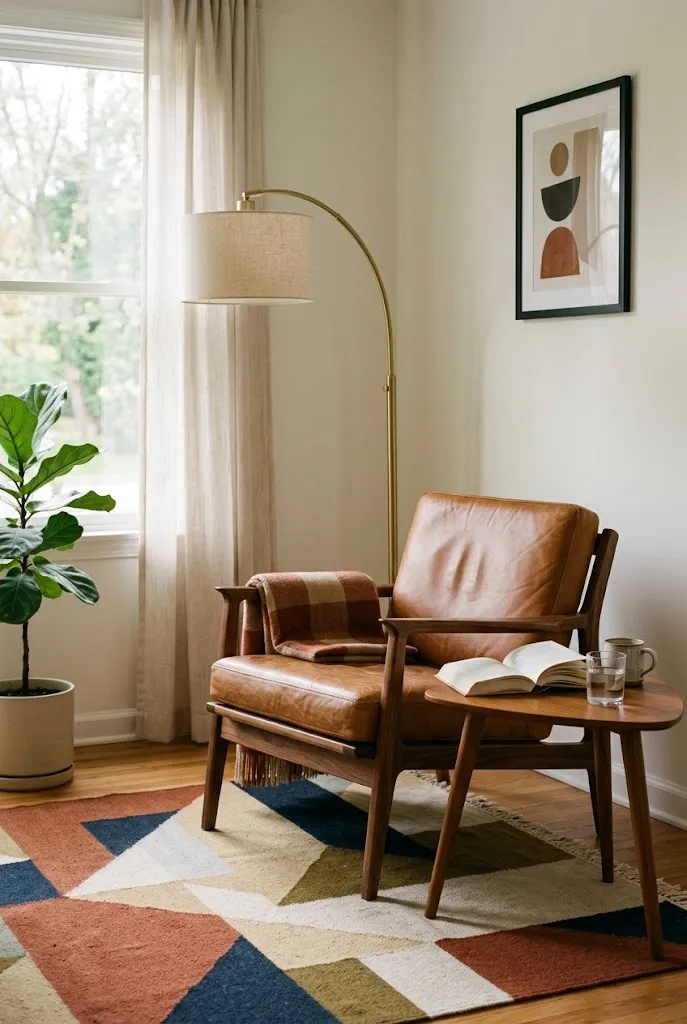
Clean lines, a walnut frame, and a leather or wool seat give a corner a polished look without a lot of items. An arc lamp or a slim brass floor lamp provides focused light, and a small teak side table holds a drink. Authentic vintage pieces can be expensive, so look at reproductions or secondhand finds.
Quick Facts
Best For: living rooms and offices with some floor space
Investment: moderate to premium
Visual Effect: structured, with warm wood tones
20. Place a Bench Under a Garden Pergola
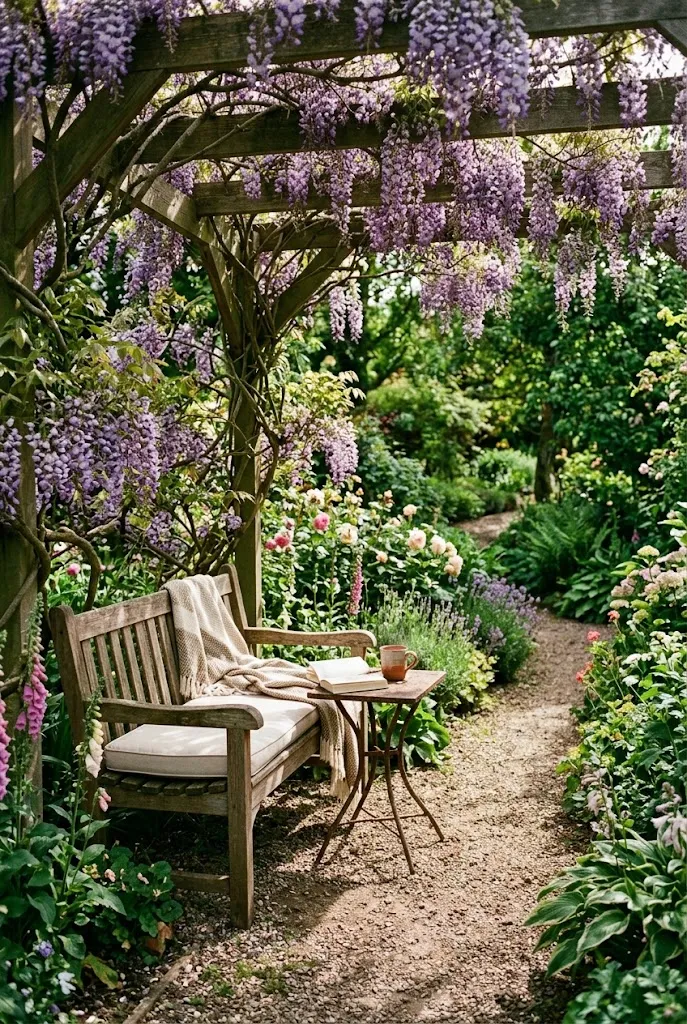
An outdoor nook can be as simple as a bench in the shade of a pergola with climbing vines. Choose weather-resistant wood or metal, add a removable cushion, and keep a small table nearby. Gravel or pavers beneath keep the ground stable and help shoes stay clean.
Editor’s Note: choose vines and plants suited to your region’s climate, and ask a local nursery if you are unsure. Keep shade and sun in mind, since a spot that’s cool in the morning may be hot by afternoon.
21. Lay a Chaise Lounge Along Floor-to-Ceiling Windows
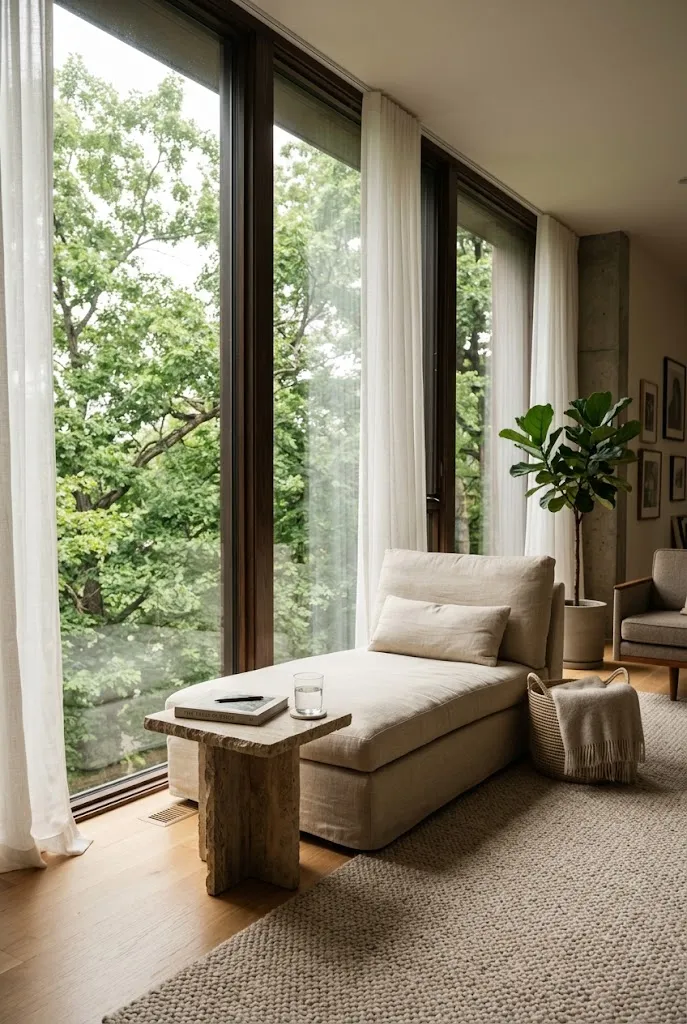
When a room has big windows, a chaise lets you recline and watch the light change. Position it perpendicular to the glass so you can look outside without sitting directly in glare. Add sheer curtains for softness and a side table with room for a book and a drink. This is a higher-investment idea, so treat the chaise as the focal furniture and keep everything else simple.
22. Reclaim the Breakfast Banquette for Weekend Reading
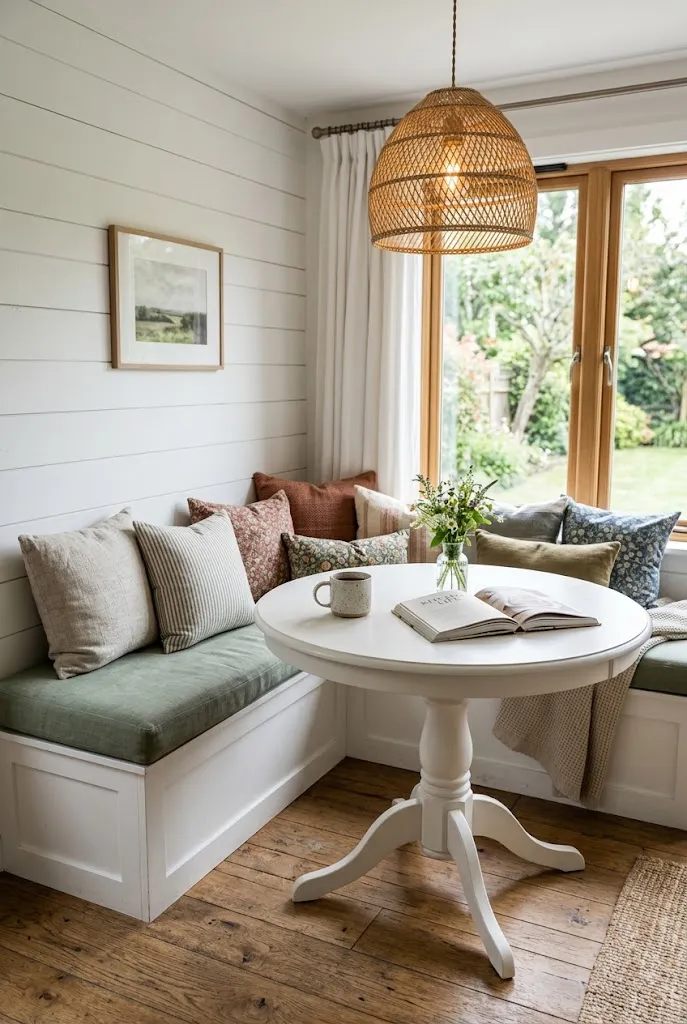
A kitchen banquette is already a comfortable seat. Add a thick cushion, a few pillows, and a pendant or sconce so it works well after the morning meal. A small table in front can hold a laptop or a book, which makes the spot useful at any hour.
- Choose a cushion cover that handles spills.
- Use hooks nearby for a throw blanket.
- Pick a dimmable pendant so the light can shift from morning to evening.
23. Add a Reading Zone to a Home Office Corner
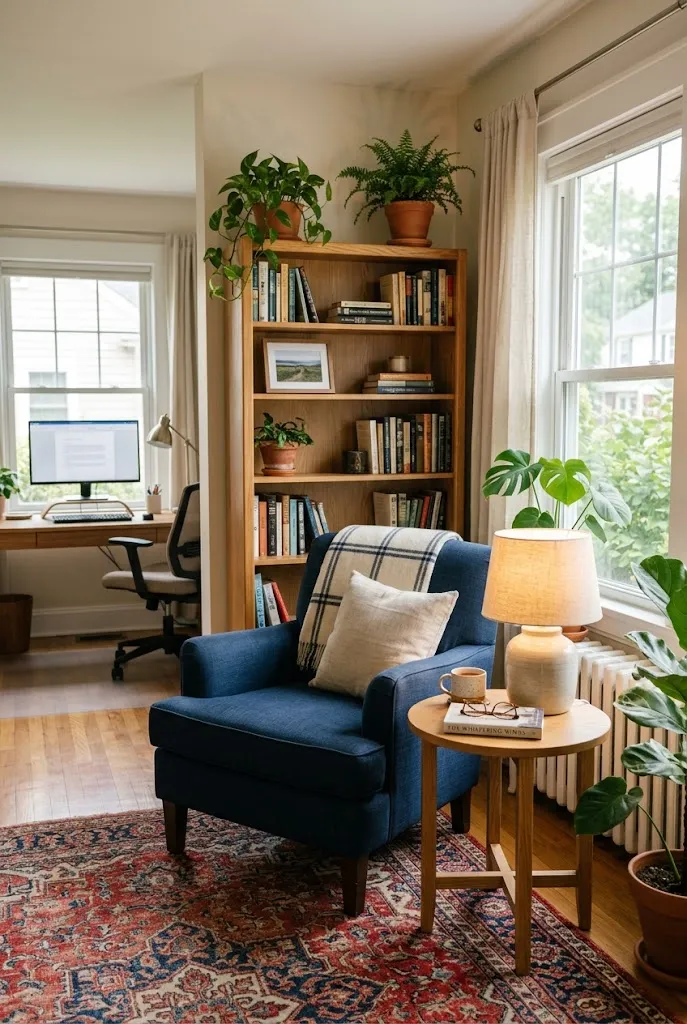
Many home offices have an empty corner that suits a chair and a lamp. Separating a reading spot from the desk gives you a place to switch off work mode. Choose an armchair or a small loveseat, a task or floor lamp, and a rug to mark the area.
- Position the chair so it faces away from the desk.
- Use a different light for reading so the corner feels distinct.
- Keep a bookshelf or a basket for non-work books.
24. Carve Out a Curtained Alcove in a Studio Apartment
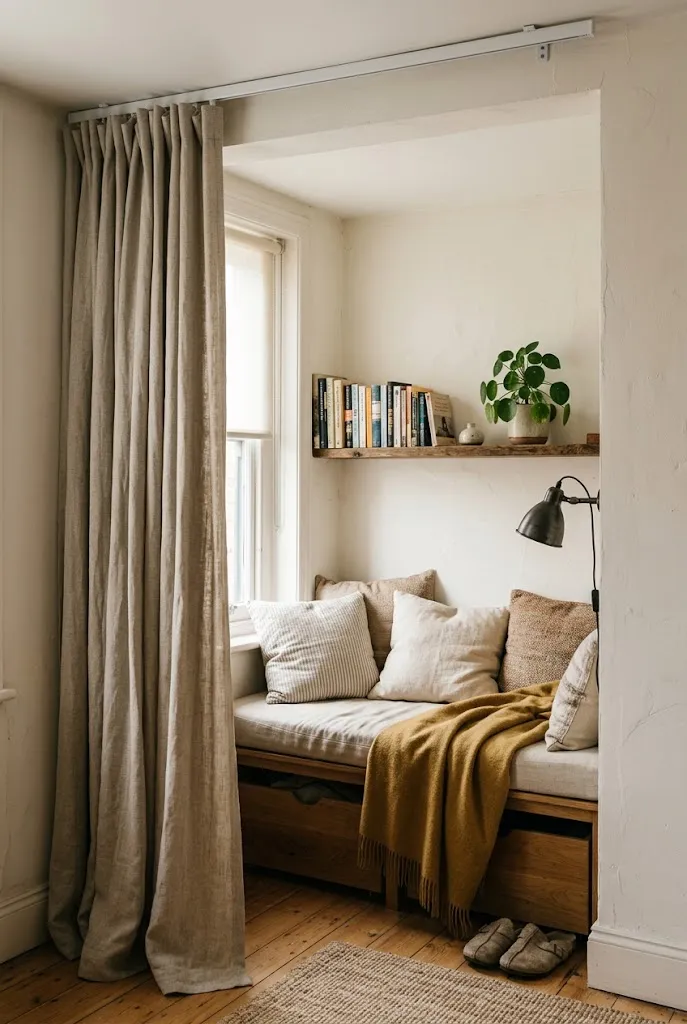
In a studio, a curtain on a ceiling track can separate a sleeping or sitting area. A narrow alcove with a pillowed seat and a clip-on light becomes a defined reading spot. Choose a curtain in a heavy linen or cotton so it blocks visual clutter.
Tips & Tricks
- Use a tension rod or a ceiling track depending on what your lease allows.
- Pick a seat with storage, such as a storage ottoman.
- Match the curtain to your wall color so it blends in.
- Add one soft light inside the alcove.
25. Add a Rolling Ladder and a Leather Chair to a Wall of Books
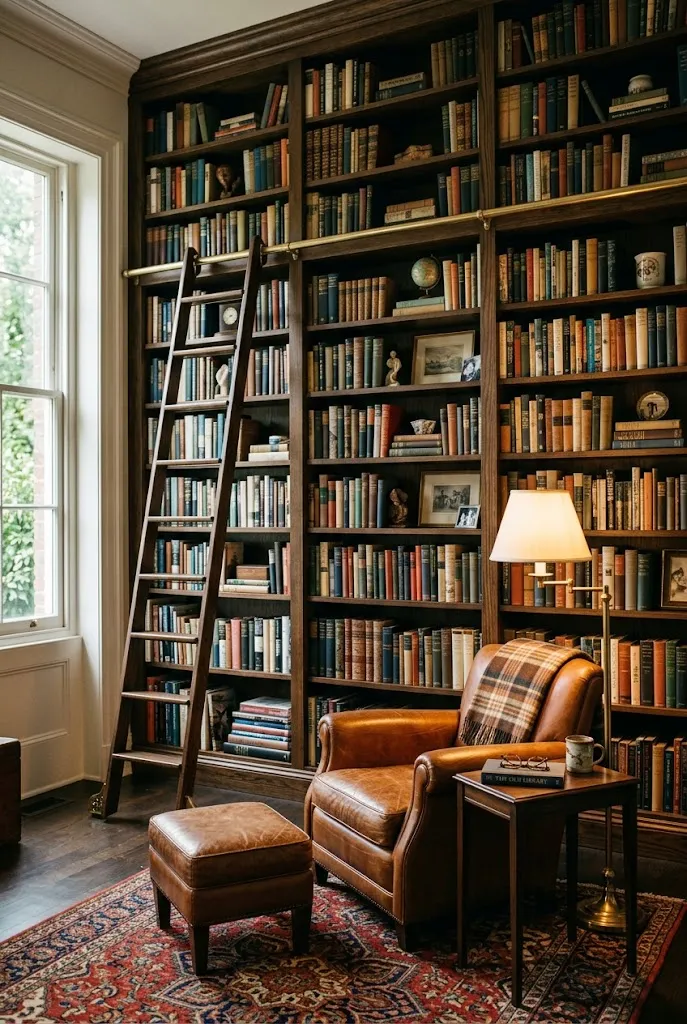
A full wall of shelving makes a home library feel real. A rolling ladder on a rail adds function and visual interest, and a leather chair with a footstool sets the reading spot. This is a premium idea, and it works best in a room with enough height. A smaller version with a tall bookcase and a library step stool captures the feel.
Quick Facts
Best For: larger rooms, dens, and studies
Investment: premium
Visual Effect: traditional and substantial
26. Build a Storage Bench Window Seat From Stock Cabinets
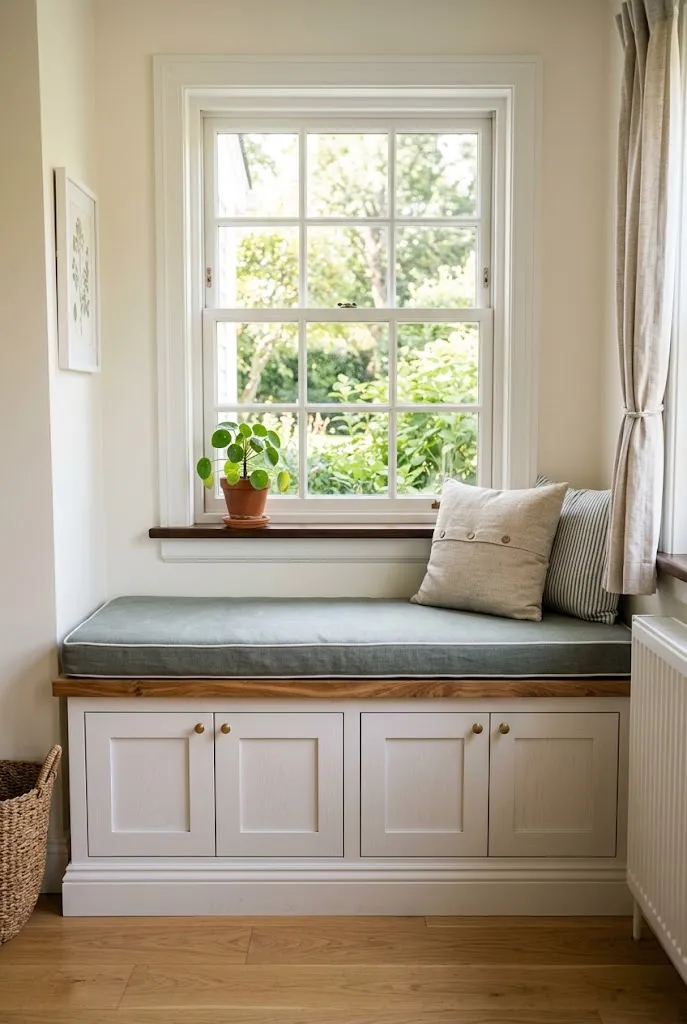
You can create a window seat without custom carpentry by using ready-made base cabinets lined up under a window and topped with a cushion. It costs less and gives you storage.
- Measure the window width and sill height, then choose cabinets that fit.
- Level and secure the cabinets to each other and to the wall studs.
- Add a plywood or butcher block top, trimmed to overhang slightly.
- Caulk and paint the cabinets and trim to match your room.
- Add a custom-cut cushion and pillows.
Check the finished height so your feet can rest comfortably, and make sure the unit is firmly anchored.
27. Make the End of a Long Hallway Worth Sitting In
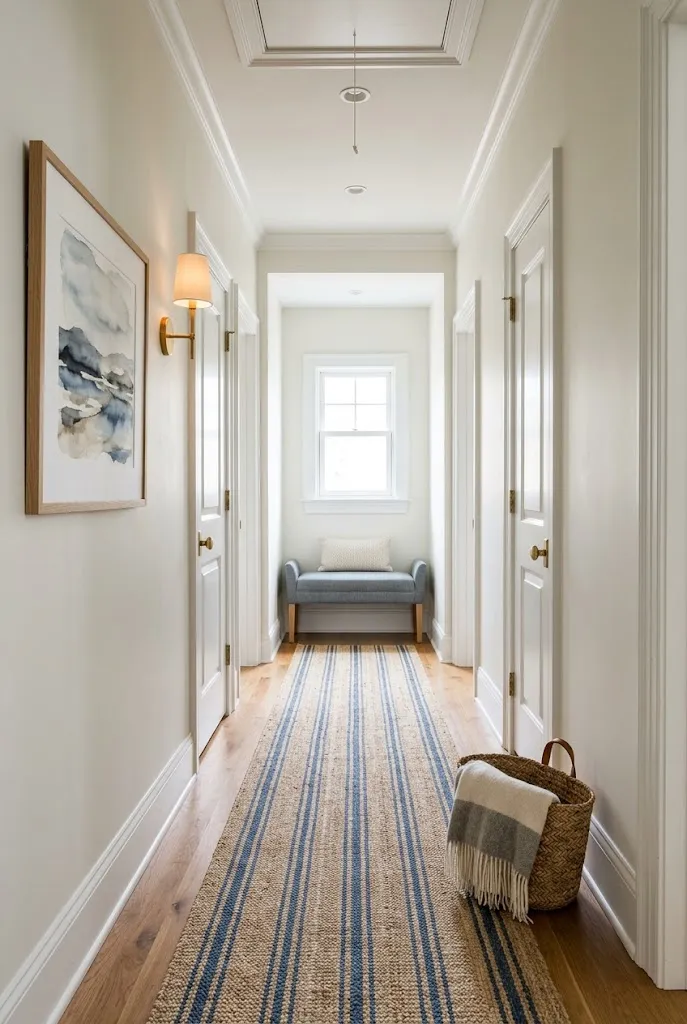
A hallway that ends in a blank wall or a small window can hold a narrow bench or slim chair. Add a runner, a wall light, and a small piece of art. In the right spot, the hall turns from a passage into a destination.
Before / After Logic: a hallway with nothing at the end draws the eye to a plain wall. A slim seat and a light give the eye somewhere to land and give you a reason to stop.
Common Mistake: adding a bulky chair that narrows the walkway.
Better Approach: pick a slim profile and keep the path clear.
28. Put a Swing-Arm Light and a Small Shelf Beside the Bed
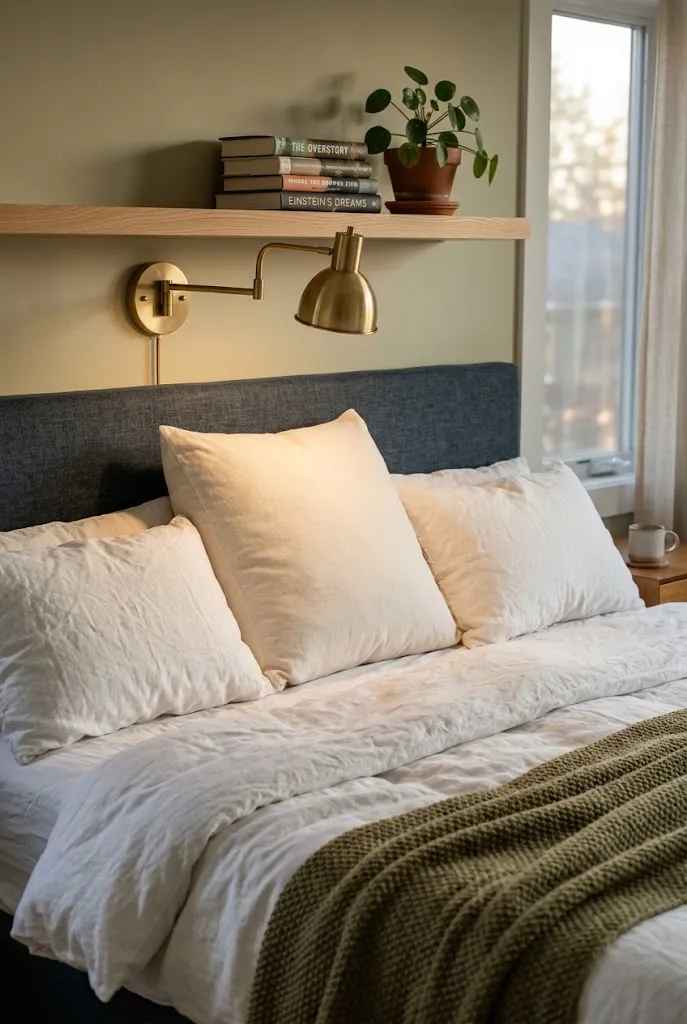
Bedtime reading works better with light aimed at the page, not at your partner. A wall-mounted swing-arm lamp, a floating shelf, and a comfortable pillow arrangement make the bed itself a nook. Choose a warm bulb that is gentle on the eyes at night.
Quick Tip: place the lamp so you can reach the switch without sitting up, and add a bed wedge or backrest pillow to support long reads.
29. Settle a Linen Sofa Into a Sunroom
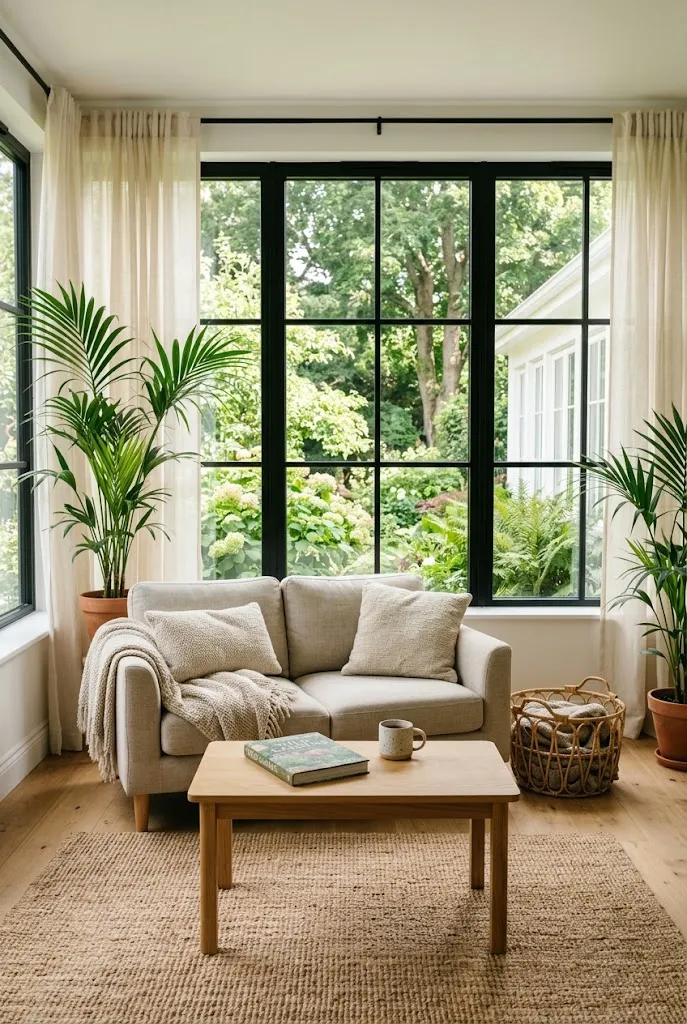
A small sofa in a sunroom invites long afternoons. Choose a washable linen or performance fabric, pair it with warm wood, and add a few plants. Use shades or sheers to manage glare and heat. A coffee table or ottoman gives you a place to rest your feet.
- Pick a cushion fill that bounces back after sun and use.
- Choose a rug suited to rooms with sun exposure.
- Use a small side table instead of a large coffee table to keep the room open.
30. Pitch a Kids’ Tent Under a Picture-Ledge Book Wall
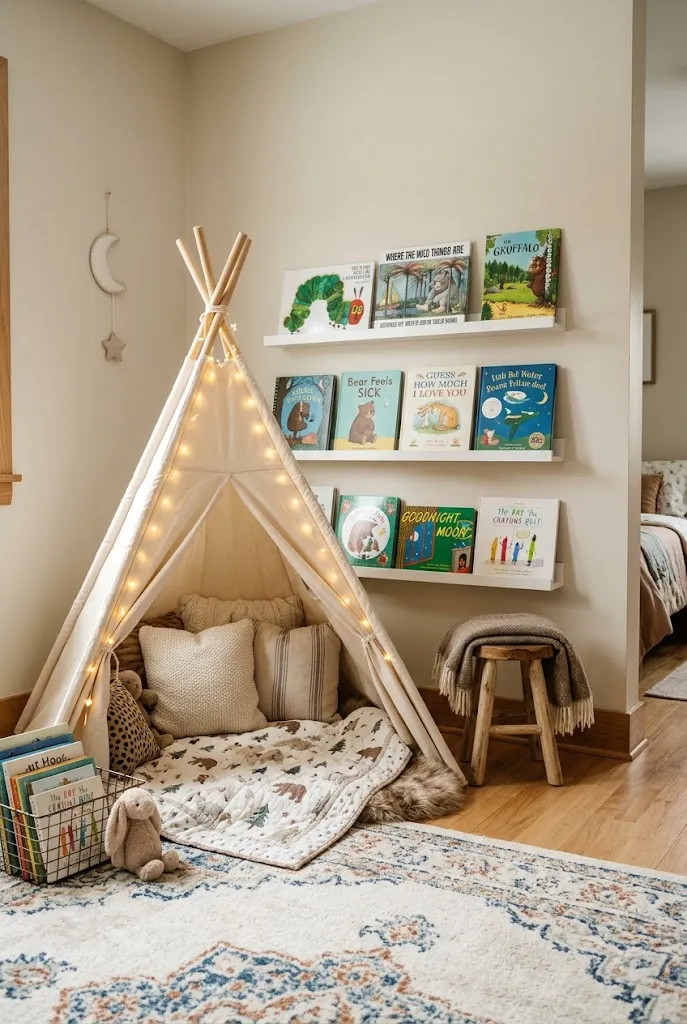
Children read more when books are easy to see. Picture ledges mounted at their height display covers face out, and a small tent or a canopy with cushions gives them a hideout. Use a stable tent base, keep cords out of reach, and pick a battery-powered light.
Tips & Tricks
- Mount ledges at child’s eye level and anchor them securely.
- Rotate books by season to keep interest high.
- Choose soft, washable cushions and a rug.
- Keep the tent away from heaters and heavy furniture.
How to Pick Your First Reading Nook
Start with the corner you already pass most often, since a nook near your routine gets used. Check the light at the hour you actually read, then add a lamp for the rest. Choose seating you can sit in for an hour without shifting, and keep one surface nearby for a drink. If your budget is tight, begin with a chair, a light, and a throw, then add shelves, paint, or a built-in later. A small nook that you use beats a large one that waits for a renovation.