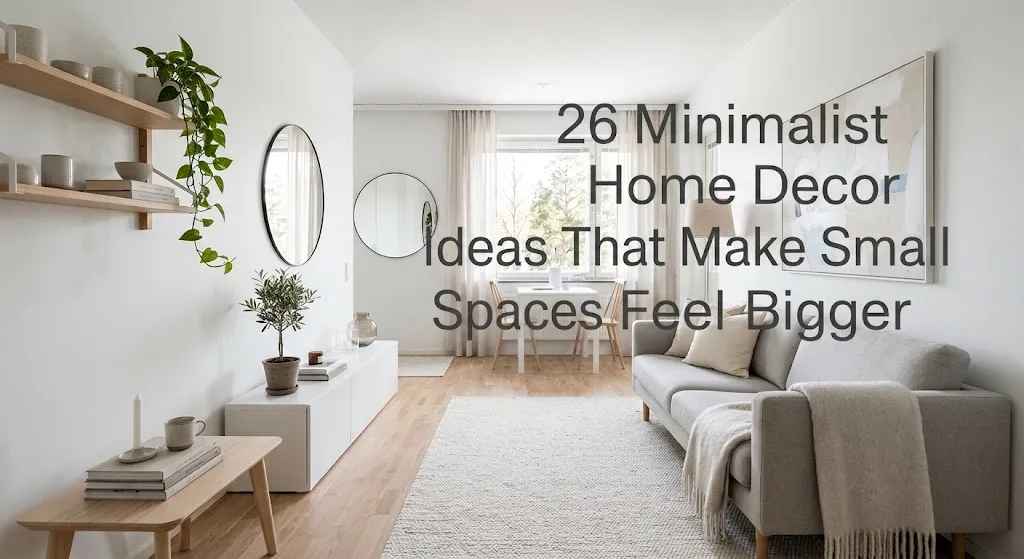
26 Minimalist Home Decor Ideas That Make Small Spaces Feel Bigger
In a small apartment or compact starter home, the walls don’t change, so the feeling of space comes from what you see. Visual clutter, heavy furniture, and too many competing colors shrink a room faster than square footage does. Minimalist home decor works because it edits that picture: fewer objects, calmer color, clear floor and wall areas, and storage that closes. The 26 ideas below range from renter-friendly changes you can make this weekend to built-in upgrades worth planning for. They cover living rooms, bedrooms, kitchens, entryways, and bathrooms, so you can borrow one idea or build a whole room around several.
1. Limit the Room to Three Colors
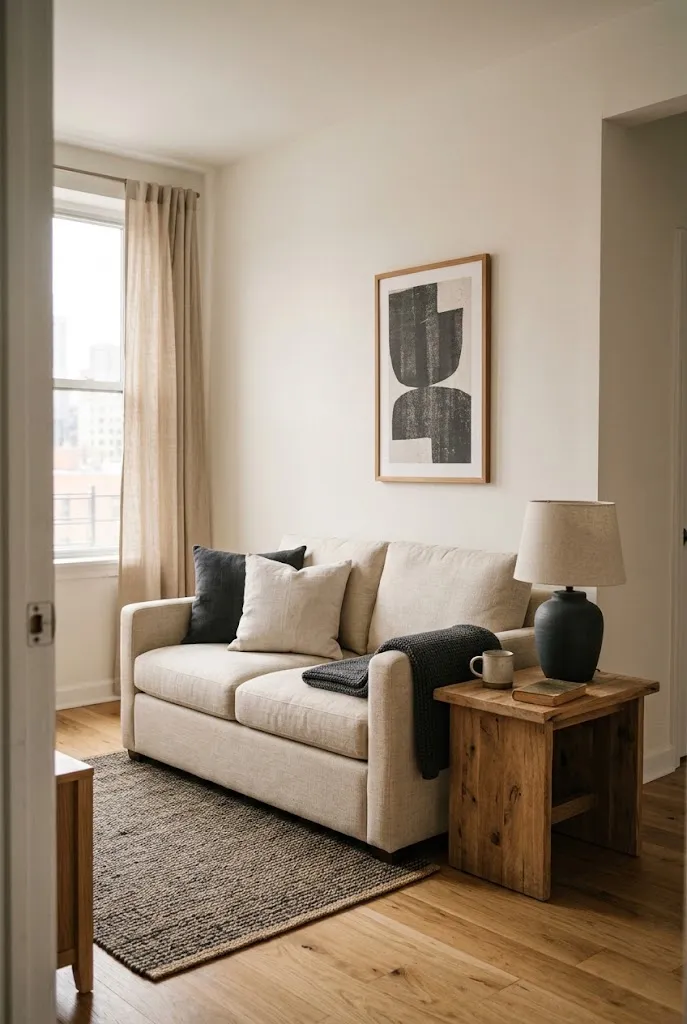
A small room reads as larger when the eye isn’t jumping between competing shades. Choose one light base (warm white or soft greige), one natural material tone (oak, rattan, or linen), and one deeper accent (charcoal, olive, or navy). Then repeat those three across the sofa, rug, art, and accessories.
- Base: walls, curtains, and large upholstery
- Material: wood furniture, baskets, and a woven throw
- Accent: a lamp base, one cushion, and the picture frame
Repetition matters more than the colors you pick. A charcoal lamp that echoes a charcoal frame feels intentional, while a one-off bright cushion feels like clutter.
2. Choose a Sofa on Raised Legs
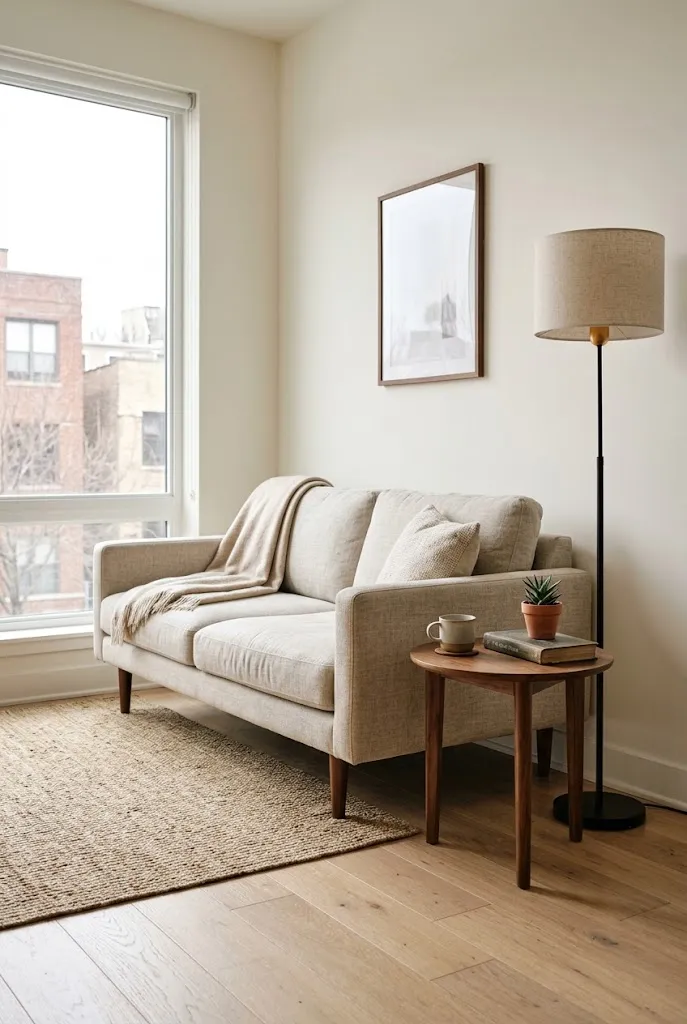
Seeing floor under furniture makes a room feel less crowded. A sofa lifted on slim legs shows a strip of flooring beneath it and reads as lighter than a skirted or block-base style, even at the same width. Pair it with a modest seat depth, since deep sofas eat floor area quickly.
Common Mistake: buying an oversized sectional because it looks comfortable in a showroom.
Better Approach: measure the walking path first, then pick a two- or three-seat sofa that leaves a clear route around it. A small chaise or an ottoman can add seating without adding bulk.
3. Put a Large Mirror Where It Catches Daylight
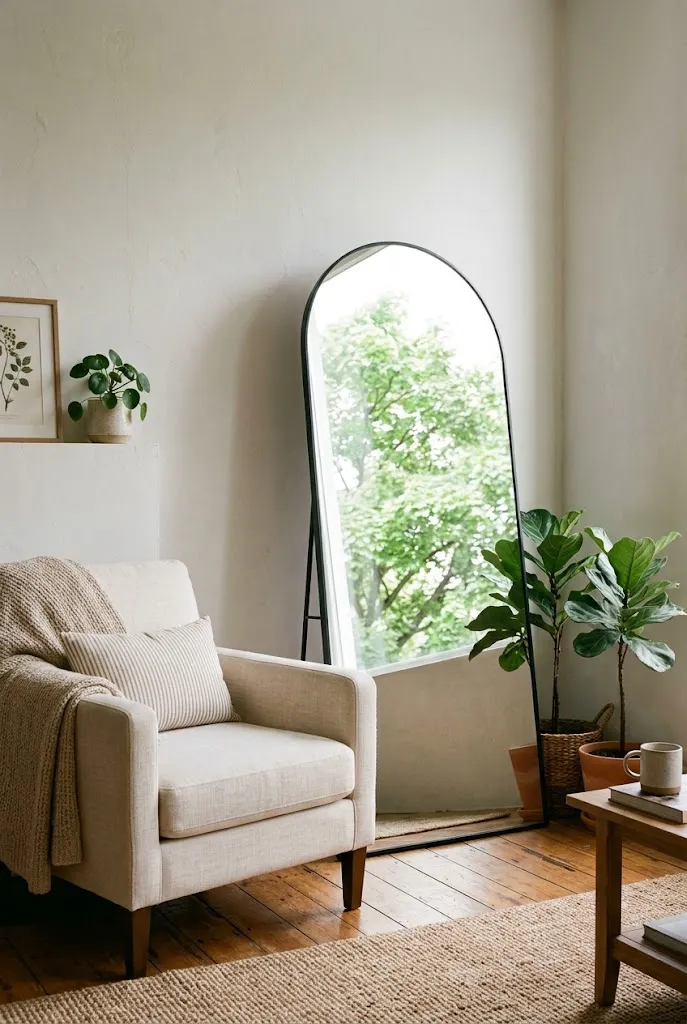
Mirrors don’t add square footage, but they bounce light and show a second view of the room, which softens a boxed-in feeling. Placement does most of the work. Lean a tall mirror across from or beside a window so it reflects sky and greenery rather than a messy corner.
| Placement | Effect | Best Fit |
|---|---|---|
| Opposite a window | Doubles the daylight and view | Living rooms, studios |
| Beside a window | Adds depth without glare | Bedrooms, dining nooks |
| End of a narrow hall | Creates a visual extension | Hallways, entries |
Do: choose a simple frame in a finish that matches your wood or metal tones.
Don’t: hang it facing a cluttered shelf or a TV, which multiplies the busy view.
4. Hang Sheer Linen Curtains Close to the Ceiling
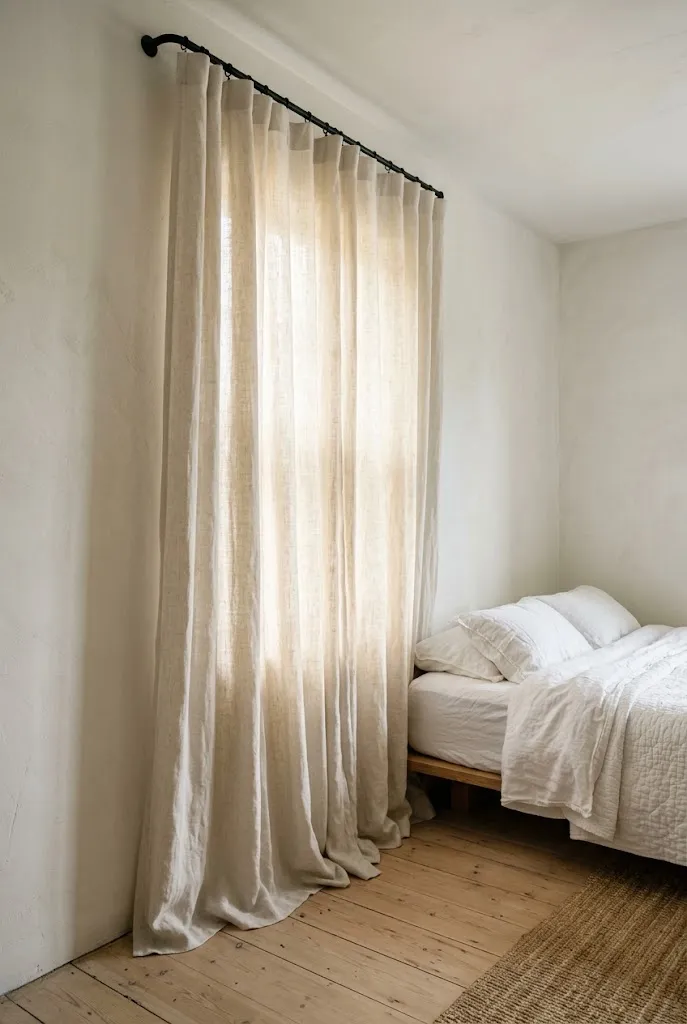
Heavy drapes chop a window into a smaller box. Light linen or linen-blend panels hung just below the ceiling, and long enough to graze the floor, stretch the wall upward and let daylight filter through. Mount the rod wider than the window frame so the glass isn’t covered when the panels are open.
- Install the rod near the ceiling line or crown molding.
- Extend it several inches past each side of the window.
- Choose panels that just skim the floor without pooling.
For a bedroom that needs light control, a thin blackout liner behind the sheers keeps the airy look during the day.
5. Leave One Wall Nearly Empty
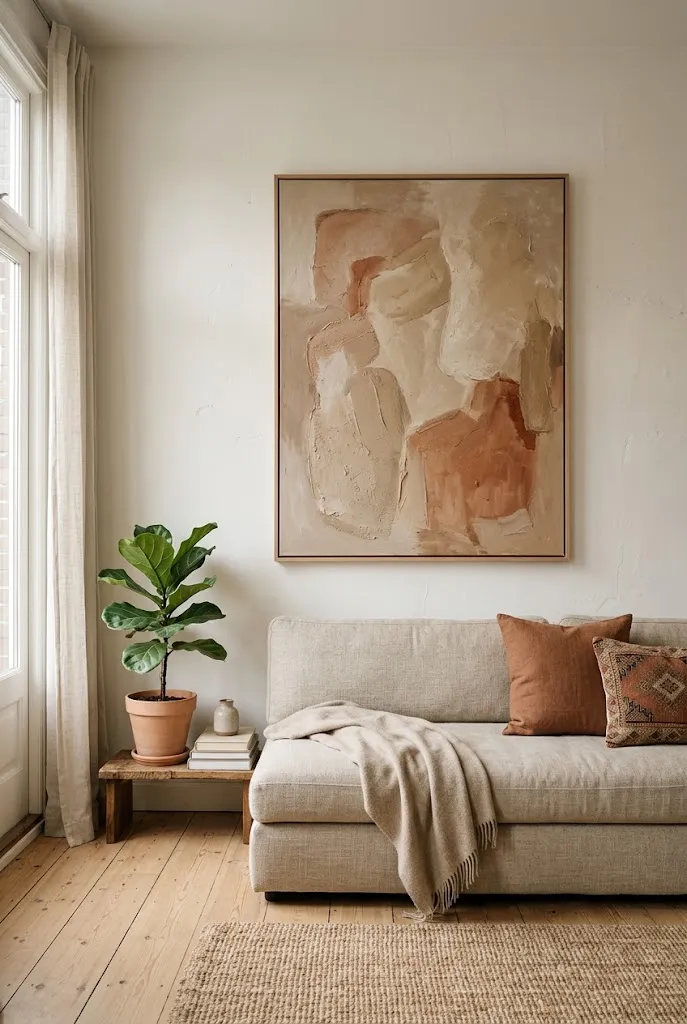
Minimalism is as much about what you leave out as what you add. In a small room, pick the least-used wall and keep it mostly bare, with a single large piece of art or nothing at all. The blank space gives your eyes a place to rest, and one large frame looks calmer than a cluster of small ones.
Editor’s Note: scale matters. A tiny print on a big wall looks lost. A good rule of thumb is for art to cover roughly half to two-thirds of the furniture width beneath it.
6. Give the Entry a Hook Rail and a Slim Bench
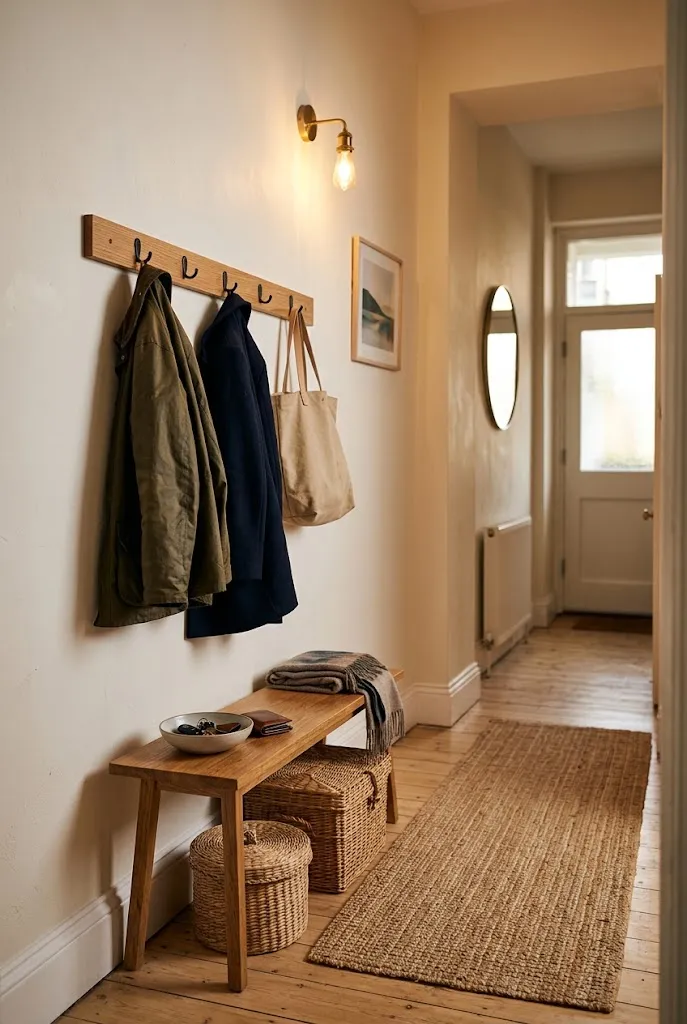
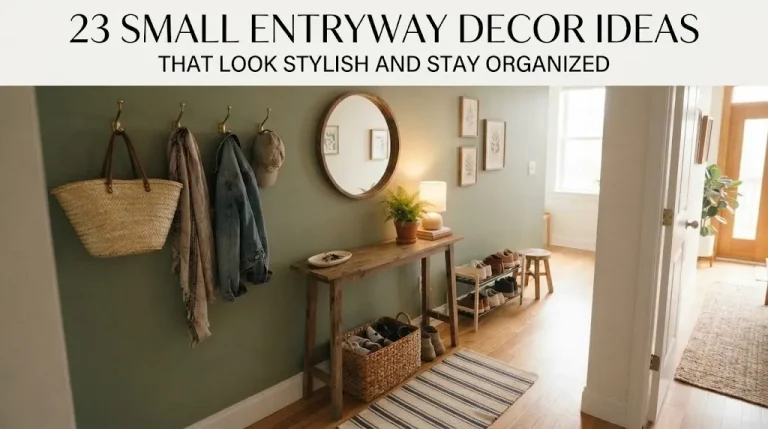
A cluttered entry is the first thing that makes a small home feel cramped. A single wall rail with a few hooks takes coats and bags off the floor, and a narrow bench gives you a seat for shoes with storage tucked underneath.
- Choose hooks in one finish, such as matte black or brushed brass
- Keep the bench shallow so the walkway stays clear
- Use two lidded baskets beneath for shoes and scarves
- Limit visible items to what you wear this week
Rotate off-season coats into a closet or under-bed bin so the rail never looks overloaded.
7. Tuck a Round Table Into a Corner
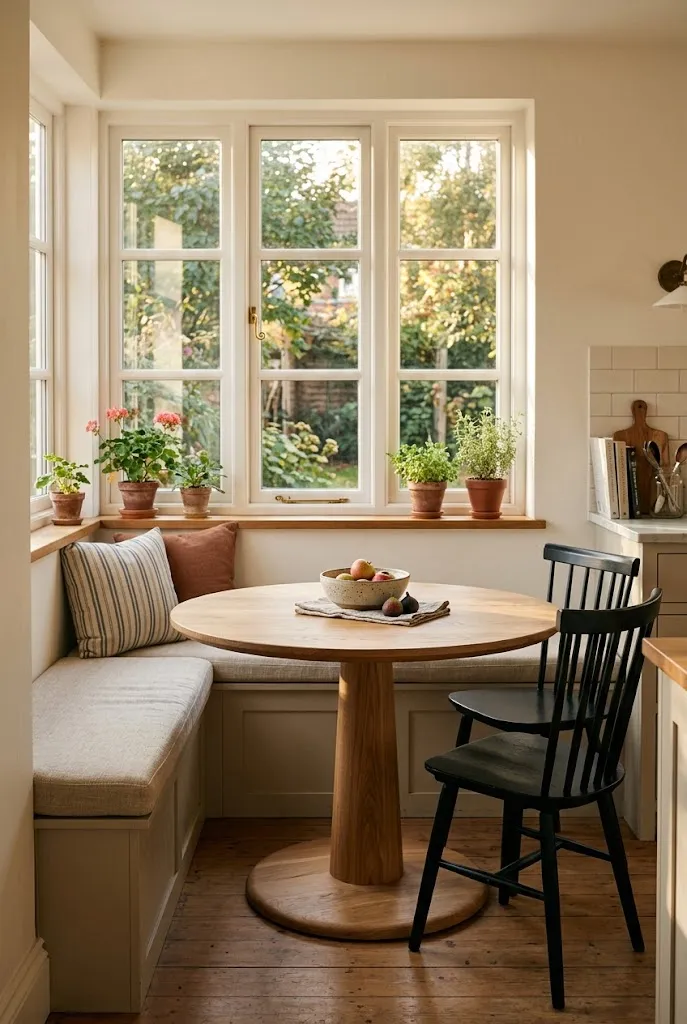
Round tables remove sharp corners, which helps traffic flow in tight dining areas, and they pair well with a single pedestal base that leaves leg room free. Put one against a window or in a corner nook, then add a small bench on the wall side so chairs can slide in neatly.
| Option | Advantage | Best Fit |
|---|---|---|
| Round pedestal | Easy movement, flexible seating | Nooks, small kitchens |
| Rectangular | Fits long walls, seats more in a row | Narrow dining areas |
| Drop-leaf | Folds down when not in use | Studios, shared rooms |
Moderate investment: a solid wood or quality veneer pedestal table lasts far longer than a lightweight folding set.
8. Add Storage Under the Bed
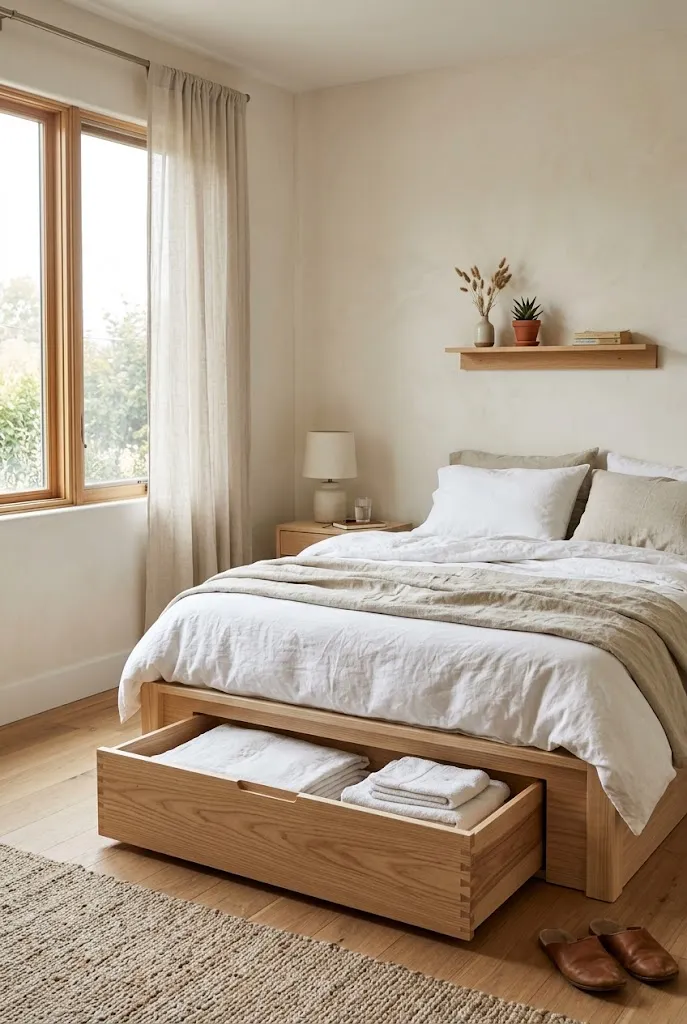
In a small bedroom, the bed takes the largest footprint, so make it earn its keep. A platform bed with deep drawers, or a lift-up base, replaces a bulky dresser and keeps seasonal bedding, extra linens, and shoes out of sight.
Best For: studios, guest rooms, and kids’ rooms
Investment: moderate
Visual Effect: a clean, low silhouette with no extra furniture
If a storage bed isn’t in the budget, flat bins with wheels under a standard frame give a similar result when you use a bed skirt or leave the frame simple.
9. Keep Only Three Things on the Kitchen Counter
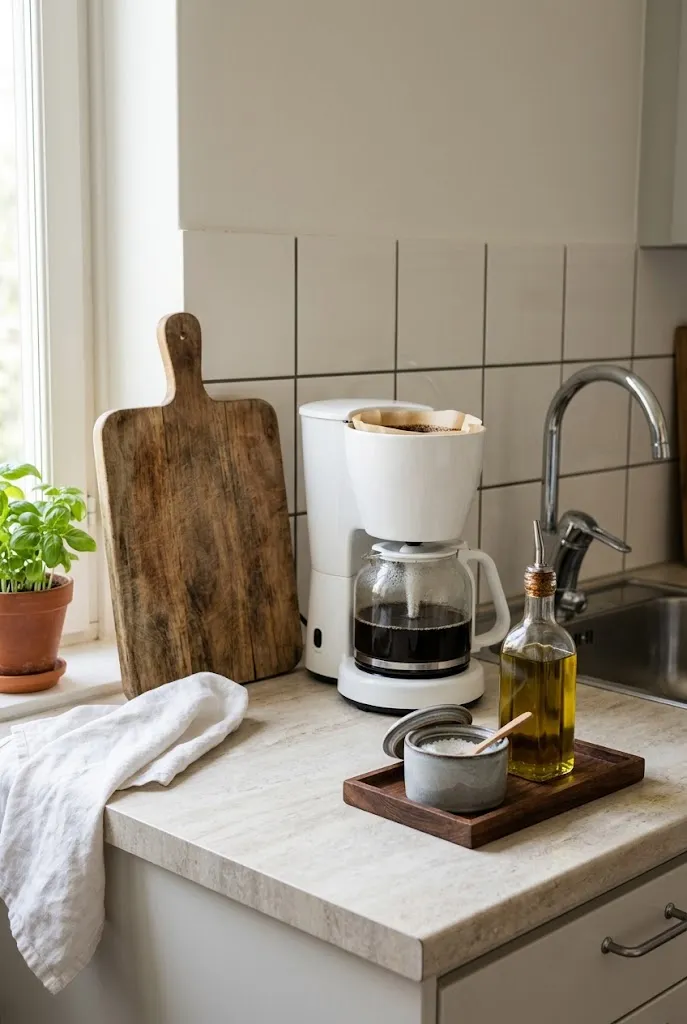
Counters are the first surface to collect clutter, and in a small kitchen every inch you free up looks like extra room. Decide on three things that earn their place, such as a cutting board, a coffee maker, and one small tray with oil and salt. Everything else goes into drawers or cabinets.
- Clear the counter completely.
- Put back only what you touch daily.
- Find a home for each removed item, or let it go.
Quick Tip: a single tray groups small bottles and visually reads as one object rather than several.
10. Style One Shelf Instead of Five
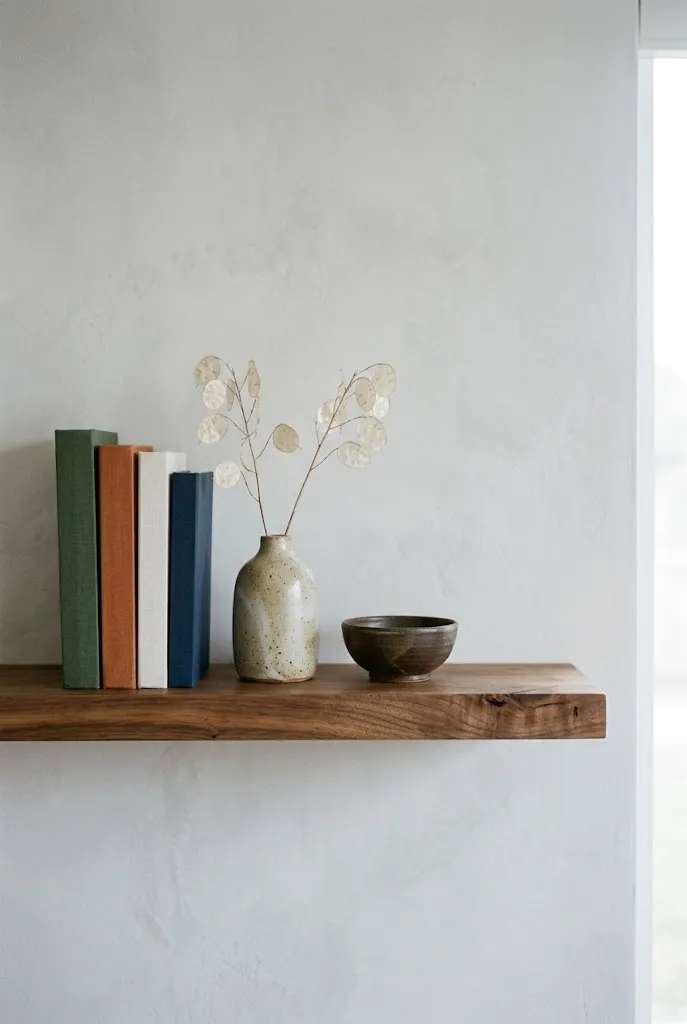
Several half-filled shelves feel busy. One shelf styled with care gives the room a focal point and leaves everything else calm. Mix a few heights, such as a stack of books, one vase, and one object with texture, and leave a third of the shelf empty.
Do: group items in odd numbers and vary the height.
Don’t: line up identical objects at equal intervals, which can look stiff.
11. Fold a Desk Into the Wall
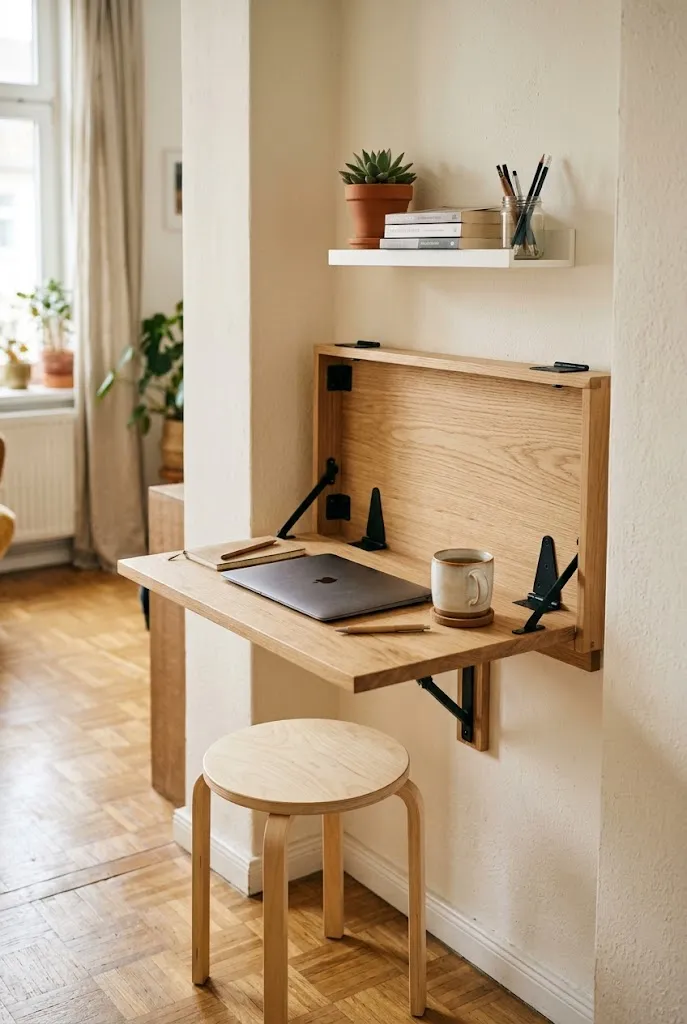
A work-from-home setup can swallow a small living room. A wall-mounted fold-down desk gives you a surface when you need it and a clean wall when you don’t. It works best in a spot with an outlet nearby and enough depth for a chair to tuck beneath.
- Choose a finish that matches the wall or nearby wood
- Mount it securely into studs, following manufacturer instructions
- Add a small shelf above for a laptop stand or notebooks
- Use a stool or slim chair that tucks away
This is a moderate investment, and a good option for renters only if the lease permits drilling.
12. Swap Table Lamps for Plug-In Wall Sconces
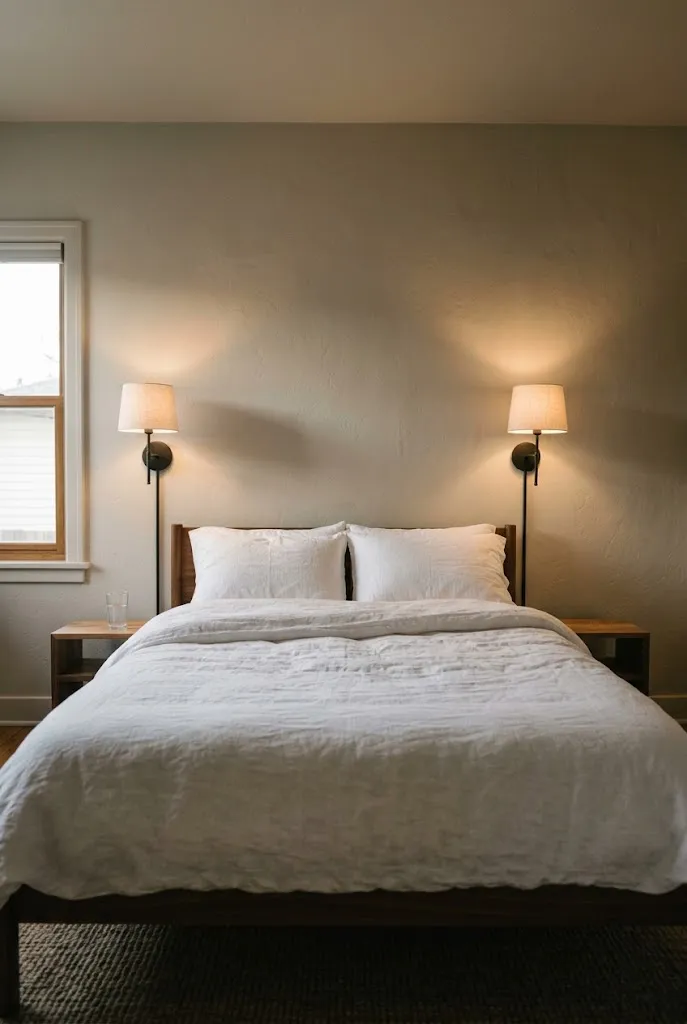
Lamps use surface space you may not have. Plug-in sconces, which don’t require hardwiring, move the light to the wall, free the nightstand or console, and cast a soft glow that makes a room feel more layered. Hide the cord with a slim cord cover painted to match the wall, or tuck it behind furniture.
Renter-friendly tip: a pair on either side of the bed or sofa can be mounted with small screws and patched easily at move-out.
13. Paint the Walls, Trim, and Ceiling One Soft White
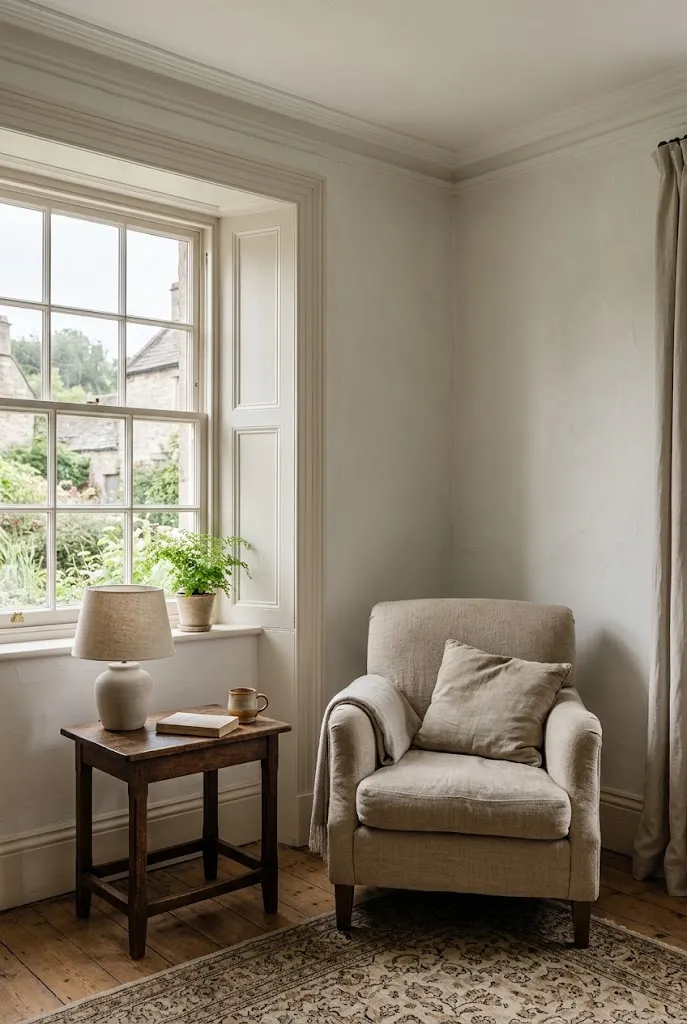
Breaking a small room into separate colors, such as white trim against tinted walls, creates lines that make it look more chopped up. Painting walls, trim, and ceiling in the same soft white, using a lower sheen for the walls and a slightly higher one for the trim, blends the edges and smooths the room.
Editor’s Note: whites vary widely. A warm white with a slight cream undertone suits north-facing rooms, while a cooler soft white can balance very sunny spaces. Test a swatch at different times of day before committing.
14. Let One Sculptural Plant Do the Decorating
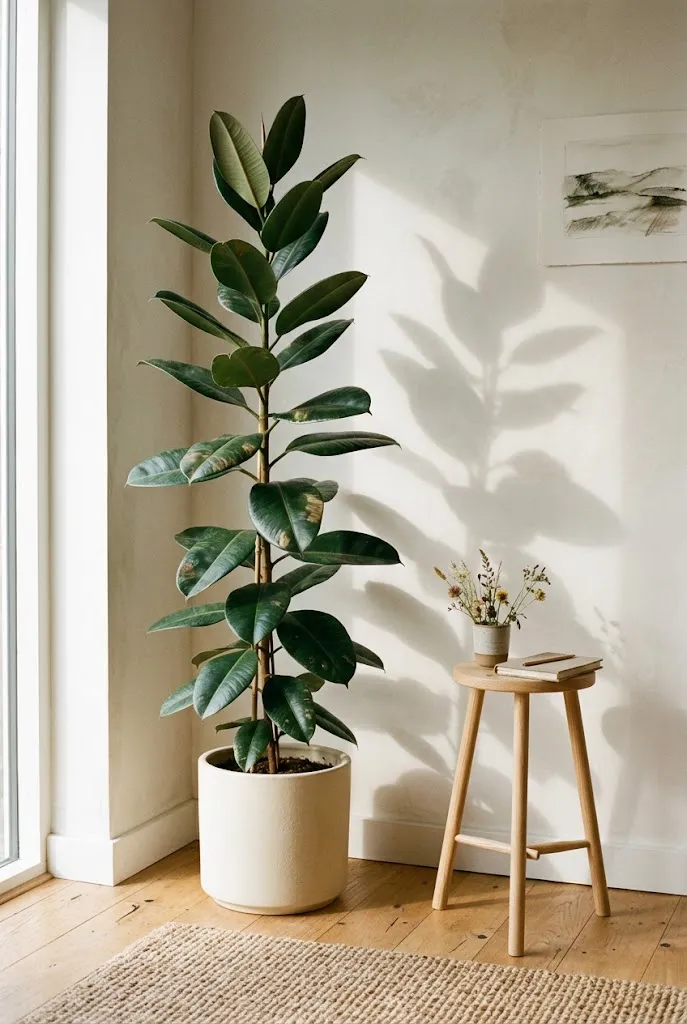
A minimalist room doesn’t need a jungle. One large plant with a strong shape, such as a rubber plant, olive tree, or bird of paradise, adds life and height without cluttering surfaces. Choose a plain pot in a matching tone and place the plant where the light suits it.
Check light needs before buying, and confirm whether the plant is safe around pets if you have them. A healthy single plant looks better than several struggling ones.
15. Switch to Matching Baskets and Lidded Boxes
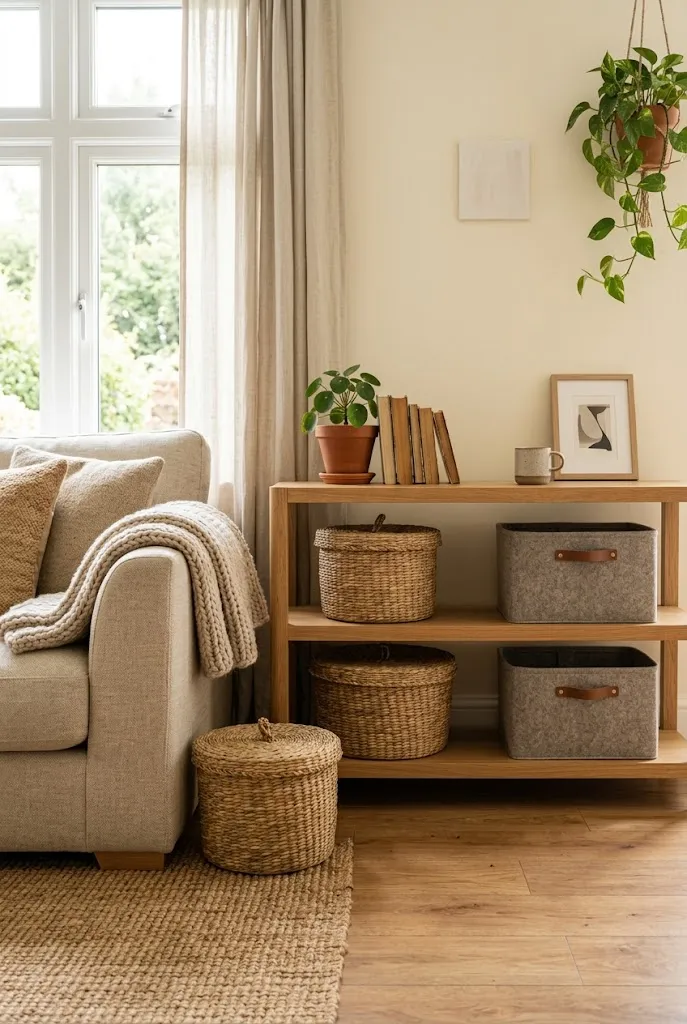
Open storage shows every object. Closed storage, in matching baskets or boxes, shows one calm texture instead. Use a consistent material, such as woven seagrass, felt, or wood, and label inside the lid if you need to, not on the outside.
- Put a lidded basket beside the sofa for throws and remotes
- Use shallow boxes on shelves for small items
- Keep the same tone across all of them
Accessible and renter-friendly, and an easy first step if you only have a weekend.
16. Layer Tonal Bedding in One Color Family
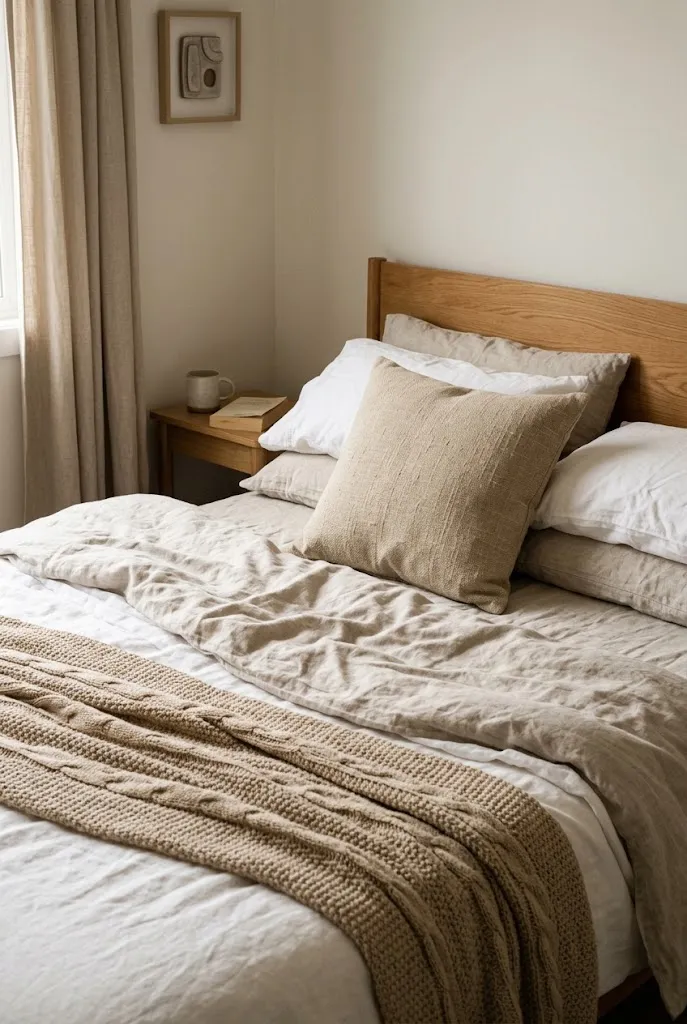
A bed covered in different patterns draws attention to the room’s limits. A tonal approach, using linen or cotton in several shades of one color family, looks restful and still adds depth. Start with white or oat sheets, add a duvet one shade deeper, and finish with one textured throw.
Common Mistake: adding five or six decorative pillows that have to be moved every night.
Better Approach: use two sleeping pillows and one lumbar or square pillow, then let texture do the decorating.
17. Build a Flat-Front Wardrobe to the Ceiling
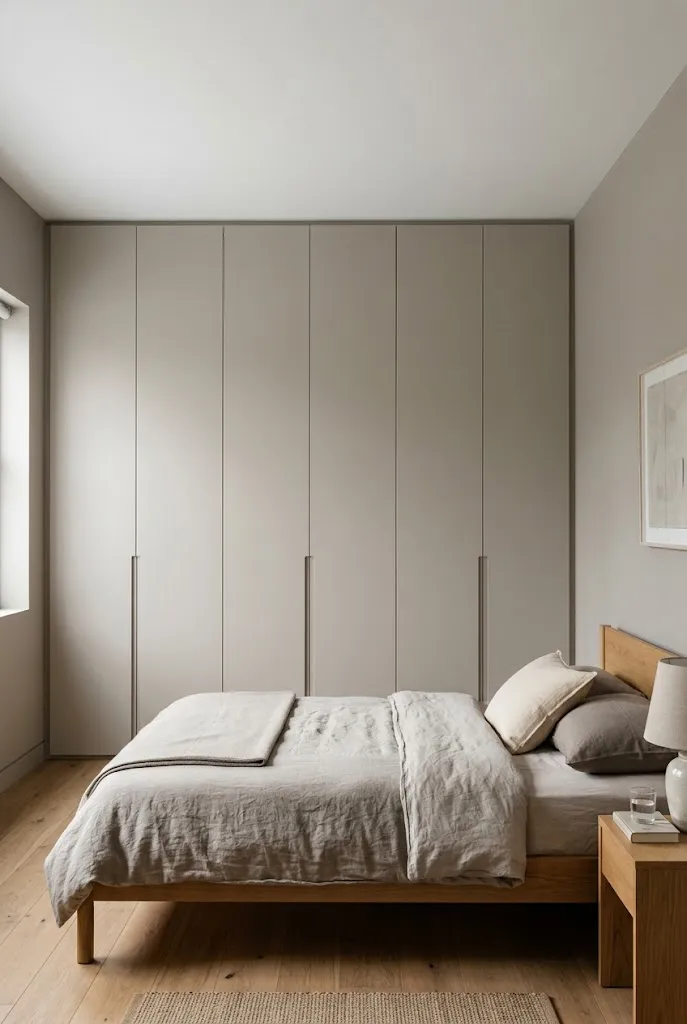
Premium option: full-height built-in wardrobes with flat doors and push-to-open or recessed pulls create one smooth plane, hide visible clutter, and use vertical space that freestanding wardrobes waste. Painting the doors the same color as the wall helps them disappear into the room.
Best For: homeowners, long-term renters with landlord approval
Investment: premium
Visual Effect: a seamless wall with large amounts of hidden storage
A simpler version uses modular wardrobe frames with added filler panels and trim so they reach the ceiling.
18. Replace the Coffee Table With Nesting Tables
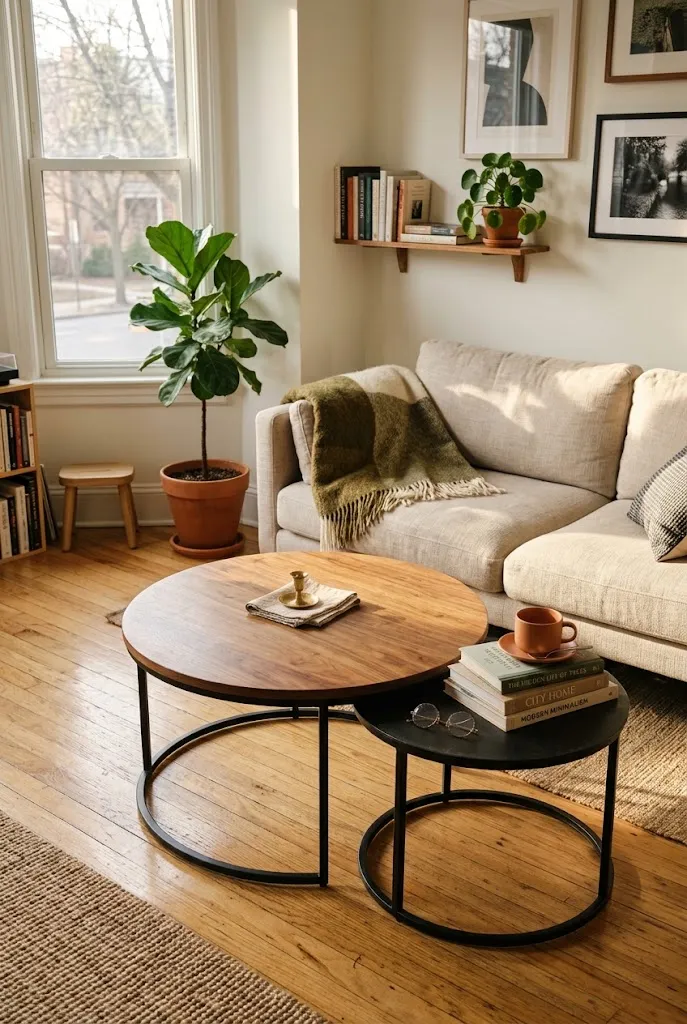
A large coffee table can block the main route through a small living room. Nesting tables, in a pair or trio, give you surface space when you need it and tuck together when you don’t. Mixed heights add interest without taking up more room.
- Choose rounded corners for easier movement
- Pick a wood or metal that matches existing finishes
- Keep one tabletop clear for visual breathing room
19. Mount the Bathroom Vanity on the Wall
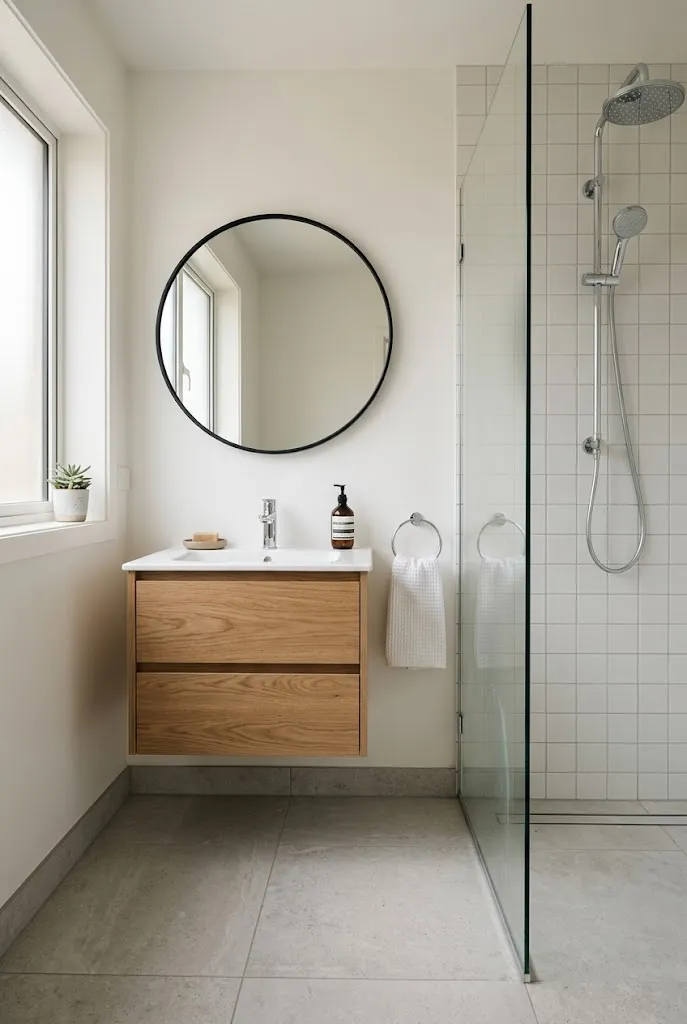
Premium option: a wall-hung vanity leaves the floor visible beneath it, which makes a compact bathroom feel larger. Pair it with a frameless glass shower panel in place of a curtain, and the room reads as one continuous space. Plan the plumbing with a professional, since moving or recessing pipes can affect cost.
Moderate version: a floating shelf under the sink with a basket is a low-cost way to copy the open-floor effect.
20. Reduce the Bathroom Counter to One Tray
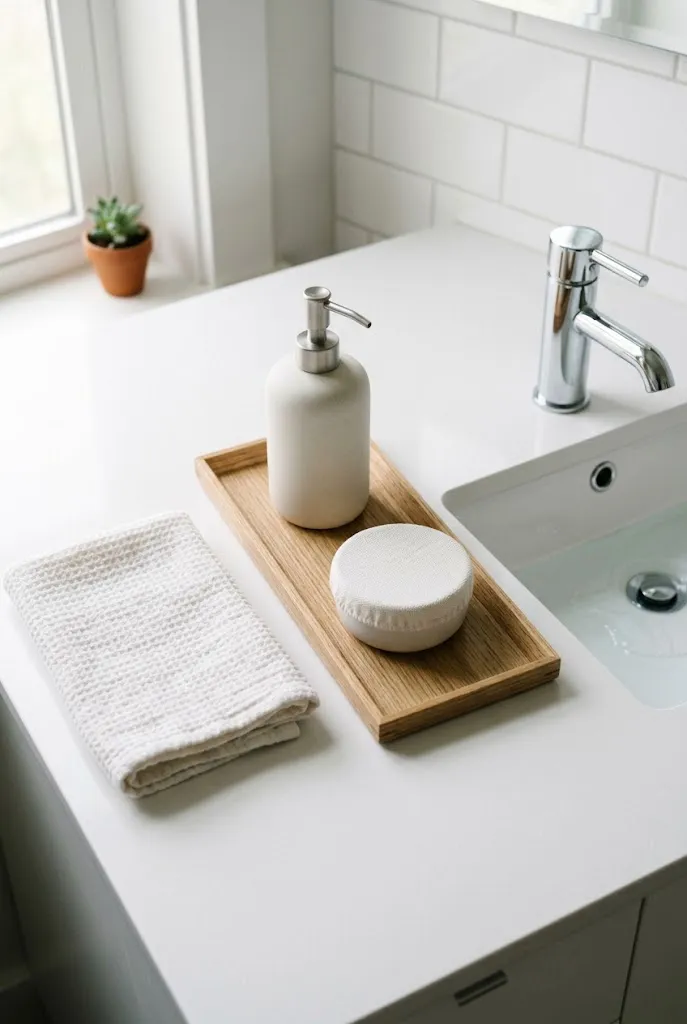
Bathrooms collect bottles quickly. Place a single tray on the counter for the soap and one or two items, and keep the rest in a drawer or a wall cabinet. Decanting hand soap into a plain pump bottle removes brand labels and brings the look together.
Quick Tip: store everyday items in a basket under the sink so that you never reach for the counter again.
21. Zone an Open Space With One Large Rug
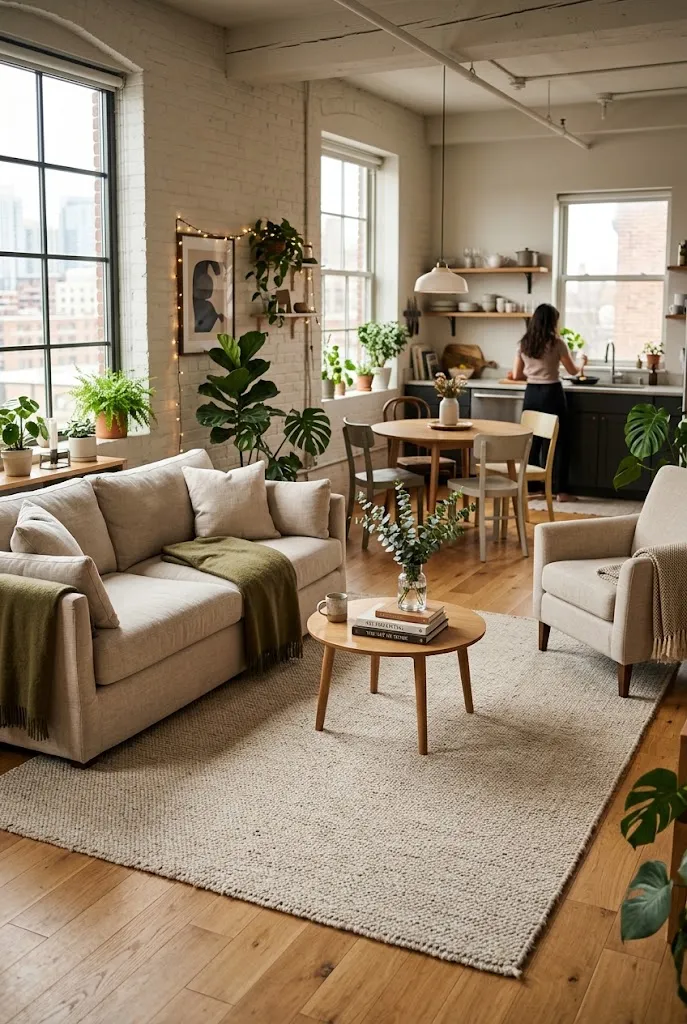
In a studio or open-plan room, a rug defines the living area without a wall. Choose a low-pile rug large enough that at least the front legs of the sofa and chairs rest on it, which helps the group feel connected rather than scattered.
| Rug Size | Effect | Best Fit |
|---|---|---|
| Too small | Makes furniture feel scattered | Rarely a good choice |
| Front legs on | Anchors the seating area | Most small living rooms |
| All legs on | Feels cohesive and defined | Larger or open-plan rooms |
A solid or lightly textured rug stays quiet, while a loud pattern competes with everything else.
22. Choose a Limewash-Style Wall for Texture Without Objects
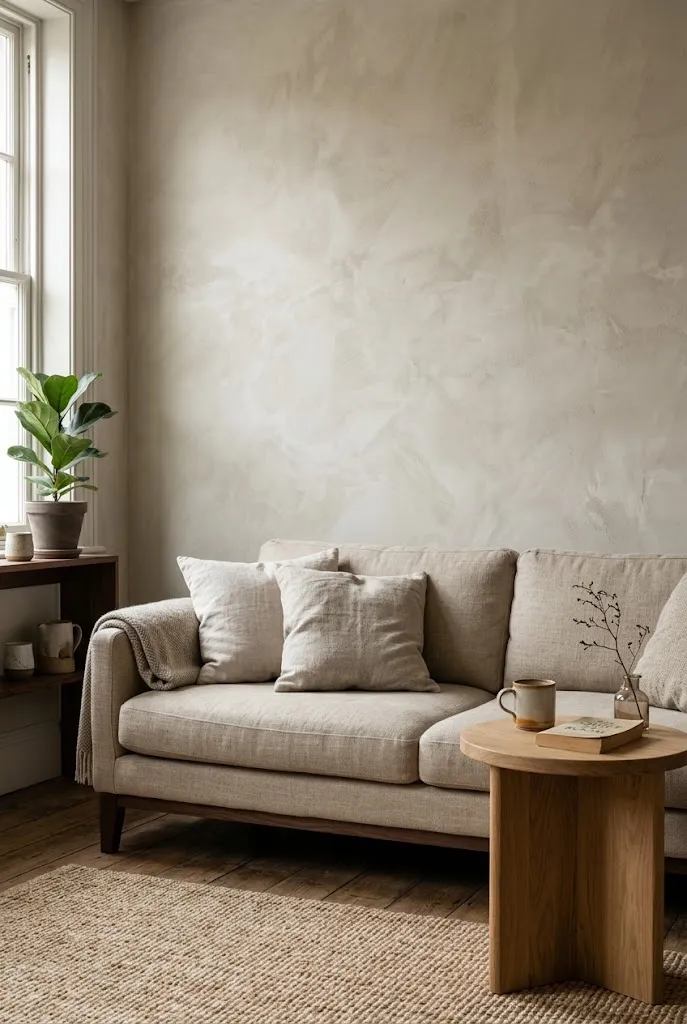
When you want interest but not more things, texture can do the work. A limewash or mineral paint finish gives walls soft tonal movement and depth that flat paint lacks. Premium plasterers can create the look, and several paint brands offer limewash-style products for DIY use on properly prepared walls.
Editor’s Note: textured finishes reveal uneven wall surfaces under raking light, so preparation matters. Test a small area first.
23. Go Handleless in a Compact Kitchen
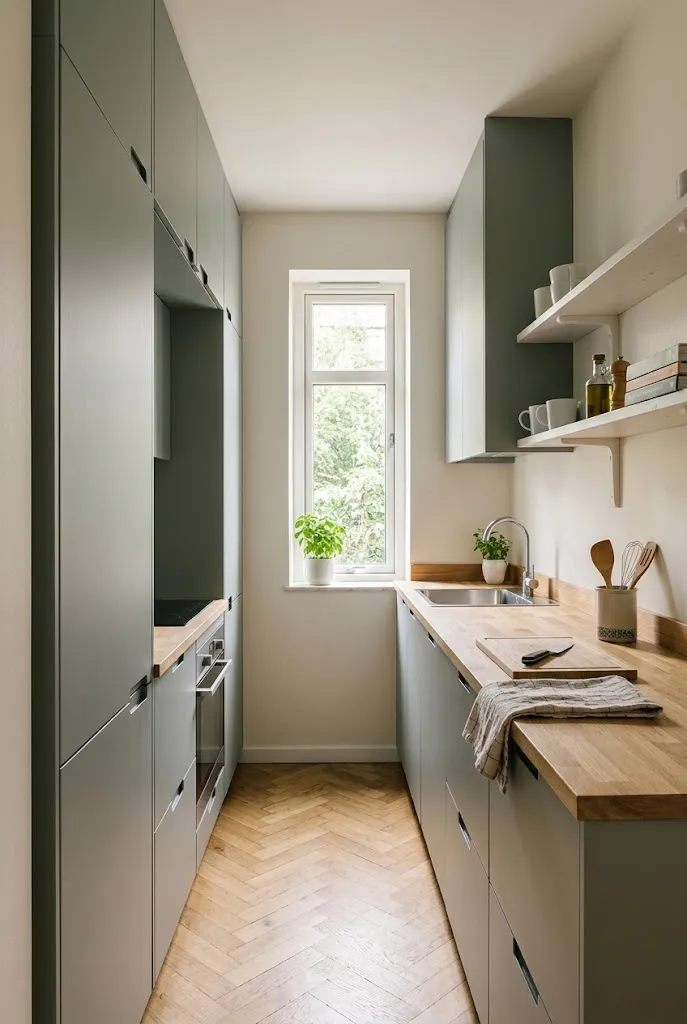
Premium option: flat-front cabinets with push-open latches or integrated finger pulls remove the repetitive visual rhythm of knobs and handles. In a small kitchen, matching the upper cabinets to the wall color makes them recede.
A lower-cost version uses slim, color-matched bar pulls on existing cabinet doors to simplify the line.
24. Turn a Window Into a Seat With Storage
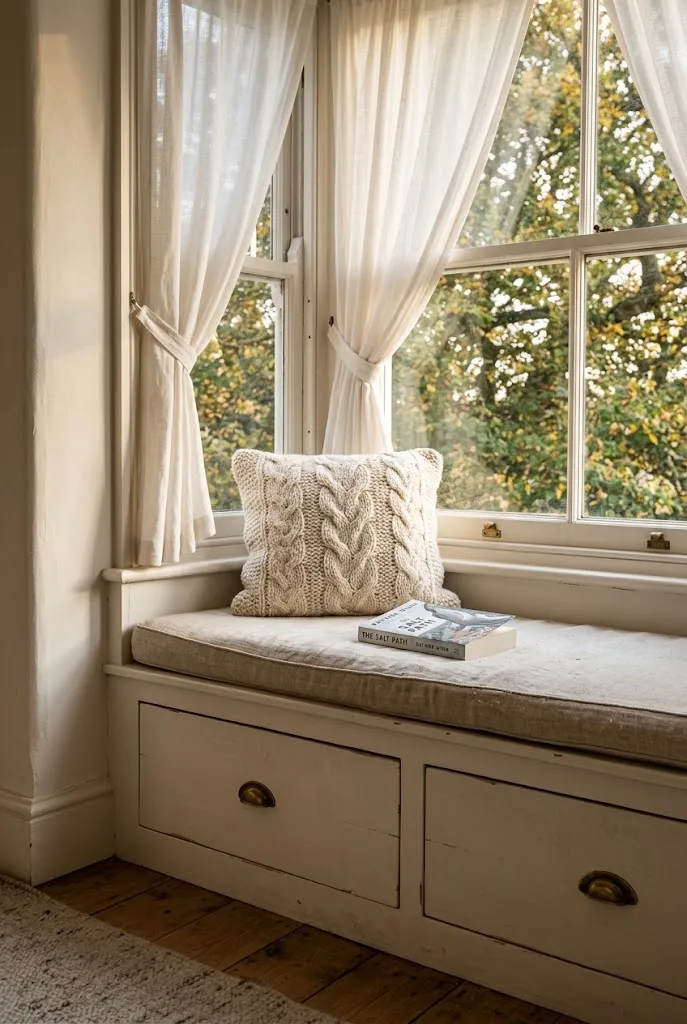
A window seat makes a corner useful without adding a chair. Build or buy a low bench with drawers or a lift-up lid beneath, add a firm cushion in a tone that matches the room, and keep the window dressing sheer so daylight stays at the center of the nook.
- Measure the window width and sill height.
- Choose a bench depth that leaves walking room.
- Add a cushion and one pillow.
25. Rotate One Seasonal Vignette at a Time
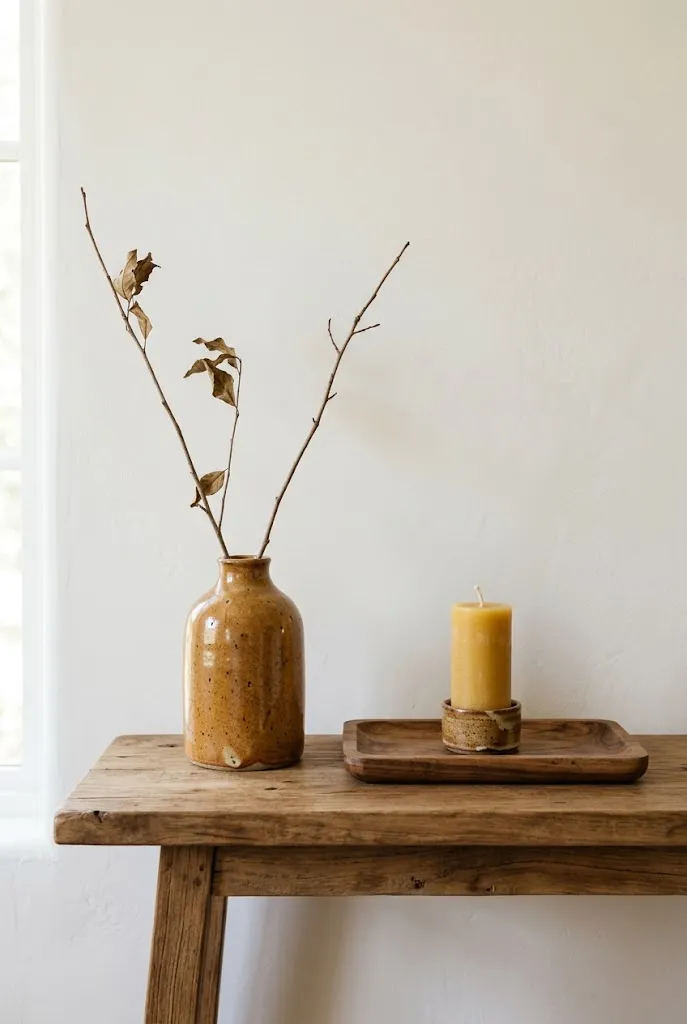
Minimalist decor still has room for seasons. Store most of your decorative items and display just one small vignette, such as a branch in a vase, a bowl of fruit, or a candle on a tray, and change it as the seasons turn. Keeping the display small keeps surfaces calm.
Editor’s Note: a small labeled bin in a closet makes it easy to switch objects without letting them multiply.
26. Divide a Studio With a Low Open Shelf Unit
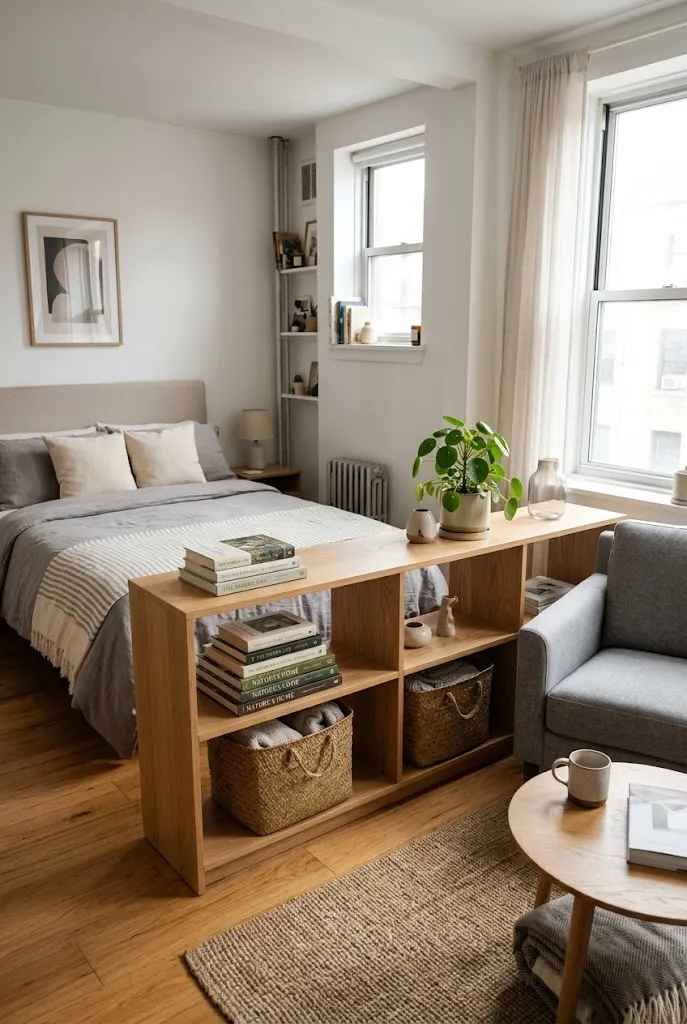
A tall wall divider cuts light. A low, open shelf unit, about waist height, separates the bed from the living area but still lets light and sightlines flow across the room. Keep the shelves lightly styled and avoid overfilling them.
- Choose a unit with an open back
- Face the finished side toward the living area
- Add baskets on the side facing the bed to hide clutter
Where to Start
You don’t need all 26. Pick the one that bothers you most. If the problem is a cluttered surface, start with ideas 9, 10, or 20. If a room feels dark, try the mirror, sheer curtains, or a single soft white paint. If you plan a bigger change, ideas 8, 17, and 24 add storage that lasts. Make one change, live with it for a week, and see how the room feels before the next.