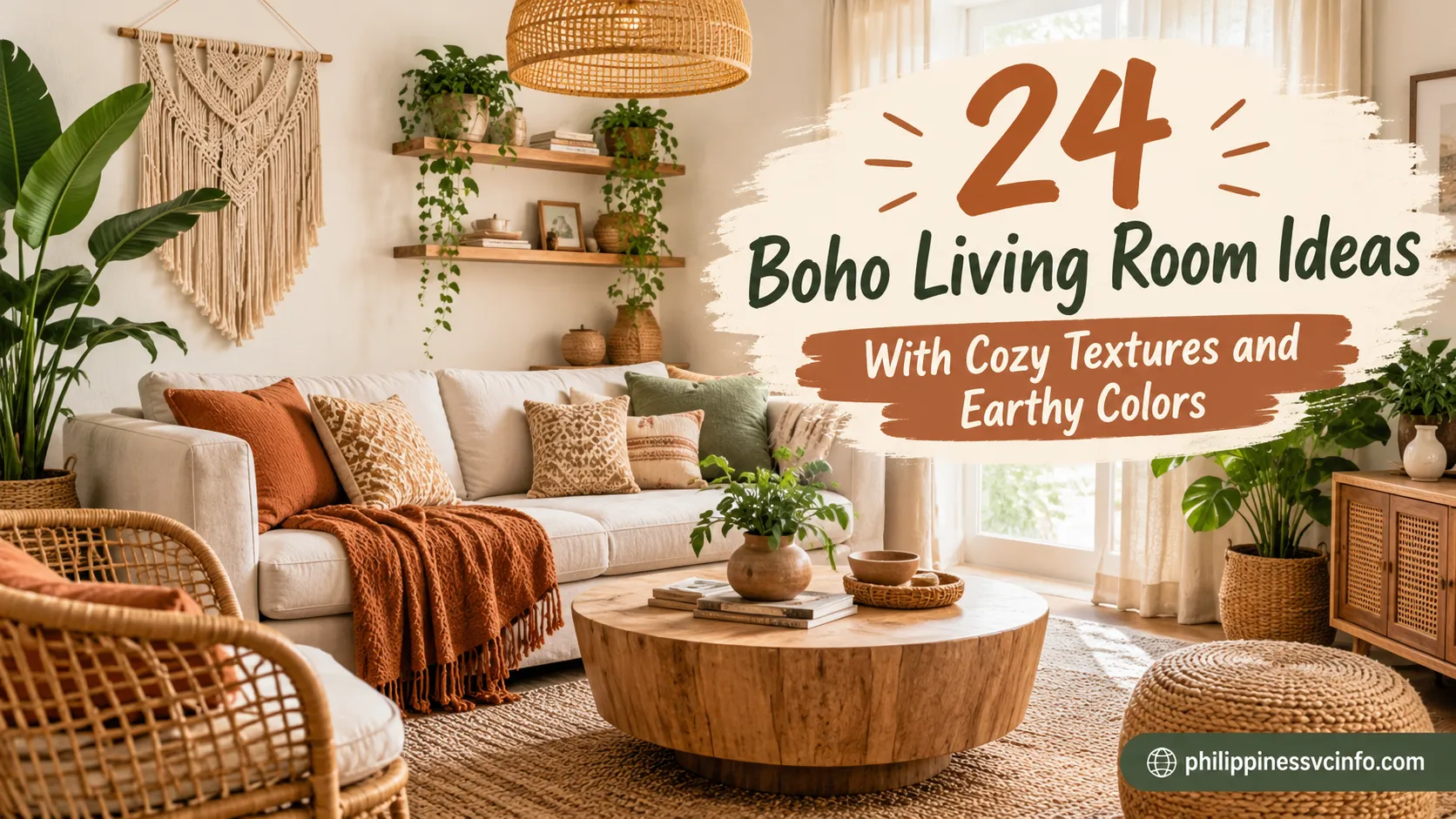
24 Boho Living Room Ideas With Cozy Textures and Earthy Colors
Introduction
A boho living room works when it feels collected rather than staged: a worn-in rug, a lamp with a slightly crooked shade, a plant that has grown toward the window. The challenge is getting that relaxed layering without the room tipping into clutter. The answer usually comes down to a restrained earthy palette, a handful of natural materials, and enough variety in texture that the eye keeps finding something new.
The 24 boho living room ideas below range from quick, renter-friendly styling changes to larger upgrades like plaster finishes and built-in seating. Each one focuses on a distinct look, whether that’s a wall treatment, a seating arrangement, a lighting choice, or a styling method, so you can borrow a single idea or combine several into a room that feels warm and lived in.
1. Layer a Jute Rug Under a Vintage-Style Kilim
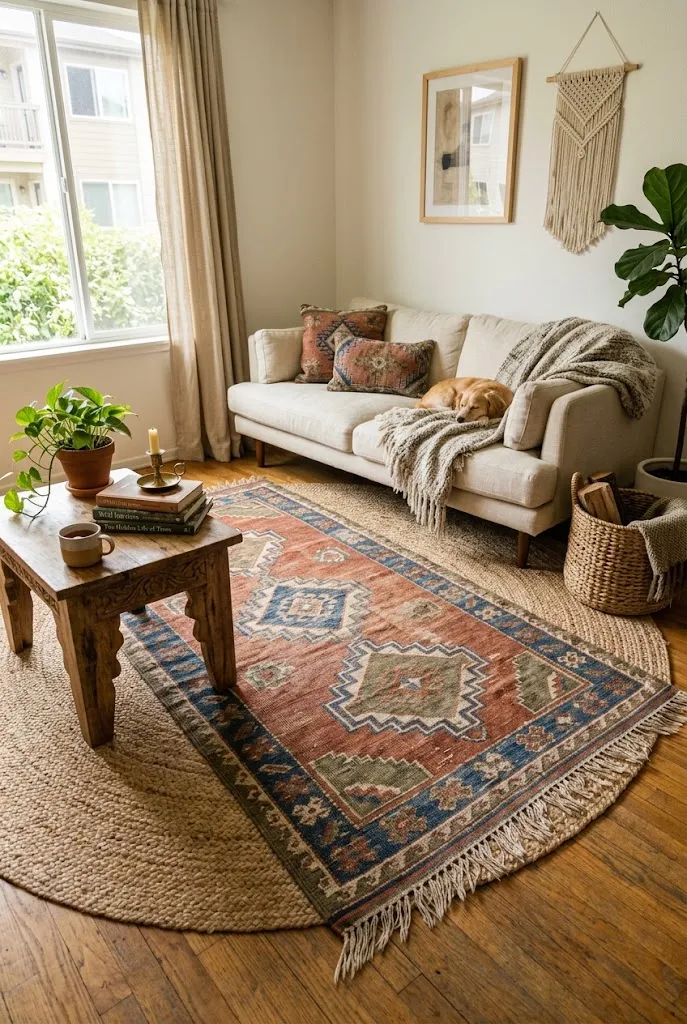
A flat-woven kilim over a chunky jute base gives the floor two textures and two patterns at once, which is the quickest way to make a living room feel layered. The jute adds a neutral, nubby foundation, while the kilim brings in rust, saffron, and faded indigo. Pick a jute rug large enough that the front legs of the sofa and chairs sit on it, then let the smaller rug sit slightly off-center for a relaxed look.
| Rug Pairing | Effect | Best Fit |
|---|---|---|
| Jute + patterned kilim | Textured base with a colorful focal point | Most living rooms, easy to find at moderate prices |
| Jute + sheepskin-style or shag layer | Softer underfoot, more tonal | Rooms with a neutral palette |
| Wool flatweave alone | Cleaner, less layered | Households that prefer easier vacuuming |
A rug pad under the top layer keeps it from creeping, and it also prevents the corners from curling.
2. Anchor the Room With a Camel Leather Sofa
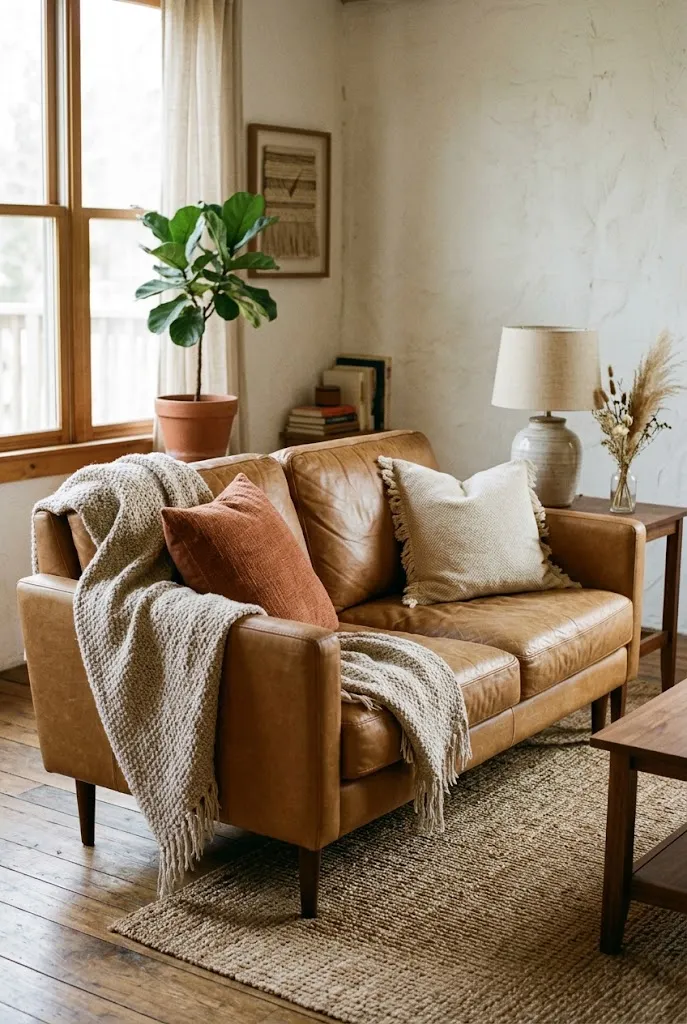
Few pieces pair as easily with boho textiles as a sofa in worn camel or cognac leather. The leather develops a patina over time, and its warm tone supports earthy colors without competing with them. A sling or low-profile silhouette keeps the look relaxed. Pile on linen and wool throws to soften the surface, since leather alone can read stiff.
- Pair with off-white, terracotta, and olive textiles.
- Choose full-grain or top-grain leather if you want it to age well, and check the product details for what type you’re buying.
- Keep wood tones nearby, such as a walnut side table or oak floor, so the leather feels part of the palette.
In a smaller room, a two-seater leather sofa with exposed legs keeps the floor visible and prevents the piece from dominating the space. Leather in direct, strong sunlight can fade and dry out, so consider placement away from the sunniest window.
3. Hang a Cluster of Woven Baskets as Wall Art
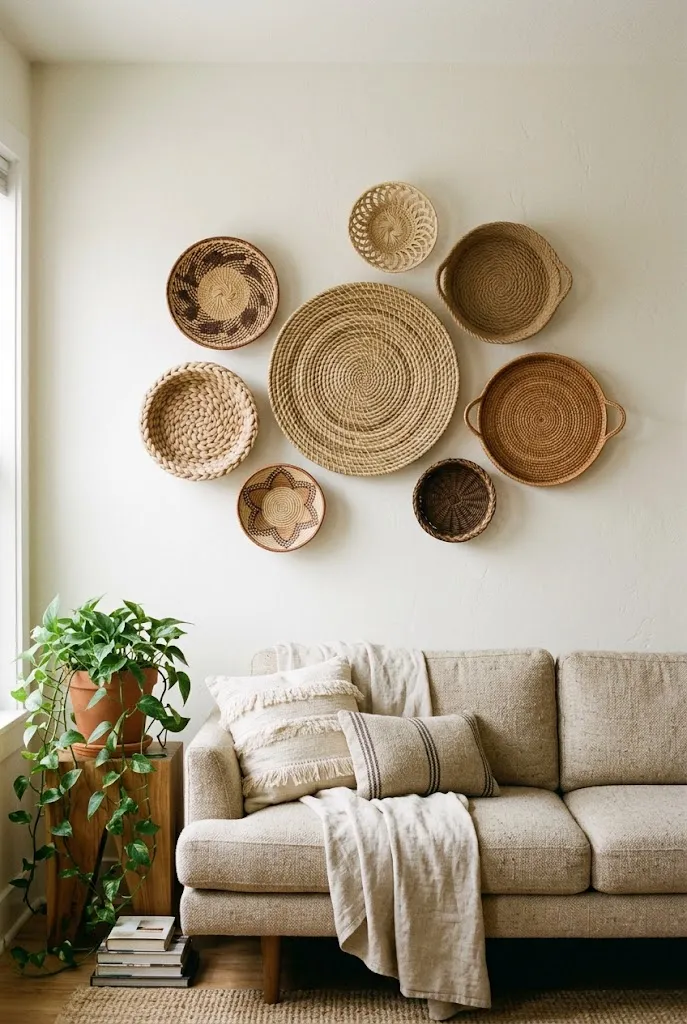
Baskets are among the least expensive ways to add texture to a blank wall. A group of five to nine in varied diameters and weave patterns reads like a sculptural installation, and there’s no frame or glass involved. Mix flat seagrass plates, deeper rattan bowls, and a darker wicker piece for contrast.
Common Mistake: Hanging baskets in a perfect grid, which makes them look like merchandising.
Better Approach: Lay them on the floor first, arrange around one larger anchor piece, and keep gaps between them fairly even but not identical. Photograph the layout before hanging so you can match it on the wall.
Adhesive hooks suit lightweight baskets in a rental, and the product packaging will state the weight limit. Heavier pieces need a proper wall anchor.
4. Wrap the Walls in Terracotta Limewash
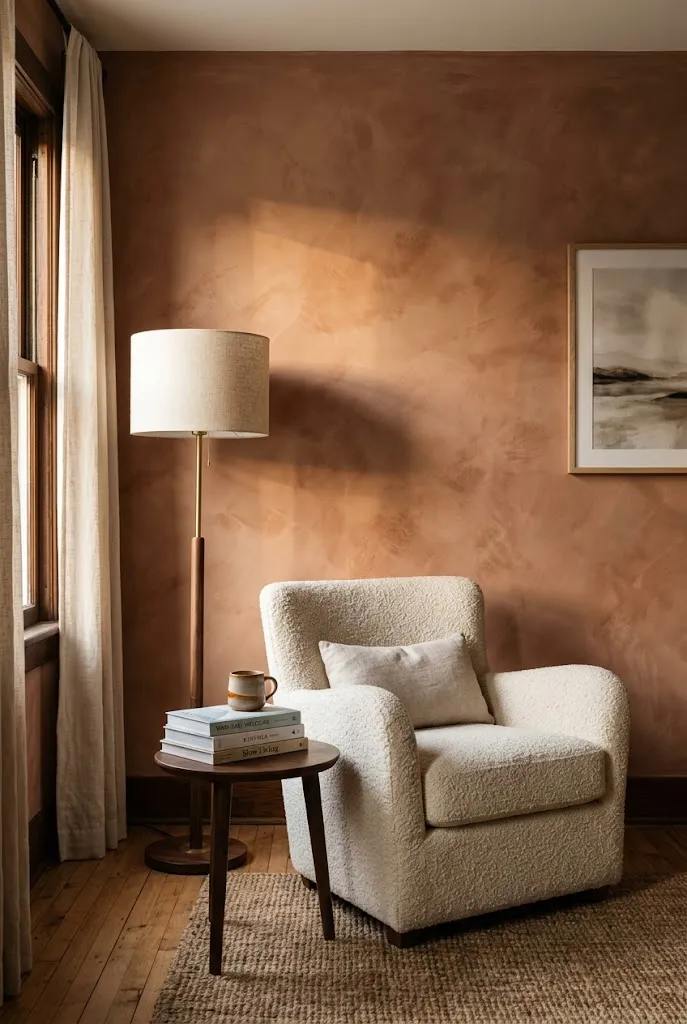
Limewash gives walls a soft, cloudy depth that flat paint can’t match, and in terracotta or warm clay it brings the earthy mood of a boho room without any pattern at all. The finish shifts through the day, looking dusty rose in the morning and deeper rust by evening light. Limewash and mineral paints typically require specific prep and application technique, so check the manufacturer’s instructions for primer and surface requirements.
- Works best on a single feature wall or a full room with plenty of natural light.
- Pair with cream linen, dark wood, and black iron accents.
- A paint labeled as limewash-effect, which is usually easier to apply, can approximate the look at a lower cost, though the depth and mineral character will differ.
In a rental, a removable peel-and-stick mural in a similar tone can echo the color temporarily, though it won’t have the same texture.
5. Hang a Macramé Piece Above a Low Sofa
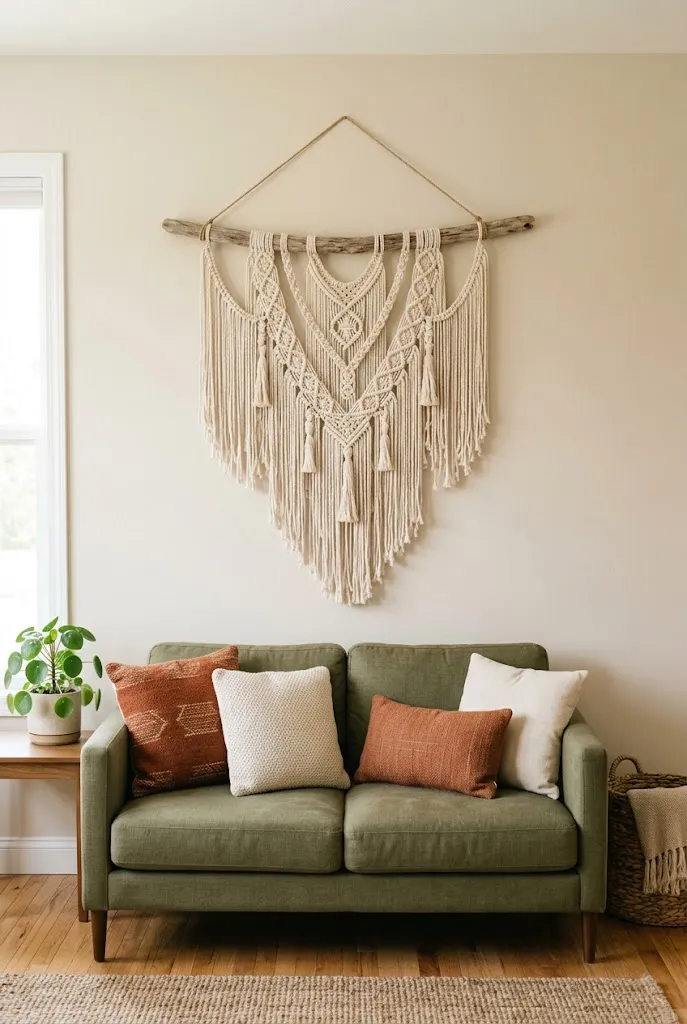
A macramé wall hanging works best when it’s scaled to the furniture below it. A piece roughly two-thirds the width of the sofa feels intentional, while a tiny one looks lost. Cotton cord in natural cream suits most palettes, and a wooden dowel or driftwood branch gives it a sturdy top edge.
Best For: Renters and anyone adding texture without paint
Investment: Accessible
Visual Effect: Soft, handmade texture on a plain wall
Hang it so the bottom sits about 6 to 10 inches above the sofa back, which keeps it connected to the seating instead of floating. Fringe that brushes the wall rather than hangs fully free tends to look neater, and cotton cord can be gently combed out to keep it from tangling.
6. Mix Throw Pillows by Texture, Not Just Color
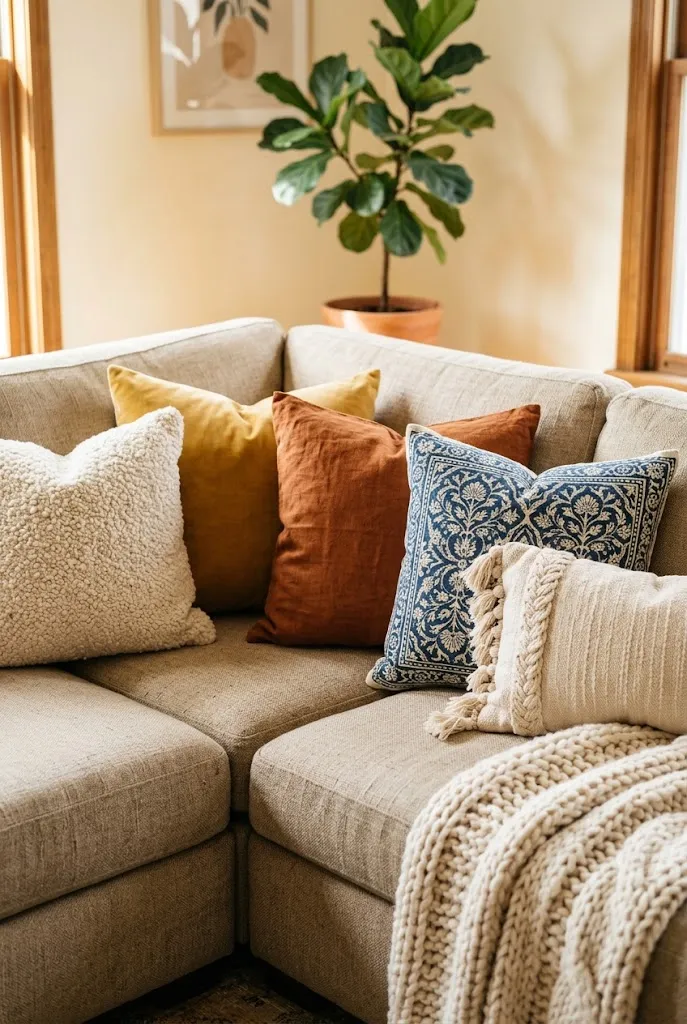
A sofa covered in pillows of identical fabric looks flat, even if the colors are right. Boho layering works better when each pillow brings something different: nubby bouclé, slubby linen, soft velvet, a block-printed cotton, a fringed edge. Stay within a palette of three or four earthy tones so the variety reads as intentional.
Tips & Tricks
- Use odd numbers on each end of the sofa, usually three.
- Vary sizes, with one larger 22-inch square at the back and smaller squares or a lumbar in front.
- Choose one pattern with some scale, such as a bold stripe, and keep the others solid or subtle.
- Feather-and-down inserts look fuller than polyester fill, though they cost more and need regular plumping.
7. Reflect Light With an Arched Rattan Mirror
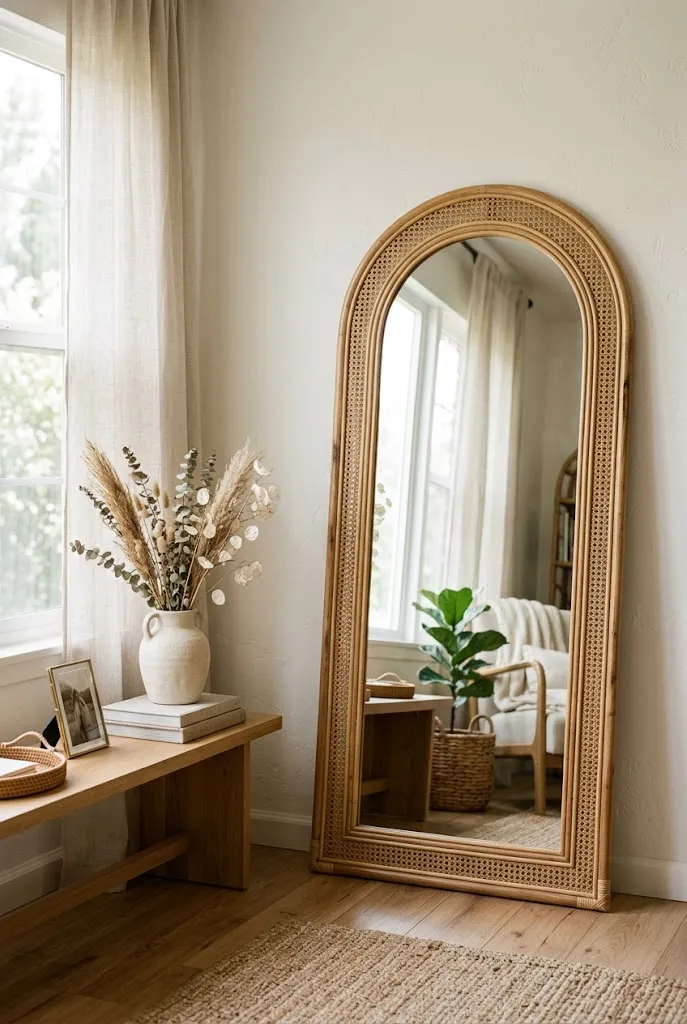
An arched mirror with a rattan or cane frame brings in two things a boho room often needs: reflected light and a softer shape. The curve contrasts with the straight lines of shelves and windows, and the woven frame ties into other natural materials in the room. Place it opposite or beside a window to bounce daylight further into the space.
Lean a large floor mirror against the wall for a relaxed, casual feel, or hang a smaller one above a console. Leaning only works safely if the mirror is stable and secured as the manufacturer recommends, especially around children and pets.
Editor’s Note: Mirrors reflect whatever sits across from them, so check the view before committing. A mirror that reflects a cluttered corner doubles the clutter.
8. Add a Leather Pouf and Floor Cushions for Low Seating
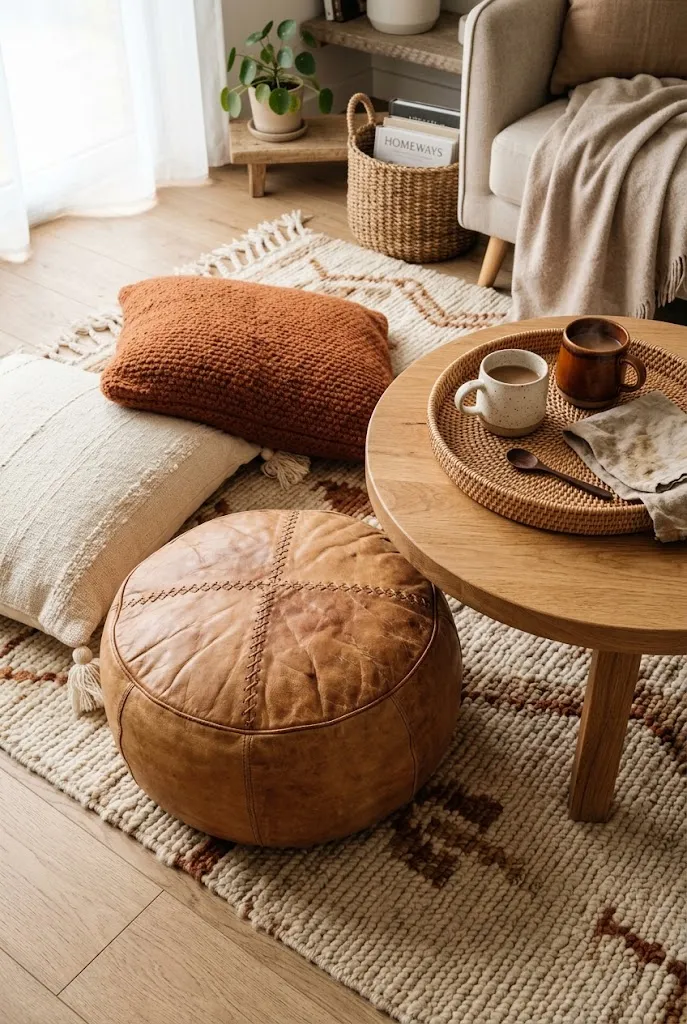
Extra seating that sits close to the floor makes a living room feel casual and social. A hand-stitched leather or woven pouf can double as a footrest or a seat, and oversized floor cushions can slide out when guests arrive. Choose pieces in varied tones, such as tan, cream, and a deep rust, so they feel collected.
- A pouf with a flat top can hold a tray in a pinch.
- Cushions with removable covers are easier to clean.
- Keep a clear walking path, at least around 30 inches in main traffic areas.
In a small apartment, the pieces can be stacked or stored in a basket when not in use. Check that any pouf sold unstuffed comes with filler instructions, since those need to be filled before use.
9. Build a Plant Corner With Staggered Heights
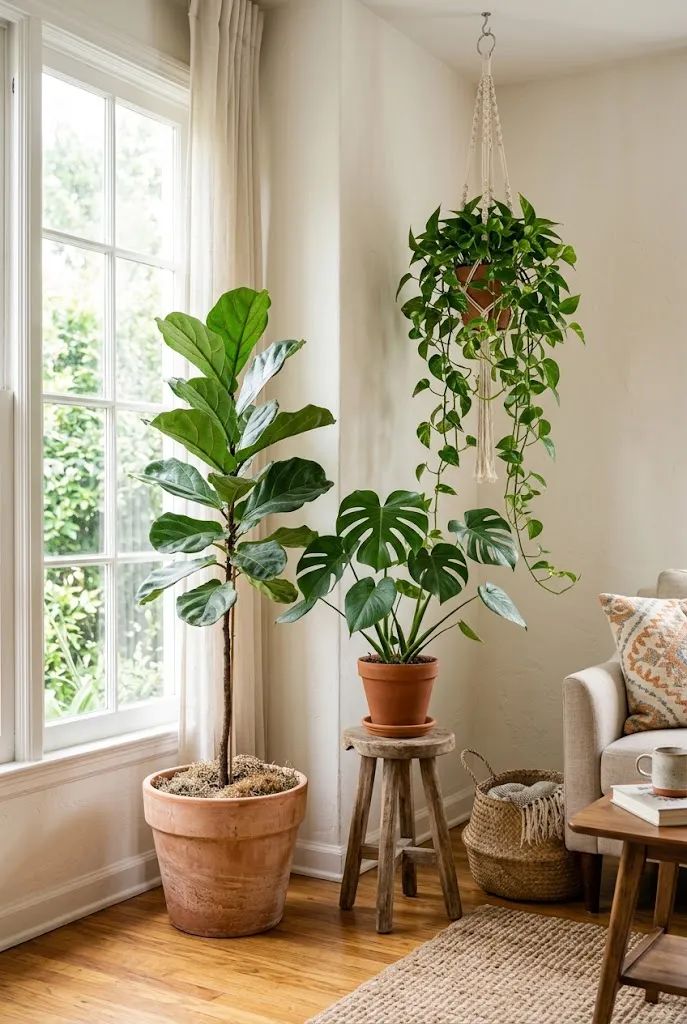
Plants carry a boho room, and the arrangement matters as much as the species. A corner works well when plants occupy three levels: one tall plant on the floor, a mid-height piece on a stool or stand, and a trailing plant on a shelf or hanging basket. This staggering creates depth and keeps the group from looking like a row.
- Start with the tallest plant in the back corner, such as a fiddle-leaf fig or a bird of paradise, depending on your light.
- Add a mid-height plant on a wooden stand or stool.
- Finish with a trailing plant, such as pothos, on a shelf or in a hanging planter.
Check each plant’s light needs before choosing its position, since a corner away from a window may suit snake plants or ZZ plants better than a fig. Group plants with similar watering needs together to make care simpler, and use saucers or trays to protect floors.
10. Swap the Ceiling Light for a Woven Pendant
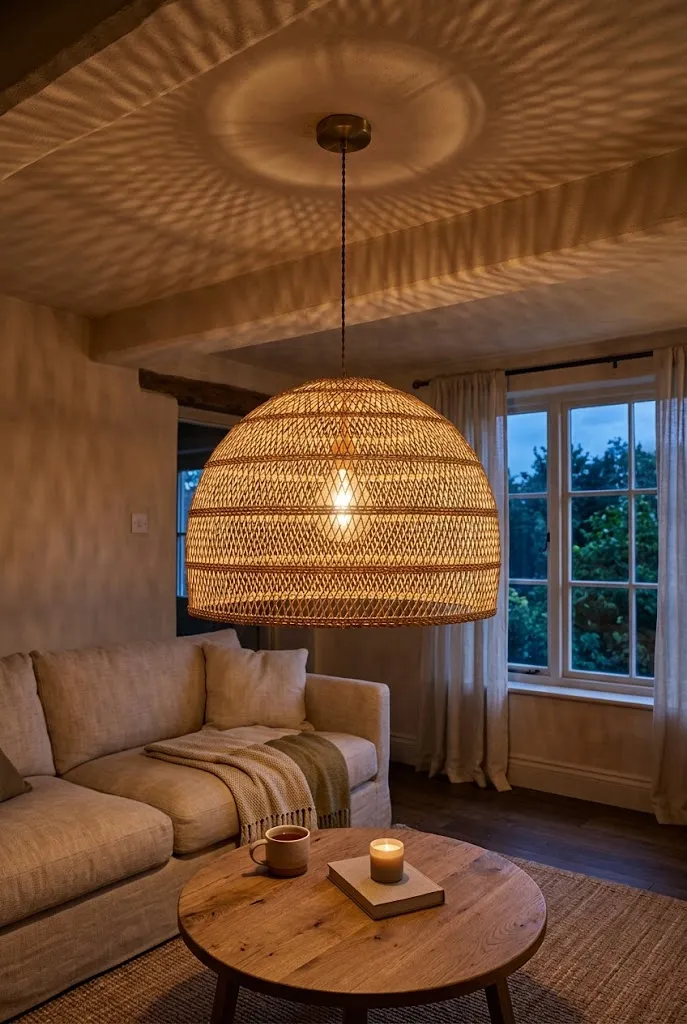
A large rattan or bamboo pendant changes how a living room feels in the evening. Light filters through the weave and throws patterned shadows on the ceiling and walls, which gives the room a warmer, more atmospheric glow. Oversized shades make more of an impact than small ones, so for a typical living room, look for a shade roughly 18 to 24 inches wide, adjusting for ceiling height and room size.
| Option | Effect / Advantage | Best Fit |
|---|---|---|
| Plug-in swag pendant | No electrician needed, flexible placement | Renters |
| Hardwired woven pendant | Clean look, centered placement | Homeowners |
| Cluster of three smaller pendants | Layered, sculptural | Higher ceilings |
If the fixture will be hardwired, hire a licensed electrician, and follow the fixture’s bulb wattage limits, because woven natural materials can be sensitive to heat. LED bulbs generally run cooler.
11. Choose a Low Reclaimed Wood Coffee Table
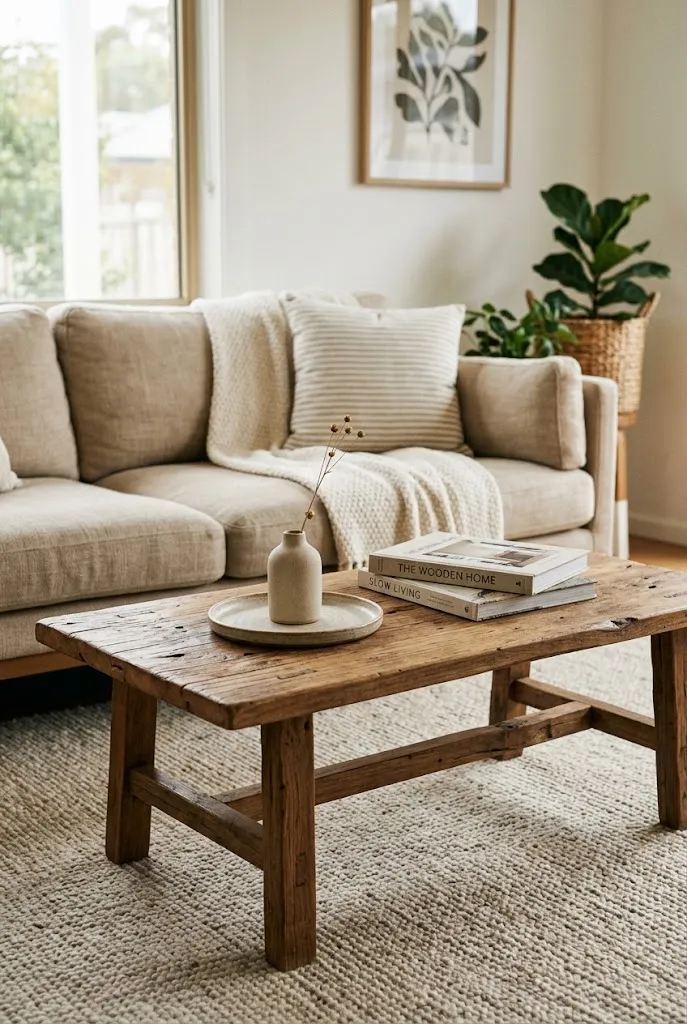
A coffee table in reclaimed or raw-edge wood grounds the softer textiles around it and adds visible age and grain. Look for a low profile, around 15 to 17 inches tall, so it sits comfortably with relaxed seating. Visible knots, slight color variation, and subtle wear belong to the look, not defects to avoid.
Quick Tip: Keep the surface mostly clear. A single tray, a stack of books, and one plant or candle let the wood remain the point.
A round or oval shape is easier to move around in a tight room, while a rectangular table suits a longer sofa. Check what finish has been applied, because untreated or lightly oiled wood may mark with rings from glasses, so coasters help.
12. Add a Rust Velvet Accent Chair
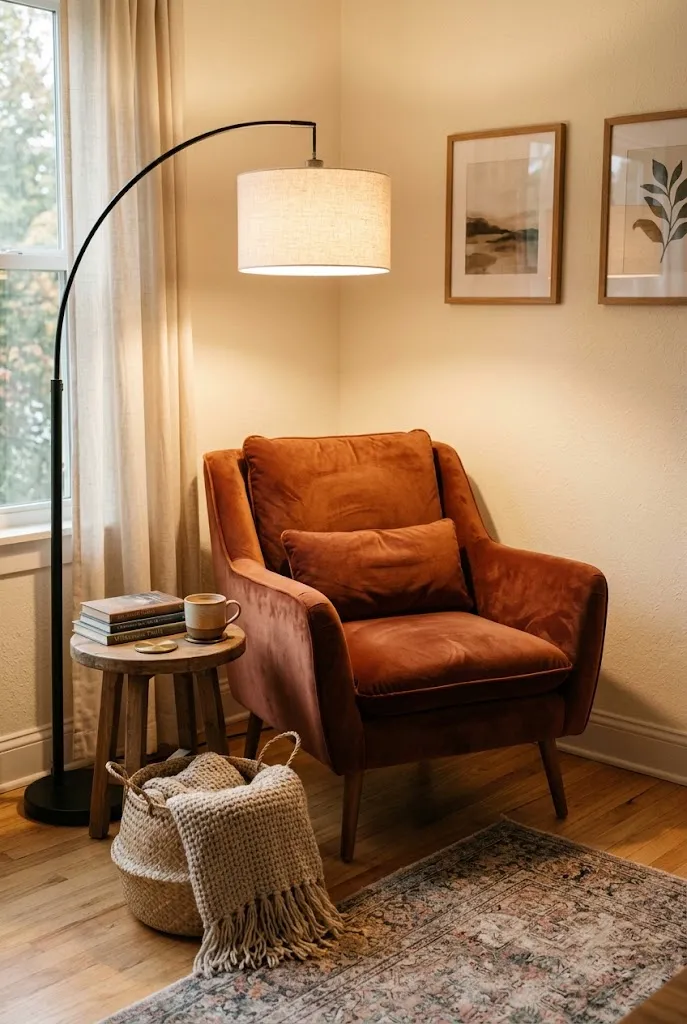
One chair in a saturated earthy color gives a neutral boho room a focal point. Rust, burnt orange, and mustard velvet all work, and the soft nap adds a different texture from the linen, jute, and wood around it. Place it at an angle to the sofa rather than flat against a wall so it feels part of the seating arrangement.
- Choose a performance velvet or tightly woven polyester velvet if you have pets or children.
- A wooden or brass-toned leg finish keeps the piece from looking heavy.
- Pair with a small side table and a floor lamp to make a reading corner.
Common Mistake: Buying a chair that’s scaled too large for the room. A chair with a back height and depth of a modest armchair keeps the floor space open.
13. Layer Window Treatments for Softer Light
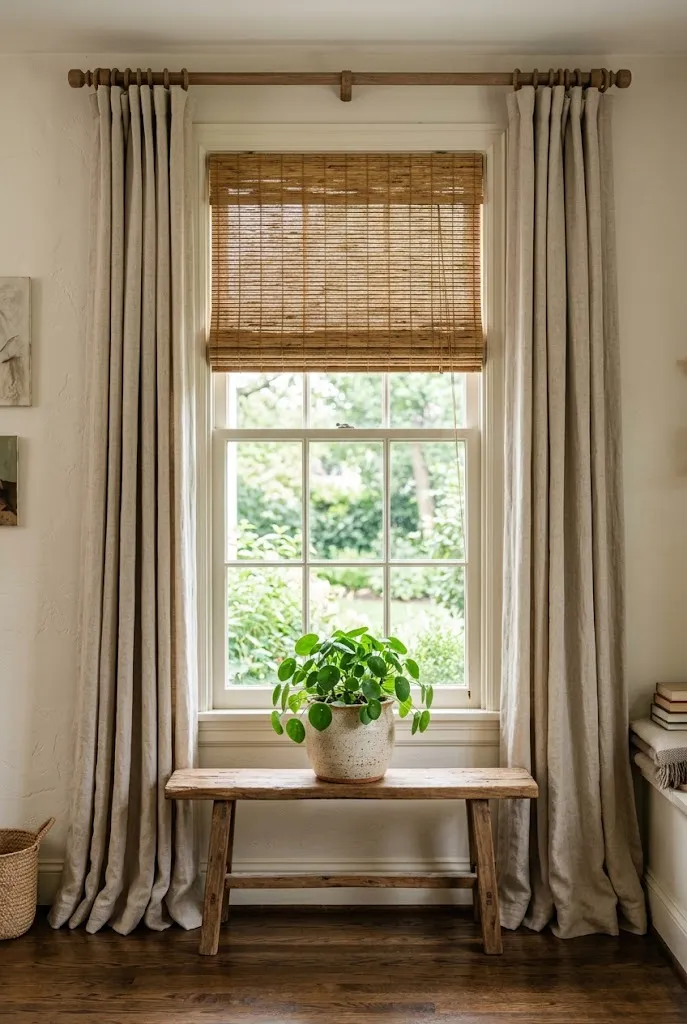
Boho rooms rely on diffused light, and layered window treatments are the simplest way to control it. A woven bamboo or natural-fiber shade handles privacy and glare, while floor-length linen curtains frame the window and add softness. Hang the curtain rod closer to the ceiling and extend it a few inches beyond the window frame on each side, which makes the window appear larger.
| Layer | Effect / Advantage | Best Fit |
|---|---|---|
| Bamboo or woven shade | Filters light, adds texture | Sunny windows, privacy needs |
| Linen curtains | Soft draping, warm light | Most living rooms |
| Sheer panels | Maximum light, airy feel | Low-privacy needs |
Natural-fiber shades can be less effective at blocking light entirely, so consider a liner if the room is used for TV or if you want better insulation.
14. Add a Built-In Window Seat With Cushions
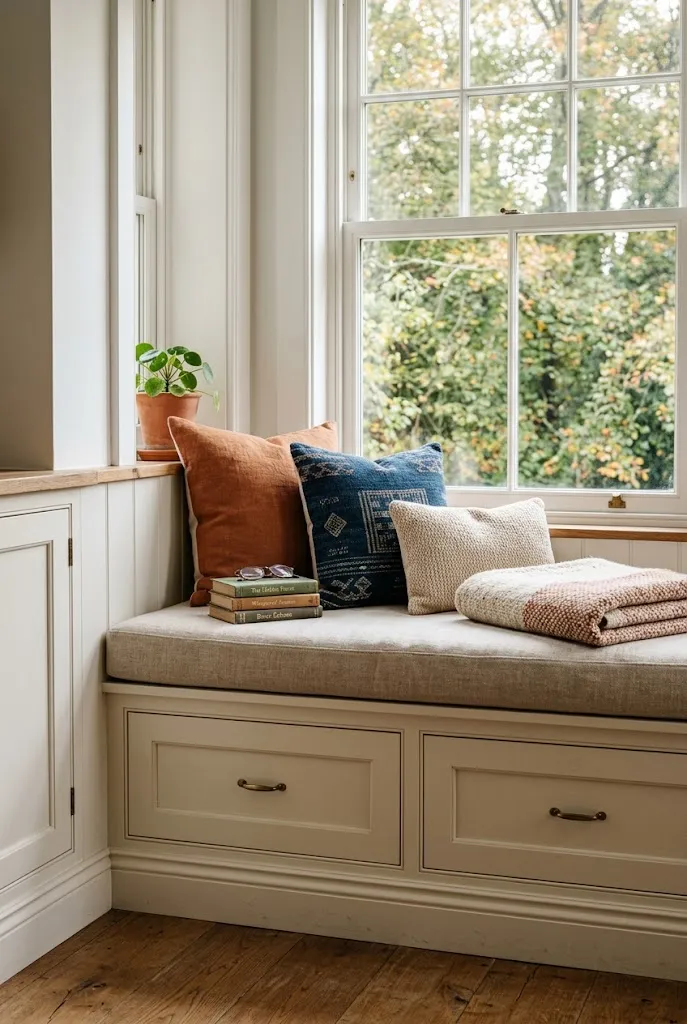
A window seat is a premium upgrade that adds seating, storage, and a reason to linger. Custom cabinetry or carpentry usually builds the base with drawers or lift-up storage beneath, and a thick cushion in textured linen or woven fabric finishes it. Layer bolsters, patterned pillows, and a throw so it feels inviting rather than architectural.
Translating the idea more affordably: A long, low storage bench or a pair of modular cabinets with a custom cushion on top can borrow the same principle, which is seating and storage built along the window. It won’t have the same custom fit, but it creates a similar effect.
- Plan the seat height at around 17 to 19 inches including the cushion.
- Add outlets or a sconce nearby if you plan to read there.
- Consider the sun exposure, since fabrics near windows may fade over time.
15. Style Open Shelving With Ceramics, Books, and Baskets
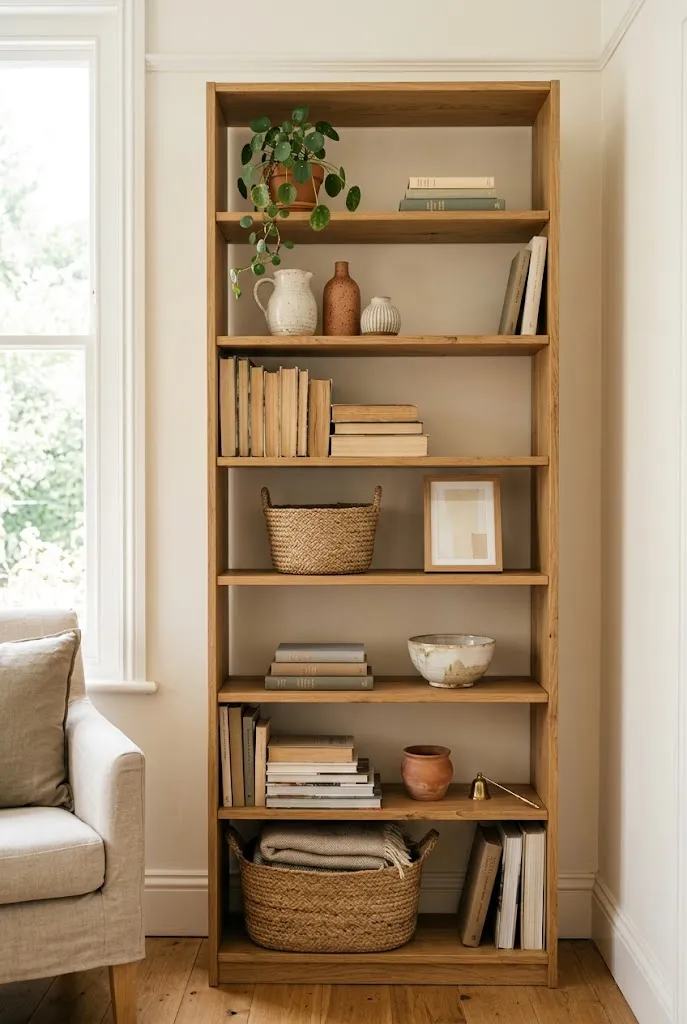
Open shelves in a boho living room work best when the styling feels uneven in a controlled way. Mix stacks of books, handmade ceramics, a woven basket, a small plant, and one or two framed pieces, and leave visible gaps so the objects can breathe. Vary the heights, and let some books lie flat while others stand.
- Start with larger objects, such as baskets and bigger vases, placed first.
- Add books horizontally and vertically for variation.
- Finish with small, personal items and a trailing plant.
Group items in odd numbers, and repeat a color or material across shelves to unify the display, such as terracotta pots on two different levels. Keep heavier items on lower shelves for stability.
16. Finish the Fireplace With Hand-Troweled Plaster
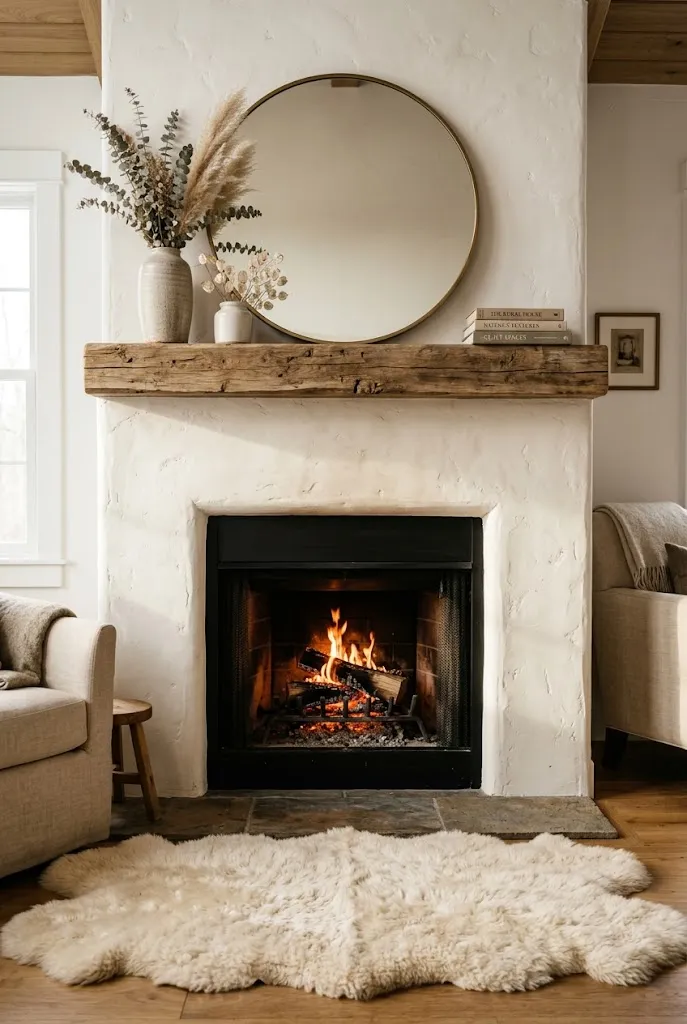
A plaster fireplace surround, in warm white or soft clay, creates a sculptural focal point without the busyness of tile. The slightly uneven, hand-troweled surface catches light in a way smooth paint doesn’t, and it works with the organic shapes of boho decor. Professional plasterers typically do this work, particularly around a firebox, where heat-rated materials and local building codes apply.
- A simple mantel in reclaimed wood or a plaster ledge keeps the look clean.
- Style the mantel with a mix of vases, a mirror leaning at the back, and a few dried branches.
- For a more accessible version, a limewash or textured-paint treatment on an existing brick or drywall surround can create a softer, related look.
Editor’s Note: Consult a fireplace professional before altering any surround that’s used with a working fireplace.
17. Drape a Moroccan Wedding Blanket Over the Sofa Arm
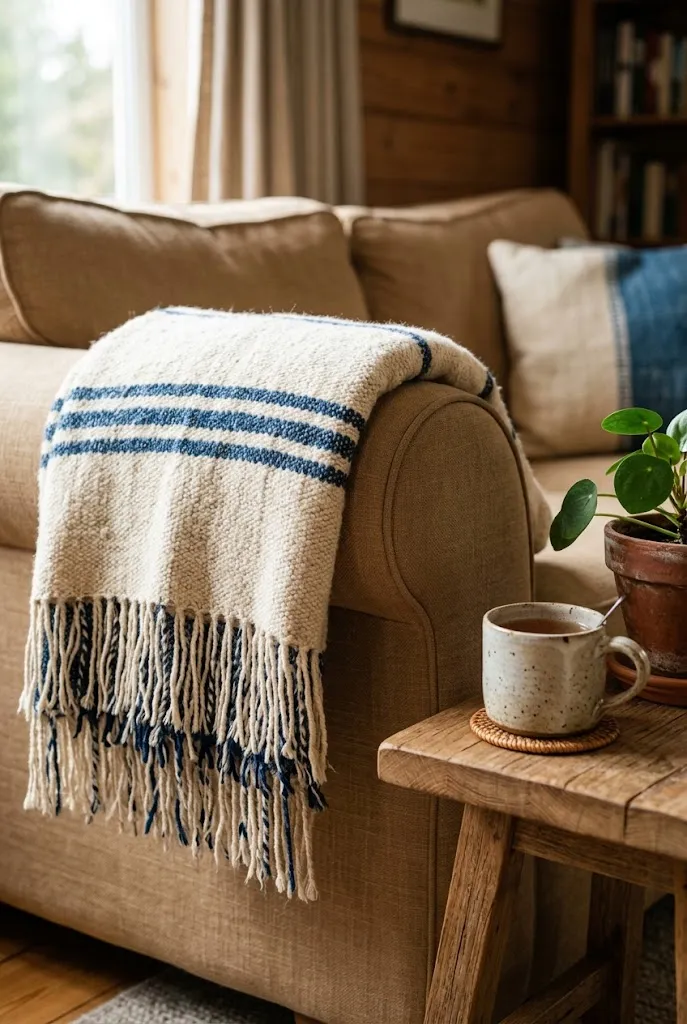
Handwoven blankets with sequins, fringe, or bold stripes bring pattern and craft into a room in one move. Draped casually over the arm or back of a sofa, they add texture and a splash of color without the commitment of a rug or wall treatment. Choose one in cream with black or indigo accents for a more neutral boho look, or one with warmer tones for a bolder statement.
Best For: Adding a handmade accent without a large purchase
Investment: Accessible to moderate, depending on source and craftsmanship
Visual Effect: Casual, collected layering
Look for sellers who describe the origin and materials clearly, and check care instructions before cleaning, since handwoven pieces may need gentle washing or spot cleaning. Use it as a throw rather than as a high-traffic surface to protect delicate details.
18. Hang a Chair From the Ceiling in a Reading Corner
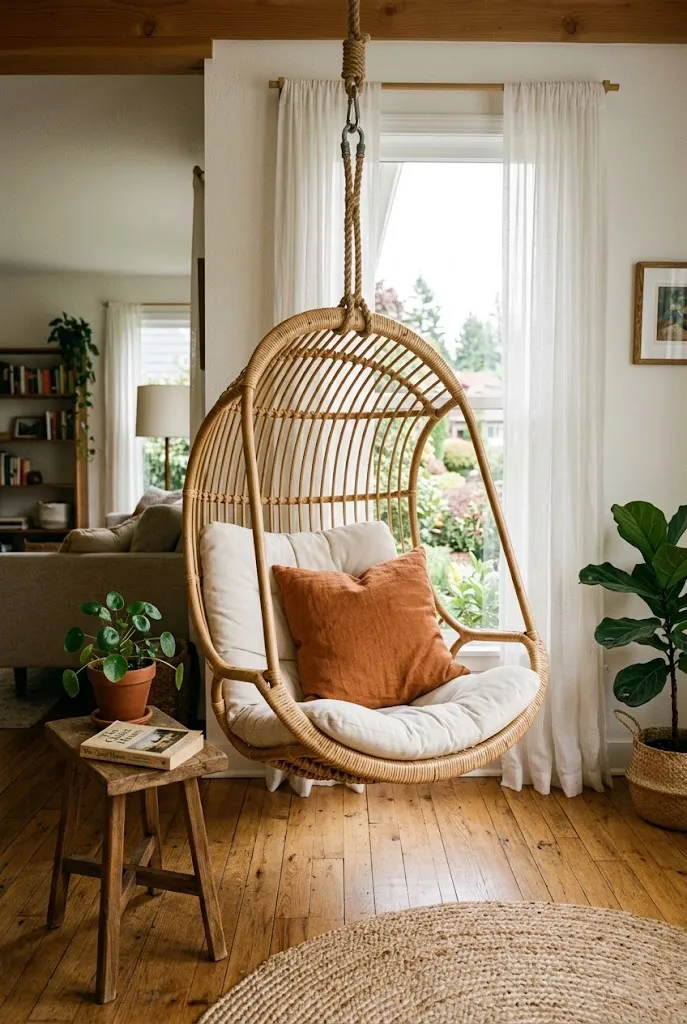
A hanging rattan or macramé chair makes a living room feel playful, and it works well in a bright corner with enough clearance around it. It needs a secure ceiling attachment, typically into a joist or beam, and the hardware must be rated for the weight. If you’re unsure, consult a professional installer.
- Locate the ceiling joist or beam.
- Choose hardware rated for the chair’s weight plus the person using it.
- Leave several feet of clearance on all sides for swinging.
- Add a thick cushion and a small side table nearby.
A freestanding stand is an option for renters or where ceiling installation isn’t possible, though it takes more floor space. Keep the chair away from walls and furniture that might get bumped.
19. Cluster Mismatched Ceramic Lamps for Layered Lighting
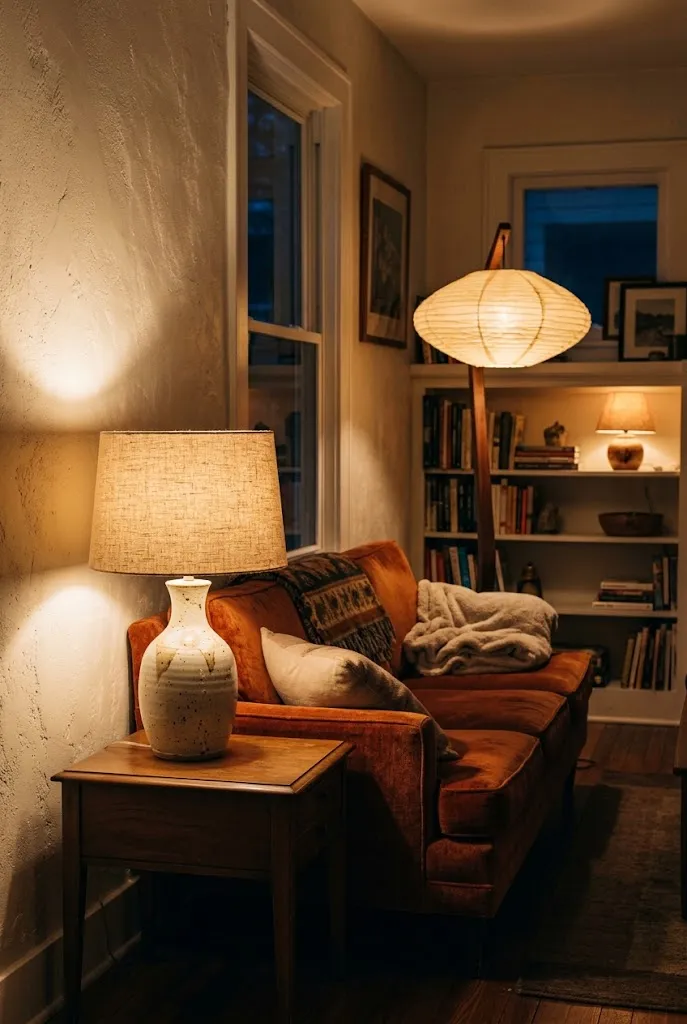
Overhead lighting alone flattens a boho room. Layering two or three table or floor lamps at different heights, with shades in linen or paper, creates pools of warm light that make the room more welcoming in the evening. Mix lamp bases, such as a hand-thrown ceramic base, a wooden base, and a woven shade, so they feel collected rather than matched.
Quick Tip: Use bulbs in a warm white range, often labeled around 2700K, so the light stays cozy rather than clinical.
Place lamps on opposite sides of the room so the light is distributed, and use dimmers or smart bulbs where possible to adjust mood. Hide cords with cord covers or route them behind furniture.
20. Define a Reading Nook With a Folding Wood Screen
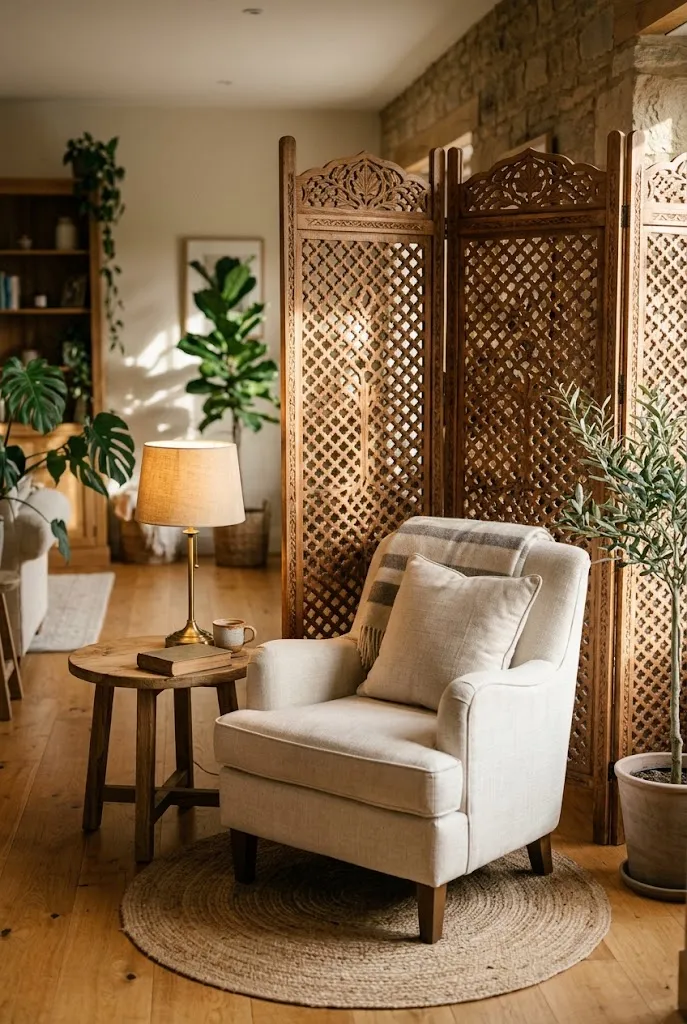
In an open-plan home, a carved or slatted folding screen separates a reading or lounge area from the rest of the room without building a wall. The pattern casts light and shadow, and the wood adds a natural material. Place the screen behind a chair and side table to anchor a small nook, and add a rug beneath to help define the zone.
- A three- or four-panel screen is easy to move and store.
- Choose a height of about five to six feet for visual separation without blocking light.
- Screens can also hide clutter, such as a work area or storage corner.
Common Mistake: Placing the screen against a wall with nothing in front of it, where it reads as wall decor instead of a divider. Pull it slightly away and style around it.
21. Try a Moodier Palette With Deep Olive and Walnut
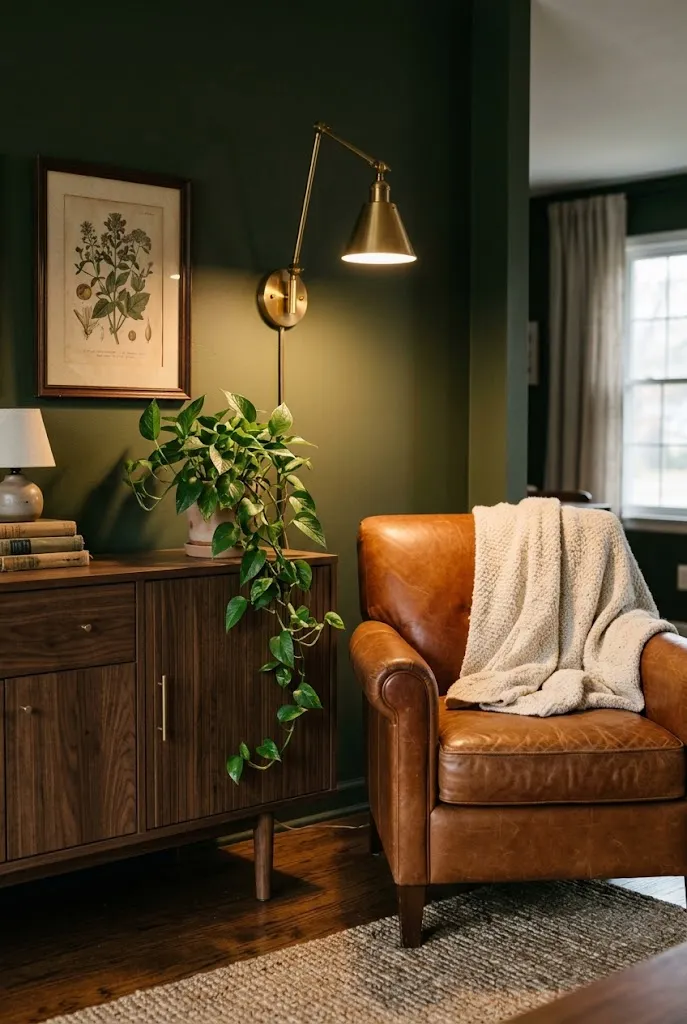
Boho doesn’t have to be sunny and light. Deep olive, forest green, and dark walnut create a richer, cocooning version that suits living rooms with limited natural light or anyone who prefers a more grown-up feel. Keep the textures soft, with linen, wool, and leather, and add brass or aged metal accents for warmth.
Do:
- Layer lighting so the darker walls feel glowing rather than heavy.
- Use cream or warm white textiles to give the eye a place to rest.
- Include natural fibers and plants to keep the mood organic.
Don’t:
- Paint a small, windowless room in a deep color without adding enough lighting.
- Rely on one dark tone everywhere, since variation in value keeps the room from feeling flat.
22. Style the Coffee Table With Layered Trays and Natural Objects
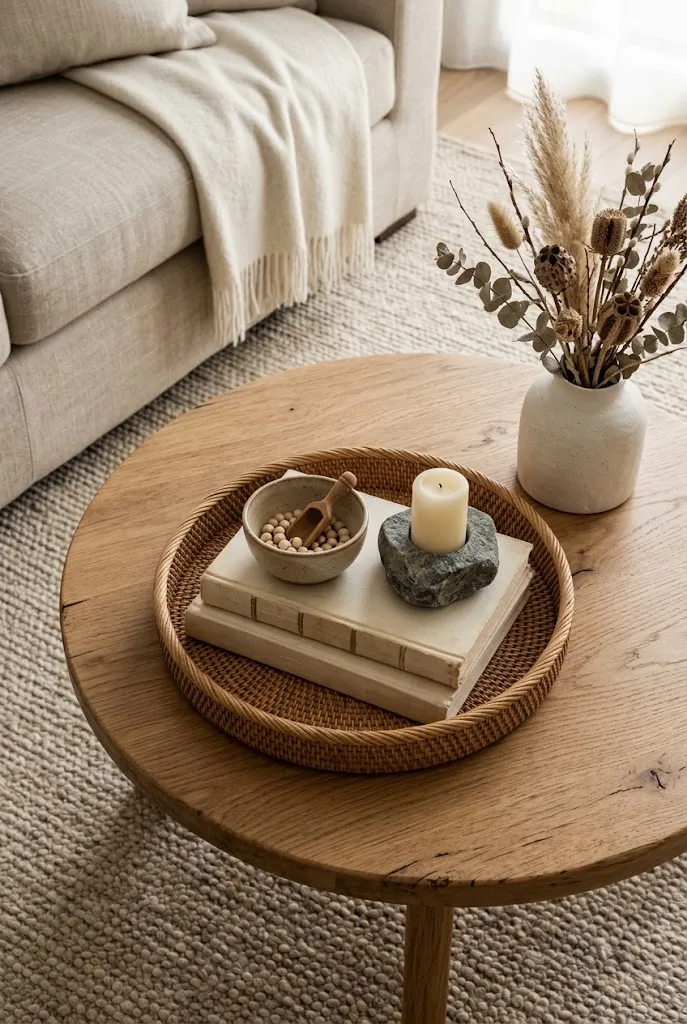
Coffee table styling works best with a clear structure. Start with a tray, which gathers objects and keeps the surface practical, then add height with a stack of books, a low bowl for texture, and one organic element such as a small plant or dried branches. Vary materials, such as wood, ceramic, and stone, so the grouping feels collected.
Best For: A quick refresh with items you may already own
Investment: Accessible
Visual Effect: Organized, layered focal point
Keep the arrangement low enough to see over when seated, and leave open space so there’s room for drinks. Rotate the objects seasonally, such as swapping in pinecones or a candle in colder months, to keep the table feeling fresh.
23. Fill a Large Floor Vase With Dried Branches and Grasses
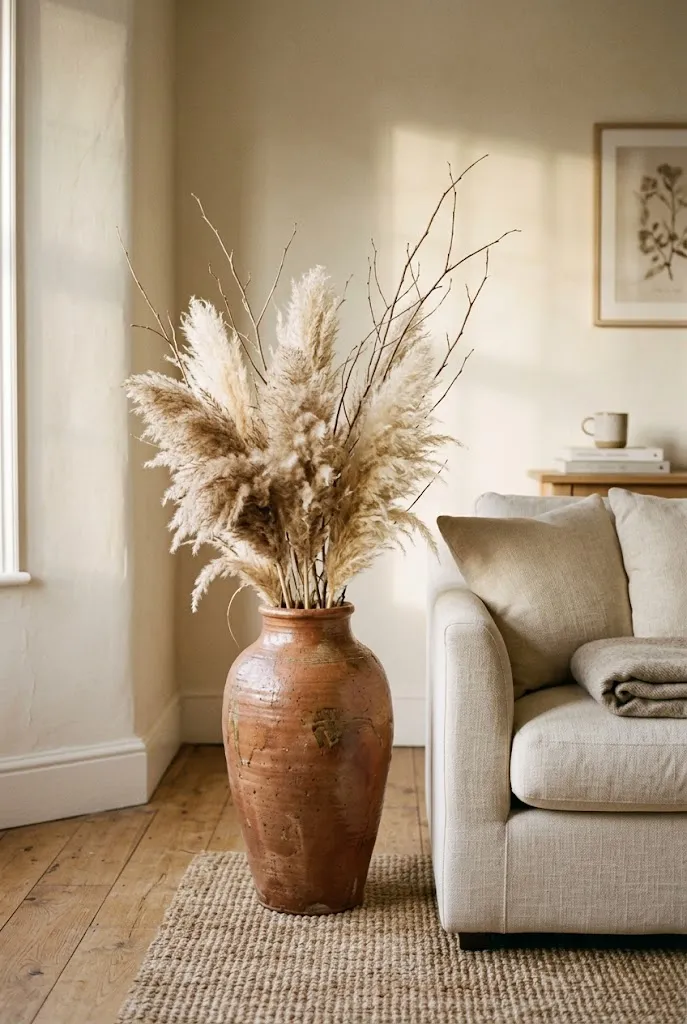
Dried botanicals add height and softness without the care of live plants. A tall ceramic or terracotta vase filled with pampas grass, dried eucalyptus, or bare branches works in a corner, beside a fireplace, or next to a sofa. The airy shapes complement the heavier textures of rugs and furniture.
- Choose a heavy vase or add weight at the base so it doesn’t tip.
- Arrange branches at varied heights for a natural look.
- Dried pampas can shed, so shake it outdoors or lightly seal it with a product intended for dried florals, following the label directions.
Replace or refresh arrangements as they fade or collect dust. Keep them away from direct heat sources, candles, or open flames, since dried material can burn easily.
24. Mix Vintage Art in Mismatched Frames
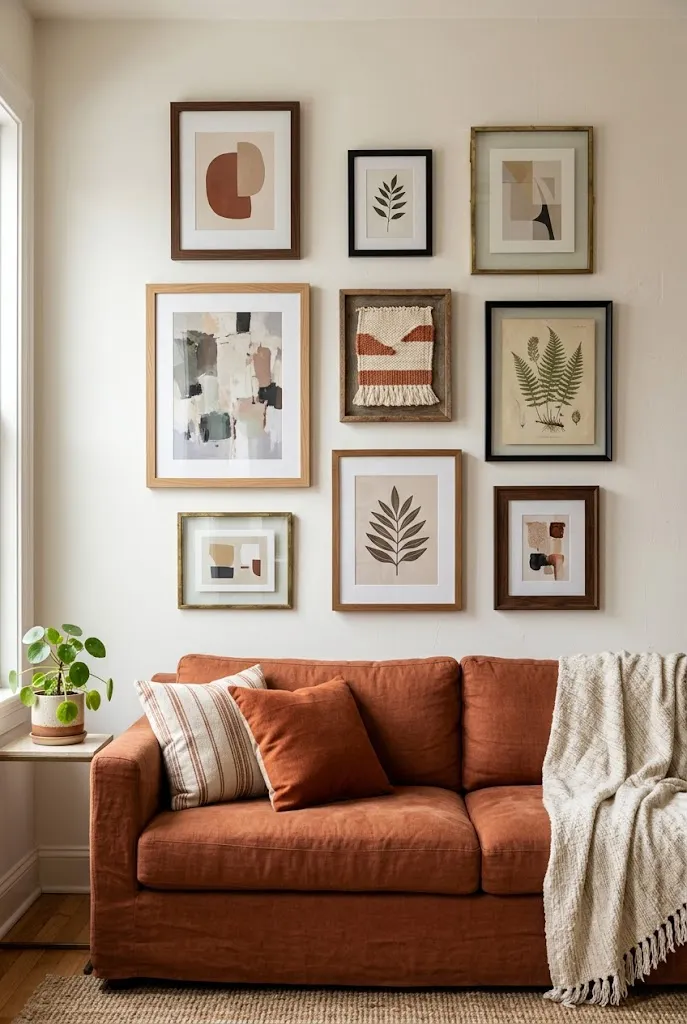
A gallery wall in a boho living room can feel relaxed when it mixes frames in wood, brass, and black, and includes different kinds of art such as abstract prints, botanical sketches, textile pieces, and small mirrors. A shared palette of earthy tones keeps it cohesive even when the styles vary.
- Cut paper templates for each frame and tape them to the wall to test the layout.
- Place the largest piece first, slightly off-center.
- Add smaller pieces around it, leaving consistent gaps of around 2 to 3 inches.
- Hang and adjust, using the paper templates as guides.
Hang the arrangement low enough to relate to the furniture below, with the center around 57 to 60 inches from the floor, a common gallery guideline. In a rental, picture-hanging strips can reduce wall damage for lighter frames, within their stated weight limits.
Where to Start
If you’re not sure where to begin, choose one anchor and build outward. A layered rug, a warm wall color, or a single statement piece like the leather sofa or rust chair gives the room a direction. From there, add texture through pillows, throws, and baskets, then finish with lighting and plants.
Resist the urge to buy everything at once. Boho rooms look best when they develop over time, so add pieces gradually and edit as you go. Keep the palette limited to a few earthy tones, and let natural materials do most of the work.