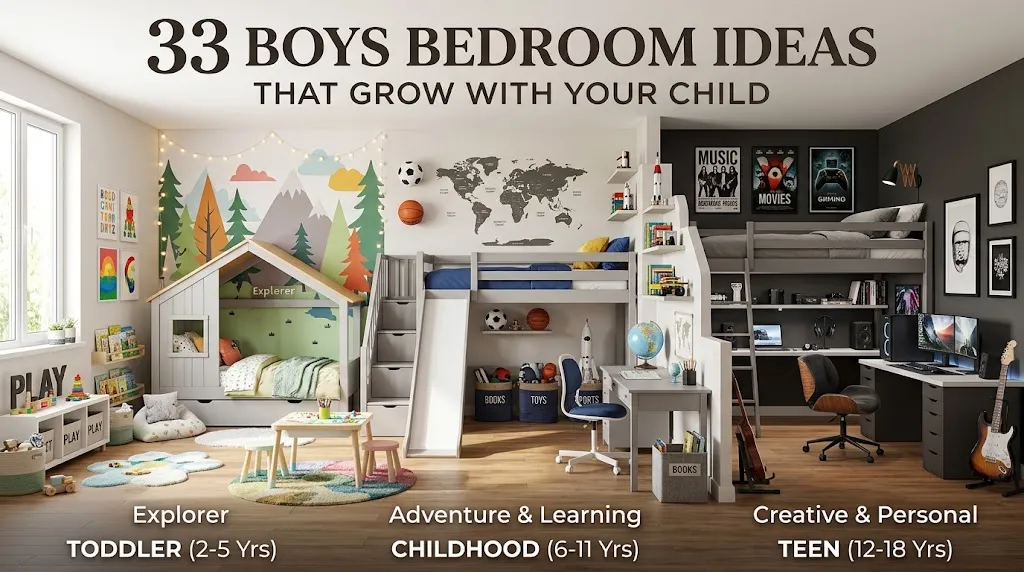
33 Boys Bedroom Ideas That Grow With Your Child From Toddler to Teen
A five-year-old who adores dinosaurs may be rolling his eyes at them by ten, and by thirteen he’ll want a room that feels like his. That’s why most boys bedroom ideas start to look dated well before the furniture does. The smarter approach is to build the room in layers. Keep the bed, storage, and paint steady, then let rugs, bedding, art, and lighting carry the personality so they can change with him.
The 33 ideas below move roughly from toddler rooms through the elementary years and into the tween and teen stages. Some are renter-friendly and cost very little. Others are worth saving for once the room’s purpose is clear. Pick a few that suit your child’s age now and your budget, then leave space for what he’ll want next.
1. Start With a Low Wooden Floor Bed
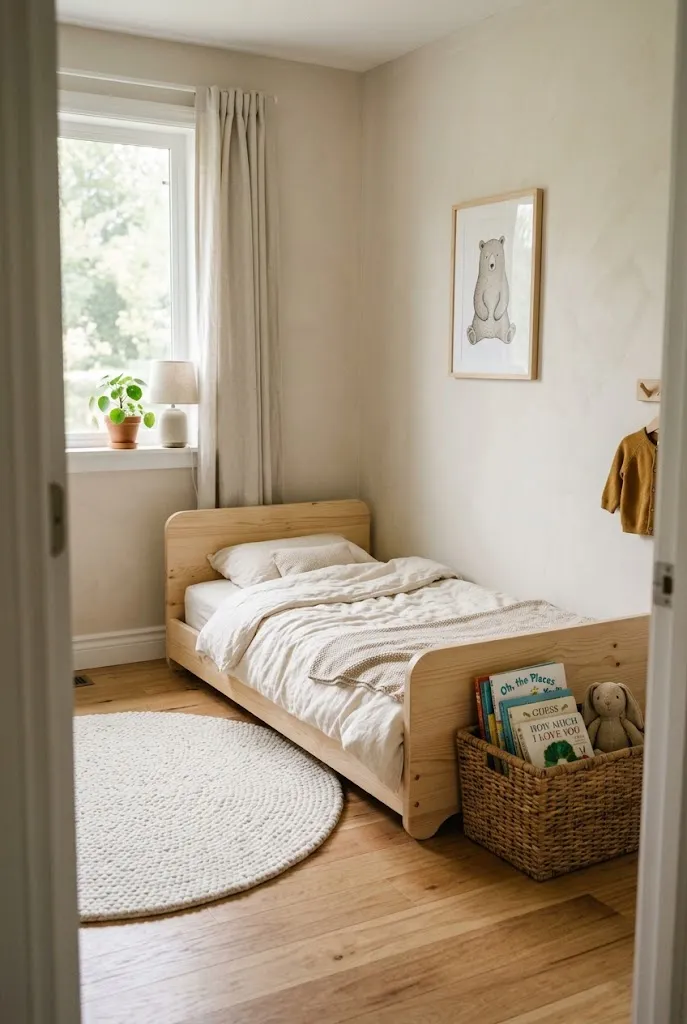
A floor bed sits just inches off the ground, which gives a toddler the independence of climbing in and out without a tall drop. A simple frame in natural pine or birch looks calm and doesn’t lock the room into a theme. Surround it with a soft rug so there’s a gentle landing zone.
Later, the same frame can often be raised on legs or swapped for a twin once he’s ready. Choose a mattress that meets current children’s bedding guidelines, and keep pillows and loose blankets minimal for the youngest sleepers.
2. Turn a Corner Into a Ledge-Shelf Reading Nook
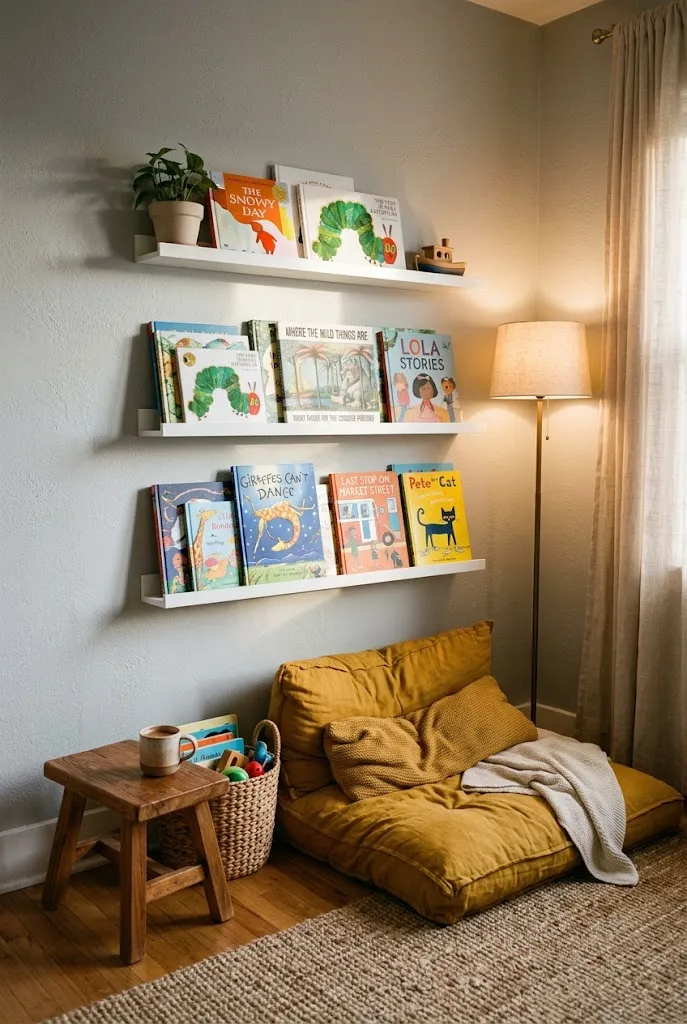
Front-facing picture ledges let a child see book covers instead of spines, which makes it easier for pre-readers to choose their own. Mount two or three ledges along one wall, then add a floor cushion and a small lamp below.
- Keep ledges at a height he can reach without a stool.
- Choose shallow ledges so books sit snugly.
- Add a basket for oversized picture books.
- Place a washable cushion or small armchair underneath.
The nook stays useful for years. Swap the picture books for paperback series as he grows.
3. Paint a Sage Green Wall in a Shade You Can Live With
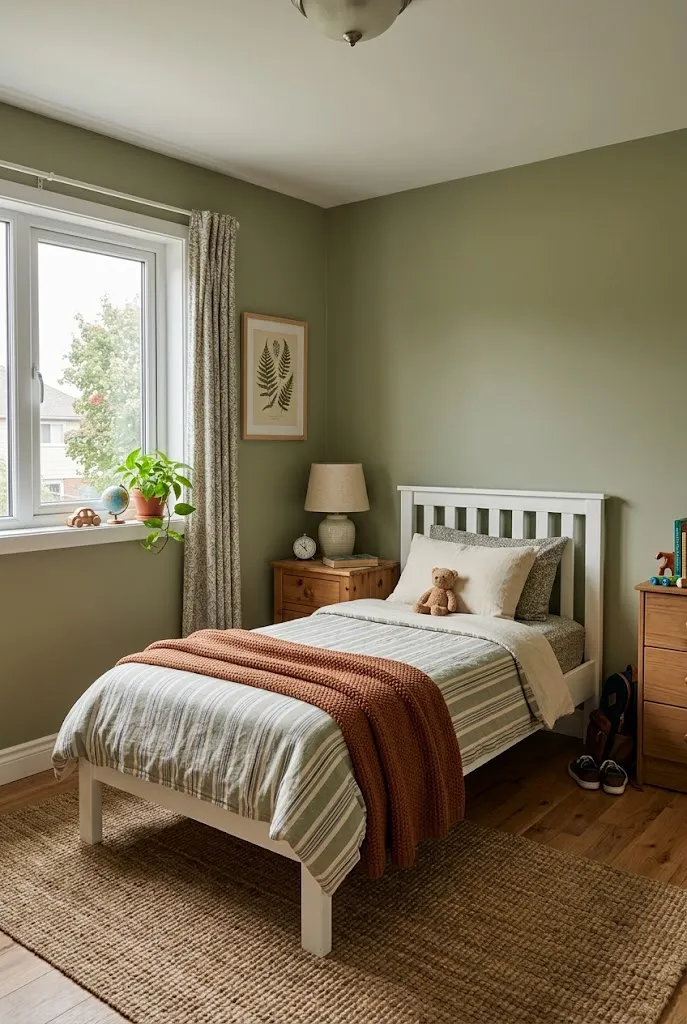
Soft sage green reads as calm and slightly earthy, and it plays well with wood, white, navy, and rust. It’s a good alternative to the primary colors that tend to dominate kids’ rooms. Painting is also one of the lowest-cost updates, and a gentler tone means you won’t be repainting when his taste matures.
Quick Tip: Test a sample on the wall and look at it at morning and evening. Greens shift noticeably with light, and a room that gets little sun can pull cooler and grayer than the chip suggests.
4. Buy the Twin Bed He’ll Still Use at Fifteen
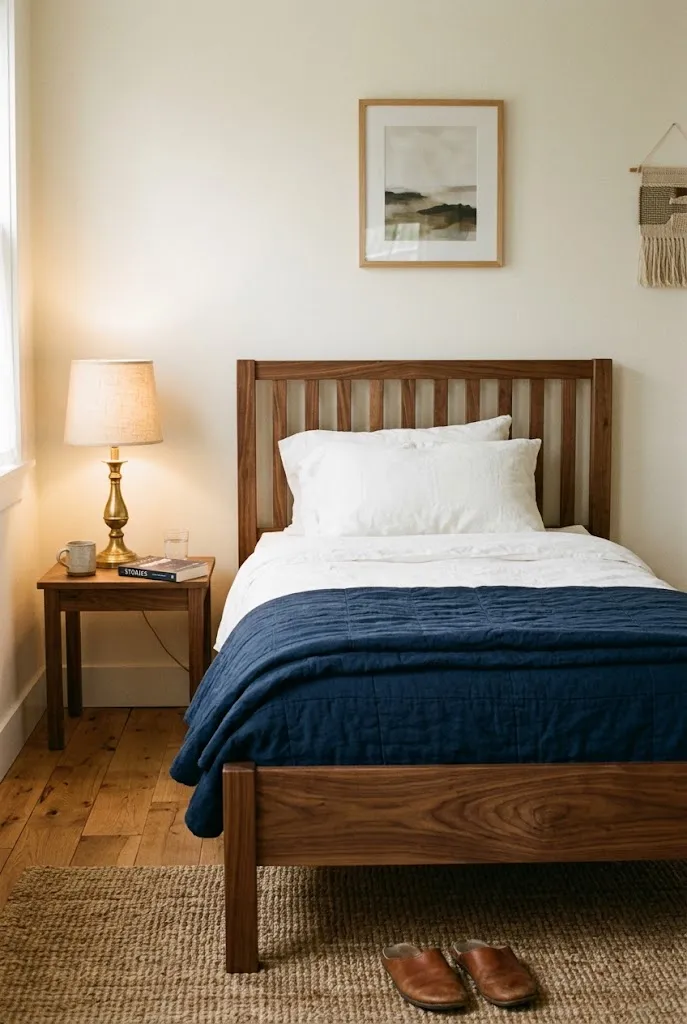
A twin frame with a simple headboard is the single most durable investment in the room. Many families buy a toddler bed first, but a twin with a bed rail can skip that step for kids who are ready. Solid wood or sturdy metal holds up better over the years than lightweight particleboard.
| Bed Style | Advantage | Best Fit |
|---|---|---|
| Toddler bed | Low, uses a crib mattress | Ages 2–4 in a small room |
| Twin with removable rail | Works from preschool to teen | Families wanting one bed |
| Twin XL | Extra length for tall teens | Late-tween upgrade |
Choose a neutral finish like walnut, white, or charcoal so the bedding does the talking.
5. Anchor a Dresser and Give It New Knobs
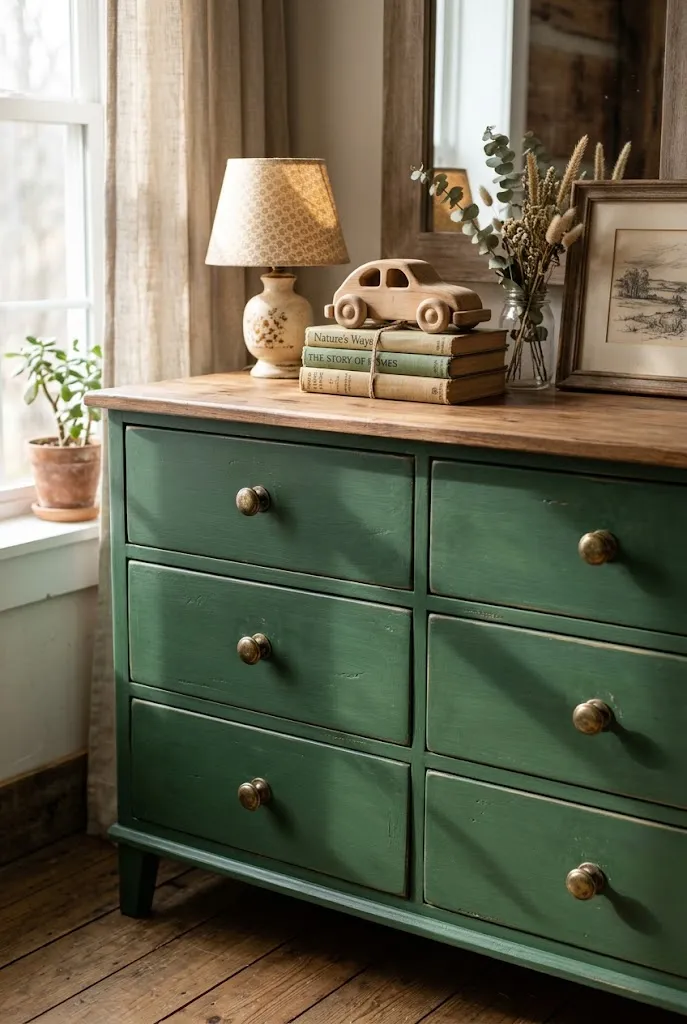
A good dresser lasts through every stage, but it has to be secured to the wall. Anti-tip kits are inexpensive and take a few minutes to install, and they matter in rooms with young climbers. Once it’s safe, personalize the piece without replacing it.
Swap the original pulls for leather tabs, brass knobs, or ceramic ones. Paint the dresser in a deep color if the finish is dated, or leave the wood and let the hardware shift the mood.
Editor’s Note: Choose a dresser with deep, full-extension drawers. Boys’ clothes get bulkier as they grow, and shallow drawers become frustrating at around age ten.
6. Add a Peel-and-Stick World Map Accent Wall
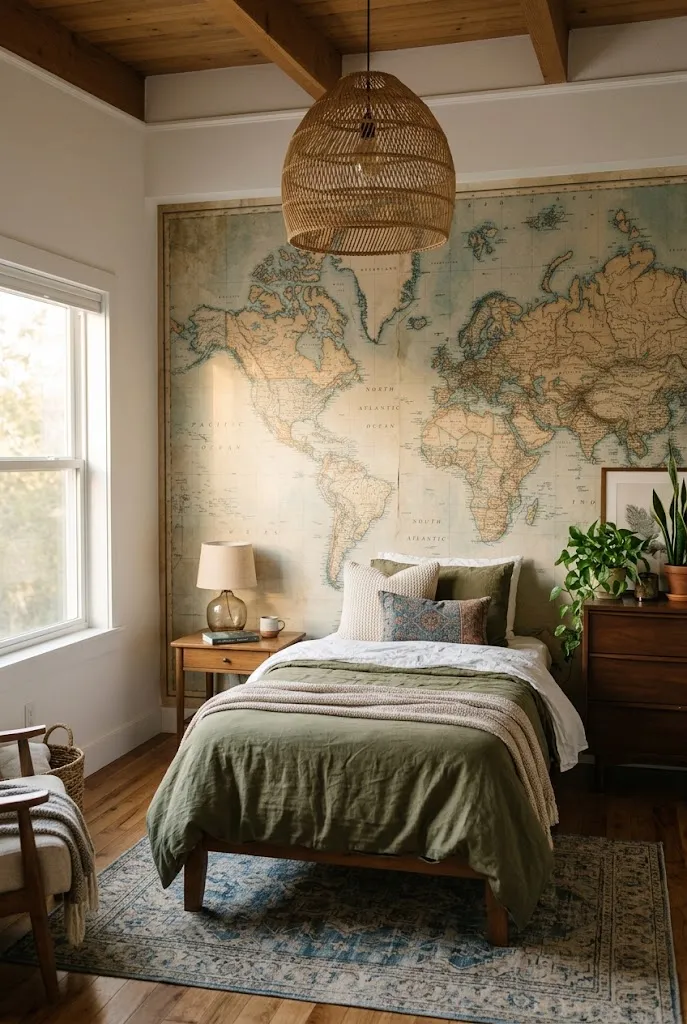
Removable wallpaper is a renter’s best friend. A muted vintage-style world map behind the bed adds interest and quietly supports geography curiosity without screaming “kid.” Look for a map in earthy tones rather than bright primary colors, since it’ll age much better.
- Measure the wall carefully and order a little extra for pattern matching.
- Smooth the surface and let fresh paint cure fully before applying.
- Start at the top and work down with a squeegee.
- Pin small flags or tags for places visited.
7. Build a Wall of Cubbies With Fabric Bins
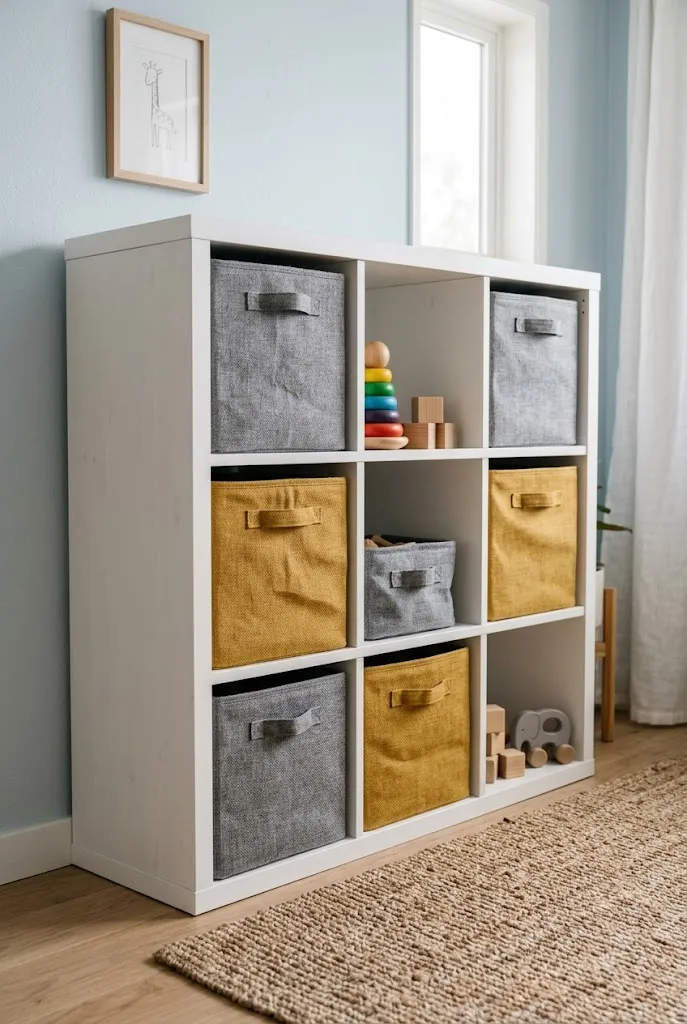
Cube storage organizes small toys, blocks, and cars while giving a toddler a system he can use on his own. A white or natural wood unit with soft fabric bins keeps the look clean. Use open cubes at floor level for easy access and closed bins up high.
As he ages, the same unit becomes storage for books, gaming gear, sports equipment, and collections. Replace the bins in a darker color and it looks ready for a tween.
8. Let Dinosaurs Live in the Art, Not the Whole Room
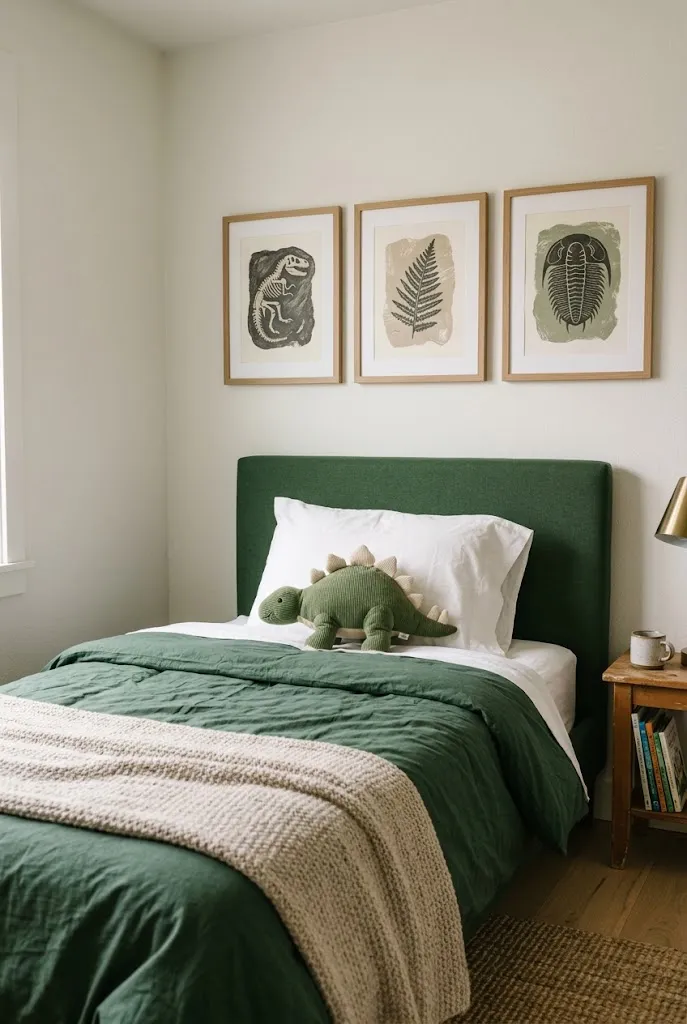
If he loves dinosaurs, resist the urge to cover every surface. Hang a trio of framed natural-history-style prints, add a single stuffed toy, and keep the bedding plain. When his interest moves on, you replace three pieces of art and the room still works.
Common Mistake: Buying dinosaur bedding, curtains, rug, and lamp as a set.
Better Approach: Choose one or two dinosaur items and anchor them with solid colors. It costs less to update, and the room looks more intentional.
9. Set Up a Canvas Tent for a Pretend-Play Hideaway
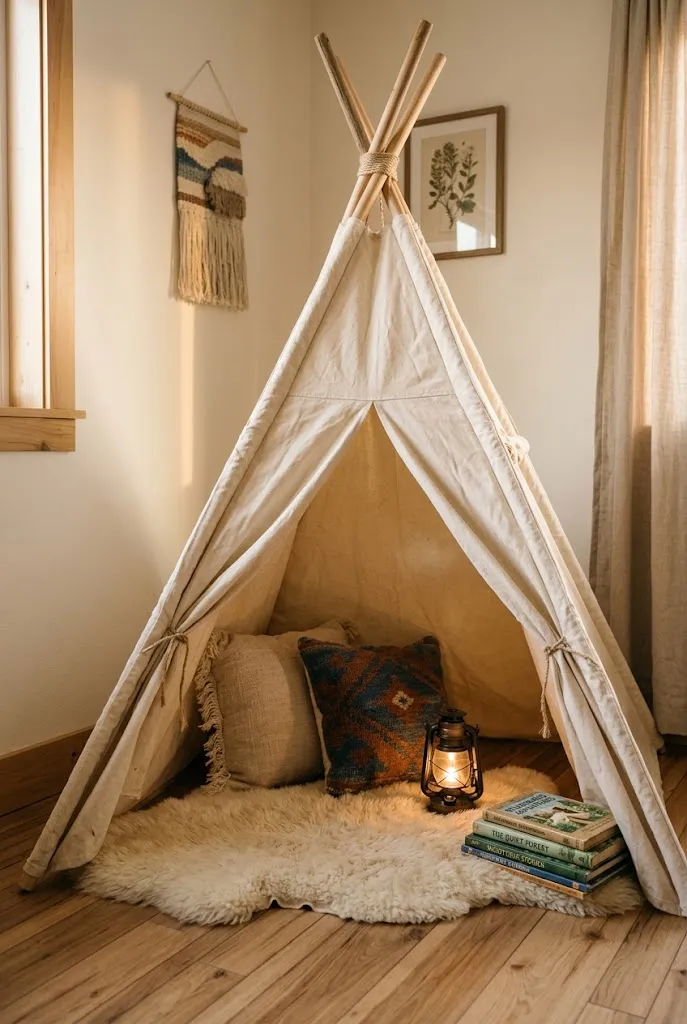
A freestanding canvas teepee or tent gives a small child a place to read, play, and retreat. Pair it with a sheepskin or thick rug and a battery-powered lantern for safe lighting.
Because it’s freestanding, it can come down easily when he outgrows pretend play. Many families store it for younger siblings.
- Choose natural canvas over neon fabrics for a longer lifespan.
- Skip real candles or string lights with hot bulbs.
- Place it away from the door swing and heating vents.
10. Choose Bunk Beds With Full Guardrails and a Sturdy Ladder
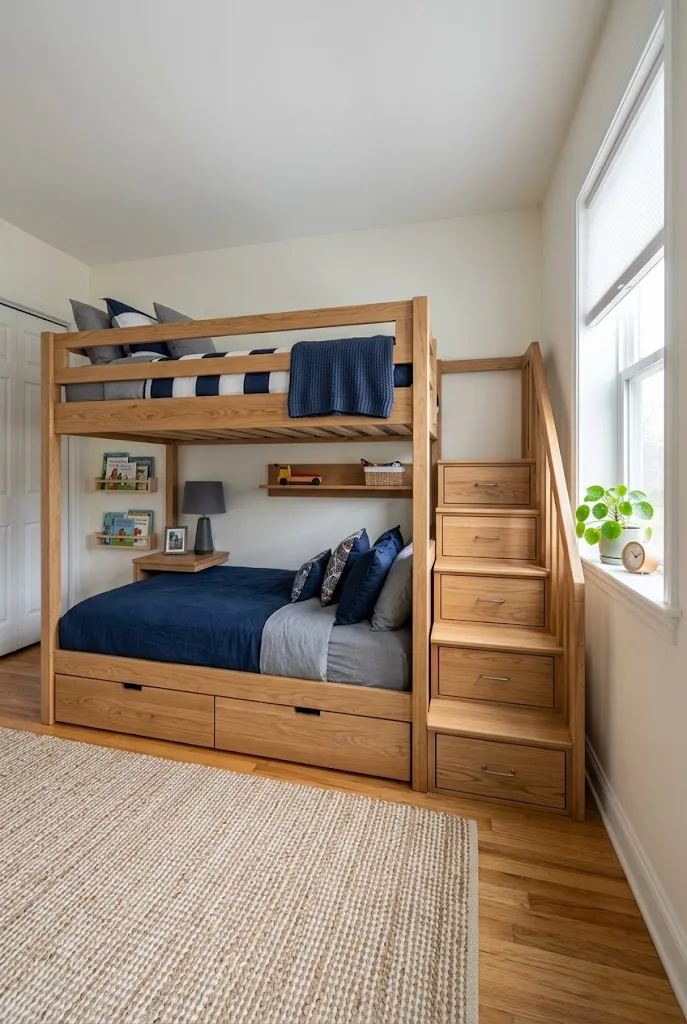
Bunk beds suit siblings sharing a room and free up floor space. Safety guidance generally advises against letting children under six sleep on the top bunk, so plan around the older child above. Look for guardrails on all sides of the top bunk and a ladder or stairs that feel solid.
Stair-style bunks with built-in drawers combine sleeping and storage. Many frames also separate into two twin beds later, which makes them a good long-term investment.
11. Paint a Navy Wall and Add Simple Starlight
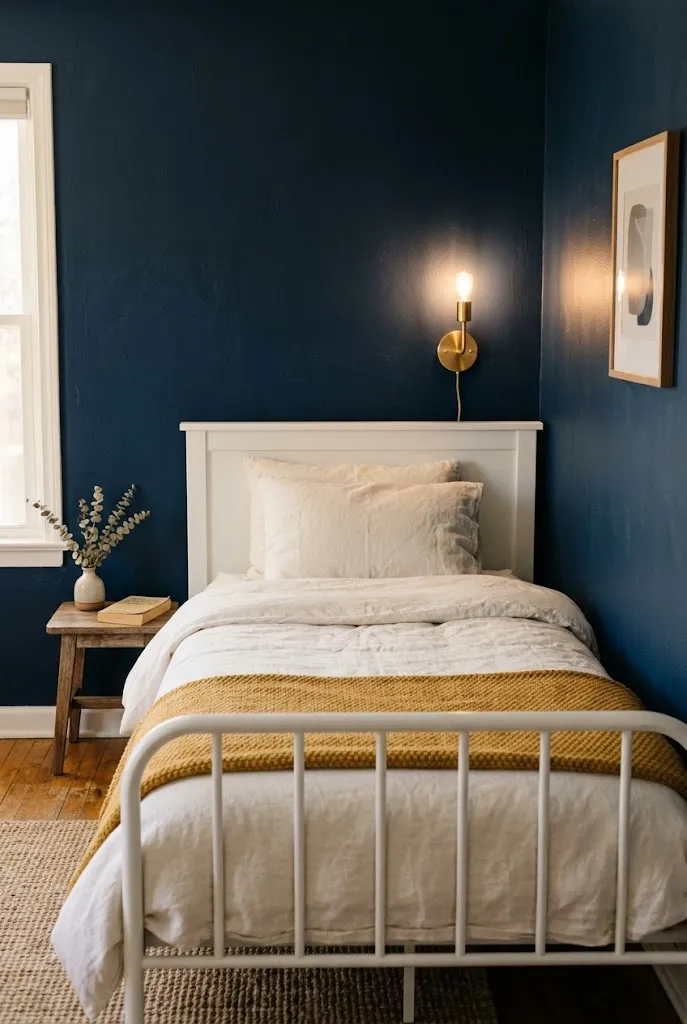
Navy is one of the most reliable colors for a boy’s room. It feels grown-up while still working for a younger child, and it pairs well with white, wood, and brass. A single navy accent wall behind the bed keeps a small room from feeling dark.
Add a plug-in star projector or soft warm lighting for a space feel, then remove it later and you’re left with a sophisticated wall.
Quick Facts
Best For: Ages 4–14
Investment: Accessible
Visual Effect: Cozy depth without a theme
12. Raise the Bed on a Loft Frame With a Desk Below
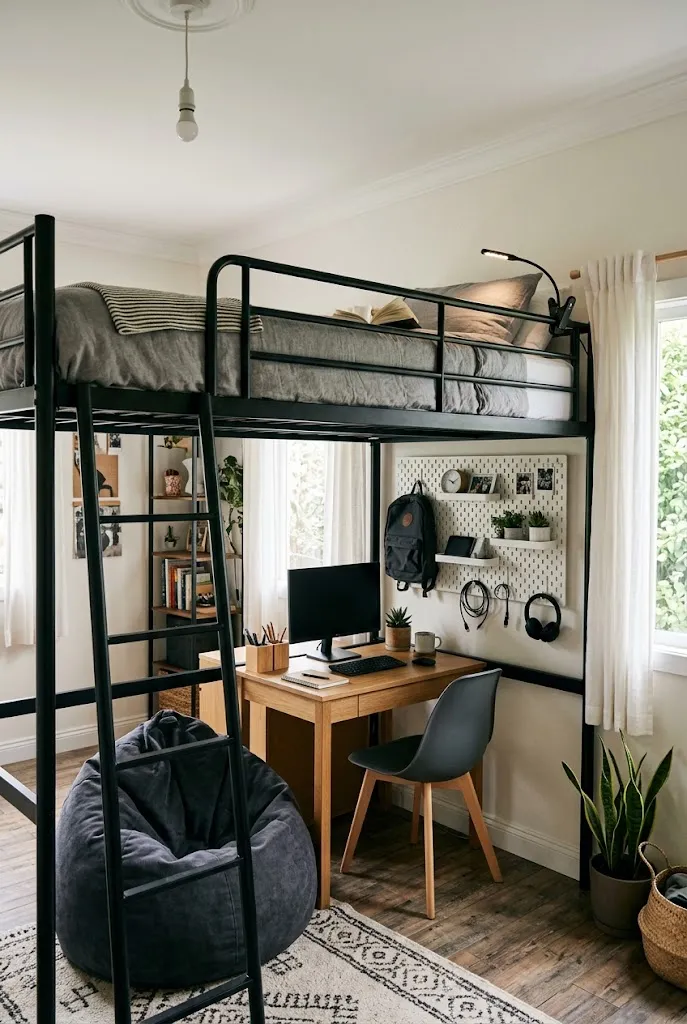
A loft bed can double the usable floor space in a compact room, which makes it popular for kids around eight and up. The area underneath can hold a desk, a beanbag lounge, or a dresser.
Check that the ceiling is high enough for sitting up in bed and that the ladder and rails feel secure. This isn’t a fit for younger children, so treat it as a future upgrade.
- Measure ceiling height and add the mattress thickness.
- Confirm the weight limit on the frame.
- Place the desk where it gets natural light.
- Add a small clip-on reading light on the loft rail.
13. Style a Vintage Globe and Explorer-Inspired Shelf
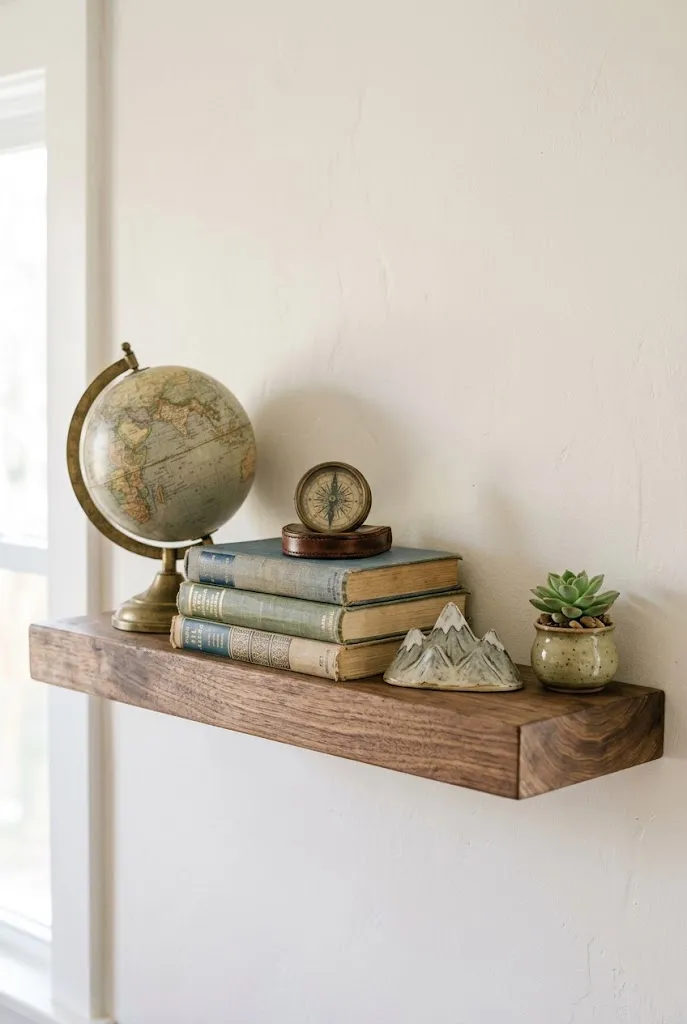
For a child who loves maps and travel, a shelf with a vintage-style globe, a brass compass, a few hardcover atlases, and a small ceramic mountain figure feels curated rather than themed. Shelves like this work for a seven-year-old and a thirteen-year-old.
Mix heights and keep a bit of empty space so the shelf breathes.
14. Create a Sports Display Wall With Floating Shelves
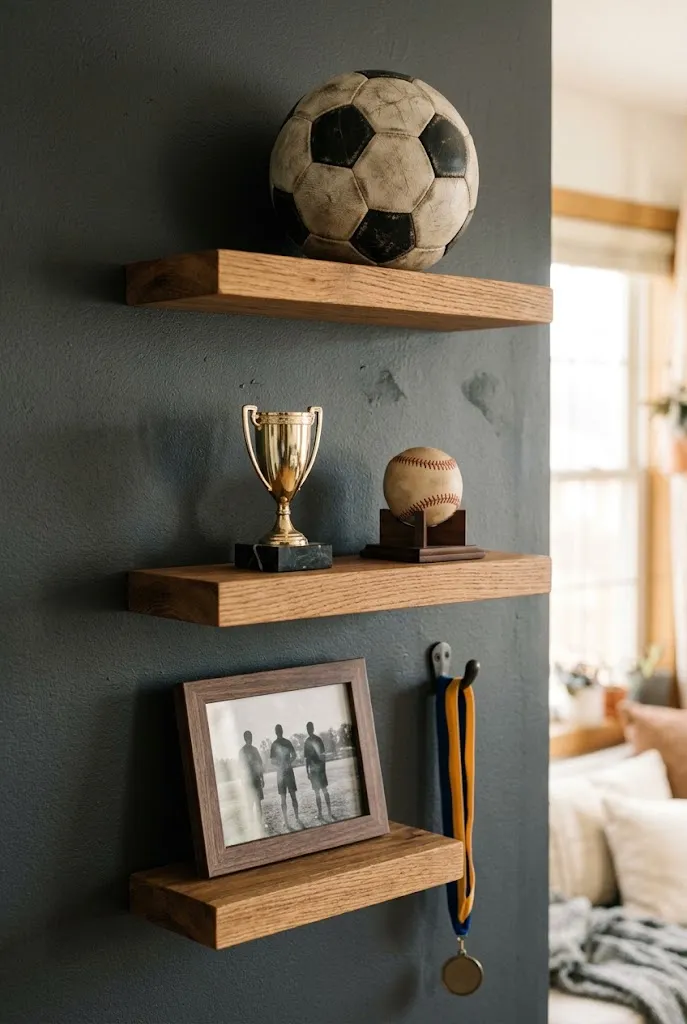
For the kid who plays everything, a few floating shelves hold ribbons, a signed ball, trophies, and a favorite cap. It turns his achievements into decor rather than clutter. Use simple frames for team photos and a single pendant or wall light to make it a focal point.
- Keep shelves deep enough for balls and trophies.
- Group objects in odd numbers.
- Leave room to add new awards.
- Use a hook below for a jersey or medal.
15. Make a Magnetic Gallery Wall for Rotating Art
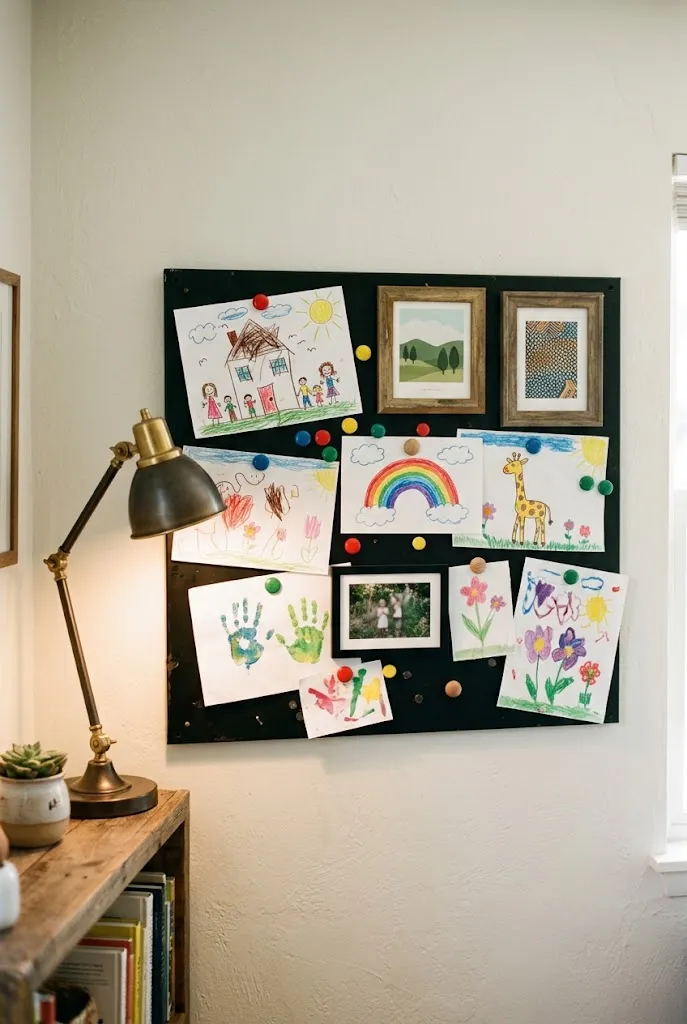
Younger kids produce a stream of drawings. A magnetic board or sheet of painted-over steel lets him swap art without damaging walls. Frame one or two favorites and rotate the rest.
As he grows, the same board holds concert tickets, photos, and sketches. It’s flexible and costs little.
Tips & Tricks
- Use strong rare-earth magnets for heavier paper.
- Choose a board color that matches the wall.
- Limit it to one wall zone so it doesn’t spread.
16. Use Rolling Under-Bed Storage for Seasonal Gear
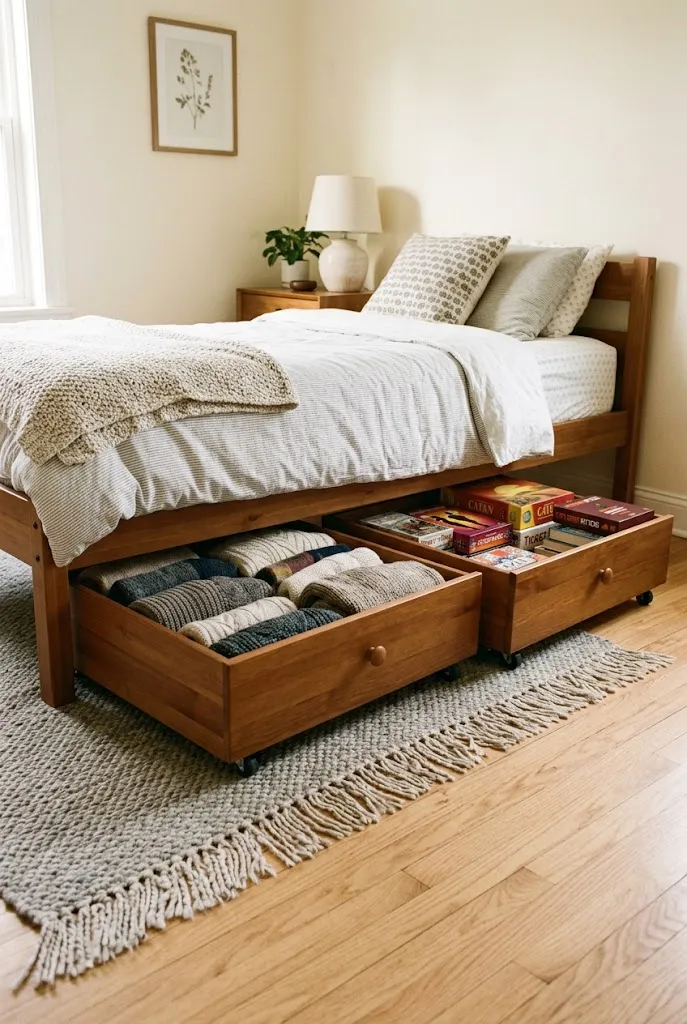
The space beneath a bed is often wasted. Shallow rolling drawers hold off-season clothes, extra bedding, and games. Choose ones with wheels and a sturdy handle, and match them to the bed frame for a clean look.
In a small room, this storage can replace a second dresser.
Do: Label drawers by season or category.
Don’t: Store heavy items in flimsy fabric bins that sag.
17. Build a Window Seat With Storage Underneath
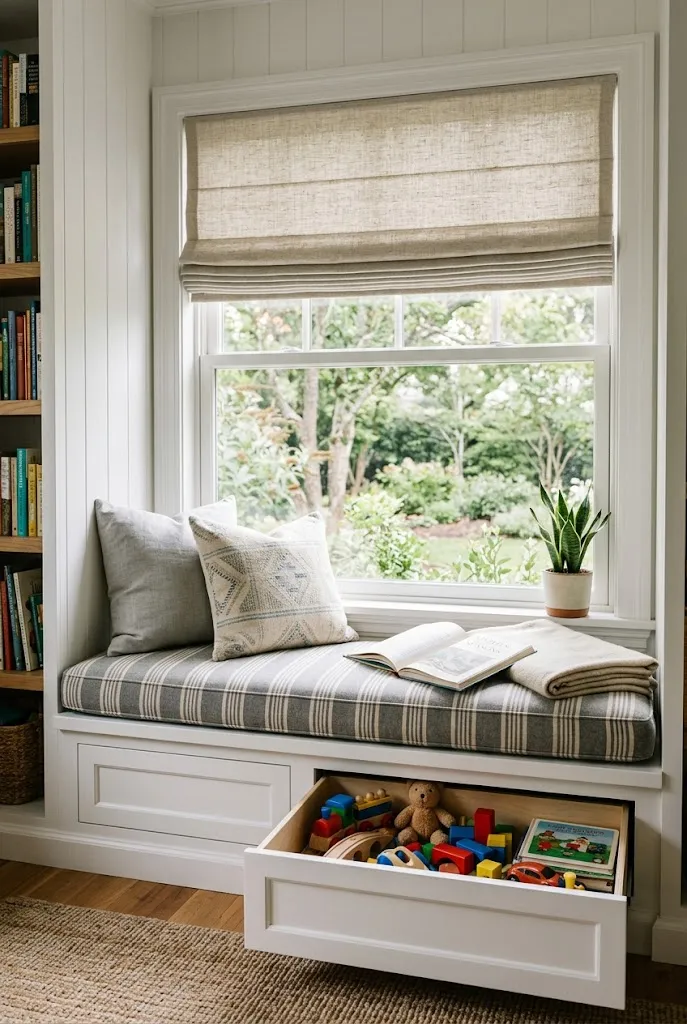
A built-in window seat gives a reading perch, extra seating, and hidden storage. Use hinged lids or pull-out drawers, and add a cushion in a durable performance fabric.
For a simpler version, buy two low cabinets and span them with a cushion. For safety, choose slow-close hinges on lids and cordless window treatments.
18. Paint a Chalkboard or Magnetic Wall Section
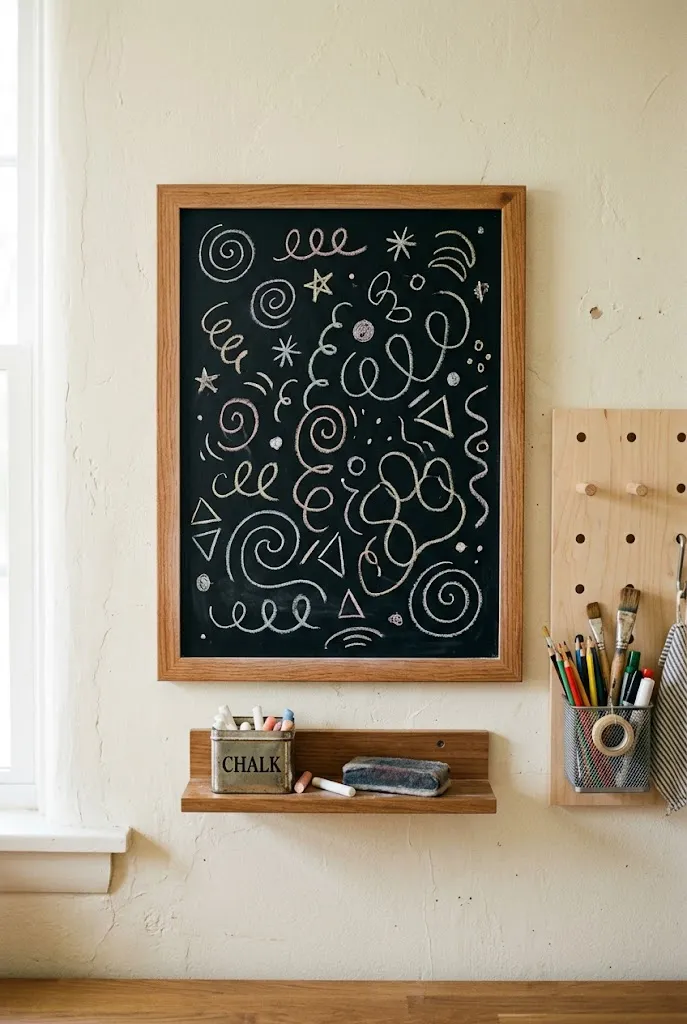
A small section of chalkboard paint near the desk or door gives a place for doodles, schedules, and notes. It’s an easy way to keep a young child’s drawing off other surfaces.
A framed chalkboard panel is a cleaner option for renters. Keep chalk in a small tray to limit dust.
19. Add Board-and-Batten for Lasting Texture
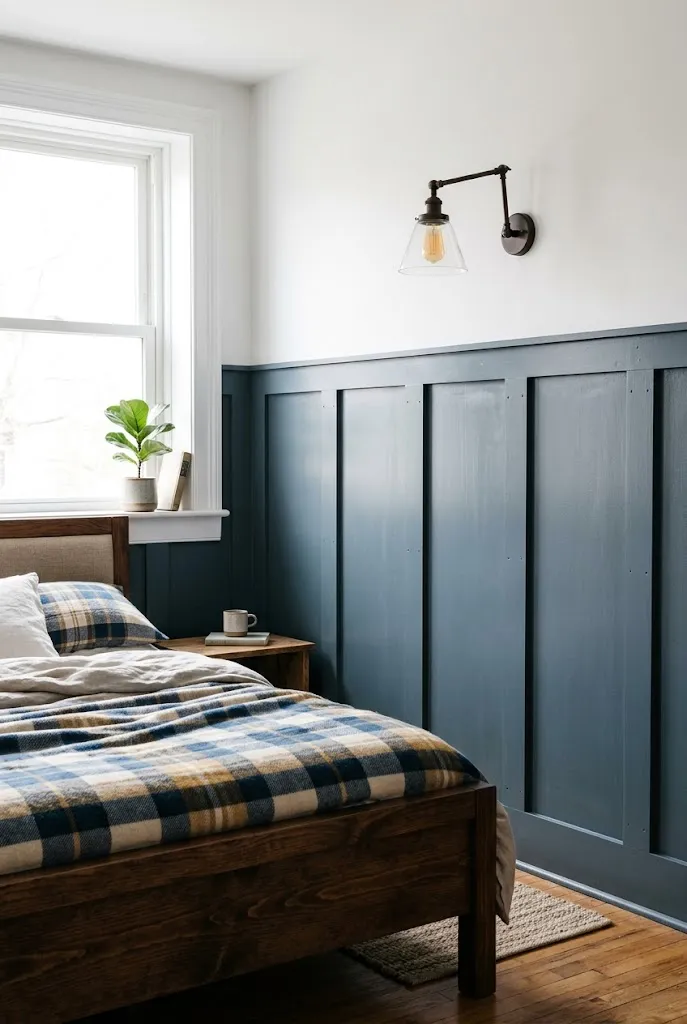
Painted board-and-batten wainscoting adds architectural character that suits a toddler and a teenager equally. Paint it in a deep blue-gray or forest green for a tailored look.
The effect is durable and cuts down on scuffs at kid height. Many homeowners complete it with trim boards, a level, and paint over a weekend.
Editor’s Note: Keep the top rail at around one-third to one-half of the wall height for balanced proportions.
20. Pick an Adjustable Desk That Grows With Him
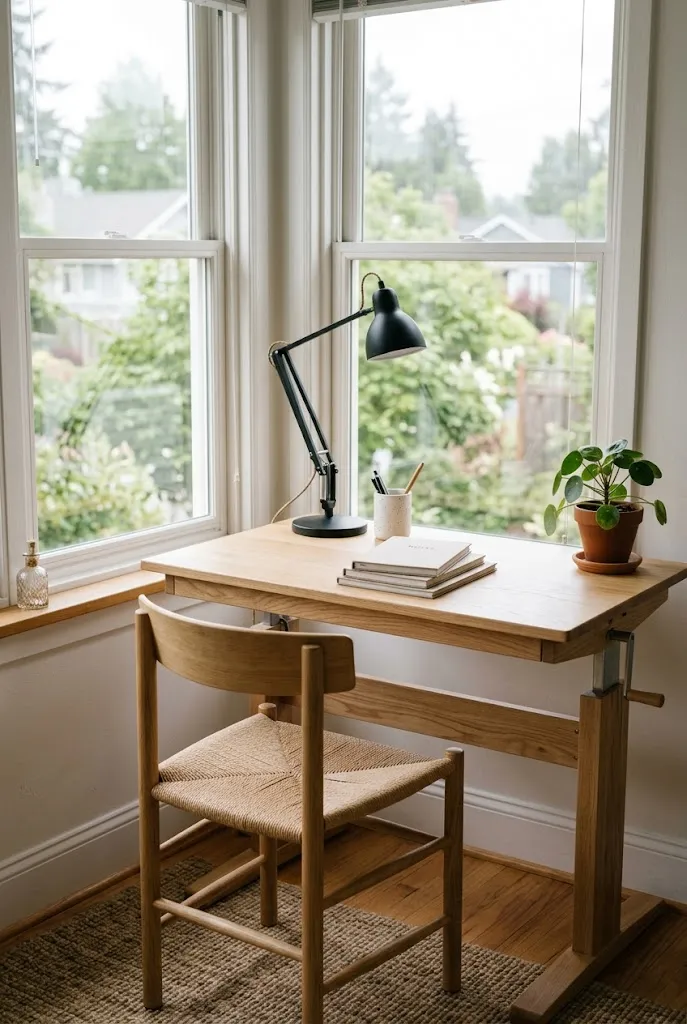
Adjustable-height desks and chairs mean one purchase works from kindergarten through high school. Place it near a window and add a task lamp.
| Feature | Why It Helps | Look For |
|---|---|---|
| Height adjustment | Fits a wide range of ages | Smooth crank or lift |
| Tilt top | Comfortable for drawing | Sturdy locking mechanism |
| Chair with footrest | Keeps posture supported | Adjustable seat height |
21. Hide Gaming Gear With Cable Management
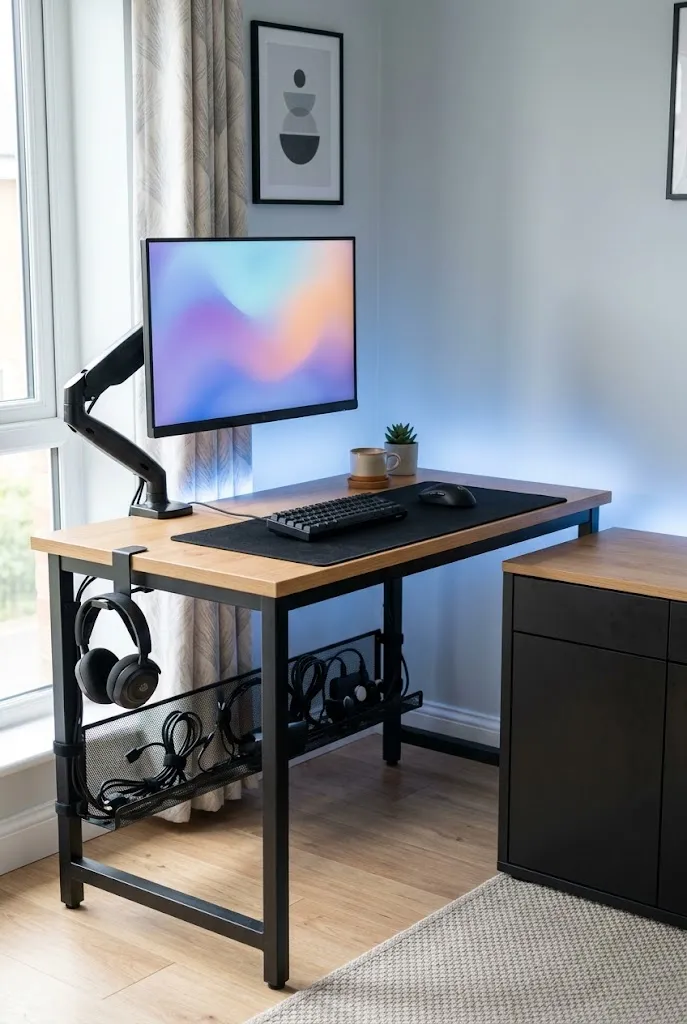
Gaming can take over a room. Use a desk with a cable tray, a power strip mounted underneath, and a closed cabinet for consoles. Mount a monitor on an arm to free desk surface.
Keep it clean and tidy; a clutter-free desk makes the room feel more grown-up.
- Mount the power strip to the desk’s underside.
- Bundle cords with reusable ties.
- Label each plug.
- Add a headset hook on the desk edge.
22. Add a Beanbag or Pod Lounge Corner
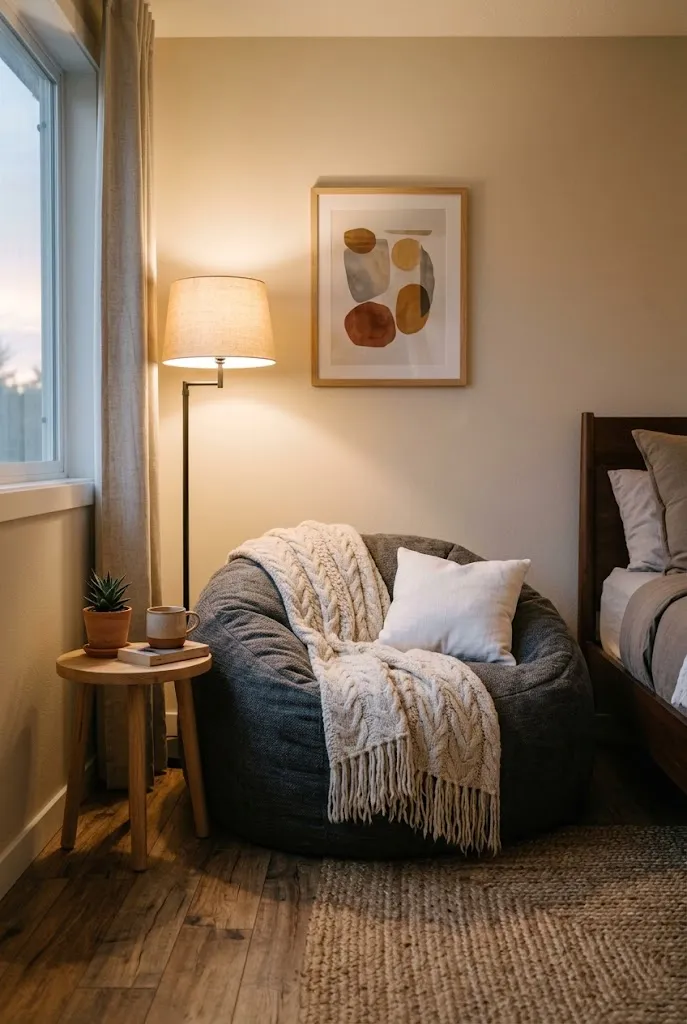
A large beanbag, floor lounger, or hanging chair gives a teen or tween a place to hang out with friends. Choose a washable cover, and set it where traffic won’t catch it.
A small side table and a shelf for headphones or a speaker rounds out the corner.
23. Go Black, White, and Wood for a Teen Room
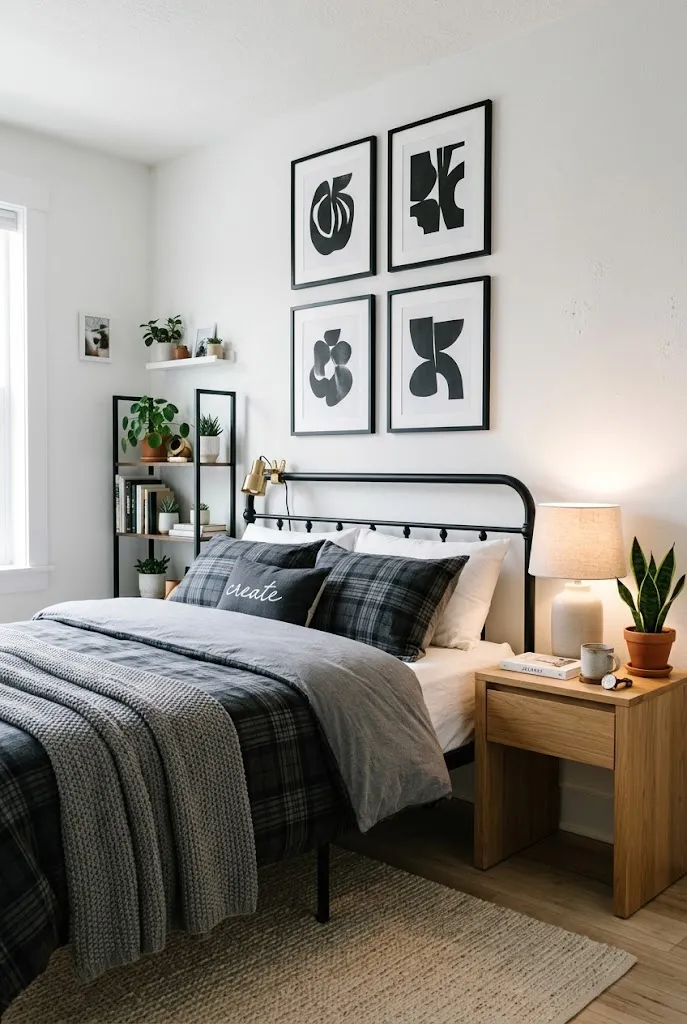
Teens often want a room that feels like a design choice. Black frames, white walls, plaid or striped bedding, and warm wood give a clean, grown-up look that suits teen boys.
Use texture, such as a chunky knit throw or linen duvet, to keep it from feeling cold.
24. Install a Pegboard Wall for Flexible Storage
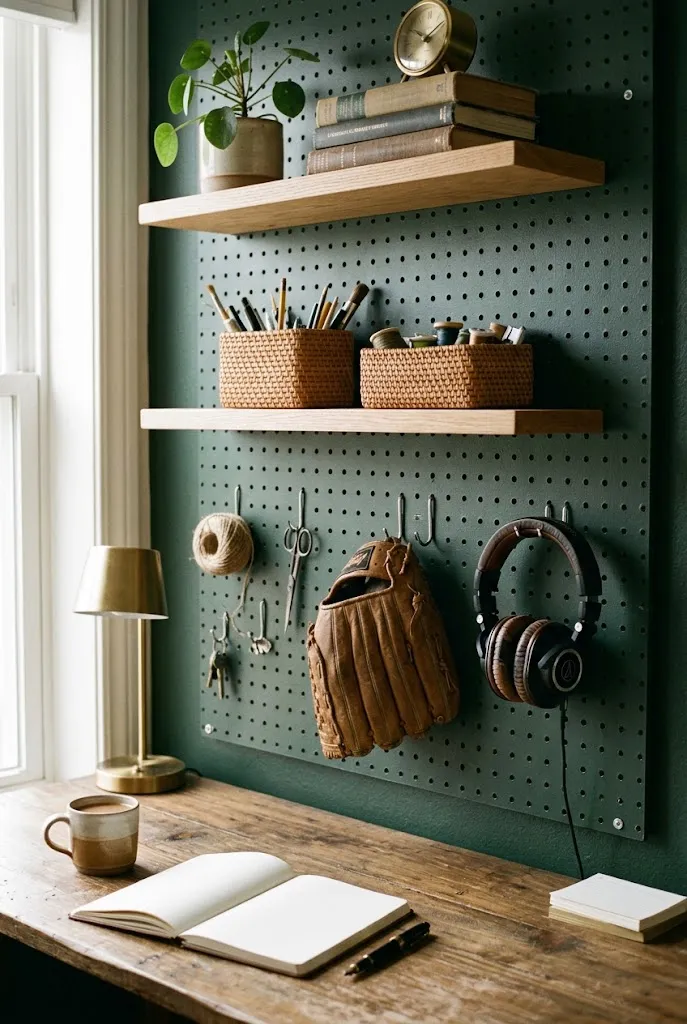
A pegboard wall is customizable. Hang shelves, hooks, and baskets, then rearrange as interests change. Paint it a deep color so it looks like a design feature.
It works above a desk or beside a bed for holding sports gear, headphones, and hobby supplies.
25. Layer Dimmable Lighting for Different Moods
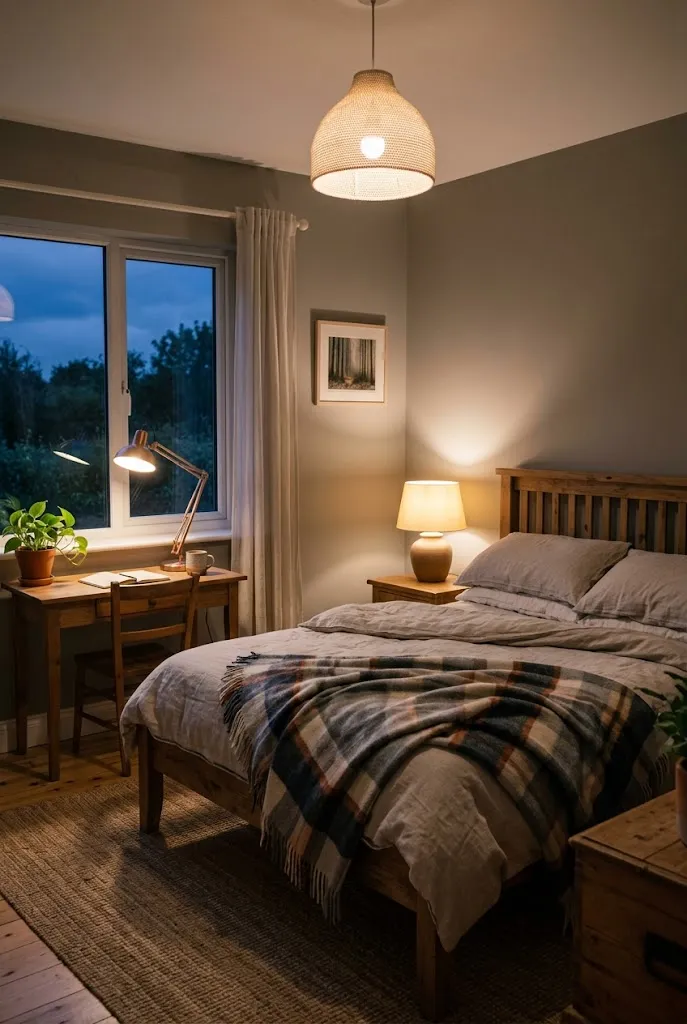
One ceiling light isn’t enough. Combine a dimmable overhead fixture, a bedside lamp, and a desk lamp. Smart bulbs can adjust warmth, which suits a teen who studies and unwinds in the same room.
Choose warm white for sleep and cooler for homework.
26. Layer a Rug Over Hardwood or Carpet
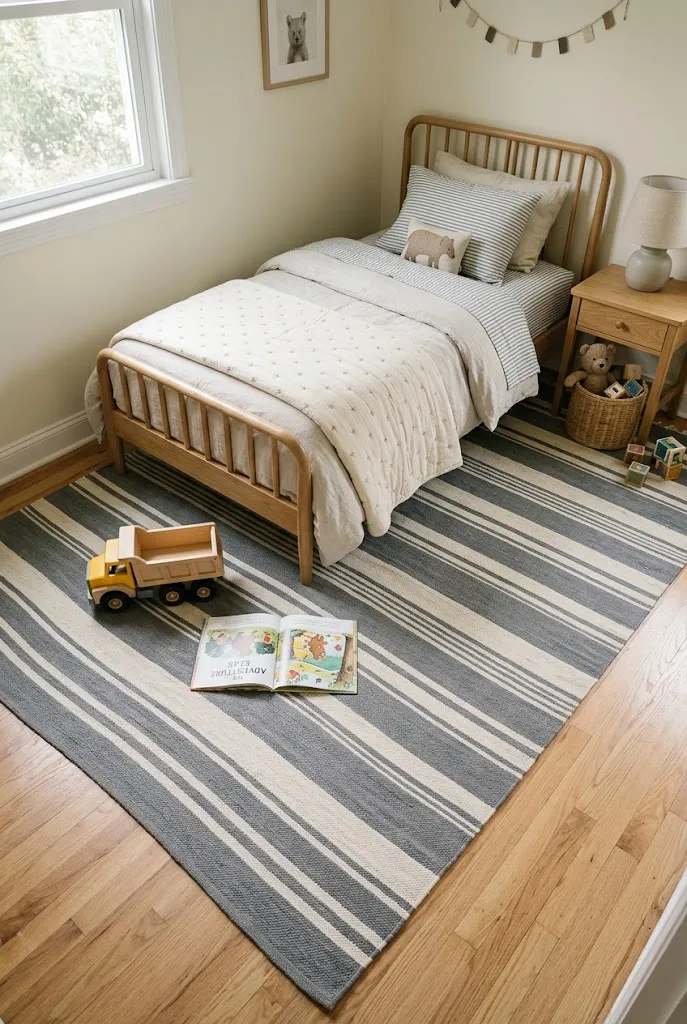
A large rug anchors the room and softens floors for play. Choose a low-pile, washable option for younger kids. A neutral geometric or striped design lasts longer than characters.
Size matters: the rug should extend beyond the bed on the sides.
27. Keep Bedding Neutral and Swap the Top Layer
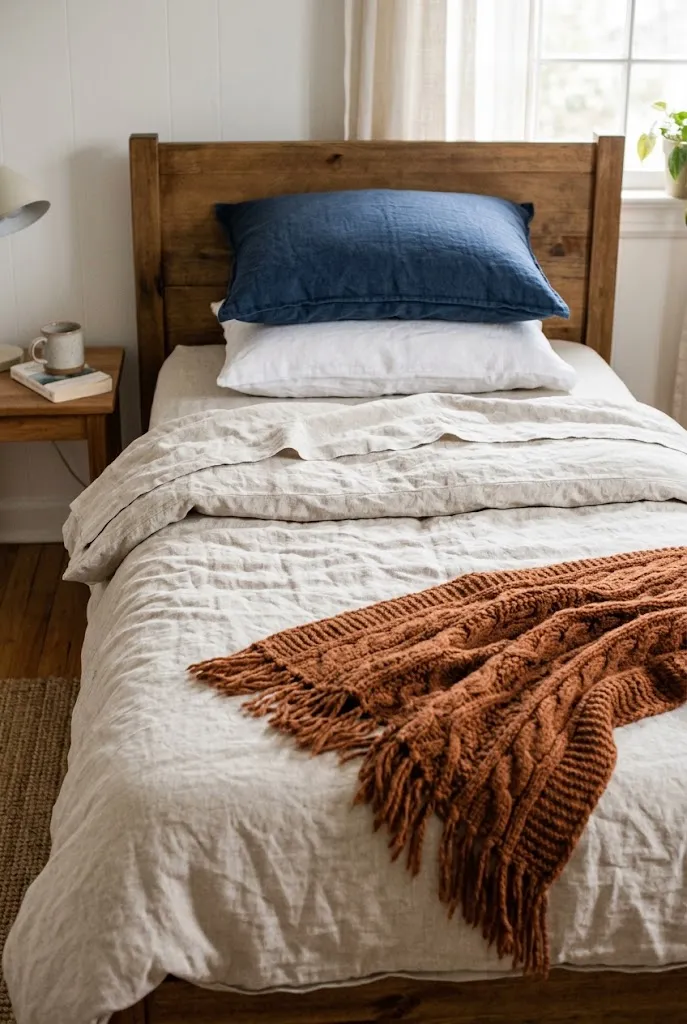
Buy solid or simple-pattern sheets and a duvet in a neutral, then change the throw, pillow covers, or quilt as tastes shift. It’s an economical way to refresh the room.
Have two sets so laundry day doesn’t leave the bed bare.
28. Place the Bed in a Corner to Free Up Floor Space
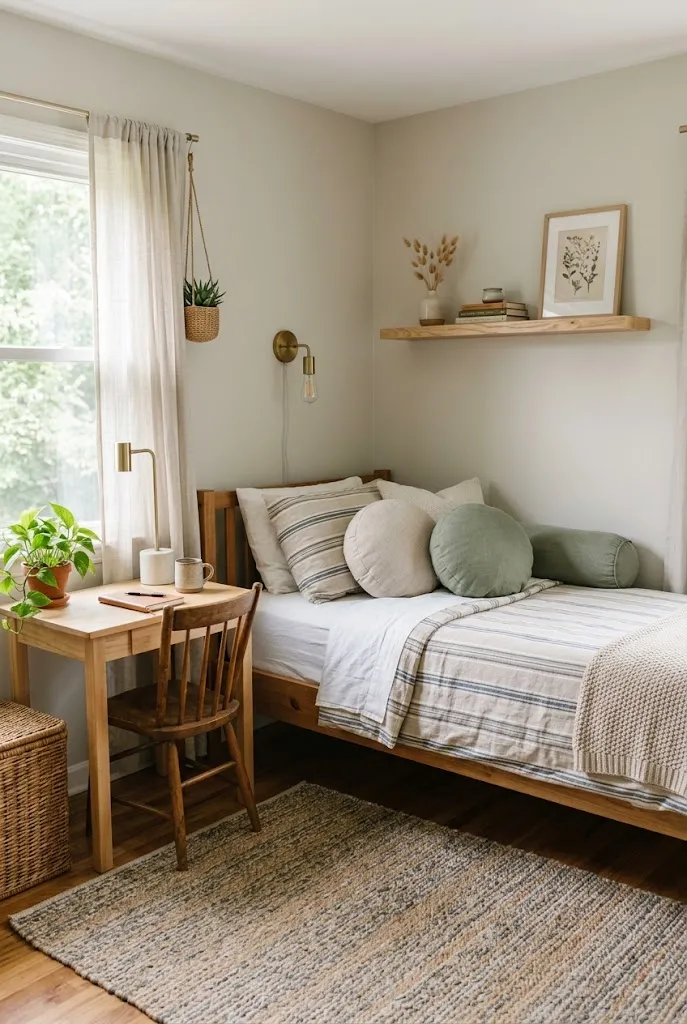
In a small room, pushing the bed into a corner opens the center for play or a desk. Add a shelf above the bed and pillows against the wall for lounging.
Be sure to keep the bed away from windows with cords and from heaters.
29. Divide a Shared Room With a Low Bookcase
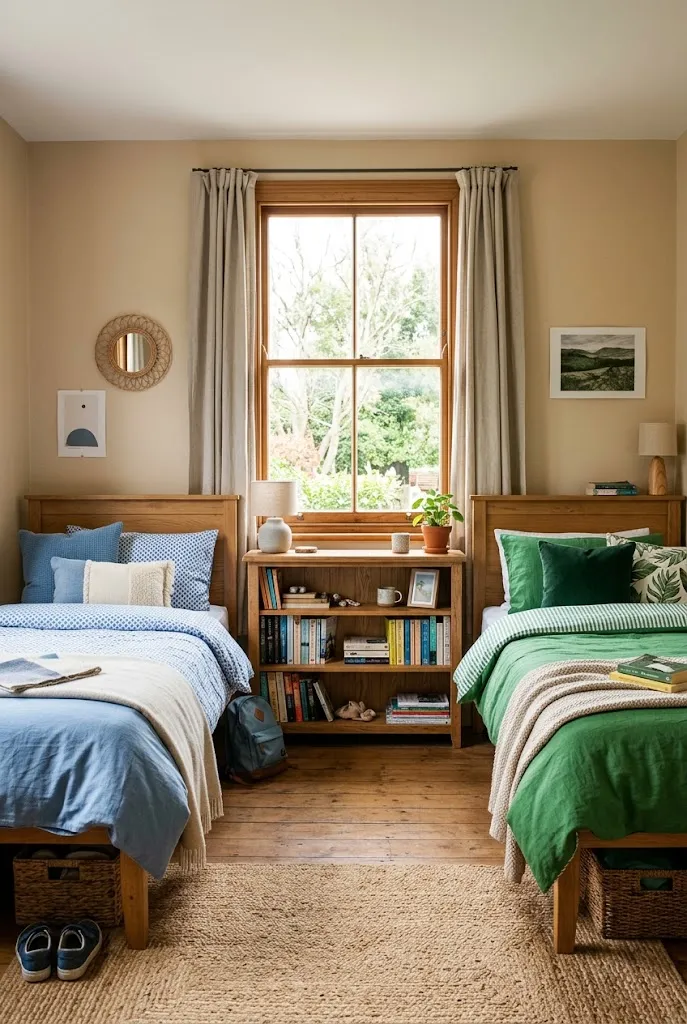
Brothers sharing a room benefit from a visual divider. A low open bookcase separates sleeping zones without blocking light. Let each boy have his own bedding color and a wall for his things.
Anchor the bookcase to the wall.
30. Go Moody With Deep Green and Warm Lamps
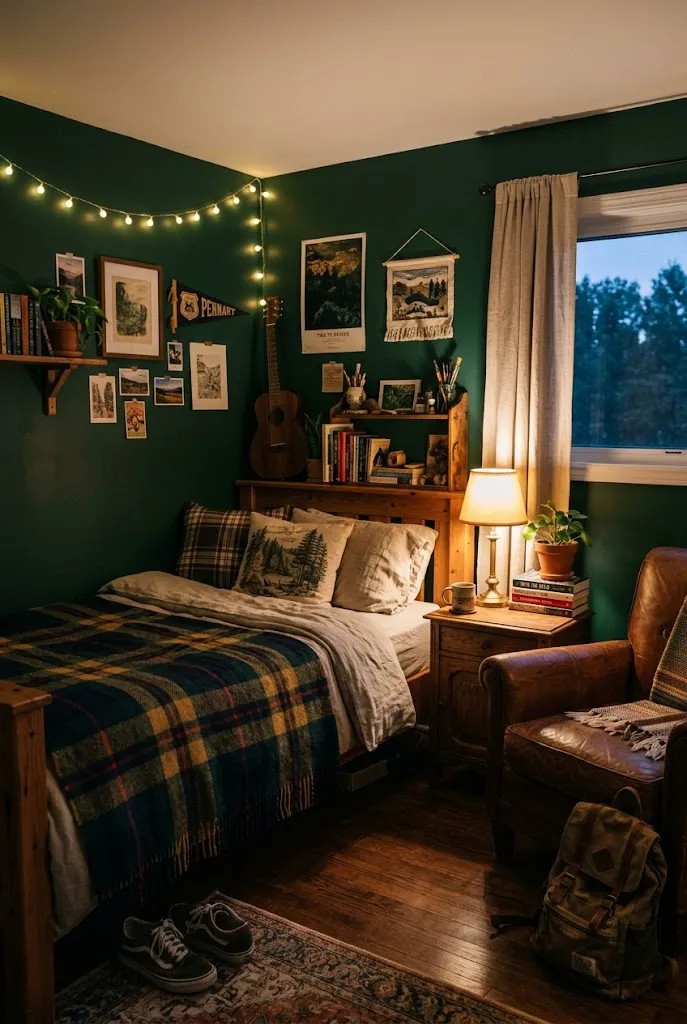
For a teen, a deep forest green wall with warm lamplight feels cozy and grown-up. Pair it with wood, leather, and plaid.
Keep one wall light-colored in smaller rooms to avoid feeling closed in.
31. Build a Thrifted Frame Gallery on a Budget
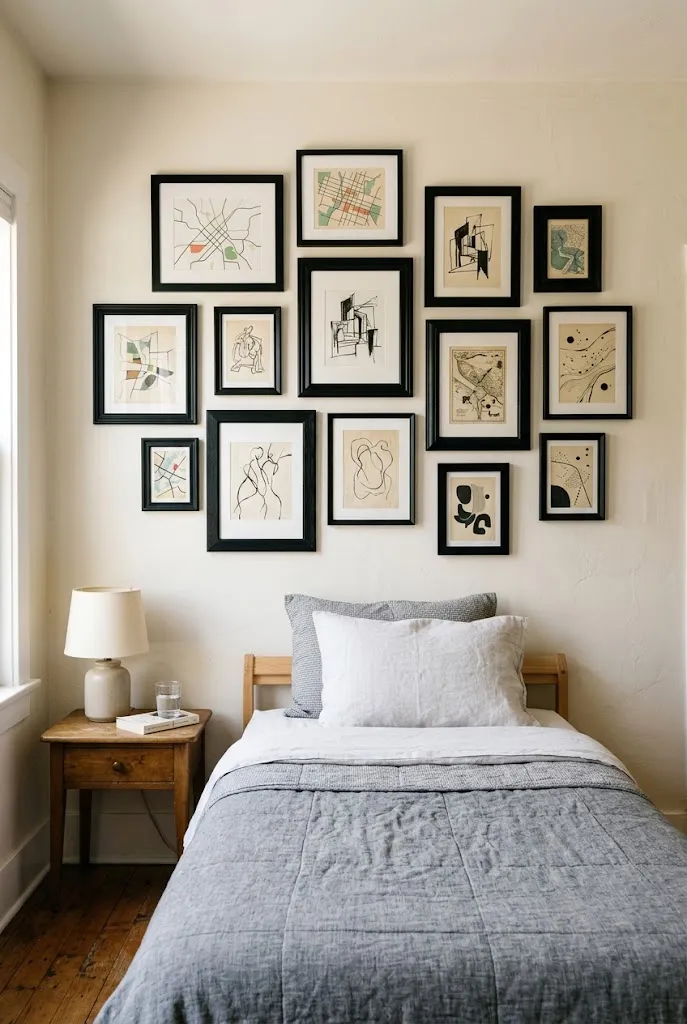
Collect secondhand frames, paint them a single color, and fill them with maps, sketches, and photos. It’s budget-friendly and personal.
Lay them on the floor first to plan the arrangement.
32. Make a Closet That Adjusts as He Grows
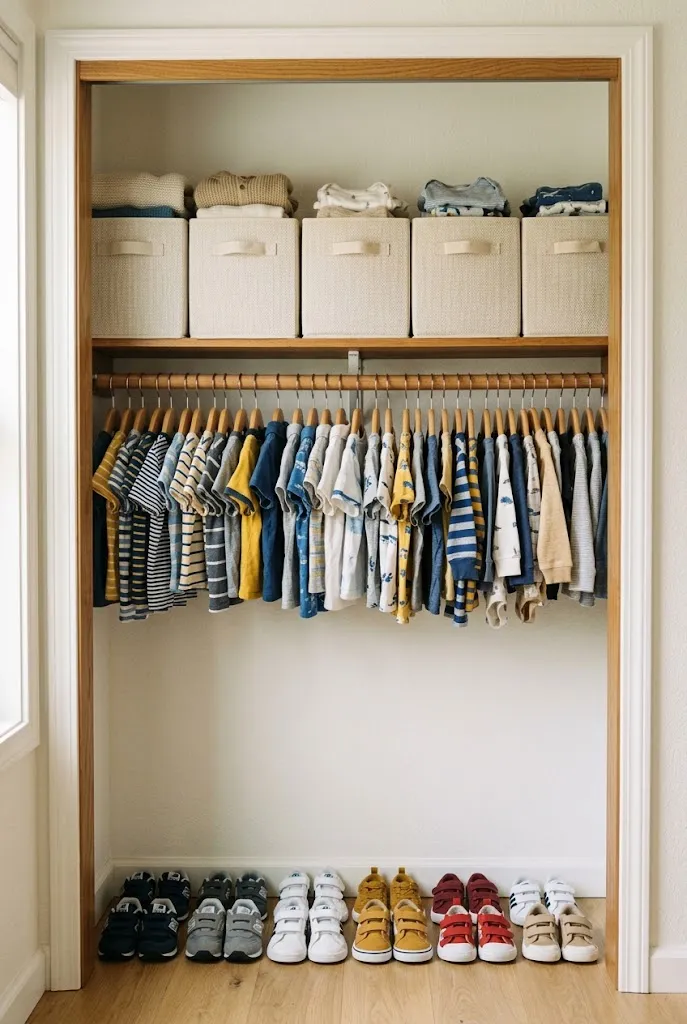
A closet with a double-rod system set low for a young child can be raised later. Add bins and a shelf for hats and shoes.
| Stage | Setup | Adjustment |
|---|---|---|
| Toddler | Low rod, bins | Easy reach |
| Elementary | Double rod | Add hooks |
| Teen | Single high rod | Add shelf |
33. Add a Guitar Wall and Music Corner
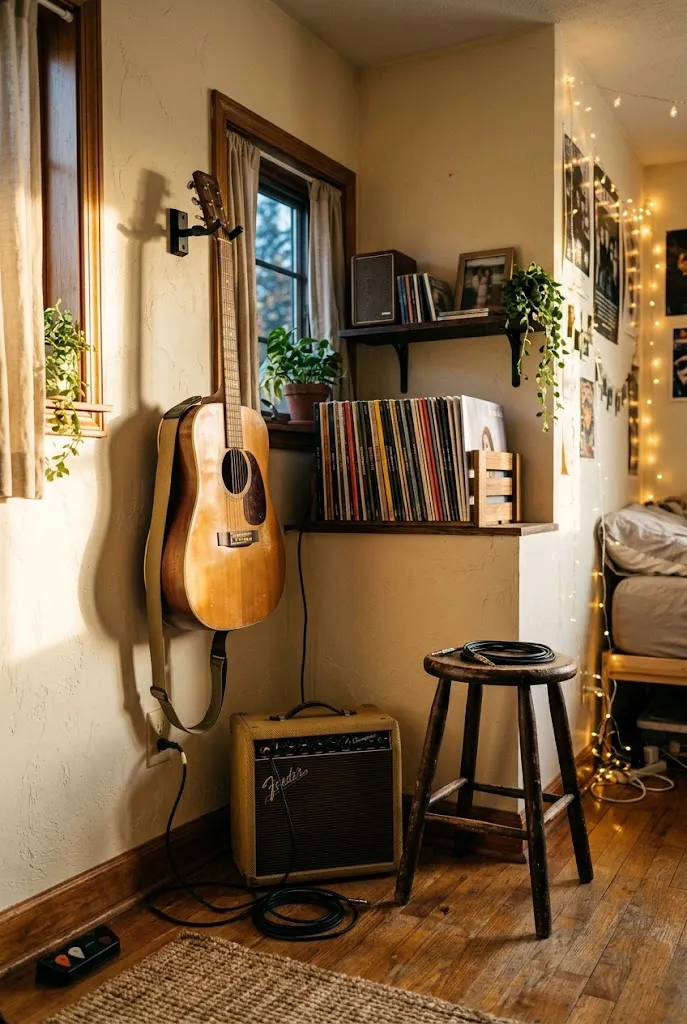
For a music-loving teen, wall hooks for a guitar, a small amp, and a shelf for records make a personal focal point. Keep cords tidy and use a hook rated for the instrument’s weight.
Plan the Room in Stages
If budget is tight, start with the pieces that last: a sturdy bed, an anchored dresser, and a calm wall color. Add rugs, bedding, and art next, then upgrade lighting and desk as he gets older. Leave the personality layers for last, since they’re the ones he’ll change.
Closing Thoughts
You don’t need all 33 ideas. Choose the two or three that fit his age now, build on durable pieces, and let the details change. A room built this way adapts without needing a full redo every few years.