
24 Christmas Light Ideas for Ranch, Colonial & Two-Story Homes
A house’s shape decides how Christmas lights look on it. A long, low ranch reads best with clean horizontal lines, a symmetrical colonial rewards careful repetition, and a tall two-story needs light at several heights so the upper floor doesn’t disappear into the dark. These 24 Christmas light ideas are sorted by how each house type actually behaves at dusk, with notes on bulb color, placement, and what to buy first. You’ll find simple clip-and-plug projects, mid-range upgrades, and a few premium setups, so you can build a display that fits your roofline, your budget, and the time you have. Many of them combine well, so treat the list as a menu rather than a checklist.
1. Trace the Long Ranch Roofline in Warm White
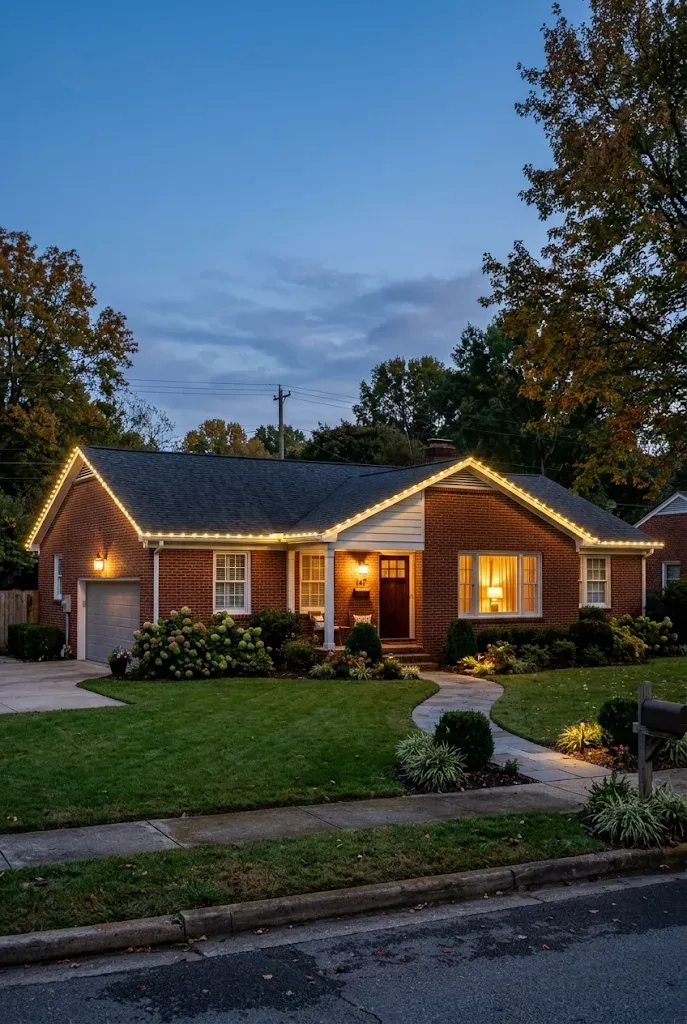
A ranch’s best feature is its length, and one unbroken line of warm white lights along the fascia shows it off better than almost any other single move. Warm white (roughly the glow of a traditional incandescent bulb) flatters brick, cedar, and tan siding alike. Use clips made for your gutter or shingle edge instead of nails or staples, and keep the strand snug to the edge so it reads as a crisp outline, not a sagging string.
- Test every strand on the ground before it goes up.
- Clip from the outlet end outward, spacing clips evenly so the line stays straight.
- Plug the run into an outdoor timer so it switches on at dusk without you.
Investment: accessible.
2. Spiral Candy-Cane Lights Around the Porch Posts
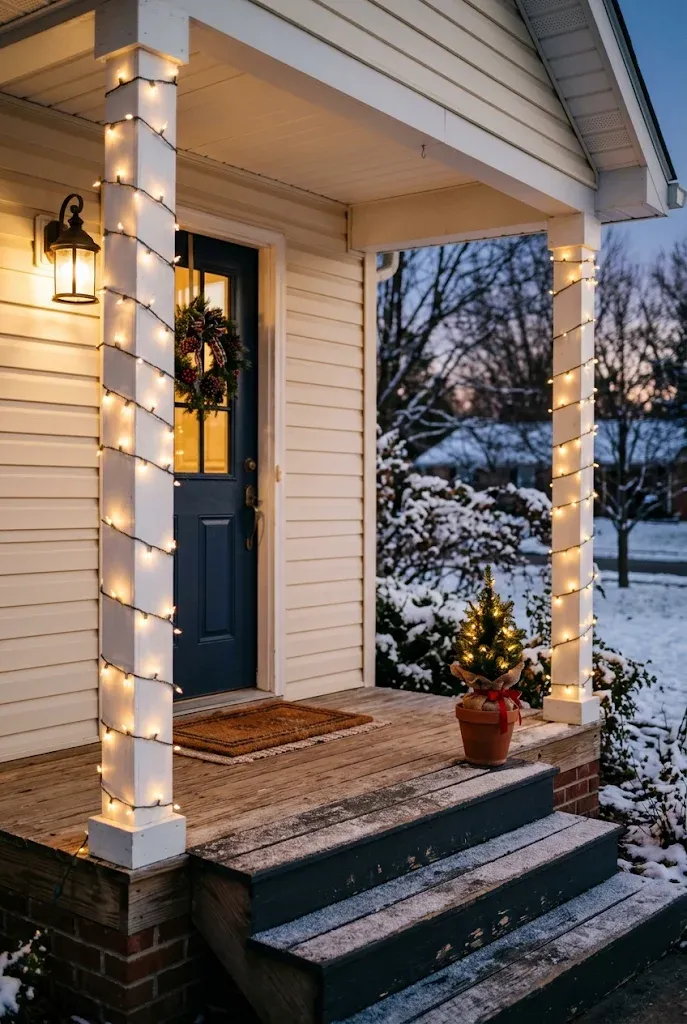
Ranch porches often rely on a couple of slim posts, which makes them an ideal place for a little playfulness. Wrapping each post with a thin strand in a loose, even spiral gives the front of the house a vertical accent that balances all that horizontal roofline. Keep the spacing consistent from post to post, and start every wrap at the same height so the pair looks matched.
- Use a strand with a thin, flexible wire so it hugs the post.
- Choose red and white for a candy-cane look, or stay with warm white for something calmer.
- Secure the starting end with a clip or zip tie at the base.
- Hide the plug behind a planter or wreath.
Quick Tip: Wrap upward on one post and downward on the other only if you want a mirrored look. For a matched look, wrap both the same direction.
3. Outline the Wide Picture Windows
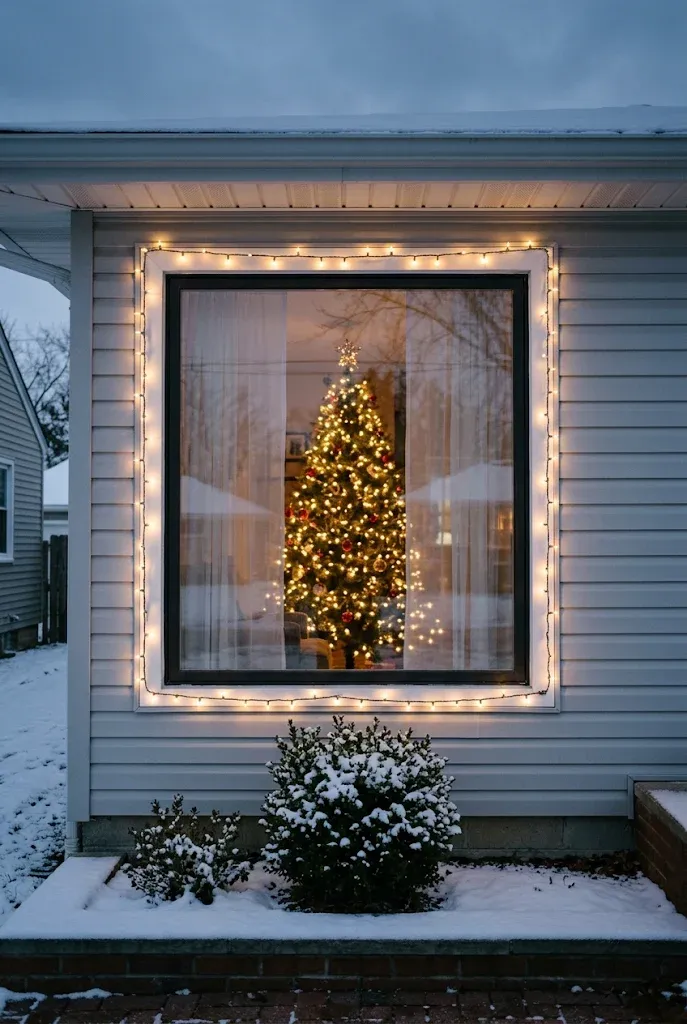
The big front window is a ranch’s natural stage. Framing it in a clean rectangle of mini lights makes the glass look like a lit picture frame, especially when a tree or lamp is glowing inside. Run the strand along the outside edge of the trim and turn corners with a small clip, rather than letting the wire bow outward.
Common Mistake: Stopping the lights short of each corner, which leaves the rectangle looking broken.
Better Approach: Measure each side first, buy a strand long enough to complete the whole frame in one pass, and clip at every corner so the right angles stay sharp. A single color throughout looks more deliberate than mixing several.
If you have two or three windows across the front, outline them all in the same way for a rhythm that echoes the roofline.
Investment: accessible.
4. Drape Net Lights Over the Low Foundation Shrubs
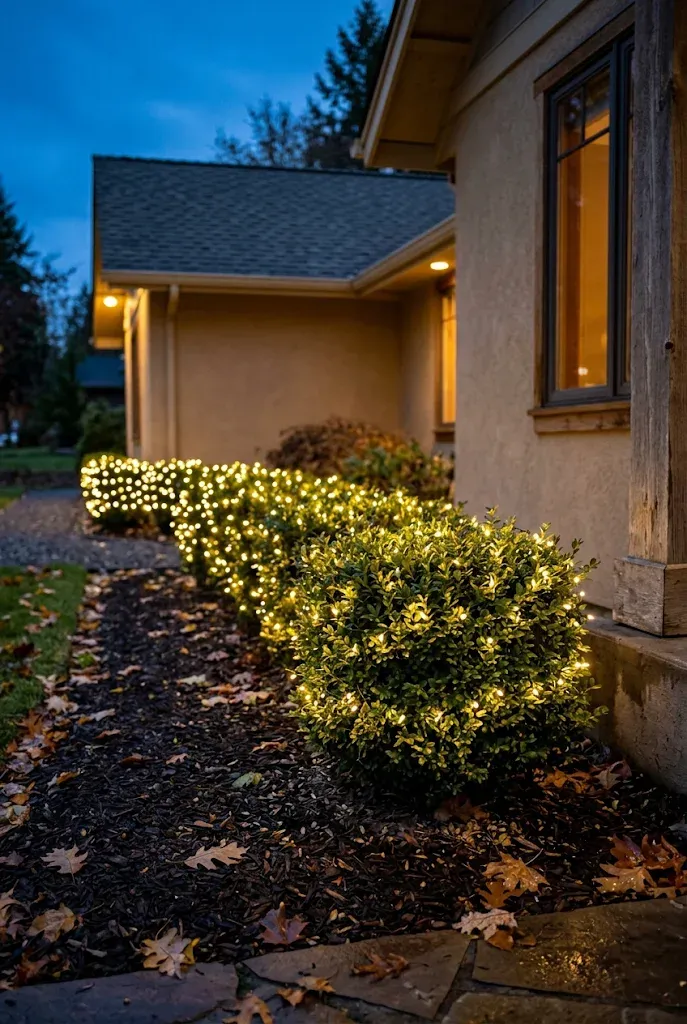
Ranch homes usually sit behind a band of low boxwoods, yews, or junipers, and net lights are the quickest way to light them evenly. The mesh lays flat over the foliage, so there’s no weaving strand by strand. That ground-level glow also anchors the roofline lights above, which keeps the display from looking top-heavy.
| Do | Don’t |
|---|---|
| Lay the net loosely over the top and sides of the shrub | Stretch it tight, which pulls branches out of shape |
| Match the bulb color to your roofline | Mix cool white shrubs with warm white eaves |
| Overlap edges slightly on long hedges | Leave dark gaps between sections |
Check the label for the number of nets you can safely connect end to end before adding another.
Investment: accessible.
5. Hang One Oversized Wreath Above the Garage Door
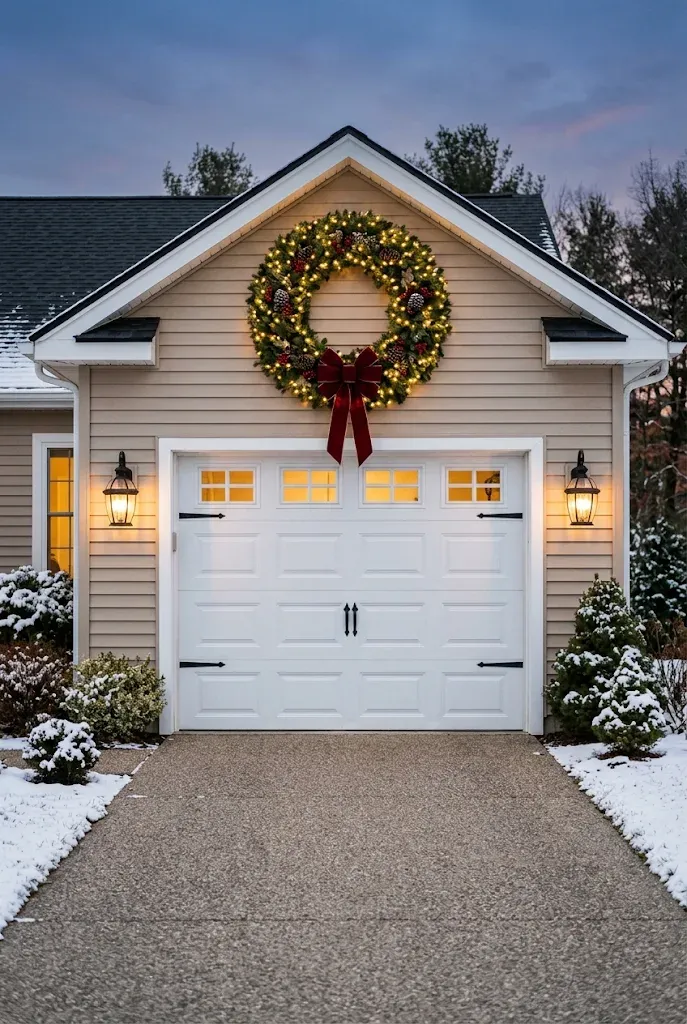
On many ranches the garage door is the widest thing facing the street. A single large wreath, centered above or on the door and lit with a warm LED strand, turns a plain surface into a focal point. A thick red velvet bow adds color without needing a second decoration.
Choose a wreath at least a third as wide as the door’s upper panel section so it doesn’t get lost, and attach it with removable hooks or a wreath hanger made for garage doors. Battery-operated wreath lights with a timer avoid the need to run a cord.
Editor’s Note: Check that the wreath won’t pinch or snag as the door rises and falls. If the door moves, hang the wreath on the wall above the opener track instead.
Investment: moderate.
6. Line the Front Walkway With Stake Lights
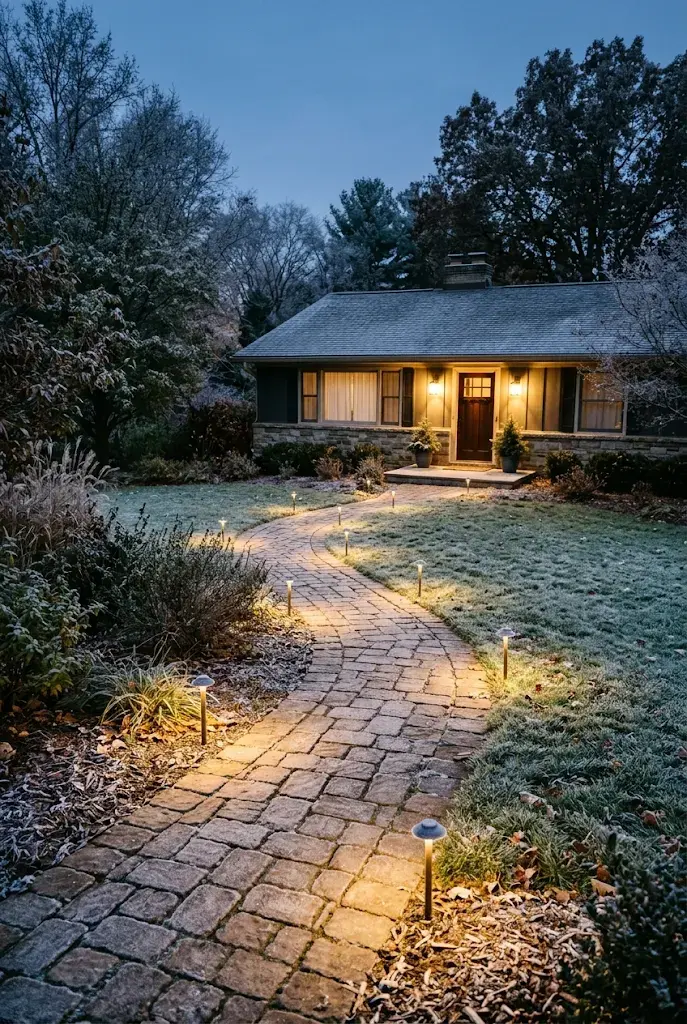
A lit path tells guests where to go and ties the yard to the house. The right type depends on your outlet access and how permanent you want the setup to be.
| Option | Advantage | Best Fit |
|---|---|---|
| Solar stakes | No wiring, easy to move | Sunny yards, short runs |
| Plug-in stakes | Consistent brightness | Yards near an outdoor outlet |
| Low-voltage landscape lights | Steady, can stay up all season | Longer paths, repeat use |
Space stakes evenly on both sides of the path and keep them low enough that they light the ground rather than glaring into eyes. Warm white tends to look best against brick and pavers.
Investment: accessible to moderate.
7. Wrap the Trunk of One Mature Front-Yard Tree
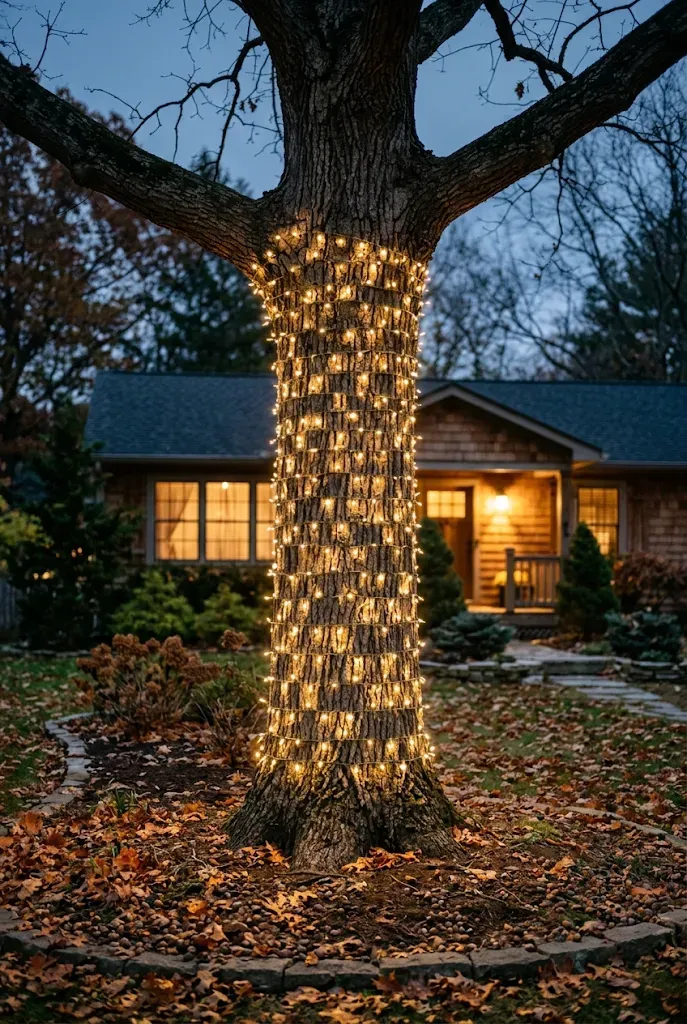
Ranch lots are typically wide, with room for one mature tree out front. A trunk wrapped in lights from base to first branches draws the eye away from the house for a moment and creates depth in the yard. Wrap evenly, with consistent spacing between rings.
- Use a long strand with closely spaced bulbs for a denser glow.
- Start at the base and work up, securing every so often with a clip.
- Wrap a few of the lowest branches too if you want a softer transition.
- Unwrap lights in late winter so the bark isn’t constricted by growth.
Quick Tip: Leave a gap near the bottom of the trunk if a lawn mower passes close.
Investment: accessible.
8. Hang Cool White Icicles Along a Low Eave
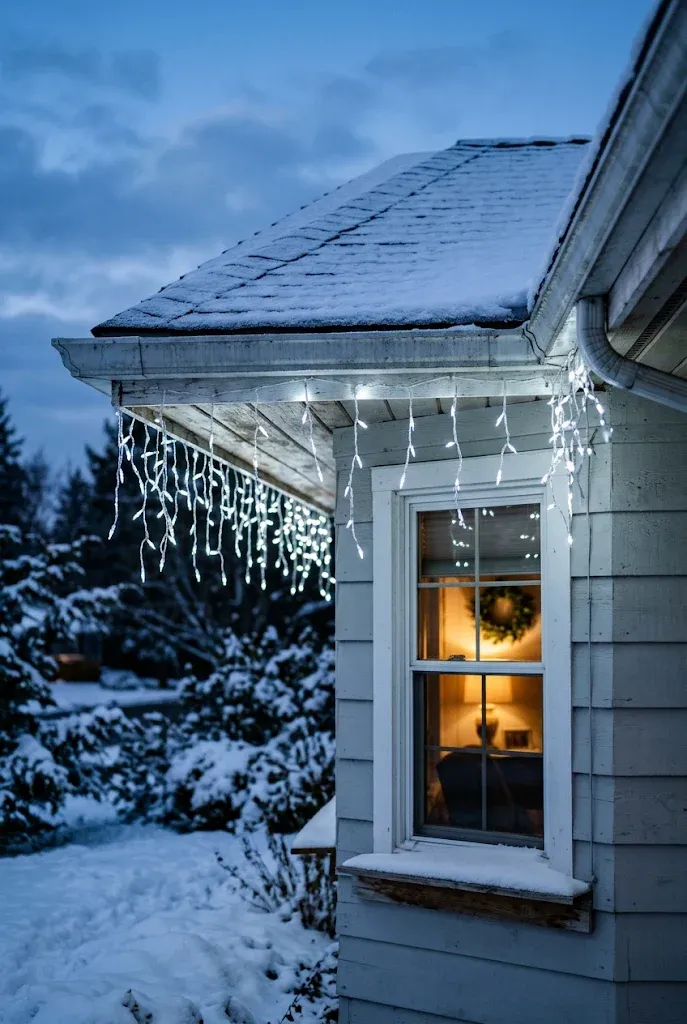
Cool white icicle lights suit gray, blue, or white ranches and give the roofline a frosted, wintry edge. On a single-story house the lower eave puts the icicles close to eye level, so the details show: choose strands with staggered lengths so the effect looks natural rather than like a curtain of identical strings.
Space the clips evenly, plug in the end of the strand nearest the outlet, and avoid draping lights over gutters in a way that traps water or blocks drainage. For a calmer look, hang icicles only along the front-facing eave rather than the whole house.
Do: keep the strand the same color temperature throughout.
Don’t: pair cool white icicles with warm white window outlines, which can look mismatched.
Investment: accessible.
9. Place Matching Window Candles and Wreaths on a Colonial Façade
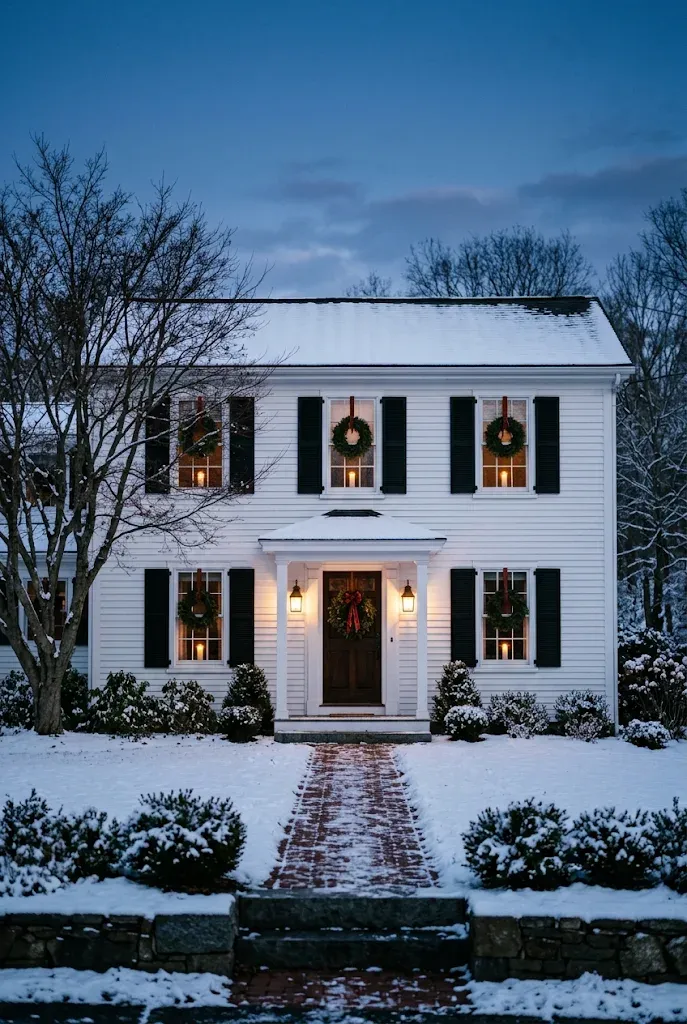
A colonial’s evenly spaced windows are made for repetition. One electric candle and one plain wreath in every front window gives the whole house a calm, traditional rhythm without a single strand outside the glass. Use matching candles and wreaths of the same size, and hang the wreaths at the same height from window to window.
Battery candles with built-in timers are easy to use, and they avoid cords on a façade that’s meant to look clean. A red or natural-toned ribbon on each wreath adds color without overpowering the white trim.
Investment: accessible.
10. Frame the Front Door Surround With Lit Garland
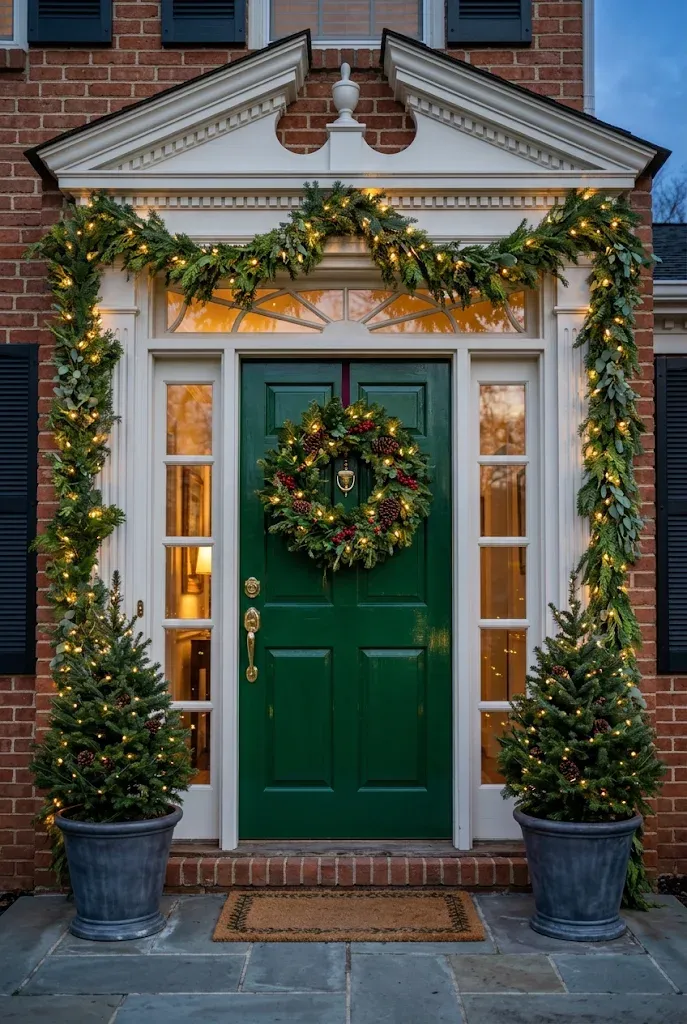
A colonial’s door is the star of the façade, usually with a pediment, sidelights, or a columned surround. Running a garland threaded with warm white lights along the door casing makes the entry feel finished without hiding the architecture.
- Start at the lower corner and secure the garland along the casing with removable hooks.
- Choose a pre-lit option for fewer cords, or thread your own lights through for control.
- Add a few sprigs of fresh-cut greenery and a wreath on the door for fullness.
- Keep the garland draped evenly on both sides for symmetry.
A battery-powered garland keeps the entry free of cords, though a timer is worth adding so it isn’t forgotten.
Investment: moderate.
11. Light the Columns of a Portico
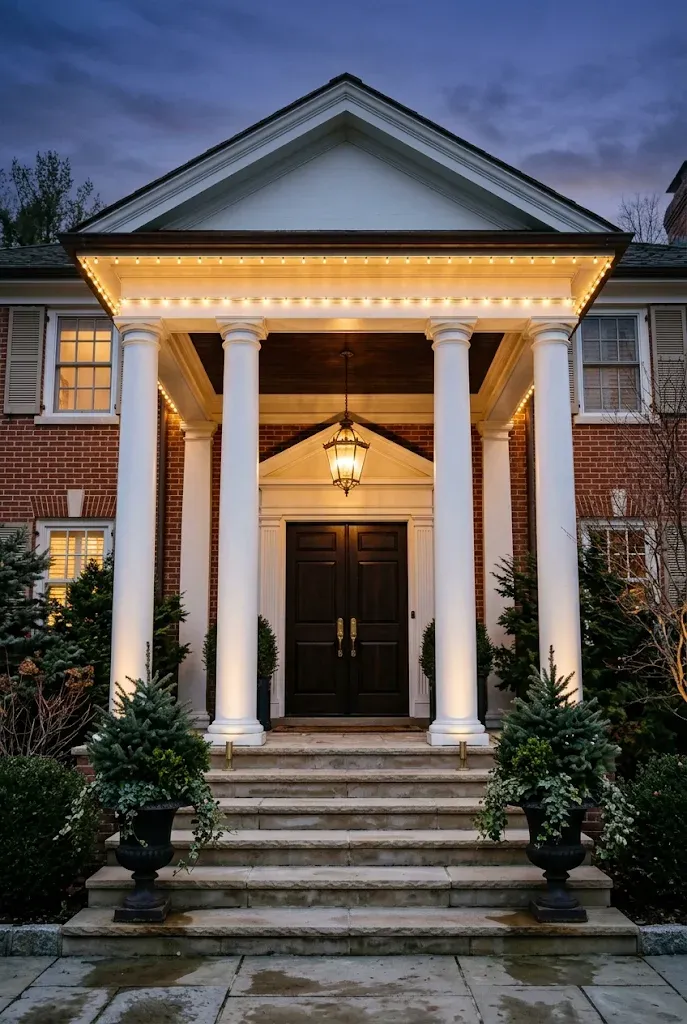
Many colonials have a small portico with two or four columns. Instead of wrapping each column, try outlining the portico’s ceiling edge with a single strand and hanging a lantern between the columns. The result is lighter and more formal.
For a more polished look, a pair of warm uplights at the foot of each column can graze the surface and highlight its shape. Keep the bulbs warm white so the white columns glow rather than look harsh.
Editor’s Note: Uplighting white columns can look bright in photos, so choose lower-wattage or dimmable fixtures and test at dusk before committing.
Investment: moderate to premium.
12. Outline Only the Dormers
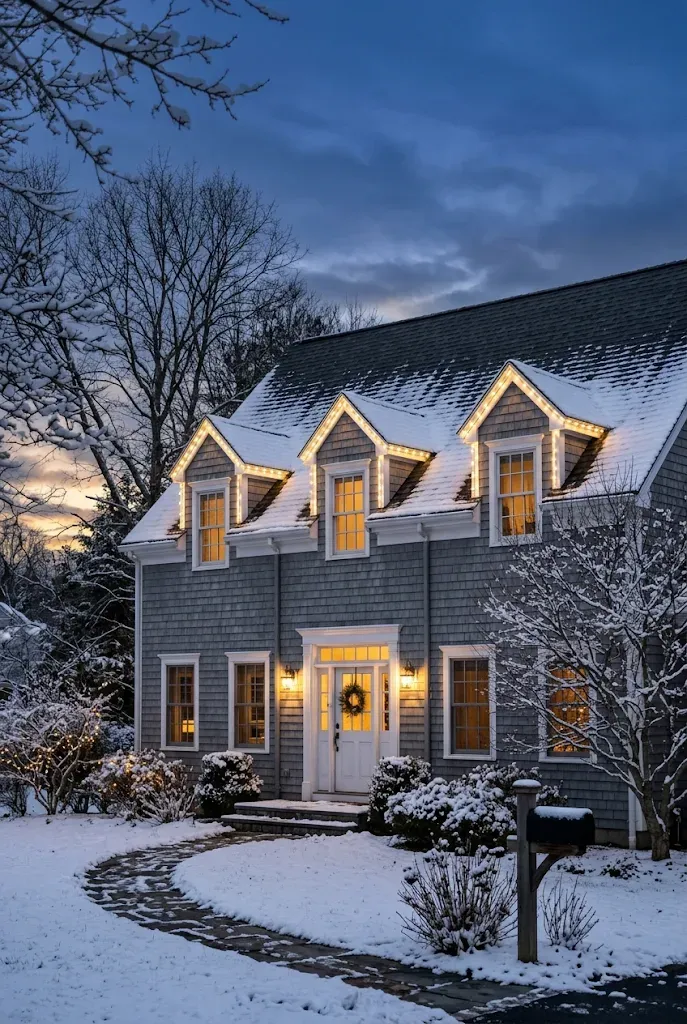
Colonials with dormers have a ready-made focal point. Outlining just the dormer windows and rooflines, while leaving the main roof dark, creates a restrained, elegant look that feels intentional rather than busy.
Best For: colonials and Cape-style homes with small gabled dormers.
Visual Effect: a few bright accents high on the roof that draw the eye upward.
Use the same warm white as your entry lights for consistency, and keep each dormer outlined the same way so the façade stays balanced. Because dormers often sit high, plan ladder placement carefully and have a second person steady the ladder.
Investment: accessible to moderate.
13. Weave Garland and Lights Through a Picket Fence
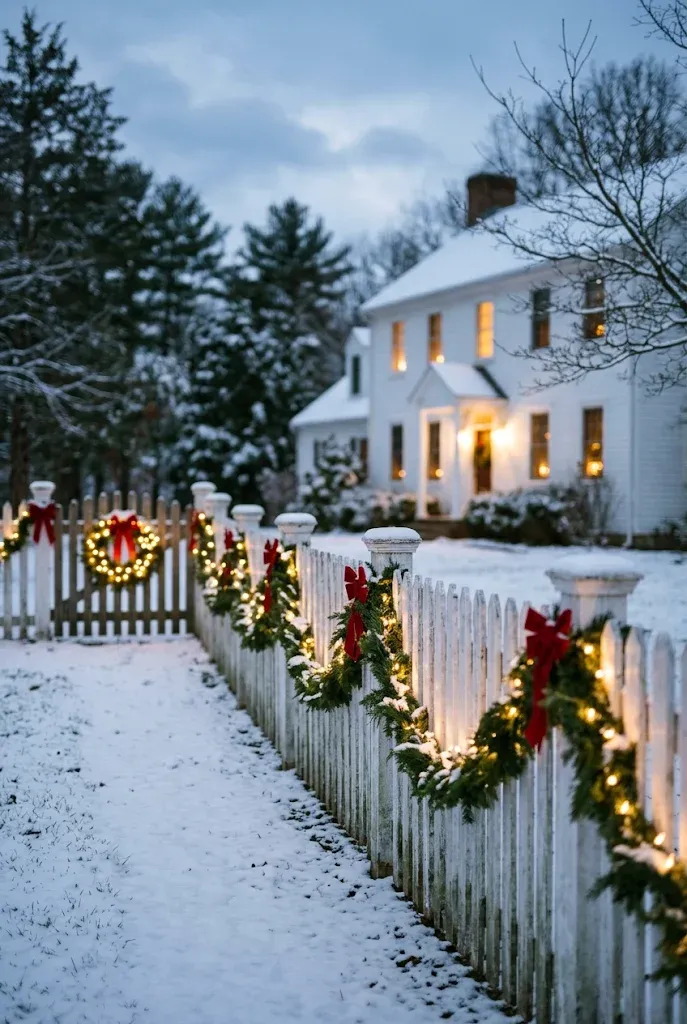
A white picket fence is a natural companion to a colonial, and a swag of greenery with warm white lights threaded through it carries the display down to the property line. Hang the garland in shallow, even scallops between posts, and tie it off at each post with a simple red or plaid bow.
Pre-lit garlands save time but can fade unevenly across a long run, so check that the lights match from one section to the next. A lantern or wreath on the gate makes a pleasant finishing detail.
Quick Tip: Use soft floral wire or zip ties in a dark color so the fasteners disappear against the pickets.
Investment: moderate.
14. Flank the Front Steps With Lit Boxwood Topiaries
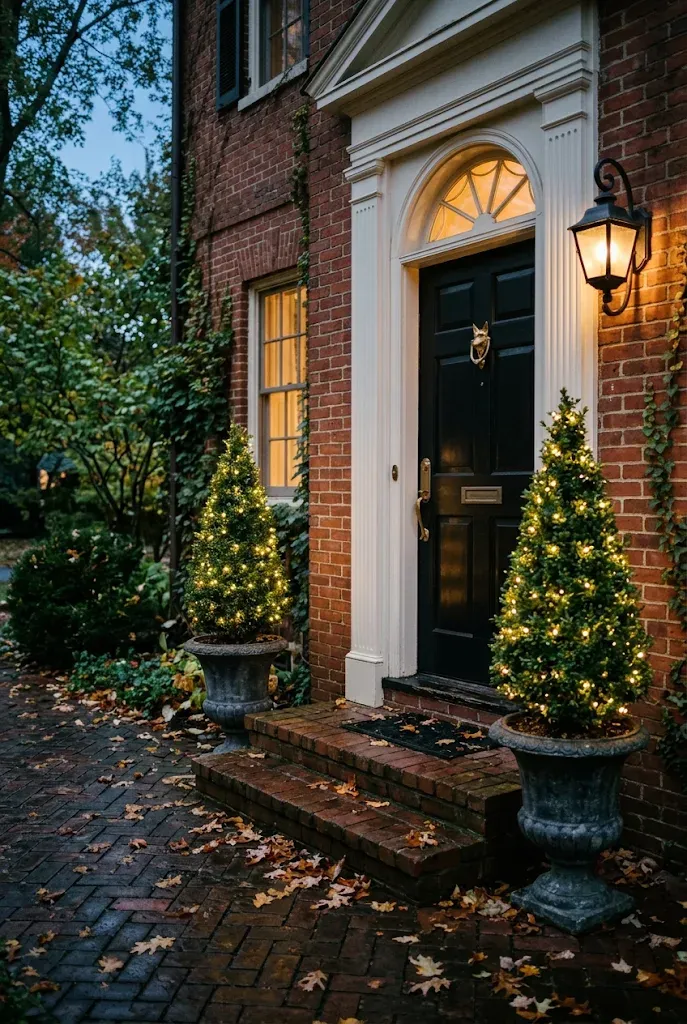
A pair of pre-lit topiaries on either side of the steps gives a colonial entry its formal, balanced look. Because the trees are matched, the effect works even if the rest of the façade is simple.
Best For: symmetrical entries with a stoop or wide steps.
Investment: moderate; quality pre-lit trees cost more than basic ones but last for many seasons.
Visual Effect: two soft vertical glows that frame the door.
Set them in weighted urns or planters so they stay upright in wind, and run the cords out of sight behind the planters. Look for outdoor-rated pre-lit trees with warm white bulbs rather than multicolor, which can feel less formal against brick.
15. Trace the Fanlight or Transom With a Single Line of Light
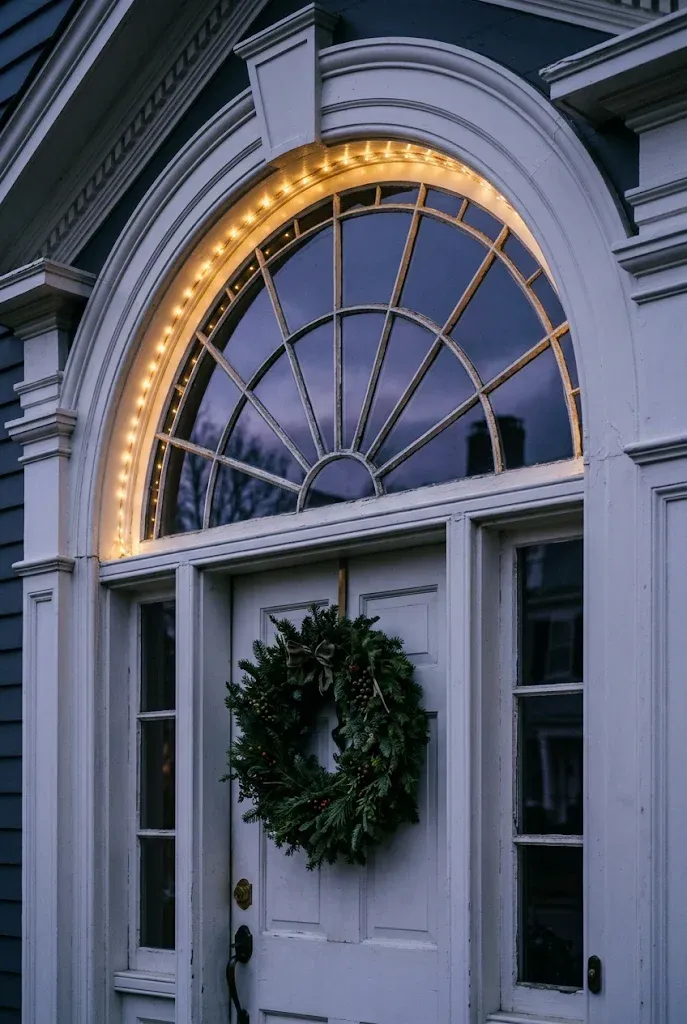
The half-round fanlight or rectangular transom above a colonial door is a small detail that deserves a bit of attention. A single, thin line of warm white lights along the edge of the glass highlights its shape without competing with the garland below.
Common Mistake: Adding several rows of lights around the fanlight, which makes the delicate shape look heavy.
Better Approach: Use one row of tiny bulbs on a thin wire, fastened with clear mini clips along the outer edge of the trim. The curve then reads clearly, and the door below stays the main event.
Investment: accessible.
16. Line the Brick Steps With Lanterns and Flameless Candles
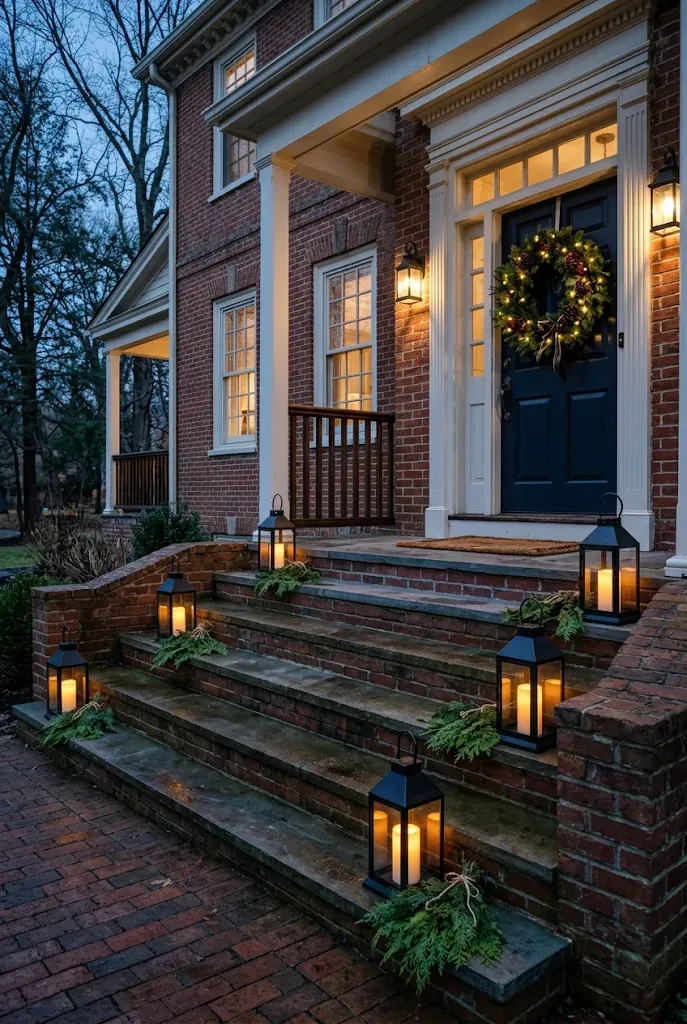
Lanterns on each step add a layer of glow at foot level, where guests actually walk. Choose lanterns in the same finish, such as black metal or weathered wood, and fill each with a flameless candle on a timer. Real candles are best avoided near greenery and doors.
Set one lantern per step on alternating sides, or place a pair on the top landing and a pair at the bottom. A bit of fresh pine or cedar tucked around each base adds fullness without needing more lights.
Investment: accessible.
17. Outline the Steep Gable Peak
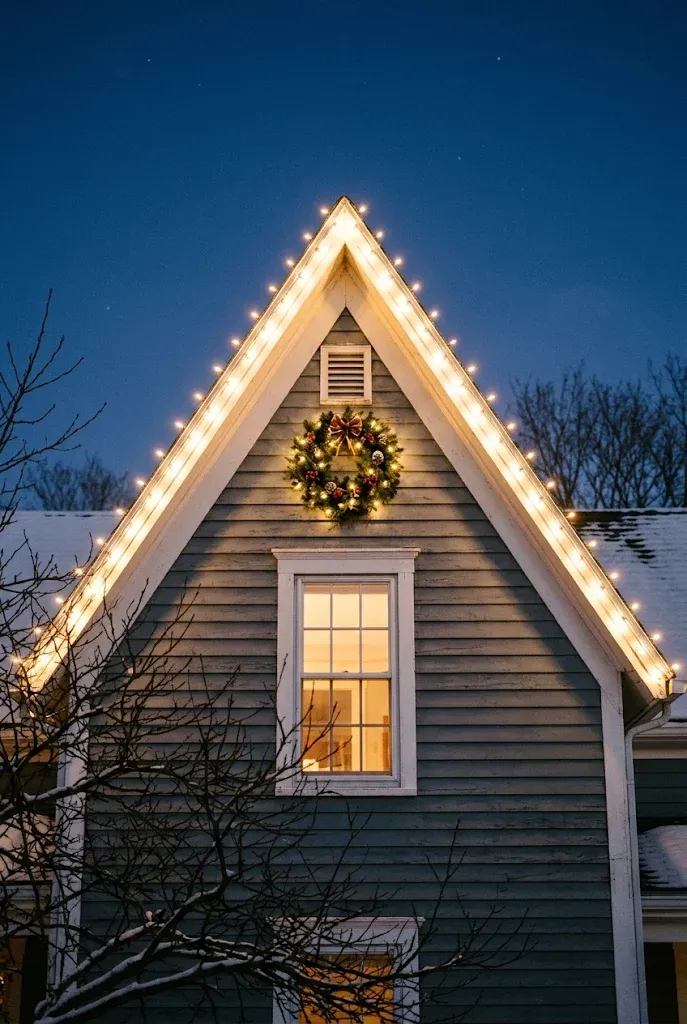
Two-story houses often have a prominent gable facing the street, and outlining its triangular edge draws the eye to the top of the house. It also makes a tall façade feel finished from the ground up.
- Set the ladder on level ground with a second person holding it, and keep it well away from any power lines.
- Clip a strand along one rake edge, working from the eave toward the peak.
- Continue down the other side, meeting the first at the peak so the point stays sharp.
- Add a small star or wreath beneath the peak if you want a focal point.
If the peak is too high to reach comfortably, a professional installer or an extension pole made for light hanging may be the safer choice.
Investment: accessible to moderate.
18. Cascade Curtain Lights From the Porch Roof
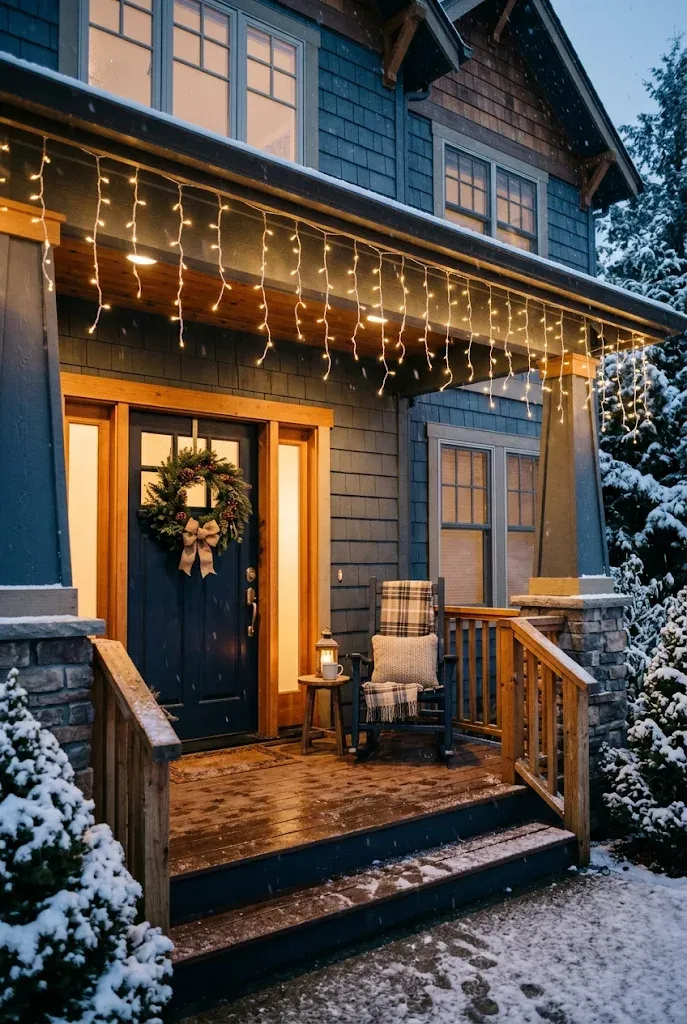
Curtain lights, which hang in vertical strands from a single top line, add a soft, falling glow that suits the height of a two-story house. Hung from the edge of a front porch roof or balcony, they create a lit veil across the lower half of the front elevation.
- Mount the top line along the porch roof edge with clips.
- Use warm white for a classic effect or cool white for a snowy one.
- Leave a gap above the steps so the strands don’t brush against visitors.
- Plug into a weatherproof, outdoor-rated connection and add a timer.
The effect is gentle and suits houses with a deep porch, since the strands hang straight and don’t get blown around as much.
Investment: moderate.
19. Run Vertical Lines Up a Tall Evergreen
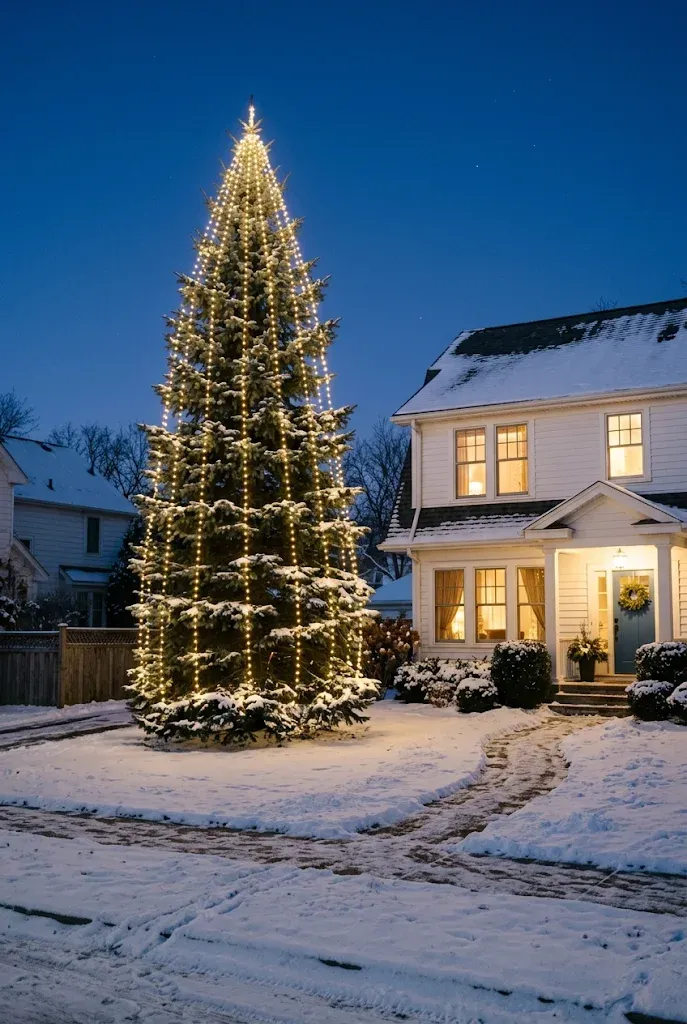
A tall spruce or fir near a two-story house can reach the second-floor windows, which makes it a strong vertical element. Instead of wrapping each branch, run strands straight down from the top in even lines, like a cone of light.
Work with a long pole or an extendable tool to reach the top, and use a center-pole method: attach the first end near the top and let each strand fall to the base, spacing the lines evenly around the tree. A star or bow at the top completes the shape.
Editor’s Note: Plan to remove the lights in late winter, since strands left on a growing tree can tangle in branches.
Investment: moderate.
20. Wash the Upper Façade With Warm Floodlights
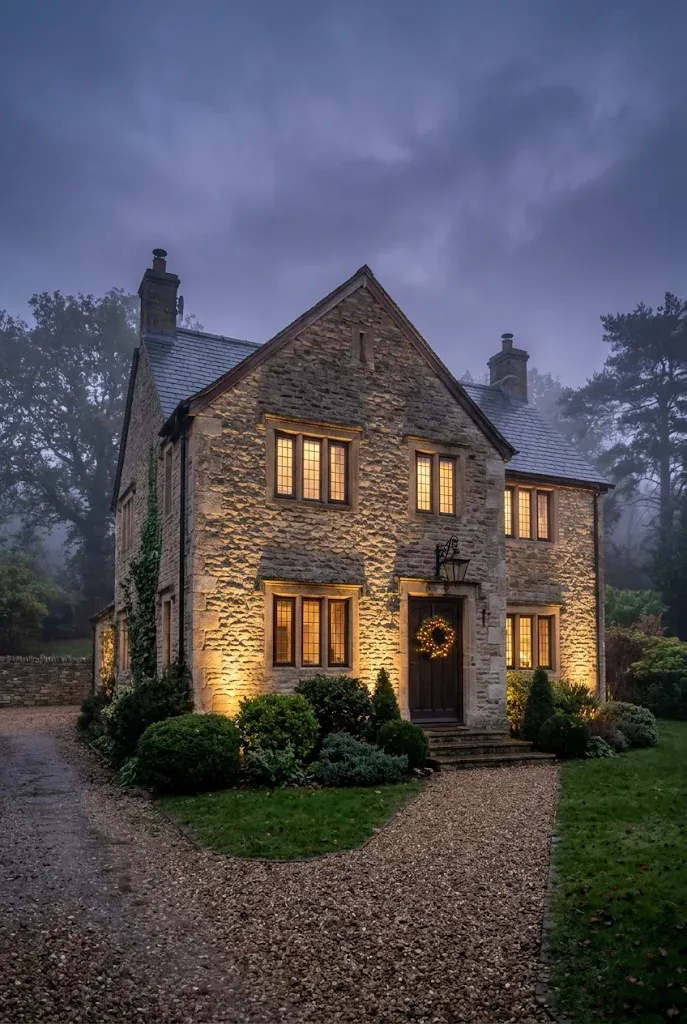
Sometimes the simplest way to light a tall house is to light the wall itself. Low-voltage landscape spotlights, set in the ground and angled upward, graze the siding or stone and make the second floor visible without a single strand on the roof.
Best For: stone, brick, or textured siding where light can show off the surface.
Investment: moderate to premium, depending on how many fixtures you add.
Visual Effect: a soft glow that reveals the upper floor.
Aim from a distance so the beam widens as it climbs, and choose a warm color temperature. Avoid pointing a fixture directly at a neighbor’s window.
21. Install Permanent Programmable Roofline Lighting
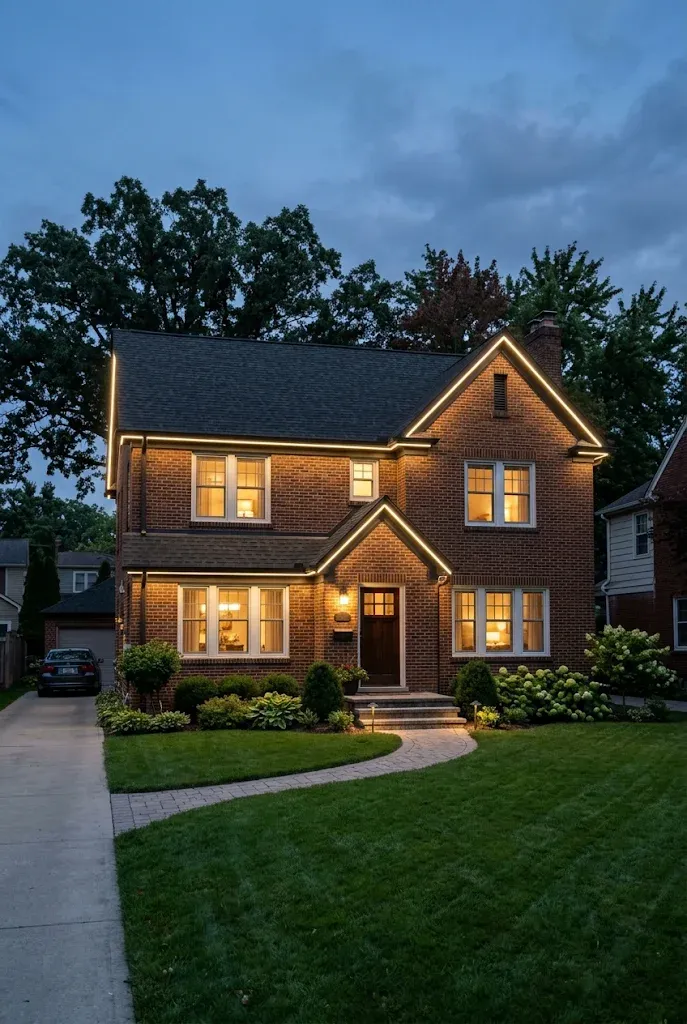
Permanent track lighting mounts along the roofline and stays up all year, with individually controllable LEDs that can be set to warm white for Christmas and other colors for other occasions. For a tall two-story house where hanging lights each year is risky, the convenience can be considerable.
Before: Annual ladder work, tangled strands, and bulbs that fail.
After: A clean, near-invisible track by day and a precise, programmable line of light at night.
Costs vary widely by home size and installer, so get several quotes and ask about warranties, weather rating, and how the system is controlled before committing.
Investment: premium.
22. Fill Second-Floor Window Boxes With Lit Greenery
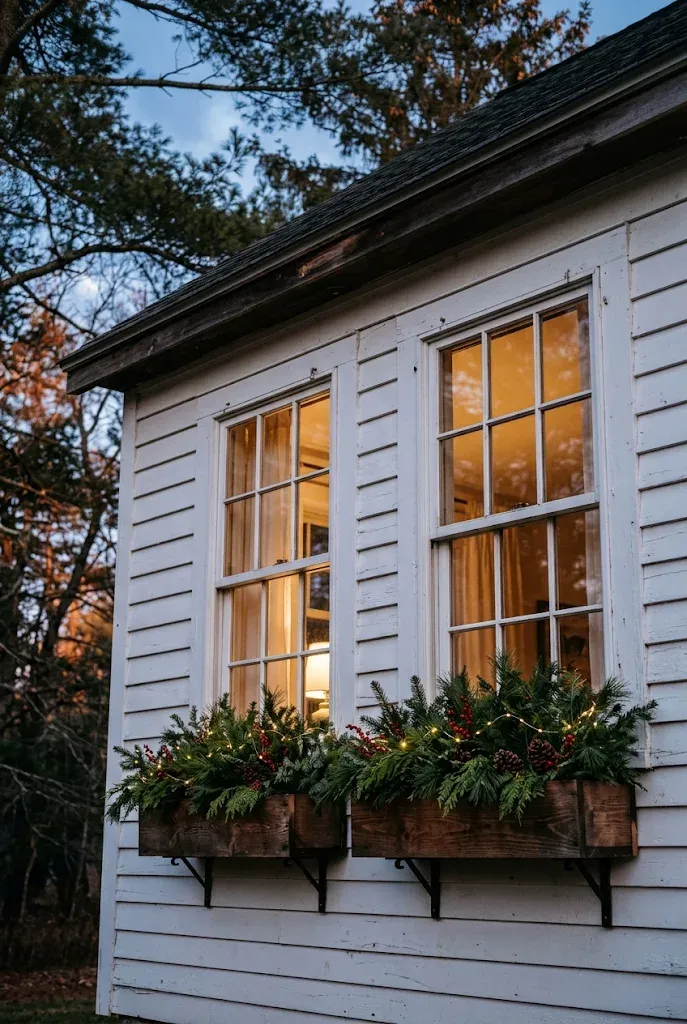
Window boxes on an upper floor catch the eye because they sit at the height people see from the street. Fill them with cut pine, cedar, and magnolia, then tuck in a battery-powered strand of warm white lights.
Tips & Tricks:
- Use battery lights with a timer so you don’t need to run cords to the second floor.
- Cut greenery stays fresh longer in cooler weather.
- Add pinecones or berries for texture rather than more lights.
- Secure the boxes well, since wind and weight can shift them.
Because upper boxes are hard to reach, set everything up before the weather turns and check batteries before the season peaks.
Investment: moderate.
23. Hang One Large Wreath Between the Upper Windows
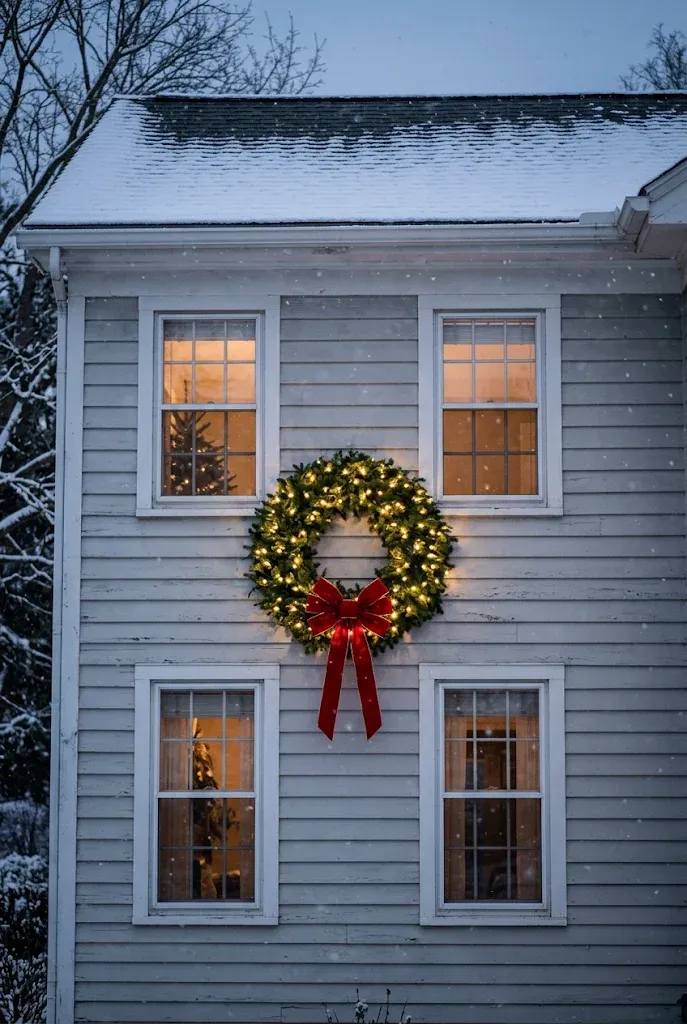
On a tall wall, scale matters. One oversized wreath, centered between two upper windows, ties the second floor to the decoration below and fills a blank stretch of siding. Choose a wreath that’s clearly larger than the windows’ width suggests, since it will look smaller from the street.
Editor’s Note: Check the weight of the wreath and the strength of the attachment point before hanging, and use a secure hook rather than a temporary adhesive on exterior siding.
A lit wreath with a timer and a wide ribbon is enough. A pair of matched wreaths, one for each window, gives a more formal look.
Investment: moderate.
24. Layer the Whole Façade From Ground to Gable
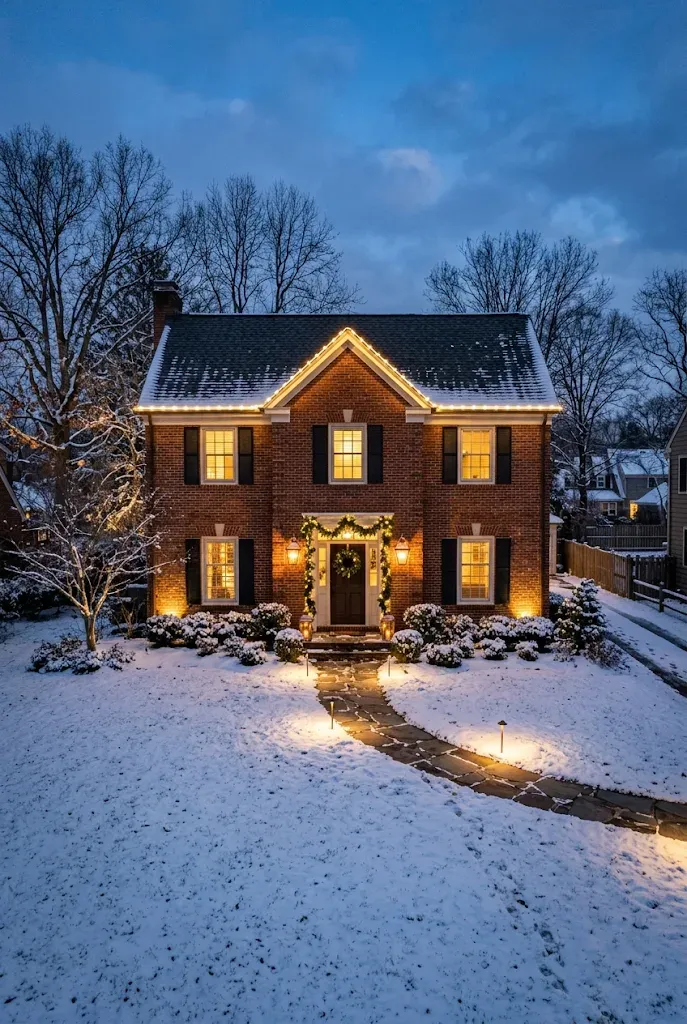
The most polished two-story displays don’t rely on one trick. They layer light at three heights so the eye travels from the walkway to the roofline.
- Ground level: stake lights along the path and lit shrubs by the foundation.
- Middle level: garland on the door, lanterns on the porch, and a lit tree in the yard.
- Upper level: an outlined gable or roofline, plus a wreath or window glow.
Keep the color temperature consistent across layers, and let one or two elements take the lead rather than lighting everything at the same intensity. If you add a layer each year, the display can grow without a large upfront cost.
Investment: mixed, from accessible to premium.
Quick Safety and Planning Notes Before You Plug In
A few habits keep any of these ideas safer and easier to maintain.
- Use lights and cords that are rated for outdoor use, and check the packaging for a recognized safety listing.
- Follow the maximum number of connected strands printed on each box instead of chaining more.
- Plug outdoor lights into a GFCI-protected outlet when possible, and use an outdoor timer.
- Test and untangle every strand indoors before climbing a ladder.
- Keep ladders level, have a helper, and stay clear of power lines.
- Avoid running cords through doorways or across walking paths where they can be tripped over.
If any step feels unsafe, hire a professional rather than stretching on a ladder.
Where to Start
Pick the house type that matches yours, then choose one idea from each of three groups: a roofline or outline, an entry detail, and a ground-level glow. That alone is enough to make a ranch, colonial, or two-story look finished. Start with accessible changes such as clips, mini lights, and stake lights, and add a mid-range or premium piece, such as a pre-lit pair for the steps or a programmable track, once you know what you like. Keep the bulb color consistent, and test everything at dusk before you call it done.