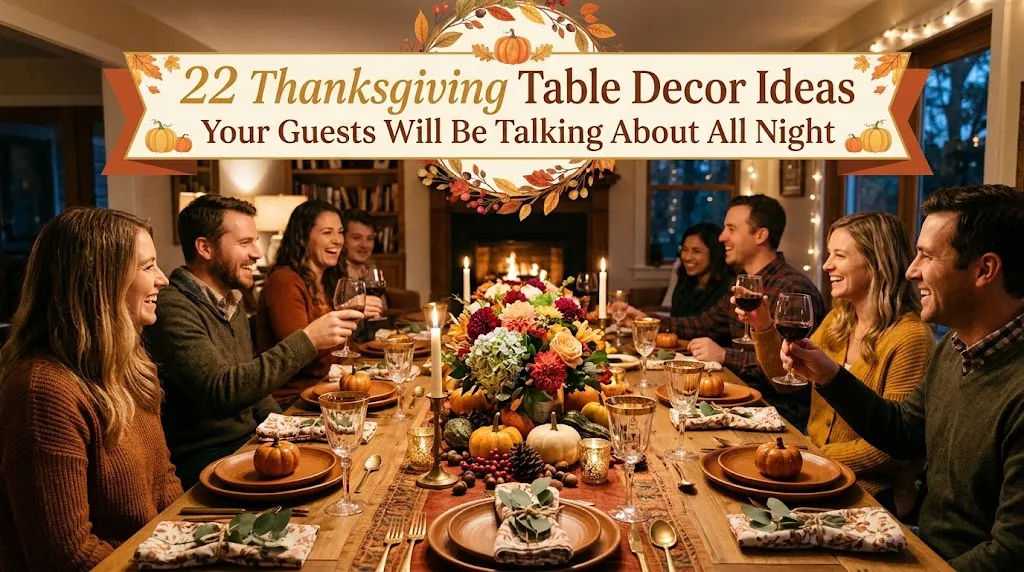
22 Thanksgiving Table Decor Ideas Your Guests Will Be Talking About All Night
A Thanksgiving table has a harder job than most. It has to hold a turkey, six side dishes, and a crowd of relatives, and still look inviting when everyone sits down. The most memorable tables usually aren’t the most expensive. They have a clear point of view, a few well-chosen textures, and enough open space that people can talk across the table and pass the gravy without knocking anything over.
These 22 Thanksgiving table decor ideas cover that range. Some use items from the grocery store and a good tablecloth. Others suit a larger budget or a dedicated dining room. You’ll find centerpieces, place settings, candlelight, small-space solutions, and an outdoor setup, each with practical notes on scale, safety, and how to pull it off.
1. Layer a Linen Runner With Harvest Produce
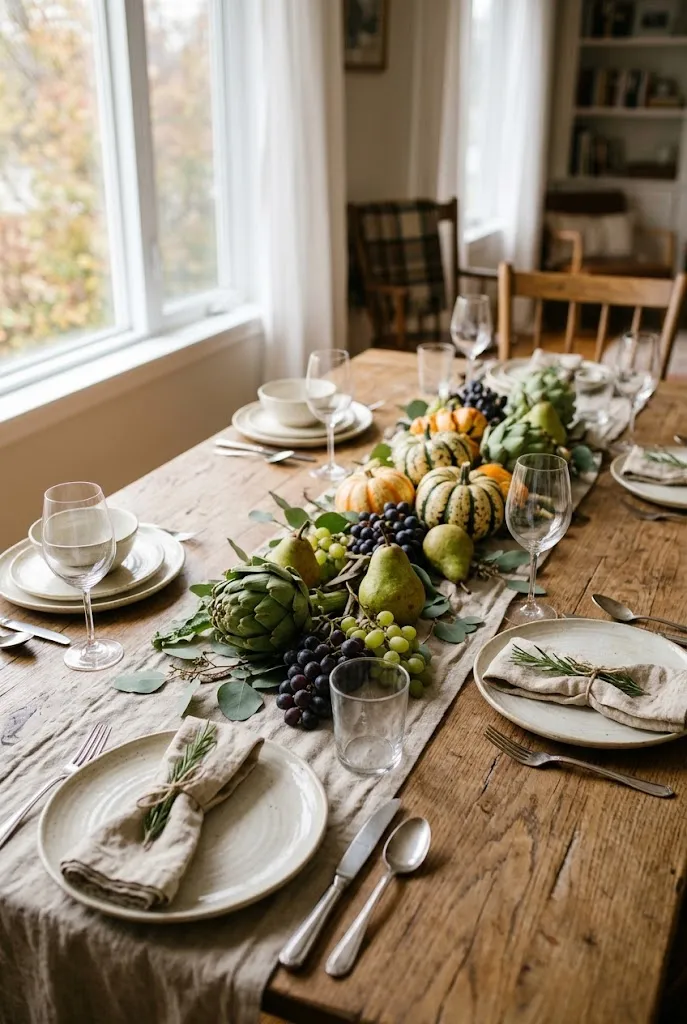
A natural linen runner in oatmeal or flax gives the table a soft base. Lay small pieces of produce directly on it: whole artichokes, ornamental squash, clusters of grapes, and a few pears. The arrangement looks gathered rather than arranged, and it costs little because most of it comes from the produce aisle.
- Vary the colors: deep green, burnt orange, dusty purple, and cream
- Leave gaps so serving dishes still have room
- Use produce with sturdy skins, since cut or bruised fruit shows quickly
- Wash and dry everything before it touches the linen
Keep the arrangement in a loose line down the center and stop a few inches short of each end. That keeps the table from feeling stuffed.
2. Cluster Pumpkins in Mixed Heights
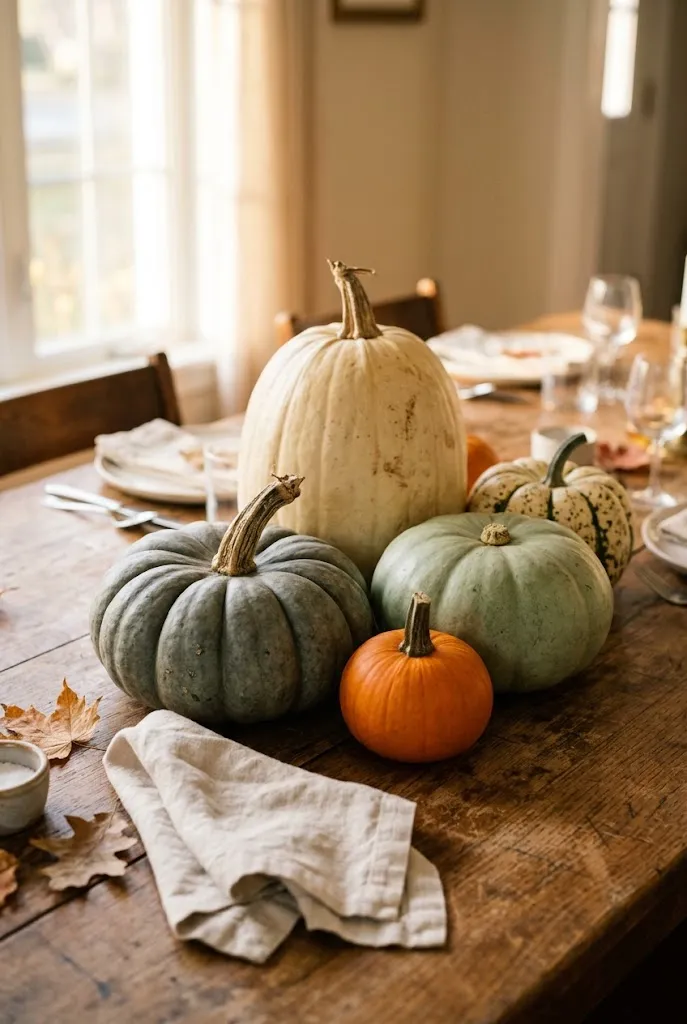
The pumpkin centerpiece works because it’s easy, but a row of identical orange pumpkins looks flat. Build one grouping with different sizes and shapes: a tall, pale heirloom pumpkin, a squat one, and a few small gourds.
Place the tallest pumpkin slightly off-center, then step down in height on either side. Put one or two small gourds at the base so the cluster feels connected. Muted varieties in white, blue-gray, and soft green keep the look current, and one traditional orange pumpkin gives it warmth.
Editor’s Note: Keep the cluster below sightline height for seated guests. If people have to lean around the pumpkins to talk, the arrangement is too tall.
3. Roll Out a Kraft Paper Runner With Crayon Cups
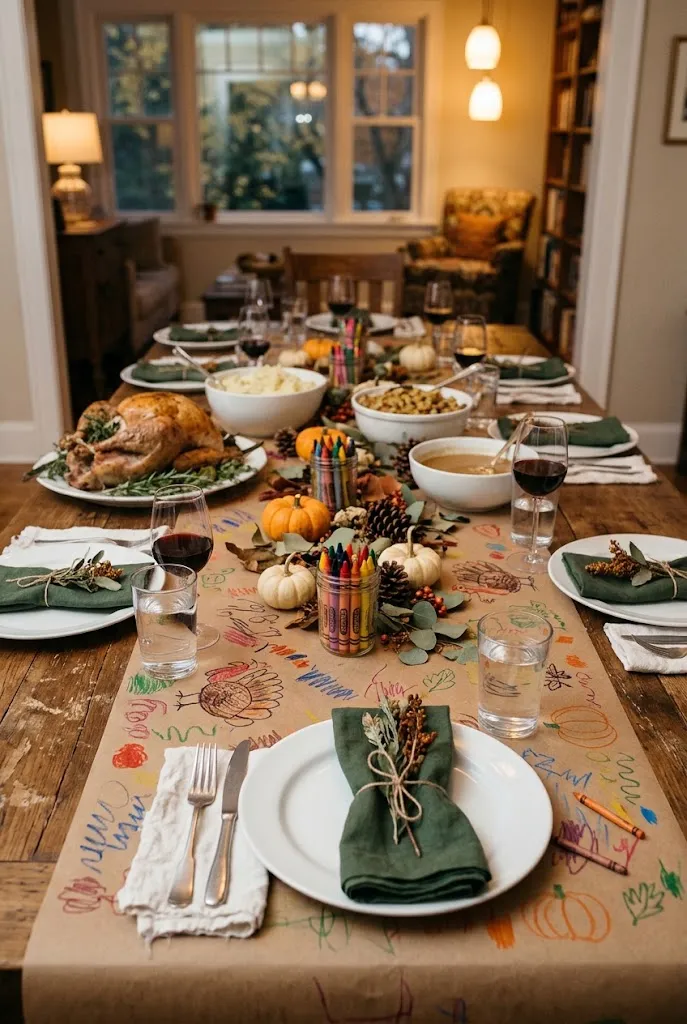
Plain brown kraft paper turns into a runner that doubles as entertainment. Unroll a length down the middle of the table, tape the ends underneath, and set a few cups of crayons or markers along it. Guests can write what they’re thankful for, draw, or play tic-tac-toe while dinner comes together.
This is especially good for a big, mixed-age gathering, or a kids’ table where adults want a break from policing screen time.
Tips & Tricks
- Use small jars or sturdy cups for the markers, not your good glassware
- Tape the paper at the underside edges so the top stays smooth
- Pre-write a few conversation prompts to get things started
- Roll up the finished paper afterward and keep your favorite drawings
4. Go Dark With a Burgundy and Plum Tablescape
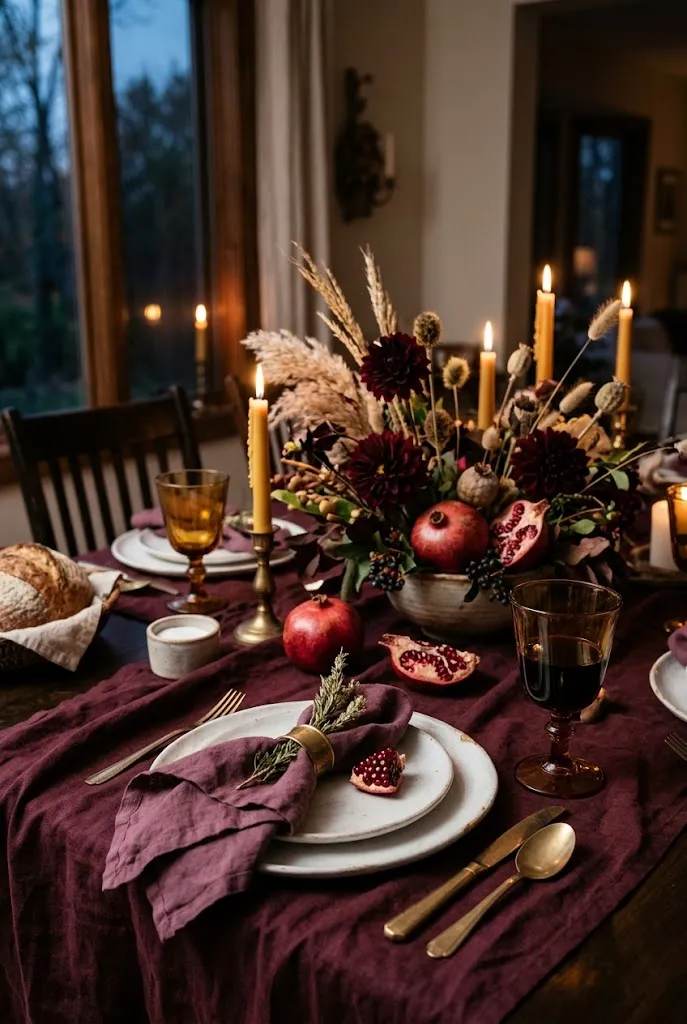
Thanksgiving doesn’t have to be orange and brown. A deep burgundy or plum palette looks richer, especially in a room with warm lighting. Start with a dark tablecloth or napkins in wine tones, then add dried flowers, pomegranates, and amber glassware.
Dark linens show lint and crumbs easily, so check them before guests arrive. This look also depends on soft lighting. Dim the overhead fixture if you can, and let candles do much of the work.
| Element | Effect | Best Fit |
|---|---|---|
| Burgundy napkins on a neutral cloth | Adds depth without committing | Smaller budgets, first-time hosts |
| Full plum or wine tablecloth | Bold, saturated backdrop | Dining rooms with warm light |
| Mixed dark florals and dried stems | Textural contrast | Tables with plenty of center space |
5. Mix Mismatched Taper Candles and Holders
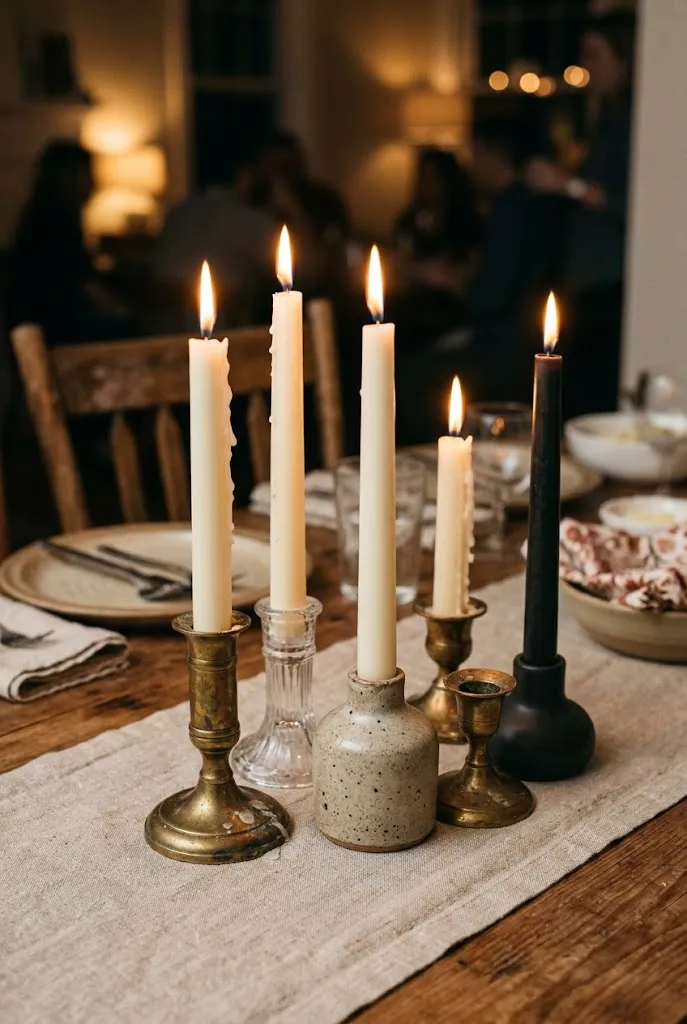
You don’t need a matching set of candlesticks. A collection of brass, glass, and ceramic holders in different heights looks collected and relaxed, and thrift stores and flea markets are good sources. Keep the candle color consistent, such as ivory or deep rust, so the variety looks deliberate.
Quick Tip: Trim wicks to about a quarter inch before lighting. It reduces smoke and dripping.
Safety matters here. Keep flames well away from dried wheat, paper decor, and greenery, and never leave candles unattended. If you have young children or a crowded table, consider flameless tapers as a substitute.
6. Stack Pears and Pomegranates on a Pedestal Stand
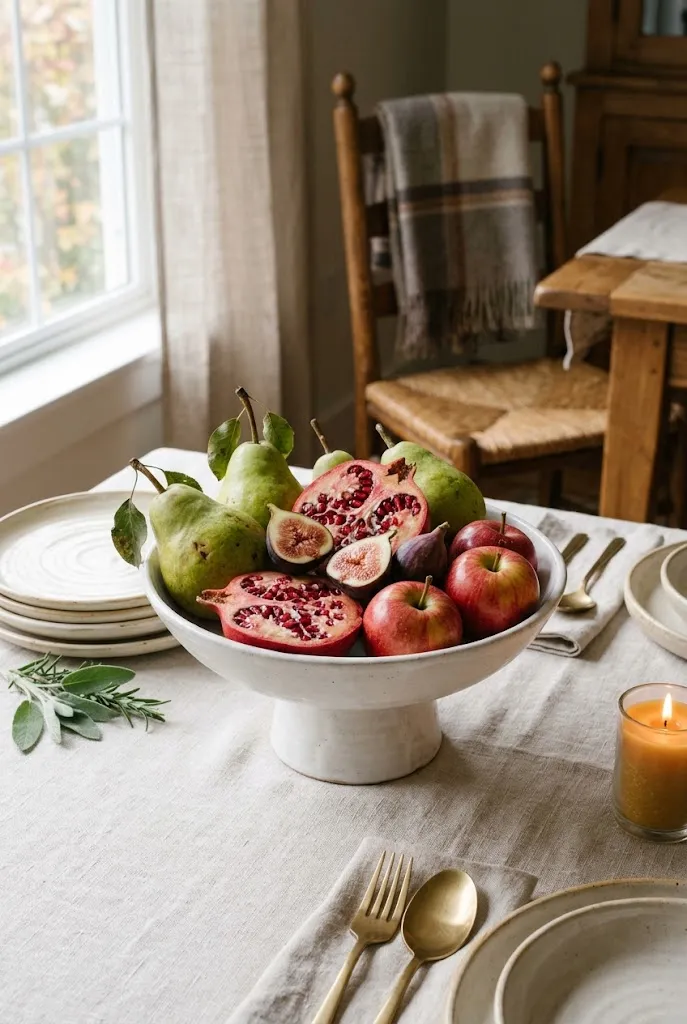
A cake stand or footed bowl lifts the centerpiece, which adds height without the bulk of flowers. Fill it with pears, pomegranates, figs, and small apples, then tuck in a few leaves or sprigs. When the day is over, the fruit goes back to the kitchen.
Choose fruit that holds its shape for a few days, and avoid anything very ripe or juicy. If the fruit will sit out for long, keep it away from heat sources like candles and stovetop-adjacent tables.
7. Fill Tall Vases With Dried Wheat and Grain
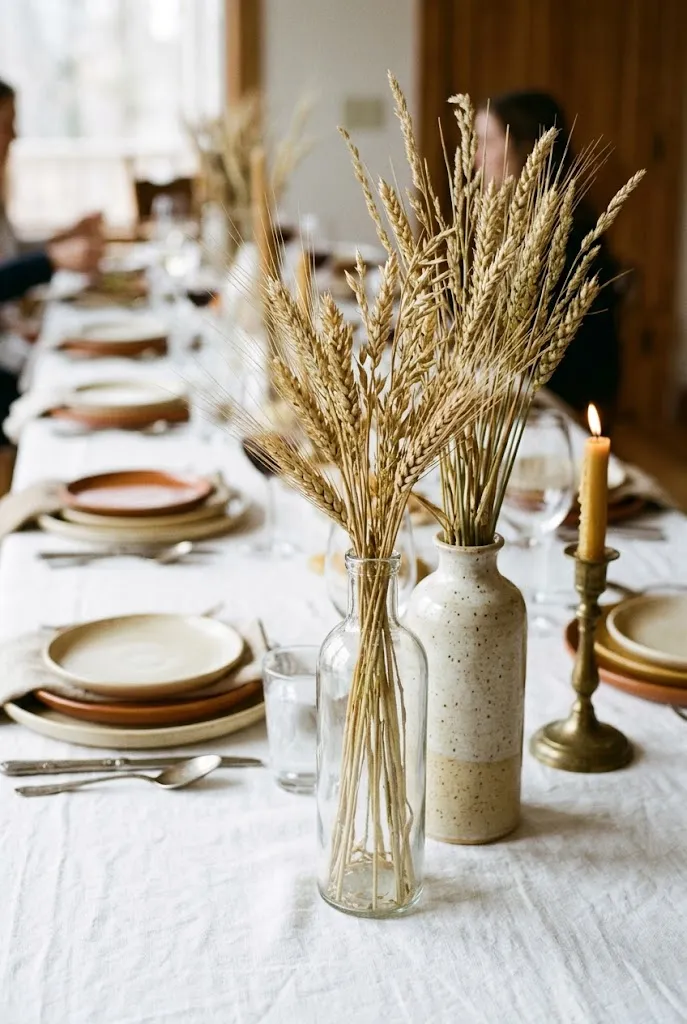
Dried wheat, oats, and pampas-style grasses give a table vertical interest and a muted golden color. Because the stems are slim, tall arrangements don’t block conversation the way a full floral arrangement can.
- Choose two or three narrow vases of different heights.
- Group stems in odd numbers and trim them at slightly varied lengths.
- Place the vases off-center, or at either end rather than the middle, to keep the center clear for serving dishes.
Dried grasses are flammable. Keep open flames at a comfortable distance and use enclosed candle holders nearby.
8. Tie Napkins With Fresh Herb Sprigs
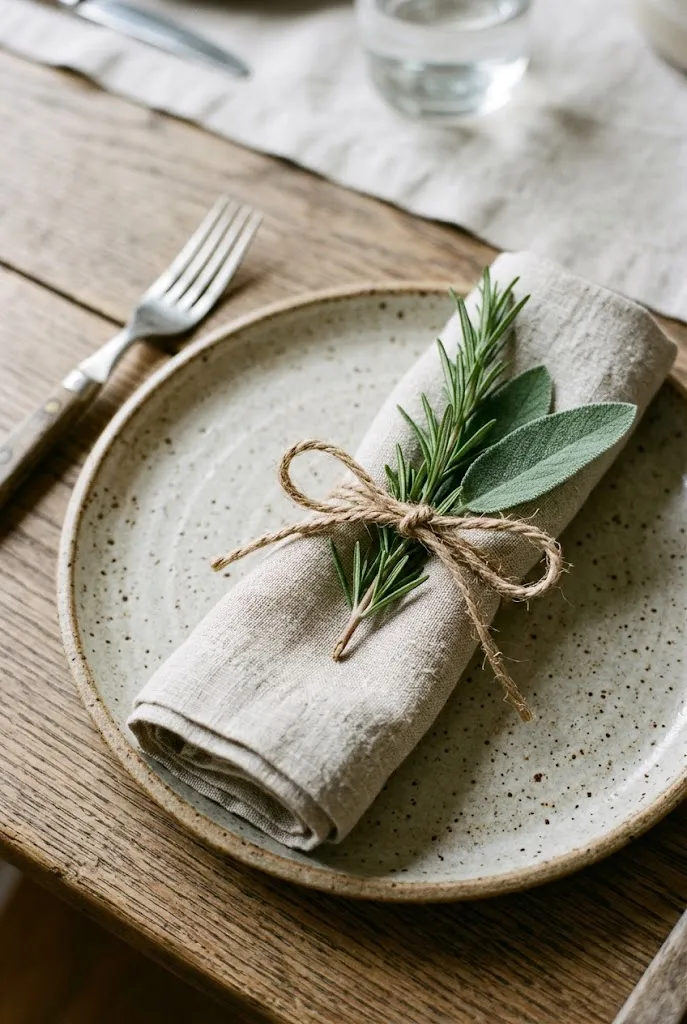
Rosemary, sage, or thyme tucked into a napkin tie adds scent, color, and a touch of personality for almost nothing. It’s a quiet detail that guests notice when they sit down.
Common Mistake: Using stiff, woody rosemary stems that poke through the napkin or fall out.
Better Approach: Choose flexible sprigs, and tie them with kitchen twine or a strip of linen. Soft sage leaves lie flatter than rosemary, which can be bulky if the napkin is thin.
Make the napkin ties the morning of dinner so the herbs stay fresh. Keep a few extra sprigs in a glass of water in case any wilt.
9. Build a Rust Palette With Terracotta Chargers
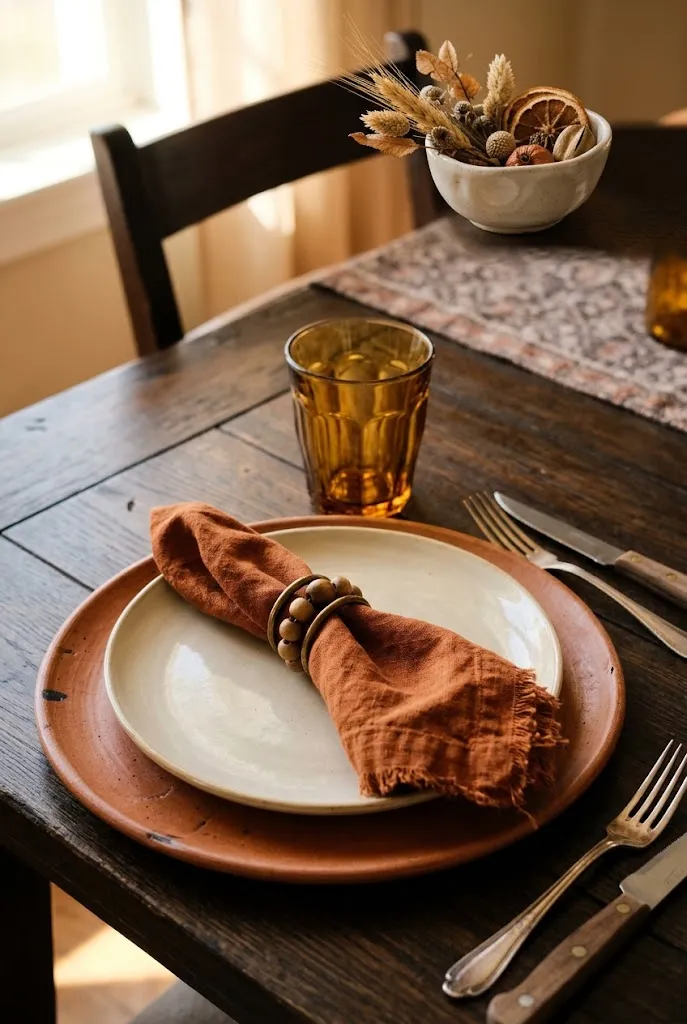
Terracotta-toned chargers under cream plates add a warm base without going full orange. Add rust napkins, amber glasses, and unfinished wood, and the table feels cohesive without much decorating. Chargers are also a mid-range investment that can be reused for other autumn and winter dinners.
Best For: Hosts who want a warm, grounded look
Investment: Moderate
Visual Effect: Earthy contrast between cream plates and terracotta backing
10. Set Out a Gratitude Branch
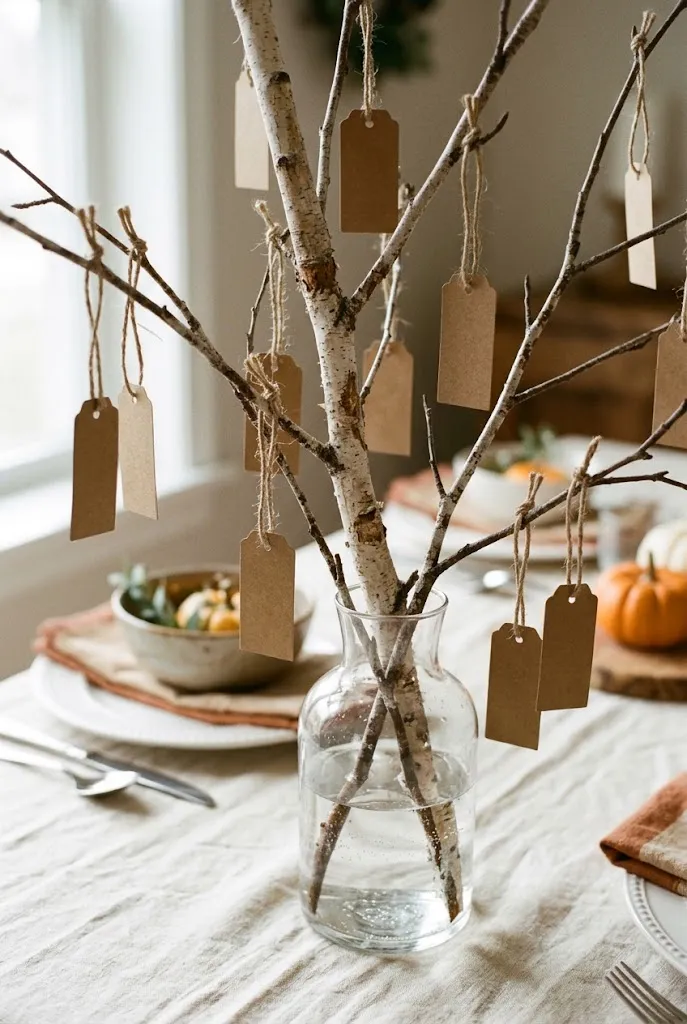
Put a bare branch in a heavy vase or jar and hang small paper tags from it. Guests write something they’re grateful for and add it to the branch before the meal or between courses. It’s decor and activity in one, and it leaves you with a keepsake.
- Use sturdy branches like birch or twigs from the yard
- Weight the vase with stones or sand so it doesn’t tip
- Pre-punch holes in the tags and tie each with twine
- Provide pens and let guests add tags as they arrive
Set the branch at one end of the table or on a nearby console if the center is crowded.
11. Float Candles in Cranberry-Filled Cylinders
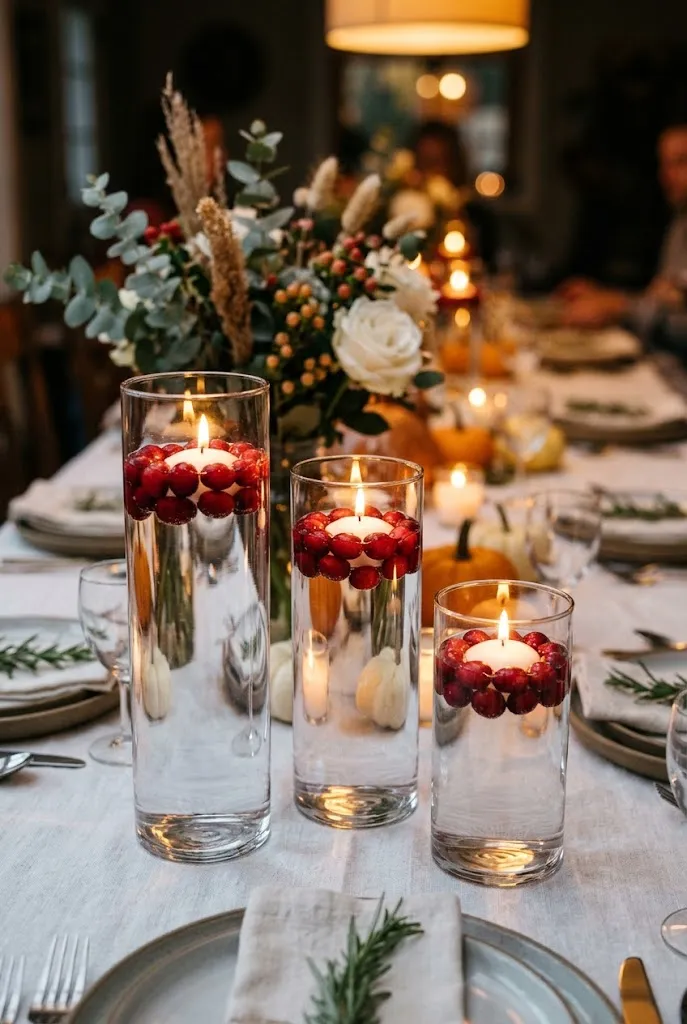
Fill clear glass cylinders partway with water and fresh cranberries, then float a small candle on top. The red berries glow when lit, and the effect looks far more expensive than it is.
Use unscented floating candles so they don’t compete with the food. Group three cylinders of different heights for the best effect.
| Option | Advantage | Best Fit |
|---|---|---|
| Real floating candles | Authentic glow | Adults-only tables |
| Flameless LED floaters | Safer around children | Kid-heavy gatherings |
12. Drape a Greenery Garland Down the Center
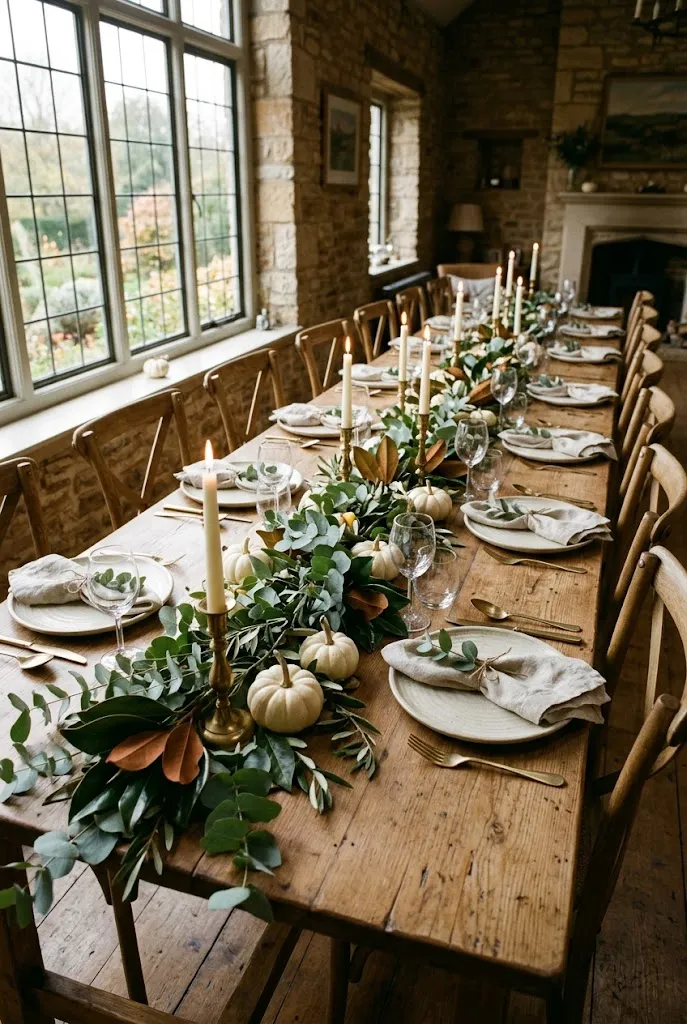
A garland of eucalyptus, magnolia leaves, or olive branches gives the table an organic, abundant look. Fresh garlands smell wonderful but wilt, while quality faux garlands can be reused year after year.
Lay the garland loosely and let it curve slightly rather than running it ruler-straight. Tuck in small pumpkins, taper holders, or fruit to break up the greenery.
Do: Leave gaps on the table for dishes.
Don’t: Let the garland spread so wide that guests lose place-setting room.
13. Pair Heirloom China With Modern Glassware
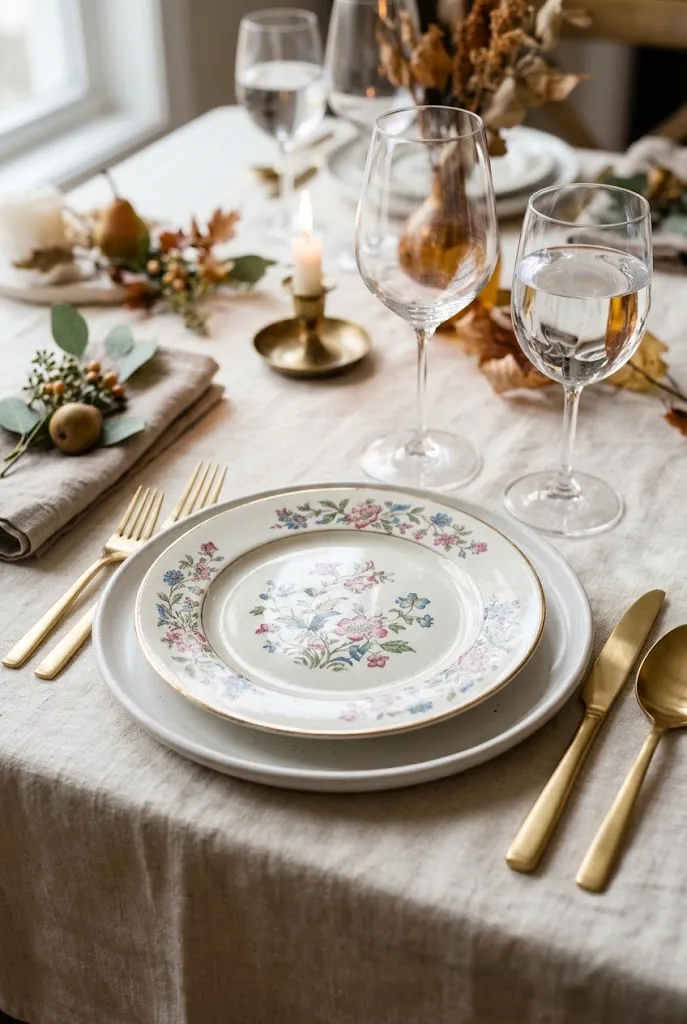
Family china carries history, and modern clear glassware keeps it from feeling stuffy. Pair a patterned or gold-rimmed plate with plain stemware and simple flatware so the pattern stays the focus.
If the china is mismatched, treat that as a feature. Alternate patterns around the table, or use one pattern as a salad plate over a solid dinner plate. Check whether pieces are dishwasher safe before the meal, since older china often isn’t.
14. Use Mini Pumpkins as Place Card Holders
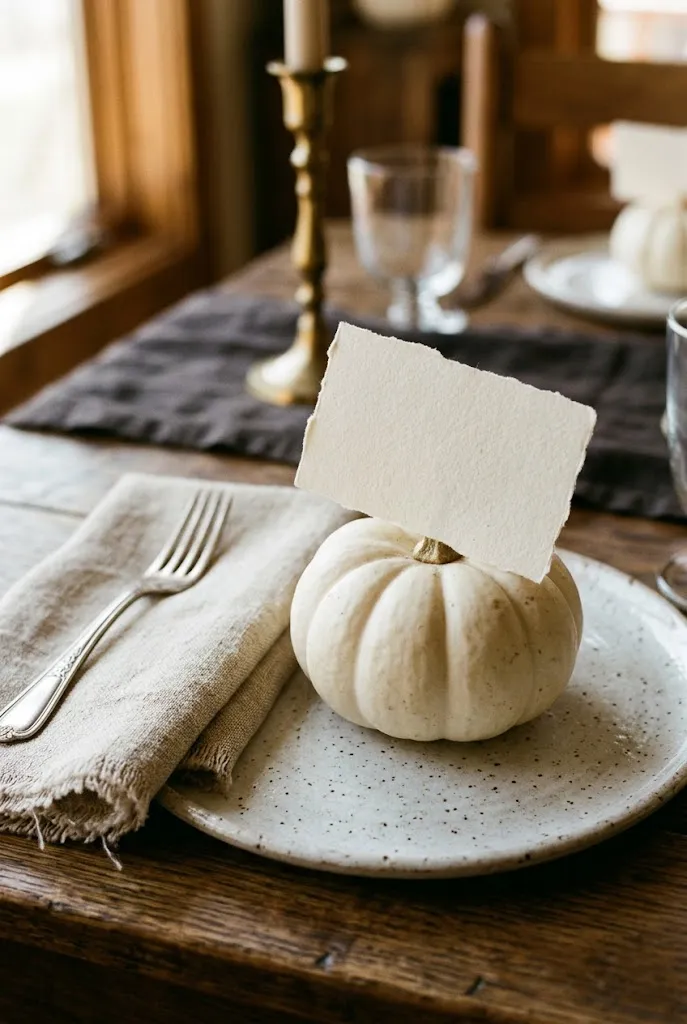
Small pumpkins double as place card holders, and a simple name card makes each guest feel considered. Slit the top of a mini pumpkin with a small knife, or use a clip, to hold a paper card.
- Choose small pumpkins with a flat enough base to sit stable.
- Write names in clear handwriting on cream cardstock.
- Slip the card into a clip or a small slit and set one at each plate.
Place cards help with seating logic too, which can keep conversations flowing between family members who rarely sit near each other.
15. Style an Oat and Cream Neutral Table
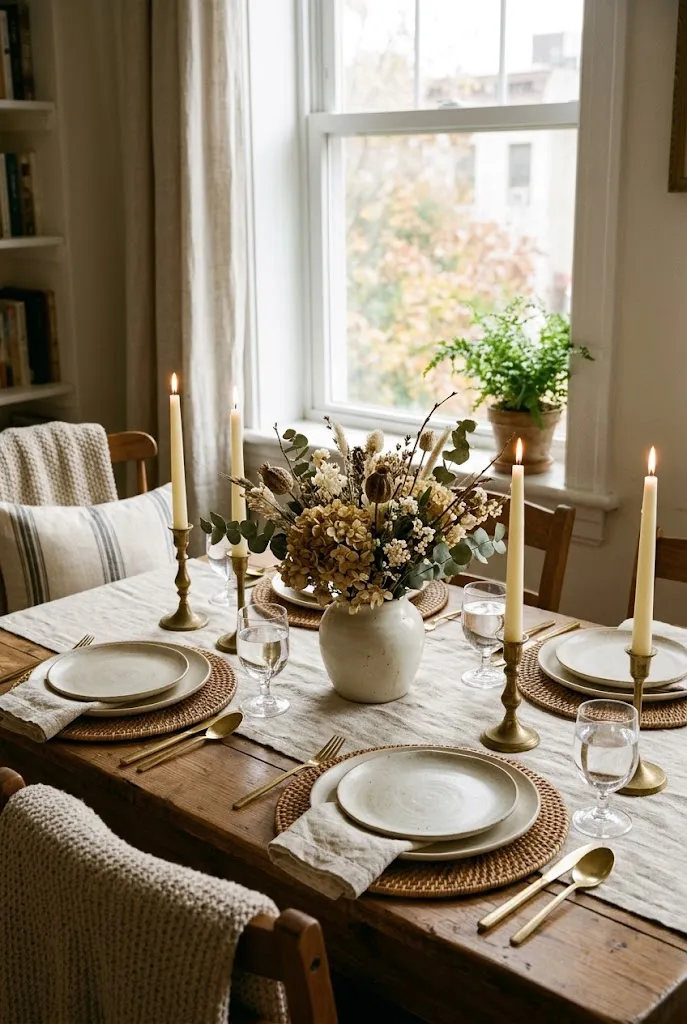
A neutral table can still feel rich if the textures are varied. Combine a cream cloth, oat-colored napkins, matte stoneware, wood chargers, and a woven basket or two. Dried florals and ivory candles finish it without adding color.
Editor’s Note: In an all-neutral scheme, texture does the work color usually does. Mix smooth, nubby, matte, and glossy surfaces so the table doesn’t look flat in photographs or in person.
16. Line Up Bud Vases Down the Table
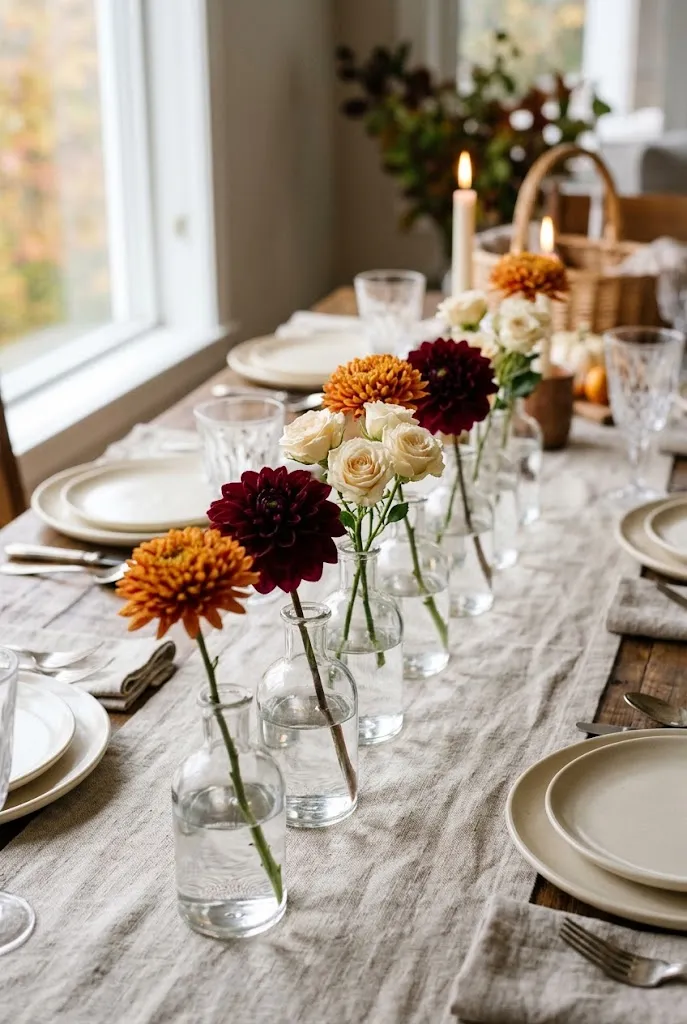
Instead of one large centerpiece, set a row of small bud vases each holding a single stem. Mums, dahlias, ranunculus, or spray roses all work, and you can mix glass types or use thrifted bottles.
The advantage is flexibility: you can rearrange vases around dishes as they arrive, and guests can see across the table. One or two stems per vase keeps cost down.
Tips & Tricks
- Use odd numbers of vases and vary stem heights slightly
- Group by color for a calm look or mix tones for a garden feel
- Refresh water the morning of the dinner
17. Suspend Foliage Above the Table
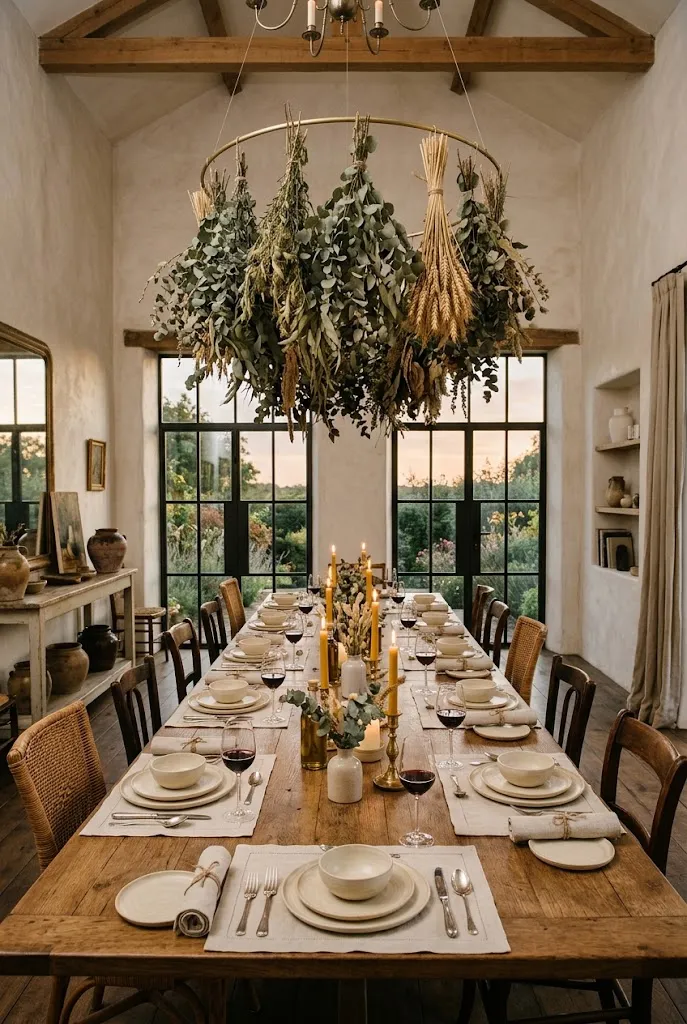
A hanging installation of branches, eucalyptus, or dried stems above the table creates drama while leaving the surface open for food. It’s an architectural approach: a ceiling-mounted ring or secured beam carries the weight, and the decoration floats at a safe height.
This is a premium or professional-install idea. Check ceiling support, hanging height, and clearance so guests don’t hit it when standing. A simpler version drapes a lightweight garland over an existing chandelier, if the fixture is secure and the greenery is kept away from bulbs.
18. Stack a Tiered Tray on a Small Round Table
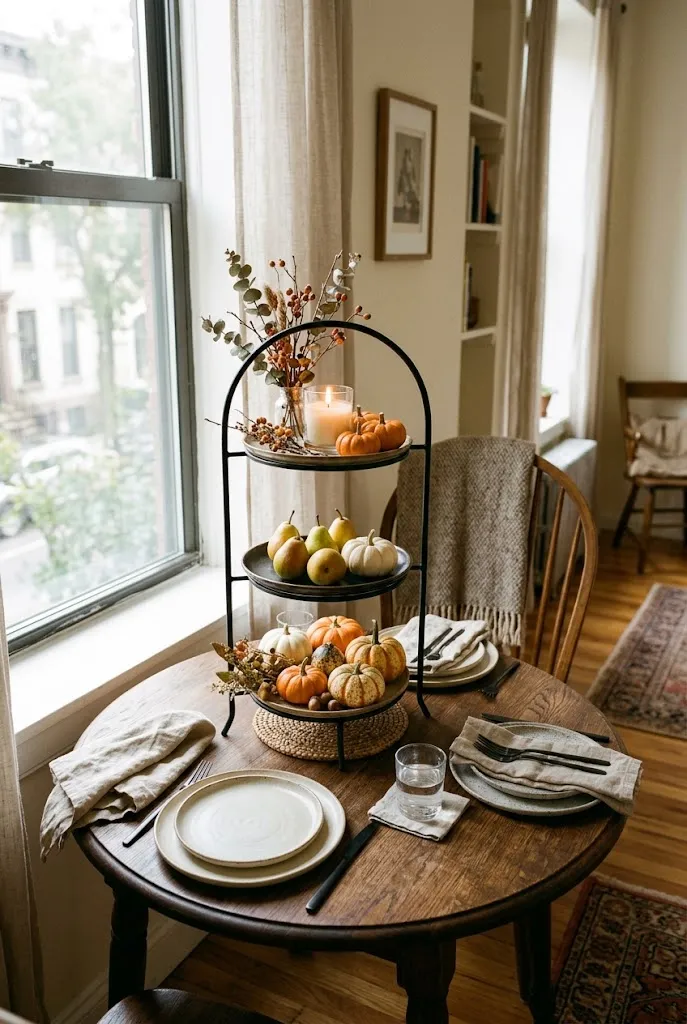
Apartment tables often can’t spare surface area. A tiered tray brings height without taking up more room, and it can hold small pumpkins, candles, fruit, and dried stems in one footprint.
Best For: Small round tables and apartment dining nooks
Investment: Accessible
Visual Effect: A layered centerpiece without sprawling across the table
Keep the top tier light so the tray doesn’t feel tippy, and leave the edge of the table clear for plates and glasses.
19. Set the Table Outdoors With Lanterns and Blankets
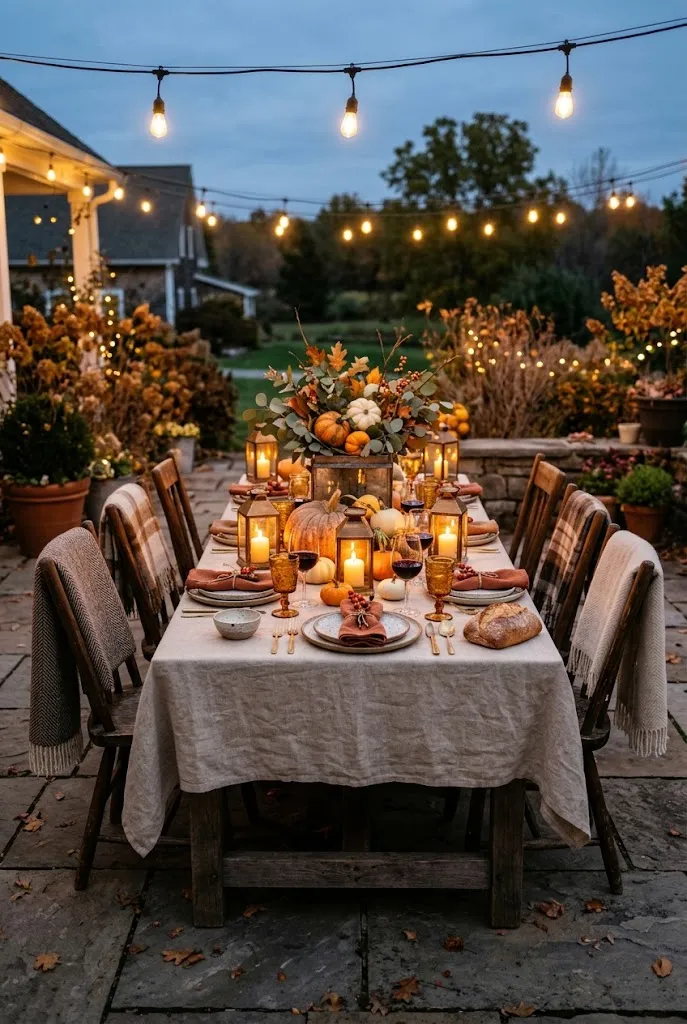
If your climate allows it, a patio Thanksgiving works when you plan for the cold. Use lanterns with LED candles, a few wool throws on chair backs, and a heavy tablecloth that won’t blow around.
Common Mistake: Setting out lightweight napkins and decor that blow away.
Better Approach: Weight tablecloths with clips, use heavier ceramics, and keep decor low and stable.
If you use outdoor heaters, follow the manufacturer’s clearance and placement guidance, and keep decor and fabrics away from them.
20. Pair a Walnut Table With Hand-Thrown Ceramics
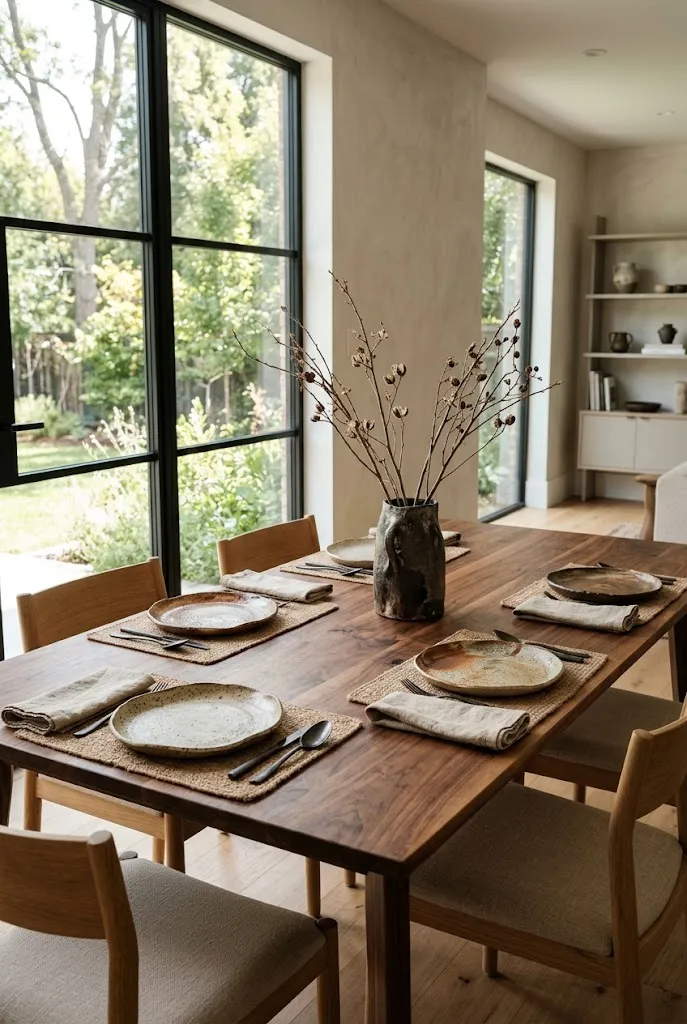
A custom walnut table needs very little decoration. Hand-thrown plates and bowls in earthy glazes add visual interest without crowding the wood, and a single sculptural vessel can serve as the centerpiece.
| Choice | Effect | Best Fit |
|---|---|---|
| Matte earth-toned glazes | Quiet, tactile look | Dark wood tables |
| Speckled cream glazes | Brighter contrast | Rooms with less natural light |
Handmade ceramics vary slightly in size and shape, which is part of their appeal. Check dishwasher and microwave suitability with the maker.
21. Layer Woven Placemats on a Bare Wood Table
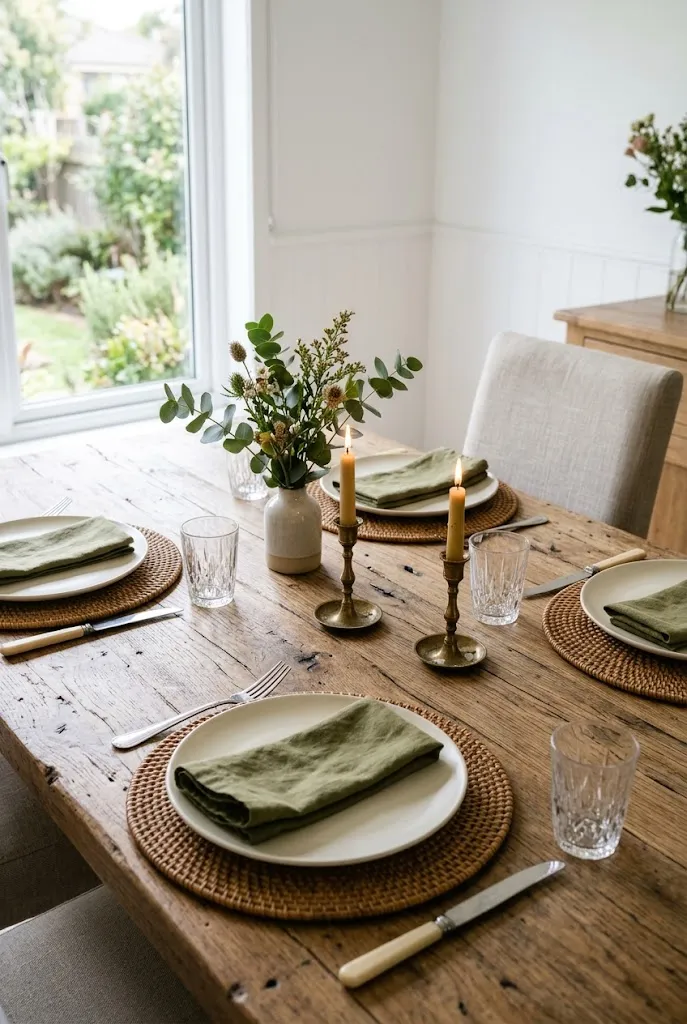
If your table is attractive and in good shape, you may not need a tablecloth. Woven placemats protect the surface and add texture. The material choice changes the mood.
| Placemat | Look | Best Fit |
|---|---|---|
| Rattan or seagrass | Natural, relaxed | Casual dinners |
| Linen with fringe | Softer, more refined | Formal-leaning tables |
| Leather or faux leather | Clean, wipeable | Households with kids |
Pair them with cloth napkins and simple plates so the weave stays visible. Use trivets for hot dishes, since heat can mark wood.
22. Anchor the Table With Brass Candelabra and Hand-Dyed Linens
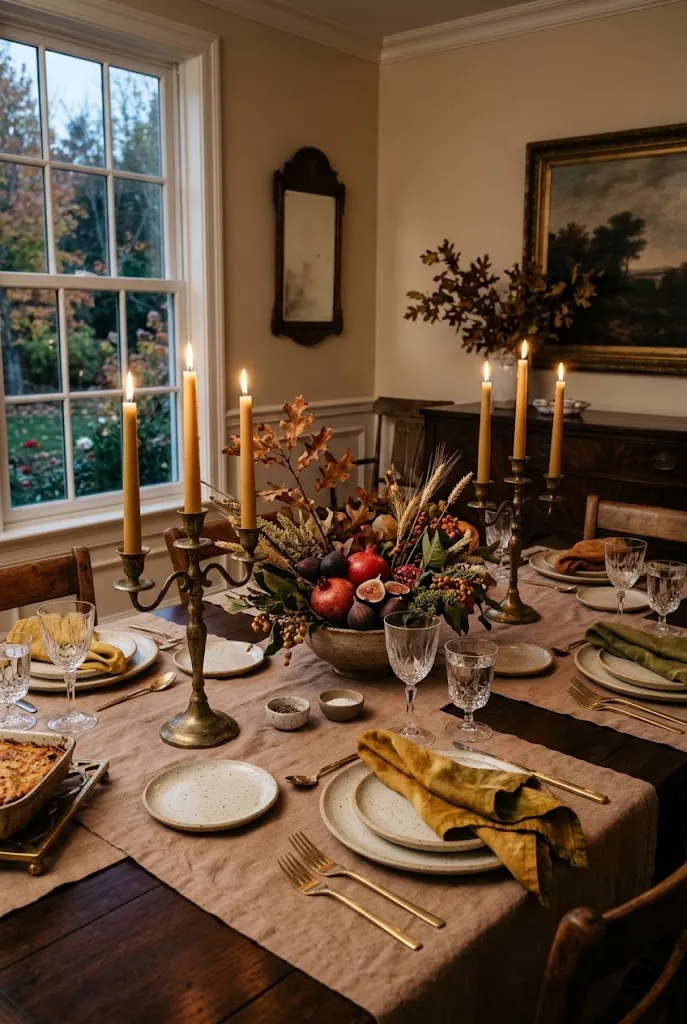
A pair of sculptural brass candelabra and hand-dyed linens in warm clay, ochre, or deep olive gives a dining room a custom, collected feel. This is a premium option: quality candelabra and artisan linens cost more but last for many holidays.
Use restraint. Two candelabra, a few linen pieces, and one or two arrangements of seasonal produce are enough. Stable bases matter, so choose weighted candelabra and keep them away from leaning branches or loose fabric.
How to Choose Your Starting Point
If you’re not sure where to begin, pick one anchor and build around it: a centerpiece, a palette, or a place-setting detail. A single strong idea, such as a pumpkin cluster or a row of bud vases, usually looks better than several competing ones.
Check the practical details before dinner. Measure the table, leave space for platters, and keep centerpieces low enough that guests can see each other. Test candles for stability and keep flames away from dried decor.