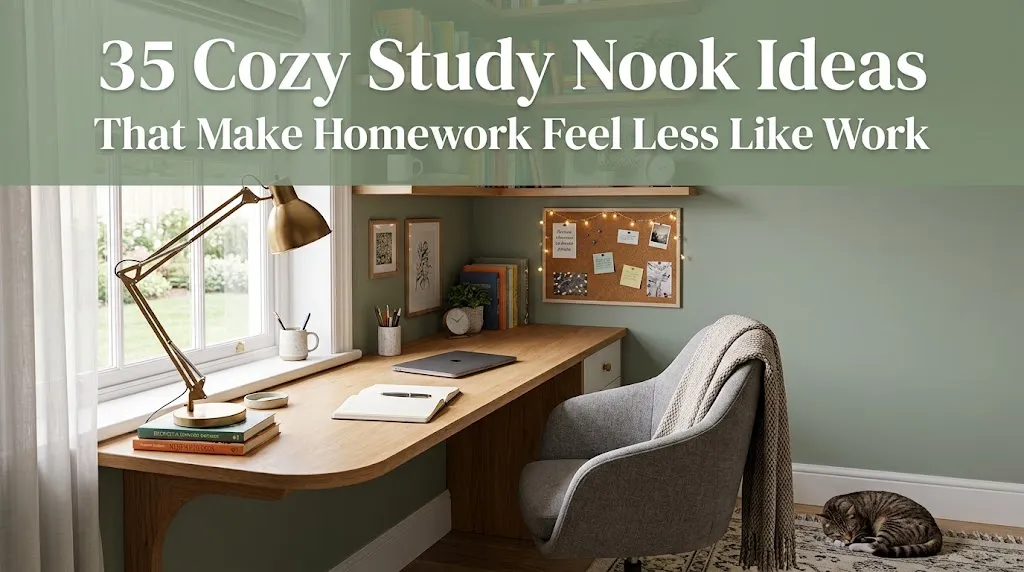
35 Cozy Study Nook Ideas That Make Homework Feel Less Like Work
A good study nook doesn’t need a spare room. It needs a surface at the right height, light that doesn’t strain your eyes, a chair you can sit in for an hour, and a few details that make the spot feel like yours. That’s often enough to turn a dreaded homework session into something closer to a routine you don’t mind.
The cozy study nook ideas below cover a wide range of homes and budgets: apartment corners, bedroom walls, closets, stair alcoves, kitchen ends, and full custom built-ins. Some are a paint-and-lamp weekend project. Others are bigger investments for homeowners. Each one is built around a different layout, material, or mood, so you can borrow a single trick or copy the whole look.
1. Tuck a Desk Into a Window Seat
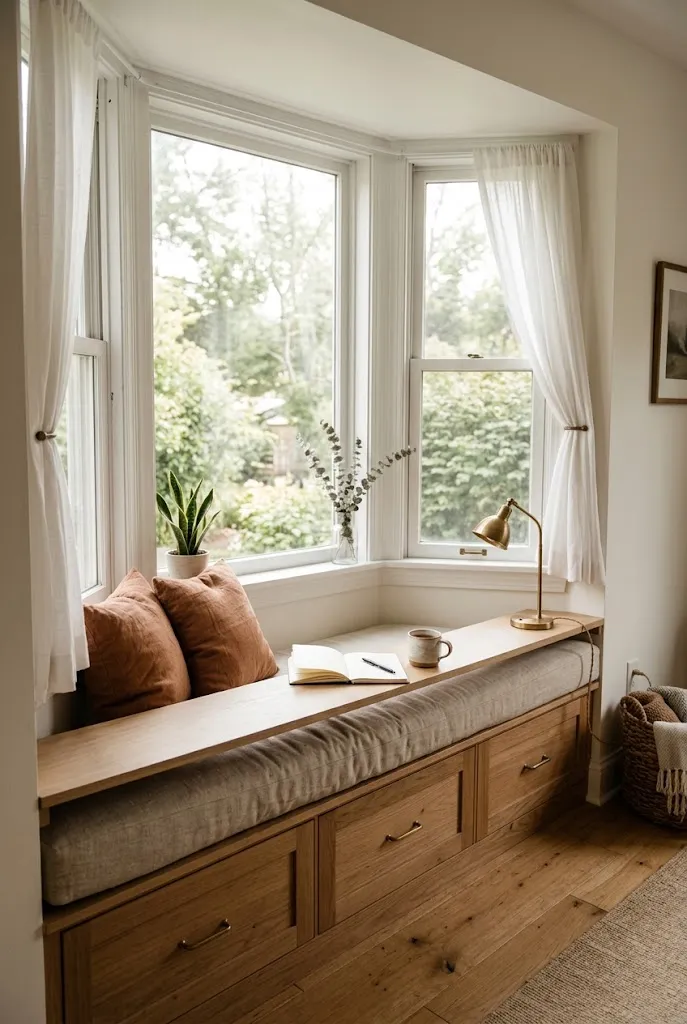
A deep window seat with a cushion gives you a place to sit, store, and look outside, all in about two feet of depth. Pair it with a narrow desk ledge or a slim table pulled up in front. The cushion is the comfort piece; the daylight is the real bonus, since studying near a window is easier on the eyes than a dim corner.
- Use 4-inch high-density foam with a washable cover.
- Add drawers or lift-up lids beneath the seat for supplies.
- Keep the desk surface clear of the sill if you have radiators or baseboard heat.
Editor’s Note: Seat height matters. If the cushion puts your knees much higher than your hips, use a firm bolster behind your back and keep sessions short, or choose a regular chair for long writing tasks.
2. Convert a Shallow Closet Into a Study Alcove
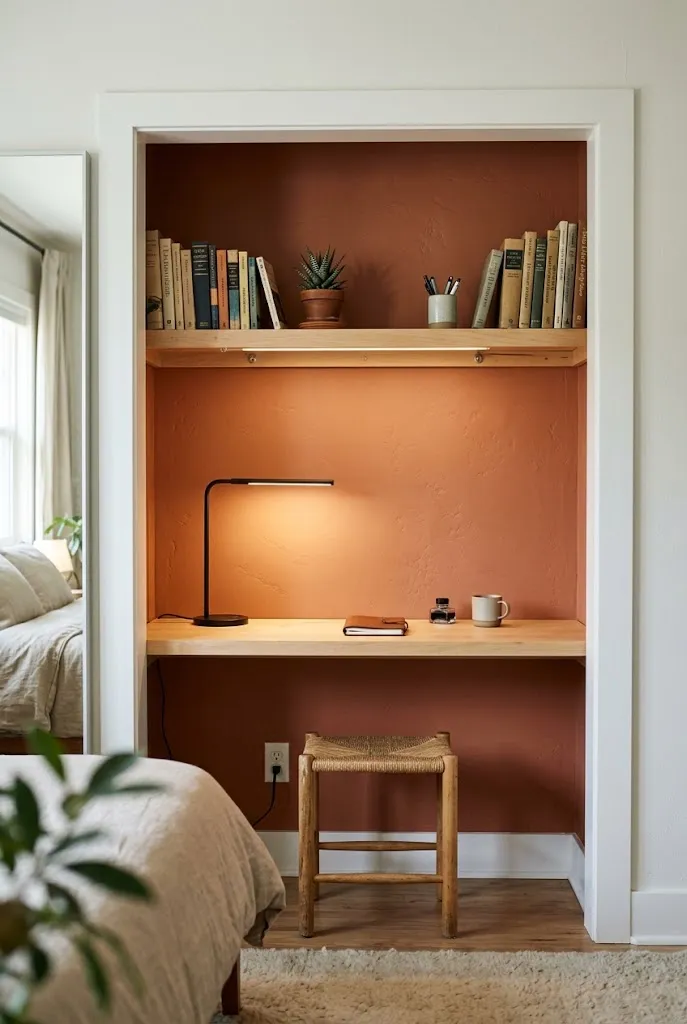
Remove the doors (or take them off their tracks and store them), and a standard reach-in closet becomes a surprisingly private study booth. The walls on three sides reduce visual distractions, which many students find helpful.
- Clear the closet and remove the rod and shelves, leaving one shelf above head height for storage.
- Install a desktop surface across the full width, supported by wall cleats or a pair of small file cabinets.
- Add a plug-in or battery-powered light, since closets are usually dark.
- Paint the back wall a warm color so the space feels intentional, not like an empty closet.
Most closets are 24 inches deep, which works for a laptop and notebooks but is tight for large monitors. Measure before you buy a desktop.
3. Build a Study Nook Under the Stairs
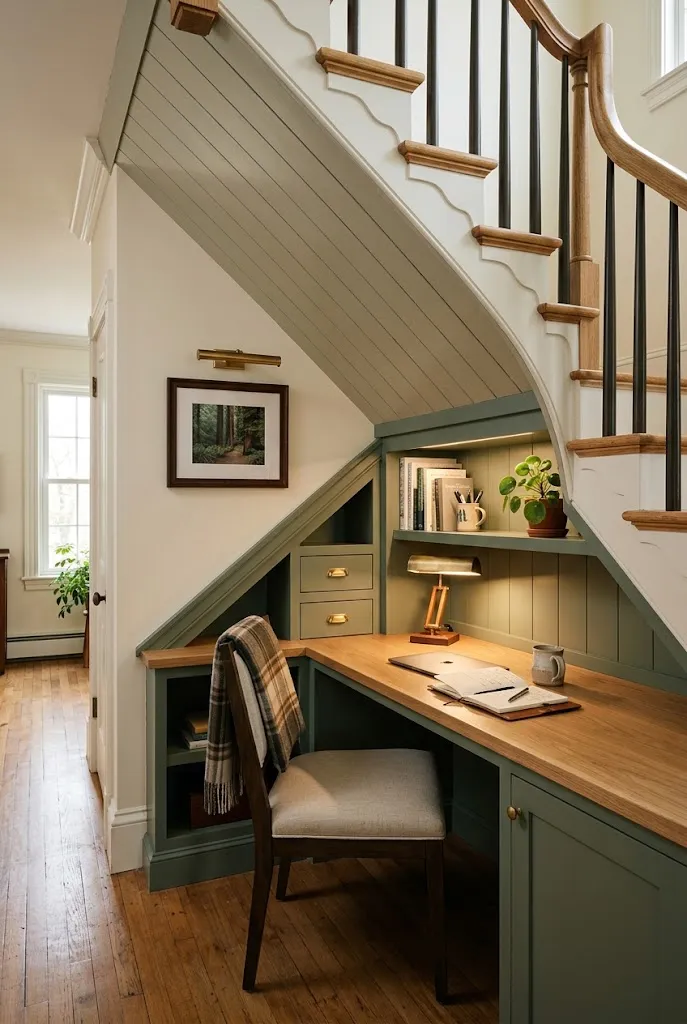
The triangle under a staircase is often wasted. A custom desk nook here feels like a hideaway, especially with the slope of the ceiling creating natural enclosure. Because the ceiling height drops, place the seat at the tallest end and use the lower end for drawers or cubbies.
This is a premium, carpenter-built idea: expect custom framing, built-in lighting, and finished trim. The payoff is a nook that looks original to the house.
Quick Facts Best For: Homeowners with open staircases Investment: Premium, custom carpentry Visual Effect: Cozy, enclosed, architectural
Common Mistake: Making the desk too deep, which squeezes legs against the slope. Better Approach: Keep the desk about 22–24 inches deep and let drawers occupy the low end.
4. Use a Corner and Floating Shelves in a Rental
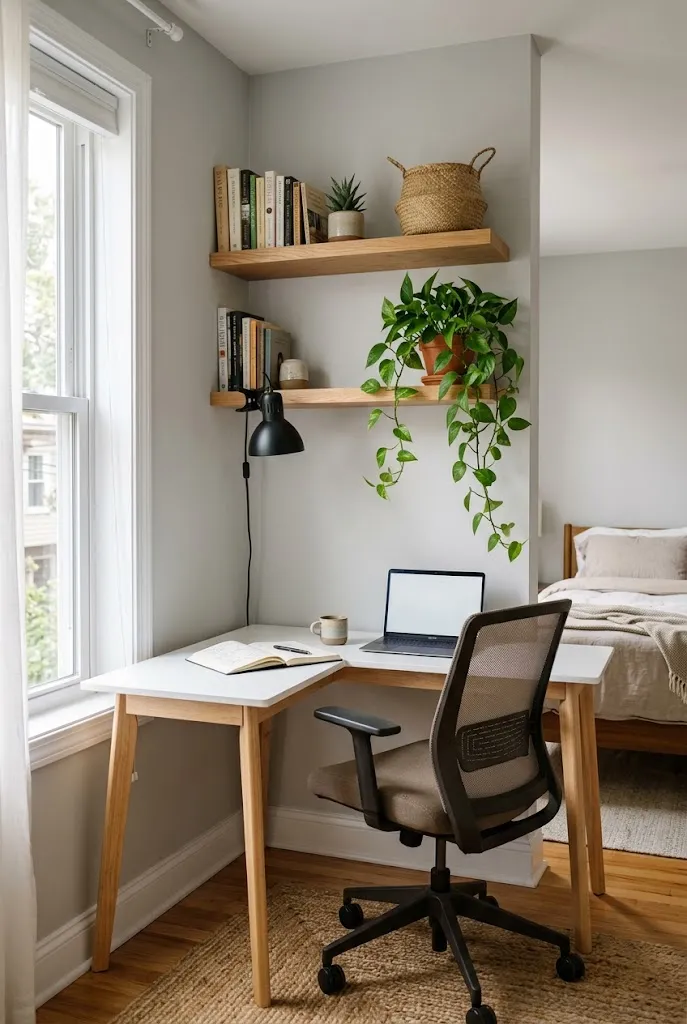
Corners are efficient. Two desktop boards meeting at a right angle give you an L-shaped workspace, and floating shelves above keep supplies off the surface. Renters can use tension-fit systems or choose shelf brackets that are easy to patch when you move out.
Quick tips for a rental-friendly setup:
- Mount shelves into studs when possible, and use appropriate anchors if not.
- Keep the palette light so a small corner feels larger.
- Choose an adjustable chair so one desk works for different family members.
The look stays calm when shelves hold only a few items each, a plant, a few books, a basket, instead of filling every inch.
5. Go Dark Academia With Deep Green and Brass
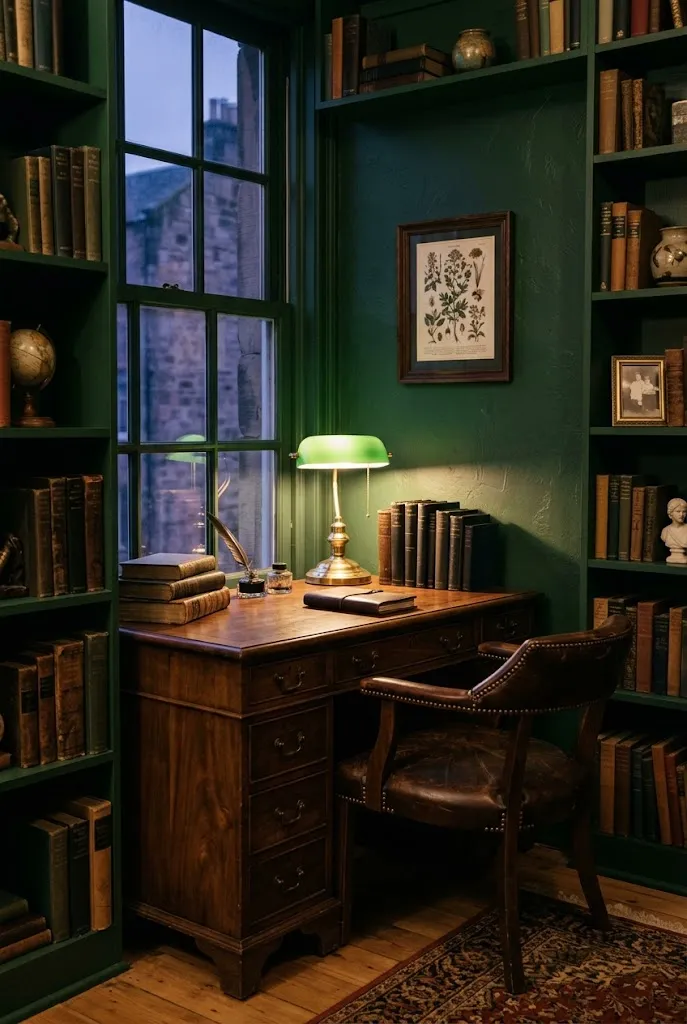
Deep green walls, a brass banker-style lamp, and a secondhand wood desk give a nook the feel of a quiet library. The moodiness makes the glow of a lamp feel warmer, which suits evening study.
| Element | Effect | Best Fit |
|---|---|---|
| Deep forest or hunter green paint | Enclosed, calm backdrop | Rooms with some natural light |
| Brass or bronze lamp | Warm focused pool of light | Evening study |
| Wood desk with visible grain | Traditional, grounded | Secondhand or vintage finds |
Dark walls absorb light, so add a second light source, such as a plug-in sconce, so the desk doesn’t feel gloomy.
6. Put the Desk Under a Loft Bed
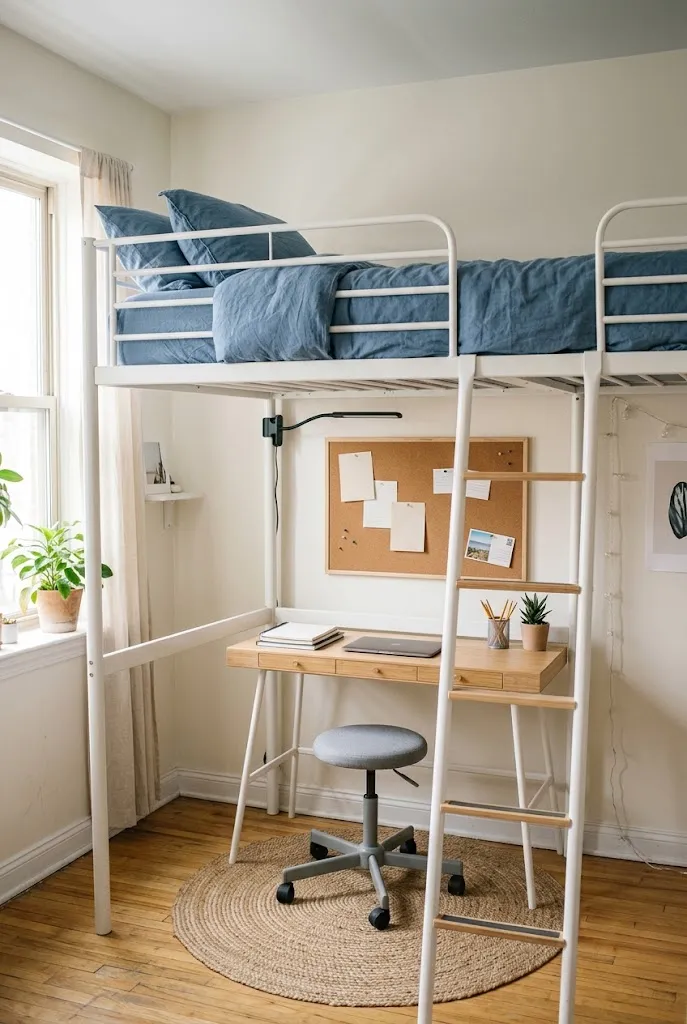
In a small bedroom, going vertical frees up floor area. A loft bed with a desk below creates a built-in cave for studying, and the bed above acts like a ceiling that reduces visual noise.
Ceiling height is the main constraint. You need enough clearance below the bed to sit comfortably, and enough clearance above to sleep safely. Check the manufacturer’s weight and height guidance before purchasing, and follow any age recommendations for the upper bunk.
Add a clip light to the bed frame and a pinboard on the side panel. A rug beneath helps the area read as its own zone.
7. Fold Down a Wall Desk in the Living Room
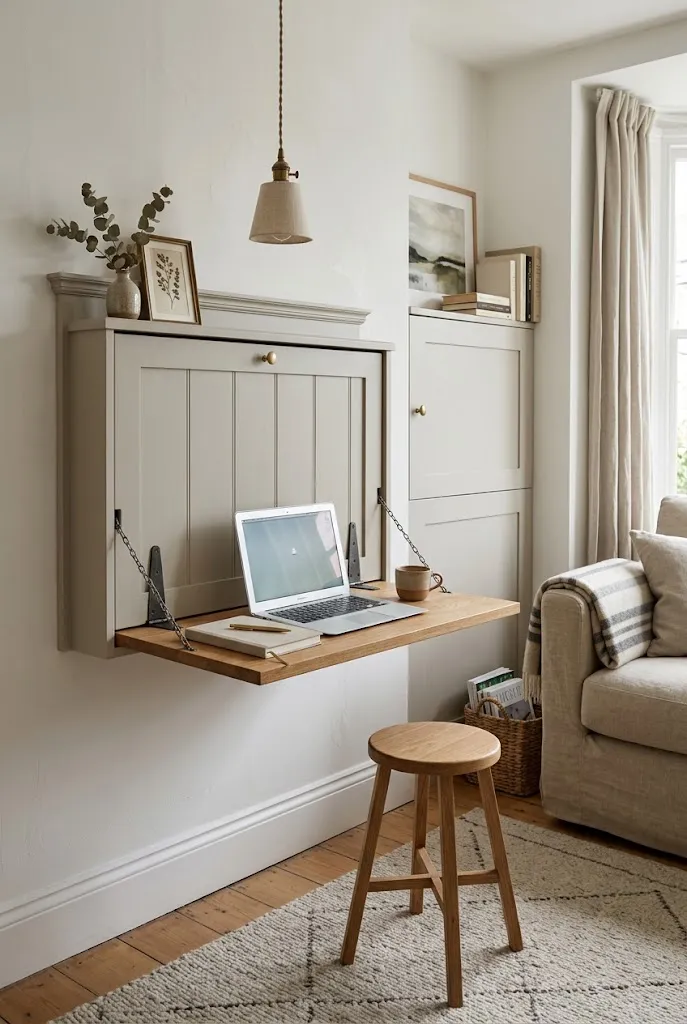
A wall-mounted fold-down desk lets a living room double as a study area during the day and return to normal in the evening. When closed, it can look like a shallow cabinet or a framed panel.
- Choose hardware rated for the weight of a laptop and books.
- Mount into studs.
- Store a basket or tray nearby so supplies come out and go back in quickly.
This works well for households where homework happens in shared space and clutter needs to disappear by dinner.
8. Pair a Reading Chair With a Lap Desk
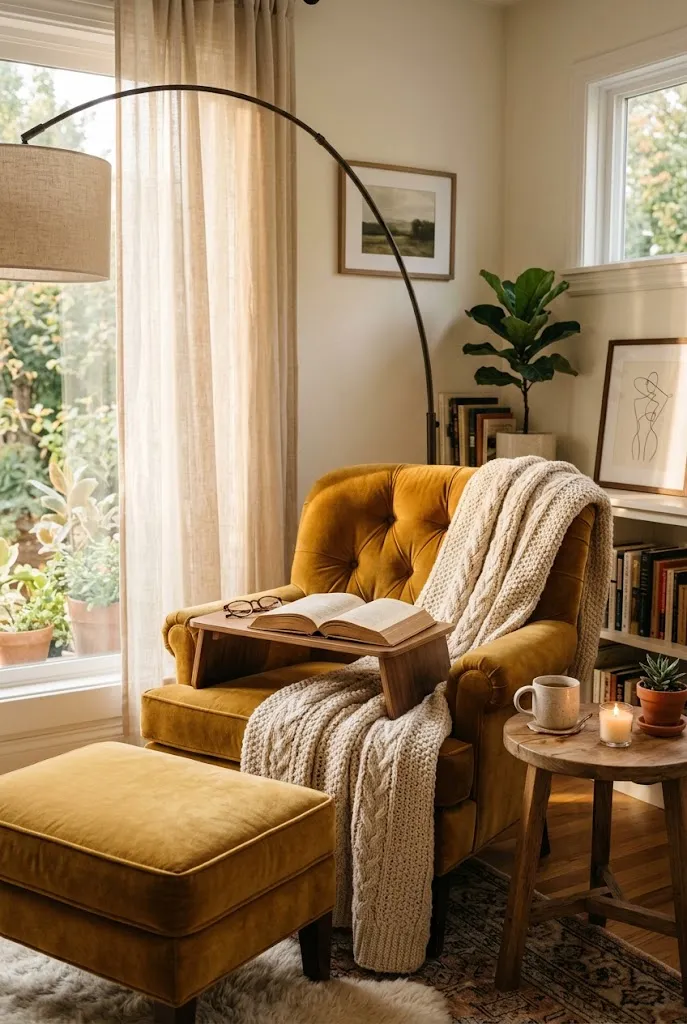
Not all studying happens at a desk. A comfortable armchair, an ottoman, and a lap desk make a low-key spot for reading, annotating, or reviewing notes. It suits quieter tasks more than typing-heavy assignments.
Pick a chair with firm back support, a throw blanket that stays folded nearby, and a floor lamp that arcs over the shoulder. A small side table holds a mug and a bookmark stack.
Do: Choose a lap desk with a flat, stable surface. Don’t: Use soft pillows as a laptop base, since they block airflow and can cause overheating.
9. Organize a Pegboard Wall Above the Desk
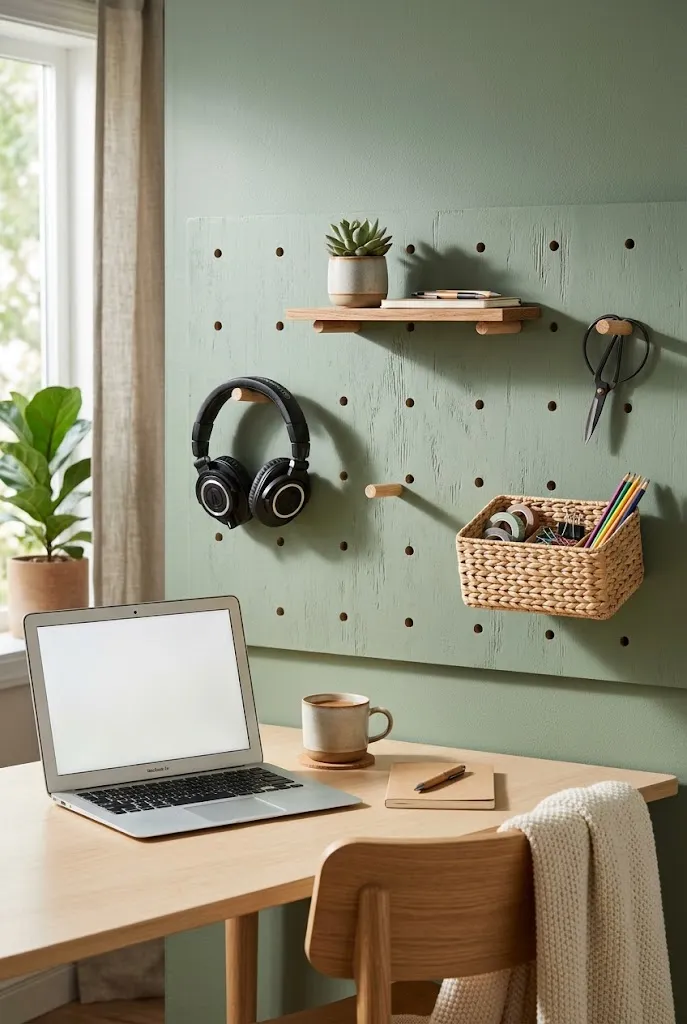
A pegboard turns the wall above a desk into flexible storage. Hooks hold headphones, scissors, and a small shelf for notebooks; baskets keep loose supplies contained. Because pieces move, the layout can change as needs change.
Painting the board in a muted color, such as sage or soft clay, keeps it from looking like a garage wall. Limit the number of accessories so the board feels curated.
Tips & Tricks
- Leave open pegboard space; fully packed boards look chaotic.
- Group by use, such as writing tools together and tech together.
- Place frequently used items at arm’s reach.
10. Add a Cork Wall for Weekly Planning
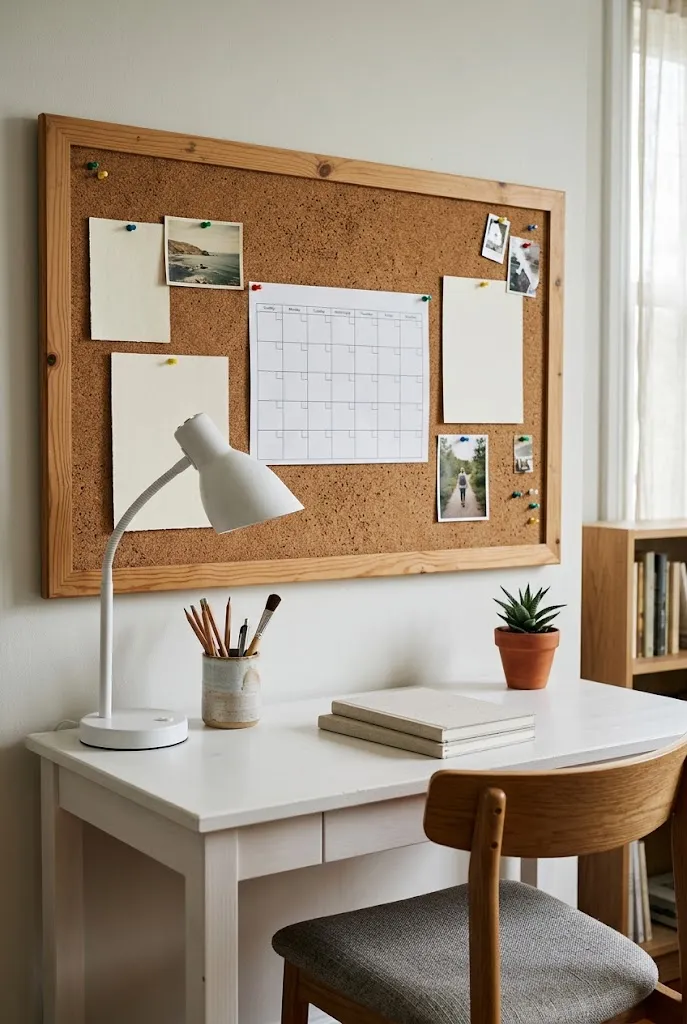
A large cork panel behind the desk works as a visual planner. Pin the week’s assignments, a printed calendar, and a few inspiring photos. Seeing deadlines at eye level can make planning feel more concrete than digital reminders alone.
Frame the cork in wood so it reads as decor. Use colored pins for categories and a small tray for spare pins.
11. Layer the Lighting Instead of Relying on One Lamp
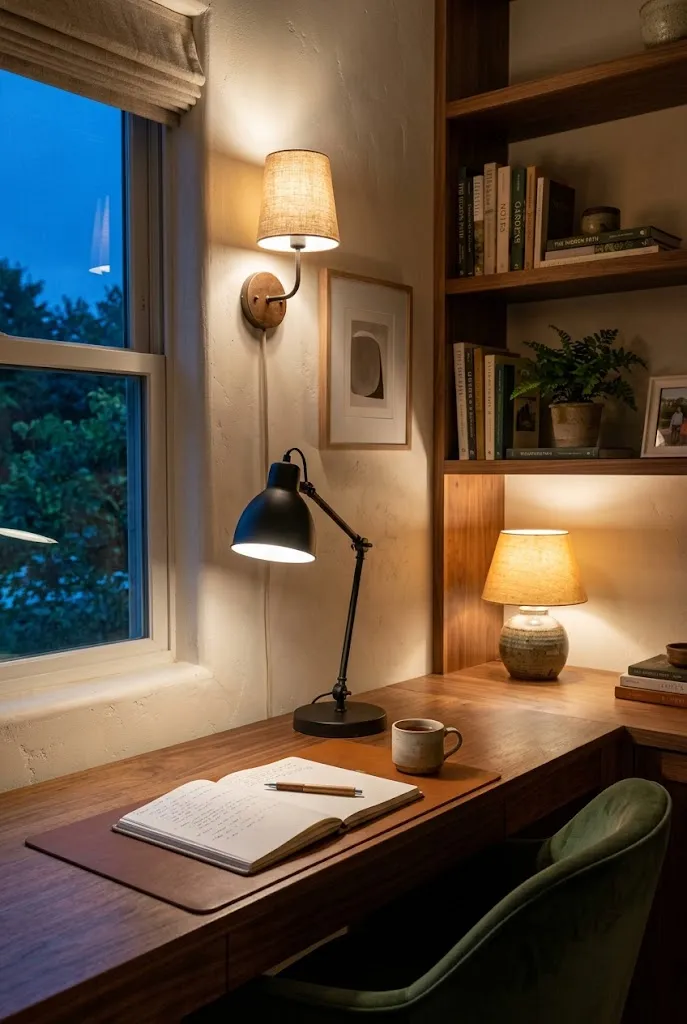
Overhead light alone creates glare and shadows on paper. A layered setup is easier on the eyes: ambient light for the room, a task lamp for the desk, and a low accent light for warmth.
| Light Type | Role | Example |
|---|---|---|
| Ambient | General room glow | Ceiling fixture or floor lamp |
| Task | Focused light on the work surface | Adjustable desk lamp |
| Accent | Cozy atmosphere | Plug-in sconce or small table lamp |
Place the task lamp on the side opposite your writing hand to reduce shadows. Choose bulbs in a warm-to-neutral range so the nook feels cozy without making text hard to read.
12. Carve Out a Nook Under the Eaves
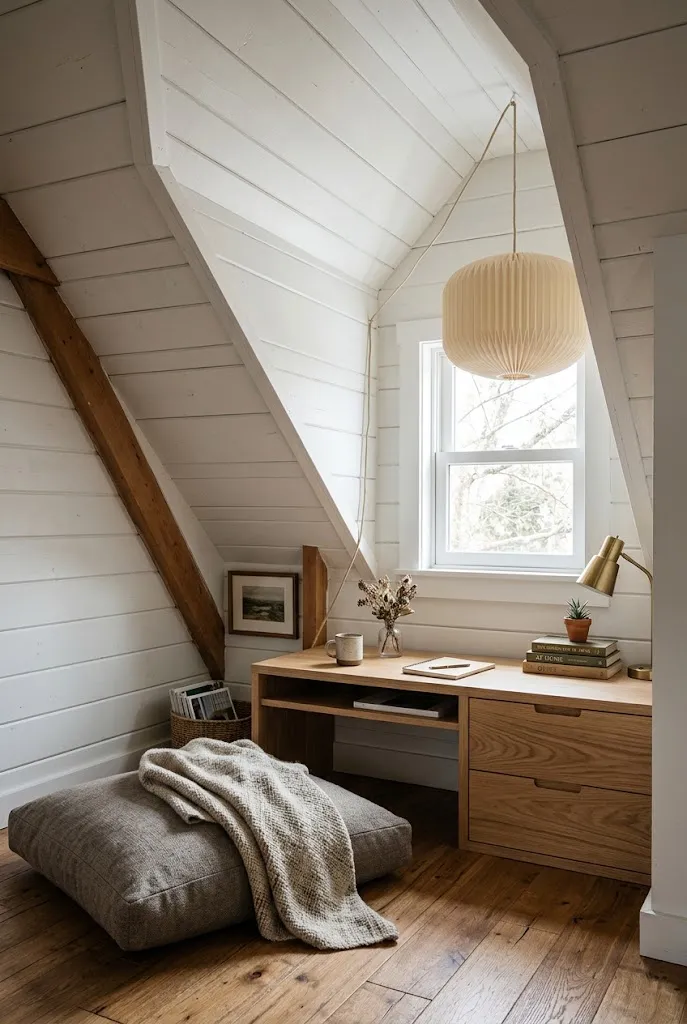
Attic and top-floor rooms often have sloped ceilings that are hard to furnish. A low desk and floor cushion under the eave create a snug, tucked-away study zone where the slope feels intentional.
Use the lowest areas for storage, built-in drawers, or cubbies, and keep the seated area where head clearance is comfortable. A skylight or dormer window above adds natural light.
Quick Facts Best For: Attic bedrooms and top-floor rooms Investment: Moderate to premium, depending on built-ins Visual Effect: Cozy, cabin-like, tucked away
13. Frame the Desk With Bookcases on Both Sides
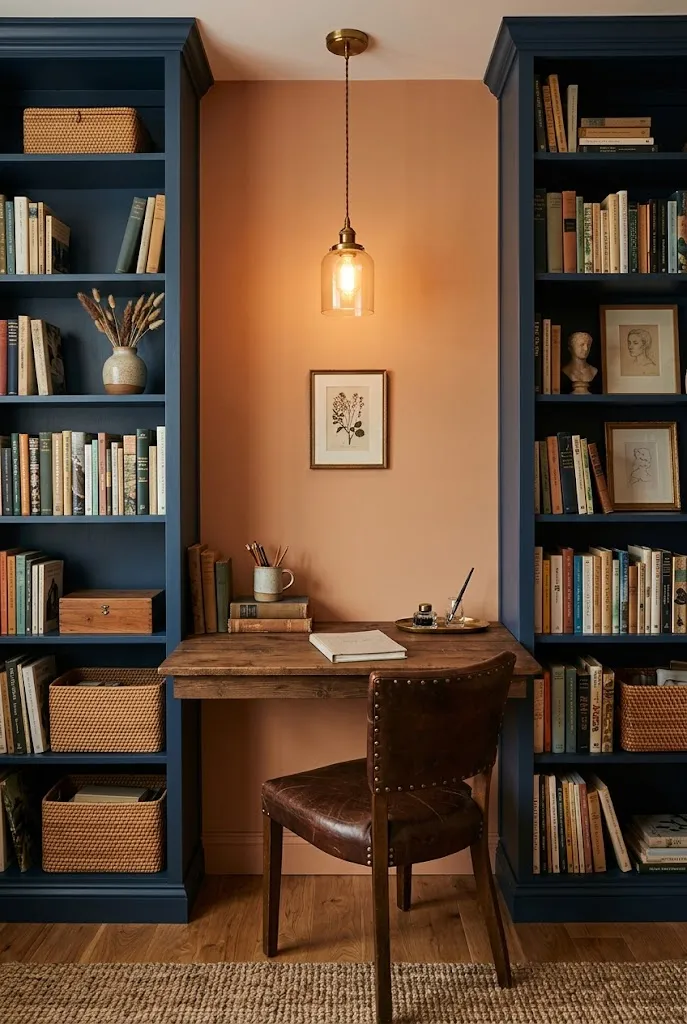
Two tall bookcases flanking a desk create a recessed alcove, and the books provide a sense of enclosure and purpose. This works in a living room, den, or large bedroom wall.
Freestanding bookcases can be styled to look built in by adding crown molding or trim across the tops and painting everything the same color as the wall. Custom built-ins take the idea further with integrated lighting and adjustable shelves.
For a calmer look, mix books with baskets and a few objects, and leave some shelves partially empty.
14. Keep It Japandi With Light Oak and Quiet Color
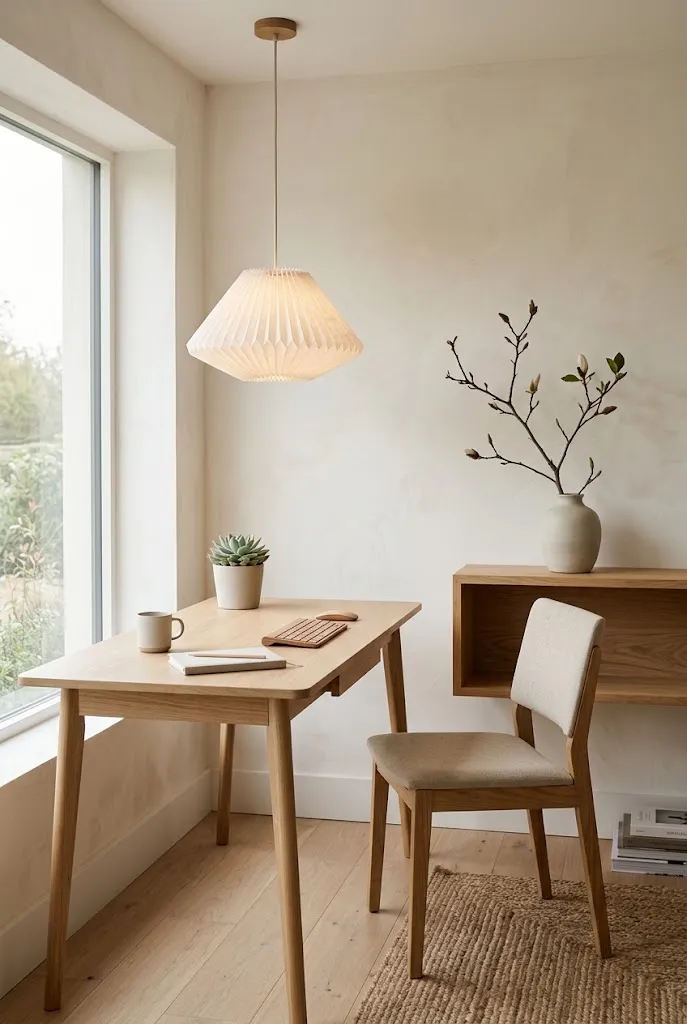
Japandi blends Japanese minimalism with Scandinavian warmth: light oak, clean lines, soft neutrals, and very little clutter. For studying, the restrained look supports focus.
- Light oak desk with a simple profile
- A paper or linen pendant shade
- One ceramic vase with a single branch
- A low shelf with only a few items
The key is restraint. Resist adding decor just because there’s room.
15. Make a Low Floor Desk With Cushions
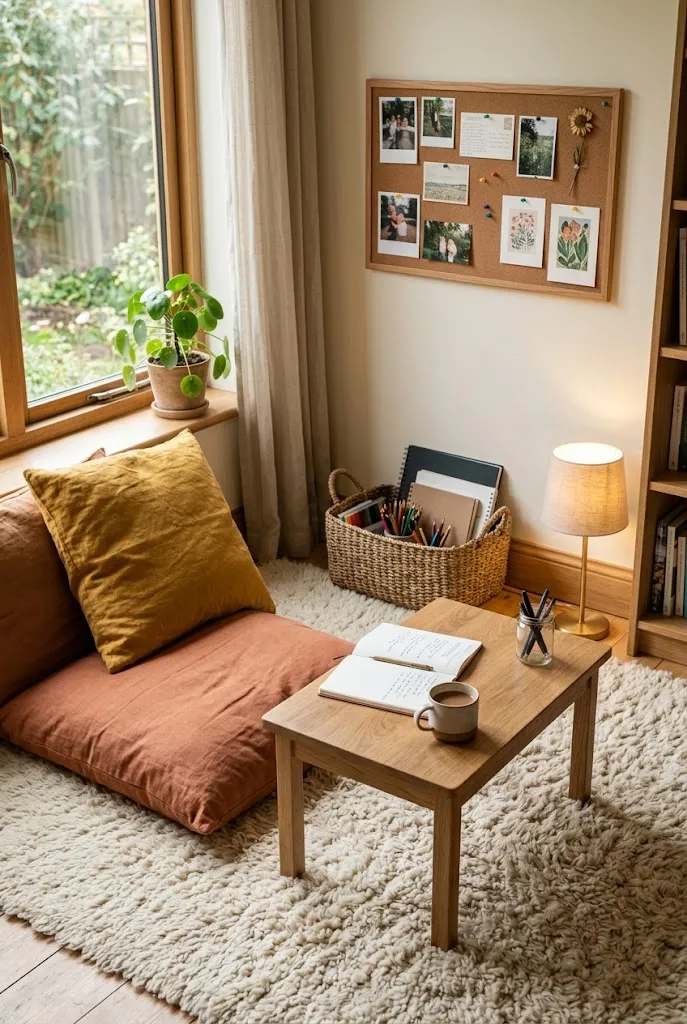
A low table and floor cushions create a relaxed, informal study spot for younger students or anyone who enjoys sitting cross-legged. A thick rug and a few large cushions add comfort.
This setup is better for short sessions than long ones. For extended work, a back-supported seat is more practical. Keep a basket nearby for supplies so the low table doesn’t become cluttered.
16. Turn the Back of a Sofa Into a Study Counter
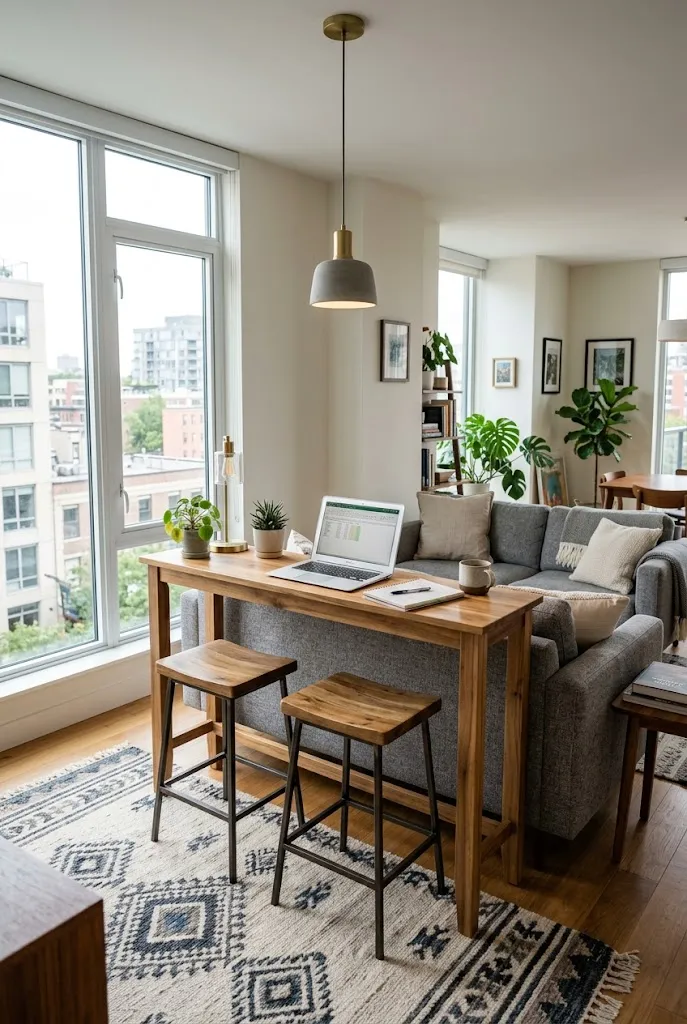
A narrow console or counter-height table behind a sofa defines a study zone in an open-plan space without needing a separate room. Use stools that tuck fully beneath so the walkway stays clear.
A rug under the sofa and a pendant light above the console help mark the boundary visually. This is a good idea for apartments where the living room is the only large space.
17. Share a Double Desk for Siblings
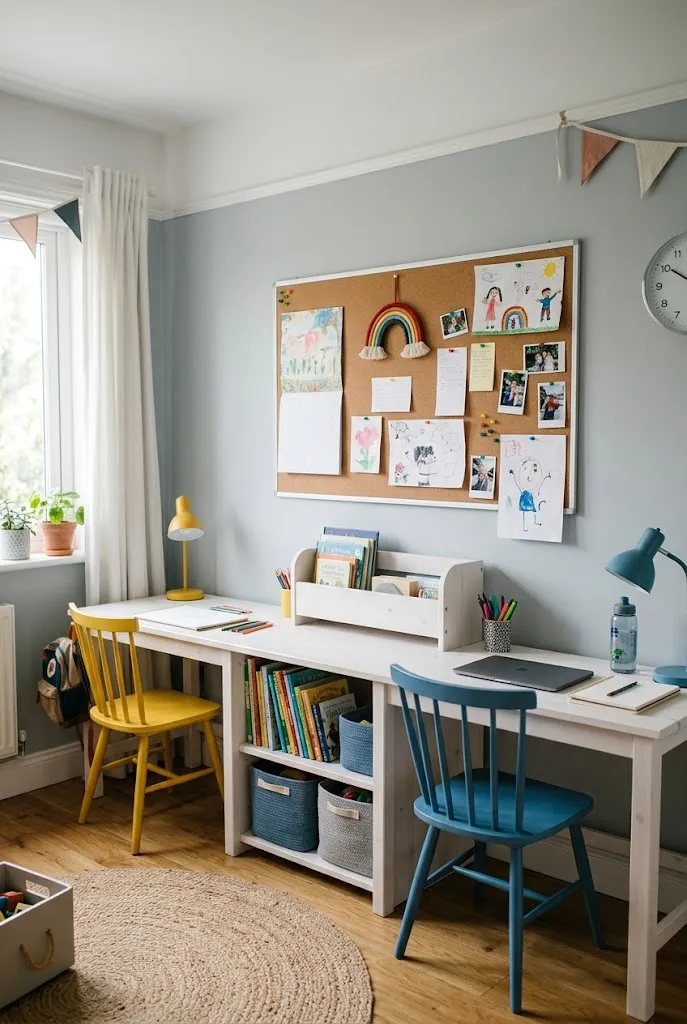
Two desks side by side, or one long desk with two chairs, give siblings a shared homework space. A divider shelf or a pinboard between the seats gives each person a bit of visual privacy.
Give each person their own lamp and a labeled bin so supplies stay separate. Matching chairs in different colors let each child claim a spot without the nook looking mismatched.
18. Paint an Arch Behind the Desk
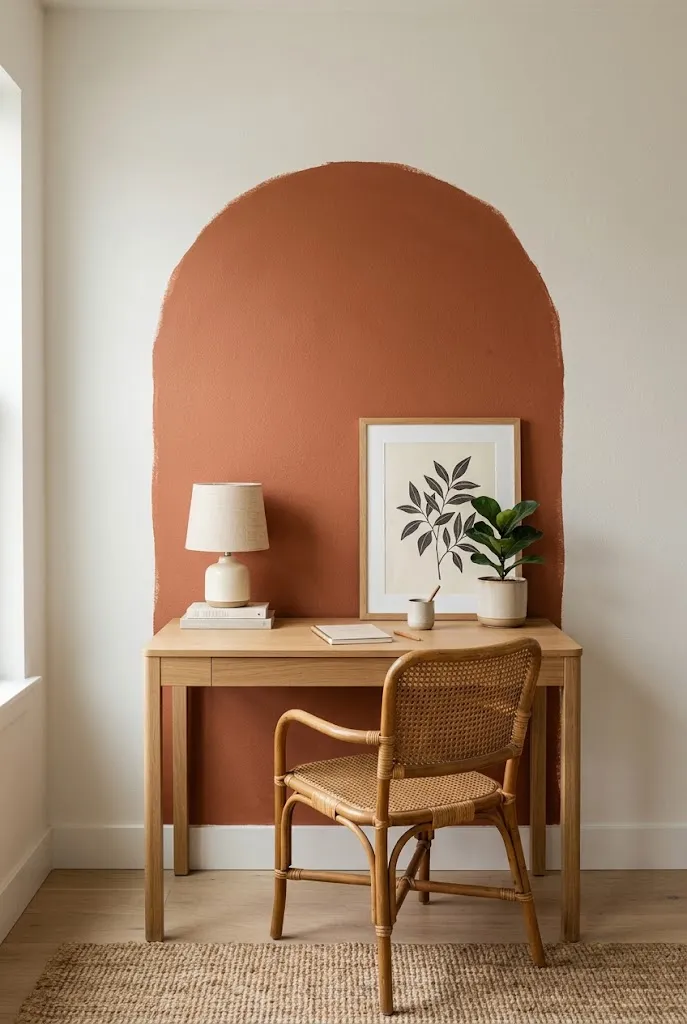
A painted arch on the wall behind a desk gives the nook an architectural look for the cost of a sample pot and some tape. It frames the workspace without any construction.
- Mark the center of the desk on the wall.
- Trace an arch with a string and pencil, or use a large round object as a guide.
- Tape the outline and press the edge firmly.
- Paint two thin coats and remove the tape while the paint is still slightly wet.
Choose a color with some depth, such as dusty rose, clay, or sage, so the arch reads clearly against the wall.
19. Claim a Corner of the Kitchen
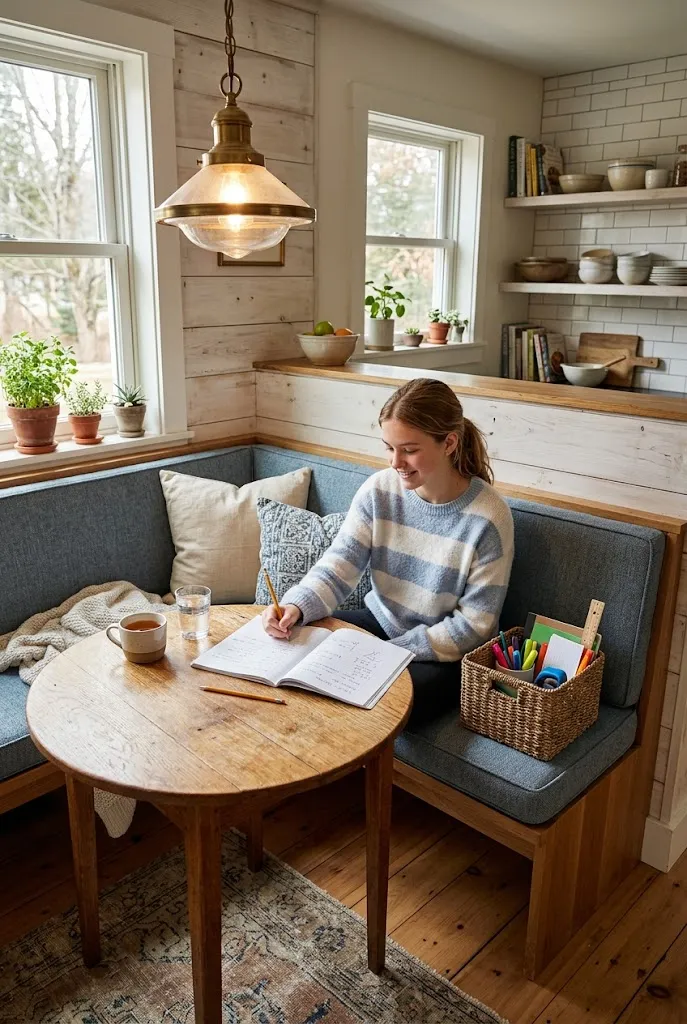
Kitchen peninsulas, banquette corners, and the end of an island often become the family’s homework spot because a parent can help while dinner is underway. A basket for supplies keeps the surface ready for meals.
A bench with a cushion and a small pendant light above creates a café-like atmosphere. Choose a wipeable surface, since snacks and homework often overlap.
20. Bring in Plants Suited to the Light You Have
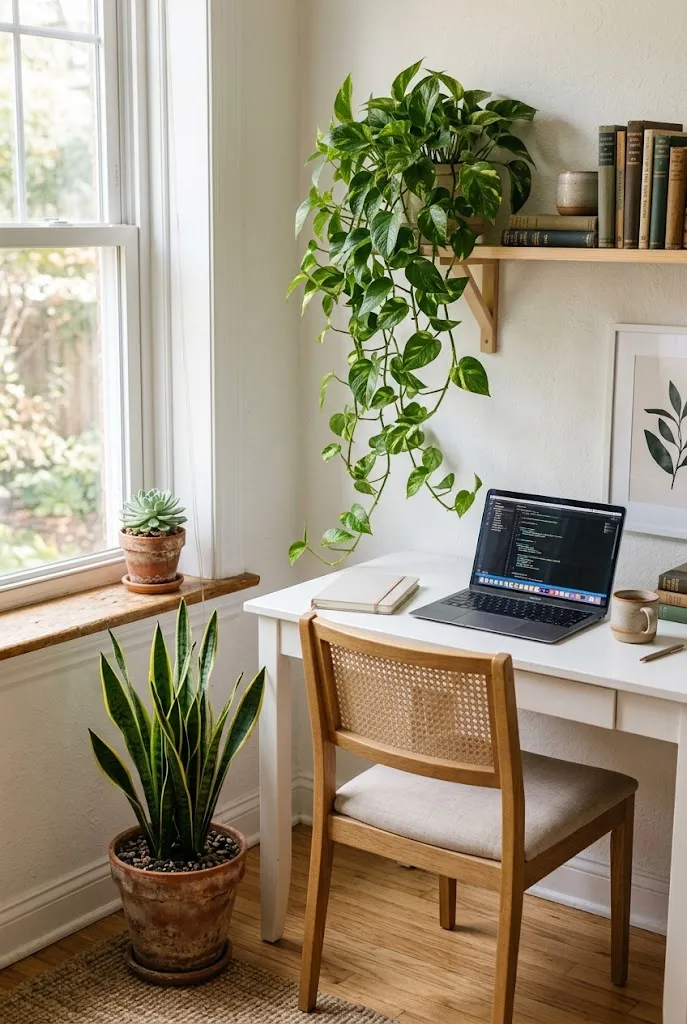
A few plants make a study nook feel calmer and less sterile. Choose them based on the light the nook actually gets rather than looks alone.
- Bright indirect light: pothos or philodendron trailing from a shelf
- Low light: a snake plant or ZZ plant on the floor
- Direct sun on the sill: a small succulent in a well-draining pot
Use pots with drainage and saucers to protect the desk. Keep plants out of reach of pets that might chew them, and check plant safety for the pets in your home.
21. Use a Hallway Alcove
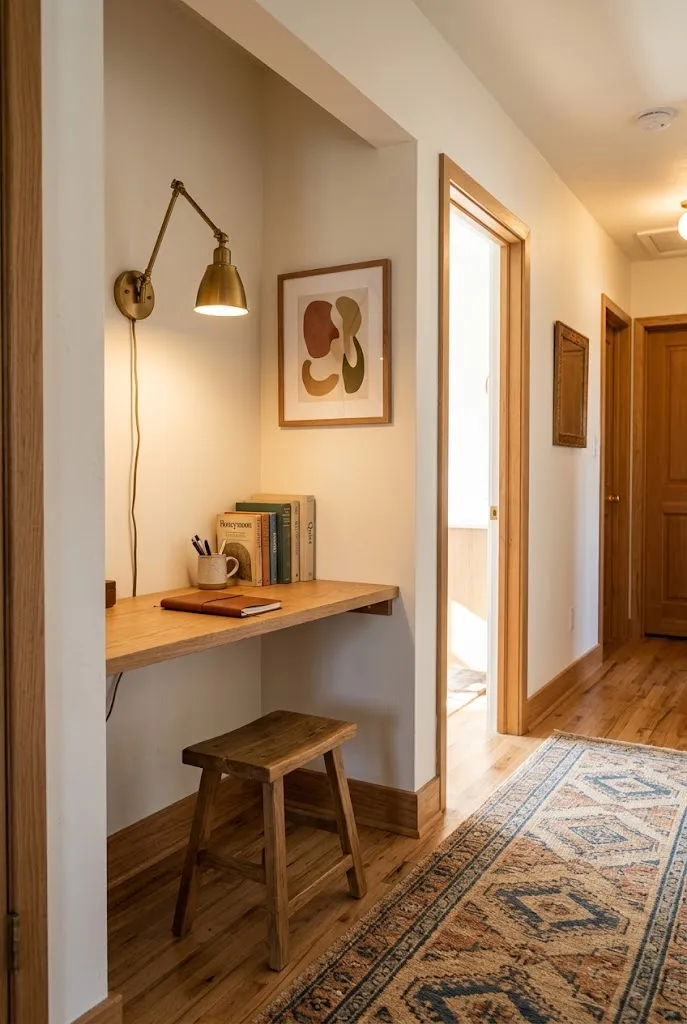
A wide hallway or a recess near a stairwell can host a slim desk and a wall light. Because hallways are transitional, a rug and a distinct paint color help the nook feel like a place rather than a passage.
Keep the desk shallow, around 18–20 inches, and make sure the walkway stays comfortable. A chair that tucks fully beneath the desk keeps traffic moving.
22. Restore a Secondhand Secretary Desk
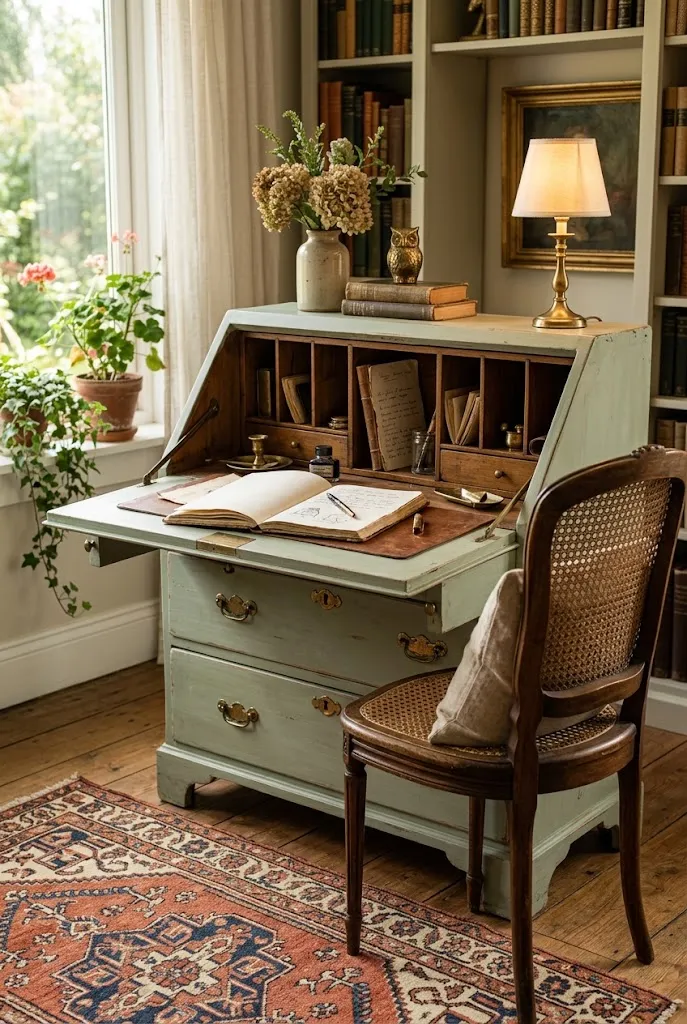
A vintage secretary or drop-front desk has built-in cubbies, a flip-down writing surface, and a compact footprint. Secondhand shops and online marketplaces often carry them at modest prices, and a fresh coat of paint or new hardware can modernize the look.
Editor’s Note: Check drawers and hinges before buying, and make sure the writing surface is stable and level. If you refinish it, follow the manufacturer’s safety guidance, especially for older painted furniture, which may contain lead-based paint.
23. Add a Standing-Height Ledge
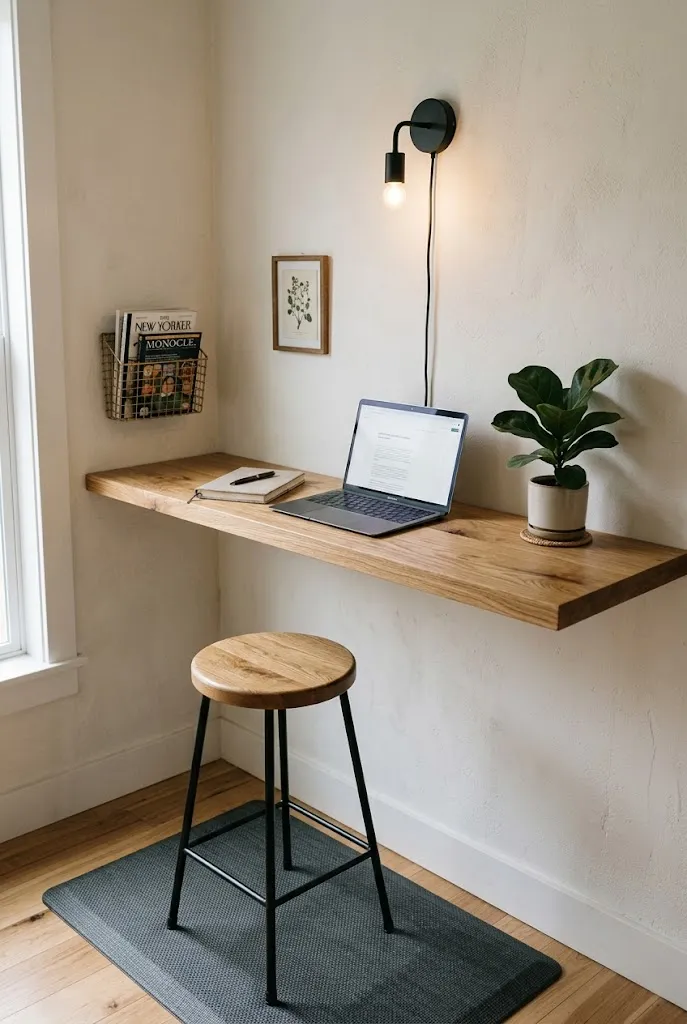
Some people concentrate better on their feet. A counter-height ledge or a wall-mounted shelf at elbow height lets a student alternate between sitting and standing. A tall stool provides a middle option.
Set the surface so your forearms are roughly parallel to the floor. A cushioned anti-fatigue mat makes standing more comfortable for longer stretches.
24. Build a Reading Tent for Younger Kids
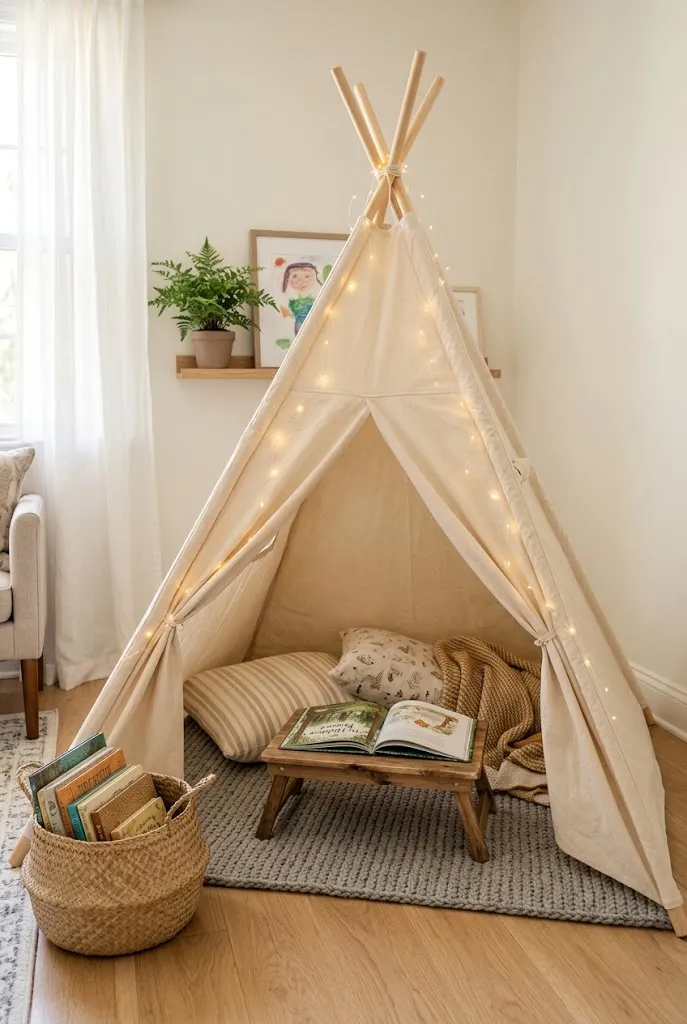
For younger children, a canopy or tent makes homework time feel like an adventure. A simple fabric tent, a thick mat, a small lap desk, and a battery-powered light create a hideaway that still keeps the child within sight.
Use flame-free lighting only, and keep fabrics away from heat sources. Pair it with a basket of books and a few soft cushions.
25. Mix Rattan and Woven Textures
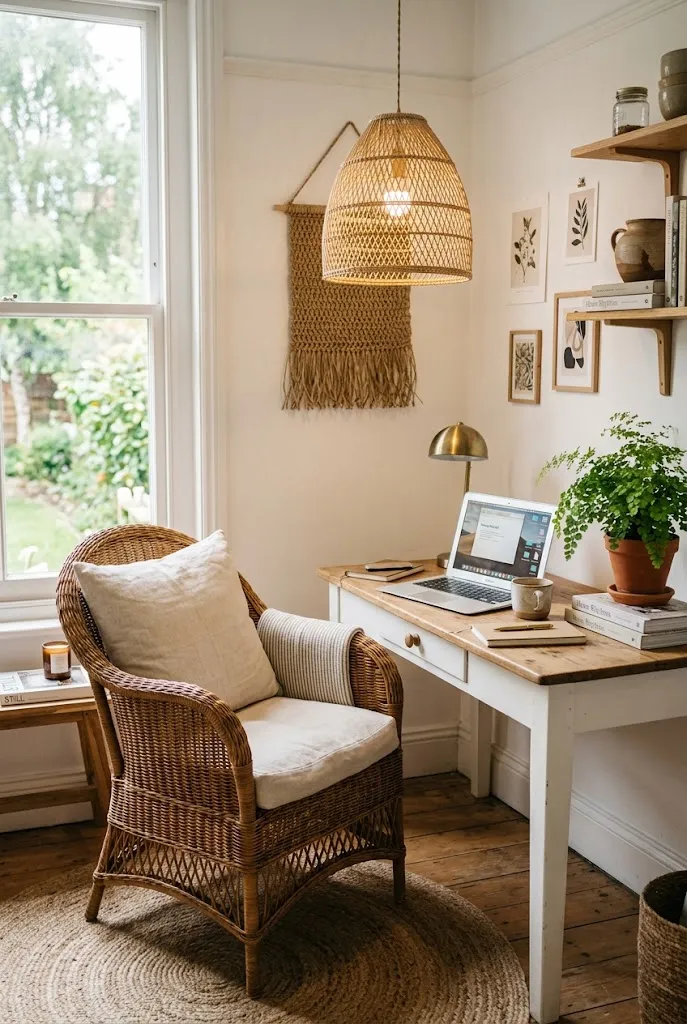
A rattan chair, a woven pendant, and a jute rug bring a warm, relaxed feel to a study nook. The mix of natural textures balances the hard surfaces of a laptop and desk.
Keep the color palette tight: natural fibers, warm white, and one accent color. Too many patterns compete for attention. Check that the chair is comfortable for the amount of time you’ll sit; many rattan chairs look better than they feel, so add a cushion.
26. Keep a Minimal White Desk Tidy With Cable
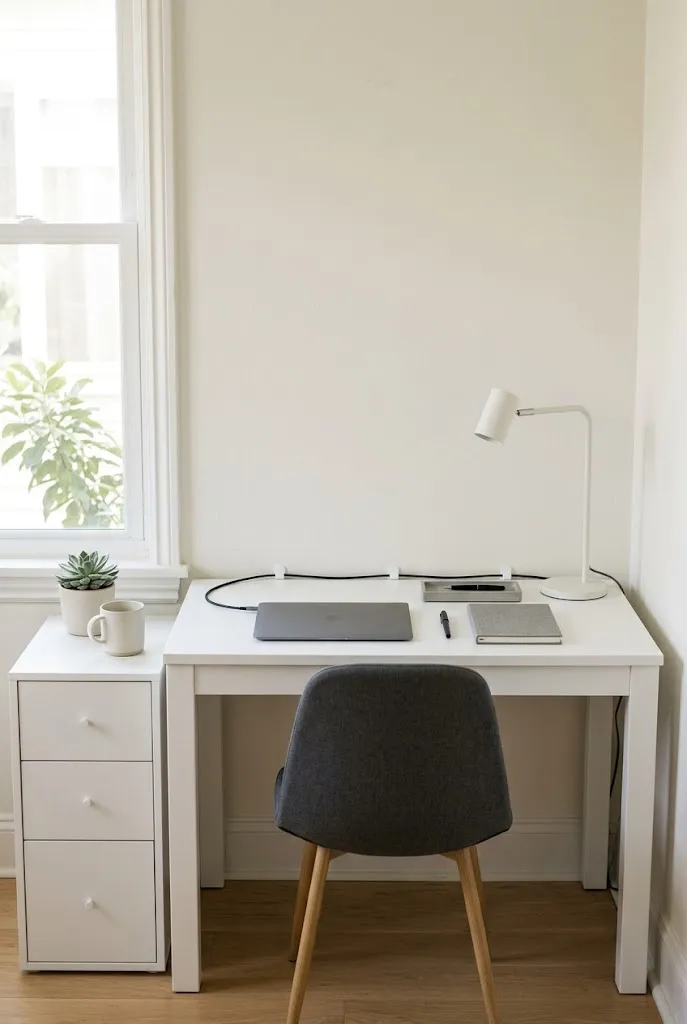
Management
A white desk, a drawer unit, and a few cable-management tricks make a nook look calm. Clutter is often cords and chargers, so manage those first.
- Use adhesive cable clips along the desk edge.
- Add a power strip mounted beneath the desktop.
- Choose a closed drawer for chargers and small supplies.
A minimal look takes small daily habits. Leaving a single tray for items in use makes tidying quick.
27. Create a Homework Drop Zone Near the Entry
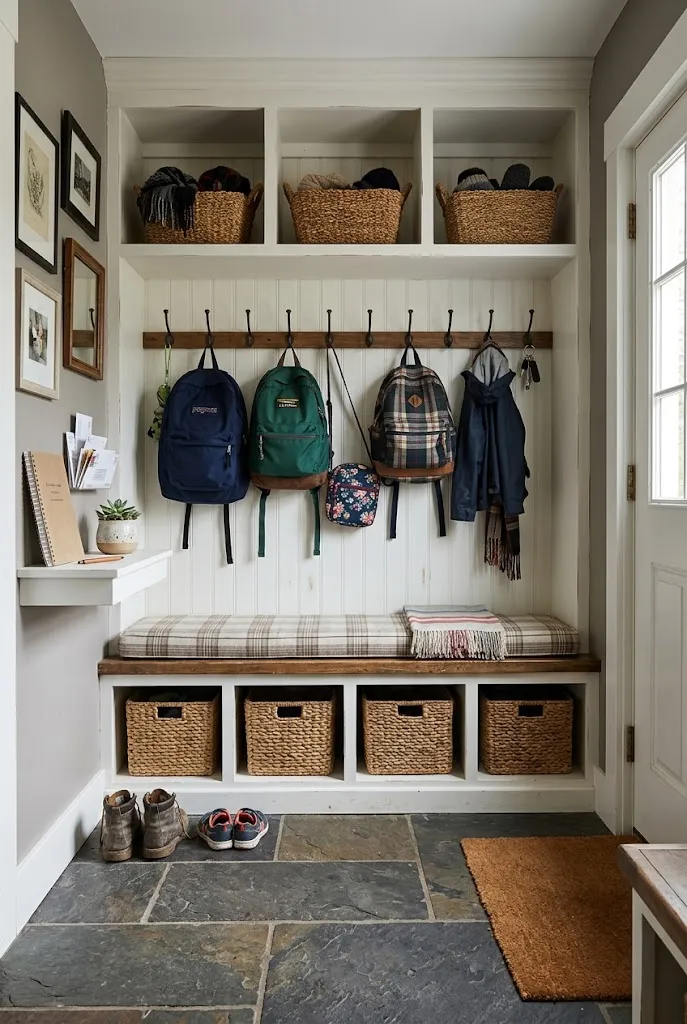
A mudroom or entry bench with cubbies is a convenient spot for backpacks, folders, and a quick homework check. Each family member gets a labeled cubby, and a small shelf holds permission slips and lunch items.
This is a mid-range idea, since cubbies and benches can be built or purchased as modular units. It stops homework from migrating around the house.
28. Mount a Desk Beside the Bed
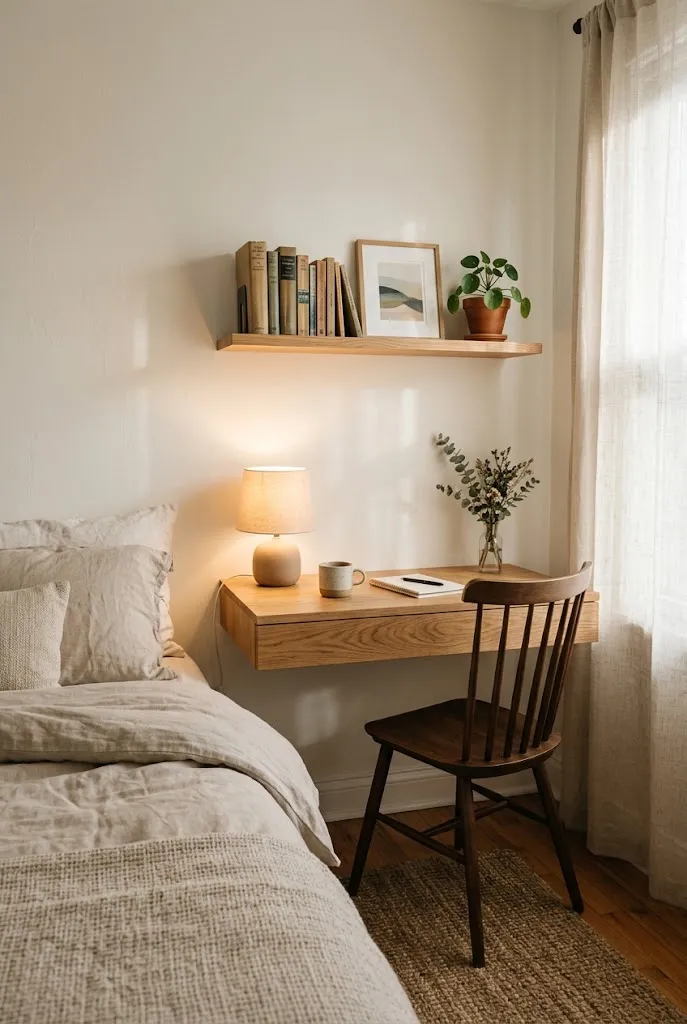
If the bedroom is the only option, a wall-mounted desk beside or at the foot of the bed keeps the footprint small. Floating desks have no legs, so the floor stays visible and the room feels larger.
To keep the bed from becoming the default work spot, place the desk so you sit facing away from it. A curtain or screen can visually separate the zones.
29. Face the Window and Soften the Light
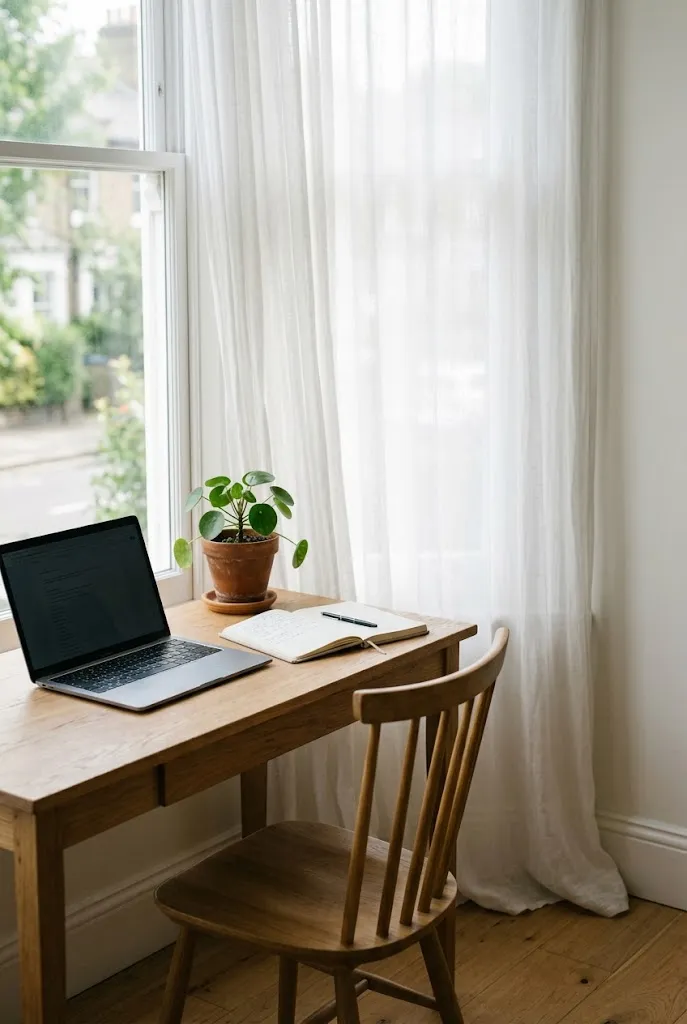
A desk facing or beside a window gives the best natural light, but direct glare can wash out screens. Sheer curtains diffuse the light, and a roller shade provides control when the sun is low.
Place a laptop so the window is to the side rather than behind the screen. Use a lamp in the evening to avoid a drastic change in brightness.
30. Cover the Wall With Peel-and-Stick Wallpaper
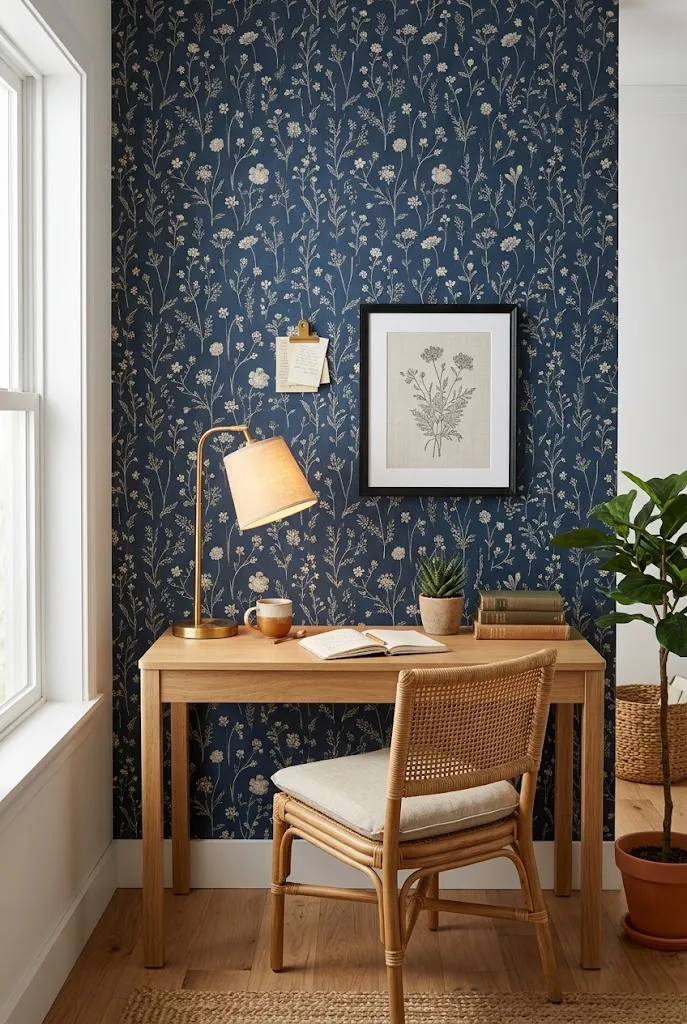
A single wall of removable wallpaper behind the desk adds personality without commitment, which suits renters. Choose a pattern with a calm rhythm, such as small botanicals or a subtle stripe, so it doesn’t distract while studying.
Prepare the wall by cleaning it and checking the manufacturer’s instructions. Test a small area first.
31. Use a Sunroom as a Daylight Study
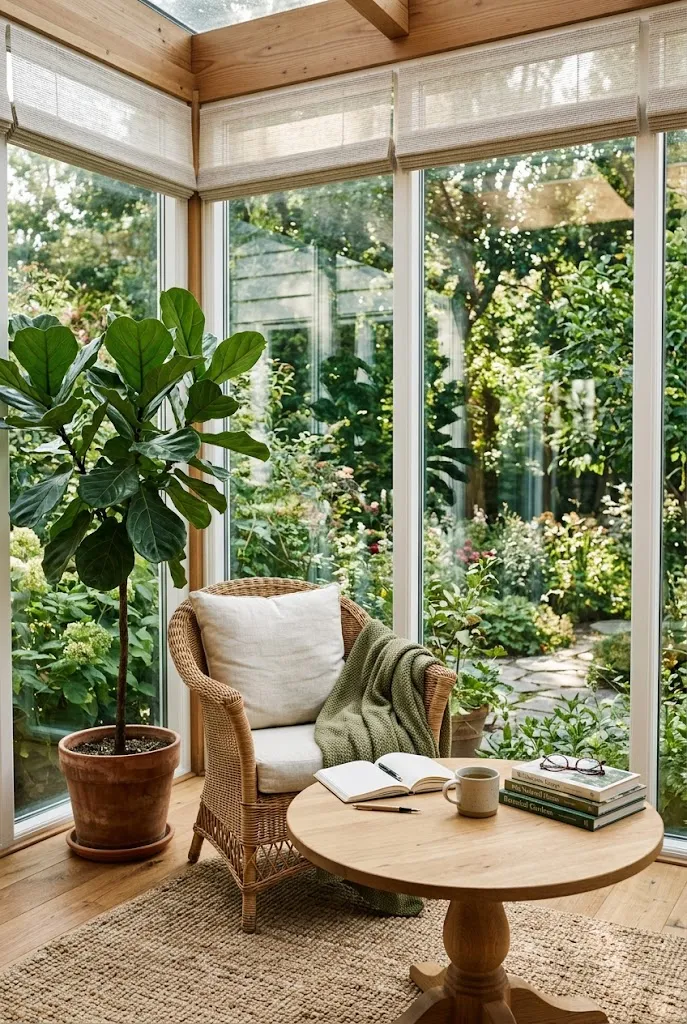
A sunroom or enclosed porch offers abundant light and a connection to the outdoors. Add window treatments to manage heat and glare, and a rug to soften sound.
This is a premium idea if the sunroom needs insulation or climate control. In a temperate climate, it may be a seasonal option.
32. Roll a Study Station Where You Need It
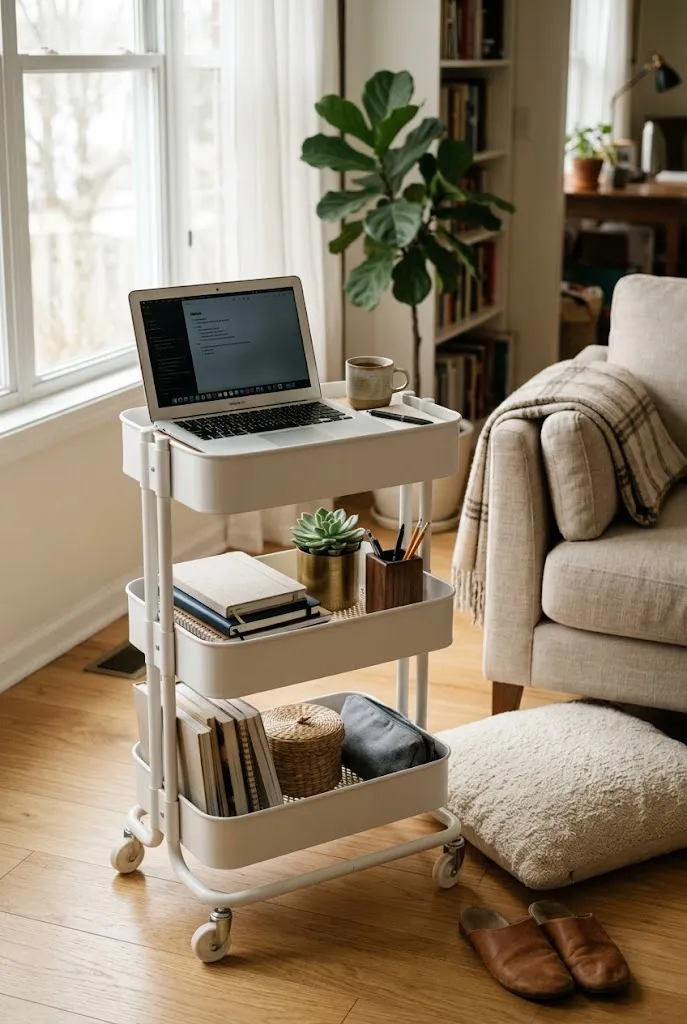
A three-tier rolling cart holds a laptop, supplies, and a notebook, and moves to a different room as needed. It’s a flexible option for households without a permanent spot.
Lock the wheels while working and store the cart in a closet or corner when not in use. A cart with a flat top and a bottom shelf works best.
33. Soften the Sound With Fabric and Felt
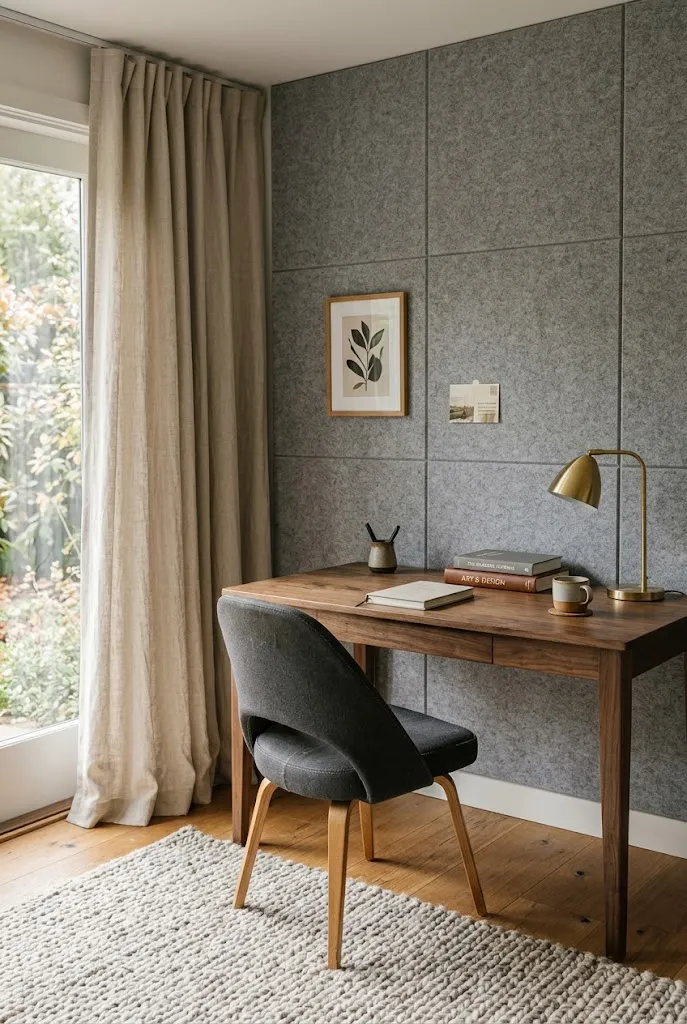
Hard surfaces bounce sound. A rug, curtains, and felt wall panels reduce echo, which can make a nook feel calmer.
| Option | Effect | Best Fit |
|---|---|---|
| Area rug | Absorbs footstep and chair noise | Hard floors |
| Felt wall panels | Reduces echo | Rooms with bare walls |
| Heavy curtains | Dampens outside noise | Window-facing nooks |
These measures reduce echo but won’t block loud outside noise.
34. Separate Work and Rest With a Bookshelf Divider
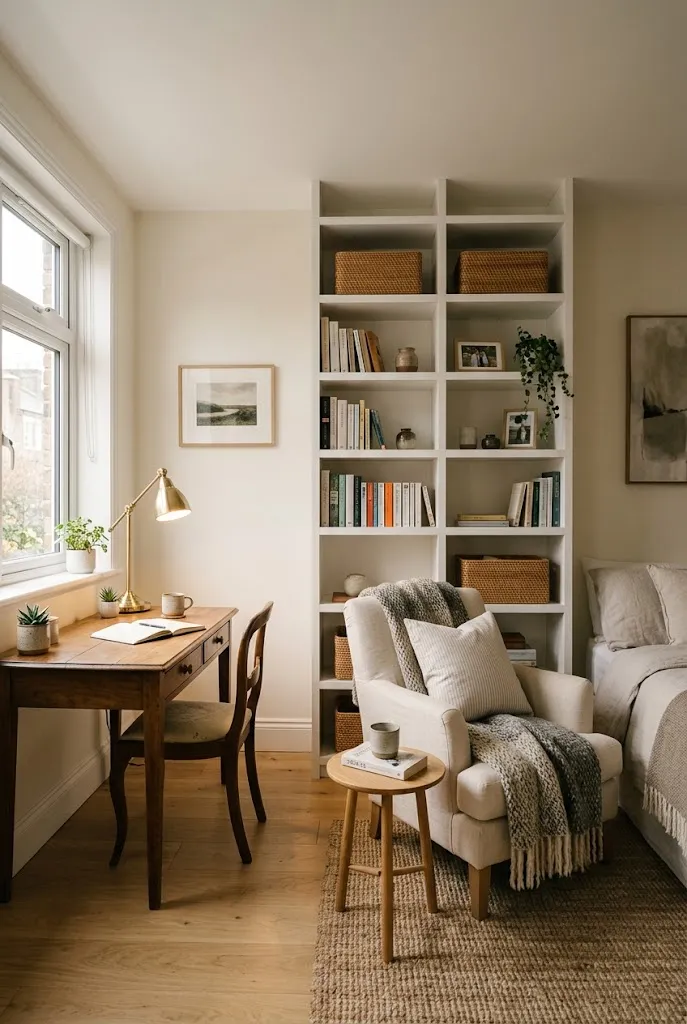
An open bookshelf placed perpendicular to the wall divides a room into a study zone and a relaxing zone. The shelf holds books and baskets while letting light through.
Anchor the shelf to the wall or floor for safety. Style the shelf so the study side is tidy.
35. Hide the Desk Inside a Closing Cabinet
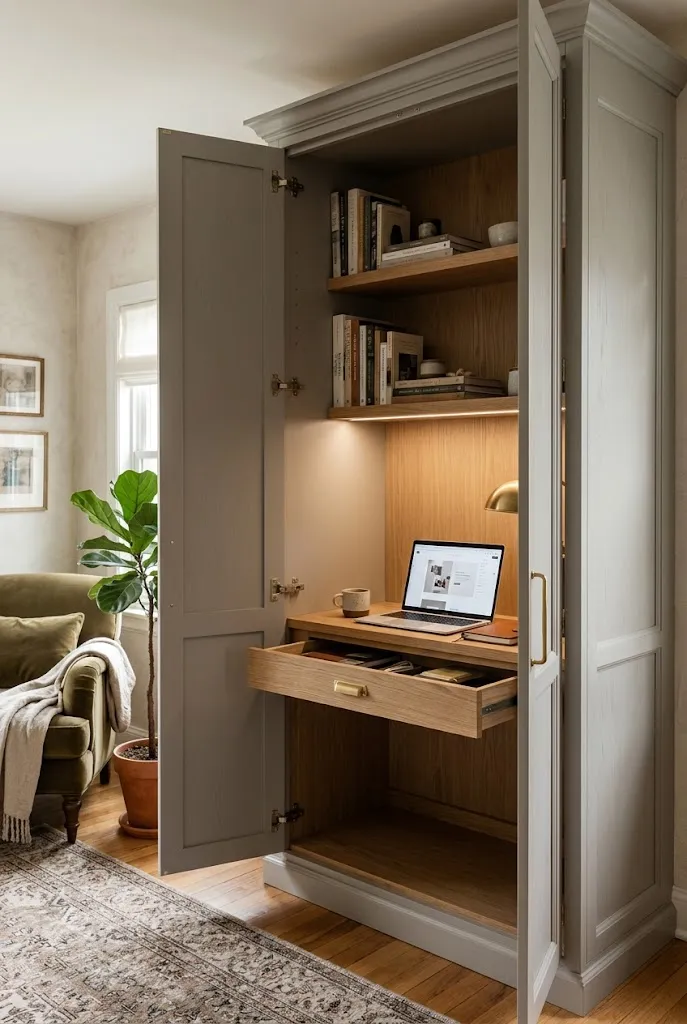
A tall cabinet with doors that open to reveal a desk, shelves, and lighting turns a study nook into furniture. When closed, the room looks tidy.
This is a premium, custom idea. Include ventilation if electronics will stay inside, and plan cable routing.
Choosing Where to Start
If you’re unsure where to begin, pick the problem that bothers you most. If you squint at your screen, start with lighting (idea 11). If clutter keeps taking over, try the pegboard or cart (ideas 9 or 32). If you have no space, look at the closet, hallway, or fold-down desk (ideas 2, 21, or 7). Small changes in light, seating, and storage often matter more than big renovations.