
26 Fresh Thanksgiving Centerpiece Ideas Using Natural Fall Finds from Your Yard
Some of the best Thanksgiving centerpieces are already outside your back door. A maple that dropped its leaves last week, a hydrangea gone papery on the stem, a handful of acorns under the oak: all of it can anchor a table without a trip to the craft store. This collection of Thanksgiving centerpiece ideas leans on natural fall finds, from foliage and seed heads to pinecones, herbs, and garden gourds. The looks range from a five-minute scatter to a few projects that take an afternoon. You’ll find options for long dining tables, small apartment tables, buffets, and kids’ tables, plus notes on keeping candles, berries, and fresh cuttings safe around food and guests.
1. Layer a Maple Leaf Runner Down the Center of the Table
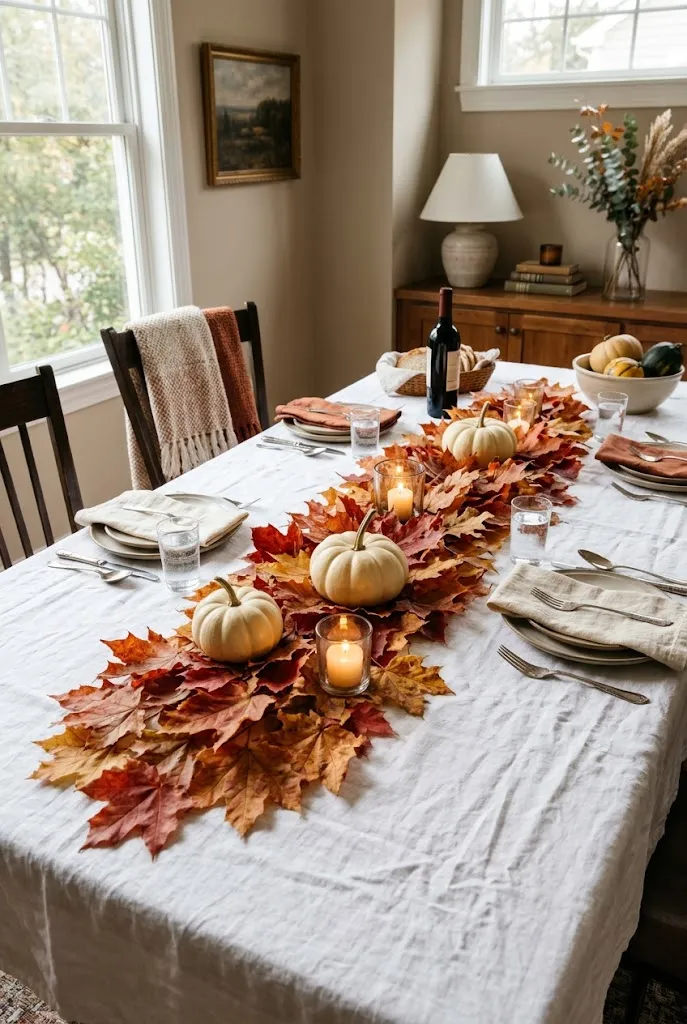
A runner made of real leaves costs nothing and suits a long table. Gather leaves in a mix of reds, golds, and burnt oranges, and overlap them in a loose, slightly uneven stripe rather than a perfect line. Leaves that are still pliable lie flatter, so collect them within a day or two of the table setup. Press any curled ones under a heavy book overnight.
Keep the runner low and let it break around serving dishes. Add three or four small pumpkins or a few glass votives at intervals so the eye has places to rest.
Quick Tip: Wipe off damp or dirty leaves and let them dry fully so they don’t mark a tablecloth.
2. Fill a Wooden Dough Bowl With Pinecones and Acorns
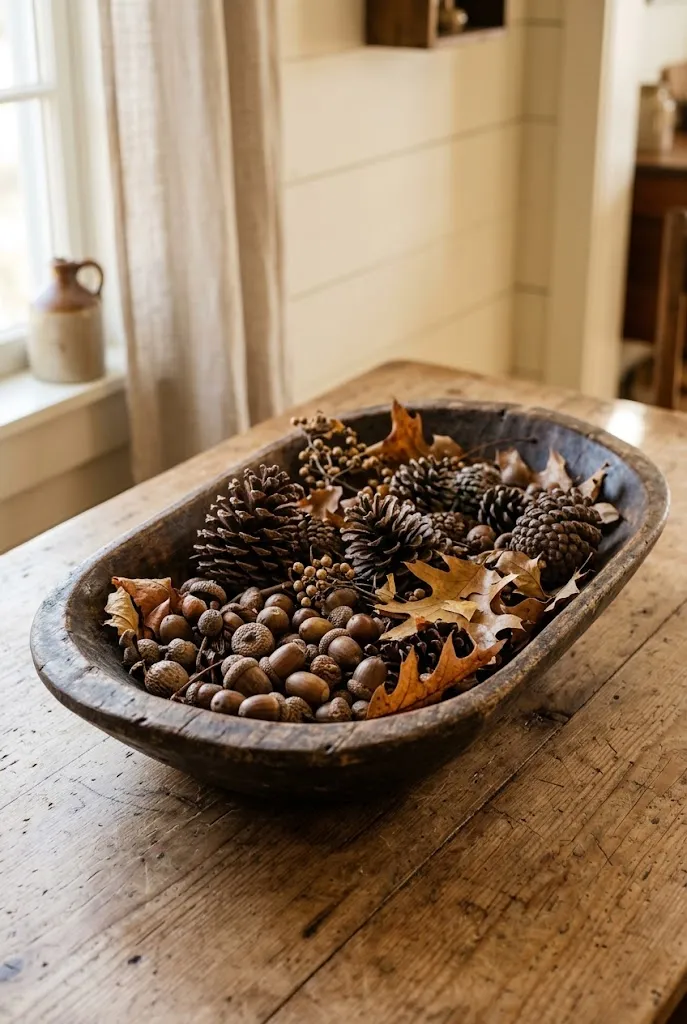
A wide, shallow wooden bowl gives yard finds a frame, which makes a loose pile look intentional. Fill it with pinecones of different sizes, then tuck acorns, small twigs, and a few dried oak leaves into the gaps. The varied textures read as rich rather than busy because the palette stays brown and tan.
This one works well on a farmhouse table or a kitchen island since it needs no water and holds up for weeks. Pinecones from the yard sometimes hold sap or insects, so bake them on a foil-lined sheet at a low oven temperature for a short time, watching closely, before they come inside.
3. Arrange Dried Hydrangea Heads in a Ceramic Pitcher
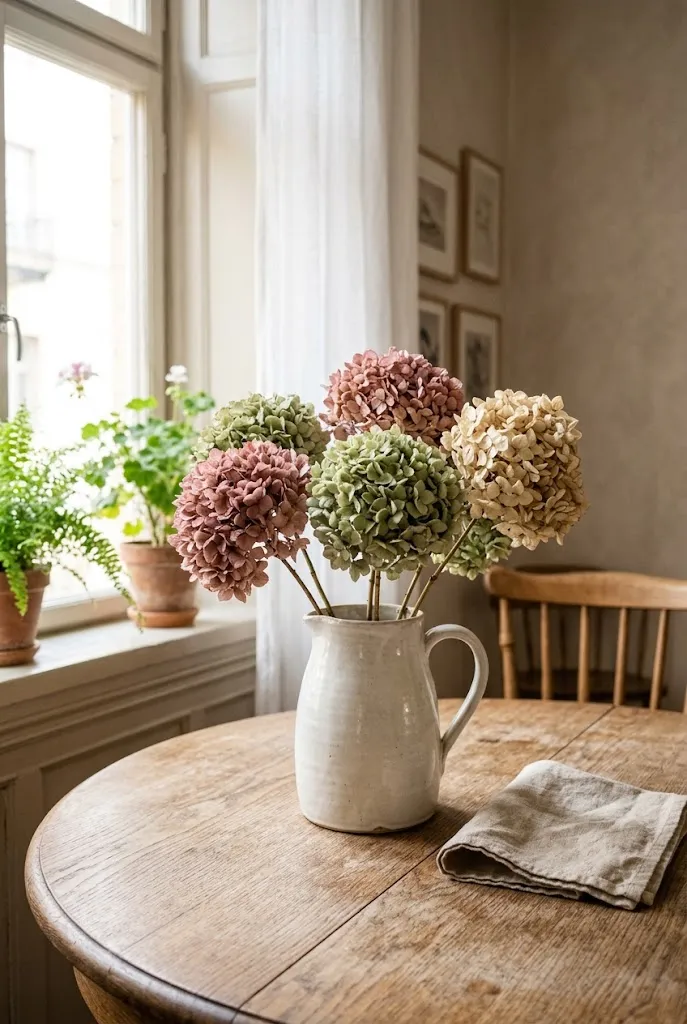
If you have hydrangeas, the late-season blooms are one of the easiest yard finds to use. Heads that have shifted to dusty rose, sage, and parchment tones often dry well on their own, and a cluster of three to five in a cream or stoneware pitcher looks full without much effort.
- Cut stems long, then trim to roughly one and a half times the height of the pitcher.
- Strip leaves from the lower stems.
- Group the blooms slightly off-center instead of dead center for a looser feel.
- Add a few dried grasses or a branch of berries only if the arrangement feels flat.
Dried hydrangea needs no water, so this centerpiece can go on the table early and stay put.
4. Stand Bare Branches in a Tall Glass Cylinder
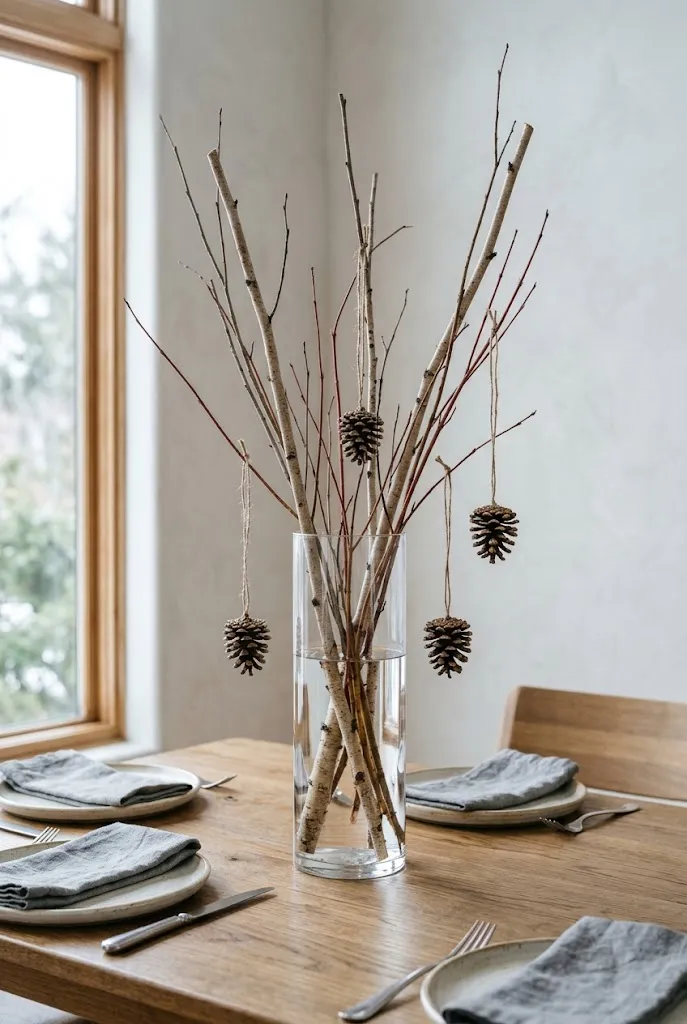
Not every centerpiece needs color. A clear cylinder vase holding a few bare branches gives height and a graphic silhouette, and it keeps the center of the table open at the same time. Birch, dogwood, and red twig shrubs make strong lines, and branches with lichen or interesting bends look best.
Tall arrangements only work if they stay above eye level or stay narrow enough to see around. Aim for slim and airy. Hang a few small pinecones or dried leaves from the branches on thin twine for a lightly decorated look.
Editor’s Note: Fill the base of the cylinder with river stones or dried beans so the branches stay upright and don’t tip when someone bumps the table.
5. Set Gourds on Stacked Wood Rounds
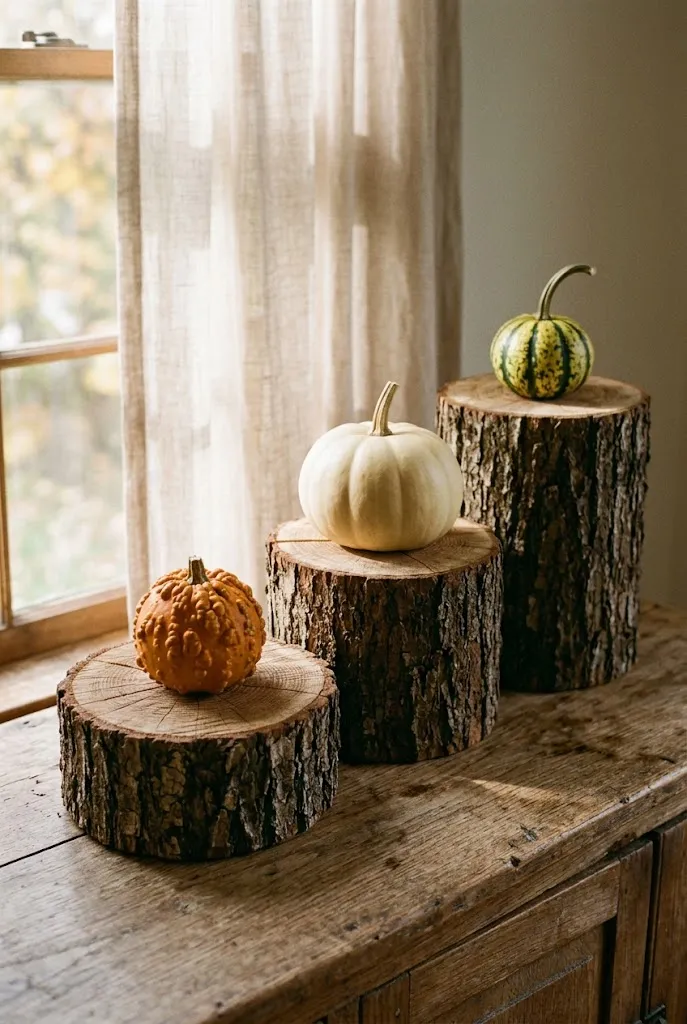
Different heights make a small group of objects look arranged. Cut slices from a fallen log (or use ones from firewood), stack two or three at different heights, and top each with a gourd, small pumpkin, or squash. The wood adds a rustic base without competing with the produce.
Choose gourds that vary in shape: one warty, one smooth, one striped. Keep the color range narrow, such as cream, soft green, and burnt orange, so the grouping feels cohesive. This works particularly well at the end of a buffet or on a sideboard.
6. Gather Ornamental Grass Plumes in a Galvanized Pitcher
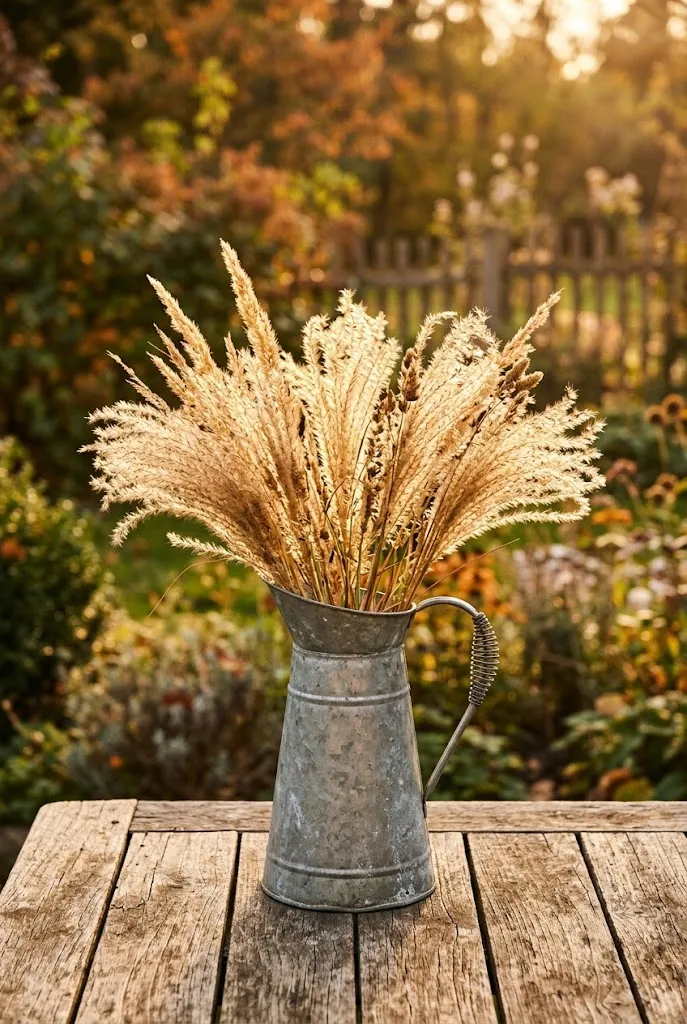
Feathery grass plumes from the garden add movement and a soft, golden texture. Pampas, miscanthus, and fountain grass heads all have different looks, but all of them give an airy, windswept effect in a vessel with a utilitarian feel. A galvanized pitcher or enamel pot makes a good contrast between rough and soft.
Cut stems on a dry day and shake them gently to loosen any stray seeds before you bring them indoors. Let plumes fan out naturally rather than combing them into place. This arrangement reads casual and suits an outdoor patio table or an informal family gathering.
7. Ring Glass Votives With Acorns and Oak Leaves
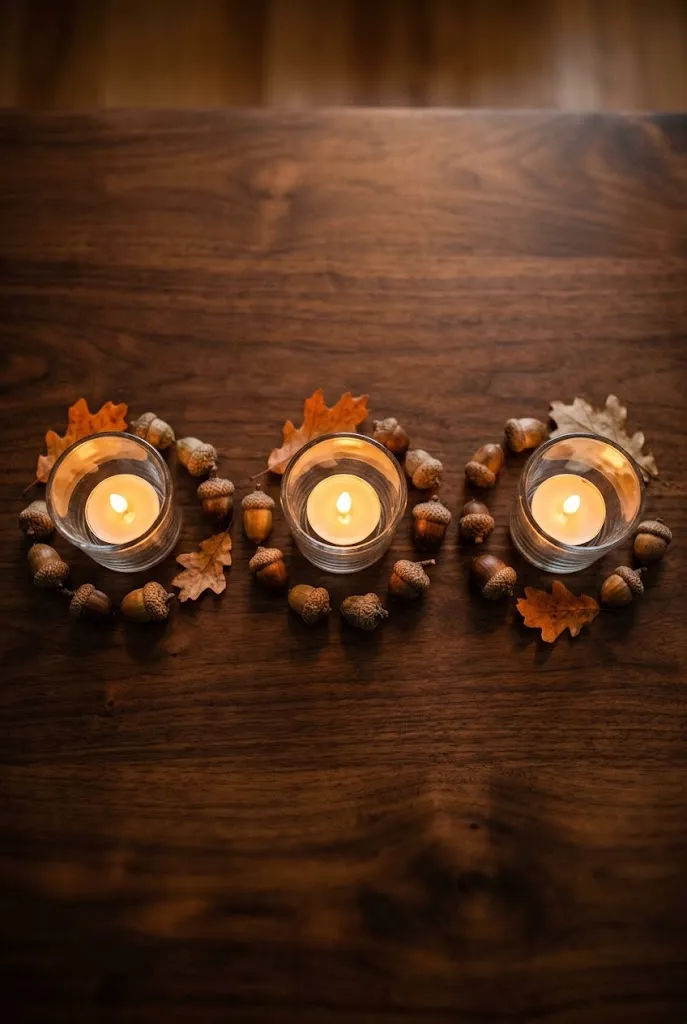
A tight circle of acorns and a few small oak leaves around a glass votive makes a mini centerpiece in minutes. Repeat it down the table, and three or five of them add up to a runner without taking much space.
For safety, keep the flame inside glass with a few inches of clearance from any dry leaf, or use flameless LED tea lights. Dry foliage ignites easily, so this is one place where the battery option is the better call if guests will be reaching across the table.
Common Mistake: Tucking leaves right up against an open flame.
Better Approach: Set the acorns and leaves in a wide ring with a clear gap around the glass, or swap in LED lights.
8. Bundle Garden Herbs in Mason Jars
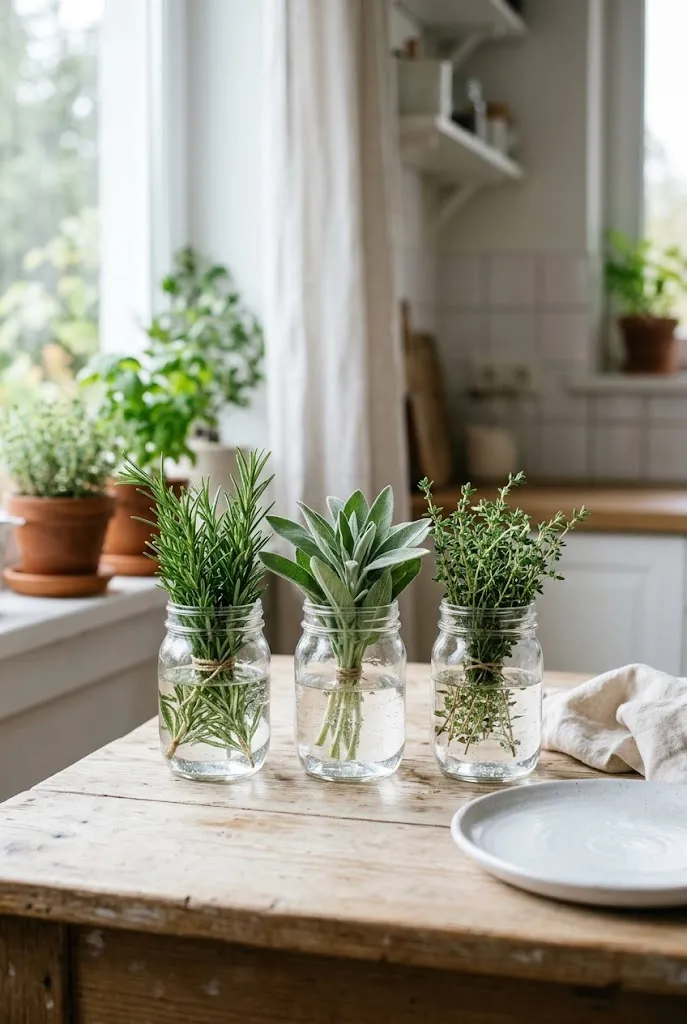
Rosemary, sage, thyme, and sprigs of parsley are useful in the kitchen and handsome on the table. Set a few small bundles in mason jars or glass tumblers filled with a little water. The gray-green palette cools down an otherwise warm table, and the scent is subtle rather than overwhelming.
Pick herbs the morning of the dinner if possible so they look fresh. Tie each bunch with a short length of kitchen twine, then group the jars in threes down the center. Guests can snip a sprig for a dish if they want, which gives the centerpiece a second job.
9. Turn a Hollowed Pumpkin Into a Vase for Garden Mums
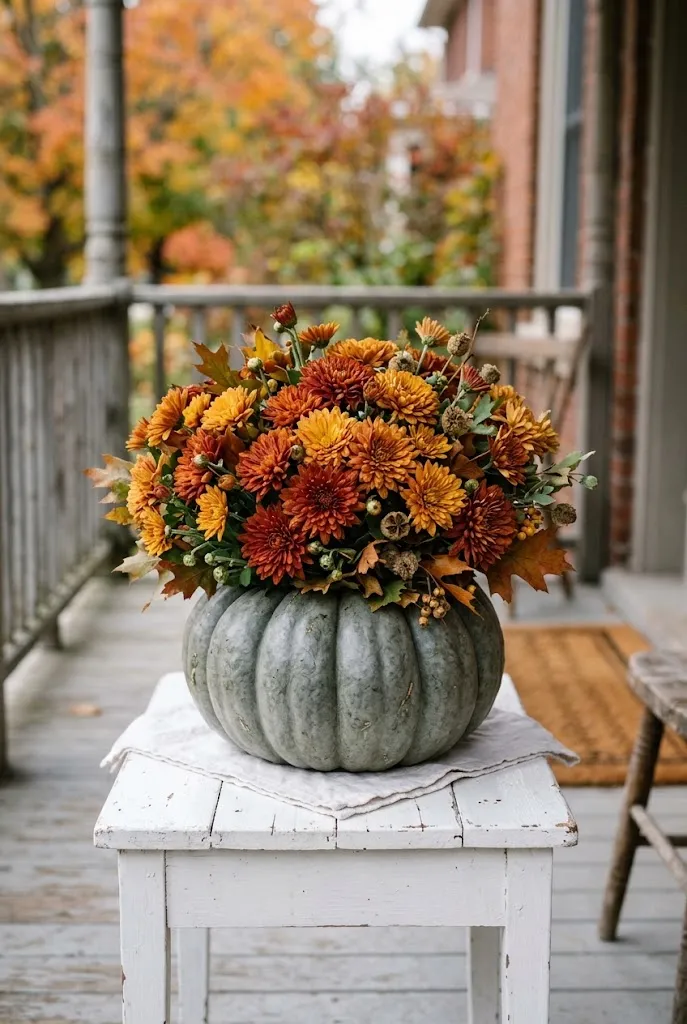
A pumpkin with the top cut off and the inside scooped out makes a sturdy, natural vase. Set a small glass or plastic cup inside as a liner to hold water, then fill it with mums, asters, or whatever fall blooms still look good in the garden.
- Cut a wide opening and scoop out the seeds and strings.
- Set a snug liner inside so the pumpkin flesh stays dry.
- Add flowers cut short, so the blooms sit close to the rim.
Choose a flatter, wider pumpkin for stability. Heirloom varieties in blue-gray, cream, or deep orange each give a different mood.
10. Bundle Wildflower Seed Heads Into a Loose Meadow Bouquet
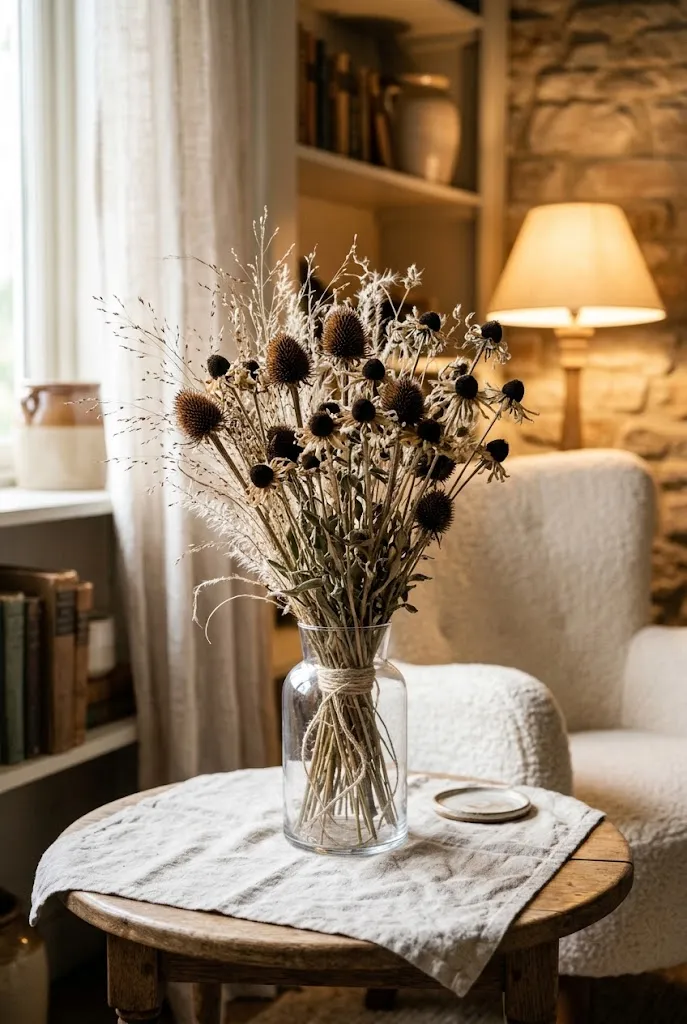
Coneflower, black-eyed Susan, and similar perennials leave behind sturdy seed heads that look good through the end of fall. Cut a handful before the first hard freeze, and gather them with a few dried grasses into a loose, hand-tied bundle.
The dark cones and brown stems bring depth to a table where the other elements are pale. Standing the bundle in a simple clear vase lets the stems become part of the look. If the table is small, trim the stems shorter to keep the arrangement compact.
11. Lay a Moss and Stone Runner Between Taper Candles
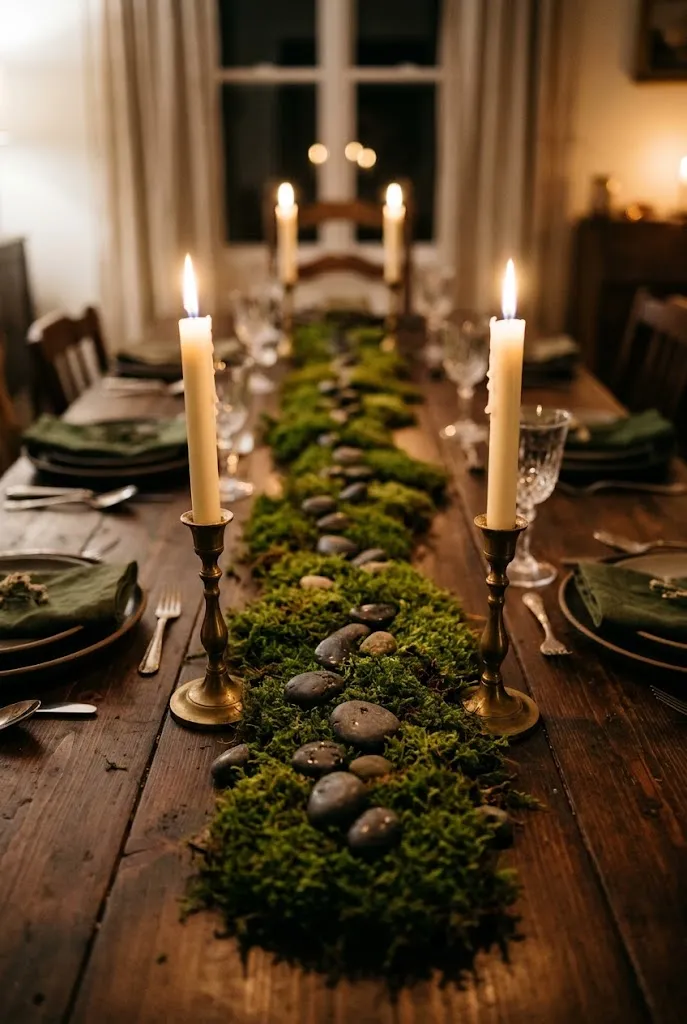
A strip of moss with a few smooth stones gives the table a forest-floor look. Gather moss from shady spots in your own yard, press it gently into a long shallow tray or onto a strip of burlap, and set a few stones in it. Taper candles in simple holders on either side add height.
Moss stays green longer when it is misted lightly, but keep the water away from the tablecloth. Keep candle flames well clear of dry material, and never leave them burning unattended.
Best For: Long tables where you want a calm, natural look.
Investment: Accessible.
12. Carve Tealight Wells Into a Birch Log
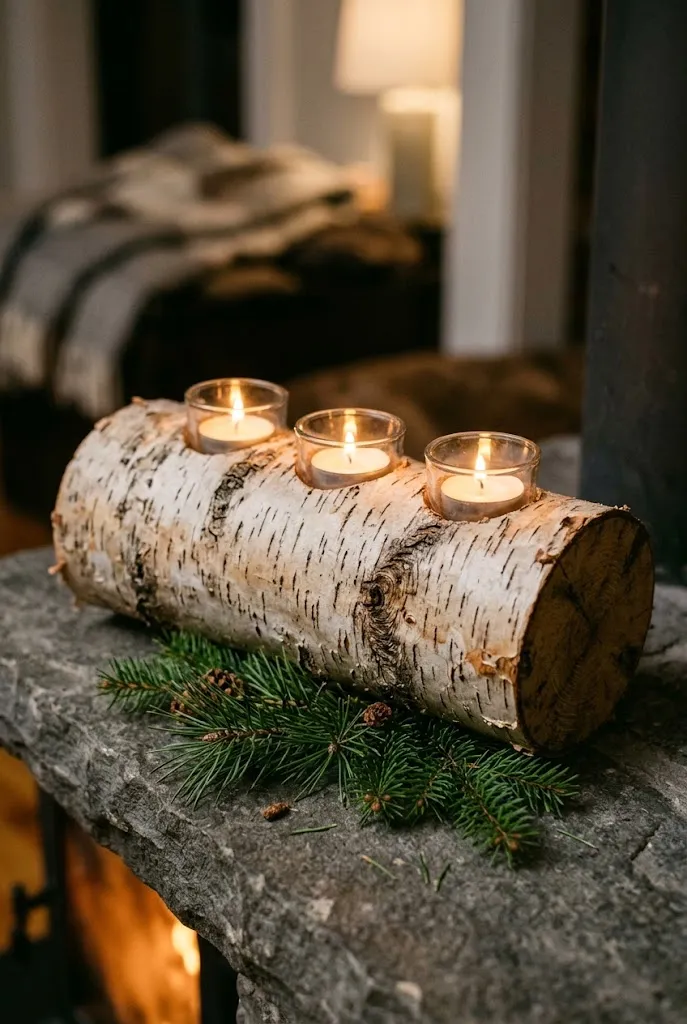
A short log with a flat top becomes a candle holder with a few small drilled holes. Drill shallow wells slightly wider than your tealight cups, set glass tealight holders or LED lights inside, and add a little greenery around the base.
This is a project that needs a drill and some care, so work with the log clamped or held firmly. Use an untreated, well-seasoned log, since green wood may still be damp and sappy. The finished piece is sturdy enough to repeat at either end of a table.
13. Pile Crabapple Branches in a Copper Bowl
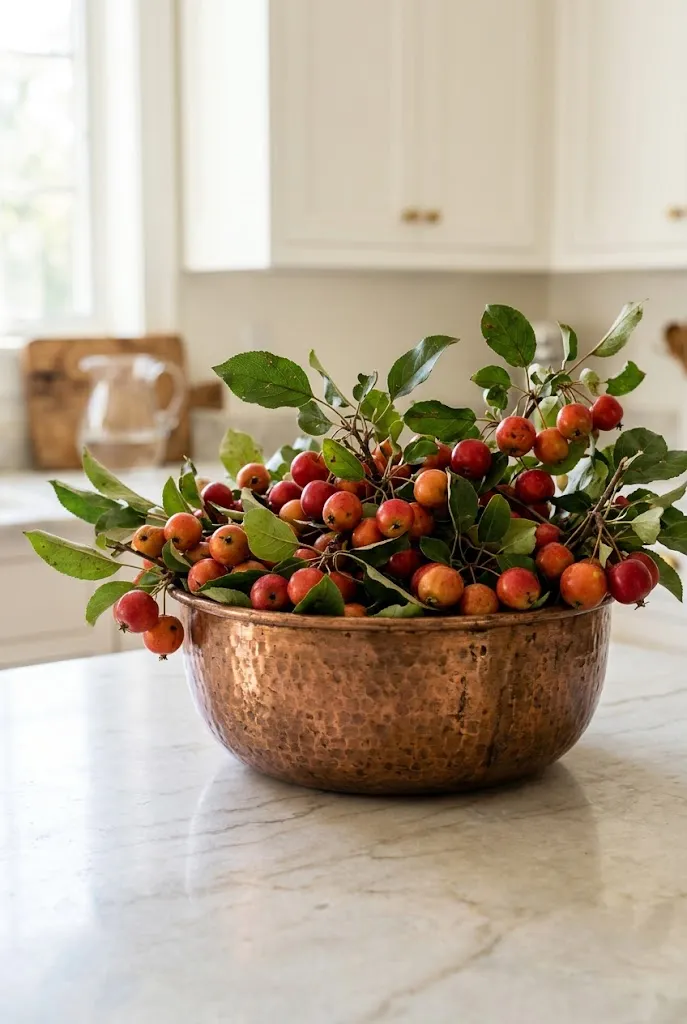
If a crabapple tree is in the yard, a few fruit-laden branches can look like a florist’s piece. Cut them on the shorter side and rest them in a low copper or brass bowl so the fruit spills over the edge. The red and gold pops against warm metal.
Crabapples are firm and small, so they hold up for several days. Don’t bring in branches with fruit that has begun to rot, and keep the arrangement away from small children who might be tempted to taste the fruit.
14. Fill an Oversized Vase With Foliage Branches
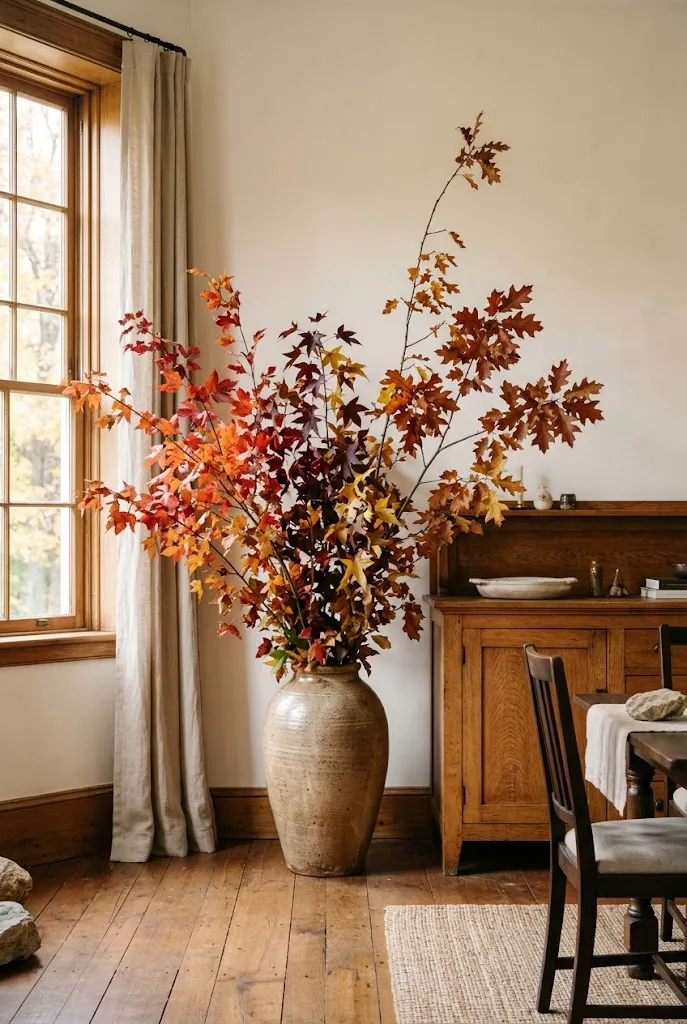
A big branch arrangement suits a sideboard, an entry table, or the corner of a dining room. Cut branches of changing foliage and set them in a heavy floor vase or large pitcher with water.
| Yard Find | Look | Best Use |
|---|---|---|
| Red maple | Bright red-orange leaves | Statement color on a neutral wall |
| Sweetgum | Mix of burgundy, gold, and purple | Rich, layered look |
| Oak | Brown and russet, sturdy leaves | Longer-lasting, muted palette |
Foliage dries and curls over several days, so cut branches close to the event and recut the stems before placing them in water. This is a good idea if you want a big visual impact without any purchased flowers.
15. Line Up Rose Hips in a Row of Bud Vases
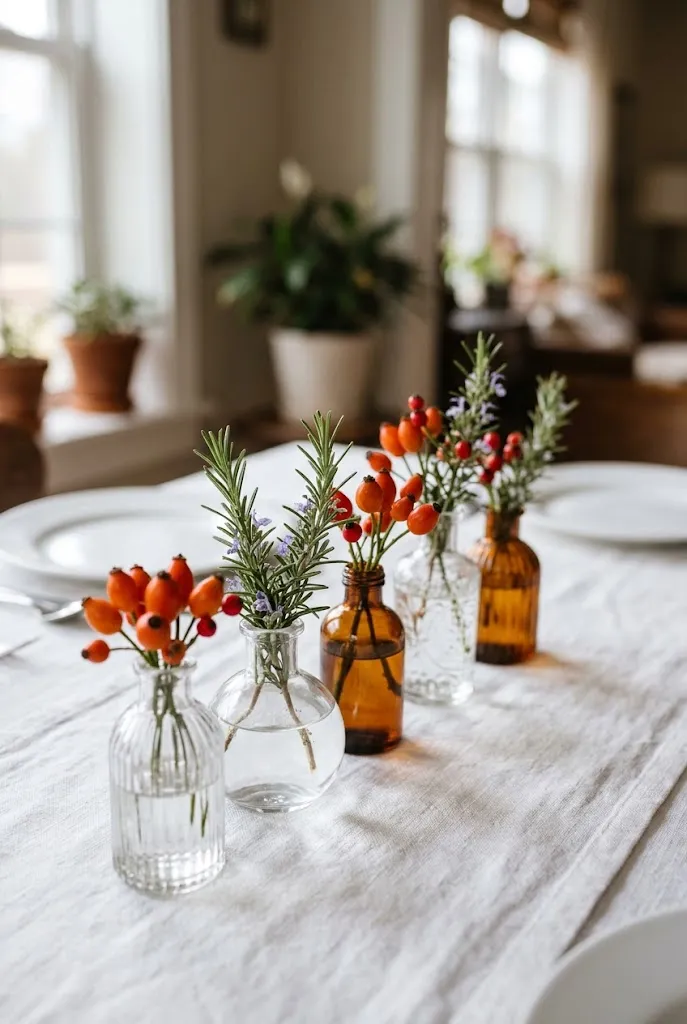
Small bud vases in a row feel fresh and orderly. If you have rose bushes, rose hips on a short branch give each vase a spot of orange or red, and a few evergreen or herb sprigs add contrast. Use mismatched thrift-store bottles or small glass jars for a collected look.
Repeat the same two elements in each vase, with slight height differences, rather than a different arrangement in each. The consistency is what makes it feel designed. This is particularly useful for a narrow table where one big arrangement would crowd the plates.
16. Drape a Magnolia Leaf and Evergreen Garland
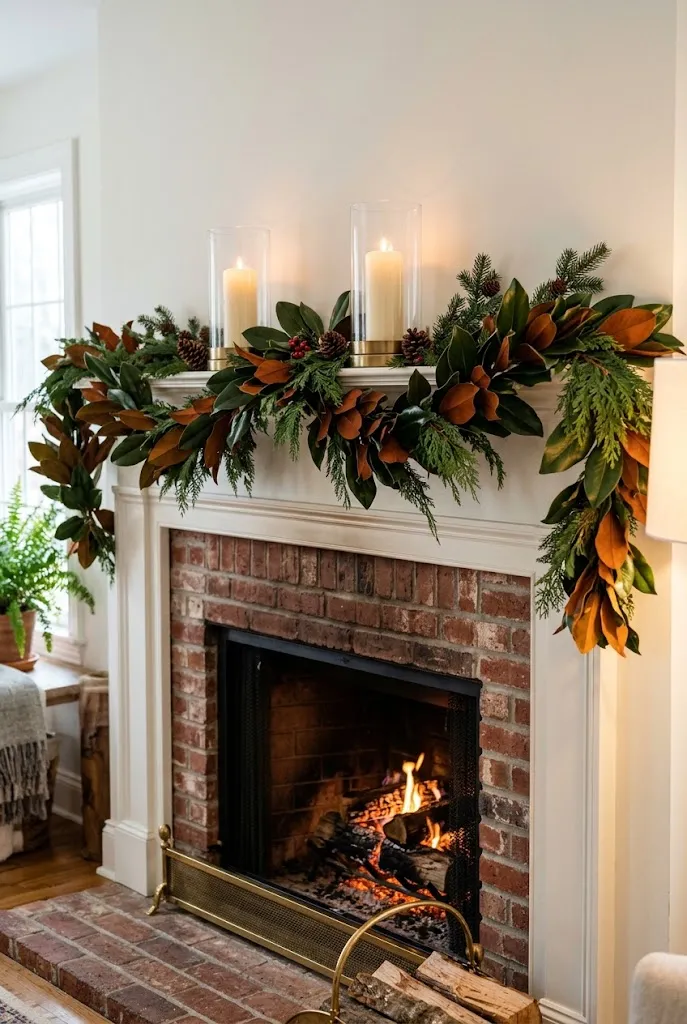
Magnolia leaves have a glossy green top and a rust-brown underside, and both sides can show in a garland. Combine them with cedar, pine, or boxwood cuttings and tie the bundles together along a length of twine or thin wire.
Lay the garland down the center of the table, or hang it along a mantel or buffet. Fresh evergreen garlands are heavier than they look, so build the garland on a long strip of twine and keep it away from open flame.
17. Stack Pumpkins Into a Tiered Tower
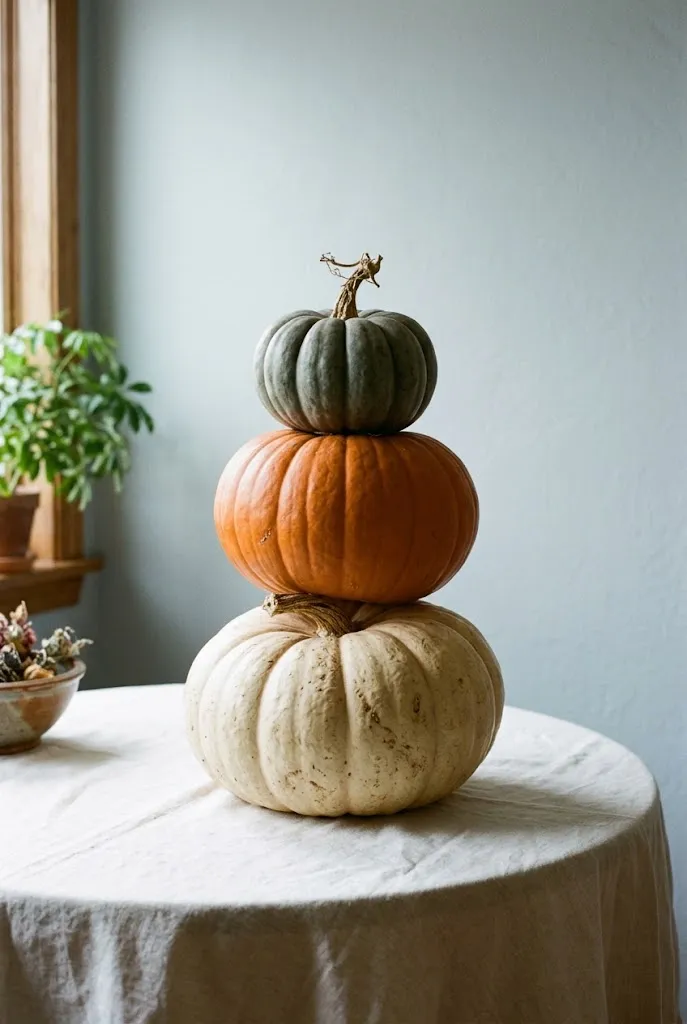
Three pumpkins in descending sizes, stacked and centered on the table, make a bold, sculptural centerpiece. Choose pumpkins with flat tops and bottoms so they sit securely, and stand the smallest one on top with its stem intact.
Mixing colors keeps it from looking too uniform: a large cream pumpkin, a medium orange one, a small gray-green one. If your pumpkins came from your own garden, this is an easy way to show them off. Secure the stack with a wooden dowel through the center if the table might be bumped.
18. Place a Lantern With Foraged Greenery at Its Base
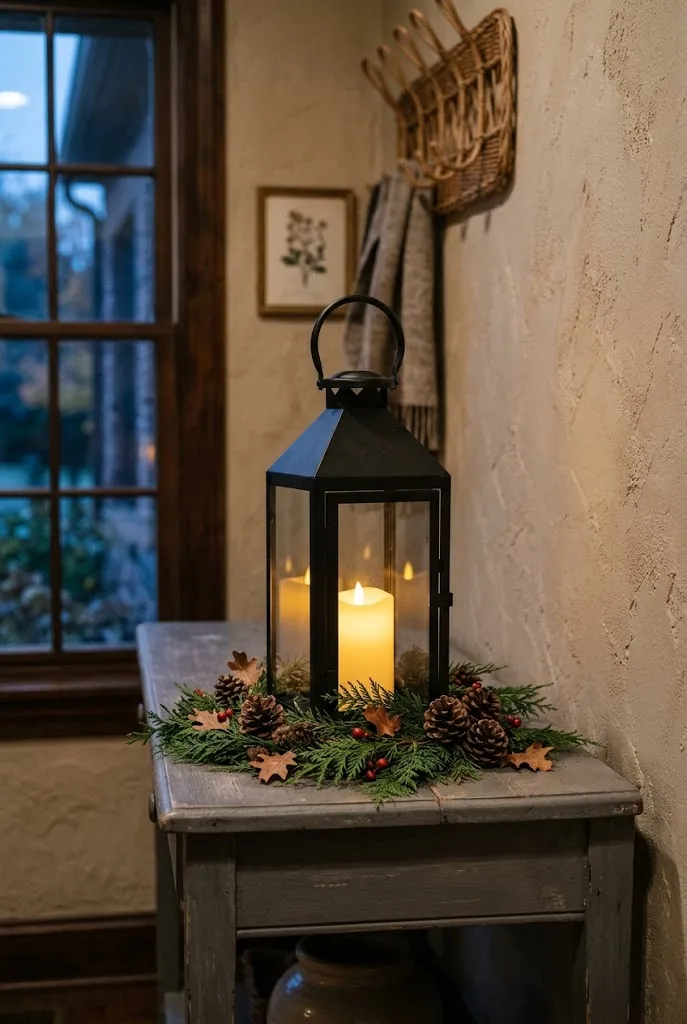
A lantern with an LED candle gives a table soft light, and a ring of greenery at its base finishes it. Cut cedar, juniper, or pine and tuck a few small pinecones and a few leaves around the base.
Choose a lantern that suits your table size: a medium one fits an apartment table, while a floor-standing lantern is a good fit for a large buffet. A battery-powered candle inside means no concerns about nearby dry greenery.
19. Heap a Garden Harvest Cornucopia in a Basket
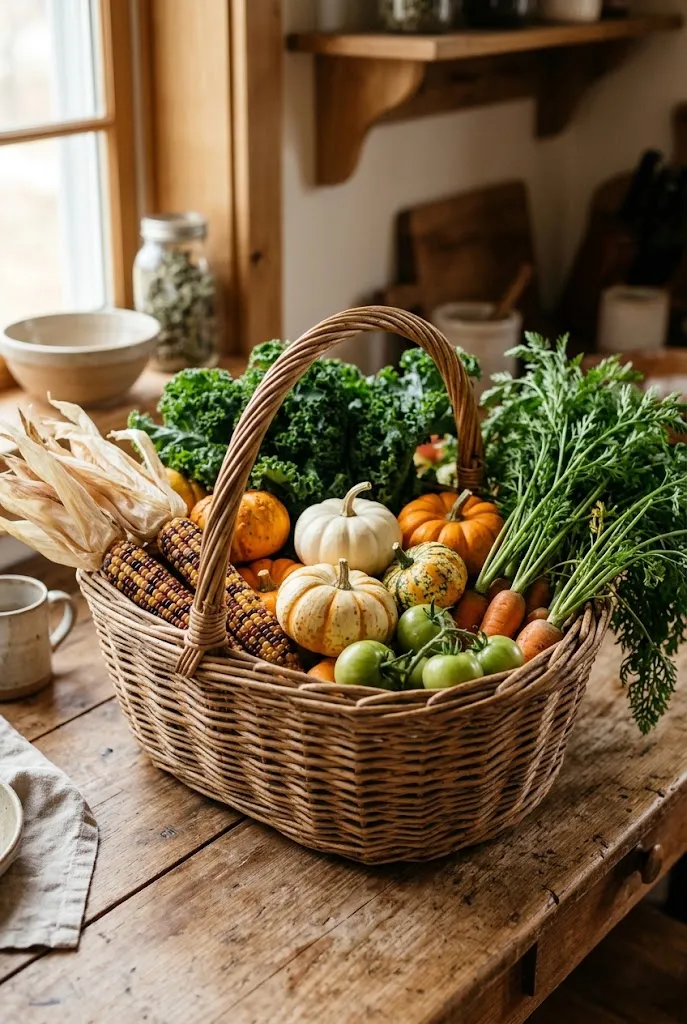
If you grew vegetables, a basket of what’s left works as a centerpiece with real meaning. Use small pumpkins, ears of Indian corn, kale, carrots with tops, and the last green tomatoes, arranged so the basket looks full and spilling.
Place the heavier items at the bottom and the lighter ones near the top. Because produce can be perishable, use it only as décor unless it stays clean and cool, and wash anything you plan to cook later.
20. Wrap Glass Cylinders in Pressed Leaves
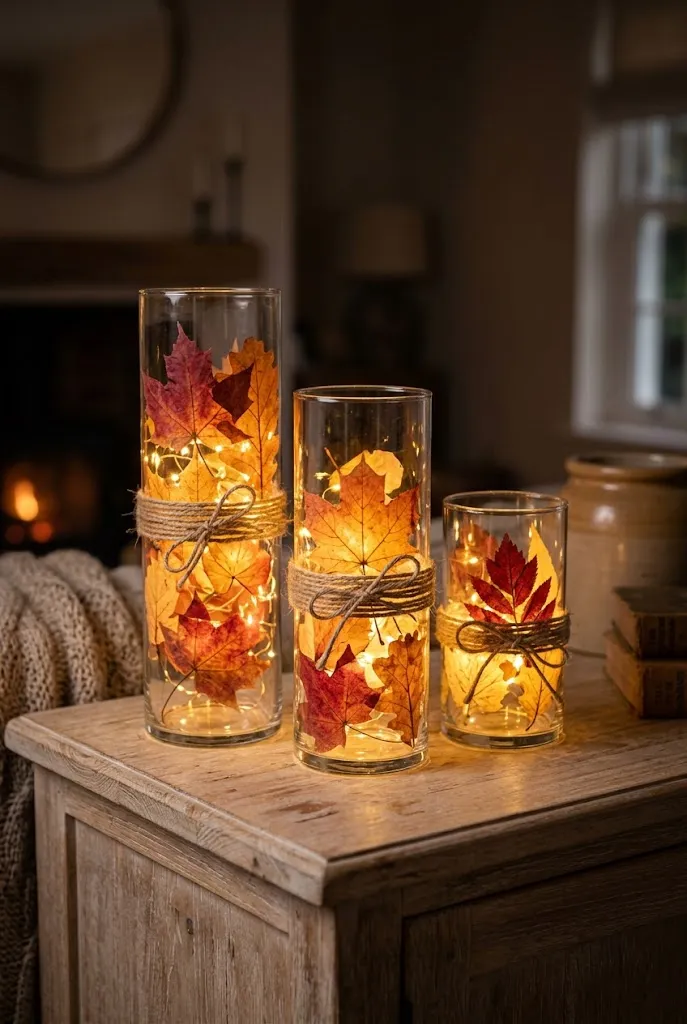
Pressed leaves held against a clear glass cylinder with twine give a stained-glass effect when a light is placed inside. This is a project with a clear sequence.
- Press fresh leaves flat under heavy books for several days until dry.
- Wrap a loop of twine around the cylinder, tucking leaves behind it.
- Add an LED candle inside and trim any excess twine.
Group three cylinders of different heights for a finished look. Keep the light flameless, since dried leaves are flammable.
21. Display Sunflower Heads and Seed Pods on a Wooden Tray
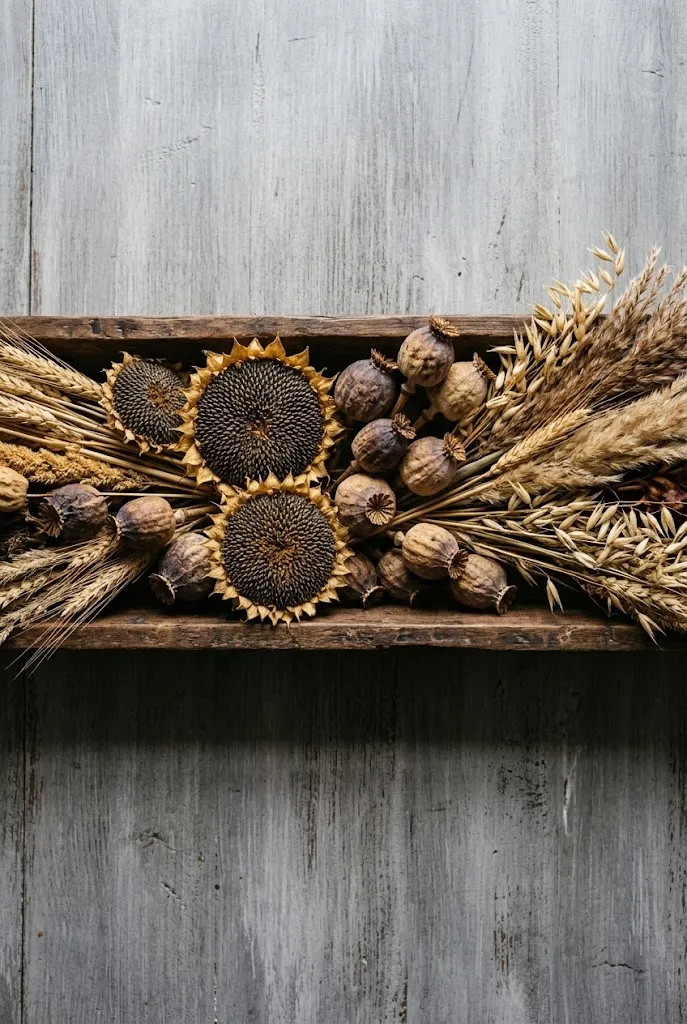
A long wooden tray anchors a mix of dried sunflower heads, poppy pods, and grasses so the centerpiece feels like a single piece rather than scattered items. Sunflower heads that have dried on the stalk can be cut and used as they are.
The tray lets you move the whole arrangement easily when it’s time to serve. Keep the palette in browns, tans, and golds, with one or two darker elements for contrast.
Best For: Rectangular tables and buffets
Investment: Accessible
Visual Effect: Earthy, textured, low profile
22. Set a Mini Gourd and Herb Sprig at Each Place
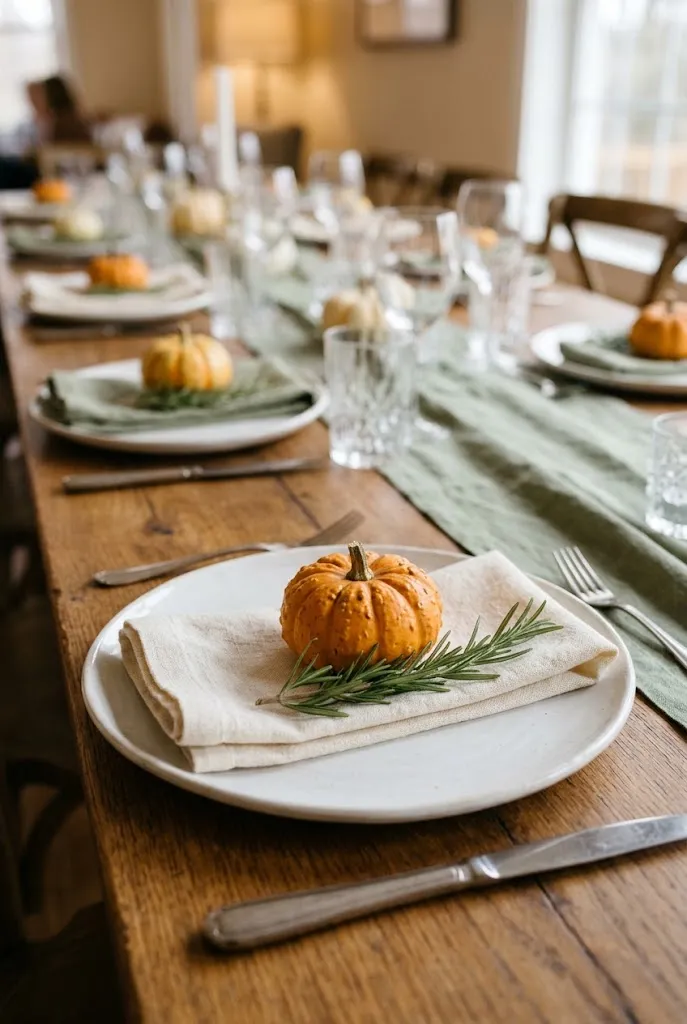
Individual place settings count as a centerpiece too, particularly for a long table with many guests. Set a mini gourd or small pumpkin on each plate with a sprig of rosemary tucked beside it. Guests can take it home as a small keepsake.
Choose gourds in a single color family for a cohesive row. A few extra mini gourds scattered between plates fill the gaps without crowding.
23. Suspend a Branch Above the Table
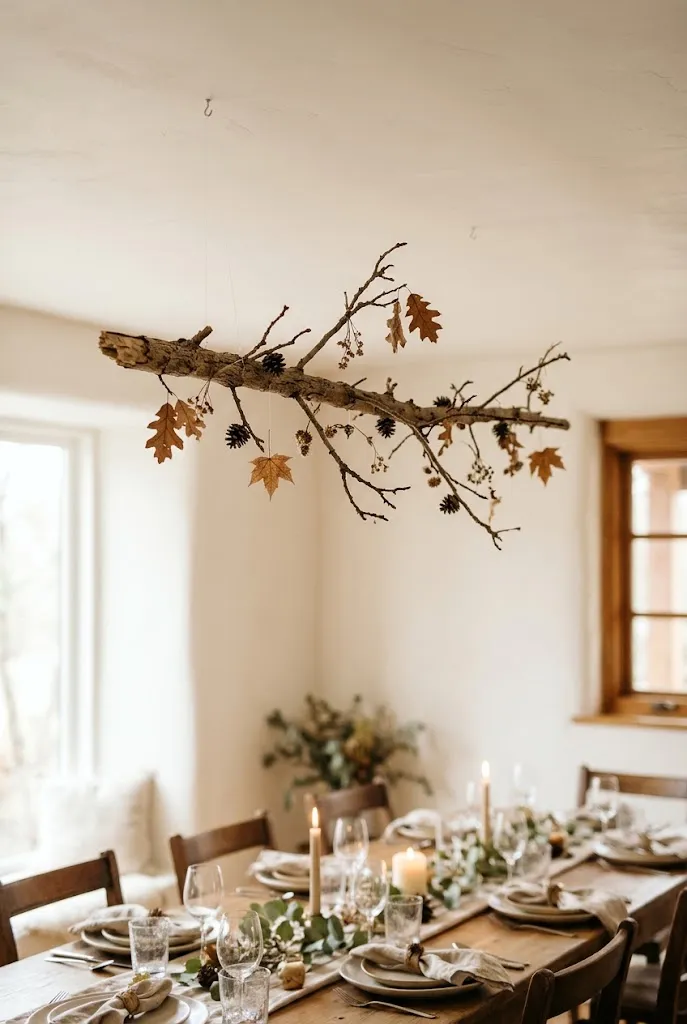
Hanging a branch over the table frees surface space entirely. Choose a lightweight, dry branch with a good shape, then hang it from the ceiling with fishing line or sturdy cord. Add a few dried leaves or small pinecones with thread.
Make sure the ceiling hook can bear weight and that the branch hangs high enough to preserve sightlines across the table. This idea suits dining rooms with high ceilings, or any room with a ceiling fixture you can use as an anchor.
Editor’s Note: Hang it before the dinner and test it for stability.
24. Wrap a Boxwood Wreath Around a Pillar Candle
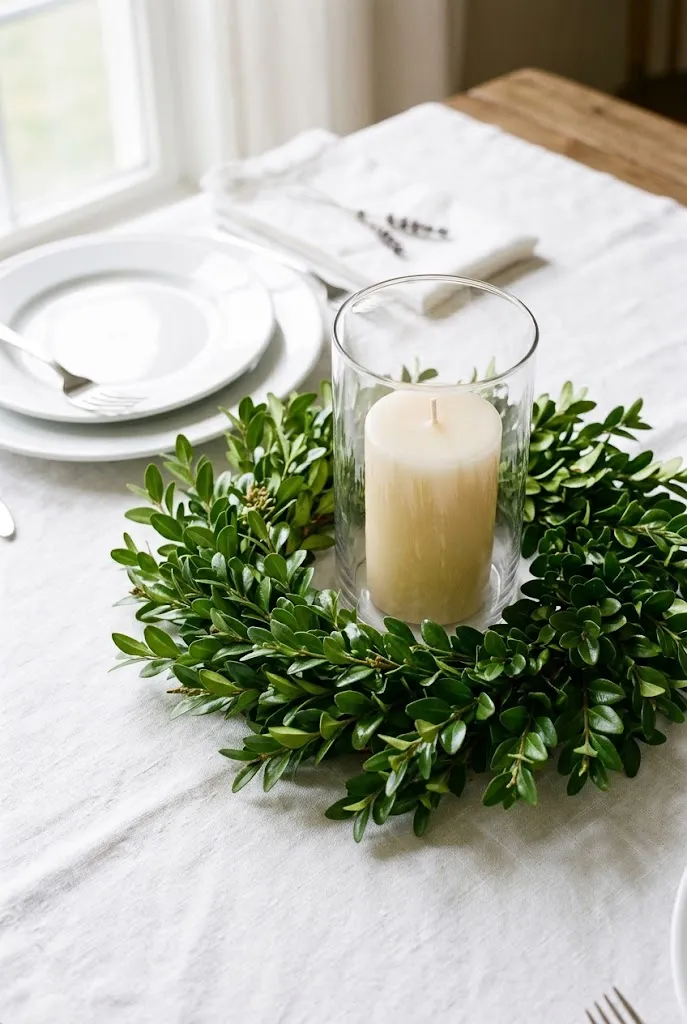
A small wreath of boxwood or other evergreen clippings, laid flat on the table with a pillar candle in the center, looks fuller than a single candle. Use a wire wreath form or twist the stems into a ring.
Choose a glass hurricane or a flameless pillar so the wreath doesn’t touch an open flame. Berries on holly and similar plants are toxic if eaten, so skip them if children or pets will be near the table.
25. Cover Jars in Birch Bark
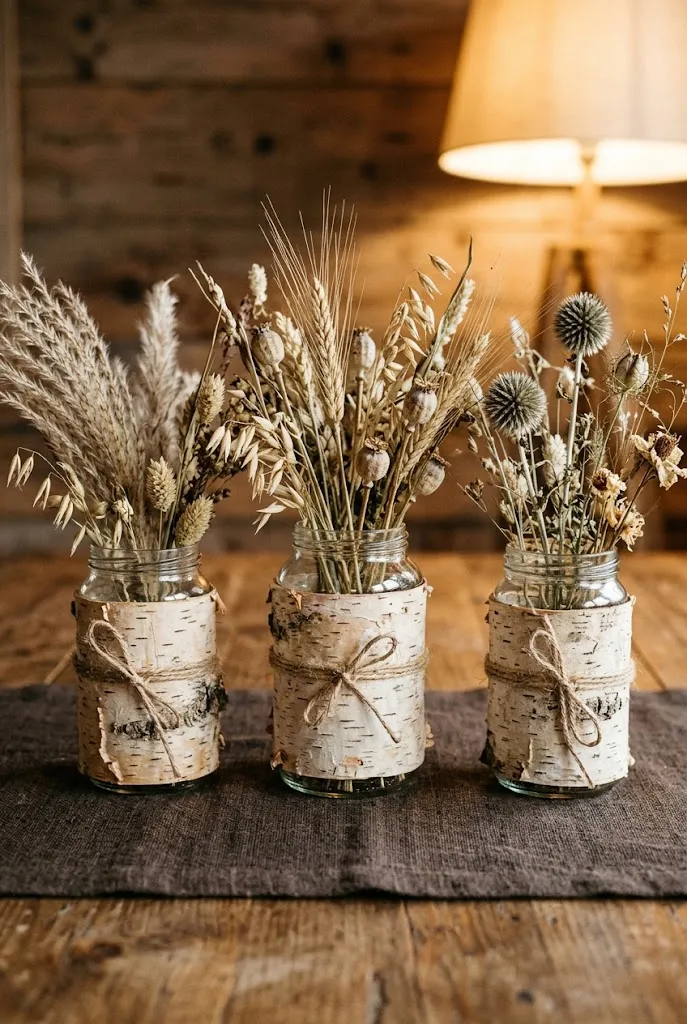
Birch bark from fallen branches can be wrapped around plain glass jars and tied with twine for a rustic look. Only use bark that has already come off the tree, since stripping living bark can harm it.
Fill the jars with fall stems like dried grasses, seed heads, or small branches. Because the bark is lightweight, the jars stay easy to move, and the pale color works with darker table linens.
26. Let Ivy and Fern Trail From a Cake Stand
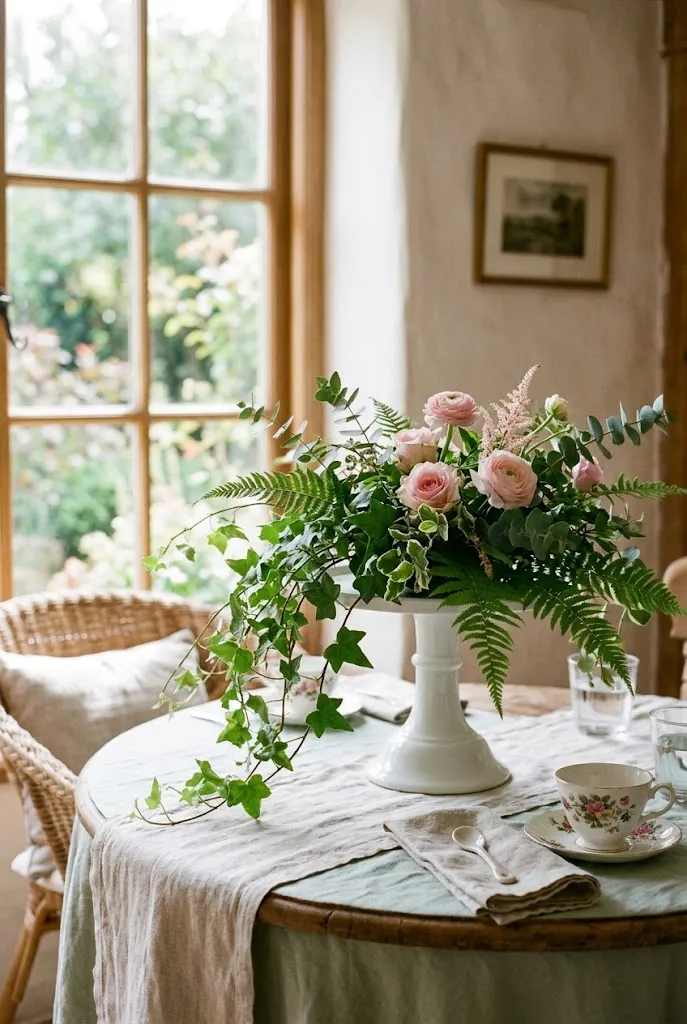
A pedestal cake stand makes a good base for a trailing arrangement. Place a shallow dish of water or floral foam on top, tuck in ivy, fern fronds, and a few late blooms so the stems spill over the edges.
Because the arrangement sits on a stand, it rises above the table without a tall vase. Keep it near the center so guests can see across the table, and refresh the water so the greens stay fresh through dinner.
Foraging Basics for Yard-Sourced Centerpieces
A few habits make yard finds easier to use and safer around a dinner table.
- Cut on a dry day and let materials dry indoors before arranging.
- Shake out insects from leaves, pinecones, and branches outdoors.
- Skip toxic berries near food and around children and pets. Holly, bittersweet, and yew are common examples.
- Check for pesticides before using plants from treated areas on a food table.
- Keep flames away from dry leaves, bark, and branches, or switch to LED candles.
| Height | Works Best When | Watch Out For |
|---|---|---|
| Low (under roughly 12 inches) | Guests need to talk across the table | Crowding serving dishes |
| Tall and slim | Table is small or space is tight | Blocking sightlines if too wide |
Where to Start
If you only have an hour, begin with a leaf runner or a bowl of pinecones and acorns, which need almost no prep. If you have a weekend, a pressed-leaf cylinder set or a garland takes a bit more time but lasts longer. Walk your yard first and see what’s there, then choose the idea that suits your table size, your guest count, and the colors already outside your door.